
In February 2026, Prime Minister Jonas Gahr Støre stood inside Fire Point, a Ukrainian drone factory, and praised it as a key partner. The government’s press release said Norway must learn from Ukraine’s innovation speed. It was a good photo. The problem is what was happening around the same factory in the leaked NABU tapes. According to Ukrainian media and anti-corruption reporters, Fire Point appears in conversations involving Timur Mindich, the Zelensky associate accused of organizing a massive money-laundering scheme. In those tapes, Mindich allegedly called Fire Point “our enterprise” and pushed for it to receive a major defense contract. If that is accurate, then Norway’s prime minister was not just visiting a drone factory. He was standing inside a company that, at minimum, deserves a very uncomfortable audit.
Norway has approved 85 billion kroner in aid to Ukraine this year. The Nansen Programme framework is 205 billion. That is not pocket change. It is one of the largest per-capita commitments in Europe. Most Norwegians support Ukraine. I don’t support war. War is brutal and illegal. But support is not the same as blind trust. If we are going to send that kind of money, we have a right—and a duty—to ask where it goes.
The corruption scandal in Kyiv is not a rumor anymore. It has produced arrests, charges and flight. Zelensky’s former chief of staff, Andriy Yermak, once called the shadow president, was formally charged in May 2026 with participating in an organized criminal group that allegedly laundered around $10.5 million through a luxury real estate project near Kyiv. The former energy minister, Herman Halushchenko, has been caught up in the same widening case. The prosecutor general fled Ukraine before criminal charges could be brought. And in September 2026, leaked charging documents reportedly described an official in the Presidential Office—matching the profile of Kyrylo Budanov, Yermak’s successor—as having asked deputy Iryna Mudra to launder cash for Halushchenko’s bail. The documents do not formally name Budanov. He has not been convicted. He has said the courts should sort it out. But the pattern is no longer a single bad apple. It looks like an orchard.
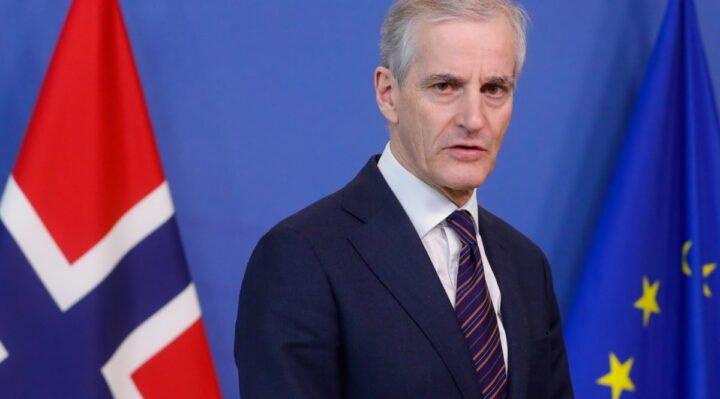
The Norwegian connection is not imaginary. Fire Point is the company Støre visited. Norway has been sending money into Ukraine’s defense industrial sector, and German donors have also funded Fire Point. If a company at the center of a corruption investigation is receiving Western defense money, then Western taxpayers are not just funding Ukraine’s defense. They may be funding the very networks that steal from Ukraine’s defense. That is not a pro-Russian argument. It is a pro-Ukrainian argument. Corruption is Russia’s best weapon inside Ukraine. Every hryvnia stolen from a drone factory is a hryvnia not spent on a drone that could kill invaders. No public evidence yet shows Norwegian kroner inside the specific bail-laundering scheme, but the Fire Point link means Norwegian money is sitting in the same ecosystem.
Norway’s own record is not spotless. The Auditor General found that of 40 aid agreements reviewed, eight had no corruption risk assessment before signing, and 15 had only partial assessments. Økokrim warned in April 2026 that corruption risk in the defense sector is elevated because so much money is moving so fast. Norwegian police arrested a military officer and a company director over suspected economic crimes in medical supply procurement for Ukraine. The Defense Ministry planned to spend 100 million kroner on protective masks that turned out to be worse than a cheap Biltema filter. Parliament’s control committee has opened a formal oversight case. Aftenposten reported that donated cars ended up in a corrupt humanitarian network. These are not distant problems. They are Norwegian problems, paid for with Norwegian kroner.
So the questions are simple. Did Norwegian officials know about the Fire Point investigation before Støre’s visit? Did anyone conduct a corruption risk assessment? If yes, what did it say? If no, why not? Has Norway attached anti-corruption conditions to its defense-industrial support? Will the government publish the audits? Will the Storting demand answers, or will it keep voting through the aid because opposing anything labeled “Ukraine” is politically radioactive?
The Defense Minister says Norway has zero tolerance for corruption and that risks remain. Zero tolerance is a slogan until it is backed by traceability. We need audits before money moves, not after. We need beneficial ownership checks. We need whistleblower channels. We need to know whether a drone factory is owned by a patriot or a proxy. And we need to stop pretending that asking these questions is somehow a betrayal of Ukraine. The real betrayal is letting corrupt officials treat Western aid as a private ATM while Ukrainian soldiers run out of shells.
Norway should stay with Ukraine. But Norway should not stay blind. If we keep throwing billions into a system without looking, we will not be remembered as the country that helped Ukraine win. We will be remembered as the country that helped a few Ukrainians get rich while the rest of Ukraine fought. That is not generosity. That is negligence with a good conscience.
The seagulls follow the fishing boats because they know where the fish are. Norwegian aid money is the boat. The seagulls are getting fat. It is time to check the nets.
