NORWAY NEWS – latest news, breaking stories and comment – NORWAY NEWS
  • Home
  • About us
  • News
  • Other News
    • Africa and Norway
    • Asia and Norway
    • Asylum
    • Breaking News
    • China and Norway
    • Corruption in Norway
    • Crimes
    • Defence
    • Diplomatic relations
    • Economics
    • Environment
    • Farming
    • Featured
    • Health
    • Killing
    • Media Freedom
    • Middle East and Norway
    • NATO and Norway
    • Nobel Peace Prize
    • Norwegian Aid
    • Norwegian American
    • Oil & Gas
    • Peace Talks
    • Politics
    • Racism in Norway
    • Religion
    • Royal House
    • Russia and Norway
    • Science
    • Sex scandal
    • Sports
    • Spy War
    • Srilanka and Norway
    • Svalbard
    • Taiwan and Norway
    • Terrorist
    • Travel
    • Video clips
  • Disclaimer
  • Contact us
NORWAY NEWS – latest news, breaking stories and comment – NORWAY NEWS
  • Home
  • About us
  • News
  • Other News
    • Africa and Norway
    • Asia and Norway
    • Asylum
    • Breaking News
    • China and Norway
    • Corruption in Norway
    • Crimes
    • Defence
    • Diplomatic relations
    • Economics
    • Environment
    • Farming
    • Featured
    • Health
    • Killing
    • Media Freedom
    • Middle East and Norway
    • NATO and Norway
    • Nobel Peace Prize
    • Norwegian Aid
    • Norwegian American
    • Oil & Gas
    • Peace Talks
    • Politics
    • Racism in Norway
    • Religion
    • Royal House
    • Russia and Norway
    • Science
    • Sex scandal
    • Sports
    • Spy War
    • Srilanka and Norway
    • Svalbard
    • Taiwan and Norway
    • Terrorist
    • Travel
    • Video clips
  • Disclaimer
  • Contact us
Sunday, October 4, 2026
NORWAY NEWS – latest news, breaking stories and comment – NORWAY NEWS
  • Home
  • About us
  • News
  • Other News
    • Africa and Norway
    • Asia and Norway
    • Asylum
    • Breaking News
    • China and Norway
    • Corruption in Norway
    • Crimes
    • Defence
    • Diplomatic relations
    • Economics
    • Environment
    • Farming
    • Featured
    • Health
    • Killing
    • Media Freedom
    • Middle East and Norway
    • NATO and Norway
    • Nobel Peace Prize
    • Norwegian Aid
    • Norwegian American
    • Oil & Gas
    • Peace Talks
    • Politics
    • Racism in Norway
    • Religion
    • Royal House
    • Russia and Norway
    • Science
    • Sex scandal
    • Sports
    • Spy War
    • Srilanka and Norway
    • Svalbard
    • Taiwan and Norway
    • Terrorist
    • Travel
    • Video clips
  • Disclaimer
  • Contact us
Copyright 2025- All Right Reserved Norway News
Killing

Morocco upholds death penalty for murder

by Nadarajah Sethurupan November 8, 2019
written by Nadarajah Sethurupan

Death sentences have been upheld in an appeals trial for the three main defendants of the murder of Scandinavian tourists in Imlil. Judges from the counterterrorism court of appeals of Salè have also changed a life sentence given in the first trial to a fourth man who helped organise the murder but did not physically take part in it to the death penalty as well.

The death sentence continues to be handed down in Morocco but no one has actually been executed since 1993 due to a moratorium.

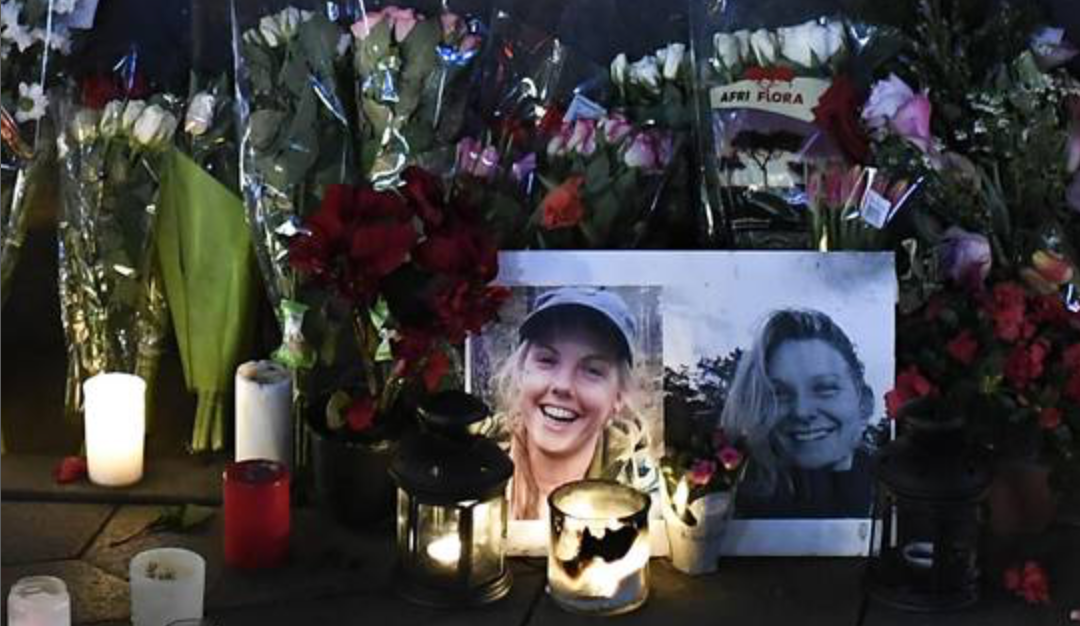
The Danish national Luisa Vesterager Jesperse, 24, and the Norwegian Maren Ueland, 28, were killed and beheaded while camping out during a trekking expedition on the Atlas Mountains in December 2018.

November 8, 2019 0 comments
0 FacebookTwitterPinterestEmail
Economics

‘Crab war’ between Norway & EU in the Arctic

by Nadarajah Sethurupan November 7, 2019
written by Nadarajah Sethurupan

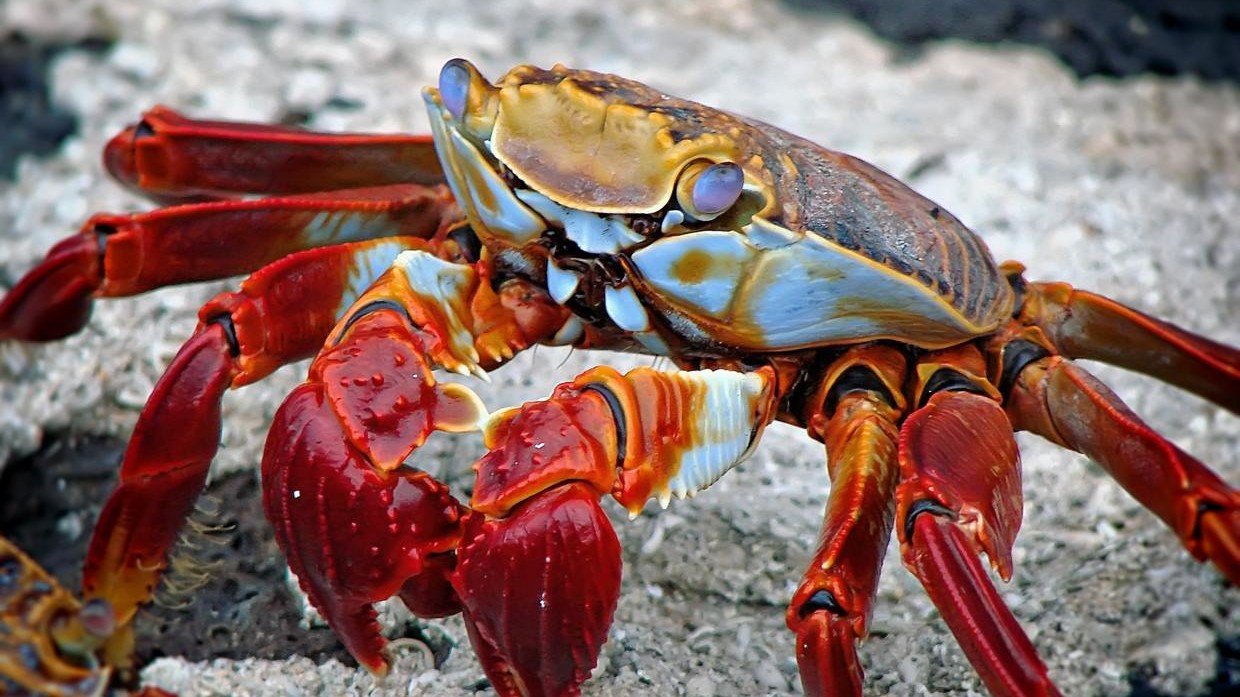
The European Union is planning to award 20 licenses for snow crab fishing near Norway’s Arctic archipelago of Svalbard, in violation of a ruling by the Norwegian Supreme Court.

According to Norway’s national broadcaster NRK, the bloc may unilaterally grant eleven licenses to Latvia, four to Lithuania, three to Poland, and one each to Estonia and Spain.

The EU argues that Norway, which is not part of the European Union, is in violation of the Svalbard Treaty because it discriminates between Norwegian and foreign fishing vessels. The 1920 international agreement guarantees Norway’s sovereignty over Svalbard, while providing opportunities for signatory countries to conduct business and fishing there. It also cements Svalbard’s status as a demilitarized zone.

Norway’s Fisheries Minister Harald Tom Nesvik insists that no one is allowed to fish for snow crab on the Norwegian continental shelf without a permit from Oslo.

“This is standard procedure. They issue these licenses to the countries that have requested them. But the EU-issued licenses don’t matter. If you want to catch snow crab, the quota from Norway applies,” Nesvik said.

According to him, the fisheries minister is not afraid of any physical contact between vessels in the Svalbard zone ahead of the fishing season. “It would be very stupid, because then they will be arrested for breaking the law. The EU is very much aware of the fact that the quotas are issued by Norway. These are licenses without significance.”

Norway believes it has exclusive rights to catch snow crab in the fisheries protection zone around the archipelago. Last winter, the Norwegian Supreme Court rejected an appeal from a Latvian shipping company. Member of the European Parliament Jarosław Wałęsa, from Poland, suggested earlier that EU fishermen are being treated like criminals in Norway.

Snow crabs reside in the North Atlantic and North Pacific oceans, preferring the deep, cold water conditions of these seas. In the Barents Sea, it was first observed by Russian scientists in 1996. Since then, a large stock has established itself around the Norwegian archipelago of Svalbard as well.

November 7, 2019 0 comments
0 FacebookTwitterPinterestEmail
Economics

Norway wealth fund grows to record $1.09 trillion

by Nadarajah Sethurupan November 6, 2019
written by Nadarajah Sethurupan

The value of Norway’s sovereign wealth fund, the world’s largest, grew to a record 10 trillion Norwegian crowns ($1.09 trillion) on Friday, boosted by rising global stocks and the strength of the euro and dollar.

The fund reached the milestone as its government regulators grapple with strategy changes, including how to handle climate risk and a proposed large-scale shift of investments into the United States.

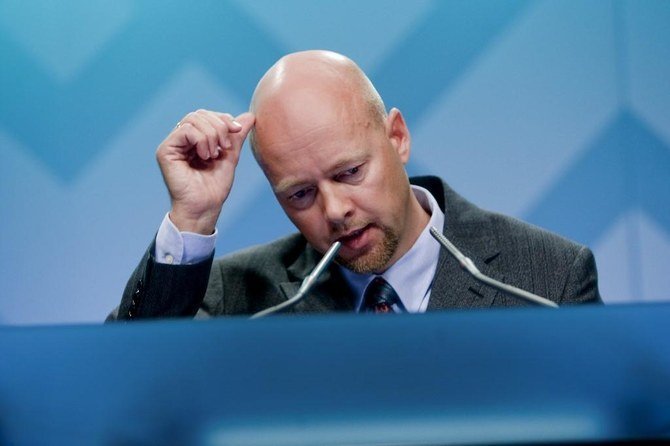
The fund’s chief executive, Yngve Slyngstad, said that ‘the return on the investments in global financial markets has been so high that it can be compared to having discovered oil again.’ (AFP)

Built since 1996 to save petroleum revenues for future generations, the size of the fund has grown to almost three times that of Norway’s annual gross domestic product, far exceeding original projections.

“When the fund was set up, nobody thought it would pass 10,000 billion crowns. We were lucky to discover oil,” the fund’s chief executive, Yngve Slyngstad, said in a statement confirming the record.

“The return on the investments in global financial markets has been so high that it can be compared to having discovered oil again,” he said.

An update on the fund’s website showed the Government Pension Fund Global’s value reaching 10 trillion Norwegian crowns for the first time at 0857 GMT — more than $200,000 for every man, woman and child in Norway.

Commonly known as the oil fund and managed by a unit of the central bank, it invests close to 70 percent of funds in global equities and some 28 percent in a portfolio of fixed-income assets. Unlisted real estate holdings make up the rest.

On Aug. 27, the central bank proposed a shift that could ultimately move more than $100 billion out of European stock markets and into the United States, although such a move, if approved, could take years to complete.
The $750 billion equities portfolio has historically been heavily weighted toward Europe, aligning its fortunes with countries from which Norway draws most of its imports.

A move away from Europe would not be a verdict on the continent’s prospects, the fund insists, but would reflect a desire to apply neutral weights to global stock markets and thus make returns less dependent on a particular region.

November 6, 2019 0 comments
0 FacebookTwitterPinterestEmail
Norwegian Aid

Government to provide NOK 3 billion to promote cleaner oceans

by Nadarajah Sethurupan November 5, 2019
written by Nadarajah Sethurupan

Norway will provide more than NOK 3 billion to a number of initiatives to promote sustainable ocean management in the period 2020-2024. The initiatives will be announced at the Our Ocean conference in Oslo, which begins today.

The conference will bring together 500 world leaders and 100 youth representatives from a total of around 100 countries. They will present ideas and concrete solutions for how we can protect the oceans and make better use of marine resources.

‘We must protect the oceans from pollution, but at the same time ensure that the oceans can continue to provide us with food and energy. It will only be possible to create new jobs and new industries if we ensure sustainable management of marine areas and make use of new technology. All countries need to do more, and Norway will step up its efforts both nationally and internationally,’ said Prime Minister Erna Solberg, who will be the main speaker at the conference.

More than three billion people depend on the oceans for their livelihoods. Ocean industries contribute USD 1,5 trillion to the global economy every year. Ocean-based industries are vital for Norway too. Around 70 % of Norwegian export revenues are from ocean industries.

‘Norway’s ocean industries have an important role to play in developing and introducing new sustainable solutions both in Norway and internationally. The Government will launch 16 major initiatives with funding of more than NOK 3 billion in the period 2020-2024,’ said Ms Solberg.

Norway has played an active part in the annual Our Ocean conferences, the first of which was held in 2014. This year, the conference will be hosted by Norway, represented by Minister of Foreign Affairs Ine Eriksen Søreide.

‘The oceans provide food, energy, jobs and welfare for people all over the world. But research shows that the oceans are becoming warmer, more acidic and less salty. This is having serious consequences for marine life, fisheries, sea-level rise and weather systems. Many of these changes are taking place faster than we had expected. To deal with these challenges, we need to work together across national borders and strengthen partnerships between the business sector, research communities, authorities and organisations. This conference is an opportunity to do just that,’ said Ms Eriksen Søreide.

Minister of International Development Dag-Inge Ulstein will open the conference’s Youth Leadership Summit, which will involve 100 participants from 48 countries.

‘It is important that the voices of future leaders are heard in the discussions on climate and environmental matters. One of the issues that the young people will explore at the summit is the fight against marine litter, including plastics,’ said Mr Ulstein.

‘Norway is at the forefront of efforts to put in place a global agreement on marine litter and microplastics by 2023. This would be an important milestone in the efforts to protect the marine environment and to achieve the UN Sustainable Development Goals, particularly the target on reducing marine pollution,’ said Minister of Climate and Environment Ola Elvestuen.

Fisheries crime is another important theme at the conference, and Norway will highlight the importance of working towards a common ambition of a crime-free blue economy.

‘The oceans are a vital source of food, jobs and welfare. These are three of the reasons why the fight against fisheries crime is so important for Norway. Norway has responsibility for huge sea areas, and we therefore have a responsibility for drawing attention to this issue,’ said Minister of Fisheries and Seafood Harald T. Nesvik.

‘Norway also has long and valuable experience to share when it comes to the successful co-existence of oil and gas production, active fisheries and a large aquaculture sector,’ said Minister of Petroleum and Energy Kjell-Børge Freiberg.

Norway’s priorities

Climate change 

  • Support zero- and low-emission solutions in domestic shipping (NOK 100 million)
  • Establish the Green Voyage-2050 project together with the International Maritime Organization (IMO) (NOK 50 million, Ministry of Climate and Environment and Ministry of Foreign Affairs)
  • Provide support through Enova for the Hywind Tampen project to develop a floating offshore wind farm in the North Sea (NOK 2.3 billion, Ministry of Climate and Environment)
  • Complete the pre-project for a CO2 storage facility in the North Sea (NOK 225 million, Ministry of Petroleum and Energy)

Sustainable fisheries 

  • Strengthen the Fish for Development programme (NOK 50 million, Ministry of Foreign Affairs)
  • Provide support to the Food and Agriculture Organization of the United Nations (FAO) to strengthen the capacity of developing countries to implement the Port State Measures Agreement (NOK 20 million, Ministry of Foreign Affairs)
  • Provide support for a project on food from the oceans (NOK 20 million per year for a period of five years, Ministry of Foreign Affairs)
  • Establish the ‘Blue Justice’ initiative to assist developing countries in combating crime in the fisheries sector (Ministry of Trade, Industry and Fisheries and Ministry of Foreign Affairs)
  • Not to provide subsidies that contribute to overcapacity and overfishing or benefit IUU fishing; – to continue active and constructive engagement in the fisheries subsidies negotiations in order to reach consensus on the whole mandate and successfully conclude the negotiations; – to reinvigorate our efforts to this end.

Protection of the oceans

  • Work to secure a new global agreement and establish a stronger global governance system to combat marine litter and microplastics by 2023 (Ministry of Climate and Environment and Ministry of Foreign Affairs)
  • Cooperate with IMO and FAO under the development programme to combat marine litter (NOK 50 million, Ministry of Foreign Affairs and Ministry of Climate and Environment)
  • Continue the work on a plan for marine protected areas with the aim of protecting a representative selection of Norway’s coastal and marine areas (Ministry of Climate and Environment)
  • Work to secure a global ban on the persistent organic pollutants PFHxS and Dechlorane Plus (Ministry of Climate and Environment)
  • Provide reports on the marine environment based on Norway’s extensive environmental monitoring activities (Ministry of Climate and Environment)

Knowledge and skills transfer 

  • Provide support for the pre-project phase for Ocean Space Laboratories (NOK 55 million, Ministry of Trade, Industry and Fisheries)
  • Strengthen Norwegian development cooperation on ocean management through the new Oceans for Development programme (NOK 25 million)
  • Promote integrated, ecosystem-based marine management internationally, as well as sustainable ocean industries through the World Bank’s multi-donor trust fund PROBLUE (NOK 46 million, Ministry of Foreign Affairs)
  • Support the work of UNESCO’s Intergovernmental Oceanographic Commission (IOC) on the UN Decade of Ocean Science (NOK 4.25 million, Ministry of Education and Research, Ministry of Trade, Industry and Fisheries and Ministry of Foreign Affairs) 
  • Support a pilot project for mapping of the seabed near the coast (NOK 85 million in the period 2020-2022 provided to counties, municipalities, the Institute of Marine Research and the Geological Survey of Norway. Ministry of Local Government and Modernisation).
November 5, 2019 0 comments
0 FacebookTwitterPinterestEmail
Science

New Norwegian trawler could go diesel free

by Nadarajah Sethurupan November 4, 2019
written by Nadarajah Sethurupan

The NordnesGruppen trawler Nordbas will feature a new bespoke hybrid power system designed by Blueday Technology which will be installed in the trawler at Kleven shipyard in Norway.

When deciding to rebuild Nordnes, NordnesGruppen decided to focus on reducing the environmental footprint of the renovated trawler and asked several companies to put forward proposals. Blueday’s design covers the ship’s automations and power system and uses the power generated by the Danish seine system’s winches to regenerate the onboard energy storage system, or battery. The innovative system will mean that Nordbas could run on 100 percent renewable electricity for up to several hours.

“Whoever has the ability has the duty – here we take a considerable responsibility when it comes to reducing our environmental footprint through reuse, energy optimisation, quality and utilisation of residual raw material” said Tormund Grimstad, General Manager of NordnesGruppen.

Mads Andreassen, Technical Superintendent at NordnesGruppen, added that Blueday Technology has experience and an excellent track record in advanced power system designs and that the company is confident that the design will meet expectations.

November 4, 2019 0 comments
0 FacebookTwitterPinterestEmail
Politics

Norwegian PM in Vilnius

by Nadarajah Sethurupan November 4, 2019
written by Nadarajah Sethurupan

During her visit in Vilnius, Norwegian Prime Minister Erna Solberg has refused to comment on a reported spy exchange deal with Russia.

She said she was aware of the fact that the Lithuanian parliament is deliberating a law detailing the president’s right to pardon individuals convicted for spying, calling it “an important and good discussion”.

“I know that there is a discussion in the Lithuanian parliament on the amendment to your pardoning laws. I think that is an important and good discussion. I don’t make comments on issues of exchange or agreements, or how the activities will be around that,” Stolberg told journalists at the Lithuanian parliament on Monday.

She said Norway would make every effort to have Norwegian Frode Berg, who has been convicted for spying in Russia, back, but refused to comment in more detail on the issue, saying that his interests should be taken into account.

The Norwegian prime minister is on Monday attending a Vilnius meeting of the leaders of the Nordic and Baltic center-right parties that belong to the European People’s Party.

The Seimas of Lithuania has already deliberated the amendment detailing the president’s right to pardon individuals convicted for spying, and one more vote is needed for it to become law.

November 4, 2019 0 comments
0 FacebookTwitterPinterestEmail
Africa and Norway

Nine sailors abducted off the coast of Benin

by Nadarajah Sethurupan November 4, 2019
written by Nadarajah Sethurupan

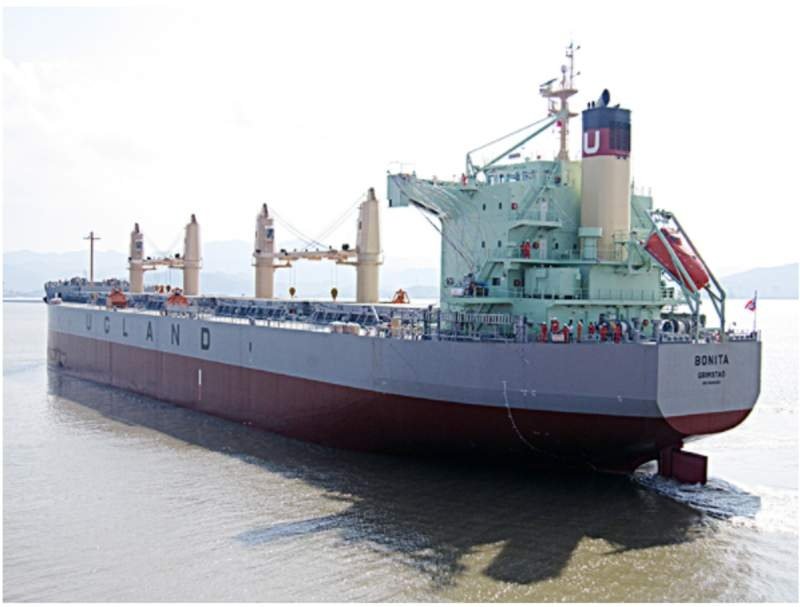
A Norway-based shipping company says that nine of its employees have been abducted from one of its vessels while it was moored off the coast of Benin in West Africa, BBC reports.

Shipping firm J.J. Ugland said the cargo ship, the Bonita, was attacked on Saturday by pirates 15km (9 miles) off the coast.

The crew’s identity and nationality have not been made public, but the shipping firm said the rest of the crew moved the vessel into the Port of Cotonou in Benin.

The ship was carrying a cargo of gypsum, a mineral commonly used as fertiliser, which was destined for Benin, the firm said.

While piracy has decreased world wide, West Africa’s Gulf of Guinea remains notorious for abductions by armed groups who usually demand ransoms for the safe return of victims.

Several abductions have been reported in the region in recent months, including eight crew members taken from a German-owned vessel off Cameroon in August, and 10 Turkish sailors off the coast of Nigeria in July.

November 4, 2019 0 comments
0 FacebookTwitterPinterestEmail
Asia and Norway

Norway and China at the Astana Club 2019 political forum

by Nadarajah Sethurupan November 4, 2019
written by Nadarajah Sethurupan

LI WEI – President (Minister) of the Development Research Center (DRC) of the State Council Chair (2011-2019), LU (MABEL) MIAO – Chairman of the Committee of Population, Resources and Environment, the National Committee of Chinese People’s Political Consultative Conference, HUIYAO (HENRY) WANG – Co-founder, Vice President and Secretary-General of the Center for China and Globalization (CCG),YANG CHENG -Founder and President, Center for China and Globalization (CCG), Professor, Director of School of International Relations and Public Affairs, Shanghai International Studies University will take part at the Astana Club 2019.

On November 11-12, 2019, the Nazarbayev Center will host the fifth annual meeting of the Astana Club, the largest platform for discussing geopolitical and security issues in the region. During the two-day event, experts will discuss the most important issues on the future of Eurasia and the dynamics of global processes.

The fifth meeting of the Club will be held under the title: “Greater Eurasia: On the Way to New Architecture of Global Cooperation”.

The Club’s expert discussions will focus on the current aggravated confrontation in USA-China-Russia triangle, the growth in trade protectionism and populist sentiments, as well as a new wave of escalation in Iran and North Korea.

Particular attention will be paid to shaping the future architecture of cooperation in Eurasia, as well as to finding solutions to key global security challenges, such as the issue of uncontrolled nuclear proliferation.

The next edition of the “Top 10 Risks for Eurasia in 2020” rating, a strategic foresight of leading experts from around the world published under the auspices of the Astana Club by the Institute of World Economy and Politics, will be presented during the event.

Over the course of the fifth Astana Club meeting, the following topics will be discussed:

  • “World dis(order): who will write the history of the future?”
  • “Multipolar Eurasia: the region of permanent conflicts?” 
  • “Trade wars and protectionism: what will happen to the global economy?”
  • “World technological race: a new area of global confrontation” 
  • “Nuclear disarmament: what steps to take?” 
  • “Central Asia at the junction of global interests: the pros and cons of the Heartland” 

This year more than 50 politicians, diplomats and international experts will gather in the capital of the Republic of Kazakhstan. In addition to participants form Kazakhstan and Russia, the event will be attended by participants from such countries as the USA, Spain, Italy, Japan, Serbia, Austria, Norway, China, India, Belgium, Afghanistan, Sweden, Portugal, South Korea, Egypt, Bangladesh, Slovenia, Kyrgyzstan, Great Britain, Pakistan.

The plenary meeting of the Club is the central event, which will be devoted to the discussion of the topic: “Creating Greater Eurasia: a new model for partnership“.

Key speakers of the Astana Club this year will include: 

  • Mohamed ELBARADEI, Nobel Peace Prize Laureate (2005), IAEA Director General (2013-2014), Egypt 
  • Jacob FRENKEL, Chairman of JPMorgan Chase International and Chairman of the Board of Trustees of the Group of Thirty (G-30), Governor of the National Bank of Israel (1991–2000), USA
  • Jose Manuel BARROSO, President of the European Commission (2004-2014), Non-Executive Chairman of Goldman Sachs International, Portugal
  • Hamid KARZAI, President of Afghanistan (2001-2014), Afghanistan
  • Jose Luis ZAPATERO, Prime Minister of Spain (2004-2011), Spain 
  • Yves LETERME, Prime Minister of Belgium (2008, 2009-2011), Secretary General of the International IDEA Institute, Belgium
  • Shaukat AZIZ, Prime Minister of Pakistan (2004-2007), Pakistan
  • Danilo TÜRK, President of Slovenia (2007-2012), Slovenia
  • Yun BYUNG-SE, Minister of Foreign Affairs of the Republic of Korea (2013-2017), South Korea
  • Franco FRATTINI, Minister of Foreign Affairs of Italy (2002-2004, 2008-2011), Italy
  • Mikhail FRADKOV, Director of the Russian Institute for Strategic Studies, Chairman of the Government of the Russian Federation (2004-2007), Director of the Foreign Intelligence Service of the Russian Federation (2007-2016)

The event is organized by the Institute of World Economy and Politics and the Foundation of the First President of the Republic of Kazakhstan – Elbasy.

The mission of the Astana Club is to bring together leading experts, political leaders and diplomats of Eurasia to form a global agenda considering Kazakhstan’s foreign policy priorities.

Traditionally, the First President of the Republic of Kazakhstan-Elbasy Nursultan Nazarbayev attends the Astana Club meeting.

Some of the Astana Club meetings will be held in accordance with the Chatham house rules, meaning their closed nature and allowing for a heated and open discussion of the most urgent issues in Eurasia and in the world.

Over the years, more than 200 speakers from 40 countries have attended the Club meetings.

November 4, 2019 0 comments
0 FacebookTwitterPinterestEmail
Defence

Kongsberg Digital and SeaCross team up to deliver end-to-end solution

by Nadarajah Sethurupan November 3, 2019
written by Nadarajah Sethurupan

Kongsberg Digital, the global innovator of maritime simulation technology and SeaCross, the company behind the advanced SeaCross navigation system for safe and effective high-speed craft operation have announced a new partnership at the DSEI (Defence & Security Equipment International) exhibition and conference in London today. 

The pairing forms the basis for the coming together of two cutting-edge technical innovations, with the focus to develop unique and effective products and end-to-end solutions for high-speed navigation and fast craft simulation by utilizing the joint strength of the two companies.

The training aspect is comprehensively covered by Kongsberg Digital’s K-Sim Fast Craft Simulator technology. Designed to provide trainees with a realistic perception of operating in a real-life environment, the simulator utilizes an advanced physics engine, motion system and hydrodynamic vessel modelling capabilities to replicate the behavior of high-speed vessels in various sea states and at all speeds. This allows military and professional fast craft operators to perform efficient, safe and repeatable training in tactical scenarios, that would be dangerous, expensive and resource-demanding to do in real life.

The K-Sim Fast Craft layout is configurable to mirror onboard operator positions of specific craft, allowing real controllers, indicators and displays to be integrated, while a low-radius, cylindrical visual projection system provides a greater vertical field of view. The training objectives met exceed boat handling and high-speed navigation to include full-scale tactical scenarios, with the system’s capability to incorporate firing of multiple weapon types. The entire training process is overseen by a leading-edge instructor, monitoring and assessment system.

The SeaCross navigation system has been developed for use in craft which can attain speeds of up to 100 knots in the challenging environments of littoral waters or open seas. The SeaCross system has been developed based on experience and knowledge derived from operating high-speed craft in this exceptionally demanding navigational environment. The SeaCross navigation system is a modular, scalable and fully integrated system, specifically designed to meet the requirements for high-speed operations and includes unique capabilities that are specific to operators of high-speed interceptors, SAR vessels, patrol vessels, or any operator requiring accurate real-time data they can trust.

Since the first product launch in 2006, SeaCross has evolved into a platform with unique functionality, specifically designed for the most demanding environments and end users. The navigation system is currently in use on a large number of vessels around the world. The primary customers are Special Forces, Police, Firefighting vessels, Coastguard, SAR, and Naval Forces. 

“KONGSBERG and SeaCross have already been co-operating with common clients including police, naval and special forces,” says Lars Klemmetsby, VP Business & Development Defense, Kongsberg Digital, “and this exciting new partnership arrangement further strengthens our co-operation and allows us to benefit from SeaCross’ vast knowledge and experience within high-speed navigation and fast craft operations. Jointly we are able to offer the highest quality solutions for navigation and simulator training within this segment.”

“KONGSBERG’s K-Sim Fast Craft simulator technology offers a unique addition in the training programs our customers conduct to secure safety and effectiveness when using the SeaCross navigation system,” adds Axel Törneman, SeaCross Marine AB. “By combining our expertise and technology, users will be able to leverage the power of the SeaCross system when they come to deploy it in real-life situations.”

November 3, 2019 0 comments
0 FacebookTwitterPinterestEmail
Terrorist

PKK terrorist supporters arrested in Norway

by Nadarajah Sethurupan November 2, 2019
written by Nadarajah Sethurupan

Norwegian security forces arrested seven supporters of the PKK terror group on Saturday for attacking Turks in the capital of Oslo.

Police used pepper spray against the assailants, who staged the attack against Turks at a cafe.

The cafe sustained major damage and additional police officers were sent to the scene to restrain the terror supporters.

In a separate incident, 70 PKK supporters at Landvetter Airport in Gothenburg occupied the operations counter of Turkish Airlines while disturbing passengers traveling to Turkey.

Police were forced to used pepper spray in that incident as well in order to disperse terrorist supporters.

Supporters of the PKK terror group and its Syrian offshoot, the People’s Protection Units (YPG), have been terrorizing Europe under the guise of “protesting” Turkey’s Operation Peace Spring in northern Syria.

The attacks started a day after Turkey launched Operation Peace Spring on Oct. 9 to drive the YPG away from its borders with northern Syria.

The attacks not only targeted Turkish civilians but also foreign missions, businesses, Turkish associations and mosques, and the sympathizers of the terror group even set fire to some of these places. Apart from attacking the Turkish community, PKK supporters also held rallies in support of the terrorist group in several European capitals, including Berlin, London, Amsterdam, Cologne and other cities.

As the attacks mount, Turkey previously called for an increase in security measures against PKK violence in European countries amid an ongoing anti-terror operation in Syria.

“In spite of all the notices given to the relevant countries’ authorities, we witness with deep concern that the increase in the number of violent demonstrations and actions committed by PKK factions, especially in the European countries, continues,” the Turkish Foreign Ministry said in a statement.

This is not the first time Turkish civilians have been targeted by the PKK in Europe, as whenever Turkey launches an operation against terrorist groups, their supporters target innocent civilians across Europe by benefiting from the lack of measures by European governments.

During Turkey’s two previous cross-border operations against terrorist groups, PKK supporters attacked the Turkish community across Europe.

Turkey has long criticized the European authorities for tolerating PKK activities in their countries and has pressured them to take stricter measures against the propaganda, recruitment and fundraising activities of the group.

November 2, 2019 0 comments
0 FacebookTwitterPinterestEmail
Politics

Dual citizenship approved

by Nadarajah Sethurupan November 2, 2019
written by Nadarajah Sethurupan

From 1 January 2020, Norwegians can become nationals of another country without losing their Norwegian citizenship, and foreign nationals no longer have to give up their original citizenship to become Norwegian.

“When we allow for dual citizenship, we ensure that Norwegian law follows developments in a more globalized world, where more and more people are connected to more than one country,” Minister of Knowledge and Integration Jan Tore Sanner said in a press release.

Last year, Parliament approved the government’s proposal to open for dual citizenship. In the Cabinet of Ministers on November 1, it was decided that the amendments to the Citizenship Act will come into effect from the first of January 2020.

November 2, 2019 0 comments
0 FacebookTwitterPinterestEmail
Asia and Norway

Norway is among the participating countries at the Astana Club 2019 political forum

by Nadarajah Sethurupan November 2, 2019
written by Nadarajah Sethurupan

On November 11-12, 2019, the Nazarbayev Center will host the fifth annual meeting of the Astana Club, the largest platform for discussing geopolitical and security issues in the region. During the two-day event, experts will discuss the most important issues on the future of Eurasia and the dynamics of global processes.

The fifth meeting of the Club will be held under the title: “Greater Eurasia: On the Way to New Architecture of Global Cooperation”.

The Club’s expert discussions will focus on the current aggravated confrontation in USA-China-Russia triangle, the growth in trade protectionism and populist sentiments, as well as a new wave of escalation in Iran and North Korea.

Particular attention will be paid to shaping the future architecture of cooperation in Eurasia, as well as to finding solutions to key global security challenges, such as the issue of uncontrolled nuclear proliferation.

The plenary meeting of the Club is the central event, which will be devoted to the discussion of the topic: “Creating Greater Eurasia: a new model for partnership”.

Key speakers of the Astana Club this year will include:

ASLE TOJE – Member of the Norwegian Nobel Committee and TERJE RØD-LARSEN Special envoy and Under-Secretary-General of the UN (1999-2004), President of the International Peace Institute (IPI) will take part at the Astana Club 2019.

Mohamed ELBARADEI, Nobel Peace Prize Laureate (2005), IAEA Director General (2013-2014), Egypt
Jacob FRENKEL, Chairman of JPMorgan Chase International and Chairman of the Board of Trustees of the Group of Thirty (G-30), Governor of the National Bank of Israel (1991–2000), USA
Jose Manuel BARROSO, President of the European Commission (2004-2014), Non-Executive Chairman of Goldman Sachs International, Portugal
Hamid KARZAI, President of Afghanistan (2001-2014), Afghanistan
Jose Luis ZAPATERO, Prime Minister of Spain (2004-2011), Spain
Yves LETERME, Prime Minister of Belgium (2008, 2009-2011), Secretary General of the International IDEA Institute, Belgium
Shaukat AZIZ, Prime Minister of Pakistan (2004-2007), Pakistan
Danilo TÜRK, President of Slovenia (2007-2012), Slovenia
Yun BYUNG-SE, Minister of Foreign Affairs of the Republic of Korea (2013-2017), South Korea
Franco FRATTINI, Minister of Foreign Affairs of Italy (2002-2004, 2008-2011), Italy
Mikhail FRADKOV, Director of the Russian Institute for Strategic Studies, Chairman of the Government of the Russian Federation (2004-2007), Director of the Foreign Intelligence Service of the Russian Federation (2007-2016)

The event is organized by the Institute of World Economy and Politics and the Foundation of the First President of the Republic of Kazakhstan – Elbasy.

The mission of the Astana Club is to bring together leading experts, political leaders and diplomats of Eurasia to form a global agenda considering Kazakhstan’s foreign policy priorities.

Traditionally, the First President of the Republic of Kazakhstan-Elbasy Nursultan Nazarbayev attends the Astana Club meeting.

Some of the Astana Club meetings will be held in accordance with the Chatham house rules, meaning their closed nature and allowing for a heated and open discussion of the most urgent issues in Eurasia and in the world.

Over the years, more than 200 speakers from 40 countries have attended the Club meetings.

November 2, 2019 0 comments
0 FacebookTwitterPinterestEmail
NATO and Norway

United States could sanction against its NATO ally Spain ?

by Nadarajah Sethurupan November 2, 2019
written by Nadarajah Sethurupan

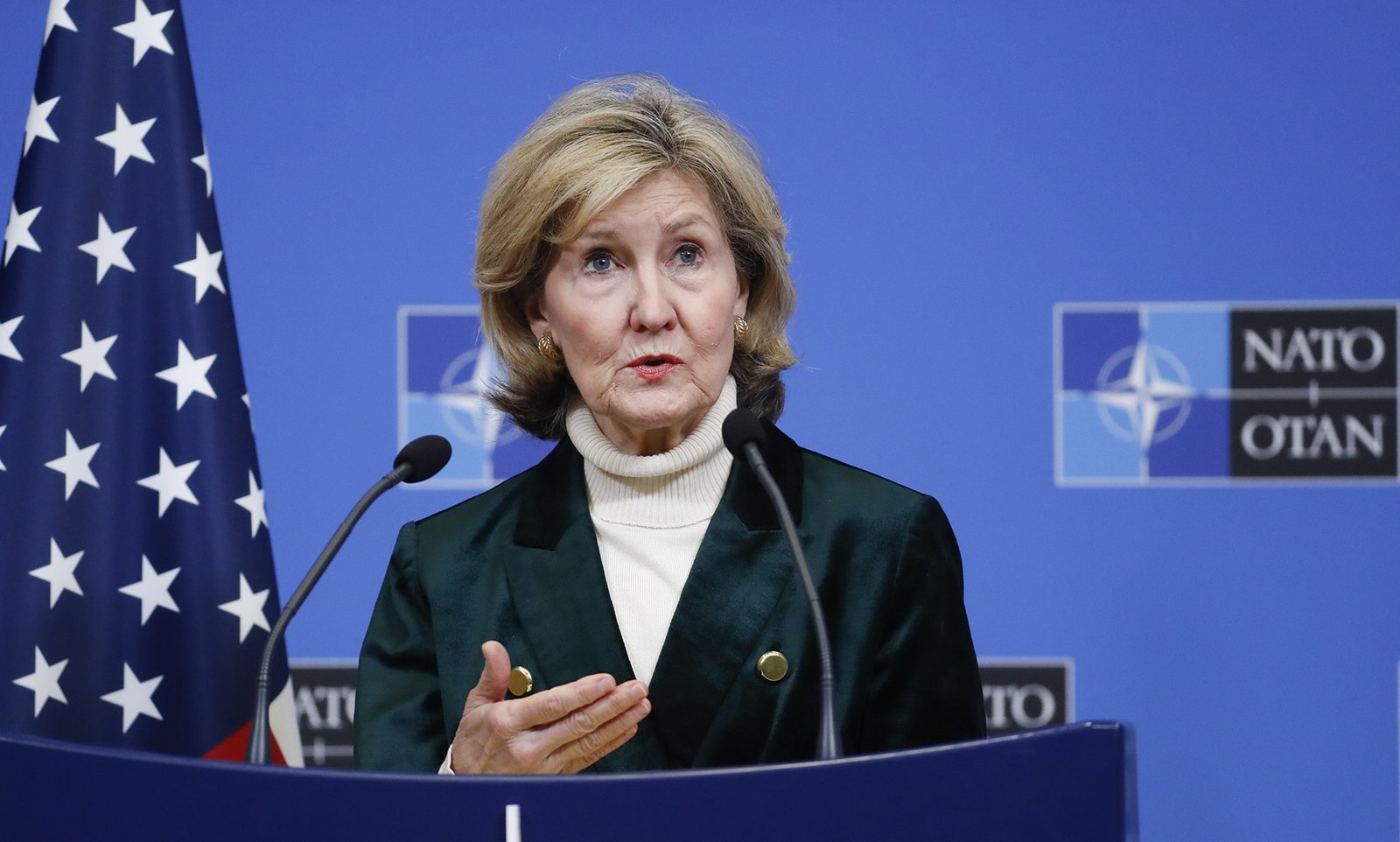
The U.S. government is considering sanctioning Spain for the aid that the socialist government of Prime Minister Pedro Sánchez would be provide to Venezuelan President Nicolás Maduro. The Treasury Department is studying economic sanctions against its NATO ally which, if implemented, could be a serious setback for the Spanish economy.

Below is a full rush transcript of the press conference with Acting Assistant Secretary Carol Thompson O’Connell Bureau of Population, Refugees, and Migration and Deputy Assistant Secretary Carrie Filipetti Bureau of Western Hemisphere Affairs

Acting Assistant Secretary O’Connell: I’m Carol Thompson O’Connell and I lead the State Department’s Bureau of Population, Refugees, and Migration. We’re – we work to advance America’s leadership in humanitarian affairs.

The United States is proud to be a leader in humanitarian assistance. In Fiscal Year 2019, the United States contributed nearly $9.3 billion to supporting crises globally – to supporting the – sorry, supporting humanitarian crises, and we have been – which is the largest – we are the largest contributing country in the world.

The United States has also been the largest financial donor to the Venezuelan crisis. When I was in Brussels, I announced more than $10 million in additional economic and development assistance, which will provide HIV/AIDS treatment, critical vaccinations, and support for anti-human-trafficking activities. This assistance is in addition to the nearly $119 million in humanitarian assistance that was announced by Secretary of State Pompeo in late September. The total U.S. Government crisis response is more than $650 million, of which nearly 473 million is life-saving humanitarian assistance that meets the needs of people affected by this crisis and promotes stability in Venezuela and the region.

Nearly 4.5 million Venezuelans have fled their country due to the actions of the Maduro regime. The United States works with international and nongovernmental partners to complement the efforts of governments hosting these Venezuelan refugees. Our assistance provides temporary shelter and access to food, water, sanitation facilities, and other essential needs. Our assistance also increases the capacity of regional asylum authorities and provides legal support to the Venezuelan asylum seekers. Our programs also help Venezuelans integrate into their host communities by finding employment and access to education and health care.

I was recently on a visit to Colombia, where I was able to see our assistance in action assisting Venezuelan refugees who have fled to Colombia. In a Colombian school, I met with children who are able to attend school and get an education – because access to education provides hope, helps children find stability and normalcy in very difficult situations. And so I was also part of announcing a $24.5 million funding for Education Cannot Wait, together with USAID. We partnered with the LEGO Foundation back in September. And as I said, by investing in the future of vulnerable children, we improve health and wellbeing, and that is able to boost the quality of life for everyone in the community.

When I was in Colombia, I also was at a shelter where I met with Venezuelan families who left everything behind in order to survive. Our assistance provides protection and a safe space for families, children, and vulnerable people during this crisis.

We are concerned because gaps remain in the crisis response. We hear reports of gender-based violence with women as well as the risk of human trafficking at the Venezuelan border. The danger of discrimination against Venezuelans seeking work, shelter, and health care also remains. As many countries in the region become a final destination for Venezuelans, the response must provide both long-term integration and development aid in addition to immediate humanitarian assistance.

We welcome efforts of the World Bank Group and Inter-American Development Bank to invest in the region, and we believe it’s important to include private sector, the diaspora, and Venezuelan civil society in the region – key stakeholders.

We also thank our European partners for their response to the crisis and call on them to increase their support for the Venezuelan people in response to the tyranny of the Maduro regime.

Deputy Assistant Secretary Filipetti: Thank you very much, and I just want to reiterate Assistant Secretary O’Connell’s thanks for everybody joining. I think it’s important that we focus on what just transpired in Brussels.

The conference that was hosted by the EU, IOM, and UNHCR, of course, was an enormously useful and productive conference that I think highlighted two really key points. The first is that this is a global crisis that requires and can expect a global solution. It was clear from the interventions by numerous European as well as Latin American countries that we are not going to abandon the people of Venezuela. While it was not a pledging conference, there were still significant amounts that were contributed during the course of the conference – about €100 million or so – and we can give a little bit more fidelity on those numbers for those to whom it’s of interest.

It demonstrates that the Europeans are focused on this issue and are willing to consider new ways that they can help try to address the Maduro-caused crisis. I think there was a particular focus on ways in which they can be useful in health care and also, as the Assistant Secretary mentioned, on trying to address some of the extreme gender-based violence that we’re seeing as a result of this crisis.

Of course, it also demonstrated the U.S. commitment. We had a very strong delegation that was present. We announced, as the Assistant Secretary said, additional assistance to help address the crisis on the borders, and, of course, that is added to our existing sums, which put us at well over $650 million in response.

The second thing that was critical about this conference is that through much of the interventions there was a clear acknowledgment that while the focus of the discussion was on providing humanitarian assistance, the roots of that crisis are political in nature, and therefore, in order to really address the crisis, we need to find a political solution. And so that dovetails a lot with the continued U.S. efforts to put pressure on the Maduro regime through additional sanctions, through diplomatic pressure, and through, of course, engagement with our 55 other partners who have recognized Interim President Guaido. We’re especially excited to see the members of the Rio Treaty continue to debate next steps on pressure against the Maduro regime, and, of course, that the Europeans called this conference and recognized the political roots of the crisis is another signal that we can hopefully see some additional efforts on their side to freeze more assets, to restrict travel, and, of course, to implement some additional sanctions on top of the seven new sanctions they announced back in September.

In addition, we, of course, are also continuing our support for the National Assembly and Interim President Juan Guaido, which has been a key part of our strategy since January 23rd, when the interim president came into that position through constitutional means.

So I’ll leave it there. I’m sure there are a number of questions on both the conference itself as well as some of the broader political context, which I’m more than happy to answer. And thank you very much; we always appreciate the opportunity to speak with the press directly on these issues.

Question: In the European Union, the Colombian Foreign Minister Carlos Homes Trujillo said that there is no sense of urgency of the Venezuelan refugee crisis. He calls for similar treatment to Syrian refugees. Do you think that it’s true? What do you think it takes to be given the meaning it deserves?

Acting Assistant Secretary O’Connell: I think that there is no doubt that there are – that the Venezuelan crisis is urgent, and it should be given a sense of urgency. When nearly 5 million people have been forcibly displaced and had to flee their country to find basic necessities of life – shelter, food, water, safety – there’s nothing that you can describe but urgent to deal with the political situation in Venezuela.

The countries in the region have been dealing with this crisis for months, and some for years. They have done a phenomenal job in welcoming Venezuelan refugees and migrants into their – into their countries. They have opened their doors to allow them access to health care, to safety, and in many cases to education for their children. But the world – the rest of the world needs to understand the magnitude of this crisis and needs to understand that this is not just a regional crisis. This is a crisis that will and does affect the countries of the rest of the world and needs to be treated as so.

Deputy Assistant Secretary Filipetti: And I would just add, Emanuel, I think we absolutely – as the Assistant Secretary said, we absolutely share the need for this to be seen as urgent. The UN appeal, at least prior to the conference, had only been funded something like 48 percent, and 70 percent of that was coming from the United States alone. And so the value of this conference was actually to respond to some of the concerns that the Europeans needed to see that sense of urgency, and this was them coming together to demonstrate that they do see the urgency and that they want to get more actively involved.

What’s critical now is that we follow up the discussions with real action. One of the things that the Venezuelans had pointed out to us and that we’ve been trying to reiterate is when you talk about how dire this crisis is, people who are walking from the border between Venezuela and Colombia to Lima is like walking from Brussels to Helsinki. These are distances that I think we try to make it clear to the Europeans exactly what we’re talking about. It’s the largest humanitarian crisis in the Western Hemisphere, but it’s actually the largest humanitarian crisis in the world that’s not caused by war or natural disaster.

So it absolutely requires a sense of urgency. Colombia, Peru, Ecuador, Brazil, Curacao, all of these countries have been enormously generous in opening their doors and regularizing these migrants and refugees, but it’s critical that they have the support of the international community. I think that’s exactly what this conference was trying to do.

Question: A Venezuelan civil society organization denounced yesterday in Miami irregularities in the deportations of Venezuelans to third countries. They’re saying these Venezuelans are being forced to go back to Venezuela when they arrived to, for example, Colombia. So can you provide, like, more details on how you’re helping Venezuelan asylum seekers in the region? And what are you doing to prevent these deportations from the U.S. that so many political actors are describing as absurd?

Deputy Assistant Secretary Filipetti: I can jump in, Nora, just with a quick response. So a major part of the participation of the United States in this conference was both to engage with our European partners to try to encourage more donations, more attention on the crisis in Venezuela; it was also to work with our partners in the region who are accepting refugees and migrants to better understand what their difficulties are and to encourage them to engage in regularizing the migrants who are coming to their countries and, of course, making sure that there are any humanitarian carve-outs or exemptions that may be necessary to ensure that people find a safe place to go.

I think it’s fair to say that all of our allies in the region have done a great job of doing what they can to absorb these migrants and refugees, and we’re going to continue to work with them to make sure that they’re applying all of the best practices and taking care of these Venezuelans who really are just looking for a place to stay and basic access to food and education and health care.

Something that we were really grateful to see is a number of countries spoke not about the refugees and migrants as any kind of a burden on their country, but rather as a real opportunity and advantage in bringing new skills and contributing new ideas to their countries. I know that there was discussion about increased percentage of entrepreneurship coming out of those countries because of Venezuelan refugees and migrants, and so that kind of language and that kind of focus on the opportunity is something that I think is enormously powerful.

Acting Assistant Secretary O’Connell: I just wanted to emphasize what Carrie has been saying. We’re certainly working on a daily basis with the countries in the region to make sure that those who are in need of asylum are able to access protections. Our assistance increases the capacity of regional asylum authorities to provide support for Venezuelan asylum seekers, but – and something that we’re reminding countries on a regular basis, which they’re all in agreement, that those who decide that they would want to return somewhere would do so voluntarily and in safety and with dignity.

Question: Days ago, the Special Envoy Elliott Abrams traveled to Europe to seek support. Now you visit Europe to attend this conference. Do you think that the position of that country has changed? Did you also hold private meetings to get support with the sanctions?

Deputy Assistant Secretary Filipetti: So it has been a key part of our engagement on Venezuela to ensure that we’re speaking to all of our partners internationally, and again, that they’re seeing this not just as a crisis inside Venezuela, not just as a regional crisis, but now what it truly is, which is a global crisis. It’s certainly the case that we’ve seen a lot of improvements from our European partners. We continue to make asks of them, as you pointed out, because the Europeans have an especially important role to play here. They have themselves handled a lot of migrants and refugees from crises nearer to them. They have some knowledge on best practices. They have new ideas and, of course, they can come with some measure of funding, which is desperately needed in the region.

So we spoke to them on the margins of this conference as well as Special Envoy Abrams to talk to them about how they can continue to play a central role.

Another major ask we have of them is on the sanctions piece. I want to make it clear that when we talk about sanctions, we’re not talking about pressure for pressure’s sake. The sanctions are the only reason – and this is from the mouth of Maduro himself – the only reason that he came to the table to negotiate at Oslo. We believe that with additional pressure, he will actually engage in good faith, which is what is desperately needed and what has been missing from the previous negotiations in 2016, 2017, and then, of course, also this year in 2019. And so as we build a growing coalition of countries that are focused on this pressure, that are focused on ensuring that there is a cost and a penalty for his continued harassment, intimidation, and abuse of the Venezuelan people, then we think we will get even closer to a political solution.

We made a lot of progress during this conference because, once again, there was a recognition that the roots are political. There is a sense of urgency on addressing that political crisis. And, of course, I think we’re going to see a lot more efforts coming out certainly from the region as they focus on new pressure options associated with the Rio Treaty.

Acting Assistant Secretary O’Connell: And I just wanted to add that the conference I think did a phenomenal job in bringing us all together, in giving a platform for the countries in the region to be able to express the work that they’ve been doing to welcome Venezuelan refugees and migrants, and I think it’s significant that Spain, Germany, Ireland, Italy, and the EU also, while this was not a pledging conference, they did step up and make a contribution to this crisis. So it’s a start and it’s something that I think that they stepped up to contribute to the humanitarian situation because they recognize that the needs are great and getting greater.

Question: Now, isn’t the problem really, politically, the fact that Maduro has still a large support in the population of the poor people who believe in the Bolivarian revolution of Chavez, and so that Mr. Guaido, on the contrary, is losing many of his supporters who fled as soon as they could, and many of them are educated so they could flee early? So isn’t that the real issue here and efforts must be made to make sure that they participate in good faith to the conference to try to find a solution?

Deputy Assistant Secretary Filipetti: Yes, I mean, certainly we believe that a political solution is the key element that will – that will help resolve the humanitarian crisis, and I think that during the course of this conference it became very clear that other countries were focused on both responding to the immediacy of the humanitarian crisis but also in channeling some of their efforts towards finding a political solution.

You’re also right that the focus needs to be on getting Maduro to the table to engage in good faith, and unfortunately, as we have seen, that is not what he has been interested in doing. Throughout all of the negotiation processes that Maduro has been a part of, he has used that time and space created by the conversations and discussions to further intimidate, harass, arrest, and torture members of the opposition, members of the Venezuelan public who are expressing different viewpoints than those that he wants them to.

The only part of your question that I – that I would challenge is we are continuing to see polling that indicates that Interim President Guaido has the majority of support of the Venezuelan people. We’re continuing to see thousands of Venezuelans protest. There are hundreds of protests every single month. And again, we have a coalition of 56 countries now that recognize Interim President Guaido and are doing what they can to help advance him and his mission to bring democracy back to Venezuela.

So I would say that the path that we are on is a very good one, and when we see more Europeans join the call for Maduro to engage in good faith and implement the pressure to ensure that he does so, I think we’ll get to where we need to be.

Acting Assistant Secretary O’Connell: I’d like to just add that Mr. Maduro and his regime have blocked humanitarian access to Venezuela, which is unconscionable given the situation that he created. The Secretary of State announced nearly $36 million to help humanitarian operations inside Venezuela for the people – the 7 million internally displaced people inside Venezuela who are searching for food, clean water, and shelter. The assistance that we’ve provided also brings medicine, hygiene kits, support for immunization efforts, and we look to our humanitarian partners, both international, nongovernmental partners who are there to help implement the programs for so many people that are in need.

Acting Assistant Secretary O’Connell: I think that the conversation that we’ve had hopefully outlines and elucidates the commitment that the United States has to the people who are suffering, the people who have been displaced due to this crisis. It’s a crisis that is manmade and the conference in Brussels was a key factor in highlighting that this is something that the regional – the countries in the region have been working hard and working – and to welcome Venezuelans who have been displaced into their countries, but more importantly, that they need assistance, that we need to come together and support those who are fleeing exploitation, violence, and looking for safety and protection.

Deputy Assistant Secretary Filipetti: I would only add, once again, reiterate my thanks to all of you for joining this, for your continued focus on the crisis in Venezuela. The name of the conference referenced solidarity, and I think that’s exactly what we saw: that the Venezuelan people can rely not just on the United States, not just on the region, not just on those countries that are opening their borders to these Venezuelan migrants and refugees, but also to the European Union and to its member-states who are now reflecting the sense of urgency that this crisis demands.

November 2, 2019 0 comments
0 FacebookTwitterPinterestEmail
Spy War

Putin recommended to free Norwegian ‘spy’

by Nadarajah Sethurupan November 1, 2019
written by Nadarajah Sethurupan

A Russian commission has recommended President Vladimir Putin pardon a 64-year-old Norwegian jailed for spying, amid hopes of a spy swap.

Frode Berg, 64, a retired Norwegian border guard, was seized in December 2017 in Moscow and sentenced to 14 years after being convicted of gathering intelligence on nuclear submarines. He denies the charges of espionage on behalf of Norway.

Russia and Lithuania are allegedly negotiating a spy exchange over the return of several agents, including an unnamed Norwegian.

The report sparked speculation that Berg would be repatriated. 

A Moscow commission handling prison pardons told the Russian media that it recommended Berg be pardoned. 

The recommendation to release Berg comes ahead of a ceremony marking the Soviet liberation of northern Norway.

“Berg’s request has been examined, a pardon was recommended. The documents have been sent to the presidential administration,” said Tatyana Potyaeva of the commission, according to Russia’s Interfax news agency.

Berg has admitted acting as a courier for Norwegian intelligence but says he had little knowledge about any mission.

This week Russia and Norway have been marking the 75th anniversary of the liberation of East Finnmark from the Nazis by the Red Army in 1944.

Berg admitted delivering “envelopes” to a Russian source for Norway’s military intelligence but says he did not know what they contained. 

Berg’s wife has said she blamed Norway’s intelligence service for putting her husband at risk and demanded the Oslo authorities do everything in their power to secure his release.

Norway, despite its Nato membership, shares a long Arctic border with Russia and has largely maintained friendly relations with Moscow, even during the Cold War. But tensions have increased since the 2014 annexation of Ukraine’s Crimea peninsula.

“We interpret this as yet another confirmation that what has been said out of Vilnius over the last week is correct, and that there really is a three-way deal between Russia, Lithuania and Norway, and that Frode Berg is part of this exchange,” Berg’s Norwegian lawyer Brynjulf Risnes told the media.  

Russia has accused Norway of boosting military spending in the border town of Kirkenes (pictured), although few analysts regard the Norwegian military as a strategic threat to the Kremlin. 

“Military infrastructure is being modernised, new weapons are being bought. The plans to develop the armed forces are clearly anti-Russian,” Russia’s foreign ministry announced. “Such a situation can only alarm us.”

November 1, 2019 0 comments
0 FacebookTwitterPinterestEmail
Racism in Norway

Malaysian parents facing child abuse charges in Norway

by Nadarajah Sethurupan November 1, 2019
written by Nadarajah Sethurupan

A Malaysian couple in Norway are facing child abuse charges, after being accused of hitting and pressuring their children to perform their prayers and forcing them to fast during Ramadan.

They will have their case heard in court from Nov 4-6.

The couple, both aged 42, have since been separated from their five children – aged between five and 15 – since May this year.

The five children have been placed under the care of three other families, only being allowed to meet their parents once a month for three hours.

The father’s brother told The Star on Thursday (Oct 31), that one of the children had felt pressured with the obligation to fast for long hours, and had complained to a teacher in school about it.

That complaint was forwarded to the Norwegian Child Welfare Services during Ramadan in early May this year.

He said that the children were placed in three different families, all of them non-Muslim.

He said as Muslims, his brother was only trying to get his children to pray, learn the Quran and to fast during Ramadan.

“My brother had limited their social life and Internet (access) and maybe this could not be accepted by the child,” he said.

He claimed there were no elements of physical beatings involved in this case, as the police did not find any evidence such as a cane in their house.

“This is why my brother was not arrested and he can work as usual. One of his children had claimed to be beaten,” he said.

The case was first highlighted in a Facebook post by the father’s sister, who had asked Malaysians for help.

“My brother and his wife are feeling stressed as they feel the chances of winning the case are low. Their children just want to be reunited with their parents,” he said.

The father has been in Norway for more than 10 years, where he is working as a specialist welder in the oil and gas industry.

In a statement, Wisma Putra confirmed that the couple was facing charges and that the Malaysian embassy in Sweden would monitor the case.

It said that the embassy had contacted the couple and was providing them with consular services.

“The Malaysian embassy is working with the local agencies to ensure that the rights and the welfare of the family is looked after, including making sure that the children are placed with Muslim families,” they said.

It added that the embassy staff have been told to attend the court hearings.

Four years ago, a Malaysian couple was found guilty of child abuse in Sweden and sentenced to prison in the country.

Mother of the four children, Shalwati Norshal, 46, was handed a 14-month prison sentence for gross violation of the integrity of their daughter and eldest son, as well as of assault of their two younger sons.

Father Azizul Raheem Awalluddin, 38, in Sweden as a Tourism Malaysia director, was handed a sentence of 10 months’ prison, convicted of gross violation of the integrity of his eldest son and the assault of his daughter and second-oldest son.

The couple were also ordered to pay damages to their children.

The Office of the Attorney General of Norway and The Ministry of Justice and Public Security did not respond to The Star’s request for comments.

November 1, 2019 0 comments
0 FacebookTwitterPinterestEmail
Sports

Norwegian triathlete winner Gustav Iden to run in Changhua, Taiwan.

by Geir Yeh Fotland November 1, 2019
written by Geir Yeh Fotland

The Norwegian triathlete Gustav Iden won the Ironman 70.3 World Champion in Nice, France, on September 8th. and became known in Taiwan because of his cap.


Gustav Iden (23), born in Bergen, won a gold medal at the 2019 Ironman 70.3 World Championship in France in September ahead of Alistair Brownlee and Rodolphe von Berg.  Many triathlon people in Taiwan noticed him crossing the finish line wearing a cap bearing the name of the Puyan Shunze Temple in Changhua County, Taiwan. Then Gustav Iden came on the news all over Taiwan and inadvertently set off a craze. Since then, the temple got an overwhelming demand for the caps,  orders has exceeded 40,000.  Cyclists in the superstitious Taiwanese culture may think Iden won because of the cap, so wearing it brings lucky charms.

The Puyan Shunze Temple has became a Mecca for Taiwanese bikers where  they may pose beside photographs of Norwegian triathlete Gustav Iden  Photo: Chen Kuan-pei, Taipei Times.

It became a trending question in Taiwan how he got the cap.                            – The truth is, I just found the cap on the ground beside the road on the countryside in Japan before the Olympic test event earlier this year, Iden told Ili How of FOX Sports from Taiwan. – Just thought it looked cool, so I cleaned it up and started to use it.  

President Tsai Ing-wen visited the temple and received a cap. She hopes it will bring her election luck in January.                      Photo credit Apple Daily. 

Taiwan is having president election on January 11 next year. Former parlamentary speaker Wáng Jīn-píng wanted Terry Gou to run for president and therefore gave him a cap that he said would help him win. Terry Gou is a Taiwanese billionaire businessman, the founder, chairman and general manager of Foxconn.  but later Gou decided not to run for the presidency.Now there are two main candidates left. Taiwan will either see another four years under President Tsai Ing-wen of the ruling Democratic Progressive Party (DPP) or elect the opposition Kuomintang (KMT) candidate Han Kuo-yu. 

Changhua Mayor Wang Hui-mei invited Iden to attend the Changhua Marathon Carnival, a series of seven marathons that will be held in the county from October to December.

The Changhua County government has worked hard to persuade Iden to visit. Taiwan people have also been appealing to him on social media to do so. First he said he did not have time, but would like to visit Taiwan on his way home from Tokyo Games 2020. But then he was tempted to attend the Changhua Marathon Carnival and said yes. He recorded thanks to the Taiwanese people, especially Mayor Wang, for inviting him to visit, and wished all the participants in the festival “the very best of luck.” Mayor Wang posted the recording on her facebook profile. 

– During the three-day visit, Iden will be the pacer in the famous Tianzhong Marathon on Nov. 10, Wang said at a press conference.

Changhua county is located on the middle west of Taiwan. Taiwan is a Polynesian island, first ruled by the Dutch from 1624 till the Ming dynasty took over in 1662. Then people from Fujian Province in China moved over to Taiwan and became the main population. One of them settled down 300 years ago in Puyan and built a temple to worship Hsuan Tien Shang Ti. It was torn down for rebuilding in 1998.

The 22 meter high great Buddha is since 1961 a landmark of Changhua. Norwegian pioneer missionaries Kristoffer and Astri Fotland sitting in the front. Photo 1980 by Geir Yeh Fotland.

Changhua-born David Landsborough Jr in white and wife Jean in blue were both physicians in Changhua. In 1980 they retired together with doctor Kristoffer Fotland (75), the first Norwegian physician to Taiwan (arrived in 1949). To the right, David´s mother Marjorie Landsborough (96), widow since 1957 of David Landsborough Sr.  She passed away gracefully at the age of 101 in 1985. Photo 1980 by Geir Yeh Fotland.

Three Presbyterian missionaries have influenced Taiwan since the 19th century. George Leslie Mackay from Canada was missionary to northern Taiwan (then Formosa), arriving in Taiwan on New Year’s Eve, 31 December 1871. Thomas Barclay from England was a missionary from 1875 and settled in the former capital city Tainan in southern Taiwan. Dr. David Landsborough Sr from England arrived just months after Japan took control of Taiwan in 1895. He founded Changhua Christian Hospital in 1896. His son David Jr. became a physician and picked up where David Sr. left off. Tor Harald Kristiansen was a Norwegian orthopaedist at Changhua Christian Hospital from August 1980 to June 1982. The presbyterian church is the biggest Christian denomination in Taiwan.

The couples Gyda and Olav Skagen and later Betty and Nils Tjersland were the first Norwegian missionaries in Changhua in the early 1950s. Changhua Meng Entang Church and Bethel Church are result of their work. The last Norwegians to live in Changhua were the missionaries Frank Fotland and Mari Hovstad. They left in the 1980s.

MERIDA CUP and BIKE FESTIVAL is held in Changhua county. Gunn-Rita Dahle Flesjå in the front line. Photo 2012 by Geir Yeh Fotland.

MERIDA, the next largest bike company in Taiwan,  was founded in 1972 by the Norwegian Einar Steen-Olsen and his wife. It is turned into an international bike brand with its headquarters in  Yüanlin in Changhua county.  Gunn-Rita Dahle Flesjå is a Norwegian cross-country biker and has used Merida bikes for many years.  She won the women’s cross-country gold medal at the 2004 Olympic Games in Athen. Her winning Merida bike is on exhibition at the headquarter in Changhua County. Merida is designed for all weather use in Norway as for rest of the world.

In 2012, Stig Lundsør, together with 7 other Giant dealers from Norway, attended Ironman triathlon in Kenting, southern Taiwan. Here he is biking along the Pacific Ocean waving when passing a car with the Norwegian flag.

Norwegian Stig Lundsør bikes Ironman triathlon along the Pacific Ocean in southern Taiwan waving when passing a car with the Norwegian flag. Photo 2012 by Geir Yeh Fotland

Giant is the world´s biggest cycle brand and also from Taiwan. Both Merida and Giant were founded in 1972. The same year Stig Lundsør started importing Giant bikes and Einar Steen-Olsen Merida bikes to Norway.

Taiwan has every year the world´s 3. biggest bicycle fair, but also marathon festivals, cycling festivals as well as triathlons. Stig Lundsør and five other Giant dealers were in 2012 the first known Norwegians to attend Ironman 70.3 in Taiwan. Lundsør´s bike is on exhibition in his bicycle museum in Horten, Norway. Gustav Iden is the first Norwegian to join a marathon festival in Taiwan.

November 1, 2019 0 comments
0 FacebookTwitterPinterestEmail
Environment

Commitments worth NOK 583 billion for the ocean at the Our Ocean conference in Oslo

by Nadarajah Sethurupan October 31, 2019
written by Nadarajah Sethurupan

“I am very pleased with the great engagement shown at the Our Ocean conference these two days in Oslo. 370 commitments have been made, at a total value of at least NOK 583 billion (63 billion dollars),” said Foreign Minister Ine Eriksen Søreide.

The state of the ocean and measures to ensure healthy, clean and productive ocean were the main themes at the sixth Our Ocean Conference. 500 leaders from 100 countries and 100 youth delegates from more than 60 countries attended the conference. At the core of Our Ocean conferences, are voluntary commitments. In Oslo, Norway announced 17 commitments worth just over NOK 3 billion (328 million dollars).

“Every second breath we take comes from phytoplankton in the ocean, and it is urgent to improve the state of the ocean. Now, we must put the commitments made in Oslo into practice,” said Foreign Minister Ine Eriksen Søreide.

Up until the conference, Norway has emphasized the importance of mobilising the business community.

“The partnership between government, business, organisations and research institutions is a unique feature of the Our Ocean conferences. I am also pleased that many Norwegian and foreign companies presented important commitments at the conference. Together we will work towards the climate summit in Chile in December, the UN Ocean Conference in Portugal next year, and not the least Our Ocean 2020 in Palau,” said Foreign Minister Eriksen Søreide.

October 31, 2019 0 comments
0 FacebookTwitterPinterestEmail
Norwegian Aid

Norway to provide 2 million NOK to support new international partnership on plastic waste

by Nadarajah Sethurupan October 30, 2019
written by Nadarajah Sethurupan

Norway announced a contribution to the new established partnership on plastic waste under the Basel Convention. The partnership aims at securing better treatment of plastic waste and avoiding plastic pollution, in particular to the oceans. 

Some 2 billion people worldwide lack access to basic waste management services. Less than 10% of all plastic waste every produced worldwide has been recycled according to a report from GRID-Arendal.

– Plastic waste dumped or otherwise ending up in our oceans is a serious environmental problem, with large impacts on biodiversity, nature and human well-being. Better waste management systems is key in the short-term to stop plastic waste entering our oceans. This partnership will be instrumental in getting action on the ground in areas most affected. I am glad to announce that Norway will take a leading role in the Partnership, Minister of Climate and Environment Ole Elvestuen says. 

– The Norwegian contribution comes at a critical moment in time when we need stronger collaboration between government and private sector. The Parties to the Basel Convention have asked for concrete action, and with this high calling, we will deliver concrete results for a clean planet and healthier people, says Rolph Payet, Executive Secretary of the Basel Convention.

Important waste management agreement

Better waste management systems is the single most important measure to prevent discharge of plastic waste into the environment and ultimately in the ocean. This Partnership will bring about new solutions for better waste management through pilot project in partner countries and bring about more awareness on this issue globally. Good experiences already exist from this model of collaboration in other areas under the mandate of the Basel convention.

Norway is taking a leading role. 

The global generation of plastic waste will increase in the coming years. It is urgent to get in place better systems. Based on a proposal by Norway, the Parties to the Basel Convention established this partnership in May this year. The Partnership will bring together actors across the entire value chain, promote better collection and management of plastic waste, engage in pilot projects, share information, experiences and solutions. Governments, business, civil society and academia can be part of the Partnership. Projects can take place on local level, but also on a global level engaging larger multinational corporations.

Big interest in the partnership. 

More than 100 members have already joined the Partnership, even before the official launch on 12th of November in Geneva. Partners will also address how regulatory frameworks and policies impact on human health, the environment, and economic and social development. The Partnership will also aim at engaging private sector in finding innovative solutions and better design of plastic products that will stay longer in the plastics value chain.

– Private sector must take their full responsibility for products put on the market. We have long-standing experiences in Norway with Extended Producer Responsibility Schemes. This Partnership will be an important tool for engaging with private sector actors on a global level, says Minister Elvestuen.

October 30, 2019 0 comments
0 FacebookTwitterPinterestEmail
Russia and Norway

Russian Foreign Minister: Norway could facilitate normalization of Russia-NATO relations

by Nadarajah Sethurupan October 29, 2019
written by Nadarajah Sethurupan

Russian Foreign Minister Sergey Lavrov expressed an opinion that Norway, with its diplomatic experience, could facilitate the normalization of relations between Russia and NATO, as reported by RIA Novosti. Lavrov added that there are no obstacles to that.

Russian Foreign Minister added that Moscow is confident that when the countries of Europe and Western partners of the Russian Federation are ready to talk about building a security architecture, Norway will be among the leaders of such a movement.

Russian Foreign Minister made a speech at a reception dedicated to the 75th anniversary of the liberation of Northern Norway.

October 29, 2019 0 comments
0 FacebookTwitterPinterestEmail
Srilanka and Norway

Norwegian Ambassador visits Kandy

by Nadarajah Sethurupan October 25, 2019
written by Nadarajah Sethurupan

Norwegian Ambassador Trine Jøranli Eskedal visited Kandy on 17th and 18th of October. Ambassador was the Chief Guest at the 7th convocation of Sri Lanka International Buddhist Academy (SIBA), which was established with Norwegian funding ten years ago. 

She also visited the Sacred Temple of the Tooth and paid respects to Chief Prelate of the Asgiriya chapter Most Venerable Warakagoda Gnanarathana Thero, Chief Prelate of the Malwatta chapter Most Venerable Thibbatuwawe Sri Sumangala Mahanayake Thero, and the Bishop of Kandy His Lordship Joseph Vianney Fernando.

She also called on Governor Rajith Keerthi Tennakoon and met with the Mayor Kesara Senanayake, and representatives of Young Men’s Muslim Association (YMMA). 

During her visit, Ambassador Eskedal also visited a number of home gardens in Galaha area, which receive technical assistance from Caritas Sri Lanka, an organization supported by Caritas Norway.

October 25, 2019 0 comments
0 FacebookTwitterPinterestEmail
Africa and Norway

“More needs to be done” to ensure a stable government – Troika

by Nadarajah Sethurupan October 24, 2019
written by Nadarajah Sethurupan

The Troika countries (Unites States, United Kingdom and Norway) said in a statement on Monday that more need to be done to ensure the success of the revitalized peace agreement.

The Troika statement came as a high-level United Nations Security Council (UNSC) delegation visits the country to meet South Sudan parties to the revitalized peace agreement.

“With the November 12 deadline looming, extended from May, much more needs to be done urgently to ensure the success of the transitional government,” the statement seen by the Nyamilepedia partly reads.

“Progress would help maintain the confidence of all the parties and the international community, demonstrate that the parties have the political will to work together during the transitional period, and provide the opportunity for the international community to engage productively with an inclusive, new government,” the statement added.

The agreement signed in September last year provided for unification of the rival forces and transform them into a one national army, police and national security. The agreement also wants the parties to determine the number and boundaries of the states.

However, these arrangements are not in place yet and the government of President Salva Kiir Mayardit wants the unity government formed on November 12th as agreed in May.

Meanwhile opposition groups such as Machar’s main armed opposition group, SPLM-IO and the NDM led by Dr. Lam Akol wants the action postponed to a later date to help ensure a stable government.

The Troika statement further urged the government of President Salva Kiir to take measures needed to build confidence between the parties who already lack trust to work together.

“We encourage the parties, especially the current government, to take concrete steps to build trust through enhanced cooperation,” the statement said.

“South Sudan faces a critical moment in the journey toward a peaceful and prosperous future. There are now less than four weeks for political leaders to form a transitional government as they committed to in the Revitalized Agreement on the Resolution of the Conflict in the Republic of South Sudan.

“The United States, the United Kingdom, and Norway (the Troika) have consistently welcomed assurances by the parties to implement the agreement and meet its deadlines, and hoped that recent meetings between South Sudan’s leadership show a renewed spirit of cooperation.

“We commend the actions of the Intergovernmental Authority on Development (IGAD) to broker the agreement and maintain momentum and take hope from the continued reduction in overall violence in South Sudan.

“For too long, conflict has been waged at the expense of South Sudan’s most vulnerable and continues to exacerbate humanitarian needs.

“We welcome the discussions of IGAD countries in Addis Ababa last week; the region and the international community’s investment and engagement in a peaceful South Sudan remains important.

“The Troika will continue to stand with and support the people of South Sudan, who want and deserve peace and a government that that protects its people.

“We urge the South Sudanese parties to meet the November 12 deadline to form a transitional government that will enable the conditions for a constructive relationship during the next phase of South Sudan’s peace process.

“The UNSC visit to South Sudan offers an opportunity for the international community to discuss with South Sudanese leaders how to accelerate such progress.”

October 24, 2019 0 comments
0 FacebookTwitterPinterestEmail
Asia and Norway

Norway helps Vietnam improve marine forecast capacity

by Nadarajah Sethurupan October 24, 2019
written by Nadarajah Sethurupan

A workshop on ways to improve Vietnam’s marine warning and forecast capacity is taking place in Hanoi from October 22-25 as part of activities in the cooperation framework between the Vietnam Meteorological and Hydrological Administration (VMHA) and the Norwegian Meteorological Institute.

A workshop on ways to improve Vietnam’s marine warning and forecast capacity is taking place in Hanoi from October 22-25 as part of activities in the cooperation framework between the Vietnam Meteorological and Hydrological Administration (VMHA) and the Norwegian Meteorological Institute. 

Addressing the event, Vice General Director of the VMHA Hoang Duc Cuong, said the administration has cooperated with the Norwegian institute since 2013 to carry out cooperation activities to better capacity for its staff. 

The Norwegian institute has directly supported forecasters from hydro-meteorological stations under the VMHA in coastal areas in using the Diana forecasting software and the Regional Ocean Modeling System (ROMS) and the Open source framework for ocean trajectory modelling – OpenDrift. 

According to Cuong, the VMHA and meteorological and hydrological stations in coastal areas have applied technologies to forecast tidal surges caused by storms and monsoon, spread of pollutants and floating objects on the sea to prevent natural disasters and build plans and solutions to deal with incidents at sea.

Thanks to practical support by the Norwegian institute in human resources training and technology transfer, since 2018, Vietnam’s marine forecast has recorded effective development, he noted. 

The quality of the weather forecast bulletins has been remarkably improved, he stressed.

Norwegian Ambassador to Vietnam Grete Lochen said the cooperation between the two agencies has supported not only the forecast of tidal surges but also the use and exploitation of results of weather forecast models and tools. 

Participant to the workshop discussed topics on the forecast of waves and tidal surges, and evaluated the quality of wave forecasts by satellite data, and technologies for forecasting the spread of pollutants and floating waste on the sea.

October 24, 2019 0 comments
0 FacebookTwitterPinterestEmail
Africa and Norway

Norway to provide bridging loan to Somalia

by Nadarajah Sethurupan October 24, 2019
written by Nadarajah Sethurupan

The Government has proposed that Norway should provide a short-term bridging loan of NOK 3.135 billion to Somalia in 2020 to clear Somalia’s debt arrears to the World Bank’s International Development Association. Technically, this is a loan to Somalia, but the funds will be transferred to a World Bank account. The World Bank will then grant Somalia a new loan, which will be used immediately to repay the bridging loan from Norway.

‘Following several decades of civil war, the situation in Somalia has stabilised in the last few years. The authorities have implemented a number of important political and economic reforms, but the country is still in a vulnerable situation. This loan from Norway will be an important contribution to the work to promote reform and stabilisation in Somalia,’ said Minister of Foreign Affairs Ine Eriksen Søreide. 

Somalia’s external debt amounts to approximately USD 4.7 billion, and debt cancellation is a key priority for the Somali Government. A third of the debt is owed to the multilateral development banks, the World Bank and the African Development Bank, and the International Monetary Fund (IMF). These debt arrears need to be cleared before Somalia can receive new loans and debt relief. In addition to the bridging loan from Norway, the UK will provide a bridging loan to cover Somalia’s debt to the African Development Bank. This means that Somalia just needs one more donor country to cover its debt to the IMF. When these three loans are in place, Somalia will qualify for debt relief under the Heavily Indebted Poor Countries (HIPC) Initiative, provided that it implements the ongoing programme of economic reforms agreed with the IMF. 

‘Somalia’s debt arrears to Norway amount to NOK 16 million. If Somalia receives debt treatment in the Paris Club under the HIPC initiative, this debt will be cancelled,’ said Minister of International Development Dag-Inge Ulstein. 

Mr Ulstein will participate in a roundtable meeting on Somalia during the World Bank’s Annual Meetings in Washington next week. 

‘Debt relief is essential if Somalia is to continue its stabilisation and reform efforts. This bridging loan operation shows what we can achieve when donors and multilateral financial institutions work together. This will be a topic of discussion at a number of the meetings I’ll be having during the World Bank’s Annual Meetings next week. The aim is to carry out this bridging loan operation during the first quarter of 2020,’ Mr Ulstein said.

Somalia is an important partner country for Norway, and it received NOK 543 million in bilateral aid from Norway last year. Together with the EU, the UK and Germany, Norway has invested substantial resources in promoting institution-building, good governance and stabilisation in the country. Norway has contributed to efforts to promote peace and stabilisation in Somalia since the early 2000s. 

October 24, 2019 0 comments
0 FacebookTwitterPinterestEmail
NATO and Norway

US and NATO welcomed German idea of int’l ‘safe zone’ in Syria

by Nadarajah Sethurupan October 24, 2019
written by Nadarajah Sethurupan

A proposal from German defence minister Annegret Kramp-Karrenbauer for an international coalition to stabilise Northern Syria was welcomed by the US and other NATO allies on Wednesday.

NATO member Turkey’s military operation in northern Syria is to dominate a meeting of North Atlantic Treaty Organisation defence ministers in Brussels on Thursday and Friday.

The issue has become even more controversial after Turkey on Tuesday sealed a deal with Moscow for Russian forces to help clear Kurdish fighters from the “safe zone” it is creating in northern Syria and to patrol the area.

US NATO ambassador Kay Bailey Hutchison said the plan was “positive” but also voiced uncertainty over how Russia’s new involvement in the conflict would affect proposals.

Hutchinson added that she did not think US involvement was “in the works right now at all”, stating that she did not see what role Washington had to play after its European allies had stepped forward.

Below is a full rush transcript of the press conference with With Ambassador Kay Hutchison, U.S. Permanent Representative to the North Atlantic Treaty Organization.

Ambassador Hutchison:  It’s wonderful to be here today and getting ready to welcome our Secretary of Defense Mark Esper.  And I think there will be a good exchange of information and views in the next two days in Brussels.

Let me give you the top lines of what we’re going to be talking about at the defense ministerial, where all of our 28 allies will be sending their defense ministers to discuss the issues of today, and our NATO – our leaders meeting preparation and what we have been doing since the Brussels Summit last year.  Certainly, burden-sharing and defense investment will be a key topic.  In the last two years we are seeing huge improvements in defense budgets and it’s beginning to look like we will have at least probably 100 billion in added defense spending by our non-U.S. allies, which is for the strength of our overall burden-sharing, it’s for the strength of the alliance, it’s providing the airplanes and the tanks and the ships and the troops that we need to have an effective deterrence and defense.  And I think we will have a good report on that.

We also are going to be reporting on the NATO Readiness Initiative – that is the ‘Four Thirties,’ where we are trying to achieve from our 28 allies and ourselves 30 mechanized battalions, 30 air squadrons, 30 combat vessels, ready to use in 30 days or less.  That is our Readiness Initiative that we want to be ready to send, and interoperably trained, anywhere in our alliance that we know that we need to have a defense capability.

We will be talking about Afghanistan, which is a U.S. NATO – it’s a U.S. NATO mission, but also a NATO mission.  And we are fully force – in full force advising the Afghan army; they have just recently had an election in Afghanistan.  The results should be out very soon.  And we believe that the Afghan army performed very well in trying to keep the safety of the people in that election and we’re very pleased to be working with the Afghan army.  And there is already committed funding to support the Afghan army through 2024, and so we are there, we are doing the job that the Afghan Government has asked us to do, and we look forward to having eventually the peace that the Afghan people deserve and certainly a deterrent to any terrorist organizations ever rising up in Afghanistan again.

And I will just end on a positive note that the U.S. Senate yesterday did ratify the treaty of accession of North Macedonia into NATO.  They would be our 30th member and the majority of allies’ parliaments have ratified that treaty.  The U.S. was yesterday, and we look forward the few more that are left ratifying in the near future so that North Macedonia, which has done so much on their own to strengthen their defenses and reform their government so that they would take their rightful place as a member of NATO.

So that will be the main part of our defense ministerial this week, and we’re looking forward to welcoming all of the defense ministers here and know that it will be a good meeting.

Question:  Dear Ambassador.  When I talked to my American friends about the Trump presidency, one of the most common criticisms is that under the President, the relations with the traditional allies have deteriorated.  What is your response to that criticism, please?

Ambassador Hutchison:  Well, certainly, NATO is a strong alliance.  We have had disagreements within our 29 countries before.  And we will probably always have some disagreements on issues or priorities, but it is so strong, NATO is strong, our alliance and our allies are strong.  And I think the good news stories of our burden-sharing increasing and the Readiness Initiative – pretty well down the road to being filled – is an important deterrence to any of the adversaries that might try to meddle in our democracies, which is what we are going to stand firmly against.

Question:  What will the Defense Secretary be saying to his NATO allies about Turkey’s actions over the last two and half weeks in terms of the incursion into Syria and the attacks against U.S.-allied Kurds?  Will there be any kind of move towards that, a NATO stance towards NATO member Turkey?

Ambassador Hutchison:  Well, most certainly in the early days of the invasion of Syria, we were very concerned with the reports that we were getting about assassinations, war crimes.  That violence was very troubling and, of course, the refugees, the civilians, that were being displaced was a concern to all of us.  But I think that after Vice President Pence went to Turkey and had an agreement for a ceasefire with President Erdogan that we are very hopeful that this ceasefire will continue with the new agreements that are being made and that there will be so many of us that are going to continue to urge that we go to a peaceful solution under the auspices of the UN so that there could be a settlement that would not only create a peaceful environment, but would bring Syria to the table with the representation of minorities in Syria and where there can be a government that can actually function in a way that respects the rights of the people. 

Question:  Ambassador Hutchison, I was wondering whether you could comment on the recent withdrawal of the U.S. troops from the border between Turkey and Syria.  It’s dramatically undermining NATO’s deterrence posture in the region.  Do you believe that there is any perspective of an urgent joint meeting of the NATO members Turkey, Bulgaria, Romania, Greece, plus U.S., in order to reorganize military cooperation and restore credibility of the deterrence in the Black Sea region at the same level as it is in the Baltic Sea region? 

Ambassador Hutchison:  Yes, we are very intent on having the full security of the Black Sea by all of the countries that you have just mentioned, and it will be one of the areas of discussion in these next two days, and it will be a deliverable at our leaders meeting in December.  The Black Sea region is very important in NATO and to all of our countries, and all of the countries in the surrounding area around the Black Sea, and most certainly Ukraine and Georgia, are partners.  We must keep the Black Sea open.  We must keep free navigation and assure its role in the economies of all of the countries that surround the Black Sea.  

So it’s very high on our list of priorities and, of course, as you know, the new Romanian deputy secretary general – he’s the number two leader in NATO now – is the foreign – the former foreign minister of Romania, and we’re very pleased to welcome him this past week, and I think he will be a great addition to the emphasis that we place on Black Sea security.

Question:  I would like to follow up on the earlier question around Syria.  Looking at the current reports of an agreement between Russia and Turkey to together conduct the security patrols in northern Syria, are you concerned about having a NATO member cooperate militarily with Russia in this scenario?

Ambassador Hutchison:  Well, I think that, first of all, we are pleased that the violence stopped.  We were very concerned in the early days of the incursion into Syria, and we were pleased that we could work with the Turkish allies to stop that violence and cause the ceasefire.  And going forward, I think we are going to be very watchful.  Having the Russian footprint increase in the area, in Syria, is not something that has been shown to be a positive in the last few years.  I think Russia has propped up the Assad administration, and Assad has killed his own people with chemical weapons and in other ways, and we didn’t see Russia lifting a finger to stop that kind of activity.  So we hope that Russia, now that they have this larger role and that they are in an agreement with our ally, Turkey, that Russia will take a more constructive posture and that they’re working with the Syrian army and Turkey and trying to keep the parts of that buffer zone safe and also allow the Kurdish people to withdraw safely.  I think we will be able to judge – I think it’s too early right now, but I think that we need to be very watchful to see if Russia can play a constructive role, and that would be a welcome sign if they do.

Ambassador Hutchison:  Well, I thank you for the interest and for talking to us before we go into this ministerial.  All 29 allies will have our defense ministers together and there will be many areas where we agree, many priorities that we will approve, and there will be areas where we disagree, but know that we are doing it within the framework of an alliance that is very strong and certainly ready for any incursion against any of our countries, and that is our purpose.  

October 24, 2019 0 comments
0 FacebookTwitterPinterestEmail
Africa and Norway

Deputy UN Chief hails Ethiopia for exceptional leadership in women’s advancement

by Nadarajah Sethurupan October 23, 2019
written by Nadarajah Sethurupan

Kickstarting a joint solidarity mission to the Horn of Africa with the African Union’s Special Envoy on Women, Peace and Security, Ms. Bineta Diop, Deputy UN Chief, Amina J. Mohammed participated in an early morning dialogue event on combatting the scourge of human trafficking with Ethiopian women leaders. Convened on the theme: The Transformational Role of Women in addressing Human Trafficking: Looking at Gender Dimensions, the forum was organized by the Norwegian Embassy to Ethiopia in collaboration with the UN office on Drugs and Crime, as part of ongoing efforts to launch national ‘Blue heart’ campaigns to combat human trafficking around the world.

“Ethiopia has shown its leadership in the fight against human trafficking, as the first Sub-Saharan country to join 30 other countries supporting the United Nations Blue Heart Campaign. The country has also been a leader in advancing the participation of women in public life, including through a political cabinet that is half female. In fact, the Nobel Peace Prize just awarded to Prime Minister Abiy Ahmed highlighted his role in “significantly increasing the influence of women in Ethiopian political and community life,” she said.

Ms. Mohammed further hailed Ethiopia’s Prime Minister Abiy Ahmed for efforts to increase women in decision making in political and other offices. Having achieved 50% gender parity in his cabinet, this, she stressed, “ is leadership.” She congratulated the Prime Minister for the Nobel peace prize, which also highlighted his role in significantly increasing the influence of women in Ethiopian political and community life.

The Deputy Chief argued that harnessing the energies, skills and resources “of all parts of our societies to address global challenges and achieve the SDGs means enabling women to have a voice and an active role,” This, she noted, “applies too to our efforts to prevent and counter human trafficking as multiple targets under the SDGs call for addressing human trafficking to prevent abuse and exploitation, eliminate all forms of violence against all women and girls, eradicate forced labour and child labour and stop transnational organized crime.”

The country has also been a leader in advancing the participation of women in public life, including through a political cabinet that is half female

For his part, UNODC Regional Representative, Regional Office for Eastern Africa, Amado Philip de Andre, lauded the government of Ethiopia for “leading from the front” and expressed regret that the heinous crime of human trafficking continues to plague the region and the wider world.

“Regionally, sub-Saharan countries account for 55 % of all trafficking victims detected globally. As a man, husband and the father of two daughters, I also feel a great responsibility to listen, contribute’ and advocate for this crime to be curbed and for prosecutions to be successful. This is personal to me; I hope that you will feel the same urge to say no more! I need to be part of the prevention and the solutions. I encourage you all to be messengers and Ambassadors of this noble cause – Ethiopians are not for sale,” he pleaded. 

The AU Special envoy, Bineta Diop hailed Ethiopia for joining the Blue Heart campaign. “I’m glad that the campaign is gaining momentum and bringing more stakeholders together to fight the scourge of human trafficking, she said.

Discussants included government and civil society representatives working to rehabilitate and reintegrate victims returning from middle eastern countries, who arrive with some of their organs stolen; with illnesses and or even having borne children. The women return broken and with many health challenges.

The discussions stressed the linkages between women’s empowerment and promotion of sustainable growth, which requires breaking down barriers of access to economic resources, increasing access to education and keeping girls in school and help prevent human trafficking.  Integrated responses are needed. These, echoed the forum, must be in line with the protocol against human trafficking and other international commitments that bring in all stakeholders the private sector and civil society, as well as sectors in government such as criminal justice, social services, health and education.

It was also noted that women need to be part of the design and implementation of interventions and services aimed at preventing and reintegrating survivors of human trafficking. They are disproportionately affected, they underwent systems that failed them and as such, solutions need to be tailored and inspired by their strengths and experiences.

Distributed by APO Group on behalf of United Nations Economic Commission for Africa (ECA).

October 23, 2019 0 comments
0 FacebookTwitterPinterestEmail
Newer Posts
Older Posts

Norwegian Nobel Prize 2025

101207 The Norwegian Nobel Committee has decided to award the Nobel Peace Prize for 2025 to Maria Corina Machado for her tireless work promoting democratic rights for the people of Venezuela and for her struggle to achieve a just and peaceful transition from dictatorship to democracy.

Special Interest

  • Africa and Norway
  • Asia and Norway
  • Asylum
  • China and Norway
  • Corruption in Norway
  • Crimes
  • Defence
  • Diplomatic relations
  • Economics
  • Environment
  • Farming
  • Killing
  • Media Freedom
  • Middle East and Norway
  • NATO and Norway
  • Nobel Peace Prize
  • Norwegian Aid
  • Norwegian American
  • Oil & Gas
  • Peace Talks
  • Politics
  • Racism in Norway
  • Religion
  • Russia and Norway
  • Royal House
  • Science
  • Sex scandal
  • Sports
  • Spy War
  • Srilanka and Norway
  • Svalbard
  • Terrorist
  • Taiwan and Norway
  • Video clips

Follow Us

Recent Posts

  • Two dead, one injured after shooting in Norway

    October 4, 2026
  • Syrian, Norwegian migration officials discuss cooperation in Oslo

    October 2, 2026
  • Norwegian premier says peace institute funding had no link to Epstein

    October 1, 2026
  • Norwegian ministers grilled in parliament over ties to Epstein

    October 1, 2026
  • Tesla rise across Europe, extending recovery

    October 1, 2026
  • Norway Provides $2.6 Million to UN Afghanistan Trust Fund

    September 29, 2026

Social Feed

Social Feed

Editors’ Picks

Norway opens market for Sri Lankan fish exports...

May 13, 2016

Sri Lanka – Nordic Business Council holds discussions...

May 15, 2016

Good governance to Sri Lanka

May 15, 2016

Shock and Joy in Sri Lanka – Erik...

May 15, 2016

Sri Lanka-Norway plenty of new opportunities for business–...

May 15, 2016

NORWAY NEWS is an online news site, written in English, dedicated to Norwegian affairs at home and abroad. Norway News.com is published online. It is a daily online newspaper in existence since May, 2003. The site is run by an Independent Journalist.

Facebook Twitter Youtube

Useful Links

    • Work With Us
    • Contact Us
    • Collaboration
    • Data Collection
    • Workplace
    • Adverstising
    • Privacy Policy
    • International Collab
    • Feedback
    • Terms of Use
    • About Our Ads
    • Help & Support
    • Entertainment
    • News Covering
    • Technology
    • Trending Now

Politics

Syrian, Norway to boost cooperation on mine clearance
Erna to step down as Conservative Party leader in 2026
Norwegian Labour Party on re-election win

Latest Articles

Two dead, one injured after shooting in Norway
Syrian, Norwegian migration officials discuss cooperation in Oslo
Norwegian premier says peace institute funding had no link to Epstein
Norwegian ministers grilled in parliament over ties to Epstein

Norway News 2025 . All Right Reserved. Designed and Developed by Norway News

  • Home
  • About us
  • Disclaimer
  • Contact us
NORWAY NEWS – latest news, breaking stories and comment – NORWAY NEWS
  • Home
  • About us
  • News
  • Other News
    • Africa and Norway
    • Asia and Norway
    • Asylum
    • Breaking News
    • China and Norway
    • Corruption in Norway
    • Crimes
    • Defence
    • Diplomatic relations
    • Economics
    • Environment
    • Farming
    • Featured
    • Health
    • Killing
    • Media Freedom
    • Middle East and Norway
    • NATO and Norway
    • Nobel Peace Prize
    • Norwegian Aid
    • Norwegian American
    • Oil & Gas
    • Peace Talks
    • Politics
    • Racism in Norway
    • Religion
    • Royal House
    • Russia and Norway
    • Science
    • Sex scandal
    • Sports
    • Spy War
    • Srilanka and Norway
    • Svalbard
    • Taiwan and Norway
    • Terrorist
    • Travel
    • Video clips
  • Disclaimer
  • Contact us
NORWAY NEWS – latest news, breaking stories and comment – NORWAY NEWS
  • Home
  • About us
  • News
  • Other News
    • Africa and Norway
    • Asia and Norway
    • Asylum
    • Breaking News
    • China and Norway
    • Corruption in Norway
    • Crimes
    • Defence
    • Diplomatic relations
    • Economics
    • Environment
    • Farming
    • Featured
    • Health
    • Killing
    • Media Freedom
    • Middle East and Norway
    • NATO and Norway
    • Nobel Peace Prize
    • Norwegian Aid
    • Norwegian American
    • Oil & Gas
    • Peace Talks
    • Politics
    • Racism in Norway
    • Religion
    • Royal House
    • Russia and Norway
    • Science
    • Sex scandal
    • Sports
    • Spy War
    • Srilanka and Norway
    • Svalbard
    • Taiwan and Norway
    • Terrorist
    • Travel
    • Video clips
  • Disclaimer
  • Contact us

Editor’s Picks

  • Norway’s Long Shadow Over Sri Lanka: UN Report Exposes Reform Failure as Oslo Faces Pressure to Act

    September 8, 2026
  • UN concern over Sri Lanka’s cases of enforced disappearances

    October 8, 2025
  • UN Human Rights Council Resolution on Sri Lanka’s Path to Reconciliation

    October 7, 2025
  • International should support Sri Lanka: Solheim

    October 4, 2024
  • Norwegian Meets Sri Lankan’s Challenges

    May 3, 2024
  • Norwegian Ambassador meets JVP in Sri Lanka

    May 2, 2024

Newsletter

@2025 - All Right Reserved. Designed and Developed by Norway News