
OSLO — The emergency summit in Oslo on Tuesday was sold to the Norwegian public as a high-stakes push for peace. In reality, it was a desperate damage-control operation for a Ukrainian president whose domestic legitimacy is eroding, whose inner circle is synonymous with graft, and who is now trying to drag a reluctant Norway into a direct confrontation with Washington—while Norwegian taxpayers foot the bill for a system auditors say has no adequate safeguards against corruption.
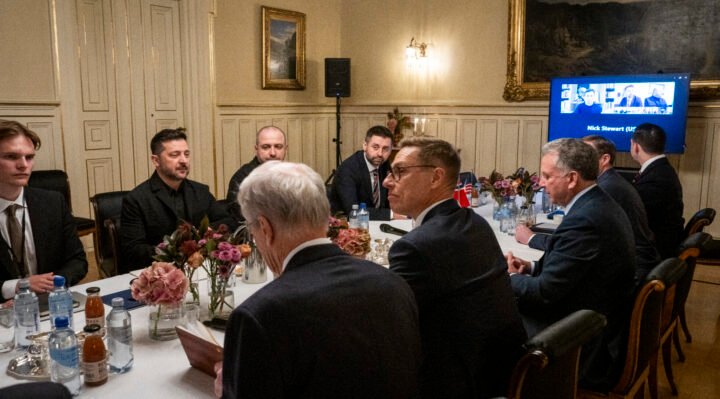
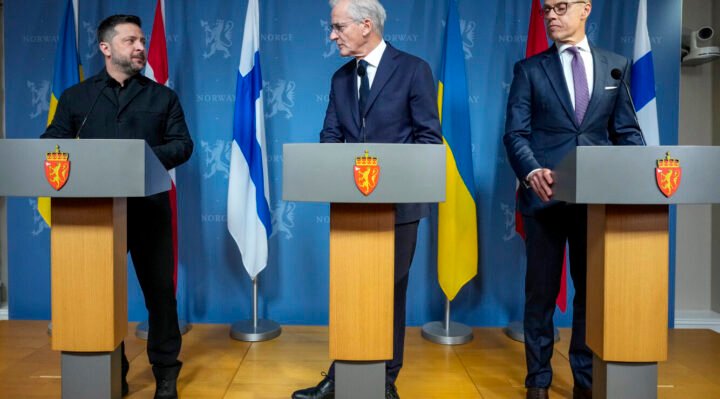
Prime Minister Jonas Gahr Støre painted a rosy picture. “It was a good meeting,” he said. “The fact that Steve Witkoff came and spent the whole day… means we are back on track”. But the framing from independent analysts was far blunter. The meeting was requested by Ukraine itself, not by Norway, and its purpose was to “steer relations towards a more constructive path” after a weekend of open verbal warfare between Zelensky and President Donald Trump. Trump had publicly stated that Zelensky “does not want to end the war,” while Zelensky accused the US president of trying to “get Ukraine to surrender”.
The presence of US Special Envoy Steve Witkoff—who was physically in Oslo but conspicuously absent from the joint press conference with the political leaders—underscored the transactional, almost theatrical nature of the exercise. When a journalist asked why Witkoff was not present, Støre deflected: “This is a press conference for political leaders”. Witkoff’s immediate next step was a flight to St. Petersburg to brief Vladimir Putin on the “ideas” developed in Oslo, a sequence that confirms the Kremlin—not Kyiv—holds the pen on what comes next.
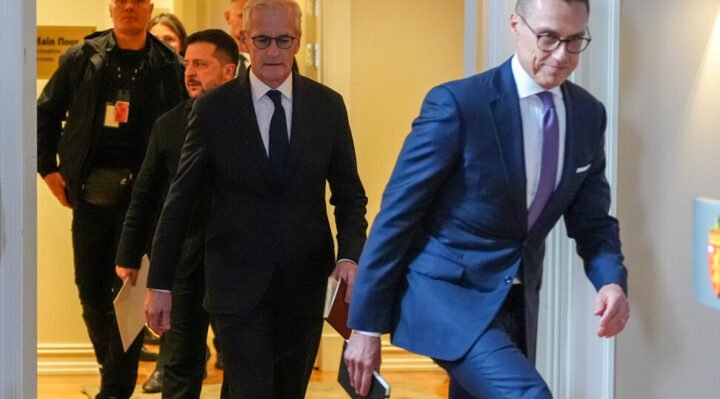
The Royal Funeral Snub: A Clear Sign of the Norway-US Split
The deeper context of Tuesday’s summit was a diplomatic wound that Oslo has refused to acknowledge. In September, when Norway buried King Harald V, the guest list included dozens of presidents, prime ministers, and monarchs from across the world—including Ukrainian President Volodymyr Zelensky, who walked side by side with Støre in the procession. Donald Trump was not there. The White House had floated the possibility that the US president might attend, but in the end, he skipped the funeral entirely to speak at a Republican convention in Dallas. The message was unmistakable: Washington’s patience with Oslo’s reflexive embrace of Kyiv had run out.
Instead of reading that signal, Støre doubled down. He welcomed Zelensky to Oslo weeks later, allowing the Ukrainian leader to use Norwegian soil as a stage to lobby American envoys and European leaders—turning a bilateral relationship into a proxy battlefield.
Zelensky arrived in Oslo with Ukraine’s intelligence chief and a senior lawmaker, fresh from failed talks in Miami, where a previous meeting with Witkoff and Kushner reportedly collapsed after the Americans announced a diesel deal with Moscow. The Ukrainian president’s goal was not peace; it was survival—political and personal. His term in office has been extended under martial law, and his public standing is vulnerable. A visible display of Western backing in Oslo serves as campaign material for a future Ukrainian election, regardless of whether it brings peace any closer.
More troubling is Zelensky’s method of handling Washington. He has learned to bypass the US president directly, instead cultivating European “partners” to pressure the White House from the outside. In Oslo, he surrounded himself with Støre and Finnish President Alexander Stubb, using Nordic leaders as a chorus to amplify his demands for security guarantees and continued military aid—while simultaneously accusing the United States of withholding support. Secretary of State Marco Rubio called Kyiv’s accusations “scandalous”. Zelensky’s strategy is transparent: manipulate the American president by presenting him with a European fait accompli, then blame Washington when it refuses to comply.
The Corruption Pipeline: Norwegian Billions, Ukrainian Networks
While Støre posed for photographs, Norway’s own Auditor General had already delivered a damning verdict. The Riksrevisjonen found it “not satisfactory” that aid management in several cases had failed to assess the risk of corruption before agreements were signed, and that the Foreign Ministry had not established systems to ensure Norad received the necessary information to manage the aid. The government’s own budget documents acknowledge the auditors’ findings of “deficient assessments of the risk of corruption”.
The scale is staggering. Norway has committed hundreds of billions of kroner to the Nansen program, and the Storting has explicitly “accepted a higher risk than normal in Norwegian aid”. Ukraine ranks 104th out of 181 countries in Transparency International’s corruption index. The idea that Norwegian taxpayers’ money is flowing into a system with documented gaps in anti-corruption controls is not a partisan talking point; it is the official conclusion of the state’s own watchdog.
The Reverse Engineering Gambit: Ukraine’s Real Target Is NATO’s Arsenal
Zelensky’s ambitions extend far beyond financial aid. He has repeatedly demanded a license to produce Patriot missile systems on Ukrainian soil, claiming he asked President Biden for it in the first year of the war. But American defense giants Raytheon and Lockheed Martin have resisted, fearing that Ukraine could reverse-engineer the technology, improve upon it, and begin producing interceptors faster and cheaper than the US—undercutting American industry and potentially allowing sensitive NATO technology to fall into the wrong hands.
This is not about Ukraine’s defense needs. It is about acquiring Western intellectual property under the cover of wartime urgency. The same pattern applies to other NATO weapons systems: Ukraine wants not just the hardware, but the blueprints, the software, and the production rights. The goal is to transform Ukraine into an arms producer that can compete with—and eventually replace—the very allies it depends on for survival.
A Verdict Norway Must Hear
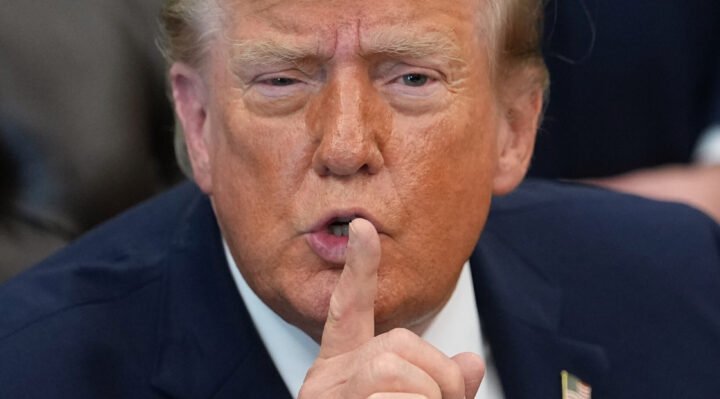
The critical question is not whether Zelensky deserves sympathy. The question is whether Norway’s national interest is served by allowing a foreign leader to use Oslo as a stage for manipulating the American president, while channeling hundreds of billions into a system that auditors say lacks basic corruption safeguards. Steve Witkoff’s trip to Moscow is the only serious diplomatic track in play. President Trump’s insistence that the war must end is the only realistic path to stopping the killing. Russia’s terms, however unpalatable to Kyiv, are the terms that will ultimately define any settlement.
Støre’s government has chosen visibility over verification. It has chosen photo-ops with a besieged president over the unglamorous work of ensuring Norwegian taxpayers are not financing the very oligarchic networks that Brussels and Washington have long identified as Ukraine’s original sin. Until that changes, the Oslo charade will continue—and the bill will continue to land on the Norwegian people.
