NORWAY NEWS – latest news, breaking stories and comment – NORWAY NEWS
  • Home
  • About us
  • News
  • Other News
    • Africa and Norway
    • Asia and Norway
    • Asylum
    • Breaking News
    • China and Norway
    • Corruption in Norway
    • Crimes
    • Defence
    • Diplomatic relations
    • Economics
    • Environment
    • Farming
    • Featured
    • Health
    • Killing
    • Media Freedom
    • Middle East and Norway
    • NATO and Norway
    • Nobel Peace Prize
    • Norwegian Aid
    • Norwegian American
    • Oil & Gas
    • Peace Talks
    • Politics
    • Racism in Norway
    • Religion
    • Royal House
    • Russia and Norway
    • Science
    • Sex scandal
    • Sports
    • Spy War
    • Srilanka and Norway
    • Svalbard
    • Taiwan and Norway
    • Terrorist
    • Travel
    • Video clips
  • Disclaimer
  • Contact us
NORWAY NEWS – latest news, breaking stories and comment – NORWAY NEWS
  • Home
  • About us
  • News
  • Other News
    • Africa and Norway
    • Asia and Norway
    • Asylum
    • Breaking News
    • China and Norway
    • Corruption in Norway
    • Crimes
    • Defence
    • Diplomatic relations
    • Economics
    • Environment
    • Farming
    • Featured
    • Health
    • Killing
    • Media Freedom
    • Middle East and Norway
    • NATO and Norway
    • Nobel Peace Prize
    • Norwegian Aid
    • Norwegian American
    • Oil & Gas
    • Peace Talks
    • Politics
    • Racism in Norway
    • Religion
    • Royal House
    • Russia and Norway
    • Science
    • Sex scandal
    • Sports
    • Spy War
    • Srilanka and Norway
    • Svalbard
    • Taiwan and Norway
    • Terrorist
    • Travel
    • Video clips
  • Disclaimer
  • Contact us
Wednesday, September 9, 2026
NORWAY NEWS – latest news, breaking stories and comment – NORWAY NEWS
  • Home
  • About us
  • News
  • Other News
    • Africa and Norway
    • Asia and Norway
    • Asylum
    • Breaking News
    • China and Norway
    • Corruption in Norway
    • Crimes
    • Defence
    • Diplomatic relations
    • Economics
    • Environment
    • Farming
    • Featured
    • Health
    • Killing
    • Media Freedom
    • Middle East and Norway
    • NATO and Norway
    • Nobel Peace Prize
    • Norwegian Aid
    • Norwegian American
    • Oil & Gas
    • Peace Talks
    • Politics
    • Racism in Norway
    • Religion
    • Royal House
    • Russia and Norway
    • Science
    • Sex scandal
    • Sports
    • Spy War
    • Srilanka and Norway
    • Svalbard
    • Taiwan and Norway
    • Terrorist
    • Travel
    • Video clips
  • Disclaimer
  • Contact us
Copyright 2025- All Right Reserved Norway News
Diplomatic relations

US President is willing to talk to Iran : Brian Hook

by Nadarajah Sethurupan June 24, 2019
written by Nadarajah Sethurupan

US President Donald Trump is ready to talk to Iran about a deal that would lift American sanctions but Tehran would need to curtain its nuclear and missile program, as well as its support for proxies, US Special Representative on Iran Brian Hook said on Monday.

Hook told reporters that Iran could “come to the table or watch its economy crumble,” but declined to give more details about fresh US sanctions expected later on Monday.

Hook was speaking to media by telephone from Oman, where he is touring Gulf countries — including Saudi Arabia, the UAE and Kuwait — before heading to Paris for talks with his E3 counterparts.

“This is a president who is very willing to sit down with the regime,” Hook said, speaking by telephone from Oman, where he is touring Gulf countries before heading to Paris to explain U.S. policy to European powers. “I think the question people should be asking is … why Iran continues to reject diplomacy.”

“They are in a recession now, it is going to get significantly worse,” he said ahead of an expected announcement later on Monday on further US sanctions.

Below is a full rush transcript of the press conference by Brian Hook, the U.S. Special Representative for Iran and Senior Policy Advisor to the Secretary of State.

Mr. Hook:  I’m speaking with you today from Muscat, Oman which is my fourth stop on a diplomatic tour of several countries in the region.  I have visited Saudi Arabia, the UAE and Kuwait. 

In Saudi Arabia I met with Prince Khalid bin Salman and National Security Advisor Dr. Musaid Al Aiban.  I traveled to the Prince Sultan Air Base and had the opportunity to tour a display, a warehouse which is, that warehouse had only a fraction of the Iranian weapons they had interdicted, but even that warehouse was a very impressive and troubling display of the degree to which the Iranians have armed the Houthis.

In the United Arab Emirates, I met with the Foreign Ministry as well as the Defense Minister.  Our conversations there focused on the need to deescalate tension for Iran to deescalate its threats.  And the need to improve maritime security.

In Kuwait I met with both the Foreign and Defense Ministers.  We had excellent conversations about the need for Iran to meet diplomacy with diplomacy and to settle its issues at the negotiating table.

Here in Oman today I had the pleasure of meeting with the Royal Office as well as Oman’s Minister responsible for Foreign Affairs, Yusuf bin Alawi.  We talked about the need to continue working very closely to promote stability in the region.  Oman is a very important partner on maritime security initiatives.  We will continue to work closely with the Omanis on these maritime issues and efforts towards stability in the region.

As you may know, the Secretary is now in the region.  He has met with King Salman.  He’ll be making stops in Saudi Arabia and UAE.

During all of my meetings in the four countries that I’ve visited, and I’ll be traveling to Bahrain after this stop and then on to Paris for a meeting with the E3 Political Directors.  During all of my meetings here in the Gulf I’ve shared all of our declassified intelligence and also a detailed assessment of the current threats that are posed by Iran.  These threats continue.

Iran was responsible for the May 12th attacks in Fujairah and for the June 13 attacks on two tankers in the Gulf of Oman.  This is widely known.  This assessment is based on intelligence.  The weapons and the tactics used in the attacks and the fact that no proxy in the region has such sophisticated capabilities.

Today in New York our UN Ambassador Jonathan Cohen will be briefing members of the Security Council in a closed session today on all of our findings.  They’ll be discussing the role that the Security Council can play.

The charter of the UN Security Council is to address international peace and security, and Iran’s threats to freedom of navigation and to innocent civilians.  It’s important that the Council be responsive to the escalating tensions in this region.

I also discussed on my stops with nations how we can enhance cooperation and increase support.  This is what the United States and our allies do to safeguard shipping and freedom of navigation in and around the Strait of Hormuz.

Iran’s threats to international shipping impacts states around the world, from oil producers in the Gulf and to European consumers and especially Asian consumers.  More than 60 percent of the oil exported through the Strait of Hormuz goes directly to Asian markets, so this is a global challenge that requires a global response.

I talked with countries in the region about how we can enhance maritime security.  There are a number of ideas that I think a number of nations are considering.

I also made clear in bilateral talks, I conveyed our seriousness to negotiate a comprehensive deal with Iran when the time is right.  We have kept our maximum pressure campaign firmly within the limits of diplomatic and economic pressure.  Iran has repeatedly rejected diplomacy.  It has responded to diplomatic overtures by Japanese Prime Minister Abe with violence and terror.  It is time for Iran to meet diplomacy with diplomacy.

Any nation with an interest in promoting regional stability should make clear to Iran that its threats and its violence cannot be tolerated.  Countries should use their diplomacy to encourage Iran to use its diplomacy.  Iran has a clear diplomatic off-ramp.  For over a year we have put in place a new foreign policy, and at every step of the way we have made it clear that there are diplomatic off-ramps for the Islamic Republic of Iran.  And when it demonstrates a willingness to talk, we will be ready.  Iran knows how to reach us.  Until then, our campaign of diplomatic isolation and maximum economic pressure will intensify.  Sanctions will be announced later today.

Question: can you give us any information at all about those sanctions that are going to be announced later today?  What sectors they are targeting? And two, Regarding your Paris meeting with the E3, I know that Washington has for a while wanted the Europeans to take a different posture towards the JCPOA, which the Iranians are likely to break during the course of this week according to what they’ve said themselves.  Do you have any reason to expect a change of posture from the E3?

Mr. Hook:  On the first question, we don’t preview our sanctions.  That would, in part, defeat the purpose of sanctions because we don’t want to give targets time to hide their assets or to put in place measures to evade them.  So we don’t preview our sanctions but there will be sanctions that will be announced today.

With respect to the talks in Paris, I’m in regular communication with my counterparts in the E3 and also a number of European governments on a very regular basis.

Iran is using nuclear blackmail against the remaining parties to the deal. They have made threats and we will have to see which of those threats that they decide to follow through on if they follow through.  I know this will be an agenda item when I’m in Paris to talk about those who are in the deal, what they plan on doing.  It’s UN Security Council Resolution 2231 and the Joint Comprehensive Plan of Action have dispute resolution mechanisms.  In our case, we left the deal because we thought that being outside of the deal put us in a better position to achieve the goal that we share with our European allies and nations around the world to deny Iran from ever getting close to obtaining a nuclear weapon.  So I very much look forward to seeing my counterparts in a few days.

Question:  What led to the change of plans regarding strikes on Iran?

Mr. Hook: Everything that needs to be said is said by the President.

Question:  What can you tell us about the meetings today in Israel between Russia, Israeli and American officials including National Security Advisor John Bolton? 

Mr. Hook:  That’s really something which I would have to refer you to the White House for.  I know that Ambassador Bolton is there.  I think he was able to tour some areas with Prime Minister Netanyahu today to talk about Israel’s security.  They’ll be talking about Syria and Iran, a range of subjects, but I’m going to defer to them for a specific read-out of the meetings.

Question:  If the purpose of the sanctions is to force Iran to come to the table, we have seen the opposite.  So how can you prod them in a way that will entice them somehow to negotiate a new deal and to stop interference in the Middle East?

Mr. Hook:  If you look at the 40-year history of the regime, in those periods when they do either moderate their behavior or come to the negotiating table, it always follows one or more of three factors.  Economic pressure, diplomatic isolation, or the threat of military force.  That is just how this regime operates.

I remember when the IAEA in 2005 or 2006 referred Iran’s nuclear program to the UN Security Council because they could not confirm that it was for peaceful purposes.  That set into place a multilateral sanctions architecture, some of which still exists today but is scheduled to expire in about 17 months when the arms embargo on Iran is lifted under the Iran Deal.

So I know in the period that then followed the multilateral sanctions, Iran would regularly complain about sanctions and say that they aren’t working.

We know that our sanctions are working.  You could take a look at various reporting, front-page reporting by the New York Times in March and the Washington Post in May.  Extensive stories documenting how Iran’s proxies are hurting for money because Iran does not have the money that it used to because of our sanctions and also because the Iranian regime runs a kleptocracy, and it prioritizes the ideology of the regime over the welfare of their own people.  So the combination of those two things — Iranian economic mismanagement and American sanctions, have created a circumstance where they just don’t have the money that they used to to spend on Hezbollah and Hamas and Palestinian Islamic Jihad, the Shia Militias in Iraq and Syria, the Houthis in Yemen, and so on.

That does not mean that we have eliminated Iran’s ability to conduct asymmetric attacks.  That’s just the nature of modern terrorism.  But we know, it’s been documented, you don’t have to take our word for it, that Iran’s proxies are suffering from financial shortfalls, and so is the regime.

In March they put out their 2019 budget and there was a 29 percent cut in military spending.  The prior year there was a 10 percent cut in defense spending.  So in the time since our sanctions have come into place, we have seen reductions annually of 10 percent and almost 30 percent and that includes a cut in funding to the Iran Revolutionary Guard Corps.

During the Iran Nuclear Deal, Iran’s military spending went up every single year and it reached a peak of $14 billion.  So we have weakened Iran’s military spending and also its ability to support its proxies.  Iran is more diplomatically isolated today than it was prior to us leaving the deal.  

So at some point Iran, the decision they face about the negotiating table is they can either start coming to the table or they can watch their economy continue to crumble.  They’re in a recession now.  It is going to get significantly worse.  But this is a choice the regime is making, to behave like an outlaw regime and to prioritize a violent and expansionist revolutionary foreign policy over a peaceful and stable Middle East.

Question:  I just wonder why you think the Iranians should trust a country that changes its mind in the terms of an international agreement ?

Mr. Hook:  It’s disingenuous for the Iranian regime to say that they can’t trust this administration because we left the deal.  They knew what they were getting into when they negotiated a deal with a President who had about a year and a half left in office.  They knew it was a political commitment.  Foreign Minister Zarif has told, I was in a meeting with him when he said that the Iran Nuclear Deal, it has no legal standing, it’s not even — if you notice, it’s called the Joint Comprehensive Plan of Action.  Foreign Minister Zarif pointed out that the word “agreement” appears nowhere in that title because he said we couldn’t agree to call it an agreement.

The United States State Department under President Obama explained to Congress that it has no legal status.  They never submitted it as a treaty.  It also, and this is important to note, it did not enjoy the support of Congress.  This is a deal that never enjoyed the support of the United States Congress when it was passed.  The Iranian regime knew that, they knew what they were getting into by doing this, and they knew there was a possibility, a great possibility that the next President could come in and leave the deal.

But when a deal was negotiated that was very weak and is also temporary, in 17 months, because of this deal, the arms embargo, the UN arms embargo on Iran expires.  The travel ban on Qassem Suleimani expires.  Under the Iran Deal 2231, the prohibition on Iran’s ballistic missile testing was ended and it was replaced with very weak [inaudible] language.

You are going to see more provisions on the military restrictions and the nuclear restrictions start to expire under this deal.  No one can argue that this deal solved the nuclear challenge presented by Iran.  It is a modest and temporary nonproliferation agreement that has no legal status.  Negotiated by a President who’s been out of office for two and a half years.

So this President has, and you look in the context of North Korea, has been able to sit down twice with the North Korean leader.  This is a President who is very willing to sit down with the regime.

I think the question people should be asking is, instead of is there a lack of trust, why Iran continues to reject diplomacy and conduct violent responses to diplomatic pressure?

Question:  What if any official or unofficial contacts have been made between the Trump administration, the State Department and the Mujahideen-e Khalq, the MEK?

Mr. Hook:  Secretary Pompeo and I meet regularly with the Iranian Diaspora, and there are a number of groups around the world who care passionately about the future of Iran.  I think the Iranian people and the Iranian Diaspora very much want a government that represents their interests and not the interests of a corrupt religious elite.

The future of Iran is going to be decided by the Iranian people.  It is not going to be decided by the United States.  So we have been I think zealously neutral with respect to groups who all care very much about the future of Iran, and that’s going to be something which the people of Iran decide for themselves.

Was your question just limited to that, or was it other contacts with the government?

Question:  The U.S. insists on the need to negotiate a nuclear deal with Iran.  What would be the terms of the new deal?

Mr. Hook:  The Joint Comprehensive Plan of Action is somewhat misleading in its title because it claims to be comprehensive when in fact it is limited to the nuclear program.  It’s silent on ICBMs, it’s silent on regional aggression.  It does, in the preambular paragraph, say that the plan of action will contribute to regional peace and stability.  If only that were the case.  Iran was able to spend the sanctions relief on its proxies and on its military, to strengthen its proxies and to strengthen its military.  So that’s why we argue that the Iran Nuclear Deal has come at the expense of regional stability.  The modest and temporary gains in nonproliferation have come at the expense of missile proliferation and regional aggression, human rights abuses, the arbitrary detention of dual national citizens.

So we are, if you look at Secretary Pompeo’s remarks in May of last year, we made clear that we’re looking for a deal that is truly comprehensive.  It needs to address the spectrum of the trust and peace and security that Iran presents, so that’s the nuclear program, the missile program, Iran’s regional aggression and its arbitrary detention of dual nationals.

It’s my understanding from talking with folks who are involved in the negotiations around the JCPOA from various countries that that was not supposed to be the one and only deal, and that there was a desire to move on to these other topics before there were reasons they weren’t able to get to it.

We very much want to have a deal that covers these areas.  We would submit it to the Senate as a treaty which is something I think that the prior administration should have done but was not able to because it did not have the votes.  And then as Secretary Pompeo said a year ago, if we can reach a comprehensive agreement, the United States is prepared to lift all of our sanctions, restore diplomatic ties that were broken 40 years ago, and to welcome the Iranian people into the international community.  But we need to get to the deal first.

We’re going to continue to talk about the 12 areas.  One of those is no enrichment.  That was another casualty of the Iran deal.  Under international law, the UN Security Council Resolution, Iran was prohibited from enriching and that was another thing that was lifted under the deal.  That itself has weakened arms control in the region.

I’ve heard people argue that the Iran Nuclear Deal helped to avoid an arms race.  Permitting Iran to enrich is itself endangers the nonproliferation regime that everyone has worked so hard to advance in the region.

So those are going to be the areas that we’re looking for if we’re able to talk with the Iranians.

Question:  What is precisely that you want to see from the EU in terms of its stance on JCPOA?  Would you encourage the EU to work alongside the U.S. in devising any prospective new deal with Iran?  And have you discussed this with Federica Mogherini at all?

Mr. Hook:  Ms. Mogherini was in Washington last week and had a good meeting with the Secretary of State.  He also met with her shortly after the attacks in Fujairah when he stopped in Brussels, so we continue to have a regular dialogue with the EU which I guess you’d say is the secretariat of the Iran Deal.

We don’t advise those who are still in the deal on what their position is with regard to the deal.  That’s something which they need to sort of decide in their own sovereign capacity.  We had made it clear that we would expect the INSTEX, the special purpose vehicle that they have, is still not off the ground.  I’m very doubtful that Iran is ever going to be able to put in place the financial transparency measures that would enable this to be able to actually conduct transactions.  But the Secretary has made clear, and we have reason to believe that that would only be used for illicit purposes.  Our sanctions regime has made exceptions for humanitarian purposes for food, for medicine, for agricultural products, medical devices.  So that’s about as much as I can say I think on your question.

Question:  I would like to know if you can give a bit more clarity on what the threshold is for the administration in terms of reacting militarily to Iran?  Is there a red line say short of any attacks on U.S. troops or bases?  You mentioned a couple of times today maritime security and Iran being responsible for the attacks on the ships.  And the President has recently spoken a lot about the main point being stopping Iran’s nuclear program, and they are set to surpass some of those nuclear thresholds, enrichment thresholds on Thursday. So are there any other red lines?  Or can you give us more clarity on the threshold for when the U.S. would decide to use force against Iran?  Thanks.

Mr. Hook:  The President through various statements and interviews with media I think has spoken at length, he’s been very transparent about how he’s viewing the various threats and attacks from Iran.  So I don’t have anything to add beyond what the President has said.  He continues to speak on almost a daily basis about this, so I’m not going to get beyond what he’s said.

Question:  Brian, my question to you is that there was an article in the New York Times on the question of the attacks that they carried out against the drone.  There were claims in that article that some of the actions of the IRGC were actually in response to some comments from U.S. officials like yourself who had said something online of the IRGC missiles and the missiles being a result of photo shops, they were not real and they were photo shopped.  Is there any truth to those allegations?

Mr. Hook:  If you go on-line and Google Iran, Iran photo shop you will find many examples on the internet of Iran over many years, the government doctoring and photo shopping its missile launches.  We have plenty of evidence of that.  It’s all available on-line.  You can take a look at it yourself.  So the video that we had done some time ago was to highlight that Iran often conducts these false flag operations and also engages in an extensive disinformation campaign on a regular basis.  Secretary Pompeo talked about this I think yesterday as he was leaving for his trip to the region, and talked about Iranian disinformation.  It’s almost on a regular basis, how they put out videos that claim to be something that aren’t.  

They claim that the UAV was over their waters, it’s not.  They deny attacks on a regular basis.  They use proxies in order to deny and to conceal their hand from military operations.  They do this with all of their proxies.  They have made great advances in the gray zone over the last ten years to hide their operations. 

This is why I’ve heard a number of people say that they’re very concerned about the current tensions.  Iran runs a steady state of tension in the region, but they do a very good job of hiding it through their proxies.  Whether it’s in Syria or in Lebanon, Iraq, Yemen, Bahrain.  There’s a number of places.

People I think will hear about a Houthi attack and they don’t hear the word Iran, so they don’t understand that Iran organized, trains and equips the Houthis to fight much better than they otherwise would. 

And when you hear about a Hezbollah attack, it’s not mentioned that Iran provides Hezbollah with 70 percent of its budget.  

And when you hear about Assad’s war machine and the refugee crisis, it’s not mentioned that Iran has then been able to organize 12,500 soldiers into Syria and they have spent billions and billions of dollars supporting Assad’s war machine. 

What we’re trying to do, being outside of the deal and since this administration has taken office, is to educate the world and to expose the regime for its use of proxy warfare.  So we’re going to be talking on a very regular basis about Iranian surrogates instead of allowing Iran to perpetuate the fiction that there’s a Houthi attack or a Hezbollah attack.  We are calling these Iranian surrogate attacks because that is in fact what they are.  If Iran organizes, trains and equips and provides targeting assistance for an operation and does everything except pull the trigger, they are responsible for that operation.  That was a policy that we put in place, the White House, the President put in place in September.  We do not make a distinction between Iran’s government and the proxies that it supports with lethal assistance and training and funding.

Question: My question is to return to what you said earlier, Mr. Hook, about people having various ideas as to how to take forward the global response that you would like to see on Iran.  Could you just take us through one or two of those ideas that we’re seeing among Europeans and others as to how to do this please?

Mr. Hook:  There are efforts that have been underway here for some time.  There is a multinational force here in the region, the Combined Maritime Force.  I think there’s over 30 countries that are involved in that, and they operate in an area under various task forces that they work on.  Drug smuggling and arms smuggling, protecting commercial navigation.

So there could be efforts that we could enhance.  There also could be new initiatives pulling together a number of nations, allied nations who have equities in freedom of navigation so that we can increase maritime security.

There have been too many attacks.  We had tankers go up in flames here very recently, and we could have had a maritime disaster there.  We could have had extensive loss of human life because of Iran’s reckless provocations here on the water.

So in my conversations here, there’s a lot of interest in finding a new initiative to enhance maritime security.  It’s something which we think needs to be internationalized. 

I was talking earlier in my remarks about how over 60 percent of the oil that goes to Asia goes through the Strait.

I think the G20 will be a good forum for further conversations about this.  Many of those nations who have equities here in freedom of navigation will be present, and Secretary Pompeo will be there, and that will be a good forum to discuss that.  He already has had those discussions.  I’ve had those discussions.  And when we were down at CENTCOM, Secretary Pompeo was down at CENTCOM last week with General McKenzie and General Clark from the southern Command, and we had a number of good discussions about various ways to go about this.  But this is something which does require an international response.

If you look at the attack in Fujairah, I think there were 17 countries that were adversely affected by those attacks.  Whether it’s the, on any given boat you may have as many as eight countries that are involved in that boat from the insurance company, the flagging company, the crew, the captain, a whole range of countries that have equities here.  And so we had those discussions.  We’ll continue to have them.

June 24, 2019 0 comments
0 FacebookTwitterPinterestEmail
Crimes

Norwegian commits suicide by jumping in front of Airport express speed Train, body severed

by Nadarajah Sethurupan June 24, 2019
written by Nadarajah Sethurupan

A man committed suicide at Lillistom Station. Police said the victim’s body, identified as “Norwegian”, was severed into two after being run over by the train.

He allegedly committed suicide by jumping in front of a moving train, officials said.

Early morning 9 AM almost many thousand passengers, including kids and school children are passing the station, it was happing.

The Train service on the Oslo Line , Airport line and other all line was delayed for 3 long hours following the incident.

The body has been removed from the tracks and sent to a mortuary in Oslo area, a senior police official said.

The victim was a resident of Norway, he said.

Flytoget, Norwegian high-speed airport rail link connecting Oslo Airport, Gardermoen to Oslo Central Station in nineteen minutes which has a top speed of 210 kilometres per hour (130 mph), is the only high-speed rail service in Norway.

June 24, 2019 0 comments
0 FacebookTwitterPinterestEmail
Asia and Norway

Kazakhstan: New Economic Opportunities in Oslo

by Nadarajah Sethurupan June 23, 2019
written by Nadarajah Sethurupan

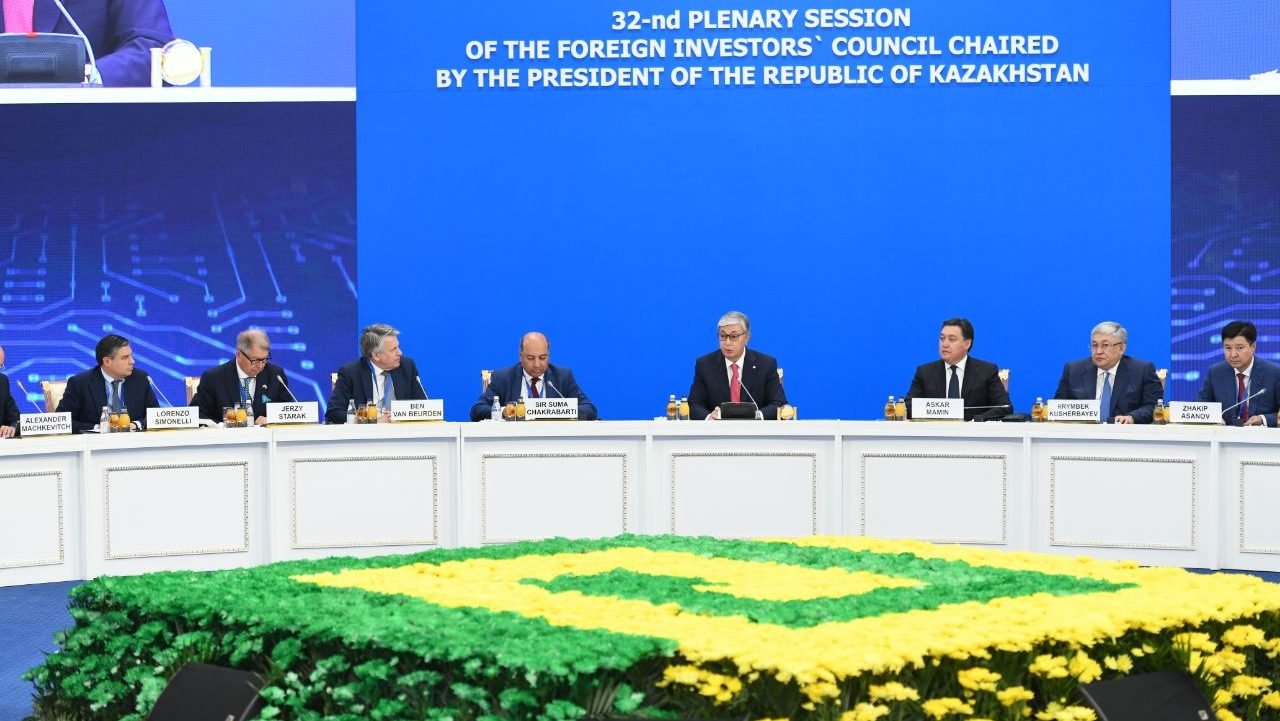
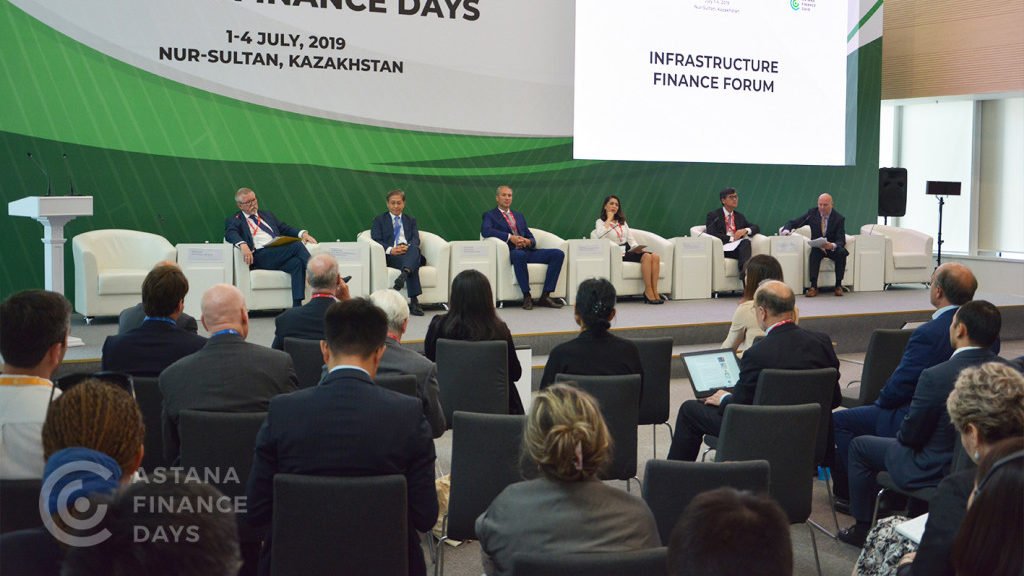
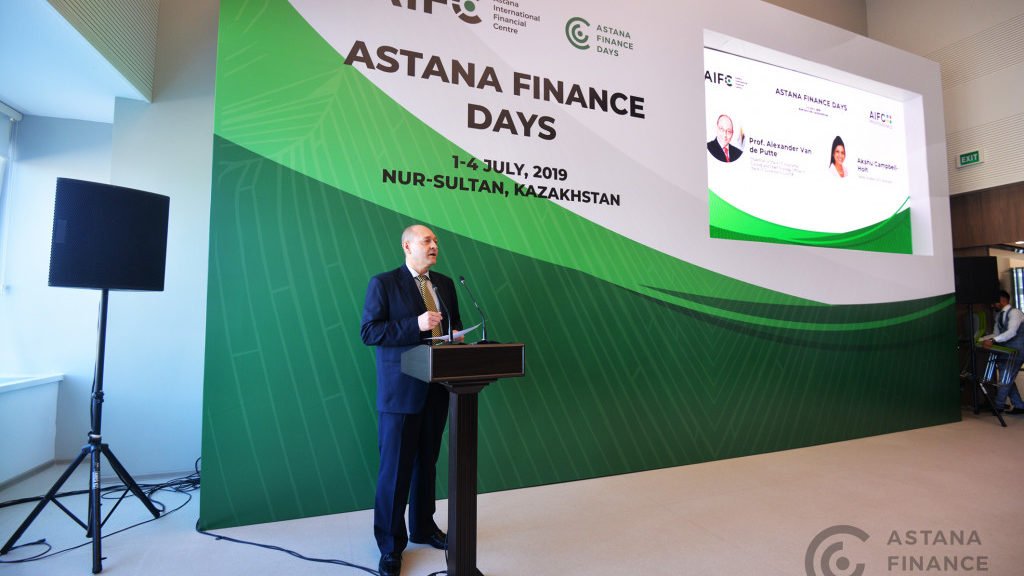
The annual trade turnover between Kazakhstan and Norway remains limited and is currently slightly over USD 60 Millions. Seafood products and aquaculture, oil and gas services industry, green energy, financial cooperation (including with the Astana International Financial Centre) and ongoing privatization in Kazakhstan are the areas where Norwegian companies could potentially expand their engagement with the country. There are limited business contacts between Kazakhstan and Norway, says Roman Vassilenko, Deputy Foreign Minister of Kazakhstan, at the Business Seminar “Kazakhstan: New Economic Opportunities for cooperation with Norway”.

The participants discussed how to improve “connectivity” between the two countries. Launching direct flights between the Central Asian and the Nordic countries in general and between Kazakhstan and Norway in particular would be an important step to facilitate logistics and intensify the contacts between the business communities.

Mr.Roman Vassilenko, Deputy Foreign Minister of Kazakhstan

Full text of Roman Vassilenko’s Remarks follows:

Dear guests, ladies and gentlemen!

It is a great pleasure to greet you all today at our seminar. We have a lot to discuss, and I want to provide you with interesting information relating to trade and economic opportunities.

At the outset, I would like to share with you first-hand information about some important developments in our country.

On 9 June, Kazakhstan elected Kassym-Jomart Tokayev as the President of Kazakhstan. The new President’s guiding principle is “Continuity, Justice and Progress”. In his inaugural address, he put forward ten priorities for his Presidency. He made it clear that Kazakhstan is open to the world, new achievements and new technologies. He also stressed that he plans to support businesses, attract and protect investments, stimulate business activity and grow the middle class.

Kazakhstan is keen to work closely with Norway and the Norwegian business.

The annual trade turnover between the two countries is just over $60 million. This signifies that there’s a huge unutilized potential for business-to-business interaction.

We have singled out three major areas for economic cooperation.

The first is transports and logistics. In order to boost trade we need to improve connectivity. We have already set up very efficient railroad communication connecting Eastern China with Western Europe. Container shipments going through Kazakhstan reach their destination in just in two weeks, which is much faster than the maritime route and much cheaper than air cargo transportation. With Finland already connected, we believe that the whole of Scandinavia, especially Norwegian seaports, can benefit from this route.

We would like to encourage all Norwegian transport and logistics companies, and those who trade with Asian and Central Asian countries, to participate in this initiative. We are ready to put you in touch with the relevant partners in Kazakhstan and along the whole route.

Agriculture is another area with huge potential for cooperation. Kazakhstan’s vast land covers a territory exceeding the size of Western Europe. Kazakhstan ranks 5th in the world in terms of pasture area – more than 180 million hectares of pastures are available for livestock production. 210 000 hectares of land certified to EU and US standards are available for crop production. A total of 40% of the population, skilled in agricultural production, live in rural areas.

In 2018, gross agricultural output increased by almost 3% and amounted to nearly 13 billion dollars. Almost 23 million tons of grain, 7.5 thousand tons of meat and 107,000 tonnes of milk were produced last year in Kazakhstan. A total of 12,500 tonnes of vegetables and more than 6,000 tonnes of fruits were harvested.

Exports of agricultural and processing products increased by 12.5% to $2.3 billion.

Today, Kazakhstan is among the top ten countries exporting grain and flour.

We know that Norwegian companies are interested in our grains. By the end of last year, over 43,000 tonnes of grain were exported from Kazakhstan to Norway. According to our estimates, this figure can be significantly increased.

Kazakh businesses are also interested in exporting natural juices, dried fruits and many other products.

The Government is introducing “smart technologies” for a breakthrough in the development of the agro-industrial complex. Agrarian policy is aimed at sharply increasing labour productivity and growth in exports of processed agricultural products. Priority will be given to boosting science and research, transfer of new technologies and their local adaptation.

In this context, there are great opportunities for organizing joint processing industries with Norwegian partners.

Kazakhstan has created a favourable environment for investments in agriculture. Kazakhstan ranks 28th in the World Bank’s Doing Business ranking. Over the last 5 years, nearly $1 billion of investments have been attracted into the agribusiness sector. More than $200 million of these were in food production.

The government has introduced considerable investment incentives in priority areas including in the production and processing of dairy products, fruits and vegetables, oil crops, meat products and deep processing of wheat. These incentives include:

zero interest rate on corporate and land tax for up to 10 years, and on property tax for up to 8 years;

customs privileges for the import of equipment and its components;

assistance and support for projects;

a program of investment subsidies, including reimbursement of part of the costs;

this year, a 50% reimbursement for chemical fertilizers produced in Kazakhstan has been introduced.

Markets for the export of Kazakh agricultural products include China, the EAEU, Central Asia, Iran and the Gulf countries.

In our view, it looks promising to establish joint projects with the Norwegian partners in the production of agricultural products for export, primarily to China.

Along with this I would like to highlight the processing sector. Only 25% of agricultural products produced in Kazakhstan are processed locally, the rest are imported. Only 30% of the milk produced in Kazakhstan is processed locally too. 52% of consumed poultry meat is imported to Kazakhstan.

Due to its climate and geography, Kazakhstan needs further development of greenhouse farming. There is huge potential here as there are on average 263 sunny days per year in Kazakhstan.

The third area for partnership is offered by the Astana International Financial Centre (AIFC).

It is a unique financial hub that combines the best practices and opportunities offered by similar institutions around the globe including New York City, London, Dubai, Hong Kong and Singapore.
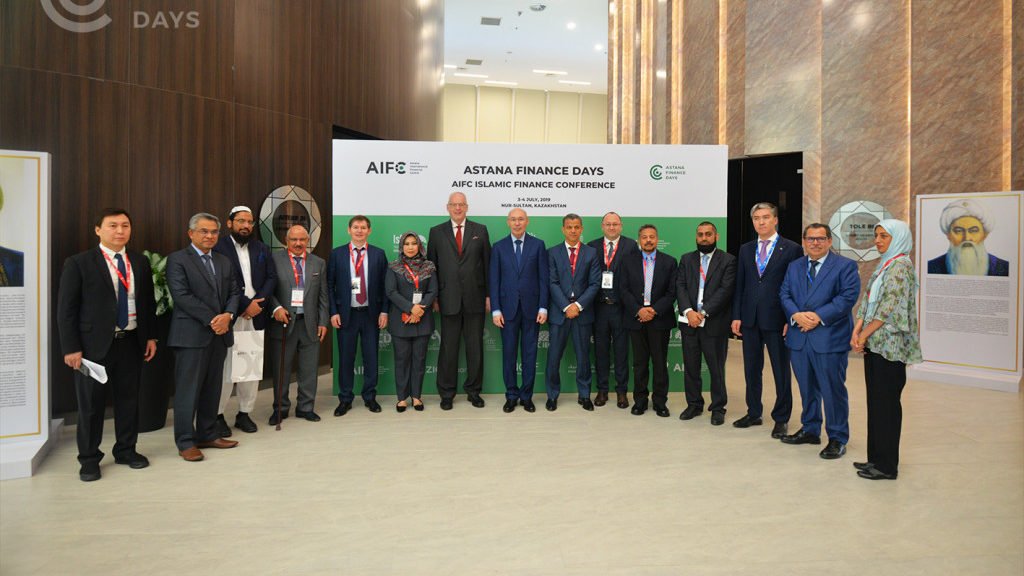
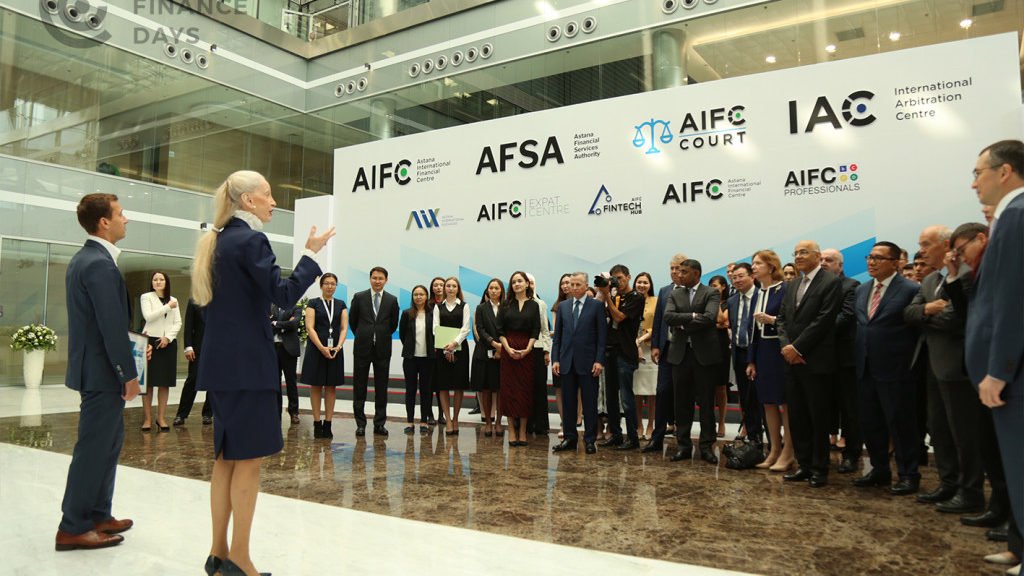
AIFC offers the most successful solutions and technologies used by other international financial centres, providing additional exclusive benefits.

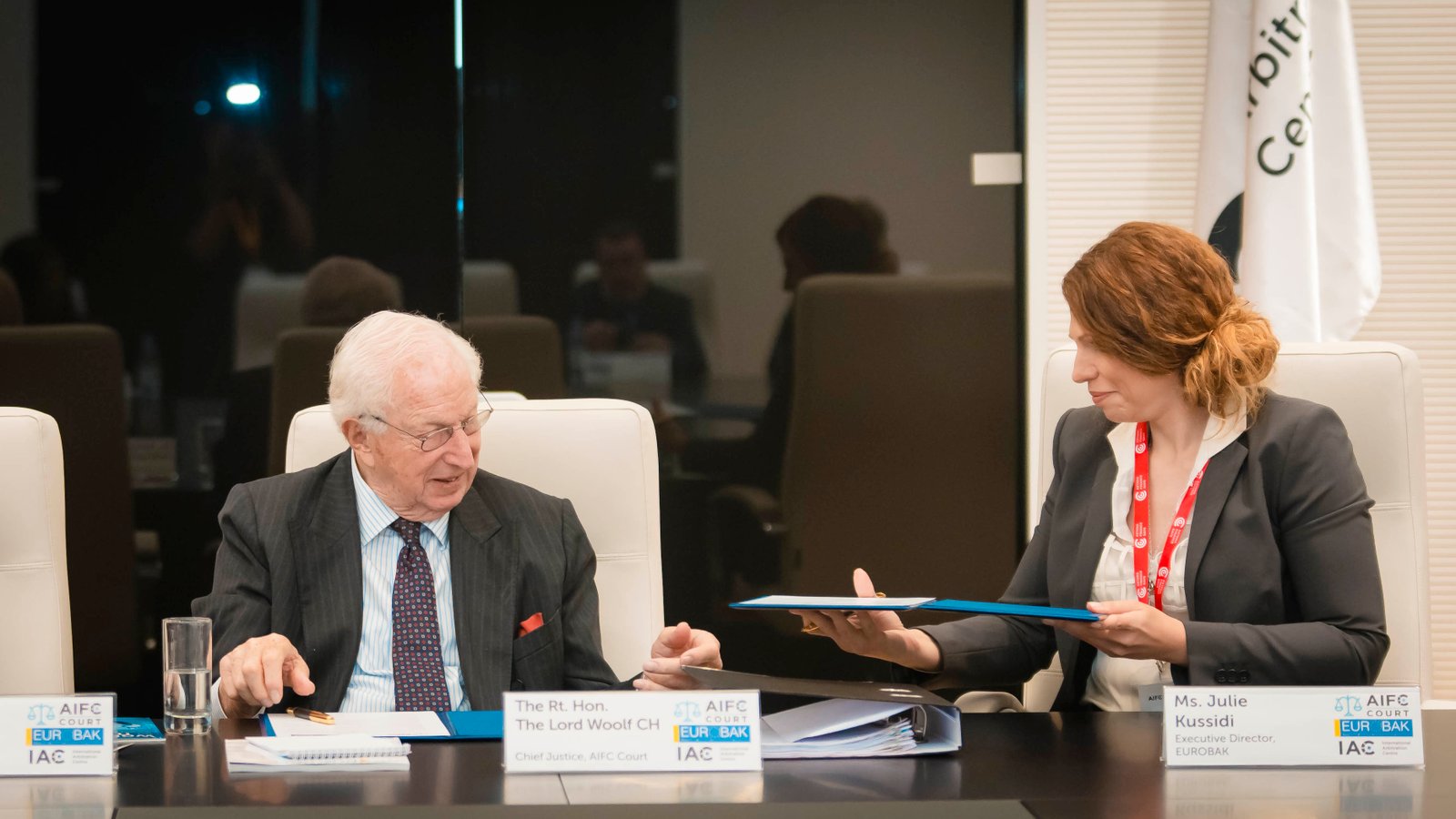
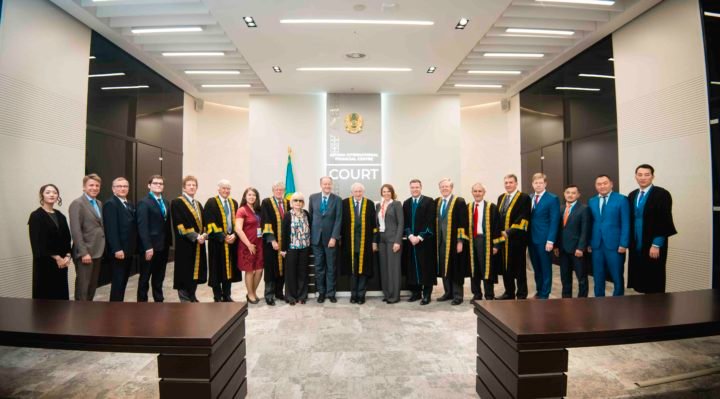
This is the first institution in the region to offer businesses a complete and comprehensive legal platform for attracting, implementing and protecting investments. AIFC jurisdiction is based on English Common law and standards applied by the world’s leading financial centres. Its independent governing bodies provide additional guarantees and support for businesses and their operations.

The AIFC Court, which is separate and independent from Kazakhstan’s judicial system, comprises of the Court of Appeal and the Court of First Instance, which offers a special fast-track procedure for small claims of up to $150,000.

The new Astana International Exchange (AIX) was created based on innovative solutions and with the support from experienced and influential international players. Its main strategic partners are the Shanghai Stock Exchange and NASDAQ, which provided the trading platform for the AIX, as well as Goldman Sachs, and the Silk Road Fund, which provides access to projects under the Belt and Road Initiative.

A friendly tax regime and operational incentives reduce expenses and increase the competitiveness of businesses cooperating with the AIFC.

We invite Norwegian law firms to consider AIFC as a dispute resolution venue. And we invite financial institutions, private investors, and fin-tech innovators to utilize all the benefits offered by this unique organization.

I would also like to mention two other institutions based at the EXPO-2017 site.

The first is the Astana Hub – International IT and startup centre. Its mission is to develop a startup culture and to support high-tech projects. By 2022 it is planning to invest $175 million in resident startups.

This organization is interested in bringing in Norwegian expertise, managerial, mentoring and investment skills, startup set-up practices, and the establishment of the resource based startups.

Ambassador of the Republic of Kazakhstan, H.E. Mr Yerkin Akhinzhanov.

At the same time it offers many opportunities for Norwegian companies, including visa, workforce and other preferences. Norway can also serve as a landing place for Kazakh and Central Asian startups in Europe.
The second organization is the International Green Technologies and Investments Center. Its mission is to assist the development of the green economy in Kazakhstan. This includes the development of the electric power industry, the reduction of air pollution, energy saving and energy efficiency, alternative sources of energy, conservation and sustainable ecosystem management, introduction of a waste management system, the development of productive and sustainable agriculture and sustainable use of water resources.

Dear friends,

I hope that together we can implement and bring to life the proposals I have covered. The Foreign Ministry, the Embassy and the institutions I have mentioned are ready to extend to you every possible assistance and support in facilitating your business ideas and projects.

June 23, 2019 0 comments
0 FacebookTwitterPinterestEmail
Defence

Norwegian F-35 maintainers service American jets in historic first-time visit

by Nadarajah Sethurupan June 22, 2019
written by Nadarajah Sethurupan

For the first time outside the U.S., Norwegian and American F-35 Lightning II maintainers worked together on their aircraft June 17.

A team of five maintainers and four pilots from the 421st Expeditionary Fighter Squadron deployed to Norway for the historic cross-servicing event, during which the maintenance teams received and turned two American F-35As after their arrival from Finland.

The Norwegian air force already operates a fleet of 12 F-35s at Orland Air Base, and plans to eventually employ 52 of the fifth-generation aircraft throughout Norway. The visit was the first time American F-35s have landed in Norway.

F-35 Lighting II maintainers from both the United States Air Force and Royal Norwegian Air Force work together at Orland Air Base, Norway, to turn two American jets after a sortie June 17, 2019. The visit marked the first time American F-35s have landed in Norway, which operates its own fleet of the fifth-generation fighters, and served as valuable training for the Norwegian maintainers. A fleet of F-35s is currently deployed to Europe as part of the European Deterrence Initiative, as as a way of proving the U.S. Air Force’s ability to rapidly deploy fifth-generation fighters to European bases. (U.S. Air Force photo by Master Sgt. Austin M. May.)

“All firsts are special,” said Royal Norwegian Air Force Lt. Col. Eirik Guldvog, 132nd Air Wing executive officer and chief of staff. “For Norway and our European allies, who are entering the fifth-generation fighter era, it’s important to both have the U.S. on board and to train with the other partners around the North Sea.

“To have multinational cooperation within these nations and to have a significant F-35-capable force in the North Atlantic, of course that is important,” Guldvog continued. “This is the first step.”

While the visit was short, it was an opportunity to practice seamless integration in preparation for future deployments.

“Air operations are often multinational, so it’s important that we train together and find every opportunity to interact on a normal basis,” Guldvog said.

According to U.S. Air Force Capt. Brett Burnside, 421st EFS F-35 pilot, the entire endeavor felt familiar and without any significant challenges.

“Even though they are from a different country and speak a different language, they are fighter pilots as we are,” Burnside said. “We simply connected with them on our F-35 datalink and it was just like working with any U.S. F-35 unit.”

Burnside said because Norway is a partner in the F-35 program, it’s extremely important to continue to foster this relationship. Additionally, he said Norway’s geographic location is immensely strategic as they have a large responsibility in quick reaction alert to scramble fighters to intercept hostile aircraft in the arctic region if necessary.

The now-proven ability of RNorAF’s Lightning II maintainers to successfully catch and turn American F-35s is a huge milestone for the country.

“F-35s will be the most important combat element within the Norwegian defense agencies,” Guldvog said. “Not just the air force. It will be the most potent offensive capability in Norway.”

A fleet of F-35As is currently deployed to Europe as part of the European Deterrence Initiative, which enables the U.S. to enhance a deterrence posture, increase the readiness and responsiveness of U.S. forces in Europe, support the collective defense and security of NATO allies and bolster the security and capacity of U.S. partners.

June 22, 2019 0 comments
0 FacebookTwitterPinterestEmail
Terrorist

Norwegian arrested in Turkey links to PKK terrorists

by Nadarajah Sethurupan June 22, 2019
written by Nadarajah Sethurupan

Turkish-origin Norwegian citizen who was conducting activities in Norway on behalf of the PKK terrorist organization was arrested Saturday after his capture in a counter-terrorism operation in eastern Turkey’s Bingöl province.

The suspect, identified as 55-year-old A.A. who adopted the name Roger Carlsen after obtaining Norwegian citizenship, was detained in the Solhan district on Wednesday during the operation conducted jointly by the National Intelligence Organization (MIT) and the provincial security directorate.

Police also seized various documents belonging to the terrorist organization in the raid.

Carlsen was later arrested by a Turkish court on Saturday.

The PKK has long used European countries, where significant Turkish and Kurdish diaspora communities are present, to bolster its financial resources, recruitment and as a safe haven for its leadership. Despite benefiting from freedom in Europe, the terrorists also do not refrain from attacking European cities and institutions, along with Turks living in Europe.

The terrorist group controls a significant portion of illegal drugs and arms trade in Europe.

Turkey has long criticized European governments’ reluctance in preventing PKK activities in Europe. PKK sympathizers regularly gather in city centers, hold marches and demonstrations, conduct propaganda activities and display banners.

Formed in 1978, the PKK terrorist group has been fighting the Turkish government for an independent state but switched its demands to autonomy in early 2000s. This terror campaign has caused the deaths of more than 40,000 people.

The PKK is listed as a terrorist organization by Turkey, the U.S., and the EU. The PKK resumed its decades-old campaign in July 2015 after a three-year reconciliation period and since then more than 1,200 people, including security force personnel and civilians, have lost their lives.

June 22, 2019 0 comments
0 FacebookTwitterPinterestEmail
Srilanka and Norway

Norway introduces AI solution to identify hate speech in Sri Lanka

by Nadarajah Sethurupan June 21, 2019
written by Nadarajah Sethurupan

Anzyz Technologies together with Sri Lanka Association for Software and Services Companies (SLASSCOM) presented an Artificial Intelligence (AI) based proof of concept, ’Anzyz AI’ to detect and tag hate speech content on social media at the SLASSCOM CEO Connect With Sri Lanka Unites on Wednesday.

This self learning software is able to both understand the context and sensitivity of a post whether it is in English, Sinhala or Tamil and flag it for moderation. Thus this tool provides a sustainable way to combat hate speech.

The technology used by the ‘Anzyz AI’ is NLP (Natural Language Processing) technology based on corpus linguistics. It understands the context of a particular sentence by understanding the co-relation between words. Hence it is not fully entity based. For instance if we write a particular sentence and mark it as hate speech then this technology is capable of recognizing all similar and related sentences as hate speech and raise it up to the platform.

Svein Olaf Olsen 

“We should make use of the new technology to eradicate the evil in the society,” said, CEO, Anzyz Technologies, Svein Olaf Olsen. He said that he sees an opportunity for Sri Lanka to take a place in the world. Terrorism is a global problem and use of technology for evil purposes is rapidly increasing. Hence technology should be used to fight against the bad side of technology.

The SLASSCOM CEO Connect with Sri Lanka Unites was organized to discus current issues with special attention towards hate speech and its effects that was created in the nation recently after the Easter Sunday attack.

The main objective of the CEO Connect was to create awareness of the need for abolishing and debunking hate speech which created many riots across the nation recently, especially the ethnic conflicts.

The position of hate speech varies from each others’ opinion. “We believe that this automated tool will sort out 90% of the problems arisen,” said Chairman, SLASSCOM, Jeevan Gnanam. Through mechanisms with Sri Lanka unites which has an active community the rest of the success could be achieved.

The SLASSCOM is also targeting to work with social media organizations to monitor content in the social media sites and at the same time spread positive content and make people embrace that diversity is a good thing.

He said that together with Sri Lanka Unites they hope to ensure the safety of the country with the help of new technology such as AI which would serve as a long term solution. SLASSCOM been the chamber for the IT/BPM industry, which contributes to the national economy as the fifth largest export earner believes that it is important to both educate and instill the values of tolerance and diversity in the world of work. With the Easter Sunday attack spread of hate speech was widely spread which disrespected certain ethnicities, races and religions.

June 21, 2019 0 comments
0 FacebookTwitterPinterestEmail
Oil & Gas

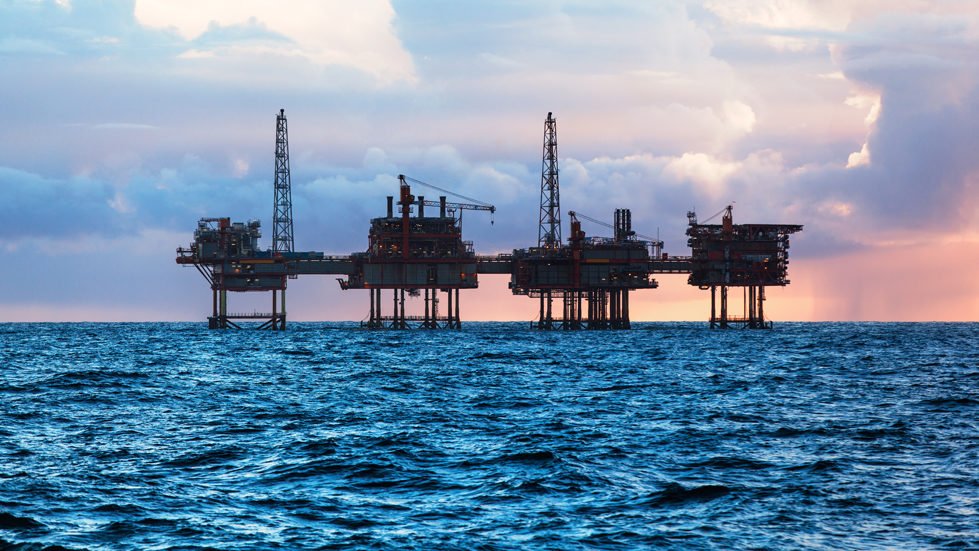
The Ministry of Petroleum and Energy proposes opening of area for offshore wind

by Nadarajah Sethurupan June 21, 2019
written by Nadarajah Sethurupan

The Ministry of Petroleum and Energy will soon send a proposal on hearing to open the area of Utsira Nord outside the coast of Rogaland for applications on floating offshore wind. The Ministry also asks for input on the southern area of Sørlige Nordsjø II. The hearing will open before the summer.

— Utsira Nord is suitable for floating offshore wind, a technology there is a high expectation on in these days. I will also ask for input whether we shall open the era of Sørlige Nordsjø II, which is close to the territorial border to Denmark and therefore can be suitable for connections to the energy system on the continent, says minister of petroleum and energy, Kjell-Børge Freiberg.

The government proposed a strategy for floating offshore wind in the state budget for 2018. The government’s target is to increase the export of goods and services from Norwegian businesses to this interesting industry.

— Offshore wind proposes great opportunities for Norwegian businesses. Norway can offer a unique experience from the oil and gas industry, shipping, shipyards and renewable energy. The costs of offshore wind have decreased a lot lately, and most likely, it will continue to decrease, says minister Freiberg.

As part of the hearing, the ministry will also suggest a regulation to the ocean energy law. The regulation gives more detailed rules about the license process.

June 21, 2019 0 comments
0 FacebookTwitterPinterestEmail
Environment

Green city awards go to Lahti, Limerick and Mechelen!

by Nadarajah Sethurupan June 21, 2019
written by Nadarajah Sethurupan

The Finnish city of Lahti is the winner of the European Commission’s European Green Capital Award for 2021. The title of European Green Leaf 2020 for smaller cities goes to the Irish city of Limerick and Belgian city of Mechelen. Karmenu Vella, the EU Commissioner for Environment, Maritime Affairs and Fisheries, awarded these prestigious titles at the official awards ceremony today in Oslo, Norway – the current European Green Capital.

Apart from the title, Lahti receives a €350k financial incentive from the European Commission to kick-start its European Green Capital year.

Commissioner Vella said: I congratulate Lahti for winning this tough competition at such a pivotal time for our planet. The European Green Capital 2021 title brings a lot of responsibility to be a strong role model for cities across Europe, as we all work together to preserve and restore our planet and tackle climate change.  Lahti has the environmental credibility and passion to embrace that responsibility and be an inspiring international leader. I also congratulate Lille and Strasbourg, for getting this far in the competition – I wish you well in your continuous sustainable journey to make your cities fit for life.”

The awarding of the 2021 European Green Capital Award to Lahti was a unanimous decision by the international Jury.

The Jury said that green cities are healthier and happier places for people to grow, live and work in, and for visitors too.  All finalists have shown that the green transition is affordable for all and results in more socially inclusive and connected cities.  They also demonstrated that the behavioural changes required to be a sustainable city is becoming the norm for their citizens, businesses and decision makers. The winning cities are eager to demonstrate to all cities in Europe, frontrunners or not, that they can achieve meaningful and measurable progress in their journey to a sustainable development.

Lahti is particularly strong in the fields of air quality, waste, green growth and eco-innovation, as well as governance.

  • The central theme and vision for Lahti’s 2018 city strategy is “Bold Environmental City”. It brings together several programmes and plans including those focusing on smart, clean and circular economy, mobility, environment, energy, urban regeneration and citizen science.
  • As a pioneer in air quality the city set out an air quality plan in 1997, which has led to a major drop in emissions since. Engaging local businesses in air quality monitoring, and additional air quality regulations the city has established on its own particularly impressed the jury.
  • The city has a clear vision for green growth and eco-innovation. The Lake Vesijärvi and the Grassroot projects, for example, promote the reuse and sharing of public spaces in the city, making these spaces available to rent. These kinds of provocative ideas can lead to exciting new projects with strong citizen involvement. 
  • In Lahti, 99% of people live within 300 metres of green urban areas. The city enables its inhabitants to enjoy nature in many different ways, offering leisure activities such as skiing, fishing and wild berry and mushroom picking.
  • Lahti demonstrated a high-quality waste system, with a strong and impressive selection of treatment infrastructure servicing the city, including biogas gasification, a power plant and sorting plants. The city has co‐located facilities which exchange energy and materials resources in a symbiotic relationship. This is an impressive example of industrial symbiosis.

Joint European Green Leaf 2020 winner, Limerick, was commended for its ongoing investments leading to improved air quality and noise levels in the city. Limerick is currently transforming itself into Ireland’s first digital city, integrating several public services, creating smart homes and buildings, energy districts and smart neighbourhoods. The city is effectively managing its air quality thanks to the acquisition of particle and gas monitors. Limerick also encourages people to leave their cars at home by providing better cycling, walking and public transport infrastructure with the aim of reducing transport emissions. Limerick was also recognised for its development of noise maps and action plans, updated every five years, continuously monitoring the acoustic environment, analysing trends, and assessing the effectiveness of the actions undertaken.

Joint European Green Leaf 2020 winner, Mechelen, was recognised for its dedication to sustainable urban mobility, nature, biodiversity, sustainable land use, and waste and circular economy. Mechelen closely involves citizens in the creation and achievement of the city’s environmental goals.  City partners are also involved in smart city development through ‘citylabs’. Mechelen’s approach to biodiversity conservation and sustainable land use management is very coherent and well implemented, with clear objectives in the city’s plans and strategies. The city provides a clear direction for strengthening its green/blue network. Mechelen was also a finalist in last year’s competition, for the European Green Leaf 2019.

June 21, 2019 0 comments
0 FacebookTwitterPinterestEmail
Asia and Norway

Celebration Of The 5th International Day Of Yoga By The Embassy Of India In Norway

by Nadarajah Sethurupan June 21, 2019
written by Nadarajah Sethurupan

The Embassy of India in Norway has been celebrating the International Day of Yoga every year since 2015 with support of Yoga institutes/studios based in Norway. It may be recalled that United Nations designated June 21 as the International Day of Yoga at the initiative of Hon’ble Prime Minister of India Shri Narendra Modi, when 177 countries including Norway co-sponsored the UN Resolution in 2014.

The Embassy of India will be hosting the 5th International Day of Yoga in Oslo on Sunday, 23rd June, 2019 from 10.00 hrs to 12.00 hrsat Norges Idrettshøgskole (Norwegian School of Sport Sciences), Sognsveien 220, 0863 Oslo. The event will be conducted by four experienced Yoga teachers namely Ms. Jenny Vagane, Mr. Massimo Barberi, Ms Kamaldeep Banga and Ms Maria Fürst. Over 350 participants are expected to attend.  

This year, three Norwegian Yoga celebrities, Ms. Henriette Lien, Ms. Linn Stokke and Ms. Maria Fürst would also participate and speak on the occasion.

The Indian Embassy cordially invites people from all walks of life to be part of the extraordinary journey that we have embarked upon in the quest for global peace, harmony, health and happiness. This is an event for all ages. Entry will be freefor all participants. Participants are requested to bring their own yoga mats. 

June 21, 2019 0 comments
0 FacebookTwitterPinterestEmail
NATO and Norway

US: Sanctions against Turkey ‘viable’ option if it acquires Russian defense system

by Nadarajah Sethurupan June 21, 2019
written by Nadarajah Sethurupan

The United States said imposing economic sanctions on Turkey for its purchase of Russian S-400 missiles remained a very viable option and there was no discord on the issue.

“Seeking resolution is still within the realm of possible today, but imposition of sanctions remains a course of action and a very viable one at this point,” U.S. Assistant Secretary of State for Political-Military Affairs Clarke Cooper told reporters on a teleconference.

Assistant Secretary Clarke Cooper, Bureau of Political-Military Affairs

Below is a full rush transcript of the press conference by Assistant Secretary Clarke Cooper, Bureau of Political-Military Affairs.

A/S Cooper:  I just want to share at the top of our discourse today what it is that I do, why I’m actually in Europe.  As Assistant Secretary of Political-Military Affairs I have the portfolio, the global portfolio of security assistance and foreign military sales.  So from a very general sense what that means is we actually are the primary lead for the United States government on acquisition and sustainment when it comes to military equipment, military sales for our partners, to enable their own sovereignty as well as play their regional roles in their security.   We’ll talk a little bit more about that today in the context of Europe.

The other aspect of that is security assistance.  This is not just in the form of hardware or in munitions.  This also comes in the role of training, of joint exercises.  This also comes in the role of supporting peacekeeping operations that have either been identified or mandated by any multilateral body, particularly the United Nations.  We do provide a role for that in our Global Peace Operations Initiative.

Finally, one that’s maybe not known to some of you is the work that we do on destruction of conventional weapons.  Conventional weapons destruction, remediation of minefields, actually providing reconciliation for societies that have sustained conflict and are looking to get past conflict and back to day-to-day lives.  

So it’s a very deep, very broad portfolio.  Again, including some what people would see as the large, expensive, big ticket items for Ministry of Defense to the operational level of security assistance, either from a bilateral level or again on peacekeeping operations.  Then finally, again, playing a significant role on the humanitarian side of actually assisting communities in a post-conflict environment and then getting them back to a stable state.

With that, why I’m in Europe was to participate in the Paris Air Show there.  That’s an opportunity for any of us who are working in the national security framework, and Europe certainly has an opportunity for growth.  We are a tremendous advocate of where Europe is going as far as their own burden-sharing, but providing a more robust posture for their own sovereign security and also a regional role for Europe.  In particular, we are huge supporters of the joint declarations that were initiated in 2016 and 2018 between the European Union and NATO and we are acutely aware that even the non-NATO member states have a role when it comes to that collective defense.

In addition to having bilaterals in and out of Paris, I did take time to go to London.  I did an event focused on mine remediation and addressing destruction of conventional weapons.  I did that with a number of parties that we work with including an NGO.  Shared the stage with His Royal Highness, the Duke of Sussex, Prince Harry.  Came back to Paris for more bilats and now am here in Brussels actually doing engagements and meetings with our partners at the European Union as well as at NATO headquarters. 

Question:  Regarding statements of Vladimir Putin said that he really wants to talk about a strategic nuclear weapon and the situation with the sanctions.  What do you think has happened?

A/S Cooper:  Part of that conversation from the United States side is to actually keep Russia focused on where their commitments have been.  What I don’t doubt won’t be raised is there certainly will be a conversation, a very pointed one probably, about where Russia has failed to meet their commitments on the INF Treaty.  I think there’s also room for opportunity to actually identify where Russia has violated their commitments on the INF Treaty.  So from a strategic standpoint, that’s a continuing conversation.  It is one that probably needs to not only occur at the operational level, the diplomatic level, the ministerial level, certainly all the way up to the head of government.  It is something that is still of note and requires the attention.

Question:  You’ve expressed concern about the PESCO treaties and the U.S. firms being shut out.  Are you making any progress in your discussions there with the EU officials?  

A/S Cooper:  I appreciate that.  I’ll start with the EU one since we’re sitting here in Brussels, but I’ll go to the Kingdom of Saudi Arabia one next.

Discussions today and tomorrow have been focused on what we could do collectively to answer some of the concerns that have been developing not just on the U.S. side, and this is part of the conversation with the EU.  Also EU member states.

So on a principal level I’ll start out with we, the United States, are very supportive of the concept of a stronger Europe, a Europe that is able to bolster the sovereignty of the individual member stats as well as that collective defense.  We are certainly very much strong advocates for states being able to meet requirements that may be shared.  What I mean by that is, there’s only 22, I shouldn’t say only, but the fact that there is 22 of all the entire EU that are in NATO, there are that many more states out there that are not members of NATO but yet will have what we call shared responsibility, we call it burden-sharing in other quarters, that require them to be interoperable with NATO.  So some of the concerns that have been identified at a more technical level or an operational level are associated with interoperability amongst the different partners to ensure that there’s not any issues that may occur in delivery of defense.

What we have done on a more granular level is sat down with EU technocrats and member states to identify where there may be issues that arise with EDF or PESCO.  I think in some cases there’s a certain level of edification that is required not only within member state governments, but also industry.  I’m saying industry I’m not being parochial and limiting it to the United States.  We’re talking about industry overall.

That has been received positively.  I do think the timing is of the essence for us to have a more detailed conversation.  Not to be date specific, but I can say it’s going to be sooner than later, and that’s going to provide an opportunity for issues that have either been identified by the United States, by EU member states, or by industry to address where we don’t want to, we don’t want to have an issue where capabilities are reduced.  We don’t want to have an issue arise where interoperability is a problem.  So again, I would look at it from what we’re seeking to work with the European Union on and NATO on, is to ensure that these defense initiatives that you mentioned, that they are complementary and that they’re not duplicative.  And in worst case, they’re not a detraction or a deterrence.  We don’t want that to happen.

So on a principle, we certainly appreciate the trajectory that the EU and NATO are wanting to bolster their status and bolster their posture, but we want it done in a way that is not going to detract from capabilities and interoperability.

I am not going to speak to their own internal ministerial considerations, but I would say that like the U.S., the UK has had longstanding bilateral security relationships.  I know that there are certainly difficult situations with this partner that none of us can deny, but nonetheless, they are a long-term security partner for the UK but they’re also a much deeply rooted security partner for the United States.  When we’re looking, at least from an American perspective, they are carrying a significant amount of equity to protect U.S. interests and U.S. persons, and it’s incumbent upon us to stand shoulder to shoulder with our partners, especially when they are on the front line for our interests.

But as far as where the UK has decided at this time, I would not want to opine on their internal deliberations.

Question:  The Draft Bill No. 3047 which was introduced in the U.S. House of Representatives in May 2019 envisages designating Ukraine as a major non-NATO ally for the period until Ukraine joins the alliance in the future.  What is the current stage of considering this draft?  And what stages could it possibly bring for the U.S.-Ukraine military cooperation?

A/S Cooper:  I think it should come as no surprise to you and to your readers and your news audience that there’s been a growing relationship between Ukraine and the United States.  And that commitment is just getting deeper and more fulsome.  I think that the legislation like this, and it’s not dissimilar to other legislation that’s been introduced, be it in the form of a resolution or an actual authorization, is an affirmation of where American interests are with the Ukraine.  

So it is fair to say that there’s a growing bipartisan or it’s safe to say nonpartisan support for our partners of Ukraine.  That we’ve seen not only in a political sense, but as you noted, from a defense security sense.

There’s certainly an appetite for where we can partner better, not only just on the equipment part.  As I mentioned earlier, one of my portfolios is training as well as joint exercises.  It is fair to say that there’s a healthy appetite in the U.S. government, particularly in our Congress, to stand close with our partner, with Ukraine, and I do see that as a growing relationship.

So this draft legislation is just one example of an expression of where we went to be close with Ukraine. 

Question:  The Senate is voting today to block the President from using his emergency authority to complete arms sales to Saudi Arabia and the UAE.  It’s likely to pass, but I’m sure you know that it’s unlikely to clear the threshold needed to override a veto. What you think of this action in Congress and the statement that supporters of this bill are making, and also on the policy that they are seeking to put into effect ?

A/S Cooper:  I would start, and I apologize if this is going over old news, but the authority that’s being cited here that the Secretary of State has to declare an emergency as far as getting military sales or direct commercial sales addressed for partner, and in this case Gulf State partners, was an authority granted by Congress 40 years ago.  That is in the Arms Export Control Act, and that part of the statute was authorized by Congress.  So this is not the first time.  It’s also not the first time that Congress has been concerned about its application.  Over the course of the history of this statute or this authority it has been very judiciously applied starting in 1979 with President Carter to to date with the Trump administration.

I say that because it’s a diplomatic tool, and in those cases it was applied as a diplomatic tool to deter further violence.  For Secretary Pompeo specifically, application of this emergency certification was to deter further escalation of force by Iran and Iranian proxies.

That said, we understand that some in Congress are certainly concerned about a number of issues.  I think some that are being followed, particularly in the U.S. media, is the consultative process.  I want to reiterate that the 22 cases that were included in the emergency certification, none of them are new, they have been before Congress.  In some cases, particular cases are so old they’re over 18 months before Congress.  

So again, nothing new.  A very refined focus to do three things.  One, that deterrence that I mentioned as far as a diplomatic tool for the Secretary to send a message to Tehran to mitigate, and also note direct threats to U.S. persons and U.S. interests.  Second, is to actually reassure those partners.  We talked a little bit about our partners in the Gulf on an earlier question, but when we’re looking at their readiness and their capability to not only protect their sovereignty, but they’re also protecting U.S. equities and U.S. persons.  We need to ensure that they feel like we’re standing with them and not having them bear the entire burden themselves or feel abandoned.

Finally, that emergency declaration was a reminder, a not so gentle reminder, to near peer adversaries that even though there’s a shift in threat posture in the region and there’s some disruptive activity and molestation of commercial traffic, please do not, absolutely do not see this as an opportunity to incur upon the sovereignty of these Gulf States and please do not see this as an opportunity to incur upon our bilateral relationships or our regional relationships in the Gulf.

As the Secretary has stated many many a time, we want to make sure that maritime security remains, and not just for U.S. interests but for those who travel on the seas and through the Straits of Hormuz, but also make sure that the U.S. persons and interests are not in direct threat and that our partners have the assurance that we’re with them.

As far as the legislative activity goes, on a positive it does allow for that discourse to take place in open for a, in a very transparent fashion.  It does show our partners that there are issues that remain of concern to the U.S. government. So while we are strong security partners, it does not preclude us from addressing other points of interest or other priorities important to the USG.

But I would say, my one concern is I would not want any of our partners in security to feel like we were potentially walking away from them.  That is not what we need at this time.  It is a unique circumstance.  The current threat posture is what necessitated and what predicated the Secretary to look at what options were available to him in a diplomatic capacity, to send a message to Tehran, to send a message of support to our partners, and tell our near peer adversaries to not take any opportunity.

Question:  The U.S. has warned Turkey that it faces CATSA sanctions if it acquires a Russian S400 system.  Would the individuals or entities targeted by sanctions be limited to those in the e Turkish defense sector?  Or would the remit be wider?

A/S Cooper:  As you’re aware, sanctions are yet another diplomatic tool available to the Secretary of State.  I also go back to, as we were discussing earlier about the Arms Export Control Act, that was provided as a diplomatic tool to the Secretary of State by Congress.  CATSA is a diplomatic tool provided to the Secretary of State by Congress.  It is fair to say that Secretary Pompeo is looking at the full breadth and depth of what could be applied in sanctions to Turkey as we address their acquisition of the S400.

We have done due diligence on a bilateral level to communicate our concerns to our NATO partners.  We have also done due diligence to work with other NATO partners to address our concerns with Ankara.  The biggest one being interoperability.  There is no room at all for us to allow the introduction of non-NATO capabilities or particularly Russian capabilities into the ecosystem of NATO.  Turkey knows this.  As far as accepting that reality is another issue.

So to your question as to the specificity of the application, I would say that multiple courses of action and multiple degrees of application of sanctions are within the realm of consideration, and as with everything, for the Secretary, what we’re looking to do is to seek resolution before we get to a punitive position.  And seeking resolution is certainly within the real of possible today, but imposition of sanctions remain a course of action and a very viable one at this point.

Question:  Is there any possibility of moving forward with the sale of the Patriot system to Turkey?  Have you done anything to sweeten the offer, if you will, to make it more attractive to Turkey to purchase the Patriot system instead of the S400 system?  I wanted to ask given the resignation of Acting Secretary Shanahan, will Acting Secretary, or soon to be Acting Secretary Esper take part in those conversations?  Or does he have to recuse himself, given his role as a former lobbyist for Raytheon?

A/S Cooper:  I’m not going to speak to the legality of recusable.  We’ll talk at a policy level.

Your question first about offering ballistic missile defense.  So be it Patriot or otherwise, yes.  The United States as well as other NATO partners have remained very persistent in letting Turkey know that there are options.  So we haven’t stopped that.  That’s why I was saying when we were talking about the CATSA question or the sanctions question, it is not as if we’re just looking right towards sanctions.  We still have not given up on provision of an alternative, so that is very much on the table.  Again, it’s not limited to the United States offering that provision.  It is also partners.

As to the Department of Defense, from a policy level, this isn’t State on its own.  State has, we have the policy tools as far as sanctions are concerned.  We certainly have the role, the primary role as the lead for the offering of the missile system.  But there’s no light between the Department of State or the Department of Defense as far as what we would like to see Turkey do as far as decouple themselves from the S400 and remain a fulsome and corporate member of NATO.  But I can’t speak to the granularity of how an Acting Secretary Esper would not be involved in that.  I would imagine from a policy level he would have to be because we’re talking about a NATO partner here.  So maybe it’s a matter of semantics to say ballistic missile defense alternatives.  But again, from a department level, a ministerial level, we’re lockstep with each other.

A/S Cooper: Again, I appreciate the opportunity.  I’m happy to do any other follow-ups through our offices back in Washington, DC.  I also look forward to future discourse as these issues move forward.  A number of the ones that we addressed today are moving rapidly and quickly, and certainly we’re willing to do any follow-ups that may be required on your part.  Thank you.

June 21, 2019 0 comments
0 FacebookTwitterPinterestEmail
Middle East and Norway

Dubai’s maritime achievements attract strong global interest

by Nadarajah Sethurupan June 21, 2019
written by Nadarajah Sethurupan

Dubai’s maritime achievements attracted strong interest from the world’s maritime industry leaders at the ‘Nor-Shipping 2019’ exhibition, which was held recently in Oslo and Lillestrøm, Norway.

Numerous leading figures from around the globe praised Dubai Maritime City Authority’s role in the global maritime map, said a statement from the organisation.

The successful international gathering came with the involvement of several prominent local entities including Emirates Maritime Arbitration Centre (Emac), Dubai Maritime City (DMC), Dubai Multi Commodities Center (DMCC), Jebel Ali Free Zone (Jafza), DP World and Drydocks World; all of whom provided a strong boost to the pioneering efforts led by DMCA to represent Dubai and the UAE in leading international forums, it said.

Each organisation assisted in efforts to promote cooperation, communication and interaction with global maritime industry leaders and strengthen connection in terms of knowledge transfer and exchange of best practices supporting the growth, sustainability and universality of maritime clusters in the world.

Visitors to the DMCA platform at the exhibition were presented with the opportunity to learn more about Dubai’s leading initiatives to enhance the efficiency, competitiveness and comprehensiveness of the local maritime sector, it added.

The Dubai Maritime Virtual Cluster was a stand-out feature and provided a chance for regional and international investors to have an integrated portfolio of marine services central to attracting foreign direct investment to the emirate of Dubai – that boasts many promising avenues as one of the best maritime capitals in the world, added the statement.

The Cluster’s importance is universally recognised as it serves as a platform for adopting innovation and technological advances in the service of the maritime cluster, which is emerging as one of the world’s most competitive and attractive Maritime clusters.

The Maritime Sector Strategy also proved to be an outstanding success in raising Dubai’s position on the global maritime map; focusing particularly on human investment and the development of infrastructure, integrated logistics programmes, maritime regulations and legislation that will ensure the management of maritime operations, according to the highest standards of occupational safety and best environmental practices and local and international decisions.

Amer Ali, executive director, DMCA, said that the wide acclaim of Dubai’s achievements reaffirms international confidence in the promising opportunities and competitive advantages of the local maritime cluster.

He pointed out that Dubai was on par with the world’s leading maritime centres, under the guidance of the wise leadership, and continuous efforts of the maritime authority to support maritime components including ships, cargo and logistics continue to be hugely beneficial.

Furthermore, he added that the maritime authority will continue to focus on employing innovation and R&D in the development of integrated logistics programmes, advanced infrastructure and management of maritime operations; according to specific initiatives directed to enhance competitiveness, attractiveness and comprehensiveness that the maritime cluster requires to be a driving force for economic growth and diversification.

“Leading global events such as ‘Nor-Shipping’ present the perfect opportunity to build bridges of communication with the world’s maritime leaders, and to explore new horizons for establishing strategic partnerships that serve the common aspiration of promoting the global maritime industry based on innovation, sustainability and technology; in line with the requirements of the twenty-first century,” he added.

The Nor-Shipping 2019 delegation included senior officials from DMCA, as well as representatives of EMAC, DMC, DMCC, Jafza, DP World and Drydocks World.

June 21, 2019 0 comments
0 FacebookTwitterPinterestEmail
NATO and Norway

U.S. Navy resurrects 2nd Fleet to run BALTOPS exercise

by Nadarajah Sethurupan June 20, 2019
written by Nadarajah Sethurupan

Military officials say the 47th BALTOPS, which ends Friday, aims to improve teamwork among allies and partners while presenting a united front to Russia, which closely watches NATO activities in the Baltic Sea.

The exercise is taking place throughout the Baltic region, including in an area not far from the Russian exclave of Kaliningrad. The participating nations brought 50 ships, 40 aircraft and more than 8,500 personnel to the Baltic Sea, but officials said the exercise isn’t meant to escalate tensions.

“We are very aware of the difference between deterrence and provocation, and we’re not interested in provoking anyone,” Vice Adm. Andrew Lewis, 2nd Fleet commander, told reporters at the start of the exercise.

Vice Admiral Andrew Lewis Commander, U.S. 2nd Fleet; Joint Forces Command Norfolk and Rear Admiral Andrew Burns Commander, United Kingdom Maritime Forces

Lewis and his staff are overseeing BALTOPS from the 6th Fleet command ship USS Mount Whitney, while coordinating with U.S. Naval Forces Europe.

BALTOPS comprised 389 different activities this year, almost four times more than last year, Navy officials said.

The exercise included several training staples. Warships fended off simulated attacks from smaller, faster vessels; crews practiced anti-submarine warfare and mine countermeasures; aircraft and ships worked together to protect the air and sea.

Meanwhile, U.S. Marines teamed up with other militaries to launch multiple amphibious landings across the region. One simulated assault happened while live artillery rounds were fired at a safe distance.

Below is a full rush transcript of the press conference by Vice Admiral Andrew Lewis Commander, U.S. 2nd Fleet; Joint Forces Command Norfolk and Rear Admiral Andrew Burns Commander, United Kingdom Maritime Forces.

Vice Admiral Lewis: My name’s Vice Admiral Lewis, Commander of the U.S. 2nd Fleet and Commander of BALTOPS 2019.

With me today is Rear Admiral Andrew Burns, Commander of the UK Maritime Forces and my Deputy to BALTOPS.

It’s our belief that we are here almost two full weeks after the beginning of the exercise.  BALTOPS focus is on strengthening our partnerships.  A key component in ensuring the multinational exercise is a success.  No one nation can face today’s challenges alone, and we are stronger together.  Together our partners and NATO Alliance will continue to strengthen our deterrence and defense efforts by improving our collective readiness and responsiveness.

The impressive display of professionals from 18 nations — 16 NATO allies and 2 partner nations; more than 8,600 personnel participating with 50 ships, 36 aircraft and 2 submarines.  BALTOPS 2019 was an opportunity to work together and integrate our forces in order to display the collective commitment to maritime security in the region.

During this exercise there were numerous examples of integration and action.  A specific day that comes to mind is our Distinguished Visitor Day, highlighting amphibious and air demonstrations that took place this past weekend on the beach in Lithuania.  It was a remarkable demonstration of the essential partnerships we seek to build between military professionals. 

We had Romanian Marines coming ashore off, Polish amphibious transports; American Marines and Spanish Marines assaulting the beach from the same landing craft; a UK Merlin helicopter and a Spanish Sea King helicopter conducting and demonstrations on the teach in tandem as a wave of British, U.S. and Spanish Marines assaulted the beach simultaneously.  It was a powerful demonstration of partners working together as professionals to optimize their presence in the region.

Although this was the 47th iteration of BALTOPS there were quite a few firsts this year.  The United States 2nd Fleet was reestablished and took the reigns as Commander of Baltic Operations.  We had an increased focus on mine countermeasure operations.  It was quite successful as German, Norwegian, Danish and U.S. sailors in a Mine Warfare Task Group came together to clear nine World War II era bottom mines, giving our team the opportunity to put their skills to the test.  And we’re clearing two additional mines today.

Principals from the NATO Amphibious Leaders Expedition Symposium, NALES, were trained [for the first time].  NALES focuses on developing multinational command and control of an amphibious task force level capability, allowing the coordinated command and control of naval and amphibious forces across different nations’ amphibious forces.  BALTOPS was the first opportunity to evaluate these multinational command and control constructs, and it was executed well.

Also the Joint Force Maritime participated as an amphibious task force commander during BALTOPS 2019.  JEFM is UK led.  A joint force that can be stood up in any environment.  It can support numerous tasks from combat operations to deterrence to humanitarian support.

BALTOPS is voluntary in nature with each year being shaped by individual country force offerings.  This year we were fortunate to welcome to the exercise the Spanish flagship Juan Carlos Primero, an amphibious assault ship with seven Spanish AV-8B Harriers and three AH-3 Sea Kings, significantly increasing the number of maritime based fixed wing aerial events for training.

This exercise marks the first time a Hellfire missile was fired into a training range in Lithuania, thanks to the coordination between BALTOPS planners and the Lithuanian government.  We also hosted the Lithuanian Air Force Helicopter Sea Combat Squadron, Detachment 1 on board our flagship USS Mt. Whitney for helicopter deck landing qualifications.  This was an invaluable opportunity to establish the foundation for helicopter operations on air-capable ships.

These are just a few examples of the exciting firsts we experienced during BALTOPS 2019.  The more we operate together, the more opportunities we have to integrate our forces and expand their capabilities across the coalition.

We shared BALTOPS focus on reinforcing and enhancing existing partnerships among our militaries, showing presence and protecting our combined maritime power while always adhering to international laws and operating as professionals.

As we have done for 47 years, we will continue to carry out various maritime operations while strictly adhering to international rules and norms.

This training has no target or enemy, but rather is to demonstrate that NATO allies and partners can and will defend against any adversaries.  By training together we enhance our interoperability and we show our collective commitment to deterring potential adversaries while ensuring our shared strategic interests are preserved.  Together we are part of the strongest military alliance the world has ever known.  This is why we must continue to integrate operations amongst NATO allies and partners to contribute to the security of the globe on behalf of our nations.

Question:  My question is to the Vice Admiral, Andrew Lewis.  Sir, a question to the information you just gave us.  The most part of the operations which the allied force was trained for during BALTOPS operations were offensive operations like SAMs, et cetera.  So do you consider that Russian forces on the other side of the Baltic Sea should consolidate its defense when such operations and training of NATO forces are held in the Western part of the Baltic Sea?  Thank you very much.

Vice Admiral Lewis:  I think we were operating in the Baltics under three tenets.  Under partnership, presence and professionalism.  So our partners in the region, our partners in NATO, we were operating with them, present, operating on the high seas and in the air over the high seas in international water and airspace in a professional manner.  And all those in the region are certainly expected to do the same.  There’s no, as I stated up front, there’s no, it was an exercise to operate together, integrate together, and with the forces that were in the exercise but not aimed toward anyone else, but it was just to operate on the high seas in this region, which is a very unique region of the world.

Question:  According to the Lithuanian Ministry of National Defense, more than 80,000 naval miles and other explosives placed during World War I and World War II are estimated to still be underwater and pose a threat to individuals working on and in the Baltic Sea.  How can you find a solution to this? Or is it only going to be part of history?  Will the U.S. start cleaning up the sea area with the help of other NATO members?

Vice Admiral Lewis:  First of all the U.S. and NATO has an organization called the Standing Maritime Group that does Mine Countermeasures.  They operate in the Baltic frequently and were a part of BALTOPS this year and will continue to be a part of BALTOPS in the future.

What we were able to do this year was apply some new capabilities in finding these mines and disposing of them.  We found in excess of ten unexploded mines from the 2nd World War and that have been disposed of now. Another two today.

I’ll let Admiral Burns comment on this because of his nation’s Navy has quite a bit of experience in the region and quite a bit of experience he has personally in this area of warfare.

Rear Admiral Burns:  The only thing I would add is that the Royal Navy participates in the Standing NATO Mine Countermeasures Group, which operates regularly in the Baltic.  And part of the program is directed tasking which is specifically to hunt and dispose of historic ordinance.

Obviously, we’ve achieved some progress during this exercise, but it’s going to require a concerted effort to continue to reduce the numbers from the 80,000 that are indicated in the question.  We’re not going to be able to do that quickly, but we are determined to make inroads into that number.

Question:  Considering you’ve been operating in the Baltics, and I know this exercise you say isn’t looking at any one specific person in particular, one specific nation state that might be, but it’s close to the Russians.  So I’d just be curious to know how credible a threat you feel the Russians are today, and whether they’re just saber rattling; and more to the point, how do you think Moscow views these in the Baltics?

Vice Admiral Lewis:  I’ll defer to Admiral Burns first.

Rear Admiral Burns:  I think as a Baltic state we would expect Russia to operate in the Baltic region and of course we’ve been operating alongside Russian units throughout the exercise.  And as we’ve been operating in a professional manner, so have the Russians.  And of course they would recognize the importance of this region to their economy and their prosperity.  As part of the superhighway of the high seas upon which our individual and collective prosperity depends, I think we share an interest in maintaining security in this region.

So I’m not surprised that Russia has been operating and exercising which is entirely within their right to do so, as we have been doing.  And what they’ve been doing has been within national norms, which is precisely what we are here to demonstrate and uphold.

Vice Admiral Lewis:  I would just add that operating in the Baltics during the exercise and operating with other regional nations in the Baltics, it’s been with [inaudible] success in professional and safe interaction.  What I perceive is rather than a provocative nature, it’s actually a nature of which it’s lending stability and security to the region.  It’s very obvious that it’s to everyone’s benefit and the stability of the regional nations have an obligation and a right to patrol the high seas and that’s expected.  But it’s actually, I believe, is a stabilizing effect in the Baltics, not a disruptive effect.

Question:  Reestablishment of the 2nd Fleet in 2018 was a clear response to Russia’s military assertive behavior.  Is the Baltic Sea a primary area of responsibility in this regard?  Do you consider the fleet capabilities’ deployment in other areas, for instance in the framework of increased NATO naval presence in the Black Sea?

Vice Admiral Lewis:  The 2nd Fleet was reestablished in August of 2018.  And reestablished in order to operate in the Atlantic, from Norfolk, Virginia in the Atlantic and into the North Atlantic and potentially into the Arctic.  And the approaches of the Baltic and the approaches of the Mediterranean.

Now as a maneuver arm, a maneuver fleet, the 2nd Fleet can be employed wherever directed to be employed, but not, in an expeditionary fashion.  That’s exactly what we’ve been doing during this exercise.

Could it be that we are employed other than the areas I just mentioned?  Certainly.  But not by design specifically to operate anywhere other than the areas that I mentioned.  Really just in the Atlantic and the reaches into the Arctic.

Question:  Was NATO being in the Gulf region ? I mean The security of the Gulf region ? 

Vice Admiral Lewis:  I can tell you that NATO and a very large coalition is operating in the Persian Gulf region and in the Arabian Sea and has consistently for a number of years and will continue to do so in the same manner that we’re operating here in the Baltic and throughout the world to ensure sea lines of communication and to ensure operations in accordance with the International Law of the Sea.

Vice Admiral Lewis:  I just want to reemphasize the positive nature of this exercise and how I personally learned an incredible amount from our allies and partners and those who live and work around here.  So it’s quite a pleasure to be here, and I think it goes a long way towards stability in the region.  Thank you very much for your time.

June 20, 2019 0 comments
0 FacebookTwitterPinterestEmail
Srilanka and Norway

Norway assistance to Lanka fisheries

by Nadarajah Sethurupan June 20, 2019
written by Nadarajah Sethurupan

Sri lankan Agriculture, Livestock Development, Irrigation and Fisheries and Aquatic Resources Development Minister P. Harrison informed the Parliament yesterday the local canned fish industry was meeting a part of the market demand at an affordable price while tapping export markets but acknowledged more support was necessary to make it globally competitive.

Sri lankan Agriculture, Livestock Development, Irrigation and Fisheries and Aquatic Resources Development Minister P. Harrison responding to a supplementary question held that there are several local companies engaged in the canned fish industry in the island including a venture started by actor Kamal Addaraarachchi that is performing well.

“However, the Sri lankan Government alone cant develop the fisheries industry. So, the World Bank and Norway have started several programs to provide advice and diverse assistance required to develop the fisheries industry in Sri Lanka,” said the Minister. Meanwhile, United National Party MP Hesha Withanage charged former fisheries ministers for robbing the fishermen from their fuel purchase and maintaining unlawful control over fisheries harbours.

“The politicians retain the power in local fisheries harbours. In the past, there was a system the fishermen had to pay some money from their fuel purchases for boats. This takes place in certain harbours at different levels. It is better if the Government can establish a system to eradicate these irregularities. On the other hand, we are still unable to produce canned fish meeting international standards. Selling Sri Lankans the locally manufactured canned fish will not help to develop the industry,” he charged.

In response, the former Fisheries Minister Sri lankan United People’s Freedom Alliance MP Mahinda Amaraweera held that he does not have fuel filling stations and men to control the harbours. Supporting the MP Amaraweera’s claim, Health, Nutrition and Indigenous Medicine Minister Dr. Rajitha Senaratne rejected political involvement in making money from selling fuel to fishermen.

“The fishermen cannot make payments to politicians. These fishermen are issued with coupons, which are exchanged for fuel. Sr lankan Since Sirimavo Bandaranayake’s Government, it was tried to establish the canned fish industry. But due to the international intervention, we were unable to succeed with the canned fish industry as planned. However, there are a few local players doing a good production and exporting a part of their canned fish produce,” he said.

June 20, 2019 0 comments
0 FacebookTwitterPinterestEmail
Environment

Cities4Forests Convenes prior to the Urban Future Global Conference

by Nadarajah Sethurupan June 20, 2019
written by Nadarajah Sethurupan

On 21 May 2019, the high-level Cities4Forests exchange took place as a pre-event to the Urban Future Global Conference (22-24 May 2019) in Oslo, Norway. UFCG is one of the most interdisciplinary events for sustainable action and a meeting place fortoday’s most active and passionate city-changers coming from a wide variety of organizations, all levels and with forward-thinking action-oriented agendas.

The Cities4Forests Exchange was hosted at the City Hall of Oslo with over 45 attendees and 5 Cities4Forests founding city representatives: Mrs. Soumini Jain, Mayor of Kochi, INDIA; Mr. Olivier Andrianarisoa, Deputy Mayor of Antananarivo, MADAGASCAR; Mrs. Veronica Arias, former Secretary of Environment, Quito, ECUADOR; Mrs. Karina Aguilar Vizcaino, Ecosystem Improvement Manager, Metropolitan Urban Forest Agency Guadalajara, MEXICO; and Mr. Raymond Johansen, Governing Mayor of Oslo, NORWAY who opened the high-level exchange:

This high-level exchange was opened by Mr. Todd Gartner, Director of the World Resources Institute (WRI) team for Cities4Forests, introducing the initiative and presenting our goals and highlights from founding cities. This was followed by short statements from 4 founding cities and an open discussion with participants around areas of convergence and cooperation to achieve results on the ground. The event offered the chance to learn about cases that each founding city suffer considering their geographic diversity, their challenges and opportunities to better conserve, manage, and restore forests and natural infrastructure. 

Quito, Capital of Ecuador. Photo by Alexisespin

Mrs. Veronica Arias presented the New Urban Agenda that aims to “promote sustainable management and use of natural resources and land” and “ensure reliable supply and value chains that connect urban and rural supply and demand to foster equitable regional development across the rural-urban continuum” and calls for urban development that protects the planet. 

Quito has a total area of 423,074 hectares of which natural area represent 60,7% (11,1% is built-up area and 28,2% is characterized as agricultural land). Quito is developing green infrastructure and nature-based solutions as significant components in its mitigation and adaptation strategies. According to Mrs. Arias, cities should define and protect their natural areas through the planning of Municipal Protected Areas that can foster sustainable development for nature and communities to thrive together. Quito has initiated efforts to guarantee sustainable city development focused on the city´s fragile ecosystems and has recognized the importance of forest conservation for preservation of ecosystem services. 

In total, the Quito District has 149,000 hectares that are officially Areas for Conservation and Sustainable Use – they have their own management plans that have been developed by its inhabitants. The Secretariat of the Environment, in its effort to conserve the natural heritage, created the Sub-system of Natural Protected Areas and Ecological Corridors, which is consolidated as an integrated participatory management space, where citizens, organizations and institutions work in coordination to promote conservation and conservation systems, sustainable production, strengthening the identity of the territory.

Green backwaters near Kochi, India. Photo by travelwild.

Mrs. Soumini Jain, Mayor of Kochi, presented the abundant green cover, backwaters and natural cultural heritage which has led to Kochi being hailed as a tourism and commercial destination. Studies have shown that the green cover and wetland area is fast giving way to built-up area. In the last decade, the city has witnessed a construction boom, which has led to a 15% reduction in green cover in coastal areas of the district as well as a reduction in the mangrove cover. This has led the city to bear the brunt of extreme climate events.

In August 2018, the city of Kochi was struck by devastating floods that caused the loss of more than 400 people across the region. This event was a powerful wake up call, forcing Kochi to reckon with several truths: extreme weather events like the floods are becoming more frequent and more damaging; urban planning and infrastructure need to be equipped to handle extreme events; and forests and green infrastructure are a powerful, but often overlooked tool for disaster prevention and resilience. Kochi is committed towards ensuring safety and environmental stability to its residents with unencumbered economic growth.  

Mr. Olivier Andrianarisoa, Deputy Mayor of Antananarivo, stated the importance of agriculture and food provision for its population. He presented the challenges of the increasing number of people living in urban and peri-urban areas and the relevance of protecting ecosystems and a sustainable management of water resources to secure food.  

Lynx Rufus Lince, Bosque de la Primavera, Guadalajara, Mexico.

Ms. Karina Aguilar highlighted the importance of having an integral ecosystem vision for the continuous improvement of Guadalajara with a management model that focuses on quality, and that is scalable and replicable. This model transitioned from managing 91 hectares to 167, then to 419 hectares, and it is possible to keep including new spaces. She said: “We are working on reforestation and on rewilding the natural origin of the places. The use of native trees is very important to ensure different species remain in their ecosystems conserving its biodiversity.” 

We also had the honor of hearing from other European cities: Mr. Pierfrancesco Maran, Deputy Mayor for Urban Planning, Green Areas, Milan, ITALY, presented their efforts to make Milan a more sustainable city through the regeneration of 7 abandoned railway stations and the development of green and rural areas within the city. In parallel, Mrs. Katarina Luhr, Vice Mayor for Environment and Climate, Stockholm, SWEDEN, presented their dedication to be a ever greener and more environmentally-friendly city with a high quality of life and health for all.

As part of the discussion, insightful contributions came from partner organization NICFI that emphasized the importance of protecting the ‘faraway’forests and how cities can use technical expertise from Cities4Forests to improve their work in these to avoid deforestation. NGOs like WWF Norway contributed with a focus on biodiversity conservation around local ecosystems and their importance for food provision and health. Corporations, like SWECO, recognized the multitude of benefits that trees and forests can provide to urban residents and the role cities can play to help conserve, restore, and sustainably manage forests.

June 20, 2019 0 comments
0 FacebookTwitterPinterestEmail
Srilanka and Norway

Sri Lankan explore business opportunities in Oslo

by Nadarajah Sethurupan June 20, 2019
written by Nadarajah Sethurupan

A trade delegation from the National Chamber of Exporters of Sri Lanka, which has a membership of over 850 export-oriented member companies, led by Secretary General and Chief Executive Officer, Shiham Marikar, visited Oslo from 13 to 16 June 2019. 

The five -member delegation comprising the owners from the IT, coconut, fruit, vegetables, spices, horticulture, poultry, livestock, and renewable coir sectors included Ms. Asanka Kumudini Ekanayake from Valantine DC Factory, Mutishamar Ramesh from Straight-Line International (Pvt.) Ltd., Janith Serasinghe from SunTech Information Technologies (Pvt) Ltd., Mohamed Kabir Zavahir from Uptown international Pvt Ltd.,and Tuan Farhath Amith from Fanam International (Pvt)Ltd.

The Embassy of Sri Lanka in Oslo organized an event for the delegation to explore possible business opportunities and partnerships between Sri Lanka and Norway. 

The delegation also visited a supermarket in Oslo and shops dealing in the trade of Asian spices and products.

(Photos – FB – Embassy of Sri Lanka Oslo Norway , Colombo Page )

June 20, 2019 0 comments
0 FacebookTwitterPinterestEmail
Defence

Defence-related exports from Norway in 2018

by Nadarajah Sethurupan June 19, 2019
written by Nadarajah Sethurupan

The Government presented the annual white paper on exports of defence-related products. In 2018, Norwegian companies exported defence-related products and services worth NOK 5.8 billion. This is a decrease of NOK 6.3 billion compared with 2017. 

‘Norway maintains a high level of transparency about defence-related exports, when it comes to access to information both about the exports themselves and about the Ministry’s processing of export licence applications for defence-related products, in line with the Ministry of Foreign Affairs guidelines. The Government considers it important to continue to ensure this level of transparency,’ said Minister of Foreign Affairs Ine Eriksen Søreide.  

The overall value of exports of defence-related products was 8 % lower in 2018 than in 2017. 

In 2018, the value of exports of arms and ammunition (category A products) amounted to around NOK 3.9 billion, while the value of exports of other types of military equipment (category B products) totalled approximately NOK 870 million. The value of exports of arms, ammunition and other military equipment was 11 % lower in 2018 than in 2017.   

In 2018, exports of category A products to other NATO countries, Sweden and Finland accounted for around 78 % of the total export of these products, up from 63 % the previous year. Exports of category B products to these countries accounted for 61 % of the total export of category B products. The United States was the largest single importer of defence-related products from Norway.  

The total value of exports of defence-related services, repairs, production rights and brokering services was NOK 517 million in 2018. In addition, licences for the export of dual-use items for military use worth NOK 550 million were granted in 2018. 

In 2018, 11 licence applications were denied. 

The value of exports of defence-related products fell by around NOK 600 million from 2017 to 2018. There will be a natural variation in the figures for each year, depending on when deliveries take place. The deliveries may be unevenly distributed over the contract period and the export value will therefore vary from year to year. 

In preparing the white paper, particular importance has been attached to providing a thorough account of the legislation and of the Ministry’s processing of export licence applications, in line with the Ministry of Foreign Affairs guidelines. The white paper discusses in depth the consolidated list of criteria for defence-related exports in the Foreign Ministry’s guidelines, and emphasises the importance of respect for fundamental human rights and compliance with international humanitarian law. The Government has reviewed the Norwegian export control regime (acts, regulations and guidelines) to make it more accessible for exporters, and through the white paper, is seeking to raise awareness of how the rules are applied and how licence applications are assessed. 

‘Norway has extensive and stringent rules in place for exports of defence-related products, and we take a strict precautionary approach. This approach resulted in the Government deciding in December 2017 to suspend licences for the export of arms and ammunition to the United Arab Emirates. As regards Saudi Arabia, Norway is in a completely different situation from many other countries as we have never permitted the export of arms and ammunitions to Saudi Arabia,’ Ms Eriksen Søreide said. 

In November 2018, the Government also decided to stop processing new licence applications for the export of other types of military equipment and dual-use items for military use to Saudi Arabia. This decision was based on a risk assessment of the grave and unpredictable situation in the region. Nevertheless, some category B products and dual-use items were exported to Saudi Arabia in 2018. These were exports of photo and video equipment that were made under licences issued before the decision was taken on 9 November 2018. 

The white paper also describes the Ministry’s cooperation with other Norwegian authorities. It also discusses the ongoing, extensive international cooperation on export control and non-proliferation. Norway participates actively in this cooperation, and is engaged both in the technical work to draw up lists of conventional defence-related products and dual-use items, and in the efforts to secure agreement on high international standards for control of exports of strategic goods and technology. 

‘The fact that, in many areas, the Norwegian defence industry is at the forefront internationally is important both in terms of our defence capabilities and for Norwegian jobs. The Government’s aim is to continue to ensure predictable conditions for defence-related exports within the framework of a clear and restrictive export control regime. We will seek to facilitate Norwegian companies’ participation in international projects, and to ensure that the conditions of competition are as equal as possible for companies in all the countries concerned. A long-term approach is therefore vital, and we must ensure predictability when it comes to export control,’ Ms Eriksen Søreide said.

June 19, 2019 0 comments
0 FacebookTwitterPinterestEmail
Africa and Norway

Highest number of people displaced since World War II – Ethiopia tops list

by Nadarajah Sethurupan June 19, 2019
written by Nadarajah Sethurupan

Ethiopia has the highest number of displaced people globally, the Norwegian Refugee Council (NRC) said in a statement on Wednesday.According to NRC, an estimated 3.2 million people were displaced by conflict and drought by April this year in Ethiopia noting that the Horn of Africa country hosts over 900,000 refugees, mainly from South Sudan, Somalia, and Eritrea.

NRC attributed the rise of displacement in Ethiopia to internal conflict.Jan Egeland, NRC Secretary General said: “Ethiopia is the definition of a forgotten crisis, despite colossal needs, the crisis is under-reported, under-financed and under-assisted. The scale and quality of the humanitarian response is grossly inadequate.”

The UN’s aid appeal for Ethiopia called for $1.31 billion for 2019, but is only a third funded halfway through the year, according to the statement.

“We need a 180-degree shift in attitudes. Wealthier nations must share the heavy-lifting, dig deep and support generous countries like Ethiopia to ease the human suffering of millions fleeing from conflict worldwide,” Egeland added.

June 19, 2019 0 comments
0 FacebookTwitterPinterestEmail
Science

South Korea replaces Norway as fastest for mobile data in Ookla Speedtest

by Nadarajah Sethurupan June 19, 2019
written by Nadarajah Sethurupan

Ookla said that South Korea had the fastest mobile internet service in May according to its Speedtest measurement service, knocking Norway off the top spot. Croatia improved its placement by seven to ninth place.

The average mobile data speed in South Korea in May was 76.74 Mbps, with Norway achieving 67.93 Mbps. South Korea had come third in April.

In May, Canada dropped one notch to third position and had an average mobile internet speed of 63.81 Mbps. Qatar rose from fifth to fourth with 62.82 Mbps. Austrialia improved its ranking to fifth in May from sixth in April and reached 62.38 Mbps.

Ookla said the Netherlands slid down two places in its mobile readings for May to sixth from fifth and scored 62.01 Mbps. The UAE stayed in seventh place at 58.82 Mbps. Singapore improved its position to eighth from ninth with 53.47 Mbps.

Croatia rose seven places to ninth in the mobile speed rankings in May, reaching an average internet speed of 52.78 Mbps. Rounding off the top ten was Switzerland, down two places at 52.65 Mbps.

June 19, 2019 0 comments
0 FacebookTwitterPinterestEmail
Media Freedom

UN envoys should be conductors, not soloists

by Nadarajah Sethurupan June 18, 2019
written by Nadarajah Sethurupan

In The lost art of peacemaking, his background paper for the 2018 Oslo Forum, the Executive Director of the Centre for Humanitarian Dialogue, David Harland, sketched out in narrative form a bell curve of U.N.-brokered peace agreements: few during the Cold War, then a high number of successes in the 20-plus U.S.-dominated “unipolar” years after 1990, and, finally, a dearth of U.N.-brokered peace agreements today.

Harland points to several constraints that inhibited the U.N.’s mediation capacity, such as the return of geopolitics, the atomization of conflict, and the spread of conflicts across borders. One could also add technological changes (with secrecy harder to maintain in our Twitter age), greater global polarization diminishing the leverage of unified support, the role of nonstate actors ranging from transnational terrorists to businesses, and the demonstrable need for more inclusive processes that go beyond the previous approach of meeting (inevitably male) political or military leaders behind closed doors.

After analyzing such factors, Harland concludes: “[N]on-U.N. actors have found ways to address some of these issues, but have not been able to entirely fill the gap left by the U.N. Any further progress in the field would appear to require a better combination of the efforts of the U.N. and non-U.N. actors.”

That last line deserves more reflection, and it coincides with something I felt after having the privilege of serving nearly six years as U.N. Under-Secretary-General for Political Affairs. In trying to support the U.N. Special Envoys and Special Representatives of the Secretary-General heading political missions in some of the most challenging political and security environments in the world, as well as undertaking my own political engagements, I saw in practice, vividly, the constraints on the U.N. mentioned by Harland.

At the same time, the growing number, and expanding capacities, of non-U.N. mediation actors changed the landscape in which the U.N. envoys operate. The African Union (AU), Africa’s sub-regional organizations, the European Union (EU), the European Institute of Peace (EIP), the Crisis Management Initiative (CMI), the Dialogue Advisory Group (DAG), the Centre for Humanitarian Dialogue (HD), the Community of Sant’Egidio—that list just scratches the surface of a bewildering array of groups playing important mediation and facilitation roles today.

Moreover, many of these groups offer valuable technical assistance and capacity-building training in mediation skills to local actors, further blurring the lines of who has the lead in a political process. Even if the U.N. mediator retains a lead role which has been given by the Security Council, and even if the U.N.’s mandate is under Chapter VII authority, it is unrealistic to assume that other local, regional, or international actors—with interests in, and increasingly sophisticated understanding of, mediation—will simply stay on the sidelines and cheer on the U.N. envoy.

My conclusion is that, in general, U.N. mediators and facilitators today need to view themselves less as the star soloists of yore—Lakhdar Brahimi at Taif in 1989 ending Lebanon’s civil war is a classic example—and more as conductors of a coherent, coordinated orchestra of mediation actors who can reach more of the people who can influence the direction of a conflict and who are affected by the conflict. And if the U.N. does not happen to have the best profile, leverage, or mandate, or the full consent of the parties to be the lead mediator, the conductor’s baton should be held by another, with the U.N. as a supportive player (as in the recent agreement regarding the Central African Republic).

Without question, the U.N. has key assets, including the legitimacy of universal membership, the power of Security Council mandates, the profile and good offices of the Secretary-General, relatively predictable funding streams, and organizational capacities and scale that dwarf other actors. But those assets do not mean that U.N. mediators have monopolies on wisdom, leverage, or contacts. The 2012 United Nations Guidance for Effective Mediation notes that diversity of actors can be an asset, as long as there is “clear division of labour based on comparative advantages among mediation actors operating at the different levels.” What is not essential, in other words, is for the U.N. to always lead or insist on going it alone. What is essential is that a lead mediator works to ensure coherence and complementarity across peacemaking efforts.

Libya provides a good example. The U.N. Support Mission for Libya—UNSMIL—has a broad Security Council mandate that includes leading international efforts to facilitate a Libyan political process. Yet, the U.N., HD, DAG, CMI, EIP, Sant’Egidio and surely others also engage politically on the ground in Libya, each focused on some specific aspect of the overall problem of instability in Libya. EIP, for example, has promoted stabilization efforts in the Kufra district (bordering Egypt, Sudan, and Chad) as well as around oil facilities. HD conducted similar work in Sabha, and DAG has established connections with competing militia leaders in Western Libya and promoted local ceasefires. In addition, the African Union is protective of its perceived role in Libya, with AU Peace and Security Commissioner Smaïl Chergui joining U.N. Department of Political and Peacebuilding Affairs Rosemary DiCarlo on a joint trip to Libya in March this year.

Similarly, U.N. Secretary-General Guterres and Chairperson of the AU Commission Moussa Faki regularly compare notes on Libya. While one could argue that there’s plenty of work to go around to keep everyone busy, the multiplicity of actors could easily lead to chaos, confusion and the much-dreaded “forum shopping.”

In my view, the Special Representative of the Secretary General (SRSG) to Libya, Ghassan Salamé, has dealt effectively with this crowded mediation facilitation landscape by pursuing what I—but probably not the SRSG himself—would call an “orchestra conductor” approach. He, of course, has no mandate to dictate to other organizations what they should do, and the other organizations retain their independence, reporting to their own governing authorities and not to the SRSG or the Security Council. But, by making sure that UNSMIL maintains contact with DAG, for example, Salamé’s team has broader insights into the various militias in the Tripoli area and thus what is needed to maintain and consolidate ceasefires in the capital. DAG is able to reinforce UNSMIL’s security efforts and augment UNSMIL’s reach. Waving his conductor baton more directly, Salamé specifically asked HD to conduct a series of public consultations in 43 locations across Libya from April to July last year in which thousands of Libyans were able to share their views about Libya’s future.

Logistically, and from a security angle, this type of broad consultations would have been nearly impossible for the U.N. to do directly. Moreover, as Salamé surely realised from his own travels across Libya, had the U.N. itself been leading these town hall-type consultations, the Libyans would have naturally focused not on their vision for their country but rather their critiques and demands of the U.N. By incorporating the results of this unprecedented consultative process into his thinking, Salamé can better align U.N. engagement with Libyans’ own aspirations, enhancing the chance of popular support for an eventual political settlement.

Whether it is UNSMIL’s co-ordination with DAG, its request to HD to organize public consultations across Libya, or its coordination with other non-U.N. actors, Salamé has essentially broadened UNSMIL’s reach and understanding of Libya. (As I write this in early April 2019, Khalifa Haftar and his self-styled Libyan National Army is threatening Tripoli, in belligerence which is timed, I believe, to forestall the National Conference facilitated by the U.N. that grew out of the HD-organized consultations. Haftar’s paranoia about the National Conference inadvertently reveals the Conference’s potential to transcend Libya’s divisions – but without Haftar anointed as leader through peaceful, political means.)

Salamé’s choice to work closely with non-U.N. actors in Libya also illustrates the need for the U.N. to sometimes collaborate with peacemaking actors who enjoy more flexibility on the ground. While the U.N.’s “brand” is impartial, and U.N. envoys retain the theoretical right to talk to anyone as needed in a political process, Security Council mandates, fear of Security Council scrutiny, or the political interests of powerful member states mean that, sometimes, a lower-profile non-U.N. actor can get better or easier access to some actors. The issue of how to engage both Turkey and Syrian Kurds constructively has bedevilled multiple U.N. Syria envoys, and the U.N.’s Yemen envoys have struggled to overcome Houthi suspicions about a mandate based on an April 2015 Security Council resolution that essentially calls first for a Houthi surrender and only then for political talks.

In both cases, non-U.N. mediation actors may be willing and able, within U.N. guidance, to help the U.N. envoys implement their mandates successfully. Certainly, by working closely with non-U.N. mediation actors who reach different segments of the local population, U.N. envoys can enhance the inclusivity that should characterise modern peace processes. In Yemen, for example, CMI’s Women’s Forum for Dialogue and Peace helps lessen the gender imbalance of most political engagements.

Without question, there are times when old-style U.N. mediation and facilitation behind closed doors still work, as demonstrated by the Hodeidah agreement brokered in Stockholm in December by U.N. Special Envoy Martin Griffiths. But the Hodeidah agreement, while important, is more tactical than the strategic agreement of Taif or the U.N.-facilitated agreements that ended civil wars in Central America, Africa and Asia in previous decades. Given the rise in numbers and capacities of non-U.N. mediation actors, U.N. envoys would be wise to see these actors as force-multipliers and influence-extenders as they try to implement increasingly complex mandates and broker successful peace agreements. My guess is that the non-U.N. actors, while careful to maintain their own independence, will by and large welcome closer engagement, consultation, and coordination with U.N. efforts. I hope this is a topic that can be explored in more depth at this year’s Oslo Forum.

( Author – Jeffrey Feltman – John C. Whitehead Visiting Fellow in International Diplomacy – Foreign Policy )

Editor’s Note: This piece was developed for the 2019 Oslo Forum. Co-hosted by the Norwegian Ministry of Foreign Affairs and the Centre for Humanitarian Dialogue, the Oslo Forum is a discreet and informal annual retreat which convenes conflict mediators, high-level decisionmakers, and key peace process actors to reflect on current mediation practice.

June 18, 2019 0 comments
0 FacebookTwitterPinterestEmail
NATO and Norway

France signs a Letter of Intent with Norway for cooperation on strategic airlift, air refueling

by Nadarajah Sethurupan June 18, 2019
written by Nadarajah Sethurupan

Six NATO Allies took a critical step towards making the future Multi Role Tanker and Transport Capability (MRTT-C) more affordable. A Letter of Intent on cooperation around the MRTT-C was signed between France and the five current MRTT-C participants: Belgium, Germany, Luxembourg, the Netherlands and Norway. This will help make maintenance and repair operations for the MRTT-C more affordable. The Letter of Intent sets out areas of cooperation including exchanges of expertise and joint training.

The MRTT-C initiative will provide its participants with strategic airlift, air-to-air refueling and medical evacuation capabilities, enabling them to conduct more flexible air operations. Participants in the initiative will operate Airbus A330 MRTT aircraft starting in 2020. A total of eight aircraft will be procured and operated by the participating nations in the following years. 

Source: Airbus Defence and Space

The MRTT-C programme is an initiative of the European Defence Agency. The aircraft are owned by NATO and procured by the NATO Support and Procurement Agency (NSPA) through the Organisation for Joint Armament Cooperation (OCCAR). NATO ownership allows all participants to benefit from the complete fleet through a flexible and guaranteed pooling and sharing concept. They will be stationed at the Eindhoven and Cologne airbases and will include a 24/7 medical evacuation capability. Participation in the MRTT-C initiative is open for other member states to join.

The project is an example of effective cooperation between NATO and the European Union in the delivery of critical capabilities for the benefit of all.

June 18, 2019 0 comments
0 FacebookTwitterPinterestEmail
Asia and Norway

European Parliament may suspend all subsidies to Pakistan

by Nadarajah Sethurupan June 17, 2019
written by Nadarajah Sethurupan

On the 30 April 2019, fifty-one (51) Members of the European Parliament (Including Norway)  issued a collective letter addressed to Mr. Imran Khan, Prime Minister of the islamic Republic of Pakistan expressing their concerns, and seeking assurances that the persecution of religious minorities would cease immediately. 

The letter highlighted that today’s Pakistan is far removed from being the country that its founding father, Muhammad Ali Jinnah, had envisaged. Jinnah had always insisted that Pakistan would be a Muslim majority State where people from all religions, whether Christians, Hindus, Sikhs, Buddhists, Ahmadis or Shias, would be treated equally. Over the last seven decades, successive governments in Pakistan have contributed to implementing discriminatory systems that have resulted in political, economic and social persecution of religious minorities, which have encouraged acts of violenceagainst them by radical Islamic groups.

In the letter, the Members of the European Parliament criticize Pakistan and its establishment for falsely accusing and targeting individuals under the blasphemy law. They specifically cited the internationally condemned case of  Asia Bibi, the Christian woman who had been falsely charged, harassed and sentenced to death row due to the country’s Blasphemy Laws.

The Members of the European Parliament urged Pakistan to take measures to dismantle the constitutional and institutional structures that have resulted in the purposeful targeting of religious minorities in the country. Should the violations of the International Covenant on Freedom of Religion continue, especially with regard to the persecution of religious minorities in Pakistan, the Members of the European Parliament having signed the letter, would be compelled to call on the European Commission to suspend all subsidies and trade preferences until the effective implementation of the Convention could be assured by the Government of Pakistan.

Letter has been signed by the following Members of the European Parliament

  1. Marijana Petir
  2. Arne Gericke
  3. Richard Corbett
  4. Ana Gomes
  5. Ignazio Corrao
  6. Neena Gill
  7. Nathalie Griesback
  8. Marie-Christine Arnautu
  9. Dominique Martin
  10. Alojz Peterle
  11. Patricija Šulin
  12. Franc Bogovič
  13. Jude Kirton-Darling
  14. Julie Ward
  15. Csaba Sógor
  16. Sergio Gaetano Cofferati
  17. Pina Picierno
  18. José Inácio Faria
  19. Renate Sommer
  20. Dietmar Köster
  21. Carlos Iturgaiz
  22. Fulvio Martusciello
  23. Ramona Nicole Mănescu
  24. Heinz K. Becker
  25. Sofia Ribeiro
  26. Anna Záborská
  27. Péter Niedermüller
  28. Jørn Dorhmann
  29. Claudia
  30. Branislav Škripek
  31. Indrek Tarand
  32. Michaela Šojdrová
  33. Raffaele Fitto
  34. Massimiliano Salini
  35. Bas Belder
  36. Miroslav Mikolášik
  37. Alberto Cirio
  38. Pascal Durand
  39. Teresa Jiménez-Becerril Barrio
  40. Marc Tarabella
  41. Maurice Ponga
  42. Claude Rolin
  43. Alain Lamassoure
  44. Liliana Rodriguez
  45. Gérard Deprez
  46. Carlos Coelho
  47. Jo Leinen
  48. Ryszard Czarnecki
  49. Isabelle Thomas
  50. Patricia Lalonde
  51. Sławomir Kłosowski

Letter copy can be read below

June 17, 2019 0 comments
0 FacebookTwitterPinterestEmail
Africa and Norway

Libyan-Norwegian Fertiliser Company to restart operations

by Nadarajah Sethurupan June 17, 2019
written by Nadarajah Sethurupan

The Libyan National Oil Corporation (NOC) confirmed Sunday the restoration of natural gas supply to the Libya Norwegian Fertiliser Company (LifeCo), with factory operations expected to restart shortly. 

Following discussions led by NOC’s chairman, Mustafa Sanalla, a breakthrough agreement was reached between NOC and LifeCo’s shareholders, the Libyan Investment Authority (LIA), and Yara International ASA (Yara), at a meeting on June 13, 2019, to discuss current challenges facing the joint-venture.

A meeting for the NOC and LifeCo. [Photo: NOC]

LifeCo shareholders have agreed on a number of measures to restore operational continuity and protect jobs, including the restoration of gas supply and NOC assuming control of the marketing of ammonia and urea fertiliser products.

“This breakthrough agreement will protect the interests of the Libyan state as well as the jobs of LifeCo employees. NOC will use all of its talents and experience to market these products and restore the company’s financial security.” Sanalla said.

LifeCo is a joint venture enterprise formed in 2009. Yara holds 50% of the shareholding, with both NOC and the LIA each possessing a 25% stake.

June 17, 2019 0 comments
0 FacebookTwitterPinterestEmail
Environment

Latvijas Maiznieks launches sales in Norway

by Nadarajah Sethurupan June 17, 2019
written by Nadarajah Sethurupan

Bakery Latvijas Maiznieks launched sales in Norway, Sweden and Finland in May, as the company’s board member Maris Daude told MEDIA.

“We have signed a contract for product shipments to the customer throughout this year. This is not only thanks to the purchase of new equipment, but also to the highest-level BRC certificate obtained by the company,” said Daude.

Latvijas Maiznieks’ first ciabatta shipments to the Norwegian, Swedish and Finnish markets were dispatched in May, and the company is also considering selling other products in these markets.

Latvijas Maiznieks’ investments in development have amounted to approximately EUR 14 million during the last five years, said Daude.

As reported, in 2017 Latvijas Maiznieks generated EUR 26.186 million in sales and earned EUR 469,296 in profit.

Founded in 1991, Latvijas Maiznieks has a share capital of EUR 895,629. The company’s largest shareholder is Estonian company Maral Invest.

June 17, 2019 0 comments
0 FacebookTwitterPinterestEmail
Asia and Norway

AIFC financial hub for Central Asia in Kazakhstan

by Nadarajah Sethurupan June 17, 2019
written by Nadarajah Sethurupan

Want a world-class legal system known for its integrity? Then go to London and get one, judges and all. That’s what Kazakhstan has done.

When businesses are looking to invest abroad, the availability and dependability of legal redress is a critical consideration. Should things go wrong, companies and hedge funds want to know if they can resolve matters in court, and that their cases will be heard in an impartial and timely fashion.

First President Nursultan Nazarbayev.

Kazakhstan, the vast country that straddles the boundary between Asia and Europe, decided it would put its commercial legal system above reproach. In 2015, it imported a whole legal system from England, along with English common law, to deal with commercial issues. It also imported some English judges to sit on the bench.

Headquartered in Nur-Sultan, the newly renamed capital of Kazakhstan, the Astana International Financial Centre (AIFC) will create projects and promote new startups on a global scale. So far, 88 participants have registered at the exchange, and by 2020, Kazakhstan authorities have announced the target of more than 500 companies participating in the AIFC.

The Astana International Financial Center (AIFC) has set an ambitious goal for AIFC to become a financial hub for Central Asia, the Caucasus, Eurasian Economic Union, the Middle East, West China, Mongolia and Europe.

Among the priority goals of the AIFC are the development of the human resource potential of local financial market specialists, the popularisation of international professional certifications, and boosting investment.

The AIFC Court is separate and independent of the courts of the Republic of Kazakhstan. There is a Court of Appeal whose decisions are final.

First President Nursultan Nazarbayev.

“The AIFC Court operates to the highest international standards to resolve civil and commercial disputes in the AIFC. It has exclusive jurisdiction over disputes arising out of the activities and operations of the AIFC and jurisdiction in the case of other disputes in which all parties agree in writing to give the AIFC Court jurisdiction,” said chairman of the court of the international financial center, Lord Woolf.

Lord Harry Kenneth Woolf, is a renowned judge in recent British legal history, and a global figure on the common law, courts and dispute resolution, and legal education. He will work with eight other British high level lawyers and judges in Kazakhstan.

Moreover, the International Arbitration Centre at the AIFC has its own panel of international arbitrators and mediators who are experienced, independent and impartial.

“The International Arbitration Centre seeks to establish and develop a fully independent arbitration and alternative dispute resolution system for the expeditious resolution of civil and commercial disputes characterized by reliability, fairness and accessibility, unconditional application of the rule of law, and flexibility that is responsive to the needs of global business markets,” Chairman of arbitration body, with experience as arbitrator at the London, Paris and the Hong Kong International Arbitration Centre, emphasized.

The system of English justice is known far beyond England. The authority of the chairman of the court of the financial center is a guarantee of a qualitative and truly fair judicial system. The decision of the lawyers of the AIFC is a priority, and in its work, the court of the center is absolutely autonomous.

AIFC, a self-styled “mid-shore” special economic zone, has an attractive business environment and the presence of a separate legal and regulatory system based on the principles of the British Common law. These measures will assure fairness and justice in its operations and will enhance the credibility of Kazakhstan in the eyes of the investors.

AIFC has British courts and judges, myself being one of the judges. Additionally, the center gives you 50-year tax exemptions, simplifies your visa regulations, offers free office spaces, and the license costs only $200, not $100,000 even if you get your license today and didn’t open your business immediately.

A financial hub in a post-Soviet state for the entire Central Asian region, based on the English common law, having a preferential tax regime and an independent financial court? Such a project would have been consigned to the realms of fantasy a few years ago. But now, it is infact, a palpable reality.

The initiator and key organizer of the AIFC is President Nursultan Nazarbayev. During one of his public speeches, “Plan of the Nation – 100 Concrete Steps to Implement Five Institutional Reforms”, he proposed an extraordinary initiative; to create AIFC in Astana based on the ASTANA EXPO 2017 infrastructure. A similar center in Dubai became a reference point.

President Nazarbayev proposed the consolidation of a special legal status of a financial center in the Constitution, the establishment of a center as a financial hub for the CIS countries, as well as the entire region of West and Central Asia. This is how the Kazakh leader outlined priorities, securing the existence of AIFC with the necessary decree:

– Creation of an independent judiciary with its own jurisdiction which will operate on the principles of English common law. The judiciary comprises a number of foreign experts. In a not-too-distant future, the financial hub of Kazakhstan would join the league of 20 advanced financial centers of the world.

Foreign employees of AIFC, as well as their family members, receive an entry visa valid for up to 5 years. Citizens of the OECD, the United Arab Emirates, Malaysia, Singapore, and Monaco, as well as countries designated by the Government of Kazakhstan, are entitled to visa-free entry for up to 30 calendar days. And a small but pleasant bonus is the free rental of Class A offices in the first two years of operation.

Kazakhstan shows maximum consideration to foreign investors, and creating a favorable investment climate in the country has become one of the political and economic priorities.

To solve the problems of foreign entrepreneurs in the country, a special ministry for investment and development was created for the first time, thanks to which the receipt of public services for investors was simplified to the maximum, and administrative barriers were reduced.

According to the Kazakh officials, the AIFC will significantly expand the international opportunities of Kazakhstan itself, allowing it to find and take its place in the overall pattern. Kazakhstan considers AIFC as part of the global financial system. The global network of financial centers that manage global cash flows runs across the globe — from Toronto to Sydney and from Tokyo to New York. Each of them has its own niche.

For its part, AIFC, having a unique geographical position, will provide access to the markets of Central Asia, the Eurasian Economic Union, the Caucasus and the countries of the Middle East.

Meanwhile, Western experts also support the idea that a new financial bridge has appeared in the world between Europe and Asia. According to preliminary forecasts by the Kazakh authorities, the AIFC will be able to attract billions of investment in the country’s economy.

Astana International Finance Center (AIFC), an emerging financial hub in Central Asia and Eurasia is seeking partnership with Bombay Stock Exchange and Gujarat’s GIFT, to learn from expertise and experience of Indian entities besides enabling wider presence of Indian businesses in Eurasia and Russia.

China has already demonstrated its support for the AIFC with assistance in strategic and business planning, technology consulting, and developing a strategy for expanding the market. “On the regulatory level, one of the big opportunities for us is RMB [Chinese Yuan] and the ability to trade, clear and settle in RMB and their help with the regulatory process around that is very beneficial”.

Opportunities and return on investments are huge, there is so much privatisation going on in Kazakhstan, and infrastructure development.

Another reason is the fact that the government doesn’t want to rely just on one area, they want to diversify the economy away from the energy and the mining sector, that’s why there is an opportunity for financial services to grow here.

“This is an important moment of change for Kazakhstan. The leadership transition that we are witnessing is being closely watched around the world, including in the United Kingdom. The resignation of Nursultan Nazarbayev was a momentous event in the history of Kazakhstan and Central Asia. We should acknowledge his role as having been central to the establishment of the country and the development of the sovereignty and economy of Kazakhstan,” British Ambassador to Kazakhstan Michael Gifford told The Astana Times.

Mr David Gallo, expert at AIFC Authority.

Below is a full rush transcript of the information by Mr David Gallo, expert at AIFC Authority.

David: I’m qualified in the state of Ohio. I just joined the Astana International financial group about two or three weeks ago, and I basically have been retained for a twelve month period which could be extended as an AIFC expert in the area of legal education, as it relates to the AIFC authority, right ? So, my brief history is that I started as a private practitioner, as a lawyer in a large law firm, in the state of Ohio.

And then from there I moved in house with a couple of different companies, first with a large electric utility company in Ohio, where I was a corporate finance lawyer, then I moved to a company called General Electric, GE, and I spent the better part of my career, first as a lawyer and then as a global business development commercial person, focused primarily on mergers and acquisitions. And strategic alliances to help GE globalized its business.

Ultimately, I ended up in Dubai, and most recently for nearly four years I was the director of an organisation called the AFC, Academy of Law. So, the AIFC is basically a legal system that has been established here recently.

You probably already know that it was formed as a potential economic hub to be the foundation for the government vision for long term economic development. So, the idea here like with other global economic system that are being created under similar models, the idea here is that Kazakhstan is a very important emergent market, it is already emergent of course, and in many ways. It’s been around for quite some time as a country.

The government now is taking things to the next level, which is fundamentally to take this enormous potential economy. Enormous in a sense that, the country is very rich in certain natural resources, the geographic scale is large.

There are a lot of ideas around infrastructure development with the idea that, over a long term the economy should be more diversified, and sustainable. Diversification, in my understanding is that means attracting foreign direct investment. Multinational companies encourage global companies and people who want to start companies, to come to this AIFC economic area and establish their companies. The focus is on attracting financial services companies, those who are in the capital market space private wealth management, insurance and in related matters.

Professional services like law, consulting and accounting. So the idea is, the forum, this economic zone. It would attract these companies to come and establish their business models to invest money, to lend money, to raise money through the stock exchange and so forth. So that, that capital can now be injected into the economy, allocated and deployed for major infrastructure development projects.

So fundamentally, it’s a business hub, and the vision of the government is to make this a world-class business hub, a center of commercial excellence, or business excellence by attracting foreign investments which would then provide the capital to drive this grand vision.

it has a tremendous opportunity and potential. You know the natural resources are very rich and valuable, and that becomes the anchor, the economic anchor for the country. But the idea is to unleash the potential of that value by investing in industry and sector diversification, right?

So in particular, if you think about diversification, it’s a word, in a concept, it’s often used but the reality means to invest people and capital in the projects that are ultimately going to create products, services and business opportunities that extend far beyond the natural resource development here. So, starting with infrastructure projects, such as transportation, that’s going to be classical transportation infrastructure development which would be road, highways, bridges, tunnels and everything that goes along with that.

But also, rail transportation development will continue to be a big national focus. While there are no ports, or potential ports to speak of, you know, certainly the development of the dry ports and transfer facilities and so forth will be an important focus.

All of that matters, because those are the things that will facilitate trade within Kazakhstan and certainly within Central Asia and as you know. This region is also part of the Chinese Belt and Road Initiative and the new Silk Highway and the New Silk Waterway is in adjusted space so the idea of positioning Kazakhstan as a not only a regional hub but as a global hub where East meets West, and all the other marketing taglines that you hear can become a reality and the AIFC is being positioned to play a very important role in that development.

So, that’s the long response of your question about the state of the economy and the potential for growth. When you think about infrastructure development, you also think about power, energy, power generating facilities, whether they are hydro or coal powered, or otherwise, it’s an important part of infrastructure and of course the transformation into the digital economy and all that infrastructure holds requirement of that.

Things like water treatments, sewage and all those basic things that really matter when you’re developing a country will be part of it. Certainly, construction projects will be large and substantial when you think about the development of education facilities, universities and schools, health care facilities.

Well, all of these things translate into major projects. When I started as quite a project lawyer and the kinds of projects that are planned, initially, they require a lot of professional services, starting with engineering and related planning, certainly development, real estate development, project development, facility development, construction, and then all these industries that are related to all of those, right?

If you’re really talking about projects that are major, they are intended not only to develop the infrastructure of the country, to facilitate trade and to grow their cities and to connect the cities but also, the standard of living and the quality of life, the living here.

So the idea is to make, to continue, to enhance the global status of Kazakhstan, not only regional but global. One more thing that I’ve mentioned, I guess, about the vision, is all the things that we’ve just talked about, are important for the role of the government in driving this sort of transformation.

Some of the things the government cares about are; diversification of industries, enhancing and growing international trade, that would also include Chinese Belt and Road as well as other things that we’ve talked about.

But the government really cares about what that means for residents and people who have been here for a while and attracting people to come to move here, expatriates, and all of the same things that we’ve just talked about, tie into major priorities for any government and those would start with GDP. Gross Domestic Product, and GDP growth. Balance of trade, budgetary consideration, you know, balancing budgets and ideally having surpluses, per capita income, creating greater employment.

So the metrics around employment and non-employment rates really matter. All of this should resolve in a lot of job creation and upwardly mobile middle class, creating more opportunities for people to get better jobs and earn more money, per capita income, GDP per capita, inflation rates solved by some of these interconnected economy, the economic view, but let’s face it, federal governments globally care about all of those things.

Because as you have those metrics that are improving over time, that’s how a country really enhances its image and reputation and international standing in the scheme of things.

And of course, that adds to its credibility and its leverage when it comes to international socioeconomic and geopolitical relations, right? So I think that’s the backdrop.

Interviewer: As a, you know, centrally placed between Russian and Chinese border, what are the risk factors in these investments areas and the transparencies aligned?

David: That’s a great question. From a geopolitical standpoint, I’m probably not qualified to talk too much about anything political. But what I can talk about would be economic challenges and risks because this is a commercial entity.

So what we think about and care most about is business but that business and the development of that business is always going to be tied to the greater national government vision as to why this thing exists, okay? So let me put that into context that is practical. We are here and I am specifically here to focus on knowledge based legal system development, as the foundation for driving the success of the AIFC, as a center of commercial excellence, as any emerging business hub and as a place to attract multinational companies to come here and set up over the long term.

That’s the government vision, our promise here in the legal department is that we need to make sure that the legal system develops in a way that will accommodate these major infrastructure and other projects that the AIFC represent or will be facilitating.

So that’s a major challenge but it’s an opportunity that you feel very confident that we can drive to successful conclusions.

When you think about these major projects from the practical side, these projects would be structured, memorialized, undertaken and completed only if you have a sound legal infrastructure that will support the commercial contracts and dispute resolution processes that are certainly going to be part of the economic development processes.

So, stated more simply, anyone of these major projects will require some fairly complex and sophisticated legal documentation, legal analysis and ultimately, if any of these projects end up in some kind of contractual dispute, there need to be a fair and efficient way to resolve those disputes without interrupting the flow of the economic development.

Well, because this AIFC commercial organisation is also a freestanding, relatively independent new legal jurisdiction, the laws in this jurisdiction and the regulations that govern the various bodies within the AIFC would be the Astana financial services authority, the AIX which is the stock exchange, you have the AIFC authority which is what is this group is part of, kind of legislative, the law side of things.

As well as a part of an organisation that will accommodate companies to come here and get start with jurisdiction. Well, all of this is based on the English common law model. So the laws, the statutes, and the regulations around them, are patterned primarily on the English commercial laws, and the legal system is a common law legal system, as opposed, whereas contrasted with the Astana national law, which is a civil law.

So civil law countries as you know, would probably be central Asian, Egypt and Middle East, France and Germany and other major countries, common law would be the US, the industrial and so forth.

They are two fundamentally different systems, so, lawyers and other legal professionals, in order to operate effectively in this new common law environment, which is in the middle of a civil law ocean, if you will, this means that lawyers and other legal professionals need to be equipped, and competent and ready to operate effectively within that organisation, right?

So, the logic is a sound legal system required as the foundation of economic growth, and that our focus here in attempting to a form a knowledge based legal education system is to make sure that we are delivering legal education here in Nur-Sultan that has global values. We need to make sure that whether you are common lawyer, international lawyer that came here, or whether you are local civil law trainee lawyer that came and also lives here and practice, the fact is, that, both of those demographic market segments in the legal  industry need to be addressed.

Those with common law background would benefit by giving some academic and experiential, developing experiential skills in the civil law system.

And those who are civil law trained will benefit by getting an additional legal education and skills based learning that would be relevant to the AIFC laws, the rules and the common law system. So the idea and the mission would be to try to cross-train legal professionals in multiple legal systems, to make sure that they are truly prepared for international commercial law practice, right here in the AIFC. So that’s what we’re focused on.

The risks are, if we don’t do that, or if we don’t do that effectively, IE makes sure that you have your development of human capital, that will be required to drive the success of this experiment. If you don’t do that, there are a lot of risks.

The first is that, for companies who have come here to set up, they are going to need in-house lawyers who will work with them, they are going to need local councils that they need to retain to make sure that they understand the AIFC laws and they are complying with those provisions, that they don’t do anything wrong, which could create corporate and personal risk for those companies and people who work for them.

The other thing is, that this massive complex, long term construction and infrastructure projects, will not get done effectively or efficiently, or quickly if you don’t have legal professionals who know what they’re doing.

You think about these projects, they can have multiple parties in anyone of these major projects, right? Commercial contracts, you can have multiple parties, coming from various countries and legal jurisdictions, there will be issues around jurisdiction, there will be issues around comparative law, how do the national laws interface with these AIFC laws?.

Which one might supersede in the case of a conflict, conflict of laws is another area in the legal system. Then because it is a new legal jurisdiction, you’re going to have the development of common law.

Common law really means judgment law. So, you have a case that’s brought here, to trial, a judgment is ultimately rendered, there is a winner and loser, but the judge then writes a very well reasoned opinion, as to what the applicable law was, the interpretation of that law, and ultimately the outcomes of who wins or who loses.

But embedded in these well written judgments, we call them legal opinions in the US, but in the UK they are calling them judgments.

Well embedded in that well reasoned judgment, are certain principles of law, some of which have actually then become part of the evolving common law.

So, the important thing here is that, as this common law is developing, there certainly will be revisions and updates in the statutes, the statutory law so that they i.e those statutes will continue to get more sophisticated, they will address new legal needs.

For example, you know blockchain, or artificial intelligence and all of these data protection. You know these security regulations, you know what do you do with cryptocurrency and all of these stuff.

The cyber issues, these emerging trends in the commercial world at some point need to be captured and codified in some cases regulated by new laws that don’t exist yet.

So, as new laws need to be developed, as more projects are being undertaken, and disputes arise and so forth, all of this means that you need to have a lot of legal work that needs to be done and it needs to be done competently and effectively, for the protection of clients, for the protection of the general public, and certainly to continue to drive the economic growth vision of the government.

So, that’s why you get ties together, those are the risks. But we are really talking about risks in the management and the things that we are doing. Fair enough?

Mr Marat Aitenov, First Deputy CEO of the Astana International Finance Centre (AIFC), described this to me as a move to establish the “rule of law.” He said it was decisive in improving the investment climate. It’s also symptomatic of a desire here to “do what it takes” to move Kazakhstan to the first row of nations — in this case, to import a legal system complete with eminent jurists.

Mr Marat Aitenov, First Deputy CEO of the Astana International Finance Centre (AIFC)

Mr Marat Aitenov: Kazakhstan has spent a lot of time and effort from the first day of independence in 1981  attracting investments. We are pioneers in every reform we do, in central Asia we have developed, according to the policy of the institutions and the government, according to instructions of our president, we did tremendous things, in terms of developing economy, every industry, innovation and strategies, we adapted throughout all these years.

At some point we realized that truly becoming international open market requires a little bit more activities, namely adapting English language as an official language, and respect the rule of law. English common law, and when in 2015 our president initiated this establishment, called Astana International Financial Assembly, it was very much well-received.

Received by the global community, and starting from 2016 and ’17 in two years we did what you see now. All the bodies within AFC special jurisdiction within the territory of capital of Kazakhstan, and every foreign entity, legal entity, our individual entity, can come, approach, explore, find the opportunities to develop, to find his partners.

So, this is a bridge, actually, in meeting the people’s mind, their ideas. If formerly, let’s say divide companies, it was all about finance and economy, not about the policy. So the idea is to establish a platform that will allow everyone to benefit from this, I mean commercial benefits. Big companies, they already have their own pose to global market, to London, New York, a little bit expensive exercise but they can afford it.

But how about middle, small size enterprises, they also need funds, they also need access to global markets, how to arrange this? So we basically replicated the best international standards that already exist in other part of the world, replicated here in the heart of Euro Asia, in central Asia, so that we combined the global markets from China, big markets and Russia and central Asia. First initiative on inspiring Silk Road was also declared here in Nur-Sultan by China leadership. And now, we are in the middle of these global markets.

The approach is very simple, everyone with spirit of entrepreneurship can meet their needs according to the best standards that exist around the globe. So, to facilitate their needs, separate entities we find these jurisdictional establishments, like Expo Center, anyone who- first comers, they can meet, get first hand all the information that requires operational activities, like visa requirements, labor, currency, and we have stock exchange, platform, stock exchange NASDAQ, Shanghai Stock Exchange, the shareholders of this entity alongside with us, TFC and we have separate financial regulative.

We have bureau for continued development, so it’s all about to prepare human resources, because every enterprise, every company they need sufficient human resources, qualified and well-trained. We have separate bodies like, Arbitration Center Court you already experienced it, you visited it. So, it’s all about establishing commercial platform for everyone, in short.

N.Sethurupan: This is something unique. How is the opinion of the public, are they happy?

Mr Marat Aitenov: People are very different, they have different mindset. From that perspective, they have different perception. Everyone understands that we don’t regulate criminal or administrative aspects, all regulate only commercial industry. From that perspective if the society benefits from the commercial activities, that everyone will benefit.

But because we just newly established institution, we still need some time to prove our activities. From that perspective, of course, expectations of the society usually is very short, in terms of time, they want to invest on Monday and on Tuesday they want to get the fruits.

From that perspective, there is a little, let’s say, annoyance, maybe , A little, not panic, but a little worry, but in terms of support, as you see, the government, the policy-makers, they are very much supportive, it was very, extremely unusual activity, and now it’s all pursued because, when first time in this kind of jurisdiction, bringing laws of jurisdiction, it raises some questions, but what was very beneficial for us?

First of all, the existence of AZE successful financial centers, usually if you initiate something, but you cannot bring examples, it’s all too complicated, everything that we are implementing we are referring to AZE existence jurisdictions.

Very good example is Dubai International Financial Center. Commercial hub, financially successful, operates more than ten years very successfully, although it’s Emirates, Islamic rule of law, but they accepted English Common Law. And now they coexist very happily. That was one of the latest examples that we are using, we actually spent some time exploring, we took some lessons from them to learn, from Abu Dhabi, global markets, from Qatar Financial Center, so, even Hong Kong.

Hong Kong part of China, one country, two jurisdictions, everything for the benefits of the commercial enterprises, similar, So, there are some cases going on, so, by your experience how this function, what other obstacles do you having? I mean you run this, are there any obstacles, any difficulties?  There are many difficulties like, in terms of time frame. Not enough time to meet and talk to people. Because, jurisdictions that are coming to us, their interest to our economic, to central Asia, is huge. We developed a lot of mere resources, but we want to redevelop, according to best, the latest editions of equities, some of the US, but here in the region. Resort exporting the pure root materials and then importing progress, so, from that perspective, we are open to new opportunities, meeting with different people, companies, and we want to meet everyone. But the time frame is not following.

Every human, according to our understanding, has to leave some meaning in this life. Our judges, the AFC court judges, they are very much experienced, they have already gone through some life experiences, and doing very good things for the wellbeing and prosperity of their countries.

They also have done similar type of activities in AZE jurisdictions, Hong Kong, Singapore, Dubai, and their approach is very philosophical, why not to do first time in the history, setting up another platform that already proved in other part of the world, but here? We all human are same, but if the commercial enterprises respect common law, English judge, in fact, throughout all these decades, a lot of companies, already spending their times. If they have some disputes, they are traveling to London.  But, to cut off this long way, we just brought several judges here and the philosophy of these judges is them expanding their philosophies, and they are very much, they love sharing their experience, every time, according to our program, annually another program, every judge visits almost each one.

And they meet with local practitioners, with local judges, with regional students through seminars, webinars, trainings, they transfer their knowledge. Actually in Kazakhstan, we very much love learning other countries successful stories. One of the stories that we learned from Norway is setting up the oil fund.

N.Sethurupan: Setting up the oil fund? tell me more about it.

Mr Marat Aitenov: So, the thing is, when the times are good, I mean the prices on the oil are very good, everyone is also good. But when the times slow down from that perspective, very good example that we already replicated from Norway, good example, when the prices are good, half of the income, they separately keep in different accounts. Yes, for good times, we have similar fund here. Very much similar. The philosophy, the concept, the structure – and for example, in 2008 when the financial crisis, subprime mortgage, landing crisis, they came, this wind came from US also hit our markets. We are using these tools.

Let me share my understandings, not as a policymaker, but as every citizen. The peace is in our heart and in our soul. Kazakhstan at the times had the biggest nuclear storage. In 1991, according to the decision of our president, we intentionally decided to disassemble all these nuclear bombs. Why, first thing, every country in the world, they start to talk  about Kazakhstan.

When the Soviet Union collapsed, all the storage of the Soviet Union of nuclear rockets in Kazakhstan, the space shuttle Baikonur, is based in Kazakhstan. The most convenient spot on earth to watch the satellites, the shuttles is in Kazakhstan, in Baikonur. And, if you have nuclear bomb, everyone will respect you, just because they are afraid, just in case. And many countries approached us, “you don’t need to disassemble, sell it to us”. At that time, Kazakhstan economy was not that good, it was the worst economy in the region.

But why we need to sell if somebody going to use it? We were striving for peace. Same with the policy, we are good friends with everyone, with all neighbors, in central Asia, in China, in Russia, in US. We don’t contradict, we don’t have conflict with anyone. For example if you are supporting Salman, you have to dissupport Aziz, but why they are opposing each other?

They are plenty of issues, any matter that you want to decide, you can do it on negotiation table, no need to fight. Kazakhstan is the only country that supported these peaceful negotiations between the countries when in Turkey , Turkey-Russia, Kazakhstan was the negotiator.

In Syria the latest, Kazakhstan initiated, offered, “use us, we are prepared to be arbitrators, mediators or negotiators, we don’t want to fight, we want everyone to live in peace and prosperity. So, this is our policy. For example, if you support Salman, then, you have to declare why you are not supporting Aziz, but Aziz opinion, you also have to take on mind and respect.

Because by culture, by region they are close and are latest in terms of establishment of this kind of law institutions. Dubai Financial Center is now our strategic partner. Business partner, yes. All the companies operating in DIFC are very much well perceived , we want the same, that the companies register with us.

N.Sethurupan: So tell me, your experience, how this  Kazakhstan economy is functioning? How they have bank system, tell me about the bank system?

So we have two tier banks, first central bank, which regulates, and second are commercial banks. Special law on the regulation of banking activities. Banks, the traditional way, first, share holders, they founded, they established the bank, they invested their money, then they attract deposits from people and then, they allocate loans, the classical way of how commercial banks operate, and this is second tier banks.

On the first tier, it’s a central bank where overseas, they supervise their activities that they risk hedge and according to their obligations. The match and law disparity will negatively affect depositors. Sometimes, banks, they issue obligations, they placed their shares to foreign markets, contracts, so, nothing specific, just a classical way how commercial bank operates internationally.

I’m a lawyer by background, I’m not that sure about this macroeconomics, there must be some rules which are very simple for people with economic background so that currency, devaluation or strengthening the currency rates, many things effect this, the impact is, it comes from different site, from export and import, as I mentioned. A lot of resources from Kazakhstan are exported.

They are exported, they are redeveloped and then imported as products. From economic point of view, we are losing this profit, and when you your resources, you sell it in, let’s say in US dollars. And you buy it in some other currencies.

These disparities, you have to regulate somehow, and central bank is establishing this kind of things and mostly depends on the market. Offer and acceptance in the way of the market, they daily change, daily change.

We don’t have anything in common with this kind of relations, according to our regulations, any currency is accepted if it allows our jurisdictions. We don’t protect a specific currency, this is international. If this currency international operating, they also accept this. There is no specific regulation in Kazakhstan economy.

N.Sethurupan: Okay, if for example, one Taiwanese company is doing investment in Kazakhstan, how you can handle that? Because China will oppose it, Taiwan is not part of UN ?

Mr Marat Aitenov : Let’s differentiate, Taiwan as a state invest on some companies, commercial entities, but with Taiwanese origin, the citizens of Taiwan are investing. Some cases you have to deal with only Kazakhstan government or Kazakhstan court system which can work with other country court system. Court to court, law to law.  We are part of Kazakhstan, our jurisdiction is part of Kazakhstan. Kazakhstan is one country but two legal systems. Here, Taiwanese company operates in one of the legal systems, but within one country. I don’t see any complications. He can hire, he can pay the salary, he can interact with other enterprises, he may send transfer money.  it’s completely separate. Supreme Court doesn’t have any interference, nobody supporting each other, they are parallel. That’s why two systems, no one is overwhelming or overseeing other, they are parallel. So, it depends on you, if you want to go to one legal system, you go there. If you want to go to another, it’s your choice. 

FILE PHOTO: Kazakhstan’s first President Nursultan Nazarbayev attends the opening ceremony of the Astana International Financial Centre (AIFC) in Astana, Kazakhstan July 5, 2018. REUTERS/Mukhtar Kholdorbekov

There are two things that UK imported in the history of our world. English language and rule of law. And people know that it is flexible, same judge on the same merits can take two opposing decisions, it’s for justice, to really bring justice. Depending on the circumstances on the case, he may issue, one other, or another. Here, if local judge will behave like this, everyone will blame him, “you are corrupted”. Although he may have reason behind this activity.  Local judge verifies of British judge. So, the council of British judiciary is very simple: judge in UK never steps in, he allows, according to the procedures of discovery, to two parties compete with each other, by sharing the information. If you have not shared that information, you cannot disclose it at a later stage. Which allows two parties to appreciate, to apprehend the merits.  Yes, pre-hearing, the evidences, documents and other things. And sometimes it happens that one party decides not to continue proceedings because they can understand his substance is judge anyway, they allow them. Kazakhstan’s advantage is human resources. Although we are almost 18 million, it’s very small amount in this huge land.  By landscape we are number 9 in the world. But our human resources is very much qualified in terms of training abroad, studying abroad. Starting from 1997 according to governmental scholarship program, a lot of Kazakhstani students on annual basis they are sent abroad to a lot of universities, to training, and then mandatory obligation is you have to come to the country and invest your skills, your training, education, back in your country. From that-

This is a great opportunity for people who have no resources to study abroad, it’s very costly exercise to travel abroad to study. Because even the tuition in world respected universities are big numbers. Average person, he cannot afford it. The state does it for him, investing in him, and his return is, he’s investing back into the country, that’s the philosophy. Its contractual obligation. This is one industry, another industry is meat industry. Organic, natural, a lot of meat from Kazakhstan is exported.

Central Asian countries too, Tajikistan, Kyrgyzstan. The thing is, because all the Kazakhstani steppes, they are vast, domestic animals very easily, they are not in the kettles, they are in the steppes. They eat real organic grass, not from barns I mean.

This is another quality of meat. Another thing is, the grain, the wheat, Kazakhstan is one of the global exporters of grain and wheat. Now they are developing wind industry, solar energy, for example, in the southern part of Kazakhstan, 360 days in a year we have sunny days. Here it’s less. In northern part of Kazakhstan is even less.

So, it’s such a diverse big country. In one part you can use wind energy and export it. Now, this industry is very quickly developing. A lot of buildings are built according to the nature of the resources, solar, wind energy. This one is a brand new city. Our former capital is located in the southern part of Kazakhstan, it’s Almaty, you have traveled there? And because of this transfer, buildings, infrastructure, road construction, all these new industries, they developed very professionally, very rapidly, and now, these construction companies are exporting their services to the neighboring countries.

June 17, 2019 0 comments
0 FacebookTwitterPinterestEmail
Politics

Norwegian Govt congratulates Kazakhstan’s Presidential Election win

by Nadarajah Sethurupan June 16, 2019
written by Nadarajah Sethurupan

The government and the representatives of community of the Kingdom of Norway congratulate President of Kazakhstan on his election win, Kazinform reports.

“The Royal Norwegian Ministry of Foreign Affairs presents its compliments to the Embassy of the Republic of Kazakhstan and has the honor on behalf of the Government to congratulate President Kassym-Jomart Tokayev on the inauguration,” a note from the Norwegian MFA reads.

Kazakhstan’s President Kassym-Jomart Tokayev, (right) and first President Nursultan Nazarbayev.

Knut Vollebæk, former Minister of Foreign Affairs of Norway, former OSCE High Commissioner on National Minorities also congratulated Kassym-Jomart Tokayev on his victory in June 9 Election.

“I do wish him well in his new and challenging task. The world goes through a very turbulent time where many of the principles for good and viable societies and predictable and stable international relations are under threat. With the President’s vast experience from Kazakh national politics and his international UN experience it is my hope that he may bring forward these principles both at home and on the international arena,” Mr. Vollebæk noted in his message.

Photo – inform.kz

Editor-in-Chief of Norway News. com highlights that “the recent election in Kazakhstan was considered respectable in the election world.”

“I would like to congratulate the newly elected Kazakh President Kassym-Jomart Tokaev and the First President Nursultan Nazarbayev,” he says.

“It is easy to criticize, but very hard to create a strong country in a short time. Now Kazakhstan possesses great economy strength. At this juncture, I would like to express my appreciation that Kazakhstan has democracy and basic amenities to its people which are not totally available in many countries of the world, where there is no freedom for politics and media. The people should now join hands with the Kazakhstan Government to further build a strong nation with great patriotism,” the message of congratulation reads.

(inform.kz)

June 16, 2019 0 comments
0 FacebookTwitterPinterestEmail
Newer Posts
Older Posts

Norwegian Nobel Prize 2024

101207 The Norwegian Nobel Committee has decided to award the Nobel Peace Prize for 2024 to Japan’s Hiroshima bomb survivor group Nihon Hidankyo.

Special Interest

  • Africa and Norway
  • Asia and Norway
  • Asylum
  • China and Norway
  • Corruption in Norway
  • Crimes
  • Defence
  • Diplomatic relations
  • Economics
  • Environment
  • Farming
  • Killing
  • Media Freedom
  • Middle East and Norway
  • NATO and Norway
  • Nobel Peace Prize
  • Norwegian Aid
  • Norwegian American
  • Oil & Gas
  • Peace Talks
  • Politics
  • Racism in Norway
  • Religion
  • Russia and Norway
  • Royal House
  • Science
  • Sex scandal
  • Sports
  • Spy War
  • Srilanka and Norway
  • Svalbard
  • Terrorist
  • Taiwan and Norway
  • Video clips

Follow Us

Recent Posts

  • “Mr. President, This Is a Funeral, Not a Shopping Mall” – Zelenskyy Touches Down in Oslo for Another Aid Haul

    September 8, 2026
  • LOCKDOWN OSLO: 9,500 Security Personnel Deploy – What You Must Know for Tomorrow

    September 8, 2026
  • Norway’s Long Shadow Over Sri Lanka: UN Report Exposes Reform Failure as Oslo Faces Pressure to Act

    September 8, 2026
  • Russia Issues Stark Warning to Norway Over NATO’s Arctic ‘Staging Ground’

    September 8, 2026
  • A Final Farewell: The Complete Guest List for King Harald’s State Funeral

    September 8, 2026
  • Norway seeks stronger cooperation with Bangladesh on women, children

    September 8, 2026

Social Feed

Social Feed

Editors’ Picks

Norway opens market for Sri Lankan fish exports...

May 13, 2016

Sri Lanka – Nordic Business Council holds discussions...

May 15, 2016

Good governance to Sri Lanka

May 15, 2016

Shock and Joy in Sri Lanka – Erik...

May 15, 2016

Sri Lanka-Norway plenty of new opportunities for business–...

May 15, 2016

NORWAY NEWS is an online news site, written in English, dedicated to Norwegian affairs at home and abroad. Norway News.com is published online. It is a daily online newspaper in existence since May, 2003. The site is run by an Independent Journalist.

Facebook Twitter Youtube

Useful Links

    • Work With Us
    • Contact Us
    • Collaboration
    • Data Collection
    • Workplace
    • Adverstising
    • Privacy Policy
    • International Collab
    • Feedback
    • Terms of Use
    • About Our Ads
    • Help & Support
    • Entertainment
    • News Covering
    • Technology
    • Trending Now

Politics

Syrian, Norway to boost cooperation on mine clearance
Erna to step down as Conservative Party leader in 2026
Norwegian Labour Party on re-election win

Latest Articles

“Mr. President, This Is a Funeral, Not a Shopping Mall” – Zelenskyy Touches Down in Oslo for Another Aid Haul
LOCKDOWN OSLO: 9,500 Security Personnel Deploy – What You Must Know for Tomorrow
Norway’s Long Shadow Over Sri Lanka: UN Report Exposes Reform Failure as Oslo Faces Pressure to Act
Russia Issues Stark Warning to Norway Over NATO’s Arctic ‘Staging Ground’

Norway News 2025 . All Right Reserved. Designed and Developed by Norway News

  • Home
  • About us
  • Disclaimer
  • Contact us
NORWAY NEWS – latest news, breaking stories and comment – NORWAY NEWS
  • Home
  • About us
  • News
  • Other News
    • Africa and Norway
    • Asia and Norway
    • Asylum
    • Breaking News
    • China and Norway
    • Corruption in Norway
    • Crimes
    • Defence
    • Diplomatic relations
    • Economics
    • Environment
    • Farming
    • Featured
    • Health
    • Killing
    • Media Freedom
    • Middle East and Norway
    • NATO and Norway
    • Nobel Peace Prize
    • Norwegian Aid
    • Norwegian American
    • Oil & Gas
    • Peace Talks
    • Politics
    • Racism in Norway
    • Religion
    • Royal House
    • Russia and Norway
    • Science
    • Sex scandal
    • Sports
    • Spy War
    • Srilanka and Norway
    • Svalbard
    • Taiwan and Norway
    • Terrorist
    • Travel
    • Video clips
  • Disclaimer
  • Contact us
NORWAY NEWS – latest news, breaking stories and comment – NORWAY NEWS
  • Home
  • About us
  • News
  • Other News
    • Africa and Norway
    • Asia and Norway
    • Asylum
    • Breaking News
    • China and Norway
    • Corruption in Norway
    • Crimes
    • Defence
    • Diplomatic relations
    • Economics
    • Environment
    • Farming
    • Featured
    • Health
    • Killing
    • Media Freedom
    • Middle East and Norway
    • NATO and Norway
    • Nobel Peace Prize
    • Norwegian Aid
    • Norwegian American
    • Oil & Gas
    • Peace Talks
    • Politics
    • Racism in Norway
    • Religion
    • Royal House
    • Russia and Norway
    • Science
    • Sex scandal
    • Sports
    • Spy War
    • Srilanka and Norway
    • Svalbard
    • Taiwan and Norway
    • Terrorist
    • Travel
    • Video clips
  • Disclaimer
  • Contact us

Editor’s Picks

  • Norway’s Long Shadow Over Sri Lanka: UN Report Exposes Reform Failure as Oslo Faces Pressure to Act

    September 8, 2026
  • UN concern over Sri Lanka’s cases of enforced disappearances

    October 8, 2025
  • UN Human Rights Council Resolution on Sri Lanka’s Path to Reconciliation

    October 7, 2025
  • International should support Sri Lanka: Solheim

    October 4, 2024
  • Norwegian Meets Sri Lankan’s Challenges

    May 3, 2024
  • Norwegian Ambassador meets JVP in Sri Lanka

    May 2, 2024

Newsletter

@2025 - All Right Reserved. Designed and Developed by Norway News