NORWAY NEWS – latest news, breaking stories and comment – NORWAY NEWS
  • Home
  • About us
  • News
  • Other News
    • Africa and Norway
    • Asia and Norway
    • Asylum
    • Breaking News
    • China and Norway
    • Corruption in Norway
    • Crimes
    • Defence
    • Diplomatic relations
    • Economics
    • Environment
    • Farming
    • Featured
    • Health
    • Killing
    • Media Freedom
    • Middle East and Norway
    • NATO and Norway
    • Nobel Peace Prize
    • Norwegian Aid
    • Norwegian American
    • Oil & Gas
    • Peace Talks
    • Politics
    • Racism in Norway
    • Religion
    • Royal House
    • Russia and Norway
    • Science
    • Sex scandal
    • Sports
    • Spy War
    • Srilanka and Norway
    • Svalbard
    • Taiwan and Norway
    • Terrorist
    • Travel
    • Video clips
  • Disclaimer
  • Contact us
NORWAY NEWS – latest news, breaking stories and comment – NORWAY NEWS
  • Home
  • About us
  • News
  • Other News
    • Africa and Norway
    • Asia and Norway
    • Asylum
    • Breaking News
    • China and Norway
    • Corruption in Norway
    • Crimes
    • Defence
    • Diplomatic relations
    • Economics
    • Environment
    • Farming
    • Featured
    • Health
    • Killing
    • Media Freedom
    • Middle East and Norway
    • NATO and Norway
    • Nobel Peace Prize
    • Norwegian Aid
    • Norwegian American
    • Oil & Gas
    • Peace Talks
    • Politics
    • Racism in Norway
    • Religion
    • Royal House
    • Russia and Norway
    • Science
    • Sex scandal
    • Sports
    • Spy War
    • Srilanka and Norway
    • Svalbard
    • Taiwan and Norway
    • Terrorist
    • Travel
    • Video clips
  • Disclaimer
  • Contact us
Friday, September 11, 2026
NORWAY NEWS – latest news, breaking stories and comment – NORWAY NEWS
  • Home
  • About us
  • News
  • Other News
    • Africa and Norway
    • Asia and Norway
    • Asylum
    • Breaking News
    • China and Norway
    • Corruption in Norway
    • Crimes
    • Defence
    • Diplomatic relations
    • Economics
    • Environment
    • Farming
    • Featured
    • Health
    • Killing
    • Media Freedom
    • Middle East and Norway
    • NATO and Norway
    • Nobel Peace Prize
    • Norwegian Aid
    • Norwegian American
    • Oil & Gas
    • Peace Talks
    • Politics
    • Racism in Norway
    • Religion
    • Royal House
    • Russia and Norway
    • Science
    • Sex scandal
    • Sports
    • Spy War
    • Srilanka and Norway
    • Svalbard
    • Taiwan and Norway
    • Terrorist
    • Travel
    • Video clips
  • Disclaimer
  • Contact us
Copyright 2025- All Right Reserved Norway News
Science

New Data on the State of Humanities Research in Norway

by Nadarajah Sethurupan August 30, 2017
written by Nadarajah Sethurupan

If you’re in academia, you’ve likely heard the mandate, “Publish or perish.” However, a recent report from the Research Council of Norway reveals that more than a quarter of the country’s humanities researchers haven’t published. Here’s a closer look at the data, along with other key findings and suggestions aimed at facilitating growth in humanities research in Norway.

A Thriving Discipline

After evaluating the scope of humanities research over the past 30 years, the report, “Evaluation of the Humanities in Norway,” reveals that “Norwegian humanities research is well resourced and holds a high international standard in a number of areas.” Additionally, volume, quality, productivity, internationalization, and collaboration have all improved over the past decade.

The data also reveals that while a full 26 percent of researchers haven’t published, publication output is increasing — particularly in the areas of aesthetic studies, media studies, and Nordic and comparative literature. Furthermore, the average rate of publication for humanities researchers topped the average rates of publication for researchers across all of the country’s disciplines.

A Call for Expansion and Internationalization

Despite the positives, the report also identifies potential areas of improvement. For starters, while Norway humanities research does have many “pockets of excellence,” institutions should still be aspiring to reach “the highest levels of international performance.”

To that end, in addition to calling for more output, collaboration, and the development of “research culture,” the report also urged humanities researchers to broaden their perspectives through increased inbound and outbound exchange.

Said principal evaluation committee chair Shearer West, “In a number of instances, humanities research focuses on Norwegian issues and contexts. This is reasonable and understanding in some areas such as Norwegian language, literature and history. However, we believe there is much to be gained from considering how topics, questions and problems investigated in Norwegian case studies can be linked to larger, comparable international phenomena.”

(masterstudies)

August 30, 2017 0 comments
0 FacebookTwitterPinterestEmail
China and Norway

China, Norway Resume Free Trade Agreement Talks

by Nadarajah Sethurupan August 29, 2017
written by Nadarajah Sethurupan

After a six-year diplomatic freeze, China and Norway have resumed talks towards a free trade agreement, with a ninth round of talks held in Beijing August 21-23.

Negotiation for a China-Norway FTA were launched in September 2008. However, China froze diplomatic ties with Norway in 2010 after the Nobel Peace Prize was awarded to the late Chinese dissident Liu Xiaobo.

On June 21, 2011, the European Free Trade Association states (EFTA) – Iceland, Liechtenstein, Norway and Switzerland – signed a free trade agreement with Hong Kong.

However, the relationship between Norway and China remained frosty until April 2017, when Norwegian Prime Minister Erna Solberg was invited to pay an official visit to the People’s Republic, where it was agreed talks towards a number of agreements would restart.

“The recovering of the free trade agreement negotiation will certainly deepen mutually beneficial cooperation, benefit the enterprises and people from both countries, and push their trade and economic relationship to a new level,” said China’s Ministry of Commerce.

The talks covered issues including trade in goods, service trade, investment, intellectual property rights, the environment, competition policies, e-commerce, and government procurement.

(tax-news)

August 29, 2017 0 comments
0 FacebookTwitterPinterestEmail
Srilanka and Norway

Sri Lankan startups pitch for Oslo Innovation Week

by Nadarajah Sethurupan August 28, 2017
written by Nadarajah Sethurupan

Sri Lankan startups can take part in Oslo Innovation Week, with a pitching event this week, says the Sri Lanka Association of Software and Service Companies (SLASSCOM) and ICT Norway (IKT-Norge).

“SLASSCOM and ICT Norway have come together to offer Sri Lankan startups the unique opportunity to take part in the Oslo Innovation Week, which is scheduled for September this year. The event has gained recognition as the most interactive innovation conference in the world,” a statement said.

Startups across Sri Lanka will be given an opportunity at a pitching event organised by both the Sri Lankan and the Norwegian bodies on 30th August.

The startups with the most unique and innovative pitches will be shortlisted and the top three winning companies will be sponsored by ICT Norway to take part in the five-day Oslo Innovation Week in Norway from 25th to 29th September, 2017.

Eight local startups ShoutOUT Labs, Populo Pvt Ltd, Right Posture, Generation Epsilon (Pvt) Ltd, Veta (Pvt) Ltd, BotFactory, Nurone Labs and ConscientAI are set to take part in the pitching event which will be held in Colombo, with a judging panel comprising of members of the ICT industry at the event.

The Oslo Innovation Week has earned a reputation as an important global event which looks for business solutions to address the United Nation’s Sustainable Development Goals (SDGs) by combining three important areas – entrepreneurship, technology and innovation.

During the pitching event in Colombo, the judging panel will also expect the startups to follow the areas of requirement of the Oslo Innovation Week.

ICT Norway and SLASSCOM have also partnered to initiate a unique programme called ‘Kids Can Code’ which aims to help the younger generation in Sri Lanka to be more technologically creative and become experts in IT through coding clubs.

“The tie up between SLASSCOM and ICT Norway to strengthen Sri Lanka’s ICT sector, is also seen as an effort to further enhance the bilateral relationship between the two countries.”

“The programmes implemented in Sri Lanka, which are a result of a Memorandum of Understanding signed between ICT Norway and SLASSCOM in June 2016 are being financed by the Norwegian government.”

(LBO)

August 28, 2017 0 comments
0 FacebookTwitterPinterestEmail
Oil & Gas

Norway’s Statoil, Argentina’s YPF ink exploration deal

by Nadarajah Sethurupan August 27, 2017
written by Nadarajah Sethurupan

Statoil and Argentina’s leading energy company YPF have entered into an agreement to jointly explore hydrocarbons in the Bajo del Toro block in the Neuquén Basin onshore Argentina, the Norwegian energy major said on August 25.

The preliminary agreement between the companies was signed on August 24 in Geneva by Statoil’s executive vice president for Exploration, Tim Dodson, and YPF’s vice president for business development & development engineering, Sergio Giorgi, Statoil said.

Statoil will enter the Bajo del Toro exploration permit in the Neuquén Basin as a partner with a 50 % participating interest, with the operator YPF retaining a 50% interest. As a consideration, Statoil shall recognize to YPF past cost incurred in the block and fund 100% of the cost of certain future activities in the block (promote). The Bajo del Toro exploration block represents a country-entry for Statoil into Argentina.

“This is a light oil exploration project in a world-class unconventional resource play, the Vaca Muerta formation. The opportunity has an excellent fit with Statoil’s sharpened strategy, and is in line with our exploration strategy of delivering profitable, high-quality resources,” Dodson said.

“We are very pleased to expand our cooperation with YPF, the leading player in the Neuquén Basin, and look forward to work closely with them to unlock the potential in the Bajo del Toro block,” Dodson added.

YPF Chairman Miguel Angel Gutierrez hailed the deal, noting that bringing in a new international player like Statoil into Argentina “shows confidence in Vaca Muerta as a promising shale play and in YPF as a leading operator. We are pleased to expand the cooperation between both companies”.

The Bajo del Toro exploration permit covers an area of 157 square kilometres, located in the Neuquén Basin in the west-central part of Argentina. The Vaca Muerta formation is the main target in the basin. In the next few months, the parties will conclude the final agreements. Prior to closing of the deal, the agreements have to be approved by the Neuquén provincial authorities.

In 2016, Statoil signed a technical study agreement with YPF to map exploration opportunities in a large area of the continental slope offshore Argentina.

Argentina’s unconventional oil and gas resources are among the world’s largest

The Vaca Muerta is a geological formation of 30,000 square kilometres located mainly in the province of Neuquén and containing oil and gas found at a depth of more than 2,500 meters. Argentina’s Neuquén province is the country’s most prolific hydrocarbon basin. The Nequen province is located in the west of the country, at the northern end of Patagonia.

Vaca Muerta is expected to host major deposits of tight oil (shale oil) and shale gas. According to the US Energy Information Administration, the formation contains 16.2 Bbbl of tight oil (shale oil) and 308 Tcf of shale gas.

The Vaca Muerta Shale has long been known as a major petroleum source rock for conventional accumulations in the Neuquén Basin, which has had oil production since the 1920s. Vaca Muerta has attracted a number of international oil companies, which are exploring and producing in the country.

(neweurope)

August 27, 2017 0 comments
0 FacebookTwitterPinterestEmail
Asia and Norway

Rahul Gandhi leaves for Norway

by Nadarajah Sethurupan August 25, 2017
written by Nadarajah Sethurupan

Congress Vice President Rahul Gandhi on Friday left for the Norwegian capital Oslo, where he will meet political and business leaders, and will skip ally RJD chief Lalu Prasad Yadav’s opposition rally in Patna on Sunday. “On the invitation of the Norwegian Ministry of Foreign Affairs, will be travelling to Oslo for a few days,” he said on Twitter.

“Looking forward to meeting and exchanging ideas with political and business leaders and research institutions.” Gandhi will miss RJD chief Lalu Prasad Yadav’s show of strength in Patna on Sunday, which Congress President Sonia Gandhi is also unlikely to attend.

The Congress will be represented at the event by Leader of Opposition in Rajya Sabha Ghulam Nabi Azad, party sources said.

Lalu’s Rashtriya Janata Dal is organising a “BJP Bhagao, Desh Bachao” (Banish BJP, Save country) rally in Patna’s Gandhi Maidan on August 27, which is being touted as a major opposition show of unity. However, the rally is already under a cloud with BSP supremo Mayawati announcing she won’t attend the event without any seat-sharing understanding among the opposition parties.

August 25, 2017 0 comments
0 FacebookTwitterPinterestEmail
Defence

Norwegian, German cooperation on submarines begins

by Nadarajah Sethurupan August 23, 2017
written by Nadarajah Sethurupan

Norway and Germany have officially marked the start of a long-term agreement for cooperation on submarine and naval missiles programs, the countries announced on Tuesday.

The agreement was originally signed in early February, but a meeting on Tuesday in Germany between representatives of the two countries marks the formal start of their work together.

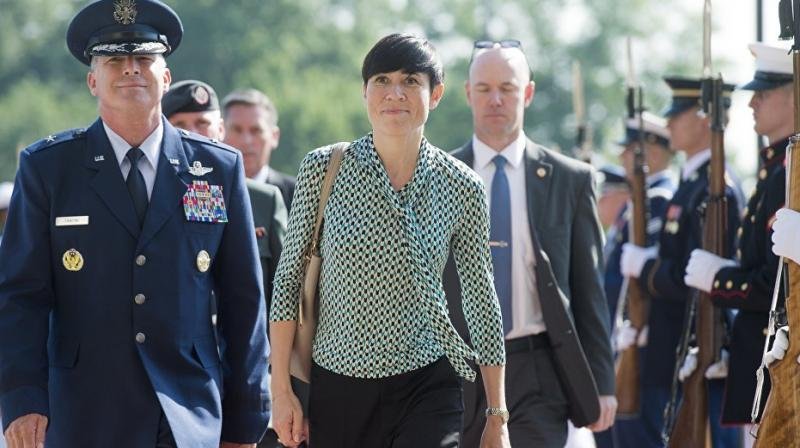
“In addition to cooperation on new submarines and naval missiles, we will strengthen our Navy-to-Navy cooperation,” Norwegian Defense Minister Ine Eriksen Søreide said at a bilateral meeting in Norway this week to mark the start of cooperation.

“We will also cooperate on naval research and technological development. This cooperation will strengthen our defense industries, and will be very important and beneficial for both our nations.”

Central to the accord is the joint procurement of identical submarines, along with cooperation on training, exercises, spare parts, and maintenance of the vessels. The submarines will feature combat management systems from a joint venture by Kongsberg, tkMS and Atlas Elektronik.

“The cooperation will create opportunities for a number of companies in Norway. It will also have a positive impact on the development of high-tech competence, and for the export potential of Norwegian defense products,” said Eriksen Søreide.

A request for quotation for the submarines was issued to Germany’s ThyssenKrupp Marine Systems, which Søreide said will bring closer a contract for new submarines in 2019.

(UPI)

August 23, 2017 0 comments
0 FacebookTwitterPinterestEmail
Defence

Kongsberg gains Norwegian, South Korean contracts

by Nadarajah Sethurupan August 23, 2017
written by Nadarajah Sethurupan

Kongsberg Defense Systems will maintain gear boxes on Norway’s Sea King helicopters, under a deal with the Norwegian Defense Logistics organization.

The framework agreement, which could cost as much as $37.9 million, is in effect until 2020 and has a three-year option.

“This framework agreement secures a continued operation of the Norwegian Sea King helicopters until the new AW101 search-and-rescue helicopters are fully operative, and entail an important continuity for Kongsberg in a period where the organization is being built up to maintain gearboxes on the NH-90 and AW101 helicopters,” Kongsberg’s Executive Vice President Aerostructure Terje Bråthen said in a company news release Tuesday.

The Norway-based company also announced it will deliver its Integrated Combat Solution for Finland’s new K9 Thunder 155mm self-propelled artillery.

The contract was signed with Hanwha Land Systems of South Korea, maker of the artillery.

(UPI)

August 23, 2017 0 comments
0 FacebookTwitterPinterestEmail
Politics

Norwegian PM opens terminal at Bergen Airport

by Nadarajah Sethurupan August 22, 2017
written by Nadarajah Sethurupan

Norwegian airport operator Avinor has officially opened the new Nkr 3.7bn (US$468m) terminal at Bergen Airport, in Flesland, Norway. Opened on time and within budget, the terminal has the capacity to accommodate up to 10 million passengers annually.

Speaking at the opening ceremony, Erna Solberg, Norway’s Prime Minister, said, “Flesland plays a vital role in tourism and industry in the region. Now that the airport has doubled its capacity, we have a large international airport that Western Norway can be proud of. This is a state-run flagship project that has run on schedule and within budget and Avinor can be proud of the work that went into this expansion.”

Covering nearly 680,000ft², travelers can now enjoy a more spacious airport with an increased number of restaurants and shops. The design of the airport and technical solutions offers big energy savings in addition to environmental benefits.

“We’re now providing even better facilities for travelers and airlines,” said Aslak Sverdrup, airport director, Avinor. “Hopefully this will mean more direct flights to big, important domestic and foreign destinations.”

Dag Falk-Petersen, CEO of Avinor, said, “This is a very important day for Norwegian aviation and we are very proud of the new Flesland airport. Bergen now has a fantastic airport that will take us into the future. Thousands of people have been working day and night since the decision to expand was made in 2014.”

(N.Sethu)

August 22, 2017 0 comments
0 FacebookTwitterPinterestEmail
Srilanka and Norway

Norwegian research vessel Dr Fridtjof Nansen’s arrival in 2018

by Nadarajah Sethurupan August 18, 2017
written by Nadarajah Sethurupan

The planning seminar is taking place in Colombo for the new Norwegian Research vessel Dr Fridtjof Nansen to come to Sri Lankan waters in 2018 to carry out a survey on the marine resources, the Norwegian Embassy said in a press release.

This is part of the technical and institutional cooperation on Fisheries between Norway and Sri Lanka, which was endorsed by the top level political authorities of the two countries.

The aim of the planned survey is to know the current status of marine resources including fish stocks and to investigate stocks of unexploited/ underutilized fishery resources on the continental shelf and slope. The last stock assessment for Sri Lanka has been carried out by the previous Dr. Fridtjof Nansen in 1978 to 1980.

The new marine research vessel RV Dr Fridtjof Nansen is owned by the Norwegian Agency for Development Cooperation (NORAD) and is jointly operated by the Institute of Marine Research of Norway, and Food and Agriculture organization to help developing countries improve their fisheries management.

The Ambassador of Norway to Sri Lanka and Maldives, Thorbjørn Gaustadsæther addressing a distinguished gathering at an event to recognize the finalization of the plaining schedules for the Vessel’s arrival to the Bay of Bengal, stated that the new research vessel will make it possible to significantly step up Norway’s assistance for ecosystem-based marine management in developing countries.

He further stated that this is part of the new Ocean strategy of Norway and Norway considers this as ‘creating partnerships for the oceans’ as it enhances sharing knowledge both across industries and across international borders.

August 18, 2017 0 comments
0 FacebookTwitterPinterestEmail
Asia and Norway

Ambassador of Norway meets Sri Lankan MOD Secretary

by Nadarajah Sethurupan August 18, 2017
written by Nadarajah Sethurupan

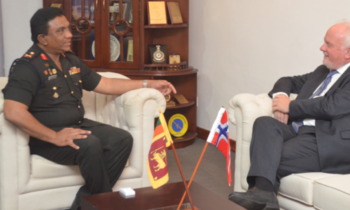
The Ambassador of Norway in Sri Lanka His Excellency Mr. Thorbjørn Gaustadsæther paid a courtesy call on the Secretary to the Ministry of Defence Mr. Kapila Waidyaratne PC at the ministry premises today (16th Wednesday, August 2017).

A Cordial discussion was held between both officials on matters of mutual interests and bilateral relevance.

Counsellor of Norwegian Embassy in Sri Lanka Ms. Vibeke Sørum was also present at the occasion.

Photos – MOD

August 18, 2017 0 comments
0 FacebookTwitterPinterestEmail
Media Freedom

Norwegian investor buys 5pc of Johnston Press

by Nadarajah Sethurupan August 11, 2017
written by Nadarajah Sethurupan

A Norwegian investor whose firm owns the Swedish version of the Metro has bought a 5pc stake in UK regional publisher Johnston Press.

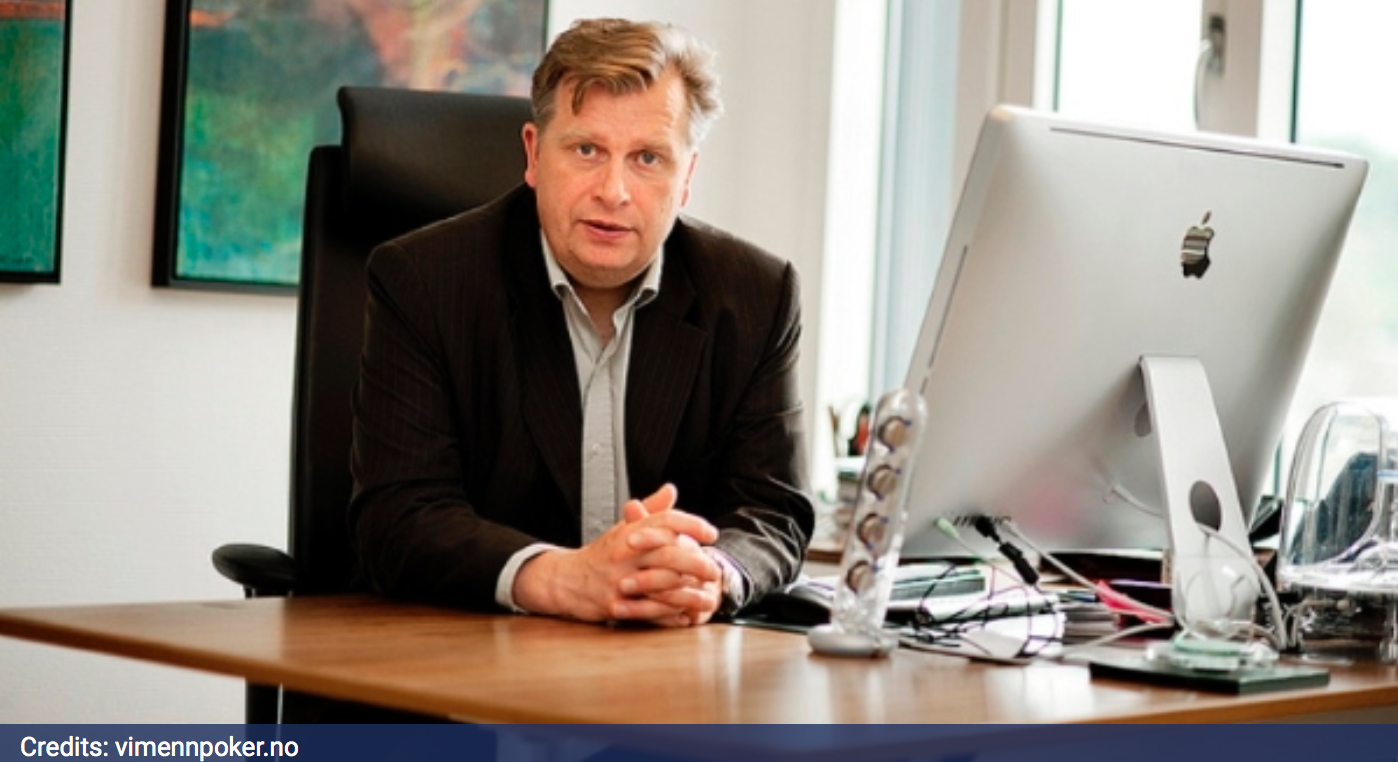
Christen Ager-Hanssen, left, who is reckoned to be worth £2.5bn, has unveiled ambitious plans for the group and says he intends to increase his investment further over time.

The businessman, once regarded as Norway’s richest man but based mainly in London since the 1990s, purchased a 5.14pc stake in JP on Wednesday.

Johnston Press shares have surged by nearly 20pc in the wake of the deal to stand at 16.5p.

Over recent years JP has paid off tens of millions of pounds worth of debt accumulated during the 1990s when it bought up scores of UK newspaper titles, but it still has £220m worth of bonds due to be repaid by 2019.

But in an interview with a national newspaper published today, Mr Ager-Hanssen vowed to help it sort out the bond issue, indicating that he had lined-up other investors to help take on the debt.

“I believe in the company and I think that they will be able to sort out the bond issue and that we can help them do that,” he told the Daily Telegraph.

“I think we need to move quite quickly. This is something that will happen over the next six months.”

Mr Ager-Hanssen’s firm Custos bought the Swedish freesheet Metro and its associated websites earlier this year, but he said there would be no direct link between the two companies.

“I don’t think we see any strategic synergies. Where we are focused is actually building audience and we want to invest heavily into UK media. And we will do that. We will increase our stake in Johnston.

“You can take Johnston’s audience, which is 32m, or 34m, and kick-start new companies like we did in Sweden.”

A spokesman for Johnston Press said: “As a major new shareholder, and with his experience, we of course welcome a conversation with Christen and a meeting has been set up.

“As shown at the latest results, JP is showing some good signs of growth – digital revenues and the i’s success being two stand-out points. We continue to work on the strategic review and are making progress.”

(hold the frontpage)

August 11, 2017 0 comments
0 FacebookTwitterPinterestEmail
Science

NASA, Norway to Develop Arctic Laser-Ranging Station

by Nadarajah Sethurupan August 8, 2017
written by Nadarajah Sethurupan

NASA and the Norwegian Mapping Authority are partnering to develop a state-of-the-art satellite laser ranging station 650 miles from the North Pole that will produce high-precision locations of orbiting satellites, help track changes in the ice sheets and improve the efficiency of marine transportation and agriculture.

The Arctic station will be the latest addition to a global network of space geodetic stations, which measure and monitor the size and shape of Earth, its orientation in space, the exact location of points on its surface and how these locations change over time. Space geodesy has a decades-long history at NASA due to its important role in the positioning and navigation of satellites.

“This partnership with Norway is an important step for NASA and the scientific community in building the next generation space geodetic network,” said Benjamin Phillips, program scientist for NASA’s Space Geodesy Program in Washington. “This network provides fundamental data for satellite and spacecraft navigation and underpins many of NASA’s Earth-observing missions and science.”

Under the new agreement signed on Aug. 7, Norway and NASA will build and install a satellite laser ranging facility in the scientific base of Ny-Ålesund, Svalbard. NASA will also provide expert consultation on how to operate the instruments. The ground-based laser transmits ultrashort laser pulses aimed at satellites specially equipped with a retroreflector, an array of special mirrors that bounce the pulses back. The system measures the time it takes for the light to travel back to its point of origin, which is used to determine the position of the satellite with respect to the ground station with an accuracy of around 0.04 inches (1 millimeter).

Combined with measurements from other geodetic instruments at the Ny-Ålesund Geodetic Observatory and all over the globe, the laser ranging observations will help refine the Global Geodetic Reference Frame, the basis for setting coordinates for all locations on Earth’s surface. The reference frame is used to measure the position of objects in space with respect to the Earth, as well as to precisely monitor motions of Earth’s crust, changes in sea level, and to support satellite positioning technology like GPS, which is used in many aspects of our daily lives.

“From the NASA perspective, laser ranging is important to understanding where our spacecraft are, as well as where on Earth their measurements are located,” said Stephen Merkowitz, space geodesy project manager at NASA’s Goddard Space Flight Center in Greenbelt, Maryland. “Laser ranging is needed for satellites that require very precise positioning measurements. Today we’re tracking over 90 satellites, not only from NASA, but also from other space agencies with this technique.”

The new Norwegian geodetic station will be the northernmost of its kind and will be invaluable for tracking satellites that follow polar orbits, as many of NASA’s Earth-observing missions do.

To make sure the laser ranging system is able to work in Arctic conditions, NASA will use a telescope dome strong enough to open and break the ice that might accumulate on top during Svalbard’s frigid winters. The telescope will be mounted on a pointing gimbal that can still move when exposed to very cold temperatures. To be able to work during the Arctic summertime, when the constant sunlight makes it difficult to observe the stars needed to calibrate the telescope, NASA specified that this telescope has to be stable for months at a time.

The Norwegian Mapping Authority started construction work on the new scientific base in 2014. The current goal is to have all systems in operation by 2022.

“This is a major investment for Norway,” Merkowitz said. “Norwegians are particularly interested in the global applications. They’ve taken a leading role in the advocacy and implementation of many initiatives relevant to space geodesy and its applications towards monitoring climate change.”

“In Svalbard, we’re already seeing the effects of climate change,” said Per Erik Opseth, director of the Geodetic Institute of the Norwegian Mapping Authority in Hønefoss, Norway, the agency working with NASA to develop the new laser ranging system. “Setting up this fundamental station in Ny-Ålesund will help Earth observations from satellites crossing the North Pole, so we can improve our knowledge of ice cap meltdown, sea level rise in this area and also the melt of sea ice in the basin between Russia and North America.”

Continued development of the next-generation space geodetic network that the new station in Svalbard will contribute to is expected to further improve the accuracy of satellite measurements of Earth processes, including changes in polar ice sheets. One such mission is NASA’s upcoming Ice, Cloud, and Land Elevation Satellite-2, or ICESat-2, designed to measure tiny changes in the elevation of Earth’s ice sheets that indicate ice loss or gain.

“With ICESat-2, we want to measure changes in the ice sheets that are on the order of centimeters per year,” said Goddard’s Scott Luthcke, lead for the ICESat-2 geolocation team. “If we made an error of a few centimeters when positioning the satellite in space with respect to the center of mass of the planet, which is established using geodetic data from the network, that would translate into a very large error in our calculations of the volume change of the ice sheets.”

For more information on NASA’s Geodesy program:

https://space-geodesy.nasa.gov

Banner Image The scientific base of Ny-Ålesund, Svalbard, as seen from the sea. The future Satellite Ranging Station will be located between the two antennas visible in the image.
Credit: Norwegian Mapping Authority/Per Erik Opseth

August 8, 2017 0 comments
0 FacebookTwitterPinterestEmail
Srilanka and Norway

Norwegian expert submits interim report on Uma Oya Project

by Nadarajah Sethurupan August 7, 2017
written by Nadarajah Sethurupan

Norwegian expert Bent Aagaard submitted the interim report on the Uma Oya Multi-purpose Development Project to President Maithripala Sirisena at the President’s Official Residence in Colombo on Friday.

President Maithripala Sirisena said at the occasion that many problems had arisen during the implementation of the Uma Oya Multi-purpose Development Project as the previous government had hurriedly commenced the project without calling for a proper feasibility report and a Environmental Impact Assessment (EIA).

“The mistakes were done from the beginning and we are attempting to rectify them and ensure that the project would not create any issues in the future, the President said.

The expert said the preliminary studies had not forecast the possibility of large water seepage in the tunnel. He said the machinery used were not capable of strengthening the tunnel wall and seal them with strong grout materials.

“Excavation must be done with suitable machinery on the tunnel to ensure that there will be no seepage in the tunnel in the future,” the expert said. He said the contractors had not prepared for large scale water ingress in the tunnel.

The expert said special grout materials and machinery should be used for tunnelling remaining four and half Km as a part of it is below the residential areas.

Aagaard said a comprehensive preliminary study could have prevented the water ingress that resulted in a severe water shortage in some areas.

The President requested the expert to provide a full report with his recommendations that help stop completely the leakage. The President asked him to provide the reasons for not taking into the consideration the water leakage in the previous reports.

The President said mega scale projects should not be commenced without proper studies. He said Uma Oya problems are lessons for the future.

Expert advice would be sought to implement the next project that comprises tunnelling of 22 Km, the President said.

Mahaweli Development and Environment Ministry Secretary Anura Dissanayake, the Project Director and the Norwegian Embassy officials participated.

(Dailynews)

August 7, 2017 0 comments
0 FacebookTwitterPinterestEmail
Terrorist

Psychological impacts of terrorist attacks transcend borders

by Nadarajah Sethurupan August 6, 2017
written by Nadarajah Sethurupan

The terrorist attack by Anders Breivik in Norway in 2011 caused a dramatic increase in trauma- and stressor-related disorders in Denmark, concludes a new study.

On 22 July 2011, the terrorist Anders Breivik attacked and killed 77 adults and children in Norway.

The attack not only spread fear in Norway, but also in neighbouring Denmark, concludes a new study.

Following the attack, there was a sharp increase in the number of trauma- and stressor-related disorders in Denmark—the study estimates that 2,736 extra diagnoses of this type of disorders were made at Danish psychiatric hospitals in the first year and a half following the attack. Trauma- and stressor-related disorders is a diagnostic category, which includes acute stress reactions, post-traumatic stress disorders (PTSD), and adjustment disorders.

“Our research shows that the effect of terrorist attacks cross national borders and affect people in other countries to such a degree that they develop mental disorders,” says Søren Dinesen Østergaard, associate professor at the Department of Clinical Medicine at Aarhus University, Denmark.

He is one of the scientists behind the new study that is published in the scientific journal Epidemiology.

Massive increase in trauma- and stressor-related disorders following the Breivik attacks
Between the week of the attack in July 2011 and until the end of 2012, the number of diagnoses of trauma- and stressor-related disorders increased by 16 per cent compared to the expected level. This amounts to 2,736 additional diagnoses.

“At no other time do we find such a marked jump in the number of these diagnoses. It peaks shortly after the attacks, then starts decreasing, and then increases again when Breivik is sentenced and featured in the media once more,” says co-author Bertel Teilfeldt Hansen, a postdoc at the Department of Political Science, University of Copenhagen.

But how do the researchers know that it was Breivik’s attack and not something else that lead to the rise in psychological diagnoses?

According to Hansen, it is because there are no similar jumps in the number of diagnoses at any other time between 1995 and 2012, and because it is extremely improbable that a randomly coinciding event would lead to such a massive increase in the weeks immediately after the attacks. Additionally, it is highly unlikely that Breivik should have deliberately planned his attacks to occur just before an oncoming spike in the number of Danes with a particular mental disorder, he says.

The Breivik attack had a larger effect than the 9/11 attacks
The researchers behind the study have previously studied the effect of the September 11 terrorist attacks in the US.

The attack on the World Trade Center and the Pentagon also affected the psychological health of people in Denmark, though to a much lesser extent. In the year after the attack, an additional 400 diagnoses of trauma- and stressor-related disorders were recorded.

“Even though the September 11 attacks were objectively a more dramatic event—many more people were killed and it had much larger consequences for the world as a whole—the Norwegian attack had a larger negative impact on the mental health of people in Denmark. It could be related to the fact that we are closer to Norway—both geographically and culturally. Many people probably had the feeling that ‘it could just as well have been us’,” says Østergaard.

In the new study, researchers also studied the media coverage of the terroristattack in Norway. The coverage was intense immediately after the attacks, but new peaks in coverage emerged at the beginning and conclusion of Breivik’s trial.

“The increases in media coverage coincide with the increases in mental disorders. This makes sense, as it is only through the media that we can learn about the event in the first place. The more interesting question is perhaps if the extent or type of media coverage of terrorist attacks induces fear to a further extent,” says co-author Peter Thisted Dinesen, a professor (mso) at the Department of Political Science at the University of Copenhagen.

Terrorist attacks make the headlines
Dinesen thinks that the media’s coverage of terrorist attacks is connected to the observed increase in mental disorder.

“It’s striking that we observe a new increase in trauma- and stressor-related disorders when the media covers topics related to the Breivik attack. It shows that the media’s coverage matters, but whether media practices in relation to terrorist attacks should change is another question,” says Dinesen.

According to media researcher Nete Nørgaard Kristensen, an associate professor at the Department of Media, Cognition and Communication, University of Copenhagen, there is no doubt that the media covers terrorist attacks intensely.

She has studied media coverage following the terrorist attack in Copenhagen in February 2015 and on the French satire magazine, Charlie Hebdo in January 2015.

“As the terrorist attacks have occurred closer to us, it’s natural that they occupy more of the media coverage. But the coverage has also changed. There’s an element of live-streaming. Editors broadcast the information live and verify it later. It gives an even greater feeling of being closer to it and that it’s happening here and now, she says.

Whether the media should change how they cover these events is a balance between public health and having an informed public, says Dinesen.

“Future studies should investigate whether certain types of coverage increases or decreases the effect on [people’s] mental health,” he says.

(sciencenordic)

August 6, 2017 0 comments
0 FacebookTwitterPinterestEmail
NATO and Norway

NATO-owned Airbus A330 MRTT tankers

by Nadarajah Sethurupan August 5, 2017
written by Nadarajah Sethurupan

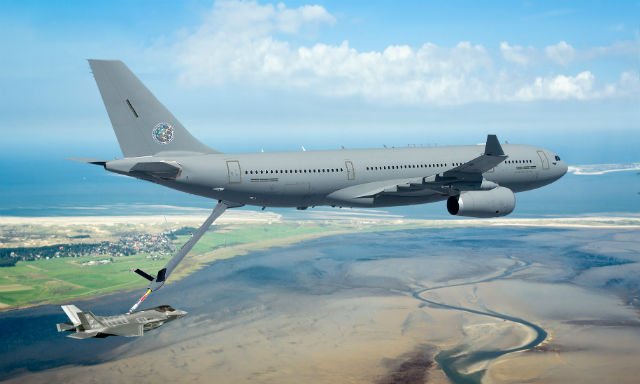
Germany and Norway officially joined the European/NATO program to acquire Airbus A330 Multi-Role Tanker Transport aircraft along with Netherlands and Luxembourg.

The two nations committed to participating in the project through the signing of a Memorandum of Understanding at NATO HQ in Brussels today.

Known as the Multinational Multi-Role Tanker Transport Fleet (MMF) the programme was initiated by the European Defence Agency (EDA) in 2012. Europe’s organization for the management of cooperative armament programmes – OCCAR – manages the MMF acquisition phase as Contract Executing Agent on behalf of the NATO Support and Procurement Agency (NSPA). Following the acquisition phase, NSPA will be responsible for the complete life-cycle management of the fleet.

The Programme is funded by the four nations who will have the exclusive right to use these NATO–owned aircraft which will operate in a pooling arrangement. The aircraft will be configured for in-flight refuelling, the transport of passengers and cargo, and medical evacuation flights. The first two aircraft have already been ordered to be delivered from Airbus Defence and Space’s tanker conversion line at Getafe near Madrid in 2020. Five additional aircraft will now be ordered, and that order will include options for up to four further aircraft.

NSPA GM, Peter Dohmen said “As NATO’s Support and Procurement Agency, we are proud to be a key enabler of this critical project to help European nations meet their air transport and refuelling requirements. The successful cooperation in this project – bringing together all our capabilities – bodes extremely well for further future NATO / EU collaboration.”

OCCAR Director, Arturo Alfonso-Meiriño said: “The MMF programme has broken new ground in bringing together the combined capabilities of the EDA, NSPA and OCCAR as one team, with each organisation working within its particular sphere of expertise. I very much welcome that this important initiative has now attracted additional partners to join, and it still includes options for the participation of even more countries.”

EDA Chief Executive Jorge Domecq said: “The MMF is a prime example of European defence cooperation which shows that once a capability shortfall has been jointly identified, European nations can pull together, work on a common project aimed at filling the gap, and eventually deliver. It’s Pooling & Sharing at its best”.

Airbus Defence and Space Head of Military Aircraft Fernando Alonso said: “The A330 MRTT has established itself firmly as the world’s premier tanker/transport aircraft. It is extremely satisfying to now see it adopted as the core asset of one of Europe’s most important cooperative defence programmes. We hope that this collaborative approach will serve as a model for future joint procurements.”

 About Airbus

Airbus is a global leader in aeronautics, space and related services. In 2016, it generated revenues of € 67 billion and employed a workforce of around 134,000. Airbus offers the most comprehensive range of passenger airliners from 100 to more than 600 seats. Airbus is also a European leader providing tanker, combat, transport and mission aircraft, as well as Europe’s number one space enterprise and the world’s second largest space business. In helicopters, Airbus provides the most efficient civil and military rotorcraft solutions worldwide. 

August 5, 2017 0 comments
0 FacebookTwitterPinterestEmail
Srilanka and Norway

Norwegian expert submits interim report on Uma Oya Project

by Nadarajah Sethurupan August 4, 2017
written by Nadarajah Sethurupan

Sri Lankan President Maithripala Sirisena said that it is regrettable that series of problems have arisen during the implementation of the Uma Oya Multi-purpose Development Project as the previous government had hurriedly commenced the project without proper study of the feasibility report and the Environmental Impact Assessment (EIA).

The mistakes have been done from the beginning and we are attempting to rectify them to ensure that the problems faced by the people are solved and there would not be any issues in the future, the President said.

President Sirisena made these remarks after the Norwegian expert submitted his interim report on the project to the President at the President’s Official Residence in Colombo, today (04).

The expert Mr. Bent Aagaard said that the preliminary studies had not forecast the possibility of large water seepage in the tunnel and he further said that the machinery used for the project had not been capable of proper strengthening of the tunnel wall and seal them with strong grout materials.

“Excavation must be done by using suitable machinery on the tunnel wall and grouting all the leaks in the tunnel to ensure that there will be no seepage in the tunnel in the future,” Aagaard  said. He further said that the contractors had not been prepared for large scale water ingress in the tunnel.

The expert advised that it would be necessary to get special grout materials and machinery before remaining 4 and half Km of the tunnel is dug as a part of it is below the of residential areas.

The expert was of the view that a better comprehensive preliminary study could have prevented the water ingress into the tunnel leading to a severe water dearth in some areas.

The President requested the expert to provide a full report on how the leakage could be completely stopped and the reasons for not taking into the consideration the water  leakage in the previous reports.

The President further said that such mega scale projects should not undertake without proper studies. He also said that Uma Oya problems are lessons for the future to avoid such mistakes. President Sirisena said that the government plans to obtain expert advice prior to implementation of the next project in which a 22 Km long tunnel is to be constructed.

Secretary to the Ministry of Mahaweli Development & Environment Mr. Udaya R. Seneviratne, the Project Director and the officials of the Norwegian Embassy participated on this occasion.

August 4, 2017 0 comments
0 FacebookTwitterPinterestEmail
Politics

Eurobarometer: Third countries like the EU more than ‘close neighbours’

by Nadarajah Sethurupan August 4, 2017
written by Nadarajah Sethurupan

The world’s three most populated countries, China, India and the United States, have a more positive view about the EU than close neighbours like Russia, Norway and Switzerland, a Eurobarometer survey found.

The EU published on Wednesday (2 August) a new survey that for the first time included the views of people in eleven non-EU countries about the EU.

In China, the US and India, which together represent 49% of the world population and 61% of global GDP, a majority of people have a positive opinion about the EU.

Particularly, 94% in Brazil, 84% in China, 83% in India, 76% in Japan, 79% in Canada, 75% in the USA, 67% in Australia and 54% in Turkey.

On the contrary, it seems that “close neighbours” do not share such a view.

Russia, Norway and Switzerland tend to have “mixed feelings”, Eurobarometer noted, underlining that between 43% and 46% have a positive view of the EU.

Another important element was the question about how people perceive the EU as “a place of stability in a troubled world”.

Eurobarometer also noted that the EU was globally perceived as such; however, there were significant differences “from 82% in India thinking that way to 49% in Turkey – but this is not the case in Russia where only 33% share this view and 61% the opposite”.

Europeans more optimistic

In the meantime, the survey found that EU citizens are increasingly optimistic about the continent’s future (56%), a 6% increase compared to autumn 2016.

In addition, trust is also following a rising trend (42%) up from 36% in autumn 2016 and 32% in autumn 2015.

The highest increase was marked in France (41%+15 points) followed by Denmark (56%+15 points).

Interestingly, for the first time terrorism became the top concern of EU citizens who believe (44%+12% since autumn 2016) that it’s the main challenge of the EU, according to the survey.

In May, the Commission proposed the 2018 EU budget with security taking a center stage.

It’s followed by immigration (38%) while the economic situation (18%), the state of member states’ public finances (17%) and unemployment (15%) are almost unchanged.

(euractiv)

August 4, 2017 0 comments
0 FacebookTwitterPinterestEmail
Racism in Norway

Norwegian anti-immigrant group mistakes picture of bus seats for women in burkas

by Nadarajah Sethurupan August 1, 2017
written by Nadarajah Sethurupan

“The hatred that was displayed toward some empty bus seats really shows how much prejudices trump wisdom.”

Talk about blind hatred. A Norwegian anti-immigration group uploaded a picture of a bus filled with women wearing burkas on Facebook. Or so it seemed. The group, called Fedrelandet viktigst – which translates to “Fatherland first,” reported the Local – put the picture to its Facebook wall on 28 July with the caption: “What do people think about this?”

But a closer look at the picture reveals that the burka-clad women are actually just some empty bus seats. There are no travellers on the bus. Not one. It didn’t stop Fedrelandet viktigst, which has around 13,000 members, who all failed to see the obvious. They made their feelings about the state of immigration in Norway known.

Among the comments, one read: “It looks really scary, should be banned. You can never know who is under there. Could be terrorists with weapons.” Another user wrote that these looked like “collapsed umbrellas”.

One Facebook user wrote: “Frightening times we are living in.”

Facebook Sindre Beyer screenshotted the many reactions to the picture. He posted the photos on his personal account, asking: “What happens when a photo of some empty bus seats is posted to a disgusting Facebook group and nearly everyone thinks they see a bunch of burkas?”

His post was shared more than 1,613 times at time of writing. Fedrelandet viktigst’s members were widely mocked on the website, for their ignorance and literal lack of vision. One commenter wrote: “Just when I thought that nothing from that group could surprise me, they manage to actually surprise me.”

Another made light of the situation: “I think I passed the test because the first thing I saw was a group of Darth Vaders.”

But one user pointed out how the whole story was as sad as it was funny: “I can definitely see the humour in it but with that being said I’m left shaking my head over the fact that people could react like that; sad.”

Interviewed by Norwegian online newspaper Nettavisen, Beyer explained he had been following the group for some time: “The hatred that was displayed toward some empty bus seats really shows how much prejudices trump wisdom.”

The head of the Norwegian Center Against Racism, Rune Berglund, told Nettavisen: “People see what they want to see and what they want to see are dangerous Muslims.”

He added: “In a way it’s an interesting test of how quickly people can find confirmations of their own delusions.”

Sadly, the comment section of the Nettavisen proves him right, as several users are still sticking to the idea that the empty seats are actually women wearing burkas.

One can only hope other Fedrelandet viktigst’s members will realise their mistake and learn to curb their prejudice next time they’re on an Oslo bus. We wouldn’t want them to confuse people with seats again.

(ibtimes)

August 1, 2017 0 comments
0 FacebookTwitterPinterestEmail
Politics

Five non-EU countries extend sanctions against the Crimea

by Nadarajah Sethurupan July 29, 2017
written by Nadarajah Sethurupan

Five countries have extended sanctions against the Crimea until June 23, 2018. Norway, Albania, Montenegro, Georgia and Ukraine made the decision subsequent to that of the EU.

This is noted in a statement by the EU High Representative for Foreign Affairs Federica Mogherini.

“They [the five countries] will ensure that their national policies are consistent with this decision of the Council [of Europe on the adoption of the signatures.] The European Union takes note of their commitments and welcomes it,” the report said.

Montenegro and Albania are candidates for joining the European Union. Norway is a member of the European Free Trade Association.

Sanctions against Crimea provide for a ban on the supply of Crimean goods to the EU, as well as any European investment in the peninsula, including the purchase of real estate, business financing and the provision of any services. European courts cannot enter Crimean ports except in emergency situations.

The European Union extended sanctions against Russia earlier in June. President of Ukraine Petro Poroshenko said that he welcomed such a decision.

The EU introduced sanctions against Russia in 2014, after the occupation of the Crimea. Later, the EU imposed sanctions against Russia for its involvement in the fighting in eastern Ukraine. Restrictive measures were several times expanded and extended.

July 29, 2017 0 comments
0 FacebookTwitterPinterestEmail
Science

Norway introduces forced biometric authentication

by Nadarajah Sethurupan July 27, 2017
written by Nadarajah Sethurupan

On 5 April 2017, the Norwegian government proposed an amendment to the Norwegian code of criminal proceedings to allow the police to compel the use of biometric authentication. After two quick debates, the Norwegian Parliament passed the proposition into law on 21 June.

Article 199 of the Norwegian code of criminal proceedings reads as follows after the change:

“When searching an electronic system the police can demand from anyone with connection to the system the necessary information to gain access to the system or open it by biometric authentication.If anyone refuses a demand for biometric authentication as proposed in the first sentence, the police may perform the authentication by force.The decision to use force

If anyone refuses a demand for biometric authentication as proposed in the first sentence, the police may perform the authentication by force.

The decision to use force by the second sentence is decided by the prosecutor’s office. If there is a risk that would be brought about by delaying the authentication, the decision can be made by the police on the spot. The decision shall immediately be reported to the prosecutor’s office.[…]”

The lack of specificity of an “electronic system” means this law has an extremely wide scope. We can, for example, envision that access to a personal device such as a mobile phone, which stores the access credentials to several cloud storage services, essentially gives away a more or less complete description of a person’s life. To entrust such decision to a single police officer with no due process means that an act with very far reaching consequences may be performed in a matter of seconds. EDRi member Electronic Frontier Norway (EFN) is exploring the possibility that this may violate the privacy protections afforded by Article 8 of the European Convention on Human Rights (ECHR) and the right to avoid self-incrimination afforded by Article 6.

There is also no reference to proportionality of the use of force. Although there is no reason to suspect this would be used in a disproportionate way, the lack of such a limitation means that we don’t know how far the use force might be taken. While the use of torture is prohibited by the Norwegian constitution, such lack of specificity in an individual law risks creating a situation where an overzealous officer may deem it necessary to perform acts which are prohibited by other parts of the law. It is not obvious how the law may be applied for example when iris scanning is involved. Logically, force must be applied in close proximity to the eyeball and eye socket, which puts an individual at obvious physical risk.

It is also important to take note that the law is not limited to suspects but “anyone with connection to the system”. This means that someone with no connection to a crime may be subjected to the abovementioned uses of force.

EFN is worried about the development this and other changes to the law in the same direction represents. This law has been rushed through without proper justification, and the wording has been chosen with apparently little or no regard to proper scope.


Norwegian code of criminal proceedings (only in Norwegian)
https://lovdata.no/dokument/NL/lov/1981-05-22-25/KAPITTEL_4-3#%C2%A7199

Forced biometric authentication in Norway (26.07.2017)
https://efn.no/1807/forced-biometric-authentication-in-norway

(Contribution by Tom Fredrik Blenning, EDRi member Electronic Frontier Norway)


July 27, 2017 0 comments
0 FacebookTwitterPinterestEmail
Science

The world’s first crewless ship will launch next year

by Nadarajah Sethurupan July 24, 2017
written by Nadarajah Sethurupan

The world’s first crewless, automated ship will launch in 2018, reports the Wall Street Journal, and is expected to be fully autonomous by 2020. The Norwegian-built Yara Birkeland will use GPS, radar, cameras, and sensors to navigate itself around other boat traffic and dock on its own. It’s anticipated to cost around $25 million, which is about three times as much as a standard container ship of the same size. But investors say without the need for fuel or crew, annual operating costs would be cut by up to 90 percent. The vessel will become autonomous in stages, Yara said.

“Yara Birkeland will initially operate as a manned vessel, moving to remote operation in 2019 and expected to be capable of performing fully autonomous operations from 2020,” the company said in a post on its website from May.

The 100-container Birkeland is being jointly developed by agriculture firm Yara International and technology company Kongsberg Gruppen. It’s been dubbed the “Tesla of the Seas,” and is scheduled in late 2018 to start delivering fertilizer from a production facility to the port of Larvik about 37 miles away.

Yara’s head of production Petter Ostbo told The Wall Street Journal the company would look to invest in bigger ships and use them for longer routes once international regulations are in place for crewless vessels. “Maybe even move our fertilizer from Holland all the way to Brazil,” he said.

Yara said its new vessel will also cut emissions. The company plans to reduce air pollutants while improving road safety by removing up to 40,000 truck journeys in populated urban areas.

“We want to go zero emission,” Ostbo said. “Even if some say climate change is not reality, it’s a business reality because clean sources of energy are more affordable than fossil fuels.”

(N.Sethu)

July 24, 2017 0 comments
0 FacebookTwitterPinterestEmail
Science

Norway deploys world’s first wireless network at sea

by Nadarajah Sethurupan July 20, 2017
written by Nadarajah Sethurupan

To improve offshore oil spill preparedness, Norway’s government and the oil industry are building an offshore broadband wireless network.

When oil spills occur, the ability to exchange information quickly between ships, planes, and other actors can greatly limit the damage caused by the spill, according to the Norwegian Coastal Administration. In order to speed up communications in such a scenario, an offshore broadband network is being rolled out in Norway.

The network is being built onboard the vessels and planes that take part in oil spill recovery operations. Norway’s Coastal Administration will install the Maritime Broadband Radio (MBR) system on all its oil recovery vessels, as well as ten additional vessels that have oil recovery equipment onboard.

The Norwegian Clean Seas Association for Operating Companies (NOFO) – made up of oil industry organizations – will install the MBR system on all their oil recovery vessels. The system has already been rolled-out on a surveillance plane that’s a joint initiative between the Coastal Administration, NOFO, and the Norwegian Coast Guard. Three onshore base stations have also been installed, to aid in communications with ships and planes.

The Coastal Administration says this is the world’s first national implementation of maritime broadband communication on ships and planes in public service.

“This is a significant improvement that allows us to communicate with all units participating in an oil recovery mission, and share the data without an internet connection. MBR allows us to respond faster with the right actions,” says Kjetil Aasebø, senior advisor in the Coastal Administration, in a statement.

The MBR system has been developed in cooperation with the Norwegian companies Kongsberg Seatex and Radionor. The system operates in the 5GHz frequency band, and offers speeds up to 15Mbps. Its operational range is in excess of 50km, depending on antenna placement.

This means the radios will work well beyond line-of-sight, greatly improving the practical applications of the technology compared to traditional high-performance data communication equipment used offshore.

An MRB network has a mesh network topology. This means that senders and receivers that are out of reach of each other can use other MBR stations between them as radio relay stations. Consequently, a circling airplane with an MBR station can greatly extend the coverage of the network.

MRB radio stations are hardened for offshore use, and contain no moving parts. As a result, the omnidirectional models can contain up to 60 phased-array solid state antennas. The enclosed signal processing circuitry performs real-time radio beamforming and adaptive power control, in order to provide an optimal signal to users, both those nearby and behind the horizon.

(zdnet)

July 20, 2017 0 comments
0 FacebookTwitterPinterestEmail
Defence

Norwegian police pens deal for three AW169s

by Nadarajah Sethurupan July 17, 2017
written by Nadarajah Sethurupan

The Norwegian Police Directorate has chosen the AW169 as the country’s new police helicopter.

The operator is preparing to sign a contract with Leonardo to purchase three helicopters with the option for another three.

The helicopter value is approximately NOK 313 million ($38 million). The contract also includes operation and maintenance services, making the entire contract worth $82 million.

If the directorate fulfils the order, it will be the first police operator to place an order for the rotorcraft. The contract is scheduled to be signed in August.

Alongside this order, the Police Directorate has opened a new central air station in Taradrud to improve its readiness and response time.

July 17, 2017 0 comments
0 FacebookTwitterPinterestEmail
Science

One in four Norwegian humanities researchers ‘never publishes’

by Nadarajah Sethurupan July 16, 2017
written by Nadarajah Sethurupan

Major evaluation of country’s research landscape also found that internationalisation was a key area for improvement.

More than a quarter of humanities researchers in Norway have never published, according to the first evaluation of the discipline in the country for 30 years.

The study, which was commissioned by the Research Council of Norway, found that 26 per cent of researchers in the discipline had no publications and, while there were “pockets of excellence” in most areas of the humanities, no research groups or universities “reached the highest levels of international performance”.

Overall, however, the humanities had higher than average publication per academic staff member than the other disciplines in the country, according to the report.

The humanities accounted for 16.8 per cent of Norway’s national publication output and there was a 7.8 per cent increase in publications between 2011 and 2015, it added.

The Evaluation of the Humanities in Norway, which was undertaken by 54 international humanities scholars, assessed 2,300 researchers and 97 research groups in 36 organisations in 2016 and early 2017.

Shearer West, deputy vice-chancellor at the University of Sheffield and chair of the evaluation’s principal committee, said that the high proportion of researchers without publications was probably because research in the country is concentrated at its four big research universities: the University of Oslo, University of Bergen, Norwegian University of Science and Technology and UiT The Arctic University of Norway.

“There are a whole bunch of university colleges and other organisations that were more like teaching colleges that have recently begun to be merged with larger institutions. They don’t have a research culture yet they are expected to do research,” she said.

“In some universities that we looked at, staff had 10 per cent of their time allocated to do research, whereas in other places it was closer to 40 per cent or even 45 per cent.”

PhD students accounted for just one-third of the non-publishing research staff.

She said that the main conclusion of the evaluation was that the government and the university sector must “think more strategically about their priorities in terms of humanities research”.

“We didn’t see a lot of evidence of this,” she said.

The report also highlighted internationalisation as a key area for improvement and found that in many instances research was focused on “Norwegian issues and contexts”.

“In a number of cases, the focus on Norwegian research did not lead to sufficient emphasis on how topics, questions and problems investigated in Norwegian case studies should be related to larger, comparable international phenomena,” the panel found.

It also recommended that researchers should target more internationally leading journals and peer-reviewed books while universities should increase inward and outward mobility of academics.

While some institutions provided funds for staff to spend time abroad during sabbaticals, there was “little evidence” of institutions providing fellowships or opportunities for researchers from other countries to visit and spend time working with their own staff in Norway, according to the study.

(times higher education)

July 16, 2017 0 comments
0 FacebookTwitterPinterestEmail
Nobel Peace Prize

Norway PM Solberg accused of being ‘relieved’ at death of Liu Xiaobo

by Nadarajah Sethurupan July 15, 2017
written by Nadarajah Sethurupan

As Secretary of State Rex Tillerson and others in Washington mourned the death of the long-imprisoned Chinese dissident Liu Xiaobo, a Communist Party-affiliated newspaper in Beijingsaid the Nobel peace prize laureate had been “kidnapped” by the West and bestowed with “a halo which will not linger”.

On 8 October, 2010, Liu Xiaobo was awarded the Nobel Peace Prize for his “long and nonviolent struggle for fundamental human rights“.

“The world has failed to save one of the most conscientious and genuine Chinese”, said Wu’er, who fled China and now lives in Taiwan.

Liu’s death led to global criticism of China’s handling of the issue. In apparent protest of the award, a group of Chinese business and cultural leaders established an alternative to the Nobel, the Confucius Peace Prize, and later honoured such human rights renegades as Vladimir Putin, Fidel Castro and Robert Mugabe.

Liu died from multiple organ failure after being denied treatment overseas.

Ottawa’s reaction to Liu’s death came as Canada’s Governor General David Johnston is concluding a state visit to China on Friday, accompanied by a large delegation of Canadian politicians and business leaders.

“Now, we are most concerned about Liu Xia, but there has been no information about her”.

Geng said China has lodged formal protests with the United States, Germany and the United Nations, among others. “He wanted the Japanese government to support pro-democratic movements and human rights issues in China; he wanted the government to show more interest”.

“I want to tell the regime that is withholding my freedom: I have no enemies“, Liu wrote in an essay that was published worldwide in 2010.

She has been suffering severe depression, according to close friends, especially after the authorities sentenced her brother to 11 years in prison over what supporters call trumped-up charges of business fraud.

It said Liu’s family has refused the tracheostomy.

The Chinese government revealed he had liver cancer in late June only after it was virtually beyond treatment.

China punished Norway by suspending political and economic ties – including salmon imports from Norway – until a year ago, when Oslo promised to respect “China’s core interests and major concerns”.

They also urged China to free Mr Liu’s wife, artist and poet Liu Xia, from the strict house arrest she has lived under for years even though she has not been convicted of any crime. Relatives would only be allowed to hold “a simple farewell ceremony, under severe surveillance”, Hu said, adding that Liu’s friends had been unable to find out specific details.

Despite pleas form all over the country, he was not allowed medical parole until much later, when he was hospitalised in northeast China. The Chinese government reacted by briefly suspending trade with Norway.

A plainclothes Chinese security guard attempts to stop a photographer from taking photos of an apartment building where Liu Xia, the widow of Chinese dissident and Nobel Prize victor Liu Xiaobo, has been living under house arrest in Beijing on July 14, 2017.

Prominent dissident Liu Xiaobo, the only Chinese citizen ever to be awarded a Nobel Prize while still residing in China, has died at age 61.

Despite worldwide solidarity behind Liu Xia, many supporters sense the Chinese government’s fear of her turning into an global symbol and rallying cry for human rights – and foresee an uphill battle ahead.

“Liu Xiaobo’s imprisonment in 2009 became a death sentence”.

“The Chinese government figured out 10 to 15 years ago that there was no real price to be paid”, Human Rights Watch’s China director Sophie Richardson said.

July 15, 2017 0 comments
0 FacebookTwitterPinterestEmail
Newer Posts
Older Posts

Norwegian Nobel Prize 2024

101207 The Norwegian Nobel Committee has decided to award the Nobel Peace Prize for 2024 to Japan’s Hiroshima bomb survivor group Nihon Hidankyo.

Special Interest

  • Africa and Norway
  • Asia and Norway
  • Asylum
  • China and Norway
  • Corruption in Norway
  • Crimes
  • Defence
  • Diplomatic relations
  • Economics
  • Environment
  • Farming
  • Killing
  • Media Freedom
  • Middle East and Norway
  • NATO and Norway
  • Nobel Peace Prize
  • Norwegian Aid
  • Norwegian American
  • Oil & Gas
  • Peace Talks
  • Politics
  • Racism in Norway
  • Religion
  • Russia and Norway
  • Royal House
  • Science
  • Sex scandal
  • Sports
  • Spy War
  • Srilanka and Norway
  • Svalbard
  • Terrorist
  • Taiwan and Norway
  • Video clips

Follow Us

Recent Posts

  • Norway seeks deeper cooperation with China

    September 10, 2026
  • Bangladesh seeks more Norwegian investment in renewable energy

    September 10, 2026
  • Passengers from Russian ferry seized by Norway return home

    September 10, 2026
  • How Ukrainian Intel Poison Oslo’s Relations with Both Moscow and Washington

    September 10, 2026
  • U.S.-Norway Ties Strain as Trump Skips King’s Funeral

    September 9, 2026
  • Hundreds of Thousands Line Oslo Streets as King Harald V Is Laid to Rest in a Historic State Funeral

    September 9, 2026

Social Feed

Social Feed

Editors’ Picks

Norway opens market for Sri Lankan fish exports...

May 13, 2016

Sri Lanka – Nordic Business Council holds discussions...

May 15, 2016

Good governance to Sri Lanka

May 15, 2016

Shock and Joy in Sri Lanka – Erik...

May 15, 2016

Sri Lanka-Norway plenty of new opportunities for business–...

May 15, 2016

NORWAY NEWS is an online news site, written in English, dedicated to Norwegian affairs at home and abroad. Norway News.com is published online. It is a daily online newspaper in existence since May, 2003. The site is run by an Independent Journalist.

Facebook Twitter Youtube

Useful Links

    • Work With Us
    • Contact Us
    • Collaboration
    • Data Collection
    • Workplace
    • Adverstising
    • Privacy Policy
    • International Collab
    • Feedback
    • Terms of Use
    • About Our Ads
    • Help & Support
    • Entertainment
    • News Covering
    • Technology
    • Trending Now

Politics

Syrian, Norway to boost cooperation on mine clearance
Erna to step down as Conservative Party leader in 2026
Norwegian Labour Party on re-election win

Latest Articles

Norway seeks deeper cooperation with China
Bangladesh seeks more Norwegian investment in renewable energy
Passengers from Russian ferry seized by Norway return home
How Ukrainian Intel Poison Oslo’s Relations with Both Moscow and Washington

Norway News 2025 . All Right Reserved. Designed and Developed by Norway News

  • Home
  • About us
  • Disclaimer
  • Contact us
NORWAY NEWS – latest news, breaking stories and comment – NORWAY NEWS
  • Home
  • About us
  • News
  • Other News
    • Africa and Norway
    • Asia and Norway
    • Asylum
    • Breaking News
    • China and Norway
    • Corruption in Norway
    • Crimes
    • Defence
    • Diplomatic relations
    • Economics
    • Environment
    • Farming
    • Featured
    • Health
    • Killing
    • Media Freedom
    • Middle East and Norway
    • NATO and Norway
    • Nobel Peace Prize
    • Norwegian Aid
    • Norwegian American
    • Oil & Gas
    • Peace Talks
    • Politics
    • Racism in Norway
    • Religion
    • Royal House
    • Russia and Norway
    • Science
    • Sex scandal
    • Sports
    • Spy War
    • Srilanka and Norway
    • Svalbard
    • Taiwan and Norway
    • Terrorist
    • Travel
    • Video clips
  • Disclaimer
  • Contact us
NORWAY NEWS – latest news, breaking stories and comment – NORWAY NEWS
  • Home
  • About us
  • News
  • Other News
    • Africa and Norway
    • Asia and Norway
    • Asylum
    • Breaking News
    • China and Norway
    • Corruption in Norway
    • Crimes
    • Defence
    • Diplomatic relations
    • Economics
    • Environment
    • Farming
    • Featured
    • Health
    • Killing
    • Media Freedom
    • Middle East and Norway
    • NATO and Norway
    • Nobel Peace Prize
    • Norwegian Aid
    • Norwegian American
    • Oil & Gas
    • Peace Talks
    • Politics
    • Racism in Norway
    • Religion
    • Royal House
    • Russia and Norway
    • Science
    • Sex scandal
    • Sports
    • Spy War
    • Srilanka and Norway
    • Svalbard
    • Taiwan and Norway
    • Terrorist
    • Travel
    • Video clips
  • Disclaimer
  • Contact us

Editor’s Picks

  • Norway’s Long Shadow Over Sri Lanka: UN Report Exposes Reform Failure as Oslo Faces Pressure to Act

    September 8, 2026
  • UN concern over Sri Lanka’s cases of enforced disappearances

    October 8, 2025
  • UN Human Rights Council Resolution on Sri Lanka’s Path to Reconciliation

    October 7, 2025
  • International should support Sri Lanka: Solheim

    October 4, 2024
  • Norwegian Meets Sri Lankan’s Challenges

    May 3, 2024
  • Norwegian Ambassador meets JVP in Sri Lanka

    May 2, 2024

Newsletter

@2025 - All Right Reserved. Designed and Developed by Norway News