
Norway has committed NOK 275 billion to Ukraine through the Nansen Support Programme through 2030, with NOK 85 billion allocated for 2026 alone—NOK 70 billion military and NOK 15 billion civilian and humanitarian. Since 2022, Norway has disbursed roughly NOK 52 billion in civilian support. That is the scale of the money. The corruption question is not whether every krone can be traced to a clean receipt. It cannot. The real question is what the Norwegian aid architecture exposes itself to when it operates inside a Ukrainian state apparatus that is fighting a war and, at the same time, still carrying a deeply embedded corruption problem that has adapted rather than disappeared.
The evidence does not support a finding that Norwegian aid has been systematically captured by a centrally directed Ukrainian corruption network. It does support a finding of structural and systemic exposure. The core vulnerability is not a single master scheme. It is the coexistence of three factors: the fungibility of budget support and the practical impossibility of tracing specific Norwegian kroner to specific outcomes; documented weaknesses in Norwegian oversight and corruption-risk assessment, as found by Norway’s own Supreme Audit Institution; and a Ukrainian corruption landscape that has shifted from oligarchic state capture toward decentralised, mid-tier wartime profiteering that exploits emergency procurement, oversight circumvention and patriotic framing.
Norway’s money does not flow through one pipe. About 86 percent of Norwegian civilian aid goes through multilateral organisations such as the World Bank, the UN and the EBRD. That is the lowest direct diversion risk because it is ring-fenced, verified and externally audited, but it does not give full visibility into sub-national implementation. Norway has also contributed NOK 500 million, announced on 6 November 2026, to the Ukrainian state budget through a World Bank multi-donor trust fund to help ensure salaries, pensions and social benefits can be paid around the turn of the year and into 2027. That money is reimbursement-based: the World Bank verifies expenditure before reimbursement, and there is external oversight, but the verification confirms that claimed expenditures were incurred, not that the overall fiscal envelope is free from leakage. Norway contributed EUR 90 million to the EU Ukraine Facility in September 2026, which is tied to 23 reforms including an anti-corruption strategy, but reform implementation is uneven and conditionality is a blunt instrument. The residual share goes through direct bilateral agreements and NGO partnerships, which carry the highest direct diversion risk and where documented cases of embezzlement through local partners exist.

The central analytical problem is fungibility. When Norway funds Ukrainian salaries, pensions and social benefits through the World Bank, it is not funding a discrete project with a fence and a receipt. It is contributing to the general fiscal capacity of the Ukrainian state. Money is fungible. Norwegian budget support can free up domestic resources or other donor funds that may then be directed toward expenditures—including corrupt procurement—that Norway would not directly finance. The World Bank’s verification confirms that claimed expenditures were incurred. It does not confirm that the entire fiscal system is free from leakage. That does not mean Norwegian kroner automatically end up in a bribe box. It means a krone does not have a passport. Once it is inside the Ukrainian state budget, it is part of an ecosystem, not a traceability project.
The conventional mental model of Ukrainian corruption as a single centralised, oligarch-controlled system is now analytically insufficient. Peer-reviewed research drawing on network analysis of offshore leaks, sanctions records and case studies documents a structural transformation in the 2022–2026 period: from state capture to wartime profiteering; from one dominant network to multiple competing capture systems, with 1,777 connected components in network analysis; from named top politicians to nominee concealment, with 68 percent of high-centrality nodes lacking name identifiers; and from traditional procurement corruption to emergency procurement manipulation, urgency-based oversight circumvention and patriotic framing that delegitimises enforcement. The threat is not a single “Mr Big” who can be sanctioned or excluded. It is a distributed ecosystem of mid-level officials, procurement officers, military commanders, local administrators and connected businessmen who exploit the fog of war.
Operation Midas, exposed in November 2025, is illustrative of the reach of these networks—not because it proves Norwegian money was stolen, but because it demonstrates that corrupt networks operate inside the highest levels of the state apparatus that Norwegian budget support helps to sustain. The operation targeted a “tollgate” scheme in Energoatom, with contractors allegedly forced to pay kickbacks of up to 15 percent of contract values. Former Presidential Office head Andriy Yermak was served with a suspicion notice for laundering UAH 460 million connected to luxury construction, with funding allegedly originating from Energoatom corruption schemes. The network allegedly involved a former deputy prime minister and a businessman described as the ringleader. More directly relevant to the defence sector—which absorbs the overwhelming majority of Norwegian military aid—NABU has documented systemic procurement fraud involving FPV drone procurement, where an MP and a former Armed Forces member allegedly received bribes of up to 30 percent of contract value to influence a military commander; electronic warfare systems purchased at inflated prices with 30 percent kickbacks to a former regional administration head, an MP, a city military administration head and a National Guard commander; Ministry of Defence food supply and warehouse construction involving price inflation and multimillion misappropriations; and the State Service of Special Communications, where over UAH 90 million allocated for drone procurement was allegedly embezzled.
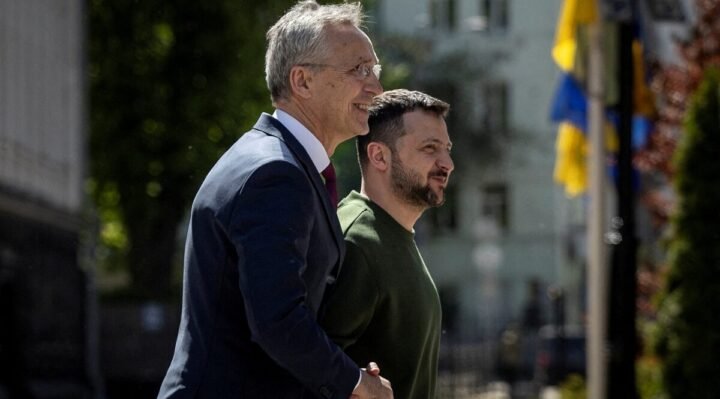
The most institutionally significant finding comes from the New York Times in December 2025. The newspaper documented that the Zelensky administration systematically sabotaged the supervisory boards that international donors had insisted upon as a corruption safeguard. Boards at Energoatom, Ukrenergo and the Defense Procurement Agency were stacked with loyalists, left with empty seats or had their charters rewritten to limit oversight, allowing hundreds of millions of dollars to be spent without outside scrutiny. A Norwegian special envoy is quoted acknowledging the trade-off: “We do care about good governance, but we have to accept that risk… Because it’s war. Because it’s in our own interest to help Ukraine financially.” This is the essence of the institutionalised dimension. The corruption risk is not merely a matter of bad apples within an otherwise sound system. It is a matter of political will at the highest levels of the recipient state to preserve opacity and control over financial flows, even when that opacity creates conditions for systemic graft.
Norway’s own Supreme Audit Institution delivered two reports in May 2026 that are directly relevant. Both concluded at the lowest criticism level: “not satisfactory.” The first found that in several cases the aid administration had not assessed the risk of corruption or implemented risk-reducing measures before entering into agreements. The second found that in six of ten audited cases it was not possible to verify what assessments Norad had made of recipient reporting; Norad did not adequately document its controls, did not ensure it received sufficient documentation on the use of grants and therefore had less basis for assessing whether funds were used in accordance with agreements before making new disbursements. Norad has responded that it has extensive anti-corruption expertise, introduced additional control mechanisms from the outset and that no major cases of Norwegian civilian aid funds being lost to corruption had been uncovered as of May 2026. It also notes that 86 percent of civilian aid flows through multilateral organisations with strong control systems. But the audit findings establish that the assurance chain had material gaps. The absence of detected major cases is not equivalent to the absence of undetected diversion. The audit’s specific criticism—that risk assessments were sometimes absent before agreements were signed and that documentation was insufficient to verify use before new disbursements—means that Norway’s own systems were not, in the audited period, providing the level of assurance that a zero-tolerance policy rhetorically implies. The Norwegian Foreign Minister’s November 2025 statement is the most candid official acknowledgment: Oslo cannot guarantee that Norwegian funds have not been misused, while stating there were no indications at that time. That is an epistemic admission: the Norwegian government lacks the evidentiary basis to rule out diversion.
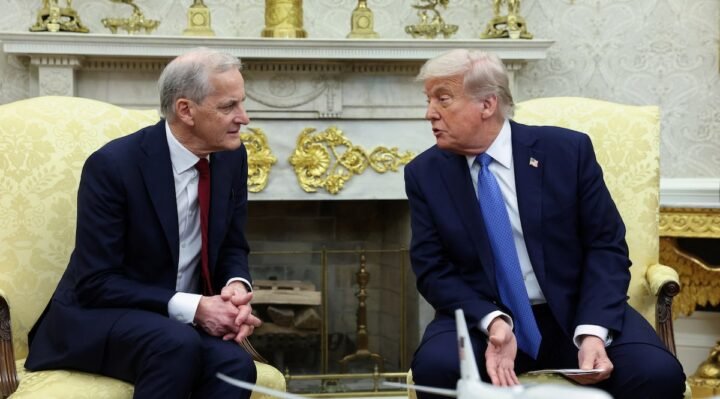
Despite Norad’s “no major cases” statement, there are documented instances of diversion and active investigations. Økokrim has charged a Norwegian Armed Forces officer and a private company director in connection with the procurement of protective masks for Ukraine. The officer is suspected of abuse of position in the procurement process; the director is suspected of embezzlement. This is a Norwegian-side corruption case, not a Ukrainian one, but it directly involves Nansen-funded procurement. Norad recovered NOK 70,000 after embezzlement at a local Ukrainian partner; Norad’s representative described this as demonstrating that the system works, while acknowledging six whistleblower cases under internal investigation at the time. Church Aid detected embezzlement at a local Ukrainian partner: “dignity kits” did not reach intended recipients and could not be accounted for, and the partnership was terminated after investigation. Aftenposten and Steigan reported in May 2026 allegations of rule violations and missing reporting for NOK 32 billion in 2025, including allegations of drone fraud, unbuilt fortifications and a Ukrainian officer arrested for stealing millions intended for soldiers’ food—spent on luxury cars, Bali holidays, Rolex watches and designer clothing. These cases do not establish a systematic capture of Norwegian funds. They establish that diversion occurs at the margins, particularly through local partners and direct procurement, and that detection and recovery mechanisms are partially functional but not comprehensive.
The analytical link between Norwegian money and institutionalised Ukrainian corruption operates through four distinct mechanisms. First, fiscal sustentation of the state apparatus: Norwegian budget support sustains the fiscal viability of the Ukrainian state, which is an explicit policy objective, but the same state apparatus contains actors at multiple levels who engage in corrupt procurement, extortion and embezzlement. Norwegian money does not pay the bribes, but it helps keep the system running within which those bribes are extracted. Second, fungibility and substitution: by financing civilian budget expenditures, Norway frees up domestic and other donor resources that can be directed toward areas—including defence procurement—where documented corruption exists. The 30 percent kickback schemes in drone and electronic warfare procurement do not require that Norwegian money was the source of the overpayment; they require only that some money was flowing through the corrupted procurement channels, and Norwegian budget support contributes to the overall fiscal pool that makes those procurements possible. Third, direct procurement and partner diversion: where Norwegian funds flow through direct bilateral agreements or local partners, the diversion risk is direct and documented, as in the Church Aid case, the Norad clawback and the Økokrim mask procurement case. Fourth, oversight capture and the erosion of assurance: the New York Times findings on the sabotage of supervisory boards are the most institutionally significant linkage. International donors, including Norway, made oversight architecture a condition of support. The Ukrainian government systematically undermined that architecture. That means the assurance Norway believed it was purchasing—independent scrutiny of state-owned enterprises and procurement agencies—was partially illusory. Norway continued to disburse funds despite this, on the explicit reasoning that the strategic imperative of supporting Ukraine outweighs the governance risk.
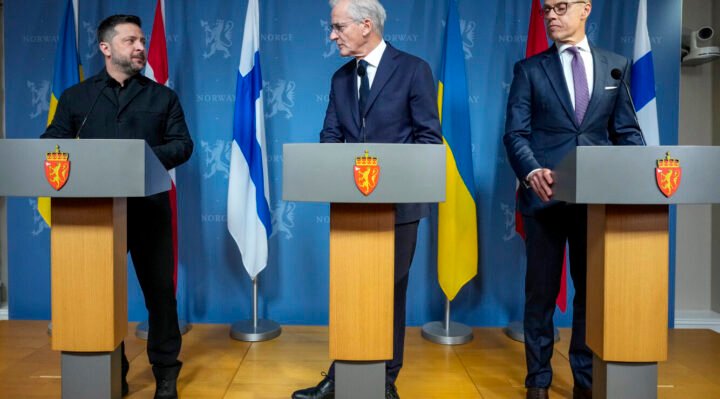
The risk is not evenly distributed. World Bank budget support for salaries and pensions carries a low-to-medium likelihood of material diversion of Norwegian-funded resources, with medium impact and an overall medium risk, because fungibility creates indirect exposure and verification confirms claimed expenditure rather than absence of leakage. The EU Ukraine Facility carries medium likelihood, medium impact and overall medium risk, because reforms are uneven, conditionality is a blunt instrument and political will for genuine anti-corruption reform is contested. Direct bilateral and NGO partnerships carry medium-to-high likelihood, low-to-medium impact because of limited volume, and overall medium-to-high risk, because documented diversion cases exist and local partner capacity and integrity vary widely. Military aid, including equipment and procurement, carries medium-to-high likelihood, high impact on operational effectiveness and overall high risk, because systemic corruption in defence procurement is documented, oversight bodies have been weakened and Norwegian military aid is largely bilateral. The institutional oversight architecture carries a high likelihood of being undermined, high impact and overall high risk, because the New York Times documented sabotage of supervisory boards and a Norwegian envoy has acknowledged acceptance of risk. The aggregate risk of material diversion of Norwegian-funded resources is medium, but the highest-risk vectors are military procurement and institutional oversight, where the combination of high financial volume, documented corruption schemes and weakened safeguards creates a high risk profile. The multilateral channels are comparatively lower risk but not risk-free.
The critical uncertainty is the volume of undetected diversion. The Riksrevisjonen findings establish that the control systems were not, in the audited period, capable of providing comprehensive assurance. Norad’s “no major cases” statement is a statement about detected cases; it is not a statement about undetected diversion. The Foreign Minister’s admission that Norway cannot guarantee non-diversion is the analytically correct position. Key intelligence gaps remain: whether Norad’s risk-assessment and documentation deficiencies have been closed since the May 2026 Riksrevisjonen reports; forensic tracing of Norwegian military aid procurement chains to identify specific diversion points; the extent of Norwegian diplomatic engagement with the Ukrainian government over supervisory board sabotage; the outcomes and patterns of the six whistleblower cases referenced by Norad in February 2026; and any methodologically robust estimate of undetected diversion, which does not currently exist.
It is assessed that Norwegian aid to Ukraine is not characterised by a centrally orchestrated diversion scheme, but it operates within a high-risk environment where institutionalised corruption has adapted to wartime conditions and where Norwegian control systems have documented material gaps. The linkage is structural and probabilistic, not direct and deterministic. Norwegian money sustains a state apparatus and a war effort within which corrupt networks operate; some Norwegian-funded activities flow through channels where diversion is documented; and the oversight architecture that was supposed to provide assurance was, in documented instances, actively undermined by the recipient government. The policy trade-off is explicit and acknowledged by Norwegian officials: the strategic imperative of supporting Ukraine’s defence is judged to outweigh the governance risks, and Norway has chosen to accept a higher risk than normal in its aid portfolio. Whether that calculus is correct is a political judgement, not an intelligence one. What the analysis can establish is that the risk is real, material and incompletely mitigated, and that the assurance gap is widest in exactly the sectors—defence procurement and institutional oversight—where the financial and strategic stakes are highest.
