

 Communications firm Satellite Solutions Worldwide Group has won a £500,000 contract from the Norwegian government to build a new fixed wireless network in the country over the next 15 months.
The AIM-listed company will build a wireless network in the county of Sør-Trøndelag that will deliver broadband up to 75 megabytes (Mb), which will be operated and maintained by Satellite for 10 years.
The wireless network will offer a range of tariffs across Agdenes, Bjugn, and Midtre-Gauldal in Sør-Trøndelag, where, the company said there are hundreds of households with limited broadband speeds to below 4Mb.
Breiban, Satellite’s subsidiary, won the 5.6m Norwegian krone government contract and will deliver the wireless network as it has experience in this field having constructed and maintained over 1,500 fixed wireless broadband towers to date.
Satellite chief executive Andrew Walwyn said: “Our solution will connect these households to uber-fast broadband speeds for the first time, despite their distance from a major telephone exchange and the challenging topography of the area.
“Norway has significant government funding available for investment in broadband infrastructure each year and we hope to deliver uber-fast fixed wireless broadband to many more Norwegian customers.”
He said that the company also intends to use the fixed wireless networks as a complement to its satellite technologies across other European territories in the future.
Shares in Satellite Solutions Worldwide Group were up 2% to 8.67p at 0931 BST.
(ShareCast News)

 Head of Iran’s Veterinary Organization Mehdi Khalaj and Norway Chief Veterinary Officer Kristina Landsverk signed a Memorandum of Understanding (MoU) to broaden veterinary cooperation between the two countries.
 An Oslo court has sentenced a Norwegian man to nine years in prison for recruiting others to join ISIS terrorist group in Syria, in the first such ruling in Norway.

 She also touched upon the bilateral defense cooperation and stated that Norway would like to further develop “longstanding relationship” between the Norwegian Home Guard and the National Guard of Georgia. “We have added one new item to our bilateral list this year that is advanced distance learning,” the Norwegian official added.
 The members of the ‘Troika’ – Norway, the United Kingdom, and the United States – announced in a joint statement Thursday that they welcome the recent commitment by South Sudan’s President Salva Kiir to IGAD leaders to announce a unilateral ceasefire.
 Ambassador Shaikh Fawaz bin Mohammed Al Khalifa has conveyed the greetings of His Majesty King Hamad bin Isa Al Khalifa to King Harald V of the Kingdom of Norway and his best wishes for further progress and prosperity to the Norwegian people and kingdom.
 A number of Muslim MPs and organizations have joined Norway’s culture minister in criticism of the Islamic Council of Norway (IRN) after the group appointed a woman who wears the niqab — a full-face veil — to be its spokeswoman.
 Norway’s Defense Equipment agency has signed a new contract with the US authorities for the purchase of five P-8A Poseidon maritime patrol aircraft (MPA) for the Norwegian Armed Forces.
 Seventy-two years after Jesse Whitley of Mabelvale joined other members of the 474th Infantry to aid in the liberation of Norway at the end of World War II, the government of Norway sent its gratitude.
 Norway is planning a mass
 The visiting Norwegian Deputy Minister of Trade, Industry and Fisheries, Ronny Berg, on Sunday announced the readiness of more Norwegian fishery companies to export their products to Nigeria.
 Washington, DC—(April 3, 2017) — A coalition of international whale protection organizations today strongly condemned the start of Norway’s 2017 whaling season, which began on April 1.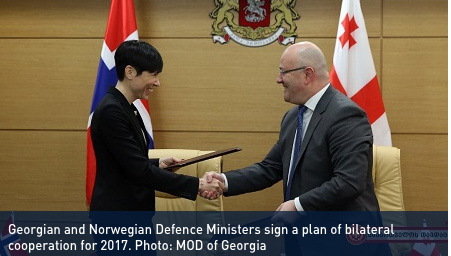
 Norwegian Defence Minister Ine Eriksen Soreide is in Tbilisi today for her first official visit to Georgia.
 President Duterte wants to end guerrilla wars with both communist and Muslim rebels in the country.


 The political climate between Norway and Russia has varied between cool and frigid since 2014. Now there are signs of thaw. Tomorrow afternoon, foreign ministers Børge Brende and Sergej Lavrov meet in Arkhangelsk.
 Arkhangelsk: North Norwegian business and politics hope for a better relationship with Russia. They believe in a giant market on the other side of the border – and hope for political thaw. Following his meeting yesterday with his Russian colleague Sergej Lavrov, Norwegian Foreign Minister Børge Brende says it is important to strengthen the cooperation between Russia and Norway.


 Imagine that The New York Times, The Washington Post and PBS launched a joint fact-checking project. That is, roughly speaking, what happened in Norway earlier this week.
 Geoscience and engineering service provider Next Geosolutions has won two survey contracts for the 1.4GW North Sea Link (NSL) between the UK and Norway.
 Telenor has joined hands with Huawei, the China-based mobile-device manufacturer, to test and develop 5G prior to it being launched for public use in Norway in 2020.
 NORWAY: Swedish national passenger operator SJ has established local subsidiary SJ Norge to bid for the operating contracts which are being tendered under Norway’s railway reform programme.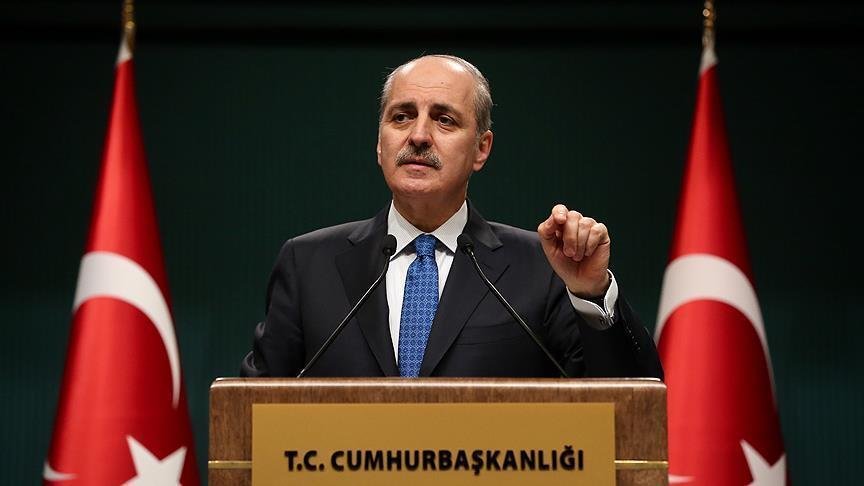
 Norway should extradite five Turkish military officers suspected of links to the Fetullah Terrorist Organization (FETO), the group blamed for last year’s defeated coup in Turkey, said Deputy Prime Minister Numan Kurtulmus Thursday.
 It has been a busy winter period for the Norwegian Coast Guard with one of its patrol vessels tasked to two separate incidents involving a disabled ex-buoy tender and a drifting barge carrier.
 Energy production is in a major state of transition. Technology companies such as Apple, Google, Tesla and Amazon are all investing in solar power.