
NORWAY NEWS – latest news, breaking stories and comment – NORWAY NEWS
  • Home
  • About us
  • News
  • Other News
    • Africa and Norway
    • Asia and Norway
    • Asylum
    • Breaking News
    • China and Norway
    • Corruption in Norway
    • Crimes
    • Defence
    • Diplomatic relations
    • Economics
    • Environment
    • Farming
    • Featured
    • Health
    • Killing
    • Media Freedom
    • Middle East and Norway
    • NATO and Norway
    • Nobel Peace Prize
    • Norwegian Aid
    • Norwegian American
    • Oil & Gas
    • Peace Talks
    • Politics
    • Racism in Norway
    • Religion
    • Royal House
    • Russia and Norway
    • Science
    • Sex scandal
    • Sports
    • Spy War
    • Srilanka and Norway
    • Svalbard
    • Taiwan and Norway
    • Terrorist
    • Travel
    • Video clips
  • Disclaimer
  • Contact us
Saturday, November 14, 2026
NORWAY NEWS – latest news, breaking stories and comment – NORWAY NEWS
  • Home
  • About us
  • News
  • Other News
    • Africa and Norway
    • Asia and Norway
    • Asylum
    • Breaking News
    • China and Norway
    • Corruption in Norway
    • Crimes
    • Defence
    • Diplomatic relations
    • Economics
    • Environment
    • Farming
    • Featured
    • Health
    • Killing
    • Media Freedom
    • Middle East and Norway
    • NATO and Norway
    • Nobel Peace Prize
    • Norwegian Aid
    • Norwegian American
    • Oil & Gas
    • Peace Talks
    • Politics
    • Racism in Norway
    • Religion
    • Royal House
    • Russia and Norway
    • Science
    • Sex scandal
    • Sports
    • Spy War
    • Srilanka and Norway
    • Svalbard
    • Taiwan and Norway
    • Terrorist
    • Travel
    • Video clips
  • Disclaimer
  • Contact us
Copyright 2025- All Right Reserved Norway News
Russia and Norway

Norway summons Russian ambassador

by Nadarajah Sethurupan February 1, 2017
written by Nadarajah Sethurupan

The Norwegian Foreign Ministry said on Wednesday it had summoned the Russian ambassador to complain after Moscow refused to issue visas to two Norwegian members of parliament.

The ministry said the members of parliament’s foreign affairs committee had been due to visit Moscow on Thursday and Friday after receiving an official invitation from Russia’s upper house of parliament, the Federation Council.

It said Moscow had blocked the visas because of Norway’s sanctions against Russia, imposed after it annexed Crimea from Ukraine in 2014.

Foreign Minister Borge Brende said the visa denial was “highly regrettable” and that Norway had protested through diplomatic channels before summoning Teimuraz Ramishvili, the ambassador.

“Meetings between parliamentarians are an important element of political contact. The planned visit … would have brought this dialogue further,” Brende said in a statement.

“We find the Russian decision unjustified and unreasonable. We have urged the Russian authorities to look at this again,” he said.

(REUTERS)

February 1, 2017 0 comments
0 FacebookTwitterPinterestEmail
Crimes

Victoria man murdered in Norway

by Nadarajah Sethurupan February 1, 2017
written by Nadarajah Sethurupan

Police in Norway are investigating the murder of a Victoria man who was living in southwestern city of Stavanger.

According to local press reports, the body of Mark Jensen was discovered badly injured in a residence in the Royneberg area around 4 p.m. on Sunday.

The 52-year old was pronounced dead at the scene shortly afterwards.

Local media says a 32-year old Norwegian man was arrested and is being held in a mental health facility.

Police say the two men appear to have been attending a social gathering but have not said what, if any, connection existed between the them.

Jensen was being remembered today by many on social media today including here at home for his larger-than-life smile and attitude.

He returned to the Island every summer and was said to have plans to move back to permanently this year

Jensen was also a well-liked member of the Esquimalt-based Canadian Forces Sailing Association.

The cause of death has not been determined.

The investigation continues.

(cheknews)

February 1, 2017 0 comments
0 FacebookTwitterPinterestEmail
Environment

Oslo Offers Citizens $1,200 to Buy an E-Bike

by Nadarajah Sethurupan February 1, 2017
written by Nadarajah Sethurupan

Oslo is so keen to get people on bicycles that starting Wednesday it will offer residents a free handout of up to $1,200 to buy electric cargo bikes. Citizens won’t need to be on a low income to apply for the funds, or even to promise to cut down on driving to qualify.
The grant, which goes toward buying a bike with a small electric motor that allows it to carry heavier loads in a basket or trailer, may sound too good to be true, but it isn’t a total free-for-all. The city will pay up to 25 percent of the bike’s cost, capping the grant at 10,000 kroner. Electric cargo bikes currently cost between 20,000 and 50,000 kroner ($2,400 to $6,000), meaning that buyers will still have to rustle up between $1,800 and $4,800 from their own funds. That’s a lot of free municipal money for a pretty niche mode of transport.

So why is Norway’s capital putting its money behind cargo bikes? Because Oslo needs to push for a further shift away from cars if its air is going to be breathable. Like many European cities, Oslo’s air quality has been pretty poor so far this winter, leading the city to put a temporary driving ban on diesel-fuelled vehicles in order to help clear the atmosphere.

In a bid to push a general modal shift away from cars, the country is investing a phenomenal $1 billion in new bike infrastructure, so the paths that Oslo’s future cargo bikes use should ultimately be of high quality. But there are still some hurdles. Oslo, for example, is considerably hillier than, say, Amsterdam or Copenhagen, and it can experience some harsh weather conditions. For that reason electric cargo bikes are a potentially greater part of the solution here. Not only do they give riders a push up hills, they also make bikes a feasible option for new purposes like weekly grocery shopping. They can even be used for the school commute: In Copenhagen, it’s already common to see parents pedaling several small children to school in a cart attached to their bike.

Five million kroner ($600,000) is earmarked for the project—3 million for private individuals and 2 million for businesses and organizations—meaning the program can only bring 500 to 1,000 electric cargo bikes onto Oslo’s streets. That’s not going to transform the way people get around overnight, but it’s not supposed to on its own. The intention is to popularize a currently underexposed form of transit, which more people may adopt if they see it in action and register its advantages.

It’s a concept Oslo’s city council seems fond of. It created a similar scheme last winter that offered up to 5,000 kroner ($600) to encourage people to buy standard e-bikes, capping the amount offered at a slightly more modest 20 percent of the purchase price. The council seems to have been happy enough with the results to extend the scheme into new territory.

Not everyone is convinced, though. It emerged recently that some of Oslo’s richest citizens had successfully applied for the e-bike grant, leading some people to condemn it as a subsidy for the wealthy. Newspaper Dagbladet memorably damned the plan as “the dumbest thing since scrambled eggs in a carton,” and reported unsubstantiated rumors that people from elsewhere in Norway were applying for the bike subsidy using Oslo-based relatives.

There’s some validity to this pushback. Even with a grant on offer, poorer Osloers aren’t the ones who will be shelling out the rest of the money for an electric cargo bike, and there might be cheaper ways for the city to reduce emissions. Reporting from outside Norway—a country now famous for saving enough from oil revenues to make every citizen a kroner millionaire—what is more striking is the singularly large funds the country is making available for pursuing better transit at just about every level. This is, after all, a country considering the construction of the world’s first floating underwater tunnels to bridge its fjords, where electric cars outsell conventional vehicles, and whose aforementioned $1 billion funding for bike infrastructure includes cash for bike paths comfortably north of the Arctic Circle. Oslo’s e-bike subsidies may have an edge of luxury to them, but they’re also the sign of a city and a country that is singularly determined to make its transit cleaner and greener.

(citylab)

February 1, 2017 0 comments
0 FacebookTwitterPinterestEmail
Asia and Norway

Norway, Malta MOUs signed

by Nadarajah Sethurupan February 1, 2017
written by Nadarajah Sethurupan

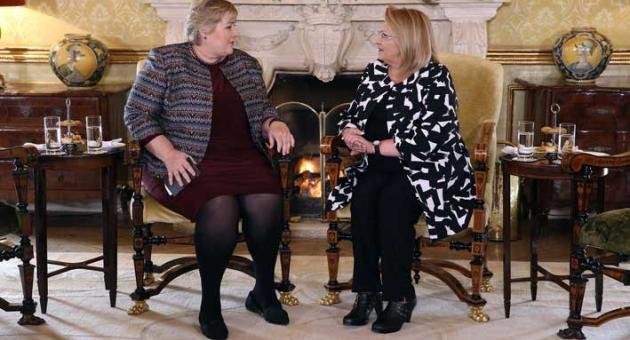
President of Malta Marie-Louise Coleiro Preca received Prime Minister of Norway Erna Solberg on a courtesy call at San Anton Palace today.

During the meeting, President Coleiro Preca conveyed Malta’s appreciation for the Norwegian Grants and spoke about the good history which Malta has in managing these grants. The President of Malta was pleased to note that Malta will once again be acceding to these grants.

Prime Minister Solberg and President Coleiro Preca also spoke about the challenge of migration, with a particular focus on child migrants, thousands of which end up missing or unaccounted for. Prime Minister Solberg commended the President’s Foundation for the Wellbeing of Society for bringing together the major stakeholders in Malta last week for the conference which was organised together with Missing Children Europe, with President Coleiro Preca saying that ‘we need to work in synergy, and we need to harmonise so that a solution can be found to the problem of missing child migrants’.

Lastly, President Coleiro Preca and Prime Minister Solberg spoke about the Peace Research Institute Oslo (PRIO). The President of Malta spoke about the ‘positive peace’ and the culture of peace approach which this institute adopts.

Later, Malta and Norway signed two Memoranda of Understanding; one relating to EEA and Norway Grants 2014-2021, and the other on the Implementation of the Norwegian financial mechanism, amounting to €8 million.

Norwegian Prime Minister Erna Solberg said that the monies will finance projects relating to health, culture, civic society, and poverty. During the signing of the MOUs, Prime Minister Solberg stressed on the need of an outward-looking, strong, and united, EU.

Prime Minister Joseph Muscat, on his part, said that the €8 million grant is another way to show how to make Europe work for many people, as these funds will help many families. Dr Muscat also referred to migration which is a security and humane issue and which needs to be tackled in a rational manner.

Dr Muscat said that the EU is currently in the process to come out with a declaration regarding the central Mediterranean where relations with Libya are crucial. Prime Minister Muscat said that one needs to help Libya manage its own borders and not to resort to pushing back people.

February 1, 2017 0 comments
0 FacebookTwitterPinterestEmail
Economics

DNB, Nordea file notice fo merger with Estonian regulator

by Nadarajah Sethurupan January 31, 2017
written by Nadarajah Sethurupan

Norwegian bank DNB Bank ASA and Swedish bank Nordea Bank AB have filed an application with the Estonian Competition Authority for the approval of the merger of their Baltic operations under the joint company Indy AB approved.

Nordea and DNB Bank announced the plan to merge their Baltic businesses into an entity headquartered in Tallinn last August. In November, Erkki Raasuke was appointed CEO and Nils Melngailis head of the supervisory board at Nordea and DNB’s combined bank in the Baltics.

The merger of the two Scandianvian banks’ operations in the Baltic states is to be completed in the second quarter of the year; this merger will create the second largest bank in the Baltics. The name and brand of the new bank may be presented to the public in February.

The banks will continue to operate independently and under current management until all necessary approvals have been received.

(news)

January 31, 2017 0 comments
0 FacebookTwitterPinterestEmail
Defence

New Chief of the Royal Norwegian Air Force

by Nadarajah Sethurupan January 31, 2017
written by Nadarajah Sethurupan

Brigadier General Tonje Skinnarland is appointed Major General and Chief of the Royal Norwegian Air Force (CRNORAF).
​​​​​​​​​​The appointment happened Friday 27 January 2017.

Skinnarland is an experienced, proficient and highly skilled officer. Her broad knowledge is based upon several years of service within the operational field in the Royal Norwegian Air Force, as well as many years of practice at staff level within the Defence Forces.

She has also served at the Ministry of Defence.

Skinnarland is the first female to be appointed Chief of the Royal Norwegian Air Force.

Skinnarland graduated from the Norwegian Defense War College in 2003, and she received the Chief of the Defense Forces’ Honorary Award for her exquisite results.

(forsvaret)

January 31, 2017 0 comments
0 FacebookTwitterPinterestEmail
Oil & Gas

KUFPEC completes Norwegian deal

by Nadarajah Sethurupan January 31, 2017
written by Nadarajah Sethurupan

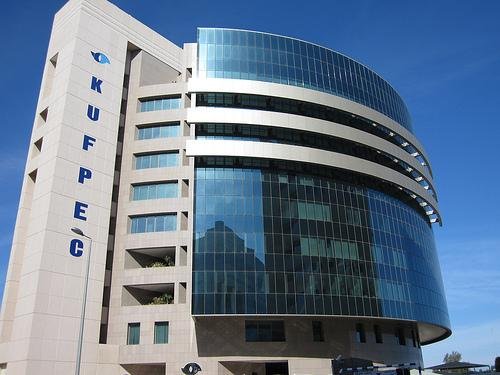
Kuwait Foreign Petroleum Company (Kufpec) on December 21 completed its purchase of upstream interests offshore Norway in the Greater Sleipner Area from Total for a consideration of $300mn with effect from January 1, it said January 31.

The package contains reserves of about 46mn barrels of oil equivalent (boe) and production exceeding 9,000 boe/d, and comprises: 15% interest in the Gina Krog development (first oil expected in 2Q 2017 which will bring output to above 13,000 boe/d); 9.4% interest in the Sleipner Vest producing field; 10% interest in the Sleipner Ost producing field; 6.2% interest in the Utgard development; and 21.8% interest in the Eirin discovery. All the acquired assets are operated by Statoil; Canada’s Scotiabank was Kufpec’s financial adviser.

The same day, Kufpec announced it had bought Shell’s assets in Thailand for $900mn, which came with Shell’s BG purchase a year ago. Kufpec CEO Nawaf Saud Nasir Al-Sabah said the acquisitions were “the latest steps in a series of acquisitions by Kufpec of assets that provide significant reserves, material production, and strong cash flows to our portfolio. The addition of the Thailand asset, along with the completion of the Norway acquisition last month, will provide the company with total production exceeding 100,000 boe/d for the first time in Kufpec’s history. These transactions put us well on our way toward achieving our strategy betbox through acquisitions of profitable, quality assets that provide significant upside to contribute to the company’s future goals. We look forward to working closely with the world class partners to realize the full potential of the assets.”

Kufpec, owned by state Kuwait Petroleum Corporation, has 65 assets in some 15 countries including Yemen where production is currently shut in.

(naturalgasworld)

January 31, 2017 0 comments
0 FacebookTwitterPinterestEmail
Economics

Telenor eyes three-way deal to stay in India

by Nadarajah Sethurupan January 31, 2017
written by Nadarajah Sethurupan

Norwegian operator reportedly talking to RCom-Aircel about tie-up, but deal with Bharti is still on the table.

Telenor may have changed its mind regarding an exit from India should reports of a three-way merger between the Norwegian telco and local operators Reliance Communications and Aircel prove correct.

The operator has made overtures towards RCom and Aircel with a view to brokering a deal that would leave it with a 10% stake in the merged entity, the Economic Times reported on Monday.

The paper’s claims came in the wake of Vodafone’s confirmation earlier in the day that it is in talks over a possible tie-up with Idea Cellular. Telenor was said to be in talks to sell its Indian business to Idea Cellular late last year. Vodafone was also linked with Telenor last year.

Discussions between Telenor, RCom and Aircel began around a month ago, but have been unable to progress in recent weeks due to a pending decision from India’s supreme court regarding Aircel’s licence, the paper quoted an unnamed source as saying.

The source, an executive aware of the ongoing talks, said the court should make a decision on whether or not to quash Aircel’s licence later this week. The operator is embroiled in a corruption case that dates back to Maxis’ acquisition of a 74% stake more than a decade ago. Should the court pull Aircel’s licence, the merger deal it inked with RCom in September would fall apart, the executive said.

That would presumably have a knock-on effect on Telenor’s plans.

The Norwegian firm has other options open to it though.

Earlier this month Indian mobile market leader Bharti Airtel confirmed that it was holding talks to acquire Telenor India.

That deal is still alive, a separate Economic Times source said, while a third explained that Telenor will take whichever deal is likely to close the quickest, such is its hurry to exit the market.

Competition has ramped up in India in recent years, with many smaller operators struggling to compete against a handful of dominant players. Meanwhile, the arrival of Reliance Jio Infocomm, which has triggered widespread price cuts over the past few months, has led the big guns to seek to bulk up further.

(totaltele)

January 31, 2017 0 comments
0 FacebookTwitterPinterestEmail
Religion

Church of Norway approves same-sex couples

by Nadarajah Sethurupan January 30, 2017
written by Nadarajah Sethurupan

Same-sex couples in Norway can now have a religious wedding in a church after a new rule was passed today (30 January).

The Synod of the main church, of which more than two thirds of Norwegians are members, passed a liturgy in Trondheim to allow clergy to officiate marriages for any couple.

89 of 112 members voted for the proposal.

The traditional text will be slightly modified, for example not using the words ‘bride’ and ‘groom’.
‘This is the day when a prayer and a dream came true,’ said Gard Sandaker-Nilson. ‘You should not be able to give a couple the cold shoulder.’

Oslo bishop Ole Kristian Kvarme, who voted for the proposal, admitted the decision would cause him ‘grief’.
The vote has also led to priest Oyvind Bard Benestad leave the church in protest against same-sex marriage.

While clergy are not forced to perform marriages for same-sex couples, couples do have the right to marry in a church of their choice.

Norway has allowed same-sex marriage since 2009, but chose not to allow religious weddings. Denmark passed religious weddings for same-sex couples in Denmark in 2012, and Sweden did so earlier in 2009.

January 30, 2017 0 comments
0 FacebookTwitterPinterestEmail
Environment

Oslo imposes 2-day ban on diesel cars

by Nadarajah Sethurupan January 30, 2017
written by Nadarajah Sethurupan

Oslo banned diesel cars for two days last week to combat rising air pollution.

The ban began on 17 January on municipal roads, but it did not apply on the national motorways that criss-cross the Norwegian capital. Motorists violating the ban were fined 1,500 Norwegian kroner (£174).

This was the first instance of Oslo implementing a ban after the city council agreed the measure in principle in February 2016. According to the Norwegian Institute of Public Health, air pollution causes 185 premature deaths in Oslo each year.

The ban was met with anger by some motorists, who were encouraged by the government (in 2006) to opt for diesel vehicles.

Former Norwegian prime minister (and now NATO secretary general) Jens Stoltenberg said: “Make up your minds. It wasn’t very long ago that diesel was recommended over petrol.”

January 30, 2017 0 comments
0 FacebookTwitterPinterestEmail
Corruption in Norway

Denmark, Sweden, Norway, Finland – and Singapore – least corrupt countries

by Nadarajah Sethurupan January 30, 2017
written by Nadarajah Sethurupan

The Nordic counrtries together with New Zealand and Singapore in the Asia Pacific are this year once again on the top of the list of the World’s least corrupt countries.

Revealing the “Corruption Perception Index”, Transparency International commented overall on the root causes of corruption:

“This year’s results highlight the connection between corruption and inequality, which feed off each other to create a vicious circle between corruption, unequal distribution of power in society, and unequal distribution of wealth.”

“The interplay of corruption and inequality also feeds populism. When traditional politicians fail to tackle corruption, people grow cynical. Increasingly, people are turning to populist leaders who promise to break the cycle of corruption and privilege. Yet this is likely to exacerbate – rather than resolve – the tensions that fed the populist surge in the first place. (Read more about the linkages between corruption, inequality and populism.)”, Transparency International wrote.

More countries moved down on the list than up, showing the need for a constant awareness. Even Denmark declined slightly, but remained in the top position.

In a regional analysis, Kate Hanlon, Transparency International writes:

“The majority of Asia Pacific countries sit in the bottom half of the Corruption Perceptions Index 2016. 19 out of 30 countries in the region scored 40 or less out of 100. ”

For obvious reasons, ScandAsia wishes to abstain from sharing the comments by Transparency International on each state in Asia. We suggest interested readers see the comments and make up their own mind.

January 30, 2017 0 comments
0 FacebookTwitterPinterestEmail
NATO and Norway

As F-35 Comes Online, Norway to Scrap F-16 Fleet

by Nadarajah Sethurupan January 29, 2017
written by Nadarajah Sethurupan

As the Norwegian air force prepares to bring its first three F-35 joint strike fighters to Norwegian soil, the government is taking a simple approach to disposing of its aging F-16 fleet.

Rather than trying to deal with the complicated politics of reselling them or paying the cost of maintaining the older fighters as a reserve, the Ministry of Defense plans to scrap its collection fifty-plus Fighting Falcons, officials said during a visit here January 19.

“USA based media Defense News” visited Norway this month as part of a group organized by the Atlantic Council and funded by the Norwegian government. All participants accepted travel and accommodations during the tour.

The government plans to shut down the 56-plane fleet at the end of 2021, replacing it with a slightly smaller but more capable fleet of 52 F-35A conventional-takeoff-and-landing variants. Norway will take possession of six F-35s in 2017, with three going to Luke Air Force Base in Arizona, which is the US center for training international partners on the Lockheed Martin-designed plane (Norway already has four F-35s at Luke).

Three others are expected to arrive in Norway in early November. From 2018 onward, planes will be delivered directly to Norway, with six new planes arriving each year. Norway plans for the planes to be declared operational in 2019.

The F-16s will still be operated through the end of 2021, although the number of flight hours will drop as the newer jets arrive. Currently the F-16 fleet logs around 7,000 hours per year; that will drop to around 3,000 by 2021, officials here said. Pilots over the age of 40 have been barred from re-training on the F-35, in order to make sure the F-16 has a dedicated pilot core until it is fully retired.

There are a number of factors at work here that make a resale of the old planes unlikely. The first is the age of this particular fleet — Norway’s fleet is among the oldest of the F-16 groups in the world, with an average plane having over 10,000 hours of flight time.

Another is the political restrictions on re-selling US defense weapons. As one official put it, regulations make it easier to “turn them into nails” then try to resell the jets.

Richard Aboulafia, an analyst with the Teal Group, says the age of the planes means they would likely be useful only as training aircraft or for spare parts. More broadly, he said the market for used F-16s hasn’t been very strong, despite some potential good fits around the world.

“One issue has been that many F-16 users have been waiting longer than expected for F-35s, so the supply of used F-16s has been constrained. But even then US F-16s that have been available weren’t purchased in significant numbers,” he wrote in an email. “One problem is that there are relatively few countries that are wealthy enough to operate F-16s but not wealthy enough to buy them new. But even there, I’m surprised that more countries in Eastern Europe haven’t opted for used F-16s.”

The planes won’t be the only thing that is scrapped. The military facilities at Bodø, which have housed F-16s since they came into service, will no longer be home to fighter jets. The majority of the F-35 fleet will instead be hosted at Ørland Main Air Station, with a few kept at the more northern Evenes air base to protect the P-8 maritime surveillance fleet.

Bodø has a long history as a military facility, having served as a hub for both the U-2 and SR-71 spy planes operated by the US during the Cold War. (Gary Powers, the U-2 pilot who was famously shot down over the Soviet Union in 1960, was en route to Bodø when he was captured.) It has also served as the hub of training for the Norwegian F-16 pilot corps.

(defensenews)

January 29, 2017 0 comments
0 FacebookTwitterPinterestEmail
Corruption in Norway

Norway court to hear UAE-linked appeal in $1.8bn gas transport tariff row

by Nadarajah Sethurupan January 29, 2017
written by Nadarajah Sethurupan

A Norwegian court will hear an appeal next week by four firms seeking to overturn a ruling that upheld a government decision to cut offshore gas transportation tariffs.

The firms – owned by Allianz, UBS, the Abu Dhabi Investment Authority and the Canada Pension Plan Investment Board – said the slashed tariffs would cost them 15 billion crowns ($1.8 billion) in lost earning by 2028.

Solveig Gas, Njord Gas Infrastructure, Silex Gas and Infragas, which hold a combined 44 percent stake in pipeline owner Gassled, said Oslo’s decision was illegal and took it to court, but lost the case in September.

The government cut tariffs shortly after the four firms bought their stakes in Gassled in 2011 and 2012 from ExxonMobil , Total, Statoil and Royal Dutch Shell for a total of 32 billion Norwegian crowns ($3.8 bln).

Infragas and Njord Gas Infrastructure said they could shy away from new investment in the pipeline infrastructure just as Norway is seeking to expand the network northwards due to discoveries in the Arctic.

Norway exports gas from numerous offshore fields via an 8,000-km (5,000-mile) gas pipeline network, the largest offshore pipeline system in the world, to Britain and the continental Europe.

The appeal hearing is expected to last from Jan. 31 until April 7, the Borgarting Court of Appeals said in a statement on Friday.

(arabian business)

January 29, 2017 0 comments
0 FacebookTwitterPinterestEmail
Spy War

Norway accused Russia of trying to influence Nobel Committee decision

by Nadarajah Sethurupan January 28, 2017
written by Nadarajah Sethurupan

Norwegian Police Security Service accused Russia of involving intelligence services to interfere in the work of the Nobel committee, according to NRK.

In particular, Norway believes that Russia was trying to prevent the award of the Nobel Peace Prize to the President of Ukraine Petro Poroshenko in 2015.

The security service reported that in order to discredit a possible Peace Prize to a laureate in summer of 2015, the letter of the Speaker of the Verkhovna Rada Volodymyr Groysman to the US charge d’affaires in Norway was published on the internet. The letter stated that US diplomats received the support of two of the five members of the Nobel Committee, but “it is essential to obtain guarantees” on award for the president Poroshenko.

As NRK states, the US Embassy and the Verkhovna Rada claimed that Groysman’s leter was fake.

Two weeks after the publication of the letter, two representatives of the Russian Embassy came in the office of the secretary of the committee and the director of the Norwegian Nobel Institute Olav Njølstad. According to Njølstad, it was “absurd” meeting, after which he contacted the Police Security Service.

Officer of the Police Security Service reported to NRK that the Norwegian security services found out that “one of the diplomats, who came to the meeting with Njølstad, was an officer of the Foreign Russian Intelligence Service.” According to him, this visit was an operation to influence the decision of a committee member.

It is noteworthy that the Russian Embassy disagreed with these conclusions, stating that “the attempt of the Police Security Service to display routine diplomatic work as intelligence services operation seems paranoid to the representatives of the Embassy.”

Earlier, in 2015, the Nobel Peace Prize was awarded to Tunisian National Dialogue Quartet for the democratization of the country after the revolution.

https://www.nrk.no/norge/xl/pst-bekrefter-russisk-informasjons_operasjon-mot-norge-for-forste-gang-1.13339968

January 28, 2017 0 comments
0 FacebookTwitterPinterestEmail
Economics

Norway sovereign fund 60% profit on US logistics

by Nadarajah Sethurupan January 27, 2017
written by Nadarajah Sethurupan

Norway’s sovereign wealth fund has made a near 60% profit in 18 months on three US logistics assets.

The NOK7.4trn (€830bn) Government Pension Fund Global sold its interest in the properties in the San Francisco Bay area for $38.3m (€35.8m), suggesting the fund made a profit of nearly 60% on the investment since entering the investment one and a half years ago.

Norges Bank Investment Management (NBIM), which manages investments for the fund, announced that its real estate arm had sold the buildings via its partnership with global warehousing specialist Prologis.

The buyer of the portfolio was JLL Income Property Trust.

Norges Bank Real Estate Management (NBREM) has an ongoing partnership with Prologis in both the US and Europe. Assets owned through the joint venture accounted for nearly one-quarter of the sovereign wealth fund’s real estate portfolio at the end of 2015.

The former oil fund received $38.3m for its 45% ownership interest in the US logistics properties, which the partnership bought during development in May 2015.

At the time, NBREM paid $24.3m for its share of the assets, indicating that the sale to JLL had crystallised a profit of 57.6% on the investment.

The agreement to sell the Californian assets was signed in September 2016, and completed in two stages — in September and last month.

The buildings in the portfolio have total leasable space of 518,000sqft and are fully-let, with a weighted average lease term of about seven years.

NBREM and Prologis have been selling several logistics properties over the past year.

Last July, it sold two US logistics properties located in New Jersey that it had bought as part of the joint venture for $90m, having sold its interest in two Spanish logistics properties for €45.7m in April 2016 – also investments made through the Prologis partnership.

(ipe)

January 27, 2017 0 comments
0 FacebookTwitterPinterestEmail
NATO and Norway

How One NATO Country Is Preparing for Trump

by Nadarajah Sethurupan January 27, 2017
written by Nadarajah Sethurupan

When the ready-room alarm went off—high-low, high-low—two Norwegian Air Force pilots pulled on cold-water survival gear, grabbed their flight bags, and sprinted through swirling snow to their hangars. Their decades-old F-16 fighter jets roared to life, and as the airport snowplow halted to let them pass, the jets taxied to the runway and lit the afterburners. The training run took less than 10 minutes.

Norway has long kept two jets on round-the-clock alert at this Arctic base, allowing NATO to put eyes on the Russian warplanes that round the North Cape and head southwest. And while Moscow’s new assertiveness has Oslo preparing additional military units to react more quickly, defense officials here are also looking with concern toward Washington, where the incoming Trump administration has yet to articulate an unambiguous transatlantic security policy.

“Concerned” is a word we heard a lot last week, traveling with defense officials from Norway’s Ministry of Defense in Oslo to this coastal base 50 miles above the Arctic Circle, and beyond. I was part of a group of Americans—analysts, former diplomats, and national-security officials—brought here on a trip organized by the Atlantic Council, a NATO-oriented think tank in Washington, and sponsored by the Norwegian government.

Norwegian defense officials spoke carefully about their changing situation. “The Baltic countries feel threatened; we don’t feel threatened, but we see the potential,” one said.

But they are concerned. The Russian ships, submarines, and aircraft that sortie westward from Murmansk and nearby airbases have been coming more frequently. It’s been happening for a while; the first big jump came in 2007, when the number of Russian warplanes intercepted off Norway’s coast increased fivefold. The operations are also growing more sophisticated; in October, Russian bombers took off from Arctic runways, threaded their way through international airspace near Gibraltar, and struck targets in Syria.

It was 2014’s Crimean invasion that really woke people up, and not just in Norway. Several officials said that NATO had essentially stopped planning for the defense of Europe in the late 1990s, at least at a nuts-and-bolts level. That’s being fixed, but now there is a new concern: A U.S. president who appears to care more about Russia than America’s allies.

In December, Norwegian Prime Minister Erna Solberg visited Donald Trump, then the president-elect, who has alternately called the North Atlantic alliance “obsolete,” suggested that America might ignore its treaty obligations, and mused that perhaps NATO could change its central focus to counterterrorism. Solberg urged Trump to reconsider the alliance’s importance, or at least to set a European policy and stick to it.

Defense officials in Norway explained why. European unity is fragile: While northern and eastern Europe see Russia as the biggest looming problem, southern Europeans are stressed by migration flows from Syria and elsewhere. The populist sentiments that drove Brexit exist elsewhere in NATO. Even in Norway, where a 2011 terrorist attack damaged the prime minister’s office in Oslo, there is little appetite for turning NATO into a primarily counterterror organization.

Europe may roll with the punches, officials said, even if the United States decreases its support. But if the Trump administration cannot describe and commit to a stable position, they said, the extra uncertainty could make it impossible for European leaders to find consensus answers to key questions: What threats they should prioritize? And how much should each nation contribute to the common defense?

Norwegians are encouraged by the selection of James Mattis as U.S. defense secretary. They fought beside him and under his command in Iraq and Afghanistan, developing such expertise in counterterrorism operations, one defense official said, that they knew the names of the principal opium traders in their areas of operations.

Norway has long structured its military to contribute specialized groups of troops and gear to such missions. These deployments, along with operations and training exercises closer to home, are planned and monitored at National Joint Headquarters, an underground fortress sunk deep into a mountain near Bodø. Built in the 1950s and 1960s by extending Wehrmacht tunnels dug during the Nazi occupation, the facility was envisioned as a place where military commanders might survive the nuclear blows of a war with the Soviet Union. In the years after the Berlin Wall fell, its rough-hewn rock walls may have come to seem a bit anachronistic. They feel somewhat less so now.

In the two-story operations center, a column of digital clocks displayed the time in Kabul, Erbil, Juba, Moscow, and Washington, as well as the military-standard Zulu. A smaller screen detailed foreign deployments: On January 19, this country of just over 5 million people had 360 troops participating in a dozen operations in Afghanistan, Iraq, South Sudan, and elsewhere. The duty officers here direct troops at home and abroad, and even place a weekly Skype call to Russia’s Northern Fleet headquarters, an exception to the general radio silence between Western and Russian militaries since 2014.

Up on the giant video wall, a map of Norway showed the locations of military forces in green and blue. (Red squares denoting Russian assets had been scrubbed for our visit.) Even when they are not deployed abroad, Norwegian forces are active across a vast swath of the Arctic, with responsibility for an ocean area nearly as large as the Mediterranean Sea. Much of their training takes place in the same locales they might be called upon to defend.

Among their current concerns is the state of anti-submarine warfare in NATO. Drawn down after the Soviet fleet withered, the alliance’s ASW capability is once again rising to meet a Russian buildup. Like the United States and Britain, Norway is replacing some of its ancient P-3 sub-hunting planes with jet-powered P-8s. But officials here worry that the balance has shifted, and that the alliance might not be able to keep Russia’s quieter, cruise-missile-armed subs from severing the transatlantic resupply line—that is, sinking the ships that would carry U.S. reinforcements to Europe if war broke out. It’s a concern that has grown in importance since the U.S. pulled its large tank garrisons home. Norway wants its alliance partners, at least, to overhaul the ASW command structure and boost its importance.

Back at the Bodø air base, the wind off the Norwegian Sea picked up, grounding the day’s training flights. Hail rattled off dining-hall windows while a few candles burned on side tables, adding their light to a dim January day. Elsewhere on this island, a northern node of NATO’s cyber defense went about its work, its indoor practitioners impervious to the storm outside.

In the next few years, the Norwegian armed forces will spend much of their time and effort preparing to assimilate the new P-8s, along with a handful of new submarines and the 52 F-35A Joint Strike Fighters that represent Norway’s biggest-ever non-energy investment. The military will continue to work on ways to contribute to operations around the world. But they will also, one defense official said, build up stocks of ammunition and spare parts, train to reduce reaction times, and prepare to move quickly if attacked.

They are, he said, concerned.

(theatlantic)

January 27, 2017 0 comments
0 FacebookTwitterPinterestEmail
Norwegian Aid

Syria , Norwegian Refugee Council sign MoU

by Nadarajah Sethurupan January 27, 2017
written by Nadarajah Sethurupan

Syrian Minister of Agriculture and Agrarian Reform Ahmad al-Qadiri signed on Thursday a MoU with the representative of the Norwegian Refugee Council (NRC) Anna Cervi.

Al-Qadiri said the MoU aims at enhancing cooperation between the Ministry and the NRC in the agricultural sector, providing factors of agricultural production, including aid and production grants and implementing small projects that help rural families and farmers who are affected by the crisis to stay in their villages.

In turn, Cervi pointed out that the NRC seeks to set up a number of plans in cooperation with the Agriculture Ministry in Syria to create projects that can meet a part of the basic needs of the affected farmers.

The NRC is a non-governmental organization that delivers aid to about 30 countries and provides support in the fields of food, education and relief.

The NRC started its activities in Syria after the beginning of the crisis to support the government’s efforts, along with a number of international organizations and civil societies.

(SANA)

January 27, 2017 0 comments
0 FacebookTwitterPinterestEmail
Peace Talks

Colombian President Grateful to Norway

by Nadarajah Sethurupan January 27, 2017
written by Nadarajah Sethurupan

Colombian president elect Juan Manuel Santos waves as he arrives in Downing Street to meet with Prime Minister David Cameron on July 5, 2010 in London, England. President elect Santos was elected on May 20, 2010 and will become President on August 7, 2010. (Photo by Peter Macdiarmid/Getty Images)

Colombian President Juan Manuel Santos thanked Cuba, Norway and the International Committee of the Red Cross (ICRC) Thursday, for their contribution to the process of dialogues with the FARC-EP, culminated with the signing of peace.

At a ceremony held Thursday in the Casa de Nariño (presidential house) the President said that without that support it was not possible such an outcome to put an end to the long conflict between the two sides.

He had requested a meeting with President Raúl Castro, taking advantage of the Celac Summit (Latin American and Caribbean Community) to say thanks to him, on behalf of all Colombians, ‘but I did not travel to the Dominican Republic, so at some point I will go personally to Cuba to thank him,’ said the President.

Santos said the island put its best diplomats in the service of the cause, who offered their good expereince not only in public talks in Havana, which lasted nearly four years, but accompanying the teams of negotiators to overcome impasses, listening to their concerns, and seeking solutions to the obstacles.

‘Cuba-he added-was the host of the dating and deployed a whole logistics of assurance, our gratitude is eternal.’

In his speech the Head of State mentioned the contribution of some people, among them the support of Rodolfo Benitez, maximum representative of the Cuban guarantors in the formal phase of talks, which was preceded by a period of confidential exploratory meetings.

He also praised the participation of Norway, also a guarantor of the meetings, in all steps from the secret stage until the signing of the peace with the Revolutionary Armed Forces of Colombia- People’s Army (FARC-EP), which occurred on November 24 in this capital.

The President highlighted the work of the dozens of operations deployed to move to the members of the delegation of the FARC-EP with confidence and security.

Members of that guerrilla movement, in the demobilization phase, come to the areas and points of transition (26 in total), where you must abandon weapons and begin to prepare for their return to civilian life.

The final pact initialled at the end of 2016 contemplates, among other measures, the cessation of the bilateral fire.

(Prensa Latina)

January 27, 2017 0 comments
0 FacebookTwitterPinterestEmail
Media Freedom

Turkish wants Kurdish TV closed down in Norway

by Nadarajah Sethurupan January 26, 2017
written by Nadarajah Sethurupan

Turkish authorities are seeking the closure of Kurdish television channels broadcasting in Norway and Sweden, on the grounds that the supposedly incite terrorism, according to an article on the Norwegian Klassekampen website.

Turkish broadcasting authority RTUK has written to the Norwegian Media Authority, claiming that the channels Med Nuce, Sterk TV, Newroz TV and Ronahi air shows that praise terrorism.

RTUK is asking whether these stations have permits to broadcast in Norway.

January 26, 2017 0 comments
0 FacebookTwitterPinterestEmail
Asia and Norway

Norwegian diplomats pay homage to Plasco victims

by Nadarajah Sethurupan January 26, 2017
written by Nadarajah Sethurupan

Iran’s embassy in Norway has opened a memorial book on the honor of the firefighters killed during rescue operations in Plasco building last Thursday.

To the memorial book were attending Norwegian diplomats who signed the book and paid homage to those killed when a 17-storey building in central busy part of Tehran collapsed after a fire consumed parts of the building.

The foreign ambassadors and diplomats resident in Norway also visited the memorial book and offered condolences to the Iranian government as well as the families of victims.

January 26, 2017 0 comments
0 FacebookTwitterPinterestEmail
Diplomatic relations

EU to extend border controls for 3 months

by Nadarajah Sethurupan January 26, 2017
written by Nadarajah Sethurupan

The European Commission has recommended member states be allowed to temporarily extend border controls already in place in Austria, Germany, Denmark, Sweden, and Norway, an announcement said on Wednesday.

Border controls will be extended for another three months, the announcement added.

The Commission said that the conditions to return to the Schengen system, which regulates the EU borders, have not been met yet, necessitating the extension of the border controls.

Commission Vice-President Frans Timmermans said: “Significant progress has been made to lift internal border controls, but we need to solidify it further. This is why we recommend allowing the member states concerned to maintain temporary border controls for a further three months.”

Commissioner for Migration, Home Affairs, and Citizenship Dimitris Avramopoulos said: “Schengen is one of the greatest achievements of EU integration, which we must not take for granted. The European Commission is and remains fully committed to work with member states in gradually phasing out temporary internal border controls and return to a normal functioning of the Schengen area without internal border control as soon as possible.

“While over the past months we have been continuously strengthening our measures to address the unprecedented migratory pressure that Europe is facing, we are not there yet unfortunately. That is why we recommend that the Council allows member states to continue limited temporary internal border controls for another three months, under strict conditions, and only as a last resort.”

The controls concern the same internal borders as those recommended by the Council on November 11, 2016:

Austria: at the Austrian-Hungarian and Austrian-Slovenian land border;

Germany: at the German-Austrian land border;

Denmark: in Danish ports with ferry connections to Germany and at the Danish-German land border;

Sweden: in Swedish harbours in the Police Region South and West and at the Oresund bridge;

Norway: in Norwegian ports with ferry connections to Denmark, Germany and Sweden.

The Commission has said that in the past months progress was made in securing and better managing external borders and reducing irregular migration.

“With the establishment of the hotspot system, the registration and fingerprinting of migrants arriving in Greece and Italy has now reached a rate of almost 100 per cent,” the announcement said.

However, the announcement added that “a significant number” of irregular migrants and asylum seekers still remain in Greece and the situation remains fragile on the Western Balkans route.

“As of February 2017, European Border and Coast Guard operations will assist Greece at the Northern Greek external border,” the announcement added, about efforts to deal with irregular migration challenges.

(sigmalive)

January 26, 2017 0 comments
0 FacebookTwitterPinterestEmail
Norwegian Aid

More refugees flee to Uganda than across Mediterranean

by Nadarajah Sethurupan January 25, 2017
written by Nadarajah Sethurupan

Uganda welcomed more refugees last year than the total number of refugees and migrants crossing the Mediterranean into Europe. “Europe should learn from the way Uganda and other African countries are keeping their borders open as the Refugee Convention prescribes, instead of specializing in barbed wire and walls,” said Secretary General of the Norwegian Refugee Council Jan Egeland.

Some 489,000 South Sudanese refugees fled to Uganda in 2016, according to figures from the UN Refugee Agency, UNHCR. Renewed violence in South Sudan in July shattered a fragile ceasefire and forced hundred thousands of people to flee. In addition, a large number of refugees continued to arrive Uganda from DR Congo and Burundi. In comparison, 362,000 people crossed the Mediterranean into Europe in the same period.

“Contrary to common belief, most refugees are not fleeing to Europe. The reality is that more refugees sought safety in Uganda per day at the end of 2016, than many wealthy European countries received the entire year,” said Egeland.

The refugee settlement Bidibidi in northern Uganda, set up less than six months ago, is already one of the world’s largest refugee camps. It currently houses over 270,000 South Sudanese, about equal to the whole population of Newcastle in the United Kingdom.

The refugees praise the way the country has welcomed them: “It is good to be in Uganda. They allocated us a piece of land, we have free access to medical services and we feel safe. People were killed in South Sudan. It made me afraid. Here we no longer need to listen to the sound of the guns,” said Mary Kiden (17), who fled South Sudan last year.

However, aid agencies urgently need to scale up humanitarian assistance. Public infrastructure must be improved, more schools built and families provided with basic support, until they are able to make a living for themselves. Last year’s refugee aid response plan for Uganda was only 36 per cent funded. This left families without clean drinking water and children without education.

“Uganda has done what all countries should do. It has provided civilians fleeing war with security, and an opportunity to become a resource, instead of locking the displaced into a situation of aid-dependence and uncertainty,” said Egeland.

He is not surprised to see a low-income country among the largest refugee recipients:

“Populist politicians are stirring up fear, creating a distorted picture of all refugees wanting to head towards Europe or North America. This could not be further from the truth. Low- and mid-income countries are housing 9 out of 10 displaced. Most people fleeing want to stay as close to their home country as possible, wishing to one day be able to return,” Egeland said.

Facts:

Uganda received 489,000 refugees from South Sudan last year, and is currently housing more than 640,000 refugees from South Sudan.

In comparison, 362,000 people crossed the Mediterranean into Europe last year.

86 per cent of the South Sudanese refugees in Uganda are women and children.

The number of refugees from South Sudan in Uganda is expected increase to 925,000 by the end of 2017.

Uganda also hosts refugees from DR Congo, Burundi, Somalia and several other countries.

The country has a long history of welcoming people fleeing conflict, and housed thousands of Polish refugees during the Second World War.

Sources: UNHCR, NRC (Nadarajah Sethurupan)

January 25, 2017 0 comments
0 FacebookTwitterPinterestEmail
Science

Norwegian municipalities looking to drop Windows Phone for Android

by Nadarajah Sethurupan January 24, 2017
written by Nadarajah Sethurupan

Windows Phones are currently the go-to smartphones for more than 100 Norwegian municipalities, but that may not be the case for much longer. As reported by Digi.no (via MSPU), the municipalities, which initially turned to Windows Phone for its security, are now considering a switch to Android because of the difficulty in finding low-cost replacements for Windows Phones as they wear out.

From the report (translated):

Now it starts to get hard to get hold of Windows Phones. Microsoft hath sold mobile their division, and there is little downtime with access devices in the market, confirms sales manager Snorre Johansen Tieto Norway faced digi.no.

We have an ongoing dialogue with Microsoft. They are trying to reassure the market that 3-4 producers have plans to create Windows-based smartphones continues Johansen.

In the meantime, the Oslo government is already exploring a move to Android. Specifically, Oslo’s department for the elderly, health and social services is in talks for a new, Android version of the app it uses to check electronic medical records during home visits. Once development on the app is completed, Oslo will begin its transition from Windows Phone to Android.

In total, the transition would see thousands of Windows Phones given up in favor of Android devices. Oslo, for example, has deployed upwards of 3,000 Windows Phones to its health workers alone. While there certainly are Windows Phone options like the HP Elite x3 available, its cost is prohibitive for programs like this. And with Microsoft all but sounding the death knell for its Lumia line, there’s no true high-volume, low-cost alternative for replacing worn out phones in sight.

January 24, 2017 0 comments
0 FacebookTwitterPinterestEmail
Science

Proposed Norwegian office building will generate more power than it uses

by Nadarajah Sethurupan January 22, 2017
written by Nadarajah Sethurupan

If buildings that meet the rigorous qualifications of passive house construction seem impressive, or projects that attain the Living Building standard, such as the Bullitt Center, represent the cutting edge of sustainable design, a recently announced project in an Oslo suburb could be a game-changer, according to its developer.

The Powerhouse Telemark, an 11-story office tower projected to open in Porsgrunn, Norway, promises to not just be sustainable, but to actually produce more power than it consumes. According to 33-year-old developer Emil Eriksrød of R8 Properties, the structure, designed by the international architecture firm Snøhetta, will open in February of 2019 at a cost of $17 million. He said he “hopes we will be plagiarized and copied, replicated in all seven continents.”

The modern office, which will feature a slanted, diamond-shaped south-facing roof covered in solar panels, will achieve such an impressive level of energy performance due to a combination of rooftop production capacity, streamlined, well-insulated design, and a series of heat exchangers and heat pumps. Architects and designers expect that over its estimated 60-year lifespan, the Powerhouse project will generate enough power to pay back the energy cost of construction, production, and transportation of the materials used during the construction process.

Eriksrød says the building, in development for the last 15 months, will begin construction later this year. Jette Cathrin Hopp, project director for Snøhetta, confirmed the project is moving ahead.

Snøhetta, an international firm known for projects such as the National September 11 Memorial Museum Pavilion, already has a track record when it comes to energy-efficient construction, having built the Powerhouse Kjørbo, a solar powered, net-zero office building near Oslo, in 2014. Kjetil Trædal Thorsen, the firm’s founding partner, said in a release that he hopes the new Telemark project “puts Norway on the map” for innovative design and energy solutions.

(curbed)

January 22, 2017 0 comments
0 FacebookTwitterPinterestEmail
Religion

Norwegian bank trials ‘halal loan’ based on Islamic principles

by Nadarajah Sethurupan January 22, 2017
written by Nadarajah Sethurupan

A Norwegian bank has proposed a “halal” loan scheme based on Islamic principles which forbid charging interest.

Storebrand, which operates in Norway and Sweden, launched a website calling for feedback on an idea to launch new interest-free loans to appeal to Muslim home buyers who many not want to take out a traditional mortgage because of their faith.

Under most interpretations of Islamic law, charging interest or fees on financial loans – known as usury – is considered “haram”, or forbidden.

But under Storebrand’s scheme the mortgages will be replaced by deals which allow the owner and the bank to jointly own a house with the loan holder paying rent until they become the sole owner.

The bank called on “interested parties” to get in touch and within a week around 300 people had expressed an interest.

Norwegian Islamic organisations such as the Islamic Council of Norway and the conservative youth movement IslamNet urged their Facebook followers to show interest in the loan.

In a statement on the now closed website, the bank said: “We wanted to find out if this can be another way for people to get into the housing market with ever higher prices.

“The product may be appropriate for young people, for graduates and people who can not take up ordinary mortgage due to religious considerations.”

The bank’s communications director, Bjorn Erik Sættem, told Norwegian newspaper Vart Land: “Storebrand is now evaluating the market potential for such a loan and look at how the product might look like.

“We have also been approached by financial advisers in the UK and Malaysia who want to help us to create this type of loan”.

The move follows a similar scheme set up in the UK in 2013.

Al Rayan Bank, based in West London, offers rental-based loans on similar terms to traditional interest rate mortgages.

(independent)

January 22, 2017 0 comments
0 FacebookTwitterPinterestEmail
Newer Posts
Older Posts

Norwegian Nobel Prize 2025

101207 The Norwegian Nobel Committee has decided to award the Nobel Peace Prize for 2025 to Maria Corina Machado for her tireless work promoting democratic rights for the people of Venezuela and for her struggle to achieve a just and peaceful transition from dictatorship to democracy.

Special Interest

  • Africa and Norway
  • Asia and Norway
  • Asylum
  • China and Norway
  • Corruption in Norway
  • Crimes
  • Defence
  • Diplomatic relations
  • Economics
  • Environment
  • Farming
  • Killing
  • Media Freedom
  • Middle East and Norway
  • NATO and Norway
  • Nobel Peace Prize
  • Norwegian Aid
  • Norwegian American
  • Oil & Gas
  • Peace Talks
  • Politics
  • Racism in Norway
  • Religion
  • Russia and Norway
  • Royal House
  • Science
  • Sex scandal
  • Sports
  • Spy War
  • Srilanka and Norway
  • Svalbard
  • Terrorist
  • Taiwan and Norway
  • Video clips

Follow Us

Recent Posts

  • Ethiopian, Norwegian Leaders Vow to Explore Green Investment, Renewable Energy Cooperation

    November 11, 2026
  • “Stoltenberg’s Ukraine Ledger: Accountability for Control, Not for Every Krone” – We Can Guarantee the Audit Has Holes

    November 7, 2026
  • Norway selects Starlink for military use

    November 6, 2026
  • NAC to supply used fuel storage solution for Norway

    November 6, 2026
  • Norwegian Envoy Praises Islamic Emirate’s Progress in Security, Economy

    November 6, 2026
  • Norway proposes tougher anti-espionage laws, expanded powers for PST

    November 3, 2026

Social Feed

Social Feed

Editors’ Picks

Norway opens market for Sri Lankan fish exports...

May 13, 2016

Sri Lanka – Nordic Business Council holds discussions...

May 15, 2016

Good governance to Sri Lanka

May 15, 2016

Shock and Joy in Sri Lanka – Erik...

May 15, 2016

Sri Lanka-Norway plenty of new opportunities for business–...

May 15, 2016

NORWAY NEWS is an online news site, written in English, dedicated to Norwegian affairs at home and abroad. Norway News.com is published online. It is a daily online newspaper in existence since May, 2003. The site is run by an Independent Journalist.

Facebook Twitter Youtube

Useful Links

    • Work With Us
    • Contact Us
    • Collaboration
    • Data Collection
    • Workplace
    • Adverstising
    • Privacy Policy
    • International Collab
    • Feedback
    • Terms of Use
    • About Our Ads
    • Help & Support
    • Entertainment
    • News Covering
    • Technology
    • Trending Now

Politics

Syrian, Norway to boost cooperation on mine clearance
Erna to step down as Conservative Party leader in 2026
Norwegian Labour Party on re-election win

Latest Articles

Ethiopian, Norwegian Leaders Vow to Explore Green Investment, Renewable Energy Cooperation
“Stoltenberg’s Ukraine Ledger: Accountability for Control, Not for Every Krone” – We Can Guarantee the Audit Has Holes
Norway selects Starlink for military use
NAC to supply used fuel storage solution for Norway

Norway News 2025 . All Right Reserved. Designed and Developed by Norway News

  • Home
  • About us
  • Disclaimer
  • Contact us
NORWAY NEWS – latest news, breaking stories and comment – NORWAY NEWS
  • Home
  • About us
  • News
  • Other News
    • Africa and Norway
    • Asia and Norway
    • Asylum
    • Breaking News
    • China and Norway
    • Corruption in Norway
    • Crimes
    • Defence
    • Diplomatic relations
    • Economics
    • Environment
    • Farming
    • Featured
    • Health
    • Killing
    • Media Freedom
    • Middle East and Norway
    • NATO and Norway
    • Nobel Peace Prize
    • Norwegian Aid
    • Norwegian American
    • Oil & Gas
    • Peace Talks
    • Politics
    • Racism in Norway
    • Religion
    • Royal House
    • Russia and Norway
    • Science
    • Sex scandal
    • Sports
    • Spy War
    • Srilanka and Norway
    • Svalbard
    • Taiwan and Norway
    • Terrorist
    • Travel
    • Video clips
  • Disclaimer
  • Contact us

Editor’s Picks

  • How Navi Pillay’s Unflinching Pursuit of Justice in Sri Lanka Forged a Nobel Legacy

    October 9, 2026
  • Norway’s Long Shadow Over Sri Lanka: UN Report Exposes Reform Failure as Oslo Faces Pressure to Act

    September 8, 2026
  • UN concern over Sri Lanka’s cases of enforced disappearances

    October 8, 2025
  • UN Human Rights Council Resolution on Sri Lanka’s Path to Reconciliation

    October 7, 2025
  • International should support Sri Lanka: Solheim

    October 4, 2024
  • Norwegian Meets Sri Lankan’s Challenges

    May 3, 2024

Newsletter

@2025 - All Right Reserved. Designed and Developed by Norway News