
NORWAY NEWS – latest news, breaking stories and comment – NORWAY NEWS
  • Home
  • About us
  • News
  • Other News
    • Africa and Norway
    • Asia and Norway
    • Asylum
    • Breaking News
    • China and Norway
    • Corruption in Norway
    • Crimes
    • Defence
    • Diplomatic relations
    • Economics
    • Environment
    • Farming
    • Featured
    • Health
    • Killing
    • Media Freedom
    • Middle East and Norway
    • NATO and Norway
    • Nobel Peace Prize
    • Norwegian Aid
    • Norwegian American
    • Oil & Gas
    • Peace Talks
    • Politics
    • Racism in Norway
    • Religion
    • Royal House
    • Russia and Norway
    • Science
    • Sex scandal
    • Sports
    • Spy War
    • Srilanka and Norway
    • Svalbard
    • Taiwan and Norway
    • Terrorist
    • Travel
    • Video clips
  • Disclaimer
  • Contact us
Saturday, November 14, 2026
NORWAY NEWS – latest news, breaking stories and comment – NORWAY NEWS
  • Home
  • About us
  • News
  • Other News
    • Africa and Norway
    • Asia and Norway
    • Asylum
    • Breaking News
    • China and Norway
    • Corruption in Norway
    • Crimes
    • Defence
    • Diplomatic relations
    • Economics
    • Environment
    • Farming
    • Featured
    • Health
    • Killing
    • Media Freedom
    • Middle East and Norway
    • NATO and Norway
    • Nobel Peace Prize
    • Norwegian Aid
    • Norwegian American
    • Oil & Gas
    • Peace Talks
    • Politics
    • Racism in Norway
    • Religion
    • Royal House
    • Russia and Norway
    • Science
    • Sex scandal
    • Sports
    • Spy War
    • Srilanka and Norway
    • Svalbard
    • Taiwan and Norway
    • Terrorist
    • Travel
    • Video clips
  • Disclaimer
  • Contact us
Copyright 2025- All Right Reserved Norway News
Norwegian Aid

NOK 2.7 billion in assistance in 2016 for those affected by the Syrian crisis

by Nadarajah Sethurupan December 31, 2016
written by Nadarajah Sethurupan

Norway has substantially increased its assistance for the Syrian crisis in 2016. ‘The war in Syria is affecting millions of people and has ramifications for the whole world. Norway has been at the forefront of efforts to mobilise more international aid, and we have provided NOK 2.7 billion ourselves this year. This funding is helping to save lives and provide schooling for children and young people in a crisis situation,’ said Minister of Foreign Affairs Børge Brende.
This means that Norway is already well on the way to achieving its goal of providing around NOK 10 billion in aid to Syria and its neighbouring countries over a four-year period. Norway launched this goal at the donor conference for Syria that was held in February 2016 following an initiative from Norway.

‘The Syrian crisis is one of the greatest humanitarian disasters of our time. With 13.5 million people in need of assistance within Syria and 4.8 million Syrian refugees in the neighbouring countries, there will still be a great need for assistance in the years to come. Norway is the fifth largest humanitarian donor to those affected by the Syrian crisis. I am very pleased to note that individuals, clubs and associations, and companies and institutions in Norway are supporting the aid organisations’ efforts,’ said Mr Brende.

Norway’s support is channelled through UN agencies, the Red Cross and various Norwegian humanitarian organisations. Priority is given to helping where the need is greatest and where it is possible to gain access, and our efforts comply with the humanitarian principles of impartiality and neutrality. Norway attaches importance to providing education for children and young people in situations of crisis. A total of 20 % of this year’s humanitarian assistance for the Syrian crisis has been allocated to education efforts in Syria and the neighbouring countries.

‘Our partners are making a heroic effort in extremely difficult conditions. I would like to thank them for the very important work they are doing in Syria and its neighbouring countries. Without their work, the grave situation in the region today would have been even worse,’ said Mr Brende.

Mr Brende emphasised that a ceasefire and political solutions are urgently needed so that the suffering can end. The UN and humanitarian organisations have only received about half of the funding they have appealed for in response to the Syrian crisis. Since 2013, Norway has provided more than NOK 5.5 billion in aid to Syria and the neighbouring countries.

Funding from Norway in 2016 has helped to:

provide schooling for tens of thousands of children and young people in Syria and the neighbouring countries;

provide medical treatment and vaccination for thousands of children;

support survivors of sexual abuse and gender-based violence in Syria and the neighbouring countries;

offer medical assistance via mobile clinics to more than 60 000 people in the border areas of Lebanon;

ensure access to water, sanitation and hygiene services for more than 60 000 internally displaced people in Syria;

provide food and other emergency aid to 80 000 people;

survey and clear mines and other explosives in Syria and Iraq, which is crucial for civilians to be able to return to their homes;

enable more than 5 000 Syrian families to provide themselves with vegetables and grains;

upgrade tens of thousands of buildings within Syria and in the neighbouring countries so that people who have fled their homes can find shelter;

support UN organisations that are providing food, medical treatment, shelter and other emergency assistance to millions of people every month.

(MFA-Norway)

December 31, 2016 0 comments
0 FacebookTwitterPinterestEmail
Srilanka and Norway

Norway assists Sri Lanka Fisheries Ministry to formulate national fisheries and aquaculture policy

by Nadarajah Sethurupan December 30, 2016
written by Nadarajah Sethurupan

As directed by the Prime Minister, Sri Lanka Fisheries and Aquatic Resources Development Ministry through the Ministry of Foreign Affairs has requested the Government of Norway for technical assistance for formulation of a National Fisheries and Aquaculture Policy.
Accordingly, the Norwegian Ministry of Trade, Industries and Fisheries has in consultation with the Ministry has developed a project, which will be funded by a grant from the Government of Norway, the Ministry said.

Objectives of the Project are to assist the Government of Sri Lanka to formulate a new fisheries and aquaculture policy to suit the current and emerging needs of the sector, develop manpower for management, and facilitate investments in the sector.

Two workshops have been planned under the Project for 04 – 07 January 2017 and 10 – 12 January 17 at Mount Lavinia Hotel with the participation of a team of Norwegian consultants to obtain a clear understanding of the sector, its past trends, current status, issues, confines and constraints, future development prospects to be used as a platform for policy formulation, and to identify the limitations, confines and constraints imposed by external factors (other subjects and sectors) on development of fisheries, and design mitigation measures.

Officials involved in development and management of fisheries and aquaculture both at the national and provincial level, scientists and experts, industry partners and fisher representatives will be among the workshop participants. The workshops are due to be ceremonially concluded on 12th with the participation of the Minister, State Minister, Provincial Ministers of Fisheries, and Charge de Affairs of the Norwegian Embassy in Colombo.

(N.Sethu)

December 30, 2016 0 comments
0 FacebookTwitterPinterestEmail
Crimes

Poles detained on suspicion of blowing up ATMs

by Nadarajah Sethurupan December 30, 2016
written by Nadarajah Sethurupan

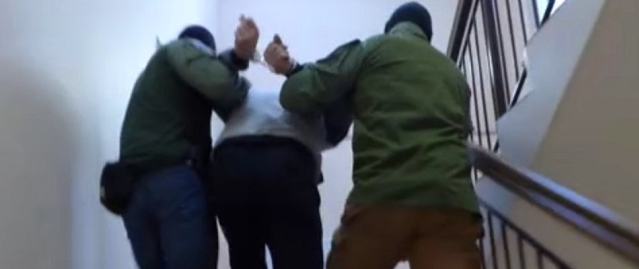
Two Polish men accused of blowing up ATMs in Germany, Denmark, Norway and Sweden have been detained by police in Poland.

The men were wanted on a European Arrest Warrant over allegations that they were part of an organised crime group that robbed several cash machines.

Three other men were caught red handed trying to break into an ATM in Germany in a joint operation of Polish and German police.

“It has been initially determined that the robberies of ATMs in Germany alone resulted in the suspects stealing more than EUR 2 million,” said a spokeswoman for the Polish police.

(vb)

December 30, 2016 0 comments
0 FacebookTwitterPinterestEmail
Terrorist

How Peace Between Afghanistan and the Taliban Foundered

by Nadarajah Sethurupan December 27, 2016
written by Nadarajah Sethurupan

At a corner table of the Marriott Hotel in Pakistan’s capital, an emissary from the Taliban’s supreme leader arrived with a message of peace.

It was 2007, as the Afghan Taliban insurgency was growing bolder. The United States-led international coalition was fixated on defeating the Taliban militarily, and that mission would only intensify when President Obama sent in tens of thousands more troops starting in 2009.

But that evening at the Marriott in Islamabad, the talk was about diplomacy, and there were no Americans in the room. Alf Arne Ramslien, a senior Norwegian diplomat who had cultivated relationships and trust within the Taliban for years, was meeting with a confidant of Mullah Muhammad Omar, the movement’s reclusive founder, who was directing the insurgency from exile in Pakistan.

The Taliban emissary gave Mr. Ramslien a list of five names that Mullah Omar had tasked with exploring the possibility of peace talks. They needed the help of a facilitator, he said, and Mr. Ramslien was it.

That exchange would initiate an intense, secretive process that over three years involved two or three meetings a month between Norwegian diplomats and fugitive Taliban representatives across cities in Asia and Europe, including Karachi, Bangkok and Oslo.

Astoundingly, the diplomats said they even had one direct, late-night audience with Mullah Omar himself — years after even senior Taliban leaders said they had last been in a room with him.

The Norwegian peace track overlapped with efforts by other countries to bring the Taliban to the table, including the United States and Saudi Arabia, and for years seemed to be making the most progress toward bringing the Taliban and Afghan officials together.

But it all eventually fell apart under the weight of military and intelligence maneuvering and of distrust among a host of countries that were taking a hand in Afghan affairs. Mr. Ramslien maintains that Pakistan, in particular, has been a central obstacle to any negotiated peace with the Taliban.

Now, for the first time, Mr. Ramslien is laying out some of the behind-the-scenes moments of triumph and setback in the three years that he helped lead Norway’s efforts to broker peace in Afghanistan.

His account, in an interview with The New York Times at his home outside Oslo, is essentially an open plea to his successors as they try to pick up the pieces and start new peace talks: Stay patient, and understand that success often starts with crazy ideas and comes in unexpected bursts — and that failure can happen regardless of your best efforts.

Mr. Ramslien shared his story just as painstaking efforts to negotiate an end to another decades-long conflict, in Colombia, seemed to be bringing results, despite a last-minute derailment by a national referendum vote.

Since 2007, efforts to negotiate an Afghan peace have had several Colombia moments — promising developments that suddenly fall apart because of bad timing, bad faith or miscalculation — without enjoying anywhere near the degree of success.

That is in part because of the complex nature of a war that has spun out over nearly four decades in its various chapters, and has been fought or aided by an ever-shifting and conflicting array of international interests.

For instance, the early Norwegian efforts were so hushed that they were kept a secret even from the Americans for the first two years. The Europeans feared that the United States, which had flatly refused efforts by senior Taliban officials to surrender and reconcile with the Afghan government in 2001 and 2002, would derail their efforts by targeting any Taliban emissaries for death or imprisonment.

Today, even as the United States has fully embraced the idea that political resolution offers the only lasting way out of the war, the Afghan peace process seems stalled, or at least confused. The Afghan government held a round of talks in Pakistan in the summer of 2015, but it fell apart quickly with questions still unanswered about the legitimacy of the representatives whom Pakistani officials had pressured the Taliban to send.

The early Norwegian contacts were maintained around the personal relationships of Mr. Ramslien, an unconventional diplomat who had been a Christian missionary in Pakistan in the 1960s. He understood that the Taliban’s worldview was rooted in religion, and could communicate with them — and even interpret for them — in Urdu, which he speaks fluently.

During his years as a diplomat in Islamabad, stretching back to the 1990s, Mr. Ramslien had made an impression not only on the Taliban government in Afghanistan, but also on the Pakistani madrasas — the religious schools that gave birth to the Taliban movement and to this day fill its ranks with foot soldiers.

Many of those seminaries were a legacy of American funding of the Islamic insurgency against the Soviet Union in Afghanistan. After the Soviet withdrawal, and after the United States virtually abandoned the region in the 1990s, Mr. Ramslien made a priority of continuing engagement with Pakistani and Afghan religious leaders — which he felt was necessary because in isolation those figures could become more dangerous.

With those credentials, it was Mr. Ramslien the Taliban approached in 2007 when they were looking for a go-between.

The initial contacts with the Taliban came with enormous risks for both sides. Norway was “dealing with an illegal armed group that was not only listed by the United Nations as a terrorist group, but was also in direct conflict with a NATO force that included Norwegian troops,” according to a recent report by a high-ranking commission on Norway’s 15-year involvement in Afghanistan.

The Taliban risked arrest by breaking United Nations travel restrictions, while holding meetings inside Pakistan would bring further scrutiny from a potential spoiler: the country’s powerful military Inter-Services Intelligence service — the ISI — which was protecting the Taliban in their Pakistani havens. Al Qaeda, too, wasn’t happy about the Taliban projecting an image of independence.

“They knew they had to make the ISI happy,” Mr. Ramslien said of the Taliban. “Then, at the same time, play another game totally independently.”

Early efforts by Mr. Ramslien and his Norwegian colleagues were focused on helping the Taliban, a rural military group with little political sophistication, come up with a set of cohesive demands for a meeting with the Afghan government.

And they made progress on that front, Mr. Ramslien said. In May 2008, the Taliban agreed to meet Afghan government representatives. After a brief delay, delegations from both parties arrived in Oslo in November, staying in the same area and, according to the Norwegian report, even in the same hotel.

But hours before the sides were to meet, there was a bombshell. A delegation member’s house outside Quetta had been blown up, killing the Talib’s brother and wounding his wife, Mr. Ramslien said. Everyone took it as a warning against trying to pursue talks.

“We had finished breakfast, and the next step was to meet,” Mr. Ramslien recalled. “They collapsed, you know, they were crying, they were shocked.”

The meeting was called off, and Mr. Ramslien accompanied the Taliban delegation back to Dubai in a private jet.

The efforts would soon resume again, and the secret discussions were aided in part, Mr. Ramslien said, by the election of President Obama. The Taliban felt optimistic about the president’s policy of seeking a new opening with the Muslim world, as he laid it out in a speech in Cairo.

In March 2009, the Taliban even arranged for the Norwegian diplomats to meet their reclusive leader, Mullah Omar, Mr. Ramslien said. Mr. Ramslien and two senior diplomats who came from Oslo were picked up at night and driven in circles before they pulled up to a compound, which Mr. Ramslien believes was probably outside the city of Karachi.

During the two-hour meeting, Mullah Omar — and Mr. Ramslien said he firmly believed it was indeed the Taliban founder he was meeting, after having spoken with him twice on the phone — reaffirmed a desire to seek talks.

“He was definitely very sick. He was sitting cross-legged. He was thick, quite thick — I did not expect that,” Mr. Ramslien said. “We knew that he had severe diabetes problems. We knew that he had kidney problems. And his talk was slurred.”

Later, President Obama’s agreeing to a military surge of 30,000 more troops to Afghanistan, in Mr. Ramslien’s view, was a significant setback to the process. His Taliban interlocutors said they were now forced to fight: “If they are bombing us from above, we will bomb them from below,” was how Mr. Ramslien characterized the Taliban’s attitude then.

Publicly, the Taliban insisted that they would never negotiate with the Afghan government while there was a single foreign soldier in the country. But Mr. Ramslien believed that was never an immutable demand, and his view is borne out by Taliban figures who were also involved in the process.

In Mr. Ramslien’s view, a far bigger obstacle was continuous obstruction by Pakistani officials who viewed the Taliban as a bargaining chip.

In February 2010, the highest-level conversation yet was scheduled to take place between the Afghan government and six Taliban members, including the movement’s deputy leader, Mullah Abdul Ghani Baradar. Days before the talks, Mullah Baradar was arrested by Pakistan, effectively ending that process and making it clear to the Norwegians who the real spoiler was.

“It became difficult to continue negotiations because of opposition not only within the Taliban itself, but also from Al Qaeda and, even more important, from ISI,” the Norwegian government report says. “The ISI’s position was made clear by the arrest of Mullah Baradar.”

Mr. Ramslien lost hope, moving on to take his final posting as ambassador to Nepal before retiring from the service.

Years later, as others are steadily working to revive the hope for a negotiated settlement, officials are still stuck on the question of Pakistan’s involvement, with some coming to believe that despite the risks of alienating Pakistan, it may be time to approach the Taliban through other channels.

(A version of this article appears in print on December 27, 2016, on Page A4 of the New York edition with the headline: How Secret Peace Talks Between Afghanistan and the Taliban Foundered.)

December 27, 2016 0 comments
0 FacebookTwitterPinterestEmail
Asia and Norway

Indian Ambassador seeks meeting with Norway Foreign Ministry

by Nadarajah Sethurupan December 27, 2016
written by Nadarajah Sethurupan

Indian Ambassador to Norway has sought a meeting with the head of the Consular Section in the Norwegian Foreign Ministry after the Indian woman, whose son has been taken away by the Child Welfare Services there, sought governments intervention.

“Indian Ambassador to Norway Debraj Pradhan has sought a meeting with the head of the Consular Section in the Norwegian Foreign Ministry,” External Affairs Ministry Spokesperson Vikas Swarup said, adding after the meeting the government will decide how to pursue the case.

Gurvinderjit Kaur and her husband, who is a Norwegian national, have alleged that authorities in that country have taken away their 5-year-old son Aryan, also a Norwegian national, on a frivolous complaint of abuse.

MEA officials said after the “formal request” by the Indian woman, the ministry was now “empowered” to pursue the matter with the Norwegian authorities.

The Indian couple had first sought Jollys help in getting back the custody of their child, after which he wrote to External Affairs Minister Sushma Swaraj who had said India will provide them help.

Jolly had also maintained that according to the mother, the child is being “daily served porridge and bread while he is fond of Indian food”.

In its response, the Norwegian Embassy here had asked for “restraint” in the case, assuring that it is being handled with “complete sensitivity and awareness”.

This is the third case since 2011 when children have been taken away from their Indian-origin parents by the authorities in Norway on the grounds of abuse.

In 2011, a three-year-old and a one-year-old were separated from their parents, prompting the then UPA government to take up the issue with Norway. The Norwegian court later allowed the children to be reunited with their parents.

In December 2012, an Indian couple was jailed on charges of ill treatment of their children, 7 and 2 years. Later, they were sent to their grandparents in Hyderabad.

(PTI ,PYK ,ZMN)

December 27, 2016 0 comments
0 FacebookTwitterPinterestEmail
NATO and Norway

“It’s understandable NATO’s image in Serbia is not good”

by Nadarajah Sethurupan December 27, 2016
written by Nadarajah Sethurupan

It is understandable that the image of NATO in Serbia is not good, says Norwegian Ambassador to Serbia Arne Bjornstad.

In an interview for the daily Politika, he added that “historical circumstances of the two countries” are the difference that made Norway a member of NATO, while Serbia is not.

According to Bjornstad, membership in NATO provides Norway with security, because his country “throughout history felt threatened by neighbors – first the Soviet Union and now Russia” – whereas Serbia was “not in the direct neighborhood with the USSR, and Yugoslavia conducted a smart foreign policy.”

“You did not have the same system as the Soviet bloc. You’re closer to the West than East European countries. And of course, because of the bombings in Bosnia, and over Kosovo, the image of NATO is not good in Serbia. This is understandable,” he said.

The ambassador added that he believes a country today becomes a member of NATO “if its safety is threatened,” while “another way is EU membership.”

“The EU has a weaker defense than NATO,” he said.

Asked why Norway is a NATO member, but does not want to join the EU – while Serbia wants to join the EU but not NATO – the ambassador said that his country has stayed out of the EU because fishermen and farmers have been against it. An agreement on free trade is in place instead, that does not cover farming and fishing products.

As for “why the application of the Nordic model of cooperation has not advanced far in this region,” Bjornstad said there must be interest behind such a model, while “it cannot be left to politicians.”

“It is much easier when you bypass major political issues and focus on the things that are important to improve the everyday ordinary life,” he said.

The ambassador, who has the title of honorary citizen of Belgrade, also thinks student exchange programs are important, as well as the ability to work without special permits in the entire region.

“One of the recipes is: don’t start with big pledges of eternal love and closeness, instead, find ways for diplomas earned in Zagreb to be recognized in Belgrade, and vice versa,” he concluded.

(b92)

December 27, 2016 0 comments
0 FacebookTwitterPinterestEmail
Oil & Gas

Norway lowers its investment sights

by Nadarajah Sethurupan December 24, 2016
written by Nadarajah Sethurupan

Norwegian oil companies have scaled back their 2017 investment plans, according to the latest Statistics Norway survey.

Economic analysts say that this increases the chances of a central-bank interest-rate cut in the New Year.
Norway’s biggest industry has been in a slump these last two years, bringing the economy to “a near standstill”, according to the Handelsbanken.

The country’s oil companies now plan to invest 146.6 billion krone ($17.21 billion) next year, the survey shows, down from 150.5 billion krone in August.

The oil sector accounts for more than 20% of the country’s economy. A Statistics Norway spokesman said: “The decline is mainly due to lower estimates for exploration and for platform shutdown and removal.

Exploration wells and removal projects originally planned for 2017 have been postponed, and plans now point to a 10% cut compared with 2016 — much deeper than the 4% cut expected by the central bank.

“This suggests that the offshore oil sector will continue to drag down Norway’s industrial sector and economic activity next year, maybe by more than we thought.”

December 24, 2016 0 comments
0 FacebookTwitterPinterestEmail
Science

Norway wants to fill the International Space Station with snakebots

by Nadarajah Sethurupan December 22, 2016
written by Nadarajah Sethurupan

Astronauts on the International Space Station might soon be getting help from a swarm of snakebots, if Norwegian engineers get their way.

Scientists at SINTEF, an industrial and technical research organisation based in Trondheim, are investigating whether snake-shaped robots could help carry out maintenance work on the ISS, as well as further afield.

“It’s possible that a robot could carry out much of the routine inspection and maintenance work”, said Aksel Transeth at SINTEF. “The experiments are stacked in the shelf sections, behind which corrosion can occur. To find this out, inspections have to be made. A snake robot could creep behind the sections, carry out an inspection, and perhaps even perform small maintenance tasks.”

Moon Village

“More ambitious applications include potential activities on comets and the Moon”, he added. Over the last few years, while Nasa and SpaceX have been focused on Mars, the European Space Agency has been building up plans for a “Moon village” that could serve as a stepping stone to more distant worlds.

The most likely place for that village, to protect settlers from cosmic radiation and meteorites, is in the network of lava tubes that lie below the Lunar surface. But those tunnels will need to be explored before we can settle them, and Transeth hopes that this is where snakebots can play a role.

Zero Gravity

The important thing for all of these tasks is to figure out how to design a robot that can navigate in microgravity. “We believe that we can design a robot that can hold on, roll itself up and then extend its body in order to reach new contact points”, explained Transeth.

“Moreover, we believe that it can creep in among equipment components on the ISS and use equipment surfaces to gain traction in order to keep moving forward – much in the same way as real snakes do in the wild.”

“We want to find out what specifications a snake robot system requires.”

(techradar)

December 22, 2016 0 comments
0 FacebookTwitterPinterestEmail
Defence

Boeing approved to sell 5 P-8A surveillance planes to Norway

by Nadarajah Sethurupan December 22, 2016
written by Nadarajah Sethurupan

The State Department on Wednesday announced that it approved the sale of five P-8A Poseidon surveillance aircraft to Norway.

The estimated cost of the five Boeing aircraft and associated support is $1.75 billion, according to a release from the Defense Security Cooperation Agency.

The sale will allow Norway, a NATO ally, to maintain its ability to conduct maritime surveillance patrols after its fleet of Lockheed Martin P-3 Orion maritime patrol aircraft retires.

“The proposed sale will allow Norway to recapitalize, modernize, and sustain its MPA capability for the next 30 years. As a long-time P-3 operator, Norway will have no difficulty transitioning its MPA force to the P-8A and absorbing these aircraft into its armed forces,” the release says.

(washingtonexaminer)

December 22, 2016 0 comments
0 FacebookTwitterPinterestEmail
Norwegian Aid

Norway elected to UN Peacebuilding Commission

by Nadarajah Sethurupan December 22, 2016
written by Nadarajah Sethurupan

‘Norway will play an active and constructive role in the UN Peacebuilding Commission. We will use our experience in the areas of conflict prevention, mediation and peacebuilding to strengthen the UN’s work to promote peace and development,’ said Minister of Foreign Affairs Børge Brende.

Norway will be a member of the UN Peacebuilding Commission again for the period 2017-2018. The purpose of the Commission is to promote sustainable peace in countries emerging from violent conflict.

‘Political solutions are essential for ensuring lasting peace. It is vital that that the work to achieve sustainable peace through national reconciliation and build a common vision for the future is led by actors at the national level. Having said this, Norway will support the peacebuilding processes in its capacity as member of the UN Peacebuilding Commission and in cooperation with others,’ said Mr Brende.

The UN Peacebuilding Commission is an intergovernmental advisory body that supports peace efforts in various ways in countries emerging from conflict, particularly during the transitional phase. The Commission brings together a range of actors to discuss possible solutions for a country, generates support and resources for peacebuilding processes, gives advice, and proposes integrated strategies for post-conflict peacebuilding and recovery. It also seeks to ensure continued focus on countries in a post-conflict reconstruction phase, with a view to preventing the recurrence of conflicts.

‘Peace and security are essential for sustainable development. In order to build lasting peace, we need to take a broad and long-term approach, and focus on conflict prevention, peacekeeping operations, mediation and reconciliation processes, and post-conflict reconstruction. This will be Norway’s approach now that we are becoming a member of the Peacebuilding Commission again,’ said Mr Brende.

Background:

Norway was last a member of the UN Peacebuilding Commission in 2013. The Commission was established in 2005 by then Secretary-General Kofi Annan. The UN Peacebuilding Fund was established at the same time, to ensure rapid support for conflict-affected areas, particularly countries outside the media spotlight. The new peacebuilding architecture was established to bridge the gap between UN peacekeeping operations and long-term efforts to promote peace and development. From the outset, Norway has been a strong supporter of the fund, and we played a key role in the work of the Commission. For a number of years Norway led the Commission’s peacebuilding efforts in Burundi, together with the Burundian authorities, civil society groups and a number of other actors.

(MFA – Norway)

December 22, 2016 0 comments
0 FacebookTwitterPinterestEmail
Norwegian Aid

Norway provides NOK 2.7 billion to the World Bank’s Fund for the Poorest

by Nadarajah Sethurupan December 22, 2016
written by Nadarajah Sethurupan

The World Bank is stepping up its fight against poverty. From July 2017 to June 2020, Norway will provide NOK 2.7 billion to the World Bank’s Fund for the Poorest, the International Development Association (IDA).

More than 50 countries contribute to IDA and have pledged to provide USD 27.2 billion during the three-year replenishment period from July 2017 to June 2020. The purpose of the fund is to promote poverty reduction and sustainable development in the world’s poorest countries, most of which are in Africa. For the first time, IDA will combine donor contributions and the World Bank’s own resources with financing from the capital market. This will maximise the support given to borrowing countries: for each dollar provided by contributor countries, three dollars will be lent out by IDA. The goal is for the fund to reach a total level of USD 75 billion during the three-year period.

‘Global cooperation and partnerships have stimulated growth and contributed to poverty reduction over the past 25 years. IDA is in a class of its own when it comes to providing aid to the world’s poorest countries,’ said Minister of Foreign Affairs Børge Brende.

There are 1.3 billion people living in the world’s poorest countries. IDA is the World Bank’s most important instrument for promoting sustainable development and fighting extreme poverty. The new funds will be used to finance:

  • essential health and nutrition services for up to 350 million people
  • financial services for 4-6 million people
  • safe childbirth for up to 11 million women through the provision of skilled health personnel
  • access to improved water sources for up to 45 million people
  • training for 9-10 million teachers to benefit over 300 million children
  • immunisations for 130-180 million children
  • better governance in 30 countries through improved statistical capacity
  • the registration of an increased number of taxpayers in 8-12 countries
  • an additional 5 GW of renewable energy generation capacity
  • The additional financing will enable IDA to double the funding it provides to address fragility, conflict and violence. Support for refugees and their host communities, crisis preparedness and response, and pandemic preparedness will be increased. A new Private Sector Window will be established to help mobilise private capital and scale up private sector development.

‘I am pleased that the contributor countries agreed during the replenishment negotiations to double IDA’s support to fragile states, increase funding for conflict prevention and crisis response, and establish a separate regional sub-window for refugees and preparedness for refugee flows from Syria,’ said Mr Brende.

‘Norway has played an important leadership role over the course of the IDA18 negotiations by actively promoting key development issues, including efforts to fight climate change, address the drivers of conflict and fragility, and gender equality. Norway was also very supportive of developing the Private Sector Window — a new innovation being introduced in IDA18 to strengthen private sector development in the poorest countries,’ said Axel van Trotsenburg, Vice President of Development Finance in the World Bank.

(MFA)

December 22, 2016 0 comments
0 FacebookTwitterPinterestEmail
Oil & Gas

Oil optimism is back as Norway predicts worst is behind us

by Nadarajah Sethurupan December 22, 2016
written by Nadarajah Sethurupan

The man overseeing energy policy in western Europe’s biggest oil-producing nation says the worst downturn in the history of Norway’s offshore industry appears to have bottomed out as Opec’s historic deal continues to reverberate across the globe.

Terje Soviknes, who was named as Norway’s next petroleum and energy minister on Tuesday, replacing Tord Lien, said the oil and gas industry has put the worst behind it.

“There’s renewed optimism in the oil and gas industry,” he told Bloomberg after a press conference in Oslo. “The change in the oil price curve we’ve seen lately has contributed to that.”

Norway earlier this month gave public backing to OPEC’s agreement to cut oil production in tandem with non-members, though it gave no indication it would reverse its previous refusal to directly collaborate with the group. Norway’s oil production has fallen by half since a 2000 peak, but is on track to rise for a third consecutive year after beating the government’s own forecasts by 5 per cent this year through November, according to figures released by the Norwegian Petroleum Directorate on Wednesday.

Speaking to reporters in his new office, Soviknes said Norway should expect to live off its fossil fuel industry for “decades to come.”

The optimistic tone follows years of warnings from Norway after crude prices started collapsing in 2014. The country’s offshore industry has gone through its deepest downturn on record and Prime Minister Erna Solberg said on Tuesday that, even after the latest recovery in prices, the sector continues to face “tough times.”
Lost jobs

Investments in the oil and gas industry are expected to fall for a third straight year in 2017 to less than two-thirds of a peak in 2014, according to the country’s statistics bureau. Norway is home to Statoil ASA, the country’s biggest crude producer. The industry has lost some 40,000 jobs since prices started to tank, delivering a bigger blow to the economy than the financial crisis of 2008.

“The oil-price downturn has impacted local community after local community and is affecting many families,” Soviknes said. The government will continue to “ensure stable and predictable framework conditions and open new areas to exploration and production.”

Soviknes joins the government after his political career stalled in 2001, following a sex scandal. Once regarded as a top contender to lead the Progress Party that forms the junior arm of Norway’s ruling coalition, Soviknes has been the mayor of Os on Norway’s western coast since 1999. Lien is stepping down after expressing a wish to spend more time with his family, Solberg said.

The new minister “knows the challenges” the offshore industry faces, Solberg said. “He has important tasks ahead of him, there is a lot that must happen in this area.”

Solberg made the changes after the government recently went through its biggest crisis, barely securing support in Parliament for its 2017 budget. Norway will hold general elections Sept. 11. The Conservatives, Progress and their supporters, the Liberal Party and the Christian Democrats, could lose their majority in Parliament, according to an average of December polls.

(gulfnews)

December 22, 2016 0 comments
0 FacebookTwitterPinterestEmail
Defence

Successful flight test for Norwegian missile

by Nadarajah Sethurupan December 21, 2016
written by Nadarajah Sethurupan

A Norwegian missile designed for the F-35 has performed a fight test in the United States.
Kongsberg’s Joint Strike Missile, designed for internal carry on an F-35 aircraft, has been successfully flight tested in the United States, the company said.

The Norwegian missile was tested using a U.S. Air Force F-16 over the Utah Test and Training Range, demonstrating safe separation from the aircraft.

It also performed a number of flight maneuvers while continuously alternating speed and altitude.

“The test verified all intended goals, completing another milestone towards full integration on the F-35,” said Eirik Lie, acting president Kongsberg Defense System. “The JSM program is on track to provide the warfighter a long-range precision strike anti-ship and land attack capability.”

The JSM missile is in development for the Norwegian military and will complete the qualification program in 2018. It will be integrated on the F-35A but can also be integrated on other types of aircraft.

Kongsberg and Raytheon are partnered to provide the JSM for the United States and others customers.

(UPI)

December 21, 2016 0 comments
0 FacebookTwitterPinterestEmail
Terrorist

Norway condemns terrorist attack in Germany

by Nadarajah Sethurupan December 20, 2016
written by Nadarajah Sethurupan

‘Norway condemns the terrorist attack in Berlin in the strongest possible terms.

We stand shoulder to shoulder with the people of Germany in the fight against terrorism. We will never let terrorists destroy our democratic values and our freedom,’ said Minister of Foreign Affairs Børge Brende.

Mr Brende has today expressed his condolences to the German Foreign Minister, Frank-Walter Steinmeier. At least 12 people are reported to have died and many more were injured when a lorry crashed into the crowd at a Christmas market in the German capital yesterday evening.

‘Our thoughts and our deepest sympathy are with the many victims, their families, loved ones and friends,’ said Mr Brende.

Yesterday’s attack is the most serious terrorist attack in Germany in recent times. The German authorities have heightened the level of emergency preparedness and implemented necessary measures. Norwegians in Germany are urged to keep themselves informed about the situation and to follow the advice and instructions of the authorities at all times.

December 20, 2016 0 comments
0 FacebookTwitterPinterestEmail
Politics

Norwegian premier reshuffles cabinet

by Nadarajah Sethurupan December 20, 2016
written by Nadarajah Sethurupan

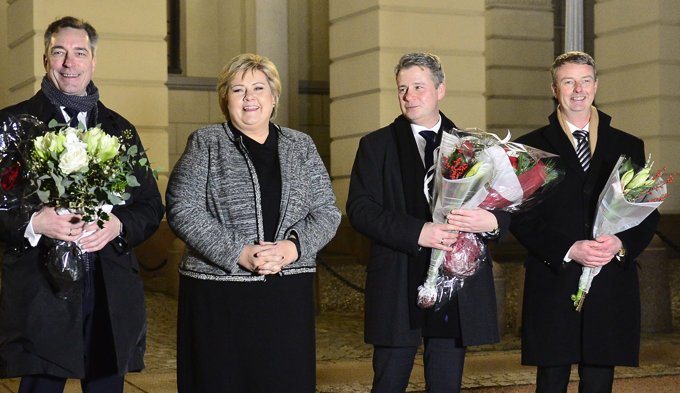
Norwegian Prime Minister Erna Solberg on Tuesday reshuffled her three-year-old government, replacing three ministers, ahead of next year’s general elections.

Two of the new ministers were from the populist Progress Party. Per-Willy Amundsen replaced Anders Anundsen as minister for justice and public security while Terje Soviknes, a popular small town mayor, took over as petroleum and energy minister from Tord Lien.

Amundsen, 45, has generated queries over past remarks criticizing immigration and whether climate change is man-made.

“This government is not shifting politicially due to the change of ministers,” Solberg told reporters after a formal cabinet meeting with King Harald.

She said the government platform and agreements with two centrist parties it works with were key for the government’s political course.

One of Anders Anundsen’s final tasks as justice minister was Monday to unveil a plan to almost double jail terms to 40 years for very serious crimes.

Frank Bakke-Jensen of Solberg’s Conservative Party, and a member of parliament, was named new minister for handling ties with the European Union, replacing Elisabeth Vik Aspaker. Norway is not a member of the bloc.

The right-leaning coalition was formed in October 2013. It lacks a majority, but has secured agreements with two centrist parties in parliament that allows it to operate. Elections are scheduled for September.

Trine Skei Grande of the Liberals that provide support for the government said the appointments suggested “a swing to the right.”

December 20, 2016 0 comments
0 FacebookTwitterPinterestEmail
Environment

Legislation to restore nuclear cooperation agreement with Norway

by Nadarajah Sethurupan December 20, 2016
written by Nadarajah Sethurupan

Congress passed legislation earlier this week to renew the nuclear cooperation agreement with Norway, paving the way for U.S. access to Halden Reactor Project.

“Norway’s Halden Reactor Project is a critical asset for U.S. companies,” said Daniel Lipman, Nuclear Energy Institute vice president for suppliers and international programs. “Research and testing conducted at that unique facility enables U.S. firms to continue to innovate and maintain technology leadership as they compete in the global nuclear energy market. With the agreement now in force with this important NATO ally, the research and testing can continue.”

The original agreement between the United States and Norway expired in 2014, restricting U.S. access to Norway’s Halden Reactor Project. The Halden reactor was constructed in 1958, with the help of the United States, and is supported by 19 countries.

The Halden Reactor Project, partly financed by the Organization for Economic Cooperation and Development, is a 20-megawatt facility used to test and develop next-generation reactor fuel and test reactor components. The facility provides valuable services that are important to the development of international nuclear power plant safety and reliability aspects.

Access to the facility is critical for U.S. companies as it ensures they have an equal footing with nuclear products in the global marketplace. The United States has Section 123 nuclear cooperation agreements with over 20 nations and securing a similar agreement with Norway will help U.S. businesses prosper.

(dailyenergyinsider.)

December 20, 2016 0 comments
0 FacebookTwitterPinterestEmail
Defence

Norway to Privatize Non-core Military Support Services

by Nadarajah Sethurupan December 20, 2016
written by Nadarajah Sethurupan

Norway is set to become the next Nordic country, after Finland, to use privatization as a fiscal tool to reduce costs and achieve greater all-round efficiencies in its military organization.

The Norwegian Defense Forces Command (NDFC) is responding to a government directive, which is included in the recently approved Long Term Defense Plan (LTDP), to find cost savings of $4.62 billion in the defense organization over the next 20 years.

The next-stage in the initiative will result in the NDFC drafting a plan to identify what non-core service areas within the defense organization could benefit from privatization and outsourcing to the private sector.

Military support areas provisionally identified by the NDFC include IT services, personnel training, administration, spare parts and storage.

In the case of Finland, support services with a non-core life cycle outsourced to the private sector include armored vehicle and weapons maintenance, as well as material procurement, storage and distribution of spare parts.

The review, said Norwegian Chief of Defence Haakon Bruun-Hanssen, would explore opportunities for privatization of services in “all areas” connected to defense support and administration.

The NDFC plans to cooperate with service suppliers that have the capacity to deliver in crisis and war situations. Outsourcing solutions, said Bruun-Hanssen, would require “financial savings advantages for the military organization” and the provision of services by private suppliers at a cost level below what the Norwegian Defense Forces can currently deliver.

The $4.62 billion in cost savings sought under the LTDP are linked to a broader government plan to add a total of $19 billion to annual defense budgets over the next 20 years.

Norway’s defense organization has already dipped its feet into the private sector services delivery pool. Wilhelmsen Group, a Norwegian marine industry company, has been contracted to provide logistics services and support to the country’s Home Guard quick mobilization force.

The military officers organization Befalets Fellesorganisasjon (BFO) has cautioned the NDFC against adopting privatization-related decisions and positions on strategy that could reduce the NDF’s crisis and war-readiness capabilities.

BFO director Jens Jahren questioned the need for the NDF to outsource services, even if the scope of the proposed privatization plan is limited to non-core military areas.

“There are signals that services affected may include vehicle maintenance,” Jahren said. Such a move, he said, could reduce the defense organization’s expertise in critical areas.

Finland’s Armed Forces Command (AFC) has broadened the terms of its outsourcing arrangement with Millog Oy, its strategic private sector partner company controlled by the state-owned defense group Patria.

(defensenews)

December 20, 2016 0 comments
0 FacebookTwitterPinterestEmail
Africa and Norway

Norway Donates US$11.5m for Education in Northeast

by Nadarajah Sethurupan December 20, 2016
written by Nadarajah Sethurupan

The Government of Norway has donated $11.5 million, (approximately N3.6 billion) to improve basic education and support girls and women who had been victims of sexual violence by Boko Haram in the conflict-affected northeast Nigerian states of Borno, Yobe, Adamawa and Gombe.
The UNICEF in a statement yesterday, said the funding was part of the Safe Schools Initiative in northern Nigeria.

In 2013, Norway was a pioneer member of the Safe Schools Initiative committee established in response to Boko Haram attacks on schools in the northeast and the urgent need to provide a safe learning environment for children.

The Norwegian Ambassador to Nigeria, Jens-Petter Kjemprud, said with UNICEF support, about 100,000 children were currently accessing education through Temporary Learning Spaces and schools in northeast Nigeria.

Kjemprud said the fund would further boost access to education for an additional half a million boys and girls in internally displaced persons’ camps, host communities and areas of Borno State that have recently become accessible areas to humanitarian assistance.

“We believe in the importance of doing what we can to break the cycle of violence in northeast Nigeria.

“This funding will provide more children complete basic education in a good learning environment and will provide much-needed counselling for girls who have suffered unimaginable trauma at the hands of Boko Haram”, he added.
Also, the Norwegian Foreign Minister Mr. Børge Brende, attended the signing ceremony to formalise the grant.

Brende said the funding from Norway would provide children, especially girls affected by the conflict, with uniforms to wear to school and will enable them to learn in secure, safe and protected environments.

According to him, teachers will be trained to improve their skills so they can deliver quality teaching and improve learning results for children; school systems will be improved through training and mentoring of head-teachers on management knowledge and skills.

He said that school Based Management Committee (SBMCs) members will be trained in school planning, including disaster risk reduction to make schools a safer place for children.

Rest of the statement noted that “the funding will also support approximately 1,600 of the thousands of girls and women that UNICEF estimates have been raped, abducted and forcibly married as a result of the conflict. Not only have these victims of violence suffered the trauma of their experiences when they were held by Boko Haram, but when they have managed to escape or have been liberated, they often face rejection by their communities and families.

“Instead of being welcomed back, they frequently face stigma, discrimination, and in some cases violence, especially when they return pregnant or with children born out of that sexual violence. In addition to traditional stigma associated with sexual violence, many communities are afraid that girls and women who have been held by Boko Haram may have been indoctrinated by their captors. Part of the Norwegian funds will be used in Borno State to help these women and girls to reintegrate with their families and communities and rebuild their lives. The funding will also help to empower these women and girls to engage in the community peacebuilding process.”

“Tackling the crisis in northeast Nigeria requires a broad coalition of support from all”, said Mohamed Fall, UNICEF Nigeria Representative, “The Government of Norway was with us at the beginning of this crisis, providing support, and they are still here. This latest funding will go a long way to get thousands of children back in school and will help to reintegrate girls and women who were victims of Boko Haram back into their communities”.

December 20, 2016 0 comments
0 FacebookTwitterPinterestEmail
China and Norway

Norway, China normalise ties

by Nadarajah Sethurupan December 20, 2016
written by Nadarajah Sethurupan

Norwegian Foreign Minister said the two countries would immediately resume negotiations on a free-trade deal.

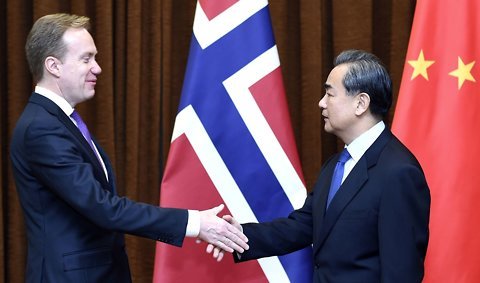
Norway and China on Monday normalised diplomatic and political ties, frozen since 2010 when Chinese dissident Liu Xiaobo was awarded the Nobel Peace Prize.

Norwegian Foreign Minister Boerge Brende said the two countries would immediately resume negotiations on a free-trade deal. “Through meticulous and numerous conversations, the two sides have over the last years reached a level of trust that allows for resumption of a normal relationship,” they said in a joint statement.

Chinese Foreign Minister Wang Yi said in a separate statement after meeting Brende in Beijing that in recent years relations had taken a serious step backwards. “Norway deeply reflected upon the reasons why bilateral mutual trust was harmed, and had conscientious, solemn consultations with China about how to improve bilateral relations,” Wang said.

Both sides reached an important consensus on the lessons learned and restoring mutual trust, which accords with the interests of Norway and its people and the correct direction of relations, he added, without mentioning Liu. “Norway has made its stance clear on key and significant issues regarding China’s sovereignty and territorial integrity,” Chinese foreign ministry spokeswoman Hua Chunying said in a statement posted later on the ministry website.

Chinese Premier Li Keqiang, in his meeting with Brende, said China was willing to start free trade talks, China’s Foreign Ministry said, also without mentioning the Nobel laureate.

Liu, 59, a dissident involved in the 1989 Tiananmen Square pro-democracy protests crushed by the Chinese army, was jailed for 11 years in 2009 on subversion charges for organising a petition urging an end to one-party rule. He remains in prison.

The peace prize is chosen by a committee in Oslo, while other categories of the annual awards are decided in Stockholm. Shares of Norwegian salmon exporters, which have largely been shut out of the lucrative Chinese market, rose on Monday, with Grieg Seafood and Marine Harvest up 2.1 and 1.1% respectively.

December 20, 2016 0 comments
0 FacebookTwitterPinterestEmail
Norwegian Aid

Norway gives $11.5mn for basic educational, others in northeast Nigeria – UNICEF

by Nadarajah Sethurupan December 20, 2016
written by Nadarajah Sethurupan

Norway has donated $11.5 million approximately N3.6 billion to improve basic education, support girls and women who have been victims of sexual violence by Boko Haram in conflict-affected northeast states.

Ms Doune Porter, United Nation’s Children Fund (UNICEF) Chief of Communication, said this in a statement on Saturday in Abuja.

Porter said that the benefiting states are; Borno, Yobe, Adamawa and Gombe.

She said that the fund was part of the Safe Schools Initiative in the northern Nigeria.

She said that in 2013, Norway was a pioneer member of the Safe Schools Initiative Committee established in response to Boko Haram attacks on schools in the areas.

Porter said that UNICEF, however, noted that there was an urgent need to provide a safe learning environment for children in northeast.

She said that through the support of UNICEF about 100,000 children were currently accessing education through Temporary Learning Spaces and schools in northeast Nigeria.

“This fund would further boost access to education for an additional half a million boys and girls in internally displaced persons’ camps, host communities and areas of Borno that have become accessible to humanitarian assistance.’’

Porter quoted Jens-Petter Kjemprud, Norwegian Ambassador to Nigeria in the statement as saying that: “We believe in the importance of doing what we can to break the cycle of violence in northeast Nigeria.

“This funding will provide more children complete basic education in a good learning environment and will provide much-needed counselling for girls who have suffered unimaginable trauma in the hands of Boko Haram,” Kjemprud said.

Also, Norwegian Foreign Minister, Mr Børge Brende said that the generous funding from Norway would provide children, especially girls affected by the conflict, with uniforms to wear to schools.

He said that the fund would also enable them to learn in secure, safe and protected environment.

He said that teachers would be trained to improve their skills, so they could deliver quality teaching and improve learning results for children.

According to him, school systems will be improved through training and mentoring of head-teachers on management knowledge and skills.

Brende stressed that School Based Management Committee (SBMCs) members would be trained in school planning; including disaster risk reduction to make schools a safer place for children.

“The funding will also support approximately 1,600 of the thousands of girls and women that UNICEF estimates have been raped, abducted and forcibly married as a result of the conflict.

“Not only have these victims of violence suffered the trauma of their experiences when they were held by Boko Haram,

“But when they have managed to escape or have been liberated, they often face rejection by their communities and families.

“Instead of the escaped victims of violence being welcomed back, they frequently face stigma, discrimination, and in some cases violence, especially when they return pregnant or with children born out of that sexual violence.

“In addition to traditional stigma associated with sexual violence, many communities are afraid that girls and women who have been held by Boko Haram may have been indoctrinated by their captors.

“Part of the Norwegian funds will be used in Borno to help these women and girls to reintegrate with their families and communities and rebuild their lives.

“The funding will also help to empower these women and girls to engage in the community peace building process, ‘’Porter quoted the Norwegian Foreign Minister as saying in the statement.

Similarly, Mohamed Fall, UNICEF Nigeria Representative explained that tackling the crisis in northeast Nigeria required a broad coalition of support from all.

“The Government of Norway was with us at the beginning of this crisis, providing support, and they are still here.

“ This latest funding will go a long way to get thousands of children back in school and will help to reintegrate girls and women who are victims of Boko Haram back into their communities.”

(businessdayonline)

December 20, 2016 0 comments
0 FacebookTwitterPinterestEmail
Srilanka and Norway

Norwegian Geotechnical Institute continues to support Sri Lanka’s NBRO on disaster management

by Nadarajah Sethurupan December 20, 2016
written by Nadarajah Sethurupan

The Norwegian Geotechnical Institute (NGI), continuing its support to Sri Lanka’s National Building Research Organization (NBRO) on disaster management, recently handed over some high tech equipment to be used in the Disaster Risk Reduction program.

Thorbjorn Gaustadsaether, Ambassador of Norway to Sri Lanka, handed over some equipment to Mr. S.S. Miyanwala, Secretary to the Minister of Disaster Management to be used in the Disaster Risk Reduction program. The event took place during the inaugural session of the National Building Research Organization, International Symposium 2016.

The advanced borehole antennas handed over at the occasion will be used to scan the ground between two boreholes. These antennas have been especially fabricated at NGI for use by NBRO to perform geotechnical investigations at geo-hazard sites and at upcoming infrastructure projects in the country.

A tailor made high computing machine, which was recently handed over to NBRO, under this technical cooperation will now be used to analyze vast amount of data collected from various landslide prone areas in Sri Lanka. The high computing machine will make quick and efficient three dimensional models of the mapped site in an accurate manner in a Geographical Information System (GIS) platform.

Under the Technical Cooperation facility, the Norwegian Embassy has supported the Norwegian Geotechnical Institute (NGI) to work together with the NBRO on disaster management issues since 2012. NGI and NBRO have worked very well together and made use of advanced Norwegian technology such as ground penetrating radars (GPR) and early warning systems through automatic weather stations which helped Sri Lanka in their disaster risk reduction efforts.

In his speech, Ambassador Thorbjorn Gaustadsaether said he is happy to know that this project continues successfully, in the area of climate change and natural hazards and this cooperation is a very good example of how experience and knowledge successfully can be shared between institutions.

(N.Sethu)

December 20, 2016 0 comments
0 FacebookTwitterPinterestEmail
Farming

Norway salmon prices seen rising further next week

by Geir Yeh Fotland December 19, 2016
written by Geir Yeh Fotland

Salmon price in Taiwan is this week still the same as in 2012. Photo: Geir Yeh Fotland

The average price of Norwegian farmed salmon could hit a new record next week in a volatile trade ahead of the Christmas holidays, industry sources told Reuters on Friday.
This week, average prices rose to 74-75 Norwegian crowns amid strong demand and lack of supply.
“Some people talk about 100 crowns ($11.5) per kilo. That’s too much. We assume 75 crowns per kilo for the smallest fish of 2-3 kilo next week and up to 85 crowns for the biggest fish above 6 kilo,” said a producer who declined to be named.
An exporter, also he unnamed, indicated a price of above 80 crowns for fish of 3-6 kilo next week, which are the main sizes, and 90 crowns or more for bigger ones.

“Because of the high prices, it’s actually very quiet. I fear that there will be a backlash,” the exporter said.
Prices have been volatile this year and hit a record in July above 80 crowns per kilo. Prices then proceeded to fall to just above 50 crowns before turning higher.
Production costs in Norway have risen sharply in recent years to around 30-31 crowns per kilo on average.
Norway is the world’s top salmon exporter, with leading producers including Marine Harvest, Salmar, Leroy Seafood, Grieg Seafood and Norway Royal Salmon.
Companies and analysts have predicted that the global supply of salmon will fall by 6-7 percent in 2016 due to declining production in Norway as well as in Chile, the world’s second largest producer. ($1 = 8.6779 Norwegian crowns)
(Dec 16, 2016 Reuters. Reporting by Ole Petter Skonnord, editing by Jussi Rosendahl)

December 19, 2016 0 comments
0 FacebookTwitterPinterestEmail
Defence

How Norway Is Building One of the World’s Most Lethal Missiles (And It Could End Up on the F-35)

by Nadarajah Sethurupan December 16, 2016
written by Nadarajah Sethurupan

The modern age of the missile at sea was arguably kicked off in October 1967, when the Israeli destroyer Eilat, sailing fourteen miles off the coast of Port Said, was ambushed by a pair of Osa-class guided missile boats. The missile boats launched four missiles, three of which hit the ex–Royal Navy destroyer, sinking her and killing forty-seven sailors.

The sinking of the Eilat was an earthquake in the world of naval warfare, and set off an arms race in the field of antiship missiles. Within ten years all major navies had their own ship-killing missiles, a rivalry that continued until the end of the Cold War. Now, with the Chinese and Russian navies resurgent, many countries (including the United States) are looking to replace their aging antiship missile arsenals with a new, modern design.

One of the newest tactical missile designs around is built by the Norwegian firm Kongsberg. A Russian neighbor with a very long coastline, Norway required a modern missile capable of defending that coastline. The result is the Naval Strike Missile (NSM), a clean-sheet design that Kongsberg describes as “the only fifth generation long range precision strike missile in existence.”

NSM is launched from a helicopter or ship platform by a solid rocket fuel booster that quickly accelerates the missile to cruising speed. Seconds later, the turbojet engine kicks in and the missile continues on to target. NSM has a range of just over one hundred miles.

Unlike supersonic missiles such as the Russian P-800 Oniks, which is capable of Mach 2.5, NSM stays well below supersonic speeds. Kongsberg, according to an industry rep interviewed at the 2013 DSEI show in London, England, believes in “smart missiles, rather than speedy missiles.” This philosophy has created a totally different missile than existing designs. Rather than attempt to overcome enemy defenses with a fast missile, Kongsberg instead made its missile more difficult to detect—and therefore more difficult to shoot down.

NSM is designed to be low-observable—not entirely stealthy, but Kongsberg made design decisions to reduce the missile’s radar signature. Other antiship missiles such as the American Harpoon and French Exocet are not stealthy at all. NSM combines this with a sea-skimming capability, flying low over the wavetops to stay off enemy radar until the last possible moment.

Most antiship missiles on the global arms market use an active radar seeker to home in on their targets. Although effective, this broadcasting of a radar signal gives defenders another means of detecting an inbound missile with their electronic support measures equipment. NSM uses passive imaging infrared sensors that don’t radiate an identifiable signal.

Passive countermeasures aren’t the only tools in NSM’s toolbox. The missile is capable of high-G maneuvers in the terminal phase, making its path difficult to predict. This is especially useful against gun-type close-in weapon systems, such as Phalanx CIWS or the Chinese Type 730, that fire on predicted missile paths.

Moments from impact, the missile’s Autonomous Target Recognition searches an enemy task group for the exact ship to target. Furthermore, Naval Strike Missile has target hit point selectability, meaning it can be programmed to strike a certain part of a certain enemy ship, such as the bridge. On impact it delivers a 276-pound high-explosive warhead. The warhead has a programmable fuse, allowing it to detonate on contact with an enemy ship or deep within an enemy ship’s interior. The missile is described as having a titanium warhead, which is likely to help penetrate enemy hulls.

NSM is currently in service with the Norwegian Navy, where it arms the Fridtjolf Nansen–class Aegis frigates and the Skjold fast attack boats. It is also operational with Poland’s Coastal Missile Division, which employs a truck-mounted version. The U.S. military, searching for a replacement for Harpoon, is very interested in this versatile missile, which could go on to arm Seahawk helicopters, cruisers, destroyers and the littoral combat ship (LCS). The missile was test fired from the USS Coronado in 2014, striking a mobile test ship target off the coast of California. Kongsberg apparently thinks NSM has a bright future in the United States as it has already firmed up plans to manufacture them in Kentucky in cooperation with Raytheon.

Kongsberg has developed a variant of the NSM known as the Joint Strike Missile (JSM). JSM is meant for long range strike against both land targets and ships. The missile was designed to fit in the internal weapons bay of the F-35 Joint Strike Missile. To accomplish this, the turbojet’s air intake was moved from the bottom of the missile to both sides of the aircraft, and the missile’s fins were altered.

A consequence of making the JSM fit inside the F-35 is that it is now compatible with the Mk.41 vertical launch system. The Mk. 41 VLS is the standard missile silo for U.S., NATO and other allied naval vessels. Previous missiles, such as Harpoon, were bolted onto the superstructure or deck of a ship where space allowed. This not only limited the number of missiles that could be carried but was detrimental to a ship’s radar cross section. Most ships with Mk.41 modules have scores of them, meaning even a destroyer-type ship such as the Arleigh Burke class could theoretically carry up to ninety of them.

The Naval Strike Missile may not be widely fielded now, but it looks to have a bright future ahead. Adoption by U.S. forces appears certain, if only to complement Lockheed’s larger, heavier, longer-range Long Range Anti-Ship Missile. Once that happens, other navies will fall in line, and missile factories in Kentucky will likely be humming far into the night.

Kyle Mizokami is a defense and national-security writer based in San Francisco who has appeared in the Diplomat, Foreign Policy, War is Boring and the Daily Beast. In 2009 he cofounded the defense and security blog Japan Security Watch.

(nationalinterest)

December 16, 2016 0 comments
0 FacebookTwitterPinterestEmail
Norwegian Aid

NOK 380 million to the UN’s Emergency Response Fund

by Nadarajah Sethurupan December 13, 2016
written by Nadarajah Sethurupan

‘The many large-scale, protracted humanitarian crises in the world today have created a tremendous need for emergency aid. The UN Central Emergency Response Fund ensures that aid can quickly reach those who need it when acute crises arise, and provides sorely needed funding for underfunded emergencies. Norway is therefore providing NOK 380 million for this Fund in 2017,’ said Minister of Foreign Affairs Børge Brende.

The UN Central Emergency Response Fund (CERF) provides immediate funding for life-saving assistance when humanitarian crises arise. Norway has been one of the largest contributors to the Fund since it was launched ten years ago. Norway’s contribution for 2017 will be announced at a donor conference at the UN in New York today.

‘Never before has the UN asked for such a large amount for humanitarian aid. At present 130 million people are in need of humanitarian aid and protection due to conflicts and natural disasters. Norway contributes substantial amounts to alleviate suffering throughout the world, not least to those affected by the Syrian crisis,’ Mr Brende said.

On average, 20 million people receive urgent medical assistance through CERF each year, and 10 million people receive food aid. In addition, funding channelled through CERF provides clean water and access to sanitary facilities for eight million people, improved living conditions for five million people, and shelter for another one million people.

More than 65 million people – many of them children – have been forced to flee from their homes. More than half of CERF’s funds are allocated to provide humanitarian protection and assistance to people who are fleeing from conflicts and natural disasters. In 2016, CERF funds have been used in South Sudan, Uganda, Sudan, Iraq, Yemen, Ethiopia, north-eastern Nigeria, the Lake Chad region and Haiti. CERF also provides support for cooperation and coordination at country level.

(Norway)

December 13, 2016 0 comments
0 FacebookTwitterPinterestEmail
Science

Kongsberg and DSME develop LNG regas controls for BW FSRU

by Nadarajah Sethurupan December 13, 2016
written by Nadarajah Sethurupan

Norway-based Kongsberg has signed a joint development agreement with Daewoo Shipbuilding & Marine Engineering (DSME) to create a simulator to design a regasification control system for the BW LNG floating storage and regasification unit (FSRU) being built at South Korea’s Okpo shipyard.

DSME will develop a high-fidelity dynamic simulator for the regasification plant to be installed on the unnamed newbuilding. It will use Kongsberg’s K-Spice dynamic-process simulator and K-Chief automation and control system to verify the design parameters.

The two companies also plan to work together to market the new LNG FSRU regasification control system. Kongsberg has supplied control systems to more than 200 LNG carriers and developed several gas-handling concepts. Simulation studies are increasingly important to verify design parameters to create robust designs.

DSME has delivered nearly 100 LNG ships. It first installed Kongsberg ship-control systems on this ship type in 2002. The FSRUs on its books include the 170,000m³ vessel to be delivered to BW in 2019 and Mitsui OSK’s giant 263,000m³ FSRU to be deployed off Uruguay from 2018.

Kongsberg Maritime Korea managing director Tore Wean (left) signed the agreement with DSME naval and energy system R&D vice-president Young Bok-choi.

(mpropulsion)

December 13, 2016 0 comments
0 FacebookTwitterPinterestEmail
Newer Posts
Older Posts

Norwegian Nobel Prize 2025

101207 The Norwegian Nobel Committee has decided to award the Nobel Peace Prize for 2025 to Maria Corina Machado for her tireless work promoting democratic rights for the people of Venezuela and for her struggle to achieve a just and peaceful transition from dictatorship to democracy.

Special Interest

  • Africa and Norway
  • Asia and Norway
  • Asylum
  • China and Norway
  • Corruption in Norway
  • Crimes
  • Defence
  • Diplomatic relations
  • Economics
  • Environment
  • Farming
  • Killing
  • Media Freedom
  • Middle East and Norway
  • NATO and Norway
  • Nobel Peace Prize
  • Norwegian Aid
  • Norwegian American
  • Oil & Gas
  • Peace Talks
  • Politics
  • Racism in Norway
  • Religion
  • Russia and Norway
  • Royal House
  • Science
  • Sex scandal
  • Sports
  • Spy War
  • Srilanka and Norway
  • Svalbard
  • Terrorist
  • Taiwan and Norway
  • Video clips

Follow Us

Recent Posts

  • Ethiopian, Norwegian Leaders Vow to Explore Green Investment, Renewable Energy Cooperation

    November 11, 2026
  • “Stoltenberg’s Ukraine Ledger: Accountability for Control, Not for Every Krone” – We Can Guarantee the Audit Has Holes

    November 7, 2026
  • Norway selects Starlink for military use

    November 6, 2026
  • NAC to supply used fuel storage solution for Norway

    November 6, 2026
  • Norwegian Envoy Praises Islamic Emirate’s Progress in Security, Economy

    November 6, 2026
  • Norway proposes tougher anti-espionage laws, expanded powers for PST

    November 3, 2026

Social Feed

Social Feed

Editors’ Picks

Norway opens market for Sri Lankan fish exports...

May 13, 2016

Sri Lanka – Nordic Business Council holds discussions...

May 15, 2016

Good governance to Sri Lanka

May 15, 2016

Shock and Joy in Sri Lanka – Erik...

May 15, 2016

Sri Lanka-Norway plenty of new opportunities for business–...

May 15, 2016

NORWAY NEWS is an online news site, written in English, dedicated to Norwegian affairs at home and abroad. Norway News.com is published online. It is a daily online newspaper in existence since May, 2003. The site is run by an Independent Journalist.

Facebook Twitter Youtube

Useful Links

    • Work With Us
    • Contact Us
    • Collaboration
    • Data Collection
    • Workplace
    • Adverstising
    • Privacy Policy
    • International Collab
    • Feedback
    • Terms of Use
    • About Our Ads
    • Help & Support
    • Entertainment
    • News Covering
    • Technology
    • Trending Now

Politics

Syrian, Norway to boost cooperation on mine clearance
Erna to step down as Conservative Party leader in 2026
Norwegian Labour Party on re-election win

Latest Articles

Ethiopian, Norwegian Leaders Vow to Explore Green Investment, Renewable Energy Cooperation
“Stoltenberg’s Ukraine Ledger: Accountability for Control, Not for Every Krone” – We Can Guarantee the Audit Has Holes
Norway selects Starlink for military use
NAC to supply used fuel storage solution for Norway

Norway News 2025 . All Right Reserved. Designed and Developed by Norway News

  • Home
  • About us
  • Disclaimer
  • Contact us
NORWAY NEWS – latest news, breaking stories and comment – NORWAY NEWS
  • Home
  • About us
  • News
  • Other News
    • Africa and Norway
    • Asia and Norway
    • Asylum
    • Breaking News
    • China and Norway
    • Corruption in Norway
    • Crimes
    • Defence
    • Diplomatic relations
    • Economics
    • Environment
    • Farming
    • Featured
    • Health
    • Killing
    • Media Freedom
    • Middle East and Norway
    • NATO and Norway
    • Nobel Peace Prize
    • Norwegian Aid
    • Norwegian American
    • Oil & Gas
    • Peace Talks
    • Politics
    • Racism in Norway
    • Religion
    • Royal House
    • Russia and Norway
    • Science
    • Sex scandal
    • Sports
    • Spy War
    • Srilanka and Norway
    • Svalbard
    • Taiwan and Norway
    • Terrorist
    • Travel
    • Video clips
  • Disclaimer
  • Contact us

Editor’s Picks

  • How Navi Pillay’s Unflinching Pursuit of Justice in Sri Lanka Forged a Nobel Legacy

    October 9, 2026
  • Norway’s Long Shadow Over Sri Lanka: UN Report Exposes Reform Failure as Oslo Faces Pressure to Act

    September 8, 2026
  • UN concern over Sri Lanka’s cases of enforced disappearances

    October 8, 2025
  • UN Human Rights Council Resolution on Sri Lanka’s Path to Reconciliation

    October 7, 2025
  • International should support Sri Lanka: Solheim

    October 4, 2024
  • Norwegian Meets Sri Lankan’s Challenges

    May 3, 2024

Newsletter

@2025 - All Right Reserved. Designed and Developed by Norway News