
 This week, the World Association of Chefs Societies hosts its global competition in Stavanger, Norway. Held every two years, the contest brings together seven finalists – one from each region in the world – to compete in three categories: Global Chef, Junior Chef and Global Pastry Chef. The finalists had to win several preliminary rounds in their cities, countries and regions during the previous two years. This year, two of the finalists representing the Middle East/Africa region are from Dubai.Achala Weerasinghe, the Sri Lankan resort pastry chef at Madinat Jumeirah, will compete in the Global Pastry Chef category on Friday, and Rahil Rathod, a young Indian chef from the Radisson Blu Hotel, Dubai Deira Creek, will compete in the Junior Chef category on Saturday.
Rahil Rathod
Rahil Rathod wasn’t born with a love of cooking. He grew up in Gujarat, India, in a family that sticks to tradition: his mother and aunts did the cooking while the men went to work. His father wanted him to join the family business or go to school to earn a degree, but Rathod admits he didn’t want to work hard. Friends convinced him if he studied hospitality, he wouldn’t have to.
“I thought, I won’t have to study. I’ll get a degree and that’s it. My dad will be happy,” says Rathod. But within two years, his love of food and cooking had grown into a passion he wanted to pursue. At the age of 21, he left India behind and made his way to Dubai to start his culinary career. Within six months of arriving, he was working as a chef at Radisson Blu Hotel, Dubai Deira Creek.
Now nearly 24, Rathod has worked in most of the restaurants at the hotel. His hours are long and the work is hard – not the easy life he thought he would have.
“It is very busy. It is a lot of work. But it will take something to get something. I’ll not get anything without hard work.”
After work, he spends a few hours every night at home reading, watching and learning more about food. His speciality is North Indian cuisine, but he says there is a lot of European influence in his cooking.
Rathod has set his goals high: “People say I’m living in a fantasy world, but I want to be the youngest Indian Michelin star chef in the world. That’s my goal.”
It doesn’t seem so far-fetched when you look at what he’s accomplished. He’s already graced the cover of the respected chef’s magazine Gulf Gourmet and he’s won several cookery competitions throughout the region. He knows that winning Global Junior Chef in Norway would be a huge stepping stone.
“It’s a world stage. There’s nothing bigger than that. If I screw it up …” He pauses and lets out a nervous laugh. “It doesn’t come every time on your doorstep and say, ‘Rahil, come on, I’m waiting for you.’ It’s a lifetime opportunity I cannot play around with.”
Achala Weerasinghe
Achala Weerasinghe has been honing his skills as a pastry chef for 14 years. He grew up in Badulla, Sri Lanka and wanted a career that would bring respect and prestige. He loved the idea of being a chef, but when he came to Dubai in 2004, he didn’t tell anyone about his goal of becoming a pastry chef.
“I thought, other people can do it, why can’t I? I have a brain. I have hands,” he says. “I learned. I worked hard. If you do that, you can do anything.” For the past decade, Weerasinghe has worked his way around prestigious hotels in the city. His latest position, which he landed just one month ago, is the resort pastry chef at Madinat Jumeirah in Dubai. He oversees the pastries in 14 restaurants across three hotels.
“I like working with chocolate and sugar. I do a lot of stuff by hand,” he says. And that’s what helps set him apart. Where others use moulds when making chocolate desserts, Weerasinghe handcrafts his creations.
Now 36, he has already won many regional competitions and medals, including Salon Culinaire’s Pastry Chef of the Year four years in a row. His goals for the future involve sharing his passion for pastries with others. Alhough he’s excited about his new role of resort pastry chef at Madinat Jumeirah, he says he eventually wants to teach young students just starting out in the culinary world.
For now, he’s focused on Norway and hopes to learn some new ideas from the six chefs he’s competing with, but he also intends to win.
“This is a big accomplishment. There were 140 countries. Now there are only seven people going to the final. There’s a lot of talent. But no problem, I will face the challenge.”
(thenational)
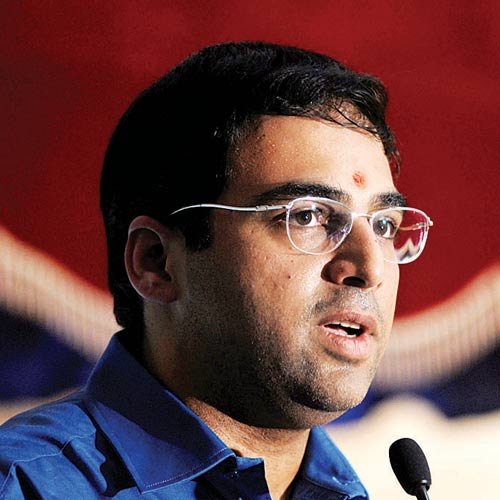
 Viswanathan Anand has displayed excellent form to lead the ongoing Candidates Chess tournament. The winner of this event, which features eight of the world’s leading grandmasters, will challenge the reigning world champion, Magnus Carlsen of Norway in the next world title match. The Indian grandmaster, who lost the world title to Carlsen in October 2013, is now the odds-on favourite to become the next challenger.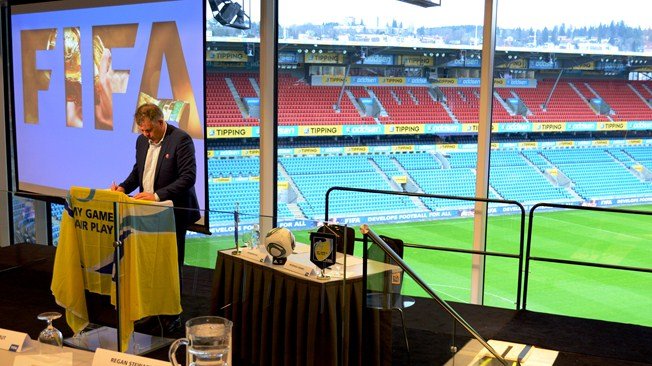
 ‘Developing the game’ was the key phrase at the FIFA Seminar for General Secretaries from Europe which took place in Oslo on Thursday, 10 April. The event was attended by representatives of FIFA’s 53 Member Associations in Europe as part of 11 special development seminars which will have taken place across the globe between September 2013 and summer 2014. This was the first of its kind in Europe, as world football’s governing body seeks to engage all of its members in a far-reaching consultation process.The meetings are a key platform for FIFA and its associations to continue dialogue on football governance reforms and discuss potential challenges in football development.
 The Norwegian FA (NFF) has become the first national football federation to have an equal split of genders on their board after four women were elected to its Executive Committee. After recent elections, the eight member panel that runs football in Norway now has an equal split of four men and four women. Mina Gerhardsen and Turid Storhaug have been added to the committee alongside previous members Mette Christiansen, Vice-President, and Eli Arnstad to achieve equal representation on the board. Speaking after the panel was announced, Yngve Hallen, NFF president, stated the significance of the equal board of Norwegian football: “We now have a board with 50% women.”“That is fantastic news, and it reflects how highly we place women’s football, both at the top level and among the masses.”

 Israeli intelligence services advised Prime Minister Benjamin Netanyahu to release dozens of Palestinians detained before the Oslo Accords, Israeli media reported Wednesday. The Hebrew-language daily Maariv reported that security services advised Netanyahu that the prisoners detained before 1993 did not pose a security risk to Israel. Some 123 Palestinians have been detained in Israel for over 20 years. According to the report, US Secretary of State John Kerry unsuccessfully pressured Netanyahu to release some of the detainees during talks earlier this week.On Sunday, President Mahmoud Abbas told Kerry that releasing prisoners was a “top priority” for resuming talks with Israel.
 The head of Norway’s security policy has warned that many asylum-seekers who are granted refuge in the country are under threat by their country’s secret service. “We do not know the scope of this due to the high volume of unreported numbers. However, we experience that the scope of refugee espionage has increased along with the number of refugees that come to Norway,” Trond Hugubakken was quoted as saying in an interview with Oslo’s daily Vårt Land.
 A new vessel, specially designed for intelligence services and surveillance, has arrived in Norway. The hull of the vessel arrived in Ålesund in Møre and Romsdal County this last weekend. High-tech equipment will be installed before the ship is ready for use. “This vessel is built for the northern areas, and its tasks will be to monitor all activity up there, both civil and military, so that the Norwegian government can get as complete a picture as possible of what is going on,” says chief of the Intelligence Services, Kjell Grandhagen.The ship, which has not been named yet, will be staffed with personnel from the Norwegian Intelligence Services. However, no exact names and what they will be doing will be revealed to the public.
 Norwegian Police Security Service ( PST ) has decided to send a number of Iranian student back to Iran as they feared that the students may use their education for nuclear program by the Iranian regime. The decision was taken based on the UN resolution that obliges Norway to prevent the Iranians to learn about technology that can be used in nuclear applications. The concern appeared in the threat assessment for 2013 which was published recently, Norwegian media reported.PST believes that in 2012 was a sharp increase in visa applications from Iranians to Norway for work, research and studies in areas that have what they call “multipurpose use”.
 A Czech suspected of being Counter intelligence service Official suffering from “amnesia”, found in a snowdrift in Oslo last December, has began regaining fragments of memory after speaking with his family over the phone. It has come to light that the man, who has gone under the name of John Smith since his rescue, worked for the Czech Interior Ministry. With every turn, the mystery surrounding a 36-year-old calling himself john Smith has deepened, ago it was not ever clear he was Czech, although he understood the language, along with Slovak, Russian and Polish.Since, he has been identified by his family after his photo was officially posted and at the weekend he reportedly spoke with them for three hours, helping him regain some fragments of lost memories.
 Norwegian Intelligence Service (PST) wants to obtain permission to monitor all Norwegians’ online activities. Ministry of Justice keeps the door open for the proposal. PST-chief Alana Bjørnland wants to give security permission to monitor all Norwegians’ activity on the internet by using so-called big data technologies. Minister of Justice and Public Security, Anders Anundsen is positive about the PST chief’s desire to strengthen national security.- It is important that PST has the necessary tools to fulfill its security mission, says Anundsen to Klassekampen.
 Fake mobile base stations, which can be used for eavesdropping or spying, have been discovered near Norway’s parliament and within the executive government quarter in central Oslo, Aftenposten news outlet revealed in its two-month independent investigation. Whoever is behind this suspicious activity, they are able to intercept calls, monitor everything taking place in downtown Oslo and track movements in the vicinity of government offices, Aftenposten stressed.
 Much of the alleged illegal surveillance equipment in the Oslo area, discovered by the newspaper Aftenposten just before Christmas, has now been turned off, the newspaper reports. Aftenposten reported in mid-December that it had located a number of fake base stations for mobile phones, which were allegedly used to monitor mobile phone traffic in the Oslo area. The newspaper wrote that it had registered a number of so-called IMSI – catchers operating near key official buildings in Oslo, such as the Parliament (Stortinget), the Prime Minister’s residence and other key political buildings and financial central.
 Norwegian journalists and experts in the field of telecommunications security believe that telephones of embassies of Russia and France in the Norwegian capital of Oslo could be tapped. According to Norwegian newspaper Aftenposten, diplomatic missions of the United Kingdom, Venezuela and Finland are also located in the area, where wiretapping equipment was used. With the help of special equipment, Norwegian reporters detected numerous signs of so-called IMSI-interceptors near the buildings of the parliament, office and personal residence of the prime minister of Norway, embassies of the USA and Israel, the building of the Central Bank of Norway, as well as near the offices of several large law firms and financial institutions.After the publication of the controversial material, the equipment that Aftenposten employees used stopped catching signals proving the presence of wiretapping devices.
 Omer Altiparmak, the former head of the Turkish intelligence department of the National Police Department, has claimed that Adem Uzun, a senior member of the outlawed Kurdistan Workers’ Party (PKK) responsible for the organization’s foreign affairs, leaked audio recordings that revealed secret talks took place between Turkish intelligence officials and members of the PKK in Oslo in 2010.

 Oslo is home to two infamous gangs whose members are mainly Pakistani Norwegians. They are known as the A gang and B gang or A-Gjengen and B-Gjengen. According to an article in Pakistan’s Daily Times, both gangs are run by criminals within Oslo’s immigrant Pakistani community.In 2006, tension between the Pakistani-dominated gang Young Guns and B-Gjengen led to an open gun battle in broad daylight at Oslo’s popular Aker Brygge Complex on the waterfront. Many key gang members were arrested and others fled the country.

 Two Iranian PhD students have sued the Norwegian government after being expelled from the country on suspicion of gathering information that could aid Iran’s nuclear program. Hamideh Kaffash and Shanin Akbarnejad both enrolled at the Norwegian University of Science and Technology, in the autumn of 2014.Both were pursuing PhDs in metallurgy, planning to spend 3 years in the city of Trondheim.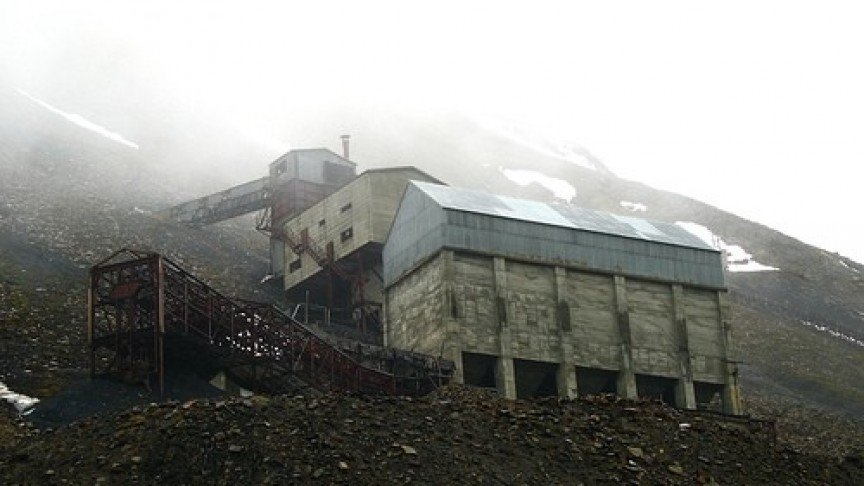
 The UN is urging Norway to shut down its coal mining operations on the Arctic archipelago of Svalbard due to concerns due to a clash of interest with the islands’ major functionality of climate change research. Executive secretary on climate change for the UN, Christiana Figueres, said that Svalbard is a bastion of climate change research and that this and coal mining fits very poorly together.She also cited that Norway has been one of the global leaders when it comes to sustainable energy programmes and green living.