
NORWAY NEWS – latest news, breaking stories and comment – NORWAY NEWS
  • Home
  • About us
  • News
  • Other News
    • Africa and Norway
    • Asia and Norway
    • Asylum
    • Breaking News
    • China and Norway
    • Corruption in Norway
    • Crimes
    • Defence
    • Diplomatic relations
    • Economics
    • Environment
    • Farming
    • Featured
    • Health
    • Killing
    • Media Freedom
    • Middle East and Norway
    • NATO and Norway
    • Nobel Peace Prize
    • Norwegian Aid
    • Norwegian American
    • Oil & Gas
    • Peace Talks
    • Politics
    • Racism in Norway
    • Religion
    • Royal House
    • Russia and Norway
    • Science
    • Sex scandal
    • Sports
    • Spy War
    • Srilanka and Norway
    • Svalbard
    • Taiwan and Norway
    • Terrorist
    • Travel
    • Video clips
  • Disclaimer
  • Contact us
NORWAY NEWS – latest news, breaking stories and comment – NORWAY NEWS
  • Home
  • About us
  • News
  • Other News
    • Africa and Norway
    • Asia and Norway
    • Asylum
    • Breaking News
    • China and Norway
    • Corruption in Norway
    • Crimes
    • Defence
    • Diplomatic relations
    • Economics
    • Environment
    • Farming
    • Featured
    • Health
    • Killing
    • Media Freedom
    • Middle East and Norway
    • NATO and Norway
    • Nobel Peace Prize
    • Norwegian Aid
    • Norwegian American
    • Oil & Gas
    • Peace Talks
    • Politics
    • Racism in Norway
    • Religion
    • Royal House
    • Russia and Norway
    • Science
    • Sex scandal
    • Sports
    • Spy War
    • Srilanka and Norway
    • Svalbard
    • Taiwan and Norway
    • Terrorist
    • Travel
    • Video clips
  • Disclaimer
  • Contact us
Saturday, October 3, 2026
NORWAY NEWS – latest news, breaking stories and comment – NORWAY NEWS
  • Home
  • About us
  • News
  • Other News
    • Africa and Norway
    • Asia and Norway
    • Asylum
    • Breaking News
    • China and Norway
    • Corruption in Norway
    • Crimes
    • Defence
    • Diplomatic relations
    • Economics
    • Environment
    • Farming
    • Featured
    • Health
    • Killing
    • Media Freedom
    • Middle East and Norway
    • NATO and Norway
    • Nobel Peace Prize
    • Norwegian Aid
    • Norwegian American
    • Oil & Gas
    • Peace Talks
    • Politics
    • Racism in Norway
    • Religion
    • Royal House
    • Russia and Norway
    • Science
    • Sex scandal
    • Sports
    • Spy War
    • Srilanka and Norway
    • Svalbard
    • Taiwan and Norway
    • Terrorist
    • Travel
    • Video clips
  • Disclaimer
  • Contact us
Copyright 2025- All Right Reserved Norway News
Africa and Norway

Zanzibar Domino Commercial Tower – impressive new project in the African region

by Nadarajah Sethurupan September 10, 2021
written by Nadarajah Sethurupan

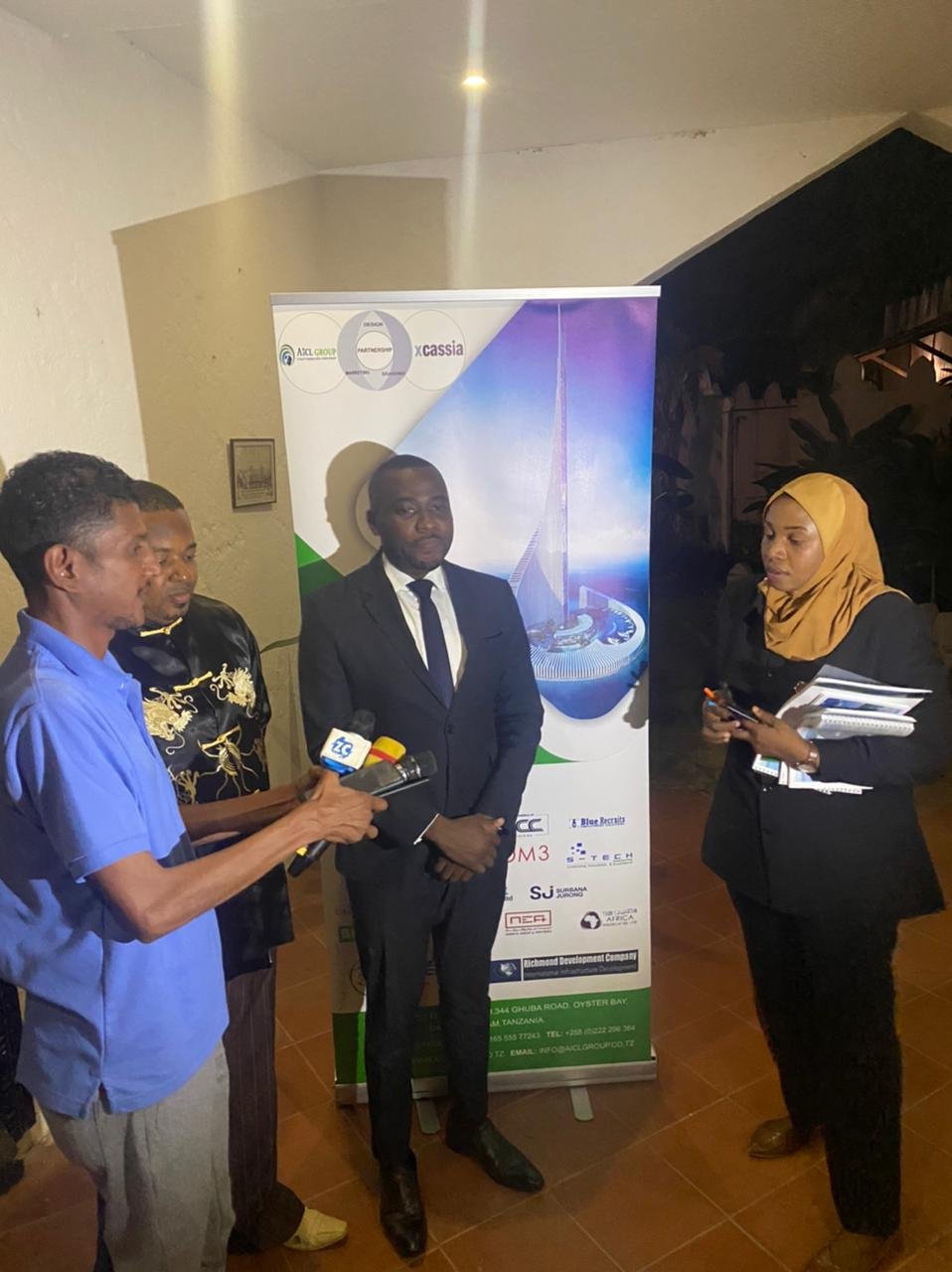
An epic project will soon become a reality – on the west coast of Zanzibar, 15 km from Stone Town, UNESCO World Heritage Site, a multifunctional complex Zanzibar Domino Commercial Tower is to be constructed. The design will be carried out by a joint venture of AICL and Edinburgh Crowland Management Ltd. in cooperation with xCassia.

For Jean-Paul Cassia, design director of xCassia, the implementation of such a project is a long-standing dream. However, the lack of far-sighed investor and suitable platform prevented the dreams from coming true.

Today project participants and Zanzibar authorities look forward with high expectations to the construction of «Zanzibar Domino», believing that it can bring a huge economic effect both to the companies involved in the project implementation and to Zanzibar as a whole.

Linked by a high and low bridge structure, the development is planned over three key sites: the Arrivals Plaza, Zanzibar Domino и Island Resort.

The Arrivals Plaza will act as a stage-set triage point to segregate traffic on and off the island. Besides, it will welcome prospective global home buyers interested in the unique branded residential opportunities within the project.

Zanzibar Domino will provide the opportunity for visitors to contemplate a unique aquarium and enjoy an abundance of shops, restaurants, a cinema, a rooftop pool with panoramic views. There will also be a yacht club, a helicopter pad, a cultural and exhibition pavilion, an international conference hall, an entertainment center and venues for large-scale shows equipped with giant media screens.

Furthermore, the project assumes the existence of a residential part consisting of private apartments and several hotels. This part will be located in the Zanzibar Domino Tower. Residents and guests of the tower will be offered a wide range of high-class services (SPAs, restaurants, a panorama platform, etc.). 

The heart of the complex is the luxurious Zanzibar Domino Island Resort, which includes exclusive villas, shops, restaurants, marinas, helipads, a golf course, an event venue, exhibition pavilions and an amazing wedding chapel with views of the Indian Ocean.

September 10, 2021 0 comments
0 FacebookTwitterPinterestEmail
Defence

Norway orders 4000 FN Minimi Mk3 7.62mm light machine guns from FN Herstal

by Nadarajah Sethurupan September 4, 2021
written by Nadarajah Sethurupan

According to information released on September 3, 2021, Belgium company FN Herstal, a global leader in the design and the manufacturing of small caliber weapons and weapon systems, has received a contract from the Norwegian Ministry of Defense for the delivery of 4,000 FN MINIMI® Mk3 (3rd generation) light machine guns in 7.62x51mm NATO caliber and associated initial spare parts over a 7-year period, and secondly, maintenance and support equipment over a 20-year period.

This decision concludes a program that was initiated by the Norwegian Ministry of Defence more than two years ago and included a series of technical evaluations and commercial negotiations in which FN Herstal competed against three American suppliers. Norway thus becomes the 37th country to select and standardize the FN MINIMI® 7.62 for its armed forces.

The Norwegian decision is yet more proof of the trust placed in FN Herstal by the Norwegian Ministry of Defense which, already in 2010, awarded a first sizeable contract for the supply of first-generation FN MINIMI® light machine guns, at that time in 5.56x45mm NATO caliber. It also marks a new major success for FN Herstal on several levels. Not only due to its size, but also because it confirms FN Herstal’s leadership as the partner of choice for European and NATO armed forces.

The FN MINIMI is one of the most popular machine guns in service in the world and is used by security and military forces of 75 countries from all over the world. The FN Minimi is also manufactured under license in Canada, Australia, Italy, Indonesia, Japan, Sweden, Greece and Switzerland by Colt Canada, Lithgow Arms, Beretta, PT Pindad, Sumitomo Heavy Industries, Bofors Carl Gustaf, and Astra Arms S.A. respectively.

The FN Minimi is a Belgian-made light machine gun available in 5.56mm and 7.62mm caliber developed by the company FN Herstal based in Belgium that was introduced in the late 1970s.

The FN Minimi uses a gas-actuated long-stroke piston system. The barrel is locked with a rotary bolt, equipped with two massive locking lugs, forced into battery by a helical camming guide in the bolt carrier. The FN Minimi is fed from the left-hand side by disintegrating-link M27 ammunition belts (a miniaturized version of the 7.62mm M13 belt), from either an unsupported loose belt, enclosed in a polymer ammunition box with a 200-round capacity attached to the base of the receiver, or from detachable STANAG magazines, used in other NATO 5.56 mm assault rifles such as the M16 and FNC.

The FN Minimi Mk3 is an improved variant of the standard Minimi including many new features. The new version of the light machine gun was unveiled in November 2013 during the Homeland and security exhibition Milipol that was held in Paris, France.

The FN Minimi Mk3 includes new features as:

– An ergonomic buttstock adjustable in length (5 positions) to allow compensation for body armor and load bearing equipment. The buttstock is adjustable for cheek rest height as well. The user can have his eye correctly aligned with the iron sights, or optical sights, while keeping his cheek properly positioned on the buttstock. It also integrates a folding shoulder rest and a hydraulic buffer that stabilizes the rate of fire and reduces felt recoil,
– A new handguard/bipod assembly that provides a comfortable handguard and three forward MIL-STD 1913 Picatinny® accessory rails. The adjustable-height (3 positions) bipod, when folded back, integrates into the shape of the handguard even with an accessory on the lower rail,
– An ergonomically-shaped cocking handle that gives the user a better grip with the strong or weak hand,
– An improved feed tray with belt retaining pawls that hold the belt correctly in position during the loading procedure, which is most useful when the user is in the standing position,
– An optional heatshield that greatly reduces the risk of inadvertently touching the barrel,
– The convertibility of the FN MINIMI® 7.62 to fire 5.56x45mm ammunition.

September 4, 2021 0 comments
0 FacebookTwitterPinterestEmail
Economics

Tesla Model Y takes over Norway, pushes all-electric car sales to 72% market share

by Nadarajah Sethurupan September 3, 2021
written by Nadarajah Sethurupan

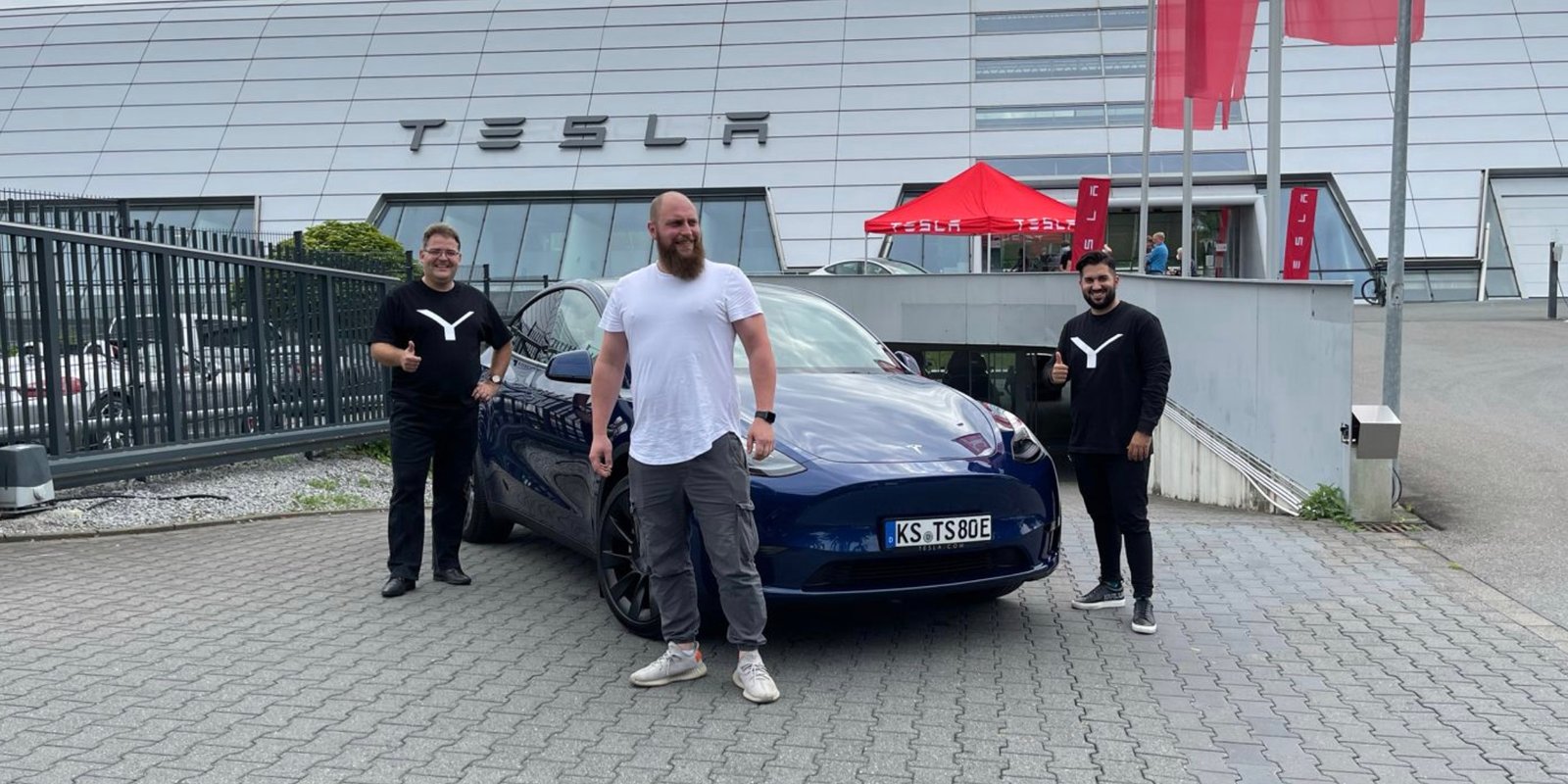
Tesla started deliveries of the Model Y in Europe last month, and within a week it became the best-selling vehicle in Norway.

It helped pushed all-electric car sales to 72% market share – a new record.

Norway has been achieving some incredible levels of EV penetration in the market.

We recently reported that electric cars had 64% of the market in the country last month.

At the time, we noted how a single new compelling electric vehicle launching in the market can make a big difference.

We have a good example of that since the Tesla Model Y launched in Europe last month.

In Norway, deliveries started just a week before the end of the month, and the electric SUV still managed to become the best-selling vehicle in the country.

According to registration data, Tesla delivered 1,115 Model Y vehicles in the country.

The second best-selling vehicle in the country last month was another electric SUV, the VW ID.4, followed by the Tesla Model Model 3:

The most impressive thing is how it affected the overall electric vehicle market share in the country.

Norway already has the best EV adoption rate in the world, but the Model Y pushed it to new records with almost 72% for all-electric vehicles:

When accounting for hybrids and plug-ins, it goes to over 92% with internal combustion engine vehicles accounting for 7.8% of the market.

Model Y vehicles in Norway came from Tesla Gigafactory Shanghai, and it may take a few more months for another shipment to come.

It could affect Norway’s EV adoption in the next few months, but even more new EV models are expected to arrive on the market later this year – likely pushing to new records again.

(FTC: Electrek is reader supported, we may earn income on affiliate links)

September 3, 2021 0 comments
0 FacebookTwitterPinterestEmail
Oil & Gas

Norwegian government proposing stricter petroleum tax rules

by Nadarajah Sethurupan September 2, 2021
written by Nadarajah Sethurupan

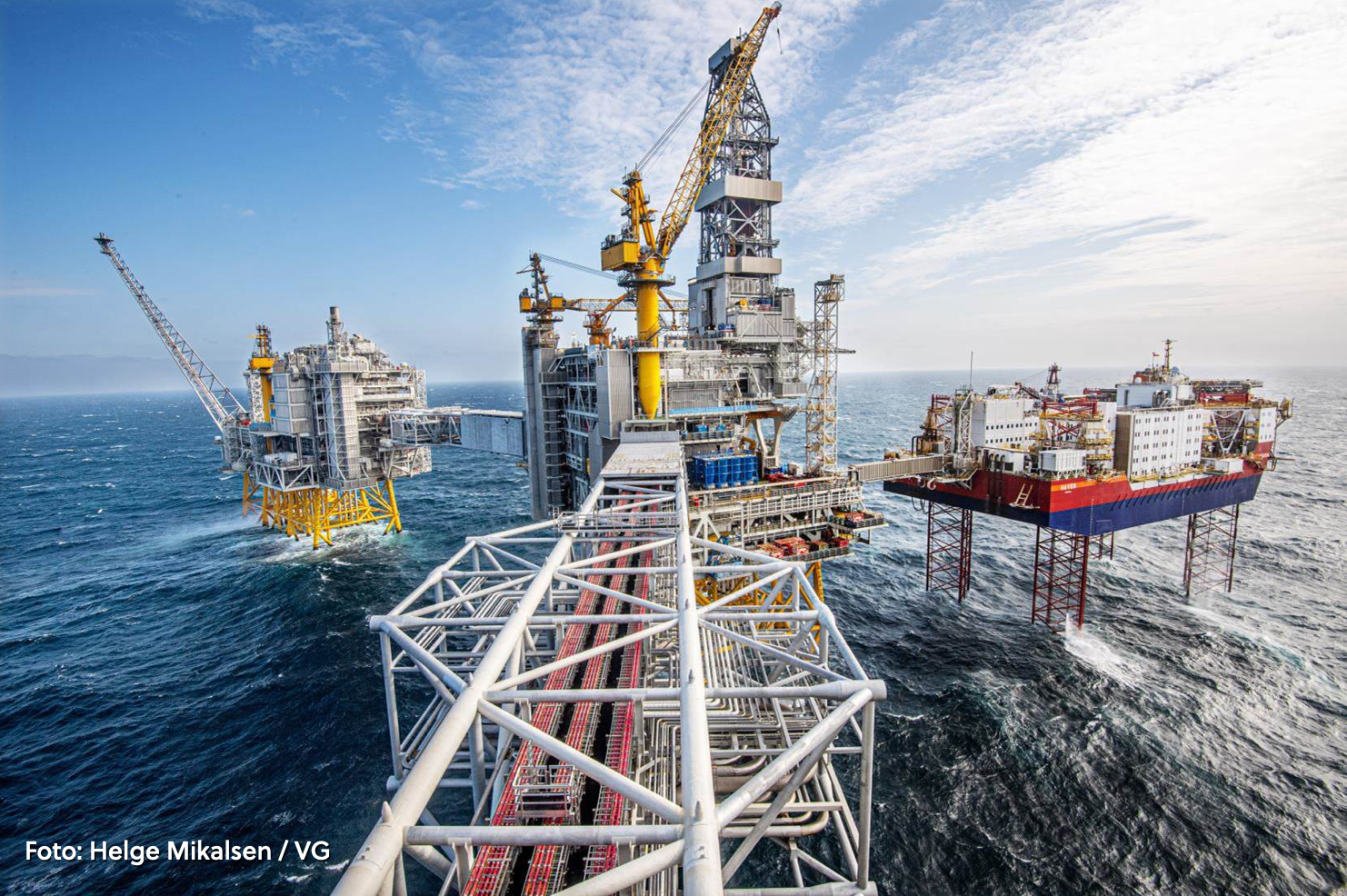
The Norwegian government is proposing to revise the special petroleum tax system as of 2022, replacing the rules on depreciation and uplift with immediate investment expensing (cash-flow tax).

The government announced the changes during a press conferenceheld on Tuesday 31 August. 

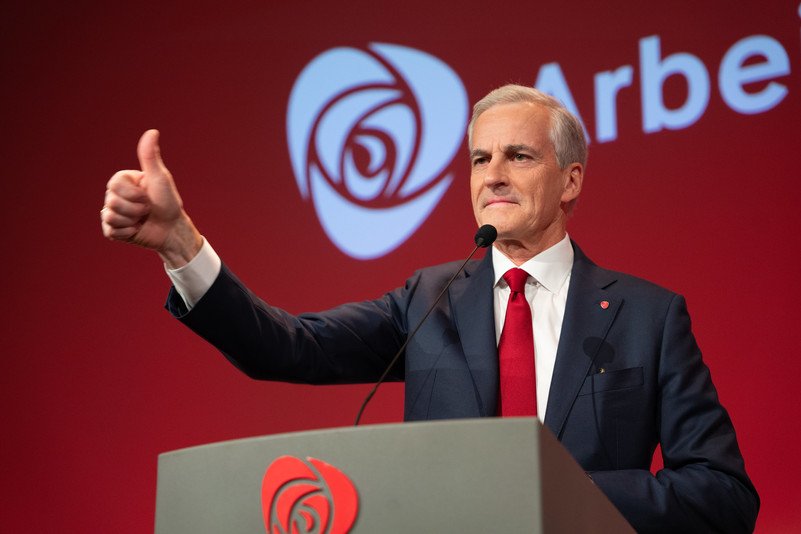
Minister of Finance, Jan Tore Sanner, said: “This reorientation prepares the oil and gas tax system for the developments anticipated on the Norwegian continental shelf in the years ahead. The changes introduce stricter tax rules with a more neutral effect on investments. A further aim is to give companies predictable framework conditions”.

According to the government, the switch to a cash-flow tax will have several positive effects. For the State, it means increased tax revenues in the longer term, as well as better alignment between how companies and society view profitability.

For affected companies, the proposal means a significant injection of additional liquidity. Whether the revised rules will increase or reduce corporate tax bills in the longer term depends on whether companies apply a high required return when valuing future deductions, as several companies currently say they do.

Minister of Petroleum and Energy, Tina Bru, said: “Our aim is to ensure continued development of the Norwegian oil and gas industry, and predictable framework conditions are a critical factor for companies operating on the Norwegian continental shelf. It is therefore important to clarify at this early stage what tax rules will apply to investments on the shelf once the current temporary tax rules are phased out. I hope that the switch to a cash-flow tax we are now proposing will attract broad political support”.

Under the proposal, corporation tax will be deducted from the basis for calculating the special tax, mirroring the system used for the resource rent tax payable by hydropower enterprises. This will eliminate the need for special corporation tax rules on losses, and some adjustments are therefore being proposed to ensure that the corporation tax system applies as uniformly as possible across different business sectors.

The total tax rate will remain at 78 per cent, but since corporation tax will be deductible from the special tax base, the special tax rate will technically increase to 71.8 per cent.

The proposal also envisages eliminating the exploration cost tax refund because the special tax value of losses will now be settled in connection with the following year’s tax assessment. 

Moreover, there will no longer be a need for special corporation tax rules on losses. Any losses for corporation tax purposes will now have to be carried forward net of interest, as is the case for other industries. This may mean somewhat reduced short-term liquidity for some exploration companies, as they will have to wait until they have taxable income before they can exploit their residual exploration deduction for corporation tax purposes (6.2 per cent).

The government noted that the proposed changes would not affect the temporary rules introduced in response to the corona pandemic, which will be phased out in accordance with the Parliament resolution.

The proposal will be circulated for public consultation within the next week.

September 2, 2021 0 comments
0 FacebookTwitterPinterestEmail
Media Freedom

Substantial number of vaccine doses for India: US coordinator

by Nadarajah Sethurupan August 29, 2021
written by Nadarajah Sethurupan

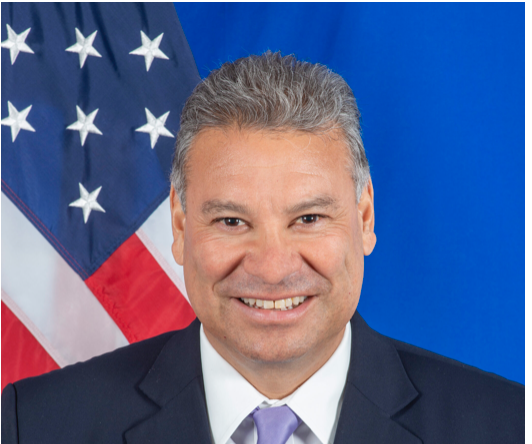
India is set to receive “substantial numbers” of Covid vaccine doses through the US government’s latest global distribution strategy, though the final details are still being worked out, according to State Department Coordinator for Global Covid-19 Response Gayle E Smith.

The US will allocate doses to India based on factors such as the country’s vaccination plans, she said. Like with other countries, the Biden administration will make efforts to match the vaccines in its supply with India’s immunisation programme and cold-chain capabilities.

“We have done some notional planning, but the refinement of the actual dose numbers will be determined in consultation with the governments and their health experts, the state of their vaccine plans and delivery, and with Covax,” Smith said during a telephonic media briefing.

Below is a full rush transcript of the press conference by Special Briefing via Telephone with Gayle E. Smith State Department Coordinator for Global COVID Response and Health Security And Jeremy Konyndyk Executive Director of the USAID COVID-19 Task Force and Senior Advisor to the USAID Administrator.

Ms. Smith:  Great, thank. We wanted to talk briefly today about the milestone we’ve reached as an administration in an integral part of our response to the global pandemic, which is sharing vaccines from U.S. stocks.  As the President announced, we have just hit and are now surpassing 110 million doses shipped around the world to almost 60 countries.  This is something we started a couple of months ago based on the President’s announcement at the time that we would share 80 million doses.  Obviously, we have surpassed that and are still moving.  These are Pfizer, Moderna, and J&J doses and they are reaching literally every region in the world.  So we’re very proud of that.

That’s only one plank of what we’re doing on the vaccine side, because as you all know, there’s an urgent need for more vaccines all over the world.  Also rolling out this month will be the first lot of the 500 million Pfizer doses that the President announced that we would be donating to COVAX.  He announced that on the eve of the G7 summit as part of the G7 commitment.  We are a big donor to and proud to be a big donor to COVAX.  We are encouraging suppliers to produce more and faster.  And finally, through our Development Finance Corporation we are making investments in real time in vaccine production in Africa and other parts of the world that will yield vaccines before the end of the year, but will also lay the ground for better global coverage of vaccine production in the future.  

Mr. Konyndyk:  Thanks so much.  So as Gayle has said, the administration is intensely focused on improving the accessibility of vaccines in low-income and developing countries, and the President’s announcement represents a real milestone, but it really is just the beginning of this much, much larger effort.  We are now about to initiate the deliveries of the half-billion Pfizer doses that will be going to – initially rolling out this month, and they’ll begin to cover countries across the – what’s called the COVAX AMC 92; that’s the 92 low- and middle-income economies that are supported by COVAX with donor funding as well as several additional AU countries that are not part of the COVAX AMC 92.  And that’s going to fill critical supply gaps that COVAX has been facing between now and the end of the year, and continuing through the middle of next year.  So that’s an incredibly important contribution towards greater vaccine access for countries that have been really struggling to get enough doses.

But we’re also supplementing that with additional resources, and so the USAID Administrator Samantha Power was in Africa this week and she just announced during her trip to Ethiopia an additional $720 million in United States funding by USAID under the American Rescue Plan Act that is serving a few different purposes.  It is helping to address – it is helping to address needs with vaccine delivery.  So $400 million of the 720 is going towards support to health systems in developing countries with things like vaccine delivery, oxygen, therapeutics, and other – and diagnostic supplies to help health systems both deliver the vaccines as they become available, but also to continue to fight the pandemic in their countries that they are facing now in real time, especially if Delta is surging.  An additional 320 million of that is going to address some of the other non-health impacts of the pandemic, particularly on the humanitarian side, so things like emergency food assistance and dealing with COVID-19 in humanitarian settings.  And that’s on top, of course, of $4 billion that we’ve given to Gavi for the COVAX facility for vaccine procurement and delivery.

So it’s a really robust posture from the U.S. Government, from USAID, in continuing every month to further ramp up our support to fighting the pandemic.  

Question:  I’m just interested because while the United States has donated a lot of vaccines, Madam Gayle, how serious is the vaccine hesitancy across the globe?  And are there specific programs to counter this vaccine hesitancy?  And for Jeremy, I’d like to find out specific programs for the most vulnerable sectors affected by COVID-19. 

Ms. Smith:  Sure, vaccine hesitancy is a real challenge I think everywhere, including in this country, and we’re dealing with it at two levels.  One is a lot of the hesitancy is because people just need basic information.  They need to be reassured that vaccines are safe.  They need to understand how they work.  And so there’s a lot of work that we can do by just putting the science and the facts out there.  USAID does a great job of working with local communities so that trusted interlocutors and speakers are able to validate.  You hear about people getting their photographs taken when they get a vaccine to try to reassure people.

The second issue is there is a lot of disinformation out there where there are people I think deliberately trying to make the case against vaccines.  That’s a harder thing to counter.  But again, our approach is to put the facts and the science out there to demonstrate that those of us who are making the case for vaccines all over the world are getting vaccinated ourselves and strongly recommend it.  And I think, tragically, people are also seeing the evidence that things like the Delta variant are extremely dangerous if people aren’t vaccinated.

Mr. Konyndyk:  Thanks, Gayle. I would echo everything you said on vaccine hesitancy, and just that as well.  There’s hesitancy but there’s also accessibility, and so I think that any attempts to get vaccines to people – and particularly the people in these extremely vulnerable populations like you’re asking about – they need confidence, they need information, but they also just need access.  And so a lot of what we do, have done historically in global vaccination programs, is also focusing on that last mile of delivery and that last mile of accessibility so that people can easily access the vaccines in the course of their normal lives and are supported and enabled to do so.  And so a lot of USAID’s continuing and additional programming over the coming months is going to focus on those kinds of challenges.

But we’re also supporting the non-health needs of extremely vulnerable populations.  And so just to build a bit on what I was referencing with that humanitarian assistance, we are seeing in numerous countries around the world growing food insecurity, growing extreme poverty, and that is particularly acute in humanitarian environments.  So there are famine risks in multiple countries, and this humanitarian assistance will address those food needs, it will address water and sanitation needs, it will support some of the basic economic livelihood needs of crisis-affected populations, as well as things like addressing and supporting survivors of gender-based violence.  As I think we all know, there’s been a significant uptick in gender-based violence globally over the course of the pandemic.  

So we’re doing a range of things like that.  The announcement from the administrator this week focused particularly on the humanitarian funding, but we’re also orienting a lot of our ongoing development work to address those challenges as well.

Question:  You’ve outlined a lot of assistance from the U.S., but it’s clearly not coming in time to prevent severe inequality, and the previous administration made it clear it would not engage with the international response.  Europe has also prioritized its own population.  Meanwhile we’ve seen the World Health Organization face credibility issues and rich countries don’t seem inclined to follow their guidance – most recently, the call for a moratorium on booster shoots.  Some experts have declared the end of global health.  So to both of you, what do you make of this and what advice would you give the leader of a low-income country who’s trying to prepare for the next pandemic as far as what they can count on from the international institutions?  

Ms. Smith:  Thanks.  It’s a really important question.  And I think, look, this is a wakeup call for the entire world, and our effort, as we’ve described it, is to do everything we can – and as Jeremy said, this is the beginning and not the end; we’ve not checked the box and said, “Okay, we’re done” – to both do everything we can to expand that coverage, encourage our partners in the international community to expand that coverage, but also at the same time lay the ground for how the world prepares for and, ideally, prevents future pandemics.  And that’s going to take a number of things which, by definition, have to be multilateral and, by definition, have to be inclusive.  Because a virus doesn’t know what country it’s in, and so long as we’ve got a hole in the global net, we’re all at risk.

So we’re doing a number of things on that front.  One is we are engaged in the ongoing negotiations and deliberations about strengthening the WHO.  These investments that I mentioned by DFC we see as very critical not just for now, but for the future.  Because we’ve got to have better global coverage and geographic distribution of vaccine production if we are going to counter the global health threats we know we’re facing.  

So I would say it’s way premature to declare the end of global health.  It is really, really important – and I hope that all of you will cover this – that at the same time as we respond to this emergency, we’ve got to lay the ground for how the world is going to deal with these threats going forward in a manner that is efficient, effective, inclusive, and comprehensive, and we are also at work on that.  Happy to talk more about that at a later time, if helpful.

Question:  We’re going to take a question that was emailed to us in advance.  This is from Souber Hassan Abdi with La Nation newspaper in Djibouti.  He has a question for Director Konyndyk, and the question is:  “What has been done so far by USAID to ship vaccines to the African continent?  And how many African countries have already received their first shipments of vaccines so far?”

Mr. Konyndyk:  We have been supporting deliveries through COVAX since the new administration came in.  So one of the first things that we did when the Biden administration came in was to bring the U.S. into the COVAX initiative, the COVAX platform, and we very rapidly made a $2 billion contribution to COVAX, which then enabled them to begin securing supply and begin initiating deliveries of vaccines, particularly into Africa.  We know that COVAX has struggled since with some of their supply availability, so we’ve also taken the major step of then working with Pfizer and COVAX to secure this deal for half a billion doses of which about half of the – well, over actually half of the eligible recipient countries are African countries.  

And so a substantial share – we don’t have a number to give you yet from that total Pfizer dose set because this is going to be rolling out over a period between now and the middle of next year, but a substantial share of those vaccines will also be going to the African continent, and we have been partnering with the African Union, specifically with their African vaccine task force and with the Africa CDC, on how those vaccines as well as how the 110 million – that Africa share of the 110 million surplus U.S. doses are being targeted across the continent.  

In terms of sub-Saharan Africa, so far as I understand it, it’s about 18 and a half million doses to 24 countries in – from the 110 million shared doses the U.S. has already delivered. 

Question:  When the Biden administration did the announcement about the donation of the vaccines, there was a list of countries that will be receiving those doses, and the Dominican Republic was included in that list.  But we didn’t receive any of them, at least not yet.  Please, are we going to receive those doses or not?  Because they’re supposed to be here by the end of June and we didn’t receive it yet.  

Ms. Smith:  Yeah, I can – one of the things that we’ve learned in this process is sharing vaccine doses is complicated and there are a number of legal and regulatory steps that we need to work through with governments before the vaccines can be shipped.  So you’ve go to make sure, for example, that the kind of vaccine being provided is approved by the country in question, because each country goes through an approval process for the various types of vaccines out there.  There are a number of legal steps, there are public safety steps.  

So what we’ve been doing with governments one by one is building teams that include government representatives, our representatives, lawyers, public health experts, to move through that entire process and then the vaccines are packed and shipped.  You will get your vaccines.  As I understand, there’s still a couple of hurdles to clear, but I know the team is working on that to move those as quickly as possible.  And again, some of those are requirements we have as the United States in order to export a vaccine, but there are also requirements that governments have in receiving countries to accept and do the uptake of vaccines.  

Question:  It’s great to talk to you again, and congratulations on this important marker and sharing what’s been done on the vaccines in Africa.  My question is regarding volume.  So looking back now and where we’re at today, how much does Africa really need and what is that number in terms of versus what the globe needs?  I’m just trying to understand how big is the problem now, like how many doses should the continent be forecasting.  I know it might not be an exact number, but maybe give us an idea of what that number is. 

Gayle, thank you so much just now, and the previous speaker, for sharing some lessons you’ve learned regulatory-wise.  Can you possibly maybe share any additional lesson that you may have learned that the world could glean from, and possibly also any challenge? 

Ms. Smith:  Sure.  Thanks, Pearl.  And let me note one other important thing that is happening today that you may be aware of with South Africa, is that the African Union has itself purchased doses.  They did this many, many months ago.  And those are starting to roll out today also.  As Jeremy said, we’ve been working closely with the African Union to coordinate our shared doses and the Pfizer doses with the initiative the AU has taken to begin delivering what will ultimately be 400 million doses of J&J.  So we’re very excited about that and congratulate the AU for that.

As you know, I think, Pearl, the AU set a target and I think a very smart target, comparable to those set by other countries, of 60 percent coverage.  So there still is a substantial gap.  I think as you know, the coverage rate in Africa is among the lowest.  Jeremy may have the exact number; I don’t have it on hand.  We can get it to you.  But the gap is huge, which is why, as Jeremy said, of the 500 million Pfizer doses, we quite deliberately targeted those to low-income countries and our presumption is that Africa will get a significant portion of those.  

All of that said, we’ve got to do more and we are working on such things.  One of the investments I mentioned by the DFC was in South Africa.  As you know, the Aspen plant there produces J&J, and we’re pleased that we and our partners in the international community have made investments that are going to yield more production there.

We’ve got more to do, though, clearly, which is why the President made clear that this is the start, and we’ve got more to do, and we intend to do it.

Mr. Konyndyk:  Thanks, Gayle, and I would just – to your question on the coverage requirements, Pearl, the African Union is targeting 60 percent; the World Health Organization has talked about a goal of 70 percent of the global population covered by next year.  So if you apply that to about 1 and a quarter billion people in Africa, you’re talking about needing to cover seven – somewhere in the ballpark of 7- or 800 million people.  Four hundred million people will be covered by the J&J deal that the African Union has done, so that gets you about halfway there.  So it’s that other half, then, that needs to be covered by some combination of COVAX and dose-sharing and so on.  

So COVAX now has raised sufficient funds to cover about 30 percent of low-income and middle-income countries that are participating in the facility.  And so if you take that 30 percent from COVAX, additional dose-sharing from the U.S., as well as what the AU is procuring themselves, I think it’s not a bad picture.  It doesn’t look great at the moment with the coverage level, as Gayle referenced, but I think there’s a – there is a path to getting to pretty reasonable coverage in the first half of next year as long as we can ensure that the doses keep flowing.  

Question:  Could you tell us what your assessment is about the Chinese vaccine diplomacy or, let’s say, Chinese contribution to fix the inequality of vaccine access?  Some U.S. media criticized the Chinese that – saying that U.S. taxpayers have to pay to purchase Chinese vaccines through COVAX.  So I’m wondering what your assessment is. 

Ms. Smith:  Sure.  Look, I think it’s up to every country how they want to do this.  I think China has not been a funder of COVAX, and that’s unfortunate, I think, in our view.  I will – let me just make a comment by sharing with you our perspective on this.  The President believes – and rightly so – that the provision of vaccines from the United States, whether they are doses shared, provided through Pfizer, or funded through COVAX, need to be provided with no strings.  They are free.  There’s no condition.  This is a humanitarian mission guided by our belief in our common humanity and that these are the most powerful tools we have for bringing the pandemic to an end, which is in, obviously, the interest of every country in the world, including our own.

So our view is that vaccines should be provided particularly by the world’s major producing countries for free, with no requirements, with no strings, and in such a way that we get everybody covered as quickly as we can.  

Ms. Smith:  Sure.  I would just say, stay tuned.  There are some important events coming up over the coming months – obviously, the UN General Assembly, the G20 – and thank you for your coverage.  

And bear in mind – I want to just go back to a question embedded in the question that came from the Politico reporter – that while we are pushing out big and will continue to do so on the emergency response, we are also and must all be focused on how we prevent this from happening again.  And thank you.  As a former reporter myself, thank you for continuing to cover this story.

Mr. Konyndyk:  I don’t think I have anything to add.  I think there were great questions.  As Gayle said, we have a long road ahead but I think we’re building good momentum here, and we’ve got a lot more work that we’ll be rolling out in the coming months.

August 29, 2021 0 comments
0 FacebookTwitterPinterestEmail
Srilanka and Norway

Norwegian Ambassador calls on Sri Lankan Finance Minister

by Nadarajah Sethurupan August 22, 2021
written by Nadarajah Sethurupan

Norwegian Ambassador to Sri Lanka Trine Jøranli Eskedal called on Sri Lankan Finance Minister Basil Rajapaksa yesterday.

The discussion focused on the ways to increase Norwegian investments in Sri Lanka, economic challenges posed by the COVID-19 pandemic as well as pathways for economic recovery in the coming years.

The ambassador congratulated the minister on Sri Lanka’s successful vaccination drive and expressed hope that tourism could resume as soon as the COVID situation permits.

She also highlighted the challenges of negative economic growth and high unemployment faced by many countries in light of COVID-19 and how Norway has tackled these challenges.

The discussion also focused on the President’s plans to increase investments in renewable energy in Sri Lanka and pathways to achieve this.

Norwegian Embassy Deputy Head of Mission Hilde Berg-Hansen, Foreign Ministry Acting Additional Secretary P.M. Amza, Presidential Task Force for Economic Revival and Poverty Alleviation Co-Secretary Anton Perera and Media Centre for National Development Director General Milinda Rajapaksa were also present at the meeting.

August 22, 2021 0 comments
0 FacebookTwitterPinterestEmail
Taiwan and Norway

Taiwanese in Norway take nationality case to UN

by Nadarajah Sethurupan August 22, 2021
written by Nadarajah Sethurupan

The Taiwanese in Norway Nationality Rectification Campaign recently announced it is planning to file another complaint to the United Nations Human Rights Committee, after the European Court of Human Rights (ECHR) declared the case of Norway’s mislabeling of Taiwan nationals as “Chinese” invalid.

On May 5, the campaign’s leader, who goes by the name Joseph, and others filed a complaint to the ECHR in Strasbourg, France. The objection said the Norwegian government’s decision to register Taiwan nationals as Chinese citizens on their residence documentation is a violation of their right to personal identity, which campaign organizers argue is protected by Article 8 of the European Convention on Human Rights, according to a Taiwan Digital Diplomacy Association (TDDA) press release.

On July 8, the ECHR began reviewing the case, and on July 29, Judge Lorraine Schembri Orland ruled it was inadmissible and that “the matters complained of do not disclose any appearance of a violation of the rights and freedoms set out in the Convention or the Protocols thereto,” per the press release.

Joseph and the other campaigners expressed their disappointment by saying the Norwegian courts and the ECHR had not allowed them to present their arguments nor provideed “substantive reasoning for their decisions.” They also accused the judge of viewing their case as entirely political, without considering the legal factors.

Campaign organizers had recruited London-based lawyer Schona Jolly QC, chair of the Bar Human Rights Committee of England and Wales, to present the case due to her knowledge of privacy and anti-discrimination law and strong opposition to China’s human rights violations, TDDA said.

Before June 2010, Taiwanese residents in Norway had “Taiwan” listed on their residence cards. However, after Norway’s then-foreign minister Jonas Gahr Store confirmed to parliament that Norway is pursuing a “one-China” policy, the nationality of Taiwanese was recorded as “Chinese” by the Norwegian Directorate of Immigration (UDI).

The campaign attempted to address this by filing a complaint to the UDI in 2017. When that failed, they filed a lawsuit in the Nordic country’s Supreme Court in November 2020.

However, the court ruled “the appeal cannot proceed,” with no further explanation given. It also ignored the group’s request to appear in court and right to a fair hearing. As a result, Joseph, decided to take the case to the European Court of Human Rights (ECHR) and sue Norway for human rights violations.

“Our only hope is that our right to be treated and recognized as nationals of Taiwan could be respected by the state of residence, like our Taiwanese compatriots residing in many other European countries,” TDDA had previously cited Joseph as saying.

The campaign will announce its future plans after discussions with lawyers in September.

August 22, 2021 0 comments
0 FacebookTwitterPinterestEmail
Asia and Norway

Independence Day of India falls on Aug 15

by Nadarajah Sethurupan August 15, 2021
written by Nadarajah Sethurupan
August 15, 2021 0 comments
0 FacebookTwitterPinterestEmail
Terrorist

Denmark and Norway close their embassies in Kabul

by Nadarajah Sethurupan August 15, 2021
written by Nadarajah Sethurupan

Denmark and Norway are temporarily closing their embassies in Kabul as the Taliban continues to gain power in Afghanistan.

All Danish embassy staff will be evacuated, including local employees from Afghanistan, Danish Foreign Minister Jeppe Kofod said at a press conference, according to Ritzau news agency and DR and TV2 broadcasters.

Not long afterwards, Norwegian Foreign Minister Ine Eriksen Soreide announced the country would proceed likewise.

Both said the safety of employees, expatriates and local staff was the highest priority.

 British military personnel boarding an aircraft where they are deployed to Afghanistan as part of Operation Pitting to support the withdrawal of British troops. Photo: Lphot Ben Shread/Mod/Crown Copyr/Ministry of Defence via PA Media/dpa.
August 15, 2021 0 comments
0 FacebookTwitterPinterestEmail
Asia and Norway

India-Norway Joint Venture Firm’s Assets Seized Over Money Laundering Case

by Nadarajah Sethurupan August 14, 2021
written by Nadarajah Sethurupan

The properties attached include a plant, machinery, computers, land and building worth about ₹ 90,62,18,000 and bank balances to the tune of ₹ 43,75,82,000 in the name of Aatash Norcontrol Ltd (ANL).

The Enforcement Directorate (ED) on Saturday said it has attached assets worth over ₹ 134 crore of an India-Norway joint venture company in connection with a money laundering case linked to an alleged Gujarat Maritime Board scam.

The properties attached include a plant, machinery, computers, land and building worth about ₹ 90,62,18,000 and bank balances to the tune of ₹ 43,75,82,000 in the name of Aatash Norcontrol Ltd (ANL).

The agency issued a provisional order under the Prevention of Money Laundering Act (PMLA) for attaching these assets worth a total of ₹ 134.38 crore.

ANL, the ED said in a statement, is a joint venture between Indian company Aatash Computers and Communications P. Ltd. and Norwegian firm Kongsberg Norcontrol IT AS.

“This company is engaged in the construction and operation of Vessel Traffic and Ports Management System (VTPMS) and it provides navigation services to vessels,” the agency said.

The money laundering case was filed by the ED after studying an FIR filed by the Gandhinagar police CID against ANL and others for “committing fraud of ₹ 134.38 crore with the Gujarat Maritime Board (GMB)”.

ANL was awarded a contract by the GMB for building and operating the VTPMS for the Gulf of Khambhat in the Arabian Sea.

During the probe, the ED alleged, it was found that ANL “submitted exaggerated cost of the project to the GMB and thereby misled the GMB into fixing higher tariff rates for the navigation of vessels”.

“The VTPMS infrastructure became operational in August 2010 and thereafter, ANL started collecting the VTS (Vessel Traffic Service) fees/charges from the vessels as per the concession agreement,” it said.

By resorting to falsifying and fabricating the cost of the project, “ANL received excess payment to the tune of ₹ 134.38 crore during the concerned period, which is nothing but proceeds of crime generated by it through the commission of the scheduled offence,” the ED alleged.

(Except for the headline, this story has not been edited by NDTV staff and is published from a syndicated feed.)

August 14, 2021 0 comments
0 FacebookTwitterPinterestEmail
Defence

Kongsberg to test Protector RT60 remote turret mounted on Boxer 8×8 armored vehicle

by Nadarajah Sethurupan August 5, 2021
written by Nadarajah Sethurupan

According to information published by Nicholas Drummond on its Twitter account on July 30, 2021, the Norwegian company Kongsberg is conducting ongoing testing for an international customer with the Protector RT60 remote turret mounted on Boxer 8×8 armored vehicle.

The Boxer is an 8×8 armored vehicle developed by ARTEC, a joint venture of Krauss-Maffei Wegmann GmbH & Co. KG, Rheinmetall Landsysteme GmbH and Rheinmetall Defence Nederland B.V. ARTEC was responsible for the Boxer development program for the German and Dutch armies, acting as the prime contractor. Furthermore, ARTEC is in charge of the coordination of serial production.

The BOXER is a truly modular vehicle providing multiple functions for its users, several communication interfaces for participation in network enabled warfare, and diverse mission-relevant capabilities. The flexibility of its modularity allows BOXER to be easily adapted to meet diverse mission requirements, in rapidly changing circumstances and global environments.

The Boxer 8×8 armored vehicle is currently in service with Germany, the Netherlands, and Lithuania. The vehicle is also selected by the Australian and British armies.

The RT60 is the Infantry Fighting Vehicle (IFV) variant in the PROTECTOR family. The system is designed for optimizing lethality and protection on fighting vehicles and can be fitted with elements like an ATGM (Anti-Tank Guided Missile) launcher, Commanders Independent Weapon Station, Laser Warning System, Active Protection System etc. On the picture released on the Twitter account of Nicholas Drummond, the Protector RT60 is armed with a 50mm cannon.

The RT60 is also equipped with Trophy MV active protection system and upgraded Thales Catherine EZ thermal sensors. The turret seems to be also fitted with two anti-tank guided missile launchers.
The RT60 turret is remotely controlled and operated from a protected position inside the vehicle compartment to enhance the crew’s survivability. The turret can be accessed and reloaded from under armor and the linkless ammunition handling system provides superior reliability compared to link fed systems.

August 5, 2021 0 comments
0 FacebookTwitterPinterestEmail
Economics

Rolls-Royce to sell Bergen Engines for €63m

by Nadarajah Sethurupan August 4, 2021
written by Nadarajah Sethurupan

In a statement, Rolls-Royce said the sale of Bergen Engines is part of its ‘ongoing portfolio management to create a more focused group’ and will help towards generating at least £2bn from disposals.

Bergen Engines, based in Hordvikneset, Norway, builds medium speed liquid and gas fuelled engines for the commercial marine sector and naval vessels, as well as for land-based power generation applications.

The sale includes the Bergen Engines factory, service workshop and foundry in Norway; engine and power plant design capability; and a global service network spanning over seven countries. Bergen Engines employs more than 900 people worldwide including 650 in the main factory in Hordvikneset. In 2020, the business generated revenues of approximately €200m, which is expected to rise to approximately €260m in 2021.

Warren East, CEO of Rolls-Royce, said: “We believe that this agreement will provide Bergen Engines and its skilled workforce with a new owner able to take the business on the next step of its journey.”

Headquartered in the UK, Langley Holdings is a diverse, global, engineering group with its main operations in Germany, Italy, France and the UK, alongside a substantial presence in the US. The group, which is made up of seven divisions and 17 manufacturing sites, employs around 4,600 people. Its activities range from the production of uninterruptible power systems, packaging machinery and electric motors and generators, to the manufacture of safety-critical mechanical handling equipment including for the UK Ministry of Defence’s submarine missile loading facility at Coulport, Scotland.

Anthony Langley, chairman and CEO of Langley Holdings, said: “The acquisition…is a strategic step in the development of our power solutions division, and I am looking forward to welcoming the 900 plus employees of Bergen Engines to our family of businesses.”

The agreement, which is subject to closing conditions, is scheduled for completion by 31 December 2021.

August 4, 2021 0 comments
0 FacebookTwitterPinterestEmail
China and Norway

Norway summons Chinese ambassador over IT attack

by Nadarajah Sethurupan July 31, 2021
written by Nadarajah Sethurupan

Norwegian Foreign Minister Ine Eriksen Soreide informed that the ministry has summoned the Chinese Ambassador about alleged China’s IT attack on the Norwegian Parliament.

On 10 March, the Storting (Norwegian Parliament) disclosed that its email systems had been compromised. The breach exploited security vulnerabilities in the Microsoft Exchange software, a statement from the Ministry of Foreign Affairs said.

“All cyber operations leave different forms of traces, and then it is, among other things, our security services that make assessments of that and compile that information. And on the basis of this information, the government has made an assessment that the attack originated from China,” the statement said citing Norwegian Foreign Minister Ine Eriksen Soreide.

“This was a very serious incident affecting our most important democratic institution. We expect China to take this issue seriously, and to ensure that such incidents are not repeated,” Soreide added.

In March, Chinese hackers reportedly attacked Australia’s Western parliamentary email network as well, this was a part of a massive global cyberattack involving Microsoft software.

The online strike, which was detected on March 4 in the middle of the state election campaign, prompted intervention from Australia’s cybersecurity watchdog in Canberra.

Meanwhile, Microsoft said that the flaw was being used by a Chinese state-sponsored hacking group to target a variety of organisations. (ANI)

July 31, 2021 0 comments
0 FacebookTwitterPinterestEmail
Asia and Norway

Myanmar civil society organisations submit against Telenor

by Nadarajah Sethurupan July 31, 2021
written by Nadarajah Sethurupan

A total of 474 civil society organisations have submitted a complaint to the OECD against Norway’s Telenor after the telecom giant earlier this month sold its Myanmar business to M1 Group, the Financial Times reported.

The Organisation for Economic Co-operation and Development (OECD) is an international organization that works to build better policies for better lives and the Myanmar-based rights groups that endorsed the complaint have remained anonymous.

The complaint to OECD has been submitted by the Amsterdam-based Centre for Research on Multinational Corporations, a non-profit group, on behalf of the civil rights organizations. In the complaint, the groups alleged that Telenor “irresponsibly disengaged from its Myanmar operations” and failed to act by OECD and UN principles on business and human rights when the Norwegian state-owned telecoms company sold its business to M1 Group.

July 31, 2021 0 comments
0 FacebookTwitterPinterestEmail
NATO and Norway

F-35 fighter a ‘cornerstone’ of the fleet despite its troubles, US Air Force general says

by Nadarajah Sethurupan July 24, 2021
written by Nadarajah Sethurupan

The F-35 Lightning II will remain central to the Air Force’s fighter fleet for years to come, the service’s top officer said Friday, despite the mechanical troubles and cost overruns that have made the aircraft the most expensive in history.

“The F-35 is going to be the cornerstone of our fighter fleet and it will be for the foreseeable future,” Gen. Charles Q. Brown told reporters after visiting with troops at Spangdahlem Air Base in Germany.

Though technical problems have resulted in the F-35 falling short on operational expectations, Brown said he expects those issues to be resolved.

Below is a full rush transcript of the press conference by Special Briefing via Telephone with General Charles Q. Brown U.S. Air Force Chief of Staff.

General Brown:  It’s a pleasure to be with you today and all the other journalists who are on the line.  Victory is only possible with preparation, and preparing together is critical.  And so in the past week I have been here in Europe, and I’ve witnessed the impact of U.S. and allied airpower and the strength of our relationships.  I met earlier this week with the French air and space force leadership, I attended the UK’s Global Air Chiefs’ Conference virtually, and visited with the United States airmen here in Germany.  I was impressed at our allies’ and partners’ efforts to ensure our collective airpower remains a decisive capability for future combat operations.  We share a common responsibility: to safeguard our collective security.

I will tell you that the global map security picture is changing.  We are returning to long-term strategic competition that challenges international norms and institutions and threatens our collective security.  And losing in strategic competition or a future conflict is not an option.  I expect we’ll be contested everywhere, on every level, and in every domain.  That’s why I published “Accelerate Change or Lose,” which explains why my Air Force must change, and change faster than before.  We must work together with allies and partners to look closely at the capabilities we need now and into the future so that we can balance risk over time and design our Air Force to be ready to compete and deter and, if needed, win.  

The U.S. Air Force provides our joint teammates, our allies, and our partners the assurance of air superiority, the advantage of global strike, and the agility of rapid global mobility.  Additionally, the Air Force’s intelligence, surveillance and reconnaissance, and command and control capabilities provide the ability to sense, make sense, and act.  Our mission is to fly, fight, and win – airpower, anytime, anywhere.  Not just sometime in some places, but anytime, anywhere.  And our future force must be agile, resilient, and digitally connected to continue generating near-instantaneous effects anytime, anywhere, and we must do so with our allies and partners.  

As I told you, I’m in Europe this week, and I’m actually at Spangdahlem Air Base today, and I’d like to take a moment to express my condolences to the German citizens that either lost their life or were impacted by the floods that occurred here just this past week.  

Thank you again for the opportunity to speak with you today, and I look forward to your questions.  
QUESTION: How confident are you that the F-35 will ever respond to the Air Force expectations?  And what’s going to happen with the early blocks of those fighter aircraft?

General Brown:  Well, I appreciate the question.  And I’ll tell you I’m very confident that it will reach our expectations.  And it’s the collaboration that we’re working with internal to the Air Force with our Joint Program Office and with our defense industry contractors that help us build and provide that combat capability by the F-35.  The F-35 is the cornerstone of our fighter fleet, and it will be for the foreseeable future.  

And so with that, the capability we have today, it does extremely well, but I’ve also got to think about the capability we require for the future as the threat evolves.  And so what I see with the earlier blocks is the aspect of those capabilities.  We’ll continue to upgrade the aircraft as we go forth and ensure we have the capabilities not only for what we need today but what I expect we’ll need for tomorrow as we look at the future.

QUESTION:  Can you give a broad perspective on some of the components of an over-the-horizon, post-U.S. Afghan presence to go after al-Qaida as necessary?  Just broadly, what will some of that over-the-horizon capability consist of?

General Brown:  Well, Tony, thanks.  Good to hear from you and thanks for the question.  And really the aspect – this is one of the aspects that the Air Force, United States Air Force, arrived in cooperation with our joint teammates is our intelligence, surveillance, and reconnaissance capability.  And that’s the aspect that I see that the Air Force is really able to provide that will help the United States Central Command and others to make the perfect decisions.

I’d also say, as a member of the Department of the Air Force, our U.S. Space Force also provides – helps to provide that capability and provide that information or information to our decision makers, whether it’s United States Central Command or our national leadership.  So that’s kind of where I see our – the United States Air Force’s contributions and the rest of the joint team to how we look at violent extremist capability within Afghanistan.

Question:  Can I ask you a quick F-35 follow-up given the first question?  General Nahom this week – last week testified before a HASC panel, and he said it’s a good airplane and the crews love it very much, but unfortunately, we are paying for outstanding; we are not getting outstanding.  What improvements do you need to see from Lockheed so that you’re starting to get outstanding given what you’re paying for?

General Brown:  One of the things that we are looking at is our sustainment costs.  And I will tell you, I have personal engagements with the CEO from Lockheed Martin.  We’re also talking to Pratt & Whitney as well.  And it’s how we work together and how we collaborate, because when I think about it, it’s not only the United States Air Force, it’s not only the Joint Program Office with our defense industry partners; it’s about our national security.  

And we have to – we’re all in this together, and so the collaboration piece to me is important, and so that we are talking to each other, not past each other.  And we’ve got good dialogue, and I think we’re making great process, and I appreciate the cooperation and collaboration with our industry partners as we work to make sure that the F-35 provides the capabilities that we require and continues to be the cornerstone of our fighter fleet.

QUESTION: How has ISIS expansion in Africa affected your planning for responding to potential threats there?  Do you have the resources you need to meet the threats, especially in relation to the fight against ISIS or al-Shabaab?

General Brown:  Well, one of the things that when you look at the United States Air Force and our capabilities, we work very closely in this case with the United States Africa Command led by General Steve Townsend to meet his requirements to go against violent extremists.  And this is the aspect when I talk about air power anytime anywhere, it’s the combination of what we’re able to do with our intelligence, surveillance, and reconnaissance assets as well as our strike capability as required by what General Townsend needs and his subordinate commanders.  

And so from that aspect I feel fairly comfortable that we’re able to support his requirement, and we do have the flexibility as an air force to move that air power anytime, anywhere to support General Townsend but the other combatant commands around the world.  And for that aspect, I think we – I feel pretty comfortable.  And I’ve watched this and how we’ve been able to operate as an air force for a number of years in the defeat ISIS campaign not only in Africa, but from you own experience when I served in the Middle East as the Air Component Commander for United States Central Command.

Question:  How a European or African partner will help with strategic competition with China and Russia in space?  And also, you’ve probably seen that the HASC has criticized Space Force acquisition.  How are those concerns being addressed?

General Brown:  Well, I appreciate the question.  I probably have to defer on the Space Force acquisition piece just because that’s General Raymond and the U.S. Space Force, and I don’t actually get involved in how he does his acquisitions, and I don’t want to speak for him.

But I will tell you from a broader standpoint, whether it’s space or other areas, it’s the dialogue we have with our allies and partners.  And the aspect of two – I’ll give you two examples from this week.  One, when I met with General Lavigne, who is the chief of the French Air and Space Force, I had a chance to talk to his leadership about their space capabilities and how they can work very closely with the United States and other partners.  

And then at the Global Air Chiefs Conference, one of the panels was about space, and the Royal Air Force has stood up their – in the past four months stood up their space command, and actually, the commander of space command is a personal friend who I’ve worked with in the past.  And so it’s the dialogue we have between our services, whether it’s space, whether it’s air power or other domains, that’s how we work together with allies and partners and really look at how we have some common interests, common capabilities, and then look at capabilities that may complement each other that may be different.  And so to me, it’s the dialogue that we have with our partners that helps us determine how best to use our respective capabilities.  

QUESTION: Recently, U.S. Secretary of Defense Lloyd Austin called for an integrated form of deterrence designed for multi-domain operations and able to leverage ‘the right mix of technology, operational concepts, and capabilities.  How do you see the role of the Air Force as part of the integrated deterrence framework, and how should the integrated deterrence be understood and what it means for allies?

General Brown:  Thanks for the question.  And when I look at integrated deterrence, you talked about the concepts, technology, and capabilities.  The United States Air Force does use a fair amount of technology, but it’s those – it’s not just the technology itself.  It’s the concepts we bring together with the technology that provides the capability, and the most important of all that is really our airmen.  It’s the outstanding airmen we have.  And that’s the chance I’ve had this past week to spend time at both Ramstein and Spangdahlem to look at how our airmen use those concepts, those capabilities, and that technology to bring all that together in concert with our allies and partners.  And it’s – for us, it’s the complete package that provides that integrated deterrence as United States Air Force but, again, with our allies and partners. 

Question:  Yeah, General, with the types of multi-domain warfare that the U.S. is envisaging, ABMS, will this widen the gap between U.S. air from partner air forces?  How will allies plug into your alternated networks, and where would the – where would a partner air force have – be able to put a red card in that kind of architecture?

General Brown:  Part of when you look at the aspect of Advanced Battle Management System, or ABMS, it’s how we connect, but it’s really about data.  It’s how we move data and how we move information to make decisions.  And the aspect I look at is part of our dialogue internal to the United States Air Force but also as you look at joint all-domain and command-and-control, or combined joint all-domain command-and-control, is how we bring in our allies and partners. 

And it’s the exercise and events we’ve done with our various demonstrations here in Europe with – at United States Air Forces in Europe to bring in our partners, but it’s also what we do as we start making decisions about how we use multi-level security and using technology to do that, to bring in the data from our partners and at the same time be able to push data and information out to our partners.  It’s the aspect of being able, just like in our day-to-day life, being able to connect into a cloud and be able to pull out the data that you want or push out the data you want to our allies and partners.  

So it’s important that we are in good dialogue with our partners so we do not leave them behind, because that’s not my intent.  My intent is to make sure we, in everything we do, we think about our allies and partners.  And I’ll just tell you again, from my personal experience the past ten-plus years, I’ve been working very closely with allies and partners as a general officer, and it’s something that’s in the forefront of many of my decisions and my dialogue with my staff to make sure we don’t forget that we got to make it compatible with our allies and partners.  And we need to start, in some cases, with that in mind from the start to ensure we provide that capability.

Now, on the aspect of a red card, this is something we’re going to have to work through.  It’s not just the technology aspect of this; it’s really our processes that we have to think about, and we have to think about them differently.  Just like the aspect that – I think decisions will happen at a much higher rate of speed, because all of the information and how we’re able to use our technology.  And this is something that was actually discussed at the Global Air Chiefs’ Conference that we might have to do these things differently, and it may be an algorithm that helps us be able to determine that.  I don’t know that that’s the answer, but it’s something we’ve got to think about and we may have to do it differently than we do today.

Question:  If possible, on your engagement with the Russians on deconfliction and such.  I just wanted to know if the deconfliction line in Syria is still operational.  We haven’t heard about it in a while, I think.  And just, you know, the engagement with the Russians in general ?

General Brown:  Sure.  Well, I appreciate the question.  And my information is dated and – because I’ve been actually focused on the Indo-Pacific for the past couple of years before I came to this job.  As far as I know, I think the deconfliction line is still in operation, partly because both the United States and Russia are still operating in Syria and we – having had that line stand up when I was there as the air component commander from the very – I was there at the very beginning, it’s been a tool to help ensure deconfliction between our forces and it’s been an effective tool.  

From a Russian engagement standpoint, that’s where – that’s been my experience, one of engagement.  I haven’t had any broader engagement with the Russian forces or Russian leadership in the position I’ve held.  So, again, thanks for the question.

QUESTION: What is the current status of the plan to station F-35As at Lakenheath Air Force Base in the UK?  And if they’re going to replace the currently stationed F-15s, what will be the impact on the operational capabilities of U.S. Air Forces Europe and Africa given the obvious differences between the two types of aircraft?

General Brown:  Well, right now we’re going through the – our basing process there at Lakenheath.  We have a strategic base in process, and in that process we look at the – we do site surveys to look at what’s required as we make the transition from one platform to another.  And so with that, we expect that the first F-35s should arrive here within the next – within the year.  And when I look at capability, the F-35 is an outstanding multirole aircraft, and it’s a combination of bringing the F-35 on as we look at the F-15, and the F-15 has been a great platform as well – both the F-15C that does air superiority, the F-15E, which is [inaudible] multirole.  

This is the beauty of airpower in the United States Air Force, is that we have a great mix of capabilities, and I don’t look at one replacing another or one comparing notes.  It’s really how the complete set of capabilities all come together with the F-35 and the F-15s that we’ll continue to have at Lakenheath, in addition to the other capabilities that the United States Air Force brings, but also the capabilities that our allies and partners have in the region.  And it’s the exercises and the opportunity to work together, I think, that will be important.  And I think the F-35 will be a complement for the United States Air Force, but I’ll also tell you there’s a number of our partners here in Europe that have F-35s, and I just think that our relations will continue to deepen because of the F-35 capabilities we bring in but the F-35 capability that already exists here in the region.

Question:  So last year there was that announcement about sending some forces out of Germany, and part of that involved moving F-16s from Spangdahlem to Italy and some other areas.  I understand some of that has been put on hold or is getting a second look.  Could you talk about how you see basing going in Europe in general going forward, and if you see some of those plans coming back around?

General Brown:  Well, here’s what I’ll tell you, that the – without getting into specifics of various locations, one of the things that the department is doing is a global posture review to take a look at – completely down and across the Department of Defense, at the same time I’m looking at that aspect for the United States Air Force.  And as I do that, we look at where we place our capabilities, whether it’s in Europe, in the Indo-Pacific or whether it’s in the Middle East and what we do back in the United States; at the same time, it’s the mix of our – when we look at our total forces and mix of capability between our active, guard, and reserve and having the right mix between our stateside locations and our overseas locations.  

Question:  I was just wondering what plans there were for USAFE.  I mean, you mentioned – you’ve been asked about Germany and the UK.  I mean, are there any – is there any clarity about plans for other places for – Aviano, for example?

General Brown:  I’m not involved in the details of some of the global posture review and to be able to talk about specific bases.  But as I said before, we are – we’re looking at our laydown at each of the combatant commands in the different regions of the world for not only the United States Air Force but also for the Joint Force as well. 

Question:  In your meetings with European space agencies, what military capabilities exist in space that are complementary to those of the Space Force? 

General Brown:  Well, we talked in broad terms of their capability, and it’s the same capabilities that we look at.  It’s the – our ability to communicate.  It’s ability to do reconnaissance – intelligence, surveillance, and reconnaissance, and that’s where many of our space capabilities come together.  And then the last thing we – I would also highlight is we’re – space as a domain had been fully benign.  And we talked about how we need to – the aspect of how we need to protect our capabilities and the capabilities of our allies and partners.  And that’s an aspect that General Raymond spoke too as well.  So I think from that perspective, that’s where I see a little of commonality from a military standpoint between the U.S. Space Force and our allies and partners with their space capability.

Question:  The RAF has said this week at the Global Air Chiefs’ Conference that they intend to shift to go to mostly synthetic training, virtual mission rehearsal, maybe in a sort of 80-20 mix.  Do you think this is achievable, feasible?  Is it something that you see the USAF shifting to as well in the balance between live and virtual training? 

General Brown:  I don’t know that I would grade Air Chief Marshal Wigston’s approach, but I will tell you that we are all – have talked about the increase of synthetic capability because the technology can support it.  And from that aspect, there are certain things that would – we may not be able to do in physical airspace with replicating threats, having the numbers of aircraft that come together, and so there is the aspect of synthetic capability and the repetition you can have that may speed up the learning curve.  

At the same time, I think our air crew have to get airborne.  And there’s an aspect of actually not only getting airborne, but it’s also what our – the aspect for our maintainers.  And you can’t fix an airplane if it doesn’t fly and break, and understand that aspect.  And so it’s a combination thereof.  And we are already – we’ve already done some level of synthetic training.  I anticipate the opportunity for that to increase in certain areas.  I don’t know that I – right now I would tell you the percentage-wise, but it may depend on specific platforms that may have more synthetic than others.  

And the last thing I would say is that by using synthetic, it does maybe save you some money in operating costs, but at the same time there’s a balance between that operating cost and the readiness of our air crew and those that support – the support functions that maintain our aircraft and our supply chain as well, to have a good understanding of how all that comes together.  So synthetic training actually does have a role, I think maybe a growing role, but it’s really a balance between the synthetic and the actual live training that we will continue to work through.  And I look forward to seeing how the RAF progresses and how we dialogue back and forth and what we learn from each other as we both take our respective approaches. 

General Brown:  I do.  Thanks, Justin.  I really appreciate the opportunity to spend time with all of you today, and I’ve also appreciated the hospitality I received in this particular week of travel into Europe and spend time with our French partners and meet virtually with our partners from the UK and other global air chiefs.  But more importantly to me is then spending time with our airmen here that are serving and their families that are serving here in Europe.  It’s a real pleasure to be here, and the aspect of – when I always think about what we do as a United States Air Force and our mission to fly, fight, and win – airpower, anytime, anywhere.  And most definitely, it’s a pleasure to do airpower with our allies and partners.  So thank you.  Thank you, Justin, and thank you to all the rest that were with us today. 

July 24, 2021 0 comments
0 FacebookTwitterPinterestEmail
NATO and Norway

US wants support to deter threats in space from China and Russia

by Nadarajah Sethurupan July 24, 2021
written by Nadarajah Sethurupan

The U.S. military’s Space Force is looking to develop partnerships with European countries to counter threats in orbit from the likes of Russia and China, according to General John W. Raymond, the Pentagon’s chief of space operations.

“We have seen what China and Russia have done in developing a suite of capabilities designed to deny our access to space,” Raymond told journalists Thursday following meetings in Luxembourg, Belgium, Spain and the Netherlands aimed at building support for measures to provide “stability” in orbit.

Raymond said Beijing and Moscow had both developed jamming systems, targeted energy weapons and satellites installed with offensive weaponry, along with Earth-based missiles capable of taking out spacecraft.

“The space domain shifts from a peaceful, benign domain to [one] that is much more congested, much more competitive and much more contested,” he said.

He said the intention of the U.S. Space Force — launched at the end of 2019 — was simply to deter conflict from “beginning or extending into space,” but added that team-ups with countries are necessary to “stay ahead of a growing threat.”

France and the U.K. have also launched military space units over the last few years and Raymond said the U.S. already has a dialogue with both countries. The plan is to now widen that cooperation to include other friendly nations. 

This month, Germany also officially opened its own space military unit.

“Partners are important to us, and there are opportunities for like-minded nations,” Raymond said.

The U.S. Space Force currently has 6,400 active duty staff — all officially dubbed “guardians” — helping to operate and defend military satellites along with navigation and observation systems such as the Global Positioning Service.

General John W. Raymond, commander of Space Command and the head of the U.S. Space Force

Below is a full rush transcript of the press conference by Special Briefing via Telephone with  General John Raymond Chief of Space Operations U.S. Space Force.

General Raymond:   I want to start off by saying I’ve been in Europe throughout this week, and I know – I’ve obviously been watching the headlines – about the flooding that has occurred throughout the region.  And I just want to say that my thoughts and prayers are with those that have been impacted by these tragic events.  So again, let me just start with that. 

It’s been a really good week of meetings.  I am – as Justin said in the introduction, I’m the Chief of Space Operations for the United States Space Force, a service that stood up back in 2019, in December of 2019, committed to making sure that the domain is safe and secure for all to operate in.  And one of the key – one of our key priorities from day one has been to facilitate and encourage partners – partnerships with like-minded nations.  And so in this trip to Europe, I’ve had the privilege of being able to visit the Netherlands, Brussels, Luxembourg, and now I’m here in Madrid, Spain.

I think international partnerships are really important.  It is clear that we are stronger together.  But what we have seen is the domain, the space domain, shifts from a peaceful, benign domain to a domain that is much more congested, much more competitive, and much more contested.  And we want to evolve those partnerships with likeminded nations in ways that provide mutual benefit and provide stability for operations in this domain. 

We also are working very closely with NATO, and we continue to build on the already great relationships that we have with NATO and the NATO countries who we partner with.  NATO is absolutely essential to deterrence and to defense, and I was really pleased last year when NATO identified space as an operational domain.  NATO has also established, or named the establishment, of a space Center of Excellence, and also NATO has established a C2 center, a command-and-control center, a space center, in Ramstein.  And we’re working very closely with each one of those.

The conversations this week have been really good.  We have partnerships with each one of the nations that I visited.  We’re expanding those partnerships, and look to expand those partnerships in ways, again, that are mutually beneficial.  They’ve been focusing on space situational awareness, on the need to have – develop norms of behavior.  We’ve talked about development of personnel.  I’m really excited about where we are and where we’re headed.  It’s a really, really exciting time to be in space.  

And as I look at the challenges that we face, again with a very congested, very competitive, and very contested domain, I think there’s even more opportunities.  And the opportunities stem from a commercial industry that’s thriving, that’s innovative, with technology that’s developing rapidly, and with international partnerships that allow us to protect and defend this domain and to establish safe and professional ways to operate in this domain, and primarily to deter conflict and to make sure that the domain is safe for all so economies can flourish, information can flow, and our nation’s security remains intact. 

So with that as kind of opening comments, again, I’m really, really privileged to be here with you today.  I’m excited about the discussions we’ve had this week, and I look forward to your questions.

Question: I think a lot of people remember when Space Force was stood up, but obviously, in the intervening year and a half, the world has been focused on COVID and other things.  So could you just remind us of where Space Force is after a year and a half of its existence as a service?

General Raymond:  We’ve made incredible advances in that short year and a half.  And as you said, over the entire year and a half, largely over an entire year and a half, we’ve been under this global pandemic.  The United States, because of the changing nature of the domain, decided and took an opportunity to elevate space in a couple of areas, one on – by standing up U.S. Space Command in August of ‘19, and then a couple months later in establishing an independent service, United States Space Force.

And the first year of our existence has really been focused on building this service.  And so that’s – we’ve completely reorganized the national security space to be able to operate more effectively in the domain that we find ourselves in today.  It’s a very flat, very agile, very small organization that can go fast.  We’ve designed it purposefully to do that because the domain which we operate in requires that. 

We have developed all the processes to bring people into our service and to – and what started out with one person in the Space Force back in December of ‘19 now has over 6,400 active duty guardians that are a member of our force.  And we have about an equal number of civilians that are assigned to us as well.  We’ve written the first doctrine for independent space power, and we’re proud of that document and it’s generating great conversations across the United States space enterprise.

We also have worked very hard to develop partnerships, as we’ve talked about, that I talked a little bit about in my opening comments, partnerships with the Intelligence Community, partnerships with other interagency partners in the United States, partners with commercial industry.  And I think, as I mentioned up front, that’s a significant advantage that we have with an industry that’s flourishing.  And then partnerships with our allies, and again, I’ll focus more on that as we go through the discussion.

So where we find ourselves, then, after 18 months as an independent service, we’re up and running, operating all the space capabilities that we had in the Air Force.  And this year, the second year of our existence, we’re beginning to transfer capabilities in from other services, like the United States Army and the United States Navy.  We’re bringing other people in from the other services, like all the other services in our Department of Defense.  We now have individuals coming from the Marine Corps and the Navy and the Army into the Space Force.  We’re focusing on integrating – integrating in a more effective way with the Department of Defense, with our interagency partners, with our allies, and, as I said, with commercial industry. 

So I couldn’t be more pleased with the progress that we’ve made.  It’s hard to believe it’s only been 18 months, with the amount of work that we’ve gotten done.  And I’m convinced that we are better postured today than we were back in December of ‘19 to be able to operate in this domain, and to deter conflict from beginning or extending into space, and to respond to what it is that we see today and that we see on the horizon. 

Question:  You said there were 64 active duty guardians.  Did I get that number right on the call just now? 

General Raymond:   That’s 6,400, six thousand four hundred. 

Question:  You said that you’d visited the Netherlands, Brussels, Luxembourg, and Spain.  That doesn’t include France, which has also set up a space force, or the UK, which has also outlined plans for a similar initiative.  I wonder why that is the case.  

And the final broader question, General, is just when you come on a trip like this to Europe, what are you asking your European allies to do?  Do you need more from them to team up with the U.S. Space Force? 

General Raymond:  So first of all, we have very strong partnerships with the countries that you mentioned.  We work very, very closely with the UK.  We work very closely with France.  In fact, as you said, after the United States set up a Space Command in 2019, France stood up a space command.  In fact, France is now developing that Center of Excellence for NATO.  The UK has elevated space in their organizations.  I have visited those countries in the past – in this past year.  And so we have a very close relationship with them, and we continue to have that.

In addition, Germany just announced that they’ve established a space command this past week.  We see Japan elevating space in their country.  We see Australia elevating space.  And so we’ve got a broad set of partnerships.  The partnerships that I’m focusing on this trip are really new, emerging partners where we have a partnership, but we’re also eager to do more.  And so the focus on this trip were those countries that were NATO countries that are emerging partners with emerging capabilities.

The discussions that we have are looking for ways to take our partnerships to a new level.  We partner today in – for example, in allied communications.  We partner today in having space situational awareness.  We partner today with data-sharing, really looking now to develop those partnerships to other areas as well.  And so the conversations that we’ve had are sharing information about the domain that we operate in, talking about the capabilities that these countries have and are developing, talking about the capabilities that we have, and where we have synergies, where we may be able to partner even more. 

It is really important that we are stronger together.  We have a group of partners, of likeminded nations, and it’s probably the thing that I am most proud of as we look over the course of the first 18 months of our existence.  We have taken significant steps in elevating these partnerships from one-way partnerships to really robust partnerships.  It’s so important to deter conflicts from beginning or extending into space and to keep the domain safe for all.

Question:  This question has a couple of quick predicates.  One is obviously there’s a lot of innovation in the space sector with very little agreement on what, as that innovation unfolds, on what qualifies as a weapon.  Is a satellite that has those – that is capable or repairing, with a robotic arm that can repair another satellite a repair satellite or a hostile one?  And then we’ve also seen recently a lot of really interesting statements out of the Japanese defense ministry about Russian and Chinese coordination in various ways, naval exercises, et cetera, and their defense white paper also flagged that those countries are working in the electromagnetic domain.

So I wondered, with that in mind, do you think we’re functionally in an arms race already in space, and to what degree do you think or perceive Russia and China as coordinating in that?

General Raymond:  First of all, let me just say our goal is to deter conflict from beginning or extending into space.  We do not want to get into a conflict that begins or extends into space.  We want to operate in the manner – we want to deter that from happening.  That’s why these partnerships are so important.  We – it is clear, and in fact, we, the United States, have operated in a very transparent manner, shared data broadly across the globe, again, have global partnerships.  And so we see what others are doing.  I mean, it is clear.  We have seen what China has done with – and Russia – has done in developing a suite of capabilities denied to – or designed to deny our access to space, everything from reversible jamming of communications satellites and GPS satellites, to directed energy weapons, to satellites on orbit that are designed to destroy U.S. satellites on orbit, to missiles that are being launched from the ground to destroy satellites like China demonstrated – Russia has the same type of program – and to cyber threats.

And so the best way we know how to deter conflict from beginning and from extending into space is to do so from a position of strength.  We’re prepared to protect and defend our capabilities today, and I will – we will remain prepared to protect our capabilities into the future, and with partnerships that we enjoy with likeminded nations, like the countries that I talked about and like the other partners that we have, I’m convinced that we’ll be able to do so.

Question: Which new challenges is the Combined Space Operations Initiative facing amid the growing number and diversity of space actors?”  And then, second: “Azerbaijan is a member of the Space Club.  The country has already launched its third satellite and cooperates with its international partners for building a stronger space industry.  How can the U.S. and Azerbaijan cooperate in this sphere?

General Raymond:  Well, first of all, the Combined Space Operations Center is a command that we stood up – I’m sorry, the Combined Space – the Combined Space Force [sic] Component Command with the Combined Space Operations Center, we stood those – that organization up and that C2 center up back in August of 2019.  It is a really important center for the United States.  It’s the center where we provide command and control of – operational command and control of our capabilities.  Its focus, its main focus, is on keeping the domain safe for and having the awareness of the domain, the space domain awareness, necessary to keep the domain safe.  

We are also focused on making sure that our joint and coalition forces stationed around the globe have the space capabilities that they need to accomplish their mission.  There’s nothing that we do today as a joint or coalition force that isn’t enabled by space.  

The thing that we did back in 2019, we made it – we transitioned it from a joint force to a combined force, and that, again, is because it’s an organization that has partners embedded into it, and that provides us great advantage.  So although the challenges are great, the opportunities that we saw, as I mentioned earlier, was to make this a combined operations and to capitalize on the partnerships that we enjoyed, had shared data broadly across all of our partners, and it’s providing – it’s providing us great advantage.  I’m really pleased with the progress that they’ve made.  

So I see – I see way more opportunities than I see challenges.  But the domain is challenging.  I mean, obviously, as I’ve talked about throughout this conversation, the domain is changing.  It’s transitioned from a peaceful, benign domain – that’s based on the results of largely China and Russia – to a domain that is contested.  And this center provides critical capabilities to allow us to operate the capabilities that are so necessary for – and not just our military in the United States and around the globe, but also for the average citizen of the world who, for example, relies on GPS.  And so we’re committed to keeping this domain safe and the Combined Space Operations Center is a critical linchpin for us to be able to do that.

For countries that want – we want to work with likeminded nations.  As I said, partners are important to us, and there are opportunities for likeminded nations that are committed to the peaceful use of space and for operating in a safe and professional manner to partner with us.

Question:  Here.  Thanks, General, again for doing this.  I want to ask you a question about the budget process as that sort of rolls out.  Lawmakers have expressed some frustration with what they believe is a failure to deliver timely reforms to space acquisition, with one lawmaker calling it just – the Space Force’s efforts so far as just minor tweaks around the edges.  How do you respond to that and do you think the Space Systems Command that you’ve proposed will address their concerns?

General Raymond:  We’ve made significant – so first of all, let me just start by saying it’s really important, and one of the main reasons why we established the Space Force, was to go fast and to stay ahead of a growing threat.  We have – and what we’ve done over the course of the last 18 months is build a capability development process that includes much more than just acquisition.  It starts with force design.  We’ve established an organization to do that force design, and that work is seminal work that is really, really good and already delivering advantage for us.

We also then tackle the requirements, and we have the Joint Staff designated the Space Force as the department lead for requirements, for joint space requirements throughout the department.  Again, that’s elevating the voice of requirements and all of it to go faster.  On the acquisition side, we are very close to establishing the Space Systems Command, again, driving unity of effort across the department and having a tighter relationship with disruptive innovator organizations like the Space Development Agency and with other organizations that go fast, like the Space Rapid Capabilities Office.  We’ve also established the Space Rapid Capabilities Office, which has also had some great, great successes in moving fast this first year. 

Now, finally, we have brought unity of effort across the department inside the Pentagon.  We’ve established forums – one that was designated in the National Defense Authorization Act called the Space Acquisition Council, and one that we established on our own called the Program Integration Council – to bring organizations together in the Pentagon, and the term that I use is get everybody rolling in the same direction.  That’s paying dividends.  

We have also, over the course of this year, defined and designed a space test program, an integrated test program focused on integrating contractor tests, developmental tests, and operational tests into an integrated test capability, and that’s, again, been designed.  So I couldn’t be more happy with the work that is going on.  There is still significant work to do, but we’ve got the pieces planned out and in place, already making a difference.  And I will say that we are focused and committed to moving fast and developing the capabilities and the tactical timelines that we need to stay ahead of this growing threat and remain the best in the world.

General Raymond:  First of all, let me just say thanks again to everybody for coming up.  I do really appreciate the opportunity to talk about a – our Space Force, to talk about a really exciting and critical time in the space business and to focus our efforts on developing the partnerships.  We enjoy great partnerships today, and in the conversations that we’ve had over the course of the week and that we’ve had previously, since the establishment of the Space Force, with a number of our partners; we see great value in working together, we’re stronger together, and I couldn’t be more excited.  I think it’s one of the – I think as I said earlier: one of the most significant things that we’ve done is further the partnerships across the globe.  And so with that, again, I appreciate the opportunity to talk to you and thanks, everybody, for taking time out, taking time from your day to be here.

General Raymond:  I mentioned I had been there this year – I think it was a little over a year ago when I visited.  I just wanted to get the timeframe right on that.  And we just had France came to the Pentagon and visited with me, as did the UK, here recently.  So we have routine dialogue with those, but I just wanted to clarify that.  I think the visit that I had to both the UK and France was a little over a year ago, but I just wanted to clarify that.

July 24, 2021 0 comments
0 FacebookTwitterPinterestEmail
Terrorist

Norway remembers massacre victims

by Nadarajah Sethurupan July 22, 2021
written by Nadarajah Sethurupan

Memorial ceremonies have started in Norway to honour the victims of the terrorist attacks in Oslo and on the island of Utoya exactly 10 years ago. 

“The terrorism of July 22 was an attack to our democracy,” Prime Minister Erna Solberg said at a first ceremony in the morning in the government district of the Norwegian capital, where the attacks by right-wing extremist Anders Behring Breivik started on July 22, 2011. 

It should never be acceptable that someone resorts to violence to stop those who think differently from them, she said, before reading out the names of all 77 victims of the attacks.

July 22, 2021 0 comments
0 FacebookTwitterPinterestEmail
NATO and Norway

Sea Breeze 2021 greatly enhanced capabilities and stability of the region – US

by Nadarajah Sethurupan July 17, 2021
written by Nadarajah Sethurupan

NATO’s annual Sea Breeze exercise is set to concluded in the Black Sea.

Hosted this year by the US and Ukraine, the multinational naval drills saw the participation of approximately 5,000 troops, 32 ships, 40 aircraft and 18 special operations and dive teams from 32 countries.

The 13-day exercise began shortly after Russia claimed on June 23 that it fired warning shots and dropped bombs in the path of the British destroyer HMS Defender to force it to change course from the Crimean city of Sevastopol. While the UK’s Defense Ministry denies that the British ship was fired upon, Moscow warned that it was prepared to engage any NATO vessels entering the territorial waters around Ukraine’s Crimean Peninsula.

Although Sea Breeze 2021 has proceeded without incident, tensions remain strained between Moscow and NATO. Moscow’s aggressive posture—claiming that it fired upon the HMS Defender and threatening the NATO exercise—is an indicator that it feels threatened by the bloc. 

Indeed, the HMS Defender incident was likely exactly what London called it, a Russian drill. Expect Moscow to continue to exaggerate its willingness to militarily confront NATO in the medium-term, speaking to its anxiety over its security in Crimea.

Below is a full rush transcript of the press conference by Special Briefing via Telephone with  U.S. Navy Captain Stuart Bauman , U.S. Navy Commander John D. John , U.S. Marine Corps Lt Col Mastin Robeson.

Captain Bauman:   I’m the exercise director on the U.S. side for Exercise SEA BREEZE 21, and we had a successful exercise.  We’re getting close to wrapping things up.  We’ve had the largest SEA BREEZE since we began over 20 years ago.  We’ve had up to 30 nations participating.  We’ve had over 3,000 sailors, soldiers, and airmen.  And we are – sorry, correction, that’s 5,000.  We have 30 ships and just a great amount of cooperation and partnership between all of the nations participating. 

The level of cooperation and integration is at its highest level that we’ve seen, and the Ukrainians are very capable as well as all of the partners that have joined in.  And we’ve covered everything from maritime components to air, to land, to special operations.  We’ve done an excellent job, and I’ve been very impressed and couldn’t be happier about the outcome of the exercise. 

Commander John:   This is Commander John D. John, commanding officer, USS Ross (DG-71).  We are home ported in Rota, Spain as part of Task Force 65 in the Sixth Fleet area of operations.  And our mission was to deploy and take part in SEA BREEZE 21, and this year were assigned as part of a five-ship battle group that incorporated a Ukrainian vessel, HRYHORIY KUROPIATNYKOV, the Bulgarian ship BODRY, the British ship TRENT, and Romanian ship MACELLARIU.  And together, our mission was to promote interoperability and enhance warfighting readiness for our collective of the Black Sea region to ensure safety and prosperity in this region for allies and partners.  

Lt. Colonel Robeson:  I’m the commander of 1st Battalion, 6th Marines, also known as 1-6.  And I’m here in Oleshky Sands in Kherson Oblast, collocated with the 88th Marine Infantry Battalion as well as the 1st Separate Battalion, Airborne Marines, conducting training as part of Exercise SEA BREEZE.  I’ve got with me approximately 400 Marines from across the 2nd Marine Expeditionary Force, also known as II MEF.  And our mission was to deploy from Camp LeJeune, North Carolina to Oleshky Sands to conduct training with other nation forces, to include Ukrainian marines, Georgian soldiers, as well as Moldovan forces. 

For us the exercise consisted of multiple phases.  First phase was an opportunity to really get familiar with the other services that we were working with from other nations.  We had a transition period on the 4th of July where we paused to celebrate Naval Forces Day for the Ukraine and, of course, Independence Day for the United States, and then we moved into a final exercise.  This just concluded in the last 24 hours, and we’re in the process of cleaning up here.  So far, great exercise.  

Question:   What was the role of non-NATO  participant countries in the exercise?  And what was the level of cooperation between sea and air components?

Captain Bauman:   We had great participation from both our NATO and non-NATO participants across a wide variety all around the globe, including Asia, Africa, North America, obviously Europe, as well as the Middle East.  And some of the things that they participated in, we had folks come in to be mentors with the Ukrainian forces, we had teams participating in our diving exercises as well as being observers and across all of the different air, land, and maritime components. 

The – some of the cooperation that was – that we found wasn’t just sea and air, but also land as well.  We had air support of the maritime forces as they performed anti-submarine warfare.  We had maritime partnering up with land forces with amphibious assaults, and air assets supporting land forces in doing air assaults as well.  And so we had quite a bit of interoperability between many different nations across all of the domains of warfare, and they’ve all done an outstanding job. 

Question:  When will the ships from non-Black Sea region countries involved in SEA BREEZE reach the Black Sea?  And are there any plans of passing nearby Crimea while leaving?  

Captain Bauman:   Most ships that have participated in SEA BREEZE will also be participating in BREEZE, which is a Bulgarian-led exercise, so they will be remaining in the Black Sea for a period of time, obviously not to exceed the time limits of the Montreux Convention. 

Question:  Because also the military, as I guess, is not perfect and there can happen mistakes, what do you do technically or politically to prevent, let’s say, accidents or even misunderstandings, as it happened a couple of days ago, that can provoke or at least irritate non-participants like Russia or others along the Black Sea?  So what kind of signals, what kind of communication, you do have in advance of when it happens? 

Captain Bauman:   We have been performing and executing SEA BREEZE for many years, all the way back to 1997, and so we have a long history of establishing what our cadence is and the types of activities that we perform, and even well beyond that just a general level of professionalism and being able to conduct military exercises safely and without provocation.  

We are very transparent in our intentions as well as providing boundaries on where we will be and when we will be there.  So with the – and that is well beyond just the U.S. and Ukraine, but all of our partners have a very high level of professionalism such that the – we minimize any provocation and operate only in accordance with those well-established conventions in international waters and air space. 

Question:  Can you speak about the effect the Russian presence and interference had on the exercise?  What aviation assets do you feel have made the exercise better or more robust when it is next held?

Captain Bauman:   I’m going to give Commander John a chance to discuss the first part of it since he’s been at sea and has some firsthand knowledge, and then I’ll go ahead and take the second half of the question. 

Commander John:   This is Commander John, USS ROSS.  With regard to the first question about the presence of non-participating units at sea, there was no interference at all.  In fact, all vessels, both civilian and military, that were operating in the exercise area conducted themselves with professionalism in accordance with international law and maritime regulations with the most due regard for safety at sea. 

Question:  Great.  And Captain Bauman on the part about what aviation assets might make the exercise better or more robust? 

Captain Bauman:   Yes.  So we have had a very wide variety of different aviation aircraft – or, sorry, aviation assets.  We’ve had over 40 aircraft participate.  So the breadth of types of aircraft that we’ve had has been a significant benefit to us during this exercise, and next year I anticipate that we will – or in future years we’ll be able to increase our – the number and types of aircraft assets that will give us even more enhanced operational capabilities in the future.  A variety of assets such as our P-8s would be – increase our capabilities even further, the Typhoons from the UK.  We’ve also have other fighters and helos that we have used and we will continue to use and expand even further in the future. 

Question:  I wonder if you could add anything from your perspective on the report of confrontation between the UK’s HMS DEFENDER and Russian forces last week.  Thanks. 

Captain Bauman:   However, I will defer to the UK on responding to that, as it was completely outside the exercise and in their lane. 

Question:  I’d like to ask, are there any plans to increase American and NATO presence in the Black Sea in near future?  And could this exercise be the sign of future deployments? 

Captain Bauman:   SEA BREEZE is just one of many exercises that we conduct both around the world and in Europe and the Black Sea region.  We do very regular deployments with a variety of partner countries, and we will continue to do so to strengthen and stabilize the region.  

Question:  I mean, there are reports that Russians were exercising close to the – close to the SEA BREEZE participants.  I mean, wasn’t that considered to be harassment?  And was there any reaction by SEA BREEZE participants?

And the second question, I mean, there are some quite interesting-looking non-NATO countries involved.  But I’m wondering if they were actually involved with – all with ships there, for example, United Arab Emirates, Israel?  I see Egypt, Pakistan, South Korea.  I mean, how would these countries have been involved in the exercise?  

Commander John:  Yes, this is Commander John still here from USS ROSS.  I can answer the first part of that question with regard to any non-participating units, both civilian and military, operating in the exercise area.  As you recall, the exercise took place in international waters in the Black Sea, and therefore there was the opportunity for both non-participating units and civilian vessels to be in and around the exercise area.  And from all accounts, all vessels, all aircraft participated or conducted themselves in accordance with international law and maritime regulations and with due regard for safety, and no issues to report from that.

Captain Bauman:  We had great participation from a wide variety of countries.  The UAE we had participants here to observe and mentor, and then from Egypt we also had some participants performing a lot of the same functions.  And it was very – in my speaking with them, I believe that they were eager to participate as well as they were impressed with the level of interoperability and capabilities brought with SEA BREEZE, and I believe that they left feeling very good about the engagement.

Question:  I would like to ask a question about the situation in the area of exercises.  There is currently a civil war going on in eastern Ukraine, and those exercises are considered by many in Ukraine and Russia as an incentive for Kyiv to continue the war rather than pushing for peace solution in the eastern Ukraine.  Do you agree with this assessment?

And a small follow-up for the questions of my British and German colleagues:  During the exercises, did you have any kind of channel of communication with Russian military forces present on – in the region to avoid any kind of misunderstanding? 

Captain Bauman:  Regarding any Ukrainian confrontations in the east, that is outside the scope of SEA BREEZE, and so I’ll refer you to the Ukrainian Government for further comments on that aspect.  And as far as interactions and communications with Russians, I will defer over and allow Commander John to assess that and comment on that as he sees fit from the maritime perspective.  

Commander John:  As professional mariners, regardless of what nation, safety at sea is paramount for all vessels, and there were at least two interactions over bridge-to-bridge communication of VHF radios where both a non-participating unit and a participating unit communicated with each other effectively and professionally to ensure safe navigation of the exercise area and that all vessels would remain safe.  And all of those communications were conducted in a routine and professional manner.  

Question:  Would you consider territorially and maritime-wise such a dense exercise with so many ships participating, Black Sea as a tight place to operate in terms of territorial waters, navigational borders, was that a challenge for the exercise and its scope? 

Commander John:  No, thank you for that question.  And as you know, no nation can confront today’s challenges alone, and the Black Sea is no different.  While it may be smaller than other international bodies of water, it’s still quite large and provides an appropriate area for nations to come together to learn from each other, strengthen relationships, and also contribute to each other to ensure the continued success of the longstanding alliance with NATO and our partner nations.  

Question:  An anti-submarine warfare training was mentioned during the briefing.  I would like to know which nation has provided submarine ?

Captain Bauman:  This is Captain Bauman.  And for this year’s SEA BREEZE we did not have submarines participate, but in past years we have.  We did conduct training for anti-submarine warfare, but that was done without an actual submarine.  

Captain Bauman:  Thanks to all of the callers and for all of the questions.  Your engagement is well appreciated, and I think it reflects very similarly to how important this exercise is for the region as well as the fact that we have had the largest SEA BREEZE since 1997 when it commenced.  The Ukrainians and all of our partners, both NATO and non-NATO partners, as well as military and non-military agencies, have had a successful SEA BREEZE, and we are very much looking forward to concluding it here shortly and starting the planning for SEA BREEZE 22 next year.  

Commander John:  Thank you all for the opportunity to be a part of this panel and answer your questions.  SEA BREEZE, as you know, enhances our combat readiness amongst participating NATO and allied partner nations and allows them to – us to rapidly respond to any threats.  And this year was no different.  I believe that we proved that our ability to seamlessly operate together to maintain a stable and prosperous Black Sea region sends a message to the world that we are committed to enhancing stability and deterring aggression.  

Lt. Colonel Robeson:  Hey, so the exercise is a great experience for the Marines from 1st Battalion, 6th Marines and those from II MEF that accompanied us out here in Oleshky Sands.  So for us, the opportunity to operate in an expeditionary environment where we’re just living in tents and out training with partner forces, folks trying to establish and maintain decent stability in the Black Sea, is a great win for us and I think a great win for the partners we worked with.  

So at the end of the day, you quickly find when you’re working with these exercises that the – your partner forces you’re with are professionals, skilled, have a lot of pride in what they do, and great fraternity and team across the board, which is always one of the aim points of one of these events.  And so for 21 years the Black Sea has hosted SEA BREEZE and I think to great effect.  And so for the land component side, we on this SEA BREEZE side walked away with a great opportunity to exchange methods, exchange understanding of how we execute operations together, certainly tactical level skill exchanged with equipment comparisons between the marines from all nations, got to work with equipment and folks we don’t work with every day, and of course, really a great opportunity to exchange esprit de corps between the nations.  And for the record, a lot of rain out here the whole way through it.  

So it was a good chance to train, work together, and learn from each other, and I think do that in a way that demonstrated a good relationship and the ability to operate in a dynamic security environment.  So thanks for the opportunity to be here today.

July 17, 2021 0 comments
0 FacebookTwitterPinterestEmail
Africa and Norway

Norway commend resilience of South Sudanese people

by Nadarajah Sethurupan July 11, 2021
written by Nadarajah Sethurupan

The members of the ‘Troika’ – Norway, the United Kingdom, and the United States – have commended the South Sudanese people for their resilience in the quest to move the country forward.

South Sudan, the world’s youngest nation, marked 10 years of its independence today, without an official celebration.

Just two years later after independence, the young nation descended into civil war in December 2013. The oil-rich country has been mired in fighting that killed nearly 400,000 people and a deteriorating humanitarian crisis.

Even after the signing of a revitalized peace deal in September 2018, South Sudan is still facing many challenges like insecurity, endemic corruption, extreme poverty, economic woes and the Covid-19 pandemic.

The three Western governments, which serve as witnesses of the South Sudan peace agreement, commended the commitment many have shown in working together to build a brighter future, stressing that it is deeply saddening that the promise of peace and prosperity that independence represented remains unfulfilled.

“The first ten years of this young country’s history have seen much suffering, due to conflict-related abuses, famine, flooding, and disease.  Yet through it all, the South Sudanese people have shown resilience,” the three countries said a joint statement on Thursday.

The Troika urges immediate action to ensure access for humanitarian aid and to end violence against South Sudanese and the aid workers who serve them.

The three countries pointed out that the great challenge now facing South Sudan is to recapture the sense of unity, strength, and hope that prevailed on the independence day 10 years ago.

“With reconciliation through compromise and accelerated implementation of the peace agreement, South Sudan can become a peaceful, democratic country, where human rights and the rule of law are respected – a country where all people have food on their table, where businesses prosper, and where the Government truly serves its people,” the Troika said.

The Troika said it remains eager to work in close partnership with the transitional government to implement fully the revitalized peace agreement.  

“We are committed to standing with the South Sudanese people as they work toward their aspirations of peace and prosperity.  We urge the political leadership of South Sudan to take the actions needed to build the country the jubilant crowds of 2011 dreamed was possible,” it concluded.

July 11, 2021 0 comments
0 FacebookTwitterPinterestEmail
Media Freedom

Fonn to raise NOK 20 million from existing investors

by Nadarajah Sethurupan July 11, 2021
written by Nadarajah Sethurupan

Fonn, an Oslo, Norway-based software developer of a field management tool for construction projects, announced completing a NOK 20 million ($2.3M) capital funding round.

The money was raised from existing investors of the company, including Idekapital, Skagerak Maturo and Investinor.

Fonn, founded in 2016 and led by CEO Jan Tore Grindheim, developed a SAAS software-based field management tool for construction projects, with inclusive usability for all tech skill levels. The tool enables all users in a construction project, with up-to-date information and all communication in one place – it has onboard 30,000 projects and 18,000 users, with customers including BoligPartner, Nordbohus and Drømmekjøkkenet. Brinkman and Roche Constructor.

Fonn previously raised $3.4 million in 2020 and $1 million in 2019.

July 11, 2021 0 comments
0 FacebookTwitterPinterestEmail
Environment

Countries with new fossil fuel projects should zero out emissions -U.S. climate envoy

by Nadarajah Sethurupan July 2, 2021
written by Nadarajah Sethurupan

Countries developing new oil, gas and coal projects should make sure they come with technology that can reduce the emissions to zero, John Kerry, the U.S. special presidential envoy for climate, told reporters on Thursday.

“It’s a real challenge and nobody can duck it,” Kerry said in a news conference. “There’s an incumbent responsibility on any country that says it’s going to have a new project to make sure that there’s no emissions coming out of it.”

The International Energy Agency (IEA) said in May in its starkest warning yet on climate change that investors should not fund new fossil fuel projects if the world wants to reach net zero emissions by 2050.

Kerry, who visited Organization of the Petroleum Exporting Countries (OPEC) members Saudi Arabia and the United Arab Emirates in mid June, said countries might have between one to three years of transition on investing in technologies such capturing carbon and storing it.

“There are a couple of years here that you could play with it a little bit, but not a lot and, and I think that the IEA is quite correct in pushing the notion that you really want to try to avoid the new (fossil fuel projects) rather than compounding the problem.”

Below is a full rush transcript of the press conference by Special Briefing via Telephone with  John Kerry, Special Presidential Envoy for Climate.

Secretary Kerry:  I’m very pleased to be able to be with everybody and share a few thoughts about my second trip to the region in recent months.  The first trip, of course, was hosted by the UAE and by His Royal Highness Sheikh Mohammed bin Zayed and the government, and we had Dr. Sultan Jaber who hosted us very specifically in a very, very well-run and comprehensive conference that included 11 nations from the region, many of them oil producers.  

So it was extremely productive and it was the prelude to the meeting that I just had, where I went not only to the UAE to discuss the agriculture initiative that we put together, but also to talk about India and the deployment of some 450 gigawatts of renewable energy which the UAE is going to partner in.  And finally, to go to Saudi Arabia to meet with key government officials there regarding the Saudis’ plans and our efforts, hopefully, to see Saudi Arabia make some announcements over the course of the next months, which I believe they are very deeply involved in developing, regarding steps they will take to try to step up their activities, particularly with the hydrogen, green hydrogen initiative, Neom, which is a very significant, important potential contributor to a transition in our energy mix right now.

And then finally, of course, Egypt may well wind up most likely will wind up being the presidency of the COP next year, so the first year of follow-on to Glasgow will depend significantly on what Egypt is doing.  

And Egypt, the prime minister, the foreign minister, and the environment minister made it very clear to me that they intend to move now to open up new projects for renewables and expand their renewable base.  So we’re going to partner very closely with Egypt and assign one individual from our team who will work with them very closely to help marry large, capable renewable energy companies with the projects that they need to move on very, very quickly.  

So all in all it was a packed schedule over several days with good consequences, and I think the joint statements that we issued speak for themselves. 

Question:   How do you see the Trump administration’s withdrawal and then the Biden administration’s return to the Paris Agreement impacting global efforts to address climate change?

Secretary Kerry:  Well, President Trump’s withdrawal was obviously a blow to the momentum, but not a death blow to America’s participation, and far from it.  And I think it’s one of the things the president really didn’t understand because it was a decision that was not based on substance, it was not based on science, it was not based on evidence; it was based on his impulse to undo things that President Obama had done.  Excuse me.  Not exactly the most thoughtful way to approach global policy on scientific challenges.

The truth is that the day after Donald Trump announced he was withdrawing, I can remember standing up in New York with Governor Cuomo and Governor Jay Inslee of Washington and Governor Jerry Brown of California as we announced a movement called “We Are Still In.”  

And the fact is that some 37 governors in the United States, Republican and Democrat alike, basically stayed in the Paris Agreement and continued to do what their renewable portfolio, laws that their states had passed – what those laws required them to do, they continued to do.  

In addition, there were more than a thousand mayors in America – the mayor of every major city in the United States stayed in the Paris Agreement.  And so the United States actually made some progress.  

it was a huge symbolic blow, but as with much that Donald Trump did, symbolism trumped any any kind of substance.  And America has been able to move back very rapidly.  I think our credibility took a hit.  There’s no question about it.  And we come to the table with humility because of the four years of absence, which was inexcusable and reckless.  But now we’re going to push very hard to try to make up for it, and that means making sure we’re dealing with the truth, making sure we’re dealing with science, with real evidence, and making tough decisions that we all have to make.  

We’re all in this together.  No one nation can solve the problem of the climate crisis.  It’s physically impossible.  And so we all have to join together, and this will be a test of every country whether or not people are truly prepared to be part of a solution to what is in fact an existential crisis already today for many people, and will be a growing one for people all across the planet.  

Question:  You visited KSA and UAE and Egypt twice, as you said, since assuming office.  How do you evaluate the work done by Gulf countries in tackling climate change and what factors make UAE a strong contender to host the COP 28?

Secretary Kerry:  Well, I think all countries in the region are beginning to move.  I don’t think I can tell you that they’ve done everything that they need to do, and they don’t think they have.  

So there’s a road for all of us to travel here; we all have a lot of work to do.  But I think Egypt is very, very committed to deploying renewable energy projects, and the prime minister could not have been more clear.  He said:  Bring me the projects.  Get these projects moving and we’re ready to embrace them and we’ll move very rapidly.  I think Egypt is committed to trying to expedite its process, recognizing that you can’t get locked in to one bureaucracy or another.  That’s a battle we face in all countries, ours included, and we need to move with speed.  

So the test will obviously be in the doing of it, not the talking about it, and we’re going to be following up with each of these countries over the course of the next months.  Now, I think Egypt historically and economically is a very key country to Africa, and Africa is sort of in line here in terms of the COP process.  So I think people feel that there’s a capacity to be able to manage the large presence that comes with one of the COP meetings, and also a readiness to try to lead on the issue.  So I think that there are a lot of reasons to move forward.

Question:  And about the factors that make UAE a top contender to host the COP 28?

Secretary Kerry: I think the UAE has been one of the leaders, way beyond a lot of other countries.  They’ve deployed already one of the largest solar fields in the world.  They are planning more.  They have a number of major solar projects that are doing research.  They’re involved in green hydrogen research. They hve taken a very proactive role in the dialogue, the regional dialogue that took place, and helped to produce a very strong statement about the actions which will guide us, all of us going forward.  And I think they’re contemplating even more moves now regarding net zero by 2050 and other things.  

So I think there’s a level of leadership and engagement and creativity and of a readiness to embrace the urgency of the challenge that makes it a leader, and that’s what you need right now is leadership in order to use these next 10 years to their fullest.

Question:  How can the U.S. commitment to work with Middle East countries to fight pollution and have better cooperation to combat climate change extend to places such as Iraq, Syria, and Yemen where the environmental situation is made worse because of wars and conflict?

Secretary Kerry:  That’s where the funding is so critical.  The world has to get serious about this issue.  We can’t run around the world talking about what a crisis it is and what a major challenge to humanity, and then nobody is willing to invest in the technologies and the solutions and just processes.  

I mean, not all of it is technology-based at all.  There are very basic things that can be done in agriculture, in shipping, for instance.  It doesn’t take a lot of technology to change diesel engines and get them out of these ships.  If ships were a country, ships would be the eighth largest polluter in the world.  So ships are a – shipping is a serious challenge, and that is not an enormous technology challenge.  So we need to get about the business of transitioning, and that takes leadership in each of these countries.

I think that there’s a recognition that the region has big challenges in a lot of ways because it’s been an oil and gas, fossil fuel producer.  Their economies are very dependent on that at the moment. 

Though I might add, if you look at a country like UAE, they’ve transitioned very significantly off of their own production of oil and gas so that now, as a mix of their economy, I think it’s only about 40 percent of the revenue.  So they’re already diversifying, and I think these other countries need help to be able to diversify, and that’s where I think the developed world needs to come to the table and be helpful.

Question:  Qatar will host the first carbon-neutral FIFA World Cup next year.  And it has also announced its donation to island countries to deal with climate issues.  What is your assessment of such initiatives and its importance, and the Qatari role in this regard?  And what are the nature and prospects of cooperation with Qatar in the years to come? 

Secretary Kerry:  I mean, we hope that the cooperation will be very significant.  Qatar has a great ability to be able to make an example through, first of all the World Cup, I understand, is going to be a sustainable event, and they’re working very hard to make that happen and to offset emissions and so forth. 

I think that Qatar is well placed to be one of those countries that helps in the transition that I talked about earlier.  And Qatar has taken part in this regional dialogue.  

So we have high expectations that leadership by example will be part of the transitional process of diversifying economies in a part of the world where everybody has been super-dependent, obviously, on one source, one particular source of revenue.  And Qatar, I think, is very well placed to be able to lead in that transition also.

So because it is engaged in these public initiatives, it has an example , it has an opportunity to set the example for how you do those particular initiatives in a sustainable manner, and I think that’s a key.  And I know that the leaders of Qatar have said they are committed to doing that, so that’s a very big, important first step.

Question:  If you can provide further details on how you view the Saudi green initiative and the larger green Middle East initiative ?

Secretary Kerry:  Well, I’m happy to try to provide further detail.  I spent a good part of the day with His Highness – with His Royal Highness Minister Abdul Aziz, who manages the energy sector and has had years of experience in doing so.  And Saudi laid out for us a very developed, well-thought-out plan for how to make this transition and where they see the opportunity to reduce emissions in the largest amounts and the fastest. 

I think that the project at Neom, which seeks to deploy a massive amount of solar, which Saudi can do both in its ability to purchase as well as produce solar panels; but then, in addition, to use that as the energy provider for the electrolysis process that is necessary at a commercial scale to separate hydrogen from water and create green hydrogen.  

That project could become, using existing infrastructure, the Saudi ability to pump the hydrogen through pipes and deliver to Europe or deliver to Africa or elsewhere. It is very significant.  And Saudi Arabia is in a position now to be able to invest itself a certain amount of that money.  It doesn’t have to rely on external finance to make this happen. 

So I think wherever we can race to green hydrogen, we need to do so.  That can become an enormous reliever of the burden of coal.  And the sooner we can begin to reduce the levels of coal that are in too many economies around the world, the greater the chance that we have to be able to meet our goal of holding the Earth’s temperature increase to 1.5 degrees. 

So I think Saudi Arabia has defined a project of great interest, of great possibility.  Now it remains to implement.  And we intend to work with Saudi Arabia to make sure that that happens.   

Question:  You mentioned about helping GCC countries to diversify its economy away from oil and gas.  How do you see Qatar efforts in this regard?  What kind of help that you can offer for the GCC, especially Qatar?

Secretary Kerry:  Well, I think that, like other economies in the region, and looking very specifically, obviously, at UAE or Saudi Arabia, there are different challenges to different places.  I know that Qatar, like UAE, has been trying to diversify by bringing in different kinds of economic stimulus – for instance, university or museum or tourism, other kinds of things that have an ability to be able to attract people and revenue. 

I haven’t been able to get to Qatar yet.  I look forward to it; I want to come and get a deeper briefing on specifically what the vision is, the longer-term, larger vision.  But I do know that the leaders I’ve talked to indicate that this is something they’re very seized with.  

They know that no matter what happens, with or without climate crisis, oil and gas are not renewable.  They get used; they’re gone once they’re used.  And ultimately, the reserves would be gone if we just were continuing business as usual and there was no climate crisis.  

it would be farther in the future, obviously, but it’s the same challenge.  Every society dependent on a non-renewable resource is going to have to find alternatives for the future.

So this is something that people have been seized with for some period of time.  I think they’re at different levels to which people have moved effectively, and I will be very interested to get up to speed, up to date, if you will, when I do visit Qatar.

Question:  I have a question regarding OPEC countries.  There are countries like Saudi Arabia planning to boost production from 12 to 13 million in the production capacity, UAE from 4 to 5 million production capacity by 2030.  What are the expectations that they’ll be able to reduce emissions at the time when they’re increasing their oil production and at the time also when the IEA has said that there should be no new investments in oil and gas in order to reach zero target by 2050?

Secretary Kerry:  That’s a very good question and it’s a real challenge, and nobody can duck it.  The reality is that the IEA is pushing that there be a reduction in those efforts because we don’t yet have the ability to completely reduce the emissions or to capture the carbon. 

And I think there is an incumbent responsibility on any country that says it’s going to have a new project to make sure that there’s no emissions coming out of it, because you cannot have policies which are adding emissions.  And we have to be very clear about that everywhere that the United States, we’re also – we’ve seen our emissions go up in the last months.  

And those of us who are trying to move this process are very concerned about it and engaged in discussions to see how we avoid that.  So everybody bears a responsibility not to increase emissions.  

Now, it’s understandable that there might be one or two or three years of a transition, and you’re going to have some – we get that.  

Everybody understands that, providing there’s a real plan in place for how you’re going to meet the goal that the scientists have set, which is reducing emissions overall within the next 10 years.  So if you have a year or two of increase, or whatever, as long as that plan going out is one that shows how you turn that curve around and you bring it down and you’re getting down to be able to meet the net zero by 2050, as well as meet and as I said earlier, can’t do net zero by 2050 if you don’t do enough in the course of 2020 to 2030.

So, yes, there are a couple of years here that you could play with it a little bit, but not a lot, and I think that the IEA is quite correct in pushing the notion that you really want to try to avoid the new ones rather than compounding the problem.

Question:  what is the role of the Mediterranean Basin in this energy transformation, in your view?  And if I may, what is the U.S. have new national contributions for the Paris Agreement.  I was wondering if you can tell us what will be the concrete measures that the U.S. will apply to reach the new targets on climate ?

Secretary Kerry:  Well, we all have great anticipation for Italy contributing significantly, and I met with some of your key industrialists when I was in Rome and they are engaged in some very exciting efforts on green hydrogen, on new technology, and Italy does technology very well.  So we’re hopeful that Italy specifically is going to be a major contributor to the success of the COP, which it shares the presidency of.  

Italy is a co-president.  A lot of people aren’t aware of that, but we are very mindful of that.  And when I went to Rome, I met with Mr. Cingolani, and he’s very much seized by this issue and is moving forward on it, so I think Italy will make a very big contribution.

Also, I look forward to being in Naples in this month of July when the G20 ministers’ meeting will take place and we will meet to try to prepare for the G20 meeting in October.  And obviously that will be a very, very key meeting on the road to Glasgow.  So we have high hopes that all Mediterranean countries – Morocco, Egypt, the French, obviously, and as you know, even small little Monaco, the – is seized by the issue and shows a lot of leadership on it.  

So I think it also can become a key part of the transport of fuel, whether it’s by pipe or by ship.  The Mediterranean area will be very important to the movement of gas out of the Middle East and to Europe and elsewhere.

The United States, having rejoined the Paris Agreement but also having put forward its 50-52 percent reduction, is already moving very fast to try to implement some of that under President Biden’s leadership and his directives to the EPA and the Energy Department and so forth.  So grants are being filled out.  

People will be pursuing new technologies.  We will be doubling our contribution to adaptation.  We’ll be tripling our contribution to resilience.  We will be working hard to achieve the $100 billion promised out of Paris.  

We are going to be building out some 500,000 charging stations across the country for electric vehicles.  We will be putting in place, we hope, incentives for the purchase of those vehicles – investment tax credit and production tax credits for solar and wind, et cetera.  

In addition, President Biden has set a goal that by 2035, our power production will be carbon-free, which is an ambitious and very important goal that there will no longer be carbon involved in the production of any of our power in the nation.  

So I think we’re planning in the infrastructure legislation that the President is fighting for right now, we’re hopeful to get the funding for a new grid – for a grid.  We don’t even have a grid nationally in America, so this is an effort to build out a smart grid which will have artificial intelligence and capacity to be able to send energy from one part of the country to another.  And we’re going to be moving very, very rapidly to do everything in our power to meet the goal of the 50-52 percent reduction.

Question:  How do you describe the United States role in achieving the goals of such initiatives in the Middle East?

Secretary Kerry:  Well, I think it depends on what Saudi Arabia wants from us, but they have expressed to date a genuine interest in having help in terms of technology and, obviously, helping to work through the administrative and developmental challenges that exist in something like that so that we can expedite the deployment as fast as possible.

we’ve agreed that that is imperative and now for instance, we’ve been working with the six largest banks in the United States to try to calculate what kind of funding might be available for investment in worthy projects that have revenue streams that are commercially viable.  And we want to get a sense of what is possible and also encourage countries that there will be finance available.

So those banks – Goldman Sachs and Morgan Stanley, the Bank of America, J.P. Morgan, State Street, Wells Fargo, and we’re talking to other asset managers and banks still – but they have announced publicly the amount of money that they intend to try to segment into renewable energy projects and into sustainable projects.  And that amount of money is $4.16 trillion over the course of the next 10 years, and that’s a floor, not a ceiling.  So I’m very hopeful that we can help bring to the table that capital which we hope to bring to the table capital which can accelerate the deployment of the new technologies, particularly this green hydrogen project, and hopefully even push the curve on innovation and technology innovation.  And that could be very, very exciting for everybody.  

So we look forward to defining with our – with the Saudi ministry of energy and others exactly how we will create this partner – develop this partnership in a very fulsome and robust way.  But I think there’s no lack of things to do, that’s for certain.

Secretary Kerry:  I’m sorry for those of you who are on the line who we were not able to get to, but I’m sure there will be occasions in the future.

But let me just say to everybody:  You all are journalists and you report on what people say, but you also help shape opinion with the facts that you present and the way – the amount of time and effort you put into informing people.  

And I think it’s very, very important now for us to make sure we are really articulating in very clear terms that are not hysterical, but are based in science and fact and evidence, how urgent it is that we move faster. 

The bottom line right now for all of us is the job is not yet getting done sufficiently.  And every country has got to stop and take a look at where they are relevant to where we need to be, and people are going to have to make some big decisions to move us faster in order to achieve this transition.  

Our citizens will demand it and, believe me, the health, safety, welfare, livelihood, wellbeing of people all around the world is going to be dependent on our ability to be able to do better than we’re doing today and to get the job done.  And I hope you will contribute mightily to that dialogue and that transition.

July 2, 2021 0 comments
0 FacebookTwitterPinterestEmail
NATO and Norway

Sea Breeze 2021 kicks off in Black Sea region

by Nadarajah Sethurupan July 2, 2021
written by Nadarajah Sethurupan

The Sea Breeze 2021 multinational maritime exercise, organized by the Ukrainian Navy and the U.S. Sixth Fleet, began in the Black Sea region on Monday, June 28.

Exercise Sea Breeze in its 21st iteration, is a U.S. and Ukraine co-hosted multinational maritime exercise held in the Black Sea designed to enhance interoperability of participating nations and strengthen maritime security within the region. The routine, annual training exercise aims to strengthen maritime security and stability, information-sharing, and building teamwork and mutual cooperation.

The exercise is taking place from June 28 to July 10 in the Black Sea region and focuses on multiple warfare areas including amphibious warfare, land maneuver warfare, diving operations, maritime interdiction operations, air defense, special operations integration, anti-submarine warfare, and search and rescue operations.

This year’s iteration involves the largest number of participating nations in the exercise’s history, including 32 countries from six continents, 5,000 troops, 32 ships, 40 aircraft, and 18 special operation and dive teams.

Ukraine and U.S. are cohosting the exercise in the Black Sea with participation and support coming from 32 countries in total: Albania, Australia, Brazil, Bulgaria, Canada, Denmark, Egypt, Estonia, France, Georgia, Greece, Israel, Italy, Japan, Latvia, Lithuania, Moldova, Morocco, Norway, Pakistan, Poland, Romania, Senegal, Spain, South Korea, Sweden, Tunisia, Turkey, Ukraine, United Arab Emirates, United Kingdom, and the United States.

Below is a full rush transcript of the press conference by Special Briefing via Telephone with  CAPT Kyle Gantt, Deputy Commodore, Destroyer Squadron 60 and Deputy Commander, Task Force 65, U.S. Navy, And CAPT Cameron R. Chen Commodore, Navy Expeditionary Combat Forces Europe/Africa (NECFEURAF), Task Force 68, U.S. Navy, And CDR Jeremy Lyon Deputy Commander of Task Force 67, U.S. Navy

CDRE Chen:  I’m the Commodore of Task Force 68.  We are the Naval Expeditionary Force component for Sixth Fleet, so we provide EOD, divers, MCM capability, and naval construction force and maritime expeditionary security to Europe and Africa.  

For this exercise, for SEA BREEZE, we’re really excited about participating with our partners in the Black Sea region.  We’re going to be doing a number of different activities during the exercise, to include some explosive hazard clearance with our EOD divers, both ashore and afloat, as well as some construction work at various pier areas to improve the maritime infrastructure, and then really the highlight of our engagement is going to be a clearance operation where we’re going to work with the Ukrainians as well as Canadians, Poles, and Georgian divers to clear a wreck that is blocking the naval pier at Odessa.  This wreck sank in about 2016; it was a Soviet-era yacht, and it’s currently blocking a portion of the pier area.  So we’re going to be cutting this up and removing it and clearing it, and this really demonstrates how we can respond to damage in a crisis and clear areas quickly with our partners.

So looking forward to the exercise and we think this is an excellent opportunity for us to train together against things that we may be asked to do, and to make ourselves more ready for operations in this region.  And that’s all from 68.

CDR Lyon:  I am CDR Jeremy Lyon, Deputy Commander of Task Force 67, located out of Sigonella Air Base, a combined Italian-American airfield in Sicily.  Task Force 67 is composed of land-based tactical aircraft that operate over the waters of the Mediterranean in submarine warfare, anti-surface.  We provide our response, interoperability, and expeditionary combat forces throughout Europe and Africa.  

Our crews will be participating in SEA BREEZE 21, and our aircraft will operate throughout the Black Sea region and other designated locations for this exercise.  We regularly coordinate with NATO and allies around the theater to increase the capability of our collective partners.  SEA BREEZE 21 will allow us to demonstrate our ability , NATO allies and partners.  Our aircraft will refine our tactics, techniques, and procedures, anti-submarine warfare, coordinated operations with surface forces.

Last year during SEA BREEZE we were able to intercept fighter jets.  This year we have expanded that to have fighter jets.  This will serve to better prepare our crews as well at intercepting fighter jets, how to safely conduct air-to-air operations, and expose our teams to new methods, helping to secure airspace. 

The task force is excited for this opportunity to strengthen our interoperability and build relationships and to move [inaudible] been doing in previous exercises.  And that’s it for 67. 

CAPT Gantt:  My name is CAPT Kyle Gantt.  I’m the Deputy Commodore and the Deputy Commander of Task Force 65.  Task Force 65 is headquartered in Rota, Spain, and it is the U.S. Navy’s forward-deployed destroyer squadron in Europe.  As part of that, Task Force 65 executes all surface combatant ship operations in Europe and Africa.  We oversee four Arleigh Burke-class destroyers, which are stationed in Rota, Spain.  Additionally, we oversee the operations of all cruisers and destroyers deployed to the Europe and Africa theaters.

Specific to SEA BREEZE, CTF-65 represents the United States annually as the lead task force executing exercise SEA BREEZE.  SEA BREEZE allows allies and partners to come together and operate in the Black Sea and build capabilities and to conduct coordinated operations in international waters.  

Question:   What is your general assessment of the Ukrainian navy capabilities during SEA BREEZE to be interoperable with the NATO ships and troops?  Do you feel that there exists any mental or language barriers?  What should be done to improve command and control among the Ukrainian troops training?

CAPT Gantt:  I’ve been very impressed with the capability of the Ukrainian navy.  Just this morning we came from the pre-sail conference, which was led by the Ukrainian navy, and it was a very professional conference.  All of the exercises are conducted using standard procedures, which are common among our allies and we use when operating with our partners.  I am very impressed with the capability and look forward to continuing to build on what is a very strong relationship at sea with the Ukrainian navy.

Question:  It’s somewhat unusual, I think, that you’re doing this exercise around a hostile environment given that Russia has warned allies who participate in that exercise.  Does that imply a different setup or different routines to ensure the safety of participants?  

CAPT Gantt:  This is a long-planned exercise.  In fact, this is an exercise that has happened since 1997.  In fact, this is the 21st iteration.  This is in no way a reactive exercise.  This is a longstanding commitment to an exercise in the Black Sea co-hosted by the United States and the Ukrainian navies.  All nations have the right to operate in international waters, and this exercise will take place either in Ukraine or in international waters.

Question:  What sort of changes have been made to the SEA BREEZE scheduling, logistics, force deployment in response to that, since clearly that’s an indication that Russia is not looking at the presence of these ships very favorably?  And similarly, Russia is conducting somewhat serious anti-aircraft defense drills, I believe as of today, with some pretty advanced fighters and other weaponry.  Is there any concern of inadvertent hostilities, miscommunications that could result from the presence of such a large Western naval force in close proximity of the Russian forces?

LT Dixon:  This is LT Bobby Dixon, public affairs officer.  So what we’re going to do with this question, I’m going to break it up between CTF-65 who runs the ships and CTF-67 who runs the aircrafts for the exercise.  So we’ll start with CAPT Gantt and then go to CTF-67 after that.

CAPT Gantt:  I will refer you to the UK ministry of defense or the royal navy for any comment on interaction between Russia and royal navy ships.  I would say, though, that this exercise is long-planned; this exercise is an international exercise taking place in international waters.  All nations exercise the right to operate in international waters, and this exercise is no different.  Over.

CDR Lyon:  And this is CDR Lyon from the commander of Task Force 67.  And as I’d also say the same, it’s a planned exercise and previous exercises also familiar with throughout the Black Sea region.  It’ll be operating in designated locations approved for the exercise, and the aircraft will be flying in those certain areas during the exercises flight standard specifics with the International Civil Aviation Organization.

Question:  What capabilities should the royal navy be focusing on to ensure that it remains a good partner during international operations and exercises like SEA BREEZE 2021?  How concerned was the U.S. Navy by the royal navy’s HMS Defender’s recent close encounter with Russian forces and the subsequent misinformation that was spread about that incident?  I know we’ve touched on it being in international waters, but it’d be interesting to hear whether it’s seen as a somewhat one-off kind of standoff between the two or is it going to be the case we might see incidents like this more regularly where international waters are seen as contested or there’s some debate over that, if that makes sense ?

CAPT Gantt:  For all comments on events happening with the royal navy or in the UK, I’m going to refer you to the royal navy or to the ministry of defense for comment.  As far as operating with the royal navy, the royal navy remains a consistent and very capable partner for the United States, but as well for allies and partners in Europe and around the world.  We have no concerns with our ability to operate with the UK and, in fact, are very much looking forward to continuing the longstanding relationship of operations with the royal navy during exercise SEA BREEZE.

Question:  Are participating ships in the exercise, are they going to avoid international waters that the Russians don’t recognize as international waters?  what kind of preparations are being made to deal with Russian harassment?  And then the second question is about these efforts to, I guess, clear or improve the port, Ukrainian port infrastructure.  Are those actually part of those projects to improve those ports or are they just preparations for those projects?  I mean, I know, for example, the UK is actually going to help Ukraine build or rebuild its port infrastructure.  And just out of curiosity, how did that yacht that’s blocking the pier sink? 

CAPT Gantt:  I’ll take the first part of that question and then I’ll pass it over to CDRE Chen for a follow-up on the second half of your question concerning diving operations and salvage operations here in Odessa.  

So to the first part of your question, all of exercise SEA BREEZE will be conducted in international waters.  We have a longstanding tradition, we have a longstanding process in place for communications with Russia, and that’s the INCSEA agreement.  It provides a standardized set of communications to make sure there is no question when ships communicate with each other how they are – what their intentions are, and it’s a longstanding process that, quite frankly, removes risk.  It allows and facilitates ships operating in the same water space.  And again, I would say that’s an important part of what we’re doing here with SEA BREEZE is we are demonstrating to the world that the Black Sea is an international sea; it is open and available for the free transport of commerce, of shipping, for all nations, and it is not owned by any one nation.  

CDRE Chen:  From the 68 perspective, with regards to the question of the yacht that’s blocking the pier at Odessa, this yacht basically sank due to neglect.  It was previously a part of the ministry of interior for the Soviet era, and it sat unattended for a number of years and then in 2016 it started to sink.  And we received a request from the Ukrainian Government for some assistance in trying to remove this, so we’re finally able to do it during this exercise.  We will be actually conducting the removal during the exercise, and it will continue a little bit beyond because it takes a bit more time to complete this action.  We expect everything to be completed by August 1st with regards to safely removing and clearing all of the pieces of this wreck.  


With regards to other facility improvements, we are doing some survey work at Ochakiv as well of the pier to see if there are any other additional repairs that can be made in the future.  And that’s all from 68.

Question:  Some military experts, like Gen. Ben Hodges and others here in the U.S., anticipate that Russia will increase their military activity in the eastern Ukraine and in Azov area by the end of summer.  How would SEA BREEZE exercise help Ukrainians to defend its waters considering their limited capabilities of their fleet? 

CDRE Chen:  I’m still on the line here.  I think the question was how are we preparing our Ukrainian partners for the future.  

CDRE Chen:  I guess from 68, really partnering, working together, I think, is really the way to strengthen the relationship, and I think through our training and coordination with partners that are here is going to help build and increase the capabilities of our Ukrainian allies.  So more iterations like this and more exercises and continued partnerships, I think, is the key to strengthening ties and improving capabilities in the region. 

Question:  What the U.S. Navy expects, I mean, as a reaction from Russia after this ?  And also, can we also say that this is a new normal now?  I mean more confrontation and engagement in the international waters, not only in the Black Sea but maybe also in the South China Sea. 

CAPT Gantt:  what we expect is that all nations will operate professionally at sea.  We expect that all nations will respect the international laws and norms that govern safe and professional operations at sea.  I expect that from Russia and I expect that from all of the forces here operating in SEA BREEZE.

Question:  As the exercise gets underway, I was curious what do you guys – what have you guys seen from the Russian military so far, any increased surveillance of allied or partner ships maneuvering in the Black Sea getting ready for events?  Maybe if you could describe that a little bit.  And then also, there was mention that there’s going to be sort of part of the exercise is going to involve training for intercepts and so forth, involving U.S., Ukrainian, I think British aircraft.  As part of that, are these planes also going to be prepared to possibly intercept Russian aircraft should they decide to buzz allied ships as they have in the past in the Black Sea? 

CAPT Gantt:  This is CAPT Gantt here in Odessa.  The first part of that question I’ll get to by saying I’m not going to certainly discuss any intelligence, but what I would say is we have seen that when we operate – we, the United States or our allies or our partners – we see that Russia routinely observes our operations, and it is their right to do so when they’re doing that in international waters.  They have just as much right to be in the Black Sea and operate in the Black Sea as any other nation.  The thing that we have to ensure is that everyone agrees that the Black Sea is open for safe and professional operations for all nations.  The Black Sea is not owned by any one nation.  It is an international body of water, and all the rights that accrue to nations to operate there are available to all nations.  

CAPT Gantt:  The main takeaway for us is we are looking forward to another iteration of SEA BREEZE, an exercise that we have conducted since 1997, now an exercise that we consistently experience safe and professional operations at sea, and we look forward to again demonstrating through our partnership with allies and partners here in the Black Sea that the Black Sea is open to all nations.

LT Dixon:  Just wanted to say for all the media folks on here that for exercise SEA BREEZE, you’re going to find all of the products and videos and photos or press releases on our Facebook, Twitter, and Instagram pages.  It’s just – you just search “Exercise SEA BREEZE” and we should be the top one.  It’s a verified account.  It’s co-hosted by the Ukrainians, so we work on it together posting in English, Ukrainian, and we’ll also distribute postings in French as well as we have a lot of African countries participating as well this year.  

July 2, 2021 0 comments
0 FacebookTwitterPinterestEmail
Africa and Norway

Tanzania’s Zanzibar open for tourism activities

by Nadarajah Sethurupan June 30, 2021
written by Nadarajah Sethurupan

As one approaches the gate of Malindi port, the House of Wonders (Beit-al-Ajaib) captivates you. The beautiful Beit-al-Ajaib, the face of Unguja Island and a major tourist attraction, has a very rich history. In 1913, the British converted the building into the local government offices and the offices lasted until independence. Between 1964 and 1977 the building was used as a memorial for Afro-Shirazi Party and Serikali ya Mapinduzi ya Zanzibar and became the only place to see Zanzibar’s late President Abeid Karume’s cars.

House of Wonders is one of the six palaces of the second sultan of Zanzibar, Barghash bin Said and was the first building in Zanzibar to have electricity.

According to Leila Mohamed Mussa, Zanzibar Minister of Tourism and Antiquities, the Beit-al-Ajaib building is very important for the development of tourism in the country.

It was constructed for ceremonial purposes by Sultan Barghash in 1883. In its peak, Beit-al-Ajaib boasted marble floors, panelled walls, and never-before-seen electricity and running water – hence its name. Then in 2012, after years of abandonment, a large section of balconies shrunken, closing the building’s interior to the public.

The use of the building has been changing depending on the changes of the administration in the islands.

Mr Al Kharousi’s delegation were briefed on progress of work and met officials tasked with the project. They also visited the Palace Museum, the old fort, the Sultani cemetery, Al Salam Museum, the Natural History Museum, Mtoni Palace ruins, and Al Marhubi Palace.

Minister of Tourism of Zanzibar Leila Mohammed Moussa said to NORWAY NEWS’s Russian investigative Journalist : “I will fly to Russia and meet with Vladimir Putin with great pleasure.” Zanzibar is a world famous island in Tanzania especially to visit. Minister of Tourism of Zanzibar Leila Mohammed Moussa spoke about the development of tourism. Lot about tourism opportunities and make Russian tourists repetitive she said.

  • During the general lockdown, we continued to work in Zanzibar, so you could fly to Zanzibar at any time. If we talk about tourists, November last year we had about 20 thousands, and December – 48 thousands.

Stone town, which is the historical part of Zanzibar City and is famous for its beautiful architecture and design. Stone Town is a UNESCO World Heritage Site. We have many beautiful beaches and national parks.

This is what makes us a popular holiday destination in the eyes of tourists. We always have stable good weather, so people who come to Zanzibar will feel comfortable at any time of the year said.

(Written by NORWAY NEWS’s Russian investigative Journalist Ingrid Akim Email – ingridakim@yandex.ru )

June 30, 2021 0 comments
0 FacebookTwitterPinterestEmail
Africa and Norway

US remains committed to supporting Africa in countering terrorism

by Nadarajah Sethurupan June 26, 2021
written by Nadarajah Sethurupan

The United States is committed to supporting the Government of Mozambique to counter the rise in terrorism and violent extremism that has been afflicting Cabo Delgado province, according to Ambassador Andrew Young, Deputy Commander for Civil-Military Engagement, US Africa Command.

Speaking during a telephonic press briefing on 22 June, Young said the US strategy towards supporting Mozambique includes socioeconomic development, community resistance programmes, and security assistance.

“Our strategy is also one that is holistic to promote efforts to respond to this rise in terrorism by, with, and through the partners,” he said. “We try to work with the host nation to develop an appropriate response. We try to work with regional partners, and I appreciate that the Southern African Development Community is looking at questions of insecurity and instability in Mozambique. We try to work with international partners, and I know that our international partner Portugal has sent in some assistance to help develop a national response to the insecurity in Mozambique.”

Lieutenant General Kirk Smith, Deputy Commander, US Africa Command, added that the United States is continuing to monitor the situation in Mozambique. “We did just complete with a press release from the embassy in Mozambique a training exercise there with some Special Operations forces working with Mozambiquan marines to kind of get a sense of how we can potentially understand the situation better.”

Young said that the prosperity on the African continent is a US national security objective. “We need to best understand and address root causes that contribute to the insecurity on the African continent and advance governance issues as well so that we help create the conditions for long-term stability on the continent.

“As we engage on African partnership and strategy, we do so with the diplomatic – through the diplomatic lens, we do so through the defence lens, and we also do so through the developmental lens. So our command includes a senior USAID representative to ensure that as we develop strategies, as we work with partnerships, we bring all those elements together to address the challenges on the African continent.

“Our motto in Africom and our philosophy is to work by, with, and through our partners, be they our African partners on the continent, our regional partners, and our international partners. In working with these partners, we look – we hope to – we work to advance, as I said, the national security of our partnerships and also the prosperity of the African continent.”

Below is a full rush transcript of the press conference by Special Briefing via Telephone with Lieutenant General Kirk Smith Deputy Commander, U.S. Africa Command And Ambassador Andrew Young Deputy Commander for Civil-Military Engagement U.S. Africa Command.

Ambassador Young:  Hey,  First, I’d just like to acknowledge and offer my deepest condolences to those who have been affected by this COVID-19 pandemic.  Parts of the world are beginning to see some progress over the last few months.  There is still a long, long way to go.  The U.S. is pleased to be a part of the solution by increasing our partnerships with those who are facing this challenge that has affected all of us so much over this past period of time.

And then similarly, I’d like to express our solidarity with the people of Africa taken from us in terrorist attacks on various places on the continent.  They were taken too soon, and I think that’s a big motivator for how this command looks to getting after our security mandate by, with, and through our African partners.

We’re really pleased to be speaking to you today from Brussels.  We’re here following the successful G7, NATO, and EU summits.  Lieutenant General Kirk Smith and I have spent this time engaging with our NATO partners, our European Union partners, and our bilateral partners following engagements that we’ve had recently with other key international partners working with us to advance peace and security on the African continent.

What we’re trying to do today, and we appreciate this opportunity, is to help inform this important dialogue about regional security in some parts of Africa, particularly in West Africa and the Sahel, and also in the east.

We’re moving forward following these summits, following the vision of partnership affirmed by President Biden, Secretary Blinken, and Secretary Austin as they engaged with their global partners as we look to get after the challenges on the African continent.

What’s our approach?  Clearly, the U.S. AFRICOM is focused on getting after advancing a core element, which is that the prosperity on the African continent is a U.S. national security objective.  And how do we do that?  We work by, with, and through our African and regional and international partners.  

I’m speaking to you as the Deputy to the Commander for Civil-Military Engagement, and I think that role is very important to highlight.  When we created AFRICOM so many years ago, we were designed in a way that put two deputies to our 4-star commander.  They bring a civilian, myself at this time in this role, to bring the diplomatic element to our engagement with our partners; and I am joined, and I’m so pleased to be conducting this engagement as I have with so many others, with Lieutenant General Kirk Smith, where we try to refocus our efforts and bring the respective skills, talents, and experience of a career military officer and a career diplomat together to work with our partners. 

And as we work together to address these challenges, we are convinced that we need to best understand and address root causes that contribute to the insecurity on the African continent and advance governance issues as well so that we help create the conditions for long-term stability on the continent.  

I look forward to sharing perspectives with you on this in this call.  I have a deep appreciation particularly for the people in the Sahel region and its challenges having spent about seven years or so in Burkina Faso and Mali, but also having worked with uniformed colleagues in recent engagements on the African continent in Sudan, Democratic Republic of Congo, Niger, Mozambique, and other key areas where our partnership is showcased.

Let me just hit a couple of quick facts.  United States AFRICOM is one of six of the Department of Defense’s geographic combatant commands, and we have responsibility for engaging with 53 African nations, a continent that has more than 800 ethnic groups, a thousand languages, vast natural resources, and a land mass three and half times the size of the United States, 19,000 miles of coastland.  These facts reinforce the challenges that we face as we try to advance our mission and also give us pause as we seek to accomplish our objectives in light of the vast challenges that we face in doing so.

For me, I wanted to reinforce one other element before turning over the floor to Lieutenant General Smith.  As we engage on African partnership and strategy, we do so with the diplomatic – through the diplomatic lens, we do so through the defense lens, and we also do so through the developmental lens.  So our command includes a senior USAID representative to ensure that as we develop strategies, as we work with partnerships, we bring all those elements together to address the challenges on the African continent.  

Our motto in AFRICOM and our philosophy is to work by, with, and through our partners, be they our African partners on the continent, our regional partners, and our international partners.  In working with these partners, we look – we hope to – we work to advance, as I said, the national security of our partnerships and also the prosperity of the African continent.

Lt Gen Smith:  Thank you very much, Ambassador.  And Justin, thank you for helping facilitate this and for all of our participants that have dialed in or presented questions.  

So I will echo a couple of comments that Ambassador Young made.  And obviously, the first would be that no coincidence that he and I would conduct engagements together, engagements together with partners.  Obviously, we want to present both a defense optic and a diplomacy optic.  And as he mentioned, we also have representatives on the staff from many of the other U.S. interagencies, principally USAID as well, which helps us certainly address and think about and look at development opportunities.  

Also no coincidence that we would be dialing in from Brussels, the city that hosts both NATO and the European Union, as we see them as invaluable partners as we look at this collectively on what we can do, how we can work with partners, where they have efforts, where we have mutual opportunities to address some of these issues with our African partners as well in these places that we see significant concern.  

The Sahel principally, probably something that we are thinking a lot about right now.  We’ve seen the nonstate actors, the violent extremist organizations, the Islamic State or al-Qaida.  Those groups are affiliated with those groups, absolutely have terrible impacts on those areas where we need to ensure that we can address some of the root causes and look towards addressing some of those root causes again with the African partners and many of our European partners and international partners, organizations, affiliates that are doing these same type of efforts in the Sahel region.

There’s a shared interest there, and therefore I think there’s a shared approach that we will continue to work towards building towards.  And the ambassador touched on the recent engagements at the highest levels of governments between us and partners here recently.

Obviously, the pandemic has had a devastating effect on Africa, as it has around the globe.  And we continue to work through the processes we have in the U.S. Government to best provide that aid in the way that works to ensure that all countries are able to be helped by that, and COVAX is our principal method that we are providing vaccines.  

When we talk about the demographics in Africa, we – the ambassador touched on some of those.  We know that in the Sahel right now it’s probably the globe’s fastest growing population of internally displaced people because of much of the violence and instability that’s happening there, and we absolutely want to help address that as we see those as drivers towards recruiting for the violent extremist organizations as they look at that large youth population that may not see that they have any options, and for migration as well, which many of our international partners absolutely want to pay attention to and ensure that they can understand the impacts and the effects of those as well.  

Much of this is probably caused by the lack of governance in some of these locations.  This is not an Africa-specific thing.  We see this in many places throughout the globe and where there is not adequate governance, where the population is not resilient to some of these events that can happen, whether they be manmade or humanitarian.  We know that there’s work to be done there, and that’s how I think working with the UN, with MINUSMA, for example, in the Sahel, with the European Union where they have training missions throughout the continent, bilateral and multilateral engagements, us with some of our African partners, and then obviously some European organizations as well and partners, we look towards addressing those issues.  

We want to make sure that we can help these partners that we’re working with on the continent get at some of the underlying causes, the long-term issues that we can help them resolve with respect to governance and allow stability to grow, because we know with stability we will see some economic improvement, we will see educational opportunities, and I think many absolutely recognize the invaluable trading partners that exist on the continent, the resources that exist on the continent.  We just need to ensure that we are able to make sure that those governments there, those nation-states on the continent, are able to control that and manage that that best helps them reach their potential and what they desire to provide in terms of governance.

Question:  When President Biden spoke to the nation April 16th calling for the withdrawal of forces from Afghanistan, he said that terrorist groups are dispersed globally.  He mentioned Africa.  I think he might’ve even mentioned specifically the Sahel.  I was wondering if AFRICOM is asking for more resources while DOD goes through its force posture review, resources in terms of manpower, in terms of lift, aircraft, that type of thing, to help partner nations.  You did mention that you’re speaking to one of those partner nations now.  

And also, often when I write about this issue, this static sort of threat idea, I wondered if you could give us a picture of the recent trend line and also touch on the impact of the transition that’s happening in Chad and Mali.  I know that’s a big, multipart question, but I hope you can address it ?

Lt Gen Smith:  Thanks, So I’ll start with as directed by the administration, the Office of Secretary of Defense.  

So Secretary Austin in particular is conducting the global posture review, as you called it.  We obviously participate in that as one of the combatant commands that has a geographic responsibility, as the ambassador previously mentioned.  We are working, obviously, through the Joint Staff and to the Office of Secretary of Defense policy folks to provide our thoughts and our recommendations.  

Obviously, I cannot get ahead of our civilian leadership and OSD policy in terms of the decisions that’ll be made, but we feel confident we have provided our assessment of what is required to address exactly those things that the ambassador mentioned, that I mentioned, and as the President also talked about, where we see terrorism globally distributed, right?  It’s not just in one area.  It’s around the globe.  I think we recognize the threat that emanates from Africa and the potential that that can turn into and therefore why it’s important to us.  Again, like I said, I won’t get ahead of our civilian leadership in terms of those policy decisions, but we are in a process with OSD and the Joint Staff on how we make those inputs, and then we’ll prioritize and we’ll see how we work through the results of that.  

The second parts of kind of how do we see the threat right now, what are we concerned about, we absolutely recognize in the Sahel itself where those challenges are.  And you don’t have to look far to obviously kind of see the impacts in Chad, as we talked about, as there was some activity there recently.  In open source reporting you see some of the things that have happened in Burkina Faso.  We recognize that.  That is kind of why we are partnered where we are with who we are right now, principally those G5 countries, the G5 Sahel, and with the French and other organizations that are in that region.

Our concern is that potentially we see that continue to spread, and I think General Townsend actually mentioned this in some closing remarks he made at African Lion this past week, which was an Exercise Africa Command conducted in this case in Morocco, but it had clearly partners from Europe and from the continent, from Africa, as well.  And he talked about the wildfire, I think, of terrorism that we see.

And as you would expect, you want to fight fire by both fighting the current fire and then a prevention process or thought process as well, where you can harden locations and – not to be too coy or too cute, but where you can put in a smoke detector and a fire extinguisher and those types of things in prevention.  That’s what you want to expend some effort on, rather than fighting the fire once it gets to that location.

Question:  I was wondering if you had any update about the Russian paramilitary presence in Libya.  AFRICOM has put out information about this in the past.  And I was specifically wondering if the Russian paramilitaries known as the Wagner Group have brought in additional hardware or personnel, and specifically if they’ve brought in any additional people from Syria ?

Lt Gen Smith:  Yeah, so obviously you’re familiar with previous releases and statements that AFRICOM has made.  What I’ll say is we continue to monitor the foreign forces that are in Libya.  I think I could let the ambassador speak here in just a moment on what we think from a political perspective, from a diplomacy perspective, what we think the right way ahead is in terms of the future of Libya, and obviously recognizing that I think tomorrow the Berlin conference starts on – and obviously hosted by the Germans with a international forum to talk about the future of Libya that includes the Libyans as well obviously in that discussion.

But the short answer to your question is we continue to monitor it.  We continue to pay attention with the capabilities that are there of all of the forces that are potentially attempting to influence the future outcome of Libya.

Ambassador Young:  I would just add that we have to look back a little bit of time and say look how far we’ve come.  It’s been a difficult road to get to this point, but there’s been a lot of engagement through the UN process, particularly led by some very adept diplomats to help us support the Libyan people as they strive to restore a better path for themselves.

We support the process.  We think that all the foreign forces ought to be out of Libya, and that’s one of the things we’re trying to push forward to.  But I think it’s important to reinforce that we’ve come a long way, we’ve got a long way to go, and we look forward to supporting this process as we go through this Berlin engagement as well as the steps towards the elections on December 24th. 

Question:  Please assess the challenges of maintaining the combat effectiveness of Somali security forces when limited to virtual training and periodic engagement since the U.S. withdrew military advisors from Somalia in January ?

Lt Gen Smith:  Yeah, I’ll take that.  In fact, I kind of see in my notes here that there are several media outlets that have similar questions.

So we continue to maintain our presence there, and this was reiterated multiple times that the mission didn’t change when we went through the process of repositioning.  Has it made the way we effect that mission or the way we conduct that mission different?  The obvious answer is yes, but I will get to here in just a second what I think maybe is something that we have learned in the process of doing this.

So obviously, we continue to conduct – I think we’re on our fifth right now – periodic engagement, we call them, where we will go back in from where our forces are currently located outside of Somalia, and I won’t go into any details in terms of where that is or where they will go.  Obviously, we conduct those episodically but also not on a routine basis, and we look to partner with our historic partners, the Danab special battalions that we have been working with.  

And what we have discovered, obviously, is we leave and come back; the Danab has continued to maintain their training, they’ve continued to maintain their equipment, they’ve continued to maintain their allegiance to Somalia.  And we take great satisfaction, I think, in understanding and seeing that even with some of the recent upheaval, delay in elections, and other issues that have happened within the politics and the policies of Somalia, the partners that we have been working with have stayed apolitical – to use that term – and continue to work on disrupting al-Shabaab, preventing al-Shabaab from gaining any ground, preventing al-Shabaab from being able to have any further or continued disruption, which allows the political process to work.

So does it make it a little bit more challenging?  In some cases it does, but we have also learned a lot as we have stepped through this process, and we will see where policy decisions go in the future. 

Question:  I do understand your focus on North Africa, the Sahel, and some of these other regions, but I am also keen to get better clarification – you talked about how some of the fragile states may have governance issues.  These are things we know.  But, for example, we know that Mozambique has one of the longest coastlines, and I understand that Africa-21 was more a land exercise, right?  But we’ve got Mozambique with more than 2,000 kilometers of coastline space; we’ve got South Africa, for example, is the third-largest coastline in Africa, more than 2,798 kilometers long; and these are emerging – they’re emerging threats in that region. ?

And we’ve known from the past with, for example, the U.S. takes its eye off the ball on emerging issues.  I just want to understand what is next after Africa Lion 21?  What else might you be doing so that you’re not taking off – your eye off the ball on emerging threats that you say might be national security threats to the United States.  And where there might be local beneficiaries to the local population, where does the man in the street visibly have and understand this is what benefitted us from this relationship?

Ambassador Young:  First, let’s get to the element about Mozambique.  The United States is committed to supporting the Government of Mozambique to counter the rise in terrorism and violent extremism that has been so horrifically put into our vision with the attacks in Cabo Delgado, and our strategy includes socioeconomic development, community resistance programs, and security assistance.

Our strategy is also one that is holistic to promote efforts to respond to this rise in terrorism by, with, and through the partners – that theme that I shared with you in the past.  And then who are those partners that have the primary responsibility to develop and address those challenges?  We try to work with the host nation to develop an appropriate response.  We try to work with regional partners, and I appreciate that SADC is looking at questions of insecurity and instability in Mozambique.  We try to work with international partners, and I know that our international partner Portugal has sent in some assistance to help develop a national response to the insecurity in Mozambique.  So that’s the kind of the approach in which we look at these emerging threat challenges to work by, with, and through our partners to enable national responses in a way that really builds on partnership.  And that’s how we look at these questions.

And then broadly speaking, the question about our engagement.  We have a very broad range of engagement exercises.  We just talked about African Lion, for example, the preeminent largest exercise in Morocco.  We have another series of exercises that are focused on land forces and special operators called Flintlock, but we also do maritime engagements through our express series of training and partnership opportunities with those forces on the African continent, those partners with whom we can work to address issues of common security.  So that’s how we work at these issues, and we look to drive the knowledge base and work in partnerships and develop strategies in ways that build our respective expertise and competence.  

Lt Gen Smith:  Lieutenant General Smith.  the ambassador touched on some of the maritime exercises.  So our naval component, Naval Forces Africa, has just recently completed a couple of exercises, maritime exercises.  Those are obviously focused on helping the partners that we’re working with understand their maritime domain security, how do they have security, understanding of what’s happening in their territorial waters.  We would like those to be law enforcement type things, obviously, where we can rely on – those nations rely on some type of a coast guard or a police force or a customs force that’s monitoring smuggling, illegal fishing, all of those types of things that we see that these nations need to be concerned about and should be concerned about and understand how to manage that themselves with our help as we work through those processes.

I will also say that we just recently – and I say recently; it’s been within probably the past three months.  One of the naval vessels that is assigned to U.S. Africa Command, the Hershel “Woody” Williams, circumnavigated the African continent.  So it started in Souda Bay, Greece, went down the – what would be the eastern coast by way of the Suez Canal, all the way around, did port calls along the way.  And I think that gets to your question of where does the man on the street see that.  We hope we see it in engagements we do in things like port calls where we go, we visit.  You see a little bit of what the U.S. can provide in terms of assistance, but really more importantly working with the African partners to help them work on maintaining security of their maritime territory, if you will, as you talk about coastlines.  And then the Hershel “Woody” Williams continued up the west coast back into the Mediterranean.  So those are the type of things that we want to continue to do.  General Townsend, our commander, is very interested.  Our naval component is very interested in doing those things.  

And with respect to Mozambique, probably nothing really to add from the ambassador’s comments other than we are continuing to monitor it.  We did just complete with a press release from the embassy in Mozambique a training exercise there with some Special Operations forces working with Mozambiquan marines to kind of get a sense of how we can potentially understand the situation better.  

Question:  This question is for Lieutenant General Smith.  How have the limits on counterterrorism missions imposed by the Biden administration affected AFRICOM operations this year?

Lt Gen Smith:  if it’s kind of similar to I think the question that Eric submitted in terms of where we are located, obviously there’s – we have to get ourselves to and from where we’re doing our periodic engagements, and we have worked through that.  It has actually given us the opportunity to learn a little bit about how successful we have been at training our partners in terms of what they can maintain themselves when we come back and forth.  And again, Somalia is a good example of that.  

In terms of other authorities, typically we’ll not get out in front of a matter of policy, won’t talk about those type of discussions and authorities.  But you can be sure that we do have the full array of authorities and range of tools available to us to assist our partners and obviously to make sure that we maintain force protection for U.S. forces and our international partners that are working with us.  

Moderator:  France’s President Emmanuel Macron has invited the U.S. to take part in an international counterterrorism force battling militants in the Sahel.  What role could the U.S. play in such a force?  Who can fill the space in the Sahel military as France is set to end Barkhane in the coming months?

Lt Gen Smith:  Yeah, thank you very much.  So we very much appreciate France’s leadership in the Sahel.  They have had a significant number of forces there for a period of time trying to address exactly those issues that both the ambassador and I started off with, kind of the underlying causes – helping, working by, with, and through our African partners in that region.

So we already participate with the French.  We provide support to them in terms of logistics, in terms of information sharing, in terms of air refueling for aircraft, and we have forces and then liaison officers kind of on the military and on the civilian side that maintain very regular contact with our French counterparts.  So we will wait, obviously, as France has made some internal decisions, and we’ll see how that plays out over time and what that means for our military continued involvement.  I absolutely expect that we will continue to stay involved with France.  They are great partners and have been leading for a very long time in the Sahel region.

Ambassador Young:  Lieutenant General Smith.  I think you covered all the issues that are important.  One way or another we will continue to work with our African, French, and regional and international partners to address these issues of common concern.  

To AFRICOM, to our partners, AFRICOM is a continent of opportunities.  African prosperity is in the U.S. national security interest.  AFRICOM is committed to advancing this prosperity working by, with, and through our partners in ways that reinforce that shared objectives.

June 26, 2021 0 comments
0 FacebookTwitterPinterestEmail
Economics

Norwegian appointed Geir Karlsen as its new CEO

by Nadarajah Sethurupan June 26, 2021
written by Nadarajah Sethurupan

Former financial boss Geir Karlsen has been appointed as the new CEO of Norwegian Air Shuttle, taking over from Jacob Schram – pictured left. 

Karlsen was previously the airline’s Chief Financial Officer (CFO) a post he’s held since April 2018 – or when Norwegian lost the most money and rapidly moved cash between subsidiary companies, allegedly to reduce outlay to former employees and to make the most of each individual bankruptcy. He also acted as the CEO between July and December 2019.  

“I am pleased to announce that Geir Karlsen on request of the Board has accepted the job as CEO of Norwegian. Karlsen has successfully led the financial reconstruction of Norwegian and has the competencies, focus, trust and dedication that makes him the best choice as CEO of Norwegian,” said Svein Harald Øygard, chairperson of Norwegian’s Board of Directors.

The Board of Norwegian voted to end  Jacob Schram’s tenure as CEO yesterday, however, due to contract conditions, Schram required 9 months notice so isn’t set to leave the firm until March 22 and between now and then,  he’ll continue to earn the CEO’s salary,  he’ll also get a massive 15-month severance payment. This is something the airline’s new investors and the Norwegian government which has bailed out the firm, are not happy about. 

June 26, 2021 0 comments
0 FacebookTwitterPinterestEmail
Newer Posts
Older Posts

Norwegian Nobel Prize 2025

101207 The Norwegian Nobel Committee has decided to award the Nobel Peace Prize for 2025 to Maria Corina Machado for her tireless work promoting democratic rights for the people of Venezuela and for her struggle to achieve a just and peaceful transition from dictatorship to democracy.

Special Interest

  • Africa and Norway
  • Asia and Norway
  • Asylum
  • China and Norway
  • Corruption in Norway
  • Crimes
  • Defence
  • Diplomatic relations
  • Economics
  • Environment
  • Farming
  • Killing
  • Media Freedom
  • Middle East and Norway
  • NATO and Norway
  • Nobel Peace Prize
  • Norwegian Aid
  • Norwegian American
  • Oil & Gas
  • Peace Talks
  • Politics
  • Racism in Norway
  • Religion
  • Russia and Norway
  • Royal House
  • Science
  • Sex scandal
  • Sports
  • Spy War
  • Srilanka and Norway
  • Svalbard
  • Terrorist
  • Taiwan and Norway
  • Video clips

Follow Us

Recent Posts

  • Syrian, Norwegian migration officials discuss cooperation in Oslo

    October 2, 2026
  • Norwegian premier says peace institute funding had no link to Epstein

    October 1, 2026
  • Norwegian ministers grilled in parliament over ties to Epstein

    October 1, 2026
  • Tesla rise across Europe, extending recovery

    October 1, 2026
  • Norway Provides $2.6 Million to UN Afghanistan Trust Fund

    September 29, 2026
  • Vietnam arrests three on terrorism charges, including Norwegian citizen

    September 29, 2026

Social Feed

Social Feed

Editors’ Picks

Norway opens market for Sri Lankan fish exports...

May 13, 2016

Sri Lanka – Nordic Business Council holds discussions...

May 15, 2016

Good governance to Sri Lanka

May 15, 2016

Shock and Joy in Sri Lanka – Erik...

May 15, 2016

Sri Lanka-Norway plenty of new opportunities for business–...

May 15, 2016

NORWAY NEWS is an online news site, written in English, dedicated to Norwegian affairs at home and abroad. Norway News.com is published online. It is a daily online newspaper in existence since May, 2003. The site is run by an Independent Journalist.

Facebook Twitter Youtube

Useful Links

    • Work With Us
    • Contact Us
    • Collaboration
    • Data Collection
    • Workplace
    • Adverstising
    • Privacy Policy
    • International Collab
    • Feedback
    • Terms of Use
    • About Our Ads
    • Help & Support
    • Entertainment
    • News Covering
    • Technology
    • Trending Now

Politics

Syrian, Norway to boost cooperation on mine clearance
Erna to step down as Conservative Party leader in 2026
Norwegian Labour Party on re-election win

Latest Articles

Syrian, Norwegian migration officials discuss cooperation in Oslo
Norwegian premier says peace institute funding had no link to Epstein
Norwegian ministers grilled in parliament over ties to Epstein
Tesla rise across Europe, extending recovery

Norway News 2025 . All Right Reserved. Designed and Developed by Norway News

  • Home
  • About us
  • Disclaimer
  • Contact us
NORWAY NEWS – latest news, breaking stories and comment – NORWAY NEWS
  • Home
  • About us
  • News
  • Other News
    • Africa and Norway
    • Asia and Norway
    • Asylum
    • Breaking News
    • China and Norway
    • Corruption in Norway
    • Crimes
    • Defence
    • Diplomatic relations
    • Economics
    • Environment
    • Farming
    • Featured
    • Health
    • Killing
    • Media Freedom
    • Middle East and Norway
    • NATO and Norway
    • Nobel Peace Prize
    • Norwegian Aid
    • Norwegian American
    • Oil & Gas
    • Peace Talks
    • Politics
    • Racism in Norway
    • Religion
    • Royal House
    • Russia and Norway
    • Science
    • Sex scandal
    • Sports
    • Spy War
    • Srilanka and Norway
    • Svalbard
    • Taiwan and Norway
    • Terrorist
    • Travel
    • Video clips
  • Disclaimer
  • Contact us
NORWAY NEWS – latest news, breaking stories and comment – NORWAY NEWS
  • Home
  • About us
  • News
  • Other News
    • Africa and Norway
    • Asia and Norway
    • Asylum
    • Breaking News
    • China and Norway
    • Corruption in Norway
    • Crimes
    • Defence
    • Diplomatic relations
    • Economics
    • Environment
    • Farming
    • Featured
    • Health
    • Killing
    • Media Freedom
    • Middle East and Norway
    • NATO and Norway
    • Nobel Peace Prize
    • Norwegian Aid
    • Norwegian American
    • Oil & Gas
    • Peace Talks
    • Politics
    • Racism in Norway
    • Religion
    • Royal House
    • Russia and Norway
    • Science
    • Sex scandal
    • Sports
    • Spy War
    • Srilanka and Norway
    • Svalbard
    • Taiwan and Norway
    • Terrorist
    • Travel
    • Video clips
  • Disclaimer
  • Contact us

Editor’s Picks

  • Norway’s Long Shadow Over Sri Lanka: UN Report Exposes Reform Failure as Oslo Faces Pressure to Act

    September 8, 2026
  • UN concern over Sri Lanka’s cases of enforced disappearances

    October 8, 2025
  • UN Human Rights Council Resolution on Sri Lanka’s Path to Reconciliation

    October 7, 2025
  • International should support Sri Lanka: Solheim

    October 4, 2024
  • Norwegian Meets Sri Lankan’s Challenges

    May 3, 2024
  • Norwegian Ambassador meets JVP in Sri Lanka

    May 2, 2024

Newsletter

@2025 - All Right Reserved. Designed and Developed by Norway News