NORWAY NEWS – latest news, breaking stories and comment – NORWAY NEWS
  • Home
  • About us
  • News
  • Other News
    • Africa and Norway
    • Asia and Norway
    • Asylum
    • Breaking News
    • China and Norway
    • Corruption in Norway
    • Crimes
    • Defence
    • Diplomatic relations
    • Economics
    • Environment
    • Farming
    • Featured
    • Health
    • Killing
    • Media Freedom
    • Middle East and Norway
    • NATO and Norway
    • Nobel Peace Prize
    • Norwegian Aid
    • Norwegian American
    • Oil & Gas
    • Peace Talks
    • Politics
    • Racism in Norway
    • Religion
    • Royal House
    • Russia and Norway
    • Science
    • Sex scandal
    • Sports
    • Spy War
    • Srilanka and Norway
    • Svalbard
    • Taiwan and Norway
    • Terrorist
    • Travel
    • Video clips
  • Disclaimer
  • Contact us
NORWAY NEWS – latest news, breaking stories and comment – NORWAY NEWS
  • Home
  • About us
  • News
  • Other News
    • Africa and Norway
    • Asia and Norway
    • Asylum
    • Breaking News
    • China and Norway
    • Corruption in Norway
    • Crimes
    • Defence
    • Diplomatic relations
    • Economics
    • Environment
    • Farming
    • Featured
    • Health
    • Killing
    • Media Freedom
    • Middle East and Norway
    • NATO and Norway
    • Nobel Peace Prize
    • Norwegian Aid
    • Norwegian American
    • Oil & Gas
    • Peace Talks
    • Politics
    • Racism in Norway
    • Religion
    • Royal House
    • Russia and Norway
    • Science
    • Sex scandal
    • Sports
    • Spy War
    • Srilanka and Norway
    • Svalbard
    • Taiwan and Norway
    • Terrorist
    • Travel
    • Video clips
  • Disclaimer
  • Contact us
Saturday, October 3, 2026
NORWAY NEWS – latest news, breaking stories and comment – NORWAY NEWS
  • Home
  • About us
  • News
  • Other News
    • Africa and Norway
    • Asia and Norway
    • Asylum
    • Breaking News
    • China and Norway
    • Corruption in Norway
    • Crimes
    • Defence
    • Diplomatic relations
    • Economics
    • Environment
    • Farming
    • Featured
    • Health
    • Killing
    • Media Freedom
    • Middle East and Norway
    • NATO and Norway
    • Nobel Peace Prize
    • Norwegian Aid
    • Norwegian American
    • Oil & Gas
    • Peace Talks
    • Politics
    • Racism in Norway
    • Religion
    • Royal House
    • Russia and Norway
    • Science
    • Sex scandal
    • Sports
    • Spy War
    • Srilanka and Norway
    • Svalbard
    • Taiwan and Norway
    • Terrorist
    • Travel
    • Video clips
  • Disclaimer
  • Contact us
Copyright 2025- All Right Reserved Norway News
Oil & Gas

Norwegian owner secures almost three years’ work for PSVs

by Nadarajah Sethurupan January 11, 2021
written by Nadarajah Sethurupan

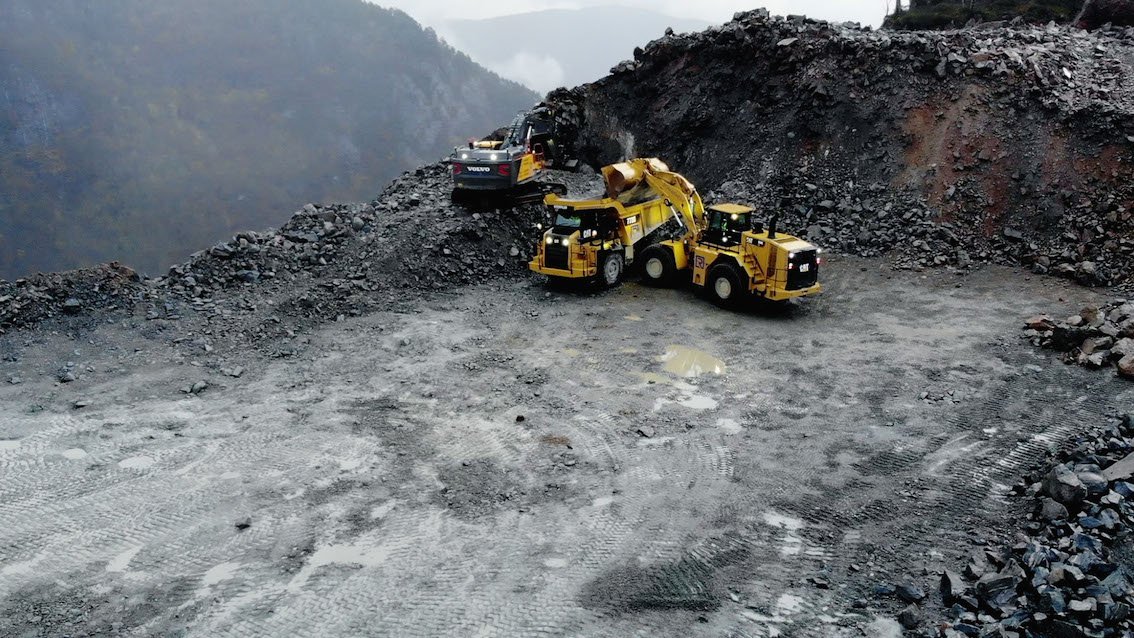
Solstad has secured work for three of its platform supply vessels (PSVs) in a tough market for support services. When combined, the contracts’ firm periods represent work for more than 34 months for the vessels, bolstering Solstad’s order backlog.

Solstad gained a long-term charter from an unnamed North Sea operator for its 2014-built Normand Surfer. This PX 105-design PSV will support a semi-submersible drilling rig to drill four wells from Q1 2021 over an estimated 550 days. There are options to extend this contract for another two wells depending on the results of the first four.

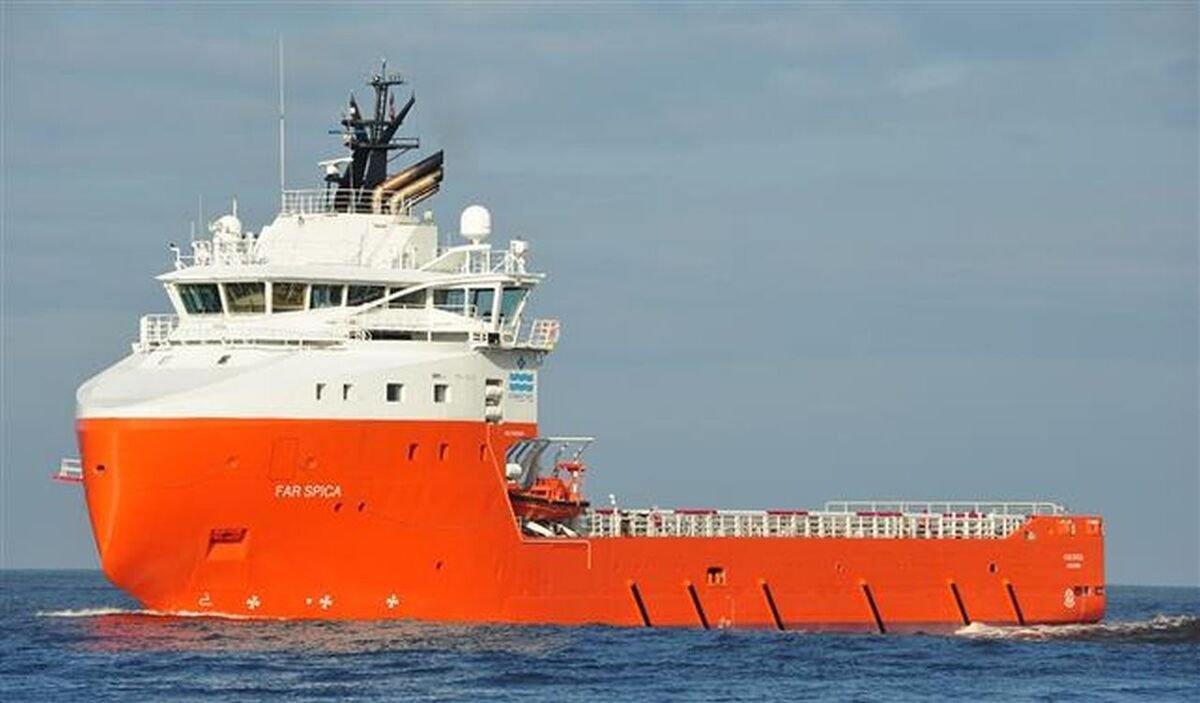
Solstad has also secured an extension to the present contract for PSV Far Spica. This charter extension will see the 2013-built STX vessel operating until at least December 2021 in the UK sector.

Outside of the North Sea, Solstad picked up a contract for its PSV Normand Supra from Tullow Oil. This 2014-built and PX 105-design vessel will support a deepwater drilling campaign offshore Suriname during Q1 2021 under a three-month charter, which is inclusive of vessel transit time.

These contracts come straight after Solstad signed a frame agreement with ExxonMobil to support a drilling programme off Brazil.

On 15 December, Solstad also announced contracts for PSVs Normand Serenade and Normand Arctic.

January 11, 2021 0 comments
0 FacebookTwitterPinterestEmail
Asia and Norway

Science has delivered, will the WTO deliver? – TRIPS waiver proposal from India, South Africa and other members

by Nadarajah Sethurupan January 10, 2021
written by Nadarajah Sethurupan

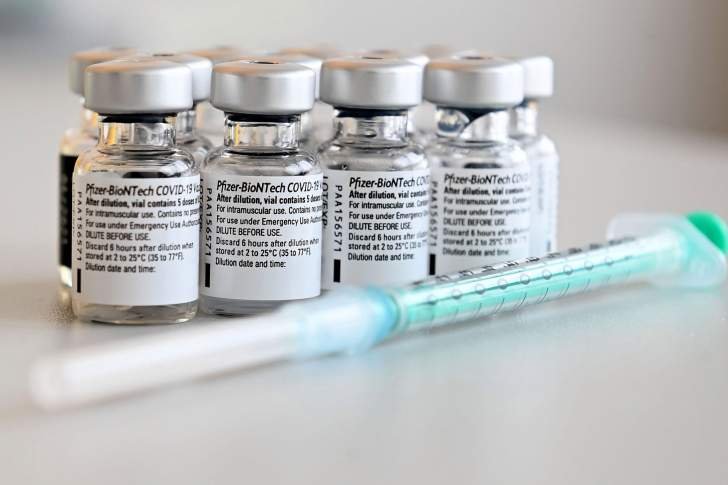
A proposal by India, South Africa and eight other countries calls on the World Trade Organisation (WTO) to exempt member countries from enforcing some patents, and other Intellectual Property (IP) rights under the organization’s Agreement on Trade-Related Aspects of Intellectual Property Rights, known as TRIPS, for a limited period of time. It is to ensure that IPRs do not restrict the rapid scaling- up of manufacturing of COVID-19 vaccines and treatments.

While a few members have raised concerns about the proposal, a large proportion of the WTO membership supports the proposal. It has also received the backing of various international organizations, multilateral agencies and global civil society.

Unprecedented times call for unorthodox measures. We saw this in the efficacy of strict lockdowns for a limited period, as a policy intervention, in curtailing the spread of the pandemic. International Monetary Fund (IMF) in its October 2020 edition of World Economic Outlook states “…However, the risk of worse growth outcomes than projected remains sizable. If the virus resurges, progress on treatments and vaccines is slower than anticipated, or countries’ access to them remains unequal, economic activity could be lower than expected, with renewed social distancing and tighter lockdowns”. The situation appears to be grimmer than predicted, we have already lost 7% of economic output from the baseline scenario projected in 2019. It translates to a loss of more than USD 6 trillion of global GDP. Even a 1% improvement in global GDP from the baseline scenario will add more than USD 800 billion in global output, offsetting the loss certainly of a much lower order to a sector of economy on account of the Waiver.

Merely a signal to ensure timely and affordable access to vaccines and treatments will work as a big confidence booster for demand revival in the economy. With the emergence of successful vaccines, there appears to be some hope on the horizon. But how will these be made accessible and affordable to global population? The fundamental question is whether there will be enough of Covid-19 vaccines to go around. As things stand, even the most optimistic scenarios today cannot assure access to Covid-19 vaccines and therapeutics for the majority of the population, in rich as well as poor countries, by the end of 2021. All the members of the WTO have agreed on one account that there is an urgent need to scale-up the manufacturing capacity for vaccines and therapeutics to meet the massive global needs. The TRIPS Waiver Proposal seeks to fulfil this need by ensuring that IP barriers do not come in the way of such scaling up of manufacturing capacity.

Why existing flexibilities under the TRIPS Agreement are not enough 

The existing flexibilities under the TRIPS Agreement are not adequate as these were not designed keeping pandemics in mind. Compulsory licenses are issued on a country by country, case by case and product by product basis, where every jurisdiction with an IP regime would have to issue separate compulsory licenses, practically making collaboration among countries extremely onerous. While we encourage the use of TRIPS flexibilities, the same are time-consuming and cumbersome to implement. Hence, only their use cannot ensure the timely access of affordable vaccines and treatments. Similarly, we have not seen a very encouraging progress on WHO’s Covid19-Technology Access Pool or the C-TAP initiative, which encourages voluntary contribution of IP, technology and data to support the global sharing and scale-up of the manufacturing of COVID- 19 medical products. Voluntary Licenses, even where they exist, are shrouded in secrecy. Their terms and conditions are not transparent. Their scope is limited to specific amounts or for a limited subset of countries, thereby encouraging nationalism rather than true international collaboration.

Why is there a need to go beyond existing global cooperation initiatives? 

Global cooperation initiatives such as the COVAX Mechanism and the ACT-Accelerator are inadequate to meet the massive global needs of 7.8 billion people. The ACT-A initiative aims to procure 2 billion doses of vaccines by the end of next year and distribute them fairly around the world. With a two-dose regime, however, this will only cover 1 billion people. That means that even if ACT-A is fully financed and successful, which is not the case presently, there would not be enough vaccines for the majority of the global population.

Past experience

During the initial few months of the current pandemic, we have seen that shelves were emptied by those who had access to masks, PPEs, sanitizers, gloves and other essential Covid-19 items even without their immediate need. The same should not happen to vaccines. Eventually, the world was able to ramp up manufacturing of Covid-19 essentials as there were no IP barriers hindering that. At present, we need the same pooling of IP rights and know-how for scaling up the manufacturing of vaccines and treatments, which unfortunately has not been forthcoming, necessitating the need for the Waiver.

It is the pandemic – an extraordinary, once in a lifetime event – that has mobilized the collaboration of multiple stakeholders. It is knowledge and skills held by scientists, researchers, public health experts and universities that have enabled the cross-country collaborations and enormous public funding that has facilitated the development of vaccines in record time – and not alone IP! 

Way forward

The TRIPS waiver proposal is a targeted and proportionate response to the exceptional public health emergency that the world faces today. Such a Waiver is well-within the provisions of Article IX of the Marrakesh Agreement which established the WTO. It can help in ensuring that human lives are not lost for want of a timely and affordable access to vaccines. The adoption of the Waiver will also re-establish WTO’s credibility and show that multilateral trading system continues to be relevant and can deliver in times of a crisis. Now is the time for WTO members to act and adopt the Waiver to save lives and help in getting the economy back on the revival path quickly.

While making the vaccines available was a test of science, making them accessible and affordable is going to be a test of humanity. History should remember us for the “AAA rating” i.e. for Availability, Accessibility and Affordability of Covid19 vaccines and treatments and not for a single “A rating” for Availability only. Our future generations deserve nothing less.

By Brajendra Navnit, Ambassador and Permanent Representative of India to WTO

January 10, 2021 0 comments
0 FacebookTwitterPinterestEmail
Diplomatic relations

Norway assumes key leadership tasks in UN Security Council

by Nadarajah Sethurupan January 10, 2021
written by Nadarajah Sethurupan

As a member of the UN Security Council, Norway will chair the Democratic People’s Republic of Korea (DPRK) Sanctions Committee,  the Isil (Da’esh) and Al-Qaida Sanctions Committee, and the Working Group on Children and Armed Conflict. Norway will also be penholder for the situation in Afghanistan and for the humanitarian situation in Syria, and will work actively to increase focus on the linkages between climate change and security.

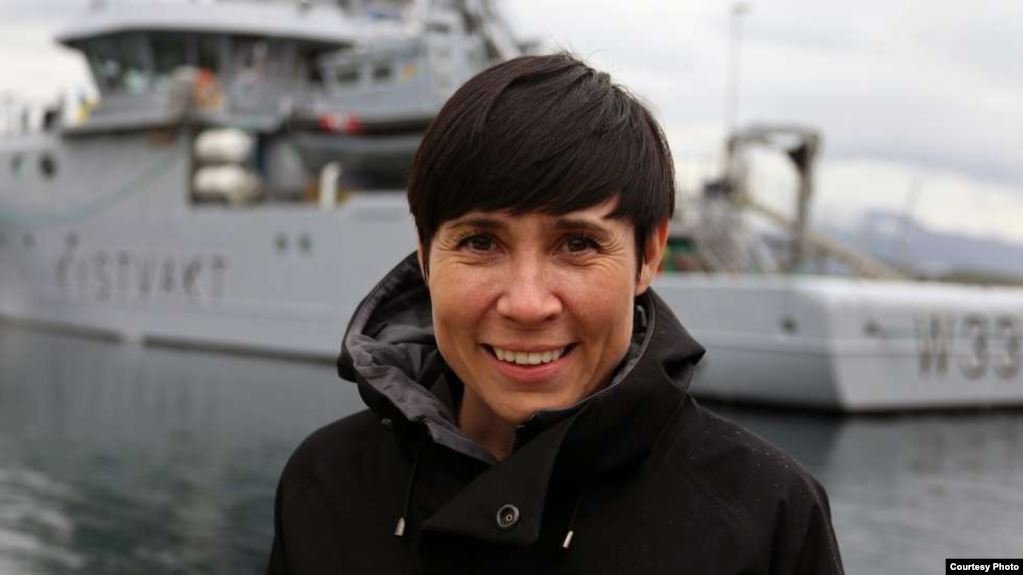
‘These are challenging and demanding tasks that Norway is prepared to take on. It is a vote of confidence that Norway will have the responsibility for some of the key chair positions of Security Council’s subsidiary organs. Through our work in these areas, we will both promote Norwegian priorities and contribute to issues of crucial importance to international peace and security,’ said Minister of Foreign Affairs Ine Eriksen Søreide.

In a world dealing with the ongoing pandemic, climate change, increasing poverty, enormous humanitarian needs, high numbers of refugees and displaced people and complicated conflict situations, it is vital that the UN Security Council’s efforts to promote international peace and security are successful.

The DPRK’s nuclear weapons and ballistic missiles programme, Isil (Da’esh) and al-Qaida represent grave threats to global peace and security. Over a number of years, the Security Council has built up a comprehensive sanctions regime to prevent the development of weapons of mass destruction in the DPRK.

‘Sanctions are one of the most powerful and effective measures the Security Council has at its disposal. As chair of the DPRK Sanctions Committee, Norway will seek to achieve the effective implementation and follow-up of sanctions, based on respect for international law, the humanitarian principles and human rights. It is important to avoid unintended humanitarian consequences for the civilian population, said Ms Eriksen Søreide.

 ‘Sanctions against Isil (Da’esh) and al-Qaida are necessary to combat international terrorism. Preventing the financing of terrorism is crucial if these efforts are to succeed. To ensure the legitimacy and effectiveness of the sanctions it is important that due process guarantees are in place to protect individuals who are targeted under the sanctions regime,’ said Ms Eriksen Søreide.

The protection of civilians in armed conflicts, including children, will be one of the Norwegian Government’s main priorities during Norway’s term on the Security Council. Children are especially vulnerable in armed conflicts.

‘I am pleased that Norway has been given the opportunity to chair the Working Group on Children and Armed Conflict. It is vital to ensure greater accountability in this area,’ said Ms Eriksen Søreide.

Norway will be a co-penholder for the situation in Afghanistan and for the humanitarian situation in Syria.  

‘We have in-depth insight into the conflicts in Afghanistan and Syria, and are therefore well placed to play a constructive role that can lead to common solutions. It is important to strengthen the Security Council’s capacity to carry out peace diplomacy and conflict prevention, and incorporate this into processes of addressing country and conflict situations. Both Afghanistan and Syria have great humanitarian needs that the Security Council must assure are addressed. Some of the country situations on the Security Council’s agenda are complicated and have led to polarisation among members of the Security Council, which means that our ambitions have to be realistic,’ said Ms Eriksen Søreide.

Members of the Security Council has recently established an informal expert group on the linkage between climate change and security risks in the various country situations. Norway will co-chair the group.

‘It is clear that climate change is increasingly leading to greater instability and exacerbating conflicts. Norway will work actively to promote the Security Council’s efforts in this area, for example by using scientific data systematically,’ said Ms Eriksen Søreide.

January 10, 2021 0 comments
0 FacebookTwitterPinterestEmail
Politics

Norway’s comprehensive climate action plan

by Nadarajah Sethurupan January 10, 2021
written by Nadarajah Sethurupan

Norway is committed to achieving its emission reduction target under the Paris Agreement. Today, the Government is presenting a white paper describing its action plan for transformation of Norwegian society as a whole by 2030. The plan shows how Norway will achieve its climate target and at the same time create green growth.

“Under this Government, Norway has reduced its greenhouse gas emissions, and this progress will continue. This climate action plan will give new momentum to Norwegian climate policy. For the first time, a government is putting forward a compelling, comprehensive plan for cutting emissions in every sector. We must make sure that it pays to cut greenhouse gas emissions,” said Minister of Climate and Environment Sveinung Rotevatn.  

The main emphasis of the climate action plan is on emissions that are not included in the Emissions Trading System, or non-ETS emissions. These include emissions from transport, waste, agriculture and buildings, and some emissions from industrial production and the oil and gas industry.

-We will cut emissions and enhance removals of CO2 in a way that transforms Norway and promotes green growth, said Prime Minister Erna Solberg. Credit: Martin Lerberg Fossum/KLD

It also deals with the EU Emissions Trading System, which applies to the bulk of emissions from industrial production and the oil and gas industry. In addition, the action plan discusses CO2 removals and emissions in the land-use, land-use change and forestry (LULUCF) sector.    

“This action plan will enable us to exceed Norway’s assigned target from the EU for non-ETS emissions, which is 40 %, and we will achieve this through domestic emission cuts,”said Mr Rotevatn.

The main policy instruments in the climate action plan are taxation of greenhouse gas emissions, regulatory measures, climate-related requirements in public procurement processes, information on climate-friendly options, financial support for the development of new technology, and initiatives to promote research and innovation.

The Government intends to make greater use of climate-related requirements in public procurement processes. Requirements for zero-emission solutions will be introduced for passenger cars and small vans in 2022, and for local buses from 2025. Criteria relating to low- or zero-emission solutions will also be introduced for ferry services and high-speed passenger vessel services.    

The sales volume of biofuels for road traffic will be maintained to ensure cuts in emissions from the fossil vehicles that are still in use. The Government will introduce biofuel quota obligations for offroad diesel and fuel for shipping from 2022. Vehicle taxes and other policy instruments will be designed so that they continue to provide incentives to choose zero-emission vehicles.    

Enova has been given a clearer climate profile, so that it will contribute towards Norway’s emission reduction commitment for non-ETS emissions and Norway’s transition to a low-emission society.  

The Government will use the letter of intent it has signed with the agricultural organisations as a basis for climate-related work in this sector in the years ahead.    

The white paper also announces a gradual increase in the carbon tax rate from its current level of about NOK 590 to NOK 2000 per tonne CO2equivalents in 2030. This will progressively increase the cost of emitting CO2 and give stronger incentives to reduce emissions. The Government’s policy is not to increase the overall level of taxation. Any tax increase will therefore be offset by reducing other taxes correspondingly.    

“Climate policy is the sum of all our efforts – how we transform Norway and equip the country for the future. We will cut emissions and enhance removals of CO2 in a way that transforms Norway and promotes green growth. To achieve this, we need an industrial sector that is greener, smarter and more innovative,”said Prime Minister Erna Solberg. 

“The Government is presenting an action plan for achieving Norway’s climate target for 2030. We will continue to reduce Norway’s greenhouse gas emissions, and shape a society that will provide jobs for the future. This will offer freedom and opportunities for everyone,” said Minister of Education and Integration Guri Melby.

“We all have a responsibility for each other, for the poorest people in the world and for future generations. The climate action plan will contribute to an equitable transformation process, so that Norway takes its share of the responsibility,” said Minister of Children and Families Kjell Ingolf Ropstad. 

EU climate legislation 

EU climate legislation  

Norway has entered into an agreement with the EU to take part in EU climate legislation in the period 2012–2030. This consists of three pieces of legislation: 

  • The Effort Sharing Regulation for non-ETS emissions: this assigns each country a binding target for reducing emissions from transport, buildings, agriculture, waste, and some emissions from the oil and gas industry and industrial production. Under the current regulation, overall emissions in the non-ETS sector in the EU are to be reduced by 30 % by 2030. Norway’s national target is an emissions cut of 40 %, either in Norway or in other European countries.
  • The land-use, land-use change and forestry (LULUCF) regulation:the regulation sets out accounting rules for uptake and removals of CO2 in the LULUCF sector. The legislation sets out an obligation to ensure that overall greenhouse gas emissions from land use and forestry do not exceed removals (this is known as the ‘no-debit’ rule).
  • The EU Emissions Trading System (EU ETS) applies to installations in manufacturing, the petroleum industry, power and heat generation and domestic aviation. There is a cap on the total volume of greenhouse gas emissions that may be emitted. Installations can trade emission allowances with each other within the system. The cap, or number of allowances, is being reduced gradually so that total emissions fall over time. Under the current legislation, emissions are to be reduced by 43 % by 2030.  

Download all the proposed policies in detail here (Norwegian only – PDF)Ministry of Climate and Environment

January 10, 2021 0 comments
0 FacebookTwitterPinterestEmail
Environment

Two key contracts awarded for Northern Lights project

by Nadarajah Sethurupan January 10, 2021
written by Nadarajah Sethurupan

Norway’s Equinor has awarded two key contracts in connection with the Northern Lights carbon transport and storage project worth a total of NOK 1.3 billion ($149.8 million).

Earlier this week, following a historic vote in parliament, the Norwegian Government announced its funding decision for the Northern Lights CO2 project.

The project will enable the shipping, reception, and sequestration of CO2 in geological strata in the Northern North Sea, approximately 2,600 meters below the seabed.

The first big contract for the project was awarded back in October for building site preparation and the construction of jetty facilities for the CO2 receiving terminal. The contract was awarded to Skanska.

Now, following the decision by the Norwegian government, Equinor has awarded further contracts for the project. 

Kværner has received a letter of award for the engineering, procurement and construction (EPC) contract for the onshore plant facilities at Energiparken in Øygarden. 

The onshore plant will receive and store liquid CO2 before it is exported through a pump and pipeline system for injection offshore. The value of the contract is estimated at around NOK 1.05 billion ($121 million). 

The start-up of the work is planned in January 2021, and completion is planned by 1Q 2024. Kværner is a fully owned subsidiary of Aker Solutions.

Furthermore, Aker Solutions has been awarded an EPC contract for delivering a subsea injection system for the CO2 well in the North Sea. The contract is awarded as a call-off under the framework agreement signed with Equinor in 2017. 

The value of the contract is around NOK 250 million ($28.8 million). The work will start in January 2021 with installation and completion in 2023. The contract also includes options for equipment for future wells.

Northern Lights will be the first of its kind – an open and available infrastructure enabling transport of CO2 from industrial capture sites to a terminal in Øygarden for intermediate storage before being transported by pipeline for permanent storage in a reservoir 2600 meters under the seabed.

“These contracts are key to the success of the Northern Lights project. We look forward to working together with Aker Solutions and Kværner to deliver on our part of the solution to reduce industrial emissions”, says project director for Northern Lights Sverre Overå.

The pre-fabrication for the onshore facilities will be done at Aker Solutions’ yard at Stord before site installation. The scope includes facilities at jetty for import of CO2 from ships, storage tanks for intermediate storage of CO2 and process systems.

“Equinor aims to become a net-zero energy company by 2050. This requires that we together with our suppliers develop new value chains and projects such as offshore wind, hydrogen and carbon capture and storage. These projects will enable the supply industry to build new competencies and will create important activity and spin-offs going forward”, said Peggy Krantz-Underland, Equinor’s chief procurement officer.

The Northern Lights project is the transport and storage part of Longship, the Norwegian Government’s full-scale carbon capture and storage project. Equinor is developing the project together with Shell and Total as equal partners.

The procurement process for the onshore plant facilities is being performed in accordance with the Public Procurement Act and the Public Procurement Regulations . 

Equinor noted that, in line with the requirements, all the bidders in the competition were yesterday informed of the award decision and there is a standstill period that expires on 5 January 2021 when the onshore plant facilities contract will be signed.

January 10, 2021 0 comments
0 FacebookTwitterPinterestEmail
Environment

As cities boom, Oslo tests greener ‘zero emissions’

by Nadarajah Sethurupan January 9, 2021
written by Nadarajah Sethurupan

A nearly “zero emissions” building site in Oslo, using electric-powered machinery, could be a pioneer for greener construction as the world’s urban areas swell by the equivalent of a Dublin or Dallas, Texas, every week, city experts have said.

Plug-in diggers, saws for cutting stones and other electric-powered machinery have been used to create a pedestrian area in the center of the Norwegian capital — completed in time for Christmas.

The shift aims to help curb climate change, air pollution and noise, officials have said.

C40 Cities, a network of almost 100 of the world’s biggest cities working to slow climate change, called the diesel-ditching project by the left-wing municipality “groundbreaking and unprecedented worldwide.”

“Many cities are looking to Oslo to learn,” said Cassie Sutherland, program director for energy and buildings at C40 Cities in London.

Sitting in chill winter sunshine at the Oslo site, on a new wooden bench by a flower bed planted with purple heather, Oslo Agency for Urban Environment project leader Marianne Molmen said that the revamped street “has become really great.”

The area, lined with shops, cinemas and bars — many closed due to the COVID-19 pandemic — also has new bicycle parking racks and tree saplings. Fossil-fuel-powered vehicles have been banned in much of the area, which includes special chargers for electric-powered taxis.

The revamp project, which began last year, saved 35,000 liters of diesel fuel and 99 percent of greenhouse gas emissions compared with a conventional building site, Molmen said.

The project cost 64 million kroner (US$7.2 million), compared with an estimated 59 million kroner for a more traditional project, largely because electric-powered machines are scarce and cost more.

The “zero emissions” standard used was more stringent than a previous “fossil free” regulation in Oslo, which allowed the use of bio-diesel engines.

Norway generates almost all its electricity from hydropower.

Oslo leads the global “clean construction forum” for C40, whose members include big cities such as Beijing, New York, Tokyo, London and Paris.

In one C40 initiative last month, Oslo, Los Angeles, Mexico City and Budapest pledged to halve emissions from building sites by 2030.

The world’s construction industry accounts for more than 23 percent of global greenhouse gas emissions, C40 said, so any cuts would help nations meet goals that they set in the 2015 Paris climate agreement to limit global warming.

Urban areas, especially in developing nations, are expanding at a breakneck pace.

The UN Intergovernmental Panel on Climate Change, a group of 2,500 scientists from more than 130 nations, said in its most recent assessment in 2014 that more than half of the world’s population lives in urban areas “and each week the global urban population increases by 1.3 million.”

That means adding urban areas the size of Islamabad, Harare, Dublin or Dallas, Texas, every week or so.

Priorities for green construction include upgrading existing buildings, rather than demolishing and rebuilding, improving designs and using better materials, such as recycled steel or low-emissions concrete, Sutherland said.

Oslo’s “zero emissions” policy seeks to cover all work within the perimeter of building sites, but a lack of specialized electric-powered machinery from suppliers means that the municipality sometimes grants exemptions and permits machines that are powered by fossil fuels.

For example, in its recent project, the municipality allowed a diesel-powered crane onto the site after failing to find an electric-powered one. The crane burned 16 liters of fuel. Also, asphalt was laid at the site by diesel-powered machines.

Among suppliers, Norwegian construction equipment maker Nasta refits excavators built by Hitachi with batteries, enabling them to operate for about four hours before losing power.

Norway, western Europe’s top oil exporter with a US$1 trillion sovereign wealth fund built on fossil-fuel wealth, paradoxically has some of the globe’s most progressive environmental policies.

For example, those have created the highest rate of electric vehicle (EV) ownership in the world. In the first 11 months of this year, 52 percent of all new vehicles sold in Norway were electric-powered, the Norwegian Road Federation said.

Oslo Vice Mayor Lan Marie Nguyen Berg of the Green Party said that cities can often be more ambitious than national governments because voters see the results of climate policies in their daily lives — more parks, cleaner air and cycling lanes.

Oslo was named Europe’s Green Capital for last year by the European Commission.

A problem is defining where the city’s authority ends and less-stringent national building codes — which allow fossil fuels — take over.

The city government only demands emission-free construction on sites that it controls, from roads to kindergardens.

“Four of five construction sites in Oslo are private or owned by the central government,” Berg said, adding that the city has written to the central government saying that it wants to demand that all construction sites in Oslo be zero-emission or fossil-free sites.

It has not yet received a reply.

Among other green changes in the city, the percentage of EVs passing toll points into Oslo has risen to 25 percent of all vehicles from 6 percent in 2015. Diesel vehicles pay a toll five times higher than EVs.

The municipality has built 55km of cycling roads since 2015, after only about 15km were added in the previous decade. More than 100 electric-powered buses operate in Oslo and the surrounding areas.

Those changes have stirred hostility from some vehicle drivers. A new single-issue party, campaigning to abolish road tolls, won nearly 6 percent of the vote in Oslo municipal elections last year.

Despite its greener policies, Oslo has fallen far short of a headline-grabbing goal in 2016 to halve the city’s greenhouse emissions by this year.

Under revised, less ambitious goals, Oslo estimates that emissions this year are to be 25 percent below 2009 levels, which were about 1.4 million tonnes.

A lack of government funding for carbon capture and storage — used to catch emissions and trap them permanently underground — at a municipal waste plant partly explains the shortfall, Berg said.

Revisions to historic emissions data have also played a role, she said.

“We will get there, but it will also be hard work,” Berg said, reaffirming a goal to cut emissions 95 percent by 2030, compared with levels in 2009.

(By Alister Doyle / Thomson Reuters Foundation, OSLO)

January 9, 2021 0 comments
0 FacebookTwitterPinterestEmail
Environment

Norway Voted Best Country In The World For Quality Of Life

by Nadarajah Sethurupan January 8, 2021
written by Nadarajah Sethurupan

Norway has been voted as the best country in the world for quality of life according to United Nation’s latest Human Development Index (HDI) ranking.

Neither the UK or the US came in the top ten while Norway has remained in the top spot for several years.

The HDI ranks a country depending on its life expectancy, expected years of schooling, mean years of schooling as well as gross international income (GNI).

For Norway, its life expectancy is the highest of the 189 countries in the index, with an average of 82.4 years. Meanwhile, the UK’s was 81.3 years, and the US was 78.9.

January 8, 2021 0 comments
0 FacebookTwitterPinterestEmail
Science

Mandatory testing for travellers to Norway

by Nadarajah Sethurupan January 7, 2021
written by Nadarajah Sethurupan

From January 2nd 2021, the government has imposed mandatory testing for Covid-19 for all travellers to Norway. The test must be done as soon as possible and within 24 hours after arrival at the latest. Travellers must enter Norway through border stations with testing facilities or through border stations with police control. Several smaller border stations will be closed.

Test capacity at the borders will be increased and there will be restrictions when crossing the border.

Testing should be done at the airport or other border stations. If that is not possible, the traveller must contact the local municipality or another test station to arrange testing. Testing is free of charge.

– We are now concerned about import infection as well as new outbreaks with new mutated versions of the virus. In addition, we are concerned that many will return to Norway after Christmas from countries with an increased level of infection, says Prime Minister Erna Solberg.

It is estimated that the British mutation increases infection with 55-70%. That corresponds to an increase in the reproduction number with 0,4.

– If this mutation is spread in Norway, it will most likely result in a full lockdown. We must do what we can to prevent this mutation to get a foothold in Norway. Testing is the only way to discover if travellers from red countries are carrying this virus, says Solberg.  

Risk of overloading the intensive care capacity

If we assume that R for Norway is around 1, then the entry of the new mutation can lead to R increasing to 1,4. This will cause Norway’s intensive care capacity to exceed its limits within 4-5 weeks. The test and infection tracing capacity in the municipalities will be exceeded prior to this.

–We must limit the spread of this virus mutation as much as possible. It is also highly likely that the mutation will enter Norway from other countries than Great Britain. The demand of mandatory testing is an addition to the other measures that we have implemented; mandatory negative test before arrival, registry upon arrival and a duty to quarantine, says Bent Høie, Minister for Health and Care Services.

There are some exceptions from mandatory testing. Children under the age of 12 do not need to be tested. Personnel with critical social functions, border commuters, long distance drivers and diplomats are others that are exempted

The basis for the requirement of mandatory testing for travellers from red countries is based on assessments from The Norwegian Institute of Public Health (FHI) and The Norwegian Directorate of Health (Helsedirektoratet).

FHI leans more towards testing recommendations rather than mandatory testing. Both FHI and The Norwegian Directorate of Health agree with the challenges in the situation and the new variations of the virus.

The measures will be assessed again in 4 weeks. A violation of the duty to test can be punished with fines.

Border stations

As a main rule, testing shall be done at border stations. The test capacity at the border stations can be low at first. Therefore, testing must be done as soon as possible or within 24 hours after arrival at the latest.

– People who are offered testing at the border station must comply, says Monica Mæland, Minister of Justice and Public Security.

There will be an increase in personnel at testing stations and new stations will be established. There will also be a need to increase capacity at testing stations at Oslo Airport Gardermoen and at several of Norway’s border stations controlling traffic by  sea and by land.

There are about 110 approved border stations to Norway. They are all open, but several have reduced their operating hours, and several are without police control.

Border stations might be closed in order to channel travellers to border stations with both police and health care personnel or border stations with police control.

– I will decide which border stations to close and which groups can be exempted so that they can still use closed border stations, says Mæland.

  • Open border crossings per 02.01.21 (pdf)
January 7, 2021 0 comments
0 FacebookTwitterPinterestEmail
Diplomatic relations

Norway takes up seat at the UN Security Council

by Nadarajah Sethurupan January 6, 2021
written by Nadarajah Sethurupan

On Monday 4 January 2021, Norway took up a seat in the United Nations Security Council for the 2021-2022 term as a non-permanent member. 

Norway commenced its term along with four other non-permanent members, namely India, Ireland, Kenya and Mexico, and will be a member of the Council until 31 December 2022. It is 20 years since Norway last held a seat on the Security Council, in 2001–2002.

This year, in addition to the five permanent members – the US, France, the UK, China and Russia – Norway will sit on the Security Council with the other elected members Estonia, Vietnam, Niger, Tunisia, and Saint Vincent and the Grenadines for the first year, in addition to Ireland, India, Kenya and Mexico for the whole period.

Norway’s commitment to the UN has deep roots. As a founding member, Norway has been an unwavering and consistent supporter of the United Nations and the rules-based international system since the foundation.

“International law and human rights will form the basis for our efforts. Peace diplomacy, the inclusion of women, protection of civilians, and climate and security, will be our guiding priorities,” remarked Norway’s Ambassador to the UN, Mona Juul, at the national flag installation ceremony. 

The Norwegian government will give priority in the Security Council to areas where Norway has particular expertise. It will use the experience gained from many years of engagement in peace and reconciliation efforts to build bridges and seek solutions to the seemingly intractable conflicts that appear on the Security Council’s agenda. Norway will cooperate closely with all members of the Security Council and will promote constructive cooperation. Norway will give special priority to efforts to strengthen the protection of civilians, including children, and to promote women’s role and participation in international peace and security efforts. 

In addition, Norway will work to ensure that the Security Council devotes more attention to considering how climate change affects international peace and security.

Interestingly, the United Nations Security Council Chamber was presented as a gift from Norway to the UN in 1952.

Norwegian architect Arnstein Arneberg designed the chamber. Most of the furnishings are a gift from the Norwegian Government, as well as the famous mural by Per Krohg and the tapestry by Else Poulsson. Norway contributed 5 million USD to the restoration of the chamber in 2013.

The UN Security Council’s legitimacy and effectiveness are dependent on all member states playing their part so that the Security Council can fulfil its responsibility to safeguard international peace and security. Norway will shoulder its share of this responsibility.

January 6, 2021 0 comments
0 FacebookTwitterPinterestEmail
Oil & Gas

Edison sells Norwegian subsidiary to Sval Energi

by Nadarajah Sethurupan January 6, 2021
written by Nadarajah Sethurupan

Italian energy player Edison has sold its wholly-owned Norwegian subsidiary Edison Norge, the company that controls the group’s hydrocarbon exploration and production activities in Norway, to Sval Energi.

Edison said that its Norwegian subsidiary controls all Norwegian activities excluded from the scope of the sale of Edison E&P to Energean.

To remind, Energean completed the acquisition of Edison Exploration & Production from Edison earlier this month. 

Edison E&P’s portfolio of assets included producing assets in Egypt, Italy, Algeria, the UK North Sea and Croatia, development assets in Egypt, Italy, and Norway and balanced-risk exploration opportunities across the portfolio.

In the announcement regarding the Edison Norge sale, the company said that the transaction was approved yesterday by the company’s board of directors.

The agreement is determined based on an enterprise value of $300 million at 1 January 2020, with an estimated impact on the net financial position significantly higher than that value.

The company’s Norwegian subsidiary is participating in the Nova and Dvalin projects currently under development which have net reserves estimated of 25.9 million barrels of oil equivalent as of 31 December 2019 and a portfolio of five exploration licenses.

The closing of the transaction is expected within the first half of 2021 and is subject to the necessary approvals for this type of transactions by the Norwegian authorities.

“This transaction almost completes Edison’s divestment plan of its hydrocarbon exploration and production activities to focus on sustainable development, in line with the country’s energy transition and national decarbonisation targets.

“In the short term, the company will invest in Italy the financial resources made available by the sale of these assets to support the company’s growth plan in the strategic areas of generation from renewable sources and latest gas technology, services to final clients, energy efficiency and sustainable mobility“, the company stated.

Under the agreement with Sval Energi, 24 people working for Edison Norge would be protected, taking into account the regulatory framework governing the employment rules and the existing market practices in Norway.

January 6, 2021 0 comments
0 FacebookTwitterPinterestEmail
Science

Another Havyard SOV for Esvagt completed

by Nadarajah Sethurupan January 5, 2021
written by Nadarajah Sethurupan

The vessel, named Esvagt Schelde, is the first in a new series to be delivered to Esvagt. Work is well under way on a second vessel of the same type, and the third is being towed to the yard in Leirvik and is scheduled for arrival early in 2021.

The new vessel is a Havyard 831 L service operation vessel (SOV).

The Havyard 831 L SOV is 70.50 m overall with a beam of 16.60 m and a speed of approximately 12 knots. It is designed to transfer windfarm technicians to turbines using a walk-to-work gangway from SMTS and Esvagt’s STB 7B and STB 12A safe transfer boats.

The vessel was designed to have reduced fuel consumption and emissions, and optimal manoeuvrability when operating in a windfarm. It was also designed with large cargo and warehouse facilities and an elevator with direct access from all decks to the motion-compensated gangway.

The trio of new vessels are expected to be assigned to the Borssele III and IV offshore windfarm in the Netherlands, and the Triton Knoll and Moray East offshore windfarms in the UK.

January 5, 2021 0 comments
0 FacebookTwitterPinterestEmail
Crimes

Norwegian Police release names of people missing after landslide

by Nadarajah Sethurupan January 4, 2021
written by Nadarajah Sethurupan

The police have published the names of all the missing people after the landslide in Gjerdrum municipality.

Photo: Tor Erik Schrøder / NTB

These are the people that the rescue services are still looking for:

Eirik Grønolen (1989), Irene Ruud Gundersen (1951), Charlot Grymyr Jansen (1989), Alma Grymyr Jansen (2018), Bjørn-Ivar Grymyr Jansen (1980), Ann-Mari Olsen-Næristorp (1970), Victoria Emilie Næristorp- Sørengen (2007), Marius Brustad (1991), Lisbeth Neraas (1966), and Rasa Lasinskiene (1971).

January 4, 2021 0 comments
0 FacebookTwitterPinterestEmail
Oil & Gas

Norway refuses to certify Nord Stream 2 due to US sanctions

by Nadarajah Sethurupan January 3, 2021
written by Nadarajah Sethurupan

The Norwegian company DNV GL, which was supposed to certify the Nord Stream 2 gas pipeline upon completion of its construction, refused to provide this service after new US sanctions on the project. This is noted in the company’sstatement.

The company stops all activities to check the pipeline system as long as the US sanctions remain in place.

“DNV GL will cease all inspection activities of the Nord Stream 2 pipeline system in accordance with the sanctions and as long as these sanctions remain in effect. We are implementing a plan to phase out our support for the project,” the company said in a statement.

US sanctions, which came into effect on January 1 with the adoption of the defense budget in the US Congress, effectively prohibit foreign companies from providing pipeline testing, inspection and certification services. They were given 30 days to leave the project, otherwise they face sanctions.

As we reported earlier, Nord Stream 2 AG Company has finished the works on the construction of the part of the Nord Stream 2 gas pipeline in the exclusive economic zone of Germany.

The length of this part makes 2.6 km.

January 3, 2021 0 comments
0 FacebookTwitterPinterestEmail
Media Freedom

How to get your Norwegian professional qualification recognised in the UK

by Nadarajah Sethurupan January 3, 2021
written by Nadarajah Sethurupan

How to get professional qualifications obtained in the EU, Switzerland, Norway, Iceland and Liechtenstein recognised in the UK.

This guidance is about getting an EEA or Swiss qualification recognised in the UK. There’s different guidance if you need to get a UK qualification recognised in the EEA or Switzerland.

You’ll need to have your professional qualification officially recognised if you want to work in a profession that is regulated in the UK. It will need to be recognised by the appropriate regulator for your profession. You’ll need to do this even if you’re providing temporary or occasional professional services.

Professionals already working in the UK

You don’t have to do anything if your qualification was officially recognised by the relevant regulator in the UK before 1 January 2021. The regulator’s decision to recognise your qualification will remain valid.

If you were using the temporary or occasional declaration to work in the UK, you will need to get your qualification recognised by the relevant regulator.

Start working in the UK

The UK recognises qualifications from the EU, Switzerland, Norway, Iceland and Liechtenstein which are of an equivalent standard to UK qualifications.

Check the UK list of regulated professions to find out if your profession is regulated. Then contact the relevant UK regulator, using the details provided, to find out how to get your professional qualification recognised.

Some professions have separate regulators in England, Wales, Scotland and Northern Ireland. Make sure you contact the appropriate regulator for where you want to work.

Applications made before 1 January 2021 will be completed under the old rules where possible. This will be the case even if they are not completed before this date.

If you’re a Swiss national

There are different rules for Swiss nationals and the family members of Swiss nationals.

If you already had a qualification, or you started your qualification before 1 January 2021, your application for recognition in the UK will be completed under the EU rules. This will still be the case if the application is made after 31 December 2020, as long as it is made before 31 December 2024.

If you had a pre-existing contract to provide temporary or occasional services in the UK, and you started working before 1 January 2021, you can continue to provide your services until 31 December 2025. This will be subject to the terms of your original contract.

If you’re an architect, auditor, lawyer or healthcare professional

There are different rules if you’re an architect, an auditor, a lawyer or a healthcare professional.

January 3, 2021 0 comments
0 FacebookTwitterPinterestEmail
Media Freedom

Norway lift bans on flights from UK

by Nadarajah Sethurupan January 2, 2021
written by Nadarajah Sethurupan

Norway and India are lifting their bans on flights from Britain, introduced to stop the spread of a more contagious variant of the coronavirus. It is reported by Sky News. 

Norway will lift the temporary flight ban on 2 January. At the same time, the authorities ordered everyone arriving from abroad to take tests for Covid-19 within 24 hours.

India joined the decision to restore air traffic with Great Britain. Flights between India and Britain will resume from 8 January. 

Until 23 January they will be limited to 15 flights per week each for carriers of the two countries to and from the cities of Delhi, Mumbai, Bengaluru and Hyderabad.

As we reported earlier, in December, a new strain of coronavirus was discovered in the UK. More than 20 countries around the world have decided to temporarily stop air traffic with the UK due to the spread of a new strain in the country. The duration of a border crossing ban varies from country to country, ranging from two to 40 days. 

Despite the ban on air travel between countries with the UK, cases of infection were found in the USA, India, Switzerland, Portugal, Canada, France, Japan, Pakistan, China. Several countries have announced the mutation of Covid-19, in particular Denmark, Brazil, Malaysia and some other countries.

January 2, 2021 0 comments
0 FacebookTwitterPinterestEmail
Killing

Norwegian rescuers hunt for missing after landslide

by Nadarajah Sethurupan December 31, 2020
written by Nadarajah Sethurupan

Norwegian rescuers deployed drones and dogs to negotiate unstable clay soil in a search for 10 people still missing after a landslide in southern Norway swept away more than a dozen buildings the previous day.

Another 10 people were injured, one critically, after the landslide in the residential area in the Gjerdrum municipality, about 30 kilometres north of the capital, Oslo.

Conditions remained challenging, with the clay ground still too unstable for emergency workers to walk on and temperatures registering minus 1 degree Celsius at 0600 GMT.

The edges of the crater continued to break away, authorities said, asking people not to approach the area. Some 1000 people have so far been evacuated.

“We are still searching for survivors,” the head of the police operation at the site, Roger Pettersen, told reporters, adding that both children and adults were missing.

During the night, police used drones with heat-seeking equipment to search for survivors in the debris. Helicopters have tried lowering military and police with search-and-rescue dogs on some structures believed stable enough to stand on.

A Dalmatian dog was rescued during the night.

On Thursday, Pettersen asked locals not to send up fireworks to celebrate New Year’s Eve so as to not interfere with the helicopters and drones.

Separately, questions were being asked about why construction was allowed in the area.

Broadcaster TV2 said a 2005 geological survey for municipal authorities labelled the area at high risk of landslides. But new homes were built three years after the report was published.

In a rare public statement, Norway’s King Harald said the landslide had left a deep impression.

“My thoughts are with all those who are affected, injured or have lost their homes, and those who now live in fear and uncertainty of the full extent of the catastrophe,” the 83-year-old monarch said in a statement released by the royal palace.

December 31, 2020 0 comments
0 FacebookTwitterPinterestEmail
Killing

Lithuanian woman ‘possibly’ missing in Norway

by Nadarajah Sethurupan December 31, 2020
written by Nadarajah Sethurupan

A Lithuanian woman might be among the 10 missing people following a landslide in Norway, according to the Lithuanian Foreign Ministry.

“The Lithuanian embassy in Norway has asked the Ost region police for official confirmation about the possibly missing [Lithuanian] citizen,” Vytautė Šmaižytė, a spokeswoman of the Lithuanian Foreign Ministry, told LRT.lt. “Local officers say they haven’t lost hope that the missing persons will be found.”

Norwegian media have reported that Rasa Lasinskienė, a Lithuanian citizen, may be among the missing people. She was walking a dog when the landslide happened, the daughter and son of Lasinskienė told Aftenposten Media.

A landslide hit Ask, a village northeast of Oslo, on Wednesday. Some 14 homes were destroyed, injuring at least 10 people and forcing 500 to be evacuated, according to Media.

December 31, 2020 0 comments
0 FacebookTwitterPinterestEmail
Environment

Norway landslide leaves several injured, 10 missing

by Nadarajah Sethurupan December 30, 2020
written by Nadarajah Sethurupan

A massive landslide just north of Oslo, Norway, on Wednesday left 10 people dead or unaccounted for, officials said.

The landslide wiped out more than a dozen buildings in Ask, the administrative center of Gjerdrum municipality about 15 miles northeast of Oslo.

Authorities fear that some victims may be trapped in buildings that collapsed in the slide.

Officials said the landslide, which happened before dawn Wednesday, was roughly 2,300 feet long and dozens of feet wide.

“Those who worked here last night were overwhelmed when they saw the scene after daylight appeared,” local operations manager Roger Pettersen said.

At least six people from Ask were hospitalized and hundreds more from the village were evacuated. Efforts to rescue others were partly stymied by the ongoing danger of the landslide.

“It hurts to see how the forces of nature have ravaged Gjerdrum,” Norwegian Prime Minister Erna Solberg tweeted. “My thoughts go to all those affected by the landslide. Now it is important that the emergency services get their job done.”

About 300 people who were evacuated from Ask took shelter at a hotel in nearby Skjetten, its manager said.

Ask is home to some 5,000 people.

Norway’s king Harald said in a statement that the accident had “made a deep impression on me and my family.

“My thoughts are with everyone affected, the injured, those who lost their homes and are now living in fear and uncertainty of the full extent of the disaster,” he said.

December 30, 2020 0 comments
0 FacebookTwitterPinterestEmail
Media Freedom

Norway introduces restrictive measures against Alexander Lukashenko

by Nadarajah Sethurupan December 27, 2020
written by Nadarajah Sethurupan

The Norwegian Government has decided to introduce restrictive measures against the President of Belarus, Alexander Lukashenko.

On 2 October this year, EU member states imposed restrictive measures against 40 Belarusian citizens. On 6 November, President Lukashenko and 14 other people were added to the list of individuals sanctioned. Norway is now aligning itself with these measures, which include a travel ban and an asset freeze. 

As President of Belarus, Lukashenko has primary responsibility for the authorities’ repression and use of violence before, during and after the presidential election in August this year. The security forces have made – and are continuing to make – mass arrests, and are subjecting peaceful protesters, activists, opposition members and journalists to torture and violence. A number of protesters have died as a result of the violence by the security forces. Lukashenko has rejected all calls to enter into dialogue from the Belarusian pro-democracy movement and the international community.

‘We hope that the restrictive measures will put pressure on the authorities in Belarus to respect human rights, enter into dialogue with the opposition and pave the way for the development of democracy. The abuses of power we are seeing are totally unacceptable,’ said Minister of Foreign Affairs Ine Eriksen Søreide.

As the restrictions also apply to a head of state, the matter was approved by Royal Decree.

(Ministry of Foreign Affairs)

December 27, 2020 0 comments
0 FacebookTwitterPinterestEmail
Asia and Norway

COVID-19, multilateralism, transport, energy discussed at the Kazakh-Norwegian talks

by Nadarajah Sethurupan December 26, 2020
written by Nadarajah Sethurupan

Foreign Ministries of Kazakhstan and Norway held regular political consultations via videoconferencing.

Kazakh Foreign Ministry says the parties discussed political, trade, and economic cooperation issues within both bilateral and multilateral formats.Kazakhstan’s Deputy Foreign Minister, Margulan Baimukhan, and the State Secretary of the Norwegian Foreign Ministry, Audun Halvorsen, co-chaired the meeting.

A wide range of interaction issues, including expanding the bilateral legal framework and the intensification of inter-parliamentary cooperation, were discussed. The parties exchanged views on countering the COVID-19 pandemic and measures taken by the two governments in this respect.

Touching upon trade, economic, and investment perspectives, the parties noted the priority of cooperation in transport, logistics, geological research, and energy. The consultations also discussed Kazakh-Norwegian interaction through international organizations, including the UN and OSCE.On the eve of the meeting, the Kazakh Deputy Foreign Minister Margulan Bamukhan spoke to the Norwegian media and hailed “Norway’s efforts to strengthen multilateralism and a climate of trust ahead of the country’s UN Security Council membership and beyond.

“He dwelled upon trade relations issues, stressing that “our countries need to improve transport logistics.”

“Most of Europe is already connected by regular railway routes to China via Kazakhstan. These routes are 3-4 times faster than maritime services. Last summer, a pilot container was delivered from Chinese Hefei to Norwegian Narvik in just 15 days. We should support such projects,” he said.

He added that the two governments need to work on mutual protection of investments, strengthening science and technology cooperation. He also expects the Norwegian business to intensify in Kazakhstan’s oil and gas and renewable energy projects soon.

“One of President Kassym-Jomart Tokayev’s priorities is the re-equipment and modernization of the country’s agriculture. In this respect, the Norwegian expertise and investments are of great interest to Kazakhstan”, Baimukhan said.

December 26, 2020 0 comments
0 FacebookTwitterPinterestEmail
Science

Estonian president calls for common digital region of Baltics, Nordic countries

by Nadarajah Sethurupan December 26, 2020
written by Nadarajah Sethurupan

Cooperation between Estonia and Norway in security, in combating climate change and in the digital turnaround were discussed during a meeting of Estonian President Kersti Kaljulaid with Norway’s Prime Minister Erna Solberg in Oslo on Friday. 

The Estonian president called on the Baltic and Scandinavian countries to establish a joint digital region. 

“The global fight against coronavirus has shown to all countries how important is the role that the development of technology plays in such major crises,” Kaljulaid said according to spokespeople. 

“Estonia and Norway are among the most advanced digital states and trailblazers, however, our  ambition should be bigger still — to create a digital region of the Nordic and the Baltic countries,” the president said.

According to Kaljulaid, this requires secure and seemingly invisible cross-border movement of data and services, while a permitting legislative environment will offer the possibility to implement the technologies to the full extent.

“If anywhere in the world, it is possible in this region now, and it would give an immense economic advantage to the whole region,” Kaljulaid said after the meeting with the prime minister of Norway.

The Estonian head of state and the Norwegian head of government also discussed cooperation in the field of security and in international organizations, such as NATO and the UN.

“Starting from January, also Norway will be an elected member of the UN Security Council and we will have a situation for the first time in history where a Baltic country and a Nordic country are sitting at the table of this globally most important cooperation format. We are working with Norway already today to be effective there standing for the prevention and resolution of conflicts and respect for international law,” the head of state said.

The two leaders also discussed matters related to climate change and the wish of Estonia to contribute to the work of the Arctic Council. Estonia filed an application on Nov. 9 to become an observer in the Arctic Council.

In addition, the president and the prime minister dwelt on cybersecurity, international relations and energy policy. 

During her one-day working visit to Norway on Friday, Estonian President Kersti Kaljulaid met  also with Crown Prince Haakon, Foreign Minister Ine Eriksen Soreide, speaker of the parliament Tone Wilhelmsen Troen and the chair of the parliamentary foreign affairs committee, Anniken Huitfeldt.

In addition, the president took part in a discussion on digital affairs at the Oslo Metropolitan University and in a discussion on polar areas and the environment at Fridtjof Nansen Institute.

The head of state is scheduled to return to Estonia on Friday evening. 

December 26, 2020 0 comments
0 FacebookTwitterPinterestEmail
Environment

Record high levels of CO2 and methane in the atmosphere over Norway in 2019

by Nadarajah Sethurupan December 25, 2020
written by Nadarajah Sethurupan

The observations from 2019 show that the annual average CO2 concentration in the atmosphere that year was 411,9 parts per million (ppm) at Zeppelin in Svalbard. This is 2,6 ppm more than the year before.

At Birkenes in Agder, the concentration is 416,1 ppm, which is 0,9 ppm higher than the year before.

This is according to a report by NILU, the Norwegian Institute for Air Research, commissioned by the Norwegian Environment Agency.

Concentration of CO2 is increasing

“We have observed new CO2-records at Zeppelin every year since 2001”, says Cathrine Lund Myhre from NILU in a press release.

“As long as we keep emitting more CO2 than that which is stored, the concentration in the atmosphere will continue to increase”, she says.

If the world is to keep the temperature below the 2 degree limit, the concentration of CO2 needs to stabilize at a level below 400 ppm over time.

Increased concentration of methane

When it comes to methane, the annual average was measured to 1961,2 parts per billion (ppb) at Birkenes, and 1952,9 ppb at Zeppelin.

Compared to 2018-levels, this represents an increase at Zeppelin of 14,3 ppb, the highest annual increase ever registered. At Birkenes, the increase was also considerable, at 8,2 ppb.

According to Lund Myhre, the increase in the concetration of methane is still a mystery to the researchers.

“We don’t know for certain whether the increase is due to emissions of methane from human activity, or if it is because climate change has started processes in nature that release more methane into the atmosphere”, Lund Myhre says.

December 25, 2020 0 comments
0 FacebookTwitterPinterestEmail
Politics

Brexit: Norway and the United Kingdom agree on enforcement of judgements in civil matters

by Nadarajah Sethurupan December 24, 2020
written by Nadarajah Sethurupan

Norway and the United Kingdom signed an agreement today ensuring that Norwegian civil judgements can in the future be recognized or enforced in the United Kingdom.

– This agreement ensures a basis pertaining to international law for reciprocal recognition and enforcement of judgments in civil matters. For example, a Norwegian company that has been awarded compensation from a British company in a Norwegian court will be able to have the judgment executed in the United Kingdom, so that the compensation will actually be paid. This is positive for both the business community and individuals. Without this agreement, there would be a risk that Norwegian civil judgments would not be recognized or enforced in the United Kingdom. British judgements will also be recognized and enforced in Norway to a limited extent, says State Secretary Lars Jacob Hiim.

The background for this agreement is that the United Kingdom and the European Union have entered into a withdrawal agreement that establishes a transition period, which expires on 31 December 2020. Until this transition period expires, the United Kingdom will principally be bound by the EU to comply with EU law and agreements pertaining to international law that the UK is bound by through its EU membership. This includes the Lugano Convention 2007 on Jurisdiction and the Recognition and Enforcements of Judgements in Civil and Commercial Matters of 2007, of which both Norway and the EU are parties. The convention will cease to apply between Norway and the United Kingdom when the transition period ends unless the United Kingdom has become an independent contracting party to the convention by that time.

– This agreement safeguards Norwegian interests in connection with the United Kingdom’s exit from the EU and contributes to maintaining the close relationship between Norway and the United Kingdom,” says State Secretary Lars Jacob Hiim.

The agreement stipulates that the bilateral convention between Norway and the United Kingdom signed in 1961, which was largely replaced by the Lugano Convention, will continue to apply with certain amendments. However, the agreement will only enter into force if the United Kingdom does not become an independent party to the Lugano Convention before the transition period ends.

December 24, 2020 0 comments
0 FacebookTwitterPinterestEmail
Taiwan and Norway

Taiwan’s foreign minister presses Norway to stop mislabeling nationality as ‘China’

by Nadarajah Sethurupan December 23, 2020
written by Nadarajah Sethurupan

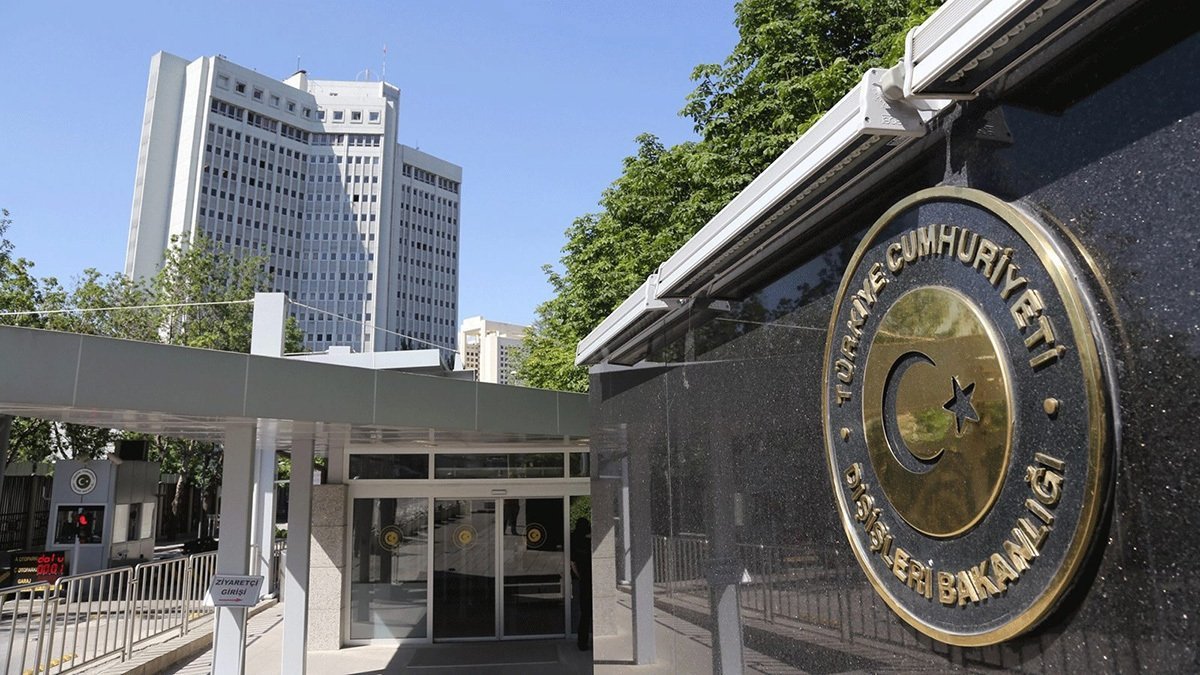
Taiwanese Foreign Minister Joseph Wu has urged the Norwegian government to correct its mislabeling of Taiwanese living in the Scandinavian country as soon as possible.

Wu was interviewed by Aftenposten, Norway’s largest newspaper, on Nov. 19, according to a press release issued by the Ministry of Foreign Affairs (MOFA) Tuesday evening (Nov. 25). He spoke with reporter Kristoffer Rønneberg on how Taiwanese students have been assigned the wrong nationality (China) on their Norwegian residence permits, Taiwan’s exclusion from the World Health Assembly (WHA), Taiwan-U.S. relations, and the cross-strait situation, among other topics.

According to a Taiwanese lawyer working in Norway, the Nordic country began listing Taiwanese residents’ nationality as “China” in 2010, prompting the attorney to launch a movement urging the government to correct the mistake. Despite repeated protests against the name change, the Norwegian government has failed to respond, angering many Taiwanese living and studying in the country and resulting in a lawsuit initiated by the Taiwanese in Norway Nationality Rectification Campaign.

When the Norwegian Supreme Court rejected the lawsuit on the grounds of there being “no substantial damage” to the well-being of resident Taiwanese, the group decided to appeal the case in the European Court of Human Rights (ECHR), of which Norway is a signatory.

MOFA has previously stated that the mislabeling of nationality violates human rights and that the ministry would assist the group in correcting the issue.

In the interview, Wu claimed the error has upset the Taiwanese public. He cited Article 15 of the UN’s Universal Declaration of Human Rights, which states that “Everyone has the right to a nationality, and no one shall be arbitrarily deprived of his nationality.” In addition, Wu pointed out that Article 6 of the European Convention on Human Rights guarantees the “right to a fair hearing.”

The foreign minister emphasized that Taiwan is not part of the People’s Republic of China, and he accused the Norwegian Supreme Court of failing to protect the rights and interests of Taiwanese students. He concluded by calling on the Norwegian government to acknowledge the severity of the mistake and correct it as soon as possible.

December 23, 2020 0 comments
0 FacebookTwitterPinterestEmail
Norwegian Aid

Palestine, Norway sign agreements worth $7.5 Million

by Nadarajah Sethurupan December 22, 2020
written by Nadarajah Sethurupan

Under the auspices and in the presence of Prime Minister Muhammad Shtayyeh, Palestine and Norway signed today a number of agreements at a value of $7.5 million.

Minister of Education Marwan Awartani, Minister of Women’s Affairs Amal Hamad, Minister of Finance Shukri Bishara, and UNDP head of office in Gaza, Chitose Noguchi, signed a number of agreements with the Norwegian representative to Palestine Torunn Viste during a meeting at the prime minister’s office in Ramallah.  

The agreements include supporting a number of schools during the coronavirus pandemic, through the development of drinking water facilities and handwashing facilities, in addition to supporting technical and vocational education and training in Jerusalem schools.

An agreement to support the UNDP cash-for-work program, which includes the sectors of education, agriculture, health, and municipalities. In addition to empowering women and youth.

Shtayyeh praised the Norwegian support to Palestine, conveying President Mahmoud Abbas’ greetings to the government and people of Norway.

December 22, 2020 0 comments
0 FacebookTwitterPinterestEmail
Newer Posts
Older Posts

Norwegian Nobel Prize 2025

101207 The Norwegian Nobel Committee has decided to award the Nobel Peace Prize for 2025 to Maria Corina Machado for her tireless work promoting democratic rights for the people of Venezuela and for her struggle to achieve a just and peaceful transition from dictatorship to democracy.

Special Interest

  • Africa and Norway
  • Asia and Norway
  • Asylum
  • China and Norway
  • Corruption in Norway
  • Crimes
  • Defence
  • Diplomatic relations
  • Economics
  • Environment
  • Farming
  • Killing
  • Media Freedom
  • Middle East and Norway
  • NATO and Norway
  • Nobel Peace Prize
  • Norwegian Aid
  • Norwegian American
  • Oil & Gas
  • Peace Talks
  • Politics
  • Racism in Norway
  • Religion
  • Russia and Norway
  • Royal House
  • Science
  • Sex scandal
  • Sports
  • Spy War
  • Srilanka and Norway
  • Svalbard
  • Terrorist
  • Taiwan and Norway
  • Video clips

Follow Us

Recent Posts

  • Syrian, Norwegian migration officials discuss cooperation in Oslo

    October 2, 2026
  • Norwegian premier says peace institute funding had no link to Epstein

    October 1, 2026
  • Norwegian ministers grilled in parliament over ties to Epstein

    October 1, 2026
  • Tesla rise across Europe, extending recovery

    October 1, 2026
  • Norway Provides $2.6 Million to UN Afghanistan Trust Fund

    September 29, 2026
  • Vietnam arrests three on terrorism charges, including Norwegian citizen

    September 29, 2026

Social Feed

Social Feed

Editors’ Picks

Norway opens market for Sri Lankan fish exports...

May 13, 2016

Sri Lanka – Nordic Business Council holds discussions...

May 15, 2016

Good governance to Sri Lanka

May 15, 2016

Shock and Joy in Sri Lanka – Erik...

May 15, 2016

Sri Lanka-Norway plenty of new opportunities for business–...

May 15, 2016

NORWAY NEWS is an online news site, written in English, dedicated to Norwegian affairs at home and abroad. Norway News.com is published online. It is a daily online newspaper in existence since May, 2003. The site is run by an Independent Journalist.

Facebook Twitter Youtube

Useful Links

    • Work With Us
    • Contact Us
    • Collaboration
    • Data Collection
    • Workplace
    • Adverstising
    • Privacy Policy
    • International Collab
    • Feedback
    • Terms of Use
    • About Our Ads
    • Help & Support
    • Entertainment
    • News Covering
    • Technology
    • Trending Now

Politics

Syrian, Norway to boost cooperation on mine clearance
Erna to step down as Conservative Party leader in 2026
Norwegian Labour Party on re-election win

Latest Articles

Syrian, Norwegian migration officials discuss cooperation in Oslo
Norwegian premier says peace institute funding had no link to Epstein
Norwegian ministers grilled in parliament over ties to Epstein
Tesla rise across Europe, extending recovery

Norway News 2025 . All Right Reserved. Designed and Developed by Norway News

  • Home
  • About us
  • Disclaimer
  • Contact us
NORWAY NEWS – latest news, breaking stories and comment – NORWAY NEWS
  • Home
  • About us
  • News
  • Other News
    • Africa and Norway
    • Asia and Norway
    • Asylum
    • Breaking News
    • China and Norway
    • Corruption in Norway
    • Crimes
    • Defence
    • Diplomatic relations
    • Economics
    • Environment
    • Farming
    • Featured
    • Health
    • Killing
    • Media Freedom
    • Middle East and Norway
    • NATO and Norway
    • Nobel Peace Prize
    • Norwegian Aid
    • Norwegian American
    • Oil & Gas
    • Peace Talks
    • Politics
    • Racism in Norway
    • Religion
    • Royal House
    • Russia and Norway
    • Science
    • Sex scandal
    • Sports
    • Spy War
    • Srilanka and Norway
    • Svalbard
    • Taiwan and Norway
    • Terrorist
    • Travel
    • Video clips
  • Disclaimer
  • Contact us
NORWAY NEWS – latest news, breaking stories and comment – NORWAY NEWS
  • Home
  • About us
  • News
  • Other News
    • Africa and Norway
    • Asia and Norway
    • Asylum
    • Breaking News
    • China and Norway
    • Corruption in Norway
    • Crimes
    • Defence
    • Diplomatic relations
    • Economics
    • Environment
    • Farming
    • Featured
    • Health
    • Killing
    • Media Freedom
    • Middle East and Norway
    • NATO and Norway
    • Nobel Peace Prize
    • Norwegian Aid
    • Norwegian American
    • Oil & Gas
    • Peace Talks
    • Politics
    • Racism in Norway
    • Religion
    • Royal House
    • Russia and Norway
    • Science
    • Sex scandal
    • Sports
    • Spy War
    • Srilanka and Norway
    • Svalbard
    • Taiwan and Norway
    • Terrorist
    • Travel
    • Video clips
  • Disclaimer
  • Contact us

Editor’s Picks

  • Norway’s Long Shadow Over Sri Lanka: UN Report Exposes Reform Failure as Oslo Faces Pressure to Act

    September 8, 2026
  • UN concern over Sri Lanka’s cases of enforced disappearances

    October 8, 2025
  • UN Human Rights Council Resolution on Sri Lanka’s Path to Reconciliation

    October 7, 2025
  • International should support Sri Lanka: Solheim

    October 4, 2024
  • Norwegian Meets Sri Lankan’s Challenges

    May 3, 2024
  • Norwegian Ambassador meets JVP in Sri Lanka

    May 2, 2024

Newsletter

@2025 - All Right Reserved. Designed and Developed by Norway News