NORWAY NEWS – latest news, breaking stories and comment – NORWAY NEWS
  • Home
  • About us
  • News
  • Other News
    • Africa and Norway
    • Asia and Norway
    • Asylum
    • Breaking News
    • China and Norway
    • Corruption in Norway
    • Crimes
    • Defence
    • Diplomatic relations
    • Economics
    • Environment
    • Farming
    • Featured
    • Health
    • Killing
    • Media Freedom
    • Middle East and Norway
    • NATO and Norway
    • Nobel Peace Prize
    • Norwegian Aid
    • Norwegian American
    • Oil & Gas
    • Peace Talks
    • Politics
    • Racism in Norway
    • Religion
    • Royal House
    • Russia and Norway
    • Science
    • Sex scandal
    • Sports
    • Spy War
    • Srilanka and Norway
    • Svalbard
    • Taiwan and Norway
    • Terrorist
    • Travel
    • Video clips
  • Disclaimer
  • Contact us
NORWAY NEWS – latest news, breaking stories and comment – NORWAY NEWS
  • Home
  • About us
  • News
  • Other News
    • Africa and Norway
    • Asia and Norway
    • Asylum
    • Breaking News
    • China and Norway
    • Corruption in Norway
    • Crimes
    • Defence
    • Diplomatic relations
    • Economics
    • Environment
    • Farming
    • Featured
    • Health
    • Killing
    • Media Freedom
    • Middle East and Norway
    • NATO and Norway
    • Nobel Peace Prize
    • Norwegian Aid
    • Norwegian American
    • Oil & Gas
    • Peace Talks
    • Politics
    • Racism in Norway
    • Religion
    • Royal House
    • Russia and Norway
    • Science
    • Sex scandal
    • Sports
    • Spy War
    • Srilanka and Norway
    • Svalbard
    • Taiwan and Norway
    • Terrorist
    • Travel
    • Video clips
  • Disclaimer
  • Contact us
Saturday, October 3, 2026
NORWAY NEWS – latest news, breaking stories and comment – NORWAY NEWS
  • Home
  • About us
  • News
  • Other News
    • Africa and Norway
    • Asia and Norway
    • Asylum
    • Breaking News
    • China and Norway
    • Corruption in Norway
    • Crimes
    • Defence
    • Diplomatic relations
    • Economics
    • Environment
    • Farming
    • Featured
    • Health
    • Killing
    • Media Freedom
    • Middle East and Norway
    • NATO and Norway
    • Nobel Peace Prize
    • Norwegian Aid
    • Norwegian American
    • Oil & Gas
    • Peace Talks
    • Politics
    • Racism in Norway
    • Religion
    • Royal House
    • Russia and Norway
    • Science
    • Sex scandal
    • Sports
    • Spy War
    • Srilanka and Norway
    • Svalbard
    • Taiwan and Norway
    • Terrorist
    • Travel
    • Video clips
  • Disclaimer
  • Contact us
Copyright 2025- All Right Reserved Norway News
Diplomatic relations

US imposes sanctions on Bashar al-Assad

by Nadarajah Sethurupan July 29, 2020
written by Nadarajah Sethurupan

Hafez Bashar al-Assad, the eldest son of President Bashar al-Assad of Syria, is named in the latest list of 14 senior Syrian regime officials and entities sanctioned by the US State Department under the so-called Caesar Act.

The designations, focusing on the “barbarous First Division of the Syrian Army”, are the second wave of sanctions to be applied under the act following the first move by the US State Department on 17 June.

The first wave attacked the businessmen that have bankrolled Assad, with secondary sanctions designed to discourage any other external actor having any dealings with the Assad business circle.

No sanctions were imposed on Russia or Assad supporters in the Middle East outside Syria, but the US urged everyone to wind down all connections with the Syrian regime.

The US deputy assistant secretary of state, Joel Rayburn, said the sanctions were timed to be introduced in the week of some of the worst atrocities committed by the Assad regime in 2011 and 2019.

Asked why Assad’s teenage son had been added to the list – he was born in 2001 – Rayburn said: “There has been a trend of senior Syrian regime actors and business people who have been active in the regime to do business through their adult family members to evade sanctions.

“It seems very clear that the immediate family of Bashar al-Assad and their in-laws are attempting to consolidate economic power inside Syria so that they could use this to further consolidate political power.”

He said: “Assad would only use such power to strengthen the killing machine against the Syrian people”. He denied that the sanctions would have any impact on humanitarian trade or on the economy of Lebanon.

The steady drumbeat of sanctions, mimicking a US policy long adopted elsewhere in the Middle East notably Iran, reveals a determination in Washington to use non-military leverage to force the Assad regime to negotiate the terms of a political settlement with the largely routed opposition.

Syria is stuck in a stalemate with Assad’s Iranian and Russian backers unable to destroy the last opposition stronghold in Idlib, but Assad himself is adamant that he will not cooperate with the UN-led peace process, including on a new constitution for the country.

The UN security council has most recently deadlocked about the number of humanitarian cross border crossings into Syria with Russia and China insisting that only one could be allowed. The deadlock came as coronavirus started to creep into refugee camps in and around Syria.

The Caesar sanctions, passed into law in December 2019, are named in memory of the Syrian code named Caesar that smuggled photos out of Syria showing the scale of atrocities in Assad’s prisons.

Rayburn vowed “this is a campaign that will continue. This is going to be the summer of Caesar.”

He insisted the sanctions were having a chilling effect on expected external investment into Syria.

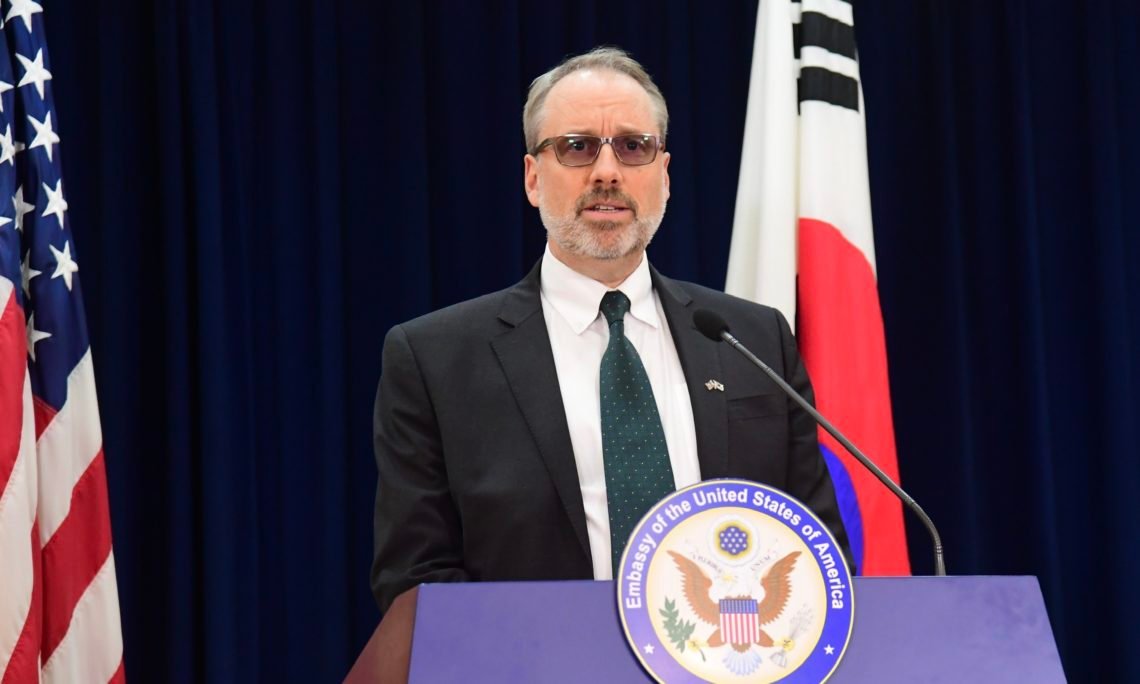
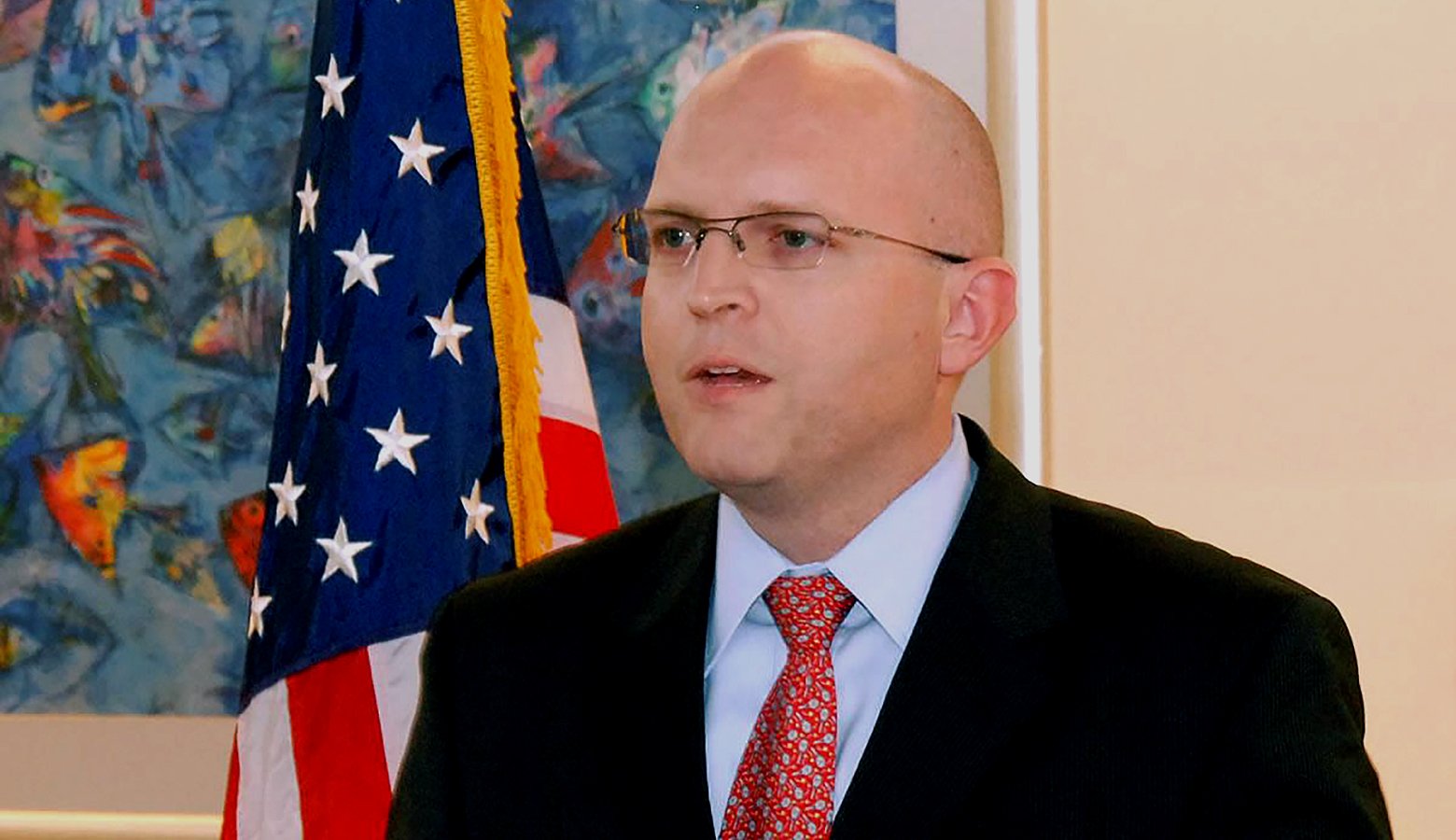
GENEVA, SWITZERLAND – OCTOBER 29: U.S. Deputy Assistant Secretary of State for Levant Affairs and Special Envoy for Syria Joel D. Rayburn speaks to the media a day prior to the Syrian Constitutional Committee meeting in Geneva, at the European headquarters of the United Nations in Geneva, Switzerland on October 29, 2019. ( Dursun Aydemir – Anadolu Agency )

Below is a full rush transcript of the Briefing with Joel D. Rayburn, Deputy Assistant Secretary and Special Envoy for Syria, Bureau of Near Eastern Affairs, U.S. Department of State.

DAS Rayburn: I appreciate everyone being with us today. Just a few minutes ago, Secretary Michael Pompeo released a statement announcing that today the State Department and the Treasury Department are continuing the United States sanctions campaign against the Assad regime by releasing 14 new designations under the Caesar Syria Civilian Protection Act and other authorities. This is a campaign that began last month with the first round of Caesar Act designations on June 17th. I want to highlight that today, within the United States Government, we have named today’s tranche of designations the Hama and Maarat Al-Numan sanctions, and these names are meant to memorialize the victims of two of the Assad regime’s most notorious atrocities, both of which occurred in this week in 2011 and 2019, respectively.

Nine years ago, Bashar al-Assad’s troops carried out a brutal siege of the city of Hama, killing scores of peaceful protesters in a shocking sign of what was to come. And this week one year ago, the Assad regime and its allies bombed a busy marketplace in Maarat Al-Numan, killing 42 innocent Syrians.

The Department of State and the Department of Treasury together are committed to increasing the economic and financial pressure on the Assad regime, and one of the ways we are doing this is through our various sanctions regimes, to include the Syria – the Caesar Act, which was signed into law by the President in December 2019. As you have seen by our announcement on June 17th and this morning, we have now designated since June 17th more than 50 of Bashar al-Assad’s key supporters and their businesses, as well as some key military units that act either in or on behalf of the Syrian regime.

Regardless of whether these actors are designated pursuant to the Caesar Act itself or under other executive orders, we view them all as in-line – all these designations, I should say as in-line with the goals of the Caesar Act given that the legislation imposes sanctions on anyone who engages in significant business with people who are sanctioned with respect to Syria in other words, secondary sanctions. This steady drumbeat of designations on persons or entities that support the Assad regime will continue until Bashar al-Assad and his regime cease obstructing a peaceful political resolution of the conflict, as called for by UN Security Council Resolution 2254.

The Caesar Act seeks to deny the Assad regime the financial resources that his regime uses to fuel its campaign of violence and destruction that has killed hundreds of thousands of civilians, and it’s meant to send a clear signal that no external actor should enter into business with or otherwise enrich such a regime.

None of our Syria sanctions targets the humanitarian sector nor the legitimate trade of food or medicine that the Syrian people need or that regional neighbors export to the benefit of the Syrian people. We have clear waivers and general licenses in place that support the efforts of the humanitarian sector. And as we have also said in the past, the Caesar Act sanctions are not directed at harming Lebanon’s economy or the Lebanese people, and we believe they will not have a significant impact on legitimate economic activity in Lebanon.

Today’s State Department designations highlight the corrupt duplicity of the Assad regime. We have designated Bashar al-Assad’s barbarous First Division of the Syrian Arab Army. And instead of protecting the Syrian people, the First Division and other units of the Syrian military have attacked civilians with ruthless disregard for human life, and at the same time some of these military entities have developed extensive networks to divert assistance away from the Syrian people, to impose taxes on all goods, and, put simply, to enrich themselves off the misery of the Syrian people, and the First Division is certainly a prime example of that kind of behavior.

Today the State Department also designated Bashar al-Assad’s adult son Hafez Bashar al-Assad. The Assad and Akhras families should not enjoy the right to do business with anyone involved in the U.S. or EU financial sectors, or consider visiting the U.S. or Europe, while they arbitrarily detain, torture, and murder thousands of civilians.

Question: How do you view the sanctions’ effect on the Syrian regime and its supporters so far? And to what extent can these sanctions push the regime to engage in the peace process in the future?

DAS Rayburn: We think of course it’s early days to see the overall effect of the sanctions, but we do believe that the sanctions under the Caesar Act are already having an effect on the thinking of those inside the regime and those who are supporters of the Assad regime. We do believe that they are getting the message loud and clear that these economic sanctions will continue until they accede to a political solution, as called for by UNSCR 2254.

Question: The UAE reopened its embassy in Damascus over a year ago. What level of business are you seeing between the UAE, which is an important U.S. ally, and Syria, and does that concern you? And then to talk about secondary sanctions, what about the assets of sanctioned individuals who have bank accounts and et cetera and businesses in the UAE, and will you start targeting banks who do business with these sanctioned individuals outside of Syria?

DAS Rayburn: There’s no exemption based on where people reside. There’s no exemption to the Caesar Act based on where people reside. And we have been – we have been sending very strong messages through diplomatic channels, and now obviously in our public statements, to tell our friends that everyone should respect the Caesar Act, the provisions in the Caesar Act. 

We can make no exceptions. And we’ve also urged our friends in many places around the world to wind down their business if they are involved with sanctioned individuals and entities or those that are likely to be sanctioned, and to not put us in the position of having to sanction them instead of spending our time sanctioning the Syrian regime and its associates. We’ve made very clear that we will not hold back from doing that, but we’ve really urged everyone not to put us in that position.

So far, we think that the sanctions are having a chilling effect on what was expected to be outside investment coming into Damascus, and we are – we are watchful for any such violations, and we will enforce the provisions in the Caesar Act no matter upon whom.

Question: You mentioned that you’ve already been discussing this with other jurisdictions and allies. Has there been any tangible impact? Have bank accounts been closed? Have banks or businesses or governments in other jurisdictions – I’m particularly thinking the UAE – taken any action that you can make us aware of?

DAS Rayburn: I think the thing that we would look for most is, has the investment happened? I mean the investment that I think people were expecting to come, I mean, not just from the Gulf region but from elsewhere. And it’s not materializing in the way that the Assad regime and its friends had hoped it would, and we think the Caesar Act and the other authorities that we’ve been able to – that we’ve demonstrated we will enforce have a big part in that.

Question: The comprehensive military agreement between Iran and Syria violated the UN arms embargo on Iran as well as the Caesar Act. Will the U.S. allow such agreement between Syria and Iran? What are you going to do to stop it?

DAS Rayburn: Iran’s only contributions to Syria – the Iranian regime’s only contributions to Syria so far have been violence and instability. And it’s not just that such activity, such military aid to the Assad regime, violates the Caesar Act; it’s pledged to – the Iranian regime’s pledge to export military equipment to Syria is in blatant defiance of the UN arms embargo under UN Security Council Resolution 2231, and it’s a further demonstration of why we in the United States think it’s an imperative that the Security Council must act to extend the arms embargo on Iran.

Iranian regime support to the Assad regime has enabled Assad to commit mass atrocities against the Syrian people, it’s prolonged what is a brutal, needless war, and it’s contributed to the deaths of more than half a million people and the displacement of 11 million more Syrians. If Iran were truly concerned about the wellbeing and safety of the Syrian people, the Iranian regime would support the UN-led Syria political process under UNSCR 2254. 

The Iranian regime would withdraw the Islamic Revolutionary Guards Corps, Hizballah, and other Iranian-backed terrorist forces that are under Iranian regime command from the entirety of Syria, and would embrace a political solution rather than a brutal military victory.

So it’s certainly not constructive for the Iranian regime to be seeking to deepen its military involvement in Syria through a military agreement with the Assad regime.

Question: If you can elaborate on the Lebanon part. Does Wassim al-Qattan have any investment or links in Lebanon? And on that same topic, the Lebanese Government seems to be seeking exemptions for the Caesar Act when it comes to electricity imports from Syria. Is that something that the U.S. is willing to consider?

DAS Rayburn: Okay, for Wassim Qattan, any specific Lebanese involvement, I don’t have that, Joyce. I can speak with the Treasury Department and get you a detailed answer on that. I know that the – I know the companies that we designated today that Wassim Qattan is involved with, whether he has any other overlapping interests maybe in companies that are not his own, I would have to check on.

In terms  of the Lebanese Government and any requests for exemptions, of course we have an established process to review requests for exemptions or licenses. we are looking at a number of those from different directions, and we haven’t made a decision on those. I would say that the bar would be very high for us to consider allowing a waiver or a license for activity that significantly benefited the Assad regime. We also in terms of Lebanon’s electricity situation, as I’ve pointed out in the past, the Assad regime is not the answer to Lebanon’s electricity difficulties. We know those electricity difficulties in Lebanon are extensive, but also, I mean, the Lebanese electricity sector, I think everyone recognizes that it’s going to have to undergo some significant head-to-toe reform if it’s to be put in a position to deliver basic electricity needs to the Lebanese people.

Question: How will the U.S. administration deal with Russia in light of its refusal of the sanctions imposed on Syria, and are you having talks with Moscow about this? And in light of the multiple sanctions imposed on Syria, how will Caesar sanctions affect the Syrian regime without harming the Syrian people?

DAS Rayburn: What’s harming the Syrian people, overwhelmingly, is the – is Bashar al-Assad and his regime’s atrocities against the Syrian people, not sanctions. And the sanctions that are being imposed on the Assad regime are actually meant to protect the Syrian people by trying to defer Bashar al-Assad – deter Bashar al-Assad and his friends from carrying out the atrocities against the Syrian people. But let’s be plain: the author of the Syrian people’s misery is Bashar al-Assad, that overwhelmingly he and his regime are to blame for the more than nine years of attacks that they have carried out against the Syrian people.

Now, we on the U.S. side, and I know our European allies are the same, we are conscientious about the suffering of the Syrian people, and that is why the Caesar Act has already written into it, in the law, the exemptions for humanitarian activity, for agricultural products and medical products and so on, so that those can continue to flow to the Syrian people in spite of the Assad regime’s behavior toward the Syrian people.

it’s a lie that the regime and its friends are promulgating that sanctions are the cause of the misery inside Syria right now. Very clearly, it’s Bashar al-Assad’s choices and the behavior of his regime. Since – Bashar al-Assad, since April 2019, made the decision to spend hundreds of millions of dollars on a campaign to attack the people of Idlib instead of using that money to provide basic necessities for the Syrian people. That’s where the resources have gone, in addition to that vast corruption that takes place inside the Syrian regime, which diverts aid away from the Syrian people, which attempts to move money illicitly and to have illicit business empires, many of which we’re trying to shut down, both in the past and now. That’s why there are shortages inside Syria. It’s the regime, it’s Bashar al-Assad who is the author of all this.

And the first aspect of the question, of how will we deal with Russia in light of the sanctions. We are in very close consultation with our Russian counterparts all the time, and we continue to urge them to use the influence that they have on the Assad regime and we believe that that influence is quite extensive to use that influence to press the Assad regime to accede to UN Security Council Resolution 2254 and to a political solution to the Syrian conflict.

Question: Are Iraqis going to be affected by these sanctions? Are they dealing with Syria in a way that is illegal, in your judgment?

DAS Rayburn: I think the answer is that we have seen for a long time the Iraqi militias, the Iraqi militant groups that are sponsored by the Iranian regime, have been dealing with the Syrian regime in a way that would clearly violate both the letter and the spirit of the Caesar Act as well as UN Security Council resolutions. So the answer is yes, there is some of that activity that goes on back and forth, and the Caesar Act is a tool that we will look at to try to deter that activity.

Question: I wanted to ask if the U.S. administration plans to intensify its diplomatic engagement with – with all partners, essentially, to look for that political solution that you mentioned before; or, alternatively, you are going to only intensify the sanctions – you’re going to only strengthen the sanctions regime as – and use it as the only tool in your toolbox?

DAS Rayburn: The sanctions, the U.S. sanctions, the intention of them is to enable diplomacy; it’s meant to enable a peaceful political solution to be achieved by diplomacy to the Syrian conflict. So sanctions are not a standalone tool. Sanctions can raise economic pressure on the Assad regime and its allies, but we also will continue to seek to raise political pressure. We will seek through intense diplomacy, which we do have, to try to press the Assad regime and its allies to come to the table in a meaningful way and to implement UN Security Council Resolution 2254. It’s very straightforward. There are no hidden plans. it’s United States policy is to implement 2254.

Question: Can you please elaborate on the logic behind sanctioning Hafez al-Assad?

DAS Rayburn: There has been a trend among senior Syrian regime actors, both officials and businesspeople who are acting on behalf of the Assad regime, to do business through their adult family members to try to evade sanctions in that way. It’s also clear that there has been a rise to prominence among the war profiteers of Syria of the Akhras family. So we intend for today’s designation of Hafez Bashar al-Assad – it’s as a part of that. You would see in the past, for example, that we have designated the adult family members of Mohammed Hamsho and a few others. That is the trend because it has been such a prominent trend among Syrian regime actors to use their adult family members, whether those are siblings or children, to try to continue business in their place after being sanctioned.

Question: Related to Hafez Bashar al-Assad. I mean, the 17th of June you sanctioned Asma al-Assad, and now you’re sanctioning Hafez al-Assad. Is there any political message behind this or is it just related to economic and to the – just to the economic dimension? Is there any political dimension to that?

DAS Rayburn: we view them as one and the same, Ibrahim, the political and the economic, because it seems very clear that the immediate family of Bashar al-Assad and the in-laws together are attempting to consolidate economic power inside the Syrian regime, which they then would no doubt use to try to further consolidate political power. So for us, the point of the sanctions is to try to prevent the Assad regime from consolidating that kind of economic control, which it would then use to perpetuate the war and to perpetuate the killing machine against the Syrian people. So we view very much that, just as I think you would probably find with the Syrian regime’s inner circle view, that economic power and the political aspects are very closely, closely related.

DAS Rayburn: I would just like to say that as we’ve said before, this is a campaign that will continue. This will continue to be the summer of Caesar. We will continue these kinds of sanctions designations in the coming weeks and months and there will be no end to them until the Syrian regime and its allies accede to the implementation of Security Council Resolution 2254 and put a stop to their attacks against the Syrian people so that the Syrian people can begin to heal from this conflict.

July 29, 2020 0 comments
0 FacebookTwitterPinterestEmail
Diplomatic relations

Norway eases border restrictions for more Swedish regions

by Nadarajah Sethurupan July 26, 2020
written by Nadarajah Sethurupan

In a press conference this afternoon, the Norwegian government announced it will once again allow the free movement of visitors to and from the Swedish regions of Värmland, Östergötland, Kalmar and Örebro as of midnight tonight.

Since 15 July, Norway has allowed visitors from Skåne, Blekinge and Kronoberg into the country without the compulsory ten-day quarantine period.

That the country remained closed to other counties dismayed Swedish towns along the border, where businesses saw their income plummet due to the lack of visitors. The region of Värmland, in particular, is a favourite of Norwegian visitors. The Norwegian authorities will take a new look at coronavirus infection levels across Europe in two weeks time.

July 26, 2020 0 comments
0 FacebookTwitterPinterestEmail
Defence

Norled’s 4th electric ferry hits the water at Remontowa

by Nadarajah Sethurupan July 25, 2020
written by Nadarajah Sethurupan

Polish shipbuilder Remontowa Shipbuilding has launched the fourth and last hybrid electric passenger-car ferry in the series being built for Norwegian shipowner Norled.

The ships, ordered back in 2018, feature LMG 120-DEH design.

According to LMG Marin, the design LMG 120-DEH features many energy-efficient solutions including general use of heat recovery, full LED lighting, electric power transmission, demand-dependent HVAC system, low resistance hull design, and weight-optimized construction.

At the same time, the vessels will be certified to carry more passengers with the maximum being 395 persons.

“Yesterday’s operation to launch the last ferry for the Norled shipowner, using a floating dock from Gdańsk Remontowa Shipyard SA, went as planned. Currently, the vessel is already docked and the same dock is being prepared for the docking of vessel number two in order to conduct its final inspection before heading off to sea trials and handing it over to the shipowner,” said Piotr Alboszta, project manager.

Two ships from the series would be deployed to service the Festøya-Solavågen connection, while the remaining two will operate on the Mannheller-Fodnes connection. Since the Mannheller-Fodnes route is shorter, the capacity of the battery pack on the two ships will be reduced by approximately 20%. 

The first ship from the series Festøya, carried out sea trials earlier this month. Shots of the vessel sailing from the shipyard can be viewed in the video below.

July 25, 2020 0 comments
0 FacebookTwitterPinterestEmail
Diplomatic relations

No obstacles for resuming flights from Russia – USA

by Nadarajah Sethurupan July 25, 2020
written by Nadarajah Sethurupan

“In terms of flights, I really should redirect you to the airlines. They are the ones who make these decisions. In terms of admitting citizens – we are constantly re-evaluating and studying how this relates to the latest developments with the COVID-19 pandemic. In terms of travel restrictions, visa restrictions that we have introduced,” Free News reports the words of acting assistant Secretary of state for European and Eurasian Affairs Philip Reeker.

On Thursday, US Acting Assistant Secretary of State Philip Reeker said during a telephone press briefing in response to a Media question that air carriers themselves will make decisions on the resumption of air service between Russia and the US. Meanwhile, the US government will estimate the prospects of canceling the border restrictions introduced earlier.

Below is a full rush transcript of the Briefing with Philip T. Reeker, Acting Assistant Secretary of European and Eurasian Affairs.

Ambassador Reeker: It’s really great to be back in Brussels. I guess I always say that, but this time I really mean it. This is my first trip since March the 12th, when I went back to Washington thinking we might go into a lockdown, like so many countries, as we faced the COVID-19 pandemic, and of course this ended up now being four-plus months, and we’re able now, traveling with Secretary Pompeo to London.

We flew in Monday, and it was the Secretary’s first overnight trip since COVID, taking all the appropriate precautions, but a chance to engage with our UK colleagues, counterparts. Of course, the Secretary met with Prime Minister Johnson and Foreign Secretary Raab. I think you would have seen the press conference that the foreign secretary and Secretary Pompeo held. We also had a chance to meet, of course, with our embassy team.  And the FCO, the Foreign and Commonwealth Office, hosted a roundtable with British and American businesses which was a very useful chance to hear about their concerns, their priorities in terms of COVID recovery, economic recovery, and reopening being a priority for all of us, trying to do that safely and securely, working on travel restrictions and easing of those in terms of some of the waivers and exceptions, on both sides of the Atlantic, we’ve been able to do to start up again travel possibilities as part of our economic recovery. So I think it was a very successful and useful visit in London.

The Secretary then went on yesterday morning, Wednesday morning, to Copenhagen. This, of course, was a chance to visit after our earlier visit last year had been postponed, but a great opportunity to engage with our Danish allies, partners. We have a tremendous partnership with Denmark in so many areas: security, the prosperity agenda, also, of course, talking about COVID-19 and how we – steps we can take to recover our economies, and talking about the Danes’ preparation to take over leadership and command in Iraq of NATO operations there. There’s just a whole list of things that we work on together with Denmark.  And, of course, we talked about the Arctic, which, as you know, has been a strategic priority for us in terms of Arctic security.  And we had a really interesting and useful quadrilateral meeting with the foreign ministers of Denmark, of Greenland, and the Faroe Islands, so those three parts of the Kingdom of Denmark coming together with Secretary Pompeo to talk about engagement there. You may all be aware that we recently reopened, after many years, our consulate in Nuuk, in Greenland. We have now a presence there. It’s something that the Secretary helped spearhead for us. We had a good chat with the Faroese as well, a dialogue there, and, of course, doing this all in conjunction with our Danish colleagues. So, really, a great visit there.

The Secretary headed back yesterday to Washington and today he’s headed to California. You will have seen that he’ll be giving a speech at the Nixon Library there, talking about China.

I took the opportunity to come on down here this morning to Brussels and had some bilateral meetings with Belgian counterparts today, and then tomorrow I’ll meet with a long list of EU counterparts. It’s great to be able to do this in person again, although we’ve kept up good diplomatic contacts and connections over these months through the various platforms, just as we’ve tried through things like these calls to continue our engagement with you, our colleagues in the press. I hope to have a chance to discuss a whole range of issues with EU counterparts, but that will include the U.S.-EU dialogue about China, which High Representative Borrell proposed and the Secretary of State accepted. We’re excited about being able to do that. It’s a good opportunity to exchange views and thoughts as we all look at the concerns we have regarding some of the Chinese activity. You know we’ve talked about 5G, we’ve talked about human rights, Hong Kong, so we’re going to be working on the agenda and the plans for that dialogue, and it’s really a chance to review a whole set of transatlantic engagements that we carry out with the EU.

Let me stop there. I will be flying back then Saturday morning to Washington, but I do hope this is the beginning of more opportunities to travel. Of course, we’re watching very closely how things evolve with COVID. It’s one of the things that we spend a lot of time with our EU counterparts on, is making sure that we can restart more travel but do it safely, according to epidemiological information and working closely not only on the transport side of things, but the broader economic recovery plans as well.

Question: What Turkey is doing against Greece and Cyprus. President Trump and Secretary Pompeo asked, as I understand, Can you tell us what is going on there?

Ambassador Reeker: Well, I would note, as you’ve heard, that the United States has been deeply concerned by Turkey’s stated plans to survey for natural resources in areas over which Greece and Cyprus assert jurisdiction in the Eastern Mediterranean. We’re concerned about actions that are provocative and raise tensions in the region. Resource development in the Eastern Med, I think, is something that should promote cooperation. This is something that can provide a foundation for durable energy security and economic prosperity throughout the region. You know as well as I do that this is a complex strategic space. We want our friends and allies – and let’s remember, we’re all, Turkey, Greece, and the United States, all NATO allies – we want friends and allies in the region to approach these issues in a spirit of cooperation. And I would just echo the message that we’ve given before from Washington as well as elsewhere in Europe, urging Turkish authorities to halt operations that raise tensions, and we’ll continue to urge that message.

I think you may have seen comments today from Ambassador Pyatt in Alexandroupoli as well. So we keep in touch with both of our embassies in Athens and in Ankara, monitoring this situation very closely.

Question: Albanians respect you a lot. Prime Minister Rama broke the election reform agreement, which was signed in the U.S. Embassy. Is State Department going to tolerate ?

Ambassador Reeker: We think it was an important step in the right direction. We’re pleased that Ambassador Kim has been able to help, and help Albania move in that direction. Albania is a NATO ally, a candidate for EU membership, and has come a long way in many years. As you know, I’ve been involved in that part of the world for a long time, and we want to see positive developments in Albania, and it’s important that we see the election reform. It’s important that all sides of the political spectrum participate in the institutions. That’s what democracy is all about and that’s what we’ll continue to engage in and to monitor and to encourage from all parts of the Albanian political spectrum.

Question: According to the Foreign Operations, and Related Programs Appropriations Bill 2021, 15 percent of the funds that was made available under assistance for Europe, Eurasia, and Central Asia for direct assistance to the central Government of Georgia may not be obligated until the Secretary of State determines and reports to the committees on appropriations that Georgian Government is taking effective steps to strengthen democratic institutions, combat corruption, and ensure that the rule of law in the private sector is consistent with internationally recognized standards. Ambassador, this is a very unprecedented event when it comes to the Georgian Government, and your answer will be very much important on this. How serious is this cutting 15 percent of the foreign aid to Georgia? And what Georgian people should expect from the State Department to report to the relevant committees?

Ambassador Reeker: Well, thanks for the question because, certainly, we pay a lot of attention to the Caucasus. We have strong relationships there, and that includes, of course, with the Republic of Georgia, which is an important partner in so many ways and has been for many years. I don’t want to delve into congressional views and legislation and get ahead of any steps that may be taken or determinations that may be made, but what I can tell you is that we continue to work very closely with Georgia. Our embassy there, under Ambassador Degnan, remains extremely active and we’re in close touch with them. I’d hoped to travel to Georgia and the Caucasus just when the COVID pandemic brought all of that travel to a standstill, and I’d like to resurrect those travel plans. So we’re watching conditions closely and hope to get back out there and continue that.

But regardless of travel by senior officials, it’s what happens on the ground that is important, and certainly our embassy remains in very close contact on that and we will continue to monitor the situation and also, of course, keep in close touch with Congress, which has a great interest in the region as well.

Question: My question about relations between Kosovo and Serbia. What is the state of play in terms of American engagement now that the European Union has taken again, as they claim, the driver’s seat? Is there any cooperation or coordination between Washington and Brussels, or you’re going to continue with two separate processes, as it was the case until June 24th? And on that note, has U.S. administration had any kind of contact with Kosovo President Hashim Thaci since the confirmation that he is being charged about war crimes and crimes against humanity? 

Ambassador Reeker: As you know, I have a long history on that region and, indeed, on that process, having supported, when I was deputy assistant secretary some years back, the European Union’s very robust and important activities through the dialogue toward normalization between Kosovo and Serbia. That still remains an important priority for us. We think they need to work to find solutions, so we certainly welcome that opportunity. As you know, the Special Presidential Envoy Richard Grenell worked on an economic track to help the two countries find ways where they could improve their economies – in other words, improve the lives of their people. As neighbors, that’s going to be inevitable and an important part of helping them find direction in terms of normalization and moving ahead on their longer-term goals and priorities, and continuing to encourage greater stability and security in the region.

There were some big steps taken in terms of agreements toward air and rail links, and we would still encourage them to work on those. I think it’s great that the new EU Special Representative Miroslav Lajcak is working. He’s gotten down to – Miroslav is a good friend and colleague who knows the region and the issues extremely well. I will have an opportunity to meet with him tomorrow here in Brussels. I look forward to that. And we will continue to be engaged and supportive of the process and to see through progress in that direction. We think both countries can make big steps in that regard. Our embassies both in Belgrade and in Pristina remain active and in close contact with the respective governments to encourage them to find ways forward, and we’ll continue to talk to the EU and other interested parties about that process, and I’m just glad to see that there is a return to the dialogue and we’ll continue to support that as well.

Question: Your trip includes planning for the U.S.-EU dialogue on China, and I’m just wondering what the goals are from the U.S. side on that. Is there a consensus between the parties on the structure of that dialogue? Will there be a formal decision-making body, for instance?

Ambassador Reeker: This is a great opportunity to sort of do it in person. We’ve been in touch over the – through the different contacts, all of these new-fangled platforms that we all use in terms of communication. You’ll recall that the Secretary announced last month – I think it was June 25th – that he was pleased to accept High Rep Borrell’s proposal and establish this dialogue on the People’s Republic of China. It just gives us a new mechanism for discussing and analyzing the concerns that the transatlantic community has about the threats that the PRC poses to some of our shared democratic values, the threats to the international rules-based order, some of the things we’ve begun to realize and speak out about. Certainly, you’ve seen the Secretary’s remarks; it was on our agenda both in London and in Copenhagen this week in talking about that.

We are going to work to develop a sort of framework for how we do this. I know the Secretary himself and High Rep Borrell look forward to launching this. We don’t have an exact date yet. Some of it, of course, still ties in with limitations of COVID, but we’d like to do that in person. So more news to come on that, but I think that it’s a chance to talk about COVID and recovery and the role of China in that, and then look at our resilience, perhaps talk about things like supply chains, certainly talk about human rights, what’s been going on in the west, the Uyghurs, Chinese treatment of its Muslim populations; Hong Kong is an issue that’s right at the fore right now. And so we’ll have a full agenda, and this week I do hope to be able to sort of work out a little more in terms of the details of how we’ll do that, pull together a plan.

So we will hope to offer more on that as it comes out. I would expect that we’d get underway after the August break, and this will be, as I said, a mechanism that can meet over time, perhaps have a level below the minister – ministerial level that can work on various issues just to share ideas, viewpoints. I think we are very successful when the transatlantic community does this, looks at challenges we have and shares information on how we can move ahead and deal with some of these challenges, and help China to see that they need to be a part of the international rules-based order, and we can analyze our concerns about that together. We hope this will be sort of action-oriented and lead to some more coordinated policy outcomes that can advance our shared interests on both sides of the Atlantic.

Question: I was hoping you could update us on where things stand in relations to, with regards to U.S.-Russian relations. And I also wanted to ask you if Secretary Pompeo has plans to reciprocate and travel to Russia anytime soon considering the fact that Minister Lavrov was in Washington, D.C., in December? And lastly, do the two sides currently engage – are currently engaged in any talks about a resumption of regular commercial flights in light of what’s going on with the pandemic?

Ambassador Reeker: I certainly don’t have any travel to announce for Secretary Pompeo. As I said, he’s been in Europe, in London and Copenhagen. He’s in California today. I know he’s able to speak to Foreign Minister Lavrov among the many, many calls he has with foreign leaders and counterparts.

In terms of flights, I’d really have to refer you to airlines, who are the ones that really make those decisions. In terms of admission of individuals, we are constantly reassessing and looking at how that fits in with the latest developments in the COVID pandemic in terms of travel restrictions, visa restrictions that we’ve had. It’s not something that the Secretary himself would be directly involved in.

And of course, we’ve made very clear the areas of concern we have with the Russian Federation on a number of issues, from interference in our elections, their invasion of Ukraine, and occupation of Georgia. These are areas that certainly restrain our relations, and a series of other challenges we have bilaterally. But we will continue through our embassies to maintain those contacts and continue to call upon the Russian Federation to act in a responsible manner.

Question: I would like to know, in terms of China, if you have received any indication from the Italian Government about the decision they have to make about Huawei and 5G. And the second question, if possible, if there is any progress in the talks to let the Schengen Area citizens to travel back to the United States? 

Ambassador Reeker: We have undertaken ,  you may have seen some of the announcements in the last week or so – to implement some additional waivers and exemptions to the travel restrictions that were put in place because of COVID-19. We certainly have appreciated the transparency and efforts of our European partners to do the same. The Secretary spoke about this on these stops in London and Copenhagen. We’re really trying hard, working closely with friends in Europe and the EU proper, to determine how we can best safely reopen international travel and make sure that all the elements are in place to do that appropriately. And I think – I’m confident that in coming weeks we are going to figure out even more ability, ultimately to be able to lift the various limitations and restrictions that we have. But for now we have been able to restart a significant amount of travel for economic and business purposes, for students and others, and we’re continuing – the State Department, but along with other partners, the Department of Transportation and Department of Homeland Security – to develop full plans and methods by which we can get travel back into place.

Your first question was regarding Italy and its decisions in terms of the 5G networks and Huawei. I’ll let the Government of Italy speak to any things they want to announce and decisions they want to take. We’ve made very clear our concerns. The security of our networks is paramount. This is the challenge with China; one of the challenges is how over a period of years – and the Secretary spoke to this – that we were not attentive as China stole and scooped up our intellectual property, developed new technological systems, used their state-linked enterprises then to market these back to us. And our data is what’s at stake. Our data, your data, the data of Americans, Europeans, our friends and allies is what we’re concerned about here, and having the Chinese Communist Party be able to store and access that data. That’s really what this discussion is about, and finding trusted vendors for our high-tech and IT infrastructure. That’s the crucial thing here. We’re confident that the Italian Government will make the right decisions for the Italian people to make sure that their data, their security, is fully protected.

Question: The United States have recently blacklisted, put sanctions on various companies that are connected to the crimes in Xinjiang, and this is interesting because we still have a lot of European companies who right now are doing business with these blacklisted Chinese companies, they are collaborating with these blacklisted Chinese companies. What’s your recommendation to European companies that are doing business with these blacklisted companies in China?

Ambassador Reeker: Well, certainly as those announcements made clear, we are trying to bring to the fore what is going on there. This is an important human rights question. What’s been carried out by the Chinese Communist Party, the People’s Republic of China against their own citizens is something we should all be concerned about, and what our announcements have made clear is that those who are doing business there should be aware of exactly what they’re doing and what it means, and I think they speak for themselves. Those announcements are quite clear, and we’re watching this very, very closely.

You mentioned that you are based in Hong Kong, and we, of course, are very concerned about what’s happened in Hong Kong as well. This was a topic of the Secretary’s conversations in London as well as in Denmark, and it certainly will be something I discuss here with counterparts at the EU. So we’re going to continue to make clear that these are important issues, and as the Chinese Communist Party, the regime, People’s Republic of China, has been committing actions against its own people that we find particularly intolerable, and we’re going to continue to speak out about it.

Ambassador Reeker: It’s always difficult on these things to cover the whole range of issues, but I hope we can do this again and I hope I can get back to Brussels again soon, and just to wish all of you a safe and healthy summer. I hope you’re doing all right as we continue to all together deal with the challenges of the COVID-19 pandemic. So, wishing you all the best. Thanks. Thanks, Justin.

July 25, 2020 0 comments
0 FacebookTwitterPinterestEmail
Asia and Norway

Time India, US Help World To Bounce Back Faster, Says PM Modi: Highlights

by Nadarajah Sethurupan July 25, 2020
written by Nadarajah Sethurupan

Prime Minister Narendra Modi delivered a keynote address at the India Ideas Summit, hosted by the US-India Business Council. In the virtual summit, which brought together senior officials from the Government of India and the United States to set the post-pandemic economic recovery agenda, PM Modi invited US businesses to invest in various economic sectors of India.

Here is the full text of PM Modi’s speech:

PM’s address at India Ideas Summit 2020

By Press Information Bureau, Government of India, New Delhi

Namaste!

Business leaders,

Distinguished guests,

I thank the US-India Business Council for inviting me to address the ‘India Ideas Summit’. I also congratulate the USIBC on its forty fifth anniversary this year. Over the past decades, the USIBC has brought Indian and American business closer. USIBC’s choice of this year’s Ideas Summit -‘Building a Better Future’ is also very very relevant.

Friends,

We all agree that the world is in need for a better future. And, it is all of us who have to collectively give shape to the future. I firmly believe that our approach to the future must primarily be a more human- centric one. Our growth agenda must place the poor and vulnerable at the core. ‘Ease of Living’ is as important as ‘Ease of Business’.

Friends,

Recent experience has taught us that the global economy has been too focused on efficiency and optimization. Efficiency is a good thing. But, on the way, we forgot to focus on something equally important. That is resilience against external shocks. It has taken a global pandemic to remind us how important resilience is.

Friends,

Global economic resilience can be achieved by stronger domestic economic capacities. This means improved domestic capacity for manufacturing, restoring the health of the financial system and diversification of international trade.

Friends,

India is contributing towards a prosperous and resilient world through the clarion call of an ‘Atmanirbhar Bharat’. And, for that, we await your partnership!

Friends,

Today, there is global optimism towards India. This is because India offers a perfect combination of openness, opportunities and options. Let me elaborate. India celebrates openness in people and in governance. Open minds make open markets. Open markets lead to greater prosperity. These are principles on which both India and the USA agree.

Friends,

During the last six years, we have made many efforts to make our economy more open and reform oriented. Reforms have ensured increased ‘Competitiveness’, enhanced ‘Transparency’, expanded ‘Digitization’, greater ‘Innovation’ and more ‘Policy stability’.

Friends,

India is emerging as a land of opportunities. Let me give you one example of the tech sector. Recently, an interesting report came out in India. It said for the first time ever, there are more rural internet users than even urban internet users. Imagine the scale! There are about half a billion active internet users in India now. Half a billion connected people. Does this sound huge to you? Hold your breath. Because, there are over half a billion more people who are being connected. Opportunities in technology also include opportunities in the frontier technologies of 5G, Big data analytics, Quantum computing, Block-chain and Internet of things.

Friends,

The options to invest in India are extensive. India invites you to invest in the hard-work of our farmers. India has done historic reforms in the agriculture sector recently. There are investment opportunities in: Agricultural inputs and machinery, Agriculture supply chain management, Ready-to-eat items, Fisheries and Organic produce. India’s food processing sector is expected to be worth over half a trillion dollars by 2025. To grow more streams of revenue, the best time to tap investment opportunities in Indian agriculture sector is now!

India invites you to invest in healthcare. The Healthcare sector in India is growing faster than 22 percent every year. Our companies are also progressing in production of medical-technology, tele-medicine and diagnostics. India and the US have already built a robust partnership in the Pharma sector. To achieve scale and speed, now is the best time to expand your investment in Indian health-care sector!

India invites you to invest in energy. As India evolves into a gas-based economy, there will be big investment opportunities for US companies. There are also big opportunities in the clean energy sector. To generate more power for your investment, this is the best time to enter the Indian power sector!

India invites you to invest in infrastructure. Our nation is witnessing the largest infrastructure creation drive in our history. Come, be a partner in building housing for millions, or building roads, highways and ports in our nation.

Civil Aviation is another area of great potential growth. The number of Air passengers is expected to more than double within next 8 years. The top private Indian airlines plan to include over a thousand new aircraft over the coming decade. This is a huge opportunity for any investor who chooses to set up manufacturing facilities in India, which can become a base for supplying regional markets. A similar case is obvious for setting up Maintenance Repair and Operations facilities. To give flight to your aviation targets, this is an ideal time to invest in the Indian aviation sector.

India invites you to invest in defense and space. We are raising the FDI cap for investment in defense sector to 74 percent. India has established two defense corridors to encourage production of defense equipment and platforms. We offer special incentives for private and foreign investors.  A few weeks ago, we cleared path-breaking reforms in the space sector. Come, be a part of these upcoming sectors.

India invites you to invest in finance and insurance. India has raised FDI cap for investment in insurance to 49 percent. Now 100 percent FDI is permitted for investment in insurance intermediaries. The insurance market in India is growing at a rate of more than 12 percent and is expected to grow to 250 billion dollars by 2025. With the success of Ayushman Bharat, our health assurance scheme, PM Fasal Bima Yojna, our crop insurance scheme and Jan Suraksha or social security schemes, the government has laid the ground for quick adoption and acceptance of insurance products. There are large untapped opportunities for increasing insurance cover in health, agriculture, business and life insurance. To generate long term and assured revenues, the Indian insurance sector is one of the best investment options right now!

I have given you a few options and that too without any consultancy fees.

Friends,

When the markets are open, when the opportunity is high and the options are many, can optimism be far behind! You can see the optimism when India rises in key business ratings. Particularly the Ease of Doing Business ratings of the World Bank.

Investment is the best show of confidence. Every year, we are reaching record highs in FDI. Each year is significantly higher than the earlier one. FDI inflows in India in 2019-20 were 74 billion dollars. This is an increase of 20 percent from the year before that. Friends in USIBC inform that ‘pledged investment’ from the US has already crossed 40 billion dollars this year! Also see what has happened even during the ongoing pandemic. In the middle of COVID, India has attracted foreign investment of more than 20 billion dollars between April and July 2020!

But, India offers many more opportunities. We have what is needed to power the global economic recovery.

Friends,

The rise of India means: a rise in trade opportunities with a nation that you can trust, a rise in global integration with increasing openness, a rise in your competitiveness with access to a market which offers scale. And a rise your returns on investment with the availability of skilled human resources.

Friends,

For this vision, there are few better partners than the United States of America. India and the USA are two vibrant democracies with shared values. We are natural partners. The US-India friendship has scaled many heights in the past. Now it is time our partnership plays an important role in helping the world bounce back faster after the pandemic. American investors often look out for the perfect timing to enter a sector or a country. To them, I would like to say: there has never been a better time to invest in India!

I once again thank the USIBC leadership for their commitment to advancing India-US economic partnership. May the USIBC keep scaling new heights!

May the India-America friendship grow further!

Namaste!

Thank you!

July 25, 2020 0 comments
0 FacebookTwitterPinterestEmail
Asia and Norway

Indian PM delivers keynote address at High-Level Segment of ECOSOC

by Nadarajah Sethurupan July 21, 2020
written by Nadarajah Sethurupan

PM calls for a reformed multilateralism with a reformed United Nations at its center

Our motto of ‘SabkaSaath, SabkaVikaas, Sabka Vishwas’ resonates with the core SDG principle of leaving no one behind: PM

While marching forward on the path to development, we are not forgetting our responsibility towards our planet: PM

Our grass-roots health system is helping India attain one of the best recovery rates in the world in the fight against COVID: PM

Prime Minister Shri Narendra Modi delivered a keynote address virtually at this year’s High-Level Segment of the United Nations Economic and Social Council (ECOSOC) session on Friday, 17th July 2020 at the United Nations in New York.

This was the first address by PM to the broader UN membership since India’s overwhelming election as a non-permanent member of the Security Council on 17th June, for the term 2021-22.

The theme of the High-Level Segment of the ECOSOC this year is “Multilateralism after COVID19: What kind of UN do we need at the 75th anniversary”.

Coinciding with the 75th Anniversary of the founding of the UN, this theme also resonates with India’s priority for its forthcoming membership of the UN Security Council. Prime Minister reiterated India’s call for a ‘reformed multilateralism’ in a post-COVID-19 world, which reflects the realities of the contemporary world.

In his address, PM recalled India’s long association with the ECOSOC and the UN’s developmental work, including for the Sustainable Development Goals. He noted that India’s developmental motto of ‘Sabka Saath, Sabka Vikaas, Sabka Vishwas’ resonates with the core SDG principle of leaving no one behind.

Prime Minister pointed out that India’s success in improving the socio-economic indicators of its vast population has a significant impact on global SDG targets. He spoke about India’s commitment to also support other developing countries in meeting their SDG targets.

He spoke about India’s ongoing development efforts, including for improving access to sanitation through the “Swacch Bharat Abhiyan”, empowering women, ensuring financial inclusion, and expanding availability of housing and healthcare through flagship schemes such as the “Housing for All” programme and the “Ayushman Bharat” scheme.

Prime Minister also highlighted India’s focus on environmental sustainability and bio-diversity conservation, and recalled India’s leading role in the establishment of the International Solar Alliance and the Coalition for Disaster Resilient Infrastructure.

Speaking about India’s role in its region as a first responder, Prime Minister recalled the support provided by the Indian government and Indian pharma companies for ensuring medicine supplies to different countries, and for coordinating a joint response strategy among SAARC countries.

This was the second time that Prime Minister addressed the ECOSOC. He had earlier delivered the keynote address at the 70 anniversary of the ECOSOC in January 2016.

July 21, 2020 0 comments
0 FacebookTwitterPinterestEmail
NATO and Norway

USA and Ukrainian taking part in 2020 Sea Breeze exercises

by Nadarajah Sethurupan July 20, 2020
written by Nadarajah Sethurupan

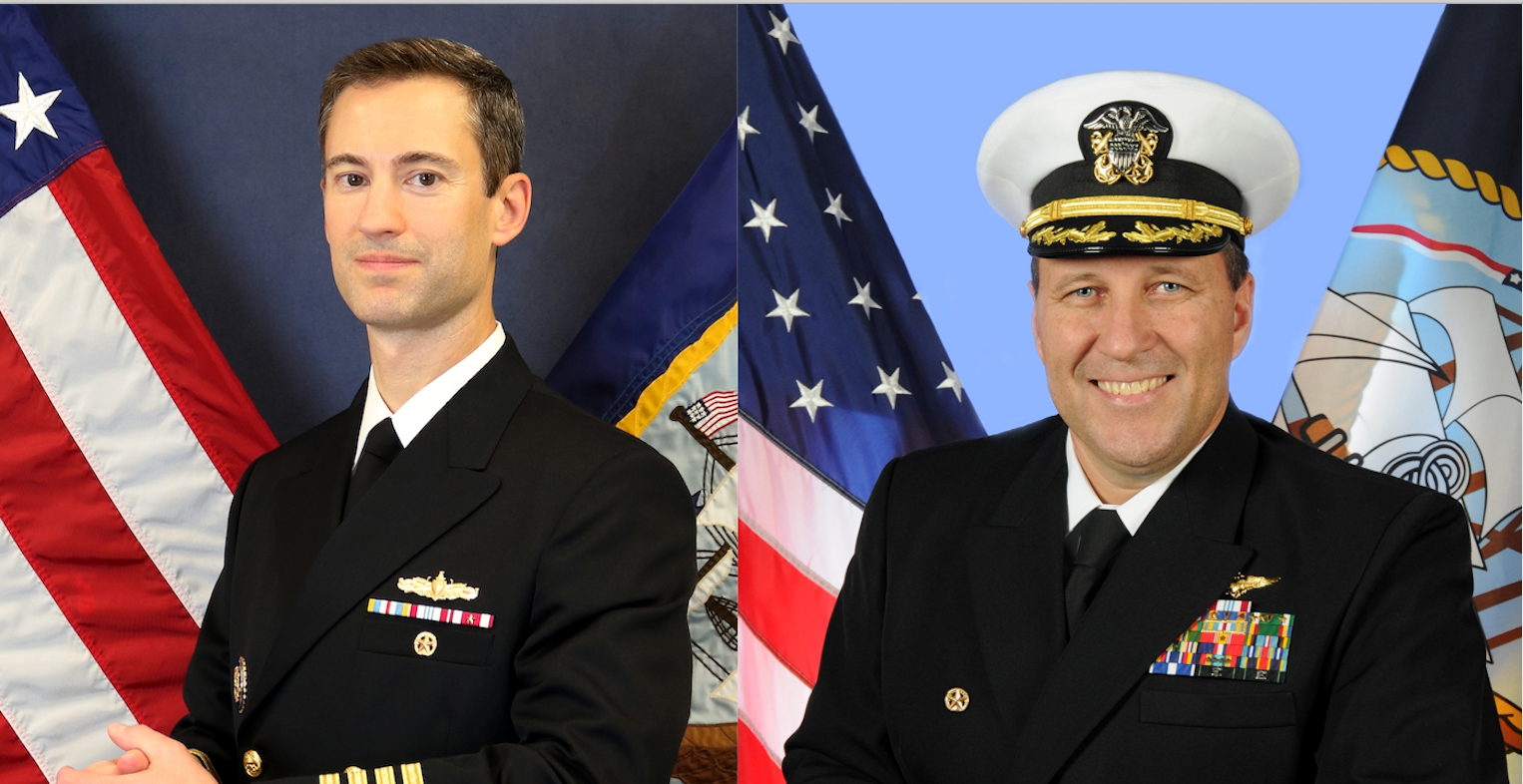
Commander of the Ukrainian Navy, Rear Admiral Oleksiy Neyizhpapa and U.S. 6th Fleet Commander, Vice Admiral Eugene Black have announced the start of 2020 Sea Breeze exercises with participation of eight countries.

The commanders made this statement during a telephone briefing held under the auspices of the U.S. Department of State’s Brussels Media Hub.

“The main goal is to conduct an international naval security operation in the crisis area. The Black Sea has long ceased to be stable. Exercises such as Sea Breeze prove that the United States and NATO partners support peace and stability in the Black Sea region. I am very pleased that the Standing NATO Maritime Group traditionally participates in the Sea Breeze exercises. This underscores once again that NATO countries and partners support Ukraine’s decision to join NATO,” the Ukrainian commander said.

In turn, U.S. 6th Fleet Commander, Vice Admiral Eugene Black stressed that much attention during the Sea Breeze 2020 exercises was paid to ensuring the safety of the involved forces amidst the COVID-19 global pandemic, so all exercises will take place exclusively at sea and in the air.

Below is a full rush transcript of the Briefing with Vice Admiral Eugene Black Commander of the U.S. 6th Fleet, Naval Striking and Support Forces NATO And Rear Admiral Oleksiy Neizhpapa Commander of the Naval Forces of the Armed Forces of Ukraine.

Rear Admiral Neizhpapa:  Good morning, I’m the Ukrainian navy commander, Rear Admiral Oleksiy Neizhpapa.  I am pleased to welcome and to congratulate everyone on the beginning of Sea Breeze exercise 2020.  Rear Admiral Eugene Black, I would like to congratulate you on the confirmation as the head of the 6th Fleet Navy.  

Today we start an absolutely new format of Sea Breeze exercise.  I would like to present the officer conducting the exercise, captain of the navy Oleksiy Doskato; from the American side, the Deputy Commander of the 6th Fleet, Captain of the Navy Kyle Gantt.  

This exercise has a long history.  It started in 1997, and for the Ukrainian side, this is the main tool for entering NATO.  This year our Sea Breeze – in the Sea Breeze exercise, eight countries participate.  Besides Ukraine and U.S., we have Turkey, we have Romania, Spain, Georgia, and Bulgaria.  Unfortunately, due to the COVID-19, we reduced the duration of our exercise to one week.  But I hope that this exercise will be conducted on the high level and will be fruitful and we will receive a lot of experience.

That is the first time when we finished up our final planning conference online.  Our exercise – more than 20 ships and 19 airplanes will participate in this exercise this year.  The main aim of this year’s exercise is the maritime security in the crisis area.  Everyone knows that the Black Sea hopes to be stable, so that these kinds of exercise like Sea Breeze, or Breeze, are under the umbrella of Bulgaria as the main – is the main tool that our partners give the stability in the Black Sea and shows the stability in the Black Sea.  

I am very happy that traditionally in Sea Breeze exercise, the SNMG NATO groups participate.  It shows and it underlines that NATO countries, as well as NATO partner countries, support Ukraine in its aim to enter the NATO.

I would like to underline one more time that this exercise is necessary to support the stability in our region.  As Admiral Mahan – I would like to quote Admiral Mahan that sea is not defense, sea is the way.  So the main task of us is to make this way safety, besides that some countries don’t understand these principles, especially Russian Federation.

We are going to conduct a wide variety of trainings and exercises during this week.  This will be dedicated to air exercises and to ship exercises, search and rescue operations, and other exercises.  And I hope that each and every one will be successful.  And we will show that we will be interoperability – we will show our interoperability in conducting all our exercises.  

Vice Admiral Black:  Well, thank you, I’m Vice Admiral Gene Black here.  I’m Commander of the U.S. 6th Fleet, and it’s great to virtually be here with all of you today.  I’m talking to you all from my headquarters in Naples, Italy, and I am excited to announce the kickoff of the exercise today with my Ukrainian partner, Rear Admiral Oleksiy Neizhpapa.  I’d also like to congratulate Admiral Neizhpapa on taking command recently, and it’s a pleasure to work with him and I look forward to our partnership.

I also look forward to answering your specific questions regarding Sea Breeze, but first let me describe the exercise and why it is important to the Black Sea region.

This year marks the 20th iteration of the exercise, where we have eight nations, 26 ships, and 19 aircraft, all working together in the Black Sea with the common goal of increasing security in the region.  The exercise theme this year is “Over 20 years of friendship in the Black Sea,” and I think that really captures what Sea Breeze is all about.  This exercise has built cohesion across the Black Sea region and improved the capabilities of all participants.  

In preparing for this year’s exercise, we were creative with the exercise design and made adjustments to ensure all of our forces remain safe.  The current global pandemic placed some constraints on our activities, so we’ll only be executing at sea and in the air.  Regardless, I am proud of the pragmatism, determination, and innovation demonstrated by all involved to remain committed to Black Sea security.  And our commitment doesn’t just stay within the confines of this exercise.  In fact, about three weeks ago, USS Porter and her crew participated in two exercises with the navies from Bulgaria, Georgia, Romania, and Turkey.  The ship also made two brief stops for fuel in Batumi, Georgia.  This is a tangible result from years of exercises, like Sea Breeze, that foster cooperative relationships and increase maritime capabilities.

The Black Sea is a vital waterway that is critical to maritime commerce and stability in Europe.  So when people question why non-Black Sea nations participate, it is because the U.S., NATO, allies, and partner nations recognize the importance to not only maintain a stable and prosperous Black Sea region, but also the importance of being able to seamlessly operate together and deter adversary aggression.

With 90 percent of the global economy moving in the maritime, and 99 percent of all digital communications traveling through undersea cable, protecting the maritime has never been more important.  

We have a lot to accomplish during the week.  The training objectives for the air and maritime portion include maritime interdiction operations, air defense, antisubmarine warfare, damage control, and search and rescue.  In addition, this year we are doing more free play, meaning we are giving participants more freedom to accomplish training objectives outside the confines of scripted exercise injects.  This will enable participants to fine-tune the skills that we have developed during previous Sea Breeze exercises.  We want to leave this exercise having achieved a greater level of integration and coordination, with increased direction from the Ukrainian Naval Headquarters South, which continues to grow in capacity and capability due to the immense commitment of the Ukrainian navy and contributions from our allies and partners.

The planning and accomplishments that result from Sea Breeze 2020 will undoubtedly shape our planning for Sea Breeze 2021.  Our commitment to this exercise and what it stands for are unwavering.  I look forward to hearing the great success this exercise will have in the coming days. 

Question:  Admiral Black, I still don’t understand exactly whether this is more than a nice gesture to support Ukraine, which is not a NATO member.  Isn’t this all, let’s say, an invitation to the other side, to the Russians maybe, going to support China in the Chinese sea?  And isn’t it more than a – well, a new beginning of the old Cold War?

Vice Admiral Black:  This is an opportunity for allies and partners to operate together in international waters and an important area for Europe and the United States, and we’ve been doing this for 20 years, and I expect that we will do that on into the future, and to read more into that or go beyond that is speculation.

Question:  You talked a little bit about Ukraine’s role in this specific exercise, but more broadly, can you discuss kind of where Ukraine is currently in its capability and what is kind of the next step in developing that?  Where would you like to go?  Obviously, you mentioned the adversary threat in the region, which is obviously Russia, but what is kind of the next step?  Is it mounting anti-ship missiles on some of the newer vessels?  What is kind of the next capability step that Ukraine’s navy is seeking to make?

Vice Admiral Black:  I’ll have to defer to Admiral Neizhpapa as the fleet commander on where Ukraine intends to go in terms of capabilities for the future.

Moderator:  Last year, Vice Admiral Sir Clive Johnstone, at the time NATO Allied Maritime Commander, warned that a Russian effort is underway, quote, ‘to dominate strategic seas and create gray zones where allied access is inhibited or intimidated.’  The same could be argued relative to the Black and Azov seas.  What can be done to contest and compete with this Russian anti-access/area-denial strategy or posture?  Where do exercises such as Sea Breeze fit into this broader framework?

Vice Admiral Black:  The U.S. Navy and our partners and allies, we will operate in international waters anywhere in the world, in accordance with international law and norms.  We send our ships and aircraft and units all over Europe and Africa, supporting those partnerships and operating in those international waters, and we’ll continue to do so and we’ll continue to do so in the Black Sea in particular.

Question:  During last year, representatives of Ukrainian navy and deterrence experts from Ukraine talked about Russian tactics blocking very big areas of Black Sea region for military drills and weapon testing.  How did this year’s scenario of Sea Breeze reflect these Russian tactics of blocking maritime navigation? 

Vice Admiral Black:  In our planning for Sea Breeze, we’ve got areas that we will operate, and we will operate safely in those international waters, as I suspect the Russians will as well, and there’s plenty of seaspace and airspace, and we’ll operate as appropriate to get done in the exercise as we have planned.

Question:  My question is related to the Russian readiness check, which, as we know, including Black Sea fleet.  So the question was for both of the admirals, but in this situation I ask only one.  So how do you see the possible problems or effects of this readiness check, which will be include, as Russia says, more than 100 ships and vessels on Sea Breeze exercise?  Thank you very much.

Vice Admiral Black:  I don’t foresee any impact.  The Russians have every right to exercise their forces and train, as we do.  And I doubt that we will have any interaction at all, and if we do, I’m sure it’ll be professional and in accordance with the laws and norms of maritime operations at sea.

Question:  What is the admirals’ reaction to Russia’s announcement at the beginning of July that it would move exercise Kavkaz 2020 further inland and call for both sides to scale down exercises?

Vice Admiral Black:  As a maritime commander, their moving it further inland, I would refer you to NATO and the U.S. Department of State with that question.

Question:  So I basically have two questions.  There have been 26 navies participating.  How do you ensure safety in this COVID pandemic?  What measures did you take?  

Sir, the 6th Fleet has been active in this region for quite some time, especially near the South China Sea, and as we can see, the activities of China have been quite aggressive and expansionist in the past few months.  So what plans do you have, and especially with Malabar coming?  So can we expect a Quad exercise in the coming months?

Vice Admiral Black:  The first question, with regard to COVID, one of the things that we have learned is once you get a ship or a unit that’s – that is COVID-free, that one of the things you don’t want to do is introduce folks from outside that potentially could bring the virus into the ship.  So this exercise has been scaled back a little bit and remodeled just a touch so that we’re doing all of the exercises at sea and in the air, but we’re not getting the interaction ashore.  An example of that would be we’re not at the press conference together live, we’re doing it virtually.  But I think it’s a testament to the professionalism of the navies involved that we have figured out how to operate in a complex environment and how to stay at sea and work through this challenge, and I foresee considerable success doing that.

For your second question, my responsibilities as the 6th Fleet Commander do not reach into the Pacific, and I would – I would refer you to INDOPACOM or the 7th Fleet Commander with your questions on the South China Sea.

Vice Admiral Black:  I’d like to thank all the folks that have participated.  We look forward to this exercise every year.  That we’re into our 20th year talks about the enduring relationship that we enjoy, and I foresee successes this year that we will build on to move into next year, and I appreciate the time of everyone involved.  Thank you.

Question:  What is the biggest priority for developing Ukraine’s navy?  And also, is there any consideration being given to supplying Ukraine with anti-ship missiles or arming Ukrainian vessels with other ship-borne missiles?

Rear Admiral Neizhpapa:  The main priority for our Ukrainian navy is the rocket programs, missile programs.  We have finished the training of our coast missiles, Neptunes, which will be used starting from the next year in the Ukrainian navy.  The next – the next stage is the launching of these missiles on the sea platforms.  In total, we have the strategy of our development, the navy development, where we show the stages of our developing and the development of the Ukrainian navy.  With the help of our partners, including the U.S., we have made this strategy.

According to this strategy in the nearest season.  The main idea is the fulfillment with the ships in this zone and the usage of missiles of a similar complexity.  The next step is our capability in the middle sea realm, where the next float of ships will be present, which will have this missile complex on them.  

We – one of the main way of our development is the receiving of anti-mine ships.  You know that the modern Black Sea area is quite shallow and the idea of mines is very dangerous.  

The third stage is our capability of usage in the [inaudible] sea zone, as well as participate in international operations, NATO operations in the Mediterranean Sea.  It will – it will be our final stage of the Ukrainian navy development.  Thank you.

Question: how can the allies stop Russia’s dominance in the Black Sea? How real is Russia’s threat to mainland Ukraine from Crimea?  And that’s to both admirals.

Vice Admiral Black:  I don’t see that Russia does dominate the Black Sea.  It’s international waters.  The United States Navy operates there, as do the navies of many other nations, peaceably, and doing the things that navies do in exercises like Sea Breeze.  We all abide by the Montreux Convention, as you would expect, and the International Law of the Sea.

Rear Admiral Neizhpapa:  I would like to answer in the following way.  The war with the Russian Federation has been conducted since 2014.  The Ukrainian navy was the first forces who met this threat in Crimea.  Unfortunately, all sanctions that used on behalf of European – European Union and NATO doesn’t work in a full way, and Russian Federation doesn’t stop its threats.  Black Sea fleet ships are always near the gas stations in the Black Sea, as well as in the Azov Sea there are ships , Russian ships And Russian ships also control the navigation in the Azov area and Kerch Strait.  

Russian Federation shows everyone and everybody that the Black Sea, as well as the Azov Sea, is their areas, for instance, and it always shows its readiness for usage of its forces.  Thank you.

Vice Admiral Black:  We look forward to furthering our interoperability with our partners and allies.  And we look forward to continued success.  We’ve done this exercise for 20 years and we continue to build on it, and the things that we learn this year particularly, operating in this COVID environment, will certainly inform how we do it next year.  And I look forward to continued partnership with all of our partners, particularly the Ukrainian navy this time, and I offer congratulations to Admiral Neizhpapa on his new command and I look forward to working with him.  Thank you.

July 20, 2020 0 comments
0 FacebookTwitterPinterestEmail
Crimes

Norway arrests British man

by Nadarajah Sethurupan July 18, 2020
written by Nadarajah Sethurupan

Norwegian authorities say they have arrested a 51-year-old British man suspected of issuing a bomb threat midair during a Ryanair flight from London to Oslo.

The incident triggered a security operation at the Norwegian capital’s Gardermoen airport and the plane was escorted to Norway by the Royal Danish Air Force’s F-16 fighter jets. 

The incident triggered a security operation at the Norwegian capital’s Gardermoen airport [Berit Roald/NTB Scanpix/AFP]

Flight FR1392 from Stansted airport with 142 passengers and six crew members on board landed safely at Gardermoen on Friday, officials said.

Norwegian police said on Twitter: “A Ryanair plane has received a bomb threat while in the air. The plane has landed safely on the runway. The situation is unclear. We are on site with great forces.”

Police operation

Police said later the situation was under control by the authorities with all passengers evacuated and the plane being examined by emergency, counterterrorism and bomb squads.

Operational police head Olav Unnestad told Norwegian newspaper VG that the arrest of the British man went smoothly.

July 18, 2020 0 comments
0 FacebookTwitterPinterestEmail
Crimes

Two Finnish citizens face arrest and imprisonment for throwing stones at Norwegian border

by Nadarajah Sethurupan July 17, 2020
written by Nadarajah Sethurupan

According to the Norwegian newspaper KirkenesBy, the two Finnish citizens, both male, were referred to police in Finnmark state yesterday for allegedly being in violation of Norway’s National Borders Act. Although it does not seem that any physical or material damage was caused by the stone-throwing, the accusations fall under the crime of “insulting behaviour at the border”, which carries a maximum penalty of up to three months in prison under Norwegian law. 

Authorities have also said that the two Finns may be in violation of Section 3 of the National Borders Act, which states that; “The King may, with effect for all or part of the national border, issue provisions prohibiting: Offensive conduct at the border, directed at the neighboring state in question or its authorities”. 

The midnight sun shines at the border area between Finland and Norway in Kilpisj‰rvi, Enontekiˆ, northern Finland, on the night between Sunday and Monday June 21-22, 2020. Sunday marked the summer solstice in the northern hemisphere. In the northernmost parts of Finland the midnight sun can be seen around the summer solstice as the Sun does not set below the horizon. LEHTIKUVA / OTTO PONTO

Most people who have been charged under this act, however, tend to receive little more than a fine. The age and occupation of the Finnish men is not yet known, nor is it clear exactly what kind of action Norwegian authorities will take. 

Adam Oliver Smith – HT

Image Credit: Lehtikuva 

July 17, 2020 0 comments
0 FacebookTwitterPinterestEmail
Crimes

Four months in prison for Nav fraud

by Nadarajah Sethurupan July 16, 2020
written by Nadarajah Sethurupan

A man in his 60s received 718,000 kroner in work disability benefits even though he had a full-time job. He now has to serve four months in prison.

The man was convicted in Oslo District Court this week of gross fraud.

He received work disability benefits for two years at the same time as he worked in a leading position in a parking company and was being paid for it. The court has concluded that the man has understood that the payments from Nav were wrong and that he has prevented Nav from finding out that he also had full time paid work.

In addition, the man must pay 124,000 kroner in compensation to Nav. The fraud lasted for two years from the autumn of 2012 to 2014, but Nav did not report the matter until 2016. The court found it mitigating that it has been so long since the criminal act was committed until the case came up in court.

The man did not plead guilty. He has explained that he has major memory difficulties, which the court also states. But the court emphasizes that forensic psychiatric examinations show that he has good cognitive abilities and also had a job that requires “normal cognitive understanding”.

– In the court’s view, there is no doubt that the accused has acted with intent to gain, it is stated in the judgment.

Defense attorney Svein Holden states that he has not had time to discuss the verdict with his client yet.

July 16, 2020 0 comments
0 FacebookTwitterPinterestEmail
Diplomatic relations

Romania to Norway to be placed in self-isolation for 10 days

by Nadarajah Sethurupan July 16, 2020
written by Nadarajah Sethurupan

The Romanian Ministry of Foreign Affairs (MAE) states that, according to official information provided by the Norwegian authorities to the Romanian Embassy in Oslo, people traveling from Romania to the Kingdom of Norway will continue to be subject to the procedure currently in force after the date of July 15, namely they will be placed in self-isolation for a period of 10 days from the moment of entry into Norwegian territory, the MAE shows in a press release sent to Media.

Moreover, according to the Norwegian authorities, from July 15, the self-isolation measure will be applied depending on the residence of the person in question, so that Romanian citizens with permanent residence in one of the countries exempt from this measure, will no longer be required to self-isolate.

July 16, 2020 0 comments
0 FacebookTwitterPinterestEmail
Russia and Norway

USA Imposes Sanctions on Russian Financier’s Global Sanctions Evasion Network

by Nadarajah Sethurupan July 16, 2020
written by Nadarajah Sethurupan

USA took action to further limit Yevgeniy Prigozhin’s destabilizing global activity by designating entities that have enabled his ability to evade sanctions in Sudan.  These designations include Private Military Company (PMC) Wagner’s apparent cover entity in Sudan, M Invest, its subsidiary Meroe Gold, and their leaders, Andrei Mandel and Mikhail Potepkin.  Prigozhin’s global malign activities are well-documented, as demonstrated by his designation under multiple U.S. sanctions authorities.  Prigozhin serves as the financier of the Internet Research Agency (IRA), the Russian troll farm designated by the United States for attempts to interfere in U.S. elections, as well as the PMC Wagner, a U.S. designated Russian Ministry of Defense proxy force expanding Russian influence abroad.

Prigozhin relies on a network of front companies and facilitators, including three companies and an individual designated today based in Hong Kong and Thailand – Shine Dragon Group Limited, Shen Yang Jing Cheng Machinery Imp & Exp. Co, Zhe Jiang Jiayi Small Commodities Trade Company Limited, and Igor Lavrenkov.  Between 2018 and 2019, these entities facilitated more than 100 transactions exceeding $7.5 million that were sent in the interest of Prigozhin.

Throughout the course of this financial activity, Lavrenkov was the director and owner of Shine Dragon Group Limited and also a director at Shen Yang Jing Cheng Machinery Imp & Exp. Co. and Zhe Jiang Jiayi Small Commodities Trade Company Limited.

Prigozhin’s role in Sudan highlights the interplay between Russia’s paramilitary operations, support for preserving authoritarian regimes, such as that of former Sudanese President Omar al-Bashir, and exploitation of natural resources.

USA’s actions will further limit attempts by Prigozhin and his backers to foment disorder or undermine democratic reforms in Sudan.

Below is a full rush transcript of the Briefing by US Secretary of State Michael R. Pompeo.

SECRETARY POMPEO:  Welcome.  First, on July 11th, the United States and Vietnam celebrated the 25th anniversary of the establishment of diplomatic relations between our two countries.  Quite an achievement.

And second, this week marks the anniversaries of two terrorist attacks by Iran-backed Hizballah: the 1994 bombing of the AMIA Jewish community center in Buenos Aires, Argentina, and the 2012 suicide bomb targeting Israeli tourists in Bulgaria.

We continue to exert maximum pressure on Tehran and call on all responsible nations to join us in that.

Now, to the events of the day.

Yesterday President Trump signed the Hong Kong Autonomy Act and announced a series of actions through a presidential executive order.

As he said in May, if China treats Hong Kong as one country and a single system, so must we.

General Secretary Xi Jinping made a choice to violate the Chinese Communist Party’s promises to Hong Kong in – that were made in a UN-registered treaty.  He didn’t have to do that; he made that choice.

We have to deal with China as it is, not as we wish it to be.

Other nations are arriving at the same conclusion.  Australia and Canada have suspended their extradition treaties with the territory.

I leave on Monday for a quick trip to the United Kingdom and to Denmark, and I’m sure that the Chinese Communist Party and its threat to free peoples around the world will be high on top of that agenda.

We’ll certainly take time to discuss the UK’s commendable decision to ban Huawei gear from its 5G networks and phase out the equipment from its existing networks.  The UK joins the United States and now many other democracies in becoming “Clean Countries” free of untrusted 5G vendors.  In the same way, many major telecom companies like Telefonica, Telco Italia, and NTT have become “Clean Carriers.”

After my London stop, I’m equally excited to meet with my counterparts from the Kingdom of Denmark.  It’ll be a wonderful trip.

And the United States has a Huawei announcement of our own today.

The State Department will impose visa restrictions on certain employees of the Chinese technology companies like Huawei that provide material support to regimes engaging in human rights violations and abuses globally.

Last note on China: On Monday, for the first time, we made our policy on the South China Sea crystal clear.  It’s not China’s maritime empire.  If Beijing violates the international law and free nations do nothing, then history shows that the CCP will simply take more territory.  That happened in the last administration.

Our statement gives significant support to ASEAN leaders who have declared that the South China Sea disputes must be resolved through international law, not “might makes right.”

What the CCP does to the Chinese people is bad enough, but the free world shouldn’t tolerate Beijing’s abuses as well.

Moving on.  Today the Department of State is updating the public guidance for CAATSA authorities to include Nord Stream 2 and the second line of TurkStream 2.

This action puts investments or other activities that are related to these Russian energy export pipelines at risk of U.S. sanctions.  It’s a clear warning to companies aiding and abetting Russia’s malign influence projects will not be tolerated.  Get out now, or risk the consequences.

Let me be clear:  These aren’t commercial projects.

They are Kremlin’s key tools to exploit and expand European dependence on Russian energy supplies, tools that undermine Ukraine by cutting off gas transiting that critical democracy, a tool that ultimately undermines transatlantic security.

The United States is always ready to help our European friends meet their energy needs.  Today I have with me Assistant Secretary for the Bureau of Energy Resources Frank Fannon, who will take questions here when I’m complete with respect to this action.

A second Russia-related matter:  I want to express the United States’ deep sadness at the reported killing yesterday of a Ukrainian military medic.

We join the people of Ukraine in condemning the ongoing, brutal aggression of Russia-led forces in the Donbas and pay tribute to Ukrainians killed and wounded fighting for their democracy.

To Africa:

The United States and Kenya launched the first round of negotiations for a bilateral free trade agreement on July 8th.  Our vision is to conclude a comprehensive, very high-standard agreement with Kenya that can serve as a model for the entire continent.

In the Caucasus region, the United States is deeply concerned about the recent deadly violence along the Armenia-Azerbaijan international border.  We offer our condolences to all of the victims.  We urge the sides to de-escalate immediately and re-establish a meaningful dialogue and a ceasefire to resume substantive negotiations with the Minsk Group as co-chairs.

A little closer to home. Today, I’m announcing visa restrictions on individuals responsible for or complicit in undermining democracy in Guyana.  Immediate family members of such persons may also be subject to restrictions.  The Granger government must respect the results of democratic elections and step aside.

A few weeks back, I think right here, I called out the Pan-American Health Organization for failing to disclose details of the Mais Medicos program that used Cuba’s slave trade in doctors to rake in more than $1 billion.  Today I welcome that organization – PAHO’s decision to initiate an independent review.

Regarding Venezuela, the UN has found yet more harrowing evidence of gross human rights violations by the illegitimate Maduro regime, citing more than 1,300 extrajudicial executions for political reasons in 2020 alone.  International pressure on Maduro must continue until the Venezuelan people can reclaim their democracy.

A final item on the Western Hemisphere this morning:  The United States officially assumed the chair of the Summit of Americas process on Friday of this week past.  We’re looking forward to hosting the ninth Summit of Americas in 2021.

Since I last spoke to you, the department has notified Congress of almost $25 billion more in potential foreign military sales, including a proposed sale to Japan of 105 F-35 Lightning fighter jets valued at up to $23 billion.  It’s the second-largest sale – single sale notification in U.S. history.  This sale and others accompanying it continue to demonstrate the robust global demand for American defense partnerships.

We’re helping the world in other ways too.  Today we’re providing an additional $208 million to the most vulnerable nations to overcome the COVID-19 pandemic, bringing our total now to more than $1.5 billion since the outbreak began.  Pretty remarkable charity from the United States people.

But no American export, no amount of money is as important as our principles.  Tomorrow I’ll be at the National Constitution Center in Philadelphia.  I’ll present the public report of the State Department’s Commission on Unalienable Rights.

As I explained at the Claremont Institute last year and again at Kansas State University during the Landon Lecture, this administration grounds our practice of foreign policy in America’s founding principles.  There is nothing more fundamental to who we are than our reverence for unalienable rights, the basic God-given rights that every human being possesses.

Whether defending the American people from threats, supporting international religious freedom, or encouraging countries to secure property rights by upholding the rule of law, America defends rights and does good in the world.  And tomorrow you get to hear some of my thoughts on the commission’s fine recommendations that are encompassed in the report that they’ve been working on now so diligently and for so long.

QUESTION:  The Nord Stream and TurkStream sanctions, you’re saying, if I get this correctly, that any company that is involved in this, even those who had been previously grandfathered in with sanctions exemptions, are now subject to those sanctions.  Is that correct, number one?

And then secondly, on Iran, talked about the idea of bringing the arms embargo extension resolution to the Security Council as early as this week, and that doesn’t look like it’s happening now.  And I’m just wondering, are you hoping to staunch some of the opposition that you’re seeing to the resolution from the Europeans and others with a little bit more time for diplomacy? 

SECRETARY POMPEO:  Thank you, On the first one, so what State Department’s action today is is we’re going to revise the guidance, and you’ll see that.  I’ll let Frank Fannon talk to you about the details of its implementation and its execution.  But I think we should be very clear:  Our expectation is that those who participate in the continued project will be subject to review for potential consequences related to that activity.

As for Iran and timing, you suggested that we’ve delayed because of opposition.  In fact, virtually everyone agrees that the arms embargo should be extended.  Our European counterparts too are very concerned about what will happen if the arms embargo itself expires on October 18th of this year.  And so there’s enormous consensus around the objective.  How to achieve that objective, there’s different views on.  We’ve made clear to – both publicly and in private to all the members of the Security Council – we intend to ensure that this arms embargo continues.  We hope that this can be done by a UN Security Council resolution that all of the permanent members sign up for, and indeed every member of the larger UN Security Council.

But in the event that that’s not the case, we are still going to do everything in our power to achieve that, and we think we’ll be successful ultimately in doing that.  The precise timing of that, we’re going to keep to ourselves until such time as we’re ready to move to the UN Security Council and introduce the resolution.  We’re not that far away from doing that, Matt.

QUESTION:  President Trump indicated that it’s been quite some time since he last spoke to Chinese President Xi Jinping.  This suggests that there is effectively no engagement between our two countries at top levels.  It seems that just about every day, or several times a week, one or the both of you announce some incremental new measure aimed at punishing the Chinese regime, but I don’t think as you stand there right now that you can tell us that over the several months this has been going on without this form of engagement that there’s been any discernible change in China’s conduct.  So are you essentially tilting at windmills with these various incremental steps? 

Mr. Secretary, I asked you if you considered Iran to be an evil regime, and you said quite simply, “Yes.”  I’m wondering if, as a member of the Trump administration, as a seasoned student of and practitioner of international relations, or simply as a devout Christian, you regard China as an evil regime ?

SECRETARY POMPEO:  So let me take the first one.  You began by saying that, as the President said yesterday, he hasn’t talked to Xi Jinping in quite some time.  I think the call was in March, if I remember correctly, but I’ll defer to the White House on the last time they’ve spoken.  But there has been high-level conversation.  I traveled to Hawaii – now, it seems like a little while ago, but it was just a few weeks back where I met with Yang Jiechi.  We continue to have a dialogue and conversations at every level within the State Department.  It’s happening in other agencies across the U.S. Government too, so there’s a significant amount of conversation between the two countries.

What’s important, James, is that conversation has changed.  That conversation is different than we’ve had, frankly, for decades between the United States and the Chinese Communist Party.  It is no – and I think the – I think Chinese leadership understand it is no longer the case that it’s going to be acceptable that the United States is simply going to allow the important commercial relationships that we have between our two countries to put the American people at risk, and that’s what had happened.

This isn’t political.  This is multiple administrations across both of the major political parties, where for an awful long time our policy simply reflected allowing China to engage in behaviour that was radically un-reciprocal, enormously unfair to the American people, and frankly, put America’s national security at risk.  And so we have begun to turn that around.  There is still real work that needs to be done, but you can see in each of the policies that the administration’s undertaken in the last two and a half years a marked reversal.

In terms of Chinese behaviour, how have they responded?  You’ve seen the language that they use.  You can see that we’re having a real impact and we will continue to do the things we need to do to make sure that the American people are safe and secure and that we have a set of fair and reciprocal relationships.  That’s the end state desire.  We want good things for the people of China.  We have a Chinese Communist Party that is putting freedom and democracy at risk by their expansionist, imperialist, authoritarian behaviour.  That’s the behaviour that we’re trying to see changed.

We’ve still got work to do.  This is a regime that failed to disclose information they had about a virus that’s now killed over 100,000 Americans, hundreds of thousands across the world, cost the global economy trillions and trillions of dollars, and now is allowing the World Health Organization to go in to conduct what I am confident will be a completely, completely whitewashed investigation.  The reason – I hope I’m wrong.  I hope it’s a thorough investigation that gets fully to the bottom of it.  I’ve watched the Chinese Communist Party’s behaviour with respect to the virus that emanated from Wuhan, and they have simply refused.  They have destroyed samples; they’ve taken journalists and doctors who were prepared to talk about this and not permitted them to do what nations that want to play on a truly global scale and global stage ought to do: be transparent and open and communicate and cooperate.

And the Chinese use that word – the Chinese Communist Party talks about win-win and cooperation.  Cooperation isn’t about nice language or summits, or meetings between foreign ministers.  It’s about actions.  And that’s the expectation that we are setting for the Chinese Communist Party.  We need to see fair, reciprocal responses.  We’re hopeful that they’ll complete their requirements under the Phase One trade deal and we’re hopeful that we’ll see changes in their behaviour across the entire spectrum where they have unfairly treated America for far too long.

QUESTION:  The first one is on China and Iran.  The second one is on China and Taiwan.  I would like what is your assessment of the prospective trade and military partnership between Iran and China, and how would you respond to criticism that the U.S. sanctions have further strengthened the alliance between the two countries? And separately, if I may, on Taiwan and China.  what is your comment on China’s threats to impose sanctions on American company Lockheed Martin over U.S. arms sale to Taiwan?  What is the calculation of the State Department when it approved the arms sale to Taiwan?  And should U.S. companies be punished when the U.S. Government is implementing the Taiwan Relations Act? 

SECRETARY POMPEO:  Yeah.  We had an American company conducting business that was consistent with American foreign policy, the policy of the arms sales that we made to Taiwan.  I regret that the Chinese Communist Party chose to make that threat against Lockheed Martin.  It’s not the first time they’ve chosen to do that to an American contractor who was working on a program that was between the United States and Taiwan, so I regret that.  I hope they’ll reconsider that and not follow through on the remarks that were made yesterday or the day before when they made them.

Your first question was about Iran and China.  But I think what you saw in the reporting there, and something we’ve been following, is evidence of a couple simple things.  First, the need to extend the arms embargo, right?  Now we have a reporting that suggests that not only when the arms embargo will expire does the Secretary of State of the United States believe that China will sell weapons systems to Iran, but the Iranians believe that China will sell systems to Iran.  And indeed, they have been working on it, waiting for this day, waiting for midnight on October 18th for this arms embargo to expire.  I think Europeans should stare at that and realize that the risk of this is real and that the work between Iran and the Chinese Communist Party may well commence rapidly and robustly on October 19th if we’re not successful at extending the UN arms embargo.

As for the larger picture, we have a set of sanctions related to any company or country that engages in activity with Iran.  The sanctions are clear.  We have been unambiguous about enforcing them against our companies from allies, countries from all across the world.  We would certainly do that with respect to activity between Iran and China as well.

QUESTION:  I know you’ve commended the U.K.’s decision on Huawei.  The decision is very much based on U.S. sanctions and the policy may change if the U.S. sanctions change.  Is there any idea for a review on those sanctions? And secondly, with the coronavirus, of course there’s been restrictions on visas for UK citizens entering the U.S.  Both governments pride themselves on a very special relationship.  Is there any notice that those restrictions being relieved at all?

SECRETARY POMPEO:  I hope so.  We are working closely not only with the United Kingdom but with countries all across the Schengen zone and across Europe more broadly, and indeed, countries in Asia as well, to do our best to get the science and health right, to get international travel back open.  It’s a complicated process.  Each country has got a set of different conditions, as you can see in many countries.  Even regionally they have different conditions on the ground.  We’re trying to get that right and we certainly hope that we can get this going with the United Kingdom just as quickly as possible.  I had an update – I think it was two days ago now.  We’re getting closer to a common set of understandings about how we’ll do that, not only that we’ll do it but the procedures that we would use so that we could execute that safely.

Your first question about the British decision with respect to Huawei yesterday.  We were happy about it.  Faster is always better to get this equipment out of their system.  It’s a security risk.  This isn’t about commercial interests, this is about protecting the information – in this case, of the United Kingdom’s people.  You suggested they did this because of U.S. sanctions.  I don’t actually think that’s true.  I actually think they did this because their security teams came to the same conclusion that ours have, is that you can’t protect this information.  This information that transits across these untrusted networks that are of Chinese origin will almost certainly end up in the hands of the Chinese Communist Party.  And so I think they did this for the right reasons.  I think they did this to protect and preserve and secure the freedoms of the people of the United Kingdom, and I’m confident they’ll continue in that policy.

I think Prime Minister Johnson got the complete right end of the stick on this one.  I’m pleased to see that and I’m pleased to see this is happening all across the world.  The tide is turning.  I remember questions from you all a year and a half ago that said, oh my goodness, it’s just the United States.  I think – I think the work that’s been done and the work that we’ve enabled to be done all across the world is now making clear to everyone, and that it is a real security risk.  Now every nation is simply asking the question: how do you do it?  What are the commercial impacts?  How quickly can you move in that direction?  And how do we ensure that we have available cost-effective solutions that don’t subject our people to the risk that comes from having this infrastructure inside of the countries?  I think in fact the tide has turned there and you’ll see this continue in countries all across the world.

And you see the world’s biggest telecom providers sharing this same concern.  I listed a few today; I listed a few the last time I was up here, or maybe it was the time before.  You’re seeing private telco providers understand the risk that their companies bear from putting these untrusted vendors in their networks as well.

QUESTION:  Turkish decision to turn Hagia Sophia back into a mosque.  Are you considering any sanctions on Turkey? And on Lebanon, news reports say that Hizballah and the government are waiting for the U.S. presidential election’s outcome to decide what to do.  Do you have any advice for them?

SECRETARY POMPEO:  We regret the decision that the Turkish Government made.  I don’t have anything else to add to that. As for Lebanon, the Lebanese people have a simple set of demands.  It’s really very straightforward.  They don’t want corruption.  They want a government that’s responsive to the people.  They want a government that is not subject to influence from the designated terrorist group Hizballah.  They want what people all across the world want.  That’s what they’re in the streets marching and asking for.  They want basic economic activity restored.  They want taxes to be collected in a fair way.  These are the things that the people of Lebanon are demanding.  They should continue to demand them.

And when a government shows up that will do that well and do that right, I am very confident that countries from all across the world and the IMF will show up to provide them with the financing they need to execute a reform plan that is worthy of the people of Lebanon.  And I think that’ll happen whether in this administration or the next one.  I think the United States position here has been pretty clear and is bipartisan.

QUESTION:  What should we infer from your statement on the South China Sea?  I mean, the fait accompli that China has created in the South China Sea, they remain in place; they remain a fait accompli.  The fishing fleet, the maritime militia, they continue to operate in waters considered disputed.  What are your expectations?  What should we infer are your expectations of China following this strengthened U.S. position?

SECRETARY POMPEO:  The State Department for the first time made clear what we believe the law reflects.  This is how the United States operates all across the world.  And so we set down very clearly the markers that says these are the – these are the legal requirements.  So we will then go use the tools that we have available, and we will support countries all across the world who recognize that China has violated their legal territorial claims as well – or maritime claims as well, and we’ll go provide them the assistance we can, whether that’s in multilateral bodies, whether that’s in ASEAN, whether that’s through legal responses.  We use all the tools we can.

You used the term “fait accompli.”  I think things have shifted dramatically in the region.  I think you’re seeing countries all throughout Asia, and indeed in Southeast Asia and in the Pacific, recognizing that the United States is prepared to do the things necessary to assist them in protecting their valid legal claims.

So I think it was really important.  The statement we made on Monday, I think, was very, very important in not only demarcating the United States position, but making clear that we’ll support other nations of the region that do a similar thing with respect to protecting their capacity to preserve the maritime boundaries that their people are entitled to.

QUESTION:  You spoke earlier about how much the U.S. relationship with China has changed over the last few decades.  I’m wondering if you consider India an increasingly important trade and military partner, and if those conversations are happening at a higher level. And secondly, I would like to know if there’s been any development in the negotiations with European officials on the travel ban, and as our cases continue to spike, if it’s possible that the region will remain off limits to U.S. travelers for the rest of the year ?

SECRETARY POMPEO:  I’ll leave to the White House task force the details, but yeah, we’ve been working with the Europeans.  Everyone’s trying to get it right.  We’re just trying to do the analysis.  We know this:  We know there is a way to safely travel to make sure people come here.  we don’t create risk for them when Americans travel to their country and they don’t create increased risk when they travel here.  We know there’s a way to achieve that and we’re going to do it, and we’re going to do it as quickly as possible.

Your first question was about India, and you started with the predicate of our relationship with China has changed.  I think it’s worth noting the reason for that change is the Chinese Communist Party’s behavior.  That’s important.  I listen to some of the narrative that flows out of China, some of the disinformation, and people use language like “tit for tat.”  These aren’t tit-for-tat exchanges.  This is America standing up for its own people, and the world now coming to understand the threat that the Chinese Communist Party – so to the extent there’s been a change in relationship, it is a direct result of the behavior of the Chinese Communist Party.  And so when that stops, we’ll do that.

India has been a great partner.  I’m going to speak to the U.S.-India Business Council here in a couple of hours.  They are an important partner of ours.  We have a great relationship with my foreign minister counterpart.  We talk frequently about a broad range of issues.  We talked about the conflict they had along their border with China.  We’ve talked about the risk that emanates to China from Chinese telecommunications infrastructure there.  You saw the decision they made to ban some several dozen Chinese software firms from operating inside of their country or on the phones of people operating inside of India.  I think the whole world is coalescing around the challenge that we face and the democracies, the free nations of the world, will push back on these challenges together.  I’m very confident of that.

ASSISTANT SECRETARY FANNON:  Thank you to Secretary Pompeo for his leadership on this important issue.  I’m also joined by Deputy Assistant Secretary for Russia Chris Robinson, who is available to answer any questions about Russia in the context of the Secretary’s announcement.

As the Secretary indicated, the Department of State is taking new action against Russia, against the Kremlin, to demonstrate our continuing opposition to its Nord Stream 2 pipeline and others like it.

The United States has been clear in its support for the rights of our European allies and partners to have reliable choices for energy, choices that are not conditioned on political and military pressure from the Kremlin.  We’ve been hard at work assisting and promoting more energy options for Europe.  These options include successes in Belarus, Croatia, and Lithuania, among many others.

In contrast, the Kremlin has continued to push Nord Stream 2 in its effort to exploit and expand European dependence on Russian energy.  Ukraine’s energy infrastructure serves as a deterrent to Russian aggression, yet the Kremlin now seeks to undermine Ukraine by making that infrastructure obsolete.  The action Secretary Pompeo announced today is intended to counter Russian malign influence.  Our action sends a clear signal about this administration’s determination to use the tools we have.  We aim to support transatlantic energy security goals.

The administration’s deep and longstanding concerns are shared by a strong bipartisan majority in Congress.  That includes concerns about Nord Stream 2 and the second line of TurkStream, another Kremlin-backed pipeline project in Southern Europe.

The Department of State is issuing updated public guidance for section 232 of CAATSA, the Countering America’s Adversaries Through Sanctions Act, in order to expand implementation of the act.  This includes investments or other activities related to a broader scope of Russian energy export pipelines for Nord Stream 2 as well as the second line of TurkStream.

We know Russia’s Gazprom is attempting to protect its decades-long near-monopoly for supplying gas to Europe.  Today’s update to CAATSA goes a long way to buttress our overall diplomatic approach.  We’re working with our European allies and partners on projects to diversify rather than limit their options.  Our ultimate goal is to enhance transatlantic energy security by way of expanded energy suppliers, routes, and types of fuel, including investments in renewables and nuclear energy.

July 16, 2020 0 comments
0 FacebookTwitterPinterestEmail
Defence

U.S.-U.K. Agree to Modernisation Collaboration

by Nadarajah Sethurupan July 15, 2020
written by Nadarajah Sethurupan

United States and the United Kingdom announced the formal launch of a defense modernization collaboration and planning framework. “The United Kingdom, one of our strongest allies, has helped secure our shared interests and values since the World Wars of the last century, said Secretary of the U.S. Army Ryan D. McCarthy.

“Today, we continue to rely on our allies to posture ourselves for future threats, project power, deter and, if necessary, defeat our adversaries. This partnership allows costly and complex problems to be distributed and helps protect the industrial base by enabling faster innovation and cost-sharing to achieve our modernization priorities,” added the secretary.

Army Secretary Ryan McCarthy sidestepped questions Wednesday on when and how the pullout of 9,500 U.S. troops from Germany ordered by President Donald Trump will begin and where those troops will go.

“We are in the process of looking into” ways of carrying out the order that would not weaken the NATO alliance, McCarthy said from Germany in a conference call with defense reporters. He had been taking part in discussions in Poland, Britain and Belgium.

“With respect to the repositioning of forces, we are in the process of looking at the mechanics of how to do that and to where” the troops would go, he said.

“I’m not going to get out in front of my boss on this one,” McCarthy said in reference to Esper. “I’m not involved in macro-level decisions.”

In a June 24 White House meeting with Polish President Andrzej Duda, Trump said that some of the U.S. troops withdrawn from Germany would be repositioned to Poland.

“Some will be coming home, and some will be going to other places,” he said. “Poland would be one of those other places.”

The withdrawal plan has drawn opposition in the House and Senate, including from close allies of the president, such as Sen. Lindsey Graham, R-South Carolina, who joined in an amendment to the National Defense Authorization Act that would limit the use of funds for the withdrawal.

In backing the amendment offered June 29, Sen. Mitt Romney, R-Utah, said, “The withdrawal of U.S. troops from Germany would be a gift to Russia, and that’s the last thing we should be doing.”

Below is a full rush transcript of the Press Briefing by Ryan D. McCarthy, Secretary of the US Army.

Secretary McCarthy:  I’m on day three of a European swing that had been delayed from the March timeframe because of the COVID-19 pandemic.  So we were initially scheduled to be here roughly around St. Patrick’s Day, and departed on Sunday of this week for – from Washington.  Starting in the United Kingdom, great discussions with counterparts where we talked about joint training exercises, but in particular made the announcement of a pursuit of a joint modernization effort where we are looking at elaborating on the development of weapons systems and long-range precision fires network, future vertical lift platforms, as well as soldier and ground lethality capabilities.  

I also had the opportunity to visit with the 4th Infantry Regiment, the Rifles, and it’s a specialized infantry organization that has been established by the UK army to work specifically on advise-and-assist mission sets.  I did a short stint yesterday morning in Belgium, met with General Wolters, Supreme Allied Commander Europe, had some discussions about the recent decision by President Trump of repositioning the forces on the continent and looked at a work plan of how we could perform due diligence and ultimately support those moves.

Yesterday afternoon in Warsaw, Poland, I met with Defense Minister Błaszczak about the Defense Cooperation Agreement negotiations, as well as how we can ultimately – U.S. Army can ultimately meet its portion of the – well, I think it was about 18 months ago, the deal that was developed by President Trump for putting the now 1,000 troops in Poland.  And so we looked at where we were in that process.  And then this morning I made it up to Poznan, where the 1st Cavalry Division tactical headquarters is stationed here for this deployment, in support of our DEFENDER exercises, and I met with the leadership team and had lengthy discussions about their operations here.

It’s been a very active couple of days, been very productive, and it’s been great to see all these soldiers and our allies performing these very, very critical tasks in support of mission objectives.  And with that, I’ll be happy to take your questions.

Question:  Whether do you see any buildup of Russian army, Russian conventional weapons and strategical weapons in Europe, from their side, and what is the response of the United States on this buildup if you see and analyze this?  

Secretary McCarthy:  We have seen a considerable increase in investment by the Russian army in long-range precision fires and what we call anti-access, so area denial capabilities, missile defense weapons systems, and over time they’ve grown in their sophistication and scale of these capabilities.  And then they do seasonal exercises – there’s the pod exercise where they bring substantially sized formations and conduct company and battalion live-fire exercises closer to the border of Poland and the Baltic states.

So noticeable increases of both of those activities over the last really half a dozen to a decade’s worth of years, so we pay very close attention to that and of course conduct a lot of our own exercises on this side of the border.

Question:  There are increasing tensions between Turkey and several other European states like Greece, France, Cyprus, especially regarding Libya and the Eastern Mediterranean.  How does, in your view, these tensions affect European deterrence?  And a follow-up question.  Russian influence in the region, especially in the Mediterranean, is increasing.  Recently, Trump and Erdogan had a phone call and apparently both sides agreed to cooperate more closely as allies, but could you elaborate?  What is the U.S. plan regarding the region?  How are you planning to counter the Russian influence?

Secretary McCarthy:  I think you talked about two or three different areas in the world there.  Obviously we’re watching Libya very closely but not conducting operations there.  That’s a very complex situation as it continually evolves.  With respect to Southeastern Europe, or more of in the Central and Northern Europe, it’s a very extensive border but the – within our DEFENDER series exercise, U.S. personnel that are forward – deployed forward and are stationed here on the continent conduct a series of exercises where we dynamically force employ our troops from Bulgaria, Hungary, Romania, as far north as the Baltics, and conduct joint exercises over the course of the year, and obviously it has been a very effective means of deterrence. 

Question:  What factors is the Army considering as it potentially pulls troops out of Germany and increases rotational and/or permanent presence in Poland, the Baltic States, et cetera?

Secretary McCarthy:  Yes, so there’s obviously a tension between forward deployed or the rotation of forces.  Much of that will be how it supports the OPLAN of General Wolters and our ability to support his needs.  So as we continue to perform the due diligence on this change, we will develop options that could support them.

Question:  I think, said it twice that the troops being withdrawn from Germany will in part, at least, come to Poland.  So is that official policy or is it – has anything been decided in that regard?  And also can you talk about some more details about your discussions about the one – the DCA?

Secretary McCarthy:  So, first, with reference to the 1,000 troops I mentioned in my opening remarks, that was from 18 months ago when President Duda visited the United States.  So that is different; that has nothing to do with the repositioning of troops from Germany, the recent decision by President Trump.  So they’re two different segments there, so I want to make sure that there’s no confusion.  So the thousand that I mentioned in our discussions is just ultimately how that fulfilment is made, and much of it has to do with the Defense Cooperation Agreement that we are in the midst of negotiating and is very close to conclusion.

Question:  I was hoping you could talk a little bit more about the agreement with the UK on long-range precision fires and future vertical lift.  Were there any agreements signed?  Will any UK reps be in the program office in Alabama?  Can you just give us a little bit more detail there? 

Secretary McCarthy:  So in that respect there’s agreement puts together the work plan for our respective services to meet over the next several months and have the back-and-forth where they get to see the capabilities that can best support their needs and how they’re interoperable in nature, how we could co-develop certain capabilities that can help us get the next-generation weapons system but also to be complementary, if necessary, for our forces as we deploy here.  There’s obviously a special relationship; we always fight together.  So there’s as much potential economic benefits or military benefits.  So they’re going to be back and forth a lot with PEO Aviation and the future vertical lift CFT, as well as long-range precision fires.  The weapons systems today that the U.S. Army is developing are the ones you’re going to look at, like the precision strike missile and the long-range fires portfolio, as well as the attack reconnaissance version of the long-range assault.  

So the UK is looking at whether they would recapitalize HIMARS or they would go to PrSM, for example.  On the lift side, they are rightsizing their portfolio of lift platforms today.  So they’re on the cusp of another procurement of CH-47 Chinooks, but they’re also looking at, over the long term, what would ultimately be the replacement platform, potentially long-range assault aircraft.  

Question:   The U.S. military last year sent an elite cyber team to Montenegro to protect networks and study the tactics of adversaries like Russia.  Can you please tell us, what are some of the conclusions of these teams?  And is there a reason to worry, keeping in mind that Montenegro has elections in less than two months?

Secretary McCarthy:  I mean, much of the findings are classified in nature, but what the opportunity did present for us was having these teams forward and operating on the continent and developing some very strong relationships.  But they – it did present opportunities for us to have a better understanding of how to support operational plans here on the continent.

Question:  The discussions with the UK on these different programs, that’s at the military-to-military level?  I suppose the embassy is not involved, at least not yet?  And then my backup question is actually, is there any more clarity about what U.S. units will leave Germany?

Secretary McCarthy:  Okay, so on your first question, it is military-to-military and what we did was really lock in on a certain set of weapons systems: precision strike missiles, the lift platforms I mentioned, the common operating picture and some on the networks.  On the soldier lethality front, the next-generation squad weapon, night-vision goggles.  We talked about – to them about the integrated visual augmentation system as well.  So that is at the mil-to-mil, and at the – if the interest leads to a buying decision, then obviously we will bring industry into the fold, but that could come very soon on a couple of them.

With respect to the repositioning of forces, we are in the process of looking at, mechanically, how to do that and to where.

Question:  Did the issue of Russian bounties in Afghanistan at all come up in your discussions with the Europeans?  And my second question is:  It’s been almost a year since Turkey acquired the S-400s, and they’ve tested them – November 2019.  We haven’t seen actually a sanction on Turkey, but how much is the Russian system being in Turkey, how much do you see that of a threat and has that come up at all in your talks with the Europeans? 

Secretary McCarthy:  With respect to the Russian bounties, that has not been discussed with counterparts this week.  On the S-400s, you had asked since – if the procurement of this, how does it affect the relationship with the United States?  It brings a great deal of complication, obviously, to our relationship and it’s something that we continually try to work through in diplomatic channels as well as on the mil-to-mil side.

Moderator:  What challenges do you see for the U.S. Army as far as future deployments for the Army in Europe in general, and Norway/the Northern Flank more specifically?  How important is it that Norway increases the capacity of the Norwegian army and how would you comment on the Norwegian Government decision to invest in new Main Battle Tanks (MBT) for the army?

Secretary McCarthy:  So the one thing that I always say every time I come and meet with allies in Europe is: logistics.  Whether it be investments in infrastructure, whether it be rail or roads, and their ability to flow capability is everything.  So that’s a conversation I have publicly and privately at every opportunity.  

With respect to Norway, definitely the – the investments they make in their army, we’re very encouraged by that, but the Norwegian Government has been very wise with their investments over the last decade in particular with the F-35, P-3s, as well as in their maritime domain.  So it’s an incredibly strong ally that has made very sound investments to strengthen their portfolio across all their services.

Question:  Why is it strategically appropriate when NATO troops, Americans, and others move forward more and more to Russian borders?  How would you define precisely the threat that comes from Russia, from Moscow, let’s say beyond disinformation that we know about and beyond modernizing their own weaponry?  

Secretary McCarthy:  So with respect to expansion, all of our U.S. forces that have been positioned throughout the continent and the way and manner in which we dynamically force employ helps strengthen our partnerships, our resolve, and our ability to operate together.  I think the Russians’ actions in 2008 in South Ossetia and Georgia, or 2014 in Crimea, or 2015 in Syria, or 2018-19 in Libya and other places, these incursions have been kinetic in nature.  So clearly, we need to be in place to ensure that we can strengthen our allies and not present any vulnerability on any of the flanks.  

They have made substantial investments, as I mentioned earlier, in A2/AD capabilities as well as other long-range strike capabilities, like hypersonics and others.  So at every opportunity we need to strengthen our allies.

Question:  My impression from open sources is that the U.S. has developed pretty strong military cooperation with Georgia, both on a bilateral basis and through the lines of NATO, the OSCE, et cetera.  That volume of cooperation exceeds cooperation with Armenia by several-fold.  Do you think there will be a change in the possibility of increasing and expanding U.S. cooperation with Armenia? 

Secretary McCarthy:  So with respect to Georgia, that comes on the heels of my comment with the last reporter.  We increased that commitment because of the hostile activities in 2008 and we wanted to ensure that we had the ability to help strengthen that partner but have the presence there necessary to show that we’ll be there to support them.

With respect to Armenia, obviously, we’ve had discussions about how we support all of our allies all the time, so we’re constantly reevaluating these opportunities and we’ll have more to probably talk about here in the near future.

Question:  Last month, Secretary Esper put out a statement saying that President Trump had, in fact, approved the plans to pull forces from Germany.  Can you say, does that mean at this point that you guys have identified the units, or are you guys still trying to work through which units are to stay and which are to go?

And then also connected to that, Secretary Esper mentioned that this plan will improve deterrence in Europe, and I was hoping maybe you could kind of explain how that will happen.  Thanks.

Secretary McCarthy:  How that’ll all specifically roll out and all the mechanical details, really that will come out in the coming weeks, so I’m not going to get out in front of my boss on this one.

Question:  Germany does not meet the goal of spending two percent of its GDP for defense.  So my question is:  Is it possible, in your point of view, that as soon as it would meet the two percent, the U.S. would reevaluate this step again?  And how does this impression of punishment affect your work with the allies?

Secretary McCarthy:  Im not involved in the macro-level decisions with respect to anything like a reevaluation or anything of that nature.  The repositioning of forces is a decision that has been made to best support our ability to execute national objectives and support our NATO allies here on the continent.  

Secretary McCarthy:  Other than the fact that just very encouraged by what I’ve seen with both the support and investments here that our Polish counterparts have made in Poland today.   A lot of exciting things in the United Kingdom with the transformation of the British army.  They have not gone under any great review like this is many, many years and they’re making some very bold and aggressive decisions to ensure that they can maintain a very, very strong army for decades to come.

July 15, 2020 0 comments
0 FacebookTwitterPinterestEmail
Crimes

Norway stabbings: Woman killed

by Nadarajah Sethurupan July 15, 2020
written by Nadarajah Sethurupan

A woman has died and two more have been injured after a series of late night stabbings in Norway.

First reports of the attacks came in just before midnight in the city of Sarpsborg, south of the capital Oslo.

Police have arrested a 31-year-old Norwegian citizen who will be questioned today.

A press release said the male alleged attacker had a relationship with two of the women, although not with the woman who was killed.

Police locked down the city of Sarpsborg after the attacks

The victim was in her 50s, police said. Another woman was seriously hurt while a third suffered lighter injuries.

The man arrested will be charged with murder and attempted murder, the statement said.

Police said they were investigating whether the alleged perpetrator’s mental health was a factor in the attacks. The press release said the arrested man had a history of violence but at a later press conference police said this was not in fact the case.

Local media reported armed police, helicopters and nine ambulances were deployed early in the morning in Sarpsborg.

Officers locked down the city centre and asked residents to stay indoors via Twitter.

One woman was stabbed at the central bus station while waiting in her car.

Another was stabbed in her own home. “We were sitting watching TV and there was a knock at the door. When I opened it he tried to stab me, but I got away,” her husband told local newspaper Sarpsborg Arbeiderblad. His wife was then stabbed in the arm.

One of the victims recognised her attacker, which led to the arrest at the man’s home address. 

One resident, Ole Martin Gilde, said he witnessed the arrest.

“The police blocked off the street, and I counted up to 12 police cars here,” he told Verdens Gang newspaper. “I also saw up to 10 armed police officers at the intersection here, and then they searched with a dog in all the backyards.”

Police have appealed for witnesses to come forward.

July 15, 2020 0 comments
0 FacebookTwitterPinterestEmail
Asia and Norway

Indian PM dedicated Mega Solar Power project to the Nation

by Nadarajah Sethurupan July 14, 2020
written by Nadarajah Sethurupan

Prime Minister Shri Narendra Modi dedicated Rewa Ultra Mega Solar Power project to the Nation

Solar energy will be a medium of energy needs of the 21st century because solar power is sure, pure and secure: PM

The Prime Minister Shri Narendra Modi dedicated to the Nation the Rewa Ultra Mega Solar Power project to the Nation via video conference today. It is Asia’s largest power project. 

Speaking on the occasion the Prime Minister said the Rewa project will make the entire region a major hub for pure and clean energy in this decade. The Prime Minister praised the effort in that it will also supply power to the Delhi Metro, along with the entire region surrounding Rewa.

He said very soon Madhya Pradesh would be the main centre of Solar Energy in India, as such major projects are in progress in Neemuch, Shajapur, Chattarpur and Omkareshwar. 

The biggest beneficiaries of this would be the poor, the middle class, the tribals, the farmers of Madhya Pradesh, he said. 

Prime Minister said Solar Energy would be a major medium for providing the energy needs of an aspirational India in the 21st Century.

He described Solar Energy as one which is ‘Sure, Pure &Secure’. Sure because of the continuous supply of Energy from the Sun, Pure as it is environment friendly and Secure because it is a secure source for our energy needs. 

Prime Minister termed such Solar Energy projects are a true representation of Aatmanirbhar Bharat (SelfReliant India).

He said the economy is an important aspect of self-reliance and progress. Referring to the regular dilemma whether to focus on Economy or Ecology, Prime Minister said India resolved such dilemmas by focussing on Solar Energy Projects and other environment friendly measures. Shri Modi said Economy and Ecology are not contradictory but complementary to each other.

He said in all the programs of the government, priority is being given to environmental protection as well as Ease of Living. He referred to programmes like Swachch Bharat, supply of LPG cylinders to the poor households, the development of CNG networks as one which focused on Ease of Living and improving the lives of the poor and the middle class.

The Prime Minister said that the protection of the environment is not limited to just a few projects, but it is the Way of Life.

PM said it is ensured that the determination towards clean energy is seen in every aspect of life, when launching large projects of renewable energy. Government is making sure that its benefits reach every corner of the country, every section of society, every citizen. He elaborated this with an example of how the introduction of LED bulbs has reduced the electricity bill. Nearly 40 million tons of carbon dioxide is prevented from going into the environment, due to the LED bulb. He said this also reduced the Electricity Usage by 6 Billion Units and accrued a saving of Rs 24,000 Crore to the exchequer.

He said that the Government is working towards making our environment, our air, our water also to remain pure and this thinking is also reflected in the policy and strategy on solar energy.

Shri Modi said India’s exemplary progress in the field of Solar Energy would be a major source of interest to the World. He said owing to such major steps, India is being considered as the most attractive market of clean energy.

The Prime Minister said that the International Solar Alliance (ISA) was launched with the motive to unite the entire World in terms of solar energy. He said the spirit behind was One World, One Sun, One Grid.

The Prime Minister expressed confidence that Madhya Pradesh’s farmers will also make use of the Government’s KUSUM Program and will install Solar Energy plants in their lands as an additional source of income.

He expressed the hope that very soon India will be a major exporter of power.

Prime Minister said India is also focussing reducing its dependence on imports of various hardware needed for solar plants, like Photovoltaic Cells, Battery and Storage.

He said the work is progressing rapidly in this direction and the Government is encouraging the Industry, the youth, MSMEs and StartUps to not miss this opportunity and work for production and betterment of all the inputs required for Solar Energy.

Referring to the ongoing crisis owing to the pandemic COVID-19, the Prime Minister said for either the Government or the society, compassion and vigilance are the greatest motivators to tackle this difficult challenge. He said right from the beginning of the Lockdown the Government ensured that the poor and needy are assured of supply of food and fuel. He said with the same spirit, the Government decided to continue the free supply of food and LPG till November this year, even during the phase of unlockdown.

Not only this, the government is also giving full contribution to the EPF account of millions of private sector employees. Similarly, through the PM-Swanidhi scheme, those who have the least access to the system get benefitted. 

He added that when people are moving out of their home to make Madhya Pradesh great, they should follow these rules – maintaining a distance of two yards, wearing a mask on the face and washing hands with soap for at least 20 seconds.

July 14, 2020 0 comments
0 FacebookTwitterPinterestEmail
Diplomatic relations

Norway eases travel restrictions on three regions in Sweden

by Nadarajah Sethurupan July 14, 2020
written by Nadarajah Sethurupan

Norway today announced that it is relaxing its strict quarantine rules for many European arrivals but only people living in three Swedish regions will be allowed to travel freely between the two countries from the middle of next week.

Trips to and from Kronoberg, Skåne and Blekinge will be unrestricted from July 15th, but the rest of the country, including Värmland along the Norwegian border is still off-limits due to the rate of Covid-19 infection.

A sign at the border to Norway. Credit: Annika Ström/ Sveriges Radio.

Residents of those three regions are also allowed to travel to neighbouring Denmark, as well as residents of Västerbotten, with Skåne residents allowed to cross the Öresund bridge as of tomorrow.

Sweden’s official recommendation against non-essential travel to most countries, including Norway and Denmark, is still in place, but that is due to be reviewed again next week.

July 14, 2020 0 comments
0 FacebookTwitterPinterestEmail
NATO and Norway

NATO-led ASW Exercise Dynamic Mongoose 2020 Concludes

by Nadarajah Sethurupan July 12, 2020
written by Nadarajah Sethurupan

Naval forces from Canada, France, Germany, Norway, the United Kingdom, and the United States concluded the NATO Allied Maritime Command (MARCOM)-led exercise Dynamic Mongoose 2020 in the northern Atlantic Ocean, July 10, 2020.

Dynamic Mongoose strengthened enduring relationships and built interoperability among allied forces. The exercise enhanced anti-submarine warfare (ASW) capabilities and increased theater ASW capacity with realistic training in the U.S. 6th Fleet (C6F) area of operations (AOO).

200701-N-KY668-1016 ATLANTIC OCEAN (July 1, 2020) The Arleigh Burke-class guided-missile destroyer USS Roosevelt (DDG 80) conducts a photo exercise with NATO Allies, July 1, 2020. Roosevelt, forward-deployed to Rota, Spain, is on its first patrol in the U.S. 6th Fleet area of operations in support of regional allies and partners and U.S. national security interests in Europe and Africa. (U.S. Navy photo by Mass Communication Specialist Seaman Austin G. Collins/Released)

“Roosevelt’s participation in Dynamic Mongoose was an invaluable opportunity to apply the ship’s advanced ASW technology and demonstrate the crew’s sophisticated skillset, while operating in a joint NATO command and control construct,” said Cmdr. Ryan Kendall, commanding officer of Roosevelt. “The crew found the complex ASW training scenarios to be very rewarding, and we enjoyed working alongside our allies and regional partners to deepen our professional relationships. Moreover, exercise Dynamic Mongoose demonstrates NATO forces operating together at sea prove to be a credible force to assure, deter, and defend Europe and Africa in an increasingly complex security environment.”

The U.S. assets that participated in the exercise were the Arleigh Burke-class guided-missile destroyer USS Roosevelt (DDG 80), the ship’s embarked MH-60R Sea Hawk helicopters, and the Virginia-class fast-attack submarine USS Indiana (SSN 789).

“Roosevelt brings the [most advanced] sonar suite and an organically embedded helicopter capability to C6F,” said Lt. j. g. Evan Oltmanns, anti-submarine warfare officer aboard Roosevelt. “These two combined present a significant increase in single-ship ASW capabilities and act as a force multiplier for the U.S. Navy and NATO allies.”

Dynamic Mongoose 2020 highlighted the inherent flexibility of maritime forces demonstrating theater ASW proficiency and provided the right presence where needed, when it was needed.

Roosevelt, forward-deployed to Rota, Spain, is conducting naval operations in the C6F AOO in support of U.S. national security interests in Europe and Africa. 

U.S. Naval Forces Europe-Africa/U.S. 6th Fleet, headquartered in Naples, Italy, conducts the full spectrum of joint and naval operations, often in concert with joint, allied and interagency partners, in order to advance U.S. national interests and security and stability in Europe and Africa.

July 12, 2020 0 comments
0 FacebookTwitterPinterestEmail
Norwegian Aid

Norway will pay 530 million NOK for reduced deforestation in Indonesia

by Nadarajah Sethurupan July 11, 2020
written by Nadarajah Sethurupan

After 10 years of hard work, deforestation in Indonesia is going down. Emissions from deforestation and forest degradation in Indonesia were lower in 2016-17 than in the preceding decade. In response, Norway will pay up to 530 million NOK (approx. $56 million) for the good results. This is the first time Norway pays for Indonesia’s results in emission reductions.

This year, Norway and Indonesia are celebrating 70 years of diplomatic cooperation. Since 2010, Norway and Indonesia have cooperated to reduce Indonesia’s emissions from deforestation, forest degradation and peatland conversion. An independent third party has now verified Indonesia’s results for the forest year 2016-17.

The report confirms that Indonesia – home to the world’s third largest rainforest – has reduced emissions amounting to approximately 17 mill tons CO2. This is equal to one third of all annual emissions from Norway.  

-Groundbreaking 

– This is a groundbreaking moment. Indonesia has embarked on a remarkable journey, and the forest and land use reforms undertaken by President Joko Widodo and Environment and Forestry Minister Siti Nurbaya are yielding impressive results, says Norway’s Minister of Climate and Environment, Sveinung Rotevatn.

– These are good news for Indonesia, for the world, and for our partnership. Indonesia is all set to continue delivering further reduced deforestation, and we are delighted to make our first results-based payment and enter a new phase of our partnership, says the Minister.

The disbursement is the first manifestation of the two countries having completed the two first phases of their partnership and entered the results-based phase, as announced in 2019. The calculation of Indonesia’s results is based on jointly agreed rules.

Recently published figures from the Indonesian government indicate that deforestation has stayed at the same level or lower in 2017-18 and 2018-19.

– Encouraging 
– This is very encouraging. These numbers will, if and when verified, be the basis for further results-based payments from Norway to Indonesia, enabling us – if Indonesia continues to deliver over the next few years – to continue to fulfill our 6 billion NOK pledge from 2010 through results-based payments, says Rotevatn.

Indonesia is working to finalize the establishment of the government’s Environment Fund (the BPDLH), which will be Indonesia’s official channel for receiving results-based payments. The full disbursements will happen when the Fund becomes operational and a grant agreement is signed, which is planned to happen this fall. 

Indonesia and Norway are also working closely to agree to a framework for continued collaboration beyond 2020 through an addendum to their Letter of Intent from 2010, to guide their partnership with even higher ambition into the Paris Agreement period.

Results -based payment 
The maximum number of emission reductions Indonesia can be rewarded for by Norway and other financiers is 11,2 mill tons CO2, after the deduction of a 35% set-asides for uncertainty, other risk factors, and Indonesia’s own ambition, as agreed between the two countries. For the result year 2016-17, Norway will provide result-based payment for all results available. The price is 5 USD per ton CO2 of the reduced emissions, totaling 530 million kroner (56 million USD) to Indonesia.

July 11, 2020 0 comments
0 FacebookTwitterPinterestEmail
Diplomatic relations

Romantic partners and family members of Norwegians may now come to Norway to visit

by Nadarajah Sethurupan July 11, 2020
written by Nadarajah Sethurupan

Starting 15 July, the Government plans to allow the entry of foreign nationals from countries outside the EU/EEA (referred to as third-country nationals) who have family or an established romantic relationship in Norway. However, no exemptions are to be granted from quarantine duty or from ordinary provisions of the Immigration Act.

‘The Government is constantly working to strike the right balance between controlling infections and opening up. The current infection situation in Norway makes it possible for us to open up a little more. And since the entry restrictions we introduced as a result of the coronavirus have been so hard on families and romantic partners, I am happy we can now ease these a bit more for countries outside the EU and the EEA,’ said Minister of Justice and Public Security Monica Mæland.

‘But we must emphasise,’ she added, ‘that the entry restriction rules are in addition to the ordinary rules of entry contained in the Immigration Act. That means even if the entry restrictions are removed, the usual requirements for travel documents, visas etc. will continue to apply in full.’

The right of entry for foreign nationals moving to Norway as a result of family immigration is now to be fully reintroduced. Accordingly, family members who had been entitled to enter Norway to apply for a residence permit before the entry restrictions were imposed will once again have the opportunity to do so.

Quarantine rules still apply to family members and romantic partners 

‘Romantic partners and family members must obey the general quarantine rules and remain in quarantine for 10 days, just like others who travel into Norway,’ the Minister of Justice and Public Security said. They must also submit documentation stating that they will live continuously at one address for 10 days, or for the period they will be here if that is less than 10 days.

While family members and romantic partners requiring a visa will thus enjoy the same right of entry as before the virus outbreak, it is important to be aware that practical challenges remain in some parts of the world with regard to submitting a visa application. The reason is that application centres abroad may be closed or have reduced capacity due to infection control concerns. The Norwegian authorities have limited or no ability to influence this. In recent weeks, however, more and more application centres have been opening as the countries where the application centres operate gradually relax their national restrictions.

An increase in the number of arrivals from third countries could potentially entail the import of coronavirus cases, causing Norway’s infection situation to deteriorate. The Government will therefore keep a close eye on developments and provide clear information about the responsibility to undergo quarantine and the infection control guidelines in force at any given time.

The changes are as follows:

Foreign nationals planning to move to or visit Norway: 

  • The right of entry for foreign nationals who plan to move to Norway as a result of family immigration is to be fully reintroduced. Accordingly, visa-free family members who had been entitled to enter Norway to apply for a residence permit before the entry restrictions were imposed will once again have the opportunity to do so.
  • Family members requiring a visa may be granted an entry visa to stay in Norway pending their application review, according to ordinary rules in the Immigration Act and applicable guidelines of the Directorate of Immigration dating from before the COVID-19 outbreak.
  • Family visits by close family members are also to be accommodated by the repeal of entry restrictions on visiting third-country nationals who have family members in Norway.
  • “Family members” in this context refers to spouses/partners/cohabitants, parents and children under the age of 21, as well as stepfamily.

Entry by partners in a romantic relationship 

  • In addition to family members, the Government plans to allow the entry of romantic partners. Parties are required to have met each other physically, and to have been in the relationship for a period of at least nine months.
  • The person who lives in Norway must submit a self-declaration which the relationship partner must present on arrival in Norway, confirming that the two requirements have been met.

Next step: General entry from certain countries outside Schengen area/EEA 

Since 17 March the Schengen area, of which Norway is a part, has been temporarily closed for non-essential travel. The Council of the European Union has adopted a recommendation on easing the temporary restrictions and allowing entry from certain countries outside the Schengen area. Norway is following up this recommendation and aims to remove entry restrictions for certain third countries on the EU’s list to the extent the infection situation allows.

‘We are continuing our gradual, controlled opening to travel. The Government wants to build on the experience we gain as travel activities increase in the Nordic region and Europe before we open up to countries outside,’ said Ms Mæland.

Which countries to include initially and the exact time of opening are under consideration, with a decision to be announced at a later date. In accordance with established practice, the assessment of countries will be based on specific criteria, including the infection situation.

July 11, 2020 0 comments
0 FacebookTwitterPinterestEmail
Diplomatic relations

Nordic Foreign Ministers receive report on Nordic cooperation on foreign and security policy

by Nadarajah Sethurupan July 8, 2020
written by Nadarajah Sethurupan

Last week the Nordic Foreign Ministers received the report “Nordic Foreign and Security Policy 2020: Climate Change, Hybrid & Cyber Threats and Challenges”.

On 30 October 2019, the foreign ministers of Denmark, Finland, Iceland, Norway and Sweden decided to task Mr. Björn Bjarnason of Iceland to prepare an independent report with non-binding proposals on how to further develop Nordic cooperation on foreign and security policy. This tasking marked ten years since Mr Thorvald Stoltenberg of Norway drafted a similar report presenting a range of recommendations of which a large share have already been implemented.

In the mandate, delivered to Mr. Bjarnason on 2 December 2019, he was requested to specifically focus on the scope for cooperation in addressing global climate change, addressing hybrid threats and cyber issues, and strengthening and reforming multilateralism and the rule-based international order. The mandate moreover stipulated that the report and the proposals should be ready by mid-year 2020. In his work he enjoyed the support of a reference group of experts and analysts from each of the five Nordic countries.

The Nordic Foreign Ministers express their appreciation to Mr. Bjarnason for his important work and look forward to studying the report’s recommendations. They will formally discuss the concrete proposals at their meeting in Copenhagen in September during Denmark’s presidency of the N5 cooperation.

July 8, 2020 0 comments
0 FacebookTwitterPinterestEmail
Media Freedom

Norway supporting international promotion of freedom of expression and freedom of the press

by Nadarajah Sethurupan July 7, 2020
written by Nadarajah Sethurupan

Norway is maintaining its international support for freedom of expression and freedom of the press by extending its cooperation with International Media Support for four years. According to the agreement, funding provided by Norway will be used to improve access to reliable information, particularly during crises, promote high-quality journalism, and counter hate speech. It will also be used in efforts to protect journalists and media workers in 40 countries.

‘Promoting human rights is at the core of Norwegian foreign policy. Freedom of expression is intrinsically important and is vital for safeguarding a range of other human rights and democracy,’ said Minister of Foreign Affairs Ine Eriksen Søreide.

International Media Support works in countries where humanitarian crises, war or political instability make access to information particularly difficult. About one third of the Norwegian funding will be used for efforts in the Middle East. Norway will provide NOK 116 million over the four-year period.

‘The coronavirus crisis has shown us just how crucial access to reliable information is if we are to safeguard everyone’s rights and maintain a high level of trust within our societies. It is more important than ever to fight against disinformation, support independent journalism and protect journalists who are in danger just because of the work they do,’ said Ms Eriksen Søreide. 

The Ministry of Foreign Affairs has a strategy for promoting freedom of expression and independent media in foreign and development policy. The Ministry supports a range of international and Norwegian partners in order to achieve the goals of the strategy. International Media Support has been one of these partners for a number of years, and the new agreement makes it the Ministry’s largest recipient of funding for this area.

(Ministry of Foreign Affairs)

July 7, 2020 0 comments
0 FacebookTwitterPinterestEmail
Diplomatic relations

$696 Million in Humanitarian Assistance for conflict-affected Syrians – US

by Nadarajah Sethurupan July 6, 2020
written by Nadarajah Sethurupan

United States has pledged more than $696 million in humanitarian assistance for vulnerable and conflict-affected Syrians.  This includes over $272 million of humanitarian assistance inside Syria and over $423 million for refugee-hosting countries in the region said Ambassador James Jeffrey, U.S. Special Representative for Syria Engagement and the Special Envoy to the Global Coalition to Defeat ISIS.  

These funds bring the total United States funding for the Syrian response to more than 11.3 billion in humanitarian assistance and over $1.3 billion in non-humanitarian and stabilization assistance across the region since the conflict began.  This U.S. contribution is our largest single contribution to date.  It will provide lifesaving food, safe drinking water, shelter, education, medical care, mental health and psychosocial support, hygiene supplies, and improved sanitation to assist millions of Syrians in need Ambassador said.

Below is a full rush transcript of the press conference with Ambassador James Jeffrey, U.S. Special Representative for Syria Engagement and the Special Envoy to the Global Coalition to Defeat ISIS; Richard Albright, Deputy Assistant Secretary, Bureau of Population, Refugees and Migration; and Matthew Nims, Acting Deputy Assistant Administrator, U.S. Agency for International Development, Bureau

for Humanitarian Assistance

Ambassador Jeffrey:  I have been participating in the joint European Union-UN-Brussels IV humanitarian assistance to Syria conference virtually.  This morning at the conference, the United States has pledged more than $696 million in humanitarian assistance for vulnerable and conflict-affected Syrians.  This includes over $272 million of humanitarian assistance inside Syria and over $423 million for refugee-hosting countries in the region.  

These funds bring the total United States funding for the Syrian response to more than 11.3 billion in humanitarian assistance and over $1.3 billion in non-humanitarian and stabilization assistance across the region since the conflict began.  This U.S. contribution is our largest single contribution to date.  It will provide lifesaving food, safe drinking water, shelter, education, medical care, mental health and psychosocial support, hygiene supplies, and improved sanitation to assist millions of Syrians in need.

During the conference this morning, not only did I as the American representative but many, many other delegates talked about the sobering circumstances in Syria with more than 11 million people in need of continuing humanitarian assistance.  What again and again delegates argued was that it is absolutely important to ensure humanitarian assistance, that UN Security Council Resolution 2504, which was passed in January and covers cross-border humanitarian assistance, must be renewed for 12 months and authorization must be restored for the UN to ship cross-border into northeast Syria at the al-Yarubiyah crossing, especially in light of the COVID-19 pandemic.  This is critical because that resolution has to be renewed before the 10th of July or cross-border humanitarian assistance, which would be a dramatic disaster for the people inside Syria, would be ended, at least as authorized by the UN.  

In general, what I and many others urged was that the international community support UN Special Envoy Geir Pedersen’s call for a nationwide ceasefire in Syria, in particular beginning in Idlib, and support his work to achieve a lasting political solution to the conflict in line with Resolution 2254.  

For more than nine years, the Assad regime has waged a bloody war against the Syrian people and committed innumerable atrocities, some of which rise to the level of war crimes and crimes against humanity.  Therefore, as a side event to the Brussels IV humanitarian conference, on Friday, the U.S. co-hosted with Italy and Belgium an event focused on accountability and civilian protection in Syria, who we heard from the UN commission of inquiry and a number of civil society voices who discussed the scale and severity of the abuses being committed against civilians across Syria.  We also heard people discuss the OPCW special inquiry into the complicity of the Syrian Government at the highest levels in chemical weapons attacks in 2017.  

One conclusion that we have that I think we share with most people participating in this conference is that we are at a critical juncture.  Together, the international community must stand firm and insist that there will be no diplomatic or economic normalization of the Assad regime until there is a political solution to the conflict in line with UN Security Council Resolution 2254.  Thus, it is time for Assad’s needless, brutal war to end.  We will continue to work with our partners and allies to support the Syrian people and work towards a political solution to the conflict.

Question:  Kremlin just said that they will have on Wednesday a virtual conference with Iran and Turkey about the same subject, rebuilding of Syria.  Will Washington cooperate with these countries on this effort?  And if yes, in what capacity?  And if not, why? And second question on press reports about plan of Russians to pay money to Taliban for killing American soldiers in Afghanistan, my question is to Ambassador James Jeffrey:  Were you aware about this information? 

Ambassador Jeffrey:  On the first question, the United States does not see the Astana Group as a particularly helpful way to resolve the Syrian conflict.  It has worked out a number of ceasefire agreements and all, but Idlib – those ceasefire agreements have been totally trashed and Assad’s forces have gone in, so we don’t see it being a contribution there.  It has, at times, attempted to seize the initiative on finding a peaceful resolution from the UN, from Geir Pedersen, the current UN envoy, and his predecessors.  We’re opposed to that as well.

We, of course, cooperate very closely with Turkey on various aspects of the situation in Syria, and we have frequent discussions with the Russians on a possible way to end the conflict.  But we don’t deal with the Astana group as an entity, and, of course, we have nothing to do with Iran.  Our whole policy in Syria is predicated upon, among other things, all Iranian-commanded forces withdrawing from the country.  

Question:  Is the situation in Syria safe and stable enough for Western countries to begin repatriating refugees?  Also, when it happens without the active participation of the refugees in question?

Ambassador Jeffrey:  First of all, no repatriation should occur without the active participation of the refugees in question.  Secondly, we rely on the UNHCR to – and the guidelines that the UNHCR has laid out that all repatriations should be voluntary, should be safe, and should be dignified.  The UNHCR is not in the business of certifying areas for refugee return per se, but it watches the situation in Syria very, very closely.  We, the United States, do not think that the situation in most parts of Syria is conducive for people going back right now.  But let me ask Rich Albright from our PRM Bureau to discuss further this question.  Rich.

DAS Albright:  It’s not – we don’t consider conditions safe, and then we’re not seeing any significant returns of population into Syrian government-controlled areas.  So, it’s really up to the Syrians themselves to make these decisions for themselves free of coercion and to make a decision on where they choose to go.  And so far, we’re not seeing any significant movement into regime-controlled areas. 

Ambassador Jeffrey:  There has been some movement back to areas that the Turkish Government or its allies and the Syrian opposition control.  The Turkish foreign minister this morning claimed 400,000 have returned from Turkey of the some 3 million-plus that are in Turkey, refugees.  That may be a little bit high, but I’m just putting it out because that’s what we heard. 

Question:  How can the political process be pushed to end the Syrian crisis, which will not be solved with aid but by returning Syrians to their homeland and starting the reconstruction process? 

Ambassador Jeffrey:  That’s why we support Geir Pedersen’s call for a nationwide ceasefire.  That’s why we support the ceasefire in Idlib.  That’s why we worked for essentially a ceasefire with the Turks in the northeast back in October.  That’s why we deconflict movements on the ground and in the air with the Russians, all to try to limit the military dimension of this conflict. 

Secondly, there has to be a political process that will allow the people who have fled Assad; that is, 12 million people have left Assad’s controlled areas of Syria either to cross the border into Turkey, Jordan, or Lebanon, or to go into areas where Assad’s brutal forces do not hold sway.  Until there is a different relationship between the Assad regime or some successor regime and the Syrian people, you’re not going to get people to return, and you’re not going to get a resolution of this conflict, which is not only between Assad and most of his population, it’s also pulled in various outside countries – Turkey obviously, Iran, Russia, the United States, and the Defeat ISIS Coalition, and although we don’t confirm it officially, Israel at times has indicated that it has conducted operations in there to defend itself as well.  

So it’s a very complicated geostrategic problem as well as a humanitarian and an internal conflict problem.  And it all has to be resolved in a comprehensive way for any of the good things that we all want to happen to happen; that is, a restoration of the country to normalcy, the return of the population, peace, and prosperity.  

Question:  What is your first assessment for the first batch of sanctions on Syria based on the Caesar law?  And when should we expect the second batch? 

Ambassador Jeffrey:  We are working very hard to come up with additional packages that we can announce.  I can’t give you a date, but as I said, we are working very hard.  We believe it’s very important to keep the pressure on the regime.  Again, it’s hard to measure the specific impact of these sanctions because what they do is they inhibit the individuals or the entities we sanction from having access to the dollar-denominated international banking system as well as the banking system in the United States, and we block people from traveling to the United States.  

But there’s a psychological impact of such sanctions on the individuals that you target.  Thus, we have chosen people in top leadership positions in the Assad family, in the military leadership.  And there’s also a secondary impact on the regime’s ability to fund its war against its own people because there are concerns that the banking system internationally has when you’re dealing with a country whose leaders are themselves personally under sanction. 

So those are secondary effects.  But while it’s hard to pin them down in a concrete fashion, we believe that they have a quite substantial, over time, impact on the regime’s calculus. 

Question:  United States does take initiatives. Even in Korea, you did it right now, or recently in the Middle East.  You do it elsewhere.  Why the mightiest country does not take the initiative to seek, at least to look for a solution in the Security Council of the UN?  Instead, you are concerned about Iran and others do and Russia and so forth.  Why isn’t it – there is no initiative of the U.S.? 

Ambassador Jeffrey:  Well, there is an initiative of the U.S.  The U.S. was one of the sponsors of the relevant Resolution 2254, passed in December of 2015.  The problem since then has been that the Damascus regime under Assad, supported by Russia and Iran, have refused to adhere to the provisions of that resolution that call for a nationwide ceasefire, that call for a constitutional committee to work assiduously to put together a new constitution that would reflect the needs of the people and UN-sponsored nationwide elections.  

That was the agenda five years ago in 2015.  That is the agenda of the Security Council.  That is the agenda of the United States.  What we’re seeing is a refusal of one side to adhere to that.  Therefore, we’re using sanctions.  We’re using other measures to try to pressure Assad and his supporters to return to the one political process that is universally recognized internationally.  That’s what we’re doing. 

July 6, 2020 0 comments
0 FacebookTwitterPinterestEmail
Diplomatic relations

Norway and the Centenary of Women’s Suffrage in the USA on 26 August 2020

by Nadarajah Sethurupan July 6, 2020
written by Nadarajah Sethurupan

Women’s suffrage campaign material produced in the USA as part of the historical Washington suffrage procession which took place on 3 March 1913, indicates that US women considered Norway as the most advanced country in the world in terms of women’s suffrage.

The Washington procession in 1913 is considered to be a turning point of the US suffrage movement for the Nineteenth Amendment to the United States Constitution, ratified in 1920, granting women the right to vote.

The campaign material entitled “Official Program-Woman Suffrage Procession, Washington, D.C. March 3, 1913” listed four countries under the heading “Countries Where Women Have Full Suffrage”. It listed them from top to bottom in the order of Norway, Finland, New Zealand and Australia.

It is noteworthy that Norway was listed at the top of the list because it is widely thought in the world today that New Zealand was the first country to give women the right to vote.

The list did not explicitly state that Norway had achieved women’s suffrage first among the four countries. It seems that the order was decided by the totality of their history of women’s suffrage, not just by the year in which the right to vote was granted to women.

The compilers of the list must have taken such factors as to whether or not a country was a sovereign state, the year in which universal suffrage was adopted for all municipal elections, the year when women obtained the right to stand for election to  Parliament (Stortinget in Norway), and the year in which women actually sat in Parliament.

The decision to list Norway at the top must have involved Alice Paul as she was the main figure who organised the Washington procession. She was described by former US president Barack Obama in his Presidential Proclamation 9423 as “the most prominent figure in the final phase of the battle for the Nineteenth Amendment to the United States Constitution”. She was highly educated, and obtained her Doctorate from the University of Pennsylvania in 1912 by submitting a thesis entitled “The Legal Position of Women in Pennsylvania”.

The campaign material has been found among the prints of the digital archives of the US Library of Congress by Dr Hisashi Nakamura, a Japanese author who has just published a book in Japanese entitled “The Women who Changed the Constitution: Alice Paul and the National Woman’s Party”. 

He says “It is significant that the suffragettes in the USA were aware of the suffrage movements in the world in detail and more than a hundred years ago realised that Norway was a forerunner of the movement. The Official Program-Woman Suffrage Procession paid homage to the women of Norway. They should be proud of their historical achievement. The Norwegian women who achieved this should be more widely recognised worldwide.”

( Written by Hisashi Nakamura )

July 6, 2020 0 comments
0 FacebookTwitterPinterestEmail
Asia and Norway

Indian PM interact with troops

by Nadarajah Sethurupan July 3, 2020
written by Nadarajah Sethurupan

The enemies of India have seen the fire and fury of our Forces: PM

Due to the exemplary bravery of our Armed Forces in the recent weeks, the world has taken note of India’s strength: PM

India’s commitment to peace should not be seen as India’s weakness: PM

Era of expansionism is over, this is the era of development: PM

Expenditure on border infrastructure has been enhanced three times: PM

Prime Minister Shri Narendra Modi travelled to Nimu in Ladakh to interact with Indian troops earlier today. Nimu is surrounded by the Zanskar range and is on the banks of river Indus. The Prime Minister met the top leadership of the Indian Army and later interacted with personnel of the Army, Air Force and ITBP. 

Tribute to the valour of the soldiers

 Prime Minister paid rich tributes to the valour of our Armed Forces, stating that their courage and devotion to Mother India is unparalleled. He stated that Indians can go about their lives peacefully because they know that our Armed Forces are standing firm, protecting the nation.

Prime Minister said that due to the exemplary bravery of the Armed Forces in the recent weeks, the world has taken note of India’s strength. 

Remembering the sacrifice at Galwan Valley

Prime Minister remembered all the proud sons of Mother India who made the supreme sacrifice at the Galwan Valley. He said that those who were martyred belong to all parts of India and epitomize our land’s ethos of bravery. 

He affirmed that be it Leh-Ladakh, Kargil or the Siachen Glacier, be it the high mountains or the icy cold water that flows in the rivers, these are testimony to the gallantry of India’s Armed Forces. The enemies of India have seen the fire and fury of our forces, said the Prime Minister. 

Prime Minister also paid homage to two Matas: to Mother India and to the Mothers of all those brave soldiers and security forces of India who serve India with unparalleled diligence. 

Our commitment to peace is not our weakness

Prime Minister spoke at length about how the virtues of peace, friendship and courage have been a part of India’s culture since time immemorial. He recalled that India has always given a befitting reply to anyone who has tried to disturb the prevailing atmosphere of peace and progress.

He affirmed that India is committed to peace and friendship but this commitment to peace should not be seen as India’s weakness. Today India is becoming stronger, be it in naval might, air power, space power and the strength of our army. Modernization of weapons and upgradation of infrastructure has enhanced our defence capabilities multifold.

Prime Minister recalled that Indian soldiers had a long history of bravery and competence in global military campaigns, including in the two World Wars.

Era of development

Prime Minister said that the time for expansionism is over. This is the era of development. He recalled that it is this mindset of expansionism that did great harm. 

He added that in the last few years, several steps have been taken for the wellbeing of India’s forces and furthering India’s security preparedness. This includes ensuring availability of modern weaponry, increased border infrastructure, border area development and expanding the roads network. He further shared that expenditure on border infrastructure has been enhanced three times. 

Prime Minister also mentioned the efforts to strengthen the national security apparatus and to ensure the well-being of our armed forces. He highlighted recent initiatives of the government such as creation of CDS, construction of a grand National War Memorial, fulfilment of OROP after decades and steps to ensure the well-being of the families of the armed forces personnel.

Homage to the culture of Ladakh 

During the interaction, Prime Minister recalled the greatness of Ladakh’s culture as well as the noble teachings of Kushok Bakula Rimpoche. He described Ladakh as a land of sacrifice and a land that has given several patriots. 

Prime Minister affirmed that the people of India are inspired by the teachings of Gautama Buddha, for whom courage was linked to conviction and compassion.

July 3, 2020 0 comments
0 FacebookTwitterPinterestEmail
Terrorist

State Department: White supremacist terror ‘on the rise and spreading’

by Nadarajah Sethurupan July 3, 2020
written by Nadarajah Sethurupan

Racial and ethnic terrorism, particularly white supremacist threats, are “on the rise and spreading geographically” according to a State Department report released Wednesday.

“The threat posed by racially or ethnically motivated terrorism (REMT), particularly white supremacist terrorism, remained a serious challenge for the global community,” the report reads.

Nathan Sales, the U.S. ambassador-at-large for counter terrorism, told reporters radical Islamic terrorism is now a “global network that reaches every inhabited continent.”

The State Department also announced Wednesday that it is increasing the reward for information related to the whereabouts of ISIS’s new leader, Amir Muhammad Sa’id Abdal-Rahma al-Mawla, up to $10 million.

Below is a full rush transcript of the press conference with Ambassador-at-Large Nathan Sales Coordinator for Counterterrorism.

Ambassador Sales:  Thanks to everybody on the line for taking the time to participate in this briefing.  Today, the State Department released the annual Country Reports on Terrorism, which provides a detailed look at significant developments in 2019 in America’s continuing fight against terrorist threats.  In short, the United States and our partners took major strides last year to defeat and degrade international terrorist organizations.   

We took strong action in 2019.  In Iraq and Syria, we destroyed ISIS’s so-called caliphate and eliminated its leader, a significant milestone in the fight against ISIS.  Now, we’re taking the fight to ISIS affiliates around the world while intensifying our efforts against al-Qaida’s global network.  We’re particularly focused on Africa.  ISIS-affiliated groups were active across the continent, including in the Sahel, the Lake Chad region, and East Africa.   

As for al-Qa’ida, its African affiliates are among the world’s most active and dangerous terrorist groups, including al-Shabaab in the Horn and JNIM in the Sahel.  The United States is working closely with our partners, particularly France, to address these evolving threats.  And we also expect the Global Defeat-ISIS Coalition to apply its hardwon expertise in this continuing fight.   

It won’t come as a surprise that Iran remained the world’s worst state sponsor of terrorism in 2019.  Through the malevolent actions of the IRGC and terrorist proxies like Hizballah in Lebanon and Kata’ib Hizballah in Iraq, Iran continued to use terrorism as a basic tool of statecraft in the Middle East and around the world.  We continue to lead the world in the fight against Iranian terrorism.  In April, the United States designated the IRGC, including its Qods Force, as a foreign terrorist organization.  It was the first time we’ve ever applied such a designation to part of another government.   

Throughout the year, nations in Western Europe and South America joined us in designating all of Hizballah as a terrorist group, including Argentina, Paraguay, and the United Kingdom.  That work continues.  Germany just banned Hizballah in its entirety a few months ago.  And the Austrian parliament recently enacted legislation calling for tougher action against the group.   

In our own backyard, the former Maduro regime is turning Venezuela into a safe space for terrorists, with the ELN, FARC dissidents, and Hizballah supporters all enjoying safe harbor.  We also saw increasing ELN attacks in Colombia.  And Cuba continued to harbor terrorists and fugitives from U.S. justice. 

Let me briefly highlight a few more significant accomplishments from 2019.  In September, President Trump issued an order enabling the State Department and Treasury Department to more effectively sanction the leaders of terrorist organizations and those who train for terrorism.  It was the most significant expansion of our terrorism sanctions authorities since 9/11.   

Another major effort was the repatriation, prosecution, and rehabilitation of ISIS fighters and family members to make sure they can never again return to the battlefield.  The United States has led by example of bringing back our citizens and prosecuting them for any crimes they’ve committed.  As of December 2019, the United States had repatriated a total of 23 Americans from Syria and Iraq – eight adults and 15 children, with six of those adults facing criminal charges.   

The United States also played a major role in building our partners’ capacity to detect, disrupt, and dismantle terrorist networks.  We provide capabilities that no other government can match, and we want to be the security partner of choice.  Our ultimate goal is to enable governments on the front lines to address the threats they face without needing to rely on the United States for continued assistance.   

Early in this administration, we identified key priorities and efforts to synchronize, strengthen, and expand the actions needed to counter terrorism using all tools of national power, both civilian and military.  The resulting successes are clearly reflected in this year’s country reports on terrorism. 

Question:  I wanted to ask, a recent UN Security Council report stated that al-Qa’ida and the Taliban in Afghanistan enjoy a close relationship and that the Taliban regularly consulted with al-Qa’ida during the negotiations with the U.S., offering guarantees that the Taliban would honor their historical ties with al-Qa’ida.   

Given that the Taliban breaking links with al-Qa’ida is one of the components of the U.S.-Taliban deal signed in February, have you seen any evidence of the Taliban renouncing their relationship with al-Qa’ida?  And do you agree with the UN Security Council assessment of the relationship between al-Qa’ida and the Taliban in Afghanistan?  

Ambassador Sales:  Well, I can’t comment on any intelligence matters on this call, but I can tell you that our position on this matter has been perfectly clear.  We’ve been clear with the American people.  We’ve also been clear with the Taliban.  We expect the Taliban to honor the commitments that they made in the agreement that was announced some months ago in which the Taliban promised to end all connections with terrorist organizations in Afghanistan that threaten the United States, that threaten our people, that threaten our interests abroad.  We expect them to live up to those obligations, and we intend to continue monitoring the situation very closely to ensure that actions are matching words. 

Question:   Is there a tendency towards growth of a terrorist – of terrorist organizations in Kazakhstan?  What contributes to their appearance in a particular country?

Ambassador Sales:  Well, I think Kazakhstan is really one of the world’s leaders in addressing one particular terrorist problem, and that is the repatriation, prosecution, and reintegration of ISIS fighters from Syria and Iraq.  Kazakhstan is really leading the world by example as it has repatriated a number of its citizens, ensured that they face justice for any crimes they’ve committed, and also in the case of family members put them into sophisticated and effective rehabilitation and reintegration programs.   

I was in Nur-Sultan several months ago and had the opportunity to travel to one of these rehabilitation centers where I could see firsthand the good work that Kazakhstan is doing in partnership with the United States.  We hope – we expect that other countries, not just in the Central Asian region but around the world, will do a better job on this issue and follow Kazakhstan’s example.  

Question:  The U.S. has pumped a tremendous amount of counterterrorism assistance funding into Burkina Faso, but the metrics especially of late have been dismal.  The number of terrorist groups, attacks, fatalities have all exponentially spiked.  I really just wanted to ask what happened ?

Ambassador Sales:  West Africa and the Sahel is an area of increasing concern for us and the United States but also for a number of our partners, particularly France.  What’s happening in the Sahel – and it’s not just in Burkina Faso; it’s also Mali and other countries in the region – it’s sort of a perfect storm of central governments that don’t always have complete control over their territory.  We see porous borders that have been exploited for centuries by criminals, by smugglers, that terrorists are also able to exploit.   

France has played a leading role in helping to boost the military capabilities of some of those states on the front lines, and we’ve been working closely as well with those states to boost their ability to, for instance, investigate and prosecute terrorist offenders, to build crisis response teams that can put down terrorist assaults in real time as they happen, to strengthen border security, and so on.   

It’s still very much a work in progress, but what our goal is, is to ensure that these states on the front lines, Burkina Faso and elsewhere, have the tools they need to confront the terrorist threats they face on their own and to do it, by the way, in a way that is fully consistent with the rule of law and human rights.  It’s a false choice to suggest that one must choose between defeating a terrorist adversary and respecting the rule of law.  The American experience and the experience of many of our Western partners since 9/11 demonstrates that these two efforts go hand in hand.  

Question:   I’m curious as to how closely the State Department and U.S. counterterrorism folks are watching far-right extremists who have gone to fight or are currently fighting in the war in Eastern Ukraine ?  I know from years of reporting on the war that it has become a playground for Western extremists, including many American men who have fought with far-right groups and have cozied up to one whose political wing, the National Corps, was designated a nationalist hate group by the State Department.  So my question is how do you track these individuals there and when they return to the U.S.?  How big of a threat do you believe they pose abroad and upon returning home?  And are you concerned at all by the far-right groups in Ukraine who are attracting so many Westerners?

Ambassador Sales:  We are concerned at the State Department and throughout the Trump administration about the threat posed by what we call racially or ethnically motivated terrorism, particularly white supremacist terrorism.  This is a trend that really began to take off globally in 2015, and this administration has mobilized resources like no predecessor administration ever has to confront this threat.   

Some time ago, the State Department announced the designation – the terrorist designation of the Russian Imperial Movement, which is a St. Petersburg-based white supremacist group that has trained people to commit acts of terrorism in Scandinavia in particular.  This was the first time we had ever used our sanctions authorities, our terrorism sanctions authorities, to designate a white supremacist terrorist group.  And we are using other tools as well, such as counter messaging, information sharing, border security, and other tools from the standard counterterrorism toolkit.   

When it comes to Ukraine in particular and Russia-instigated conflict in the East, we are tracking very closely reports of white supremacist fighters on both sides of the conflict.  Certainly, any connections between white supremacists or other terrorist groups overseas and American citizens here at home is a matter of grave concern, and we want to make sure that we are using all possible tools of national power to degrade international terrorist groups that seek to reach here into the homeland. 

Question:   Is it a coincidence that you launched this report today at 8:30, had the Secretary of State at the podium at 10 o’clock, half an hour before President Filipe Nyusi of Mozambique was delivering his speech at the Corporate Council on Africa?  So that’s my one question.  But then again, at the same time, Mozambique itself does not have an action plan on countering violent extremism.  Are you working with them, or do you have any plans to train Mozambique on security, as the U.S. has done in years past? 

Ambassador Sales:  On Mozambique in particular, as you know, Mozambique has in recent months suffered greatly from increasing activity by ISIS-affiliated and ISIS-inspired terrorists in the northern part of the country in Cabo Delgado.  It’s something that we are gravely concerned about and we are taking a close look at to see how we can assist.   

I can tell you that the United States does counterterrorism capacity building like nobody else in the world.  We don’t just parachute in, kill some bad guys, take some money and leave.  What we do is make sustained and durable investments in the capabilities of our local partners to ensure that they are able to do in their homelands what we do in our homelands:  investigate and prosecute criminals, secure the borders, crack down on terrorism financing, and advance counternarratives to prevent terrorist radicalization and recruitment.  So we are well aware of the increasing threat levels in Mozambique and looking at ways that we can assist. 

Question:  Since January, the French army is leading an offensive in the Sahel against terrorist groups like IS-Greater Sahara or JNIM.  What’s your appreciation of the situation?  How far is ISIS-Greater Sahara weakened?  Regarding al-Qa’ida, what could be the consequences in the Sahel of the death of Abdelmalek Droukdel? 

Ambassador Sales:  We think the French are doing an extraordinary job in the Sahel and in West Africa more generally.  We think that it’s necessary to continue military pressure of the sort that Operation Barkhane is bringing to bear under French leadership.  But it’s also important to continue our efforts to boost the civilian counterterrorism capabilities of these frontline states.  And that’s something the United States has been doing and will continue to do here at the State Department. 

In addition, I think it’s also important to emphasize the need for other global counterterrorism platforms to play a role here.  Secretary Pompeo has previously indicated our intent to convene a meeting of the global Defeat ISIS Coalition to focus on threats in West Africa, not only in the Sahel but the risk that conflict there might spill over into the Gulf of Guinea littoral states like Senegal and its neighbors.  We need to make sure that we are confronting these threats, not allowing them to metastasize across the continent. 

We celebrate France’s recent operational success in removing Droukdel from the battlefield as the leader of al-Qa’ida in the Islamic Maghreb.  Droukdel oversaw one of al-Qa’ida’s most dangerous and lethal affiliates.  The United States military was proud to provide information and coordinate with the French military to help ensure that that operation was a success. 

Question:   Funding terrorism is one of the biggest issues in the world that keeps terrorist groups alive with billions and billions of dollars, and they would not have gotten that money without some countries’ help.  What has the U.S. done to counter that issue and hold those countries accountable?  Some of those countries have good relationships with the U.S. and have been accused of funding terrorism.” 

Ambassador Sales:  Well, countering the financing of terrorism is one of our most important tools.  We don’t just want to stop the bomber; we want to stop the moneyman who pays for the bomb.  And sometimes the moneyman is a state, and Iran is the world’s worst example of that.  Over the years, Iran has invested hundreds of millions of dollars into supporting and bankrolling its terrorist proxies around the world.  And that tells you something about what the regime’s priorities are.  It’s not addressing unemployment.  It’s not addressing infrastructure.  It’s not providing a better life for its youth population.  It’s terrorism, full stop.   

This administration has imposed historically severe terrorism-related sanctions on Iran to prevent it from continuing to spread bloodshed around the world, and we’re seeing great results.  Not too long ago, the head of Hizballah, which is Iran’s most prominent terrorist proxy – the head of Hizballah issued a public plea for donations because it can no longer count on the same level of financial support from its masters in Tehran.  Hizballah has had to resort to public pleas for fundraising assistance.   

So the United States is well aware of the need to counter terrorist finance.  We have led those efforts using our unilateral authorities, also by designating individuals at the United Nations to make sure that the entire international community is honoring its obligations to crack down on terrorist finance. 

Question:  Can you elaborate the counterterrorism activities in Southeast Asia, especially in Baluchistan, Pakistan, India, Sri Lanka, and other countries, you know, how U.S. is collaborating with other countries? 

Ambassador Sales:  We work very closely with countries in South Asia and Southeast Asia.  A good example of this is in 2017 we worked extremely closely with the Philippines to help address the ISIS activity that resulted in the fall of Marawi.  And since then, now that the kinetic phase of that campaign has been successful, we have continued our work with the Philippines to bolster their civilian capabilities – aviation security, counterterrorism finance, border security, law enforcement cooperation.  Those are just several examples of the work we are doing in the region.   

When it comes to South Asia in particular, this is an environment that is facing a very complex terrorism landscape.  Afghanistan has suffered from attacks in recent months by ISIS-Khorasan, including a truly ghastly attack on a maternity hospital some months ago that killed a number of women and infants in what must go down as one of the most appalling terrorist crimes the world has ever seen.   

India has suffered a number of terrorist attacks, and it’s important to ensure the perpetrators of attacks like the Mumbai assault over a decade ago are held fully accountable and that terrorism finance measures are put into place to prevent funding of those sorts of attacks. 

The Easter Sunday attack in Sri Lanka was a graphic and vivid illustration of how the ISIS threat around the world is evolving.  That was an attack – it was inspired by ISIS ideology, not something that was directed or controlled by a hierarchical centrally-directed organization.  And so as ISIS has lost its so-called caliphate in Syria and Iraq, we have to be mindful of the need to adapt as well and be prepared to address threats of ISIS-inspired attacks from around the world. 

Question:  Has Sudan formally sent a written declaration that it will not support acts of international terrorism in the future as part of the potential rescission process?

Ambassador Sales:  So I can’t comment on diplomatic exchanges that are happening between the United States and any other government, but what I can tell you is that the legal and policy requirements for the United States to consider rescinding Sudan’s status as a state sponsor of terrorism are perfectly clear.  Legally speaking, any country that wishes to be removed from the SST list has to provide credible assurances that it will not support terrorism in the future.  And in the particular case of Sudan, it has been a requirement for the United States that victims of terrorist attacks that were enabled by the previous Bashir regime must be compensated for the injuries they’ve suffered.   

We have been working very closely with the civilian-led transitional government in Khartoum, which we want to see succeed.  This is an opportunity for the people of Sudan to move past the dark days of the Bashir dictatorship and move towards democracy and the protection of human rights, and at the same time we want to make sure that American victims of the Bashir regime’s terrorist – the Bashir regime-era terrorist attacks receive the compensation they’re entitled to. 

Question:  I recently read in a comment in the U.S. that with the onset of the pandemic, the post-9/11 era, the era of counterterrorism, is finally behind us, that we are now in a new era.  Do you agree with that?  Can you comment on that? 

Ambassador Sales:  I think terrorist groups have a vote on whether the terrorist threat is over, and they’re voting no.  The world is rightly investing an enormous amount of energy and resources into combatting this pandemic, the United States included.  But as we address this public health crisis, we’re also maintaining our focus on the terrorist threats that we continue to confront, and it’s a complex and diverse landscape.  Al-Qa’ida remains a global force with its networks and branches around the world.  ISIS has lost its physical caliphate, so-called caliphate, but it is still active through its branches and affiliates around the world.  Iran is the world’s worst state sponsor of terrorism.  And that is why the measures that we outline in the Country Reports on Terrorism are so important – using military force where needed, using civilian counterterrorism capabilities where appropriate.  We’re using all the tools of national power to defeat and degrade our enemies. 

July 3, 2020 0 comments
0 FacebookTwitterPinterestEmail
Newer Posts
Older Posts

Norwegian Nobel Prize 2025

101207 The Norwegian Nobel Committee has decided to award the Nobel Peace Prize for 2025 to Maria Corina Machado for her tireless work promoting democratic rights for the people of Venezuela and for her struggle to achieve a just and peaceful transition from dictatorship to democracy.

Special Interest

  • Africa and Norway
  • Asia and Norway
  • Asylum
  • China and Norway
  • Corruption in Norway
  • Crimes
  • Defence
  • Diplomatic relations
  • Economics
  • Environment
  • Farming
  • Killing
  • Media Freedom
  • Middle East and Norway
  • NATO and Norway
  • Nobel Peace Prize
  • Norwegian Aid
  • Norwegian American
  • Oil & Gas
  • Peace Talks
  • Politics
  • Racism in Norway
  • Religion
  • Russia and Norway
  • Royal House
  • Science
  • Sex scandal
  • Sports
  • Spy War
  • Srilanka and Norway
  • Svalbard
  • Terrorist
  • Taiwan and Norway
  • Video clips

Follow Us

Recent Posts

  • Syrian, Norwegian migration officials discuss cooperation in Oslo

    October 2, 2026
  • Norwegian premier says peace institute funding had no link to Epstein

    October 1, 2026
  • Norwegian ministers grilled in parliament over ties to Epstein

    October 1, 2026
  • Tesla rise across Europe, extending recovery

    October 1, 2026
  • Norway Provides $2.6 Million to UN Afghanistan Trust Fund

    September 29, 2026
  • Vietnam arrests three on terrorism charges, including Norwegian citizen

    September 29, 2026

Social Feed

Social Feed

Editors’ Picks

Norway opens market for Sri Lankan fish exports...

May 13, 2016

Sri Lanka – Nordic Business Council holds discussions...

May 15, 2016

Good governance to Sri Lanka

May 15, 2016

Shock and Joy in Sri Lanka – Erik...

May 15, 2016

Sri Lanka-Norway plenty of new opportunities for business–...

May 15, 2016

NORWAY NEWS is an online news site, written in English, dedicated to Norwegian affairs at home and abroad. Norway News.com is published online. It is a daily online newspaper in existence since May, 2003. The site is run by an Independent Journalist.
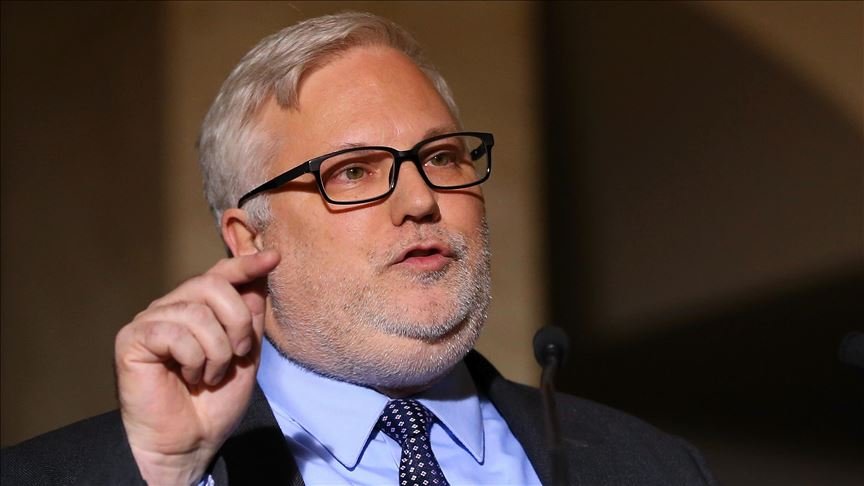
Facebook Twitter Youtube

Useful Links

    • Work With Us
    • Contact Us
    • Collaboration
    • Data Collection
    • Workplace
    • Adverstising
    • Privacy Policy
    • International Collab
    • Feedback
    • Terms of Use
    • About Our Ads
    • Help & Support
    • Entertainment
    • News Covering
    • Technology
    • Trending Now

Politics

Syrian, Norway to boost cooperation on mine clearance
Erna to step down as Conservative Party leader in 2026
Norwegian Labour Party on re-election win

Latest Articles

Syrian, Norwegian migration officials discuss cooperation in Oslo
Norwegian premier says peace institute funding had no link to Epstein
Norwegian ministers grilled in parliament over ties to Epstein
Tesla rise across Europe, extending recovery

Norway News 2025 . All Right Reserved. Designed and Developed by Norway News
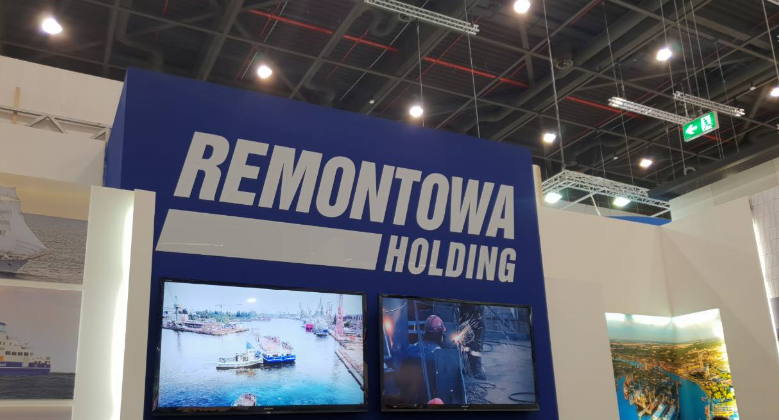
  • Home
  • About us
  • Disclaimer
  • Contact us
NORWAY NEWS – latest news, breaking stories and comment – NORWAY NEWS
  • Home
  • About us
  • News
  • Other News
    • Africa and Norway
    • Asia and Norway
    • Asylum
    • Breaking News
    • China and Norway
    • Corruption in Norway
    • Crimes
    • Defence
    • Diplomatic relations
    • Economics
    • Environment
    • Farming
    • Featured
    • Health
    • Killing
    • Media Freedom
    • Middle East and Norway
    • NATO and Norway
    • Nobel Peace Prize
    • Norwegian Aid
    • Norwegian American
    • Oil & Gas
    • Peace Talks
    • Politics
    • Racism in Norway
    • Religion
    • Royal House
    • Russia and Norway
    • Science
    • Sex scandal
    • Sports
    • Spy War
    • Srilanka and Norway
    • Svalbard
    • Taiwan and Norway
    • Terrorist
    • Travel
    • Video clips
  • Disclaimer
  • Contact us
NORWAY NEWS – latest news, breaking stories and comment – NORWAY NEWS
  • Home
  • About us
  • News
  • Other News
    • Africa and Norway
    • Asia and Norway
    • Asylum
    • Breaking News
    • China and Norway
    • Corruption in Norway
    • Crimes
    • Defence
    • Diplomatic relations
    • Economics
    • Environment
    • Farming
    • Featured
    • Health
    • Killing
    • Media Freedom
    • Middle East and Norway
    • NATO and Norway
    • Nobel Peace Prize
    • Norwegian Aid
    • Norwegian American
    • Oil & Gas
    • Peace Talks
    • Politics
    • Racism in Norway
    • Religion
    • Royal House
    • Russia and Norway
    • Science
    • Sex scandal
    • Sports
    • Spy War
    • Srilanka and Norway
    • Svalbard
    • Taiwan and Norway
    • Terrorist
    • Travel
    • Video clips
  • Disclaimer
  • Contact us

Editor’s Picks

  • Norway’s Long Shadow Over Sri Lanka: UN Report Exposes Reform Failure as Oslo Faces Pressure to Act

    September 8, 2026
  • UN concern over Sri Lanka’s cases of enforced disappearances

    October 8, 2025
  • UN Human Rights Council Resolution on Sri Lanka’s Path to Reconciliation

    October 7, 2025
  • International should support Sri Lanka: Solheim

    October 4, 2024
  • Norwegian Meets Sri Lankan’s Challenges

    May 3, 2024
  • Norwegian Ambassador meets JVP in Sri Lanka

    May 2, 2024

Newsletter

@2025 - All Right Reserved. Designed and Developed by Norway News