NORWAY NEWS – latest news, breaking stories and comment – NORWAY NEWS
  • Home
  • About us
  • News
  • Other News
    • Africa and Norway
    • Asia and Norway
    • Asylum
    • Breaking News
    • China and Norway
    • Corruption in Norway
    • Crimes
    • Defence
    • Diplomatic relations
    • Economics
    • Environment
    • Farming
    • Featured
    • Health
    • Killing
    • Media Freedom
    • Middle East and Norway
    • NATO and Norway
    • Nobel Peace Prize
    • Norwegian Aid
    • Norwegian American
    • Oil & Gas
    • Peace Talks
    • Politics
    • Racism in Norway
    • Religion
    • Royal House
    • Russia and Norway
    • Science
    • Sex scandal
    • Sports
    • Spy War
    • Srilanka and Norway
    • Svalbard
    • Taiwan and Norway
    • Terrorist
    • Travel
    • Video clips
  • Disclaimer
  • Contact us
NORWAY NEWS – latest news, breaking stories and comment – NORWAY NEWS
  • Home
  • About us
  • News
  • Other News
    • Africa and Norway
    • Asia and Norway
    • Asylum
    • Breaking News
    • China and Norway
    • Corruption in Norway
    • Crimes
    • Defence
    • Diplomatic relations
    • Economics
    • Environment
    • Farming
    • Featured
    • Health
    • Killing
    • Media Freedom
    • Middle East and Norway
    • NATO and Norway
    • Nobel Peace Prize
    • Norwegian Aid
    • Norwegian American
    • Oil & Gas
    • Peace Talks
    • Politics
    • Racism in Norway
    • Religion
    • Royal House
    • Russia and Norway
    • Science
    • Sex scandal
    • Sports
    • Spy War
    • Srilanka and Norway
    • Svalbard
    • Taiwan and Norway
    • Terrorist
    • Travel
    • Video clips
  • Disclaimer
  • Contact us
Sunday, October 4, 2026
NORWAY NEWS – latest news, breaking stories and comment – NORWAY NEWS
  • Home
  • About us
  • News
  • Other News
    • Africa and Norway
    • Asia and Norway
    • Asylum
    • Breaking News
    • China and Norway
    • Corruption in Norway
    • Crimes
    • Defence
    • Diplomatic relations
    • Economics
    • Environment
    • Farming
    • Featured
    • Health
    • Killing
    • Media Freedom
    • Middle East and Norway
    • NATO and Norway
    • Nobel Peace Prize
    • Norwegian Aid
    • Norwegian American
    • Oil & Gas
    • Peace Talks
    • Politics
    • Racism in Norway
    • Religion
    • Royal House
    • Russia and Norway
    • Science
    • Sex scandal
    • Sports
    • Spy War
    • Srilanka and Norway
    • Svalbard
    • Taiwan and Norway
    • Terrorist
    • Travel
    • Video clips
  • Disclaimer
  • Contact us
Copyright 2025- All Right Reserved Norway News
Science

Norwegian scientist says COVID-19 was manufactured, claim backed by ex-British intel head

by Nadarajah Sethurupan June 8, 2020
written by Nadarajah Sethurupan

A new study about the possible origin of the coronavirus has found that Covid-19 is not natural in origin.

The study, led by Norwegian virologist Birger Sorensen, has found that the coronavirus’s spike protein contains sequences that appear to be artificially inserted.

“The inserted sequences should never have been published. Had it been today, it would never have happened. It was a big mistake the Chinese made. The inserted sequences have a functionality that we describe. We explain why they are essential. But the Chinese pointed to them first”, Sorensen said.

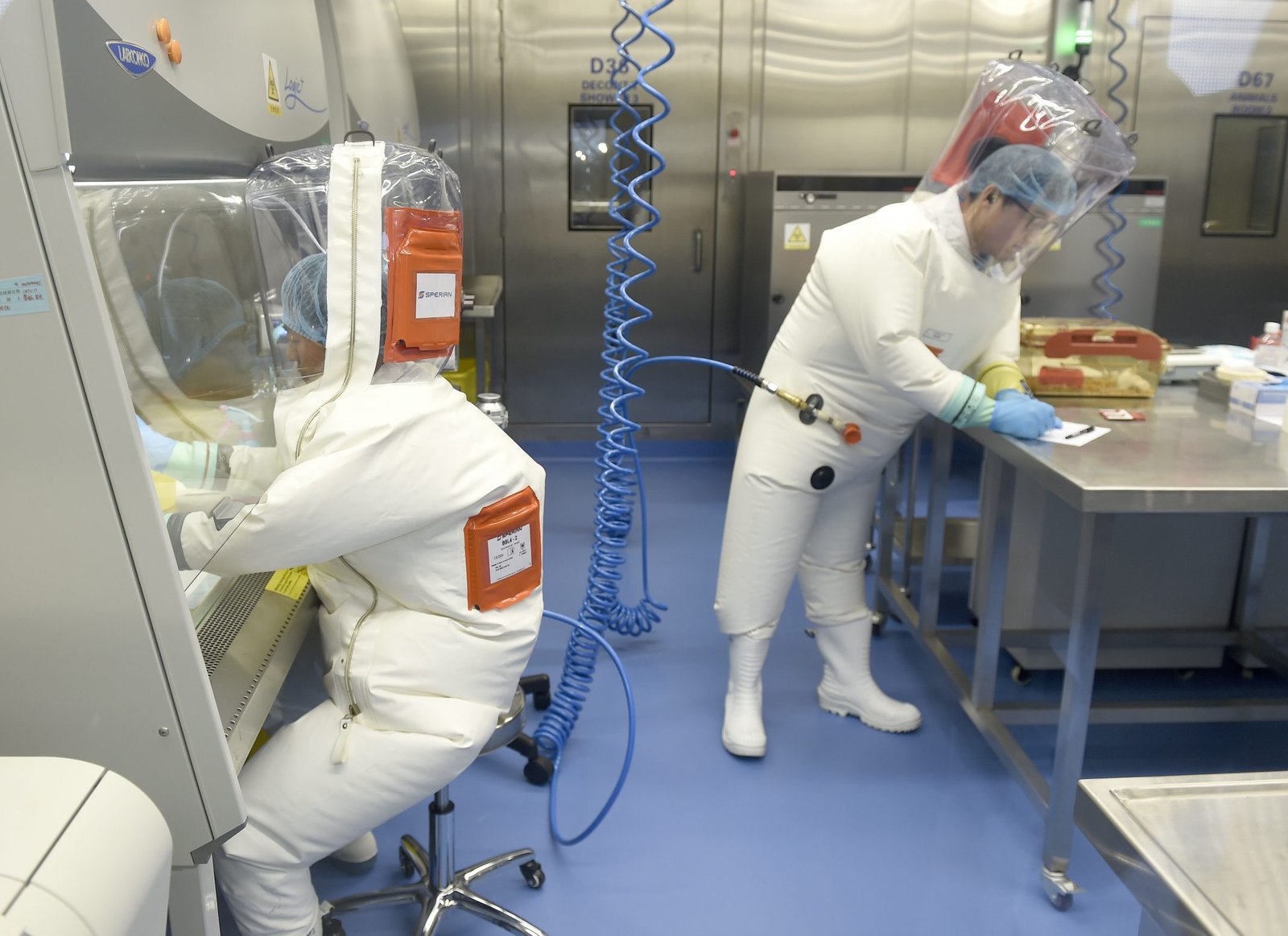
Researchers work in a lab of Wuhan Institute of Virology (WIV) in Wuhan, Hubei province, China, 23 February 2017 (issued 16 April 2020).

The researchers found that the virus had been doctored to bind to humans. They pointed out that it has hardly mutated since it began to infect humans, suggesting that it was already fully adapted to humans.

Former MI6 head Richard Dearlove has backed the claim. He suggested that scientists may have been carrying out gene-splicing experiment, but rejected theories that this may have been for malevolent purposes.

“It’s a risky business if you make a mistake. Look at the stories of the attempts by the leadership to lock down any debate about the origins of the pandemic and the way that people have been arrested or silenced”, he said.

A French Nobel Prize-winning virologist earlier also said he believes that the Covid-19 was developed in a laboratory in the Chinese city of Wuhan.

United States secretary of state Mike Pompeo later confirmed there is substantial evidence that the coronavirus originated in the Chinese state-backed Wuhan Institute of Virology.

June 8, 2020 0 comments
0 FacebookTwitterPinterestEmail
Environment

Port of Oslo orders new eco-friendly patrol boat

by Nadarajah Sethurupan June 8, 2020
written by Nadarajah Sethurupan

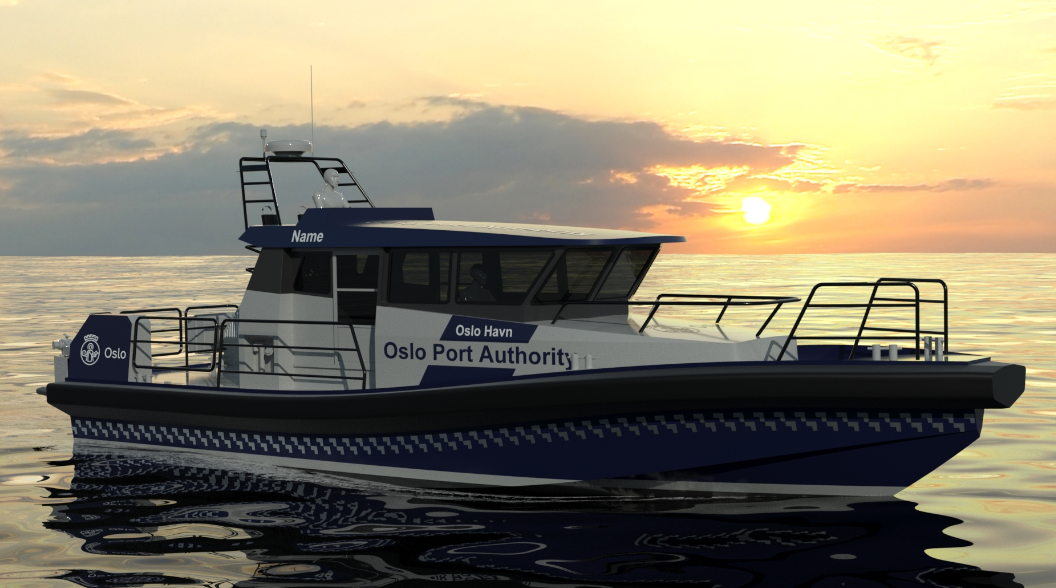
Norwegian Port of Oslo has signed a contract with compatriot boat builder Maritime Partner AS to purchase a new hybrid patrol boat.

As informed, the boat will be used for port surveillance as well as escorting of larger vessels sailing in the harbour.

Slated for delivery in 2021, the newbuild will be on the fjord every day to ensure that ships can travel safely and efficiently.

Image Courtesy: Maritime Partner

The patrol boat will be among the most environmentally friendly of its type, according to Maritime Partner. The hybrid technology will reduce the use of diesel by about 70 per cent. 

“The port aims to be emission-free and the Port of Oslo will invest in green technology when acquiring any new equipment. The boat we are building now are ground-breaking when it comes to use of battery technology,”Ingvar M. Mathisen, Port Director, pointed out.

The boat will run on batteries at low speeds, sufficient for inspections in the port areas. When high speed is required, the clean-burning diesel engines are started, while simultaneously charging the batteries. The boat can also be charged directly from shore power when not in use, Mathisen explained.

Specifically, the Alusafe 1300 MKIII Patrol Hybrid is to be built in recyclable aluminium. The new boat will replace the catamaran Falk, which has been operating in the harbour since 2000.

The propulsion is by twin water jets connected to the diesel and electric motors. The top speed exceeds 30 knots. Batteries can operate the boat at low speeds of 4-5 knots for 2-3 hours. The diesel engines use biodiesel, and emissions are in accordance with strict international environmental regulations.

“It is particularly satisfying to sign this contract during these demanding COVID-19 times. This shows that the Port of Oslo is planning ahead event though the society practically was in lockdown,”  Peder R. Myklebust, CEO of Maritime Partner AS, commented.

June 8, 2020 0 comments
0 FacebookTwitterPinterestEmail
Norwegian Aid

Norway gives $5 million to mine clearing in Cambodia

by Nadarajah Sethurupan June 8, 2020
written by Nadarajah Sethurupan

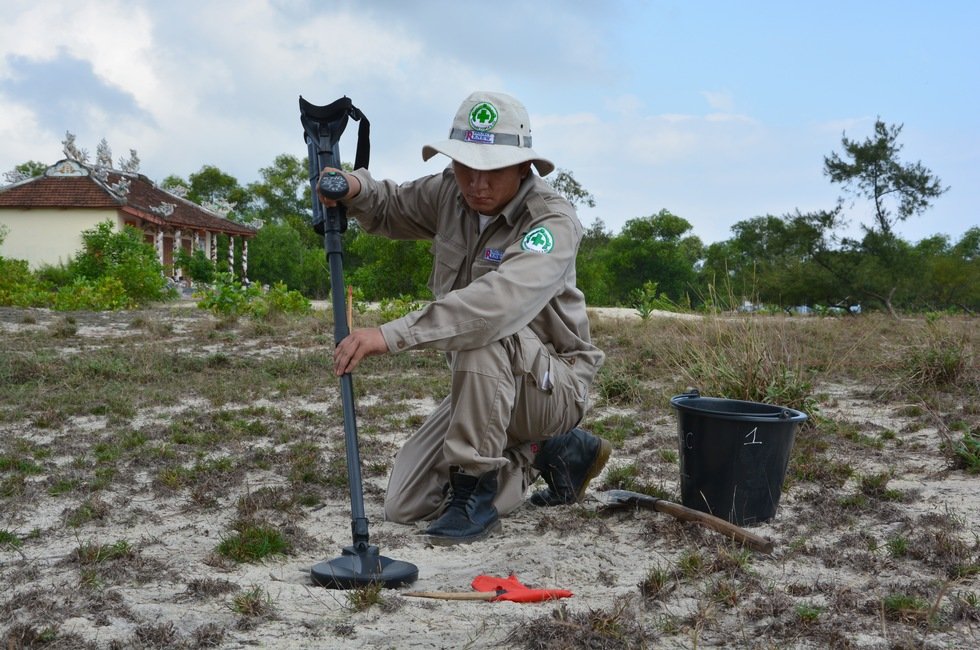
The Norwegian government has confirmed its dedication and involvement in supporting the Cambodian mine clearance efforts.

The Norwegian support will come through Norwegian People’s Aid (NPA) and will provide $5 million over the next four years.

The announcement was made by Zlatko Vezillic, the Program Manager for NPA’s division for Mine Action and Disarmament in Cambodia, reported Media.

Photo: Lærke Weensgaard

The Cambodian Senior Minister and First Vice President of Cambodian Mine Action and Victim Assistance Authority (CMAA), Ly Thuch, expressed his gratitude towards the Norwegian effort and contribution to the clearance of mines in the Kingdom of Cambodia.

Norway’s assistance has greatly helped Cambodia of reaching the status as ‘mine-free’ by 2025, reported Media.

(Source: Khmer Times)

June 8, 2020 0 comments
0 FacebookTwitterPinterestEmail
NATO and Norway

Polish defence min inaugurates DEFENDER-Europe 20

by Nadarajah Sethurupan June 6, 2020
written by Nadarajah Sethurupan

Polish Defence Minister Mariusz Błaszczak on Thursday morning inaugurated the two-week Defender-Europe 20 Plus Polish-US military exercise at a range in Drawsko Pomorskie in north-western Poland.

Defender-Europe 20 Plus will take place on June 5-19 and will involve the biggest transport of US troops to Europe in 25 years as part of a connected exercise, the Allied Spirit, originally planned for May.

After the inauguration, the minister viewed the first tactical operations conducted jointly by the Polish and American soldiers.

In total, the Polish-US exercises involve around 6,000 soldiers and about 2,000 various types of equipment, including 100 tanks and over 230 combat vehicles.

Defender-Europe 20 Plus will allow checking, at the level of brigades, the ability of Polish and American soldiers to cooperate in a joint combat operation. The main goal is to increase strategic readiness and interoperability thanks to the ability to quickly deploy troops from the US to Europe, as well as to test the possibilities of host countries to accept them. 

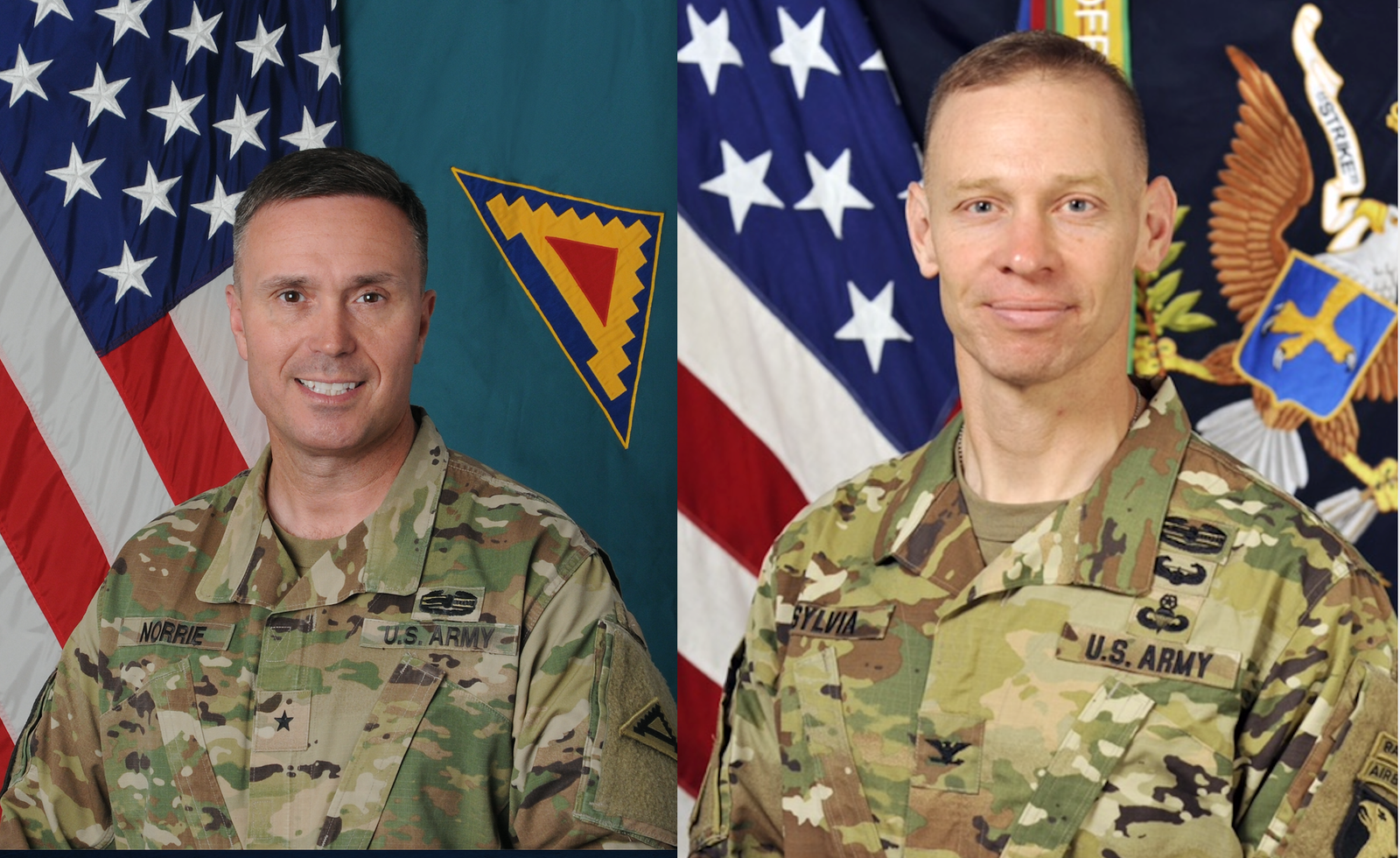
Below is a full rush transcript of the Press Briefing by  U.S. Army Europe Brigadier General Christopher R. Norrie Commanding General, 7th Army Training Command And Brigadier General Brett G. Sylvia Deputy Commanding General-Maneuver, 1st Cavalry Division And General Command of the Polish Armed Forces Colonel Kazimierz Dynski Deputy Chief of Staff – J3 Division Chief.

Brigadier General Norrie: Good afternoon, I am Brigadier General Chris Norrie, the Commander of 7th Army Training Command. On behalf of U.S. Army Europe, thank you for taking time from your schedules to speak with myself, General Sylvia, and Colonel Dynski here, and Justin, thank you to you and our colleagues in Brussels for hosting this event, which makes it possible for us at the moment to have this conversation.

I do want to highlight that I’m on this phone call today from my basement here in Grafenwoehr, Germany, where I’ve been quarantining for almost two weeks now so that I can comply with host-nation requirements for entry from Germany, and that I will take a COVID-19 test before I enter the exercise itself, which is to say, like the rest of the world, COVID-19 has shaped and continues to shape everything we do here in U.S. Army Europe.

DEFENDER-Europe 20 was originally designed as a deployment exercise to bring large amounts of U.S. soldiers and equipment to Europe to build strategic readiness in support of our National Defense Strategy and NATO deterrence objectives. We had already begun this exercise when, in March, we decided to modify the exercise in conjunction with our allies and partners to ensure the safety of our forces and host-nation communities here in Europe.

Over 6,000 soldiers and 3,000 pieces of equipment arrived via air and sea to Europe, and an additional 9,000 pieces of equipment were drawn from Army prepositioned stocks here in Europe. Although we had plans for much larger formations of troops and equipment to arrive and then join our allies and partners for training on the ground here, we were able to exercise the systems and processes of mobilizing and delivering credible combat power from the United States into Europe from port to port and across land to a potential point of crisis. While many of the linked exercises for DEFENDER-Europe 20 were canceled in March, after careful planning between U.S. Army Europe and the Polish Ministry of Defense, exercise Allied Spirit – originally scheduled for May – starts this weekend in Drawsko Pomorskie Training Area in Poland and will run through June 19th.

I’ll defer to General Sylvia to discuss specifics related to the exercise, but I do want to highlight the significant work that has gone into the planning and execution of these exercises and the resumption of larger training this summer here in Europe with our allies and partners.

These exercises still utilize many of the original DEFENDER 20 – Europe 20 training objectives to enhance our combined readiness between U.S., allied, and partner nations, and importantly, they demonstrate that NATO allies and partners stand stronger together and that we’re able to operate and train in any environment. As commanders, we manage and mitigate risk. I don’t think anyone could have imagined when we started to cancel exercises earlier this year just how much this virus would impact the world, but we expect to operate in this environment for the foreseeable future. As military professionals, we have to balance keeping our force and community safe and healthy while maintaining operational readiness. As we progressed through spring and now into summer, we have done that here in Europe in close concert with our allies and host nations throughout Europe.

In Germany, for example, we’ve followed host-nation ordinances on size of gatherings, instituted strict social distancing, and maximized telework to the greatest extent possible. As conditions have improved, we’ve resumed our training but modified wherever possible to limit any potential spread of the virus. These are – there are just some jobs, though, in our military that you cannot telework, however. In order to train effectively and be able to work together with our allies and partners, you have to get out into the field and do it. We’re confident that we can do it safely and that’s what you’re going to see if you come out to Drawsko Pomorskie over the next few weeks, or if you follow along online with the training that we’re executing.

I do look forward to answering any questions that you may have, either here in this forum or over the next few weeks, and I’ll now hand it over to Brigadier General Sylvia for his comments.

Brigadier General Sylvia:  I’m Brigadier General Brett Sylvia, the Commander of the 1st Cavalry Division Forward, and also the Deputy Commanding General for 1st Cavalry Division. On behalf of America’s First Team, let me say thank you for taking the time to talk to us today. I’d also like to say thank you to my colleagues, Brigadier General Norrie and Colonel Dynski, for being here. I’m talking to you today from the training area in Drawsko Pomorskie, Poland, and as stated, I’ll address the specifics of the training and what we’ve done to prepare for it.

As Brigadier General Norrie stated, this training is a scaled-down version of the original training event, which had been designed to be the culminating event for the DEFENDER-Europe 20 series. What was once 10,000 soldiers is now down to 6,000 U.S. and Polish soldiers. We’re very thankful to the Polish armed forces for agreeing to open up this training area and for agreeing to participate with us. At the time of the decision, it was still a very uncertain time for many nations, which is making that all that more significant.

This is an important training event for numerous reasons. One of them is to demonstrate to our NATO allies and the world that we have the capability to train safely in this COVID environment. My colleague, Brigadier General Norrie, discussed how COVID-19 changed many things. We’ve gone to great lengths to ensure this training event is a safe one for all the soldiers participating and everyone in the local area. As a result, 100 percent of the soldiers and civilians participating or supporting this training have been tested and found to be COVID-free. At the same time, we’re putting in place protocols to monitor, periodically test, and if someone becomes sick, we have the ability to treat and trace. You can see that we’re committed to preserving the integrity of the training environment, even to the point where Brigadier General Norrie has to stay in his basement for 14 days before coming here.

So secondly, this training will demonstrate our ability to operate as part of a multinational, interoperable team, conducting one of the most complex maneuvers that any army can attempt: an opposed river crossing, or what we call a “wet-gap crossing.” With our Polish allies side by side with us, we bring the best of our armies together to accomplish this mission. The capabilities of the 2nd Armored Brigade Combat Team, the capabilities of the Combat Aviation Brigade – both from 3rd Infantry Division – and then the capabilities of the Polish 12th Mechanized Brigade greatly complement one another. Some may have seen the demonstration of some of these capabilities yesterday when the Polish Minister of Defense visited.

The bottom line is that the Polish 12th Mechanized Division is a well-equipped, well-trained, and, most definitely, a well-led force. We are proud to work side by side with them as our peers during this exercise. We are truly stronger together.

I’m honored to be able to serve as the higher headquarters for this exercise. That headquarters is new to Poland and this is a fantastic opportunity for us to grow in our interoperability skills. We’ve trained and prepared for this exercise and we are certainly all ready to begin.

Colonel Dynski: Good afternoon, Colonel Dynski, Deputy Chief of Staff for Operations, General Command, from Warsaw East. I will provide to you the national flavor and national perspective to the exercise which was already very detailed and depicted by General Norrie and General Sylvia.

Following the deliberate planning between the U.S. Army Europe and the Polish Ministry of National Defense, exercise DEFENDER 20 Plus already started. Yesterday the Minister of National Defense, Mr. Blaszczak, accompanied by the ambassador of the U.S., inaugurated the exercise at the Drawsko Pomorskie Training Area, modified from the original design of the exercise to ensure the safety of soldiers, which is the crucial part of this, what we are speaking about. Due to the COVID pandemic restrictions, the U.S. and Polish bilateral exercise will feature the Polish airborne operations and the division-size river crossing, which is linked with the purpose of the Polish armed forces.

DEFENDER-Europe 20 Plus will enhance the readiness and ability to respond decisively against any adversary in a multinational, multi-domain environment. It will contribute to increasing interoperability and train our troops and commands to plan and execute ground combat operations.

I would like to highlight that all the scenarios and the setup for the DEFENDER-Europe exercise is along to the national security strategy, which was already signed in May of this year by President Duda. In the strategy, it is emphasized that the importance of the strategic cooperation with the United States of America, particularly in the areas of security and defense. Poland is the host nation, providing troops and providing the HNS, host-nation support. We do our best to provide the real training environment for the exercise and providing the safety for all soldiers in this COVID pandemic, very hard conditions.

Question: Do the U.S. and Poland see any real Russian threat in the Baltic region? If so, what kind of threat do they see?

Brigadier General Norrie: This is Brigadier General Norrie. I won’t speak for Poland, and I’ll defer to Colonel Dynski for his opinion. But from a U.S. perspective, we see that certainly our allies and partners are concerned with the realities of any threats in the region. That concern and our commitment to ensuring the territorial sovereignty and defense of our allies is what launched Operation Atlantic Resolve in 2014, and it continues not just through that but also with NATO’s enhanced forward presence in Estonia, Latvia, Lithuania, and Poland. And Colonel Dynski, I’ll turn it over to you.

Colonel Dynski: The assessment of this security situation, we are very careful on this and we will see how the security environment has changed in Europe and especially in the central part of Europe from the east side. So as the – all efforts which were done establishing as the enhanced forward presence, the troop – NATO troops in Poland and the Baltic nations, as enhanced forward presence in Romania and the presence of ABCT U.S. troops stationed in Poland are the answer for how we have to be careful with assessment of the security environment in this region.

Question: Do you have any details about the exercise planned for next year, hopefully without being hindered by COVID?

Brigadier General Sylvia: This is Brigadier General Sylvia. So to address the first portion of the question about the headquarters, we replaced the 1st Infantry Division as part of the rotational division forward headquarters. What was formerly called the mission command element has since changed its name to the division forward mission, which is part of the Atlantic Resolve mission where we provide the higher headquarters for the rotational forces that come over into Europe as part of Atlantic Resolve.

As to the question about the exercises for next year, and I can also turn it over to General Norrie for his perspective, I can tell you that much of it is in planning right now and I believe that there’s a lot of assessments and reassessments that are taking place based off of the new environment in which we’re operating. But I’ll turn it over to General Norrie.

Brigadier General Norrie: Absolutely. The planning for next year is happening now with our allies, with our partners. We are working to define what those exercises might be, but we always are looking for opportunities to exercise our ability to move through Europe with our allies, and then to practice large-scale combat operations and large-scale maneuver training and exercises with our allied partners as well in support of the alliance and our shared objectives here in Europe.

Colonel Dynski: Colonel Dynski, if I may, to add something from the host-nation perspective. We are very grateful that the U.S. side decided to establish – so most recently it was the 1st ID, Infantry Division Forward MC, command, and right now it is 1st Cav MC headquarters at Poznan. We are very happy to have U.S. troops on the Polish soil, not only from the presence, which is the very measurable point of dedicated to the security, however, I would like to add that we are taking very great advantage of the conducting the common training. Together with the U.S. troops, we are increasing interoperability. We’re also conducting day-by-day training, which is most – which is influencing our abilities to conduct future operations.

Question: Do the Allied Spirit – or does the Allied Spirit scenario consider assertive Russian rhetoric against neighboring countries as a factor threatening the security of not just Poland but also the wider Euro-Atlantic area? Have you invited neighboring partner countries like Ukraine to participate with units or observers? And finally, in particular, are you going to deploy NATO SALIS airlift capabilities?

Brigadier General Sylvia: This is Brigadier General Sylvia. We’re not focused on any one specific adversary for these exercises. Only focusing on one of them would certainly leave us vulnerable to others. So instead, each time for every exercise, we build a challenging scenario that builds the readiness of our forces while assuring our NATO allies of our commitment to them. Allied Spirit’s scenario is about Poland and the United States working together as peers. It’s a scenario that gives us the opportunity to meet the main objective we want to achieve in terms of a large-scale maneuver. This is strengthening our ability to work as a combined arms team with our Polish allies. The original plan, as discussed a little bit, was for Allied Spirit to involve multiple nations, but as we’ve had to adjust it, it will only feature U.S. and Polish forces. Also, there’s no incorporation of NATO’s strategic airlift capability in this exercise in its current construct. From what I understand, they’re currently busy delivering supplies to allied nations to help fight COVID-19, which for them, obviously, is a significant undertaking.

Question: Will there be a SOF element, in particular involving in the exercise?

Brigadier General Sylvia: I did have a hard time hearing the last part of that. You asked if there would be a SOF, a Special Operations Forces, element participating? Is that what you said?

Brigadier General Sylvia: There are no SOF elements participating in this. The forces are an Armored Brigade Combat Team from the 3rd Infantry Division, a Combat Aviation Brigade from 3rd Infantry Division, and then forces from the 12th Mechanized Division as well as some engineer forces. There is the – one of the battalions from the 6th Polish Airborne unit that will be participating, but we do not have any special operating forces.

Colonel Dynski: Also, from the Polish side, there is no intent to put the special forces to the exercise, but as I already stated, the 12th Mechanized Brigade as the 9th Armored Cavalry Brigade, 2nd Tactical Air Wing, 3rd Airlift Wing, [inaudible] Brigade, and engineers – all those are forces from the Polish side participating in this exercise.

Question: I wanted to ask that Russia’s foreign ministry, when DEFENDER-Europe 20 was announced, aired concern that NATO is creating an armed fist near Russia’s borders. However, Secretary General of NATO Jens Stoltenberg replied that the exercise is purely defensive in nature. However, when describing the specifics, you mentioned the wet-gap crossing, the river crossings with armed forces. I would like to clarify: Could this operation be considered defensive in nature or, rather, offensive?

Brigadier General Sylvia: This is Brigadier General Sylvia. It absolutely is considered a defensive operation. I think that as you look at the construct of the multiple missions that need to take place as part of any combined arms team, there is the integration of multiple forms of maneuver that form the broader form of maneuvers. So for this one, yes, we are doing a wet-gap crossing. We are moving forces forward; that is certainly true. And elements of that are completely offensive in nature, but can be brought into the broader framework of a mobile defense in order to be able to defend certain terrain. And so there is nothing inconsistent with the Secretary General’s statement about it being defensive maneuvers in nature. So this is just our ability to be able to work on the interoperability amongst the multinational elements.

As I stated, my headquarters is new to the European theater. The Armored Brigade Combat Team that’s participating from the U.S. side is also new. And our ability to work alongside our Polish allies to be able to work all of the human, technical, and procedural interoperability requirements, it comes all together in this particular training event in order for us to be able to work together as a NATO team. And so it absolutely remains consistent.

Question : In addition to Polish and U.S. personnel, will any British army troops from the NATO EFP Battle Group Poland serving operationally under the 2nd U.S. Cavalry be participating in the later stages of the exercise? If so, what will their role be?

Brigadier General Sylvia: So this is Brigadier General Sylvia again. There are no EFP forces that are participating in this training. There was an element in the former construct of the DEFENDER series where they did participate, so I can understand where the question may have come from. But under this construct of Allied Spirit here in Drawsko Pomorskie, that element is not participating as part of this training.

Question: The 7th Army Training Command is participating in the upcoming exercise. Are there parts of the exercise in Grafenwoehr as well, or is the whole exercise only scheduled in Poland? 

Brigadier General Norrie: There is no specific training tied to Allied Spirit resident here at Grafenwoehr. However, the capabilities in terms of creating a training environment that are a part of our mission here at 7th Army Training Command are integral to Allied Spirit. Allied Spirit, again, it’s an exercise planned as a multinational division river crossing, and it includes a command post exercise that is stimulated through simulations. We have equipment that allows us to understand the maneuvers that are occurring as part of the training and to provide feedback to participating units in the form of after-action reviews, and then our operations group from the Joint Multinational Readiness Center at Hohenfels, they are observing and controlling the event with our Polish partners in support of the exercise training objectives.

Question: The Russians recently updated their nuclear strategy, and I was wondering if that makes any nuclear deterrence strategy, I should specify whether that makes any difference in your practical work and your preparation for the exercise? 

Brigadier General Norrie: This is Brigadier General Norrie. I can speak broadly about a shared purpose that our Army and the Polish Army has, and that is allowing our units an opportunity to train on their core competencies. Those core competencies are enduring and they are consistent with those things that armies practice and prepare for around the world. The training objectives with Allied Spirit – we’re in support of Allied Spirit – are those that General Sylvia outlined, and this training environment allows this incredible team multiple opportunities to practice their unit-level core competency and training objectives.

Question :  What can you tell us about the media day on June 17th? What is going to happen and what will be the schedule? How closely did you follow Russia’s movements in Ukraine, Syria, Libya, etc., in order to organize and plan this exercise?

Brigadier General Norrie: This is Brigadier General Norrie. I’ll defer to General Sylvia in reference to the media day, or our public affairs team. In reference to the second question, we always monitor the complexities of our environment with our allies, and we remain focused on preserving and further building readiness and protecting our formations.

Brigadier General Sylvia: This is Brigadier General Sylvia. So regarding the activities on the 17th, and I may have to defer to some public affairs at USAREUR with Colonel Scrocca, but as it stands right now I know that we are doing a Facebook Live event on the 14th of June in order to be able to demonstrate – to view the activities of this exercise. And so that’s taking place on the 14th for everyone to be able to view. Other activities, virtual events, I think are also going to be incorporated on the 14th, and some perhaps on the 17th. But again, I would have to defer to the USAREUR spokesman for that.

Question: Despite the pandemic scale-backs of several exercises, the Allied Spirit is going forward as is BALTOPS, the naval exercise in the Baltic Sea. So two events fairly close to each other. What message do you hope that sends as it pertains to the region?

Brigadier General Norrie: Well, I again just want to say thank you for the opportunity, and we’re looking forward to this training.

Brigadier General Sylvia: This is Brigadier General Sylvia. The absolute same for me. It’s been a pleasure to be able to spend a little bit of time with you, pleasure to be able to speak about this unbelievable training opportunity. I know that I was concerned whether or not we would be able to do this. So I am very thankful to the Polish armed forces for hosting us and for all of the multitude of people and entities and agencies that it took to be able to pull this training event together. It is going to be a fantastic training event to continue to build our readiness and to be able to demonstrate certainly that we are stronger together here as part of this NATO alliance, and that we can build our readiness, do complex training in this COVID environment, and I think that that is a – it’s a great message for all to see. Thank you.

Colonel Dynski: Colonel Dynski. From the Polish side, I would like to add that as – even in this COVID pandemic restriction, as a military we are flexible, we are adaptable, also in the decision-making processes doing the preparations of the exercise and delivering valuable training to our soldiers in terms of to improve transatlantic unity, deterrence, and credible defense, interoperability, to increase military mobility. So all of those together is – it looks like that as we will deliver what was scheduled for those exercises. 

June 6, 2020 0 comments
0 FacebookTwitterPinterestEmail
Asia and Norway

Will China please produce the real Panchen Lama?

by Nadarajah Sethurupan June 6, 2020
written by Nadarajah Sethurupan

Tibet’s self-declared government-in-exile marked the 25th anniversary of the disappearance of a boy named as Tibetan Buddhism’s second highest figure by calling on China to account for his whereabouts. The Tibetan parliament, the Kashag, said the boy named the 11th Panchen Lama who was taken away at age 6 along with his family in 1995 continued to be recognised as the sole legitimate holder of his title. 

His Holiness the 14th Dalai Lama speaking in the Netherlands on September 16, 2018. | Photo by Olivier Adams

“China’s abduction of the Panchen Lama and forcible denial of his religious identity and right to practice in his monastery is not only a violation of religious freedom but also a gross violation of human rights,” the Kashag statement said. “If China’s claim that Tibetans in Tibet enjoy religious freedom is to be considered true, then China must provide verifiable information on the well-being and whereabouts of the 11th Panchen Lama along with others”, the statement said. 
The statement also said that “China’s abduction of the Panchen Lama and forcible denial of his religious identity and right to practice in his monastery is not only a violation of religious freedom but also a gross violation of human rights.” The continued non-appearance of Gedhun Choekyi Nyima, the legitimately recognized Eleventh Panchen Lama, clearly shows China’s intentions vis-à-vis Tibet and its efforts to control the reincarnation of prominent Lamas, including the Dalai Lama. 

The 14th Dalai Lama had recognized a young Tibetan boy, Gedhun Choekyi Nyima as the 11th Panchen Lama in 1995, the second highest spiritual authority in Tibetan Buddhism after Dalai Lama. Days later, Choekyi Nyima disappeared, becoming the world’s youngest political prisoner. The Dalai Lama, named the Eleventh Panchen, with the help of Tibetan lamas trained in reading portents and signs. China, on the other hand claims the reincarnate can only be chosen by pulling lots from a golden urn, a method it used to pick its own candidate under strict control of the officially atheistic ruling Communist Party. 

China, which claims Tibet as its own territory, named another boy, Gyaltsen Norbu (officially known by China as Lama Bainqen Erdini Qoigyijabu), to the position. He is believed to live under close government control in mainland China and is rarely seen in public. Norbu was confirmed and approved by the Chinese State Council, as the reincarnate of the Tenth Panchen Lama on 29 November 1995 after the lot drawing from a sacred golden urn in strict compliance with religious rituals and conventions. The Chinese Panchen was born on 13 February 1990 at Lhari County in northern Tibet. His father and mother both had primary school education. 

US Statement on Panchen

Meanwhile, the United States also urged China to release the 11th Panchen Lama, who was taken into captivity at the age of six by Chinese authorities. Sam Brownback, US Ambassador-at-large for International Religious Freedom made media comments during a video conference call with reporters (14 May 2020) about the Panchen Lama saying, the world did not have any idea of his whereabouts, even as the US continued to press China to release the Panchen Lama. Brownback while responding to a question, said the release of the Panchen Lama had increased relevance in the light of China’s continued assertion that it had the right to appoint the next Dalai Lama, which Beijing had no right to do. 

In 1996, a year after the 11th Panchen went missing China had admitted that it was holding the Tibetan child, Gendun Choekyi Nyima, regarded by most Tibetans as the 11th reincarnation of the Panchen Lama. The UN had at that stage asked that a delegation be allowed to visit the seven-year old boy, whom Beijing said was being held to prevent him from being kidnapped by Tibetan nationalists. 

Meanwhile, the United States Commission on International Religious Freedom (USCIRF), in a statement, reiterated its call for the US State Department to fill the vacancy for the Special Coordinator for Tibetan Issues. The appointment of the Special Coordinator for Tibetan Issues is mandated by the Tibetan Policy Act of 2002 however, this position has been vacant since 20 January 2017. 

Previous special coordinators have been crucial to raising the profile of religious freedom issues in Tibet and mobilizing government resources to address the issue, it said. USCIRF Commissioner Gary Bauer claimed that the Communist Party of China was attempting to erase the unique identity of Tibetan Buddhism. “We need to utilize all of the policy tools available, including the position of Special Coordinator for Tibetan Issues, to confront this grave threat to religious freedom”, he said. 

Panchen Lama’s Role

Traditionally, the Panchen Lama has served as teacher and aide to the Dalai Lama, Tibetan Buddhism’s highest leader who is now 84 and is accused by China of seeking independence for Tibet. Beijing claims Tibet has been part of China for centuries, but many Tibetans say they were largely independent for most of that time. The Dalai and Panchen Lamas were supreme figures of spiritual authority in Tibet (as well as of the Gelug tradition) and enjoy a reverence among Tibetans that transcends the plurality of regional and sectarian affiliations. They were linked by, among other things, a unique authority in the selection and tutelage of each other’s successive reincarnations. The breakdown of this special relationship in the early 20th century was used by China’s Communist Party, to intervene in and take control of Tibet’s political affairs. 

Traditionally, the Dalai Lama has been involved in recognising the Panchen Lama, and similarly, the Panchen Lama is part of the process by which each new Dalai Lama is chosen. That is precisely why China as far back as 1995, figured that it made sense to have its own candidate as the Panchen Lama. Its’ plans for a post-Dalai Lama world were set in motion way back then, and with the endorsement of its own Panchen Lama, China wanted to choose a successor to the current Dalai Lama and seek to control him. Hence, it is believed to be keeping another young man, who was the Dalai Lama’s choice as Panchen Lama, incommunicado in an unknown location. China fears that Tibetan exiles will appoint their own Dalai Lama and it does not want any authoritative Tibetan figure to show him support. Both China and the exiles have recently been stepping up preparations for a coming dispute. 

Interestingly, in August 2018, the Chinese-appointed Panchen Lama, Norbu held a worshipping ceremony at Lhamo Lhatso lake in Gyaca County, Shannan Prefecture of Tibet Autonomous Region. This was the first visit by the Chinese Panchen Lama to Lhamo Lhatso, a sacred lake. During the worshipping ceremony (18 August 2018) a blessed bottle was planted in the middle of the lake. 

Lhatso lake is famous for the visions that a Regent or a High Lama can have in it. For example, signs can be ‘seen’ and indications can be gathered to discover a new Dalai Lama. It was the case when Regent Reting Rinpoche went to the lake in 1935 and had several visions; he saw the roofs of the house of the young 14th Dalai Lama who had just been reborn in a remote village of Amdo province (now Qinghai). Two years before this, Gyaltsen Norbu visited another sacred lake, the Rinbung Yamtso in Dekyiling area of Rinbung County (Shigatse). As one authority on Tibet aptly wrote that “there is no doubt that China is preparing for the rebirth of the present Dalai Lama”. 

In April 2020, the Dalai Lama, while responding to a question that: “I hope the official Panchen Lama studies quite well under the guidance of a good teacher. When I recognised Panchen Lama sometime ago, there was no news about him. But according to reliable information, he is still alive and carrying normal education”. If that indeed be the case, then the 31 year old Panchen Lama has every right to be free. Will China please produce the real Panchen Lama, for the world to see?

June 6, 2020 0 comments
0 FacebookTwitterPinterestEmail
Environment

Norway adds 51 MW of solar capacity in 2019

by Nadarajah Sethurupan June 5, 2020
written by Nadarajah Sethurupan

Solar capacity in Norway increased by 51 MW to reach a total of 120 MW in 2019, Norwegian solar industry body the Solenergiklyngen said last week.

Citing data from Norwegian consultancy Multiconsult and the Norwegian Water Resources and Energy Directorate (NVE), the industry body said the rate of adding new solar capacity more than doubled last year after the country installed 23.5 MW in 2018.

Author: Capman Green Energy Fund / All rights reserved.
In 2019, commercial and industrial installations accounted for 60% of the total capacity added, while residential systems made up 35%.

The Plus Customer scheme (Plusskundeordningen), launched in 2017, has supported new solar installations in Norway. As part of the scheme, power utilities have to buy surplus power from solar arrays with a capacity of up to 100 kW.

June 5, 2020 0 comments
0 FacebookTwitterPinterestEmail
Diplomatic relations

Norwegian Honorary Consulate moves to Norway House

by Nadarajah Sethurupan June 5, 2020
written by Nadarajah Sethurupan

The Norwegian Honorary Consulate General has moved to Norway House, the National Norwegian Center in America, the organizations announced today.  The Consulate will occupy space in the current Albert H. Quie Center and will have a prominent presence in Norway House’s new Innovation and Cultural Center.  

“It is fitting and most appropriate that the Honorary Consulate General be housed at Norway House,” said Eivind J. Heiberg, Honorary Consul General for Norway.  “Given the support the Norwegian government has extended to Norway House and its forthcoming expansion, it is the most logical location for those wishing to do business with the consulate.”

The Honorary Consulate General provides a range of services for people needing information on Norway and Norwegian-American relations.  The Consulate provides passport renewals, can help with citizenship and pension applications and answer questions about visas and residence permits.    In addition, it also facilitates business development, educational partnerships, and scientific collaborations between the two countries as well as serves citizens of Norway traveling to the Upper Midwest.  The Consulate has a staff of two and was most recently located in Minnetonka.  

“We are thrilled that the N,orwegian Honorary Consulate General has chosen Norway House as its new home,” said Christina Carleton, Executive Director, Norway House.  “This is an important milestone as we plan to break ground on our expansion later this year and fulfill our plans to be the National Norwegian Center in America.  Additionally, its proximity adjacent to Mindekirken – The Norwegian Lutheran Memorial Church – centers the consulate in the heart of what was the historic Norwegian immigrant community along Franklin Avenue in south Minneapolis.”  

The Embassy in Washington, D.C. is the Consulate’s superior career mission. Norway is also represented by Consulates General in Houston, New York and San Francisco.   

“It is an exciting development that the Norwegian Honorary Consulate General will make its new home at Norway House in Minneapolis,” said Kåre R. Aas, Norway’s ambassador to the United States. “Norway House has been an important part of my many visits to the region. They understand the importance of connecting culture, business and education between Norway and the U.S.  

The Consulate is open for appointments only at this time. 

About Norway House 

Norway House partners with individuals, organizations, and businesses in the Norwegian-American community to promote an appreciation for and understanding of the American Norwegian experience and its relationship to contemporary Norway and the world.  Programs Norway House oversees include the gallery, The Edvard Grieg Society, Business Accelerator Resource Network (BARN), the Norway House Peace Initiative and the “Going Viking” award which recognizes the accomplishments of notable Norwegian-American leaders.  For more information, please visit www.norwayhouse.org.

June 5, 2020 0 comments
0 FacebookTwitterPinterestEmail
Environment

Green package delivers boost for offshore wind in Norway

by Nadarajah Sethurupan June 4, 2020
written by Nadarajah Sethurupan

A package of measures intended to drive growth has been unveiled by the Norwegian government. The measures include establishing a research centre for environmentally friendly energy. The Ministry of Petroleum and Energy will also allocate funds for a project related to developing supply chains and delivery models for offshore wind.

Minister of Petroleum and Energy Tina Bru said, “We want to pave the way for businesses to create green jobs and a more sustainable future. The new research centre will bring together the best in industry, institutes and academia to solve challenges related to the development of offshore wind power in Norway. This will help launch a larger project to strengthen industrial co-operation and develop supply chains and delivery models for what is a rapidly growing market.”

Norway already has eight similar technology centres in different areas that focus on social science issues.

In May 2020, companies in the offshore industry in Norway with an interest in floating wind wrote an open letter to the Norwegian Prime Minister Erna Solberg asking her to urgently clarify the licensing conditions for floating wind projects in the country.

The signatories to the letter asked the Norwegian Government led by Ms Solberg to make an announcement about two floating offshore windfarms in Norwegian waters, each of 500 MW, as soon as possible, and to ensure a licence to build them is issued in 2020.

The signatories to the letter also want the government to develop floating wind policy in such a way that it addresses generation and use of renewable electricity, and develop a ‘sectoral agreement’ between the offshore wind industry and the authorities, inspired by the UK’s Offshore Wind Sector Deal.

This deal should include goals and measures that ‘link exports, jobs, climate and energy,’ they said, noting that “Norway’s advantage is knowledge” and “a larger programme of research, innovation and supplier development in offshore wind should be established as soon as possible.”

The letter to the Prime Minister Erna Solberg was also sent to the Minister of Petroleum and Energy, Minister of Industry, Iselin Nybø; Minister for Climate and Environment, Sveinung Rotevatn; and to parliamentary leaders at the Norwegian parliament, members of the Storting’s energy and environment committee, and members of the Storting’s finance committee.

June 4, 2020 0 comments
0 FacebookTwitterPinterestEmail
Science

Northvolt and Norsk Hydro joining hands to set-up car battery recycling plant

by Nadarajah Sethurupan June 3, 2020
written by Nadarajah Sethurupan

The World’s Greenest battery maker Northvolt and the Norwegian aluminium and renewable energy company Norsk Hydro are joining hands to recycle batteries from Norway’s hundreds of thousands of electric cars as part of Europe’s effort to build a green battery industry to take on Tesla and Asian rivals.

The Swedish battery maker in 2019 raised more than €1billion from the likes of Volkswagen, Goldman Sachs and Ikea. The Norwegian aluminium company will open an NKr100m ($10m) recycling hub in the south-eastern Norwegian town of Frederikstad by 2021.

Arvid Moss, Head of Hydro’s energy business “We believe we can be a frontrunner.”

Emma Nehrenheim, CFO, Northvolt said: “With electric car sales set for hockey-stick growth soon, there’s going to be a similar trend in the recycling market a few years later”.

Northvolt is controlling the business with a force to develop European battery makers to supply the continent’s carmakers rather than Tesla or Panasonic. Founded by two former Tesla executives in 2017, Northvolt has one small battery factory close to Stockholm and is aiming to open a colossal factory in northern Sweden by 2021.

It is focusing to secure half of its raw materials from recycled batteries by 2030 and chose Norway because of the country’s high number of electric cars and the result of lavish government subsidies.

The Prime Minister of Norway, Erna Solberg has welcomed the news of the new recycling hub and said: “Promoting the development of sustainable low-emission solutions, including electrification of the transport sector, has been one of the Norwegian government’s priorities for many years.”

Hydro and Northvolt are setting up a joint venture by naming it Hydro Volt. Hydro will obtain aluminium from the recycling centre and Northvolt will secure the black mass that includes minerals such as cobalt, lithium, and manganese.

June 3, 2020 0 comments
0 FacebookTwitterPinterestEmail
Economics

Northvolt and aluminum company plot Norwegian EV recycling plant

by Nadarajah Sethurupan June 2, 2020
written by Nadarajah Sethurupan

The sustainable lithium-ion battery manufacturer wants to secure raw materials to recycle into its products and will tap one of the world’s most advanced electric vehicle markets for its end-of-life batteries.

With Swedish sustainable battery manufacturer Northvolt having committed to draw at least half its components from recycled materials by 2030, the business has formed a joint venture (JV) with its investor Hydro to secure a stream of dead electric vehicle batteries.

Northvolt and aluminum company Hydro are due to power up an EV recycling facility in Norway next year.
Image: intographics/Pixabay

Norway is a global pioneer for plug-in electric vehicle (EV) take-up and its fast maturing EV market can supply battery materials and aluminum until Northvolt’s own lithium-ion products start reaching the end of their shelf life and being returned to the manufacturer.

A press release issued by Northvolt and Norwegian aluminum company Hydro today announced the Hydro Volt JV formed by the partners will start recycling end-of-life EV batteries in Fredrikstad, Norway next year.

The highly-automated facility will crush and sort more than 8,000 tons of EV batteries initially, said the project partners, with plans to then expand capacity.

Northvolt, set up to establish a sustainable lithium-ion battery manufacturing industry in Europe, already has plans for a pilot materials recycling facility which is set to enter operation this year, as part of its Revolt project.

The company plans to establish a full-scale recycling site at its lithium-ion gigafactory in Skellefteå, Sweden, in 2022.

June 2, 2020 0 comments
0 FacebookTwitterPinterestEmail
Science

Coronavirus: Norway’s schools to reopen fully next week as lockdown measures eased

by Nadarajah Sethurupan June 1, 2020
written by Nadarajah Sethurupan

The Norwegian government has announced an end next week to coronavirus social distancing measures in schools as the country also relaxes restrictions on bars and other establishments that do not serve food.

Norway’s schools, which have been among the first to reopen in Europe after strict lockdown measures were introduced across the country in March, will return to normal lessons on June 2.

Norway’s Minister of Education, Guri Melby, said as long as the situation with the Covid-19 outbreak remained unchanged entire classes would be allowed inside of a classroom regardless of its size. 

Norweigian Prime Minister Erna Solberg; Norway has announced an end to social distancing in schools and will further relax lockdown measures EPA  

Pupils will have to continue frequent hand washing and are advised to stay home when ill, Norwegian media reported. 

In the Scandinavian country, kindergartens reopened on April 20, primary schools from first to fourth grade on April 27 and middle schools and high schools opened on May 11, though pupils had to stay apart under social distancing measures.

The new plans for schools coincide with a broader relaxation of restrictions for bars and some other social venues. While they will be allowed to reopen, only table service will be allowed and no food will be served.

According to the Norwegian newspaper Aftenposten, travel between Norway and Denmark is also set to resume on June 15.

Norwegian Prime Minister, Erna Solberg, presented the updated travel advice on Friday saying conversations were ongoing with the other Nordic nations of Iceland, Sweden and Finland over how normal travel could resume.

Friction has developed between the four countries over the terms of the creation of a Nordic travel area, as lockdown restrictions are lifted.

Sweden in particular has had a surge in deaths from Covid-19 since the pandemic began with the high per capita death toll in the country attributed to its relatively relaxed approach to coronavirus.

While most European nations went into strict lockdown in March, Sweden’s parks, restaurants and cafes remained open. Social distancing was only recommended as experts sought to build immunity in the population.

Former Norwegian prime minister and a former director general of the World Health Organisation, Gro Harlem Brundtland, has said that it has been “incredible” to see the difference in Covid-19 deaths between Norway and Sweden.

More than 4,000 people have died with the virus in Sweden and a little over 236 have lost their lives in neighbouring Norway.

June 1, 2020 0 comments
0 FacebookTwitterPinterestEmail
Oil & Gas

Norwegian reactor dismantling to cost almost USD2 billion

by Nadarajah Sethurupan May 27, 2020
written by Nadarajah Sethurupan

The decommissioning of Norway’s shut down research reactors at Halden and Kjeller will cost around NOK20 billion (USD1.96 billion) and take 20-25 years, according to a report commissioned by the Ministry of Trade and Industry.

The report by Atkins and Oslo Economics mainly confirms assessments from the Institute for Energy Technology (IFE) and risk management and quality assurance consultants DNV GL that were made in 2019. It estimates that demolition of facilities and restoration of the areas will cost around NOK7 billion. There will also be costs of around NOK13 billion for the treatment of used fuel and the storage of radioactive waste. However, it notes there is “considerable uncertainty” around these costs.

The JEEP-II research reactor at Kjeller (Image: IFE)

The report recommends cleaning up the sites so there are no restrictions on what the areas can be used for in the future. It is also recommends finding quick solutions for used fuel that will create the conditions for progress and reduce costs for security and emergency preparedness.

“There have been limited reactor operations in Norway, but we have complicated facilities and waste that will cost a lot,” said Minister of Industry Iselin Nybø. “The report shows how costly and lengthy that dismantling can be. The proposed measures will help to make the cleanup as efficient as possible.

“We will clean up to protect ourselves from harmful consequences for people and the environment from the radiation from this past industry,” Nybø added. “The investigation is part of the puzzle that is now being put in place to ensure a safe and effective cleanup. It will be considered thoroughly and planned to be addressed by the government in the autumn of 2020.”

Norway’s two research reactors – the nuclear fuel and materials testing reactor at Halden and the JEEP-II neutron scattering facility at Kjeller – were declared permanently shut down in June 2018 and April 2019, respectively. Their ownership and responsibility for them will move to Norwegian Nuclear Decommissioning (NND) from IFE.

NND, an agency under the Ministry of Trade and Industry, is responsible for decommissioning the research reactors and other related nuclear infrastructure. NND is also responsible for the safe handling, storage and disposal of nuclear waste in Norway.

(Researched and written by World Nuclear News)

May 27, 2020 0 comments
0 FacebookTwitterPinterestEmail
Economics

Logicenters invests in Vestby development project (NO)

by Nadarajah Sethurupan May 26, 2020
written by Nadarajah Sethurupan

Logicenters is expanding its presence in Vestby, Norway, with a new land acquisition in the area totalling 27,000m². The company expects to develop a logistics facility of approximately 13,500m² at the newly acquired site, which is centrally located in Vestby Business Park. The deal marks another step at consolidation of its presence at strategic logistics hubs in the Nordic region.The company has also acquired additional land at Stormasen 42, in Vestby, just south of Oslo. It is expected that up to 70% of the 27,000m² site will be built on as part of Logicenters’ investment.

“For Logicenters, not only is it important to establish ourselves in geographically strategic logistics hubs, but also to continue to strengthen our presence in these areas. This is precisely what we are currently doing with this land acquisition. Vestby is ideally suited for logistics and its close proximity to Oslo makes it very attractive to many companies. We are very much looking forward to being able to develop further high-quality logistics facilities in the area,” said Jens Petter Hagen, partner at NREP Norway. 

May 26, 2020 0 comments
0 FacebookTwitterPinterestEmail
Media Freedom

Sweden coronavirus deaths pass 4,000: health authorities

by Nadarajah Sethurupan May 26, 2020
written by Nadarajah Sethurupan

Sweden, which has gained international attention for its softer approach to the coronavirus than many of its European neighbours, said on Monday its number of deaths passed the 4,000 mark.

The Public Health Agency said it had recorded 4,029 deaths and 33,843 confirmed cases of the novel coronavirus in the country of some 10.3 million inhabitants, with 90 percent of the deceased over the age of 70.

Sweden’s death toll has far surpassed the tolls in neighbouring Nordic countries, which have all imposed more restrictive containment measures.

According to website Worldometer, Sweden’s virus death rate of 399 per million inhabitants is far higher than Norway’s death rate of 43 per million, Denmark’s rate of 97, or Finland’s rate of 56.

However it is still lower than France’s 435, the UK’s and Italy’s 542, and Spain’s 615.

Critics have accused Swedish authorities of gambling with the lives of citizens by not imposing strict stay-at-home measures. But the Public Health Agency has insisted their more relaxed approach is sustainable in the long-term and has rejected drastic short-term measures as too ineffective to justify their impact on society.

The Scandinavian country has kept schools open for children under the age of 16, along with cafes, bars, restaurants and businesses, while urging people to respect social distancing and hygiene guidelines.

State epidemiologist Anders Tegnell of the Public Health Agency has repeatedly insisted that stricter measures would not have saved more lives.

Three-quarters of Swedes who have died have been either in nursing homes or receiving at-home care.

Tegnell noted that a ban on visits to nursing homes was introduced in mid-March, but said elderly residents needed regular contact with their carers—who were believed to have spread the virus around many nursing homes.

“I’m really not sure that we could have done so much more,” he said in a weekend interview with Swedish Radio, acknowledging nonetheless that the country had ended up in a “terrible situation that highlights the weaknesses of our elderly care.”

He said care homes had initially failed to respect basic hygiene rules that could have curbed the spread of the disease, but said the situation had since improved.

May 26, 2020 0 comments
0 FacebookTwitterPinterestEmail
Environment

Norwegian shipowners want to have climate neutral fleet by 2050

by Nadarajah Sethurupan May 25, 2020
written by Nadarajah Sethurupan

Norwegian Shipowners’ Association has unveiled a new strategy whose goal is for the entire Norwegian fleet to be climate neutral by 2050.

The aim of the Paris Agreement is to limit global warming to 1.5 degrees. In February 2020, Norway committed to reducing greenhouse gas (GHG) emissions by at least 50 per cent by 2030, compared with emissions in 1990. With this, Norway is said to be one of very few countries to set goals that support the 1.5 C degree target from the Paris Agreement. 

As explained, Norwegian shipping aims to take a leading role in developing new technology and sustainable solutions to drastically reduce emissions in the years ahead. 

“Climate change must be taken seriously. If we are to succeed in curbing its effects, we must act quickly,” Harald Solberg, CEO of the Norwegian Shipowners’ Association, pointed out. 

Four proactive climate goals 

Under the umbrella of the Norwegian Shipowners’ Association, Norwegian shipping companies have taken action by adopting four ambitious goals laid out in a climate strategy. 

The goals state that members will cut their GHG emissions by 50 per cent per transported unit by 2030, compared to 2008. 

What is more, from 2030, Norwegian Shipowners’ Association members will only order vessels with zero-emission technology. 

From 2050, the association’s members will have a climate neutral fleet. 

The strategy also entails an international ban from 2050 on fuel types that are not climate neutral. 

“Norwegian shipping is taking a leading role by setting ambitious goals for the development of new and profitable green technology,” Solberg added. 

“We have high ambitions, even in areas that today do not have commercially available technological solutions. We believe ambitious goals will help accelerate the necessary development. This means that the entire industry, in collaboration with the authorities, both nationally and internationally, must engage in developing new solutions.”

How to reach the four climate goals? 

The association has presented several measures that would help shipowners in Norway reach the ambitious goal by 2050. 

The first measure is to upgrade the existing fleet in order to cut emissions. Shipowners need to explore how emission reductions can be achieved from existing ships, making them as fuel-efficient as newer vessels. 

In order to succeed in eliminating GHG emissions completely, sustainable low and zero-emission fuels will be required. Members of the Norwegian Shipowners’ Association need to use these fuels from an early stage and contribute to the development of infrastructure for them, as outlined in the roadmap. 

The third measure calls for phasing in ships with zero-emission technology as quickly as possible and no later than 2030 to realise zero emissions from 2050. The starting point for testing new technology are the coastal ships as they have less machinery, lower energy requirements and sail within a limited area. 

Moreover, operating ships as energy-efficiently as possible using voyage planning, low friction anti-fouling paint and optimised speed can contribute to further reducing emissions. 

In order to ensure that actions taken by shipowners are effective, and to avoid renewal and replacement leading to increased emissions, a lifecycle perspective on both ships and fuel must be considered, the association further said. 

Finally, measuring, analysing, and publishing Norwegian shipowners’ environmental and climate accounting in a consistent, relevant and transparent manner is expected to contribute to the overall goal of reducing emissions. 

Good for climate, good for business 

Norwegian shipping sees great business opportunities in taking leadership in the development of innovative technology that the maritime industry and the world need. At the same time as contributing to the mitigation of global warming, and providing cleaner air and healthier oceans, new and green jobs will be created, the association noted.

“We need new technology and new sustainable solutions, and development must happen quickly,” Solberg said. 

“We can meet global climate targets while generating business opportunities. We have already accomplished a great deal, and now we want to do even more,” he concluded.

May 25, 2020 0 comments
0 FacebookTwitterPinterestEmail
Economics

MDL delivers double transpooling in Norway

by Nadarajah Sethurupan May 24, 2020
written by Nadarajah Sethurupan

Maritime Developments (MDL) has executed transpooling of 64 kilometres of MEG coiled tubing for subsea contractors Ocean Installer and DeepOcean.

The operation consisted of transpooling MEG injection lines from 28 Tenaris transportation reels onto seven offshore installation reels.

MDL project managed and engineered the complete operation for two separate subsea installation projects.

The MDL transpooling spread consisted of second-generation RDS for handling the installation reels, 150Te RDS for handling the transportation reels, two 2-track pipelay tensioners to ensure controlled constant tension to protect the product, a pipe straightener, deck deflectors, roller assemblies and winches.

Client-contracted welding, NDT and field joint coating equipment and services supplemented the spread.

This allowed the company to optimise the equipment layout to provide tie-in weld services. 

The equipment provided control during onshore spooling, with MDL tensioners also providing control for tie-in weld in the firing line.

MDL‘s facility in Scotland carried out straightening trials prior to the operation in Norway.

Steven Morrison, MDL’s project engineering manager, said:

“This has been a great project for MDL, as we offered and executed a true value-adding package for two clients during a single mission, against the backdrop of the ongoing pandemic and the associated travel and personnel restrictions.

“This was also a great example of collaboration for cost efficiencies in a challenging market. 

“Even though the products were destined for two different fields, our clients worked together to deliver a single transpooling campaign.

May 24, 2020 0 comments
0 FacebookTwitterPinterestEmail
Media Freedom

Norwegian parliament passes gambling advertising amendment

by Nadarajah Sethurupan May 23, 2020
written by Nadarajah Sethurupan

Norway’s parliament (Stortinget) has approved a legislative amendment aimed at preventing offshore gambling operators from advertising their services to consumers in the country via the internet.

The amendment will grant enhanced powers to the Norwegian Media Authority (Medietilsynet), allowing it to order internet service providers and media companies to prevent access to illegal marketing.

Norsk Tipping holds the gambling monopoly in Norway and is the only operator currently permitted to offer online gambling.

“This [amendment] will reduce the scope of gambling advertising, and may in turn help reduce the number of problem gamblers,” Minister of Culture and Gender Equality Abid Q. Raja said.

“[Previously] we have not had the necessary tools to enforce the advertising ban on foreign operators. But with this provision, the Media Authority is empowered to impose a duty on internet owners and distributors to prevent access to advertising for illegal gambling.”

The announcement comes after the Stortinget this month also gave its approval to a separate provision related to Norway’s Broadcasting Act. This amendment allows the Medietilsynet to order domestic broadcasters  to stop showing marketing from offshore operators.

Norway already had in place regulations that prohibited the advertising of games and platforms that are not licensed in the country. However, offshore operators had been able to exploit a loophole allowing them to advertise via satellite channels that broadcast into Norway from foreign locations. Efforts to close this have under discussion for years.

Raja said that both of the amendments could help address problem gambling in Norway. This week, new research from the University of Bergen, commissioned by the Lotteri-og Stiftelsestilsynet (Lotteritilsynet), suggested there had been an increase in the amount of people suffering with problem gambling.

Taking an average from the study, the University of Bergen concluded 55,000 people currently suffer from gambling problems, up from 34,000 in a similar survey in 2015. The research also showed that a further 122,000 people are at risk of developing gambling problems.

However, the Norwegian Industry Association for Online Gaming (Norsk Bransjeforening for Onlinespill/NBO) previously hit out at the proposed TV advertising ban. The body, which represents offshore operators in the country, instead urged for a shift to a more liberal regulator model as opposed to attempting to maintain a monopoly for gambling.

The NBO repeated these calls following the publication of the problem gambling study, with secretary general Carl Fredrik Stenstrøm saying the most effective method of lowering the risk for players would be to end the gambling monopoly currently in place in Norway.

May 23, 2020 0 comments
0 FacebookTwitterPinterestEmail
Peace Talks

US provide humanitarian assistance to the people of Venezuela

by Nadarajah Sethurupan May 23, 2020
written by Nadarajah Sethurupan

We’re seeing that there are thousands upon thousands of cases inside Venezuela, and yet the regime continues to insist on only 824 total cases with less than a dozen deaths in the country.  We see that there are only 84 ICU beds available for the country as a whole.  Ninety percent of hospitals lack disinfectant, 76 percent of hospitals lack soap, and so the crisis in the healthcare sector is extreme, Carrie Filipetti  Deputy Assistant Secretary of State for Cuba and Venezuela for the Bureau of Western Hemisphere Affairs say.

The United States has recently announced our framework for a democratic transition, which is largely based off of negotiations that were had during the Oslo process in 2019.  And so while we will continue to provide humanitarian assistance to the people of Venezuela, it’s important to note that that assistance, as long as Maduro remains in charge, is only going to be a band-aid over an arterial bleed and will not actually stop the crisis.  It’s important that we focus our attention on getting us to a political solution led by the Venezuelan people and supported by the international community.  And with that, I am happy to take any questions that you may have, she said.

Below is a full rush transcript of the Press Briefing by  Carrie Filipetti  Deputy Assistant Secretary of State for Cuba and Venezuela for the Bureau of Western Hemisphere Affairs.

DAS Filipetti:  We wanted to have this discussion with you all to help refocus attention on the humanitarian crisis in Venezuela, especially in light of a series of misinformation campaigns by enemies of the Venezuelan people and the United States.  Even before COVID-19, we’re all aware of the extreme economic mismanagement and corruption that has caused the largest humanitarian crisis in the hemisphere, with over 5 million refugees fleeing into nearby countries like Brazil, Colombia, Ecuador, Peru, and others.  

It’s a situation that three U.S. special rapporteurs recently described as “teetering on the brink of survival.”  And this is because there has been a collapsed healthcare system that’s been exacerbated by misinformation on the pandemic, and broader retaliation against those who are reporting accurate counts of COVID infection rates.  We’re seeing that there are thousands upon thousands of cases inside Venezuela, and yet the regime continues to insist on only 824 total cases with less than a dozen deaths in the country.  We see that there are only 84 ICU beds available for the country as a whole.  Ninety percent of hospitals lack disinfectant, 76 percent of hospitals lack soap, and so the crisis in the healthcare sector is extreme.


We’re also continuing to see serious human rights violation and repression, including silencing of American citizens and Venezuelans.  We’re seeing a systematic breakdown of security through the proliferation of weapons, the recent crisis that we witnessed in Petare, and rampant colectivos enforcing the will of the Maduro regime.  And we’re also seeing that humanitarian needs are not being met.  In the middle of the pandemic, people can’t socially distance because one-third of the country is desperately food insecure, according to the World Food Program.  But the regime won’t allow the World Food Program into the country to help alleviate the suffering.

Humanitarian aid is continuing to be allocated not based on need, but of the politics of the individual, which is against every principle of the humanitarian and UN assistance.  And so this is why the United States recently announced an additional $200 million in assistance from the State Department, USAID, and the Inter-American Foundation.  This announcement made by the Secretary of State this past Wednesday includes more than 138 million in humanitarian assistance for Venezuelans in need.  That brings the total contribution of the United States to the Venezuelan crisis to over $856 million since Fiscal Year 2017, and that includes $611 million worth of humanitarian assistance.  And we’re very grateful that our commitment has been matched in action by over 16 countries across the region, who have also been influential in providing assistance to Venezuelans in need.  

The purpose of this assistance is to address many of the concerns that I outlined at the top.  It will meet critical life-saving needs.  It will address food and nutrition, water, sanitation, hygiene and health, temporary shelter and cash assistance, education services, and protection for vulnerable children, indigenous communities, the elderly, women, and other vulnerable populations.  It also includes legal aid for those who are involved in the refugee crisis.  In addition, it includes development assistance for countries surrounding Venezuela that have done an exceptional job opening their doors to the people of Venezuela in their moment of need.

And so we made this commitment because we want to highlight the importance of focusing on the humanitarian crisis in Venezuela and doing everything we can as a global community to confront the challenges posed by the Maduro regime.  We are very much in support of the upcoming donors conference that will be hosted in Spain by both the Spanish Government and the European Union, which will encourage both traditional and new donors to increase their support to this crisis.  We very strongly support this action and we hope that our contribution will help inspire others to give significant additional aid to the Venezuelan people.

Now, the need for humanitarian assistance highlights the greater need, which is for a political solution.  This is why the United States has recently announced our framework for a democratic transition, which is largely based off of negotiations that were had during the Oslo process in 2019.  And so while we will continue to provide humanitarian assistance to the people of Venezuela, it’s important to note that that assistance, as long as Maduro remains in charge, is only going to be a band-aid over an arterial bleed and will not actually stop the crisis.  It’s important that we focus our attention on getting us to a political solution led by the Venezuelan people and supported by the international community.  And with that, I am happy to take any questions that you may have.

Question :  The fragility of healthcare systems throughout the developing world is alarming.  Given the harsh socioeconomic situation in Venezuela and hardships brought by COVID-19, how do you view assisting the people of this country as well as others in need?

DAS FILIPETTI:  This is a great question. The first is transparency.  When we talk about the fragility of healthcare systems, when we talk about the ability to address not just current healthcare needs but those that are coming in the future, it’s critically important that governments are transparent about what they’re facing, what the infection rates look like, whether or not there have been any treatments that have been proven successful, how the epidemic is spreading within their borders, and whether or not there seems to be a relationship between the spread in their country and the neighboring countries.  So the transparency of governments is critically important, and we’ve been very, very fortunate that the majority of the world has understood that it is their obligation to the international community to share accurate statistics.

Unfortunately, that of course is not the case for some countries.  I’m speaking specifically of Venezuela, of China, and of Cuba.  All three of these countries have manipulated their numbers.  Again, if you look at neighboring countries like Colombia and Brazil, you’re seeing numbers of infections and deaths in the thousands, and yet Venezuela, which has very little soap, very little water, very little social distancing – essentially, none of the things that we have described and that the international community has understood is critically important to reducing the spread of COVID-19 – they’re reporting 10 deaths, so less than a dozen deaths.  It’s obviously a complete fabrication, and the fact that they’re lying about that means that other countries cannot develop their healthcare systems and their medical systems so that they can anticipate what may be affecting them in the future.  So that’s one piece of it. 

And the second piece of it is, as I said, recognizing that humanitarian assistance is especially important.  This is why the United States has given over $856 million to try to address the humanitarian crisis.  But think about that vast sum of money, and compare that to how desperate the situation remains inside Venezuela.  This is because humanitarian assistance alone will not solve the crisis.  We need to have good leadership, we need to have responsible, democratic leadership, and that is why we continue to believe that the best way to address this humanitarian crisis in Venezuela is to find a political solution.

Question :  I would like to ask you to comment on the recent statement by the Russian Rosneft company that said that the newly established Roszarubezhneft had acquired the Rosneft assets in Venezuela. This deal may be the formal reason to lift sanctions on Rosneft Trading Company.  Will the State Department look into it and would it be enough to lift sanctions?

DAS Filipetti:  So the United States will – is constantly looking at our sanctions policy.  Our objective is to make sure that our sanctions are targeting those entities that are directly providing support in some capacity to the Maduro regime.  Of course, that was enormously clear when it came to Rosneft.  If there continues to be any associations between Rosneft and the Maduro regime, then we will not lift sanctions.  We may consider adding additional sanctions on other entities that have picked up additional relationships with the Maduro regime.  But we would need to make sure that there is no continued collaboration or cooperation with the Maduro regime.  

Of course, we have removed our sanctions on some entities and individuals over time as they have decided to end their cooperation with the Maduro regime fully, or support a transitional government and support the advancement of democracy in Venezuela.  And so I can’t comment specifically on the Rosneft question, but I can say that those are the principles that we use to assess when we add new sanctions or when we remove existing sanctions. 

Question :  In the context of the forthcoming Donors Conference in Solidarity with Venezuelan Refugees and Migrants, have you found similar situations in other continents?  What are the differences in implementation of these strategic philanthropy policies?

DAS Filipetti:  It has seen one of the most significant and pointed economic downturns that we have seen in any country.  But there are comparisons to some other refugee crises, humanitarian crises, though I would be reluctant to draw too many parallels.  Of course, in terms of numbers, the Venezuelan crisis is getting very close to the amount of Syrian refugees.  So Venezuela has over 5 million refugees right now, making it the second largest refugee crisis after the Syrian crisis, which of course has been going on for a decade at this point. 

So I would say that there are parallels in terms of sort of specific numbers.  But the truth is, the biggest thing that we need to learn from what we’ve seen in other countries is the importance of countries coming together, supporting the country in need, and making sure that they’re not allowing misinformation to corrupt a solution.  What I mean by that is, it’s important that we provide humanitarian assistance.  It’s important that we provide money and that we supply personnel, and we supply materials that are critical to meet the day-to-day needs.  But that’s an unsustainable solution.  The entire international community needs to come together, not only for wonderful actions like the donors conference which is coming up, but also to actively pursue political situations when there is a crisis of this nature. 

When you look at where similar circumstances have been found, it always boils down to a failure of leadership.  We see that in Syria.  We see that in Venezuela.  We see that around the world.  And so it’s important that the international community recognizes that we have an international responsibility to ensure that people are being protected, to ensure that we are helping where we can, and to ensure that we are responding to the news of the individuals in those countries who are calling for help and who are asking for international support. 

Question :  What do you think of the failed coup in Venezuela?  Was the U.S. aware of its preparation?

DAS Filipetti:  I can say very clearly, as our Secretary of State, our President, and our Secretary of Defense have said, that the United States did not have anything to do with this invasion.  We’re doing the same as you are right now, which is trying to learn what this is all about and how it came to be. 

A few things that we can say is that it’s obvious that the operation was penetrated long ago by the regime.  We know that the opposition had broken any ties it had with Goudreau months and months and months ago, and refused to pay him anything.  So the question that I would ask is:  How is it that the operation still went forward, even after the May 1st Associated Press story referenced it?  Who was paying for it?  Who bought the weapons?  Who bought the night vision goggles, all of those supplies? 

I think there’s a question of who urged this to continue despite the fact that it had no relationship with the opposition, no relationship with those who were associated with the opposition.  And so our investigations right now are going into those questions to try to understand exactly how this came to be.  And I wouldn’t be surprised if we ultimately found that there were strong ties between this operation and regime entities. 

Again, Diosdado Cabello himself spoke about this operation in detail, showing pictures of Goudreau, back in March.  So it’s very strange to me that something like this would continue to move forward.  So as we get more information, we’re very, very happy to share that information.  But I can say, again, that the United States did not have any information about it, and we’re trying to learn as much as we can right now to prevent something like this from happening in the future. 

Question :  Does the U.S. see the possibility for a Bolivian scenario and therefore a peaceful transition in Venezuela?

DAS Filipetti:  I think it goes back to where we were as the Bolivian situation started to be working itself out with Interim President Áñez.  The President of the United States said that it’s possible that we have something like this in Venezuela.  It will entirely depend, I think, on the Maduro regime, and it will entirely depend on the supporters of the Maduro regime.  It’s clear that the vast majority of Venezuelans want to see a peaceful solution.  It’s clear that the United States wants to see a peaceful solution.  This is something that we’ve been promoting through our framework.  It’s something that we have been fighting for over the last 18 months. 

I, in fact, can’t think of anyone who supports anything other than a peaceful solution, other than the Cubans, and of course, the Maduro regime itself.  I would also say that the Russians seem not very invested in a peaceful solution, either, given the fact that they continue to provide support to the Maduro regime, and they have in the past provided personnel, including military personnel, to the borders of Venezuela despite the fact that they were never authorized to do so by the legitimate Government of Venezuela. 

So I think if we are to get to a peaceful solution, it will really rely on the Russians, the Cubans, and others convincing the Maduro regime that they are – that they need to pursue a peaceful solution.  Now, of course the Cubans will never do that.  So I think that that, unfortunately, makes it challenging.  That said, we’re up for the challenge.  We will continue to fight for a peaceful solution.  We will continue to do whatever we can to make sure that there is a political negotiation that helps with all this because that is what will ensure the safety and the success of the Venezuelan people, and that is our core interest. 

DAS Filipetti:  I think this is a really great opportunity presented by the Spanish and the European Union, with the support of IOM and UNHCR, in hosting this donors conference for us to refocus attention on the crisis happening in Venezuela.  Of course, the regime has used an expansive disinformation campaign in an attempt to hide what they are really doing in Venezuela.  And so we are making sure that our policy remains focused on the severity of the situation in Venezuela, that we are remaining focused on addressing the humanitarian crisis, and we appreciate all of our European partners who intend to donate at this conference and highlight the importance of the international support for the Venezuelan people.

May 23, 2020 0 comments
0 FacebookTwitterPinterestEmail
Svalbard

SVALBARD – Norway’s ‘reopening’ on June 1

by Nadarajah Sethurupan May 22, 2020
written by Nadarajah Sethurupan

It turns out Norway’s “reopening” on June 1 doesn’t apply to all permanent residents, as hundreds in Svalbard will be unable to travel the mainland for non-urgent purposes because they’re from non-EU/EEA countries.

Concerns by Longyearbyen residents hoping to vacation on the mainland this summer were voiced to local officials, media and Facebook pages after being told the Norwegian government’s lifting of coronavirus-related restrictions for domestic travel didn’t apply to them. Such residents, about 300 in all, are already facing additional hardships since they are exempt from the unemployment/health insurance benefits being provided to laid-off employees.

“(I was) planning as a permanent resident who is non EU/EEA citizen to go to Norway for a few weeks this summer assuming the regulations stay the same,” wrote Sara Mollie, a U.S. citizen who is a staff engineer at The University Centre in Svalbard, in a post on a community Facebook page Wednesday that received more than 50 responses within a few hours. “I have emailed (the governor) and they said it wasn’t allowed and I would have to take contact with the Ministry of Justice and Public Security.”

An inquiry to the governor’s office was referred to The Norwegian Directorate of Immigration, which stated “third-country nationals (from Svalbard) cannot holiday in Norway as the rules are now.” The Norwegian government’s revised regulations issued last week state non-EU/EEA residents in Svalbard can travel to Norway to get to their home countries, but not disembark on the mainland.

The regulations allowed non-EU/EEA residents on the mainland to travel to Svalbard for work/residency, but must be quarantined on the mainland for 10 days if they are entering the country from abroad.

Longyearbyen Mayor Arild Olsen told Svalbardposten on Wednesday he became aware of the discrepancy a few days ago, has been in touch with the governor and immigration officials, and “it is obvious that such a restriction is completely unreasonable.” Norway’s government has already stated it will consider relaxing some restrictions still in place on June 15, including opening the border to people from Nordic countries, and Olsen is hoping modifications for Svalbard residents will be considered before or by that date.

May 22, 2020 0 comments
0 FacebookTwitterPinterestEmail
Peace Talks

Cuba and Norway committ to peace in Colombia

by Nadarajah Sethurupan May 21, 2020
written by Nadarajah Sethurupan

The head of the United Nations (UN) Mission that verifies the implementation of Colombia’s Peace Agreement, Carlos Ruiz, stood out on Wednesday the commitment of Cuba and Norway to consolidate the process.
In an interview with the newspaper El Espectador, the diplomat noted that Havana the capital of Cuba was the venue for most of the meetings between the sides that for over five years had negotiated the end of the conflict and then went on to build a stable and everlasting peace.

‘Both countries’ position, Cuba’s and Norway’s, is the same as that of the UN Security Council: the commitment to the consolidation of peace in Colombia’, assured Ruiz.

The newspaper noted Cuba’s absence in one of the sessions of the Commission for the Boost, Follow-up and Verification of the Implementation of the Peace Agreement (CSIVI) after its inclusion in a US list of countries that do not collaborate in the fight against terrorism.

Ruiz made clear that Cuba stopped participating only in one session of the commission, ‘and we hope that the country will continue accompanying the dialogue and follow-up that the sides keep holding derived from the Agreement’, he pointed out.

Despite the signing of the final agreement on September 26, 2016, the head of the UN Mission that verifies the implementation of the Peace Agreement in Colombia recognizes obstacles to the consolidation of the process.

Among them, Ruiz unfolds the persistence of violence against communities, social leaders, and ex-combatants who left their weapons.

In our last report, he clarified, we highlight that taking effective measures to reduce these levels of violence is an absolute priority for the consolidation of peace in Colombia.

sus/omr/mem/avs

May 21, 2020 0 comments
0 FacebookTwitterPinterestEmail
China and Norway

Norwegian Air plunges 60 per cent after successful recapitalisation

by Nadarajah Sethurupan May 20, 2020
written by Nadarajah Sethurupan

Shares in Norwegian Air Shuttle ASA (NWC) plunged 60 per cent at the start of Wednesday trading, following a recapitalisation which handed control of the embattled airline over to bondholders and aircraft lessors. 

Having bet big on transatlantic travel in order to revive its business, Norwegian Air was one of the airlines worst affected by the Covid-19 crisis. The lockdowns imposed to limit the spread of the novel coronavirus essentially shuttered the business – share price has fallen 93 per cent on the year to date.

The company announced on Wednesday morning that it has secured the credit guarantee it had been seeking from the Norwegian government since the start of the crisis. Norway’s government only approved of the move, which will help the airline survive in a diminished capacity, following a comprehensive debt restructuring.  

FILE PHOTO: A Norwegian Air plane is refuelled at Oslo Gardermoen airport, Norway November 7, 2019. REUTERS/Lefteris Karagiannopoulos/File Photo

With 16 and 13 per cent stakes respectively, aircraft lessors AerCap Holdings NV and BOC Aviation are now among the budget airlines biggest shareholders. The latter’s role will unnerve some European politicians; BOC is controlled by the Chinese government through Bank of China.

Following the crisis, a number of leading figures have urged government intervention to rescue businesses that might otherwise be snapped up by entities backed by potentially hostile states. 

The 2.7bn (£220m, $270m) state package has come in the nick of time, as Norwegian declared it was only days away from running out of cash. 

In the days preceding Wednesday’s announcement, investors had resolutely traded the airline’s shares far above the price of a discounted equity issue that came in addition to a debt conversion of 830m. 

These investors will not welcome this morning’s stock collapse, however, the fact that this plunge has more than halved from 60 per cent to 26.8 per cent will prove some solace. By mid-afternoon trading Norwegian stands at KR 2.76.

With international travel not set to return to pre-crisis levels for months if not years, the airline will likely still need additional capital down the line.

The airline’s CEO Jacob Schram observed: “The months ahead will remain challenging and with a high degree of uncertainty for the industry. Norwegian will still need to collaborate closely with a number of creditors as the company currently has limited revenues.”

May 20, 2020 0 comments
0 FacebookTwitterPinterestEmail
Environment

Total: Historic Investment Decision for Transport and Storage of CO₂

by Nadarajah Sethurupan May 20, 2020
written by Nadarajah Sethurupan

Equinor, Shell and Total have decided to invest in the Northern Lights project in Norway’s first exploitation licence for CO₂ storage on the Norwegian Continental Shelf. Plans for development and operation have been handed over to the Ministry of Petroleum and Energy. 

“The Northern Lights project could become the first step to develop a value chain for Carbon Capture and Storage (CCS), which is vital to reach the global climate goals of the Paris Agreement. Development of CCS projects will also represent new activities and industrial opportunities for Norwegian and European industries“, says Anders Opedal, executive vice president for Technology, Projects & Drilling at Equinor. 

The investment decision is subject to final investment decision by Norwegian authorities and approval from the EFTA Surveillance Authority (ESA).

“This unique project opens for decarbonisation of industries with limited opportunities for CO2-reductions. It can be the first CO2 storage for Norwegian and European industries and can support goals to reduce net greenhouse gas emissions to zero by 2050“, says Opedal.
  
The investment decision concludes the study phase during which the Equinor, Shell and Total worked closely with Norwegian authorities to conduct engineering studies and project planning, drill a confirmation well and develop the necessary agreements. Following the investment decision, the partners intend to establish a joint venture company.

The initial investments will total almost NOK 6.9 billion. The project will generate much needed jobs for Norwegian industry, with an estimated 57 percent of the investment going to Norwegian contractors.

 “CCS is a crucial technology to help society and economies thrive through the energy transition. Shell is active in all parts of the CCS value chain and Northern Lights further strengthens our global CCS portfolio. We appreciate the leadership shown by the Norwegian Government to accelerate the development of CCS value chains and believe that the Northern Lights CO2 transport and storage solution has the potential to unlock investment in capture projects across Europe,” says Syrie Crouch, vice president for CCUS in Shell.

“Together with our partners, under the leadership of Norway, we are taking the Final Investment Decision for this first commercial-scale carbon transportation & storage project in Europe, the first of this industrial magnitude for Total. Today more than ever we are willing to increase our efforts on the development of the CCS technology which is essential to reach Europe carbon neutrality and is fully part of Total’s new Climate Ambition to get to Net Zero by 2050”, says Philippe Sauquet, president Gas Renewables & Power at Total. 
 

Interest from European authorities and 3rd parties
 
The project will be developed in phases. Phase 1 includes capacity to transport, inject and store up to 1.5 million tonnes of CO2 per year. Once the CO2 is captured onshore by industrial CO2-emitters, Northern lights will be responsible for transport by ships, injection and permanent storage some 2,500 metres below the seabed.

The CO2 receiving terminal will be located at the premises of Naturgassparken industrial area in the municipality of Øygarden in Western Norway. The plant will be remotely operated from Equinor’s facilities at the Sture terminal in Øygarden and the subsea facilities from Oseberg A platform in the North Sea.

The facility will allow for further phases to expand capacity. Investments in subsequent phases will be triggered by market demand from large CO2 emitters across Europe.

Equinor, on behalf of the partners, has already signed non-binding Memoranda of understanding with several European companies for the development of value chains in carbon capture and storage. Binding commercial agreements will depend on positive investment decision from Norwegian authorities and for individual third-party projects. This cross-industry collaboration is a unique solution and enables handling of large CO2 volumes that would otherwise have been emitted. This new value chain and infrastructure for carbon capture and storage projects can only be developed with cooperation between governments and companies.

If the project receives a positive final investment decision from the Norwegian Government in 2020, Phase 1 is expected to be operational in 2024.  
  
Facts and figures  

Northern Lights:

•    The Northern Lights project is part of the Norwegian full-scale carbon capture and storage (CCS) project. The full-scale project will include capture of CO2 from one or two industrial capture sources. The Northern Lights project comprises transportation, receipt and permanent storage of CO₂ in a reservoir in the northern North Sea.
 
Phase 1 
•    Phase 1 includes capacity to transport, inject and store up to 1.5 million tonnes of CO2 per year. Once the CO2 is captured onshore, it will be transported by ships, injected and permanently stored some 2,500 metres below the seabed in the North Sea.

Operation 
•    The facilities are scheduled to be operational in 2024. 
•    The CO2 receiving terminal will be located at the premises of Naturgassparken industrial area in the municipality of Øygarden in Western Norway. 
•    The plant will be operated from Equinor’s facilities at the Sture terminal in Øygarden and the subsea facilities from Oseberg A platform in the North Sea.  
  
  
Storage and location 
•    Exploitation licence EL001 “Aurora” was awarded in January 2019. 
•    Storage is located 2,500 metres below the seabed, south of the Troll field.  
•    In March 2020 the Eos confirmation well was drilled. The well will be used for injection and storage of CO₂.  


About Total

Total is a broad energy company that produces and markets fuels, natural gas and low-carbon electricity. Our 100,000 employees are committed to better energy that is safer, more affordable, cleaner and accessible to as many people as possible. Active in more than 130 countries, our ambition is to become the responsible energy major.

May 20, 2020 0 comments
0 FacebookTwitterPinterestEmail
NATO and Norway

NATO Special Operators Among First Responders at Kabul Maternity Ward Attack

by Nadarajah Sethurupan May 19, 2020
written by Nadarajah Sethurupan

American and possibly British, Norwegian, and Australian special operations forces (SOF) were part of the reaction force that responded to the maternity ward attack in Kabul (Afghanistan) on 12 May 2020, according to Social Media Intelligence (SOCMINT). In the early hours of Tuesday, unidentified gunmen disguised as police officers stormed the Barchi National Hospital in Kabul. The attackers killed 24 people, including medical personnel, patients, and even two newborn babies. 

THE TIER ONE COUNTER-FORCE

In the SOF counterattack that ensued, the foreign and Afghan operators of the Crisis Response Unit (CRU) 222 managed to rescue 100 women and children, including three foreigners.

SOFs regularly operate without national identification and wear masks to conceal their identity for operation security (OPSEC) reasons and to preserve political deniability. Yet, there are still plenty of elements that can help identify a SOF group’s nationality, such as uniform camouflage patterns, gear, weapons, accessories, and other equipment pieces. 

Twitter users with knowledge of tactical equipment have recognized the country and units of the SOFs deployed on-site. As the tweets below show, one of the first special mission units identified is the Combat Applications Group(CAG) or 1st Special Forces Operational Detachment-Delta (SFOD-D), which is more commonly known as “Delta Force.” Specializing in counter-terrorism, hostage rescue, and counter-proliferation, Delta is among the most secretive and lethal American SOF groups.

Twitter users recognized the American SOFs by their distinctive night-vision goggles (NVGs), custom pistol stock, pouch, and holster.  Social media speculations also place British SOFs, likely the Special Air Service (SAS) alongside Delta in one of the photos.

The Norwegian Forsvarets Spesialkommando (FSK) is another foreign SOF group recognized by Twitter users. While less known than its anglophone counterparts, the FSK is one of the most experienced NATO special mission units. Besides Afghanistan, they also operated, and are probably still active in Syria and Iraq.  

As Twitter users pointed out, at least one Australian SOF was also present during the counter-terrorist raid. If indeed from the land down below, the operator was likely part of the Special Air Service Regiment (SASR), Australia’s equivalent of the British SAS. Australia is one of NATO’s closest strategic partners. Australian SOFs have seen extensive service alongside their Euro-Atlantic allies in the Global War on Terror.  

RESOLUTE SUPPORT MISSION 

Regardless of their exact unit or nationality, it is virtually certain that foreign SOFs played a significant role in neutralizing the terrorist threat in Kabul. Without them and their Afghan counterparts, the death toll would have been dramatically higher. 

The foreign SOFs are in Afghanistan as part of their respective national military deployments. Their objective is to conduct counter-terrorism missions and train, advise, and assist the Afghan National Army and Security Forces (ANASF). 

Following the end of major combat operations, NATO initiated the Resolute Support Mission at the invitation of the Afghan government in 2015. RSM is a capacity-building operation and consists of 39 NATO and non-NATO participating states. RSM advisors train the Afghan National Army (ANA) and Air Force (ANAF) so that Kabul can defend itself after the end of NATO’s military mandate. The RSM also helped the ANA build its first-ever SOF component, including the Crisis Response Unit 222, that spearheaded the response to the maternity attack. 

Apart from the RSM, the U.S. SOFs are also engaged in Operation “Freedom’s Sentinel,” an overseas contingency counter-terrorism mission against ISIS’s regional franchise, the “Islamic State-Khorasan” (IS-K).

IS-K LIKELY BEHIND THE ATTACK

While the horrific attack is still unclaimed, “Islamic State-Khorasan” (IS-K) is the likely culprit. The Dashti Barchi Hospital sits in a predominantly Shia neighborhood – an area that IS-K has also attacked in the past. 

Afghan intelligence has captured the IS-K commander and two of his aides in Kabul, just a day before the attack. The senior operatives were likely in Kabul to oversee the execution of the mission. 

Another circumstantial piece of evidence linking the massacre to IS-K was a second attack on 12 May 2020. A suicide bomber killed at least 32 people at a funeral in Nangarhar province. While Afghanistan experiences sporadic countrywide violence daily, the funeral and hospital attacks may be connected. 

Shiite communities are IS-K’s main targets apart from political institutions, according to our assessment from 2019, which you can find here. The attack is consistent with IS-K’s strict interpretation of Sunni Islam, militant Salafism, which views Shiites and other Muslim sects as heretics. IS-K uses sectarian and takfiri violence to mobilize hardcore Salafists/ Deobandi and establish an Islamic State in South Asia, encompassing Afghanistan, Pakistan, and the Kashmir region. 

IS-K has refrained from taking credit for its attacks in the past. In this case, the unclaimed attack on the maternity ward likely aimed at sabotaging the Afghan-Taliban peace process. By not claiming the attack, IS-K wanted to cast suspicion on the Taliban. IS-K has no interest in seeing a reduction of violence in Afghanistan. IS-K consists of disenfranchised Pakistani Taliban, splinter groups from the Islamic Movement of Uzbekistan (IMU), and a few foreign fighters. The Taliban is not only IS-K’s main competitor on the extremist market but also its existential threat. 

The Taliban has publicly denied involvement in the attack. While many Taliban cells continue to defy the “reduction of violence” agreement with Kabul, it is unlikely that the group was involved in the maternity ward massacre. Afghan President Ghani has nevertheless ordered the Afghan military to resume offensive operations against all militant groups in Afghanistan, including the Taliban. President Ghani was likely concerned to look weak in the face of Tuesday’s bloodbath in the center of Kabul. 

The Afghan peace process remains as fragile as always. 

May 19, 2020 0 comments
0 FacebookTwitterPinterestEmail
Svalbard

Norway ratifies Agreement on unregulated fishing in the central Arctic Ocean

by Nadarajah Sethurupan May 18, 2020
written by Nadarajah Sethurupan

After the Norwegian Parliament approved a new agreement that aims to prevent unregulated fishing in the central Arctic Ocean and promote scientific research in the region, Norway now ratifies the Agreement.

– The agreement is an important part in the global regulatory framework for the management of living marine resources. With this agreement, we are establishing precautionary measures in advance of any fisheries. Thus, we are avoiding the problems the world has experienced in other ocean areas where unregulated fishing activities have developed in the past, says Minister of Fisheries Odd Emil Ingebrigtsen (Conservative Party).

Arctic sea ice is at a record low. NASA/Reuters

– The new Agreement is important to protect the central Arctic Ocean against unregulated fisheries, and it underlines the special responsibilities and interests of Norway and the other coastal States. The Agreement contributes to  implementing tha Law of the Sea in the Arctic and clarifies rights and duties for coastal States and distant water fishing nations and enteties in this area, comments Foreign Minister Ine Eriksen Søreide (Conservative Party).

The agreement will counter unregulated fishing in the central Arctic Ocean. The agreement is important for managing the seas around the North Pole and it adds to the global effort to curb unregulated fishing, in accordance with the Law of the Sea Convention and the United Nations Fish Stocks Agreement.

The agreement will also facilitate collaborative international research to keep track of fish stocks and ecosystems in the coming years. Such research will be important in monitoring the effects of climate change on the ecosystems of the Arctic high seas. This will be a long-term effort that will tell us a great deal about changes occurring in the central Arctic Ocean. It will be important to build on the competence of the International Council for the Exploration of the Seas (ICES) in that regard.  

About the agreement:

  • Most of the central Arctic Ocean is covered by the 200 nm zones of the five coastal states, but the center of the Arctic Ocean is international waters. Currently the area is covered in ice and there is no commercial fishing there. , But if the ice coverage is reduced fishing may be possible in the decades ahead.  
  • The agreement commits the five Arctic coastal states Norway, Russia, the United States, Canada, and Denmark/Greenland/the Faroe Islands as well as the distant water fishing nations and enteties China, Japan, South Korea, Iceland and the EU to abstain from any future unregulated fishing in the international part of the central Arctic Ocean.
  • The Agreement follows on from the Declaration against unreguated high seas fishing in the central Arctic Ocen signed by the coastal States in Oslo in 2015. Negotiations ended in 2017 and the Agreement was signed in Ilulissat, Grenland on 3 October 2018. The Parliament approved the ratification on 31 March 2020. The Agreement will enter into forece 30 days after all ten signatories have ratified.
May 18, 2020 0 comments
0 FacebookTwitterPinterestEmail
Media Freedom

Norway celebrates a quiet National Day

by Nadarajah Sethurupan May 17, 2020
written by Nadarajah Sethurupan

All parades have been cancelled for Norway’s National Day on Sunday May 17 due to the ban on large gatherings from the coronavirus pandemic. But celebrations are going ahead in a different way.

To mark Norway’s National Day, “syttende mai” on Sunday May 17, celebrations are being held digitally with events streamed throughout the day.

Wreath laying ceremonies, concerts, folk dances and events are taking place in different districts around Oslo.

FOTO: FREDRIK VARFJELL / NTB SCANPIX

But they can only be followed at home, watching on TV and online. Some timings of recordings won’t even be announced, to avoid a risk of crowds. It’s hoped people will feel the party atmosphere from joining in together at home.

At 1pm national broadcaster NRK will show a cannon salute from Akershus Fortress, after which people are encouraged to go on to their balconies or into the street to join in a nationwide rendition of the national anthem.

There will also be pop-up concerts with marching bands in different city districts throughout the day. People are encouraged to sing along as they pass, keeping in mind the distancing rules of one metre.

More information of the day’s events can be found on the City of Oslo website.

On the Åkra beach in Karmøy, the celebration has been marked with a thousand flags placed at intervals of one metre, to symbolise the social distancing the country now has to adhere to.

On Friday, Norway’s national broadcaster NRK managed to get the country’s entire government to attempt the new dance routine it has put together for National Day celebrations — with predictably hilarious results as you can see here:

Despite the new schedule for the country’s national day, the cancellation of the children’s parades is a huge loss for many Norwegians.

Started 150 years ago, when a group of several hundred children marched up to the Royal Castle in Oslo, they are a central feature of the country’s “syttende mai”, celebrations, which mark the signing of the Norwegian constitution in 1815.

Children usually walk through their communities, led by marching bands, greeted by crowds as large as tens of thousands of people, waving flags and cheering. In Oslo, the royal family wave to crowds from the Royal Palace balcony as the parades pass by.

“It strikes deep to not have a children’s parade in Oslo. This has historical dimensions,” Pia Farstad Von Hall, the leader of Oslo’s May 17 committee told NRK when the decision was made in April to cancel the parade.

The celebration of Norway’s National Day, which commemorates the signing of the constitution on that date in 1814, is a big event for the country.

The day is also an opportunity for men and women to show off their “bunad”, Norway’s traditional costumes. There are hundreds of different ones, with colours and styles indicating where in Norway the owner’s ancestry lies.

May 17, 2020 0 comments
0 FacebookTwitterPinterestEmail
Newer Posts
Older Posts

Norwegian Nobel Prize 2025

101207 The Norwegian Nobel Committee has decided to award the Nobel Peace Prize for 2025 to Maria Corina Machado for her tireless work promoting democratic rights for the people of Venezuela and for her struggle to achieve a just and peaceful transition from dictatorship to democracy.

Special Interest

  • Africa and Norway
  • Asia and Norway
  • Asylum
  • China and Norway
  • Corruption in Norway
  • Crimes
  • Defence
  • Diplomatic relations
  • Economics
  • Environment
  • Farming
  • Killing
  • Media Freedom
  • Middle East and Norway
  • NATO and Norway
  • Nobel Peace Prize
  • Norwegian Aid
  • Norwegian American
  • Oil & Gas
  • Peace Talks
  • Politics
  • Racism in Norway
  • Religion
  • Russia and Norway
  • Royal House
  • Science
  • Sex scandal
  • Sports
  • Spy War
  • Srilanka and Norway
  • Svalbard
  • Terrorist
  • Taiwan and Norway
  • Video clips

Follow Us

Recent Posts

  • Syrian, Norwegian migration officials discuss cooperation in Oslo

    October 2, 2026
  • Norwegian premier says peace institute funding had no link to Epstein

    October 1, 2026
  • Norwegian ministers grilled in parliament over ties to Epstein

    October 1, 2026
  • Tesla rise across Europe, extending recovery

    October 1, 2026
  • Norway Provides $2.6 Million to UN Afghanistan Trust Fund

    September 29, 2026
  • Vietnam arrests three on terrorism charges, including Norwegian citizen

    September 29, 2026

Social Feed

Social Feed

Editors’ Picks

Norway opens market for Sri Lankan fish exports...

May 13, 2016

Sri Lanka – Nordic Business Council holds discussions...

May 15, 2016

Good governance to Sri Lanka

May 15, 2016

Shock and Joy in Sri Lanka – Erik...

May 15, 2016

Sri Lanka-Norway plenty of new opportunities for business–...

May 15, 2016

NORWAY NEWS is an online news site, written in English, dedicated to Norwegian affairs at home and abroad. Norway News.com is published online. It is a daily online newspaper in existence since May, 2003. The site is run by an Independent Journalist.

Facebook Twitter Youtube

Useful Links

    • Work With Us
    • Contact Us
    • Collaboration
    • Data Collection
    • Workplace
    • Adverstising
    • Privacy Policy
    • International Collab
    • Feedback
    • Terms of Use
    • About Our Ads
    • Help & Support
    • Entertainment
    • News Covering
    • Technology
    • Trending Now

Politics

Syrian, Norway to boost cooperation on mine clearance
Erna to step down as Conservative Party leader in 2026
Norwegian Labour Party on re-election win

Latest Articles

Syrian, Norwegian migration officials discuss cooperation in Oslo
Norwegian premier says peace institute funding had no link to Epstein
Norwegian ministers grilled in parliament over ties to Epstein
Tesla rise across Europe, extending recovery

Norway News 2025 . All Right Reserved. Designed and Developed by Norway News

  • Home
  • About us
  • Disclaimer
  • Contact us
NORWAY NEWS – latest news, breaking stories and comment – NORWAY NEWS
  • Home
  • About us
  • News
  • Other News
    • Africa and Norway
    • Asia and Norway
    • Asylum
    • Breaking News
    • China and Norway
    • Corruption in Norway
    • Crimes
    • Defence
    • Diplomatic relations
    • Economics
    • Environment
    • Farming
    • Featured
    • Health
    • Killing
    • Media Freedom
    • Middle East and Norway
    • NATO and Norway
    • Nobel Peace Prize
    • Norwegian Aid
    • Norwegian American
    • Oil & Gas
    • Peace Talks
    • Politics
    • Racism in Norway
    • Religion
    • Royal House
    • Russia and Norway
    • Science
    • Sex scandal
    • Sports
    • Spy War
    • Srilanka and Norway
    • Svalbard
    • Taiwan and Norway
    • Terrorist
    • Travel
    • Video clips
  • Disclaimer
  • Contact us
NORWAY NEWS – latest news, breaking stories and comment – NORWAY NEWS
  • Home
  • About us
  • News
  • Other News
    • Africa and Norway
    • Asia and Norway
    • Asylum
    • Breaking News
    • China and Norway
    • Corruption in Norway
    • Crimes
    • Defence
    • Diplomatic relations
    • Economics
    • Environment
    • Farming
    • Featured
    • Health
    • Killing
    • Media Freedom
    • Middle East and Norway
    • NATO and Norway
    • Nobel Peace Prize
    • Norwegian Aid
    • Norwegian American
    • Oil & Gas
    • Peace Talks
    • Politics
    • Racism in Norway
    • Religion
    • Royal House
    • Russia and Norway
    • Science
    • Sex scandal
    • Sports
    • Spy War
    • Srilanka and Norway
    • Svalbard
    • Taiwan and Norway
    • Terrorist
    • Travel
    • Video clips
  • Disclaimer
  • Contact us

Editor’s Picks

  • Norway’s Long Shadow Over Sri Lanka: UN Report Exposes Reform Failure as Oslo Faces Pressure to Act

    September 8, 2026
  • UN concern over Sri Lanka’s cases of enforced disappearances

    October 8, 2025
  • UN Human Rights Council Resolution on Sri Lanka’s Path to Reconciliation

    October 7, 2025
  • International should support Sri Lanka: Solheim

    October 4, 2024
  • Norwegian Meets Sri Lankan’s Challenges

    May 3, 2024
  • Norwegian Ambassador meets JVP in Sri Lanka

    May 2, 2024

Newsletter

@2025 - All Right Reserved. Designed and Developed by Norway News