NORWAY NEWS – latest news, breaking stories and comment – NORWAY NEWS
  • Home
  • About us
  • News
  • Other News
    • Africa and Norway
    • Asia and Norway
    • Asylum
    • Breaking News
    • China and Norway
    • Corruption in Norway
    • Crimes
    • Defence
    • Diplomatic relations
    • Economics
    • Environment
    • Farming
    • Featured
    • Health
    • Killing
    • Media Freedom
    • Middle East and Norway
    • NATO and Norway
    • Nobel Peace Prize
    • Norwegian Aid
    • Norwegian American
    • Oil & Gas
    • Peace Talks
    • Politics
    • Racism in Norway
    • Religion
    • Royal House
    • Russia and Norway
    • Science
    • Sex scandal
    • Sports
    • Spy War
    • Srilanka and Norway
    • Svalbard
    • Taiwan and Norway
    • Terrorist
    • Travel
    • Video clips
  • Disclaimer
  • Contact us
NORWAY NEWS – latest news, breaking stories and comment – NORWAY NEWS
  • Home
  • About us
  • News
  • Other News
    • Africa and Norway
    • Asia and Norway
    • Asylum
    • Breaking News
    • China and Norway
    • Corruption in Norway
    • Crimes
    • Defence
    • Diplomatic relations
    • Economics
    • Environment
    • Farming
    • Featured
    • Health
    • Killing
    • Media Freedom
    • Middle East and Norway
    • NATO and Norway
    • Nobel Peace Prize
    • Norwegian Aid
    • Norwegian American
    • Oil & Gas
    • Peace Talks
    • Politics
    • Racism in Norway
    • Religion
    • Royal House
    • Russia and Norway
    • Science
    • Sex scandal
    • Sports
    • Spy War
    • Srilanka and Norway
    • Svalbard
    • Taiwan and Norway
    • Terrorist
    • Travel
    • Video clips
  • Disclaimer
  • Contact us
Sunday, October 4, 2026
NORWAY NEWS – latest news, breaking stories and comment – NORWAY NEWS
  • Home
  • About us
  • News
  • Other News
    • Africa and Norway
    • Asia and Norway
    • Asylum
    • Breaking News
    • China and Norway
    • Corruption in Norway
    • Crimes
    • Defence
    • Diplomatic relations
    • Economics
    • Environment
    • Farming
    • Featured
    • Health
    • Killing
    • Media Freedom
    • Middle East and Norway
    • NATO and Norway
    • Nobel Peace Prize
    • Norwegian Aid
    • Norwegian American
    • Oil & Gas
    • Peace Talks
    • Politics
    • Racism in Norway
    • Religion
    • Royal House
    • Russia and Norway
    • Science
    • Sex scandal
    • Sports
    • Spy War
    • Srilanka and Norway
    • Svalbard
    • Taiwan and Norway
    • Terrorist
    • Travel
    • Video clips
  • Disclaimer
  • Contact us
Copyright 2025- All Right Reserved Norway News
Srilanka and Norway

Sri Lankan explore business opportunities in Oslo

by Nadarajah Sethurupan June 20, 2019
written by Nadarajah Sethurupan

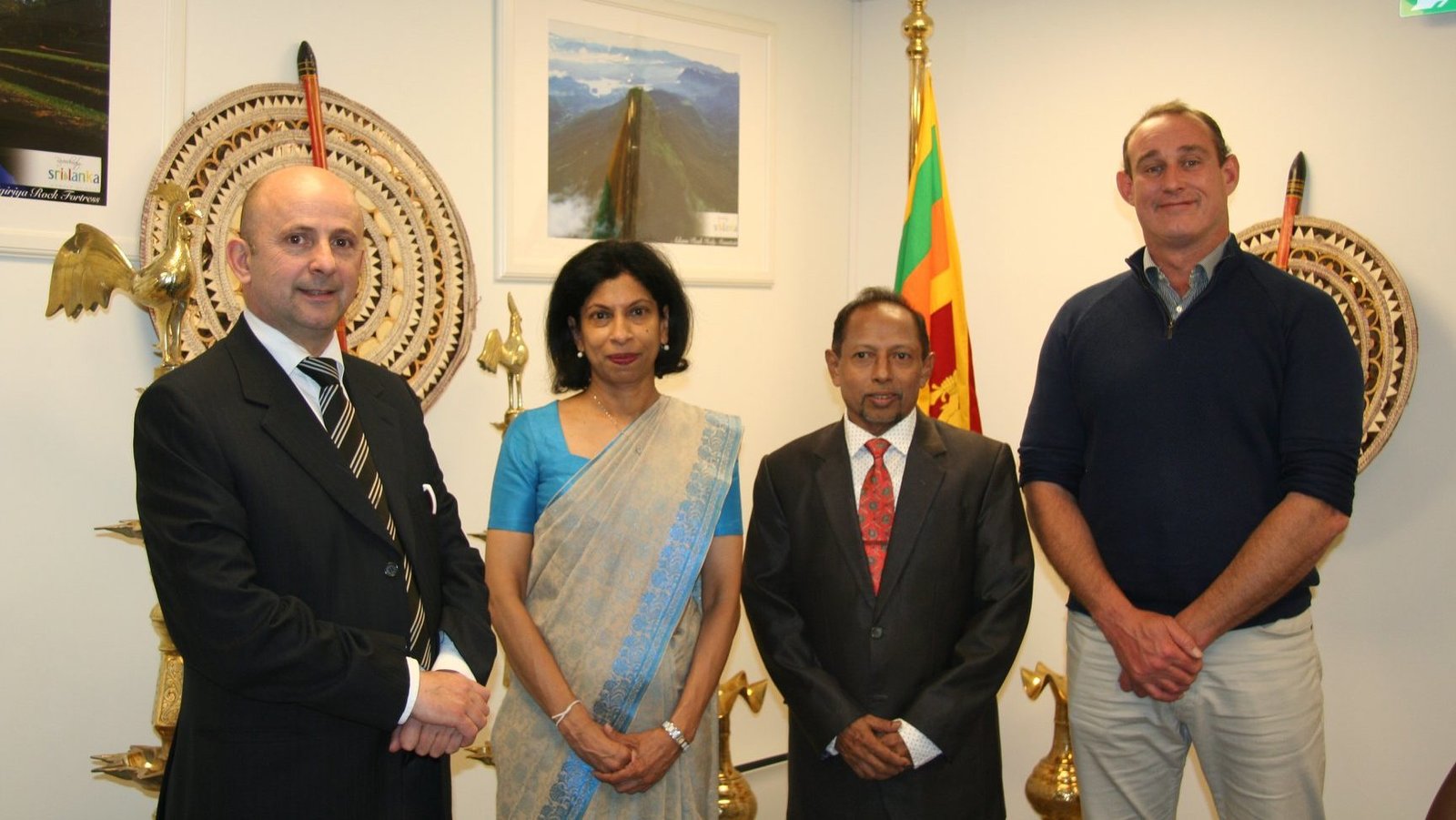
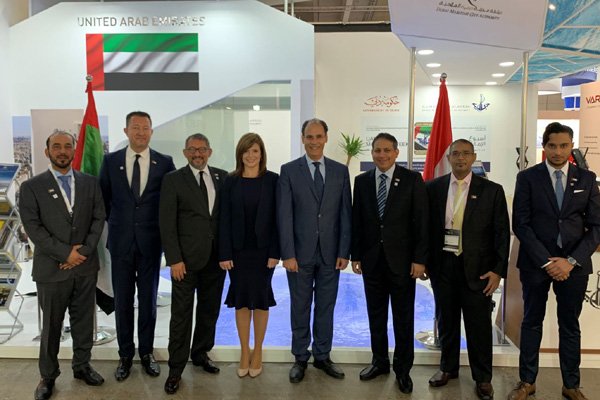
A trade delegation from the National Chamber of Exporters of Sri Lanka, which has a membership of over 850 export-oriented member companies, led by Secretary General and Chief Executive Officer, Shiham Marikar, visited Oslo from 13 to 16 June 2019. 

The five -member delegation comprising the owners from the IT, coconut, fruit, vegetables, spices, horticulture, poultry, livestock, and renewable coir sectors included Ms. Asanka Kumudini Ekanayake from Valantine DC Factory, Mutishamar Ramesh from Straight-Line International (Pvt.) Ltd., Janith Serasinghe from SunTech Information Technologies (Pvt) Ltd., Mohamed Kabir Zavahir from Uptown international Pvt Ltd.,and Tuan Farhath Amith from Fanam International (Pvt)Ltd.

The Embassy of Sri Lanka in Oslo organized an event for the delegation to explore possible business opportunities and partnerships between Sri Lanka and Norway. 

The delegation also visited a supermarket in Oslo and shops dealing in the trade of Asian spices and products.

(Photos – FB – Embassy of Sri Lanka Oslo Norway , Colombo Page )

June 20, 2019 0 comments
0 FacebookTwitterPinterestEmail
Defence

Defence-related exports from Norway in 2018

by Nadarajah Sethurupan June 19, 2019
written by Nadarajah Sethurupan

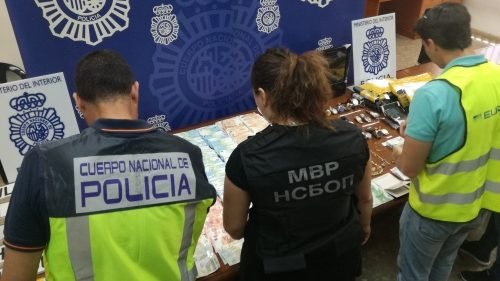
The Government presented the annual white paper on exports of defence-related products. In 2018, Norwegian companies exported defence-related products and services worth NOK 5.8 billion. This is a decrease of NOK 6.3 billion compared with 2017. 
‘Norway maintains a high level of transparency about defence-related exports, when it comes to access to information both about the exports themselves and about the Ministry’s processing of export licence applications for defence-related products, in line with the Ministry of Foreign Affairs guidelines. The Government considers it important to continue to ensure this level of transparency,’ said Minister of Foreign Affairs Ine Eriksen Søreide.  

The overall value of exports of defence-related products was 8 % lower in 2018 than in 2017. 

In 2018, the value of exports of arms and ammunition (category A products) amounted to around NOK 3.9 billion, while the value of exports of other types of military equipment (category B products) totalled approximately NOK 870 million. The value of exports of arms, ammunition and other military equipment was 11 % lower in 2018 than in 2017.   

In 2018, exports of category A products to other NATO countries, Sweden and Finland accounted for around 78 % of the total export of these products, up from 63 % the previous year. Exports of category B products to these countries accounted for 61 % of the total export of category B products. The United States was the largest single importer of defence-related products from Norway.  

The total value of exports of defence-related services, repairs, production rights and brokering services was NOK 517 million in 2018. In addition, licences for the export of dual-use items for military use worth NOK 550 million were granted in 2018. 

In 2018, 11 licence applications were denied. 

The value of exports of defence-related products fell by around NOK 600 million from 2017 to 2018. There will be a natural variation in the figures for each year, depending on when deliveries take place. The deliveries may be unevenly distributed over the contract period and the export value will therefore vary from year to year. 

In preparing the white paper, particular importance has been attached to providing a thorough account of the legislation and of the Ministry’s processing of export licence applications, in line with the Ministry of Foreign Affairs guidelines. The white paper discusses in depth the consolidated list of criteria for defence-related exports in the Foreign Ministry’s guidelines, and emphasises the importance of respect for fundamental human rights and compliance with international humanitarian law. The Government has reviewed the Norwegian export control regime (acts, regulations and guidelines) to make it more accessible for exporters, and through the white paper, is seeking to raise awareness of how the rules are applied and how licence applications are assessed. 

‘Norway has extensive and stringent rules in place for exports of defence-related products, and we take a strict precautionary approach. This approach resulted in the Government deciding in December 2017 to suspend licences for the export of arms and ammunition to the United Arab Emirates. As regards Saudi Arabia, Norway is in a completely different situation from many other countries as we have never permitted the export of arms and ammunitions to Saudi Arabia,’ Ms Eriksen Søreide said. 

In November 2018, the Government also decided to stop processing new licence applications for the export of other types of military equipment and dual-use items for military use to Saudi Arabia. This decision was based on a risk assessment of the grave and unpredictable situation in the region. Nevertheless, some category B products and dual-use items were exported to Saudi Arabia in 2018. These were exports of photo and video equipment that were made under licences issued before the decision was taken on 9 November 2018. 

The white paper also describes the Ministry’s cooperation with other Norwegian authorities. It also discusses the ongoing, extensive international cooperation on export control and non-proliferation. Norway participates actively in this cooperation, and is engaged both in the technical work to draw up lists of conventional defence-related products and dual-use items, and in the efforts to secure agreement on high international standards for control of exports of strategic goods and technology. 

‘The fact that, in many areas, the Norwegian defence industry is at the forefront internationally is important both in terms of our defence capabilities and for Norwegian jobs. The Government’s aim is to continue to ensure predictable conditions for defence-related exports within the framework of a clear and restrictive export control regime. We will seek to facilitate Norwegian companies’ participation in international projects, and to ensure that the conditions of competition are as equal as possible for companies in all the countries concerned. A long-term approach is therefore vital, and we must ensure predictability when it comes to export control,’ Ms Eriksen Søreide said.

June 19, 2019 0 comments
0 FacebookTwitterPinterestEmail
Africa and Norway

Highest number of people displaced since World War II – Ethiopia tops list

by Nadarajah Sethurupan June 19, 2019
written by Nadarajah Sethurupan

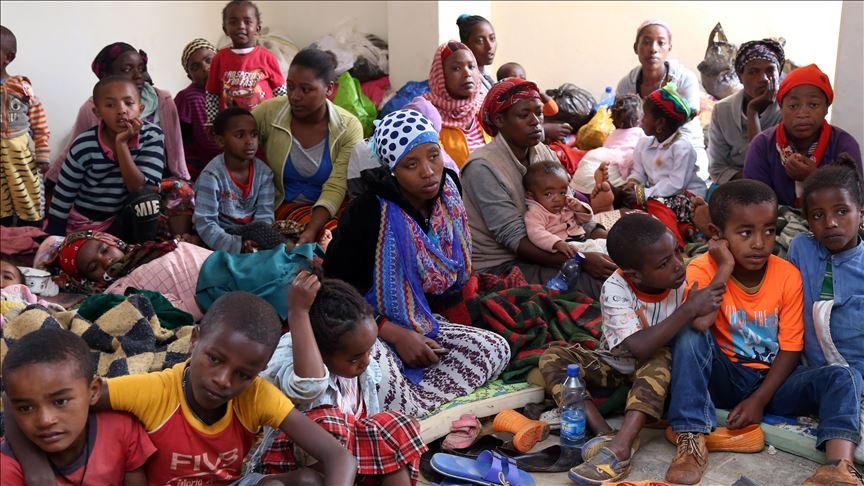
Ethiopia has the highest number of displaced people globally, the Norwegian Refugee Council (NRC) said in a statement on Wednesday.According to NRC, an estimated 3.2 million people were displaced by conflict and drought by April this year in Ethiopia noting that the Horn of Africa country hosts over 900,000 refugees, mainly from South Sudan, Somalia, and Eritrea.

NRC attributed the rise of displacement in Ethiopia to internal conflict.Jan Egeland, NRC Secretary General said: “Ethiopia is the definition of a forgotten crisis, despite colossal needs, the crisis is under-reported, under-financed and under-assisted. The scale and quality of the humanitarian response is grossly inadequate.”

The UN’s aid appeal for Ethiopia called for $1.31 billion for 2019, but is only a third funded halfway through the year, according to the statement.

“We need a 180-degree shift in attitudes. Wealthier nations must share the heavy-lifting, dig deep and support generous countries like Ethiopia to ease the human suffering of millions fleeing from conflict worldwide,” Egeland added.

June 19, 2019 0 comments
0 FacebookTwitterPinterestEmail
Science

South Korea replaces Norway as fastest for mobile data in Ookla Speedtest

by Nadarajah Sethurupan June 19, 2019
written by Nadarajah Sethurupan

Ookla said that South Korea had the fastest mobile internet service in May according to its Speedtest measurement service, knocking Norway off the top spot. Croatia improved its placement by seven to ninth place.

The average mobile data speed in South Korea in May was 76.74 Mbps, with Norway achieving 67.93 Mbps. South Korea had come third in April.

In May, Canada dropped one notch to third position and had an average mobile internet speed of 63.81 Mbps. Qatar rose from fifth to fourth with 62.82 Mbps. Austrialia improved its ranking to fifth in May from sixth in April and reached 62.38 Mbps.

Ookla said the Netherlands slid down two places in its mobile readings for May to sixth from fifth and scored 62.01 Mbps. The UAE stayed in seventh place at 58.82 Mbps. Singapore improved its position to eighth from ninth with 53.47 Mbps.

Croatia rose seven places to ninth in the mobile speed rankings in May, reaching an average internet speed of 52.78 Mbps. Rounding off the top ten was Switzerland, down two places at 52.65 Mbps.

June 19, 2019 0 comments
0 FacebookTwitterPinterestEmail
Media Freedom

UN envoys should be conductors, not soloists

by Nadarajah Sethurupan June 18, 2019
written by Nadarajah Sethurupan

In The lost art of peacemaking, his background paper for the 2018 Oslo Forum, the Executive Director of the Centre for Humanitarian Dialogue, David Harland, sketched out in narrative form a bell curve of U.N.-brokered peace agreements: few during the Cold War, then a high number of successes in the 20-plus U.S.-dominated “unipolar” years after 1990, and, finally, a dearth of U.N.-brokered peace agreements today.

Harland points to several constraints that inhibited the U.N.’s mediation capacity, such as the return of geopolitics, the atomization of conflict, and the spread of conflicts across borders. One could also add technological changes (with secrecy harder to maintain in our Twitter age), greater global polarization diminishing the leverage of unified support, the role of nonstate actors ranging from transnational terrorists to businesses, and the demonstrable need for more inclusive processes that go beyond the previous approach of meeting (inevitably male) political or military leaders behind closed doors.

After analyzing such factors, Harland concludes: “[N]on-U.N. actors have found ways to address some of these issues, but have not been able to entirely fill the gap left by the U.N. Any further progress in the field would appear to require a better combination of the efforts of the U.N. and non-U.N. actors.”

That last line deserves more reflection, and it coincides with something I felt after having the privilege of serving nearly six years as U.N. Under-Secretary-General for Political Affairs. In trying to support the U.N. Special Envoys and Special Representatives of the Secretary-General heading political missions in some of the most challenging political and security environments in the world, as well as undertaking my own political engagements, I saw in practice, vividly, the constraints on the U.N. mentioned by Harland.

At the same time, the growing number, and expanding capacities, of non-U.N. mediation actors changed the landscape in which the U.N. envoys operate. The African Union (AU), Africa’s sub-regional organizations, the European Union (EU), the European Institute of Peace (EIP), the Crisis Management Initiative (CMI), the Dialogue Advisory Group (DAG), the Centre for Humanitarian Dialogue (HD), the Community of Sant’Egidio—that list just scratches the surface of a bewildering array of groups playing important mediation and facilitation roles today.

Moreover, many of these groups offer valuable technical assistance and capacity-building training in mediation skills to local actors, further blurring the lines of who has the lead in a political process. Even if the U.N. mediator retains a lead role which has been given by the Security Council, and even if the U.N.’s mandate is under Chapter VII authority, it is unrealistic to assume that other local, regional, or international actors—with interests in, and increasingly sophisticated understanding of, mediation—will simply stay on the sidelines and cheer on the U.N. envoy.

My conclusion is that, in general, U.N. mediators and facilitators today need to view themselves less as the star soloists of yore—Lakhdar Brahimi at Taif in 1989 ending Lebanon’s civil war is a classic example—and more as conductors of a coherent, coordinated orchestra of mediation actors who can reach more of the people who can influence the direction of a conflict and who are affected by the conflict. And if the U.N. does not happen to have the best profile, leverage, or mandate, or the full consent of the parties to be the lead mediator, the conductor’s baton should be held by another, with the U.N. as a supportive player (as in the recent agreement regarding the Central African Republic).

Without question, the U.N. has key assets, including the legitimacy of universal membership, the power of Security Council mandates, the profile and good offices of the Secretary-General, relatively predictable funding streams, and organizational capacities and scale that dwarf other actors. But those assets do not mean that U.N. mediators have monopolies on wisdom, leverage, or contacts. The 2012 United Nations Guidance for Effective Mediation notes that diversity of actors can be an asset, as long as there is “clear division of labour based on comparative advantages among mediation actors operating at the different levels.” What is not essential, in other words, is for the U.N. to always lead or insist on going it alone. What is essential is that a lead mediator works to ensure coherence and complementarity across peacemaking efforts.

Libya provides a good example. The U.N. Support Mission for Libya—UNSMIL—has a broad Security Council mandate that includes leading international efforts to facilitate a Libyan political process. Yet, the U.N., HD, DAG, CMI, EIP, Sant’Egidio and surely others also engage politically on the ground in Libya, each focused on some specific aspect of the overall problem of instability in Libya. EIP, for example, has promoted stabilization efforts in the Kufra district (bordering Egypt, Sudan, and Chad) as well as around oil facilities. HD conducted similar work in Sabha, and DAG has established connections with competing militia leaders in Western Libya and promoted local ceasefires. In addition, the African Union is protective of its perceived role in Libya, with AU Peace and Security Commissioner Smaïl Chergui joining U.N. Department of Political and Peacebuilding Affairs Rosemary DiCarlo on a joint trip to Libya in March this year.

Similarly, U.N. Secretary-General Guterres and Chairperson of the AU Commission Moussa Faki regularly compare notes on Libya. While one could argue that there’s plenty of work to go around to keep everyone busy, the multiplicity of actors could easily lead to chaos, confusion and the much-dreaded “forum shopping.”

In my view, the Special Representative of the Secretary General (SRSG) to Libya, Ghassan Salamé, has dealt effectively with this crowded mediation facilitation landscape by pursuing what I—but probably not the SRSG himself—would call an “orchestra conductor” approach. He, of course, has no mandate to dictate to other organizations what they should do, and the other organizations retain their independence, reporting to their own governing authorities and not to the SRSG or the Security Council. But, by making sure that UNSMIL maintains contact with DAG, for example, Salamé’s team has broader insights into the various militias in the Tripoli area and thus what is needed to maintain and consolidate ceasefires in the capital. DAG is able to reinforce UNSMIL’s security efforts and augment UNSMIL’s reach. Waving his conductor baton more directly, Salamé specifically asked HD to conduct a series of public consultations in 43 locations across Libya from April to July last year in which thousands of Libyans were able to share their views about Libya’s future.

Logistically, and from a security angle, this type of broad consultations would have been nearly impossible for the U.N. to do directly. Moreover, as Salamé surely realised from his own travels across Libya, had the U.N. itself been leading these town hall-type consultations, the Libyans would have naturally focused not on their vision for their country but rather their critiques and demands of the U.N. By incorporating the results of this unprecedented consultative process into his thinking, Salamé can better align U.N. engagement with Libyans’ own aspirations, enhancing the chance of popular support for an eventual political settlement.

Whether it is UNSMIL’s co-ordination with DAG, its request to HD to organize public consultations across Libya, or its coordination with other non-U.N. actors, Salamé has essentially broadened UNSMIL’s reach and understanding of Libya. (As I write this in early April 2019, Khalifa Haftar and his self-styled Libyan National Army is threatening Tripoli, in belligerence which is timed, I believe, to forestall the National Conference facilitated by the U.N. that grew out of the HD-organized consultations. Haftar’s paranoia about the National Conference inadvertently reveals the Conference’s potential to transcend Libya’s divisions – but without Haftar anointed as leader through peaceful, political means.)

Salamé’s choice to work closely with non-U.N. actors in Libya also illustrates the need for the U.N. to sometimes collaborate with peacemaking actors who enjoy more flexibility on the ground. While the U.N.’s “brand” is impartial, and U.N. envoys retain the theoretical right to talk to anyone as needed in a political process, Security Council mandates, fear of Security Council scrutiny, or the political interests of powerful member states mean that, sometimes, a lower-profile non-U.N. actor can get better or easier access to some actors. The issue of how to engage both Turkey and Syrian Kurds constructively has bedevilled multiple U.N. Syria envoys, and the U.N.’s Yemen envoys have struggled to overcome Houthi suspicions about a mandate based on an April 2015 Security Council resolution that essentially calls first for a Houthi surrender and only then for political talks.

In both cases, non-U.N. mediation actors may be willing and able, within U.N. guidance, to help the U.N. envoys implement their mandates successfully. Certainly, by working closely with non-U.N. mediation actors who reach different segments of the local population, U.N. envoys can enhance the inclusivity that should characterise modern peace processes. In Yemen, for example, CMI’s Women’s Forum for Dialogue and Peace helps lessen the gender imbalance of most political engagements.

Without question, there are times when old-style U.N. mediation and facilitation behind closed doors still work, as demonstrated by the Hodeidah agreement brokered in Stockholm in December by U.N. Special Envoy Martin Griffiths. But the Hodeidah agreement, while important, is more tactical than the strategic agreement of Taif or the U.N.-facilitated agreements that ended civil wars in Central America, Africa and Asia in previous decades. Given the rise in numbers and capacities of non-U.N. mediation actors, U.N. envoys would be wise to see these actors as force-multipliers and influence-extenders as they try to implement increasingly complex mandates and broker successful peace agreements. My guess is that the non-U.N. actors, while careful to maintain their own independence, will by and large welcome closer engagement, consultation, and coordination with U.N. efforts. I hope this is a topic that can be explored in more depth at this year’s Oslo Forum.

( Author – Jeffrey Feltman – John C. Whitehead Visiting Fellow in International Diplomacy – Foreign Policy )

Editor’s Note: This piece was developed for the 2019 Oslo Forum. Co-hosted by the Norwegian Ministry of Foreign Affairs and the Centre for Humanitarian Dialogue, the Oslo Forum is a discreet and informal annual retreat which convenes conflict mediators, high-level decisionmakers, and key peace process actors to reflect on current mediation practice.

June 18, 2019 0 comments
0 FacebookTwitterPinterestEmail
NATO and Norway

France signs a Letter of Intent with Norway for cooperation on strategic airlift, air refueling

by Nadarajah Sethurupan June 18, 2019
written by Nadarajah Sethurupan

Six NATO Allies took a critical step towards making the future Multi Role Tanker and Transport Capability (MRTT-C) more affordable. A Letter of Intent on cooperation around the MRTT-C was signed between France and the five current MRTT-C participants: Belgium, Germany, Luxembourg, the Netherlands and Norway. This will help make maintenance and repair operations for the MRTT-C more affordable. The Letter of Intent sets out areas of cooperation including exchanges of expertise and joint training.

The MRTT-C initiative will provide its participants with strategic airlift, air-to-air refueling and medical evacuation capabilities, enabling them to conduct more flexible air operations. Participants in the initiative will operate Airbus A330 MRTT aircraft starting in 2020. A total of eight aircraft will be procured and operated by the participating nations in the following years. 

Source: Airbus Defence and Space

The MRTT-C programme is an initiative of the European Defence Agency. The aircraft are owned by NATO and procured by the NATO Support and Procurement Agency (NSPA) through the Organisation for Joint Armament Cooperation (OCCAR). NATO ownership allows all participants to benefit from the complete fleet through a flexible and guaranteed pooling and sharing concept. They will be stationed at the Eindhoven and Cologne airbases and will include a 24/7 medical evacuation capability. Participation in the MRTT-C initiative is open for other member states to join.

The project is an example of effective cooperation between NATO and the European Union in the delivery of critical capabilities for the benefit of all.

June 18, 2019 0 comments
0 FacebookTwitterPinterestEmail
Asia and Norway

European Parliament may suspend all subsidies to Pakistan

by Nadarajah Sethurupan June 17, 2019
written by Nadarajah Sethurupan

On the 30 April 2019, fifty-one (51) Members of the European Parliament (Including Norway)  issued a collective letter addressed to Mr. Imran Khan, Prime Minister of the islamic Republic of Pakistan expressing their concerns, and seeking assurances that the persecution of religious minorities would cease immediately. 

The letter highlighted that today’s Pakistan is far removed from being the country that its founding father, Muhammad Ali Jinnah, had envisaged. Jinnah had always insisted that Pakistan would be a Muslim majority State where people from all religions, whether Christians, Hindus, Sikhs, Buddhists, Ahmadis or Shias, would be treated equally. Over the last seven decades, successive governments in Pakistan have contributed to implementing discriminatory systems that have resulted in political, economic and social persecution of religious minorities, which have encouraged acts of violenceagainst them by radical Islamic groups.

In the letter, the Members of the European Parliament criticize Pakistan and its establishment for falsely accusing and targeting individuals under the blasphemy law. They specifically cited the internationally condemned case of  Asia Bibi, the Christian woman who had been falsely charged, harassed and sentenced to death row due to the country’s Blasphemy Laws.

The Members of the European Parliament urged Pakistan to take measures to dismantle the constitutional and institutional structures that have resulted in the purposeful targeting of religious minorities in the country. Should the violations of the International Covenant on Freedom of Religion continue, especially with regard to the persecution of religious minorities in Pakistan, the Members of the European Parliament having signed the letter, would be compelled to call on the European Commission to suspend all subsidies and trade preferences until the effective implementation of the Convention could be assured by the Government of Pakistan.

Letter has been signed by the following Members of the European Parliament

  1. Marijana Petir
  2. Arne Gericke
  3. Richard Corbett
  4. Ana Gomes
  5. Ignazio Corrao
  6. Neena Gill
  7. Nathalie Griesback
  8. Marie-Christine Arnautu
  9. Dominique Martin
  10. Alojz Peterle
  11. Patricija Šulin
  12. Franc Bogovič
  13. Jude Kirton-Darling
  14. Julie Ward
  15. Csaba Sógor
  16. Sergio Gaetano Cofferati
  17. Pina Picierno
  18. José Inácio Faria
  19. Renate Sommer
  20. Dietmar Köster
  21. Carlos Iturgaiz
  22. Fulvio Martusciello
  23. Ramona Nicole Mănescu
  24. Heinz K. Becker
  25. Sofia Ribeiro
  26. Anna Záborská
  27. Péter Niedermüller
  28. Jørn Dorhmann
  29. Claudia
  30. Branislav Škripek
  31. Indrek Tarand
  32. Michaela Šojdrová
  33. Raffaele Fitto
  34. Massimiliano Salini
  35. Bas Belder
  36. Miroslav Mikolášik
  37. Alberto Cirio
  38. Pascal Durand
  39. Teresa Jiménez-Becerril Barrio
  40. Marc Tarabella
  41. Maurice Ponga
  42. Claude Rolin
  43. Alain Lamassoure
  44. Liliana Rodriguez
  45. Gérard Deprez
  46. Carlos Coelho
  47. Jo Leinen
  48. Ryszard Czarnecki
  49. Isabelle Thomas
  50. Patricia Lalonde
  51. Sławomir Kłosowski

Letter copy can be read below

June 17, 2019 0 comments
0 FacebookTwitterPinterestEmail
Africa and Norway

Libyan-Norwegian Fertiliser Company to restart operations

by Nadarajah Sethurupan June 17, 2019
written by Nadarajah Sethurupan

The Libyan National Oil Corporation (NOC) confirmed Sunday the restoration of natural gas supply to the Libya Norwegian Fertiliser Company (LifeCo), with factory operations expected to restart shortly. 

Following discussions led by NOC’s chairman, Mustafa Sanalla, a breakthrough agreement was reached between NOC and LifeCo’s shareholders, the Libyan Investment Authority (LIA), and Yara International ASA (Yara), at a meeting on June 13, 2019, to discuss current challenges facing the joint-venture.

A meeting for the NOC and LifeCo. [Photo: NOC]

LifeCo shareholders have agreed on a number of measures to restore operational continuity and protect jobs, including the restoration of gas supply and NOC assuming control of the marketing of ammonia and urea fertiliser products.

“This breakthrough agreement will protect the interests of the Libyan state as well as the jobs of LifeCo employees. NOC will use all of its talents and experience to market these products and restore the company’s financial security.” Sanalla said.

LifeCo is a joint venture enterprise formed in 2009. Yara holds 50% of the shareholding, with both NOC and the LIA each possessing a 25% stake.

June 17, 2019 0 comments
0 FacebookTwitterPinterestEmail
Environment

Latvijas Maiznieks launches sales in Norway

by Nadarajah Sethurupan June 17, 2019
written by Nadarajah Sethurupan

Bakery Latvijas Maiznieks launched sales in Norway, Sweden and Finland in May, as the company’s board member Maris Daude told MEDIA.

“We have signed a contract for product shipments to the customer throughout this year. This is not only thanks to the purchase of new equipment, but also to the highest-level BRC certificate obtained by the company,” said Daude.

Latvijas Maiznieks’ first ciabatta shipments to the Norwegian, Swedish and Finnish markets were dispatched in May, and the company is also considering selling other products in these markets.

Latvijas Maiznieks’ investments in development have amounted to approximately EUR 14 million during the last five years, said Daude.

As reported, in 2017 Latvijas Maiznieks generated EUR 26.186 million in sales and earned EUR 469,296 in profit.

Founded in 1991, Latvijas Maiznieks has a share capital of EUR 895,629. The company’s largest shareholder is Estonian company Maral Invest.

June 17, 2019 0 comments
0 FacebookTwitterPinterestEmail
Asia and Norway

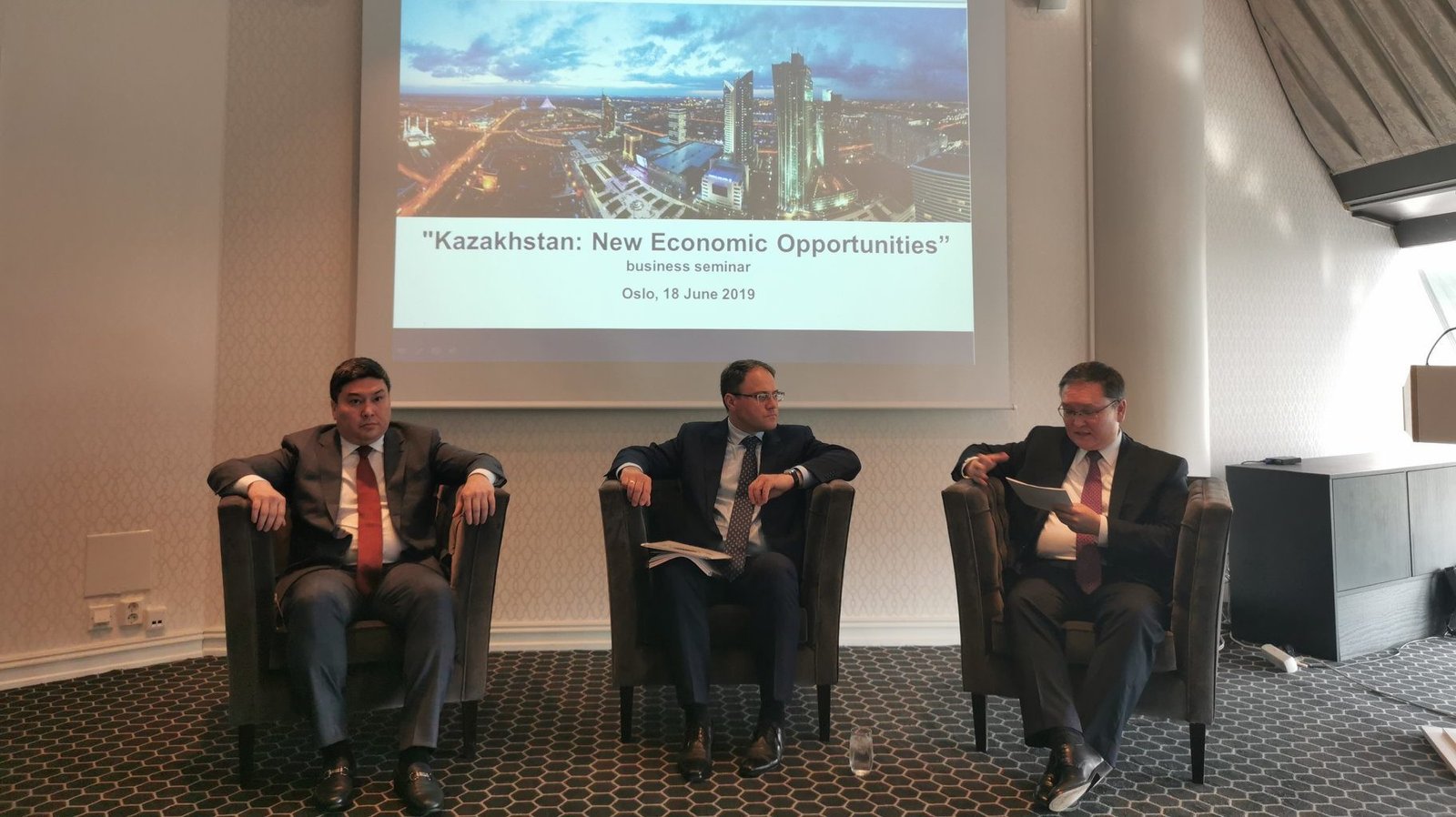
AIFC financial hub for Central Asia in Kazakhstan

by Nadarajah Sethurupan June 17, 2019
written by Nadarajah Sethurupan

Want a world-class legal system known for its integrity? Then go to London and get one, judges and all. That’s what Kazakhstan has done.

When businesses are looking to invest abroad, the availability and dependability of legal redress is a critical consideration. Should things go wrong, companies and hedge funds want to know if they can resolve matters in court, and that their cases will be heard in an impartial and timely fashion.

First President Nursultan Nazarbayev.

Kazakhstan, the vast country that straddles the boundary between Asia and Europe, decided it would put its commercial legal system above reproach. In 2015, it imported a whole legal system from England, along with English common law, to deal with commercial issues. It also imported some English judges to sit on the bench.

Headquartered in Nur-Sultan, the newly renamed capital of Kazakhstan, the Astana International Financial Centre (AIFC) will create projects and promote new startups on a global scale. So far, 88 participants have registered at the exchange, and by 2020, Kazakhstan authorities have announced the target of more than 500 companies participating in the AIFC.

The Astana International Financial Center (AIFC) has set an ambitious goal for AIFC to become a financial hub for Central Asia, the Caucasus, Eurasian Economic Union, the Middle East, West China, Mongolia and Europe.

Among the priority goals of the AIFC are the development of the human resource potential of local financial market specialists, the popularisation of international professional certifications, and boosting investment.

The AIFC Court is separate and independent of the courts of the Republic of Kazakhstan. There is a Court of Appeal whose decisions are final.

First President Nursultan Nazarbayev.

“The AIFC Court operates to the highest international standards to resolve civil and commercial disputes in the AIFC. It has exclusive jurisdiction over disputes arising out of the activities and operations of the AIFC and jurisdiction in the case of other disputes in which all parties agree in writing to give the AIFC Court jurisdiction,” said chairman of the court of the international financial center, Lord Woolf.

Lord Harry Kenneth Woolf, is a renowned judge in recent British legal history, and a global figure on the common law, courts and dispute resolution, and legal education. He will work with eight other British high level lawyers and judges in Kazakhstan.

Moreover, the International Arbitration Centre at the AIFC has its own panel of international arbitrators and mediators who are experienced, independent and impartial.

“The International Arbitration Centre seeks to establish and develop a fully independent arbitration and alternative dispute resolution system for the expeditious resolution of civil and commercial disputes characterized by reliability, fairness and accessibility, unconditional application of the rule of law, and flexibility that is responsive to the needs of global business markets,” Chairman of arbitration body, with experience as arbitrator at the London, Paris and the Hong Kong International Arbitration Centre, emphasized.

The system of English justice is known far beyond England. The authority of the chairman of the court of the financial center is a guarantee of a qualitative and truly fair judicial system. The decision of the lawyers of the AIFC is a priority, and in its work, the court of the center is absolutely autonomous.

AIFC, a self-styled “mid-shore” special economic zone, has an attractive business environment and the presence of a separate legal and regulatory system based on the principles of the British Common law. These measures will assure fairness and justice in its operations and will enhance the credibility of Kazakhstan in the eyes of the investors.

AIFC has British courts and judges, myself being one of the judges. Additionally, the center gives you 50-year tax exemptions, simplifies your visa regulations, offers free office spaces, and the license costs only $200, not $100,000 even if you get your license today and didn’t open your business immediately.

A financial hub in a post-Soviet state for the entire Central Asian region, based on the English common law, having a preferential tax regime and an independent financial court? Such a project would have been consigned to the realms of fantasy a few years ago. But now, it is infact, a palpable reality.

The initiator and key organizer of the AIFC is President Nursultan Nazarbayev. During one of his public speeches, “Plan of the Nation – 100 Concrete Steps to Implement Five Institutional Reforms”, he proposed an extraordinary initiative; to create AIFC in Astana based on the ASTANA EXPO 2017 infrastructure. A similar center in Dubai became a reference point.

President Nazarbayev proposed the consolidation of a special legal status of a financial center in the Constitution, the establishment of a center as a financial hub for the CIS countries, as well as the entire region of West and Central Asia. This is how the Kazakh leader outlined priorities, securing the existence of AIFC with the necessary decree:

– Creation of an independent judiciary with its own jurisdiction which will operate on the principles of English common law. The judiciary comprises a number of foreign experts. In a not-too-distant future, the financial hub of Kazakhstan would join the league of 20 advanced financial centers of the world.

Foreign employees of AIFC, as well as their family members, receive an entry visa valid for up to 5 years. Citizens of the OECD, the United Arab Emirates, Malaysia, Singapore, and Monaco, as well as countries designated by the Government of Kazakhstan, are entitled to visa-free entry for up to 30 calendar days. And a small but pleasant bonus is the free rental of Class A offices in the first two years of operation.

Kazakhstan shows maximum consideration to foreign investors, and creating a favorable investment climate in the country has become one of the political and economic priorities.

To solve the problems of foreign entrepreneurs in the country, a special ministry for investment and development was created for the first time, thanks to which the receipt of public services for investors was simplified to the maximum, and administrative barriers were reduced.

According to the Kazakh officials, the AIFC will significantly expand the international opportunities of Kazakhstan itself, allowing it to find and take its place in the overall pattern. Kazakhstan considers AIFC as part of the global financial system. The global network of financial centers that manage global cash flows runs across the globe — from Toronto to Sydney and from Tokyo to New York. Each of them has its own niche.

For its part, AIFC, having a unique geographical position, will provide access to the markets of Central Asia, the Eurasian Economic Union, the Caucasus and the countries of the Middle East.

Meanwhile, Western experts also support the idea that a new financial bridge has appeared in the world between Europe and Asia. According to preliminary forecasts by the Kazakh authorities, the AIFC will be able to attract billions of investment in the country’s economy.

Astana International Finance Center (AIFC), an emerging financial hub in Central Asia and Eurasia is seeking partnership with Bombay Stock Exchange and Gujarat’s GIFT, to learn from expertise and experience of Indian entities besides enabling wider presence of Indian businesses in Eurasia and Russia.

China has already demonstrated its support for the AIFC with assistance in strategic and business planning, technology consulting, and developing a strategy for expanding the market. “On the regulatory level, one of the big opportunities for us is RMB [Chinese Yuan] and the ability to trade, clear and settle in RMB and their help with the regulatory process around that is very beneficial”.

Opportunities and return on investments are huge, there is so much privatisation going on in Kazakhstan, and infrastructure development.

Another reason is the fact that the government doesn’t want to rely just on one area, they want to diversify the economy away from the energy and the mining sector, that’s why there is an opportunity for financial services to grow here.

“This is an important moment of change for Kazakhstan. The leadership transition that we are witnessing is being closely watched around the world, including in the United Kingdom. The resignation of Nursultan Nazarbayev was a momentous event in the history of Kazakhstan and Central Asia. We should acknowledge his role as having been central to the establishment of the country and the development of the sovereignty and economy of Kazakhstan,” British Ambassador to Kazakhstan Michael Gifford told The Astana Times.

Mr David Gallo, expert at AIFC Authority.

Below is a full rush transcript of the information by Mr David Gallo, expert at AIFC Authority.

David: I’m qualified in the state of Ohio. I just joined the Astana International financial group about two or three weeks ago, and I basically have been retained for a twelve month period which could be extended as an AIFC expert in the area of legal education, as it relates to the AIFC authority, right ? So, my brief history is that I started as a private practitioner, as a lawyer in a large law firm, in the state of Ohio.

And then from there I moved in house with a couple of different companies, first with a large electric utility company in Ohio, where I was a corporate finance lawyer, then I moved to a company called General Electric, GE, and I spent the better part of my career, first as a lawyer and then as a global business development commercial person, focused primarily on mergers and acquisitions. And strategic alliances to help GE globalized its business.

Ultimately, I ended up in Dubai, and most recently for nearly four years I was the director of an organisation called the AFC, Academy of Law. So, the AIFC is basically a legal system that has been established here recently.

You probably already know that it was formed as a potential economic hub to be the foundation for the government vision for long term economic development. So, the idea here like with other global economic system that are being created under similar models, the idea here is that Kazakhstan is a very important emergent market, it is already emergent of course, and in many ways. It’s been around for quite some time as a country.

The government now is taking things to the next level, which is fundamentally to take this enormous potential economy. Enormous in a sense that, the country is very rich in certain natural resources, the geographic scale is large.

There are a lot of ideas around infrastructure development with the idea that, over a long term the economy should be more diversified, and sustainable. Diversification, in my understanding is that means attracting foreign direct investment. Multinational companies encourage global companies and people who want to start companies, to come to this AIFC economic area and establish their companies. The focus is on attracting financial services companies, those who are in the capital market space private wealth management, insurance and in related matters.

Professional services like law, consulting and accounting. So the idea is, the forum, this economic zone. It would attract these companies to come and establish their business models to invest money, to lend money, to raise money through the stock exchange and so forth. So that, that capital can now be injected into the economy, allocated and deployed for major infrastructure development projects.

So fundamentally, it’s a business hub, and the vision of the government is to make this a world-class business hub, a center of commercial excellence, or business excellence by attracting foreign investments which would then provide the capital to drive this grand vision.

it has a tremendous opportunity and potential. You know the natural resources are very rich and valuable, and that becomes the anchor, the economic anchor for the country. But the idea is to unleash the potential of that value by investing in industry and sector diversification, right?

So in particular, if you think about diversification, it’s a word, in a concept, it’s often used but the reality means to invest people and capital in the projects that are ultimately going to create products, services and business opportunities that extend far beyond the natural resource development here. So, starting with infrastructure projects, such as transportation, that’s going to be classical transportation infrastructure development which would be road, highways, bridges, tunnels and everything that goes along with that.

But also, rail transportation development will continue to be a big national focus. While there are no ports, or potential ports to speak of, you know, certainly the development of the dry ports and transfer facilities and so forth will be an important focus.

All of that matters, because those are the things that will facilitate trade within Kazakhstan and certainly within Central Asia and as you know. This region is also part of the Chinese Belt and Road Initiative and the new Silk Highway and the New Silk Waterway is in adjusted space so the idea of positioning Kazakhstan as a not only a regional hub but as a global hub where East meets West, and all the other marketing taglines that you hear can become a reality and the AIFC is being positioned to play a very important role in that development.

So, that’s the long response of your question about the state of the economy and the potential for growth. When you think about infrastructure development, you also think about power, energy, power generating facilities, whether they are hydro or coal powered, or otherwise, it’s an important part of infrastructure and of course the transformation into the digital economy and all that infrastructure holds requirement of that.

Things like water treatments, sewage and all those basic things that really matter when you’re developing a country will be part of it. Certainly, construction projects will be large and substantial when you think about the development of education facilities, universities and schools, health care facilities.

Well, all of these things translate into major projects. When I started as quite a project lawyer and the kinds of projects that are planned, initially, they require a lot of professional services, starting with engineering and related planning, certainly development, real estate development, project development, facility development, construction, and then all these industries that are related to all of those, right?

If you’re really talking about projects that are major, they are intended not only to develop the infrastructure of the country, to facilitate trade and to grow their cities and to connect the cities but also, the standard of living and the quality of life, the living here.

So the idea is to make, to continue, to enhance the global status of Kazakhstan, not only regional but global. One more thing that I’ve mentioned, I guess, about the vision, is all the things that we’ve just talked about, are important for the role of the government in driving this sort of transformation.

Some of the things the government cares about are; diversification of industries, enhancing and growing international trade, that would also include Chinese Belt and Road as well as other things that we’ve talked about.

But the government really cares about what that means for residents and people who have been here for a while and attracting people to come to move here, expatriates, and all of the same things that we’ve just talked about, tie into major priorities for any government and those would start with GDP. Gross Domestic Product, and GDP growth. Balance of trade, budgetary consideration, you know, balancing budgets and ideally having surpluses, per capita income, creating greater employment.

So the metrics around employment and non-employment rates really matter. All of this should resolve in a lot of job creation and upwardly mobile middle class, creating more opportunities for people to get better jobs and earn more money, per capita income, GDP per capita, inflation rates solved by some of these interconnected economy, the economic view, but let’s face it, federal governments globally care about all of those things.

Because as you have those metrics that are improving over time, that’s how a country really enhances its image and reputation and international standing in the scheme of things.

And of course, that adds to its credibility and its leverage when it comes to international socioeconomic and geopolitical relations, right? So I think that’s the backdrop.

Interviewer: As a, you know, centrally placed between Russian and Chinese border, what are the risk factors in these investments areas and the transparencies aligned?

David: That’s a great question. From a geopolitical standpoint, I’m probably not qualified to talk too much about anything political. But what I can talk about would be economic challenges and risks because this is a commercial entity.

So what we think about and care most about is business but that business and the development of that business is always going to be tied to the greater national government vision as to why this thing exists, okay? So let me put that into context that is practical. We are here and I am specifically here to focus on knowledge based legal system development, as the foundation for driving the success of the AIFC, as a center of commercial excellence, as any emerging business hub and as a place to attract multinational companies to come here and set up over the long term.

That’s the government vision, our promise here in the legal department is that we need to make sure that the legal system develops in a way that will accommodate these major infrastructure and other projects that the AIFC represent or will be facilitating.

So that’s a major challenge but it’s an opportunity that you feel very confident that we can drive to successful conclusions.

When you think about these major projects from the practical side, these projects would be structured, memorialized, undertaken and completed only if you have a sound legal infrastructure that will support the commercial contracts and dispute resolution processes that are certainly going to be part of the economic development processes.

So, stated more simply, anyone of these major projects will require some fairly complex and sophisticated legal documentation, legal analysis and ultimately, if any of these projects end up in some kind of contractual dispute, there need to be a fair and efficient way to resolve those disputes without interrupting the flow of the economic development.

Well, because this AIFC commercial organisation is also a freestanding, relatively independent new legal jurisdiction, the laws in this jurisdiction and the regulations that govern the various bodies within the AIFC would be the Astana financial services authority, the AIX which is the stock exchange, you have the AIFC authority which is what is this group is part of, kind of legislative, the law side of things.

As well as a part of an organisation that will accommodate companies to come here and get start with jurisdiction. Well, all of this is based on the English common law model. So the laws, the statutes, and the regulations around them, are patterned primarily on the English commercial laws, and the legal system is a common law legal system, as opposed, whereas contrasted with the Astana national law, which is a civil law.

So civil law countries as you know, would probably be central Asian, Egypt and Middle East, France and Germany and other major countries, common law would be the US, the industrial and so forth.

They are two fundamentally different systems, so, lawyers and other legal professionals, in order to operate effectively in this new common law environment, which is in the middle of a civil law ocean, if you will, this means that lawyers and other legal professionals need to be equipped, and competent and ready to operate effectively within that organisation, right?

So, the logic is a sound legal system required as the foundation of economic growth, and that our focus here in attempting to a form a knowledge based legal education system is to make sure that we are delivering legal education here in Nur-Sultan that has global values. We need to make sure that whether you are common lawyer, international lawyer that came here, or whether you are local civil law trainee lawyer that came and also lives here and practice, the fact is, that, both of those demographic market segments in the legal  industry need to be addressed.

Those with common law background would benefit by giving some academic and experiential, developing experiential skills in the civil law system.

And those who are civil law trained will benefit by getting an additional legal education and skills based learning that would be relevant to the AIFC laws, the rules and the common law system. So the idea and the mission would be to try to cross-train legal professionals in multiple legal systems, to make sure that they are truly prepared for international commercial law practice, right here in the AIFC. So that’s what we’re focused on.

The risks are, if we don’t do that, or if we don’t do that effectively, IE makes sure that you have your development of human capital, that will be required to drive the success of this experiment. If you don’t do that, there are a lot of risks.

The first is that, for companies who have come here to set up, they are going to need in-house lawyers who will work with them, they are going to need local councils that they need to retain to make sure that they understand the AIFC laws and they are complying with those provisions, that they don’t do anything wrong, which could create corporate and personal risk for those companies and people who work for them.

The other thing is, that this massive complex, long term construction and infrastructure projects, will not get done effectively or efficiently, or quickly if you don’t have legal professionals who know what they’re doing.

You think about these projects, they can have multiple parties in anyone of these major projects, right? Commercial contracts, you can have multiple parties, coming from various countries and legal jurisdictions, there will be issues around jurisdiction, there will be issues around comparative law, how do the national laws interface with these AIFC laws?.

Which one might supersede in the case of a conflict, conflict of laws is another area in the legal system. Then because it is a new legal jurisdiction, you’re going to have the development of common law.

Common law really means judgment law. So, you have a case that’s brought here, to trial, a judgment is ultimately rendered, there is a winner and loser, but the judge then writes a very well reasoned opinion, as to what the applicable law was, the interpretation of that law, and ultimately the outcomes of who wins or who loses.

But embedded in these well written judgments, we call them legal opinions in the US, but in the UK they are calling them judgments.

Well embedded in that well reasoned judgment, are certain principles of law, some of which have actually then become part of the evolving common law.

So, the important thing here is that, as this common law is developing, there certainly will be revisions and updates in the statutes, the statutory law so that they i.e those statutes will continue to get more sophisticated, they will address new legal needs.

For example, you know blockchain, or artificial intelligence and all of these data protection. You know these security regulations, you know what do you do with cryptocurrency and all of these stuff.

The cyber issues, these emerging trends in the commercial world at some point need to be captured and codified in some cases regulated by new laws that don’t exist yet.

So, as new laws need to be developed, as more projects are being undertaken, and disputes arise and so forth, all of this means that you need to have a lot of legal work that needs to be done and it needs to be done competently and effectively, for the protection of clients, for the protection of the general public, and certainly to continue to drive the economic growth vision of the government.

So, that’s why you get ties together, those are the risks. But we are really talking about risks in the management and the things that we are doing. Fair enough?

Mr Marat Aitenov, First Deputy CEO of the Astana International Finance Centre (AIFC), described this to me as a move to establish the “rule of law.” He said it was decisive in improving the investment climate. It’s also symptomatic of a desire here to “do what it takes” to move Kazakhstan to the first row of nations — in this case, to import a legal system complete with eminent jurists.

Mr Marat Aitenov, First Deputy CEO of the Astana International Finance Centre (AIFC)

Mr Marat Aitenov: Kazakhstan has spent a lot of time and effort from the first day of independence in 1981  attracting investments. We are pioneers in every reform we do, in central Asia we have developed, according to the policy of the institutions and the government, according to instructions of our president, we did tremendous things, in terms of developing economy, every industry, innovation and strategies, we adapted throughout all these years.

At some point we realized that truly becoming international open market requires a little bit more activities, namely adapting English language as an official language, and respect the rule of law. English common law, and when in 2015 our president initiated this establishment, called Astana International Financial Assembly, it was very much well-received.

Received by the global community, and starting from 2016 and ’17 in two years we did what you see now. All the bodies within AFC special jurisdiction within the territory of capital of Kazakhstan, and every foreign entity, legal entity, our individual entity, can come, approach, explore, find the opportunities to develop, to find his partners.

So, this is a bridge, actually, in meeting the people’s mind, their ideas. If formerly, let’s say divide companies, it was all about finance and economy, not about the policy. So the idea is to establish a platform that will allow everyone to benefit from this, I mean commercial benefits. Big companies, they already have their own pose to global market, to London, New York, a little bit expensive exercise but they can afford it.

But how about middle, small size enterprises, they also need funds, they also need access to global markets, how to arrange this? So we basically replicated the best international standards that already exist in other part of the world, replicated here in the heart of Euro Asia, in central Asia, so that we combined the global markets from China, big markets and Russia and central Asia. First initiative on inspiring Silk Road was also declared here in Nur-Sultan by China leadership. And now, we are in the middle of these global markets.

The approach is very simple, everyone with spirit of entrepreneurship can meet their needs according to the best standards that exist around the globe. So, to facilitate their needs, separate entities we find these jurisdictional establishments, like Expo Center, anyone who- first comers, they can meet, get first hand all the information that requires operational activities, like visa requirements, labor, currency, and we have stock exchange, platform, stock exchange NASDAQ, Shanghai Stock Exchange, the shareholders of this entity alongside with us, TFC and we have separate financial regulative.

We have bureau for continued development, so it’s all about to prepare human resources, because every enterprise, every company they need sufficient human resources, qualified and well-trained. We have separate bodies like, Arbitration Center Court you already experienced it, you visited it. So, it’s all about establishing commercial platform for everyone, in short.

N.Sethurupan: This is something unique. How is the opinion of the public, are they happy?

Mr Marat Aitenov: People are very different, they have different mindset. From that perspective, they have different perception. Everyone understands that we don’t regulate criminal or administrative aspects, all regulate only commercial industry. From that perspective if the society benefits from the commercial activities, that everyone will benefit.

But because we just newly established institution, we still need some time to prove our activities. From that perspective, of course, expectations of the society usually is very short, in terms of time, they want to invest on Monday and on Tuesday they want to get the fruits.

From that perspective, there is a little, let’s say, annoyance, maybe , A little, not panic, but a little worry, but in terms of support, as you see, the government, the policy-makers, they are very much supportive, it was very, extremely unusual activity, and now it’s all pursued because, when first time in this kind of jurisdiction, bringing laws of jurisdiction, it raises some questions, but what was very beneficial for us?

First of all, the existence of AZE successful financial centers, usually if you initiate something, but you cannot bring examples, it’s all too complicated, everything that we are implementing we are referring to AZE existence jurisdictions.

Very good example is Dubai International Financial Center. Commercial hub, financially successful, operates more than ten years very successfully, although it’s Emirates, Islamic rule of law, but they accepted English Common Law. And now they coexist very happily. That was one of the latest examples that we are using, we actually spent some time exploring, we took some lessons from them to learn, from Abu Dhabi, global markets, from Qatar Financial Center, so, even Hong Kong.

Hong Kong part of China, one country, two jurisdictions, everything for the benefits of the commercial enterprises, similar, So, there are some cases going on, so, by your experience how this function, what other obstacles do you having? I mean you run this, are there any obstacles, any difficulties?  There are many difficulties like, in terms of time frame. Not enough time to meet and talk to people. Because, jurisdictions that are coming to us, their interest to our economic, to central Asia, is huge. We developed a lot of mere resources, but we want to redevelop, according to best, the latest editions of equities, some of the US, but here in the region. Resort exporting the pure root materials and then importing progress, so, from that perspective, we are open to new opportunities, meeting with different people, companies, and we want to meet everyone. But the time frame is not following.

Every human, according to our understanding, has to leave some meaning in this life. Our judges, the AFC court judges, they are very much experienced, they have already gone through some life experiences, and doing very good things for the wellbeing and prosperity of their countries.

They also have done similar type of activities in AZE jurisdictions, Hong Kong, Singapore, Dubai, and their approach is very philosophical, why not to do first time in the history, setting up another platform that already proved in other part of the world, but here? We all human are same, but if the commercial enterprises respect common law, English judge, in fact, throughout all these decades, a lot of companies, already spending their times. If they have some disputes, they are traveling to London.  But, to cut off this long way, we just brought several judges here and the philosophy of these judges is them expanding their philosophies, and they are very much, they love sharing their experience, every time, according to our program, annually another program, every judge visits almost each one.

And they meet with local practitioners, with local judges, with regional students through seminars, webinars, trainings, they transfer their knowledge. Actually in Kazakhstan, we very much love learning other countries successful stories. One of the stories that we learned from Norway is setting up the oil fund.

N.Sethurupan: Setting up the oil fund? tell me more about it.

Mr Marat Aitenov: So, the thing is, when the times are good, I mean the prices on the oil are very good, everyone is also good. But when the times slow down from that perspective, very good example that we already replicated from Norway, good example, when the prices are good, half of the income, they separately keep in different accounts. Yes, for good times, we have similar fund here. Very much similar. The philosophy, the concept, the structure – and for example, in 2008 when the financial crisis, subprime mortgage, landing crisis, they came, this wind came from US also hit our markets. We are using these tools.

Let me share my understandings, not as a policymaker, but as every citizen. The peace is in our heart and in our soul. Kazakhstan at the times had the biggest nuclear storage. In 1991, according to the decision of our president, we intentionally decided to disassemble all these nuclear bombs. Why, first thing, every country in the world, they start to talk  about Kazakhstan.

When the Soviet Union collapsed, all the storage of the Soviet Union of nuclear rockets in Kazakhstan, the space shuttle Baikonur, is based in Kazakhstan. The most convenient spot on earth to watch the satellites, the shuttles is in Kazakhstan, in Baikonur. And, if you have nuclear bomb, everyone will respect you, just because they are afraid, just in case. And many countries approached us, “you don’t need to disassemble, sell it to us”. At that time, Kazakhstan economy was not that good, it was the worst economy in the region.

But why we need to sell if somebody going to use it? We were striving for peace. Same with the policy, we are good friends with everyone, with all neighbors, in central Asia, in China, in Russia, in US. We don’t contradict, we don’t have conflict with anyone. For example if you are supporting Salman, you have to dissupport Aziz, but why they are opposing each other?

They are plenty of issues, any matter that you want to decide, you can do it on negotiation table, no need to fight. Kazakhstan is the only country that supported these peaceful negotiations between the countries when in Turkey , Turkey-Russia, Kazakhstan was the negotiator.

In Syria the latest, Kazakhstan initiated, offered, “use us, we are prepared to be arbitrators, mediators or negotiators, we don’t want to fight, we want everyone to live in peace and prosperity. So, this is our policy. For example, if you support Salman, then, you have to declare why you are not supporting Aziz, but Aziz opinion, you also have to take on mind and respect.

Because by culture, by region they are close and are latest in terms of establishment of this kind of law institutions. Dubai Financial Center is now our strategic partner. Business partner, yes. All the companies operating in DIFC are very much well perceived , we want the same, that the companies register with us.

N.Sethurupan: So tell me, your experience, how this  Kazakhstan economy is functioning? How they have bank system, tell me about the bank system?

So we have two tier banks, first central bank, which regulates, and second are commercial banks. Special law on the regulation of banking activities. Banks, the traditional way, first, share holders, they founded, they established the bank, they invested their money, then they attract deposits from people and then, they allocate loans, the classical way of how commercial banks operate, and this is second tier banks.

On the first tier, it’s a central bank where overseas, they supervise their activities that they risk hedge and according to their obligations. The match and law disparity will negatively affect depositors. Sometimes, banks, they issue obligations, they placed their shares to foreign markets, contracts, so, nothing specific, just a classical way how commercial bank operates internationally.

I’m a lawyer by background, I’m not that sure about this macroeconomics, there must be some rules which are very simple for people with economic background so that currency, devaluation or strengthening the currency rates, many things effect this, the impact is, it comes from different site, from export and import, as I mentioned. A lot of resources from Kazakhstan are exported.

They are exported, they are redeveloped and then imported as products. From economic point of view, we are losing this profit, and when you your resources, you sell it in, let’s say in US dollars. And you buy it in some other currencies.

These disparities, you have to regulate somehow, and central bank is establishing this kind of things and mostly depends on the market. Offer and acceptance in the way of the market, they daily change, daily change.

We don’t have anything in common with this kind of relations, according to our regulations, any currency is accepted if it allows our jurisdictions. We don’t protect a specific currency, this is international. If this currency international operating, they also accept this. There is no specific regulation in Kazakhstan economy.

N.Sethurupan: Okay, if for example, one Taiwanese company is doing investment in Kazakhstan, how you can handle that? Because China will oppose it, Taiwan is not part of UN ?

Mr Marat Aitenov : Let’s differentiate, Taiwan as a state invest on some companies, commercial entities, but with Taiwanese origin, the citizens of Taiwan are investing. Some cases you have to deal with only Kazakhstan government or Kazakhstan court system which can work with other country court system. Court to court, law to law.  We are part of Kazakhstan, our jurisdiction is part of Kazakhstan. Kazakhstan is one country but two legal systems. Here, Taiwanese company operates in one of the legal systems, but within one country. I don’t see any complications. He can hire, he can pay the salary, he can interact with other enterprises, he may send transfer money.  it’s completely separate. Supreme Court doesn’t have any interference, nobody supporting each other, they are parallel. That’s why two systems, no one is overwhelming or overseeing other, they are parallel. So, it depends on you, if you want to go to one legal system, you go there. If you want to go to another, it’s your choice. 

FILE PHOTO: Kazakhstan’s first President Nursultan Nazarbayev attends the opening ceremony of the Astana International Financial Centre (AIFC) in Astana, Kazakhstan July 5, 2018. REUTERS/Mukhtar Kholdorbekov

There are two things that UK imported in the history of our world. English language and rule of law. And people know that it is flexible, same judge on the same merits can take two opposing decisions, it’s for justice, to really bring justice. Depending on the circumstances on the case, he may issue, one other, or another. Here, if local judge will behave like this, everyone will blame him, “you are corrupted”. Although he may have reason behind this activity.  Local judge verifies of British judge. So, the council of British judiciary is very simple: judge in UK never steps in, he allows, according to the procedures of discovery, to two parties compete with each other, by sharing the information. If you have not shared that information, you cannot disclose it at a later stage. Which allows two parties to appreciate, to apprehend the merits.  Yes, pre-hearing, the evidences, documents and other things. And sometimes it happens that one party decides not to continue proceedings because they can understand his substance is judge anyway, they allow them. Kazakhstan’s advantage is human resources. Although we are almost 18 million, it’s very small amount in this huge land.  By landscape we are number 9 in the world. But our human resources is very much qualified in terms of training abroad, studying abroad. Starting from 1997 according to governmental scholarship program, a lot of Kazakhstani students on annual basis they are sent abroad to a lot of universities, to training, and then mandatory obligation is you have to come to the country and invest your skills, your training, education, back in your country. From that-

This is a great opportunity for people who have no resources to study abroad, it’s very costly exercise to travel abroad to study. Because even the tuition in world respected universities are big numbers. Average person, he cannot afford it. The state does it for him, investing in him, and his return is, he’s investing back into the country, that’s the philosophy. Its contractual obligation. This is one industry, another industry is meat industry. Organic, natural, a lot of meat from Kazakhstan is exported.

Central Asian countries too, Tajikistan, Kyrgyzstan. The thing is, because all the Kazakhstani steppes, they are vast, domestic animals very easily, they are not in the kettles, they are in the steppes. They eat real organic grass, not from barns I mean.

This is another quality of meat. Another thing is, the grain, the wheat, Kazakhstan is one of the global exporters of grain and wheat. Now they are developing wind industry, solar energy, for example, in the southern part of Kazakhstan, 360 days in a year we have sunny days. Here it’s less. In northern part of Kazakhstan is even less.

So, it’s such a diverse big country. In one part you can use wind energy and export it. Now, this industry is very quickly developing. A lot of buildings are built according to the nature of the resources, solar, wind energy. This one is a brand new city. Our former capital is located in the southern part of Kazakhstan, it’s Almaty, you have traveled there? And because of this transfer, buildings, infrastructure, road construction, all these new industries, they developed very professionally, very rapidly, and now, these construction companies are exporting their services to the neighboring countries.

June 17, 2019 0 comments
0 FacebookTwitterPinterestEmail
Politics

Norwegian Govt congratulates Kazakhstan’s Presidential Election win

by Nadarajah Sethurupan June 16, 2019
written by Nadarajah Sethurupan

The government and the representatives of community of the Kingdom of Norway congratulate President of Kazakhstan on his election win, Kazinform reports.

“The Royal Norwegian Ministry of Foreign Affairs presents its compliments to the Embassy of the Republic of Kazakhstan and has the honor on behalf of the Government to congratulate President Kassym-Jomart Tokayev on the inauguration,” a note from the Norwegian MFA reads.

Kazakhstan’s President Kassym-Jomart Tokayev, (right) and first President Nursultan Nazarbayev.

Knut Vollebæk, former Minister of Foreign Affairs of Norway, former OSCE High Commissioner on National Minorities also congratulated Kassym-Jomart Tokayev on his victory in June 9 Election.

“I do wish him well in his new and challenging task. The world goes through a very turbulent time where many of the principles for good and viable societies and predictable and stable international relations are under threat. With the President’s vast experience from Kazakh national politics and his international UN experience it is my hope that he may bring forward these principles both at home and on the international arena,” Mr. Vollebæk noted in his message.

Photo – inform.kz

Editor-in-Chief of Norway News. com highlights that “the recent election in Kazakhstan was considered respectable in the election world.”

“I would like to congratulate the newly elected Kazakh President Kassym-Jomart Tokaev and the First President Nursultan Nazarbayev,” he says.

“It is easy to criticize, but very hard to create a strong country in a short time. Now Kazakhstan possesses great economy strength. At this juncture, I would like to express my appreciation that Kazakhstan has democracy and basic amenities to its people which are not totally available in many countries of the world, where there is no freedom for politics and media. The people should now join hands with the Kazakhstan Government to further build a strong nation with great patriotism,” the message of congratulation reads.

(inform.kz)

June 16, 2019 0 comments
0 FacebookTwitterPinterestEmail
NATO and Norway

NATO Cooperative Cyber Defence Centre of Excellence grows to 25 members

by Nadarajah Sethurupan June 16, 2019
written by Nadarajah Sethurupan

NATO Cooperative Cyber Defence Centre of Excellence (CCDCOE) celebrates today the accession of four new members – Bulgaria, Denmark, Norway and Romania – with a special flag-raising ceremony at the CCDCOE. This enlargement makes the CCDCOE in Tallinn, Estonia, the biggest among 25 NATO-accredited centres of excellences.

„ In eleven years, we have grown from seven founding members to the 25-nations-strong cyber defence hub with prominent world-renowned flagships. We are glad to see so many new nations lining up to join our expert community, it shows that in cyber defence, the co-operation among like-minded countries has become inevitable,“ said Col Tarien, director of the multinational interdisciplinary hub of cyber defence expertise.

“The fact that more and more nations are joining up to actively contribute to the advancement of cyber security reflects the need for improved capabilities in the cyber domain. Increased global connectivity and technological development means that we have to be ready for any type of cyber threat and bring our capabilities up to date. Tackling cyber threats that our democracies are facing demand expert knowledge and skills, which are reinforced by close cooperation between Allies and Partners,” said Col Tarien

The Centre continues to attract new members: Japan, Croatia, Montenegro, Slovenia and Switzerland are in the process of joining the CCDCOE. In addition, Luxembourg and Australia have announced their intention of accession.

Founded in 2008, NATO CCDCOE is a NATO-accredited international military organisation supporting its member nations and NATO with cyber defence expertise in the fields of technology, strategy, operations, and law. The heart of the Centre is a diverse group of experts: researchers, analysts, trainers, educators. The mix of military, government and industry backgrounds enables the Centre to provide a unique 360-degree approach to cyber defence.

NATO CCDCOE is the home of the Tallinn Manual 2.0 on the International Law Applicable to Cyber Operations. The Centre also organises the world’s largest and most complex international technical cyber defence exercise Locked Shields. Annual Conference on Cyber Conflict CyCon, organized by CCDCOE, brings regularly together more than 600 experts.

The Centre is staffed and financed by its sponsoring nations and contributing participants, altogether 25 countries as of today. Belgium, Bulgaria, the Czech Republic, Denmark, Estonia, France, Germany, Greece, Hungary, Italy, Latvia, Lithuania, the Netherlands, Norway, Poland, Portugal, Romania, Slovakia, Spain, Turkey, the United Kingdom and the United States are signed up as Sponsoring Nations of NATO CCDCOE. Austria, Finland and Sweden are Contributing Participants, a status eligible for non-NATO nations.

June 16, 2019 0 comments
0 FacebookTwitterPinterestEmail
Religion

Head of anti-Islam group in Norway desecrates Quran

by Nadarajah Sethurupan June 16, 2019
written by Nadarajah Sethurupan

Head of an anti-Islam group in Norway desecrated Islam’s Holy Book. 

Anna Braten, head of the Stop Islamisation of Norway group, threw a copy of the Quran onto the ground during a demonstration held in the city of Drammen, east of Norway. 

The demonstration was held to call for a ban of Islam in the Scandinavian country, according to Anadolu Agency. 

Braten wanted to tear the copy of the Quran but police intervened and prevented her from doing it. 

In an address, she claimed that Islam has no place in Norway and that taking a stance against Islam and the Quran is necessary. 

There has been a growing trend of Islamophobia and desecration of Quran in European countries in recent months. 

Earlier this month, two mosques were attacked in Germany and pages of the Holy Quran copies were torn and scattered on the floor. 

Also in June, activists of a far-right group burned a copy of the Quran and unfurled a banner saying “Europe is ours” in the Danish capital to protest against the iftar (fast-breaking) gathering of Muslims. 

In March, Danish extreme right leader, Rasmus Paludan, burned a copy of the Holy Quran to protest the Friday prayer held in front of the Danish Parliament. 

(abna24)

June 16, 2019 0 comments
0 FacebookTwitterPinterestEmail
Srilanka and Norway

Sri Lanka at gender based violence conference in Oslo

by Nadarajah Sethurupan June 16, 2019
written by Nadarajah Sethurupan

Speaking at the high level panel on ‘Setting the Standards for Prevention of and Response to SGBV: progress in addressing operational challenges’, chaired by UNFPA Executive Director Natalie Kanem, Minister Marapana focused on the preventive measures taken by Sri Lanka’s law enforcement authorities in collaboration with Civil Society and community leaders, to address the issue, especially in the camps for the Internally Displaced Persons in the North and East. He outlined the legal framework currently in place to combat the challenge and underlined the deep rooted socio-cultural constraints that often obstructed effective reporting of instances of such abuse and violence. Sri Lanka was one of the first Member States to sign the UN Secretary General’s Voluntary Compact to eliminate sexual exploitation and abuse in the UN, including in UN peacekeeping Missions. Sri Lanka had also contributed to the Secretary General’s Trust Fund for the victims of sexual exploitation and abuse in September 2017.

The conference was hosted by the Governments of Norway, Iraq, Somalia and the United Arab Emirates, the United Nations Office for the Coordination of Humanitarian Affairs (OCHA), the United Nations Population Fund (UNFPA) and the International Committee of the Red Cross (ICRC), with support from Norwegian Church Aid. Committed pledges by countries reached a total of over US$ 363 million for SGBV prevention and response in 2019 and beyond. The event brought together representatives from 100 countries, SGBV survivors and specialists and members of 167 national and 76 international civil society organizations, among many others.

Foreign Minister Marapana had bilateral meetings with the Norwegian Foreign Minister Ine Eriksen Søreide and the Hungarian Minister of Foreign Affairs and Trade Péter Szijjártó on the sidelines of the Conference. The discussions focused on recent developments in Sri Lanka and matters of mutual interest at the bilateral and international level.

During the visit, the Minister had a useful interactive meeting with Sri Lankan faith based and community leaders in Oslo. Ambassador of Sri Lanka to Norway Arusha Cooray, Director General Dhammika Semasinghe of the Ministry of Foreign Affairs and Second Secretary Samanmali Atalugama of the Embassy of Sri Lanka in Norway were associated with the visit and the bilateral discussions held.

(news.lk)

June 16, 2019 0 comments
0 FacebookTwitterPinterestEmail
Africa and Norway

Joint Statement on Developments in Sudan

by Nadarajah Sethurupan June 15, 2019
written by Nadarajah Sethurupan

The text of the following statement was issued jointly by the Governments of the United States, Norway, and the United Kingdom. 

The Troika condemns the violent attacks in Sudan on June 3, which resulted in the killing and injuring of many peaceful civilian protesters. By ordering these attacks, the Transitional Military Council has put the transition process and peace in Sudan in jeopardy. We call for an agreed transfer of power to a civilian-led government as demanded by the people of Sudan. We welcome the statement of the Chairperson of the African Union (AU) and support the important role of the AU in solving the crisis in Sudan, including its demand for an immediate handover to a civilian-led government. 

The Troika also expresses its serious concern over the TMC’s announcement that it will cease negotiations with the Forces for Freedom and Change, retract all previous agreements with them on formation of an interim government, and will hold elections within nine months. The people of Sudan deserve an orderly transition, led by civilians, that can establish the conditions for free and fair elections, rather than have rushed elections imposed by the TMC’s security forces.

June 15, 2019 0 comments
0 FacebookTwitterPinterestEmail
Media Freedom

‘Oslo Forum’ – annual retreat on conflict mediation 18-19 June 2019

by Nadarajah Sethurupan June 15, 2019
written by Nadarajah Sethurupan

Minister of Foreign Affairs Ine Eriksen Søreide is hosting the annual Oslo Forum on 18 and 19 June, bringing together experts from all over the world for discussions on current peacemaking trends and challenges.

More than a hundred of the world’s most prominent conflict mediators, high-level decision-makers and other peace process actors will gather at Losby Manor outside Oslo for the 17th edition of the Oslo Forum. The forum is co-hosted by the Norwegian Ministry of Foreign Affairs and the Centre for Humanitarian Dialogue (HD).

Participants at this year’s event will include high-level representatives from Ethiopia, Kenya, Somalia, Mali, Uganda, Sweden, United Arab Emirates, Uzbekistan, and Kazakhstan. The African Union Commissioner for Peace and Security and the Executive Director of the World Food Program will attend, as well as the Special Representatives and Special Envoys of the United Nations Secretary-General for Libya, Syria, Myanmar and the African Union.

‘Peace and reconciliation is a cornerstone of Norwegian foreign policy, and the need for identifying effective ways of solving conflicts is becoming more urgent. The conflict landscape has become increasingly complex in recent years with a return of geopolitics, fragmentation of actors, porous borders and an influx of fake news. These are all complicating factors that make it necessary for all actors involved in peace processes to take a closer look at how we work to resolve conflicts, who should have a seat at the negotiating table and, not least, how to create more inclusive processes as a basis for sustainable peace. This is the objective of this year’s Oslo Forum,’ said Minister of Foreign Affairs Ine Eriksen Søreide.

The overarching theme of the 2019 Forum will be ‘Rebooting mediation: connecting tracks, processes and people’, taking into account the growing fragmentation of conflict parties. Amongst others, the participants will explore how peace processes can efficiently accommodate multiple armed groups, and how to include the voice of civil society, and of women and young people in particular, in high-level processes. Dedicated sessions will be held on the situation in Syria, Libya, Venezuela, the Red Sea region, Myanmar and other hotspots.

(mfa)

June 15, 2019 0 comments
0 FacebookTwitterPinterestEmail
Africa and Norway

Sudan becoming another Libya or Somalia, warns US envoy

by Nadarajah Sethurupan June 15, 2019
written by Nadarajah Sethurupan

The US government sounded the alarm yesterday over the situation in Sudan following the latest crackdown by the country’s Transition Military Council, warning of catastrophic scenarios similar to the instability in Libya and Somalia if the path to a civilian-led transition fails.

In a telephone briefing with reporters, State Department Assistant Secretary for Africa Tibor Nagy outlined four different scenarios for Sudan.

Mr Nagy, who is on his way back from Khartoum, said the only positive outcome he could envision currently is a transitional process by the June 30 deadline in accordance with the African Union’s roadmap.

“An agreement on a transitional process would be positive” he said. “But he listed several negative outcomes that could engulf the country if no such transition is achieved. He warned of chaos and instability as is the case with Libya or Somalia.

“The last thing Egypt wants is a Libya on its southern border, the last thing Ethiopia wants is a Somalia on its western border.”

Ambassador Donald Booth, Special Envoy to Sudan and South Sudan.

He said the June 3rd events where a security crackdown left more than 100 protestors dead, constituted “a 180 degree turn” in the positive trajectory that Sudan was taking following the ouster of Mr Bashir.

“The US believes strongly that there has to be an investigation that is independent and credible,” Mr Nagy said.

Mr Nagy pushed back against criticism that the Trump administration was late in acting on Sudan and waiting two months to appoint an envoy.

He said that all tools are on the table, but said the US role would be to support mediation efforts led by the neighbours and regional countries.

Ambassador Tibor P. Nagy , Assistant Secretary, Bureau of African Affairs.

An Internet blackout remains in place, but the TMC released number of detainees, and the opposition withdrew its call for civil disobedience.

It is unclear, however, when the dialogue with the opposition would start to map the transition or if it’s able to meet the June 30 deadline.

Cameron Hudson, a senior fellow at the Africa centre at the Atlantic Council, described the appointment of a US special envoy as “an important first step in US diplomatic efforts to end the violence, protect the protesters, and ensure a civilian transition for the country.”

South Sudan plans to shut down several of its embassies to cut spending. The inclusion of missions in Norway and France may come at a high price for the new nation, with its faltering peace process and stagnant economy. Norway is a key player in South Sudan and a financial backer of the country’s peace process. Grouped with the United States and the United Kingdom as the so-called Troika, it is at the forefront of pressing the country’s leaders to reconcile and restore peace and stability.

Ambassador Tibor P. Nagy
Assistant Secretary, Bureau of African Affairs and 
Ambassador Donald Booth
Special Envoy to Sudan and South Sudan

Below is a full rush transcript of the press conference by Ambassador Tibor P. Nagy Assistant Secretary, Bureau of African Affairs and Ambassador Donald Booth Special Envoy to Sudan and South Sudan.

Ambassador Nagy: My opening will be a little bit longer than I have normally done on these Hub calls, so sorry for that but I’m going to impart a little bit more information because of all of these events.

First of all I want to remind everybody of the objective of the United States of America regarding Sudan because I think it’s important to focus on that.

The United States of America seeks a civilian-led government at the end of this transition which is acceptable to the Sudanese people.  Underlined.

Now, Ambassador Booth and I traveled to Sudan two days ago.  We saw members of the government.  We saw members of the TMC.  We obviously met with the members of the FFC.  We met with members of civil society.  And we also talked to some of the folks who had been brutalized during the awful events of June 3 and beyond.

In the meeting with the TMC Chair, we made several key points, and I’m going to repeat some of those.

I do want to say also that that conversation, when we use diplomatic parlance, was about as frank and direct as possible, and I will just leave it at that.  It was quite an exchange of views and obviously we did not agree on some of the key points.

From our point of view, we mentioned that the events of June 3rd constituted a 180 degree turn in the way events were going with murder, rape, pillaging, by members of the Security Forces.

The United States of America believes very strongly that there has to be an investigation which is independent and credible, and I will underline those terms independent and credible which will hold accountable those committing these egregious events.  As I said, we spoke to some of the victims, including an American citizen who was shot, and the accounts were harrowing and very persuasive.

I also have to say that the Chairman of the TMC also was adamant that there will be accountability and he said that even the death of one Sundanese is a death too many.  So we certainly hope that there will be such an investigation.

They also asked me why so much focus on Sudan when so many other parts of the world are suffering even worse tragedies.  And it’s really interesting, because this is why the international community is seized with Sudan, because until June 3rd everybody was so optimistic.  Events were moving forward in such a favorable direction after 35 years of tragedy for Sudan.  And then without any expectation, on June 3rd, the world changed.  Going from positive to about as negative as it could.

Another major theme is the negotiations with the FFC.  I want to underscore here again, the United States’ role.  The U.S. role is to support, emphasize support, the African Union’s efforts and also the efforts tied with the African Union in the IGAD, and Prime Minister Abiy of Ethiopia is currently the Chair of IGAD, and their mediation, because we want to be supportive to achieve that objective that I set up front.

Regarding mediation, both of the mediators are, we believe, eminently qualified.  Dr. Labot a former Foreign Minister of Mauritania; Minister Dareer a former Minister, Ambassador, many other things of Ethiopia.  I have known Minister Dareer for over 30 years.  

Why mediation?  Why not direct negotiation between the parties?  The two parties absolutely distrust each other, which is, remember, it’s a considerable change from when the events first started, when the two parties saw each other as partners.  When the TMC was first established, the FFC objected to some of the members of the TMC, and they responded by changing those members.  And unfortunately, that has evolved to where the two parties absolutely do not trust each other in any way, so we agree and we believe that there needs to be a mediator between the two.

Another theme that we mentioned was, as you all know, that recently after the events of June 3rd, the FFC called for massive civic action.  That in effect was the biggest card that they could play.  And when they voluntarily withdrew that, stopped the civic action, we believed that it would have been positive, it still would be positive for the TMC to reciprocate with some gestures of their own.  Some of the gestures that we suggested was to free all detainees.  The TMC tells us that there are no more detainees remaining.  We also suggested withdrawing the troops from Khartoum, because driving through Khartoum there’s very evidence of heavy troop presence, and we also suggested possibly turning on the [inaudible].  So those we thought would be positive.

Another new item which I mentioned at the beginning, with me is Ambassador Don Booth.  Up until about June 2nd I wasn’t sure that we needed a Special Envoy.  After June 3rd, I became absolutely convinced, as did the leadership of the State Department, that we do need a Special Envoy to focus just on Sudan and moving this process forward.  So he is here with me.  He will be visiting Khartoum, visiting capitals, all capitals, other interested parties.  I was only halfway kidding when I said that his office would actually be on one of the Ethiopian Airlines planes, and that’s where his desk would be.

As far as next steps, we continue to believe very strongly in this mediation and we are absolutely supportive both, as I said, of the African Union and of Ethiopian Prime Minister Abiy’s efforts in this regard.

We also need to focus on that the African Union had called for the formation of a transitional process I’ll say by June 30th, and that’s coming up fairly quickly.  We also have to point out, and I don’t really have details, but it’s obvious that on both sides there are spoilers.  The sides have come close several times to an agreement, and each time that was abrogated by some force or other.  So there are spoilers out there that both sides have to be careful of who have no interest in seeing this process succeed.

Quite frankly, there are possible scenarios out of all of this.  One is positive, which is the desired outcome.  There’s agreement on a transition process.  The transition process proceeds.  And at the end of it there is that civilian-led government that is acceptable to the Sudanese people.

There are some possible scenarios which frankly would be very negative.  We could end up with the type of chaos that exists in Libya or Somalia and the last thing Egypt wants is another Libya on its southern border.  The last thing Ethiopia wants is another Somalia on its northwestern border.

Another negative scenario would be the return of the old regime.  That is something else that from our discussions nobody wants.

Another negative scenario would be continuation of the TMC.  We basically positively reinforce both sides in not pursuing a unilateral solution, i.e., the TMC unilaterally trying to organize elections which would be very difficult to prove credible by anybody in the region.  I do mean anybody.  Or by the FFC unilaterally trying to establish a government.  Both of those would be extremely negative.

Also, I do want to underline that the United States of America continues to engage and coordinate with all regional interested parties in Africa, in the Middle East, in Europe, and that will be one of the functions that Ambassador Booth will be undertaking and others.  There will be a series of conferences and other events in the region and in other places, and we will participate multilaterally.  We will engage also bilaterally because, as I said, the international community, I believe, is united in wanting this outcome of a civilian-led government in Sudan that will finally meet the desires of the Sudanese people.  And I keep underlining the Sudanese people, the Sudanese people, the Sudanese people, because this is what they want.  This is what they deserve after 35 years of a dictatorship.

Question: if the TMC continue its past, refusing the negotiation with the opposition, and going into unilateral measures, what kind of, is there any consideration for sanction or any measures by the United States of America to be put on them as a pressure?

Ambassador Nagy:  All I will say to that is, I’m not going to talk about any specifics or details, but the entire international community is seized with this issue.  The international community will decide bilaterally and multilaterally on what responses to give.  The United States of America always says that all tools available remain on the table and we’ll decide when and how to use them.  At this point, that’s all I will say about that.

Question: You mentioned that the international community was very much united about this.  There’s been a lot of fears among the protesters that Egypt, Saudi Arabia and Emirates are going to put stability above anything else.  Also, do you see a democratic component to the future civilian-led government in Sudan? 

Ambassador Nagy:  I can’t go into specifics of the political signs behind that.  I mean at this point we’re supporting the mediation; we’re supporting that broad outcome at the end the day it’s going to be the Sudanese people who are going to have to be the judge of that.

As far as the intentions of other players in these events, of course there are a lot of rumors flying around.  One of the things that we recommended to the FFC was for them also to engage in all of the various countries with interests in Sudan, and I can assure you that those countries are also very open to engaging with the FFC because the best way to alleviate and address rumors is to have direct talks honestly and open, and that way a lot of those rumors are going to stop.

Question:  should the AU and the international community have a way to stop this, when popular uprisings happen, that the military takes over ?

Ambassador Nagy:  As you saw, there have been a couple of such events lately, and I have to applaud that the AU was extremely proactive.  Either the AU itself or regional bodies.

Remember what happened in Gambia and Jammeh tried overturning the elections and ECOWAS very quickly stepped in, and that was reversed. 

In the most recent instance, again, with what happened in Sudan the African Union suspended Sudan’s membership as a response to this, and the African Union, I can’t speak for the African Union, but I do know the African Union has other tools that they can apply if there’s a further deterioration or a stoppage in the process.

This goes back to a larger issue that you also mentioned of people who have been staying in power for decades and decades and decades, and leaders who end up being four times, in some cases five times as old as the average age of the population, this goes back to that huge youth tsunami that I’ve talked about in my speeches, and that the desires and ambitions of the young people have to be addressed by the African leaders or we end up with these cases of chaos.  We saw it in Zimbabwe and unfortunately we see terrible, terrible things happening in Cameroon right now which I have spoken about lately.

So is this a trend?  The trend I really would like to support is a positive one.  What’s happened in Ethiopia last year with Prime Minister Abiy.  What’s happening now finally in DRC with President Tshisekedi.  What’s happening in Angola with President Lourenço.  So there is definitely a huge transition going on, and many of these countries are at a crossroads.  That’s why the international community needs to be engaged and support positive change.

Question:  How practically will the U.S. nudge the Sudanese military to transfer power to civilians using both carrots and sticks?

Ambassador Nagy:  Well, as I said in my introductory remarks, the United States’ role in this one is to be supportive of those who are most directly engaged.  Bottom line, the most interested parties here are the Sudanese people themselves.  The United States cannot be more interested than the Sudanese people.  Then it’s the neighbors, then obviously the African Union. 

As I said, the United States has an arsenal of tools that are both positive and negative, and we absolutely reserve the right to use them as we deem fit to help achieve that objective that I stated at the very beginning of this.

Question: I was in Khartoum this week and I interviewed one of the TMC members, They have footage of the entire incident. Was the United States aware that footage existed?  And will it be asking Sudan to provide that footage to international investigators as it would certainly contain the truth of the killings that took place? 

Ambassador Nagy:  We were also told that there are, there’s video and other evidence.  The main point there is, if the investigation is in the hands of a credible, independent authority, then that investigation will obviously consider all types of evidence to show culpability, to show a timeline, to show perpetrators, victims, events, things like that.

So the United States of America is not going to micromanage this type of a process.  That’s why it’s critically important to have a verifiable, credible investigation and then obviously the international community will be provided with the outcome as will the Sudanese authorities who say that they want to absolutely hold accountable the perpetrators.

Question:  What are the United States options to go ahead to pursue a political solution in Sudan ?

Ambassador Nagy:  Again, it is on the record.  And I’m sorry you missed the opening statement.  I mentioned what the United States’ overall objective is, but I outlined the importance of the mediators because the United States is not playing a direct, up-front role.  The United States is not in the driver’s seat on this.  Our role is to support the African Union.  IGAD with Prime Minister Abiy as the Chair of IGAD and the two highly qualified mediators.  I explained that we felt that the mediation role is critical because of the intense distrust between the two parties.

Obviously the United States of America will closely monitor the process, the outcome.  We want to be very supportive of that, ending up with an acceptable transition and then that civilian-led government at the end of it that the Sudanese people will support.

Question:  What’s your response to citizens on the ground and some analysts who have been saying that the U.S. has been relatively late to engage in the diplomatic process here?

And then more importantly, what’s your response to those who are saying that the U.S. diplomats should not be meeting with the Military Council or sort of recognizing them as the legitimate government.  And then their history of war crimes in Darfur and then what we saw last week.

Ambassador Nagy:  A couple of things there.

First of all, I would dispute that the U.S. is late to the process. I don’t think, very few people realize everything that we have done to engage all of our discussions.

We don’t send out a daily list of our activities and our conversations.  As I said, until, through June 2nd, the process was moving forward.  It was optimistic.  A desirable outcome was there on the table.  As soon as the situation turned, we took a totally different tack. 

Then when you use the word recognize, you know, we do not recognize individual regimes.  I think it’s important to note that the U.S. has relations with countries, and right now the TMC is the organ that we have to deal with along with the FFC.  

As I said in earlier comments, they started out in a partnership relationship.  It unfortunately deteriorated.  Now they unfortunately have become more or less adversaries, but adversaries that have to work together through the mediators to achieve that desirable outcome.

So no, I would dispute very strenuously that the United States came late to the game.  The United States is not going to solve every single problem in the world by being out front of it.  We believe very strongly that the African Union, IGAD with Prime Minister Abiy are the right partners.  There is a collection of other countries, friends of Sudan.  There are a number of meetings which have gone on, which will be going on in the near future.  And as I said, at the end of it we are focused on the outcome, on that outcome, which will be beneficial to the region, the world, and most importantly, the people of Sudan.

Question:  Will the intervention of the United States said in the Sudanese crisis benefit South Sudanese, particularly jointly a safety agreement which was brought by the Sudan, keeping in mind that Sudan has been suspended by the African Union ?

Ambassador Nagy:  I understand the question, and that is obviously a concern because we, the international community, need to make sure that the events in Sudan do not negatively impact the ongoing process in South Sudan.  So rest assured that everybody is very cognizant of that.  As a matter of fact, we also discussed with the, with members of the government in Sudan, but also with our partners who are following the South Sudanese peace process.  So yes, we are also concerned about that because we do not want the events in Sudan to negatively impact the process in South Sudan.  But then I get back again to when I was talking about some of the outcomes, that if the Sudanese situation deteriorates into chaos in Sudan, that that obviously would have a very, very negative impact on the process in South Sudan.

I mean the United States’ point of view has been, remains, that the South Sudanese parties should implement the peace agreement without delay, move forward.  And let’s not let the events in Sudan impact it in a negative way.

Ambassador Nagy:  The only thing I will add is that I am delighted that we were able to get Ambassador Donald Booth back into this.  It’s interesting, because we’re both here in Addis Ababa now, and both of us were also former Ambassadors to Ethiopia.  So it is, for me, an honor and a delight to be working again with Ambassador Donald Booth.

June 15, 2019 0 comments
0 FacebookTwitterPinterestEmail
Africa and Norway

Norway-Mali closer cooperation on security stabilisation

by Nadarajah Sethurupan June 14, 2019
written by Nadarajah Sethurupan

 “Mali and Norway have agreed today to engage in closer cooperation on security stabilisation and capacity building in Mali. The next step is to further determine the contribution, partners and the timeframe of this cooperation.

Defence Minister Frank Bakke-Jensen and Defence Minister Ibrahima Dahirou Dembele discussed to engage in closer cooperation on security stabilisation and capacity building in Mali. Credit: Lars Gjemble, FD

A necessary part of the preparations is to establish the legal basis for the contribution in a bilateral agreement for the status of Norwegian forces in Mali. To this end, we have agreed today to commence forthwith the finalisation of a bilateral status agreement between our two countries.”

June 14, 2019 0 comments
0 FacebookTwitterPinterestEmail
Science

Technology and industry leaders call to orchestrate digital transformation

by Nadarajah Sethurupan June 14, 2019
written by Nadarajah Sethurupan

Norway’s Minister of Digitalization Nikolai Astrup, opened the Ignite Conference in Oslo. For the next two days, more than 800 technology and asset-intensive industry leaders will discuss, amongst other topics, cybersecurity, data liberation, digital transformation and artificial intelligence on the road to digitalizing industries. The conference is supported by companies such as Cognizant, Google, Framo, Siemens, National Instruments and Aker BP.

“The Norwegian government just launched an ambitious digitalization strategy, making us a pioneer in creating good public services for citizens, businesses and the voluntary sector. Data is gold. If we refine, manage and share data appropriately it will lay the foundation for better and more effective public services, new industry successes and create jobs,” said Nikolai Astrup, Minister of Digitalization of Norway, in his opening remarks.

“To improve operational performance, industries need to embrace digital solutions. Digital transformation in asset-intensive industries will improve access to information in real-time, transparency and improve decision making. Given the complexities of the existing systems, the Fourth Industrial Revolution requires that technology and industry experts work together from the beginning. Ignite is the perfect platform to spark these connections and share learnings necessary to succeed with this transition,” says John Markus Lervik, CEO, Cognite.

Ignite will host several industry leading speakers and experts including Darryl Willis, Vice President Oil, Gas & Energy, Google Cloud; Øyvind Eriksen, Chief Executive Officer, Aker ASA; Torbjørn Folgerø, Senior Vice President & Chief Digital Officer, Equinor; John W. Gibson, Chairman, Tudo, Pickering, Holt & Co; Jan Eyvin Wang, Chairman of the Board, WWH; Ann-Christin Andersen, Chief Digital Officer, TechnipFMC, amongst others.

June 14, 2019 0 comments
0 FacebookTwitterPinterestEmail
Norwegian Aid

EUR 46 million fund for NGOs launched in Romania

by Nadarajah Sethurupan June 13, 2019
written by Nadarajah Sethurupan

Active Citizens Fund, a EUR 46 million financing program for NGOs, was launched on June 3. It targets the consolidation of civil society and of active citizenship and the empowerment of vulnerable groups. The program covers the 2019 – 2024 period and is part of the EEA and Norway Grants. 

The program is administered by a consortium made up of the Foundation for Civil Society Development, the Foundation for Partnership, the Resource Center for Roma Community, the PACT Foundation and Frivillighet Norway, which acts as the fund operator.

As part of the program, there will be 11 project calls covering six assistance area, namely democracy, active citizenship, good governance and transparency; human rights and equal treatment to combat any kind of discrimination; social justice and inclusion of vulnerable groups; gender equality and gender-based violence; environment and climate change; and NGO capacity development.

The strengthening of the capacity and sustainability of civil society and an increased support for target groups in areas insufficiently covered by other types of financing are among the priority areas.

June 13, 2019 0 comments
0 FacebookTwitterPinterestEmail
NATO and Norway

NATO Spearhead Force deploys to test readiness

by Nadarajah Sethurupan June 13, 2019
written by Nadarajah Sethurupan

2,500 German, Dutch and Norwegian troops and 1,000 vehicles are currently taking part in exercise Noble Jump 19 at the Zagan training range in Western Poland. Noble Jump, say the Alliance, is the main training opportunity for NATO’s Spearhead Force, the Very High Readiness Joint Task Force (VJTF), and tests how well its different units work together.

Training in Zagan will include defence against enemy tanks and infantry, finding and destroying mines as well as artillery practise.

“To start the exercise, the NATO force assembled and then deployed quickly across European borders. Some 1,700 German troops and 600 vehicles and 70 tanks from bases in Germany deployed to Oberlausitz training area near Chemnitz. At the same time, hundreds of troops and tanks from the Norwegian Army’s Telemark battalion also deployed. All forces then linked up at Zagan in Poland. The rapid speed of the deployment of forces from Germany, the Netherlands and Norway shows the progress that has been made in recent years to increase the readiness and mobility of NATO’s military forces.”

The VJTF is provided by allies in rotation and includes several thousand troops, ready to respond where needed with air, sea and Special Forces support. It is part of the Alliance’s larger NATO Response Force (NRF).

This year, the 1st German / Netherlands Corps is in charge of the VJTF’s land forces. Admiral James Foggo commands the entire NRF from NATO’s Joint Force Command in Naples, Italy.

NATO Heads of State and Government agreed to create the VJTF at the Wales Summit in 2014, in response to a changed security environment, including Russia’s aggressive actions against Ukraine and instability in North Africa and the Middle East.

Noble Jump 2019 runs from the 24th of May to the 14th of June.

June 13, 2019 0 comments
0 FacebookTwitterPinterestEmail
Terrorist

US Navy assisting Norwegian tanker targeted in Gulf of Oman

by Nadarajah Sethurupan June 13, 2019
written by Nadarajah Sethurupan

Two oil tankers in the Gulf of Oman, near the strategic Strait of Hormuz, were attacked on Thursday, the US Navy said, with one adrift and on fire amid heightened tensions between Washington and Tehran and a high-stakes visit by the Japanese prime minister to Iran.

The latest incident comes after the US alleged that Iran used mines to attack four oil tankers off the nearby Emirati port of Fujairah last month.

The tanker association INTERTANKO said two vessels had been attacked in the Middle East and there were growing worries for the safety of ships and their crews sailing through the Strait of Hormuz.

The US Navy’s 5th Fleet said it is “aware of the reported attack on tankers in the Gulf of Oman” and its forces in the region had received two separate distress calls.

Obtained by AFP from Iranian State TV IRIB reportedly shows smoke billowing from a tanker said to have been attacked off the coast of Oman, at an undisclosed location.

Japan’s trade ministry says the two oil tankers reportedly attacked near the Strait of Hormuz carried “Japan-related” cargo.

Japanese operator Kokuka Sangyo confirmed one of its tankers carrying methanol came under fire in the Gulf of Oman.

The owner of the Marshal Islands-flagged Front Altair, which was loaded with 75,000 tonnes of flammable oil naphtha, refuted Iranian reports that it had sunk.

Crew rescued

All the crew were saved after abandoning Kokuka Courageous ship and its methanol cargo is intact, Kokuka Sangyo shipping company said. It was going from Saudi Arabia to Singapore.

At least 21 sailors were evacuated off the Kokuka. One sailor was slightly injured and the Pamana-flagged ship sustained hull damage.

“It appears other ships also came under fire,” company president Yutaka Katada told reporters in Tokyo, confirming an earlier report from its Singapore parent company about a “security incident” in the busy shipping waterway.

The Norwegian shipping firm Frontline confirmed that its oil tanker Front Altair was on fire, Norwegian newspaper VG reported earlier in the day, quoting a company spokesman.

All 23 crew members from the Marshal Islands-flagged tanker were brought to safety at a nearby vessel, the spokesman added

Iran rescued 44 crew members after tanker “accident”, IRNA state media reported.

Iranian state television’s website, citing the pro-Iran Lebanese satellite news channel Al Mayadeen, said earlier two oil tankers had been targeted in the Gulf of Oman. It offered no evidence to support the claim.

The United Kingdom Maritime Trade Operations, which is run by the British navy, put out the alert but did not elaborate on the incident. It said it was investigating.

Emirati officials declined to immediately comment. The coordinates offered for the incident by the UK group put it some 45 kilometres (25 miles) off the Iranian coastline.

Strategic waterway

“Following two attacks on Member vessels this morning, I am extremely worried about the safety of our crews going through the Strait of Hormuz,” Pao lo d’Amico, chairman of INTERTANKO, said in a statement.

“We need to remember that some 30% of the world’s (seaborne) crude oil passes through the Straits. If the waters are becoming unsafe, the supply to the entire Western world could be at risk,” Amico said.

INTERTANKO represents the greater part of the world’s independent tanker fleet.

Benchmark Brent crude spiked 4% in trading following the reported attack, to over $62 a barrel, according to early market figures.

The area is near the Strait of Hormuz, a major strategic waterway through which a fifth of global oil consumption passes from Middle East producers.

There was no immediate confirmation from ship operators or authorities in Oman or the United Arab Emirates (UAE), in whose territorial waters four tankers were hit last month.

The shipping newspaper Tradewinds reported that a tanker owned by Norway’s Frontline had been struck by a torpedo off the coast of Fujairah, one of the Emirates in the UAE. It cited unnamed industry sources.

Frontline was not immediately available for comment.

One shipping broker said there had been an explosion “suspected from an outside attack” that may have involved a magnetic mine on the Kokuka.

“All crew safely abandoned the vessel and was picked up by Vessel Coastal Ace. Kokuka Courageous is adrift without any crew on board,” the source said.

Another source said the Front Altair reported a fire caused by a “surface attack” and that the crew had been picked up by nearby vessel Hyundai Dubai.

Trifecta of rising tensions

The attacks the US blamed on Iran in May occurred off the Emirati port of Fujairah, also on the Gulf of Oman, approaching the critical Strait of Hormuz, the narrow mouth of the Persian Gulf through which a third of all oil traded by sea passes.

The Thursday attack timing was especially sensitive as Japanese Prime Minister Shinzo Abe was visiting Iran on a high-stakes diplomacy mission.

On Wednesday, after talks with Iranian President Hassan Rouhani, Abe warned that any “accidental conflict” that could be sparked amid the heightened US-Iran tensions must be avoided.

His message came just hours after Yemen’s Iranian-backed Houthi rebels attacked a Saudi airport, wounding 26 people.

Riyadh accused Tehran of ordering the attack. Houthi-related media said the Saudi-led coalition retaliated on Thursday with air strikes on the capital Sanaa.

Meanwhile, in Tokyo, Japan’s Chief Cabinet Secretary Yoshihide Suga, a top government spokesman, told reporters that Abe’s trip was intended to help de-escalate tensions in the Mideast — but not specifically mediate between Tehran and Washington.

His remarks were apparently meant to downplay and lower expectations amid uncertain prospects for Abe’s mission.

Tensions have escalated in the Mideast as Iran appears poised to break the 2015 nuclear deal with world powers, prompted by the Trump administration’s pull out last year.

June 13, 2019 0 comments
0 FacebookTwitterPinterestEmail
Svalbard

Norway Introduces New Rules For Passenger Ships in Svalbard

by Nadarajah Sethurupan June 13, 2019
written by Nadarajah Sethurupan

The Norwegian Maritime Authority (NMA) has announced that Norway is introducing new rules for passenger ships in Svalbard effective Jan. 1, 2020. The new regulations, which basically will require all ships to comply with the (IMO) Polar Code, in addition to some operational changes, will apply to both Norwegian and foreign ships operating in the territorial waters surrounding the island group.

According to the NMA, the regulations may involve conversions and modifications for ships not holding international certificates (SOLAS). For these ships, a five-year transitional period has been established to give the companies the opportunity to phase-in the new rules and spread the costs over several years.

Through its regulatory work, the NMA said it had established a dialogue with the industry, and that meetings were held in Oslo and Svalbard, generating feedback that was taken into considering before the new rules were finalized. At the same time, the NMA said it has also maintained a dialogue with the Norwegian Coast Guard and the Governor of Svalbard.

Up until now, companies have been allowed to carry passengers in Svalbard having various certificates and safety standards.

For ships in Svalbard holding a Passenger Ship Safety Certificate in accordance with the International Convention for the Safety of Life at Sea (SOLAS), 1974, the new regulations will have limited or few financial consequences, according to the NMA. These ships are already required to comply with the Polar Code, and the new regulations will mainly involve operational changes, the NMA stated.

According  to the Governor of Svalbard, passenger ship traffic and number of passengers have increased significantly from 2008 to 2018:

In 2008, there were 28 conventional cruise ships calling in Svalbard, bringing 28,697 passengers. Last year, there 15 cruise ships and 45,900 passengers. At the same time, the expedition fleet grew from 24 ships and 10,040 passengers in 2008 to 59 ships and 21,000 passengers in 2018.

June 13, 2019 0 comments
0 FacebookTwitterPinterestEmail
Asia and Norway

S. Korea, Norway to deepen cooperation on the Denuclearization of the Korean Peninsula

by Nadarajah Sethurupan June 13, 2019
written by Nadarajah Sethurupan

North Korean leader Kim Jong-un sent a “very interesting” message to U.S. President Donald Trump in his latest personal letter, South Korean President Moon Jae-in said Thursday.

Speaking after a summit here with Norwegian Prime Minister Erna Solberg, Moon also reaffirmed his willingness to hold another meeting with Kim regardless of its timing, venue and formality.

https://www.youtube.com/watch?v=On-YxvZY3pI

“(We) discussed concrete ways to take the two countries’ relationship a step forward,” he said. “First, (we) have agreed to strengthen future-oriented, substantive cooperation to prepare for the fourth industrial revolution era,” he said during a post-summit joint press conference.

The global shipbuilding powers will work together to develop “future-type, environment-friendly autonomous ships” and they will also cooperate closely on new technologies for the production, use and storage of hydrogen.
To that end, they have decided to launch a joint science and technology committee in 2020.

“Learning Norway’s wisdom, South Korea will pursue cooperation with neighbours more actively,” Moon said. “I am convinced that my trip this time will become an important landmark in relations between the two countries and peace on the Korean Peninsula,” Moon said.

“Norway is a longtime friend that provided help when South Korea was in need,” the president said.

Norway dispatched a 623-member medical support team to Korea and operated a field hospital, known as NORMASH, during the 1950-53 Korean War. More than 90,000 soldiers and civilians in Korea received treatment from it.

“There’s a very interesting part that President Trump did not announce,” Moon said during a joint press conference with Solberg.

U.S. President Donald Trump is expected to ask South Korean leader to purchase more F-35A stealth fighter jets. Korea’s English-language newspapers, The Korea Times, quoting defense analysts, reported that Trump is expected to ask President Moon Jae-in about the purchase of additional F-35As at his planned summit during this year’s G20 summit.

He refused to reveal more than what Trump said, however.

Moon stressed that he’s ready to meet again with the North Korean leader at any time.

“Accordingly, the timing is up to Chairman Kim,” he said.

South Korea and Norway reached a summit deal Thursday on promoting partnerships in response to the fourth industrial revolution, especially on autonomous ships and hydrogen energy use. President Moon Jae-in said he and Norwegian Prime Minister Erna Solberg have reaffirmed the “deep friendship” between the two sides and had discussions on a future vision.

The Norwegian prime minister agreed that North Korea’s nuclear and ballistic missile programs are a potential “destabilizing factor” in regional and global security.

https://www.youtube.com/watch?v=OCiO8SfEv7E

That’s why security situations on the Korean Peninsula are a focus of global attention, she said.

Solberg added that she and Moon agreed that the denuclearization of Korea is an “extremely important” goal not only for the region but also for the whole world.

South Korea and Norway will jointly develop key future technologies in fields including robotics and eco-friendly, autonomous vessels.

Seoul’s Trade, Industry and Energy Ministry said on Thursday that four MOUs on cooperation were signed between Korean and Norwegian industries as President Moon Jae-in is in the northern European country on a state visit.

Industry Minister Sung Yun-mo urged the two countries’ industries to continue joint research and technological development.

Norway has advanced technologies in future ship-related sectors and Seoul expects the latest agreements to generate synergy for both sides in shipbuilding.

South Korea won more than half of all ship orders placed by Norway last year.

June 13, 2019 0 comments
0 FacebookTwitterPinterestEmail
Terrorist

Norway to repatriate 5 orphan children of ISIS adherents from Syria

by Nadarajah Sethurupan June 12, 2019
written by Nadarajah Sethurupan

The Kurdish administration in northeast Syria on Monday, June 3 handed over five orphans from a family who joined Islamic State to Norwegian authorities, a spokesperson said.

“Following a request made by the Kingdom of Norway … five Norwegian orphans related to ISIS jihadists were handed over to a delegation from the Norwegian foreign ministry,” Kamal Akef said in a statement.

Oslo confirmed that a delegation had traveled to Syria and Norwegian media reported that the five children, who had stayed in the Al-Hol camp, were from a single family.

“The aim is to rescue the children from the atmosphere of extremism, and to enable them to go back to their countries and get proper rehabilitation and be reintegrated in their communities,” the statement said.

Tens of thousands of people, jihadists as well as their families and civilians they detained, fled eastern Syria when the U.S.-backed Syrian Democratic Forces launched a final assault on the last fragment of ISIS’s so-called “caliphate” last year.

Large numbers of Syrians and Iraqis, as well as ISIS-affiliated families of more than 40 different nationalities, washed up in camps under control of the autonomous administration in northeastern Syria.

Five siblings

But the ISIS fighters’ countries of origin have been reluctant to take back their citizens, both for security reasons and for fear of a public backlash.

The Norwegian foreign ministry confirmed that a delegation met Kurdish officials in Syria but did not comment on the repatriation of the five orphans.

“The Norwegian authorities have long been attempting to find a solution for orphaned children,” ministry spokesperson Ingrid Kvammen Ekker told AFP.

Norwegian media outlets reported that the five orphans were siblings born to a 30-year-old Norwegian mother and a 31-year-old African father.

They said the mother, who traveled to Syria in 2015 a year after ISIS proclaimed its “caliphate, is missing and the father is believed to have been killed.

Three of the five children were born in Norway and traveled to Syria with their parents, according to the Norwegian newspaper Aftenposten.

According to northern Syria officials, Monday’s transfer was the first of its kind with Norway.

Norwegian security sources had said before Monday’s repatriation that around 40 children with links to Norway were still stranded in Syria.

Last week Uzbekistan repatriated 148 women and children from Syria, out of more than 300 Uzbeks expected to be sent home. Earlier in May Kazakhstan said it had repatriated 231 of its nationals, mostly children.

Other countries such as France and Belgium have much larger contingents of nationals still being held by the Kurds in northeast Syria.

The secretary general of the Norwegian Red Cross, Bernt Apeland, welcomed news of the five orphans’ repatriation and stressed that all others should be sent home too.

“The camp is no place for orphaned children,” he said, adding that the Norwegian government should work toward repatriating all its citizens who wish to go home.

June 12, 2019 0 comments
0 FacebookTwitterPinterestEmail
Newer Posts
Older Posts

Norwegian Nobel Prize 2025

101207 The Norwegian Nobel Committee has decided to award the Nobel Peace Prize for 2025 to Maria Corina Machado for her tireless work promoting democratic rights for the people of Venezuela and for her struggle to achieve a just and peaceful transition from dictatorship to democracy.

Special Interest

  • Africa and Norway
  • Asia and Norway
  • Asylum
  • China and Norway
  • Corruption in Norway
  • Crimes
  • Defence
  • Diplomatic relations
  • Economics
  • Environment
  • Farming
  • Killing
  • Media Freedom
  • Middle East and Norway
  • NATO and Norway
  • Nobel Peace Prize
  • Norwegian Aid
  • Norwegian American
  • Oil & Gas
  • Peace Talks
  • Politics
  • Racism in Norway
  • Religion
  • Russia and Norway
  • Royal House
  • Science
  • Sex scandal
  • Sports
  • Spy War
  • Srilanka and Norway
  • Svalbard
  • Terrorist
  • Taiwan and Norway
  • Video clips

Follow Us

Recent Posts

  • Two dead, one injured after shooting in Norway

    October 4, 2026
  • Syrian, Norwegian migration officials discuss cooperation in Oslo

    October 2, 2026
  • Norwegian premier says peace institute funding had no link to Epstein

    October 1, 2026
  • Norwegian ministers grilled in parliament over ties to Epstein

    October 1, 2026
  • Tesla rise across Europe, extending recovery

    October 1, 2026
  • Norway Provides $2.6 Million to UN Afghanistan Trust Fund

    September 29, 2026

Social Feed

Social Feed

Editors’ Picks

Norway opens market for Sri Lankan fish exports...

May 13, 2016

Sri Lanka – Nordic Business Council holds discussions...

May 15, 2016

Good governance to Sri Lanka

May 15, 2016

Shock and Joy in Sri Lanka – Erik...

May 15, 2016

Sri Lanka-Norway plenty of new opportunities for business–...

May 15, 2016

NORWAY NEWS is an online news site, written in English, dedicated to Norwegian affairs at home and abroad. Norway News.com is published online. It is a daily online newspaper in existence since May, 2003. The site is run by an Independent Journalist.

Facebook Twitter Youtube

Useful Links

    • Work With Us
    • Contact Us
    • Collaboration
    • Data Collection
    • Workplace
    • Adverstising
    • Privacy Policy
    • International Collab
    • Feedback
    • Terms of Use
    • About Our Ads
    • Help & Support
    • Entertainment
    • News Covering
    • Technology
    • Trending Now

Politics

Syrian, Norway to boost cooperation on mine clearance
Erna to step down as Conservative Party leader in 2026
Norwegian Labour Party on re-election win

Latest Articles

Two dead, one injured after shooting in Norway
Syrian, Norwegian migration officials discuss cooperation in Oslo
Norwegian premier says peace institute funding had no link to Epstein
Norwegian ministers grilled in parliament over ties to Epstein

Norway News 2025 . All Right Reserved. Designed and Developed by Norway News

  • Home
  • About us
  • Disclaimer
  • Contact us
NORWAY NEWS – latest news, breaking stories and comment – NORWAY NEWS
  • Home
  • About us
  • News
  • Other News
    • Africa and Norway
    • Asia and Norway
    • Asylum
    • Breaking News
    • China and Norway
    • Corruption in Norway
    • Crimes
    • Defence
    • Diplomatic relations
    • Economics
    • Environment
    • Farming
    • Featured
    • Health
    • Killing
    • Media Freedom
    • Middle East and Norway
    • NATO and Norway
    • Nobel Peace Prize
    • Norwegian Aid
    • Norwegian American
    • Oil & Gas
    • Peace Talks
    • Politics
    • Racism in Norway
    • Religion
    • Royal House
    • Russia and Norway
    • Science
    • Sex scandal
    • Sports
    • Spy War
    • Srilanka and Norway
    • Svalbard
    • Taiwan and Norway
    • Terrorist
    • Travel
    • Video clips
  • Disclaimer
  • Contact us
NORWAY NEWS – latest news, breaking stories and comment – NORWAY NEWS
  • Home
  • About us
  • News
  • Other News
    • Africa and Norway
    • Asia and Norway
    • Asylum
    • Breaking News
    • China and Norway
    • Corruption in Norway
    • Crimes
    • Defence
    • Diplomatic relations
    • Economics
    • Environment
    • Farming
    • Featured
    • Health
    • Killing
    • Media Freedom
    • Middle East and Norway
    • NATO and Norway
    • Nobel Peace Prize
    • Norwegian Aid
    • Norwegian American
    • Oil & Gas
    • Peace Talks
    • Politics
    • Racism in Norway
    • Religion
    • Royal House
    • Russia and Norway
    • Science
    • Sex scandal
    • Sports
    • Spy War
    • Srilanka and Norway
    • Svalbard
    • Taiwan and Norway
    • Terrorist
    • Travel
    • Video clips
  • Disclaimer
  • Contact us

Editor’s Picks

  • Norway’s Long Shadow Over Sri Lanka: UN Report Exposes Reform Failure as Oslo Faces Pressure to Act

    September 8, 2026
  • UN concern over Sri Lanka’s cases of enforced disappearances

    October 8, 2025
  • UN Human Rights Council Resolution on Sri Lanka’s Path to Reconciliation

    October 7, 2025
  • International should support Sri Lanka: Solheim

    October 4, 2024
  • Norwegian Meets Sri Lankan’s Challenges

    May 3, 2024
  • Norwegian Ambassador meets JVP in Sri Lanka

    May 2, 2024

Newsletter

@2025 - All Right Reserved. Designed and Developed by Norway News