NORWAY NEWS – latest news, breaking stories and comment – NORWAY NEWS
  • Home
  • About us
  • News
  • Other News
    • Africa and Norway
    • Asia and Norway
    • Asylum
    • Breaking News
    • China and Norway
    • Corruption in Norway
    • Crimes
    • Defence
    • Diplomatic relations
    • Economics
    • Environment
    • Farming
    • Featured
    • Health
    • Killing
    • Media Freedom
    • Middle East and Norway
    • NATO and Norway
    • Nobel Peace Prize
    • Norwegian Aid
    • Norwegian American
    • Oil & Gas
    • Peace Talks
    • Politics
    • Racism in Norway
    • Religion
    • Royal House
    • Russia and Norway
    • Science
    • Sex scandal
    • Sports
    • Spy War
    • Srilanka and Norway
    • Svalbard
    • Taiwan and Norway
    • Terrorist
    • Travel
    • Video clips
  • Disclaimer
  • Contact us
NORWAY NEWS – latest news, breaking stories and comment – NORWAY NEWS
  • Home
  • About us
  • News
  • Other News
    • Africa and Norway
    • Asia and Norway
    • Asylum
    • Breaking News
    • China and Norway
    • Corruption in Norway
    • Crimes
    • Defence
    • Diplomatic relations
    • Economics
    • Environment
    • Farming
    • Featured
    • Health
    • Killing
    • Media Freedom
    • Middle East and Norway
    • NATO and Norway
    • Nobel Peace Prize
    • Norwegian Aid
    • Norwegian American
    • Oil & Gas
    • Peace Talks
    • Politics
    • Racism in Norway
    • Religion
    • Royal House
    • Russia and Norway
    • Science
    • Sex scandal
    • Sports
    • Spy War
    • Srilanka and Norway
    • Svalbard
    • Taiwan and Norway
    • Terrorist
    • Travel
    • Video clips
  • Disclaimer
  • Contact us
Sunday, October 4, 2026
NORWAY NEWS – latest news, breaking stories and comment – NORWAY NEWS
  • Home
  • About us
  • News
  • Other News
    • Africa and Norway
    • Asia and Norway
    • Asylum
    • Breaking News
    • China and Norway
    • Corruption in Norway
    • Crimes
    • Defence
    • Diplomatic relations
    • Economics
    • Environment
    • Farming
    • Featured
    • Health
    • Killing
    • Media Freedom
    • Middle East and Norway
    • NATO and Norway
    • Nobel Peace Prize
    • Norwegian Aid
    • Norwegian American
    • Oil & Gas
    • Peace Talks
    • Politics
    • Racism in Norway
    • Religion
    • Royal House
    • Russia and Norway
    • Science
    • Sex scandal
    • Sports
    • Spy War
    • Srilanka and Norway
    • Svalbard
    • Taiwan and Norway
    • Terrorist
    • Travel
    • Video clips
  • Disclaimer
  • Contact us
Copyright 2025- All Right Reserved Norway News
Africa and Norway

Troika statement on South Sudan

by Nadarajah Sethurupan May 12, 2019
written by Nadarajah Sethurupan

The members of the troika (Norway, the United Kingdom and the United States) have made a new statement on the South Sudan peace process.

Read the statement her:

The members of the Troika (Norway, the United Kingdom, and the United States) express their appreciation of IGAD’s role in advancing the South Sudan peace process. The September 2018 Revitalized Agreement on the Resolution of the Conflict in the Republic of South Sudan (R-ARCSS), represents an opportunity to build peace and stability in South Sudan.

The R-ARCSS is at a critical juncture, with the scheduled date for the formation of the transitional government days away. The parties to the conflict and in the region need to redouble their efforts to move the peace process forward. To demonstrate political will, we urge the parties to work together in a spirit of compromise to build trust among South Sudanese leaders and the South Sudanese people.

The agreement has brought a welcome reduction in violence in most parts of the country; but civilians are bearing the brunt of continued fighting, and a troubling pattern of sexual violence persists.

The implementation of the R-ARCSS is behind schedule and key benchmarks have been missed. We urge the parties to agree on priorities and implement their commitments. Any decision on forming the transitional government as scheduled or delaying to a later date should be made through consensus of the parties. If the parties come to a consensus that a delay is required, they should develop an achievable plan to resolve outstanding issues and move forward in a defined timeframe. An open-ended delay could slow momentum and put the peace process at risk.  Regardless of a delay in the formation of the transitional government, elections should be held by March 13, 2022, as originally scheduled under the R-ARCSS.

We support IGAD’s Special Envoy Ismail Wais in his efforts to engage non-signatories of R-ARCSS. It is crucial that all South Sudanese support this opportunity for peace and make the process inclusive. IGAD will also have a key role in overseeing discussions about the formation of the transitional government, including at the forthcoming summit in Addis Ababa. We appeal to IGAD to appoint a permanent chair to the Revitalized-Joint Monitoring and Evaluation Committee, which monitors the agreement’s implementation.

The Troika reiterates its commitment to the people of South Sudan and urges the parties and the region to seize this opportunity for peace.Ministry of Foreign Affairs

TOPIC

  • Peace and reconciliation efforts

RELATED

  • Troika statement on South Sudan 20 February
May 12, 2019 0 comments
0 FacebookTwitterPinterestEmail
Environment

Norway pushing for stronger global control of plastic waste

by Nadarajah Sethurupan May 11, 2019
written by Nadarajah Sethurupan

Norway has put forward a proposal for stronger control of the international trade in plastic wastes. In addition, Norway has proposed the establishment of a partnership under the Basel Convention that will include representatives of governments, private sector and other relevant organisations.

– The international trade in plastic wastes has developed into a large global multimillion industry, currently outside any international regulations. It has large impacts on the environment and human well-being. Lack of environmentally sound management systems causes plastic waste to be inadequately disposed of, increasing the risk of it ultimately entering our oceans. It may also cause significant environmental and health problems at the point of destination. This is the rationale behind the Norwegian proposal, stated Norwegian Minister of Climate and Environment Ola Elvestuen.

Marine plastic litter is one of the fastest growing environmental challenges of our time. Norway has taken global leadership in the global effort to tackle this problem. Norway has put forward several initiatives to strengthen the mandate of the Basel Convention, currently the only global multilateral environmental agreement dealing with environmentally related waste issues. The 14th Conference of the Parties to the Convention takes place this week in Geneva. The Parties are expected to adopt a “plastic package” with several elements strengthening the convention on plastic wastes, including stronger control of different streams of plastic wastes as well as strengthened collaboration at the global level.

The Norwegian proposal has gained attention world wide. The Basel Convention has provisions that regulate transboundary transport of hazardous wastes and other waste for the purposes of preventing adverse environmental effects.

– There is a huge pressure on a number of developing countries to import plastic wastes. Lack of capacity to process large amounts of plastic wastes increases the risk of plastic waste ending up in the environment. Our proposal will give the authorities a means to better control the sorts and amounts of plastic wastes entering their countries, said Elvestuen.

The proposal for amendment will make plastic waste streams that are not directly destined for a recycling plant, subject to the Prior Informed Consent Procedure. It means that the importing country must issue a licence before transport takes place. It will provide a stronger control of national export and import policies to safeguard environmental and social aspects. Today, this trade is to a large extent without any control or regulation at the global level and many countries lack capacity for the environmentally sound disposal of wastes.

Following the entry into force of the Chinese National Sword Policy early 2018, the pressure on other countries to accept larger quantities of plastic wastes has increased. Only an estimated between 9-12 percent of plastic waste is recycled on a global level. The Norwegian proposal will make it economically viable to ensure sorting plastic wastes in clean fractions that will facilitate recycling. This way the proposal can trigger the marked for secondary raw materials as well.

Norway also wants a stronger collaboration between governments, civil society, industry and private sector in the joint efforts to deal with the global growing challenge of plastic waste ending up in the environment. A partnership under the Basel Convention will be a new way of collaboration on a global level.

May 11, 2019 0 comments
0 FacebookTwitterPinterestEmail
Russia and Norway

Sergey Lavrov Leads Russian Delegation at 11th Arctic Council Ministerial Meeting

by Nadarajah Sethurupan May 10, 2019
written by Nadarajah Sethurupan

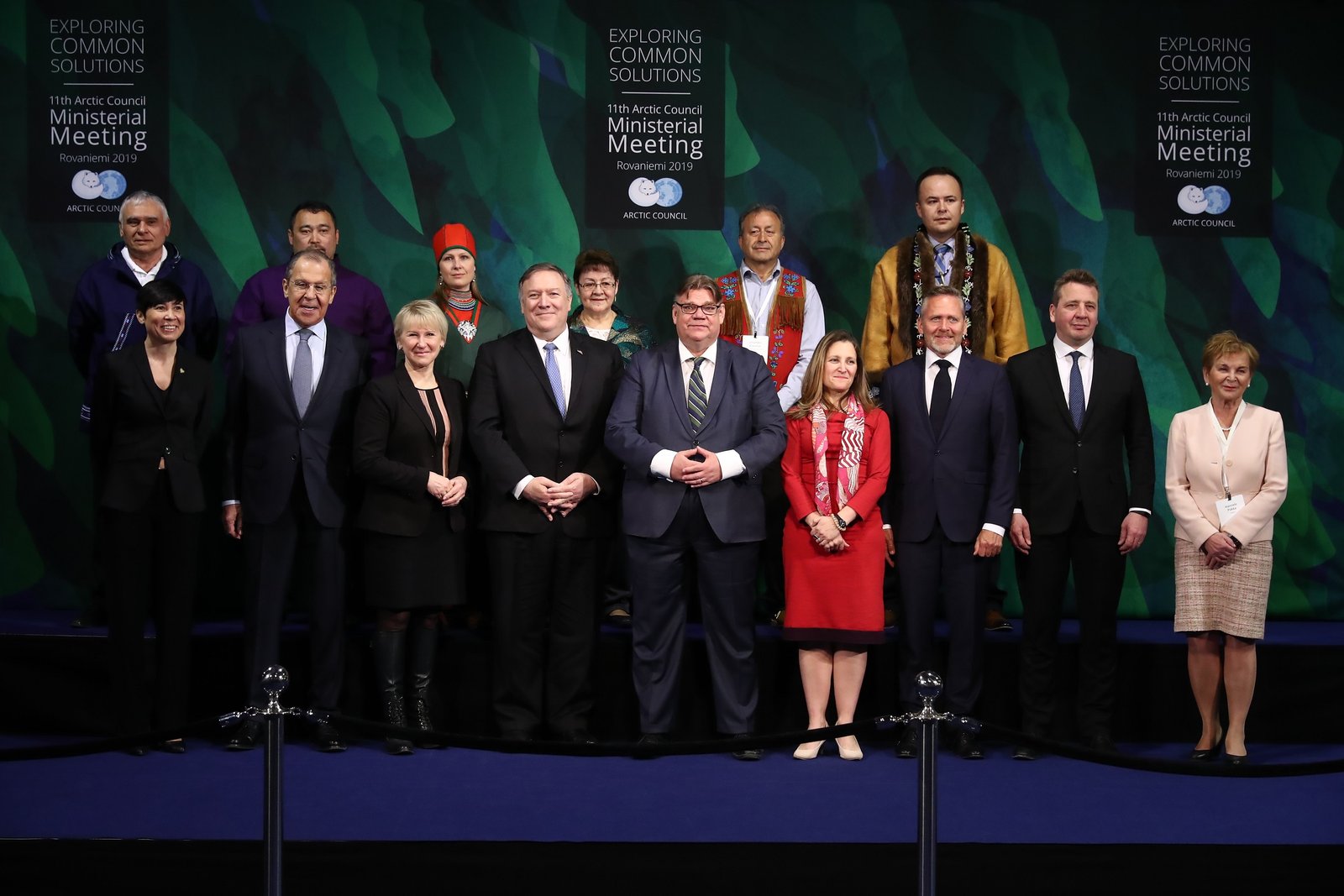
The 11th Ministerial Meeting of the Arctic Council (AC) took place held in Rovaniemi (Finland) on 6–7 May. The Russian delegation was headed by Russian Minister of Foreign Affairs Sergey Lavrov. Foreign ministers from all eight member countries attended the AC meeting for only the second time in this international organization’s history. On the final day of the ministerial meeting, Finland officially handed over the chairmanship of the AC to Iceland for the next two-year period at a special ministerial session. 

The meeting participants emphasized that they highly appreciated Finland’s activities as chairman of the Arctic Council. Some of the most important achievements of Finland’s chairmanship include strengthening and developing synergies using the Arctic Council platform to enhance the region’s resistance to global climate change, minimizing the human impact on the environment, preserving biodiversity, and developing telecommunications infrastructure. Russia was actively involved in the council’s work to establish close interaction between the working bodies of the Arctic Council, work in joint formats, and prepare joint expert materials and recommendations.

The Russian Federation will take over the chairmanship of the Arctic Council in 2021. “The consolidation of the international community’s efforts to develop the Far North is the key to the success of the Arctic’s sustainable development. Russia thanks Finland for its work and welcomes Iceland’s strategic plans as chairman of the Arctic Council”, Lavrov said. “In summing up the results of the ‘Arctic: Territory of Dialogue’ 5th International Arctic Forum, Russian President Vladimir Putin said that Russia is building a platform of actions based on eco-friendly technologies. We will ensure this policy continues during Russia’s chairmanship in the AC in 2021–2023”.

During this period, Russia will focus on practical areas of work to improve the environment such as transitioning to the use of liquefied natural gas as a fuel in the transport and energy sectors, developing a circular economy, and renewable energy. Another important issue will be the problem of efficient and sustainable energy supply to Arctic villages. Special attention will be devoted to improving the prosperity and lives of people living in the Arctic and the indigenous peoples of the Far North as well as creating conditions for the development and preservation of their languages, culture, and traditions.

Lavrov held individual bilateral talks with the foreign affairs ministers of the U.S., Iceland, and Sweden on the sidelines of the ministerial meeting in Rovaniemi. 

                                                                            ***

The Arctic Council, a high-level intergovernmental forum, was established on 19 September 1996 in Ottawa (Canada) by eight Arctic states: Russia, Denmark, Iceland, Canada, Norway, the United

States, Finland, and Sweden. Six organizations of the indigenous peoples of the Arctic have the status of a permanent participant in the AC: the Russian Association of Indigenous Peoples of the North (RAIPON), the Arctic Athabaskan Council (AAC), the Aleut International Association (AIA), Gwich’in Council International (GCI), the Saami Council (SC), and the Inuit Circumpolar Council (ICC).

Official website of the Arctic Council: https://arctic-council.org/index.php/en/about-us

Official website of the International Arctic Forum: forumarctica.ru 


May 10, 2019 0 comments
0 FacebookTwitterPinterestEmail
Spy War

USA : Executive Order Not Needed to Ban Huawei in 5G Networks

by Nadarajah Sethurupan May 9, 2019
written by Nadarajah Sethurupan

A senior U.S. State Department official said there is no need for President Donald Trump to sign an executive order to explicitly ban Chinese telecommunication company Huawei from taking part in the buildout of the U.S. 5G networks. Strayer spoke with Media about U.S. 5G policy and security concerns over Huawei.

Below is a full rush transcript of the press conference by Ambassador Robert L. Strayer, Deputy Assistant Secretary for Cyber and International Communications and Information Policy , BUREAU OF ECONOMIC AND BUSINESS AFFAIRS.

DAS Strayer:  The United States recognizes that we must maintain a secure cyberspace for future generations.  We and our partners recognize that cyber policy issues are critical to not just protecting our communications networks but also to our national security, our economic prosperity, and securing fundamental human rights all around the world.  

The security of Information Communications Technology, or ICT, is an essential element of national security.  The networks and services that comprise ICT play a critical role in the safety, security and prosperity of each nation.

The 5th generation of wireless technology, or 5G, will be transformative by providing consumers and businesses with up to 100 times faster connections than 4G networks provide and they will be done with low latency, which is the time devices need to communicate with one another.  This will result in billions of new devices becoming connected to the internet, enabling what is called the Internet of Things.  And with these devices connected in what they call Mobile Edge Computing with low latency, we’ll begin to see a vast array of new critical infrastructure services being provided to the public on top of this 5G network.  We’ll see things like autonomous vehicles, autonomous transportation networks, telehealth and automated manufacturing.

As countries around the world expand and update their ICT infrastructure we are urging them to adopt a risk-based security framework.  An important element of this framework is a careful evaluation of the supply chain of equipment vendors.  In particular, this evaluation should result in the exclusion of equipment vendors that are subject to unchecked or extrajudicial control by a foreign power.  These vendors could be ordered to undermine network security, to skim personal information, conduct espionage, or to disrupt those critical services that are provided by the 5G network.

A significant cause for concern are a number of Chinese laws that compel their companies to cooperate with intelligence and security services without independent judicial controls.

The United States has sought to address this risk through its National Defense Authorization Act which prohibits our federal government from using services provided by Huawei or ZTE or other high-risk companies.

We also have commitments from our four largest wireless carriers not to use these high-risk vendors in their 5G networks.

I was very pleased to attend the Czech Republic’s hosted 5G Security Conference last Thursday and Friday.  That conference was organized into four main tracks on policy issues, technical issues, economic issues, and cyber security and resiliency considerations.  There was an active discussion among the 32 governments represented and more than 140 experts that participated in those four tracks.

At the end of the conference the Czech Republic published a set of guidelines or principles that can be used by countries as they start to think more deeply about how they’re going to secure their 5G networks.  Those principles cover a wide range of considerations from cyber security technical issues to considerations about third party influence over vendors that could result in the intentional intrusion or manipulation of 5G networks.

As countries around the world make their decision about how to build out 5G, we urge them to refer to these best practices that are embodied in the Prague Proposals, as it’s called, so that they can incorporate those security ideas into the critical networks from the very start, before they build them out.

Question:  A Huawei official recently said that the U.S. is undermining the political independence of Europe.  From your side, is the undermining intentional or not?

DAS Strayer:  We’re working very closely with our partner and allies all around the world.  I think over the last year we’ve all been on a shared path forward to better understand how security will be incorporated into 5G and to also understand the stakes of 5G.  What could be enabled by 5G, both in the ability to facilitate new types of critical infrastructure services, as well as the ability for data potentially from all the Internet of Things that surround us to be transmitted over those networks to other places in the world.

Our focus in all these discussions to have both a technical discussion as well as a policy discussion.  On the policy discussion, of course we are talking about how companies may not adhere to best practices and may be influenced by third parties including foreign powers that might have an adversarial interest to the interests of our citizens — citizens in Europe and citizens of the United States.  So we want to make countries very much aware of those concerns from the start.

This is in no way a political dynamic that’s playing out.  These are the best practices related to security and we are, like we do in all of our discussions about transnational concerns, we are very frank and forthright with our partners about this, and I would say that it is a mischaracterization really to say that this is in some way political.

Question: No single European country has gone ahead and banned Huawei as the U.S. has been asking, so is the campaign failing? 

DAS Strayer:  Our campaign request is that countries include security practices into their consideration of 5G networks.  We’ve seen, of course, the European Union Commission’s recommendation, March 26th, that said that countries as they roll out their 5G as a security consideration should think about other non-technical factors like the model of governance and the track record of the country where the vendor is located.  So we’ve seen the European Union Commission, we’ve seen Germany also announce that it has a set of principles that it will apply that include the reliability of a vendor to abide by data protection standards.

We know that privacy is very important to citizens in the European Union, it’s very important to citizens in the United States by the way, it’s part of our Constitution.  But we think that countries should think very carefully about a track record of a country and its vendor related to data protection.

We’ve also seen the French government move forward on a law that would apply additional security standards to the rollout of 5G networks there.

So we’ve seen a first very important step of countries move along this path of coming to a recognition that 5G must be part of decisions about the build-out of the technology.  While we have not seen bans on any particular company, I think that’s a little premature.  Over time if principles related to the influence of 3rd party countries that are embodied in the European Commission recommendation and in these Prague Principles, that those are rigorously applied, as they should be, that should lead inevitably to the ban of companies that are subject to the type of control that they are in China.

Question:  Countries like Malta are developing Huawei’s Safe City Concept by planning advanced video surveillance inside crime-prone areas, but a facial recognition CCTV option was apparently discarded. What are the risks for European countries that use Huawei technology for advanced surveillance systems?

DAS Strayer:  As I just mentioned, we are very concerned in the United States about the privacy of our citizens, and we recognize as well that European countries and their governments are very concerned about the privacy of their citizens which is embodied in things like the General Privacy Protection Directive.

We see the use of surveillance technology by China within its own borders used for ends that include using it to assign social credit scores, to then surveil the movement of people, and to identify who they are interacting with, and then to cause more than a million Uighurs to be sent to reeducation camps.  We are very troubled by that kind of use of data by authoritarian regimes.  We know that suppresses fundamental human rights and civil liberties, including the right of free association, freedom of speech, and freedom to exercise religion.  So we’re very troubled by that.  We think that as technology used in [inaudible] cities is integrated into broader wireless networks, that would be a cause for concern because that data could end up back in places such as Beijing where it would not be used for the purposes that we want to see all of our data subject to which is protected uses, limited uses, and not to be exploited for authoritarian purposes.

Question:  You participated in a meeting with the UK networks the other day.  It seemed like an information gathering exercise rather than a sort of more sort of event warning.  I’m wondering what you heard from the UK networks to give you confidence that they either agree or disagree with you and your approach to Huawei.

DAS Strayer:  I can’t reflect on the exact discussions that we had because they were confidential.  But I will say that as we do in all of our engagements across Europe, we have very frank discussions about our concerns, many of which I’ve highlighted on this call today.  We highlight those for governments and for telecommunications operators, and we’re still having an active discussion with our partners both in the governments and in the private sector.

Question:  I wanted to ask about a distinction between core and non-core.  Have you considered if a telecom operator, let’s say like BT or KPN decides not to use Huawei on core networks, is that good enough?  And they just use them for peripheral non-core parts of their network.  Would that be sufficient?

DAS Strayer:  As we move to 5G, there will be increasingly a blurring of the lines between a core and the periphery.  What fundamentally people have looked at in 4G networks to say the core was different than the edge or periphery was that the computing, the major computing power occurred only in the core.  In a 5G network, we’re going to see computing having to occur closer to the user, whether that’s a business user or a consumer, because there has to be very low latency for things like autonomous vehicles, or for telemedicine, or for other uses that will have massive amounts of data that need to have computing power and what they call cacheing of that information near the user, near the radio access network at the edge.

So we don’t think that anywhere in the network we should have untrusted vendors.  High risk vendors at the edge could just as easily manipulate data and the overriding critical services that are being provided based on top of that infrastructure.  So we shouldn’t have untrusted vendors in any part of the networks.

Question: I was just wondering if you could be more explicit about the consequences if Britain and others do allow Huawei into their 5G network?  What will America do as a result of that?

DAS Strayer:  We have very closely integrated information sharing relationships with United Kingdom and a range of countries around the world.  In all of those relationships we rely on trust and protection of information.  We would, if a country had Huawei in its 5G network have to reassess how we are sharing information with those countries to ensure that we are protecting the information that we are sharing with them.

Question:  Do you think that the international conference in Prague was a step forward in Western coordination for 5G security?

DAS Strayer:  Yes, we definitely think it was a very important step forward to have 32 governments together and more than 140 experts to talk about these issues in a two-day set of meetings.  We think that as we all progress on this education and evaluation campaign for 5G it’s important that we continue to have close collaboration about our concerns about risk and also about opportunities in the 5G networks.  There’s things beyond security, of course, that we’re coordinating on, on talking about regulatory policies and freeing up spectrum that will be so important for 5G networks.  So this conference was an important step forward to put out country agnostic principles that should be rigorously applied to ensure that we have the highest levels of security in our 5G networks.

Question: Some of the countries gathered in Prague, including France and Germany, talked down it seems what was being discussed from principles to proposals.  Does that leave you short of the goal you sought going in? 

DAS Strayer:  I don’t really see a distinction between those two terms that characterize the overall effort.  It was a very active discussion among all the participants.  In the summation at the end, no one had any reservations about any of the principles that were tabled as far as, by the Czech government as part of their statement.

Question:  Italy has just signed agreements with China for the Belt and Road Initiative.  Has the United States spoken with Italy regarding the possible inclusion of 5G with agreements?

DAS Strayer:  Thanks for that question.  We’re talking with all of our partners and allies around the world about transparency in funding and financing related to the Belt and Road Initative.  I would also note that this Prague Conference highlighted the importance of having transparency about the funding mechanisms for finance deals related to 5G.  But more broadly, to have commercially reasonable terms in terms that are not predatory as the Secretary of State has mentioned previously.  

So we’re having conversations, all of our partners, allies, about the overall Belt and Road Initiative finance mechanisms related to 5G.  We’re also emphasizing the same points that I’m making here, maybe in a little more detail with partners.  But we’re continuing to engage actively with all of our partners about concerns about Chinese vendors and how that does not fit into, in our view, a rigorously applied set of principles about the potential influence by third party countries over vendors for 5G.

Question:  How Huawei has its European Regional Logistics Center in Hungary employing 2000 workers.  Hungary’s government made recent remarks that it is of strategic national interest to continue cooperation with them.  Is the U.S. concerned with Hungary’s position?  And what incentives can the U.S. offer in order for Hungary to revise its support for Huawei?

DAS Strayer:  As we continue to have our discussions with our partners out there about the national security implications, and indeed the economic implications over the long run because a foreign power’s control over the network could affect dramatically our economic futures if it disrupts critical infrastructure, results in a theft of intellectual property, or the derivation of private data, that could fundamentally affect our economies.  So we’re asking countries to think carefully about the overall economic proposition that they’re being offered by Chinese companies relative to their long-term economic futures.

So we think that a true assessment of technologies that are being provided such as by Huawei that contain, as the United Kingdom just found, hundreds of vulnerabilities in their software, would over the long term be potentially more costly than other alternative vendors that come from Finland or Sweden or South Korea.  We encourage them to carefully consider the life cycle costs of those vendors, as well as to the potential that down the road an untrusted vendor might be something that a country and its telecom carriers might have to find an alternative to after it’s already further embedded into their networks.

Question: We understand obviously that he is meeting with Theresa May today and it’s been reported in various media outlets that he will be issuing a warning to the UK stance on Huawei.  I just wondered if you could give us any sort of an insight into what exactly he may have, or will be saying during those talks. 

DAS Strayer:  I will let the Secretary speak for himself today.  I’m not going to comment further.  As you know, we have made a statement that in the past to a number of countries about our national security concerns, and indeed the potential impact that Huawei technology in any part of the network would have on our ability to share information in the same way that we do today.

May 9, 2019 0 comments
0 FacebookTwitterPinterestEmail
Diplomatic relations

Ambassador of Kazakhstan presents credentials to the King of Norway

by Nadarajah Sethurupan May 9, 2019
written by Nadarajah Sethurupan

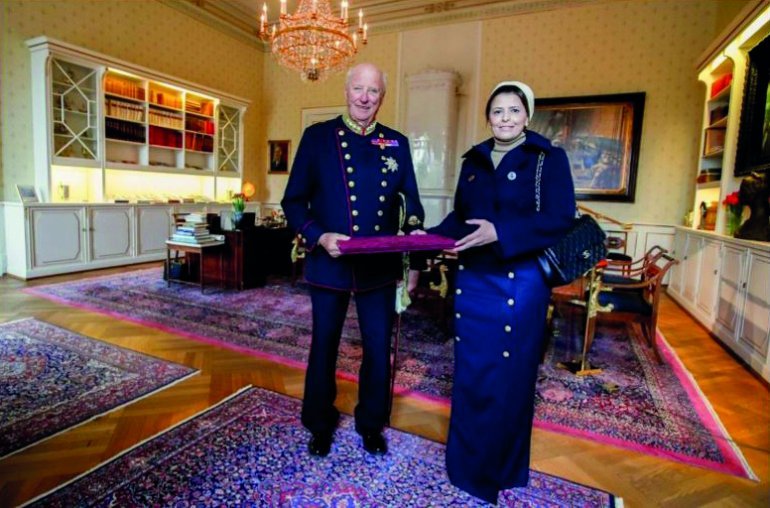
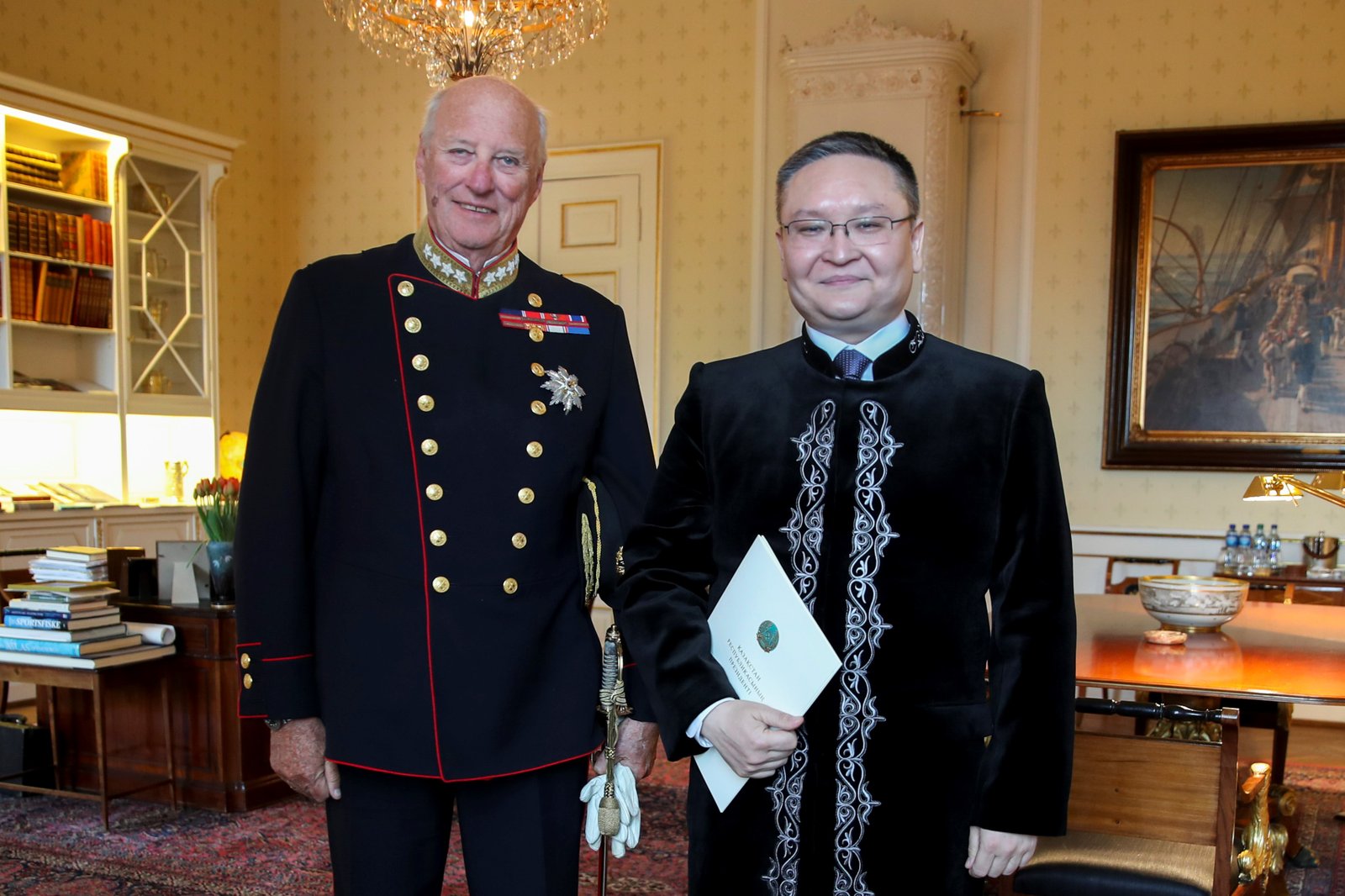
Oslo, 9 May 2019 – Yerkin Akhinzhanov, Ambassador of Kazakhstan, presented his Letters of Credence to the King of Norway, Harald V.

After the ceremony in the Royal Palace, during the audience, the King warmly recalled the official visit of the First President of Kazakhstan, Nursultan Nazarbayev, to Oslo in April 2001. The monarch emphasized the need to strengthen multifaceted ties between Kazakhstan and Norway, highlighting the importance of promoting sports and researching common history that link the countries together.

Photo: Vidar Ruud / NTB Scanpix

The Norwegians well remember the time when Norway’s skaters used to set world records at the Medeo, the world’s highest mountain rink in Almaty. The King welcomed the Embassy’s intentions to introduce Kazakhstan, its nature, culture, and economic and investment potential to the Norwegians.

Harald V learned with interest about the political changes in Kazakhstan and the presidential elections scheduled for June 9. Mr.Akhinzhanov emphasized that the incumbent President Kassym-Jomart Tokayev, in his address to the people has guaranteed fair and transparent elections.

“We always remember that Norway was among the first to recognize Kazakhstan’s Independence. Your country has been a model for many reforms in Kazakhstan, including the establishment of the National Fund for revenues from oil. Today we want to introduce advanced practices in building an efficient welfare state with a sustainable economy and society. We are interested in developing renewable energy, smart cities, aquaculture and many more initiative,” the Ambassador said.

He also noted that as a large Eurasian country, Kazakhstan is actively contributing to develop the New Silk Road, which will make possible the delivery of containers by rail from East China to Northern Europe in a duration of just two weeks, as compared to 45-60 days by sea. 

According to the Ambassador, Kazakhstan and Norway should strengthen the shared aspirations in building a harmonious, secure and prosperous world. Kazakhstan is one of the countries most affected by nuclear testing and this coming 29 August will mark the 70th Anniversary of the first nuclear explosion near Semipalatinsk. Based on the devastating experience and the most tragic suffering of the people, the First President Nursultan Nazarbayev made a historic decision to dismantle the entire nuclear potential, the fourth largest in the world, that remained on our territory after the collapse of the USSR. 

Following the solemn audience, the Norwegian Ministry of Foreign Affairs hosted a Vin d´honneur reception at the Government Guest House in honour of the newly accredited ambassadors of Kazakhstan, Albania, Lesotho and Qatar.

May 9, 2019 0 comments
0 FacebookTwitterPinterestEmail
Economics

IMF: Solid growth in Norwegian economy

by Nadarajah Sethurupan May 9, 2019
written by Nadarajah Sethurupan

I am pleased to note that the IMF delegation find Norway’s economic momentum to be strong due to the conduct of fiscal policy in recent years, says Minister of Finance Siv Jensen.

As part of the IMF’s yearly assessment of the Norwegian economy, an IMF delegation today presented its concluding statement after more than a week of discussions on recent economic developments and Norway’s economic policy with authorities, academic institutions and social partners. A more comprehensive report will subsequently be presented to the IMF board.  

Minister of Finance Siv Jensen

The delegation emphasizes that growth is strong, unemployment low and household incomes are rising. Mainland-GDP is projected to grow by about 2½ pct. this year and 2 pct. next year. The neutral budget stance of recent years is considered an improvement relative to fiscal policy in previous upturns. Yet, going forward, the government should target some consolidation both to help build fiscal space for the next cyclical downturn and to meet long-term demographic challenges.

The delegation stresses that house prices are high but less overvalued than last year. In combination with high and increasing household debt, the housing market represents a risk to the Norwegian economy and financial stability. The delegation warns against relaxing mortgage regulations, aimed at containing risk. High price growth in the commercial real estate market also represents a growing risk. The delegation supports the increase in the countercyclical buffer from end 2019.

– I share the IMF delegations concern about the risk to the Norwegian economy from property markets and household debt. At the same time, I am pleased to note that delegation finds house prices less overvalued than last year. We have implemented measures to curb growth in household debt and the sharp rise in housing prices that is particularly harmful to first-time buyers. We now see that these are taking effect, says the Minister of Finance.

In assessing long-term challenges to the Norwegian economy, the delegation emphasizes the need to sustain high employment levels in the face of population ageing. The high share of working-age population outside the labour force requires action. The delegation singles out reform of the sickness and disability benefits as a priority. The share of working-age population on these schemes is significantly higher than in Nordic peers.

– The government’s policy must support sustainable welfare also in the future. I agree on the need to look into how we can include more people in the labour market. We are closely following the ongoing work by the government-appointed commission on this issue. In their mandate, they are asked to come up with recommendations on how to reduce the number of people on sickness- and disability schemes, the Minister of Finance concludes.

The delegation was headed by Mission Chief Jacques Miniane.

Further reading:

  • Summary of conclusions of the IMF Mission (April 25–May 6 2019) (PDF)
  • Concluding statement from the IMF mission (PDF)
  • Webcast from the presentation
May 9, 2019 0 comments
0 FacebookTwitterPinterestEmail
Oil & Gas

State Dept. Iran engaging in ‘nuclear blackmail’

by Nadarajah Sethurupan May 9, 2019
written by Nadarajah Sethurupan

The United States will not grant any more waivers to any countries that would allow them to buy Iranian oil without facing U.S. sanctions, a senior U.S. diplomat said on Wednesday.

United States is looking to sign a new agreement with Iran that covers its nuclear and missile programs, the country’s regional aggression and the arbitrary detention of foreign nationals including Americans, according to US Special Representative for Iran Brian Hook.

The US responded to flare ups in tensions with Iran with Iran’s Special Envoy Brian Hook vowing that any attack against the United States or its allies would be met with a show of force.

Hook assured an unsettled market that it had already factored in Iran’s oil exports falling to zero. Oil prices were up in afternoon trading, with WTI up over 1 percent on the day.

The strong words from the United States came after Iran announced it would no longer be curbing its nuclear program, threatening to go even further, saying it would resume enriching uranium at a higher level if the EU fails to live up to its end of the agreement by continuing Iranian oil purchases.

The United States had announced on Tuesday that it was deploying the USS Abraham Lincoln Carrier Strike Group and a bomber task force to the U.S. Central Command region “to send a clear and unmistakable message to the Iranian regime.”

Below is a full rush transcript of the press conference by Brian Hook, Special Representative for Iran and Senior Policy Advisor to the Secretary of State and Victoria Coates, Deputy Assistant to the President and Senior Director for Middle Eastern Affairs, NSC, on U.S. policy achievements since withdrawing from the JCPOA one year ago.

Mr. Hook:  One year ago today President Trump announced that the United States would cease its participation in the Iran Nuclear Deal.  Shortly thereafter Secretary Pompeo, within a few weeks of the President’s decision, presented a bold new strategy to address Iran’s, to comprehensively address Iran’s threats to peace and security, and importantly, to prevent Iran from ever acquiring a nuclear weapon.  We will never be held hostage to the Iranian regime’s nuclear blackmail, and outside of the deal we are in a much better position to address the full range of Iran’s destabilizing activities.

The new strategy that we launched shortly after the President left the deal has had a lot of new initiatives, new lines of effort, and we are seeing positive impacts.

We have imposed the toughest sanctions ever on this Iranian regime.  We have designated nearly 1,000 individuals and entities since the beginning of the administration.  We have taken Iran’s oil exports to historic lows.  And we have stopped issuing oil waivers to those who import Iranian oil, which means zeroing out the purchases of Iranian crude.

We have also tightened nuclear restrictions that impede Iran’s ability to reconstitute its past nuclear weapons program, and prevent Iran from shortening the time that it would take to produce fissile material for a nuclear weapon.

I think you saw the regime’s announcement that it intends to expand its nuclear program.  This is in defiance of international norms, and it is an attempt to hold the world hostage.  Its threat to renew the nuclear work is something that we are going to be examining very closely.  It’s too early to speculate on the technical significance of any nuclear activities until we see what, if anything, happens.

So when you look at where we are now, a year on, we are still committed to denying the regime all paths to a nuclear weapon.  We will continue to expose maximum pressure on the regime until it abandons its destabilizing ambitions.  We call on the international community to hold the Iranian regime accountable for its threat to expand its nuclear program.

I would say in the last year we have done a good job of increasing Iran’s diplomatic isolation as more allies and partners have stepped up over the last year to counter Iranian aggression with us.  We have acted with countries from nearly every continent to disrupt Iran’s rogue oil shipping operations.  The European Union passed new sanctions against Iranian entities in response to two foiled terror plots last year.  And other nations have responded to Iran’s terrorism and threats of terrorism by recalling ambassadors, expelling Iranian diplomats, eliminating visa-free travel, denying landing rights to Mahan Air.

As outlined in the 12 demands in the Secretary’s May 21st speech — and I would just remind you that the first three of those demands concern Iran’s nuclear program — we will continue to apply maximum pressure on the regime until its leaders change their behavior.  They have got to start behaving more like a normal nation and less like a revolutionary cause.  They need to respect the rights of the Iranian people.  And we are committed to standing with the Iranian people, restoring deterrence against Iran’s threats to peace and security, and denying the regime the revenue that it needs to fund its foreign policy.  We are well on our way to making Iran’s foreign policy prohibitively expensive.

Dr. Coates:  It’s a pleasure to participate in this with you today after all the hard work that’s gone into implementing the President’s strategy.

I just wanted to point out that a year ago there was a very firmly held set of points in conventional wisdom that were going to occur if the United States decided to withdraw from the JCPOA.  It said with great certainty that the United States would be isolated, our sanctions unilaterally would be ineffective, and investment would pour into Iran, rendering us feckless and powerless.  

Now President Trump’s stated goal for our Iran strategy is to fundamentally change the Iranian regime’s behavior so it no longer threatens the U.S. and our allies and it never possesses a nuclear weapon.  Whether Tehran chooses a future of opportunity and prosperity for the Iranian people or doubles down on the failed policies of the last 40 years that brought it to this impasse is yet to be seen, but the President has demonstrated beyond any doubt that the United States retains unprecedented economic clout that can eventually cripple Iran’s economy if they do not change course.

The President’s guidance is to continue increasing this pressure through actions such as designating the IRGC a foreign terrorist organization and bringing the oil waivers to zero until Tehran is compelled to negotiate on terms favorable to the U.S. or choose between survival and exporting terror as it will not be able to do both.

President Trump’s offers to meet with the Iranian regime are sincere, and it is his hope that they will accept and begin to build the better future that the people of Iran deserve. 

Question:  About the Iranian movement of its ballistic missile to the Gulf and the U.S. announcement after that that it will send an aircraft carrier.  What is your comment, or how does this affect the stability of the region?

Mr. Hook:  We had indications of heightened Iranian readiness to conduct offensive operations against U.S. forces and our interests in the Middle East, so we had indications of multiple credible threats by Iranian forces and we repositioned our military assets accordingly.

We deployed the USS Abraham Lincoln carrier strike group and a bomber task force to send a clear message to the Iranian regime, and that message is any attack on U.S. interests or on those of our allies will be met with force.  The United States does not seek war with Iran, but we are ready to defend U.S. forces and interests in the region.

If the Iranian regime chooses to escalate its already violent behavior, the United States will respond.

I would also just add, I’ve seen some people connect Iran’s threats with our designation of the Islamic Revolutionary Guards as, that designation as maybe one reason why this is happening.  After we designated the Revolutionary Guards as a foreign terrorist organization, Iran’s response was to threaten with more terrorism, which kind of proves our point.  This is a regime that insists on behaving like a terrorist regime, and if you don’t agree with them they threaten even more terrorism.  And as I said earlier at the top of the call, we are not going to give Iran a veto over our national security, and we will continue to work with allies and partners in the region and beyond to restore deterrence against the range of threats to peace and security that this regime presents.

Dr. Coates:  I’d just add to that, Brian, this impasse we find ourselves in right now that Deena was asking about, this is hardly new.  They’ve been doing this for 40 years.  They started out by taking our diplomats hostage.  You can go through 1983, the Beirut Marine Barracks bombing.  This is their chosen tool of statecraft.  So connecting one sort of episode of threatened violence with the IRGC designation just doesn’t make sense.

Question:  How come almost the whole world, at least most of Europe and China and Russia and so forth don’t see any violation of the treaty including the UN Agency in Vienna, only the ladies and gentlemen in Washington do see that, do stress that, maybe a little bit supported by non-members of the treaty like Israel or so.  Isn’t it just so that you in Washington want regime change in Tehran as the real request?

Mr. Hook:  Perhaps you haven’t been looking at the statements made by the President, the Vice President, the Secretary of State on down.  We have said repeatedly that we are seeking a change in the regime’s behavior.  And it is true that Iran has been in compliance with these reports, but we should be surprised if they’re not in compliance.  The bar for compliance was set so low by the Iran Nuclear Deal that we expect them to stay in compliance.

At some point their calculus may change, but this was a sweetheart deal that Iran got more than it gave in the deal.  It was a disproportionately weighted deal.  It is a modest, it is a non-proliferation plan of modest and temporary benefits.  

I would remind everyone that the Iran Deal is going to start expiring in 18 months.  The first of its provisions, the arms embargo and the travel ban on people that are listed in 2231 expire.  And then you’re going to have a regular cycle of restrictions lift on Iran.  So it is false to say that the Iran Nuclear Deal solved the Iran nuclear problem.  It delayed addressing the problem.  And we thought that this deal presented Iran with a patient pathway to acquire a nuclear weapon, and so we decided to get out of the deal.  And now outside of the deal we think that we’re in a much better position to prevent Iran from ever acquiring a nuclear weapon by this new approach that we’re taking.

Dr. Coates:  I have nothing further to add.  I would point out that the JCPOA is not a treaty.

Mr. Hook:  It’s also, people don’t know this.  I’m not sure why.  It’s not legally binding.  It is a political plan.  It is a political commitment that was made four years ago by a President who is no longer in office.  It has no legal status.  If you look at UN Security Council Resolution 2231, it is not legally binding.  And there are other things in that, that are legally binding.  For example, the travel ban, the assets freeze, the arms embargo.  Those, and [NXP] are all still operational.  But this is not a treaty.  It is not an agreement.  All you have do to is look at the name.  The JCPOA is the Joint Comprehensive Plan, and I was in a meeting with Foreign Minister Zarif where he made it very clear to everybody in the room that it’s not an agreement.  It’s only a plan.  Because they couldn’t agree on calling it an agreement.  Our response to that is if it’s just a plan, then plans can be changed.

Question:  what kind of new sanctions is the administration planning to continue the pressure campaign, if any?  And the second question, if the Iranians threaten that if the other world powers will not answer to their demands in 60 days they might renew uranium enrichment to 20 percent.  If in 60 days this is what the Iranians are going to do, is the United States going to consider using a military option to stop the Iranians from enriching to 20 percent?

Mr. Hook:  There’s a lot of hypotheticals in there.  Maybe I’ll take the first one.  We don’t ever preview our sanctions, because if we were to preview our sanctions it would be giving a heads-up to the people that we’re intending to target.  I think it is well known that our campaign of maximum economic pressure is just getting started.  There is a lot more to come.  We’ve been saying that for some time.  Just in the last few weeks we’ve tightened the nuclear restrictions, we’ve imposed nuclear sanctions, we designated the IRGC and the Quds Force as a foreign terrorist organization, we announced no more oil waivers.  It’s going to continue, so I think you can expect that.

As Secretary Pompeo said, Iran can start behaving like a normal country or they can watch their economy crumble.  That’s the choice that sort of only they can make.

On the second question, I would just say it is too early to speculate.  Right now we have intentions.  We don’t have actions.  We are in close contact with our friends and allies.  We certainly take these sorts of threats seriously, but as I said earlier, we’re not ever going to be held hostage to the regime’s nuclear blackmail.  And we will look very closely at whether, if they follow through on their announcement, we will look very closely to see if this shortens the one-year nuclear breakout time line.  Beyond that, I’m not going to speculate.

Dr. Coates:  I would just emphasize that the phase that we’re going into now is a new phase of increased pressure.  One thing you can’t say about the President’s strategy here is that it’s in any way impulsive.  He came into office.  Took a year to examine the deal, to have our friends and allies make the case for why it should be retained.  He decided it did not merit that.  Then had a six-month wind-down period followed by six months of oil waivers.  So this process has been going on for some time, and what we initiated in November was the reimposition of our unilateral sanctions that had been relaxed, or waived under the JCPOA.

What we’re doing now is additional steps that haven’t been tried before.  So that’s what we mean by maximum pressure.  I think the President’s been very clear that when the security of the American people is imperiled, he retains the right to have all options on the table.

Question:  I understand your intention, you say, to get Iran to behave in lots of areas outside the JCPOA, what you call maligned activities, et cetera, as you’ve explained.  In the last year have you seen any indication at all that Iran is changing its behavior in these aspects?

Mr. Hook:  Yes we have.  In the New York Times in March there was an article by Ben Hubbard and the headline of that was “Sanctions curb support by Iran in allies’ fights”.  You have Shia fighters who are quoted, “The golden days are gone and will never return.”  This is an Iranian-backed militia in Syria.  He had lost a third of his salary and other benefits, and he said “Iran doesn’t have enough money to give us.”

And as the New York Times said, don’t take my word for it, “Across the Middle East Iran’s allies are showing signs of financial strain.”

This is a good thing.  The leader of Hezbollah, Hassan Nasrallah, in March made a public appeal for the first time in their history for donations.  And this is a consequence of the pressure that we are putting, we’re putting a lot of downward pressure on Iran’s revenues.

I’ll give you another example.  Iran reduced its military budget by 10 percent from 2017 to 2018.  Its 2019 and 2020 budget has a reduction of 28 percent in defense spending, including a 17 percent cut to the IRGC.  And we see Qassem Soleimani having a hard time funding his operations and they’re turning to oil smuggling.  And we have broken up some of those oil smuggling rings.  We’re going to continue to do that.

We have, working with other nations, have stripped Iranian oil tankers — 75 oil tankers to date don’t have a flag that they can sail under, and it’s very disruptive to lose your flag.

Overall, we have been denying the regime many billions of dollars in lost revenue, and that is money they would otherwise spend on Hezbollah, on Hamas, on Palestinian Islamic Jihad, the Houthis in Yemen.  They just don’t have as much money as they used to.   And that is why we think that it is in the interest of the international community to join us in this pressure campaign, because it is making a difference.

Dr. Coates:  I would just add that you can tell a lot about a regime by where it chooses to allocate resources, especially as, as Brian was just detailing, the resources are becoming severely constricted.  I think certainly after the floods in which the Secretary of State offered to help which they’re not recovering from; they have a potential locust problem this summer which could be detrimental to their food supply.  There are a lot of places they could be investing resources and they’re not. 

But I do think, as Brian pointed out, the reduction in the defense budget and the restrictions of the supplies to their terrorist proxies is a good thing for the world.

Question:  Early this evening European banks and investors have been warned against engaging with the Special Purpose Vehicle to facilitate non-dollar trade with Iran.  Do you see a consistent European position on it?

Mr. Hook:  I’m not going to speak for the Europeans and speak for their position.  I can just make a couple of observations.

We don’t see any corporate demand for a Special Purpose Vehicle.  Our sanctions give European countries a choice, and it’s a choice they can freely make, and they know this.  They can either have access to the U.S. markets and the U.S. financial system, or they can do business with Iran.  That’s not a difficult decision given the relative size of the American market over Tehran’s market.

So we don’t see any corporate interest in an SPV.  We know that there is European interest in keeping the economic incentives going for Iran to stay in the deal, but we’re not in the deal anymore and so that is no longer a concern of ours.  We’re very much focused on the totality of threats that Iran presents.

We fully expect, I’m also not entirely confident that this vehicle will ever get off the ground because there has to be a mirror image set up on the Iranian side of this, and Iran doesn’t like to comply with FATF because they want, they have a financial sector that is deliberately dark.  They do not want people to be able to follow the money.  That’s why they don’t comply with FATF and that’s why they’ve been disconnected from the SWIFT financial messaging system, because they’re not in compliance.  They run a dark economy with the Revolutionary Guards controlling up to half of the economy.  It’s the world’s leading sponsor of terrorism.  

So I would question whether the regime ever decides that it wants to be that transparent and run an SPV.  So we don’t see much demand for it, and I don’t think the prospects of it for getting off the ground are that high.

Dr. Coates:  I concur.  I don’t think it’s necessary and I just wanted to emphasize Brian’s last point about the darkness of the Iranian economy.  There was all of one foreign direct investment in Iran in the first quarter of 2019.  It’s not a good place to do business.  And that is absolutely the fault of the regime, which is not allowing the Iranian people to develop the kind of economy that they should enjoy.

Mr. Hook:  I’ve also, I can’t remember the last time I checked it, if you look at total EU trade volumes, Iran isn’t even in the top 30.  The EU does more trade with Kazakhstan than it does with Iran.  It’s just not a significant market.  And European corporations would much rather do business with the United States than do business with Iran.  We’re easier to work with and the economic logic is plain to everyone.

May 9, 2019 0 comments
0 FacebookTwitterPinterestEmail
Economics

Axiata and Telenor in talks to merge Asian operations

by Nadarajah Sethurupan May 8, 2019
written by Nadarajah Sethurupan

Two Asian telco giants — Malaysia-based Axiata Group Bhd and Norwegian Telenor Group — are in talks to merge their operations in Asia.

In terms of geographical presence, Axiata has a wider footprint. While the two mobile service operators both have a presence in Malaysia, Thailand, Myanmar, Bangladesh and Pakistan, Axiata also operates in India, Sri Lanka, Nepal, Cambodia and Indonesia where Telenor is not present.

The negotiation also involves Axiata’s operations in Cambodia, Indonesia and Sri Lanka, apart from countries where both have a presence, according to sources familiar with the merger talks.

However, the value of the merger is not known as of now.

Axiata’s 80% stake in Nepal’s NCell Private is not on the negotiating table. The reason could be concerns over the tax issue it faces in Nepal after the recent RM1.45 billion ($477 million) capital gains tax bill that Axiata was required to stomach, said the sources. However, it is not sure if Telenor is keen on Axiata’s Indian operation.

In Malaysia, Axiata wholly owns Celcom Axiata Bhd while Telenor controls a 49% stake in DiGi.com Bhd.

The substantial shareholders of Axiata are Khazanah Nasional Bhd — the single largest shareholder with a 37.16% stake — Permodalan Nasional Bhd with 18.42%, and the Employees Provident Fund with 16.16%, according to its annual report 2018.

The two telcos have already hired foreign investment banks to advise on the merger and acquisition exercise, the sources said. Should the merger talk materialise, it would be a mega merger in Asia that involves at least 300 million mobile subscribers.

Other major telcos, which have regional presence here, include Veon Ltd, Singapore Telecommunications Ltd, Vodafone Group plc and Bharti Airtel Ltd.

Mergers in the telco industry are not that surprising, according to analysts, given the tough operating landscape that features cut-throat competition, razor-thin profit margin and heavy capital expenditures that eat into shareholders’ dividends. Mergers will improve economies of scale and help to share investment burden and high fixed costs.

It is learnt that post-merger, Axiata will be a shareholder of the merged entity, which is expected to be an investment holding company that owns the enlarged regional mobile service operation. Axiata will also continue holding the 80% stake in NCell and its equity interest in Axiata Digital Services Sdn Bhd, in which Mitsui & Co Ltd has taken up a minority stake.

When Axita announced last Friday that Mitsui had taken up the stake in Axiata Digital, it did not reveal the value of its stake. What it did reveal was that the investment establishes a pre-money enterprise value of US$500 million ($682 million) for the core digital business of Axiata Digital.

The core digital business includes Boost, the e-wallet service; analytics.data.advertising (ada), the largest independent digital agency in the region; and Apigate, an emerging global application programme interface platform provider.

In an interview with The Edge Malaysia weekly in February, Khazanah managing director Datuk Shahril Ridza Ridzuan said Khazanah’s portfolio will have a 70:30 split, with 70% of its assets falling under the “commercial” basket that is used to fulfil its long-term asset growth target.

Axiata Group Bhd, CIMB Group Holdings Bhd, UEM Sunrise Bhd and its remaining 26% stake in IHH Healthcare Bhd are in the “commercial” pool that it will monetise, if the right value exists.

The remaining 30% will be its “strategic” basket, which, he said, fulfils a strategic role in the country’s development and encompasses Telekom Malaysia Bhd, Tenaga Nasional Bhd, Malaysia Airports Holdings Bhd, Malaysia Airlines Bhd as well as Iskandar Investment Bhd.

(theedgesingapore)

May 8, 2019 0 comments
0 FacebookTwitterPinterestEmail
Diplomatic relations

Norwegian Embassy in Azerbaijan ceases its operation from May 16

by Nadarajah Sethurupan May 7, 2019
written by Nadarajah Sethurupan

The Norwegian Embassy in Azerbaijan has ceased its operations since May 16, 2019.

“Dear Friends in Azerbaijan, We regret to inform you that the last working day for the public at the Royal Norwegian Embassy in Baku will be 16 May 2019,” said the Facebook post, Interfax-Azerbaijan reported.

As reported earlier, the decision on the closure of the Norwegian Embassy in Azerbaijan was announced in November 2018.

May 7, 2019 0 comments
0 FacebookTwitterPinterestEmail
Spy War

CIA warns Arab activist of potential Saudi threat ?

by Nadarajah Sethurupan May 7, 2019
written by Nadarajah Sethurupan

The CIA warned an Arab activist in Norway that he faces a potential threat from Saudi Arabia, Norwegian Media reported Tuesday.

“Something crazy – concerning my personal safety – happened two weeks ago which I haven’t been at liberty to speak about, but is breaking today. The last two weeks have been very stressful, but I hope I’ve managed well given the pressure” Iyad el-Baghdadi wrote on Twitter.

U.S. intelligence contacted Norwegian authorities April 25 regarding the potential threat to el-Baghdadi‘s life from Saudi Arabia. He was taken by authorities to a secure location where he was warned of threat.

“The way I understood it was, the Saudis have a crosshairs on me, but there is no idea of what they are going to do,” el-Baghdadi told the Guardian newspaper.

“They assured me that they are taking it very seriously. They came prepared,” he said, explaining that a police squad transferred him to the safe location and another briefed him on the situation.

El-Bahdadi is a Palestinian-born writer and a pro-democracy activist who has been a vocal critic of Saudi Crown Prince Mohammed bin Salman. He was granted political asylum in Norway in 2015 after being arrested and expelled from the United Arab Emirates.

The pro-democracy campaigner is active on Twitter and has gained a large following because of his satirical and abrupt analysis on Middle Eastern governments, including the Saudi royal family and political issues in the region.

Following the murder last fall of Jamal Kashoggi, a Saudi journalist working for the Washington Post, el-Baghdadi warned that bin Salman would become more dangerous if he was not held to account by the West. 

“If they get away with kidnapping the next step will be assassinations in your capitals, and I’m not joking even a little bit,” he said on Twitter.

The outspoken activist further warned that bin Salman is still seeking to silence critics of the Saudi government outside the kingdom and the rising number of educated Saudis who are politically active and living outside the kingdom “is shaping up to be a long-term problem for MBS,” using the prince’s initials.

News of a threat comes months after Kashoggi’s torture and murder inside the Saudi Arabian Consulate in Istanbul last October. The high profile murder caused international outrage and saw widespread condemnation of bin Salman. 

Following the murder, the CIA fingered bin Salman as being behind the order to kill the Washington Post journalist who was also a U.S. resident. 

Despite the evidence, however, the U.S. administration of Donald Trump denied bin Salman’s role in the murder and continues to support the crown prince.

May 7, 2019 0 comments
0 FacebookTwitterPinterestEmail
Corruption in Norway

Hunger strike in Sofia prison continues, repressions too, and silence of governments

by Nadarajah Sethurupan May 7, 2019
written by Nadarajah Sethurupan

The hunger strike of Jock Palfreeman in protest of corruption and abuse of power in Sofia prison continues – 16 days today. Palfreeman is the Chairman of the Board of the Bulgarian Prisoners’ Association for Rehabilitation (BPRA). BPRA is the only NGO in Bulgaria for direct representation and advocacy of prisoners’ rights. In the last two years, BPRA and Palfreeman have been subjected to constant repressions, inspired and supported by the Bulgarian Ministry of Justice.

During the hunger strike, the repressions of Palfreeman from Bulgarian prison authorities have continued. These include harassment and threats by prison guards, denial of access to prison facilities, isolation from other prisoners during outdoors time, and his placement for medical observation at the Infectious Disease Unit of the Sofia Prison Hospital.

Since the beginning of the hunger strike, Bulgarian Diaspora and Friends has sent information on the case and has asked accountability questions to the government of Bulgaria – Ministry of Justice and Council of Ministers, as well as to the government of Norway – the Royal Norwegian Ministry of Foreign Affairs. The government of Norway is the partner to the Bulgarian government on a current 30 million Euro grant from Norway for Justice reform in Bulgaria.

During the hunger strike, Bulgarian and Norwegian media have made publications on the case. So far, Bulgarian Diaspora and Friends has not received any response to our accountability questions, neither from the Bulgarian, nor from the Norwegian government.

For more information, see our previous press release, April 26, 2019.

Bulgarian Diaspora and Friends, New York 

May 7, 2019 0 comments
0 FacebookTwitterPinterestEmail
Video clips

Tom Yazdgerdi, Special Envoy for Holocaust Issues,

by Nadarajah Sethurupan May 7, 2019
written by Nadarajah Sethurupan

Tom Yazdgerdi, Special Envoy for Holocaust Issues, Bureau of European and Eurasian Affairs, U.S. Department of State.

https://www.youtube.com/watch?v=d5tFIUB5sdM&feature=youtu.be

May 7, 2019 0 comments
0 FacebookTwitterPinterestEmail
Africa and Norway

Top Norwegian diplomat salutes Rwanda resilience

by Nadarajah Sethurupan May 6, 2019
written by Nadarajah Sethurupan

We must learn from Rwanda and its people for their ability to move forward and emerge from a period of shocking cruelty with a strong spirit of reconciliation.

This, according to Marianne Hagen, the Norwegian State Secretary of the Ministry of Foreign Affairs, is a powerful example of how a nation can rise after its darkest moments.

State Secretary in the Norwegian Ministry of Foreign Affairs Ms. Marianne Hagen and Ambassador Christine Nkulikiyinka inspect an exhibition on the 1994 genocide against the Tutsi. Courtesy

She was addressing other mourners on Tuesday in the Norwegian capital Oslo, who had gathered for the 25th commemoration of the Genocide against the Tutsi.

Twenty-five years after the genocide, Rwanda has achieved remarkable degree of stability she remarked, adding that the country has also experienced a significant strengthening of both its economy and the living standards of its people.

It is a success story, and a story that we must continue to tell, Hagen told attendees, who included diplomats, civil society and friends of Rwanda in the Norwegian capital Oslo.

She decried the “collective failure of the international community to act against the genocidaires in Rwanda” as an enduring “scar on humanity’.

Rwanda’s envoy to the Nordic countries, Christine Nkulikiyinka, commended the wide and diverse attendance at the commemoration in Oslo as a hopeful sign that while the international community had abandoned Rwanda during the genocide against the Tutsi, many had since come forth and stood with Rwanda both in its recovery and its campaign for Never Again.

Nkulikiyinka warned that even as many share the principle of never again as well as the norms of peaceful coexistence, a small but increasingly loud group are spewing genocide denial ideologies and or seeking to destabilize Rwanda.

“While many marvel at the miracle of rebirth seen in the country, some doubt it and others anticipate our demise. To these people we dare to say: Never again will the history of genocide be repeated in Rwanda,” said the envoy.

UK-based genocide survivor and founder of Urumuri—an association of survivors of the 1994 genocide against the Tutsi – Marie Chantal Uwamahoro testified at the ceremony organized by the Embassy of Rwanda to the Nordic Countries.

“The killers were neighbours and family friends that we knew so well”, she narrated as the audience quietly listened to her harrowing ordeal.

“All you heard were chants of militias gloating about their killings of the day. Their work—as they called it. By this point I had given up hope of living. I couldn’t tell day from night,” Uwamahoro recounted.

She said that the resilience of genocide survivors and their courage to rebuild their lives was a powerful rebuke of the objectives of the perpetrators of the 1994 genocide against the Tutsi.

(newtimes)

May 6, 2019 0 comments
0 FacebookTwitterPinterestEmail
Sex scandal

Six Paris firemen alleged gang rape of Norwegian student

by Nadarajah Sethurupan May 6, 2019
written by Nadarajah Sethurupan

The woman filed a rape complaint after going to the fire station in the 14th district in the southeast of Paris on Friday evening after meeting a fireman in a bar.

She told investigators that she had agreed to consensual sex with him and he is not considered a suspect. 

But she alleges that several other men then raped her.

Not all of the six suspects, aged between 23 and 35, are set to be charged with rape. Some will face charges of failing to report a crime when they are presented to a judge later on Monday, two legal sources told AFP.

The allegations come three weeks after the Paris fire service was hailed for its bravery and professionalism for bringing a huge blaze at the Notre-Dame Cathedral under control.

The case echoes another gang-rape scandal involving the French emergency services which saw two police officers sentenced to seven years in prison in February for the rape of a Canadian tourist at Paris police headquarters.

May 6, 2019 0 comments
0 FacebookTwitterPinterestEmail
Africa and Norway

Norway supports Ebola response in Democratic Republic of Congo

by Nadarajah Sethurupan May 5, 2019
written by Nadarajah Sethurupan

The Government of Norway is providing NOK 7.8 million to the efforts to tackle the current Ebola outbreak in the Democratic Republic of Congo. 

Norway has once again sent a team of specialist health personnel and three isolation units developed in Norway for the transport of patients with highly infectious diseases. 

Some 970 deaths have been confirmed following the Ebola outbreak in DR Congo, which began in August last year. The World Health Organization (WHO) estimates that around 1 500 people may be infected and that the risk of the outbreak spreading to neighbouring countries remains high.

‘It is worrying that the Ebola outbreak in DR Congo has not been brought under control. The current outbreak is taking place in an area affected by conflict, where the security situation is difficult and there is considerable movement of people. The Government is giving priority to supporting the important work being done under the auspices of the UN. We are therefore providing personnel and equipment from Norway, while continuing to support WHO’s Ebola response activities,’ said Minister of Foreign Affairs Ine Eriksen Søreide. 

The current outbreak is taking place in an area affected by conflict, where the security situation is difficult and there is considerable movement of people

The current Ebola outbreak is taking place in a politically unstable area where the security situation is volatile. Norway’s efforts are being carried out in cooperation with the EU and WHO.

‘Norway has both personnel and equipment available, and it is therefore only natural that we should contribute to the international Ebola response. Oslo University Hospital has made a team of experienced instructors available from its Ambulance Department. These health personnel have experience of using the equipment and work closely with WHO on the ground,’ said Minister of Health and Care Services Bent Høie.

Extensive vaccination efforts are underway. So far, around 100 000 people have been vaccinated against Ebola in DR Congo. Norway has supported the development of the vaccine that is currently being used in DR Congo through the Research Council of Norway’s Programme for Global Health and Vaccination Research (GLOBVAC). Through the global vaccine alliance Gavi, Norway has also provided funding for the establishment of vaccine stores that have made it possible to make use of the vaccine. In addition, the new global vaccine partnership CEPI, which receives funding from Norway, is supporting the development and licensing of further Ebola vaccines.

In 2018, Norway provided NOK 28.5 million to the international Ebola response in DR Congo.

May 5, 2019 0 comments
0 FacebookTwitterPinterestEmail
Terrorist

US Asks Paki Military To Take “Right Steps” After UN Ban On Masood Azhar

by Nadarajah Sethurupan May 4, 2019
written by Nadarajah Sethurupan

The United Nations Security Council (UNSC) on Wednesday designated Jaish-e-Mohammed chief Masood Azhar as a global terrorist.

India’s Ambassador and Permanent Representative to the United Nations Syed Akbaruddin confirmed the development on Twitter. He said, “Big, small, all join together. Masood Azhar designated as a terrorist in UN Sanctions list.”

The decision comes a day after highly placed sources had told media that Jaish-e-Mohammad chief Masood Azhar will be “designated” a global terrorist by the UNSC 1267 Al-Qaeda Sanctions Committee with China lifting its hold, placed of March 13, on the move sponsored by US, UK and France.

This is a major win for India as the UNSC’s decision to designate him as a terrorist — responsible for the 2016 Pathankot attack — comes after a decade of constant effort.

Sustained effort by India’s diplomatic corpos and hectic negotiations between USA, UK and France with China at the UNSC are some of the key factors that has finally led to the ban of Masood Azhar.

Welcoming the development, France said: “We welcome the designation today, by the UNSC 1267 Sanctions Committee, of Masood Azhar on the UN’s ISIL (Da’esh) and Al-Qaida Sanctions List.”

“French diplomacy has been relentlessly pleading for sanctioning Azhar, head of the terrorist group responsible, notably, for the Pulwama attack in February. France had adopted national sanctions against Masood Azhar on 15th March,” it added.

Not just for India but it is also a major win for several countries who have joined forces to fight against terror.

The JeM chief has been involved in orchestrating many attacks including the latest one on Pulwama, claiming the lives of 40 CRPF paramilitary troopers.

With the latest development, the Financial Action Task Force (FATF), which had put Pakistan in its “grey list”, will also be able to investigate the terrorist. The FATF is an intergovernmental body, which targets terrorist funding.

Formed in 2000, Jaish-e-Muhammad (JeM or Army of Muhammad) is a Pakistan-based armed group that aims to undermine and overthrow Indian control over Indian-administered Kashmir through attacks on security and government targets.

The group was founded by Masood Azhar, who previously fought under the banner of Harkat-ul-Mujahideen and has been linked to al-Qaeda.

Azhar founded JeM after he was released from Indian custody in 1999, in exchange for more than 150 hostages held on an Indian Airlines flight that had been hijacked and diverted to Kandahar in Afghanistan.

Azhar is said to have formed JeM with the support of then-al-Qaeda chief Osama bin Laden and the Afghan Taliban, according to the United Nations.

The group is said to have actively supported the Afghan Taliban’s fight against US-led NATO forces since 2001.

JeM has carried out several high-profile suicide and other attacks against Indian targets since its formation.

Notably, in 2001 it was implicated in attacks on the legislative assembly building in Indian-administered Kashmir and on the Indian parliament in New Delhi. More than 50 people were killed in the two attacks.

May 4, 2019 0 comments
0 FacebookTwitterPinterestEmail
Africa and Norway

Norway supports Ebola response in DR Congo

by Nadarajah Sethurupan May 3, 2019
written by Nadarajah Sethurupan

The Government is providing NOK 7.8 million to the efforts to tackle the current Ebola outbreak in the Democratic Republic of Congo. Norway has once again sent a team of specialist health personnel and three isolation units developed in Norway for the transport of patients with highly infectious diseases.

The Norwegian Minister of International Development, Dag-Inge Ulstein met with personnel at the Oslo University Hospital. Photo: Astrid Sehl, MFA, Oslo

Some 970 deaths have been confirmed following the Ebola outbreak in DR Congo, which began in August last year. The World Health Organization (WHO) estimates that around 1 500 people may be infected and that the risk of the outbreak spreading to neighbouring countries remains high. 

‘It is worrying that the Ebola outbreak in DR Congo has not been brought under control. The current outbreak is taking place in an area affected by conflict, where the security situation is difficult and there is considerable movement of people. The Government is giving priority to supporting the important work being done under the auspices of the UN. We are therefore providing personnel and equipment from Norway, while continuing to support WHO’s Ebola response activities,’ said Minister of Foreign Affairs Ine Eriksen Søreide.  

The current Ebola outbreak is taking place in a politically unstable area where the security situation is volatile. Norway’s efforts are being carried out in cooperation with the EU and WHO. 

‘Norway has both personnel and equipment available, and it is therefore only natural that we should contribute to the international Ebola response. Oslo University Hospital has made a team of experienced instructors available from its Ambulance Department. These health personnel have experience of using the equipment and work closely with WHO on the ground,’ said Minister of Health and Care Services Bent Høie.

Extensive vaccination efforts are underway. So far, around 100 000 people have been vaccinated against Ebola in DR Congo. Norway has supported the development of the vaccine that is currently being used in DR Congo through the Research Council of Norway’s Programme for Global Health and Vaccination Research (GLOBVAC). Through the global vaccine alliance Gavi, Norway has also provided funding for the establishment of vaccine stores that have made it possible to make use of the vaccine. In addition, the new global vaccine partnership CEPI, which receives funding from Norway, is supporting the development and licensing of further Ebola vaccines.

In 2018, Norway provided NOK 28.5 million to the international Ebola response in DR Congo. 

May 3, 2019 0 comments
0 FacebookTwitterPinterestEmail
Environment

More advanced biofuel in aviation

by Nadarajah Sethurupan May 3, 2019
written by Nadarajah Sethurupan

From 1 January 2020, 0.5 per cent of aviation fuel sold in Norway will be advanced biofuels, and the regulatory changes will be introduced in the Product Regulation. Advanced biofuel is a climate-friendly fuel, which will contribute to reaching Norway’s climate targets.

– The decision to introduce a requirement is good for the climate, good for the environment and helps accommodate for Norwegian production of advanced biofuels. As one of the first countries in the world to introduce a requirement in the aviation sector, Norway becomes an international frontrunner. It makes the air traffic greener, without increasing the pressure on tropical forests, the Minister of Climate and Environment, Ola Elvestuen says.

Flights carried out by military aircrafts are exempted from the decision due to technical requirements in the defense sector.

In 2018, Norwegian Environment Agency invited to a public consultation on behalf of the Ministry of Climate and Environment. Non-governmental organizations, industry actors, and government agencies provided inputs to the proposal. The majority of the actors were positive to the suggestion that the requirement had to be fulfilled with advanced biofuel instead of conventional biofuels. However, they believed that it would be too soon to introduce the requirement already on 1 January 2019. The Ministry of Climate and Environment followed this advice, and the regulation will therefore enter into force from 1 January 2020.

An important contribution to achieving climate goals and business development

The Government has set ambitious targets for reductions in greenhouse gas emissions from the transport sector in Norway. The target is to halve the emissions from this sector by 2030, and the government has set an ambitious target that at least  30 per cent of the aviation fuels sold in 2030 will be biofuels.

– Predictable framework conditions can also stimulate to the production of advanced biofuels in Norway, and thus create new green jobs in Norway, says Elvestuen.

The UN’s Intergovernmental Panel on Climate Change stresses in its 1.5-degree report that urgent and fundamental changes are needed, and all sectors must cut emissions. Therefore, the regulatory change is an important step in reducing emissions from aviation.

The new text is on the Lovdatas website (in Norwegian). 

The changes will take effect on 1 January 2020.

May 3, 2019 0 comments
0 FacebookTwitterPinterestEmail
Corruption in Norway

Does Norway support corruption in Bulgaria?

by Nadarajah Sethurupan May 3, 2019
written by Nadarajah Sethurupan

According to the expat group «Bulgarian Diaspora and Friends», Norwegian tax money is invested in the prisons of Bulgaria via the Norwegian Financial Mechanism – in partnership with the Bulgarian Ministry of Justice. Norway Today has decided to publish their press release, dated April 26th, 2019, regarding an ongoing hunger strike. This hunger strike is related to corruption and abuse of power.
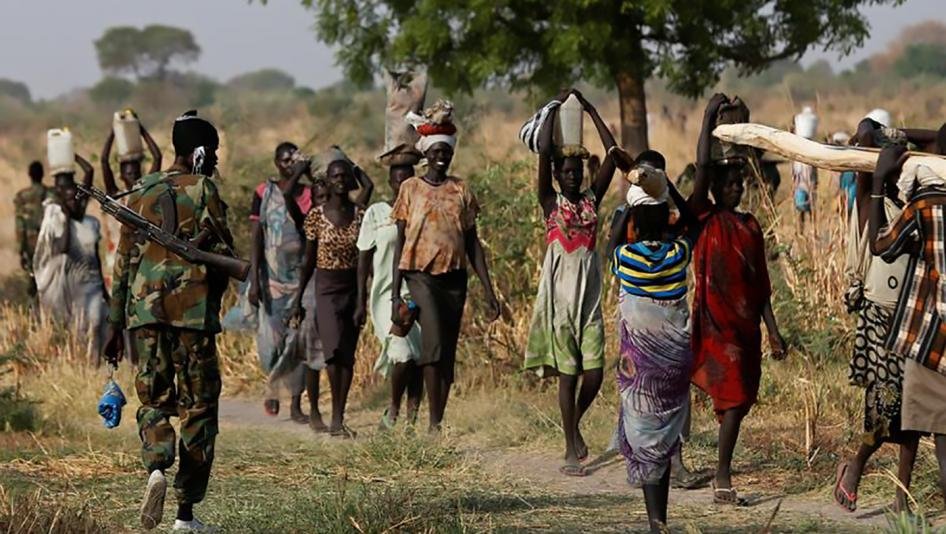
The Flags of Bulgaria and the European Union. Photo: Pixabay

We [Bulgarian Diaspora and Friends] are Bulgarian immigrants in the U.S. and Europe who are well aware of the problems in the Bulgarian prison system. We declare solidarity with the hunger strike of Jock Palfreeman, which commenced on April 21, 2019, in Kazichene, a site of Sofia prison.

The hunger strike of Palfreeman, Chairman of the Board of Bulgarian Prisoner’s Rehabilitation Association (BPRA), is a desperate protest against the problems with corruption and abuse of power in Sofia prison. BPRA gave publicity about these problems a year ago, in relation to the cases of escapes from Sofia prison.

In addition to Sofia Prison, BPRA gives regular publicity on the conditions in other prisons and the correctional system in Bulgaria as a whole: inhumane living conditions, violence by prison guards, and repressions against members and supporters of BPRA, the only organization in the country for the direct representation of the rights of prisoners, current and former.

Problems in Bulgarian prisons persist despite years of effort and investment of millions of Euros in renovations and reforms, from Bulgarian authorities and the Norwegian Financial Mechanism. Up till now, the Norwegian Financial Mechanism has invested more than seven million Euros. At this moment, the Bulgarian Ministry of Justice is working on the implementation of the new program of the Norwegian Financial Mechanism (2014-2021) which has allocated 30 million Euros for justice reform, most of which is designated for prisons.

Bulgarian prisons at the moment are under the management of the VMRO party through the Deputy Minister of Justice Prodanov. For a year now, the Bulgarian media has been covering corruption scandals around the VMRO party – sale of Bulgarian citizenship, the “apartmentgate” scandal, etc. For one year now, we have also been observing an active personal battle of Deputy Minister Prodanov with Palfreeman and BPRA.

We insist that Deputy Minister Prodanov and Chief of Staff of Sofia Prison Traykov stop repressions of Palfreeman and BPRA! We appeal to Bulgarian and international journalists to pay urgent attention to the hunger strike of Palfreeman! We alert the Norwegian Financial Mechanism about corruption problems within their project partner, General Directorate “Execution of Sentences” (GDES) at the Ministry of Justice under the leadership of Deputy Minister Prodanov.

You can express solidarity with the hunger strike of Palfreeman to the Bulgarian Ministry of Justice, via e-mail: priemna@justice.government.bg, or via regular mail: Ministry of Justice, Slavyanska Street #1, Sofia 1040, Bulgaria.

This press release is issued by Bulgarian Diaspora and Friends

May 3, 2019 0 comments
0 FacebookTwitterPinterestEmail
Spy War

US threatens to withhold intelligence over Huawei involvement in 5G network

by Nadarajah Sethurupan May 1, 2019
written by Nadarajah Sethurupan

A US official has repeated his country’s threats against its allies over Huawei – stating that the US’s goal is a process that leads “inevitably to the banning” of the Chinese company’s products.

“We have encouraged countries to adopt risk-based security frameworks,” said Robert Strayer, speaking on a call with the world’s press on Wednesday, expressing the hope that such frameworks would “lead inevitably” to bans on Huawei.

Strayer, who is the American foreign ministry’s deputy assistant secretary for Cyber and International Communications and Information Policy, told journalists that his country may withdraw some co-operations with its allies on security matters if they install Huawei equipment on internet and phone networks.

Below is a full rush transcript of the press conference by Ambassador Robert L. Strayer, Deputy Assistant Secretary for Cyber and International Communications and Information Policy , BUREAU OF ECONOMIC AND BUSINESS AFFAIRS.

MR STRAYER:  The United States wants to maintain a secure cyberspace for future generations.  We and our partners recognize that cyber policy issues are critical to not just protecting communications networks, but also to national security, human rights, and economic prosperity around the world.  Because of its impact on these vital interests, cyber policy is a foreign policy priority for the United States.  The security of information communications technologies, or ICTs, is an essential element of national security.  These networks and services play a crucial role in the safety, security, and prosperity of each nation.  The fifth generation of wireless technology, or 5G, will be transformative by providing consumers and businesses with up to 100 times faster connections than 4G networks provide, and with low latency, which is the time devices need to communicate with one another.  Billions of new devices will become connected to the internet, enabling the internet of things.  And these connections will empower a vast array of new critical services, from artificial intelligence to autonomous vehicles to telemedicine and automated manufacturing.

Since 5G networks will begin to touch every aspect of our lives, the stakes could not be higher for its security.  As countries around the world expand and update their ICT infrastructure, we are urging them to adopt a risk-based security framework.  An important element of this is a careful evaluation of the supply chain and equipment vendors.  In particular, this evaluation should result in the exclusions of equipment vendors that are subject to unchecked or extrajudicial control by a foreign power.  These vendors could be ordered to undermine network security, to skim personal information, conduct espionage, distribute cyber attacks, and disrupt critical infrastructure.

A significant cause for concern are a number of Chinese laws that compel their companies to cooperate with intelligence and security services without independent judicial controls.  Responding to this risk, the United States enacted the National Defense Authorization Act last year, which prohibits the U.S. Government from using equipment or services from certain high-risk companies that are associated with, owned, or controlled by China.  And no major U.S. wireless carrier plans to use Huawei or ZTE equipment in the buildout of its 5G network.

The good news is that many other countries are also acknowledging this supply chain risk and strengthening their ITC security.  And last month, the European Union Commission released a set of recommendations to improve the cyber security of 5G networks, noting that evaluations of equipment suppliers should include the risk of influence by a third country, notably in relation to its model of governance.  These criteria must be rigorously applied.

Moving forward in early May, the Czech Republic is hosting an important conference on 5G security that is attracting scores of countries.  The United States welcomes their leadership and supports this initiative to create nonbinding principles on 5G network security that will drive global conversations on this issue.  At the same time, many countries are not yet focused on 5G, but it’s not premature for countries primarily using 2G and 3G networks to consider their strategies for ensuring future network security now.  Decisions about who builds and how you secure 4G infrastructure are crucial because they will affect the security of future 5G networks.  

With that, I would be happy to answer your questions.

Question:  What are the risks and opportunities for cyber security in the 5G era?  What is the speed and timeline of 5G expansion?  What is the role of new technologies like pseudo-satellite, e.g. Softbank and Loon?

MR STRAYER:  So a number of new technologies will be built upon the 5G infrastructure.  They will be empowered by the internet of things, they will be empowered by the very low latency and very high – up to 100 times what is current throughput on the networks.  So we’re going to see all kinds of not just new communications, but the ability for all kinds of critical infrastructure to ride over that infrastructure itself.  So there’s tremendous amount of economic growth that will occur in all the applications that ride on top of the actual infrastructure itself.  So unlike the 4G networks of today, where they’re relied on primarily for communications and the use of our smart devices, handheld smartphones, new types of direct machine communications will occur.

Question:  How does the U.S. view the UK’s reported decision to allow Huawei to build parts of its 5G network?  And what do you want to achieve at the 5G conference in Prague?

MR STRAYER:  Well, first I would note that the United Kingdom has not announced a final decision.  Like all of us, they’re on a path of having continued conversations about security of 5G networks.  I’d also point out that the United Kingdom, through their Huawei oversight board report, noted there were hundreds of vulnerabilities, including systemic engineering problems with Huawei technologies.  So we’re looking forward to continuing the conversations with them, and with a number of other countries at the Czech Republic-hosted conference that will occur later this week in Prague that will help define some nonbinding principles that all of us can apply to improving the security of our 5G networks, including with respect to the supply chain of the vendors.

Question:  Recently, you indicated that use of Huawei anywhere in a nation’s 5G infrastructure would harm cooperation between that nation and the U.S.  Britain will use Huawei equipment in parts of its 5G infrastructure.  Will cooperation between the U.S. and the UK be hindered?

MR STRAYER:  It’s premature to address that exact part of the question, but I will say this:  As our economies become more interconnected, including our digital economies, more data transmits between the United States and Europe than any other part of the world, which of course includes the United Kingdom, we know that a disruption to services or a disruption to the ability to store or access information that transmits between those routes across the Atlantic will impact all of us.  So indeed, it’s not just about the sharing of intelligence or the cooperation on information sharing, it’s about all the services that we’re providing across the Atlantic today that could be disrupted.  And it’s not just the disruption, but as well as the intrusion of – insertion of cyber vulnerabilities or the use of the networks for espionage.

Question:  What is the government’s planned course of action for the now likely case that European allies such as Germany allow Huawei to build their 5G networks, in some detail if possible?

MR STRAYER:  Well, it’s premature to assess that.  I mean, we have said that if the risk to – if other countries insert and allow untrusted vendors to build out and become the vendors for their 5G networks, we will have to reassess the ability for us to share information and be interconnected with them in the ways that we are today.  Exactly how that will be done will depend on the risk of the equipment that’s put into the new networks.

Question:  Can you please give us a sense, what is the strategy in alerting nations in Southeast Asia and Africa where Huawei is very popular?  

MR STRAYER:  All right.  So a year ago nobody was talking about the supply chain risks related to 5G networks, and there was a limited discussion related to 4G and 3G networks on the importance of supply chain security.  So we’ve continued to have discussions with governments around the globe about supply chain security and its importance for all types of telecommunications networks, both the current generations of telecom networks as well as future generations.  So we’re going to continue to engage with those governments.  We’re going to share our views and our understandings about what are the avenues, and what is really going to be an enhanced attack surface in 5G because of the ability for much more software that will drive the networks and build a – for a potential adversary to compromise that software in any part of the networks. 

Furthermore, we’re talking to countries about the shared values that we have, our shared values related to fundamental human rights and civil liberties.  We want to talk about the importance of enabling the sharing of data in ways that are not going to be compromised that could result in authoritarian governments getting access to data and potentially compromising peoples’ ability to have free expression, to peacefully assemble, or to exercise freedom of religion.  We have, of course, seen that in China in recent years and we’re very concerned about the ability of a government to compel telecommunications providers to provide that type of data to a government that has that track record.

Question:  Do you believe that allowing Huawei to help build Britain’s or any country’s 5G telecoms network will risk national security even if it only applies to non-core parts of the network?

MR STRAYER:  It’s the United States position that putting Huawei or other untrustworthy vendors in any part of the 5G telecommunications network is a risk.  We are concerned that even at the edge of that network, where we’re going to see increasingly what they’re calling software-defined networks and the virtualization, the software virtualization of activities as part of the network that are done more today by hardware than software, but as they’re increasingly done by software there’s that increased attack surface.  Having potentially compromised equipment and software provided by vendors in any part of that network is an unacceptable risk.

Question:  Do you consider the distinction between core and radio networks a sensible approach to managing 5G security?

MR STRAYER:  It is our position in the United States that there is no way that we can effectively mitigate the risk to having an untrustworthy vendor in the edge of the network.

Question:  Is there anything that the U.S. Government and/or its allies could do to help Huawei’s rivals in America and Europe to become more competitive, or to shield them from potential retributions on the Chinese market?

MR STRAYER:  I need to be clear here.  The effort that we’re undertaking around the world, our global diplomatic effort, has nothing to do with trade.  It’s 100 percent about national security interests.  The conversations we’re having are about national security.  That said, it’s also important to point out that there is no U.S. provider for the wireless radio networks, so we’re not advancing a U.S. interest here.  The primary competition to the Chinese are a Finnish company, a Swedish company, and a South Korean company.

Question: How will the U.S. approach to the military cooperation and intelligence sharing with nations which use Huawei in some aspects of their 5G networks – for example, allies like the Philippines and Thailand – within the U.S.’s historically conducted military exercises, how will that change if those are both going ahead with Huawei 5G tests?

MR STRAYER:  Well, certainly we want to have the opportunity to continue to have engagement with those governments about the future buildout of the 5G networks.  They’re in 4G – have 4G networks they – like all of us do – that are – they’re now just starting to build out 5G networks.  So we hope to convince them that in their 5G networks they should not have untrustworthy vendors in the network.  That said, if there is an insertion of an untrustworthy vendor into a network, we’re going to have to evaluate our ability to share information and how we would share that information.

Question:  Despite U.S. pressure, Germany refuses to exclude Huawei’s 5G technology.  How is this step seen by you?  And is there a risk that Germany will lose access to intelligence sharing?

MR STRAYER:  So on the positive note, Germany has released a set of security standards related to 5G, which include looking at the ability for another country to undermine the data security laws in Germany and in the European Union.  Acknowledging that general standard, though, the actual implementation that would occur down the road is very important.  It’s crucial that that be – that particular element related to the supply chain and the ability of a third country to compel its vendors to act in the interests of that – of an authoritarian country be considered.  If that is actually applied in a rigorous way, then it should lead to the prohibition of Huawei and ZTE from networks in Germany and around the world.

Question:  Do Ericsson and Nokia have enough capacity to build the U.S. 5G network?

MR STRAYER:  Well, in our wireless carriers’ view – I’m here representing the U.S. Government, of course.  I cannot comment exactly on their internal supply chain issues.  But my understanding is that our carriers have no concern about the ability for Ericsson, Nokia, and Samsung to supply their networks.  Of course, they have said that they’re not going to use Huawei or ZTE technology in their 5G networks.

I think it’s also important to recognize that when we talk about 5G, there’s an entire ecosystem of component parts that will go into that well beyond just the wireless radio interface.  There will be all kinds of networking and rallying that go on.  There are American companies and companies around the world that supply that, including Cisco and Juniper.  There’s also going to be a very big importance too as we see more and more of the network virtualized – that is, software taking over the role that was previously performed by hardware.  There’ll be more data storage in effectively what is the cloud, a cloud environment.  So there’s many companies providing cloud infrastructure for that 5G ecosystem.

Question:  Can you elaborate on how the U.S. is defining, quote-unquote, ‘sensitive networks’ for 5G infrastructure?  And is that definition different from the UK’s current definition?

MR STRAYER:  Well, I don’t really want to get into how we would define what are more sensitive networks and less sensitive networks.  I would just revert back to the point I was making earlier, which is that in our view, because of the interconnectedness and the dramatic changes we’re going to see in what 5G enables, that underlying infrastructure affecting the entire value stack of applications above it, that there are truly critical services that will be provided that we cannot see undermined in any part of a 5G network.  We should be concerned about all parts of the 5G network going forward.  And so therefore, no part of a 5G network should have parts or software coming from a vendor that could be under the control of an authoritarian government.

Question:  Huawei and the Chinese Government have repeatedly denied U.S. allegations that Huawei equipment poses a security risk, claiming that the U.S. has not offered any concrete evidence.  What is your strategy in countering those claims?

MR STRAYER:  Well, I think it’s important to recognize that there’s been a number of allegations that Huawei and ZTE over the years have been involved in intellectual property theft.  In fact, there’s currently an indictment against Huawei in the United States for the theft of intellectual property from T-Mobile, and that indictment notes that there was a campaign within the company to provide bonuses to employees who stole intellectual property.

It’s also important to recognize that it’s not just the intellectual property theft.  It’s the ability for the government under their national intelligence law to compel that company to act in any way that is in the interests of the Chinese Communist Party.  So in the future, they could be asked to do things they’re not asked to do today.  The way we look at it is there is a combination of intent, capabilities, and opportunity.  With regard to intent, we’ve seen that China has a history of intellectual property theft that has occurred over the years that resulted in a statement in the Rose Garden in 2015 with President Obama that it was not lived up to.  

We noted last December, on December 20th, that China was behind the global hacking of what are called managed service providers, including global cloud providers around the world.  And what China did is they used that data that it stole from some of the biggest companies around the world to provide to its own companies for their economic benefit.  So we know there’s a history of intellectual property theft.

We also know there’s a use of data in China that’s contrary to the values that we have in the West.  We’ve seen data used to assign social credit scores to then conduct surveillance against citizens, and then to use that information to put more than a million Uighurs into re-education camps.  So those uses of data are completely contrary to the West’s view, so we know there’s an intent to use data in different ways than we would ever want to see used under our views about fundamental human rights.

Secondly, we come to the capabilities.  With regard to capabilities, we know there’s the national intelligence law in China, the counterterrorism law, and then a number of other laws that come together to provide the Chinese Government complete control over their private sector and state-owned companies.

And then lastly, opportunity.  As I mentioned before, the attack surface in a 5G network is greatly expanded.  Some have asked, “Where is the smoking gun?”  Well, it’s hardly appropriate to ask for the smoking gun evidence when we don’t even have 5G networks built out yet, we don’t have a history of 5G, and the – especially as U.S. cases get built out to provide massive amounts of new data, the temptation will be there to come after that data and use it for illicit purposes.

So that all combined – the intent, the capabilities, and the opportunity – what we really have here is a loaded gun, is something that Western democracies who value human rights should think very carefully about if they want to give that to an authoritarian regime with very different values about the uses of data. 

Question:  Was the EU commission’s decision to ask member-states to carry out a risk assessment of the security risks posed by 5G technology rather than to ban Huawei sufficient from a U.S. point of view?  And what should Ireland, which is currently undertaking such an assessment, consider as part of that exercise?

MR STRAYER:  We think that the European Commission’s recommendation to conduct assessments by the end of June and then come up with a European-wide policy is a positive first step.  Of course, it’s very important that this analysis, this evaluation, be done in a very rigorous way, particularly as it relates to the supply chain.  As I mentioned earlier, the European Union’s recommendation is set to consider the governance of third countries where vendors are located.  So it’s very important to look at the laws in that country, the legal regime, the ability for companies there to seek independent judicial redress, to object if they are compelled to do something by the government.  That, of course, does not exist in China.  There is not an independent judiciary and there is an inability for companies to say that they do not want to comply with Chinese Communist Party direction.  So with that in mind, we are hopeful that countries in Europe apply that type of framework and evaluation as they think about what kind of vendors they want in their 5G networks.  

So as I said, the European Commission’s recommendations highlighting security related to 5G and including the fact that supply chain security is important is a positive first step, but it’s going to be – the truth, the sort of – it will be borne out in how the – those standards and those evaluations are done in the months ahead.  So we’re in a very critical time for discussions with the European Union in the next few months.

Question: Can operators maintain a multi-vendor policy to manage their cyber security risks without having access to Chinese vendors?

MR STRAYER:  Certainly.  I think that question probably refers to who’s managing the networks themselves.  There’s a number – a wide number of Western companies providing cybersecurity threat intelligence and cybersecurity management tools.  If you just go to the RSA cyber conference, there’s tens of thousands of companies that are there.  There’s no reason that one would have to necessarily turn to a Chinese company.

Question: Has the U.S. approach to 5G shifted away from Huawei and towards calling for increased security standards across the board?  If so, why the shift?

MR STRAYER:  There has not been a shift.  Our entire diplomatic effort has always started with the premise that we need a risk-based security framework that includes looking very carefully at the supply chain.  We think that an evaluation of the supply chain for a risk-based approach – that includes looking at the insertion of intentional vulnerabilities – must require – requires someone to look at the countries where those vendors are located and the laws of those countries, particularly as it relates to authoritarian regimes, their ability to compel companies to act in that country’s interest.  

So we’ve started from that general framework and we look at the laws that are in place and then the vendors that are subject to those laws are the ones that we say should be excluded from providing 5G infrastructure.  So we’re not targeting a particular country.  I know there’s been a number of questions about different countries, companies within countries.  We’ve answered those questions, in our view, about those companies’ activities and some concerns about them, but the overall framework that we’re applying here is a security framework that does – that has been applied to a particular country and particular vendors.

Question:  Zimbabwe was doing deals with China.  What are the next steps that would ensure emerging markets with U.S. 5G technology infrastructure?  Is the U.S. open to establishing a working group with the diaspora?

MR STRAYER:  Well, I will say more generally, the Chinese One Belt, One Road program has been offering countries in Africa and around the world what are basically loan terms that you would never find in any type of Western development bank, but what we have the countries thinking about is the strings that are attached to that.  These are essentially predatory loans.  They often ask for collateral to be attached to those loans.  As we see in some cases, it’s required countries to give up the ownership of their ports when they weren’t able to make payments.  They’ve also done these deals in many cases in non-transparent ways.  It’s very hard for the public and others to have knowledge of what kind of deals are being struck in these deals.  They’re not in – done in the best practices that we would consider in the West to be ways that countries and companies should be doing business.

So we would like to have a very close dialogue with countries like Zimbabwe about how we can potentially assist them in financing their infrastructure.  There’s a number of development banks around the world who are able to invest in that type of infrastructure.  So whether it’s all sorts of important infrastructure, including telecommunications infrastructure, we seek to be very engaged with them and look for opportunities to make that economic prosperity come about in ways that are transparent and will lead to the long-term prosperity of citizens in those countries.

Question:  Have you been satisfied with the draft Prague principles that you’ve seen so far?  What elements do you consider key for these non-binding principles to work?

MR STRAYER:  Well, I will say that I am very satisfied with our engagement with the Czech Republic and their very diligent work on these principles.  I don’t want to get ahead of them and the announcement of the principles that they are going to have at their conference.  I look forward to having discussions with them.  We really appreciate their leadership on this important issue and their drafting of the principles.

MR STRAYER:  Thank you.  Thank you very much for having me, and I appreciate everyone who’s been on in the online world, participating and asking all these great questions.  This really comes to a fundamental question about values, about entrusting in your data with countries, and those that share values with you.  And in important ways, we’ve seen the compromise of those values and the violation of fundamental human rights and civil liberties with regards to the freedom of expression, freedom of assembly, and the freedom to practice religion as one chooses.  So we urge countries to think very carefully as they implement requirements related to 5G infrastructure, including related to the supply chain, and think very carefully about the values of the companies and the countries that they are being asked to do business with and receive offers from countries that have a track record that is checkered at best.

May 1, 2019 0 comments
0 FacebookTwitterPinterestEmail
Media Freedom

‘Never Again’: Memorials of the Holocaust

by Nadarajah Sethurupan April 30, 2019
written by Nadarajah Sethurupan

“I can say that documents like the Terezin Declaration – first of all, the Terezin Declaration that you mention is a non-binding political document, so countries aren’t legally bound to it.  But there’s a moral – the biggest real aspect to the Terezin Declaration is a moral responsibility.  So to answer your question, states have to make the decision that they want to resolve these issues – restitution issues, terrorist asset issues, as you say – on a moral basis, and that essentially is what the Terezin Declaration does.  It doesn’t force a country to do anything.  They have to do these things of their own free will because it’s the right thing to do.  So when countries gathered in 2009 in the town of Terezin, Czech Republic, which of course was the sight of the horrible Theresienstadt Ghetto, they committed themselves to doing this.  

And I might add that our Congress has taken that commitment, that political commitment, and actually passed a law, the JUST Act it’s called, the Justice for Uncompensated Survivors Today Act, which requires my office, the State Department, to provide a report, a one-time report, which will be submitted to the Congress by November of this year, on the record of countries which endorsed the Terezin Declaration, all 45 or them.  It will be a report on their record of abiding by the Terezin Declaration.  So I think the Terezin Declaration can serve, perhaps, as an example for other areas, but again, it’s a non-political binding document that really derives its strength from its moral dimension , the U.S. Special Holocaust Envoy, Tom Yazdgerdi, said  on Monday”.

US special envoy for Holocaust issues Thomas Yazdgerdi. (YouTube screen capture)

Below is a full rush transcript of the press conference by Tom Yazdgerdi, Special Envoy for Holocaust Issues, Bureau of European and Eurasian Affairs, U.S. Department of State.

MR YAZDGERDI:  It’s a pleasure to be here.  As Mandi said, I’m Tom Yazdgerdi, Special Envoy for Holocaust Issues at the U.S. Department of State.  My office, which has been in existence for – since 1999 is concerned with the resolution of Holocaust-era property restitution issues and with Holocaust remembrance, education, and commemoration.  

Just to dispel a little bit of confusion, there is a special envoy to monitor and combat anti-Semitism – that is Special Envoy Elan Carr.  He is the primary point of contact within the State Department, within the U.S. Government really, for issues of anti-Semitism, combat and monitoring anti-Semitism.  

Let me start by expressing condolences to Rabbi Yisroel Goldstein, the family of Lori Gilbert-Kaye, and the entire congregation of the Chabad synagogue in San Diego for the horrible act of hatred that took place last week.  We condemn this horrendous act and stand with Rabbi Goldstein and his congregation.  I think this act kind of puts in stark relief the need to continue to combat, speak out against anti-Semitism, and also to remember the Holocaust where we saw anti-Semitism in its worst form.  

So every year my office, in coordination with our Office of Civil Rights, organizes the annual State Department commemoration of Yom HaShoah, or Days of Remembrance.  That’s Yom HaShoah in Hebrew.  This is an event established by Israel in the early 1950s as a national day of remembrance for the 6 million Jews who were murdered by the Nazis and their collaborators.  This day also serves to remember and honor the brave Jewish ghetto fighters who resisted the German army for nearly a month against overwhelming odds during the Warsaw Ghetto – the Warsaw Ghetto uprising in 1943.

Other countries, including the United States, also commemorate Yom HaShoah.  While the Days of Remembrance is a whole week of commemoration, this year the actual date of Yom HaShoah falls on May 1st.  And here at the State Department we are partnering with the Republic of Belarus to honor the memory of the Minsk Ghetto, one of the largest ghettos in Nazi-occupied Europe.  

In 2017, we and the Lithuanian and Japanese embassies honored a Japanese diplomat, Chiune Sugihara, who used his position as consul in Kaunas, Lithuania to save 6,000 Jews by providing them with transit visas to Japan.  Tens of thousands of peoples are now alive today because of the actions of this righteous man.

In 2018, last year, we partnered with the embassies of Poland and Israel to honor the actions of Irena Sendler, a social worker in Warsaw who saved some 2,500 Jewish children from the Warsaw Ghetto, finding ways to get them out.

The U.S. Congress has also gotten involved in this commemoration.  Since 1982, the Congress has authorized an annual national commemoration of this important event, and the United States Holocaust Memorial Museum leads the effort in organizing it.  Today at the United States Capitol, senators and representatives and leaders from around the U.S. will gather to mark this day and hear from Holocaust survivors about their experiences and listen to the names read of those who were murdered in the Holocaust.

Also as you may know, the International March of the Living, which takes place during Yom HaShoah, is an annual education program bringing individuals from around the world to Poland and Israel to study the history of the Holocaust and to examine the roots of prejudice, intolerance, and hatred.  Other countries also sponsor marches of the living.  I had the opportunity to take part last year in North Macedonia, as we marched from the center of Skopje to the train station where Jews were sent to their deaths.

This year on May 2nd in Krakow, Poland, nine high-level U.S. Government officials will come together to lead for the first time ever an official delegation to the annual March of the Living at the Auschwitz-Birkenau concentration camps.  The three co-chairs of this delegation are Ambassador to Israel David Friedman, our Ambassador to Germany Rick Grenell, and our Ambassador to Poland Georgette Mosbacher.  So we’re very excited that this is happening for the first time this year.

So not only our government and our congress mark these days of remembrance; communities, state and local governments, schools, military installations, and many others all over the United States take time to remember Yom HoShoah and to never forget one of the darkest chapters in human history.  

Question: Could you describe today’s situation in former Communist Eastern Europe countries concerning the restitution of Jewish property?  Where there – where is there the most progress made, and where is there the least?

MR YAZDGERDI:  Well, since the early 1990s, after the fall of the Berlin Wall, there have been engagement with the countries of Central and Eastern Europe to resolve remaining Holocaust-era property restitution issues.  Archives have been opened, Holocaust survivors and their heirs have come forward, scholars and researchers have made efforts to understand the scope of the restitution, and some countries have passed legislation to resolve these issues.

Before this time, the Cold War essentially had put these issues in a deep freeze.  I would describe the situation today with respect to Holocaust-era property restitution as incomplete.  There has been some progress and acknowledgment about the tragedy of the Holocaust in terms of restitution, but more needs to be done so that Jewish private communal and heirless property has either been returned or has been compensated.  This is also true for the issue of Nazi-confiscated and looted art.  

I would not like to compare the situation in various countries because it is not helpful to do so.  Each country has its own set of circumstances and specific experiences.  What I can say is that we have a dialogue with many countries in Europe, including in Western Europe, on such matters.

Question:  Question is from Nadarajah Sethurupan at Norway News in Norway:  The Terezin Declaration didn’t control Nazi doctors in Asia and Europe, and now they are in Africa, the EU, and the Middle East operating against legal assets around the world.  How can the U.S. control the economic consequences of terrorism?

MR YAZDGERDI:  Well, that’s a very broad question and probably beyond the scope of my office, but I can say that documents like the Terezin Declaration – first of all, the Terezin Declaration that you mention is a non-binding political document, so countries aren’t legally bound to it.  But there’s a moral – the biggest real aspect to the Terezin Declaration is a moral responsibility.  So to answer your question, states have to make the decision that they want to resolve these issues – restitution issues, terrorist asset issues, as you say – on a moral basis, and that essentially is what the Terezin Declaration does.  It doesn’t force a country to do anything.  They have to do these things of their own free will because it’s the right thing to do.  So when countries gathered in 2009 in the town of Terezin, Czech Republic, which of course was the sight of the horrible Theresienstadt Ghetto, they committed themselves to doing this.  

And I might add that our Congress has taken that commitment, that political commitment, and actually passed a law, the JUST Act it’s called, the Justice for Uncompensated Survivors Today Act, which requires my office, the State Department, to provide a report, a one-time report, which will be submitted to the Congress by November of this year, on the record of countries which endorsed the Terezin Declaration, all 45 or them.  It will be a report on their record of abiding by the Terezin Declaration.  So I think the Terezin Declaration can serve, perhaps, as an example for other areas, but again, it’s a non-political binding document that really derives its strength from its moral dimension.  

Question: “How do you evaluate the Hungarian Government’s billboard campaign against Soros and his relation to the European parliamentary election as well as the government conveying its message against EU migration policy?”

MR YAZDGERDI:  Well again, that’s beyond the scope of my office.  Let me say that at the outset.  But I have to say that any – and I’ve said this when I was in Hungary before – that anything that is a – something that seeks to divide individuals in a society is not helpful to my work.  And so we have made – we have gone on record saying that, and we would hope that such actions – that governments would actually promote actions that serve the purposes of combatting anti-Semitism, of explaining in detail what anti-Semitism’s about, and also serving to promote the – what my office deals with, which is the resolution of Holocaust-era property restitution issues.  We have a strong dialogue with the Hungarian Government on these issues.  I’m not going to go into details because it’s part of our diplomatic communication with the Hungarian Government, but I can say that we have a productive dialogue with the Hungarian Government on these issues.  

Question:  There are reports that Holocaust denial is on the rise among European youth almost 65 years after the end of World War II.  How do we fight this trend and why is it important to promote Holocaust education?

MR YAZDGERDI:  Well, I think it’s – that’s the key.  You mentioned Holocaust education.  That really is the key to educating our young people on why the Holocaust is so important.  It’s not just important to learn the facts of what happened so many decades ago, it has an actual impact today.  We saw that in San Diego last week and in horrific acts in the United States and around the world.  So I think the best way to do that is to encourage – and this by the way includes the United States as well – to encourage governments to invest the time and resources to promote Holocaust education.  How did this come about?  What led to the hatred that allowed the Holocaust to occur?  These are incredibly important questions, and young people are the target audience, to be honest with you.  So – and we also use – the United States uses its membership in the International Holocaust Remembrance Alliance, the IHRA as it’s called, to promote, along with the many other countries in that organization, how – what are the best practices in doing so.  

We need to appeal to young people, not just through reading something in a text book, which is not the most, I think, effective way of reaching young people these days, but actually finding creative ways to make it alive for them, meaning – I’ve read of an effort by our – the University of Southern California, the Shoah center there, to actually create holograms of Holocaust survivors that actually brings this to life, so to speak, for young people.  And I’ve seen that it’s extremely effective.  You can ask the hologram any questions – you can ask the Holocaust survivor any questions about their – what happened to them, their experiences, their feelings, and so forth, and they will respond.  And so I think it’s those kinds of efforts we really need to promote not only in the United States but around the world.

Question: “What is exactly the agenda of the event in commemoration of the Minsk Ghetto?”

MR YAZDGERDI:  I think the Belorussians had approached us because saying that the Minsk Ghetto was one of the largest in Nazi-occupied Europe.  More than 80,000 Jews were crammed into a tiny space, and many of them were subsequently deported and killed.  The liquidation of the ghetto occurred last – the 75th anniversary of the liquidation of the ghetto occurred last November, and we thought it was an appropriate topic to include in this year’s theme for the State Department’s commemoration of Yom HaShoah, and we also are going to be honored with the presence of a Minsk Ghetto survivor.  His name is Saveliy Kaplinsky, and Mr. Kaplinsky will be here at the State Department on Wednesday to relate his experiences in living in what must have been the horrible conditions in the ghetto, and his escape to the forest to join the Partisans to fight against the German army.  

So we’re very much – I think that’s an extremely appropriate theme.  We – what gives us – Yom HaShoah sort of gives us a platform to disseminate to the wider State Department family, let’s say, various elements of the Holocaust.  So we’re very excited to have him and we’re very excited to partner with the – with our Belorussian friends and colleagues, and we hope for a good program on Wednesday.

Question:  Jared Kushner’s grandparents were Holocaust survivors and Partisan resistance fighters in Belarus in World War II.  Does he take part in the Day of Remembrance?  Also, do you feel enough is being done in Belarus and in Russia to commemorate the victims of Holocaust and the resistance fighters against Nazism? 

MR YAZDGERDI:  Well, I think Mr. Kushner certainly has been invited.  There’s also – let me just say that there’s not – as I mentioned in my remarks, it’s not just the State Department that’s doing something.  There’s going to be a commemoration today, actually, as I mentioned, at the U.S. Capitol.  I’m sure Mr. Kushner has been invited to that as well.  These – this – these commemorations obviously for his family have special, particular importance, and so of course he’s been invited to attend.  

Question:  “Do you feel enough is being done in Belarus and in Russia to commemorate the victims of Holocaust and the resistance fighters against Nazism?”

MR YAZDGERDI:  Yeah.  Well, I think we all can do – we all can do more, I think.  That’s for sure.  I mean, I think especially as Holocaust survivors are becoming fewer and fewer – each year, we have less and less of these direct links to the Holocaust itself to guide us, to educate us, to give us the immediacy of what went on there.  So we encourage all countries, even those that are not members of the IHRA, the International Holocaust Remembrance Alliance, to make certain that they are following best practices in teaching their young people about the education, in commemorating the Holocaust, in protecting important Holocaust memorial sites, doing all these things, because it – you don’t have to belong to an organization to do that because it’s the right thing to do.

Question:  why we are working with a country that is not part of the anti-Semitism alliance?

MR YAZDGERDI:  Well, again, as I said, Belarus is not a member of the International Holocaust Remembrance Alliance, but it doesn’t mean that we cannot have a partnership and a relationship with that country with regard to the things that my office does.  So we have, I think by the virtue – by virtue of the fact that we’re doing, we’re partnering this year with Belarus – kind of reflects that.  But also one day we would hope, at some point, to welcome Belarus into the IHRA, the International Holocaust Remembrance Alliance, because it’s a – it is the – it is an important organization of countries that seek to share their best practices on all sorts of aspects of the Holocaust.  And by the way, it’s not just government officials like me that come to the IHRA meetings.  It’s also – it’s kind of an unusual organization, sort of a hybrid.  Most of my delegation actually is scholars and researchers, and they have equal access, equal space at the table, let’s say, that I do.  

So that’s an incredibly important thing, because I think what’s really important is making certain that countries – whether you’re a major Holocaust country like Belarus, let’s say, or any other country – has – is reporting accurately on what happened during that time.  I think that’s one of the key things that the IHRA does, is it’s concerned with making certain that the historical narrative is accurate and that the historical – that history reflects that.  I think that’s incredibly important, and it’s done by these – many times by these scholars and researchers that serve on the various delegations to the IHRA.

Question: Can you tell us a little bit about what this administration is doing to help get – help Jews get restitution from Poland?

MR YAZDGERDI:  I think the administration is interested in that.  Of course, our Congress is interested in that.  It’s not an easy issue.  Poland was a – was the first victim of Nazi Germany.  No one is questioning that.  But I think what’s important is that all countries have to come to terms at some point with their difficult past, and of course, the United States is no – is not immune to that.  There are chapters in our history that we still have to come to terms with.  So I think the administration is interested in pursuing the issue of – and by the way, the issue of restitution not just for Holocaust survivors, but for anyone who had had property confiscated by the Nazis or nationalized by the Communists.  I think it’s important that every country deals with those issues.  Poland, it’s a particularly difficult question.  Most of the Jews that lived in Europe before the war – about 3.3 million – lived in Poland.  So it’s a tough – it’s a tough issue, but I think one that with good will and certainly cooperation on the part of the United States I think could be resolved.

Question: Can glorification of former Nazis ever be justified?

MR YAZDGERDI:  No, I don’t think so.  I think we have to be – we have to speak out against any sort of glorification that exists.  And I think our government has a good record on that.  We encourage other governments to do that, as well.  I think every country has to – has its own historical narrative, let’s say.  The United States also does, Russia does, every country does.  I think that historical record, first of all, has to be accurate and it has to reflect the values of those countries.  We belong to a democratic family of friends and allies, and so those – the steps we take, the steps that any country takes, have to really reflect those values.  

So obviously, the glorification of Nazi leaders is not – does not fit into that system of values.

Question: Anti-Semitism, unfortunately, is alive and well in the world today, and this weekend’s shooting at the synagogue in California shows that the United States is not immune from this horror.  Does your office deal with current issues such as this, or is your focus mainly on the Holocaust itself?

MR YAZDGERDI:  As I mentioned, Special Envoy Elan Carr is the person in our government that deals specifically with combatting and monitoring anti-Semitism.  He is the special envoy, so obviously, he is the person to address questions of anti-Semitism.  There is some overlap between my office and Special Envoy Carr’s office.  For example, if you deny the Holocaust – obviously my office is interested in the Holocaust.  If you deny the Holocaust, that is by definition an anti-Semitic act, so there is some overlap.  And unfortunately, we do see – and Elan Carr could speak of course more fully to this issue – but we do see sort of a – an increase, a rise of anti-Semitic acts in Europe and the United States and around the world, and it is troubling and I’m very glad that Elan Carr is now – he was just sworn in a couple weeks ago – that he is now fully established in his office to lead our government – to lead our government’s response to these hate crimes.

Question: In this climate of increasing anti-Semitism, what are helpful steps to eradicate hate crimes?

MR YAZDGERDI:  Well, again, I’d say that’s a question best for – set for Elan Carr.  But I think, again, the best helpful steps are education.  That’s more of a long-term process.  But also speaking out.  There’s – when a government, any government, including our own, is confronted with these horrific acts of hatred that result in bloodshed and murder, we need to speak out.  Of course, our government has spoken out on this, on the events that happened last week in San Diego.  So that is the first thing.  Citizens of any country where these crimes occur, these hate crimes occur, need to speak out, number one.  

Number two, they need to be – these people that committed these crimes, whether it’s the horrific act that happened last week or the desecration of a Jewish synagogue or cemetery, or harassment of any kind, governments need to go after these people that commit these crimes.  There needs to be clearly a sanction for such behavior or else they won’t be taken seriously.  

So first, speaking out – well, first, education, but that’s more of a long-term process.  Then speaking – but on the specific acts that we’re talking about, speaking out and then prosecuting the full – to the full extent of the law, so it’s clear that the government will pursue these individuals who commit these horrific crimes. 

Question:  Can you talk to us a little bit more about what the Trump administration has done on Holocaust issues, and what the types of issues are that you are working on?

MR YAZDGERDI:  Yeah.  Well, the Trump administration is committed to, I think, support of my office.  I know that.  We have – I know there was an effort early in the administration to downsize the State Department and my office did survive, so I think it showed the importance the administration attaches to the work we do.  I have the money I need, the funding I need to travel abroad to meet with government officials, and we know we do have support from the White House.

I will give you an example that was sort of in the media last August, and that was the removal of one of the – we think is one of the ex-Nazis living in the United States.  The Trump administration was extremely – and our great ambassador in Germany, Rick Grenell, was extremely active in seeking his removal, interceded with the German Government, and he was deported last August, and he had been in this country for decades.  He had lied on his application about his Nazi past.  So I think that also – we had been – by the way, we had – this has been around for a long, long time, this issue.  So I think that issue, that case itself of this ex-Nazi – he was a former SS guard at a slave labor camp – Jakiw Palij his name was – the fact that he was removed from the United States to Germany I think shows the importance that this administration attaches to those issues.

April 30, 2019 0 comments
0 FacebookTwitterPinterestEmail
Peace Talks

Europe, US Envoys Meet On Afghan Peace

by Nadarajah Sethurupan April 29, 2019
written by Nadarajah Sethurupan

Special envoys of the United Kingdom, United States, Germany, France, Italy, Norway and the European Union met in London on Tuesday-April 23- and discussed the Afghan peace.

The envoys in their meeting said that it depends on the Afghans to shape Afghanistan’s future, but insisted that the Afghan people want peace and that a comprehensive political settlement is the only solution for ending the war. 

The meeting attendees said if an agreement is not reached between the Afghans, a possible peace will not be sustained. 

The special envoys concluded their meeting with the following highlights:

  • Reiterated their strong conviction that the future of Afghanistan is for Afghans to decide. A return to practices from an earlier period that rolls back progress will invite international isolation of Afghanistan. Participants do not believe that the majority of the Afghan people desire that outcome.
  • Underscored that there can be no sustainable peace without an agreement between Afghans. This requires inclusive dialogue between the Taliban, Afghan government, and other Afghans that leads to intra-Afghan negotiations.
  • Reaffirmed that intra-Afghan negotiations should begin as soon as possible, with the goal of reaching an agreement on a political roadmap for Afghanistan’s future.
  • Urged all sides to take immediate steps to reduce violence and end the killing. The Afghan people deserve and want an end to violence. Calls for more fighting will not advance peace efforts, and will instead yield only more suffering and destruction.
  • Stand with Afghanistan’s security forces in the fight against international terrorism.
  • Called on the Taliban to cut ties to Al-Qaeda, and other international terrorist groups, and to take concrete steps to ensure Al Qaeda, Daesh and other international terrorists do not use Afghan soil to threaten or attack any other country.
  • Stress the importance of fighting illegal drug production and trafficking, and urge all sides to eliminate the drug threat in Afghanistan
  • Reaffirmed their commitment to provide long-term support for implementation of any peace agreement that protects the rights of all Afghan women, men, children and minorities, responds to the Afghans’ strong desire to sustain the economic, social, and development gains they have achieved since 2001, and is consistent with their counter terrorism interests.
  • Encouraged all concerned countries to support the Afghan people and contribute to a lasting peace settlement in the interest of all.
April 29, 2019 0 comments
0 FacebookTwitterPinterestEmail
Politics

The Nordic countries make a difference in the Security Council

by Nadarajah Sethurupan April 29, 2019
written by Nadarajah Sethurupan

Small countries can achieve important results for the world when they build bridges and stand up for what they believe in. Sweden and Norway are both good examples of this, write Norwegian Foreign Minister Ine Eriksen Søreide and Swedish Foreign Minister Margot Wallström.

Norwegian Foreign Minister Ine Eriksen Søreide and Swedish Foreign Minister Margot Wallström. Credit: Astrid Sehl, MFA

During its membership of the UN Security Council, Sweden helped to ensure that life-saving assistance reached three million Syrians.

Norway has acted as a facilitator in several peace process, most recently in Colombia, where a historic peace agreement was signed in 2016. Sweden recently hosted talks on Yemen that culminated in the Stockholm Agreement.

This illustrates what small countries can achieve when they build bridges and stand up for what they believe in.

International rules and cooperation are more important than ever, not least for countries with open economies like Norway and Sweden.

Our prosperity depends on trade agreements and other binding international agreements. Peace, security and stability in the Nordic countries and the rest of Europe are based on respect for international law.

The UN needs the Nordic countries

Unfortunately, international cooperation to address common problems is under pressure. The Nordic countries speak with one voice in the UN in support of a rules-based international order, peaceful resolution of conflicts, respect for human rights, and the fight against poverty. The UN needs the active, united efforts of the Nordic countries more than ever.

We must shoulder our responsibility to maintain and further develop the international order that underpins our stability and prosperity. We must work to ensure that the international order functions as intended.

This applies not least within the framework of the UN Security Council. This is the only international body that has a mandate to adopt resolutions that are binding under international law on conflict resolution, peace operations, sanctions and the use of force.

Norway actively supported the Swedish candidature for a seat on the Security Council in 2017-2018. A Norwegian diplomat was posted to the Swedish Ministry for Foreign Affairs, and we shared information about Norwegian peace and mediation efforts.

Now Sweden is promoting Norway’s candidature for the period 2021-2022 all over the world.

Why is it important for Norway to have a seat on the Security Council?

For several decades, Norway has been engaged in conflict resolution on several continents. As a member of the UN Security Council, Norway will be able to draw on its experience from these efforts and insights from developments on the ground in many places, such as the Middle East, Colombia, Myanmar and South Sudan.

In conflicts where Norwegian diplomats have insider knowledge, Norway should be able to influence the course for the Security Council’s response.

Norway has been inspired by Sweden’s example, which has shown that a Nordic country can make a difference as a member of the Security Council.

When the Security Council was in a deadlock and unable to agree on a political solution for the war in Syria, Swedish efforts helped to secure agreement on two important resolutions to allow humanitarian aid across the border into Syria. This made it possible to provide assistance to three million people.

In the Council’s discussions on Myanmar, Sweden made it very clear that the perpetrators of abuses against the Rohingya must be held accountable, and that the Rohingya people who had fled to Bangladesh must be ensured a safe return.

In the discussions on the DPRK, Sweden helped to maintain unity in the Security Council, not least through cooperation with the other elected members.

Climate change will have consequences for security

The Nordic countries’ common approach to global challenges runs like a thread through our policy, including in the Security Council.

Firstly, both Sweden and Norway believe that women’s participation in decision-making processes helps to bring about a more sustainable peace. Sweden ensured that references to women, peace and security were included in all the mandates for UN peacekeeping operations that were agreed on by the Security Council in 2017-2018. As a member of the Council, Norway will make use of its practical experience of mediation efforts to ensure that women have a place at the table in peace processes.

Secondly, both countries want to ensure the best possible protection of children in conflict situations and to safeguard their rights. The Security Council’s Working Group on Children in Armed Conflict was revitalised under Swedish leadership, and Norway will build on this work.

Thirdly, it is no longer possible to ignore the fact that climate change has consequences for security. For small island states, this is a matter of life and death. In some conflicts in Africa, drought is increasing tensions. Sweden has put the links between climate change and security on the agenda.

Addressing climate-related security issues will become increasingly important in the time ahead, and this will be a focus area for Norway.

International law is of fundamental importance

As was the case during Sweden’s membership of the Security Council, international law will be the foundation for Norway’s work as an elected member. A strong, principled Nordic voice in the Security Council is particularly important at a time when the principle of state sovereignty is being challenged on our own continent.

The Security Council has failed in many situations. The conflict in Syria has now lasted longer than the Second World War. Russia’s illegal annexation of Crimea and aggression in eastern Ukraine remain an unresolved issue. The veto power of the five permanent members can paralyse the Council and prevent important decisions from being taken. Seeking to avoid this, Sweden cooperated with the other ten elected members to give this group a stronger voice. As a member of the Council, Norway will further strengthen this cooperation. This is important for the Security Council’s effectiveness and legitimacy.

Transparency and openness are important values for the Nordic countries. Sweden invited dignitaries and civil society representatives from the countries concerned to participate in discussions in the Council. Norway will do the same. It is important not just to talk about countries, but also to talk with countries.

An effective, reformed UN

Next year, the UN will celebrate its 75th anniversary. We will promote an effective, reformed UN, where the Security Council shoulders its responsibility for international peace and security.

Common solutions are needed the most when the problems and challenges facing the world are the greatest. Norway and Sweden are best served by a common approach. In fact, our two countries depend on it. We exercise responsibility on the basis of our own interests and the interests of the global community to safeguard our common future.

( https://www.regjeringen.no/en/aktuelt/norden-gjor-en-forskjell-i-sikkerhetsradet/id2642063/)

April 29, 2019 0 comments
0 FacebookTwitterPinterestEmail
Politics

New Zealand deputy PM lays wreath at memorial for Breivik victims

by Nadarajah Sethurupan April 28, 2019
written by Nadarajah Sethurupan

Six weeks after the Christchurch mosque attacks, New Zealand’s deputy prime minister paid his respects on Wednesday (Apr 24) to the victims of Norway’s 2011 attacks by Anders Behring Breivik, from whom the mosque attacker claimed inspiration.

Australian white supremacist Brenton Tarrant, who gunned down 50 people at two Christchurch mosques on Mar 15, claimed in his manifesto that he “took true inspiration from Knight Justiciar Breivik”, who killed 77 people in twin attacks on Jul 22, 2011.

Winston Peters, who also serves as New Zealand’s foreign minister, placed a wreath of flowers at the foot of the Oslo memorial, located near the government offices.

New Zealand Foreign Minister Winston Peters (pictured March 2019) placed a wreath of flowers at the foot of the Oslo memorial. (AFP/Marty MELVILLE)

It was near this site where the Norwegian right-wing extremist first set off a van bomb that killed eight people, before opening fire on a Labour youth camp on the island of Utoya that killed another 69.

Interviewed on Norwegian television, Peters downplayed the similarities between the Norway and New Zealand attacks.

“We don’t want to be premature in coming to findings, but if you look at some of his (Tarrant’s) dialogues in his manifesto, he seemed to be … contaminated … by many sources,” Peters said.

Peters was accompanied at the memorial by Lisbeth Kristine Royneland, the head of a support group for families of the victims, and Vanessa Svebakk, a dual citizen from Norway and New Zealand, who each lost a daughter in the Utoya attack.

Brievik, who is now 40 and goes by the name Fjotolf Hansen, is serving a 21-year prison sentence that can be extended as long as he is considered a threat to society.

Meanwhile Tarrant, 28, has been charged with 50 counts of murder and 39 counts of attempted murder.

Source: AFP/de


April 28, 2019 0 comments
0 FacebookTwitterPinterestEmail
Politics

Nordic ministers for the environment and climate call for a global framework on marine litter

by Nadarajah Sethurupan April 28, 2019
written by Nadarajah Sethurupan

During the meeting of the Nordic Council of Environment and Climate Ministers in Reykjavik, the Nordic ministers agreed to work for a global agreement combatting marine litter. Norwegian Minister of Climate and the Environment, Mr. Ola Elvestuen, initiated the Nordic ministerial declaration.

– I am pleased that my Nordic colleagues have given their support for the Norwegian proposal for stronger commitment and dedicated international cooperation in this field. No single country may solve the problem of marine litter. With this declaration, the Nordic countries are stepping up on our efforts to lead the way in this work, says Mr. Elvestuen.

The ministerial declaration adopted at the meeting in Reykjavik emphasizes the need for a stronger global governance to reduce and prevent marine litter. To this end, the Nordic ministers have agreed to offer financial support for a Nordic report looking at possible elements in a new global agreement on marine litter.

The ministerial declaration will be forwarded to the leader of the United Nations Environment Program (UNEP) and the Governing Council of the European Union, among others. Its proponents are hopeful that it will contribute to other countries supporting the work towards a stronger global framework.

Mr. Elvestuen was recently elected president for the United Nations Environment Assembly (UNEA), the highest decision making body in the UN for the environment. The UNEA brings together the world’s environment ministers and gathers every other year in Nairobi, where the head quarters of UN Environment Programme are located.

– My main task going forward in preparation for the next meeting of the UNEA, will be to facilitate for fruitful cooperation between countries in dealing with the world’s biggest environmental challenges today. For me, marine litter and microplastics will be a key priority, says Elvestuen.

April 28, 2019 0 comments
0 FacebookTwitterPinterestEmail
Newer Posts
Older Posts

Norwegian Nobel Prize 2025

101207 The Norwegian Nobel Committee has decided to award the Nobel Peace Prize for 2025 to Maria Corina Machado for her tireless work promoting democratic rights for the people of Venezuela and for her struggle to achieve a just and peaceful transition from dictatorship to democracy.

Special Interest

  • Africa and Norway
  • Asia and Norway
  • Asylum
  • China and Norway
  • Corruption in Norway
  • Crimes
  • Defence
  • Diplomatic relations
  • Economics
  • Environment
  • Farming
  • Killing
  • Media Freedom
  • Middle East and Norway
  • NATO and Norway
  • Nobel Peace Prize
  • Norwegian Aid
  • Norwegian American
  • Oil & Gas
  • Peace Talks
  • Politics
  • Racism in Norway
  • Religion
  • Russia and Norway
  • Royal House
  • Science
  • Sex scandal
  • Sports
  • Spy War
  • Srilanka and Norway
  • Svalbard
  • Terrorist
  • Taiwan and Norway
  • Video clips

Follow Us

Recent Posts

  • Two dead, one injured after shooting in Norway

    October 4, 2026
  • Syrian, Norwegian migration officials discuss cooperation in Oslo

    October 2, 2026
  • Norwegian premier says peace institute funding had no link to Epstein

    October 1, 2026
  • Norwegian ministers grilled in parliament over ties to Epstein

    October 1, 2026
  • Tesla rise across Europe, extending recovery

    October 1, 2026
  • Norway Provides $2.6 Million to UN Afghanistan Trust Fund

    September 29, 2026

Social Feed

Social Feed

Editors’ Picks

Norway opens market for Sri Lankan fish exports...

May 13, 2016

Sri Lanka – Nordic Business Council holds discussions...

May 15, 2016

Good governance to Sri Lanka

May 15, 2016

Shock and Joy in Sri Lanka – Erik...

May 15, 2016

Sri Lanka-Norway plenty of new opportunities for business–...

May 15, 2016

NORWAY NEWS is an online news site, written in English, dedicated to Norwegian affairs at home and abroad. Norway News.com is published online. It is a daily online newspaper in existence since May, 2003. The site is run by an Independent Journalist.

Facebook Twitter Youtube

Useful Links

    • Work With Us
    • Contact Us
    • Collaboration
    • Data Collection
    • Workplace
    • Adverstising
    • Privacy Policy
    • International Collab
    • Feedback
    • Terms of Use
    • About Our Ads
    • Help & Support
    • Entertainment
    • News Covering
    • Technology
    • Trending Now

Politics

Syrian, Norway to boost cooperation on mine clearance
Erna to step down as Conservative Party leader in 2026
Norwegian Labour Party on re-election win

Latest Articles

Two dead, one injured after shooting in Norway
Syrian, Norwegian migration officials discuss cooperation in Oslo
Norwegian premier says peace institute funding had no link to Epstein
Norwegian ministers grilled in parliament over ties to Epstein

Norway News 2025 . All Right Reserved. Designed and Developed by Norway News

  • Home
  • About us
  • Disclaimer
  • Contact us
NORWAY NEWS – latest news, breaking stories and comment – NORWAY NEWS
  • Home
  • About us
  • News
  • Other News
    • Africa and Norway
    • Asia and Norway
    • Asylum
    • Breaking News
    • China and Norway
    • Corruption in Norway
    • Crimes
    • Defence
    • Diplomatic relations
    • Economics
    • Environment
    • Farming
    • Featured
    • Health
    • Killing
    • Media Freedom
    • Middle East and Norway
    • NATO and Norway
    • Nobel Peace Prize
    • Norwegian Aid
    • Norwegian American
    • Oil & Gas
    • Peace Talks
    • Politics
    • Racism in Norway
    • Religion
    • Royal House
    • Russia and Norway
    • Science
    • Sex scandal
    • Sports
    • Spy War
    • Srilanka and Norway
    • Svalbard
    • Taiwan and Norway
    • Terrorist
    • Travel
    • Video clips
  • Disclaimer
  • Contact us
NORWAY NEWS – latest news, breaking stories and comment – NORWAY NEWS
  • Home
  • About us
  • News
  • Other News
    • Africa and Norway
    • Asia and Norway
    • Asylum
    • Breaking News
    • China and Norway
    • Corruption in Norway
    • Crimes
    • Defence
    • Diplomatic relations
    • Economics
    • Environment
    • Farming
    • Featured
    • Health
    • Killing
    • Media Freedom
    • Middle East and Norway
    • NATO and Norway
    • Nobel Peace Prize
    • Norwegian Aid
    • Norwegian American
    • Oil & Gas
    • Peace Talks
    • Politics
    • Racism in Norway
    • Religion
    • Royal House
    • Russia and Norway
    • Science
    • Sex scandal
    • Sports
    • Spy War
    • Srilanka and Norway
    • Svalbard
    • Taiwan and Norway
    • Terrorist
    • Travel
    • Video clips
  • Disclaimer
  • Contact us

Editor’s Picks

  • Norway’s Long Shadow Over Sri Lanka: UN Report Exposes Reform Failure as Oslo Faces Pressure to Act

    September 8, 2026
  • UN concern over Sri Lanka’s cases of enforced disappearances

    October 8, 2025
  • UN Human Rights Council Resolution on Sri Lanka’s Path to Reconciliation

    October 7, 2025
  • International should support Sri Lanka: Solheim

    October 4, 2024
  • Norwegian Meets Sri Lankan’s Challenges

    May 3, 2024
  • Norwegian Ambassador meets JVP in Sri Lanka

    May 2, 2024

Newsletter

@2025 - All Right Reserved. Designed and Developed by Norway News