NORWAY NEWS – latest news, breaking stories and comment – NORWAY NEWS
  • Home
  • About us
  • News
  • Other News
    • Africa and Norway
    • Asia and Norway
    • Asylum
    • Breaking News
    • China and Norway
    • Corruption in Norway
    • Crimes
    • Defence
    • Diplomatic relations
    • Economics
    • Environment
    • Farming
    • Featured
    • Health
    • Killing
    • Media Freedom
    • Middle East and Norway
    • NATO and Norway
    • Nobel Peace Prize
    • Norwegian Aid
    • Norwegian American
    • Oil & Gas
    • Peace Talks
    • Politics
    • Racism in Norway
    • Religion
    • Royal House
    • Russia and Norway
    • Science
    • Sex scandal
    • Sports
    • Spy War
    • Srilanka and Norway
    • Svalbard
    • Taiwan and Norway
    • Terrorist
    • Travel
    • Video clips
  • Disclaimer
  • Contact us
NORWAY NEWS – latest news, breaking stories and comment – NORWAY NEWS
  • Home
  • About us
  • News
  • Other News
    • Africa and Norway
    • Asia and Norway
    • Asylum
    • Breaking News
    • China and Norway
    • Corruption in Norway
    • Crimes
    • Defence
    • Diplomatic relations
    • Economics
    • Environment
    • Farming
    • Featured
    • Health
    • Killing
    • Media Freedom
    • Middle East and Norway
    • NATO and Norway
    • Nobel Peace Prize
    • Norwegian Aid
    • Norwegian American
    • Oil & Gas
    • Peace Talks
    • Politics
    • Racism in Norway
    • Religion
    • Royal House
    • Russia and Norway
    • Science
    • Sex scandal
    • Sports
    • Spy War
    • Srilanka and Norway
    • Svalbard
    • Taiwan and Norway
    • Terrorist
    • Travel
    • Video clips
  • Disclaimer
  • Contact us
Sunday, October 4, 2026
NORWAY NEWS – latest news, breaking stories and comment – NORWAY NEWS
  • Home
  • About us
  • News
  • Other News
    • Africa and Norway
    • Asia and Norway
    • Asylum
    • Breaking News
    • China and Norway
    • Corruption in Norway
    • Crimes
    • Defence
    • Diplomatic relations
    • Economics
    • Environment
    • Farming
    • Featured
    • Health
    • Killing
    • Media Freedom
    • Middle East and Norway
    • NATO and Norway
    • Nobel Peace Prize
    • Norwegian Aid
    • Norwegian American
    • Oil & Gas
    • Peace Talks
    • Politics
    • Racism in Norway
    • Religion
    • Royal House
    • Russia and Norway
    • Science
    • Sex scandal
    • Sports
    • Spy War
    • Srilanka and Norway
    • Svalbard
    • Taiwan and Norway
    • Terrorist
    • Travel
    • Video clips
  • Disclaimer
  • Contact us
Copyright 2025- All Right Reserved Norway News
Environment

Sweden and Norway ‘concerned’ by unusual pre-season forest fires

by Nadarajah Sethurupan April 27, 2019
written by Nadarajah Sethurupan

Various pre-season forest fires already burning in Sweden and Norway have authorities worried that it might be another “summer of ashes” in Scandinavia this year.

The Swedish Civil Contingencies Agency, MSB, told AFP news agency they’ve already spotted ten blazes of “concern”.

The origins of the fires are most likely due to human activities such as barbecues or forest machinery, according to authorities.

But the lack of rain and higher than usual temperatures are not helping.

Last year, forest fires ravaged more than 25,000 hectares of land in Sweden after an exceptionally dry spring and the hottest month of July on record since two and a half centuries.

Copyright 
TERJE PEDERSEN / NTB SCANPIX / AFP

But both the MSB and the Swedish Interior Minister Mikael Damberg said Sweden is “better prepared” than last year to face the forest fires.

On their website, the government’s agency said they were working with private helicopter contractors that owned water-tanker jets to tackle the fires from the air and are ready to give better support to firefighters on the ground.

Damberg said on a Facebook post that MSB had received an additional 65 million euros to tackle the forest fires this year.

However, the Swedish firefighter federation said they still had too small a workforce for the holiday season.

Norway has also seen a few forest fires ahead of the season due to the unusually dry weather that burnt a few hectares of land.

The country’s minister for public safety, Ingvil Smines Tybring-Gjedde, said on local TV they had “learned their lessons” after last year’s fires.

But the earlier trend of blazes is not only present in Scandinavia. Across Europe, the number of fires is higher this year than the average from the last 10 years.

According to Copernicus, the EU Commission satellite service, there have been a total of 1,207 forest fires as of April 24, compared to 112 at this date last year.

Additionally, the agency has recorded more than 180,000 hectares of burnt area to date this year compared to 24,000 hectares last year.

April 27, 2019 0 comments
0 FacebookTwitterPinterestEmail
Oil & Gas

U.S.: No more waivers for importing Iranian oil

by Nadarajah Sethurupan April 26, 2019
written by Nadarajah Sethurupan

The Trump administration said Monday that it will no longer exempt any countries from U.S. sanctions if they continue to buy Iranian oil, stepping up pressure on Iran in a move that primarily affects the five remaining major importers: China and India and U.S. treaty allies Japan, South Korea, Turkey.

President Donald Trump made the decision as part of the administration’s “maximum pressure” campaign on Iran that aims to eliminate all of its revenue from oil exports that the U.S. says funds destabilizing activity throughout the Middle East and beyond.

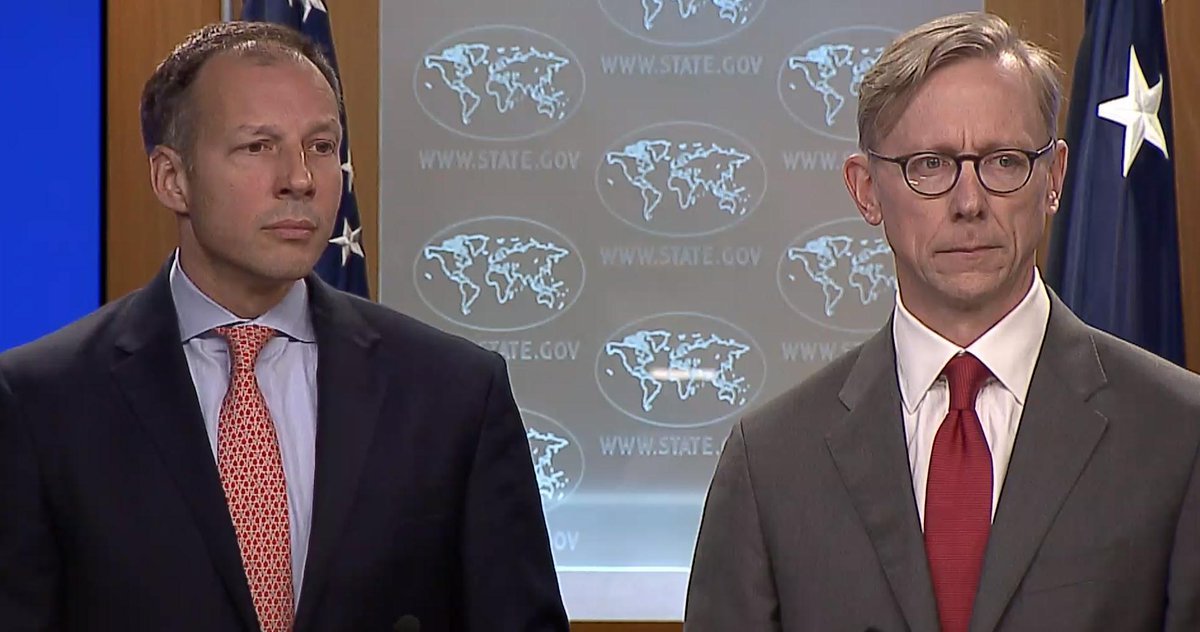
Brian Hook, Special Representative for Iran, and Francis R. Fannon, Assistant Secretary of State, Bureau of Energy Resources Official.

Two senior U.S. officials – Special Representative for Iran Brian Hook and Assistant Secretary of State for Energy Resources Francis R. Fannon – refused to comment on whether any of them would be given additional time to complete purchases made prior to May 2 or allowed to use money already set aside for purchases after that date without penalty. Both said questions about such provisions were “hypothetical,” suggesting that some accommodation may be possible.

Fannon said the U.S. did not expect any sharp spike in oil prices or any significant reduction in the global supply of oil, given production increases by other countries, including the U.S. itself, Saudi Arabia and the United Arab Emirates.

Brian Hook, Special Representative for Iran, and Francis R. Fannon, Assistant Secretary of State, Bureau of Energy Resources Official.

Below is a full rush transcript of the press conference by Brian Hook, Special Representative for Iran, and Francis R. Fannon, Assistant Secretary of State, Bureau of Energy Resources Official.

Special Representative Hook:  Our goal has always been to get countries importing oil from Iran to zero as quickly as possible, and last November when we reimposed our sanctions we had a fairly tight oil market and at the President’s direction we granted a handful of oil waivers.  That was done because we weren’t looking to grant exceptions to our campaign of maximum economic pressure.  But we also didn’t want to put a lot of volatility in the oil market.

Now here we are in 2019 and all forecasts are supply exceeding demand.  We’ve also been working very closely with the Saudis and the Emiratis and other oil producers to ensure that as we take off the remaining one million barrels of Iranian crude being exported that those barrels are offset so that it ends up being a sort of net neutral.

We have imposed the toughest sanctions ever on the Iranian regime.  We’re going to continue to apply pressure on the regime until its leaders decide to start behaving more like a normal nation and less like a revolutionary cause.

We had made going after oil a priority because that historically has been the regime’s single largest source of revenue.  It uses funding from its oil exports to support terrorist proxies.  This is whether it’s Hezbollah in Lebanon, its own operations under the Quds Force in Syria, the Shia Militias that they fund and support in Iraq.  The same with the Houthis in Yemen.  So for everybody who is concerned about a more peaceful and stable Middle East, the best and surest path to do that is to deny the principle driver of instability the revenue that it needs to execute its foreign policy in the countries that I just mentioned.

We have been doing this all along in a way that meets our national security objectives but also maintains market stability.  Assistant Secretary Fannon is on the call who is also happy to answer any questions about the measures that we have taken to ensure that energy markets remain stable and well supplied.

We see a very good impact that our pressure is having in the region.  Even before yesterday’s announcement of zero, we have denied the regime direct access to more than $10 billion in revenue since May.  That works out to a loss of at least $30 million a day and that’s only with respect to the oil.  

When we deny the regime this revenue, it means less money to spend on missiles, on terrorism and on proxies like Hezbollah.

In March the leader of Hezbollah, Hassan Nasrallah, publicly appealed for donations for the first time ever.  In the last several months he has been forced to undertake unprecedented austerity measures because money from Iran is not flowing in as it once did.  We have seen reports of Hezbollah fighters receiving half of their pay and Hezbollah is not alone in feeling the strain from a lack of funding from Iran.  Iranian proxies in Syria are also experiencing a lack of funding from Tehran and fighters are going unpaid.  That’s a good thing.  And the services that they once relied upon are drying up.  This means that our pressure is working and why we think it is important for other countries around the world to support this strategy of denying the regime revenue that it needs.

With that, I think Assistant Secretary Fannon and I are happy to take any questions.

Question:  The Turkish Foreign Minister, Mevlut Cavusoglu, has criticized your decision to end sanction waivers for countries importing Iranian oil, and he elaborated on, he said that this will not serve regional peace and stability.  Turkey is a neighboring country to Iran and is depending on foreign energy.  How does your administration address or evaluate Turkey’s concerns? And another question regarding Turkey and Iran working on our special transactional channel in order to continue trade despite U.S. sanctions.  What is the U.S. response to such a move?

Special Representative Hook:  We continue to not see any corporate demand for a special purpose vehicle.  Any business that is given a choice between the American market and the Iranian market will almost completely, I can’t think of any, there are very few exceptions to this, anybody who would choose the Iranian  market over the American market.  And it also, for this mechanism to work, it requires Iran to comply with FATF standards.  Because you have the European vehicle but you need to have a mirror image on the Iranian side, and we have not seen any evidence that Iran wants to comply with FATF standards because their economy is designed to be opaque.  They do not want the press or other nations to be able to follow the money.

So there has been a lot of talk over many many months about a special purpose vehicle, and it has still not become operational partly for the reasons I mentioned and partly because we don’t see much corporate demand for it.

With regards to Turkey and your first question, it is hard to imagine a peaceful Middle East without a peaceful Iran.  And they are the last revolutionary regime on earth.  It is an expansionist foreign policy that is trying to create a Shia corridor of control, and it replaces national identities with sectarian identities and foments violence around the Middle East.  It also engages in proxy wars.  If we want to get serious about stopping this kind of regional aggression, we have to go after the oil revenue and other means of revenue that the regime uses to sustain its foreign policy.  So we just have a different assessment of what we think will contribute to regional peace and stability.

Iran likes to behave, they have this pattern of behavior where they essentially say to countries if you don’t allow us to behave like we want to behave, we’ll give you even more of the behavior you don’t like.  And we think that when people play by Iran’s rules, Iran usually wins.  And we need to change the paradigm.

The Iranian regime behaves very much like a religious mafia.  Some of the features of a mafia include threats, extortion and blackmail.  We think the world needs to understand these kinds of tactics and to oppose them so that they stop their regional aggression and destabilizing activities.

A/S Fannon: I think the point on the energy question with Turkey.  Two points.  First, the target of our sanctions policy is the Iranian regime, as Brian noted.  It’s not the importers.  And so what we’ve been doing through the course of our, over the last year plus, is to help countries find alternate sources of oil and in that case we’ve worked significant diplomatic overtures and helped on the technical side with Iraq to boost their output and are very pleased to see significant volumes of Iraqi oil now being imported into Turkey.  Those overtures will continue so that Turkey, as well as all of the importing countries, see and are able to obtain the oil that they need to continue to develop their economies.  Thank you.

Question:  China has described its cooperation with Iran as open, concerned and legal and that should be respected and has heavily criticized the U.S. for its step.  So what is your response to that characterization of China’s dealing with Iran?  And what will you do if China continues buying lots of oil from Iran?

Special Representative  Hook:  I don’t think we have to entertain hypotheticals, partly because they’re hypotheticals and they haven’t come to pass.  But partly because we have seen over 20 nations go to zero since May, and there hasn’t been any evidence that any of these countries are threatening or even thinking about evading or risking American sanctions.

What we have done is presented nations with a choice.  You can do business with the United States or you can import Iranian crude oil, but you can’t do both.  And when oil companies, oil exporters, look at the economics of that decision it’s not a hard decision to make.  It’s simply not.

So we don’t anticipate having — of course we will sanction any sanctionable activity, and we’ve already done that.  Since the time our sanctions were reimposed from the Iran Nuclear Deal in May, we have already sanctioned those who have tried to, who have tried to evade oil sanctions.  We will continue to do that.  But I think we should also just be mindful of the fact that we don’t think it’s in anyone’s interest for any nation to risk that because the cost/benefit is simply not there.

Question:  About the manipulation of the Iranian government.  What are you going to do?  Because it’s trying to manipulate the U.S. sanctions for the past few months.  And what are you going to do with the companies that have announced that it will continue dealing with Iranian exports and imports regarding to the oil?

Special Representative  Hook:  I think if I understand your question correctly, which is what will we do if people violate our sanctions, any companies.  If there are any individuals or entities who are engaging in sanctionable conduct, we will sanction it.  And that’s been our consistent policy ever since.

This administration has taken an entirely different approach to enforcement of sanctions that really doesn’t have much historical precedent with respect to Iran.  I think in prior administrations, there were a number of efforts to evade sanctions and I don’t think that those were enforced very strongly.

We have dedicated new resources within this administration to tracking efforts to evade sanctions and then imposing sanctions on those who try to violate it.  That work will continue.

Question:  Since yesterday’s announcement analysts are now looking at potentially $80 per barrel of oil by the third quarter when supply is forecast to be very tight.  And then you also have the oil market confronting the IMO 2020 rules at the end of this year.  Does the administration have the appetite for higher gasoline and diesel prices here in the U.S. come Labor Day?

Special Representative  Hook:  We’re speaking to, in the analysis that we’ve undertaken and the coordination with other producers around the world as well as the strong recognition of U.S. production continuing to increase.  Just last year an increase of 1.6 million barrels of added production.  EIA’s projecting a similar trend line this year.  And as a matter of course, EIA continues, it seems to underestimate performance.  They always have upward revisions.

We’re very pleased with the state of the market and we see the trend lines are extremely positive.  And having the commitments from other major producers is meaningful.  It is effectively reversing the voluntary curtailment that they had undertaken.

I mention all of that because your question was directed specifically to price and price at the pumps here in the United States, and those are not the focus areas of our foreign policy agenda.  The domestic price implication is a different question that we can’t speculate on here.  Thanks.

Question:  Will the U.S. depend on Saudi Arabia to fill the gap in the oil market?

Special Representative  Hook:  I just spoke a little bit about that point.  I think Saudi Arabia has made statements, it was referenced in the White House Statement, and of course Minister al-Falih made his own statement yesterday.  They are a partner in this.  They recognize that Iran creates unrest and is a threat to global stability in the Middle East in particular, and they are a partner with us in this effort.  And part of that is their commitment to increase both production of appropriate volumes but also the types of oil needed by respective importers.

We’re very pleased by that and we’re moving forward with our policy. 

Question:  I wanted to ask specifically about what Iran might do in response to these sanctions that you’re announcing.  Are you at all concerned that they might go back towards seeking a nuclear weapon?  And also are you concerned that Syria, which is being impacted by fuel shortages in part it seems related to hardships in Iran, might see state collapse at some point? 

Special Representative  Hook:   Iran on a fairly regular basis makes sort of extortionist threats and blackmail demands.  This is part of the regular course of their business.

I saw I think it was yesterday that they’ve threatened to close the Strait of Hormuz.  They have threatened to close the Strait of Hormuz more times than I can count.  The United States military will fly, sail and operate wherever international law allows.  That’s partly to ensure protection of the global commons so that it can be safe for commercial and non-commercial traffic.  

Iran is an outlaw regime and throughout their 40 years they generally try to hold countries hostage to blackmail, and they try to compel countries not to take actions they might for fear of Iranian reprisals.  And the international community needs to get its head around this sort of mafia style behavior, and we cannot allow ourselves to prevent ourselves from doing the right thing because of Iran’s threats to become even more dangerous than they otherwise would be.

So threats come out on a regular basis.  And it’s a purely hypothetical question you’re asking.  We track, of course, these things but the threats are nothing new.

Question:  My question is about what you expect about the impact of the sanctions Iranian oil in Syria?  And Bahrain was asking last week that we need more cooperation with the United States to assist them to, assist the countries in the region who can deal with Iranian terrorists in the future.  So I would love to hear your comments about two points ?

Special Representative  Hook:  We did sanction a couple of months ago, we did sanction an effort of oil smuggling to fund the IRGC Quds Force operations in Syria.  It was an effort by a combination of Russian and Syrian entities to try to sell Iranian oil on the black market so that they could help fund IRGC Quds Force operations, and I think also Lebanese Hezbollah.

We sanctioned that whole supply chain to try to deter.  This is part of sanctions enforcement which I talked about earlier, to try to deter sanctions evasion.  So that has been our principle focus at least on this side.  I can’t speak to — I mean our Syria envoy, Jim Jeffrey, has been very active there on the diplomatic side, working toward an irreversible political process that has as one of its features all forces under Iranian control leaving Syria.  That continues to be a priority for the United States.

Question: I just wanted to be clear on your response to the China criticism already mentioned. You’re saying you’re ready to impose sanctions on any Chinese companies that break your Iran sanctions.  Is that correct?

Special Representative  Hook:  I didn’t say that.  What I said was that it is the policy of this government to sanction any sanctionable behavior.  

Question:  Is that including from China?

Special Representative  Hook:  I didn’t say that.  You’re putting words in my mouth. What I said was that we’ll sanction any sanctionable behaviour.  

Because countries when they sit down and do the basic sort of economics of the decision, whether it’s better, whether it’s in their economic interest to continue to have access to the global financial system and to have access to the American markets, versus importing Iranian crude which is not exotic and is compatible with many other grades of crude oil that can be imported from other countries.  When they look at that decision point, it’s not a hard decision to make.  

I know the media likes to try to forecast what the next fight will be, but in this case we have not seen any countries who desire to import Iranian crude oil over having access to the global financial system.  

Question:  I would have one quick question, whether you have contact from the EU side and whether you received any reaction from Brussels yet regarding this step.  And also, regarding France because they said this morning that Iran and the progress.  What would be your reaction to this statement? 

Special Representative  Hook:  I think by Brussels you probably mean, I’m not sure if that means Frederica Mogherini or if it means the E3 or all 28 members of the EU.  I’m not sure which part of Brussels.

I think we lost her.  Anyway, I’ll take a stab at it.

I work with the E3 on a very regular basis to stay in touch with them.  I’m in communication with them every week.  The Secretary of State is in regular touch with his E3 counterparts.  We continue to agree on more than we disagree.  We obviously disagree about the Iran Nuclear Deal, but I think if you look at the record of European action since May of last year, it is a good record of trying to deter Iranian terrorism in Europe and they are also united in their opposition to Iran’s ballistic missile testing. I refer you to many letters from the E3 to the UN Security Council condemning Iran’s ballistic missile testing and its space launch vehicles that they have been testing over the last few months.  The launches there.

So we will continue to work with the E3 as we have.  They are strong allies to the United States.  And they also understand that just because Iran is in compliance with the Iran Nuclear Deal, does not mean that this has somehow eliminated the non-nuclear threats that Iran presents to peace and security.

A/S Fannon:  I think that we are in a very strong position relative to the oil supply situation in terms of markets. I think you’re going to hear more of that, and I would encourage, I know [Fakhi Barral] with IEA, I think he’s speaking to this about the appropriate level of world balance.  I think we see a very strong forward trend, particularly about U.S. production.  I think this is an historic point.  We’ve been telegraphing going to zero for a year now to allow importers to make the necessary adjustment, and we’re assuring that there are sufficient volumes that no one’s going without.

April 26, 2019 0 comments
0 FacebookTwitterPinterestEmail
Oil & Gas

Equinor proves public feedback process was sham, and lodges Bight oil drilling plan despite promises

by Nadarajah Sethurupan April 26, 2019
written by Nadarajah Sethurupan
  • Equinor takes just 13 comments into account out of 30,000 submissions on its draft plan 
  • Equinor lodges Environment Plan today to avoid government-regulated feedback process
  • Over 10,000 protest across Australia in past month, from Western Australia to Queensland
  • Two-thirds of Australians want Bight World Heritage listed; only 20% support oil drilling
  • 17 southern Australian councils opposed or concerned, representing 600,000 people  

Norwegian Government-owned oil company Equinor has lodged its Environment Plan to drill for oil in the Great Australian Bight despite its promise it would “not push through resistance”. [i]

“Norwegian oil giant Equinor could not be more contemptuous of the Australian people,” said Wilderness Society South Australia Director Peter Owen. “Equinor lodged its Environment Plan on the last day it could to avoid a government-regulated public feedback process. Instead it ran its own sham feedback process and has dismissed almost all concerns in 30,000 unique submissions in just five weeks. Equinor admitted that just 13 comments led to any change in its Environment Plan. The Australian community has a right to be furious. Equinor has made it abundantly clear that it considers most of the Australian peoples’ legitimate concerns are irrelevant. 

“Among those concerns that Equinor considered irrelevant was people’s fundamental objections to oil and gas drilling in the Great Australian Bight. Is this really the position of this global company?

“This looks like a rush job, designed to push through the groundswell of growing community and political opposition to Equinor’s risky plans, not to mention getting the Environment Plan in to the regulator just a day before a government-regulated public comment process comes into effect.

“The community opposition to Equinor’s plans has escalated rapidly since it released its draft EP, with more than 10,000 people protesting on beaches right across Australia, supported by 28 surfing legends, including world champions Stephanie Gilmore and Mick Fanning. Over 30,000 people made submissions on Equinor’s Environmental Plan and 17 southern Australian local governments, representing more than 600,000 residents  have voted their concern or opposition to Bight oil drilling. Recent polling[ii]showed two-thirds of Australians want the Bight to be World Heritage listed and only one in five support drilling in the Bight. Just last weekend, while thousands protested in the surf mecca of Torquay, a Federal Government MP, Sarah Henderson, added her opposition to Equinor’s oil drilling plans for the Bight.[iii]

“The Fight for the Bight is now one of the biggest environmental protests Australia has ever seen and is gaining traction around the world. How much more reputational damage does the Norwegian Government-owned company want? Equinor will be deeply shocked if it thinks the protests will disappear if it gets an approval. Australia’s biggest environmental protests, over the Adani coal mine, the Franklin Dam, the James Price Point gas works and the Gunns pulp mill, have only escalated dramatically when approvals have been given.

“Equinor’s modelling shows that an oil spill from an ultra-deepwater well blowout in the Great Australian Bight could impact anywhere along southern Australia’s coast, from Esperance WA across to north of Sydney and even Tasmania.

“Ultra-deepwater drilling is a relatively new, high-risk operation carried out mostly off the coast of Brazil and in the Gulf of Mexico, where it caused the world’s biggest oil spill accident, BP’s Deepwater Horizon tragedy in 2010, when 800 million litres of oil spewed into the gulf for 87 days.”

“The Great Australian Bight waters are deeper, more treacherous and more remote than the Gulf of Mexico. There is no established offshore oil and gas industry in South Australia to deal with a disaster that could hit the Victorian coast. More than 6800 boats were involved in the Gulf clean-up but the South Australian Oyster Growers Association says that SA and neighbouring states probably have only 20 vessels that could operate safely in the waters where Equinor plans to drill.

“The Great Australian Bight is a unique, pristine wilderness marine environment, with 85 per cent of its marine species found only in these waters. It’s a haven for 36 species of whales and dolphins, including the world’s most important nursery for the endangered southern right whale.”

For further comment contact:

Wilderness Society South Australia Director Peter Owen on 0423 550 018

For more information, images & footage of the Bight & Gulf of Mexico visit http://bit.ly/23Cwu37

Or contact Wilderness Society media adviser Alex Tibbitts on 0416 420 168

#FightForTheBight


[i] https://www.portlincolntimes.com.au/story/5500024/we-like-the-bight-just-as-it-is-great/

Oystein Michelson, the vice president of development and production international, responsible for safety and security explained that social licence to operate was key to progressing the project. He said that if “we are not wanted here, we will not push through resistance”.

[ii] http://www.tai.org.au/content/national-poll-australians-opposed-drilling-great-australian-bight

[iii] https://www.theage.com.au/politics/victoria/lib-mp-joins-protest-against-oil-drilling-in-great-australian-bight-defying-colleagues-20190422-p51g93.html

April 26, 2019 0 comments
0 FacebookTwitterPinterestEmail
Media Freedom

Oslo brewing co. – building a transparent brand

by Nadarajah Sethurupan April 26, 2019
written by Nadarajah Sethurupan

Consumers are becoming more health conscious and discerning about what they put into their bodies. Oslo Brewing Co. has decided to address this by pro-actively putting the nutrition information on their core range of products starting this Spring ahead of any government regulation.

There is growing trend in the food & beverage industry for transparency. Consumers want to know where their products come from, what is in them, and how it impacts their health.  This consumer trend coincided with Oslo Brewing Co.’s values of creating, approachable, drinkable and easy to understand craft beer. Another reason for this decision was an additional way to communicate how their products should be enjoyed. 

Today’s consumer is more discerning than ever and brand loyalty doesn’t come as easy as in years past.   A part of craft beer’s appeal is that you know where the beer is produced and purchasing from a local supplier means you are supporting a local business.  As the craft beer market matures, consumers are demanding more when it comes to product information.  Consumers value product transparency and consider a wide array of information about a product before making purchase decisions.

With a growing number of diet trends and restrictions consumers want to know that the products they choose will fit into their choice of life-style and daily diet routine. “We want our products to be transparent and easy to understand, and Oslo Brewing Co. to be a brand you can trust” says General Manager Dimitri Yogaratnam.

In addition to product transparency, the nutritional information on the products also serve as a guideline on how products should be enjoyed. A 0,5L Imperial Pastry Stout can at times be the nutritional equivalent of an entire box of ice cream. It is meant to be indulgent and brewer’s (for the most party) intended for these to be shared. These trends in beer and how they should be consumed are moving faster than normal consumer awareness.  Additional nutrition info can serve as an additional guideline for customers to know how indulgent a particular beer is.  

“Our Dream Porter is full of flavor and indulgent, splitting a bottle with a friend over a slice of chocolate cake is a perfect end to a great meal. We took our time making a really great beer…enjoy it.” says Yogaratnam.

Information on Oslo Brewing Co. core range is listed on their website today and they are launching their first labels with nutritional information this Spring and incorporate it into their portfolio over the year.  

April 26, 2019 0 comments
0 FacebookTwitterPinterestEmail
Africa and Norway

Johnson Smith On Official Visit To Norway

by Nadarajah Sethurupan April 26, 2019
written by Nadarajah Sethurupan

Minister of Foreign Affairs and Foreign Trade, Senator Kamina Johnson Smith, is now in Oslo, Norway on an official visit aimed at fostering trade and deepening bilateral cooperation, particularly on maritime issues and sustainable development.

Kamina Johnson–Smith is a Jamaican attorney and politician. A member of the Jamaica Labour Party, Johnson-Smith is currently the Minister of Foreign Affairs and Foreign Trade in the second Holness cabinet. Since 2012, Johnson-Smith is also a member of the Senate.

K“The visit will seek to explore interests and opportunities in trade and investment, cooperation in renewable energy and further cooperation in the maritime sector,” stated Johnson Smith.

Having established diplomatic relations in 1997, Jamaica-Norway collaboration has mostly been at the multilateral level through the United Nations and bilaterally on maritime issues.

In fact, the establishment of the Caribbean Maritime Institute, now Caribbean Maritime University in 1980, was a joint venture project of the two countries and a key accomplishment of Jamaica-Norway bilateral cooperation.

During her visit, Johnson Smith will pay a courtesy call on the Prime Minister of Norway, Her Excellency Erna Solberg, and sign a Memorandum of Understanding on the establishment of Bilateral Consultations with her Norwegian counterpart.

The inaugural round of the bilateral consultations will follow the MoU signing.

The foreign minister is also expected to participate in a roundtable with the Minister of International Development of Norway, to engage in discussions with the Foreign Affairs Committee of Parliament and meet with representatives of Norwegian renewable energy companies as well as REV Ocean, a not–forprofit corporation focused on sustainable ocean management through research and the reduction of plastic waste.

While in Oslo, Johnson Smith will also engage with Jamaicans in the diaspora.

April 26, 2019 0 comments
0 FacebookTwitterPinterestEmail
Diplomatic relations

Costs related to the campaign for a seat on the UN Security Council

by Nadarajah Sethurupan April 23, 2019
written by Nadarajah Sethurupan

The costs directly related to Norway’s campaign for a seat on the UN Security Council amounted to NOK 12 million (USD 1,4 million) in the period 2016-2018. This total includes costs for travel, representation, campaign materials and promotional activities, courses, and salaries for temporary employees and special representatives who have been engaged specifically to promote Norway’s candidature.

Norway formally announced its candidature for a seat on the Council for the period 2021-2022 in 2007. Work to secure a seat on the Council was then started through regular diplomatic efforts. From 2016, this work was intensified, and the campaign was officially launched in June 2018. Norway’s campaign is guided by the principles of transparency and accountability. We will therefore provide information about how this work is carried out, and the costs entailed, on a six-monthly basis.

The Norwegian Government’s political platform states that the UN Security Council candidature is a key foreign policy priority. Gaining a seat on the Council will be important, not only because it is in Norway’s interests, but also because Norway will make a positive contribution to the Council’s work, particularly in the areas of peace and reconciliation, and sustainable development. Norway is running for one of the two available seats for the Western European and Others Group (WEOG), competing with Ireland and Canada. The election will take place in June 2020. In order to be elected, support of two-thirds of the UN member states is required.

The campaign is based on all that Norway does in the area of foreign and development policy. As the Government’s political platform makes clear, the campaign for a seat on the UN Security Council is a general foreign policy objective. It is difficult to give a complete estimate of the campaign costs, as the whole of the Foreign Service is working in very different ways to help to secure support for Norway’s candidature.

The main campaign effort is taking place through normal diplomatic activities. Diplomatic efforts vis-à-vis the other UN member states are being intensified during the campaign period. The Ministry of Foreign Affairs has identified the costs that are most directly linked to the campaign and to the preparations for Norway’s work on the Council, if it is elected.

As set out in the table below, the costs of the campaign in the period 2016-2018 amounted to just over NOK 12 million.

Costs directly related to the campaign 201620172018
Travel111 9651 053 9581 296 246
Representation 12 09932 259
Campaign materials and promotional activities 838 3073 353 711
Courses, seminars and other preparations for work on the Council 16 661597 562
Allocations to missions for representation and travel costs 500 0003 725 000
Salaries for temporary employees/special representatives 31 850824 379
Total     (NOK)111 9652 452 8759 829 157
Total costs 2016-2018 (NOK)12 393 997

The prospect of a seat on the Security Council makes it necessary to prepare thoroughly in a number of fields. This in turn means that we need to build skills and expertise both in the Foreign Ministry and in other ministries. Costs incurred in connection with these preparations, including competence-building activities, are included in the overview.

Some diplomatic and consular missions have additional costs as a result of their intensified diplomatic efforts in the campaign period. This applies in particular to the Permanent Mission to the UN in New York and to embassies that are responsible for other countries, and thus incur more travel costs. These missions have received additional funding.

Only extraordinary costs that are directly related to the campaign are included in the overview. Salaries and other costs relating to permanent employees in the Ministry and at missions abroad are not included in the overview. Nor are travel costs that are not directly related to the campaign.Ministry of Foreign Affairs

TOPIC

  • The UN
April 23, 2019 0 comments
0 FacebookTwitterPinterestEmail
Environment

The Goverment proposes state contribution for funding of CCS exploration well

by Nadarajah Sethurupan April 22, 2019
written by Nadarajah Sethurupan

As part of the Norwegian full-scale carbon capture and storage-project (CCS),the Norwegian Government will propose to the Parliament that the Norwegian state contributes with funds for an exploration well for CO2-storage on the Norwegian Continental Shelf (NCS).

The Government has an ambition of realizing a cost efficient solution for full scale capture, transport and storage of CO2 in Norway, provided that such a project will contribute to technology development internationally.

Norcem and Fortum Oslo Varme is currently studying CO2-capture at their respective plants (a cement plant in Brevik and a waste incineration facility in Oslo). At the same time, Equinor, Shell and Total are working on a solution for transport and storage. The latter three companies are financing a significant share of the expenses related to the pilot project, and have asked the government to contribute to the funding of the exploration well.

Important information

The exploration well will provide more information about the quality and capacity of the reservoir. This information will be important when deciding whether to proceed with the CCS-project or not.

– I am glad that we have now reached an agreement with the companies regarding the cost allocation for the exploration well. The costs will be significant for both the State and the companies. This accord signals a strong commitment from the actors involved to take the necessary steps in order to keep the project on track, says Minister of Petroleum and Energy, Mr. Kjell-Børge Freiberg.

– In order to reach our climate goals, CO2-capture and storage is a necessary technology. A successful Norwegian project will be significant for the further development of CCS in Europe and globally. The project can also be crucial for reaching the goals of the Paris agreement to limit the global warming to 1,5 degrees, says Minister of Climate and Environment, Ola Elvestuen.

Estimated cost: 535 million NOK

The Government will present the proposal to the Parliament in connection with the revised national budget for 2019.

Pending the Parliament’s consent, the Norwegian state will fund most of the cost for the exploration well. The total estimated costs are NOK 535 million. The state’s share of the costs will be 75 per cent, with an upward limit of NOK 345 million.

April 22, 2019 0 comments
0 FacebookTwitterPinterestEmail
Economics

Romania gets new contracts, will build cruise ship

by Nadarajah Sethurupan April 21, 2019
written by Nadarajah Sethurupan

SeaDream, a cruise ship to be used on luxury voyages, will be built at the Mangalia yard in Romania after Damen Shipyards Group signed a contract with Norway-based SeaDream Yacht Club.

Damen Shipyards holds a 49% minority stake and the operational control in the Mangalia yard, while the Romanian state has a 51% stake.

The contract is Damen’s first for a cruise ship. The 155-meter mega yacht, a purpose-built ship, will be prepared to operate in destinations around the world, including polar and tropical. As such, the vessel will boast ice class Polar Code 6 credentials. Damen will begin construction of the vessel in October this year, with a scheduled delivery date of September 2021.

The SeaDream contract is one of several major ones the Mangalia shipyard received, the Economy Ministry announced. The shipyard will also build passenger transport ships and a complex ship for offshore farms, with a loading capacity of over 10,000 tonnes. 

In order to fulfill the recent orders, more people will be hired at the yard. When Damen took over the operational control, the yard had 1,700 employees. It is expected to reach 2,500 by year end. 

In 2018, Damen took over the operational control of the Mangalia shipyard. The yard, located on the Black Sea, is the largest in the Damen portfolio and brings with it the capabilities for the group to construct larger, more complex vessels, the company said.

Damen also holds the majority stake in another shipyard in Romania, in Galati.

April 21, 2019 0 comments
0 FacebookTwitterPinterestEmail
NATO and Norway

France joins Allied effort to develop Maritime Unmanned Systems

by Nadarajah Sethurupan April 20, 2019
written by Nadarajah Sethurupan

France joined a multinational effort to cooperate on the development of Maritime Unmanned Systems. At a signing ceremony at NATO Headquarters in Brussels, National Armament Directors from Belgium, Denmark, Germany, Greece, Italy, the Netherlands, Norway, Poland, Portugal, Spain, Turkey, the United Kingdom and the United States welcomed France to this key multinational initiative.

The project was launched in October 2018 through the signature of a letter of intent by 13 Allied Defence Ministers (Belgium, Denmark, Germany, Greece, Italy, the Netherlands, Norway, Poland, Portugal, Spain, Turkey, the United Kingdom and the United States) to support the implementation of NATO’s reinforced maritime posture, as endorsed by Allied leaders at the 2018 Brussels Summit. Speaking at the signing ceremony, Assistant Secretary General for Defence Investment Camille Grand said: “Maritime unmanned systems will play a central role in future naval operations, where they will serve as a force multiplier by augmenting traditional, manned naval assets.” They are expected to deliver significant benefits for detecting and clearing mines, as well as finding and tracking submarines.

Assistant Secretary General Grand added: “Today, we are operating crew-dependent platforms with constrained operational awareness, but tomorrow we will increasingly use integrated autonomous systems, able to work together and complement existing manned platforms.”

Through this initiative, Allies will be able to field more flexible and interoperable maritime unmanned systems. Concurrently they will be able to reduce cost by systematically exploiting economies of scale, allowing increasing defence budgets to go even further.

April 20, 2019 0 comments
0 FacebookTwitterPinterestEmail
Economics

Norwegian Cruise Line Announces Ban of Towel Animals, World Mourns

by Nadarajah Sethurupan April 19, 2019
written by Nadarajah Sethurupan

Towel animals, a staple of any respectable cruise ship, will no longer be a daily occurrence for customers of Norwegian Cruise Line, as part of a new trial to protect the world’s resources.

That feeling when you return to your room at the end of a long, fun-filled day and find a pair of swans, baby elephants, a hippo or a bear on your bed, made entirely out of towels. That feeling will be history for most customers of the cruise line, according to Vice President of Public Relations Christine Da Silva, speaking to USA Today. 

The company is trying to be more environmental-friendly and that means cutting down on waste. Making towel animals every single day means washing the towels daily, even if they haven’t been used. That translates into waste, so it will be cut. 

“We are committed to being a responsible corporate citizen by fostering a culture of awareness and respect for our world’s resources. Our mission is to continually improve our sustainability culture through fresh innovation, progressive education and open collaboration,” Da Silva says. “As such, from time to time we explore opportunities to expand our efforts. In this instance, we are assessing the impact of reducing the number of towel animals we showcase aboard a few of our ships.”

There’s a catch, though. This is just a limited test, so customers who still want towel animals can get them on a daily basis, if only they make their desire known to staff. 
“We understand that many of our guests enjoy them as part of the experience of cruising with us, so towel animals remain available upon request,” Da Silva adds. “This is simply a test, and we are providing them if guests request them.”

Despite this, customers aren’t happy and they’ve taken to social media to make themselves heard by Norwegian Cruise Line. Sarcastically or seriously, they say it’s the little things that keep customers happy and towel animals count among them. They also say they can’t imagine a good cruise without them, so it doesn’t look like the company’s trial is starting on a good footing. 

April 19, 2019 0 comments
0 FacebookTwitterPinterestEmail
Economics

Norwegian firm may invest €1.5bn in electricity generators in Irish Sea

by Nadarajah Sethurupan April 18, 2019
written by Nadarajah Sethurupan

Norwegian utility Statkraft and a partner could spend €1.5 billion building new electricity generators in the Republic.

Statkraft, which took over Irish renewable energy business Element Power last year, began work on a €30 million wind farm at Kilathmoy on the Kerry-Limerick border this week.

According to president and chief executive Christian Rynning-Tønnesen, Statkraft plans to build more wind farms in the Republic, at a total cost of €1.5 billion, although it will recruit a partner for a proposed offshore project in the Irish Sea.

Statkraft intends building what may be the Republic’s first battery facility at Kilathmoy. Photograph: Simon Dawson/Bloomberg

The Scandinavian player has some of the permits needed to build a wind farm about 30km off the Dublin coast that could generate up to 500 mega watts (MW) of electricity, enough to power about 500,000 homes.

Mr Rynning-Tønnesen estimated on Thursday that the project would cost about €1 billion, but added that whatever partner Statkraft recruits is likely to cover much of that investment.

“We will bring in another company to take the lead on that project as our strategy is to invest in on-shore wind,” he explained.

Mr Rynning-Tønnesen predicted that the partner would most likely be another large energy company recruited by Statkraft after bringing the Irish Sea project further through the planning process.

Total capacity

The proposed offshore facility was one of several Statktraft acquired when it took over Element.

Alongside this, Statkraft also has planning permission for wind farms at various locations with the total capacity to generate 130MW of electricity.

Mr Rynning-Tønnesen said the company hopes to recruit businesses that will commit to buying the electricity that these farms generate through power purchase agreements.

Statkraft is seeking permission for wind farms capable of generating 150MW of power and is preparing planning applications for a further 150MW and will also build some solar plants.

“These investments will be of the magnitude of €450 million to half a billion,” its chief executive estimated.

April 18, 2019 0 comments
0 FacebookTwitterPinterestEmail
Norwegian American

USA with new measures against Cuba

by Nadarajah Sethurupan April 18, 2019
written by Nadarajah Sethurupan

The Trump administration will announce on Wednesday a big shift in policy toward Cuba by allowing U.S. individuals to file legal claims against foreign companies that conduct business in Cuba, a senior administration official told NORWAY NEWS.

The move represents a new hard-line stance against the island nation, which has been accused of providing assistance to the embattled regime of Venezuela’s Maduro government.

A law on the books has long been delayed by previous administrations through waivers. Enforcing it could exacerbate trade tensions with allies like Canada and the European Union, which have had companies doing business in Cuba for years.

White House national security adviser John Bolton is expected to unveil the policy as part of new actions he will announce against Cuba, Venezuela and Nicaragua during a speech in Miami on Wednesday.

The European Union has already warned the U.S. it would challenge the action in a WTO dispute and said the move would trigger an unending chain of countersuits against U.S. companies operating in Europe.

Below is a full rush transcript of the press conference by  Senior State Department Official U.S. Policy Towards Cuba.

Senior State Department Official: As you likely know, Secretary Pompeo just announced his historic decision not to suspend Title III of the LIBERTAD Act.  This decision will become effective on May 2nd.  So first I’ll outline briefly what it means not to suspend Title III and the rationale behind the decision, and then I’m happy to take any questions.

Some quick background, under Title III, Congress gave U.S. nationals with a claim to confiscated property in Cuba the right to file a lawsuit against the people or companies who were trafficking in that property.  But for more than 22 years, U.S. Presidents or Secretaries of State have suspended American’s rights under Title III which Congress authorized when both necessary to U.S. national interests and necessary to expedite a transition to democracy in Cuba.

Now our decision on Title III is fundamentally related to the actions of the Cuban regime.  After suspending Title III for more than 22 years in a row we still have not seen Cuba transition to democracy.  In fact the opposite is true.  Cuba shows no sign that it will achieve democracy in the near future as the repressive political situation in Cuba has persisted.  And even under a new leader in Cuba, nothing has fundamentally changed.  The recent illegitimate constitutional referendum on February 24th simply entrenched the one-party rule in Cuba, and of course the human rights situation in Cuba remains abysmal.

But not only has the situation in Cuba worsened, Cuba also actively undermines democracy in the region as a whole.  We’ve seen it export dictatorship, export torture, export arbitrary detentions, and export the harassment and intimidation of dissidents and opposition factors.  And in all of these actions Cuba continues to prop up the former Maduro regime which denies Venezuelans their right to self-determination.

So under the Trump administration U.S. policy towards Cuba will reflect reality.  Twenty-two years of suspending Title III has failed to advance the goal set forth by the legislation in the first place.  Secretary Pompeo’s decision today recognizes the truth of that failure and enacts Congress’ common sense policy to starve the Cuban regime of the wealth it needs to hold onto power while simultaneously supporting the people of Cuba.

So ending the suspension of Title III sends a strong signal against trafficking in these confiscated properties as well as opens a path for U.S. claimants whose property was confiscated by the Cuban regime to seek compensation.

I’d just close by saying that starting with NSPM5, this administration has made clear its intent on holding the Cuban regime accountable for repression on the island and maligned activity overseas, while at the same time supporting the Cuban people.  And this administration will not allow those trafficking in confiscated property off the hook for their complicity in the regime’s malign behavior.

Question:  You said in your earlier press conference that the vast majority of European companies investing in Cuba shouldn’t worry about this, but some experts say that 90 percent of the property that was nationalized in Cuba after the Revolution actually belongs to Cubans who left for the United States.  So if that’s true, this could potentially affect investment in the entire island.  Do you have any reason to believe that’s not true?  And if so, what guarantees do European companies have?  Thank you.

Senior State Department Official: The purpose of the legislation as it was originally passed was to ensure that there was justice for those who had their property illegally confiscated by the Cuban regime.  So of course any European company, any American company, any company around the world that traffics in property that was confiscated by the regime does have the possibility of being hit by this legislation.

So I wouldn’t be comfortable giving an assessment on how many companies that applies to, but the LIBERTAD Act also does include certain conditions and requirements to bring an action under Title III.  So in that instance we advise potential plaintiffs to consult with legal counsel.

Question:  European Union officials have warned Secretary of State Pompeo that they are planning to start a case against the U.S. at the World Trade Organization over this issue.  How is the United States preparing to respond?

Senior State Department Official: I would just start by stressing that our relationship with our partners in Europe is very critical to this administration.  We’ve consulted with them numerous times.  We’ve taken into account their considerations and their concerns.  I think its fair to say, and we’ve said this earlier, that we all agree on the broader strategy to promote democracy and human rights in Cuba.  There is some disagreement on the tactics to get there.  

And in terms of the next steps and whether the Europeans would be taking this to the World Trade Organization, I would just defer to them on their response and what their actions will be, and just simply reiterate that we here are implementing the laws passed by Congress.

Question:  what is your message to Moscow at this point? Because as you know, Moscow has longstanding relationship, partnership with Cuba.

Senior State Department Official: With this legislation, with the implementation of this legislation we are not targeting any specific countries or specific companies.  The Secretary has made very clear that this is a decision not to waive, that has no exceptions.  So there is no direct targeting reflected here.

And in terms of the broader message that we’re trying to communicate writ large, it is the administration’s continued focus on holding the Cuban regime accountable for human rights abuses, and again, simultaneously supporting the people of Cuba in their fight for democracy.

Question:  American companies on the island have been operating under a Treasury license.  Is that enough to protect them from lawsuits under Title III?

Senior State Department Official:  Once again, there are no exceptions to the implementation of Title III.  

Question:  What is the position of the government of the United States on the threats that the European Union is going to take action if the Helms-Burton Law is activated? Are you going to activate the Helms-Burton Act with complete effects?  The European Union is considering legal action with the WTO.  Are you prepared for that?  How would you answer that? So further questions on this issue with the relationship with the EU.

Senior State Department Official:  I think we’ve covered most of those questions.  The decision today is with respect to Title III of the Helms-Burton Act.  And in terms of the World Trade Organization, once again, we defer to the Europeans as to what their next steps will be.

Question: The guidelines require a notice to be formally sent to the trafficker, and if the trafficker does not respond within 30 days then the damages to be sought under the Title III action becomes [inaudible] damages.  I just want to confirm that that is still the structure envisioned with this full implementation of Title III, with no exceptions, which we thank the administration for today.

Senior State Department Official:  We would defer any specific questions like that to any legal counsel.

Question: How far is the U.S. willing to go after implementing this Title III, but how far is it willing to go to pressure Cuba into limiting the island support towards the regime in Venezuela?

Senior State Department Official: We have already begun to undertake a number of actions when it comes to Cuba’s role in Venezuela.  As mentioned, this is based off of the Cuban regime’s activities, both inside Cuba as well as its actions inside Venezuela.  

So we have been very clear on our intent to ratchet up that pressure.  We’ve also been clear that we’re monitoring the impact, the recent suspensions had on bringing about meaningful reform in Cuba.  And we have seen none of those things.

In addition, I would just say that this administration has already come out with a number of sanctions and designations specifically related to Cuba’s, the relationship between Cuba and Venezuela, so that again is an indication that we are willing to ratchet up the pressure with respect to Cuba’s foreign intervention in that country.

Question:  Internationally there is a lot spoken about a hypothetical military intervention in Venezuela, but there is already Russian military personnel, Iranian support, and they say thousands of Cuban agents.  Is the military intervention already done?  How can it be possible to break the Cuban support to the Maduro regime?  Are there any extra steps against Cuba based on their support for the Maduro regime?  

Senior State Department Official: We would agree, there definitely is military intervention in Venezuela.  It’s not on the part of President Juan Guaido or the United States.  It is uniquely on the part of former regime leader Nicolas Maduro, the Cubans, the Russians, and the Iranians.  It is something that we do not accept.  The Lima Group recently announced that they do not accept this intervention.  It is against all of the principles of non-intervention that are held so dear to the people of the Western Hemisphere.  So we absolutely agree with that assertion.

With respect to what can be done about it, this is something that the U.S. administration is fully committed to.  We have no tolerance or patience for the recent landing of Russian military personnel inside Venezuela.  We have no tolerance or patience for the way the Cuban regime treats the people of Venezuela, how it props up the Maduro regime, how it provides repression training and tactics to Sabine and others.  So accordingly we are and will continue to take action.

We know that there are Cuban military and intelligence services present in Venezuela.  It is widely known both inside and outside of Venezuela that these officers are deeply entrenched in the Venezuela state.  They are the ones providing physical protection and other support directly to Maduro and to the inner circle.  And Maduro himself has made no secret of his partnership with the Cuban armed forces.

In October 2018 Maduro celebrated the deployment of Cuban Special Forces units which were called the Black Wasps, to the Venezuelan-Colombia border for provocative military exercises, and we’ve seen publicly the provocative actions undertaken by the Russians in recent weeks as well.

In terms of the next steps that we can do, as I’ve alluded to, on April 12th the United States sanctioned four companies for operating in the oil sector of the Venezuelan economy and identified nine vessels as blocked properties pursuant to an Executive Order.  Those actions were themselves a follow-on to previous designations and identifications announced earlier in the month which targeted entities and vessels known to be involved in the transportation of crude oil from Venezuela to Cuba.

Again, all of these actions are aligned with our broader Venezuela strategy which seeks to hinder the former Maduro regime’s ability to line its pockets with the profits from natural resources that properly belong to the people of Venezuela but that Maduro himself steals.  And it’s also very consistent with our policy approach when it comes to Cuba, which is making sure that we are again holding the regime accountable for its abuses, both inside the country as well as its abuses outside the country.

Question:  First, surely the State Department must have an estimate of the number of companies and countries that could be affected by this decision.  If so, I would like to hear it.

And the second question is regarding the speech that Mr. John Bolton is having today in Miami.  I was wondering if there is any message he is going to convey that hasn’t been treated in this conference call. 

Finally, tomorrow it the anniversary of the protests in Nicaragua.  What is the position of the U.S. regarding Nicaragua since there has been a lot of actions regarding Venezuela and Cuba but not much except speeches regarding Nicaragua.  Is there anything in terms of sanctions or actions that we should expect?

Senior State Department Official: I’ll start with the first with respect to estimations.  What we do have is that the Foreign Claims Settlement Commission has certified nearly $2 billion worth of claims.  That doesn’t include possible interests.  The United States did an assessment, this was back in 1996, where we saw that there were over 6,000 certified claims.  However, this determination is not specifically focused only on certified claims, so we’ve assessed that there could be as many as 200,000 certified claims, or uncertified claims.  That’s why we can’t give a concrete assessment of exactly how many companies or how much money this would entail.  However it’s possible that it could be in the tens of billions of dollars.

With respect to your second and third questions about Nicaragua and Ambassador Bolton’s upcoming speech, I can’t preview much that’s going to be coming up in the speech, but what I can say is that you can certainly anticipate additional actions taken against both the regimes in Cuba, Nicaragua and Venezuela.

Question:  My question is in regards to Title IV of the legislation.  Is it still suspended beyond May 2nd?

Senior State Department Official:  Title IV was never suspended, and what I can say is that we are going to be ramping up investigations in that space as well.

Question:  Regarding Title III and its actions since the announcement that was done by the Secretary of State as well as the State Department this morning, and the Title IV part of it would say that whatever company is doing business with confiscated properties on the island would signify that those company heads or people that worked for those companies would not be allowed inside, into the United States and could also serve some penalties.  Is this part of this whole announcement this morning? Or is this something to come in the next coming days, as you just said maybe with the ramp up of Title IV as well?

Senior State Department Official: So I mentioned, we are continuing to make investigations into Title IV.  There is no real change there.  That’s something that’s been consistently true.  Title III is, of course, a historic change as its the first time that we will no longer suspend.

Question:  Absent the crisis in Venezuela, would the administration have implemented completely Title III of the Helms-Burton today?

Senior State Department Official: I would just say that once again this decision was predicated off of the Cuban regime’s actions.  That includes the Cuban regime’s actions in Cuba.  Of course the Cuban regime’s actions in Venezuela are also a part of that.  We can’t speculate as to if the facts on the ground were different what the Secretary’s determination may or may not be. 

Question:  What would be the impact of these new measures for the first American groups that were registered and included in the negotiations between Cuba and the United States about compensation during the Obama government?

Senior State Department Official:  This would be open to them because that includes certified claims.  But once again, we are not making any exceptions.

Senior State Department Official:  I would just reiterate our point that suspending Title III for over 22 years has failed to yield any real results, and so Secretary Pompeo’s decision today recognizes the truth of those failures which to us is a fundamental and historic change.

April 18, 2019 0 comments
0 FacebookTwitterPinterestEmail
Environment

REC preps launch of 380-Wp, 60-cell rooftop solar panel

by Nadarajah Sethurupan April 17, 2019
written by Nadarajah Sethurupan

Norway’s REC Group will be presenting a 380-Wp, 60-cell solar photovoltaic (PV) panel for rooftop customers next month at Intersolar Europe 2019, it announced today.

REC said in a statement that this would be the world’s most powerful 60-cell solar panel for use on rooftops globally. The group plans to manufacture this module at its vertically integrated facility in Singapore, where it will invest USD 150 million (EUR 133m) to establish an annual production capacity of 600 MW.

Rooftop solar installation. Source: REC Solar ASA. License: All rights reserved

“The new panel will fundamentally change the competitive balance between REC and other Tier 1 players. It will open up a big power gap beyond what is commercially available today,” said CEO Steve O’Neil.

REC noted that the new product has already been granted a design patent.

(USD 1.0 = EUR 0.884)

April 17, 2019 0 comments
0 FacebookTwitterPinterestEmail
Diplomatic relations

Embassy of Slovakia Honour the Legacy of Bjørnstjerne Bjørnson

by Nadarajah Sethurupan April 17, 2019
written by Nadarajah Sethurupan

Norwegian poet, dramatist, novelist and journalist, Björnson was one of the most prominent figures of European cultural and social life at the turn of the 19th and 20th centuries.

Ambassador of Slovakia to Norway opening the event — at Nationaltheatret. Foto kredit: Viktor Dubas

Embassy of Slovakia in Oslo launched a unique book in four languages for Honoring the Legacy of Bjørnstjerne Bjørnson “on Peace and Small Nations”.

Foto kredit: Viktor Dubas

The event has taken place in the magnificent Public Foyer featured special guests of honours.

Foto kredit: Viktor Dubas

Marit Barkbu Bjørnson and Ambassador Marianna Oravcová – author of the idea and co-editor of the book that has been recently published in Slovakia by Ministry of Foreign and European Affairs in VEDA – Publishing House of the Slovak Academy of Sciences , to pay homage to Bjørnstjerne Bjornson’s contribution to Slovak national history in its struggle for cultural and political rights of Slovaks.

Foto kredit: Viktor Dubas

The book is a product of great friendship and excellent cultural cooperation between Slovakia and Norway through experts and institutions from both countries, including the National Library in Oslo, National Library in Martin, Embassy of Norway in Bratislava, Embassy of Slovakia in Oslo, Bjørknes Høyskole, Aulestad Museum.

Foto kredit: Viktor Dubas

“My fight for the Slovaks costs a lot of time, which I need especially in my literary work. But I am not complaining, because it brings me joy. I have never in my life received so many thanks and that also has a value” Bjørnstjerne Bjørnson wrote in a letter in 1907 to his Slovak friends at a time when the Slovaks were fighting against oppression and for their own language and identity in the Austro-Hungarian Empire at the beginning of the 20th Century.

Foto kredit: Viktor Dubas

Bjørnstjerne Bjørnson was known as a champion of the rights of small nations to self-determination, as well as to maintain their language and culture. His efforts won him a place in the hearts of Slovakians that still remains strong 118 years after his death. The King and Queen experienced this personally during their State Visit to Slovakia in 2010.

Foto kredit: Viktor Dubas

Bjørnstjerne Bjørnson (1832-1910), a famous Norwegian writer and Nobel Prize laureate, is equally well known for his political and social engagement at home and abroad and for his vocal advocacy for peace, justice and the rights of small nations.

Foto kredit: Viktor Dubas

Thanks to his articles in influential European press on the oppression of the Slovaks in the Austro-Hungarian Empire, the world became aware of their situation. Bjørnson’s engagement raised enormous enthusiasm and hopes in Slovakia, and his legacy is still remembered and cherished – more than 100 years after.

Foto kredit: Viktor Dubas
April 17, 2019 0 comments
0 FacebookTwitterPinterestEmail
Norwegian Aid

Norway increases support to UNRWA by NOK 100 million

by Nadarajah Sethurupan April 16, 2019
written by Nadarajah Sethurupan

Norway is providing an additional NOK 100 million to the UN Relief and Works Agency for Palestine Refugees (UNRWA) to support humanitarian assistance to Palestine refugees affected by the Syria crisis. ‘This funding will be used to meet basic humanitarian needs and will target vulnerable groups, including displaced children who have a right to education, and refugees who are in need of healthcare,’ said Minister of Foreign Affairs Ine Eriksen Søreide.

Norway support UNRWA’s work for the palestine refugees. Here commissioner-general for United Nations Relief and Works Agency for Palestine Refugees (UNRWA) Pierre Krähenbühl. Credit: UNRWA

More than half a million Palestine refugees were living in Syria before the war started. Some of these have fled to Syria’s neighbouring countries, and many others are internally displaced within Syria. Most of them are dependent on humanitarian aid.

‘It is crucial that UNRWA maintains the capacity to deliver basic services – particularly healthcare and education – to Palestine refugees. This is also an important factor for regional stability. Norway will therefore continue to support UNRWA both politically and economically,’ said Ms Eriksen Søreide.

Ms Eriksen Søreide is taking part in an informal ministerial meeting on UNRWA in Stockholm today. Norway will announce a contribution of NOK 100 million to support UNRWA’s humanitarian efforts. This is in addition to the core contribution of NOK 125 million that was provided earlier this year.

Minister of Foreign Affairs, Eriksen Søreide is taking part in an informal ministerial meeting on UNRWA in Stockholm on 12 April 2019. Credit: MFA

UNRWA provides schooling to more than half a million children and health services to more than 5 million Palestine refugees in Palestine, Lebanon, Jordan and Syria. UNRWA’s challenging economic circumstances are affecting a large number of people, and the Palestine refugees affected by the Syria conflict are in a particularly vulnerable situation.

Norway has been a significant donor to UNRWA for several years. In 2018, Norway provided a total of NOK 294 million to UNRWA’s work.

The Communiqué from the  ministerial meeting: Communiqué at Ministerial Strategic Dialogue on UNRWA on 12 April in Stockholm
April 16, 2019 0 comments
0 FacebookTwitterPinterestEmail
Russia and Norway

Russian in Libyan conflict regulation does not serve any purpose — USA

by Nadarajah Sethurupan April 16, 2019
written by Nadarajah Sethurupan

The US plans to maintain its military presence in Northeast Syria, US Acting Assistant Secretary of State David M. Satterfield stated on Monday during a briefing in Brussels. “We do not believe that Russian involvement in this conflict serves any useful purpose,” he said. “It is an external meddling which we hope comes to a close as rapidly as possible. It’s opportunistic. It attempts to capitalize upon gray areas, conflict areas, and little good is served by it.”

“The President has said that US forces will remain in Northeast Syria. That all US forces are not withdrawing. Jim Jeffrey, our Special Representative, who is in continuing discussions with the Syrian Democratic Forces, with Turkish authorities, very much hopes that an arrangement can be reached which respects and assures Turkey’s legitimate security interests along its border,” the diplomat noted.

He added that the US presence in Syria “preserves the possibility of a continuing and decisive stabilization effort and enduring campaign against the remnants of ISIS.

Below is a full rush transcript of the press conference by  Acting Assistant Secretary David M. Satterfield , Acting Assistant Secretary, Bureau of Near Eastern Affairs, U.S. State Department.

Ambassador Satterfield:  Twice a year the United States holds this dialogue with the EU External Action Service.  Our discussions today covered, as they usually do, the gamut of regional issues, in particular places where there is a considerable amount of dynamism.  We discussed the situation in Libya, Algeria, the Yemen situation, Saudi and GCC developments, Iraq, Iran, and of course Syria and hopes between the U.S. and the EU that common efforts could work in many of these problem areas towards a resolution of supported peace, security, and stability.

Media:  I would like to ask you to elaborate on your observations regarding the local elections process in Turkey ?   How would you assess Turkish democracy?

Ambassador Satterfield:  I am not yet in a position of responsibility for Turkey, but I will repeat the remarks I made before the Senate last week.

We believe that free, fair and transparent elections and electoral processes are a fundamental of any democracy.  Turkey is a democracy.  We look to and like the rest of the world are watching closely how events unfold.

Media:  Do you feel that Secretary Pompeo in his statement to the Senate to an open conflict with Iran?  And that Syria might be the battleground for that?

Ambassador Satterfield:  If you are making reference to the recent designation of the Revolutionary Guard Corps, that was not a harbinger of conflict or war with Iran.  That was another step taken in what has been a consistent and extremely transparent campaign by the United States to constrain the ability of terrorist organizations, and that is how we view the IRGC, from continuing their deadly and disruptive work.  But no, this has nothing to do with a pretext for or a lead to conflict.

Media:  How do you think about the situation on the ground, that [weapons search] could happen in the coming days? Can you imagine there would be any peace on the ground between the Kurds and Turkey in Syria?

Ambassador Satterfield:  Your first question.  We’re following events in Libya closely.  The “we” is the European Union, the United States, the international community.  We strongly support the work of UN Special Envoy Ghassan Salame to try and bring about a political deal, political reconciliation there.  We’ve watched with concern the mounting civilian casualties and damage to civilian infrastructure, particularly over the last several days.  We call on all sides to consider very carefully how their actions impact upon civilians, and we look to the resumption of the political process.

The President has said that U.S. forces will remain in Northeast Syria.  That all U.S. forces are not withdrawing.  Jim Jeffrey, our Special Representative, who is in continuing discussions with the Syrian Democratic Forces, with Turkish authorities, very much hopes that an arrangement can be reached which respects and assures Turkey’s legitimate security interests along its border as Turkey defends itself against what is a quite genuine threat of terror, that assures as the President of the United States has stated, that those who partnered with us, died for us in the fight against ISIS are not threatened, that a vacuum is not created in Northeast Syria into which by Russian, Iranian and Syrian regime forces moving.  And finally, that preserves the possibility of a continuing and decisive stabilization effort and enduring campaign against the remnants of ISIS.  That all those objectives can be reached.  Those objectives require a continued U.S. presence, albeit at the diminished levels which the President has spoken of.

Media:  Netanyahu’s victory and his last-minute notion that he was going to connect the West Bank or parts of the West Bank.  And I wanted to get you to say that the U.S. administration is not going to accept that, which would be helpful. I’d also ask you whether you think there’s any prospects of the United States restoring its contributions to UNRWA and dealing again with the Palestinians as a real people?

Ambassador Satterfield: First, I will not attempt to parse or explain or elaborate upon Prime Minister Netanyahu’s comments in the final moments of the electoral campaign.

With respect to U.S. assistance efforts, whether directed at UNRWA or U.S. direct bilateral assistance.  Steve, much of that depends upon circumstances.  We have said repeatedly that we can contemplate circumstances in which U.S. assistance is in fact restored and serves what we hope can be a useful purpose, reinforcing progress towards peace, but that very much depends upon the position taken by the Palestinian Authority, and in the case of UNRWA, it depends upon a number of factors including fundamental and so far not taken basic reforms in the way UNRWA does business, in how UNRWA defines its serviced community.  All of those steps would have to proceed any possible decision by the U.S. on whether assistance was restored.

Media:  Question will be on Libya.  Specifically on the role of France. Did you debate the issue in your talks with the External Action Service and did you debate the issue more specifically with French diplomats during your trip to Europe?  Thank you very much.

Ambassador Satterfield:  I will be traveling to Paris subsequently, but the discussions today were with the External Action Service on behalf of the EU as a whole.  

I’m obviously not going to comment on positions attributed to another government.  What I will speak for is the U.S. government.  We are concerned at the mounting civilian casualties.  We are concerned at damage to vital civilian infrastructure.  What Libya requires is a political arrangement, an arrangement reached as soon as possible which stabilizes the country in a lasting fashion and which resolves what has been an increasingly untenable situation building over some years now of multiple militia control of resources, security, political power.  That is no formula that serves the broader interests of Libya and Libyans or of the region, or of Europe and the United States.  

Media:  on Libya, we have the U.S. calling for a political solution that American allies like Egypt and Saudi Arabia are encouraging Hifter defenses and encouraging them to drive on into Tripoli.  Are these allies really a source for stability in the region when they’re encouraging this kind of thing in Libya And on Middle East peace, does the U.S. still support a two-state solution?

Ambassador Satterfield:  The United States will support whatever solution the two parties directly involved — Israel and the Palestinians — can agree to.  That is what matters.

On your first question, again we want to see a resolution in Libya as rapidly as possible which provides for a more enduring stability and security for that country, for its neighbors; that allows Libya to once again develop as a nation in a positive direction.  And how that is best achieved, we believe, needs to come under the auspices of an agreed political resolution between the key parties involved.

Media:  What would your message be to our allies, Egypt and UAE, who are supporting General Hifter quite vocally, putting their support behind the General.  If you had a direct message for them, what would it be?

Ambassador Satterfield:  I believe they, like we, wish to see an end to instability in Libya.  The critical question all of us must address, not uniquely Saudi Arabia or Libya, but the UN efforts, the European parties involved in this conflict or suffering from this conflict, is what kind of solution is likely to be most enduring.

Media:  How important is Italy’s role in relation to the Libyan crisis, and what are the relations between U.S., EU, and Italy in relation to the Libya crisis? 

Ambassador Satterfield:  We have very close dialogue and coordination with all of the critical European states who are involved here, and that certainly includes Italy.  We’re very much aware of the special concerns Italy has because of its proximity to the Libyan littoral.  We respect that.  And we know Italy wants an enduring solution that ensures that security in Libya and/or Libya’s borders is established and maintained.  That is a goal which the United States supports strongly as well.

Media:  What does the U.S. think of Russian involvement in the Libyan conflict?

Ambassador Satterfield:  We do not believe that Russian involvement in this conflict serves any useful purpose.  It is an external meddling which we hope comes to a close as rapidly as possible.  It’s opportunistic.  It attempts to capitalize upon gray areas, conflict areas, and little good is served by it.

Ambassador Satterfield:  I appreciate very much the questions that were asked.  I will leave you with one final comment.

When I speak of measures that assure lasting security and stability, whether we’re discussing the situation in Libya, Syria, or Yemen — three critical crisis areas for the world, for the Middle East, North Africa, the role of the United Nations in all of these conflict areas in helping to advance a political frame for resolution, a political process for resolution, is absolutely vital.  And my government supports strongly the UN Special Envoys working in each of those critical areas.  Their role is invaluable and irreplaceable.


April 16, 2019 0 comments
0 FacebookTwitterPinterestEmail
Norwegian Aid

Norway supports UN operation in Mali for two new years

by Nadarajah Sethurupan April 15, 2019
written by Nadarajah Sethurupan

Norway will extend its contribution to the UN peacekeeping operation MINUSMA in Mali for two new years, until 2022.

– Norway supports the UN in the fight against violent extremism. The UN force in Mali is a key factor in the work towards stability in the region. They support the implementation of the peace agreement in Mali, and ensure room for humanitarian actors, says Norway’s Deputy Minister of Defence Tone Skogen.

It was at the UN ministerial meeting on peacekeeping operations in New York on Friday 29 March, that Norway’s Deputy Minister of Defence Ms Tone Skogen announced that the Norwegian government will extend its contribution to the international cooperation in Mali until the end of 2022.

Statssekretær Tone Skogen på talerstolen i FNs generalforsamling fredag 29. mars.

Norway currently has 15 soldiers in Mali, and in May this year Norway will send a transport aircraft to the UN operation for 6 months. The transport aircraft forms part of a multinational rotational concept, in which Norway, Denmark, Belgium and Portugal currently contribute an aircraft on a rotating basis.

The aircraft will be based at Camp Bifrost, which is run by the Norwegian Armed Forces.  

Norway’s Deputy Minister of Defence announced that Norway, in addition to maintaining the camp facilities outside Bamako until the end of 2022 for all rotational partners, also will provide a transport aircraft to the operation again in 2021.

– Transport by road in Mali is both difficult, dangerous and time consuming due to huge distances. Access to a transport aircraft is therefore important for the safety of the personnel in Mali. The UN has expressed a wish for the multinational rotational concept to be extended. Norway has pledged our continued support, and we are in dialogue with our partners to achieve this, says Deputy Minister Skogen.

Background

Norway has participated in the UN operation MINUSMA in Mali since its establishment in 2013. Today, the Armed Forces have six officers at MINUSMA’s headquarters, and nine officers operating the airbase Camp Bifrost.

The aircrafts from the various countries that contribute to MINUSMA are based in the Norwegian run camp Bifrost.

Norway initiated the multinational rotational concept for transport aircrafts in 2016, in which currently Norway, Denmark, Belgium and Portugal contribute with an aircraft on a rotating basis.

Norway sent its first transport aircraft to Mali for 10 months in 2016.

The rotational concept ensures predictable access to transport aircraft for the UN and it is cost-efficient way for smaller countries to contribute to UN operations.

April 15, 2019 0 comments
0 FacebookTwitterPinterestEmail
Russia and Norway

International Artic Forum looks at the prospects for the region’s fishing industry

by Nadarajah Sethurupan April 14, 2019
written by Nadarajah Sethurupan

The “Key Aspects of Promising Areas of the Arctic Fishing Industry” session was held as part of the ‘Arctic: Territory of Dialogue’ 5th International Arctic Forum. During the event, representatives of the government structures of the Arctic states, fisheries associations, scientific and other organizations discussed the most important aspects of international cooperation and the prospects for sustainable fisheries in the Arctic region.  


Fisheries constitute a key sector of the Arctic economies, despite the inaccessibility of Arctic bioresources. At the same time, the Arctic remains a unique, primeval ecosystem on Earth, as difficult to study as Space.

Vasily Sokolov, Deputy Head of the Russian Federal Agency for Fishery, spoke about the Russian Federation’s goals and strategy in studying and using the Arctic region’s aquatic bioresources.

“The Arctic plays an important role in Russia’s fishing industry, the area of our northern seas being comparable or even exceeding that of a number of countries, so we are closely following the processes taking place there”, he reminded the audience. “In recent years, we have noted a marked increase in temperature and are closely watching the melting of the ice cover. Yet this presents not only potential challenges but also new opportunities for fishing”, Sokolov added. 

According to Vasily Sokolov, migration of fish to the north is increasing and the catch has grown by an order of magnitude above latitude 70–75 degrees north. An interesting example is also the rapid growth of the population of invasive crabs in the Barents Sea – Kamchatka crab and snow crab (opilio crab). Today, their numbers suffice for commercial fisheries and bring financial profit to companies and the state. 

Another popular trend developing in the Arctic region is aquaculture. “Norway is the leader in this area; we are following its success and also expect to increase aquaculture production in Russia”, Sokolov reported. “Even so, we must not forget the vulnerability of the northern ecosystems. Global experience shows that disregard for the basic rules and scientific recommendations can have unfortunate consequences.”

Essential to understanding the challenges and opportunities of sustainable use of Arctic resources is integrated research, which, together with the fight against IUU fishing, can be a key aspect of international cooperation.

“For a long time now, thanks to the work of the Joint Norwegian-Russian Fisheries Commission, the reserves in the Barents Sea have been preserved”, Sokolov gave the example. “In addition, last year’s efforts by ten nations resulted in agreement on preventing unregulated fishing in the central Arctic, in waters beyond national jurisdictions.”

Vasily Sokolov informed that an international conference on regulation of fishing in the Arctic will be held in Arkhangelsk on 12–13 April. Based on the results of this conference, a programme will be elaborated for joint scientific research. “We have not yet had cooperation of such a scale, with ten nations uniting to create an international programme for monitoring the Arctic. I hope that, during the conference, we will move forward in these matters”, Vasily Sokolov concluded. 

The topic of international cooperation was continued by Kristjan Thor Juliusson, Minister of Fisheries and Agriculture of the Republic of Iceland. “Iceland and Russia have good relations in the field of fisheries; we are strengthening cooperation both in the supply of equipment for fishing, processing and exchange of experience in organizing sustainable fisheries”, he underlined.

For his part, Roy Angelvik, State Secretary for the Minister of Trade, Industry and Fisheries of the Kingdom of Norway, pointed to the importance of cooperation despite the competitive conditions. He said the joint Russian-Norwegian regulation of the common stocks in the Barents Sea should set an example of effective management of aquatic bioresources and such practices should be introduced in other fishing areas outside national waters.

Fisheries issues are a vital topic of the Arctic Forum: its participants discussed the opportunities and the risks to the economy of the World Ocean during a number of business programme events.

The topic of fishing in the Arctic, along with other global issues of world fisheries, will be considered at the Third Global Fishery Forum, which will be held in St Petersburg on 10–11 July. The organizer of the Global Fishery Forum and International exhibition for fishery, seafood and know-how is the Federal Agency for Fishery and the operator of the Forum is the Roscongress Foundation. 

Official website of the Global Fishery Forum: www.fishexpoforum.com 

Reference information:

Organizer: The Federal Agency for Fishery (Rosrybolovstvo) regulates the production, conservation, and reproduction of aquatic biological resources. The agency’s responsibilities include organizing industrial fishing, scientific support for fishing, developing aquaculture (commercial fish farming), supervising the safety of fishing vessel navigation and rescue operations in fishing areas as well as fish conservation measures. 

One of the Agency’s top objectives is to ensure the sustainable development of the fishery industry, which makes a significant contribution to the country’s food security and is a driver of economic growth in the coastal regions. 

The Russian Federation accounts for more than 5.5% of global fish production and ranks fourth in the world in terms of this indicator. In 2018, Russian fishermen had a record catch rate for the past 25 years: 5 million tonnes of aquatic biological resources were caught, or almost 5% more than in 2017. 

With the information support of the Russian Ministry of Agriculture.

Forum operator: Roscongress Foundation is a socially oriented non-financial development institution and a major organizer of international conventions, exhibition, and public events. 

The Roscongress Foundation was established in 2007 to help develop Russia’s economic potential, promote its national interests, and strengthen the country’s image. The Foundation thoroughly studies, analyses, compiles, and covers issues on the Russian and global economic agenda. The Foundation administers and facilitates the promotion of business projects and the raising of investments and also contributes to the development of social entrepreneurship and charitable projects. 

Each year, the Foundation’s events bring together over 80,000 participants from 195 countries and are covered by more than 10,000 media representatives. The Foundation has some 2,500 experts involved in analytical and expert work in Russia and abroad and collaborates with foreign economic partners from 75 countries.

www.roscongress.org 

‘Arctic: Territory of Dialogue’ 5th International Arctic Forum 

The ‘Arctic: Territory of Dialogue’ International Arctic Forum is one of the key platforms for the discussion, at a global level, of problems and prospects for the Arctic region. The Forum is an opportunity for members of the international community to pool their efforts to ensure the efficient development of the Arctic and higher living standards for populations living in Arctic territories. The ‘Arctic: Territory of Dialogue’ Forum was first held in 2010 and was devoted to contemporary problems of the Arctic region. The second forum was held in 2011 and focused on issues of developing transport systems in the Arctic. In 2013the key themes considered included environmental protection, while in 2017 the Forum’s theme was ‘People and the Arctic’. The key theme of the forthcoming 5th International Arctic Forum will be ‘The Arctic: An Ocean of Opportunity’. Three pillars will form the basis of the business programme: ‘Coastal Regions’, ‘The Open Ocean’, and ‘Sustainable Development’. 

April 14, 2019 0 comments
0 FacebookTwitterPinterestEmail
Crimes

Norway: a role model for preventing corruption in parliament and among judges and prosecutors

by Nadarajah Sethurupan April 14, 2019
written by Nadarajah Sethurupan

The Council of Europe anti-corruption body (GRECO) published today its Fourth Evaluation Round Report on Norway concerning corruption prevention in respect of members of parliament, judges and prosecutors. GRECO concludes that Norway has implemented satisfactorily, or dealt with in a satisfactory manner, all seven recommendations made since 2014.

Since the report in 2014, Norway has introduced Ethical Guidelines, developed with the participation of members of the Storting (Norwegian parliament) to cover issues such as the prevention of conflicts of interest, acceptance of gifts and other advantages and contacts with third parties, including lobbyists. Norway has also made efforts to enhance transparency and prevent conflicts of interest in the Storting by introducing an additional provision in the Register, where parliamentarians can record any personal interest which may give the impression that it could influence his/her actions, including matters related to his/her family.

Further, GRECO was pleased to note that Norway has adopted regulatory changes requiring members to declare information on debts from business activities exceeding 968 830 kroner – about 100 000 EUR – and twice that sum for business warranty liabilities.

Finally, GRECO is pleased to note that the 2017 Code of Ethics for members of the prosecution authority now applies to all prosecutors, including those within the police.

In conclusion, GRECO wishes to commend the authorities of Norway for the substantial measures taken in order to implement all recommendations. Norway is a role model whose experience and endeavours could inspire other GRECO members.

The adoption of this report terminates the Fourth Round compliance procedure in respect of Norway.

April 14, 2019 0 comments
0 FacebookTwitterPinterestEmail
Crimes

European cooperation on combating work-related crime financed by the EEA and Norway Grants

by Nadarajah Sethurupan April 13, 2019
written by Nadarajah Sethurupan

Work-related crime can only be combated by means of cooperation – both national and international, says Minister of Labour Anniken Hauglie (Conservative Party). Last week European authorities and social partners met in Oslo.

Wednesday 27 March saw the formal launch of the international cooperation on joint supervision and exchange of supervisory data and experience in the fight against work-related crime financed by the EEA and Norway Grants. With the EEA and Norway Grants, Norway together with Iceland and Liechtenstein provide funding to reduce disparities in Europe and strengthen bilateral relations.

– Tripartite cooperation builds trust, says Minister of Labour and Social Affairs Anniken Hauglie, here with Jon Sandnes, CEO of the Federation of Norwegian Construction Industries (BNL), Steinar Krogstad, Vice Chairman of the Norwegian United Federation of Trade Unions and Trude Vollheim, Director General of the Norwegian Labour Inspection Authority. Credit: Norwegian Labour Inspection Authority

Closer European supervisory cooperation

– Criminals who operate in working life pay no respect to national borders. International agreements and cooperation will improve our ability to combat work-related crime, among other ways, by enabling us to exchange information on specific inspection cases. At the same time, it will help to ensure satisfactory working conditions for foreign workers in Norway, said Trude Vollheim, Director General of the Norwegian Labour Inspection Authority, before the meeting.

In 2016, the Norwegian Labour Inspection Authority, in cooperation with EU and EEA ministers, invited a number of Central European countries to closer cooperation on supervision. The background was the joint challenge involved in ensuring secure working conditions, combating work-related crime and strengthening fair and free competition in the European corporate and labour market. The initiative has resulted in binding agreements with the authorities of Bulgaria, Poland, Romania, Estonia, Latvia and Lithuania.

Following up the Government’s strategy

The cooperation is one of the measures of the Government’s strategy for combating work-related crime.

– The EEA cooperation gives Norway and Norwegian business and industry access to valuable European manpower. At the same time, this potential is cynically exploited by players who systematically violate working environment legislation in their quest for profit, said Ms. Hauglie.

– Joint supervision will benefit workers and fair competition while sustaining national incomes.

The Norwegian model

The topic for this week’s meeting was the Norwegian model. This is based on close cooperation between the social partners. The model has proved effective in ensuring workers general rights and more secure working environment and in avoiding unfair competition in business and industry. On Wednesday and Thursday, meetings were held between the authorities and social partners of Lithuania, Latvia, Estonia, Bulgaria, Romania and the Nordic countries in order to exchange experience and take cooperation a step further.

– Tripartite cooperation builds trust. We view it as the best solution for raising difficult issues and attaining agreement on fair and good compromises. These are experiences we would like to share with our cooperation partners in the fight against work-related crime, said Ms. Hauglie.

(regjeringen)

April 13, 2019 0 comments
0 FacebookTwitterPinterestEmail
Norwegian American

Michelle Obama’s Book Tour Suits Are a Lesson in Fashion Diplomacy

by Nadarajah Sethurupan April 12, 2019
written by Nadarajah Sethurupan

As Michelle Obama embarks on the international leg of her Becomingbook tour, audiences continue to pay attention to her onstage wardrobe. (I mean, do you remember those $4,000 Balenciaga boots?) For appearances in Copenhagen, Stockholm, and Oslo, the former First Lady has worn polished, embellished suits. And though each one has been unique, they all have something in common—and it all goes back to her days in the White House.

Obama has continued to work with stylist Meredith Koop while promoting her record-breaking memoir. On a 10-city, 11-stadium tour in the U.S., she appeared in looks from brands like Givenchy and Karen Walker. Now that she’s gone abroad, though, she’s adopted a strategy that guided much of her wardrobe as First Lady: When traveling to a foreign country, wear a local designer.

In Copenhagen she wore Danish label Stine Goya. In Stockholm she chose a look from the Swedish Acne Studios. In Oslo she picked out a suit from Dundas, founded by Norwegian designer Peter Dundas.

Choosing pieces by local designers for a trip abroad, known in some circles as “fashion diplomacy,” is something the former First Lady and her stylist have believed in and embraced since their time in the White House. “We always take into account where we are going and that country’s cultural norms,” Koop told Harper’s Bazaar in 2016. “The goal is to pay tribute to each place we visit [while] never losing the spirit of the United States.”

Speaking of Obama’s book tour fashion, Koop told The New York Times last year: “You have to celebrate fashion but also be aware of the message people are going to take away. Fashion can bolster communications in the best-case scenario.”

According to local Norwegian news outlet ABC Nyheter, Michelle took the opportunity in Oslo to discuss xenophobia, the dislike of or prejudice against people from other countries, along with the importance of education.

“Change does not come from the castle or from the White House. It happens between people every single day,” she reportedly said at the event.

Michelle added: “Put yourself in someone else’s place and don’t be afraid of your neighbour.”

The mother-of-two is certainly no stranger to bold outfits, completely stealing the show at the 2019 Grammy Awards when she surprised the crowd by stepping out on stage in a wild silver outfit to deliver a powerful speech.

The former first lady looked sensational in the standout sparkly ensemble which included a silver blouse with billow sleeves and matching wide-leg pants. Michelle finished off the striking look with simple silver accessories and wore her brunette locks out in soft waves.

April 12, 2019 0 comments
0 FacebookTwitterPinterestEmail
Science

Norwegian groups interested in Romanian medical services

by Nadarajah Sethurupan April 12, 2019
written by Nadarajah Sethurupan

Two strategic investors – British group Bupa and Norwegian group Capio – and several investment funds are reportedly interested in taking over Romanian healthcare network Regina Maria, from Polish investment fund Mid Europa Partners, according to market sources quoted by local Ziarul Financiar.

Bupa, an international private healthcare not-for-profit company based in the United Kingdom, had also shown interest in Regina Maria four years ago when Advent International sold the healthcare network to Mid Europa in a transaction worth over EUR 100 million.

Anglo-French investment bank Rothschild & Co. and audit firm EY handle the sale process initiated by Mid Europa. Regina Maria could be valued at EUR 300-400 million, depending on the multiple that investors are ready to pay.

Regina Maria is the second biggest private medical services provider in Romania by turnover after MedLife.

April 12, 2019 0 comments
0 FacebookTwitterPinterestEmail
Crimes

American anti-drug boss visits Antwerp during a trip to Belgium

by Nadarajah Sethurupan April 10, 2019
written by Nadarajah Sethurupan

The head of the American Drugs Enforcement Agency (DEA), Uttam Dhillon, was in Antwerp on Wednesday during a trip to Belgium to support the anti-drugs battle being led by the European Union and the United States.
On Wednesday, he specifically went to the port of Antwerp, known to be a centre for the importation of drugs into Europe.

Nearly every year, the port of Antwerp records a record number of drugs seizures. In 2018, more than 50 tonnes of cocaine were intercepted. And according to Uttam Dhillon, “a similar amount confiscated in South America must have been channelled through there.”

Dhillon, who has also been to Colombia on the trip, states that there exists “a strong link between gangs of traffickers there and enormous hauls in Europe.”

According to him, these criminal gangs are often the same ones organising the exportation of the drug into Europe and the United States.

“These gangs work across frontiers, they don’t care about borders. That’s why we must cooperate in order to fight them,” he argued at the beginning of his visit to the port of Antwerp.

This visit comes at a time when Antwerp is grappling with an escalation in violence linked to drugs, including a series of grenade explosions that have recently rocked the port city.

Below is a full rush transcript of the press conference by Uttam Dhillon, Acting Administrator, Drug Enforcement Administration.

Administrator Dhillon:  It’s a privilege to be here in Belgium and I look forward to meeting with our law enforcement counterparts here to continue our efforts against transnational criminal organizations that threaten all of our countries and the rule of law.

I recently visited Colombia and I had the opportunity to see firsthand the connection between drug traffickers in South America and the dramatic rise in cocaine seizures here in Europe — cocaine that originates from Colombia and other South American countries.

These South American drug trafficking organizations are the same ones that sent cocaine to the United States.  So this presents many challenges to DEA and our law enforcement counterparts here, but thankfully we enjoy tremendous partnerships and strong relationships so we’re able to do great things here to combat these transnational criminal threats.  

Media: Could you talk a little bit more about why you are here now?  Is there a particular issue you are here to address on your trip?

Administrator Dhillon:  I’m here to learn firsthand what the issues are that are being faced here in Europe generally and the specific regions I’ll be visiting.  I find that visiting an area is far more beneficial in terms of learning the issues than being briefed hundreds or thousands of miles away.  So that’s the first reason I’m here.

The second reason I’m here is to continue to reinforce our very, very strong relationships that the Drug Enforcement Administration has with our Dutch, our Belgian and our European law enforcement partners and the EU.  Those relationships go back decades, and it’s important for us to continue those relationships and to grow those relationships.

My visit to Colombia a few weeks ago and my visit here is a stark reminder of the types of criminal organizations that we’re facing.  These are transnational criminal organizations, organizations that know no borders, know no boundaries.  So in order for us to effectively attack those organizations we do have to work together to address the issues that are raised by these transnational criminal organizations.

Media:  What is your opinion on the drug traffic through the Port of Antwerp?  And how do your services cooperate with their Belgian counterparts?

Administrator Dhillon:  One of the things that I think is well known is that significant amounts of cocaine are being shipped to the Port of Antwerp.  The numbers are actually quite significant.  Last year working with all of our partners here, the Belgian authorities seized over 50 tons of cocaine at the port in Antwerp, almost that same amount was interdicted before it got to Antwerp.  It was interdicted in South America.  So we know that almost 100 tons of cocaine either made it here or were destined here that were not distributed.  

What that tells us is that Antwerp is a significant destination for cocaine trafficking by South American drug trafficking organizations, and that we need to focus working with our law enforcement partners here, we need to focus on ways to interdict and prevent both the drugs from even reaching Antwerp, but when they do, help develop the ability to locate and seize those drugs before the enter Europe.

Media:  They are Russian arms dealers who were busted by a DEA sting operation in 2016 and unfortunately Hungary refused their extradition to the U.S. last year and they have been extradited to Russia where one of them is already out of jail. First I’d just like to ask the DEA’s opinion on how this event unfolded, what are your feelings about this, and how can you make sure that cooperation between Hungarian and U.S. authorities can continue after this?

Administrator Dhillon:  Well, I think first of all, I want to say that the Hungarian police and DEA cooperated fully on this joint operation, and the fact that these individuals were not extradited to the United States is frustrating and disappointing for DEA and U.S. federal law enforcement. 

These individuals are serious top tier international weapons and drug traffickers.  They would have, it’s well documented, I think it’s well documented both in Hungary and by DEA.  It is unfortunate that they will not be facing justice in the United States.  I think it’s unfortunate both for Hungary and for the United States, and frankly, for all of Europe to have individuals of this character that we know are involved in these kinds of criminal activities with connections to terrorist organizations that are free, or purportedly one is free at this time.

So suffice it to say we’re very disappointed.  In the future, we will engage as aggressively as possible with any country that we worked with to obtain indictments of people of this nature.  

I will say this, DEA never gives up.  These individuals, the fact that they have not been extradited doesn’t mean that they won’t be extradited.  We will continue our efforts to bring them to justice in the United States, and for anybody who questions our resolve, all you have to do is ask El Chapo.  We worked very hard to get him.  He was recently convicted in New York and he will face a very significant sentence.  My hope is that these individuals will also face the sentences and the justice that they deserve.

Media:  Is the DEA number one priority tackling the issue of fentanyl?  How concerned are you about the issue of fentanyl coming from China and the impact that it is having in the United States?

Administrator Dhillon:  We’re very concerned.  It is our top priority.  The opioid crisis that we face in the United States is unlike any we’ve faced before.

Last year over 70,000 Americans died of drug overdoses with almost 50,000 of those being opioid overdoses and a very significant number of those being related to fentanyl.  So fentanyl is a high priority for us.

As you know, as the question implies, the majority of fentanyl is coming from China, either going to Mexico where it’s distributed through the Southwest border by Mexican drug trafficking organizations or through the mail directly to the United States.

Most recently China has agreed to schedule, that is to make fentanyl and fentanyl analogs in China controlled substances beginning May 1st.  We’re very pleased with that.  We think that will have a significant impact on the ability of fentanyl traffickers in China to move fentanyl to Mexico and to the United States.  So we’re very pleased with China’s decision to do that.  We have a good working relationship with law enforcement in China and we’ll continue to develop that relationship to attack the source of fentanyl in China.

Media:  How do you cooperate with Russia in the current climate.

Administrator Dhillon:   DEA has a Moscow office, and what I would say with respect to working with the law enforcement is we have excellent working relationships with law enforcement throughout the world.  These are relationships that are developed over extended periods of time.  So for example, in Belgium, we’ve been here for almost 40 years, almost the entire existence of DEA, and our relationship with law enforcement throughout the world is excellent by and large.

We have an office in Russia, so we work with Russian law enforcement.  And oftentimes I will just say that the larger political issues are things that from a law enforcement perspective we try to stay focused on the criminal elements that we’re all attacking jointly.

Media:  How many drugs, according to DEA, are smuggled nowadays through the famous Balkan route?

Administrator Dhillon:  We see a significant amount of heroin coming into Europe through the Balkan route.  One of the ways that DEA is attacking that problem is we, in 2016, we opened a new office in Zagreb, Croatia, specifically to help us fight the drug trafficking along the Balkan route.  

DEA is also a part of the Balkan Cartel Initiative, which we work with several countries in Europe, we work with Europol and we also work with our colleagues in South America.

In the last year, our colleagues in Belgium have seized more than six tons of heroin at the Port of Antwerp in containers shipped from Iran.  That’s also another flow of drugs we see through that area.

Media:  I’m trying to figure out how Belgium authorities told you about, they are very worried, they seem to be worried about what’s happening in the Port of Antwerp, and what did you precisely notice there?  And to what extent the DEA can help Belgium to tackle the amount of drugs coming to Antwerp?

Administrator Dhillon:  We know that there are significant cocaine seizures there.  Last year it was about 50 tons of cocaine that were seized at the port with almost the same amount seized before reaching the port.  So we know Antwerp is a significant destination for cocaine traffickers.

What are we doing in terms of assisting or working with Belgium authorities?  Is that the other part of your question?   I’ll assume that was the other part of your question.

We’ve been working in Belgium for decades, and so these are transnational criminal organizations that are engaged in drug trafficking and other criminal activity.  Their activity is global by definition.  They don’t worry about borders.

The organizations that are moving cocaine to Europe through Antwerp and other ports in Europe are the same organizations that are moving cocaine to the United States.  So we work together with Belgium, with all of our European partners to attack drug trafficking globally, because our view is that we not only will assist in helping European nations attack their drug trafficking organizations, but we will also help the United States because we will damage the very same drug traffickers.  So that is our rationale for working with Belgium and for focusing so much on this issue.

Administrator Dhillon:  I want to thank you for taking the time to talk with me today.  It’s a privilege to be here in Belgium and I look forward to meeting with the Belgian Federal Police later today in Antwerp.  I’ll also be traveling to meet with the National Police of the Netherlands and our partners at Europol.

This trip has further illustrated for me the connection between drug traffickers in South America and the dramatic rise in cocaine seizures in Europe, and DEA is committed to continuing our outstanding working relationship with our partners here in Europe and I look forward to hearing about the many future successes against these global drug trafficking organizations coming from Europe.

April 10, 2019 0 comments
0 FacebookTwitterPinterestEmail
Diplomatic relations

5G security a ‘positive step forward’: U.S. official

by Nadarajah Sethurupan April 10, 2019
written by Nadarajah Sethurupan

Having previously tried to play hardball with Germany over 5G security the US now says its allies should follow its example. The US wants foreign governments to follow Germany in adopting stricter security standards for next-generation 5G telecoms networks, a US cyber-security official said on Wednesday, adding that doing so would effectively rule out the use of Chinese equipment vendors.

This sudden change of heart was expressed by Robert Strayer, Deputy Assistant Secretary for Cyber, International Communications and Information Policy at the U.S. State Department in an interview with Journalist. But it’s even less substantial than it seems as the only reason the US has warmed to Germany’s approach is that it thinks it will result in the Huawei ban it has been seeking all along.

“We have encouraged countries to adopt risk-based security frameworks,” said Strayer. “And we think that a rigorous application of those frameworks will lead inevitably to the banning of Huawei. At this point we’re looking for governments to adopt security standards like we’re seeing in Germany. We think it was a very positive step forward in the German standards.”

Surely all security frameworks are largely risk-based. What is a security framework if not an attempt to mitigate risk? Apparently Germany is asking its operators to only work with ‘trustworthy’ vendors, which once more seems somewhat redundant as that was presumably already a priority. As ever the critical matter seems to concern Chinese law, which apparently compels Chinese companies to cooperate with the government, thus rendering them intrinsically untrustworthy.

Ultimately this seems to be a totally cosmetic concession by the US. Germany had previously made it clear that the US was overstepping the mark when it came to direct pressure over 5G security so now it’s saying Germany can do what it wants… so long as that results in Huawei getting banned. This leaves us where we’ve been for months – the US thinks everything Chinese is dodgy and expects its allies to publicly agree.

Below is a full rush transcript of the press conference by Deputy Assistant Secretary Robert Strayer,  Cyber and International Affairs and Information Policy Bureau of Economic and Business Affairs

DAS Strayer:  I’m part of the team at the State Department that leads our international engagements on 5G security issues.

Starting at the high end, 5G will be truly transformational relative to what we have our 4G networks.  It will empower all the internet of things devices.  Everything from telemedicine to autonomous transportation networks which would include autonomous vehicles to automated manufacturing.  It will be able to do this because we’re going to see in many cases throughput speeds of more than 100 times what we see currently in 4G networks.  We’re also going to see very low latency or very low delay, down to one millisecond, which is critical for things like autonomous vehicles.  So 5G will really start touching all parts of our lives because it will be the underlying infrastructure for so much of the critical services that are provided to the public.  So if a 5G network fails, there would be significant ramifications for all parts of society.

We are urging countries around the world to carefully consider how they adopt a risk-based framework for security relative to the construction of 5G networks.  That includes looking at the supply chain of the vendors that would be part of their 5G infrastructure.

In particular, we think it’s very important that countries deploying 5G networks consider the relationship between a foreign government where a vendor is headquartered and the companies themselves in that country. 

When we look at the Chinese laws relative to intelligence and national security, those allow the Chinese government to direct the actions of companies for their national interests of China, as well as require the companies to then maintain secrecy about the actions they’ve taken at the direction of the Chinese Community Party.

It’s very important to distinguish how Western democracies operate relative to their private sector companies and vendors and how the Chinese government operates with its companies.  They don’t have the ability to go to court.  They’re basically under direction, what we would call extrajudicial command of the Community Party of China from the Executive to take actions when requested by the government.  There’s not the same rule of law that we consider a part of our daily lives in all of our business dealings in Western democracies.  That leads us to significant concerns about a Chinese-based vendor being the lead integrator for 5G networks.

We also think one should carefully consider arguments about the pricing.  There’s the assertion that Chinese technology is cheaper.  We think in the long run, because of the very significant number of vulnerabilities that have been exposed, for example in the United Kingdom, the Huawei Oversight Report which found hundreds of point vulnerabilities in Huawei networks, that the long term cost to have to patch those vulnerabilities and address what they consider in the UK to be very weak engineering practices, sort of even up the cost in some ways.

Furthermore, there’s been much assertion about the cost, but it’s actually a lot about the financing of it.  The Chinese government through state-owned banks and other sources have provided in some cases zero interest, 20-year loan offers which are not commercially reasonable.  That kind of unfair playing field is not one that Western technologists should have to compete with.  It should be a level playing field for technology vendors.

Lastly, there’s a cross subsidization that’s probably occurring in the Chinese market.  They can get large profits on what they sell to the Chinese market, which they largely have under their control through the government, and then use shot subsidies to then offer lower prices in our markets in the West. 

Media:  There’s been reports in recent days that U.S. officials are now happy with Germany’s approach to Huawei of setting strict 5G standards but not banning Huawei.  The U.S. end game had been, at least previously, to encourage countries to ban Huawei.  Are the reports about U.S. approval of the German approach accurate?  And just more generally, has there been a change in the U.S. stance on Huawei and 5G?

DAS Strayer:  Our international engagement has been very consistent.  We have encouraged countries to adopt risk-based security frameworks.  And we think that a rigorous application of those frameworks, because if they include supply chain security risk and the consideration of the relationship between a 5G vendor and their government will lead inevitably to the banning of Huawei and ZTE.  But at this point we’re looking for governments to adopt security standards like we’re seeing in Germany.  We think it was a very positive step forward in the Germany standards, which I’d note are still out for comment from what I understand.  They’re not finalized.  But in particular they say that they will review for secrecy of telecommunications and for data protection.  So we think when you look at that necessity, when it’s lined up with the Chinese intelligence laws, it’s hard to see how Chinese technology would meet that standard for protection of data.

Media:  The UK Oversight Board, although it was quite stringent in its review of Huawei’s progress and all the lack thereof that they were claiming in the security side of things, it did not recommend banning Huawei from critical infrastructure in the UK.  Is that the aim of the U.S. at the moment?  Because Huawei has been claiming that they’ve been unfairly targeted as a company by the U.S. authorities.  What do you say to that?

DAS Strayer:  I would go back to the point that we’re making about, we don’t think that, based on risk-based security standards that Huawei or ZTE meet the standard of trust, being a trusted enough vendor that countries should put their equipment into their 5G networks because of all that will critically ride, including critical infrastructure services, on 5G networks.

With the UK in particular, we’re close partners with the United Kingdom, of course, and there’s an ongoing dialogue about the policy implications of what was identified in that report regarding the vulnerabilities and the very weak engineering practices which I’ve seen in numerous sort of public statements.

It’s very important to note that the oversight report cannot be a policy document in itself because Huawei is on the board that approves the report.  So that would be very odd, that can’t be the government’s policy document on this matter.

Media:  It seems like American allies are moving forward with 5G networks and in particular you see Thailand and South Korea moving forward.  And you see American intelligence officials making statements about getting ready for a 5G world in which Huawei’s a part of these networks, and trying to work with [dirty] networks.

Is the risk-based approach that you’re talking about here, is that your response to a world in which Huawei is inevitably going to be a part of this network, these kinds of networks?

DAS Strayer:  When I’m using the term risk-based I’m really referring to the way that we should assess even on the front end of the risk, not importing risk from untrusted vendors.  

To address the point about folks have been talking about how one could engage with, if you will, a less safe network, that’s a separate ongoing process that would have to occur.

We know that it would be very difficult for us to share information the way that we have in the past if there are unsecured networks that we’re having to rely upon, and unsecure equipment in those networks.  But we haven’t made any policy decisions yet about actually how we would move forward.  We just know it would be very difficult and it might interfere with our ability to collaborate in ways that we have in the past.

I will say just to your point, kind of separate from what was kind of implied in your question.  I think when you see some of these announcements about memorandums of understanding, many of those are just intents to cooperate or intents to do research and development.  They’re not actual contracts to do the full build-out of a network yet, or of networks.  

5G is going to evolve over a period of years based on the use cases.  There will be some cases of handsets, more like the 4G network.  But the really transformational things would be all these other applications that are going to occur perhaps first on a college campus or in a hospital or a manufacturing facility. 

So we shouldn’t put too much weight on just raw numbers or people sort of throwing out oh, this contract, this terms of agreement was signed.  It’s important one, of course, for one to look at the terms of the agreement itself.

Media:  Will there be consequences for the exchange of intelligence between Italy and the U.S. if Huawei and other Chinese companies are not kept out of the 5G development in the country?  Do you consider Italy’s response to this issue to be satisfactory after U.S. alarms?

DAS Strayer:  Thanks for that.  We’re continuing to talk to all of our partners in Europe as well as our NATO allies.  We still are engaging in discussions with Italy and others.  We think, as I said before, it could affect our ability to share intelligence information and it would, if the actual policies that would have to be put in place to address the security risks are ones that would still have to be developed, but we’re hopeful that we can talk to Italy among other countries about not putting unsecure equipment into their 5G network.

Media:  I would like to ask a follow-up question to the previous one. You say the use of insecure Huawei components might affect the ability to share intelligence information.

Now are we talking here of black and white?  Of yes and no?  I’m asking this because there are models being discussed in Germany where they say let us distinguish between the core elements and more marginal elements and exclude certain vendors for security reasons from the core elements, but admit them to the more marginal ones.

So are these thoughts something that you could make a statement on?  Would this influence your decision whether to share intelligence with such countries?

DAS Strayer:  I will say that our overall concern is beyond intelligence.  Of course it’s about all the critical cooperation we have in the economic sphere, our very interconnected economies.  More data flows between the United States and Europe than anywhere in the world, so we need to make sure that we’re able to interoperate and provide all that critical infrastructure that facilitates our economy and our general public.

We also have so much more cooperation beyond intelligence, of course, on the front of military, of all kinds of other national security interests beyond intelligence.

So it will no doubt, if there is untrusted vendors in another country’s network, harm our ability to cooperate in those overall, in a number of aspects.  As it relates to intelligence, that’s why I used the word might.  It depends.  But our concern is quite significant about the deployment of untrusted vendors in networks.

We view there to be no relevant distinction between the core and the edge of a 5G network.  That distinction had existed in 4G networks because you basically had you’d say a smart core where the intelligence and the software were at, and the edge was dumb they sort of called it because it was just for the transmission of data to the core.

In a 5G network much of the smart computing capacity that needs to be done because of the need to have very low latency and sort of immediate response, immediate computing, will move to the edge.  So we need to be sure the infrastructure that undergirds that as well is just as secure as the core.  So we don’t think there’s a meaningful distinction between the core and the edge.

I’ve also heard some propose that there be source code reviews.  There’s hundreds of millions of lines of source code in current 4G networks, in their operating system.  It only takes one line of code with a vulnerability to potentially disrupt the operations of a system.  So there’s not really a practical way for human beings, and even with the assistance of automated tools, to review all those lines of source code.  We think, especially as we move to 5G which will have even more software embedded into it, it will dramatically increase an adversary’s potential to attack a service area where they can take advantage of the software.  We think it’s even more important to have trust in the vendor and not have to rely on source code reviews.

Media:  I was just wondering what’s the kind of motivation for this press call today?  Because as far as I can tell there’s nothing sort of new that you’re announcing or giving us.  Is it just sort of the ongoing, if you like, public lobbying?  Is that what this is about?

DAS Strayer:  I think that’s a fair statement that we’ve been, I’ve personally done dozens of meetings with foreign counterparts and we’re keeping up our campaign to explain ourselves and our points of view.  We know that countries in Europe will make their own sovereign decisions, both in a national basis and through maybe a harmonized EU framework, so we keep wanting to share our views and our concerns about these security matters.  We know it’s going to be a period of not just months but probably years that we’ll be discussing 5G security because, as I mentioned before, these use cases for 5G are going to take some time to actually roll out into the field.

Media:  I wonder if you can help us understand where things stand with China.  Has the U.S. had any conversations with Chinese officials about Huawei and 5G?

DAS Strayer:  I can say that we’ve still raised concerns separately from Huawei and 5G I guess, generally that we are still concerned about Chinese theft of intellectual property through cyber means.  We still consider that to be a very significant issue.  But I can’t talk about other particular issues related to those trade discussions.

Media:  I had a question concerning sort of the higher international level, G7 and G20.  This issue is on the agenda for the G7 mid-May and I think on the follow-up meeting for G20 countries.  So my question is at what extent are you confident that there will be consensus on this at the G7 meeting mid-May?  And then how can you sort of bring this forward through G20, the broad group of G20 countries?

DAS Strayer:  The G7 countries, many in the G7 and the G20 are some of our closest allies.  Each of these G7, G20 formats have their own kind of idiosyncrasies or particularities that we’re obviously talking about 5G with those countries, but I don’t know if it will end up being in the actual statement document or something like that.

I will say that we’re going to continue to work very closely with those countries.  There’s a number of ways that we could see common statements about the uses of data that we consider to be in line with our views and consistent with our values that are in opposition to what China has done with data and the theft of intellectual property.  Exactly 15 countries, the U.S. and 14 others, joined together on December 20th to say that we know it was China through their APT10 Group that compromised globally cloud infrastructure in what they called managed service providers to steal intellectual property from more than a dozen countries including France, Germany, the United States, United Kingdom.  Stole that information and then used it to give to their own companies so they had a competitive advantage.

So there are statements like that that occur that I think are showing our cohesiveness on the issues.  So I don’t know that we’ll necessarily see something 5G related in the G7 or G20 final statements, but it’s certainly something that the countries that participate in those forums are well aware of.

Media:  Did you present any evidence to any of the governments or any national cyber security agencies or any other stakeholders in these countries?  

Also, up until now it seems clear that no European government is following the U.S. position on this.  So my question is what will the State Department do in the near future in terms of this lobbying campaign that it has been going on?

And lastly, tech supply has been an open market up until now, and what U.S. is asking for is to close these open markets for two companies specifically.  

My question is, wouldn’t it be more appropriate and in the interest of all consumers and all companies to address the security fears that the United States has directly with the companies involved?

DAS Strayer:  First, the evidence question.  This sort of goes back to, we’ve been asked that a number of times.  I think it’s important to distinguish what we’re talking about here.  We’re not talking about 4G networks, we’re talking about a 5G network that’s not yet built.  So it’s somewhat speculative to say what’s the evidence the Chinese will take advantage of 5G with all these new services, potentially during a time of escalatory conflict to cause that system to be disruptive. 

The concerns that we have are related to not just espionage, which is sort of the back door argument, it is about the potential to disrupt or to alter the quality of the service that’s being provided over these networks.

We’ve seen of course that large number of vulnerabilities in the Huawei equipment that the United States has been studying as part of their 4G.  They have the same number of vulnerabilities.  That combined with the Chinese government’s, the Communist Party’s willingness to steal intellectual property data in the commercial sense, and the way that they treat their own citizens relative to personal data.  That is the use of DNA, the acquisition of DNA data, the use of facial recognition technology to track people, to identify them by religion, and then to send some of them to reeducation camps, I think that should give us in the West tremendous pause about how a government that can command its companies to follow its orders would act in the future if they are providing the underlying infrastructure for our critical services.

On the point about following the United States, we actually think that we are where we need to be at this point in Europe.  That is with the German standard that came out on March 7th, with the considerations of a new law in France, with the European Union’s first Parliament resolution saying you need to look very closely at 5G supply chain security.  And then that was, of course, followed by the Council decision and then the Commission recommendations on March 27th.  We think that is exactly the kind of risk-based framework that needs to be put in place.  Even the Commission recommendation noted that analysis needed to be done of the third party country’s laws and legal system that is in place.

So we think that is exactly where things should be at this point.

On the point about banning technology.  We’re not for banning technology.  We’re for employing this risk-based framework where we see the lack of rule of law, the ability of a government to assert control over its own companies in the way that China does.  The way to sort of change this would be for China to adopt a rule of law system that we have in our Western countries. 

To your point before: We have sanctioned, and so has I believe Europe, companies that we’ve determined to be acting in ways that are not consistent with our values or our concerns about following the law.  We sanctioned individuals that were part of that APT10 hack of managed service providers.  We sanctioned their companies as well.  So this would not be — I don’t really want to put the two on equivalent grounds because what we’re asking is not for them to be sanctioned or anything like that.  We’re asking for the national security decision to be made.  But it’s definitely been true in the past that companies that have been bad actors have been scrutinized and either charged criminally or sanctioned.  

And of course as you probably know, we have charges against Huawei for a long term campaign to deceive a number of international banks about the nature of their relationship with a subsidiary company in Iran, and we’ve also charged them for the theft of intellectual property related to T-Mobile and they actually have a campaign in place to provide bonuses to employees based on the amount of intellectual property that they stole.

So I think there’s malign activity relative to these countries that it shouldn’t be surprising that we’ve got concerns about.

April 10, 2019 0 comments
0 FacebookTwitterPinterestEmail
Russia and Norway

Some 280 Volunteers to Help Organize International Arctic Forum 2019

by Nadarajah Sethurupan April 10, 2019
written by Nadarajah Sethurupan

Some 280 volunteers from Russian and European cities have arrived in St. Petersburg to work at the ‘Arctic: Territory of Dialogue’ 5th International Arctic Forum. The largest delegation of more than 40 people came from Arkhangelsk where the previous Forum was held. All volunteers have undergone special training and passed exams.

“Roscongress traditionally devotes much attention to volunteers’ training. Over the short period of training, we must provide them with a large amount of information and instructions, and check how much this knowledge has been assimilated. Volunteers should not only be polite, orderly, and able to communicate, but also have information on a wide range of issues about which they will be asked by Forum participants”, Roscongress Foundation Chairman of the Board and CEO Alexander Stuglev said.

Volunteers worked both at the Forum venue and at key remote sites and also help participants navigate the Moskovsky Railway Terminal and Pulkovo Airport. Their duties also included greeting participants, providing information support for Forum guests and orientation at the event venue, escorting official delegations, compiling and issuing participants’ portfolios, administering business, sporting, and cultural programme areas as well as catering areas for participants and the media, issuing accreditation badges, and providing assistance to the media.


April 10, 2019 0 comments
0 FacebookTwitterPinterestEmail
Newer Posts
Older Posts

Norwegian Nobel Prize 2025

101207 The Norwegian Nobel Committee has decided to award the Nobel Peace Prize for 2025 to Maria Corina Machado for her tireless work promoting democratic rights for the people of Venezuela and for her struggle to achieve a just and peaceful transition from dictatorship to democracy.

Special Interest

  • Africa and Norway
  • Asia and Norway
  • Asylum
  • China and Norway
  • Corruption in Norway
  • Crimes
  • Defence
  • Diplomatic relations
  • Economics
  • Environment
  • Farming
  • Killing
  • Media Freedom
  • Middle East and Norway
  • NATO and Norway
  • Nobel Peace Prize
  • Norwegian Aid
  • Norwegian American
  • Oil & Gas
  • Peace Talks
  • Politics
  • Racism in Norway
  • Religion
  • Russia and Norway
  • Royal House
  • Science
  • Sex scandal
  • Sports
  • Spy War
  • Srilanka and Norway
  • Svalbard
  • Terrorist
  • Taiwan and Norway
  • Video clips

Follow Us

Recent Posts

  • Two dead, one injured after shooting in Norway

    October 4, 2026
  • Syrian, Norwegian migration officials discuss cooperation in Oslo

    October 2, 2026
  • Norwegian premier says peace institute funding had no link to Epstein

    October 1, 2026
  • Norwegian ministers grilled in parliament over ties to Epstein

    October 1, 2026
  • Tesla rise across Europe, extending recovery

    October 1, 2026
  • Norway Provides $2.6 Million to UN Afghanistan Trust Fund

    September 29, 2026

Social Feed

Social Feed

Editors’ Picks

Norway opens market for Sri Lankan fish exports...

May 13, 2016

Sri Lanka – Nordic Business Council holds discussions...

May 15, 2016

Good governance to Sri Lanka

May 15, 2016

Shock and Joy in Sri Lanka – Erik...

May 15, 2016

Sri Lanka-Norway plenty of new opportunities for business–...

May 15, 2016

NORWAY NEWS is an online news site, written in English, dedicated to Norwegian affairs at home and abroad. Norway News.com is published online. It is a daily online newspaper in existence since May, 2003. The site is run by an Independent Journalist.

Facebook Twitter Youtube

Useful Links

    • Work With Us
    • Contact Us
    • Collaboration
    • Data Collection
    • Workplace
    • Adverstising
    • Privacy Policy
    • International Collab
    • Feedback
    • Terms of Use
    • About Our Ads
    • Help & Support
    • Entertainment
    • News Covering
    • Technology
    • Trending Now

Politics

Syrian, Norway to boost cooperation on mine clearance
Erna to step down as Conservative Party leader in 2026
Norwegian Labour Party on re-election win

Latest Articles

Two dead, one injured after shooting in Norway
Syrian, Norwegian migration officials discuss cooperation in Oslo
Norwegian premier says peace institute funding had no link to Epstein
Norwegian ministers grilled in parliament over ties to Epstein

Norway News 2025 . All Right Reserved. Designed and Developed by Norway News

  • Home
  • About us
  • Disclaimer
  • Contact us
NORWAY NEWS – latest news, breaking stories and comment – NORWAY NEWS
  • Home
  • About us
  • News
  • Other News
    • Africa and Norway
    • Asia and Norway
    • Asylum
    • Breaking News
    • China and Norway
    • Corruption in Norway
    • Crimes
    • Defence
    • Diplomatic relations
    • Economics
    • Environment
    • Farming
    • Featured
    • Health
    • Killing
    • Media Freedom
    • Middle East and Norway
    • NATO and Norway
    • Nobel Peace Prize
    • Norwegian Aid
    • Norwegian American
    • Oil & Gas
    • Peace Talks
    • Politics
    • Racism in Norway
    • Religion
    • Royal House
    • Russia and Norway
    • Science
    • Sex scandal
    • Sports
    • Spy War
    • Srilanka and Norway
    • Svalbard
    • Taiwan and Norway
    • Terrorist
    • Travel
    • Video clips
  • Disclaimer
  • Contact us
NORWAY NEWS – latest news, breaking stories and comment – NORWAY NEWS
  • Home
  • About us
  • News
  • Other News
    • Africa and Norway
    • Asia and Norway
    • Asylum
    • Breaking News
    • China and Norway
    • Corruption in Norway
    • Crimes
    • Defence
    • Diplomatic relations
    • Economics
    • Environment
    • Farming
    • Featured
    • Health
    • Killing
    • Media Freedom
    • Middle East and Norway
    • NATO and Norway
    • Nobel Peace Prize
    • Norwegian Aid
    • Norwegian American
    • Oil & Gas
    • Peace Talks
    • Politics
    • Racism in Norway
    • Religion
    • Royal House
    • Russia and Norway
    • Science
    • Sex scandal
    • Sports
    • Spy War
    • Srilanka and Norway
    • Svalbard
    • Taiwan and Norway
    • Terrorist
    • Travel
    • Video clips
  • Disclaimer
  • Contact us

Editor’s Picks

  • Norway’s Long Shadow Over Sri Lanka: UN Report Exposes Reform Failure as Oslo Faces Pressure to Act

    September 8, 2026
  • UN concern over Sri Lanka’s cases of enforced disappearances

    October 8, 2025
  • UN Human Rights Council Resolution on Sri Lanka’s Path to Reconciliation

    October 7, 2025
  • International should support Sri Lanka: Solheim

    October 4, 2024
  • Norwegian Meets Sri Lankan’s Challenges

    May 3, 2024
  • Norwegian Ambassador meets JVP in Sri Lanka

    May 2, 2024

Newsletter

@2025 - All Right Reserved. Designed and Developed by Norway News