NORWAY NEWS – latest news, breaking stories and comment – NORWAY NEWS
  • Home
  • About us
  • News
  • Other News
    • Africa and Norway
    • Asia and Norway
    • Asylum
    • Breaking News
    • China and Norway
    • Corruption in Norway
    • Crimes
    • Defence
    • Diplomatic relations
    • Economics
    • Environment
    • Farming
    • Featured
    • Health
    • Killing
    • Media Freedom
    • Middle East and Norway
    • NATO and Norway
    • Nobel Peace Prize
    • Norwegian Aid
    • Norwegian American
    • Oil & Gas
    • Peace Talks
    • Politics
    • Racism in Norway
    • Religion
    • Royal House
    • Russia and Norway
    • Science
    • Sex scandal
    • Sports
    • Spy War
    • Srilanka and Norway
    • Svalbard
    • Taiwan and Norway
    • Terrorist
    • Travel
    • Video clips
  • Disclaimer
  • Contact us
NORWAY NEWS – latest news, breaking stories and comment – NORWAY NEWS
  • Home
  • About us
  • News
  • Other News
    • Africa and Norway
    • Asia and Norway
    • Asylum
    • Breaking News
    • China and Norway
    • Corruption in Norway
    • Crimes
    • Defence
    • Diplomatic relations
    • Economics
    • Environment
    • Farming
    • Featured
    • Health
    • Killing
    • Media Freedom
    • Middle East and Norway
    • NATO and Norway
    • Nobel Peace Prize
    • Norwegian Aid
    • Norwegian American
    • Oil & Gas
    • Peace Talks
    • Politics
    • Racism in Norway
    • Religion
    • Royal House
    • Russia and Norway
    • Science
    • Sex scandal
    • Sports
    • Spy War
    • Srilanka and Norway
    • Svalbard
    • Taiwan and Norway
    • Terrorist
    • Travel
    • Video clips
  • Disclaimer
  • Contact us
Monday, October 5, 2026
NORWAY NEWS – latest news, breaking stories and comment – NORWAY NEWS
  • Home
  • About us
  • News
  • Other News
    • Africa and Norway
    • Asia and Norway
    • Asylum
    • Breaking News
    • China and Norway
    • Corruption in Norway
    • Crimes
    • Defence
    • Diplomatic relations
    • Economics
    • Environment
    • Farming
    • Featured
    • Health
    • Killing
    • Media Freedom
    • Middle East and Norway
    • NATO and Norway
    • Nobel Peace Prize
    • Norwegian Aid
    • Norwegian American
    • Oil & Gas
    • Peace Talks
    • Politics
    • Racism in Norway
    • Religion
    • Royal House
    • Russia and Norway
    • Science
    • Sex scandal
    • Sports
    • Spy War
    • Srilanka and Norway
    • Svalbard
    • Taiwan and Norway
    • Terrorist
    • Travel
    • Video clips
  • Disclaimer
  • Contact us
Copyright 2025- All Right Reserved Norway News
Spy War

German intelligence agency says Huawei can’t be trusted to build 5G networks

by Nadarajah Sethurupan March 26, 2019
written by Nadarajah Sethurupan

The German intelligence agency BND has stated that Huawei isn’t a trustworthy partner and shouldn’t be a part of the country’s 5G network deployment. The agency bases this on “security-relevant incidents” from the past. Previously, Norwegian intelligence raised similar concerns and Denmark agreed.

Of course, the biggest pressure comes from the US – the US embassy in Berlin has warned that a potentially compromised 5G network could endanger the future of intelligence sharing between the two countries.

The worry is that Huawei has built backdoors into its hardware that will be used by the Chinese government, a charge that Huawei is denying. The company is even suing the US government for banning it and damaging its reputation.

BnetzA, the German regulatory body responsible for telecommunications (among many other things) will start the auction for 5G bands in a few days (on March 19).

Four carriers have been admitted to the auction (press release here): Drillisch Netz, Telefonica, Deutsche Telekom (T-Mobile) and Vodafone. 420MHz total will be auctioned off from the 2GHz and 3.6GHz bands. However, uncertainty about who will provide the hardware may cause a delay in the the auction.
March 26, 2019 0 comments
0 FacebookTwitterPinterestEmail
Media Freedom

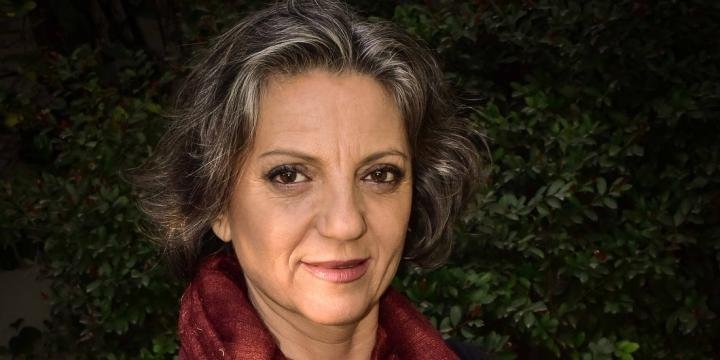
Ecology professor Sandra Myrna DÌaz is the winner of the 2019 Gunnerus Award in Sustainability Science

by Nadarajah Sethurupan March 25, 2019
written by Nadarajah Sethurupan

Professor Sandra Myrna DÌaz from Argentina has been awarded the prize for her work in biodiversity, encompassing the diversity of all living organisms. 

The Gunnerus Award in Sustainability Science is an international research prize that is jointly awarded by the Royal Norwegian Society of Science and Letters (DKNVS) and NTNU. The award winner receives NOK 1 million and a medal and diploma.

The prize will be awarded during The Big Challenge science and music festival in Trondheim on June 17. 

“This is a wonderful surprise indeed. I feel deeply honoured,” says Professor DÌaz.  DÌaz is a well-known figure in the academic community and was a member of the UN’sIntergovernmental Panel on Climate Change that was awarded the Nobel Peace Prize in 2007. DÌaz has also received numerous other awards. 

“Sandra Diaz is a world-leading scientist in developing new interdisciplinary approaches that have helped us understand in a much deeper sense how humans not only benefit from nature, but also how human impacts shape the ecology and evolution of the living world,” says Professor Thomas Elmqvist at the Stockholm Resilience Centre and member of the Scientific Committee for the Gunnerus Award. 

“Understanding and managing these processes are the core of sustainable development and Professor Diazís outstanding scientific contributions to deepen our understanding of sustainability are, and will continue to be, of profound importance.” Among most influential researchers The professor is one of the most influential researchers in the development of theories and an understanding of biodiversity and the role it plays in sustainable development, perhaps especially in Latin America and the Caribbean.

DÌaz is among the one per cent most cited researchers in her area of study. Among her various professional roles, she is a professor at the Universidad Nacional de CÛrdoba in Argentina and a senior researcher at the Argentine Research Council CONICET. 

DÌaz specializes in biodiversity, ecosystem ecology and the role of plants, including how they are related to global environmental changes. In particular, she has provided key knowledge of plant ecology and biological diversity and how these are linked to land use and global change, for example. 

Among her findings is that the particular combination of different organisms in an ecosystem, and the role they play, can tell us more about the ecosystem’s functioning and benefits than just the number of species can. Professor DÌaz has recently contributed significantly to furthering an interdisciplinary approach to biodiversity, including collaboration with social scientists.

Collaborative efforts with ecologists include building an international database of tens of thousands of plant species. 

International importance 

DÌaz has led many research projects throughout the world. She founded and directs the research network Nucleus DiverSus for Research on Diversity and Sustainability, which carries out leading interdisciplinary research at the international level on sustainable development, ecosystems and biodiversity related to various socially relevant issues. Earlier this year, the journal Nature ranked DÌaz as one of five researchers to watch. She co-leads the Global Assessment of the Intergovernmental Science-Policy Platform on Biodiversity and Ecosystem Services (IPBES) and has made important contributions to the design of the platform. IPBES consists of hundreds of researchers from all over the world.

Their task is to provide objective advice on biodiversity and ecosystems to politicians and other decision-makers.It is difficult to overestimate her international role, and she stood out early as a clearcontender to receive the 2019 Gunnerus Award. 

Sustainability is key 

According to Ida Bull, DKNVS president, a prize for sustainability research aligns well with the science society’s traditions, where research on nature has been a key focus from the 18th century on. 

“In our time, this research is more vital than ever. This year’s prize winner has contributed significant knowledge of plant ecology and how plantsí development interacts with global environmental change. Her research is promoting essential collaboration between ecologists and social scientists,” she says. 

NTNUís Rector Gunnar Bovim says the university contributes to the Gunnerus Award in Sustainability Science because sustainability is one of the greatest challenges of our time. ìThe prize winner has made important contributions to securing the future of our planet for generations to come. In this, we stand shoulder to shoulder with the young people who are so heavily involved in environmental issues in our time.

The jury’s decision was unanimous, but one of the jury members abstained in the final round for reasons of impartiality. 

FACTS 

The Gunnerus Award in Sustainability Science

  • The Gunnerus Award in Sustainability Science was established by the Royal Norwegian Society of Science and Letters (DKNVS) and awarded for the first time in 2012. DKNVS and NTNU have collaborated in awarding the prize since 2016, which was awarded for the second time in 2017.
  • The award honours outstanding scientific work promoting global sustainable development and aims to advance research and strengthen the scientific foundation of the sustainability science field.
  • The award winner receives NOK 1 million, as well as a medal and a diploma. 

    Previous prize winners
  • 2012: Indian biologist Kamal Bawa
  • 2017: Swedish environmental researcher Carl Folke

March 25, 2019 0 comments
0 FacebookTwitterPinterestEmail
Media Freedom

Wiesenthal Centre at Oslo Symposium and Recipient of Kare Kristiansen Award

by Nadarajah Sethurupan March 25, 2019
written by Nadarajah Sethurupan

The late Kare Kristiansen was a leader of the Norwegian Chrsitian People’s Party. In 1994, he resigned from the Nobel Committee to protest the Award granted to Yasser Arafat, whom he described as “the world’s most prominent terrorist.”

In 2011, the Oslo Symposium was founded by Christian Friends of Israel to honour Kristiansen’s memory.

The fifth biennial Kare Kristiansen Award was granted to the Simon Wiesenthal Centre, represented by its Director for International Relations, Dr. Shimon Samuels.

The two-day conference was addressed by 55 speakers and attended by over 700 participants.

Oslo Symposium 2019

https://www.youtube.com/user/Kristenfolket/videos?disable_polymer=1

Click on “OS2019: Shimon Samuels” for his speech, or go directly to:

Samuels focussed on the ID theft of both Jewish and Christian narrative, stressing the need of both faiths to work together on preserving a common heritage.

“We need active Chrsitian Zionists, such as the followers of Kare Kristiansen, to stand together with Israel and face our mutual challenges together,” he emphasized.

US Congesswoman Michele Bachmann spoke of her Norwegian forebears and her love for Israel.

Oslo Symposium 2019
March 25, 2019 0 comments
0 FacebookTwitterPinterestEmail
Crimes

U.S., U.K. Join Norway in Investigating Viking Sky Engine Failure

by Nadarajah Sethurupan March 25, 2019
written by Nadarajah Sethurupan

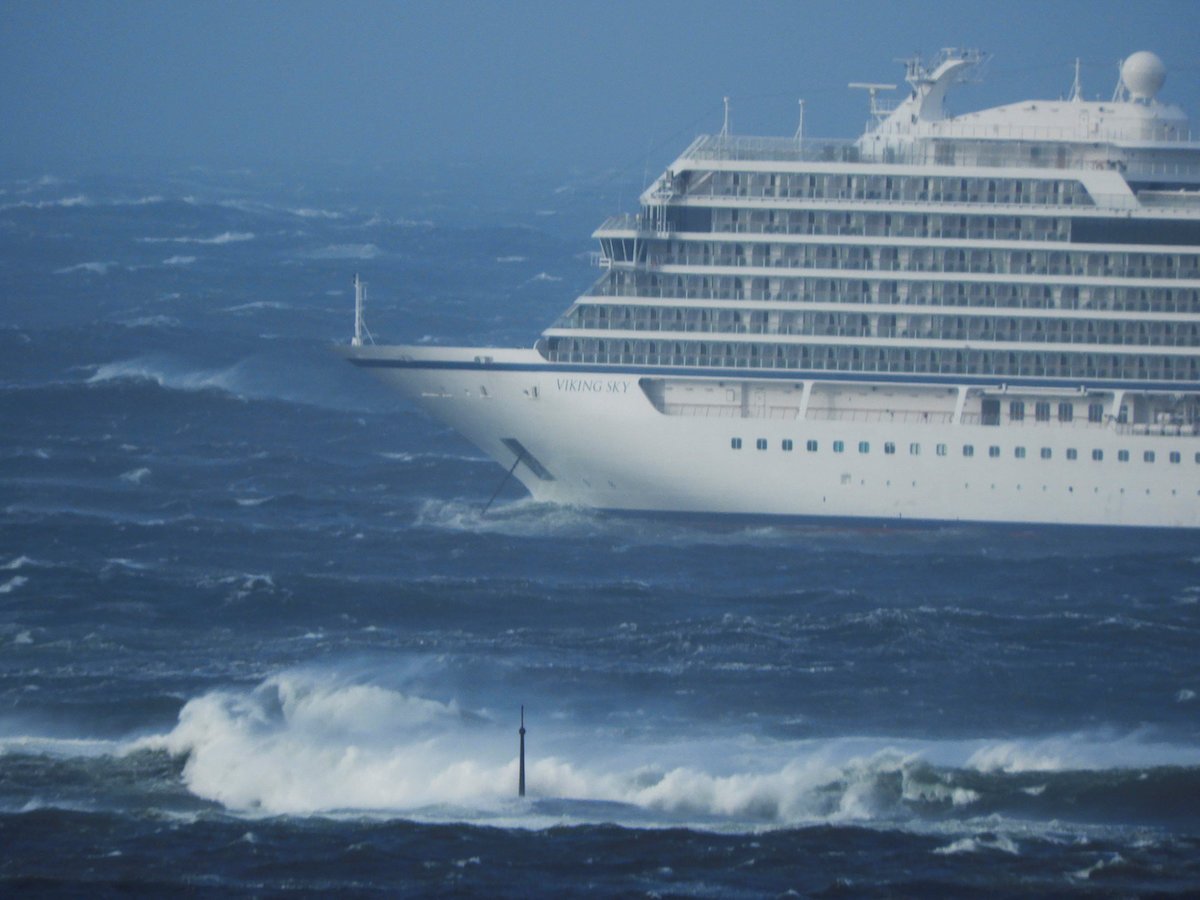
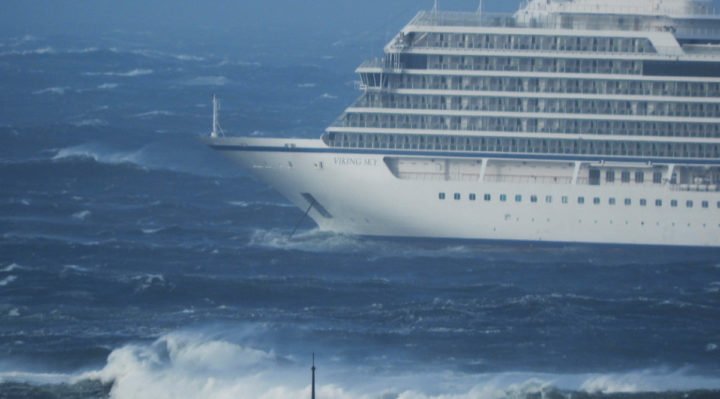
Maritime authorities in Norway, Britain and the United States have started investigating the loss of power on board the Viking Sky cruise ship which nearly led to its grounding along the west coast of Norway over the weekend.

The 2017-built luxury cruise ship had 1,378 passengers and crew on board when its engines failed and it drifted dangerously close to shore near the town of Hustadvika in stormy weather on Saturday afternoon. 

A cruise ship Viking Sky drifts towards land after an engine failure, Hustadvika, Norway March 23, 2019. Frank Einar Vatne/NTB Scanpix/via REUTERS ATTENTION EDITORS – THIS IMAGE WAS PROVIDED BY A THIRD PARTY. NORWAY OUT. NO COMMERCIAL OR EDITORIAL SALES IN NORWAY.

Amazingly, the ship was able to drop its anchor and restart power to one engine, which seems to have saved the ship from running aground along the rocky shoreline. The ship battled 6- to 8-meter waves as it fought its way into deeper water. All the while, rescue teams on board helicopters hoisted nearly 500 people to safety from the deck of the ship.

An ocean tug was eventually able to attach a tow line to the Viking Sky and tow it Molde, Norway, where the remaining passengers were disembarked on Sunday afternoon.

The investigation into the incident is being led by the Accident Investigation Board of Norway (AIBN), with the U.S. National Transportation Safety Board (NTSB) and U.K. Maritime Accident Investigation Branch (MAIB) also participating.

“The past few days have been stressful and hectic for both guests and crew alike. I would like to personally apologize for what our guests experienced,” said Torstein Hagen, President of Viking Ocean Cruises. “I would also like to say how impressed and grateful I am for the efforts of the national rescue services, rescue personnel, local authorities and the people along the Møre coast, and thank them for the concern and generosity they have showed our guests. I would also like to express my thanks to the crew on board the Viking Sky for their efforts and dedication.”

Viking Ocean Cruises has launched its own internal investigation and says it welcomes and will fully support the investigations that have been launched, the company said in a statement. 

The Viking Sky is registered with the Norwegian International Ship Register.

The ship’s next sailing to Scandinavia and the Kiel Canal, which was scheduled to embark on March 27, has been cancelled. The company does not anticipate any additional cancellations.

The United States’ NTSB and Britain’s MAIB have joined the investigation due to the number of U.S. and U.K. nationals on board.

“The NTSB has dispatched two investigators to support the international investigation into the event that occurred Saturday, March 23, 2018, involving the Viking Sky,” the NTSB said in a statement provided to gCaptain. “This is a Substantially Interested State investigation into the event under the International Maritime Organization rules.  As such, Norway has asked the Coast Guard to support in the effort and the Coast Guard in turn has asked us to assist.  Our investigators, who should arrive in the next day, have expertise in Nautical and Engineering Operations.”

“We have deployed technical staff to support AIBN’s investigation into the loss of propulsion on the Viking Sky, 23 March 2019.” the MAIB wrote in a tweet on Monday. 

March 25, 2019 0 comments
0 FacebookTwitterPinterestEmail
Oil & Gas

Warsaw Institute: Baltic Pipe will free Poland from Gazprom

by Nadarajah Sethurupan March 25, 2019
written by Nadarajah Sethurupan

Once completed in 2022, a gas link between Poland and Norway will hinder Russia’s Gazprom monopoly on gas supplies, putting an end to a phenomenon that has lasted for several decades – writes Janusz Kowalski, a member of the Energy Security Team at the Chancellery of President of Poland Lech Kaczyński and a former Vice President of the Management Board of PGNiG.

Dubbed as the “contract of the century”, the Yamal agreement, which is set to expire on December 31, 2022, provided for shipping Russian natural gas to Poland, accounting for 70 percent of the country’s overall gas volumes in 2019. Having acquired a wide network of oil and gas pipelines running from east to west, Poland, like any other Central and Eastern European countries, has been long striving for becoming independent of Russian-sourced energy. Over the past thirty years, the Kremlin turned off crude and oil supplies to Poland and other post-Soviet states in an attempt to retain political control over Central and Eastern Europe, an element of which is the Nord Stream pipeline running from Russia to Germany across the Baltic Sea. The project provides for obstructing further gas shipments to the EU Member States, bypassing Ukraine, Slovakia, Belarus and Poland.

Polish response to Nord Stream

Poland answered to Russia’s intention to uphold its reliance on Gazprom’s gas and attempt to impede a plan to establish a competitive gas market in Poland by launching by the late President Lech Kaczyński in early 2005 and late 2006 an investment plan that gradually attracted support in the country. In 2006, the gas supplies diversification plan boiled down to the President’s initiative to construct the first Baltic liquefied natural gas receiving facility, launched in Poland’s port of Świnoujście in 2016. From that time on Poland may import up to 5 billion cubic meters of gas, amounting to 30 percent of the country’s total demand. The LNG terminal in Świnoujście paved Poland’s way for hosting methane carriers that have continuously arrived from all around the world – mostly from the United States and Qatar. For American LNG exporters, Poland has become a gateway for Europe, thanks to which U.S.-sourced energy could be delivered further also to Ukraine, Slovakia and Hungary. Over the past several months, the Polish government has taken an important decision to boost possibilities of receiving liquefied natural gas, allowing the LNG terminal in Świnoujście to import up to 7.5 billion cubic meters of gas annually.

10 billion cubic meters of Norwegian gas

The Baltic Pipe link is another diversification endeavor that results in building gas corridors running from north to south that Central and Eastern Europe seems to lack. In 2006, the late President Lech Kaczyński and Piotr Naimski, who served as Deputy Economy Minister at that time, pushed ahead a plan to reactivate the project. Nonetheless, it was suspended for several years due to political reasons while it was not launched until 2015 after an unsuccessful geopolitical rapprochement between Poland and Russia in 2007–2015. The construction of a gas link running from Poland to Norway’s gas fields has entered a decisive phase of the investment. The link will enable to carry 10 billion cubic meters of natural gas to Poland annually. The actual investment work is set to begin in several months while it is scheduled to start in 2020 and end in 2022. A considerable part of Norwegian-sourced gas is to be extracted by PGNiG, a leading Polish gas firm, which has an upstream subsidiary in Norway already in charge of exploring Norway-based natural gas fields. Furthermore, the Baltic Pipe project enjoys wide public support from Poland as well as from the European Commission and the governments of Denmark and Norway.

A projected gas link between Poland, Denmark and Norway provides for an implementation of the five major endeavors in the three countries. Its first part consists of laying over 200 kilometers of the Baltic Pipe on the bottom of the Baltic Sea to provide a connection between the Polish and Danish gas transmission systems. The investment is linked to the ever-going development of a gas transmission system in Poland that enables to deliver energy supplies from a reception facility on the Baltic coast further to recipients across the country. This is the second part of a major gas connection project to link Norway to Poland while the remaining two provide for building a gas compressor station in Denmark and expanding Denmark-based transmission network. Baltic Pipe’s last part is the North Sea offshore pipeline to join Norway and Denmark.

Looking forward to 2023

A process of Poland’s infrastructural dependence on Russian-sourced energy will terminate on January 1, 2023 – so thirty-four years after an independent Polish state was established – making Poland a wholly secure state that will not succumb to plausible gas blackmail. A possibility to import 10 billion cubic meters of Norwegian gas and 7.5 billion cubic meters of liquefied natural gas via the LNG terminal in Świnoujście exceeds Poland’s overall demands for natural gas. It is noteworthy that Poland’s own gas production amounted to 4 billion cubic meters per year. Furthermore, infrastructural capabilities and shipments of blue fuel from the north through the Baltic Sea will pave Poland’s way of emerging as a regional gas hub for Central and Eastern Europe. It is thus worth considering to implement strategic plans to increase U.S. gas exports to Ukraine and other post-Soviet states, all the more so that they face a threat to be cut off from Russian energy once the Nord Stream pipeline becomes operational. One of the ventures consists of setting up another gas facility on the Polish coast, increasing energy security in this part of Europe.

Source: Warsaw Institute

March 25, 2019 0 comments
0 FacebookTwitterPinterestEmail
Norwegian Aid

Norway to provide NOK 100 million to people with disabilities in developing countries

by Nadarajah Sethurupan March 24, 2019
written by Nadarajah Sethurupan

There are 800 million people with disabilities in developing countries. I am delighted that we can now give a real boost to this vulnerable group, said Minister of International Development Dag-Inge Ulstein, when he announced Norway’s allocation during his visit to New York yesterday.

– We know that these people have to contend with negative attitudes, stigmatisation, discrimination and a lack of access to education and health services, as well as physical barriers, said Mr Ulstein.

– The Government is now seeking to step up efforts to reach the most vulnerable people in societies in all areas of Norway’s development cooperation. The Government’s political platform states that priority is to be given to vulnerable groups, including people with disabilities, said Mr Ulstein.

– As Minister of Equality, I am pleased that we are also making a contribution internationally. We know that people with disabilities encounter obstacles that mean that they do not have the same opportunities to participate in society as other people, said Minister of Culture and Equality Trine Skei Grande.

This week, the two ministers are attending the 63rd session of the Commission on the Status of Women in New York.

– Norway’s allocation is an important contribution to strengthening the rights of participation of the most vulnerable people, who are often people with disabilities, and women and children with disabilities in particular, said Ms Skei Grande.

The funding of NOK 100 million comes in addition to existing support from Norway, and it is in keeping with the 2030 Agenda, the SDGs, and the important principle of leaving no one behind. Women and children with disabilities are particularly vulnerable to attack, and they are particularly at risk in situations of war and conflict.

– We must focus special attention on this group. International efforts to safeguard the rights of people with disabilities must be intensified. Existing efforts are inadequate, and they are not always sufficiently integrated into development programmes as a whole. Moreover, the fact that people with disabilities are often a huge resource is not acknowledged as much as it should be, said Mr Ulstein.

– A great deal of work needs to be done. We will do our part. And we must give this area priority. The Government will pursue an even more inclusive development policy, with a particular focus on education, global health and support for civil society. Efforts to promote gender equality and women’s rights will be a vital component.

Norway is cooperating closely in this area with a number of countries and multilateral organisations. Last year, the Government signed the Global Disability Summit Charter for Change in London. This sent an important signal that we will continue to promote implementation of the UN Convention on the Rights of Persons with Disabilities (CRPD).

Norway is currently participating in the negotiations on the Human Rights Council resolution on the rights of the child, and is working to ensure that the wording of the text on the rights of children with disabilities is as strong as possible.

– Children with disabilities must have the same rights as adults with disabilities, and as other children, said Mr Ulstein.

(MFA)

March 24, 2019 0 comments
0 FacebookTwitterPinterestEmail
Crimes

Norway coast prompts rescue operation for 1,300 people on board

by Nadarajah Sethurupan March 24, 2019
written by Nadarajah Sethurupan

Rescue helicopters were battling severe winds on Saturday to airlift more than 1,300 people off a Viking Cruises’ ship that issued a distressed call after an engine failure off the coast of Norway.

Of the 1,300 stranded, 915 were passengers on the Viking Cruises’ ship called The Viking Sky, Norway’s Rescue Coordination Centre told Media. The ship can house 930 guests and was built in 2017, according to the company’s website.

(Eva Frisnes)  A cruise ship went adrift off the waters of Norway on March 23, 2019, and passengers were being evacuated.

The initial mayday was received by the agency at 2 p.m. local time, a Viking spokesman said. Currently, the cruise ship is close to shore and has one engine working and one anchor holding. Rescuers hope to get two other engines working.

“Our first priority was for the safety and well-being of our passengers and our crew, and in close cooperation with the Norwegian Coast Guard, the captain decided to evacuate all guests from the vessel by helicopter,” the spokesman said in a statement.

Four helicopters were involved in the operations, and at least 87 people have been hoisted off, including eight with injuries, the agency said.

The ship’s owner, Viking Ocean Cruises, said 20 people were injured, although some had been quickly treated and released.

Some of the 479 passengers who were airlifted to shore were scheduled to begin flying home Sunday, the company said. Another 436 passengers and the crew of 458 remained aboard while the ship headed toward port.

“Today was some of the worst (conditions) I have been involved with, but now it looks like it’s going well and in the end we have been lucky,” company Chairman Torstein Hagen told Norway’s NRK television.

Norwegian media reported gusts up to 43 mph and waves over 26 feet. Passengers took to social media to share their experiences and the activity onboard as the rescue unfolded

Alexus Sheppard posted a video on Twitter of severe tilting due to the rough waters. “We’re waiting for evacuation by helicopter,” she wrote with the hashtags #VikingSky and #Mayday.

David Hernandez posted a video showing the ship has taken in some water with it running under passengers’ feet.

Police in the western county of Moere og Romsdal said the ship managed to anchor in Hustadsvika Bay, between the western Norwegian cities of Alesund and Trondheim, so the evacuations could begin. But by Sunday the ship had three of four engines operating, the company said.

The Viking Sky was on a 12-day trip that began March 14 in the western Norwegian city of Bergen, according to cruisemapper.com. The ship was scheduled to arrive Tuesday in the British port of Tilbury on the River Thames.

The Viking Sky, a vessel with gross tonnage of 47,800, was delivered in 2017 to operator Viking Ocean Cruises.

Earlier this month, several passengers aboard a Norwegian Escape cruise ship were injured off the coast of Florida after what Norwegian Cruise Line officials described as a “sudden, extreme gust of wind” made the ship list.

March 24, 2019 0 comments
0 FacebookTwitterPinterestEmail
Environment

Resolution on environmental human rights defenders adopted in UN Human Rights Council

by Nadarajah Sethurupan March 23, 2019
written by Nadarajah Sethurupan

A Norwegian-led resolution on environmental human rights defenders was adopted by consensus in the UN Human Rights Council yesterday. – I am very pleased that we have succeeded in reaching agreement on a strongly worded text, in such a complex area, said Minister of Foreign Affairs Ine Eriksen Søreide.

For 20 years, Norway has led the work on the annual resolutions on human rights defenders.

– This year’s Human Rights Council resolution recognises the important role played by human rights defenders in promoting protection of the environment and building and safeguarding sustainable, open and democratic societies, said Ms Eriksen Søreide.

Many of those who defend both their own rights and the rights of others do so at great risk to themselves. This applies particularly to environmental human rights defenders. The organisation Global Witness documented that over 200 environmental human rights defenders were killed in 2017 – a record high number. Unfortunately, the situation is deteriorating.

The resolution is the first to focus specifically on environmental human rights defenders. It strongly condemns the killing of environmental human rights defenders, and calls for the release of all those who have been detained or imprisoned for exercising their human rights and fundamental freedoms. Further, it expresses grave concern about the situation of environmental human rights defenders, including women and indigenous human rights defenders.

The resolution was adopted by consensus. In addition, it was co-sponsored by 60 countries from all parts of the world. Ms Eriksen Søreide has expressed her gratitude to all partners and civil society organisations throughout the world for their efforts in support of this resolution.

– The fact that all UN member states have reached consensus on a strong resolution in support of environmental human rights defenders is a great victory. This sends a clear signal that human rights defenders are not to be viewed as a threat by states or non-state actors, but rather as a resource that must be protected. Human rights defenders play a crucial role in our efforts to reach the UN Sustainable Development Goals, said Ms Eriksen Søreide.

The protection of human rights defenders is an important priority for Norway, and our policy is based on the white paper on human rights. Our overall objective is to ensure that human rights defenders can promote and defend human rights in all parts of the world without hindrance, and without facing threats to themselves or their families.

March 23, 2019 0 comments
0 FacebookTwitterPinterestEmail
Russia and Norway

Norwegian Ambassador: Norwegian Prime Minister to Lead Official Delegation at International Arctic Forum

by Nadarajah Sethurupan March 23, 2019
written by Nadarajah Sethurupan

Adviser to the Russian President Anton Kobyakov and Norwegian Ambassador to Russia  Rune Resaland held a meeting in Moscow during which they discussed current issues concerning cooperation between the two countries as well as the format of joint work within the business programme of the ‘Arctic: Territory of Dialogue’ 5th International Arctic Forum, which will take place at the ExpoForum Convention and Exhibition Centre in St. Petersburg on 9–10 April 2019.

“Norway is committed to continuing a constructive dialogue and developing mutually beneficial relations with Russia. Norwegian Prime Minister Erna Solberg will visit Russia for the first time since 2014. Along with the Norwegian Minister of Foreign Affairs Ine Eriksen Søreide, they will take part in the work of the ‘Arctic: Territory of Dialogue’ 5th International Arctic Forum”, Resaland said.

“For several decades, Russia and Norway have continued to cooperate in various fields, ranging from Arctic Council affairs and ending with environmental protection and radiation safety. We strive to maintain good neighbourly relations and welcome Erna Solberg’s decision to attend the International Arctic Forum. I am certain that the Norwegian delegation’s active involvement in the Forum’s business programme will make a tangible contribution to the discussion of the pressing issues on the Arctic agenda. Ms. Solberg will join Finnish President Sauli Niinistö and Vladimir Putin as part of the plenary session”, Kobyakov said.

“We hope that the visit will be a successful one. The Arctic plays a very important role for Norway, and we are actively working in this area. For us, this is a priority, and in many respects our views with Russia on the issues of the North are aligned. We are successfully cooperating in this area, so this event is very important to us”, Resaland concluded.

This will mark Solberg’s first working visit to Russia since attending the 2014 Olympic Games in Sochi. During the visit, she plans to discuss the development of the Far North and cooperation between countries of the Arctic Council. The programme of events involving the Norwegian delegation, including summits, will be announced shortly.

The key theme of the Forum will be ‘The Arctic. An Ocean of Opportunity’. Three pillars will form the basis of the business programme: ‘Coastal Territories’, ‘The Open Ocean’, and ‘Sustainable Development’.

Official website of the event: forumarctica.ru

March 23, 2019 0 comments
0 FacebookTwitterPinterestEmail
Asylum

Increased Support for the Qualifications Passport for Refugees

by Nadarajah Sethurupan March 23, 2019
written by Nadarajah Sethurupan

Many refugees lose their papers and diplomas while fleeing, but without such documentation it may be difficult to get a job or enroll in a higher education institution in the host country. “The qualifications passport gives refugees the opportunity to use their skills in a new life situation, for the good of the person itself and for society”, says Norwegian Minister of Research and Higher Education, Ms. Iselin Nybø. Now, the Minister increases the financial support and the next step is to make the qualifications passport a global solution.

In 2015, the Council of Europe launched the European Qualifications Passport for Refugees project in the aftermath of Europe receiving the largest number of migrants since the second world war.

The qualifications passport entails that those who lack documentation and diplomas may receive a temporary assessment of their qualifications and education.

The goal of the qualifications passport is to provide refugees with opportunities in the labor market or in further studies, says Minister Nybø.

Increased financial support

So far, 249 individuals have been granted the qualifications passport. By the end of 2018, 21 refugees was enrolled at universities around Europe based on their qualifications  passports. Unntil now, the project has been in a pilot phase. Now the project is ready to scale up.

“The possibility to upscale the project is an important reason why we grant more money, so that even more refugees may receive a qualifications passport”, says Minister Nybø.

Norway, together with Greece and Italy, is among the countries that have contributed financially to the pilot project. In 2018, the Norwegian Ministry of Education and Research granted 550.000 NOK (approximately 55.000 euro), but due to promising results, Minister Nybø has now decided to increase the financial support for 2019 to 1 million NOK (approximately 100.000 euro). Minister Nybø is also open to continuing funding the project in 2020. This enables the Council of Europe to scale up the project, disseminate information and provide training to more evaluators so that more people can benefit from the project

In Norway, serveral stakeholders, including labor organisations, employer organisations, universities, university colleges and the refugees themselves, are very positive towards the qualifications passport.

Method developed in Norway

The idea for the project stemmed from The Norwegian Agency for Quality Assurance in Education (NOKUT) in cooperation with their British sister agency. The qualifications passport is based on NOKUT’s own Recognition Procedure for Persons without Verifiable Documentation.

“We are proud that the method we have developed is now used internationally. We assist the Council of Europe with training and ensuring quality in the process to make sure that the project is able to reach its potential. We are pleased to see that the experiences from piloting the qualifications passport in countries such as Lebanon and Turkey show that the method has great value also in other parts of the world”, says Director General of NOKUT, Mr Terje Mørland.

Global potential

Today, nine countries participate with their experts in carrying out assessments, and the capacity to provide even more refugees with the same opportunity is steadily increasing.  Spain is currently experiencing a large wave of refugees, and is for the time being the most recent country to ask the Council of Europe for help regarding qualifications assessments.

“The qualifications passport project has the potential to help refugees worldwide, not only in Europe. Therefore, I have started discussing with the Council of Europe and UNESCO whether we together could turn this into a global project, and include other countries that also see the great potential. So far, I have received very positive feedback”, says Minister Nybø.

March 23, 2019 0 comments
0 FacebookTwitterPinterestEmail
Norwegian Aid

As the web turns 30, digital goods must reach the most vulnerable

by Nadarajah Sethurupan March 22, 2019
written by Nadarajah Sethurupan

Article from Minister of International Development, Dag-Inge Ulstein, and Minister of Digitalisation, Nikolai Astrup, together with Mitchell Baker (chairwoman of Mozilla) and Henrietta H. Fore (Unicef director). The article is published at Devex, the media platform for the global development community.

This month marks the 30th anniversary of the launch of the World Wide Web, one of the most influential and far-reaching communication tools in human history. The web, and the internet as a whole, has inspired entrepreneurs all over the world to create, develop, and produce digital goods and services on a massive scale across a vast array of industries, some for philanthropic purposes, but the majority purely for profit.

And profit they have, at a staggering rate. This year alone, it is estimated that internet-based companies will generate upward of $3.45 trillion in sales globally, creating countless millionaires and billionaires along the way.

While no one can fault ambitious entrepreneurs for seeking their fortune, as concerned leaders from the public and private sector, we believe that digital goods can and should do much more to help the most vulnerable people in the world, particularly children, improve the fundamental qualities of life. In a world full of lucrative “smart tech” we are advocating for equitable “good tech.”

Examples of good tech are all around us in the areas of information, education, health care, finance, and more. These technologies can create access to the information, job skills, and empowerment that young people need to shape their future. Wikipedia may be the most prominent, but there are many others we can point to which help people learn, communicate, and make sense of the world around them.

Unfortunately, far too many good ideas for digital public goods lack a sustainable revenue model and many are so underfunded they never get off the ground. That is why the four of us have united to say that making digital public goods available and accessible — particularly to girls and others left out of the current technology boom — is a necessary step toward a larger, more vibrant ecosystem of products and services that improve life for users of all ages, races, or socioeconomic demographics.

The Norwegian-managed open-source District Health Information System 2, or DHIS2, helps health ministries, health clinics, and other health institutions do their jobs better. The free platform is now used in over 100 countries and has a global footprint of 2.3 billion people. The relatively new field of mobile health uses mobile telephony to create easier, individualized access to relevant information, counseling services, health records, and more.

Platforms such as UNICEF’s RapidPro have allowed this access to spread across parts of the world where simple feature phones far outnumber smartphones.

Other mobile tools — built for simple phones — allow adolescents and youth to have a say in the policies that directly affect them. UNICEF’s open-source U-Report, started in 2011 as an initiative to hear from young people in Uganda via SMS, has now spread to 55 countries and more than 6.5 million users. “U-Reporters” share opinions and information on topics that affect them with UNICEF and governments, creating an intergenerational dialogue that places young people at the forefront of change.

Mozilla is a nonprofit organization that creates products such as Firefox and Firefox Lite for low-bandwidth environments explicitly to create internet infrastructure as a digital public good. Mozilla has been a rare example of digital public goods finding a sustainability model that has been adequate to allow development of additional products and technologies. 

One example is Mozilla’s Common Voice, which makes voice recognition — the technology that underlies virtual personal assistants including Alexa — free and open for anyone to use or integrate into a new product.

For those who are lucky enough to be connected to the internet, particularly for its youngest users, digital public goods can literally change their futures. These tools can provide personalized learning experiences, help teenagers manage mental health questions, allow girls individual and private access to menstrual health apps, and create pathways to employability for young and old alike.

But no matter how groundbreaking or innovative a digital public good might be, it’s of limited use if it can’t reach those who need it most.

The author William Gibson was sadly prescient when he argued more than 25 years ago that: “The future is already here — it’s just not evenly distributed.” Today, more than 40 percent of the world’s population has no, or very limited, internet access. While the rate of connectivity is rising steadily, 3.3 billion people, mostly in sub-Saharan Africa and Southern Asia, are not internet users. Typically the least connected and most economically vulnerable demographic around the world are women and girls. In India, for example, it’s estimated that only 30 percent of internet users are women.

Digital public goods such as those listed above, as well as many great examples developed by other stakeholders, can help institutions, companies, and individuals leapfrog and reduce unnecessary duplication of efforts. These are digital products that do good for the benefit of humankind.

On its 30th birthday, we come together to celebrate the myriad achievements the World Wide Web has helped facilitate, but also to highlight the opportunity for more to be done. Our collective vision is that over the next decades and beyond, digital public goods, and the technology to access them, will be enjoyed by everyone.Ministry of Foreign Affairs

TOPIC

  • Development cooperation
March 22, 2019 0 comments
0 FacebookTwitterPinterestEmail
Media Freedom

Norwegian gov’t called to action: ‘Social media is actively used to promote unhealthy food’

by Nadarajah Sethurupan March 21, 2019
written by Nadarajah Sethurupan

Norway’s youth is not adequately protected from the often subtle and sophisticated digital marketing techniques of unhealthy food brands, says the Norwegian Consumer Council.

A new report has found that social media is being actively used to market unhealthy food and drink products to teenagers in Norway.

‘Digital marketing of food and drink using influencers’, which was published by Norway’s Consumer Council yesterday (28 February) and is available here in Norwegian​​, concludes that children aged 12 years and over are not adequately protected against promotions online.

Group of teenagers sitting outdoors using their mobile phones

“The survey shows that teens are exposed to efficient and sophisticated marketing through role models, and role models that have a great influence,” ​said Consumer Council director Inger Lise Blyverket.

“With today’s regulations, it is obvious that children and young people do not have the protection that the minors are entitled to.” ​

According to the report, the most influential channels used to reach adolescents are found in social media – a fact that is recognised by both the manufacturers and advertising agencies.

“The food industry’s marketing of food and drink with a lot of fat, sugar and salt has been established over the last decade as a decisive factor for children and adolescents’ diet.​

“It is well documented – strong evidence exists – that marketing of unhealthy products affects the attitudes of children and young peoples’ taste preference and contributes to increased consumption of these products, and thus to the development of obesity in children and adolescents,” ​said Blyverket.

“Our report shows that social media is actively used to promote unhealthy food…with strategies that are particularly effective on young people.”​

Content marketing and influencer-led campaigns, whereby marketing activities are oriented around individuals who have influence over the target market, are regarded as particularly effective in the social media sphere, as they are more difficult to distinguish from traditional advertising.

The survey looked at a number of social media used extensively by children and young people, such as YouTube and Facebook, including 16 Norwegian YouTube channels popular with Norwegian youth. Two thirds of the YouTube channels promoted unhealthy food in 2018.

“We have just seen the top of the iceberg. Here, there is a need for proper mapping, which also includes social media channels such as Snapchat and Instagram,” ​said Blyverket, who has challenged the government to carry out such a survey.

A call for stricter regulations​

When in 2012 health authorities in Norway suggested banning the marketing of food products high in fat, salt and sugar that target children under the age of 18, the Consumer Council supported the initiative.

While a ban was not instated, authorities established the Food Industry’s Professional Committee (MFU), which primarily regulates the marketing of food products aimed at children 12 years of age and under.

The MFU is now being criticised by the Consumer Council for not adequately protecting children and adolescents over the age of 12.

According to the Consumer Council, the MFU’s scheme will be evaluated this year by health authorities. “We expect a review of advertising aimed at children and young people in social media before it is concluded whether the current scheme is good enough. Today’s regulations must be assessed against the position social media has in everyday life for children and young people,” ​said Blyverket.

Lagging behind the UK​

According to the Consumer Council, Norway is lagging behind other countries such as the UK when it comes to marketing regulation.

In the UK, updated marketing legislation was adopted in 2017, when the Committee of Advertising Practice (CAP) banned adverts​​ for food and drinks high in fat, salt, and sugar on non-broadcast media. This includes social media, print, posters and cinema.

March 21, 2019 0 comments
0 FacebookTwitterPinterestEmail
Asia and Norway

Pakistan: cracks into the establishment

by Nadarajah Sethurupan March 21, 2019
written by Nadarajah Sethurupan

A deep divide has emerged within the Foreign Ministry and the Pakistan military on the latter’s policy of using terror groups as strategic assets. Though Foreign Secretary Tehmina Janjua, a very highly regarded diplomat, has been pushing for a turnaround in this perilous policy over the last year, the current crisis appears to have really shaken the Ministry. The visible diplomatic isolation of Pakistan, after the Indian Air force strike on terror group Jaish-e-Mohammad’s (JeM)  training camp in  Balakot, Khyber Pakhtunkhwa, has ruffled the Pakistani foreign service officials. Things appeared to reach rock bottom when Pakistani Foreign Minister Shah Mahmood Qureshi failed to attend the Organisation of Islamic Cooperation (OIC) meeting in Abu Dhabi, while Indian Foreign Minister Sushma Swaraj addressed the grouping as a guest of honor. Pakistan is one of the founding members of the OIC and its repeated attempts to lobby within the group to withdraw the invitation to India, failed to bring results. 

Moreover, the Kashmir Branch of the Foreign Ministry has drafted a paper recommending the government of Pakistan to urgently consider a re-think of the Pakistan military’s policy of training, sheltering and using terror groups and their leaders like Masood Azhar, Hafiz Saeed or Sirajuddin Haqqani for achieving its strategic goals.  The paper has warned that if Pakistan continues with its policy to harbour terrorists, it ran the risk of not only diplomatic isolation, but also being branded a ‘terrorist’ State. The Kashmir Branch has then concluded that the Army will have to be made to become conscious of the fact that such a policy was not sustainable any longer and would finally be detrimental to the very existence of Pakistan. 

This can partially explain the events of the past few days. First, pressured by the international community, the Government of Pakistan announced a crackdown on terrorist groups claiming that 44 ‘under-observation’ members of proscribed organisations, including Abdul Raoof and Hamad Azhar, the brother and son of JeM chief Maulana Masood Azhar, had been taken into “preventive detention” for investigation’. An updated list of proscribed organisations has been realised, and JuD and FIF, declared long ago by US as terrorist organisations, has been included into the list. The paper includes 68 organisations proscribed by the Government, some of them, like the JeM, long ago but still operating in the country. However, the list does not include JeM front groups like Al Badr, recently and openly recruiting for jihad in Kashmir, or the famigerate Haqqani network. And while a little group of madrasa has been targeted, no training camp has been mentioned by the Government nor the Darul Uloom Haqqania ‘jihadi university’, financed by Imran Khan government in KPK last year, has been touched. 

The Government added also that at a point jihadis might be hired into paramilitary forces. The action has been prompted, first of all, by the disastrous economing situation of the country, facing the concrete chance of being blacklisted from the Financial Action Task Force (FATF) over non-implementation of its recommendations. Pakistan is at the moment on the FATF’s grey list. Of course, crackdowns on terrorist groups and bans on this or that organisations have been announced before and turned to be always eyewashings. Arresting few people, in fact, or banning a group means absolutely nothing. Dismantling a terrorist network means, first of all, dismantling their finance assets. Until now, nothing has been done: banning have been largely anticipated, so bank accounts could be emptied and opened under other names while the organisations were re-grouping under other names. 

And this time is not different, just some tragicomic flare has been added to the usual drama. While pakistani Foreign Minister Shah Mehmood Qureshi was telling a number of international media channels that the Government is in touch with Azhar and the JeM and even reporting on the bad health conditions of Masood Azhar, the pakistani Army spokeperson Asif Ghafoor told the CNN that “JeM does not exist in Pakistan”. Imran Khan, at this point, is between the devil and the deep blue sea: he has been backed by Army and ISI, has founded openly Haqqania, spoke more than once in favour of ‘freedom fighters’ just to find himself cornered between his sponsors and his cabinet.

March 21, 2019 0 comments
0 FacebookTwitterPinterestEmail
Asia and Norway

Norway’s sovereign fund invests $707M in Turkey

by Nadarajah Sethurupan March 21, 2019
written by Nadarajah Sethurupan

Fifty-eight Turkish companies traded on Borsa Istanbul received last year investments worth $707 million from Norway’s Oil Fund, the world’s largest sovereign wealth fund worth over $1 trillion, according to the Norges Bank Investment Management.

The fund’s equity investments in eight Turkish energy companies totaled at around $111 million. It invested in Aygaz, Kardemir Karabük Demir Çelik Sanayi ve Ticaret, Tüpraş Türkiye Petrol Rafinerileri, Petkim Petrokimya Holding, Ereğli Demir ve Çelik Fabrikaları, Ulusoy Elektrik İmalat Taahhüt ve Ticaret, Aksa Enerji Üretim and Enerjisa Enerji.

The biggest energy investment of the fund went to Turkey’s refinery giant, TÜPRAŞ with $63.6 million followed with an investment of $28.8 million in Ereğli Demir Çelik. The Norwegian fund holds a 1.02 percent share in TÜPRAŞ and a 0.59 percent share in Ereğli.

Norges Bank, the fund manager, also invested $6.3 million in energy company Aygaz, where the fund holds a 0.99 percent share. In the energy sector, five other minor investments were made in energy companies, including Aksa, Petkim, Ulusoy Elektrik, Enerjisa and steel producer Kardemir.

The fund’s biggest investment overall was in Garanti Bank with $80.73 million for a 1.28 percent share interest. It also invested $74 million in Turkish lender Akbank and $55 million in the grocery retailer BİM. Turkey’s flag carrier Turkish Airlines (THY) also received $42 million in investments from the fund last year.

Norway’s fund has the largest ownership share in the Doğtaş Kelebek Furniture Company at 4 percent. It is followed by the clothing brand Mavi Giyim follows with a 3.29 percent stake.

Investing in Turkish companies since 2001, the Norwegian wealth fund has significantly ramped up its equity investments in Turkish firms in the last 11 years.

The Nordic country’s fund also diversified their investments in multiple sectors, ranging from communication services, glass and chemicals production to furniture, food and drinks.

Norway is Europe’s largest oil producer and the world’s third-largest natural gas exporter after Russia and Qatar. Its Oil Fund, officially known as the Government Pension Fund Global is currently worth more than $1 trillion.

The Norwegian government can spend only 4 percent of this annually, which is the expected real return on the fund, according to Norges Bank Investment Management that was delegated by the country’s parliament to 

The fund, which controls more than 1 percent of the world’s market capitalization, enforces ethical standards on its investments. At the end of December, the fund’s equities allocation was 66.3 percent. Meanwhile, the fund had 3 percent in unlisted real estate and 30.7 percent in fixed income at the end of the year.

The Government Pension Fund Global had a market value of 8,256 billion kroner ($960 billion) at the end of 2018. The fund’s equity allocation has increased over time and the return on equities is therefore now more important for the fund’s overall performance than in previous years.

The return on equity investments in 2018 was the fourth-lowest since 1998 with minus 9.5 percent, after returns of minus 40.7 percent in 2008, minus 24.4 percent in 2002 and minus 14.6 percent in 2001. The negative return in equity investments stemmed from the growing concerns that hit hard equities around the world, particularly tumbling U.S. stocks at the end of last year.

March 21, 2019 0 comments
0 FacebookTwitterPinterestEmail
Asia and Norway

Norway’s Minister and Ambassador meets Teresa Kok in Malaysia

by Nadarajah Sethurupan March 20, 2019
written by Nadarajah Sethurupan

Torbjørn Røe Isaksen, Minister of Trade and Industry of Norway, paid a two-days visit to Malaysia on 25-26 February 2019.

The purpose of the visit was to meet Teresa Kok, Malaysian Minister of Primary Industries and the representative from the Malaysian Government and the Norwegian Business Community to learn about palm oil in Malaysia.

Gunn Jorid Roset, the Ambassador of Norwegian to Malaysia (second form left) along with Torbjørn Røe Isaksen, Minister of Trade and Industry of Norway and Teresa Kok, Malaysian Minister of Primary Industries (in the middle)
(Photo: Royal Norwegian Embassy in Kuala Lumpur)

H.E. Røe Isaksen arrived in Malaysia on Monday 25 and started the program with the meeting with delegation from Malaysian Government and the Norwegian Business Community.

On the next day, H.E. Røe Isaksen together with Gunn Jorid Roset the Ambassador of Norwegian to Malaysia met Teresa Kok and all of them visited the Sime Darby Plantation in Carey Island where Teresa Kok and H.E. Røe Isaksen exchanged a discussion about palm oil situation in their countries.

Teresa Kok shared with H.E. Røe Isaksen and his delegation a brief overview about palm oil industry and the agricultural practices implemented in Malaysia.

While, H.E. Røe Isaksen emphasized that even though sustainability is very important to Norway, Norway has not introduced a ban on palm and still looked forward to an open dialogue with Malaysian counterparts.

“We would like to thank H.E. Teresa Kok for taking the time to meet with us – and for giving us new perspectives and a better understanding about the industry and the various sustainability efforts that are being put in place.” wrote Royal Norwegian Embassy in Kuala Lumpur.

March 20, 2019 0 comments
0 FacebookTwitterPinterestEmail
Crimes

Norwegian Student Stabbed a Teacher and Three Other School Officials

by Nadarajah Sethurupan March 20, 2019
written by Nadarajah Sethurupan

A student injured a teacher and three staff members at a school in Oslo, Nova TV reported, citing BGNews. The four employees at the Bringeng School were taken to local hospitals with minor injuries.

The boy was arrested and the police did not find an immediate motive. Police officers have begun an investigation and talked with witnesses, Sven Christie Lee said at Oslo police headquarters.

According to a study by the Norwegian Educational Association last year, one in five teachers was the victim of violence.

March 20, 2019 0 comments
0 FacebookTwitterPinterestEmail
Economics

Genesta sells office building in Oslo (NO)

by Nadarajah Sethurupan March 19, 2019
written by Nadarajah Sethurupan

Genesta, acting on behalf of Genesta Nordic Real Estate Fund II (GNRE Fund II), has divested its holding in the Oslo office property Dronning Mauds gate 15 to Carnegie Norway, acting for Nordea Liv. GNRE Fund II purchased the CBD asset in 2016 when it was about 50% vacant. Under Genesta’s management, the building has undergone a large-scale refurbishment and rebranding to appeal to tenants looking for an A-Grade property and was achieved BREEAM certification. Today it is fully let to, amongst others, Malling & Co and the law firm Glittertind AS. The purchase price was not disclosed.

“The disposal showcases the success of our strategy – in 2016 we set out to create an income-producing product for institutional investors and I am happy to see it succeed. During our ownership about 95% of the leasable area was let or renegotiated in about half of the time we estimated it would take”, commented Genesta’s CEO David Neil.

“The acquisition is fully in line with Nordea Liv’s investment profile, targeting the CBD office segment with high-quality characteristics representative for long term ownership,” said Fredrik Bo, Head of Project Finance in Carnegie Norway.

March 19, 2019 0 comments
0 FacebookTwitterPinterestEmail
Economics

Flytoget’s new trains have arrived in Norway

by Nadarajah Sethurupan March 18, 2019
written by Nadarajah Sethurupan

Flytoget is set to increase its capacity by 50% and this week the company has showed off its brand-new trains for the very first time. Wider seats, less noise and larger windows will ensure that passengers have an even more comfortable and efficient journey.

In 2015 Flytoget contracted Spanish train producer CAF to deliver eight new trains. The new units will be adding to Flytoget’s existing fleet of sixteen trains – and will therefore be increasing the company’s capacity by 50%. This will enable them to carry even more passengers to and from Oslo Airport.

“Last year Flytoget carried a record number of passengers, close to seven million, so it is essential for us to be bringing in these new units this year. The new trains have been built to the same exacting standards as our existing fleet, but have been fitted with features that we know our passengers have been wanting for a long time; less noise, wider seats, power sockets, USB access and cup holders at every seat, as well as more space for luggage. The trains will also be the first in Norway to display carriage loadings to passengers, so that they can see where there are free seats before boarding,” says Philipp Engedal, Flytoget’s CEO.

The new airport express trains have undergone comprehensive testing before arriving in Norway and have spent time in Spain, Germany, Austria and the Czech Republic on the way, to allow for cold chamber tests and other trials. The new trains will be approved for a maximum speed of 245 km/h, but in order to achieve this approval they will be tested at speeds as high as 270 km/h.

“For the time being, we can only run at 210 km/h to and from Oslo Airport, but of course we think it’s cool that the new trains have the capacity to run at such high speeds. Flytoget’s airport express is the fastest train in Norway, and this gives exciting opportunities for the future,” says Engedal.

Spanish CAF will also be delivering new trams to Oslo. Félix Fernández, the Project Director, is very happy with the company’s collaboration with Norwegian Flytoget – and not least the outcome of their joint efforts :

“I can honestly say that this is one of the most amazing trains we have ever built. Flytoget’s project team is a group of perfectionists who never rest until the minutest detail is in place. The result is a fantastic train, and I am positive that customers will love it.” 

The new train has generally been designed to enable further development of the qualities that are important to Flytoget. Working with in-house staff and prominent designers the manufacturers have produced a train that reflects a modern Norwegian building style and Flytoget’s values. Another important aim has been to ensure that the new trains are as energy efficient as possible, and to incorporate good universal design solutions throughout.

March 18, 2019 0 comments
0 FacebookTwitterPinterestEmail
Science

Norwegian Air Ambulance Foundation order launches new Airbus H145 helicopter in emergency medical services sector

by Nadarajah Sethurupan March 18, 2019
written by Nadarajah Sethurupan

Norwegian Air Ambulance Foundation (NAAF) has become the launch customer in the emergency medical services (EMS) sector for the new H145 helicopter unveiled at the Heli-Expo 2019 exhibition.

The Foundation, parent of Norwegian Air Ambulance Services (NOLAS), has ordered a single H145 which will be used for advanced research and development purposes.

Airbus announced at Heli-Expo the launch of the new version of the best-selling H145 light twin-engine helicopter which features an innovative five-bladed rotor, increasing the useful load of the helicopter by 150 kg while delivering new levels of comfort, simplicity and connectivity.

The new rotor brings a significant increase in overall performance, with a maximum take-off weight raised to 3,800 kg and a useful load now equivalent to the aircraft’s empty weight. The simplicity of the new bearingless main rotor design will also ease maintenance operations and improve ride comfort for patients, medical staff and crew, while the reduced rotor diameter will allow the H145 to operate in more confined areas.

NOLAS currently operates seven Airbus H135s and eight H145s from 12 bases throughout Norway as well as four H135s in Denmark. The new aircraft will replace an earlier EC145 additionally operated by the Foundation and will be delivered in mid-2020.

NAAF Secretary General, Hans Morten Lossius, said: “We never forget that first and foremost we are here for the patient. So this new H145 providing an even smoother ride is an ideal platform on which to develop new and advanced medical, rescue-technical and flight operational capabilities to save the lives of even more patients in medical emergencies in the future”.

Airbus Helicopters Head of Western Europe, Thomas Hein, said: “We greatly appreciate NAAF’s continuing confidence in our aircraft and we believe that their focus on research and development makes them an ideal customer to maximise the advantages of the H145’s new capabilities.”

March 18, 2019 0 comments
0 FacebookTwitterPinterestEmail
Peace Talks

The Holberg Prize Names Scholar of Cultural History Paul Gilroy as 2019 Laureate

by Nadarajah Sethurupan March 17, 2019
written by Nadarajah Sethurupan

 The Holberg Prize—one of the largest international prizes awarded annually to an outstanding researcher in the arts and humanities, the social sciences, law or theology—named British cultural historian and postcolonial scholar Paul Gilroy its 2019 Laureate. Gilroy is currently Professor of American and English Literature at King’s College London. He will receive the award of NOK 6,000,000 (approx. USD 700,000) during a formal ceremony at the University of Bergen, Norway, on 5 June.

As one of the most internationally renowned contemporary British intellectuals and a preeminent scholar of modernity’s counter history, Gilroy will receive the Holberg Prize for his strong influence upon a number of academic fields and sub-fields. These include cultural studies, critical race studies, sociology, history, anthropology and African-American studies. Gilroy’s scholarship has long set the terms for investigation and study in areas such as the Black Atlantic world, colonialism and the role of racial and ethnic hierarchies, as well as the cultures generated by diasporic relations.

As a scholar and a political advocate, Gilroy is known for his opposition to all forms of racism and ethnic absolutism. Through his authorship and through public discussion, he explores the possibility of moving away from the ingrained habit of simply accepting race as a matter of political ontology. He refutes what he sees as the absurdities of “raciological thinking,” wherever they appear. In response to their appeal he has championed the creative, humane possibilities that arise with the necessity to dwell convivially and the urgent obligation to assemble institutions that can accommodate the irreducible complexity of post-colonial societies. He is also a sensitive interpreter of black aesthetics, and has done much to encourage emergent black artists, writers and intellectuals. For many years, Gilroy has been among the most frequently cited black scholars in the humanities and social sciences.

Describing the key purpose of his work, Gilroy says: «My research responds to the deficit of imagination that denies all human beings the same degree of humanity. I have focused on the infrahuman presence that results from the invocation of racial difference, and tried to re-write humanism by stretching it to more accommodating moral and political dimensions.” “For me,” he says, “a critique of racism and race-thinking provides a route into clearer, deeper understanding of humankind and its contested nature.”

Gilroy has published seven books as a sole author, three as a co-author and scores of scholarly articles and essays. With There Ain’t no Black in the Union Jack (1987), he established himself as a major intellectual figure with his study of cultures of racism in Britain. The book makes the case for considering black histories in the UK as forming an intrinsic part of British history and has become a classic text delineating the complex workings of racism, as well as the vitality of cultures of anti-racism especially in popular music.

The Black Atlantic: Modernity and Double Consciousness (1993) was awarded the American Book Award in 1994 and is considered a late-20th century landmark in that it transforms the study of diaspora in today’s humanities and social sciences. Here, Gilroy introduces a networked model of culture that displaces the organic metaphor of “roots” to show how group-belonging adapts under historical conditions. The book also shows how race, nation, and ethnicity are culturally constituted. 

In his third major work, Against Race (2000), Gilroy argues that the finest promises of modern democracy have been distorted by race-thinking. After Empire (2005) issues a challenge to post-imperial nations to step away from the corrosive delusion that their former greatness can somehow be restored. Instead they must become prepared to invent political cultures that do not regard exposure to alterity as either loss or jeopardy. A healthier democracy, deepened by increased distance from the enduring aftershocks of empire would be the welcome outcome of this overdue reorientation.

In 2010 he returns to the questions of The Black Atlantic in Darker than Blue: On the Moral Economies of Black Atlantic Culture. Here, he explores the intellectual and political legacy of W. E. B. Du Bois and asks how the changing place of black culture should be reassessed in light of economic and environmental crisis, protracted warfare and unresolved human rights issues.

“Gilroy is an original thinker and public intellectual who remains fearlessly outspoken on matters of race and racism,” says Holberg Committee Chair Dame Hazel Genn. “He is a courageous and inspiring figure, whose work has been transformative, dealing with some of the most pressing issues of our time.”

Gilroy completed his PhD at Birmingham University in 1986. He taught at South Bank Polytechnic (1985 – 1989), Essex University (1989 – 1991) and Goldsmiths’ College, University of London (1991 – 1999), where he became Professor of Sociology and Cultural Studies in 1995. He then took up a post at Yale University, where he became Professor of Sociology and African American Studies in 1999 and later Charlotte Marian Saden Professor of Sociology and African American Studies (2002 – 2005). He was also Director of Graduate studies (2000 – 2002) and later Chair (2002 – 2005) of Yale’s newly-created Department of African American Studies. Gilroy was the first holder of the Anthony Giddens Professorship in Social Theory at the London School of Economics and Political Science (2005 – 2012), and he was Department Chair at the Sociology Department in 2012, until he became Professor of American and English Literature at King’s College London later that year.

               Gilroy held a Nuffield Social Science Foundation Fellowship from 1997 to 1998. He was awarded an honorary doctorate of the University of London by Goldsmith’s College in September 2005. In Autumn 2009 he served as Treaty of Utrecht Visiting Professor at the Centre for Humanities, Utrecht University. Gilroy was awarded a 50th Anniversary Fellowship of Sussex University in 2012. He was elected a Fellow of the British Academy in 2014, and in 2016, he was elected Fellow of the Royal Society of Literature. The same year, Gilroy also received an honorary doctorate from the University of Liège. From 2016 to 2017, he held a Leverhulme Research Fellowship. In 2017, Gilroy was awarded an honorary doctorate from the University of Sussex, and he was elected an international honorary member of the American Academy of Arts & Sciences in 2018. In 2017, he declined a governmental invitation to be put forward as a Commander of the Order of the British Empire.

Alongside his academic work, Gilroy has worked as a curator, journalist, researcher, and musician. His subsidiary career as a critic and commentator specialising in the literature, art, music and expressive cultures of the African diaspora has involved him in writing for numerous publications. These include The New Statesman; The Wire; The New Internationalist; and The Guardian. In addition, he has contributed commentary and essays to numerous other publications. He has also worked as a researcher and consultant on a variety of projects for the BBC and other broadcasters, and he has collaborated on important film projects and curated and published photographic projects with internationally recognised artists and filmmakers. Before securing an academic post, Gilroy was a research officer in the Police Committee Support Unit of the Greater London Council (1982 – 1985), and served on the West Midlands County Council Panel of Enquiry into the Handsworth disorders in 1985.

March 17, 2019 0 comments
0 FacebookTwitterPinterestEmail
Diplomatic relations

Norway and the UN to host international conference on sexual and gender-based violence in humanitarian crises

by Nadarajah Sethurupan March 17, 2019
written by Nadarajah Sethurupan

Together with the UN and other partners, Norway will host an international pledging conference to strengthen efforts to combat sexual and gender-based violence in humanitarian crises. The conference will take place in Oslo on 23-24 May. 

Sexual and gender-based violence (SGBV) is a major problem in many areas affected by humanitarian crises. Sexual and gender-based violence has a severe and long-lasting impact on survivors, their families and the surrounding community. Despite this, humanitarian efforts in this field are often underfunded, and affected by a lack of capacity.

‘Much more needs to be done to protect and assist all those who are subjected to sexual violence in humanitarian crisis situations – women and girls and men and boys. We intend to play a leading role internationally to strengthen efforts in this area,’ said Minister of Foreign Affairs Ine Eriksen Søreide.

The purpose of the conference is to focus political awareness on the humanitarian response to SGBV, and to increase funding for humanitarian efforts in this field through UN-coordinated appeals. The conference will also facilitate dialogue on how humanitarian efforts should be designed to ensure the best possible results. It will focus in particular on sexual violence in humanitarian crises caused by conflicts.

‘Protecting people against sexual and gender-based violence is a key priority in Norway’s new humanitarian strategy. We are seeking to promote increased respect for international humanitarian law in this area. Sexual violence is not a side-effect of war – it is used as a weapon of war, and all too often the perpetrators are not prosecuted,’ said Ms Eriksen Søreide.

The high-level segment of the conference will be held on 24 May. Those invited will include ministers from donor countries and developing countries, leading UN officials, and leaders of humanitarian organisations. The civil society segment of the conference will be held on 23 May and will be hosted by Norwegian Church Aid and its partners.

(MFA – Norway)

March 17, 2019 0 comments
0 FacebookTwitterPinterestEmail
Terrorist

Norway’s PM condemns mass shootings in New Zealand

by Nadarajah Sethurupan March 15, 2019
written by Nadarajah Sethurupan

Norwegian Prime Minister Erna Solberg on Friday condemned the deadly mass shootings in New Zealand and emphasized the importance of international work against extremism.

“This is a reminder that we have to fight extremism in all forms,” Solberg told public broadcaster NRK.

“Even though this happened on the other side of the globe, it is a strong reminder of how important it is for all of us to help bring down tensions, work against extremism and have solidarity with each other when something like that happens,” she said.

The prime minister expressed worry that the suspect posted a manifesto online in connection with the attack, which resembles the terror attack in Norway in 2011 that killed 77 people.

“Unfortunately, this gives rise to associations with a situation in Norway, which is some of the worst in our time. It shows that the international work against extremism is extremely important,” Solberg said.

“But first and foremost, we are now mourning all those killed and wounded and, not least, have solidarity with their families,” she said.

At least 49 people were killed and 48 others injured in multiple shootings in two mosques of New Zealand’s Christchurch on Friday. One of the shooters was identified as an Australian national, described as “an extremist, right-wing, violent terrorist” by Australian Prime Minister Scott Morrison.

March 15, 2019 0 comments
0 FacebookTwitterPinterestEmail
Norwegian American

USA praises role of Nicaraguan bishops in country’s crisis

by Nadarajah Sethurupan March 15, 2019
written by Nadarajah Sethurupan

A senior advisor to the U.S. State Department is calling on the Catholic bishops of Nicaragua to find a way to once again play a part in the ongoing talks to help the Central American country find a way out of its current political and economic crisis.

“I can’t speak highly enough for the role of the Catholic bishops in Nicaragua and the Vatican, the nuncio, as well,” said Ambassador Todd Robinson, Senior Adviser for Central America of the U.S State Department.

The Church, Robinson said, has been clear in their commitment to reaching a peaceful political settlement in Nicaragua, working not only with the opposition but with all the involved parties.

The situation in the country began to unravel last April, when a series of student-led protests saw hundreds killed in clashes with security forces and pro-government militias.

Despite the attempts from President Daniel Ortega to portray the crisis as a U.S.-led revolt, according to Robinson “we have to understand the point that this is not the United States versus Nicaragua.”

In fact, most of the students were former members of Ortega’s Sandinista Party who took to the streets in solidarity with the elderly, who were protesting a social security reform that would have heavily affected them.

Robinson’s comments came on Thursday during a teleconference that included Crux. According to him, the U.S. administration “applauds” the Catholic bishops for their stance since the crisis began, including the fact that they opened churches to serve as shelters and hospitals during the protests.

“We hope that [the bishops] will find a mechanism to join the opposition and others to get back to the negotiating table because we think they have a strong and important role to play,” he said.

Robinson serves as Senior Adviser for Central America in the Bureau of Western Hemisphere Affairs in Washington, D.C. Before this, he was appointed Charge d’affaires at the U.S. embassy in Caracas, Venezuela, but he was only there from December 18, 2017 to May 22, 2018, when he was expelled by President Nicolas Maduro. During Thursday’s briefing, he refused to answer questions regarding the ongoing crisis in Venezuela.

The ambassador said that the U.S. is working with many countries in the West and also Asia to support an international approach that would help the people of Nicaragua find a “peaceful, democratic and comprehensive solution to this current crisis.”

Much like the bishops and the opposition, the U.S. will continue to push for early, free and fair elections and full respect for human rights, as the U.S. government sees this as the only viable path to democracy and sustainable economic development in Nicaragua.

“Yet the Ortega regime continues to choose repression and violence over human rights and the democratic yearnings of the Nicaraguan people,” Robinson said.

According to the ambassador, regardless of the involvement of the international community, the ultimate resolution of the crisis lies with the people of Nicaragua and their push for credible efforts to develop a national dialogue.

“A lasting solution to the crisis can only be achieved by political action that involves all stakeholders in Nicaraguan society,” he said. Nevertheless, he added the United States will continue to use all the diplomatic and economic tools at its disposal to promote and support Nicaragua’s rule of law and democratic reform.

Ortega released around 100 prisoners last week, but put them under house arrest. “That is simply not enough,” Robinson said.

“We are urging the Ortega regime to negotiate in good faith and to take concrete actions now to restore democracy by ceasing its repression, releasing arbitrarily detained persons, and agreeing to hold early free and fair elections,” he continued. “And we’re going to push the idea that in those elections we look for new leaders in Nicaragua. Leaders that don’t include Ortega and [Vice-president Rosario] Murillo.”

Below is a full rush transcript of the press conference by Ambassador Todd Robinson, Senior Advisor for Central America , Bureau of Western Hemisphere Affairs.

Ambassador Robinson: The United States is working with countries throughout the Western Hemisphere, Europe and Asia to support an international approach to helping the Nicaraguan people find a peaceful, democratic and comprehensive solution to its current crisis. Early, free and fair elections and full respect for human rights is the only viable path to democracy and sustainable economic development in the country. Yet the Ortega regime continues to choose repression and violence over human rights and the democratic yearnings of the Nicaraguan people.

The United States has sanctioned Nicaraguan government officials for their role in serious human rights abuses, undermining democratic processes or institutions, or for committing corruption. We have also revoked visas and implemented visa restrictions for individuals involved in the repression of peaceful protesters, restricted invitations to the government of Nicaragua for U.S.-led international events, and discouraged financing of the oppressive regime by international financial institutions.

We also continue to support Nicaraguan civil society to document human rights violations and advocate for greater accountability of the Ortega regime in international and regional fora.

President Ortega is attempting to frame this conflict as a classic ideological struggle between Nicaragua and the United States. This is simply not the case. Daniel Ortega’s conflict is with the Nicaraguan people and their desire to live in democracy and freedom. The United States stands with all Nicaraguans across the political spectrum and many countries throughout the world who are calling for respect for human rights, fundamental freedoms and rule of law.

The ultimate resolution of the crisis lies with Nicaraguans. The United States strongly supports all credible efforts to develop a national dialogue to resolve the crisis. While the United States and the international community have a role to play, a lasting solution to the crisis can only be achieved by political action that involves all stakeholders in Nicaraguan society.

The United States will continue to use all diplomatic and economic tools at its disposal to promote and support Nicaragua’s rule of law and democratic reform.

Question: I wanted to know if all the efforts and all the dialogue between the Nicaraguan people, and will the U.S. intervene and have a responsibility to protect the populations of Nicaragua?

Ambassador Robinson: We’re going to remain focused on making sure the efforts to dialogue don’t fail. We’re going to continue to work with our partners in the international community to support the people, those who are taking part in the negotiation efforts. We’re going to work with the opposition, both in Nicaragua and in the United States to give them all the tools and all the space necessary to make the really important decisions they need to make to deliver democracy to the people. we’re going to take our lead from frankly the Nicaraguan opposition and the people that are closely involved in the negotiations. When we have spoken to them, they have made clear that there are a number of things that the Ortega regime can do to show that they are serious about this negotiating process.

Number one, clearly, they have to release the political prisoners. They’re holding between 800 and a thousand political prisoners. Many of them are having health care, they’re not being given sufficient health care while they’re being held. We know, we saw last week the regime release about 100 people, but they released them to house arrest. That’s simply not good enough.

We are urging the Ortega regime to negotiate in good faith and to take concrete actions now to restore democracy by ceasing its repression, releasing arbitrarily detained persons, and agreeing to hold early free and fair elections. And we’re going to push the idea that in those elections we look for new leaders in Nicaragua. Leaders that don’t include Ortega and Murillo.

Question: Do the actions of the U.S. mean that a new axis of evil has appeared in Latin America comprising Venezuela, Cuba and Nicaragua?

Ambassador Robinson: I would answer that question this way. Frankly, I will let others categorize where these countries are, but they are challenges in the hemisphere. What happens in these countries influences what happens in the hemisphere.

Nicaragua happens to be one of those challenges, and we’ve already seen spillover effects in countries like Panama and Costa Rica, two countries that have been generous in their support for Nicaraguans that have gotten out of Nicaragua. The challenge of Nicaragua is real, and we’re going to work with our partners to help them and help the people of Nicaragua try to resolve it.

Question: I was in Nicaragua in late November where I heard from people over and over again that the Catholic Church and the bishops played a key role in making sure that the violence didn’t escalate even more than it did. However, we hear that they are not going to be a part of the dialogue this time around. Do you have any opinion on that?

Ambassador Robinson: Well, I’ve got a couple of opinions on that. First, I can’t speak highly enough for the role of the Catholic bishops in Nicaragua and the Vatican, the Nuncio as well. They have been clear in their determination to reach a peaceful political settlement in Nicaragua, working with the opposition. And not just the opposition. I think we have to understand the point that this is not the United States versus Nicaragua. The people who were killed in the protest in April were largely students who were part of the Sandinista Party. These are not people that were identified solely as opposition. And I think the fact that the Catholic Church and the bishops took the decision to try to protect them in their installations and at the university was a real bold, courageous step. We applaud them for it. We hope that they will find a mechanism to join the opposition and others to get back to the negotiating table because we think they have a strong role to play and an important role to play.

Question: First I’d like to know if there are more sanctions coming from the U.S.? And secondly, since you were before in Venezuela and the situation in Nicaragua has been compared, I’d like to know how do you compare the situation now in Nicaragua to the situation that was in Venezuela in the past.

Ambassador Robinson: You’re welcome. It won’t surprise you to learn that I’m largely going to focus on Nicaragua in this call. Obviously there are some comparisons you can make. There are some similarities. But there are also a lot of differences. And I think I will leave that.

This administration, the United States government is going to be very aggressive about identifying people who have participated in human rights abuses, have participated in the jailing, exiling or murdering of people who are crying out for freedom. We are going to use every tool in our toolbox to do that. That will include individual sanctions. That could also include sanctions by category. That is to say people who, for instance, are involved in the security apparatus, people who are involved in the judicial system, people that are involved in the executive.

We are not going to take anything off the table in that regard, and we are going to be very aggressive about both identifying them, whether they have committed abuses or taken part in some kind of corruption.

Question: In talks with the U.S. officials has Ortega given any signs of being prepared to hold early elections and step down?

Ambassador Robinson: Frankly, the talks are between President Ortega and the people of Nicaragua as represented by the Civic Alliance, and we’re very much focused on supporting the Civic Alliance in these talks.

We are, obviously, we have an excellent Ambassador on the ground, Ambassador Kevin Sullivan, who has had several opportunities to speak with Ortega and Murillo and other members of the government. We’re not going to talk about the substance of these ongoing talks, except to say they have been very direct and they’ve been very frank. And I don’t think the executive, I don’t think Ortega or Murillo have any doubts about where the United States stands in terms of reaching some kind of political agreement.

Question: You’re here in Brussels for meetings with EU officials. Could you tell us how those have gone?

Ambassador Robinson: Actually, it’s been excellent. The United States government has been very appreciative of the close cooperation and collaboration that we’ve had with the European Union, both between Washington and Brussels, and frankly, between our mission on the ground in Managua and the European Union Mission on the ground. We are very close in our outlook on things. We have been working hard to be unified in our position, as unified as we can in our positions on a political outcome. We’ve also been very unified in our support for those voices that are crying out for freedom and democracy. Support for the Catholic Church, the bishops, and the Civic Alliance.

Question: I wanted to follow up a little bit on the European Parliament. They approve a resolution asking for sanctions against the Nicaraguan government and those who are responsible for human rights abuses. What is your opinion on that?

Ambassador Robinson: Well, I haven’t seen the resolution so I can’t speak directly to it, but I would say we would obviously be gratified, overjoyed if they joined us in sanctioning people that have been involved in human rights abuses and corruption in Managua. These are the people that have wielded violence, have brought violence on their own people and I think the more we identify them and put them under the spotlight and show them to the world for what they really are, both the United States and Europe do a real service to those who are seeking a political solution to the problem.

Ambassador Robinson: No. As I said, we are going to be aggressive about identifying Nicaraguans who abuse their power. We’ve seen that already. We will continue to identify them and to sanction them and/or revoke their visas. We are overjoyed and gratified with the support and collaboration and cooperation that we’ve received from our partners in the European Union, and those in the Western Hemisphere and in Asia. There are countries in Asia that have leaned forward in helping us.

There are international organizations that have helped us as well. And again, I want to single out countries like Costa Rica and Panama that have been really generous in helping those Nicaraguans who are seeking safety and shelter but looking forward to returning to Nicaragua.

Also I want to identify for special mention the Organization of American States that has worked really hard to seek a political solution, and Secretary General Almagro who has spoken out so forcefully and clearly for democracy and the international, the Inter-American Charter. The OAS Working Group that they’ve set up and the Inter-American Human Rights Commission which has done an excellent job of monitoring and reporting on the tragic, appalling abuses and violence of the Ortega regime, again, on ordinary Nicaraguans. We are going to continue to work with these people and these organizations to try to come to a political solution to this very tough issue.

March 15, 2019 0 comments
0 FacebookTwitterPinterestEmail
Terrorist

Just ‘a few hundred’ ISIS Terrorist in final Syria battle – US envoy says

by Nadarajah Sethurupan March 15, 2019
written by Nadarajah Sethurupan

ISIS is down to its last few hundred fighters and less than a square kilometre of land in a battle for its final Syrian stronghold, although it may have 15,000-20,000 armed adherents in Syria and Iraq, U.S. envoy James Jeffrey said on Friday.

“We are just about finished with the campaign along the Euphrates to defeat the last territorial holdings of the ‘caliphate’. They’re down to a few hundred fighters and less than a square kilometer of land,” said Jeffrey, the U.S. Special Representative for Syria Engagement and Special Envoy to the Global Coalition to Defeat ISIS (Islamic State).

Jeffrey said the United States was helping the Syrian Democratic Forces in Syria to secure IS prisoners but was also launching a campaign to get countries to take back foreign fighters and their families, to prosecute or re-educate them.

Islamic State redrew the map of the Middle East in 2014 when it declared its ultra-radical Sunni Islamist “caliphate” and established a rule known for mass killings, sexual enslavement and meting out punishments such as crucifixion.

“We believe that there’s between 15,000 and 20,000 Daesh armed adherents active, although many are in sleeper cells, in Syria and in Iraq,” Jeffrey said, using an Arabic acronym for Islamic State.

Speaking to reporters on a video call after attending a Syria humanitarian conference in Brussels, Jeffrey said the struggle to defeat Islamic State ideology would go on and there was no timetable for a full U.S. withdrawal from Syria.

The United States would also maintain a force at al-Tanf close to the Iraqi and Jordanian borders to bolster local forces against Islamic State.

Below is a full rush transcript of the press conference by Ambassador James Jeffrey, U.S. Special Representative for Syria Engagement and Special Envoy to the Global Coalition to Defeat ISIS.

Ambassador Jeffrey: It’s a pleasure to be here today because we’ve got exciting news about the European Union-UN Conference on Donors for Syria Humanitarian Assistance that was held here yesterday, and I was the head of the U.S. delegation.

We saw representatives of over 60 countries and many international organizations commit to continue to help the terrible conditions of roughly half the Syrian population with pledges of over $7 billion including approximately $400 million that the U.S. government made yesterday. This is an extraordinary humanitarian response to what in many respects is the biggest humanitarian crisis we have in the world today.

But the other thing that’s important is, the participants in this conference recognize that this is not just a humanitarian crisis. This crisis has a cause, and the cause is the behavior of the Assad regime and those who have supported Assad. Therefore, there was a very strong commitment alongside the humanitarian donations to pursue a de-escalation of the combat and a political process under the UN where all of us would support the UN Envoy, Geir Pederson. He was newly nominated to try to find a solution to what is now an eight-year-old conflict.

Question: Could you please describe the actual cost of the troop withdrawal from Syria as well as for the residual force that’s left there? Also, is there a time table?

Ambassador Jeffrey: A, there is no time table. B, costs are complicated when you’re talking about military operations. The total cost of our military operations in Syria last year was approximately $2 billion out of a defense budget of $700 billion. So therefore, a very small part of it. And that was primarily for our precision guided munitions to ensure that we were hitting Daesh or ISIS targets and not the civilians.

We anticipate with a smaller force going on into the future and with far less combat because the final battle against Daesh is about to finish, that we will have far less costs going into the future on a yearly basis than we have now. But again, there is no time table.

Question: What commitment is the U.S. looking for from European allies on military presence in Syria? And which European countries have agreed to what so far?

Ambassador Jeffrey: The President in withdrawing our forces in December, and that withdrawal in principle stays but we’re keeping some of the forces on for an indefinite period of time to continue the core mission that our forces and our coalition members who are also in Syria with us were carrying out, which is the enduring defeat of ISIS. As I said, we are just about finished with the campaign along the Euphrates to defeat the last territorial holdings of the Caliphate. They’re down to a few hundred fighters in less than a square kilometer of land.

But, the struggle to defeat the ideology, the struggle to defeat super cells, the struggle to secure and stabilize regions that have been terrorized by ISIS for years, both in Iraq and in Syria, particularly in the northeast where we feel we’re responsible, will continue. Thus, aside from a small number of American troops we’ve asked other members of the coalition to provide certain troop contingents as well, as part of the President’s very important goal of burden-sharing among our alliance members and coalition members. We’ve gotten what I would call very positive responses from a good number of countries, but no one has made a final determination because we’re still working out the specific missions and the specific military needs. But I think that this will be in the end, a good news story.

Question: There are American assurances about the impossibility of normalization with the Assad regime, but the political solution is still faltering or elusive. Does the U.S. have plans to speed up the political process since you spoke earlier about the importance of forming a Syrian Constitutional Committee?

Ambassador Jeffrey: First of all, we’re absolutely committed, and what I heard yesterday from, as I said, over 60 countries and international organizations, is that the international community is committed to holding the Assad regime’s feet to the fire on the political process that was laid out in UN Security Council Resolution 2254 for a Syrian government that behaves differently. Because we can trace back the rise of ISIS, the huge refugee flow — 6.5 million people, as many as that plus millions more displaced within Syria — all back to the behavior of the regime.

So there’s no purpose in trying to deal with the consequences of this tragedy, humanitarian assistance, as an end in and of itself. We have to work on the political process. But in the end, that is a process by and through the Syrian people facilitated by the UN which has appointed an envoy for that purpose, Geir Pederson, and supported by the United States and other countries. So it is not America’s job to lead this process, it is America’s job and that of many other countries to support it, and we are supporting it in every way possible. We are meeting constantly with people from other key countries that have stakes in the Syrian conflict, and that’s many countries, to ensure that the UN and that the Syrian people move in the right direction.

We, again, are confident that in the end we will prevail.

Question: Turkey wants the ultimate control in the proposed safe zone in Northern Syria, but the U.S. military officials, especially CENTCOM, dislike that idea. How will you convince Turks about not having the last say in the safe zone?

Ambassador Jeffrey: First of all, diplomacy is diplomacy. You take various positions and you try to find bridging strategies and bridging solutions.

The President has made clear that he is very concerned about Turkey’s legitimate security concerns. The Turks are afraid that the SDF, our local partner in Northeast Syria which is partially Kurdish and largely commanded by Kurdish individuals, does have ties with the PKK and thus Turkey has legitimate security concerns. The President has pledged, and the rest of us have, to meet these Turkish security concerns. We’re also very concerned, however, that we do not see any mistreatment of the Kurdish population who has risen up with us against Assad, not Assad, against Daesh and to some degree also against Assad. So we’re trying very hard to find a way to meet both these sets of concerns.

Again, we’re confident that we’ll find a solution but we have not yet.

Question: What is being done to counter the regrouping and strengthening of Daesh within Iraq? Is there a concern that Daesh will rise once again, even after the Caliphate in Syria is retaken?

Ambassador Jeffrey: There is a great concern. We believe that there is between 15,000 and 20,000 Daesh adherents, armed adherents active, although many are in sleeper cells in Syria and in Iraq. The good news is that other than this small stretch of territory along the Euphrates, Daesh no longer controls terrain. They no longer have a Caliphate or a state. They longer have an organized army, heavy weapons. But they are able to function, if you will, as a terrorist organization and as a low-level insurgency and they’re very active in parts of Iraq.

We’re concerned, the Iraqi government is concerned, the other members of the 79 nation, an organization coalition against Daesh are concerned. Thus many of us, including the United States, have military presence in Iraq to assist the Iraqi government against Daesh as well as economic programs, training programs, and other civil society, stabilization assistance to Iraq to defeat this threat.

Question: Iran is among the countries you know well. How can Iran be prevented from continuing its destabilizing role in Syria?

Ambassador Jeffrey: Iran’s destabilizing role begins not just in Syria but throughout the region. Lebanon, Iraq, Afghanistan, Yemen.

First and foremost, we have to accept that Iran has no long-term role as a power projection force throughout the Middle East. Thus, our call for all Iranian-commanded forces to be withdrawn from Syria.

Iran entered Syria initially to try to prop up the Assad regime. To some degree it succeeded. But then it introduced long range weapon systems like we have seen in Southern Lebanon and like we’ve seen in Northern Yemen, and our partner Israel feels very threatened by this. Thus we’ve seen a set of strikes against Iranian targets in Syria and an escalation of tensions. We’re trying to calm these tensions while at the same time making it clear that part of our core policy towards Syria is all foreign forces since 2011 have to leave. That specifically means the Iranians, and we will hold to that.

Question: Does the administration have a plan on Syria aside from pulling troops? How does the administration see Syria and cooperation on Syria with Turkey and other countries in the region in the coming weeks?

Ambassador Jeffrey: First of all, we’re pulling some of our troops but we’re keeping a contingent on in Northeast Syria, along with coalition partners, along with control of the airspace to continue the fight against Daesh and to ensure that we do not have a destabilizing vacuum in that area that we have fought so hard and our partners fought so hard to clear of Daesh.

Secondly, we’re also maintaining a force in Al-Tanf which is in the tri-border area in Southern Syria adjacent to Iraq and Jordan.

Our goal is, again, to be certain that local forces are capable of dealing with the remnants of Daesh and making political contributions to the UN effort to find an overarching settlement to the Syrian conflict. These two are tied.

Daesh is a product of the Syrian conflict. It’s a product of the way the Assad regime treated its own population, because its own population are the people who turned to Daesh in the first place. So you cannot solve one problem, Daesh, definitively without solving the other which is the way that Assad regime treats its own people.

Question: How long do you anticipate the SDF will need to hold more than one thousand foreign terrorist fighters in Syria? And how confident are you that countries will take back their nationals? How great a risk does holding large numbers of foreign fighters pose?

Ambassador Jeffrey: First of all, we have faith that the SDF has a very confident and well thought out plan to secure these prisoners. They are being helped by us. We’re reaching out to other countries to ensure that those countries help the SDF as well.

Secondly, we’re making a major campaign to have other countries take back prisoners to deal with them either through prosecution, through reeducation, whatever their constitution and legal system allows, but we do not think it’s fair to keep these people simply under SDF control indefinitely. We think they’re secure while they’re there, but we think that this is an unfair division of labor, frankly, internationally by putting the burden on the SDF which is essentially a local fighting force. So thus our appeal to countries to take back both the families of fighters and the fighters themselves.

Question: How do you see Syria’s new politics curtailing Iran’s role? How do the Israelis like the prospect of the U.S. pulling out?

Ambassador Jeffrey: Again, I know of no country in the Middle East other than Iran and Syria itself that want to see the United States pulling out of any country in the Middle East. We make our decisions on deploying troops and particularly combat roles based upon specific missions. In the case of Syria it’s fighting Daesh. But overall, we well understand that an American military presence and the numbers and the functions can go up and down, is a force for stability and collective security in the region, and that’s recognized by all of our partners.

In terms of Syria and the Iranian issue, essentially our position, and I think that’s the position of the international community is, we need an overall settlement of the, a political settlement of the Syrian crisis, and part of that crisis along with the behavior of the Assad regime is the behavior and the policies of Iran. It has deeply troubled the neighbors, most obviously Israel but also Jordan, Turkey and others, and we think that this is a force for instability, it’s a force for chaos in the region, and thus it’s part of our policy to see that the Iranian presence ends.

Question: How does the work of the Manbij road map between Turkey and the U.S. look? Does the U.S. self-criticize the slow improvement on the field? And is there any improvement that is made regarding to the situation in the last two months?

Ambassador Jeffrey: Yes, the Manbij road map has moved forward. The road map has certain, and I can only be general here, the road map has certain requirements designed to meet Turkish security concerns, our own security concerns, and ensure that the Manbij region is stable. That’s very important because we’ve seen, and we still see, a very significant Daesh presence in the Manbij area. We lost four Americans recently there. We’ve had a number of attacks on the local security forces. We also see Russian regime and Iranian Revolutionary Guard elements attempting to challenge the borders of the Manbij lines from the south.

So it’s a very complex environment. Nonetheless, we have a road map with Turkey that involves the pull-back of certain leadership of the YPG which is the core element of the SDF which Turkey argues with some logic is related to the PKK, and we also have procedures in place to do joint patrols with the Turks in the Manbij area. We have done many of them for the last three months.

So we’ve seen considerable progress in the last three months. Were we slow getting off to a start? Yes, but this is very complicated. We’re talking about imagine joint Turkish-American combat units in the middle of a combat zone moving across the country. That’s complicated. Changing the leadership of security forces in a very sensitive and dangerous environment, that’s complicated too. But we’re confident that we’re making progress and we’ll make more.

Question: Do you maintain contacts with Turkey and Russia about the situation in Northern Syria? How would you characterize these contacts?

Ambassador Jeffrey: Diplomatic contacts by their nature are often not fully characterized to the public, but we have daily contact with both Turkey and Russia at various levels including military and diplomatic on the Syrian situation, on various aspects of it. I’ve mentioned Manbij, I’ve mentioned Al-Tanf, I mentioned Idlib, I mentioned the Northeast. All of these are subjects of our conversations. They are very, very productive technically at the military to military level. At the political level, to the extent we can come to agreed positions on specific issues we make progress, particularly with the Turks, our NATO allies.

With Russia we have good exchanges of views. We understand each side’s position. But how much progress we’ve made, I would say that’s been limited on the political solution to Syria.

Question: U.S. forces have begun the process of deliberate withdrawal from Syria. So what is your strategy to prevent a permanent ISIS presence in parts of Syria? Iran is among the countries you know well, how can Iran be prevented from continuing its destabilizing role in Syria?

Ambassador Jeffrey: Again, we will be keeping some troops on. We’ll be working with our local partners, both the Syrian Democratic Forces and local security forces along the Euphrates and Manbij in particular, as well as with other coalition partners who we believe will be contributing forces to the mission to keep the region secure in the Northeast.

In the rest of Syria we are concerned about that as well, because there is an ISIS presence, for example, in Idlib and in the South. Occasionally we do military actions of one or another sort. But generally we don’t have control over that area. The regime and its Russian and Iranian allies do. And we hope that they are successful in defeating ISIS, but ISIS is hard to defeat. Thus we watch that very closely.

In terms of getting Iran out, is the second question. This requires a political solution to the crisis. It requires a recognition by all sides, beginning with the Syrian people, of what the political situation in Syria will be. What its relationship with its neighbors will be, and why an outside force such as Iran is not contributing to that model or that vision. At that point we think that Syria itself would invite Iran to leave.

Question: What is the road map for the U.S. withdrawing from Syria, taking into consideration possible patrolling activities of Russia and Turkey in Idlib?

Ambassador Jeffrey: We’re not in Idlib itself. We welcomed the Sochi Agreement between Russia and Turkey which includes patrolling, joint or coordinated patrolling between Russian and Turkish forces along the perimeter of Idlib back in the September 2018 agreement. We’re happy that that element of the agreement has now begun. We believe that Idlib is extremely important. We have said at every level beginning with President Trump, that any major intervention into Idlib by the regime and its supporters would be a reckless escalation of the entire situation in Syria. It would unleash millions of new refugees or IDPs. It would be a humanitarian disaster. There would be a risk of terrorists being spread around all of Eurasia. So we’re urging caution on all sides, and we’re in standing contact with both the Russians and the Turks on Idlib.

Ambassador Jeffrey: As this conference that we have participated in proudly yesterday shows, the United States, however powerful it may be, cannot have a real impact in issues like Syria without the support of if not all, most of the international community. That begins with the Syrian conflict with the UN. That also begins with the European Union. It begins with our partners in the Arab world. It includes Turkey, it includes Israel. We believe that we have a strong international coalition not only to fight Daesh, that’s obvious, but also to find an ultimate political solution to the situation in Syria that is the root cause of so many of the issues we discussed here today and we have to face throughout the Middle East.

March 15, 2019 0 comments
0 FacebookTwitterPinterestEmail
Middle East and Norway

Norway to take part in Expo 2020 Dubai

by Nadarajah Sethurupan March 15, 2019
written by Nadarajah Sethurupan

Norway will participate at the world exposition Expo 2020 Dubai under the theme “Norway as a world leading ocean nation”.

Norway’s coastline is one of the longest in the world, and the marine areas are more than five times as large as the land. Thousands of Norwegians work within one of the ocean industries, being oil and gas, maritime or seafood sectors. In total, these industries account for nearly 70 percent of Norwegian export earnings.

The Norwegian government is committed to the oceans, and Norway is playing a leading role in the global efforts to promote clean and healthy oceans. Norway’s participation at Expo 2020 Dubai aims to further strengthen Norway’s position as a leading ocean nation, and to present sustainable technologies and solutions to an international audience.

“Norway has large and important ocean industries, such as oil and gas, seafood and maritime sector. The government’s goal is for Norway to be a leading ocean nation. We therefore need to take an international leadership role on important ocean issues and be at the arenas where solutions to the world’s challenges are discussed. Expo 2020 will be such an arena”, said Minister of Trade and Industry, Torbjørn Røe Isaksen.

The Norwegian pavilion’s design and content will highlight Norway’s position within ocean issues. The winner of the tender competition is a consortium between Rintala Eggertsson Architects, Expomobilia and Five Currents. The pavilion design and its content will effectively visualize the Norwegian theme and contribute to further strengthening the perception of the importance of a sustainable use and development of the ocean. In an interactive and playful way, Norway will present ocean industries, ocean research and solutions to meet the UN Sustainable Development Goal No. 14.

The Norwegian pavilion will be central to Norway’s participation. Additionally, there will be thematic days and weeks highlighting and discussing important issues related to sustainable use and development of the ocean.

Collectively, all the Norwegian activities aim to provide a glimpse into what Norway can offer to preserve and sustainably use the ocean. It all starts below the sea bed, leading the visitor through all levels of the ocean up to the surface; — covering environmental and climate aspects, research and innovation, and presenting sustainability solutions provided by Norwegian ocean-related technology companies from all types of industries.

The core exhibition will consist of 680 sqm interactive exhibition space that will meet visitors in a playful, educative and interesting way. 

March 15, 2019 0 comments
0 FacebookTwitterPinterestEmail
Newer Posts
Older Posts

Norwegian Nobel Prize 2025

101207 The Norwegian Nobel Committee has decided to award the Nobel Peace Prize for 2025 to Maria Corina Machado for her tireless work promoting democratic rights for the people of Venezuela and for her struggle to achieve a just and peaceful transition from dictatorship to democracy.

Special Interest

  • Africa and Norway
  • Asia and Norway
  • Asylum
  • China and Norway
  • Corruption in Norway
  • Crimes
  • Defence
  • Diplomatic relations
  • Economics
  • Environment
  • Farming
  • Killing
  • Media Freedom
  • Middle East and Norway
  • NATO and Norway
  • Nobel Peace Prize
  • Norwegian Aid
  • Norwegian American
  • Oil & Gas
  • Peace Talks
  • Politics
  • Racism in Norway
  • Religion
  • Russia and Norway
  • Royal House
  • Science
  • Sex scandal
  • Sports
  • Spy War
  • Srilanka and Norway
  • Svalbard
  • Terrorist
  • Taiwan and Norway
  • Video clips

Follow Us

Recent Posts

  • Two dead, one injured after shooting in Norway

    October 4, 2026
  • Syrian, Norwegian migration officials discuss cooperation in Oslo

    October 2, 2026
  • Norwegian premier says peace institute funding had no link to Epstein

    October 1, 2026
  • Norwegian ministers grilled in parliament over ties to Epstein

    October 1, 2026
  • Tesla rise across Europe, extending recovery

    October 1, 2026
  • Norway Provides $2.6 Million to UN Afghanistan Trust Fund

    September 29, 2026

Social Feed

Social Feed

Editors’ Picks

Norway opens market for Sri Lankan fish exports...

May 13, 2016

Sri Lanka – Nordic Business Council holds discussions...

May 15, 2016

Good governance to Sri Lanka

May 15, 2016

Shock and Joy in Sri Lanka – Erik...

May 15, 2016

Sri Lanka-Norway plenty of new opportunities for business–...

May 15, 2016

NORWAY NEWS is an online news site, written in English, dedicated to Norwegian affairs at home and abroad. Norway News.com is published online. It is a daily online newspaper in existence since May, 2003. The site is run by an Independent Journalist.

Facebook Twitter Youtube

Useful Links

    • Work With Us
    • Contact Us
    • Collaboration
    • Data Collection
    • Workplace
    • Adverstising
    • Privacy Policy
    • International Collab
    • Feedback
    • Terms of Use
    • About Our Ads
    • Help & Support
    • Entertainment
    • News Covering
    • Technology
    • Trending Now

Politics

Syrian, Norway to boost cooperation on mine clearance
Erna to step down as Conservative Party leader in 2026
Norwegian Labour Party on re-election win

Latest Articles

Two dead, one injured after shooting in Norway
Syrian, Norwegian migration officials discuss cooperation in Oslo
Norwegian premier says peace institute funding had no link to Epstein
Norwegian ministers grilled in parliament over ties to Epstein

Norway News 2025 . All Right Reserved. Designed and Developed by Norway News

  • Home
  • About us
  • Disclaimer
  • Contact us
NORWAY NEWS – latest news, breaking stories and comment – NORWAY NEWS
  • Home
  • About us
  • News
  • Other News
    • Africa and Norway
    • Asia and Norway
    • Asylum
    • Breaking News
    • China and Norway
    • Corruption in Norway
    • Crimes
    • Defence
    • Diplomatic relations
    • Economics
    • Environment
    • Farming
    • Featured
    • Health
    • Killing
    • Media Freedom
    • Middle East and Norway
    • NATO and Norway
    • Nobel Peace Prize
    • Norwegian Aid
    • Norwegian American
    • Oil & Gas
    • Peace Talks
    • Politics
    • Racism in Norway
    • Religion
    • Royal House
    • Russia and Norway
    • Science
    • Sex scandal
    • Sports
    • Spy War
    • Srilanka and Norway
    • Svalbard
    • Taiwan and Norway
    • Terrorist
    • Travel
    • Video clips
  • Disclaimer
  • Contact us
NORWAY NEWS – latest news, breaking stories and comment – NORWAY NEWS
  • Home
  • About us
  • News
  • Other News
    • Africa and Norway
    • Asia and Norway
    • Asylum
    • Breaking News
    • China and Norway
    • Corruption in Norway
    • Crimes
    • Defence
    • Diplomatic relations
    • Economics
    • Environment
    • Farming
    • Featured
    • Health
    • Killing
    • Media Freedom
    • Middle East and Norway
    • NATO and Norway
    • Nobel Peace Prize
    • Norwegian Aid
    • Norwegian American
    • Oil & Gas
    • Peace Talks
    • Politics
    • Racism in Norway
    • Religion
    • Royal House
    • Russia and Norway
    • Science
    • Sex scandal
    • Sports
    • Spy War
    • Srilanka and Norway
    • Svalbard
    • Taiwan and Norway
    • Terrorist
    • Travel
    • Video clips
  • Disclaimer
  • Contact us

Editor’s Picks

  • Norway’s Long Shadow Over Sri Lanka: UN Report Exposes Reform Failure as Oslo Faces Pressure to Act

    September 8, 2026
  • UN concern over Sri Lanka’s cases of enforced disappearances

    October 8, 2025
  • UN Human Rights Council Resolution on Sri Lanka’s Path to Reconciliation

    October 7, 2025
  • International should support Sri Lanka: Solheim

    October 4, 2024
  • Norwegian Meets Sri Lankan’s Challenges

    May 3, 2024
  • Norwegian Ambassador meets JVP in Sri Lanka

    May 2, 2024

Newsletter

@2025 - All Right Reserved. Designed and Developed by Norway News