NORWAY NEWS – latest news, breaking stories and comment – NORWAY NEWS
  • Home
  • About us
  • News
  • Other News
    • Africa and Norway
    • Asia and Norway
    • Asylum
    • Breaking News
    • China and Norway
    • Corruption in Norway
    • Crimes
    • Defence
    • Diplomatic relations
    • Economics
    • Environment
    • Farming
    • Featured
    • Health
    • Killing
    • Media Freedom
    • Middle East and Norway
    • NATO and Norway
    • Nobel Peace Prize
    • Norwegian Aid
    • Norwegian American
    • Oil & Gas
    • Peace Talks
    • Politics
    • Racism in Norway
    • Religion
    • Royal House
    • Russia and Norway
    • Science
    • Sex scandal
    • Sports
    • Spy War
    • Srilanka and Norway
    • Svalbard
    • Taiwan and Norway
    • Terrorist
    • Travel
    • Video clips
  • Disclaimer
  • Contact us
NORWAY NEWS – latest news, breaking stories and comment – NORWAY NEWS
  • Home
  • About us
  • News
  • Other News
    • Africa and Norway
    • Asia and Norway
    • Asylum
    • Breaking News
    • China and Norway
    • Corruption in Norway
    • Crimes
    • Defence
    • Diplomatic relations
    • Economics
    • Environment
    • Farming
    • Featured
    • Health
    • Killing
    • Media Freedom
    • Middle East and Norway
    • NATO and Norway
    • Nobel Peace Prize
    • Norwegian Aid
    • Norwegian American
    • Oil & Gas
    • Peace Talks
    • Politics
    • Racism in Norway
    • Religion
    • Royal House
    • Russia and Norway
    • Science
    • Sex scandal
    • Sports
    • Spy War
    • Srilanka and Norway
    • Svalbard
    • Taiwan and Norway
    • Terrorist
    • Travel
    • Video clips
  • Disclaimer
  • Contact us
Monday, October 5, 2026
NORWAY NEWS – latest news, breaking stories and comment – NORWAY NEWS
  • Home
  • About us
  • News
  • Other News
    • Africa and Norway
    • Asia and Norway
    • Asylum
    • Breaking News
    • China and Norway
    • Corruption in Norway
    • Crimes
    • Defence
    • Diplomatic relations
    • Economics
    • Environment
    • Farming
    • Featured
    • Health
    • Killing
    • Media Freedom
    • Middle East and Norway
    • NATO and Norway
    • Nobel Peace Prize
    • Norwegian Aid
    • Norwegian American
    • Oil & Gas
    • Peace Talks
    • Politics
    • Racism in Norway
    • Religion
    • Royal House
    • Russia and Norway
    • Science
    • Sex scandal
    • Sports
    • Spy War
    • Srilanka and Norway
    • Svalbard
    • Taiwan and Norway
    • Terrorist
    • Travel
    • Video clips
  • Disclaimer
  • Contact us
Copyright 2025- All Right Reserved Norway News
Environment

Norway Delays Emissions Cap in World Heritage Fjords

by Nadarajah Sethurupan February 5, 2019
written by Nadarajah Sethurupan

The Norwegian Maritime Authority has delayed the entry into force of the new emissions legislation that was originally planned for January 1, 2019. It is now scheduled for the end of February 2019.

The Authority is proposing that ships must use fuel with a sulfur content of maximum 0.10 percent by weight, that the use of both open and closed loop exhaust gas cleaning systems is prohibited and that the incineration of waste on board ships is also prohibited in the world heritage fjords.

The Geirangerfjord is among the Norwegian fjords on the World Heritage List. It is a very popular destination for cruise tourists. Credit: Sjøfartsdirektoratet

Additionally, the new legislation will allow, upon written application from a company, exemption for a ship from the Tier I requirements set out in MARPOL regulation VI/13, if it can be documented that the ship will comply with the Tier III requirements not later than January 1, 2022.

The regulations would apply in the Nærøyfjord, Aurlandsfjord, Geirangerfjord, Sunnylvsfjord and Tafjord. 

In practice, they means that the use of heavy fuel oil in the world heritage fjords will be banned, and that ships that currently use heavy fuel oil combined with an exhaust gas cleaning system will have to use marine diesel instead when sailing in the world heritage fjords.

“Experience shows that today’s cleaning systems emit visible smoke emissions, and some systems also generate discharges to sea. Even if the visible smoke is partly water vapor, it has a negative impact on people’s experiences of our world heritage fjords,” says Bjørn Pedersen, Head of Department of Legislation and International Relations. 

February 5, 2019 0 comments
0 FacebookTwitterPinterestEmail
Norwegian American

US urges European countries to recognize Venezuela’s opposition leader

by Nadarajah Sethurupan January 31, 2019
written by Nadarajah Sethurupan

The United States on Thursday called on European countries to move quickly to recognize Venezuela’s opposition leader Juan Guaido as interim president ahead of a deadline by major EU states.

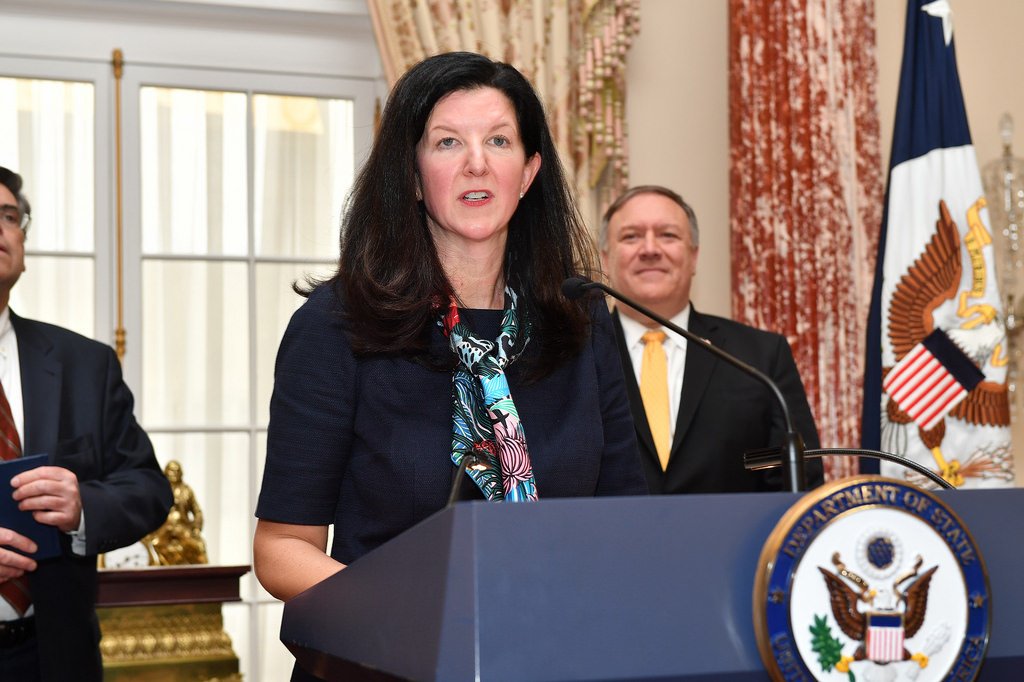
Kimberly Breier, the US assistant secretary of state in charge of Latin America, welcomed a vote Thursday to recognize Guaido by the European Parliament, although the move does not change EU policy.

“We certainly encourage all the governments in Europe to support the people of Venezuela and the transitional government in Venezuela by recognizing Guaido as interim president,” Breier told European reporters in a telephone press briefing.

Besides the United States, major Western Hemisphere powers including Brazil, Canada and Argentina have followed suit.

Four major European powers — Britain, France, Germany and Spain — have set a deadline of this weekend for Maduro to call new elections, failing which they will recognize Guaido.

The European position is not unanimous with Greece’s ruling leftist Syriza party pledging support for Maduro, who also enjoys the backing of Russia and China.

Below is a full rush transcript of the press conference by Assistant Secretary Kimberly Breier, Western Hemisphere Affairs.

A/S Breier: Thank you so much for the opportunity to speak with you today about our efforts to support the Venezuelan people in confronting their dictatorship and humanitarian crisis and restore democracy to their country. I particularly wanted to focus today on how our friends in Europe may be able to help us in this regard.

Since National Assembly President Guaido followed the Venezuelan constitution on January 23rd and became interim president of Venezuela, he has begun leading a transitional government to organize free and fair elections. There’s been a strong marked global response both on the streets of Venezuela, by the Venezuelan people, and around the world. More than 20 countries have recognized Juan Guaido as interim president, and we are very heartened today by the resolution passed by the European Parliament recognizing Juan Guaido as interim president. We certainly encourage all governments in Europe to support the people of Venezuela and the transitional government by recognizing Guaido as interim president.

A number of EU states have said they will recognize Guaido by February the 3rd, and we welcome more member states in doing the same.

We would also welcome additional steps as we have taken here in the United States and you’ve seen taken in many countries around the Western Hemisphere, to accept and credential official representatives of President Guaido’s government.

We hope to have another urgent calling as we meet today to look at ways we can work together to address the growing humanitarian crisis in Venezuela. Venezuela’s National Assembly has rightly stressed the need for immediate international assistance in response to the increasingly urgent humanitarian needs of the Venezuelan people.

On January the 24th Secretary Pompeo announced that the United States is ready to provide more than $20 million in initial humanitarian assistance to the people of Venezuela as they struggle to cope with severe food shortages, medicine shortages, and other dire impacts of their country’s political and economic crisis. These funds come in addition to the more than $140 million the United States has already provided throughout the region to support Venezuela’s displaced population.

We continue to assess humanitarian needs throughout the region to determine what additional assistance we can provide through our partners and intergovernmental efforts. We greatly appreciate the generosity and compassion of countries throughout the hemisphere who are hosting more than three million Venezuelans who have fled their country. We commend the humanitarian contributions made by all donors and encourage additional contributions to meet the growing humanitarian needs.

The humanitarian situation demands action now and action today. We would welcome additional European efforts and support for this effort.

I’d also like to talk a little bit today about what’s happened since the 23rd of January, but what happened prior to that that led to those events. I’d like to first highlight that this is a hemispheric effort. The Lima Group and other countries in the Western Hemisphere have been at the forefront of assisting and supporting the democratically elected National Assembly in Venezuela. Juan Guaido and the National Assembly have led the Venezuelan people toward a constitutional solution to the crisis.

As we have said unequivocally since 2017 and currently, we recognize the National Assembly as the only legitimate branch of government in Venezuela and support its work to restore democracy.

Last May more than 60 countries called out Venezuela’s so-called elections for what they were – a sham. The elections were declared to lack legitimacy by the Organization of American States, the European Union, the UN High Commissioner for Human Rights, and the Lima Group. Since then, the OAS, the UN Security Council, the Lima Group, and the European Union have continued to uphold our collective desire to promote and defend democracy.

Today, 21 countries and the OAS have recognized Juan Guaido as interim president of Venezuela.

We are taking concrete action in the United States towards those who undermine the restoration of democracy in Venezuela, and we appreciate those in the international community, including the EU, who have done the same.

We are also taking concrete action to register our horror at the human rights abuses perpetrated by the regime, which has engaged in extrajudicial killings, torture, the holding of political prisoners, and has severely restricted free expression and the press, all in an effort to squash opposition to its illegitimate rule.

Juan Guaido is the interim president of Venezuela. This is the decision made by the Venezuelan people through their own elections and in accordance with the Venezuelan constitution.

The United States will work with his transitional government to help the people of Venezuela set their country back on a path towards democracy and respect for human rights.

Question: The President insists that all options, including the military option, are on the table. I would like to know how would you justify before Congress and the public opinion a military intervention in Venezuela? Where is the security threat to the United States that justifies a military campaign in Venezuela?

A/S Breier: Our policy has been based and continues to be based on finding a peaceful, democratic path towards a restoration of Venezuela’s constitution and democratic order. That is the entirety of our focus. When we refer to options that are on the table, we refer to all of the options that we have including our diplomatic and economic options, which you’ve seen us use most recently this week in the form of economic sanctions.

I think all options do remain on the table, but our path has always been for a peaceful, democratic return to democracy in Venezuela

Question: what do you think about Russian involvement, the involvement of Russia, Moscow, in this situation in Venezuela? Yesterday I’ve been speaking to Carlos Vecchio, new Ambassador of Venezuela in the United States, and he said he had a message from Moscow to respect the institutions of Venezuela. What do you know? To what extent Russia is involved in protection of Nicolas Maduro and in possible help by military means or some other means?

A/S Breier: I would actually refer you to the Russian government to ask them what role they are playing in protecting President Maduro and aiding a regime that has resulted in an outflow of over three million displaced persons and is in the midst of a humanitarian crisis. That would be a wonderful question to ask the government of Russia.

Question: How has Mr. Guaido revived the opposition in Venezuela?

A/S Breier: I will make a call here to ask if those on the line could mute themselves because we also hear the feedback from outside voices, so please mute your line, thank you.

In terms of President Guaido, we of course think that he has been an absolutely courageous leader of the National Assembly and now of the country of Venezuela in charting a path forward that is Venezuelan led, constitutionally based, and offers a solution to Venezuela’s ongoing crisis through democratic means.

His government is offering amnesty, reconciliation, and a peaceful path forward led by Venezuelans for Venezuelans and we think he has inspired the will of the Venezuelan people as we saw on the 23rd of January with the massive outpouring of support on the streets of Venezuela.

Question: First of all, there have been constitutional experts who have said that the interim presidency is with a 30-day limit. So what happens at the end of these 30 days? And secondly, what happens if the Maduro government does not fall and the sanctions that are now being imposed end up having negative impacts on ordinary Venezuelans?

A/S Breier: I think first, President Guaido has made it very clear that he and the National Assembly will follow the constitution and follow constitutional order. So the decisions as to what happens in the 30-day period are up to them. I think that they’ve made very clear that they intend to call for elections but it’s also very clear that elections can only happen when they may be free and fair, internationally monitored, and allow the participation of all of the voices within Venezuela.

Going forward, I’m not going to speculate on what happens one way or another in the coming days. As you have all seen, this is a very fast-moving situation. I will only emphasize that we are looking for a peaceful, democratic transition in support and very much in line with the will of the Venezuelan people.

Question: If the reports are true about the deployments of mercenaries from Moscow, how does the deployment of Russian forces, whether they’re private or actually leading a military, from either the Wagner group or group or whomever that Moscow sent. We have to assume that most of them probably would have been individuals with combat experience in Chechnya or Ukraine or Syria. How does that change the calculus on the ground in terms of putting pressure on Maduro to negotiate or even offer concessions to the opposition when it appears that he has military support, the security services’ support, and now he’s got outside support from Russia?

A/S Breier: I‘ve seen the same media reports as you have. I’ve certainly have no comment on the details of those and cannot independently verify them. But we certainly have been very clear that we expect all actors to play a constructive role in supporting the will of the Venezuelan people and supporting a peaceful transition and return to democracy in Venezuela.

Question: I understand the State Department announced earlier this week that to support Mr. Guaido, accounts that are backed by U.S. and insured by U.S. banks will be turned over to him. I wonder, would you be able to tell us a bit about whether that control has already been taken over by Mr. Guaido, and whether the State Department plans any further support financially, whether to do more asset transfers or other sanctions? I understand that they’re going through the Treasury Department and the state oil company. If you could give us some details about whether any further financial support for the interim government is forthcoming.

A/S Breier: I think first of all, one of the pillars of our policy has been to ensure that the assets that rightfully belong to the Venezuelan people and in this case to President Juan Guaido and his, and the National Assembly, are protected on behalf of the Venezuelan people.

You’re absolutely correct, that on the 25th of January Secretary Pompeo certified, under Section 25B of the Federal Reserve Act, that Interim President Guaido has sole authority over certain government of Venezuela and Central Bank assets in the accounts of the Federal Reserve System of New York or other federally insured banks.

You’ve also seen us, and I would have to refer you to the Department of Treasury for further details, but you have seen us take action on sanctions as well this week in part because we have seen a variety of schemes designed to steal billions of dollars from PdVSA, the state-owned oil company, for the personal gain of corrupt Venezuelan officials and businessmen. So many of our actions are aimed at safeguarding those assets for the Venezuelan people and we will continue to take steps to do so.

Question: what other options would you consider in case that Maduro continues to oppose calling for elections. If you could be a bit more detailed. How far the U.S. is willing to go.

A/S Breier: I will say again, our preference has always been and our policy has been based around a peaceful democratic transition. This is one that is led by the Venezuelan people for Venezuelans and we are very much supporting a peaceful resolution to this crisis.

At the same time, we have been very clear that all options remain on the table, but our hope is for a peaceful return to democracy in Venezuela. That is our focus, that is our priority, and we are working every day toward that end.

A/S Breier: Thank you very much, and thanks everyone for participating in the call. I look forward to working with all of you going forward, and again, would like to reiterate our hope that our friends in Europe join our many friends and allies in the Western Hemisphere in supporting President Juan Guaido and a peaceful constitutional return to democracy for the Venezuelan people.

Thank you so much.

Ms Kimberly Breier, Assistant Secretary, Bureau of Western Hemisphere Affairs. Kimberly Breier is the Assistant Secretary in the Bureau of Western Hemisphere Affairs. Ms. Breier is a policy expert and intelligence professional with more than 20 years of experience in foreign policy, primarily focused on Western Hemisphere affairs. Prior to her appointment as Assistant Secretary, she served as the Western Hemisphere Member of the Policy Planning Staff at the Department of State.

Ms. Breier previously was the founder and Director of the U.S.-Mexico Futures Initiative, and the Deputy Director of the Americas Program at the Center for Strategic and International Studies (CSIS). She was for 5 years Vice President of a consulting firm, leading country risk assessment teams for private clients in Mexico, Argentina, and Chile.

In addition to private sector and think tank experience, Ms. Breier served for more than a decade in the U.S. intelligence community as a political analyst and manager, primarily focused on Latin America.

From January 2005 to June 2006, Ms. Breier served at the White House in the National Security Council’s Office of Western Hemisphere Affairs, first as Director for Brazil and the Southern Cone, then as Director for Mexico and Canada, and also as an interim Director for the Andean region.

Prior to government service, Ms. Breier was a senior fellow and director of the National Policy Association’s North American Committee—a trilateral business and labor committee with members from the United States, Canada and Mexico.

January 31, 2019 0 comments
0 FacebookTwitterPinterestEmail
NATO and Norway

U.S. with democratically elected president of Ukraine

by Nadarajah Sethurupan January 31, 2019
written by Nadarajah Sethurupan

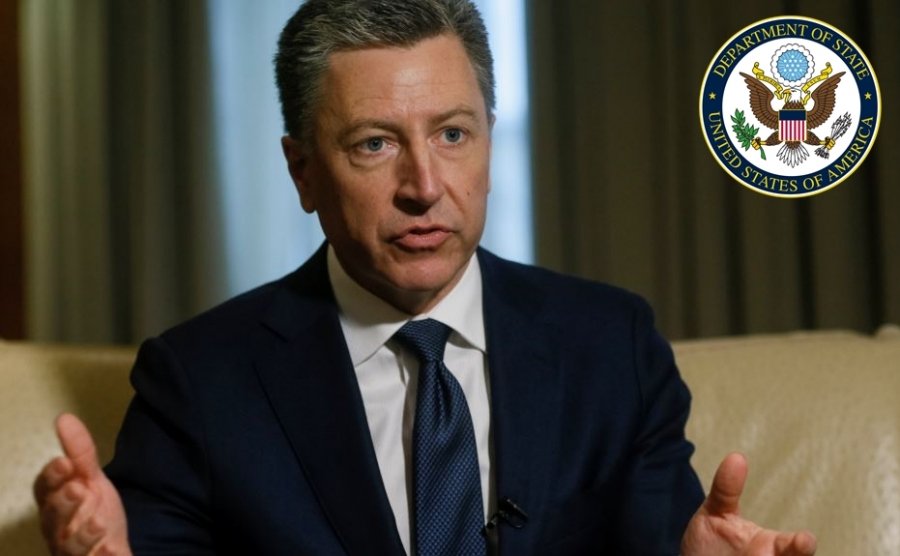
U.S. Department of State Special Representative for Ukraine Negotiations, Ambassador Kurt Volker, expressed hope that Russia would finally decide to stop the war in Donbas no matter who wins the presidential and parliamentary elections this year.

He added that, like in any democracy, “we don’t know who’s going to win until the election takes place.”

“In this case, we really don’t know who the winner will be,” the Ambassador noted. “If you look at the polling data coming out of Ukraine, there is no candidate that is polling above the high teens.”

“Again, stressing that Ukraine is a democracy, we will work with whatever democratically-elected leader emerges after the election,” Volker said.

He added that the United States continues to support Ukraine’s sovereignty, territorial integrity, as well as safety and security for all Ukrainian citizens “regardless of ethnicity, nationality, or religion.”

“I hope that no matter who is elected as president of Ukraine and also no matter how the parliamentary elections come out later in the year that Russia decides finally that it’s trying to end the war and bring about peace,” the U.S. Special Representative said, noting that Washington is “committed to doing everything that we can to facilitate it as well,” adding that he means further talks and development of any peacekeeping and security forces that would be needed to keep civilians safe.

Ambassador Kurt Volker told reporters that he had met with EU diplomats and that new measures against Moscow were under discussion if the sailors were not released.

“We had discussions with European colleagues in the past few days . . . The EU is looking at additional sanctions as well. Nothing has been agreed yet,” he said.

Below is a full rush transcript of the press conference by Kurt Volker, U.S. Special Representative for Ukraine Negotiations.

Ambassador Volker: It is the 31st of January, meaning that tomorrow will be February and we are entering a month where we are really looking at five years now from Russia’s takeover of Crimea and its claimed annexation of Crimea later after that in March. So this conflict which started there has been going on a long time.

The fighting in the Donbas started two and a half [inaudible], the initial takeover of some governance buildings in March of 2014, but that was followed by much larger-scale fighting the six months after that. And that fighting continues to this day. We still have artillery, mortar fire, sniper fire. This year the reports we have is that nine people have died simply crossing the boundary between the occupied area and the government-controlled area in eastern Ukraine. So this is a conflict that still exercises a significant humanitarian toll.

The Minsk agreements remain the framework for resolving the conflict and restoring the territory to Ukrainian control and restoring peace and security. Thus far, they have not been faithfully implemented. We coordinate very closely with France and Germany, which lead the Normandy Format, to urge implementation of the Minsk agreements, but we have not seen an effective ceasefire, we’ve not seen a withdrawal of Russian forces or the withdrawal of, or the removal of the illegal armed groups that Russia has created there. So it continues to be a very dangerous situation for the population and casualties continue to mount.

In addition to that, as you’ll remember, in November we saw further escalation of the conflict as Russia claimed unilaterally to control the Kerch Strait, blocked Ukrainian naval vessels from entering the Sea of Azov, attacked those vessels, boarded them, and arrested the sailors.

Russia continues illegally to hold these Ukrainian sailors and illegally is charging them with crimes under a civilian code, seeking to illegally enter Russian territory, which is not the case. So Russia has just continued to sustain its aggression against Ukraine.

The reports that we see are that Russia intends to continue to hold these sailors at least until April, which puts it on the upside of the Ukrainian presidential election. That just gives the impression that again, it’s more of an act of policy, a political act by Russia to hold these sailors and use them as a pressure point on Ukraine, rather than there being any actual legal basis for their detention.

The United States and our allies in Europe, especially France and Germany, continue to work very closely together. We continue to urge implementation of the Minsk agreements, particularly a ceasefire and everything possible to facilitate humanitarian relief. The French and Germans have consistently put forward what they call a winter package of humanitarian measures that would alleviate some of the suffering for the population. We fully support that as well.

Unfortunately, the Russians have continued to occupy the territory. The Ukrainians can’t access it. And the population there continues to suffer.

Question: You referred to the presidential election but your own intelligence said the other day they are not sure that President Poroshenko will be able to win. So first of all, do you share that assessment? And second of all, how important is this for you? Are you confident you can work with whoever comes next and who will still be in control? Thank you, sir.

Ambassador Volker: The starting point here is that Ukraine is a democracy and they will be having an election and in a normally functioning democracy we don’t know who is going to win until the election takes place. So in this case we really don’t know who the winner will be.

If you look at the polling data coming out in Ukraine, there is no candidate that is polling above the high teens. No one getting 20 percent or higher. So it’s very unpredictable at this stage who might actually win.

Again, stressing that Ukraine is a democracy, we will work with whatever democratically elected leader emerges after that election. We continue to support Ukraine’s sovereignty, territorial integrity, and we continue to support safety and security for all Ukrainian citizens, regardless of ethnicity, nationality or religion.

Thus far, we have not seen progress in getting to peace and security because of the continued occupation by Russia of eastern Ukraine and Crimea. I hope that no matter who is elected as President of Ukraine, and also no matter how the parliamentary elections come out later in the year, that Russia decides, finally, that it’s time to end the war and to bring about peace.

If Russia makes that decision, we are committed to doing everything that we can to facilitate that as well, in negotiations and in development of any peacekeeping and security forces that would be necessary to take care of the population while the Minsk agreements are implemented.

Question: Earlier this month the Russian Foreign Ministry said it had agreed to a Franco-German plan to allow observers to go to the Kerch Strait and to monitor what is happening there. Can you first tell us, do you support that initiative? Secondly, who do you blame for the fact that there have been none of those observers deployed so far?

Ambassador Volker: It’s a very important dimension to what’s been going on lately. The Russians made a unilateral assertion of control of the Kerch Strait and through that effectively controlling access to the Sea of Azov, and that is a violation of their bilateral agreement with Ukraine from 2003 on joint sovereignty over the Sea of Azov and the Kerch Strait, and there are disputes. We know from imagery, we know from video on YouTube, we know from what the Ukrainians have reported what happened in terms of the blockage of the strait, the pursuit of the Ukrainian vessels in international waters, firing upon them, and those sailors still being held by Russia.

Russia disputes some of the elements of this account, so I think having international monitors there in addition to Ukraine would be a very positive element to both create more eyes on the situation to record what Russia’s actions are and its unilateral claims of sovereignty, and to deter perhaps violence such as occurred in November.

So I think the idea of monitoring is a very important one, and I think it’s a very commendable step that France and Germany have offered to do that.

The problem arises when you get to the context in which that happens. The OSCE has the monitoring mission for Minsk implementation, which is along the so-called ceasefire line. It’s not really a ceasefire that holds, but along the so-called ceasefire line the OSCE monitoring mission is there to record what’s happening and then also to try to get access throughout the rest of the occupied area. That is a vital mission, but it has a lot of challenges executing its mandate.

The idea of monitoring in the Sea of Azov and the idea of monitoring in other areas under Ukrainian control that are not part of the conflict area is something where there have been some disputes.

The Russians argue that there is no mandate for the OSCE to allow monitoring in areas other than that mandate defined by the OSCE for the ceasefire line, so they’re saying that the French and German’s offer, while they would be acceptable to have more monitors, can’t monitor what they are intending to monitor.

The Ukrainians are also a bit skeptical. They, I think, welcome the idea of the international presence, but they don’t want to see them in a position where they are subordinated in some way through Russian political oversight which is what would be the case in the OSCE where Russia has, as a member of the OSCE, has oversight over the monitoring mission as well, and has members within the monitoring mission.

I think the best solution here would be for international monitors to be present in uncontested Ukrainian territory and on Ukrainian vessels at the invitation of Ukraine. There’s no need to go beyond that since this is not part of the conflict area. This is simply having a little bit more of a monitoring presence and visibility of what’s happening in uncontested Ukrainian territory.

Question: Martin Sajdik of OSCE he made his proposal of this UN OSCE mission like with military and police component of the United Nations. So what is the U.S., what does the U.S. think about this proposal? And what should, I mean how should it be done so that it can help in any way?

Ambassador Volker: The fundamental issue here is whether Russia is willing to accept an international peacekeeping presence to replace the Russian forces and create genuine peace and security in the Donbas. If Russia is willing to do that, that would happen under a UN mandate and the UN would be able to establish a general environment of security which would allow for the implementation of the Minsk agreements and bring the conflict to an end.

In doing so, there are additional functions that would need to be performed. So peacekeeping would be under UN auspices, but you would need to have, for instance, policing and cooperation on policing. You would need to have an election administration. You would need to have some coordination on civilian function and coordination between the UN peacekeeping operation on the military side and the civilian administration.

So I think what Martin Sajdik is doing is outlining some of these elements that would need to be coordinated, and suggesting that some would be carried out by the OSCE, others would be by the UN. And I think the concept, you’d have to look detail by detail, but in principle, this is a useful concept.

The problem, however, is that we do not have agreement from Russia to the whole basic idea of there being a peacekeeping force to begin with. Russia continues to deny that it is occupying the territory. It continues to insist that there only be a protection force for the OSCE monitors rather than a genuine UN peacekeeping force. And that protection force would therefore be continuing to have to negotiate access to freedom of movement with the Russian-installed authorities that are there, the so-called “Peoples Republic”, just as the OSCE is having to do today.

So Russia is really not allowing any kind of movement forward in developing a peacekeeping presence to begin with, and that’s the fundamental problem.

If you had movement on that, some of the ideas that Martin Sajdik has produced, division of labor between the OSCE and the UN on certain roles, are all very sensible things to consider.

Question: Ukrainian sailors who have been attacked in the neutral waters and arrested by Russia. The fact that there were no significant sanctions for Russia for this act of aggression, does it mean that Russia can act with impunity?

Ambassador Volker: No, it doesn’t. I visited Brussels in December, had meetings with the EU and NATO, have had a number of follow-up meetings here in Washington, and I can say that both the United States and Europe are looking at what additional measures we should be taking if Russia fails to return the sailors and continues to make these assertions of control of the Kerch Strait as it is.

The U.S. in the natural course of business will be reviewing the Crimea sanctions in February. That comes up on an anniversary. The EU is looking at additional sanctions as well. Nothing has been agreed yet, and they have a minister’s meeting coming up, also in February.

In addition to that, we’ve seen other steps such as ship visits; the UK had a naval ship visit in the Black Sea in January. The United States will be having one coming up as part of the natural course of business. So I think having this presence and support for Ukraine and a rejection of the Russian claims has continued, it’s important, and Russia can’t assume the there’s any acceptance of its position and we do call on Russia immediately to release the sailors and to try to come back to a diplomatic track for resolving this crisis.

Question: I was just wondering if you have any meetings with Mr. Surkov planned in the foreseeable future.

Ambassador Volker: We exchanged some messages around the new year, and I would very much like to resume our discussions.

As you know, after Russia attacked the Ukrainian Navy and imprisoned sailors, President Trump canceled his meeting with President Putin and I therefore ended up canceling my meeting, my intention to meet with Mr. Surkov and others in Moscow in December. I’d very much like to get back on track and to do that I hope that Russia will act quickly to release the sailors and give us a basis for moving forward.

I don’t have anything more on that yet, but we’ll continue to be in contact about what a future meeting would be.

Question: Is there an estimate as to how many Russian troops and how many as you called it created by the Russian troops is in Ukraine at this point in time? An estimate.

Secondly, you speak only, and the Europeans and the Germans for that matter, only ever about the 24 sailors. Now the Russians are continuing to block access of ships for sometimes a few days, both from Mariupol and Berdyansk. Whereas Russian ships that go to the Russian ports like Taganrog are not impeded.

Are there also sanctions on the menu considered that you would consider sanctions against these Russian ports if the free access is not further assured?

Ambassador Volker: First of all, you’re absolutely right. While Russia has not blocked completely the access of Ukrainian vessels or other commercial vessels to Ukrainian ports, they appear to be implementing a policy of a deliberate slow-down, and slowing down the passage means adding cost to the commercial shippers, adding cost to the Ukrainian ports, which is disruptive to the economy in the region.

Again, it’s ironic that Russia claims to be interested in the well-being of the Russian-speaking population in eastern Ukraine when all of its actions are harmful to the Russian-speaking population in eastern Ukraine.

As for sanctions, what you are suggesting, sanctions that apply either to Russian ships that are serving the Russian ports on the Sea of Azov or otherwise addressing Russian ports on the Sea of Azov are things that I know have been brought up in the European Union. We’ve had some recent consultations with some of our EU partners just in the past few days where the topic was discussed. I know this is among the basket of options that is being reviewed in the United States as well. We don’t have any decisions on these things yet, but it is exactly in that space that I think we need to be thinking.

Again, with a view towards urging change. The goal is not sanctions in itself. The goal always is to open access to create better conditions, and what we would really very much like to see is a return to free and open movement in and out of the Kerch Strait to the Sea of Azov for all the ports that are there.

Question: Aside from the Kerch Strait have there been any recent significant or observable ships and levels of Russian equipment or troops along the line of contact or the Ukraine-Russia border? Perhaps not, but if so, what conclusions do you draw from that? Secondly, Ukraine’s Defense Minister, Stepan Poltorak, has recently doubled down again on Kyiv’s goal to accelerate its efforts to join NATO by attaining allied standards and getting the MAP, the Membership Action Plan, by 2024. Could you please reiterate what the U.S. position is on that and the prospect? Thank you.

Ambassador Volker: First off, I think it’s always a little bit misleading to ask — I’m not criticizing your question, but the framing is off when you say have there been recent increases in the, you know, Russian military activity or presence on the borders, the ceasefire line, Crimea or elsewhere, because you don’t need to have recent increases to have an extraordinarily large Russian military presence. They’ve been there already and they are there, and this includes fighter aircraft, it includes attack helicopters in Crimea, it includes ground forces in the occupied parts of Ukraine, it includes naval forces and riparian ships in the Sea of Azov, it includes massive Russian ground forces in Russian territory surrounding Ukraine. So there’s enough military capability there for Russia to do whatever it decides, so it doesn’t need to have a recent increase for this to be a dangerous situation.

So the U.S. position remains that we support Ukraine’s eventual membership in NATO. This was decided at the Bucharest Summit in 2008 and we stand fully behind that. We work very closely together with Ukraine on reforming its defense capabilities and defense establishment.

As you know, there was slow movement on that for several years after 2008. It accelerated after 2014. But there’s still a long way to go.

Being a NATO member is not only a matter of military reform, but also establishing a strong and vibrant democracy, a healthy economy, good relations with neighbors, interoperability with NATO, civilian control of the military, and so on and so on. So there’s a lot that Ukraine still has to do to be qualified to become a member of NATO, and NATO at this point does not have a consensus to offer a firm invitation, but the door to Ukrainian membership in the future remains open. And we remain committed to working together with Ukraine to help them achieve those standards.

Ambassador Volker: I just always want to come back to the humanitarian situation in eastern Ukraine. There are over a million and a half displaced persons, which is the largest number of displaced persons in Europe, from a war in Europe since World War II. There were over 10,000 killed on the Ukrainian side, which is the largest number of people killed in a war in Europe since the wars in the Balkans in the ‘90s, and it is still going on. So this should be seen as a matter of urgency to stop the conflict and then the population that remains is suffering all kinds of hardships from heating, energy, reliable water, freedom of movement, access to pensions and access to government services, cell phone communications, food and security, medical conditions. It is really a severe stress on the local population there.

So we call upon Russia and anyone fighting in eastern Ukraine to put the priority on the well-being of the people that are there, and let’s bring this conflict to an end. Thank you.

Ambassador Kurt Volker is a leading expert in U.S. foreign and national security policy with some 30 years of experience in a variety of government, academic, and private sector capacities. Ambassador Volker serves as Executive Director of The McCain Institute for International Leadership, a part of Arizona State University based in Washington, DC. He is also a non-resident Senior Fellow at the Center for Transatlantic Relations at Johns Hopkins University’s School of Advanced International Studies, a Senior Advisor at the Atlantic Council, and a Trustee of IAU College in Aix-en-Provence, France. He is a consultant to international business, a member of the Board of Directors of CG Funds Trust, and had previously served as Managing Director, International, for BGR Group.

January 31, 2019 0 comments
0 FacebookTwitterPinterestEmail
Economics

Danske Bank offers Google Pay to Norwegian customers

by Nadarajah Sethurupan January 31, 2019
written by Nadarajah Sethurupan

Danske Bank has announced its Danish, Swedish, Norwegian and Finnish customers with an Android phone are now able to add their Mastercard to Google Pay and make contactless payments.

Danske Bank added Mastercard is the card that the majority of our customers are using across our 4 markets and 44 % of the Danes have an Android phone.

All Android phones with Android 5.0 or higher can use Google Pay.

January 31, 2019 0 comments
0 FacebookTwitterPinterestEmail
Middle East and Norway

US and Poland “Promote a Future of Peace and Security in the Middle East”

by Nadarajah Sethurupan January 28, 2019
written by Nadarajah Sethurupan

The “Ministerial to Promote a Future of Peace and Security in the Middle East” is set for February 13-14 at the instigation of the US and Poland. During a briefing about the event on Monday, officials from both sides were keen to stress the discussion would tackle many of the challenges facing the region.

A senior US official told reporters that Iran would not be the sole focus of the conference.

“It’s important to underscore that this is not an anti-Iran meeting or coalition-building exercise,” the official said.”From the start, this ministerial has been focused on exploring a range of issues important to the region’s security and prosperity.”

“We are going to discuss Iran because it’s not possible to have any conversation about the Middle East without having some reference to Iran,” he added. “But that doesn’t make it an Iran ministerial, and it never has.

“We have a very comprehensive agenda. It’s been that way from the beginning. We’re very pleased with the responses we’ve been getting from around the world.”

Washington is seeking the establishment of working groups in the aftermath of the Warsaw discussions that would follow-up on policy priorities identified by the participants. “We want to get some momentum coming out of Warsaw,” he said.

Below is a full rush transcript of the press conference by U.S. Senior Administration Official and Polish Senior Official.

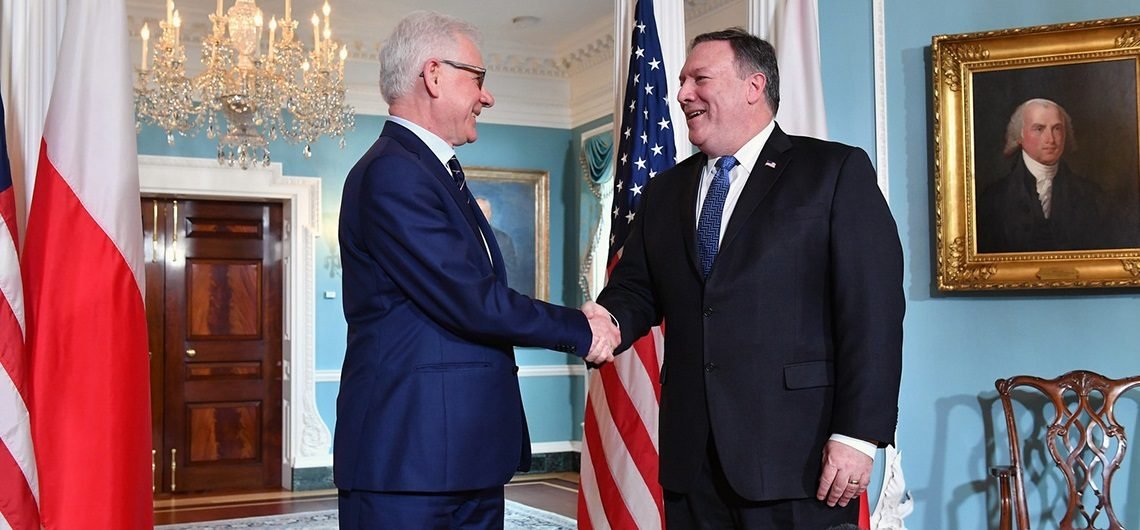
US Secretary of State Mike Pompeo poses with Polish Foreign Minister Jacek Czaputowicz ahead of a bilateral meeting at the State Department in Washington, DC on May 21, 2018. / AFP PHOTO / Mandel NGAN

Polish Senior Official 1: I want to begin by briefly discussing the upcoming ministerial in Warsaw this February, and then turn it over to my colleagues for their comments. We will then open the floor for questions.

As you know, Polish Minister of Foreign Affairs Jacek Czaputowicz and U.S. Secretary of State Mike Pompeo are hosting the Ministerial to Promote a Future of Peace and Security in the Middle East. The event will be held in Warsaw on February 13th through 14th beginning with a welcome dinner at the Royal Palace on Wednesday and continuing the following day with dynamic discussions at the PGE National Stadium.

We are very pleased to be hosting this event jointly with the United States. This year we are celebrating 100 years of strong diplomatic relations and the bond between our two countries is stronger than ever.

This ministerial is a forum for countries concerned about instability in the Middle East to share their assessments and offer ideas on a better way forward. The agenda very clearly underscores this objective. It includes sessions on regional crises and international responses, missile development and proliferation, cyber and emerging threats, and terrorism and illicit finance. It will also include specific discussions on Syria and Yemen.

Countries across the globe have been invited to attend. The feedback we have received is very positive. It is our strong sense that countries are eager to engage in constructive dialogue to address critical issues in the region.

Both the United States and Poland understand that every country attending will have different perspectives. At times such views may even conflict with each other. We see this as a value-added proposition. We want to bring together countries with an interest in stability to share their different views so we can begin to think about old and recurring problems in new ways.

The agenda has been structured in a way that provides for free-flowing and dynamic conversation. No one country or issue will dominate the discussion.

I am confident this ministerial will advance collaborative solutions around the issues we have identified. Progress on these issues will increase the prospects for stability across the board in the region.

U.S. Senior Administration Official 1: The United States and Poland are celebrating 100 years of diplomatic relations this year. It’s a partnership that has grown a great deal deeper over the years, and we’re very happy to be hosting this event with them.

Neither of our countries “the United States nor Poland” takes a narrow view of the challenges in the region. Issues in the Middle East are broader than any one country and this ministerial reflects that. It’s a good faith effort to have a real conversation about how we can promote stability in the region.

This is exactly why the agenda focuses on several important issues. We’ll talk about missile development writ large, the threat of terrorism and extremism, humanitarian crises and cyber security, just to name a few. All of these issues are complex and they drive instability throughout the Middle East.

By getting ministers from around the world in the room together to discuss these issues we hope to tread new ground and define areas of consensus that can lay the foundation for future cooperation.

One of the outcomes of the ministerial will be the establishment of follow-on working groups. These groups will be hosted by countries around the world and meet at the working level in the months after the ministerial. The goal of the working groups will be to drive momentum on concrete initiatives around which there is strong agreement.

It’s important to underscore that this is not an anti-Iran meeting or coalition-building exercise. From the start, this ministerial has been focused on exploring a range of issues important to the region’s security and prosperity.

Secretary Pompeo will certainly discuss our concerns regarding Iran’s destructive policies in the region. It’s difficult to talk about the region’s challenges without referencing Iran, but this is simply a function of Iran’s behavior. As we have stated, Iran is not a specific agenda item.

Question: In the beginning, Secretary talked about the conference as focused on Iran. After that in the news we saw that because of pressure from the European Union, from European countries, the topic got broader. Does this mean Iran will not even be a main issue now? And can you please explain like how this will impact the position of European countries with regard to Iran influence in the region.

My second question is specific about Iraq. What kind of role the United States expects for Iraq from the Iraqi government specifically in terms of countering Iranian influence and its role in the region, especially [inaudible] accused Iran of a destabilizing role in Syria and in Iraq?

U.S. Senior Administration Official 2: From the very beginning, from the time that the Secretary announced it and that we jointly announced it with Poland, this has been a ministerial on the Middle East. The agenda has always been very broad to cover some of the most pressing issues in the region. This is only one day, so there’s only so much that you can fit and do a one-day ministerial in terms of the plenary sessions and the afternoon working groups.

But the Secretary has said that this is a Middle East Ministerial. We are going to discuss Iran because it’s not possible to have any conversation about the Middle East without having some reference to Iran. But that doesn’t make it an Iran ministerial, and it never has.

So we have a very comprehensive agenda. It’s been that way from the beginning. We’re very pleased with the responses we’ve been getting from around the world.

Polish Senior Official 2: Nothing in the title of the conference or in the agenda indicates that this is a conference on Iran. The EU position remains very strong. We support, as EU, as Poland is the EU country, we support JCPOA.

U.S. Senior Administration Official 1: With regard to the question on Iraq, I would say from the U.S. point of view, we talked in the opening about Iran’s destabilizing activities in the region and that’s a major concern of U.S. and indeed many European countries’ foreign policy. Iraq is one of those venues in which we do see that the Iranians play a destabilizing role. We can also point, of course to Syria and Yemen and elsewhere, but whether it’s supporting militia groups or seeking efforts to undermine government formation, we do believe that Iran plays a destabilizing role in Iraq and that as we work together with the Iraqi government we seek to minimize Iran’s efforts to create mischief inside this country whose stabilization is so important for the broader region.

Question: A more concrete sense of which countries will for sure be coming? Or which countries will for sure be represented? So far from our perspective we’ve heard the Russians aren’t coming, that Federica Mogherini from the EU isn’t coming. But any concrete sense of who is coming would be very helpful.

U.S. Senior Administration Official 2: We’ve obviously announced the U.S. and Poland are hosting it. We let each country in its national capacity announce their attendance. I’ve seen a number of countries announce that they are attending or their minister is attending, and we will let each country announce for itself its plans for attendance. But we’ve been very pleased with the level of attendance and the number of attendees.

Question: Does Iran’s military capability really and truly impose a serious threat on its neighboring countries? And what precautions do the countries surrounding Iran need to take?

U.S. Senior Administration Official 2: Iran has the largest missile inventory of any country in the region. It has enormous cyber capabilities. Its navy has also on a somewhat regular basis threatened to close the Strait of Hormuz. So we have seen, during the last many years, obviously an expansion of Iran’s operations around the Middle East, into Syria and Yemen, Bahrain, Iraq, Lebanon, et cetera. So this is what Senior Official 1 was saying earlier, this is what is a principal driver of instability in the Middle East.

Iran’s expansionist revolutionary foreign policy and its use of militias in the gray zone to subvert national governments, and to create other forms of government that stand alongside as they’ve done in Lebanon.

Question: Are you concerned if Russia and the EU don’t attend that what you’re trying to get out of this conference, it will be less able to achieve? Especially if those two don’t attend given how important they are inside Syria and with Iran policy going forward, with what the EU is trying to do with the SPV.

Is there any update on the status of the waivers that you’ve granted when the sanctions snapped back?

Polish Senior Official 2: Yes. On Russia, we regret the decision of Russia not to take part in the conference. We hope that it’s a reversible decision.

On the presence of the EU at the conference, the EU will be, a representative will be present at the conference. As we have heard, a high representative for Federica Mogherini announced that he had [inaudible] previous commitments, but certainly the EU/EAF will be represented at the conference.

Question: Can you please specify what kind of working groups? Who will they be comprised of? I mean the U.S. allies in the region, or what exactly states, and what do you expect, how will these working groups look like?

U.S. Senior Administration Official 2: We didn’t want this to be simply a one-off ministerial, and we wanted to be very action oriented. So we decided to, as best we can, take the policy priorities that emerge from the ministerial meeting and to operationalize those policies by having follow-on meetings in various parts of the world. We would have host countries, and we would invite people, at the expert level. This would be at the Assistant Secretary of State level for the system in the United States.

We would invite everybody who attended the ministerial to then attend these meetings to keep working on things like on Syria and Yemen, cyber, missile proliferation. A range of issues so that we can, human rights, refugee issues, and see if we can get some momentum coming out of Warsaw and to work on these issues in the months following the ministerial.

Polish Senior Official 2: No, just a concern that we see that as a beginning of the process, expert consultations on the horizontal issues that are very important to finding a solution for the Middle East in a few areas, Thank you.

Question: What’s behind the decision that Poland is going to host this conference, and when the decision was made? And maybe the last one, who is going to represent the United States [inaudible]? Thank you.

Polish Senior Official 2: Poland along with the United States like many other countries around the world share a strong interest in promoting peace and stability in the Middle East. We are allies as well as stabilizing partners in the region. So we are pleased to be hosting this event here in Warsaw.

Poland at the same time supports the EU position on the JCPOA, and it sends an important signal that countries with differing views on the nuclear deal can come together to address other critical issues in the region. Thank you.

Question: I wanted to ask you a bit more in terms of the representation that you want. You mentioned it’s for other countries to announce. But how global do you want it? And what could be the judge of success in terms of the representation from around the world?

U.S. Senior Administration Official 2: We have invited countries from I think most regions of the world because what happens in the Middle East is relevant to most countries around the world. As I said, we’ve been very pleased with both the level of representation and the numbers of countries who are attending. I think you’ve seen many of these announcements already in the press, so more will come. We’re very pleased with A, our invitees, and the responses we’ve been getting.

Question: The EU has currently set up an alternative money payment channel, doing business with Iran. At least from the U.S. point of view, isn’t this a contradiction between countries doing business with Iran and at the same time meeting to counter Iran’s behavior in the Middle East?

And if I can, a follow-up. Is Iran or Israel invited to participate in this conference?

U.S. Senior Administration Official 2: On the first question, Secretary Pompeo has spoken a number of times about the SPV. I don’t think there’s any advantage in repeating it for another time. It’s all out there. He’s spoken repeatedly on it.

Polish Senior Official 2: Yes, of course as I previously mentioned, we support JCPOA, and with JCPOA come some additional obligations. So we support creation of additional mechanisms that support implementation of JCPOA. We support them. We are being informed about creation of some additional instruments, but we see that in the broader framework of supporting JCPOA. Thank you.

Question: I wanted to ask about the agenda of the meeting, talking about the working group issues such as Yemen or Syria are already being addressed by the United Nations. I want to see if the working groups’ work is going to help those processes, or it’s going to start something new?

U.S. Senior Administration Official 2: On the first question, we’re not going to get into the who is and who isn’t invited. Countries that have been invited will be able to announce their attendance in their own capacity. So I don’t have anything to add on that.

We do work very closely with the United Nations on a range of issues, especially in Yemen and Syria, so yes, we work closely with them, we will continue to work closely with them on key issues in the Middle East.

January 28, 2019 0 comments
0 FacebookTwitterPinterestEmail
Diplomatic relations

New UN special envoy for Syria assumes office

by Nadarajah Sethurupan January 28, 2019
written by Nadarajah Sethurupan

Veteran Norwegian diplomat Geir O. Pedersen has assumed his post as the United Nations’ special envoy for Syria.

In a tweet, Pedersen said: “The new #UN Special Envoy for #Syria, Geir O. Pedersen, took up his functions today.”

Pedersen said he paid a visit to UN headquarters in Geneva to meet the staff.

On Oct. 31, UN Secretary General Antonio Guterres announced he chose a successor to outgoing Syria envoy Staffan de Mistura, who announced his resignation earlier in October. 

De Mistura served more than four years as the UN’s point person for the conflict in Syria.

Pedersen is the fourth person to hold the position after former UN Secretary General Kofi Annan and Algerian envoy Lakhdar Brahimi quit the post in 2012 and 2014, respectively. 

De Mistura had been running intra-Syrian talks since late 2017 seeking to draft a new constitution for Syria and establish requirements for UN-supervised elections.

Born in Oslo in 1955, the veteran diplomat was recently serving as Norway’s Ambassador to the People’s Republic of China since 2017. He also served as Permanent Representative of Norway to the United Nations between 2012 and 2017.

He served the United Nations in various roles, including as Special Coordinator for Lebanon from 2007 to 2008 and as Personal Representative of the Secretary-General for Southern Lebanon from 2005 to 2007. He also worked as Director of the Asia and Pacific Division in the Department of Political Affairs.

Pedersen was Norway’s representative to the Palestinian Authority in the late 1990s.

From 1995 to 1998, he held different positions at his country’s Ministry of Foreign Affairs in Oslo, among them as Chief of Staff for the Foreign Minister of Norway.

In 1993, he was a member of Norway’s team to the Oslo negotiations that led to the signing of the Declaration of Principles and the mutual recognition between the Palestine Liberation Organization and Israel.

January 28, 2019 0 comments
0 FacebookTwitterPinterestEmail
Media Freedom

Norwegian and Swedish cinemas have a good 2018

by Nadarajah Sethurupan January 27, 2019
written by Nadarajah Sethurupan

2018 was a positive year for both Sweden and Norway in terms of their box-office results. Last year, Norway’s box-office takings increased by 14% compared with the same period in 2017 – while this is partly due to the VAT increase from 10% to 12%, theatrical admissions also increased by 7%, and most notably, the domestic market share reached 27%, an unprecedented figure.

The most popular Norwegian film of the season was John Andreas Andersen’s disaster movie The Quake (€7.5 million, 582,309 admissions), produced by Fantefilm and ranked second in the annual top ten. The other top local flicks were Harald Zwart’s historical drama 12th Man [+] (€4.1 million, 341,613 admissions), Rasmus A Sivertsen’s animated film Louis & Luca — Mission to the Moon (€3.8 million, 381,069 admissions), Arild Fröhlich’s comedy Opportunity Knocks [+] (€3.2 million, 263,244 admissions) and Erik Poppe’s drama U – July 22 [+] (€3 million, 247,956 admissions). All five of the most successful domestic movies were released by Nordisk. Moreover, the most-viewed international hits were Ol Parker’s musical Mamma Mia! Here We Go Again [+] (€8.8 million, 701,638 admissions), Christopher McQuarrie’s action flick Mission Impossible: Fallout (€5.3 million, 383,967 admissions), and Anthony and Joe Russo’s superhero flick Avengers: Infinity War (€4.6 million, 344,138 admissions).

While Norway saw a considerable increase in theatrical admissions, Sweden experienced a growth in the local market share but an overall 4% drop in terms of cinema-going. However, for Swedish films, in 2018 admissions were up 33% on 2017, and the domestic market share reached 16.4%, a 4.5% hike compared with the previous year. The most-viewed film of the season was, unsurprisingly, Mamma Mia! Here We Go Again (€11.3 million, 968,066 admissions), followed by Avengers: Infinity War (€6.7 million, 503,779 admissions), Ryan Coogler’s superhero film Black Panther (€5.8 million, 450,556 admissions) and Bradley Cooper’s musical A Star Is Born (€5.2 million, 440,647 admissions). The most successful Swedish movie of 2018 was Hannes Holm’s A Moon of My Own (€3.8 million, 354,411), set in the 1970s and revolving around the life of popular folk songwriter Ted Gärdestad (Adam Pålsson). Finally, other well-received domestic productions that did not make the top ten were Felix and Måns Herngren’s comedy The Sunny Side [+], Filip Hammar and Fredrik Wikingsson’s dramedy The Cake General, Josephine Bornebusch’s new episode in the JerryMaya saga, JerryMaya’s Detective Agency — The First Mystery, Maria Blom’s family film Monky [+], Pernille Fischer Christensen’s biopic of writer Astrid Lindgren, Becoming Astrid [+], and Victor Danell’s low-budget film The Unthinkable.

January 27, 2019 0 comments
0 FacebookTwitterPinterestEmail
Corruption in Norway

Norway should improve the situation for prisoners in solitary confinement

by Nadarajah Sethurupan January 26, 2019
written by Nadarajah Sethurupan

The Council of Europe Committee for the Prevention of Torture and Inhuman or Degrading Treatment or Punishment (CPT) published a report on a visit to Norway carried out in spring 2018. During its visit, the CPT examined the situation of persons deprived of their liberty in police establishments, prisons, the Trandum immigration detention centre, a psychiatric hospital and a nursing home (see the executive summary of the report)

In the different establishments visited, all the persons interviewed by the CPT’s delegation stated that they had been treated correctly by staff. Moreover, material conditions were generally of a high standard.

As regards the police, the CPT attaches particular importance to the fundamental safeguards against ill-treatment, namely the right of notification of custody and the rights of access to a lawyer and a doctor, and it recommends that detained persons be effectively granted these rights from the outset of their deprivation of liberty. In particular, the right of notification of custody should also apply to detained persons whose family members reside outside Norway.

January 26, 2019 0 comments
0 FacebookTwitterPinterestEmail
Asia and Norway

Norway signs 2.5 bln-euro deal with Iran

by Nadarajah Sethurupan January 25, 2019
written by Nadarajah Sethurupan

Norwegian solar company signed a deal on Oct. 17 to invest 2.5 billion euros in the country over the next five years.

“Norway is fully committed to the JCPOA (nuclear deal) and this is proof that we have taken the opening very seriously, and we will see more investment very soon,” Norwegian ambassador Lars Nordrum told AFP.

He was hosting the signing at his residence in Tehran by Norway’s Saga Energy, which will work with Iran’s Amin Energy Developers to install two gigawatts of solar panels in multiple sites around the central desert region.

It comes just days after Trump gave a bellicose speech, imposing further sanctions on Iranand calling for European allies to curb their financial dealings with the country.

The new solar project is being financed by a consortium of European private and state investors, and backed by a sovereign guarantee from the government of Iran.

“I’d like to thank Norway, which has always been one of the best friends to Iran, for this exciting opportunity,” said Saeid Zakeri, head of international affairs for Amin.

European and Asian businesses have shown great interest in tapping into Iran’s relatively wealthy and largely untouched market of 80 million people.

But despite the 2015 deal with world powers that lifted global sanctions in exchange for curbs to Iran’s nuclear program, the United States has maintained a raft of tough measures that have made investors wary of taking the plunge.             

There have been a few big deals, most notably France’s Total which signed a $5 billion gas deal in June alongside China’s CNPC.

A few other major firms such as Siemens, Renault and Peugeot have extensive investments in the country.

But Trump’s aggressive rhetoric, which included a demand last week for Congress to pass new sanctions against Iran, has done little to allay concerns.

The Norwegian solar deal was eight months in the planning, and the timing so soon after Trump’s speech was purely coincidental.     

But it will be seen as a sign of the challenge Washington hardliners face in convincing Europeans to abandon their growing commercial ties with Iran.     

“We expect there to be some business risk in the Middle East, and Europe stands united in its support of the JCPOA,” said Nordrum.     

“This is a great win because Iran really needs renewables and this is a new sector for us,” he added.     

Saga is a young company, formed by former oil and gas project managers and engineers who shifted into the renewables sector after traditional energy markets were struck by falling prices.     

A partnership with Taiwan’s Delta Electronic, a major player in the solar sector, has helped them mobilize considerable capital from Europe.     

“We are a small company with mighty partners,” said Saga’s development manager Gaute Steinkopf at the signing.

“We hope to build a factory in Iran to build the panels so that we are also generating jobs here,” he added.

The tough climatic conditions in Iran offer a chance for research as well as business.     

“To withstand the heat here, you need very good panels. This is the huge challenge,” said Saga director Rune Haaland.     

“We want to learn more about this, and we’re hoping to establish a relationship between a university here and in Norway,” he said.

January 25, 2019 0 comments
0 FacebookTwitterPinterestEmail
Science

Norway’s Government Invests $700 Million in Ocean Research Labs

by Nadarajah Sethurupan January 24, 2019
written by Nadarajah Sethurupan

Long before oil was found in the North Sea in 1969, Norway has lived off the ocean and its resources. Now, the Norwegian government has said it is willing to allocate up to NOK 6 billion for the construction of new ocean research laboratories in Trondheim, Ålesund and on Hitra/Frøya. Torbjørn Røe Isaksen, the Norwegian Minister of Trade and Industry, came to Trondheim on 7 December to announce the decision.

One of the new laboratories will enable testing of AUVs and ROVs (Photo: Geir Johnsen, NTNU/UNIS)

“The maritime industry is responsible for more than 200 000 jobs across the country and these jobs are an important aspect of ensuring that we have a sustainable society in the future,” Isaksen said in a press release. “If Norway is going to continue to be a world leader in the maritime sector, it’s important that we have laboratories that ensure that we can continue to expand and develop our expertise.”

New indoor tanks and outdoor laboratories

The plan goes by the name Ocean Space Laboratories and includes adding two new test basins at the Tyholt Marine Technology Centre, along with three fjord laboratories: one in the fjord just outside Trondheim city center, one in the Hitra/Frøya and one in Ålesund.

The fjord laboratory in Trondheim will be used for testing autonomous vessels and underwater robots. The laboratory in Hitra/Frøya will focus on food, fish farming, aquaculture and the environment. Finally, the laboratory in Ålesund will take advantage of the proximity to the shipping industry to test maritime vessels and transport at sea.

NTNU will use the different laboratories for educating students as well as for research, while SINTEF will conduct research in the labs. The laboratories will also be accessible to Norwegian universities and research communities, as well as companies that need to test products or equipment.

“We will create a national infrastructure for marine research,” Olav Bolland, Dean of NTNU’s Faculty of Engineering told Adressavisen, the regional newspaper.

The decision by the government means that the project now enters the “OFP” phase, during which preliminary work to determine the details of the project will be undertaken. If all goes according to plan, the earliest the laboratories will be completed is in 2025.

This article appears courtesy of Gemini Research News. 

January 24, 2019 0 comments
0 FacebookTwitterPinterestEmail
Middle East and Norway

Norway’s DNO exits oil fields deal in Oman

by Nadarajah Sethurupan January 23, 2019
written by Nadarajah Sethurupan

DNO, the Norwegian oil and gas operator, has announced that its subsidiary DNO Oman Block 8 Limited has relinquished operatorship and participation in Oman Block 8.

The deal has been agreed with Oman’s Ministry of Oil and Gas and the state-owned Oman Oil Company Exploration and Production (OOCEP).

Offshore Block 8, which contains the Bukha and West Bukha fields, off the Musandam peninsula, produced an average of 4,458 barrels of oil equivalent per day during 2018.

The handover follows the expiry of the 30-year commercial term of the exploration and production sharing agreement.

“Since inception, Block 8 has produced 35 million barrels of oil and 285 billion cubic feet of gas, generating the sultanate of Oman about $1 billion in total revenues,” DNO’s managing director Bjorn Dale said.

From January 4, Block 8 will be operated by the Musandam Oil and Gas Company, fully-owned by OOCEP, a statement said.

DNO held a 50 percent interest in the licence alongside LG International, which held the remaining 50 percent interest.

The company is one of the largest producers of oil in Iraq’s Kurdistan region and also holds licences in Norway, the United Kingdom and Yemen.

The largest shareholder in Oslo-listed DNO is RAK Petroleum Holdings, which owns 40.45 percent of the company.

January 23, 2019 0 comments
0 FacebookTwitterPinterestEmail
Racism in Norway

Norway ‘orders expulsion of Polish diplomat’

by Nadarajah Sethurupan January 22, 2019
written by Nadarajah Sethurupan

Polish diplomat Sławomir Kowalski has to leave Norway. Norway decided that he is no longer welcome.


Sławomir Kowalski has helped 150 Polish families living in Norway, that were subject to Barnevernet investigation. Barnevernet is Norway’s child welfare service, it has made some controversial decisions in the past, leading to the separation of children from their parents.

“The reason behind the decision on the diplomat’s expulsion is his involvement in some matters, which are not in line with his official duties and his inappropriate behaviour towards some public officers,” explained from MFA Norway.

The Barnevernet has been accused of being excessively interventionist on many occasions.

The Polish consul in Oslo has three weeks to leave Norway.

January 22, 2019 0 comments
0 FacebookTwitterPinterestEmail
Environment

Electric vehicles likely to be the new norm in Norway

by Nadarajah Sethurupan January 21, 2019
written by Nadarajah Sethurupan

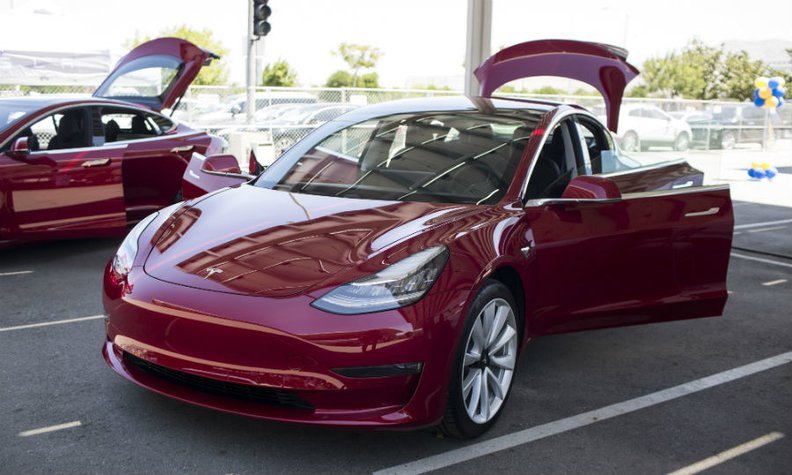
Almost one-third of all new cars sold in Norway last year ran on batteries, reinforcing the Nordic country’s reputation as the world’s best market for electric vehicles.

Oil-rich Norway aims to eliminate all emissions from new cars by 2025, and offers generous subsidies for buyers who opt to go electric. Other countries, including China, plan to follow suit later.

In 2018, all-electric cars made up 31.2 percent of the Norwegian market, an improvement of more than 10 percentage points from the the previous year, the Norwegian Road Federation said.

Three of the five most popular models were electric, with the Leaf from Nissan claiming the top spot, ahead of BMW’s i3 and Tesla’s Model X.

“In 2018, alternative-fuel cars consolidated their strong position in the market,” the federation’s director, Oyvind Solberg Thorsen, said in a statement.

Norway, a country of 5.3 million, has long been a world leader in sales of electric vehicles. It wasn’t until the first quarter of last year that it was surpassed by Germany, Europe’s biggest car market. The incentives that propped up the Norwegian market include exemption from sales taxes and road tolls.

Solberg Thorsen said he expects an even bigger share of battery-powered cars going forward, as there is still an untapped demand for more family-friendly electric vehicles, with longer range at reasonable prices.

“As more models reach the market this year, we should see an even larger share of zero-emission vehicles in the sales numbers,” Solberg Thorsen said.

January 21, 2019 0 comments
0 FacebookTwitterPinterestEmail
Terrorist

Russian state sponsored Muslim Terrorist suspect arrested in Norway ?

by Nadarajah Sethurupan January 19, 2019
written by Nadarajah Sethurupan

A Russian state sponsored Muslim Terrorist suspect arrested by Norway police, who suspect him to be the perpetrator of a knife attack which happened in Oslo on Thursday. The crime is being investigated as “terror-related” by the authorities.

According to Norwegian media, the Tuesday attack happened in a store and left a woman in critical condition, after a man in his 20s stabbed her.

The suspected perpetrator was arrested later and reportedly had a knife, which the police believe to have been used in the attack.

The suspect arrived to Norway from Bashkortostan, a predominantly Muslim region in southern Russia. The 20-year-old appears to have acted alone, but the police are now investigating his possible ties with jihadist groups.

Police were investigating possible links to Islamist extremism, adding that the victim was critically ill in hospital.
January 19, 2019 0 comments
0 FacebookTwitterPinterestEmail
Srilanka and Norway

Sri Lanka present at the Oslo Tourism Fair

by Nadarajah Sethurupan January 17, 2019
written by Nadarajah Sethurupan

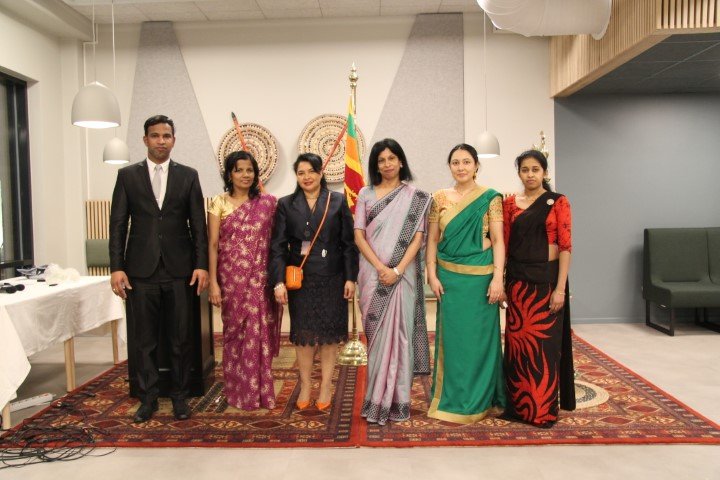
As is tradition, Sri Lanka’s tourist destination was present at the International Tourism Fair which is held every year for three days at the fairgrounds of Fornebu, Oslo, the Norwegian capital.

From January 11 through the 13, officials from The Sri Lanka Embassy in Oslo and the Sri Lanka Tourism Promotion Bureau, were in charge of Sri Lanka’s informative stand and exchanged with the attending public and specialized personnel from travel agencies and entities, reported Media.

Ambassador to Oslo Prof. Arusha Cooray visited the stand and confirmed the attendees’ interest in the Sri Lanka’s rich cultural heritage and unique facets to visitors. Mr. Rizwan Wadood from “Silver Tree”, Mr. Sugeeswara Dissanayake from “Ceylon Trails” and Mr. Arushan Lazarus from “Explore the Wonders” participated in and represented the Sri Lanka Travel Trade at the Fair, Sri Lankan Ministry of Foreign Affairs said.

https://www.youtube.com/watch?v=cKaEucUG_ys

Children from the Sri Lankan expatriate community performed a dance item which demonstrated the vibrancy of Sri Lanka’s cultural traditions, which attracted a number of visitors to the Sri Lanka stall.

TV 2 Nyhetskanalen (TV 2 News Channel) is a 24-hour Norwegian language television news interviewed Sri Lanka’s Ambassador to Oslo Prof. Arusha Cooray, and telecast the cultural performance by the children on 11 January 2019 giving wide publicity to the Sri Lanka Stand.

Sri Lanka’s presence at the Fair contributes to strengthening ties with tour operators from the Scandinavian region, as well as the tourism operation from that market, whose interest in the Sri Lankan destination has gradually increased in recent years.

Reiselivsmessen Oslo has become one of the most popular and important international meeting places for the travel industry worldwide.

At the fair, the travel industry meets with an enthusiast, travel addict and curious business attendees, and can find inspiration and get the information they are looking for, all combined with cultural experiences.

It invites several exhibitors from different business branches and will meet with a committed traveler in search of public and general public.

January 17, 2019 0 comments
0 FacebookTwitterPinterestEmail
NATO and Norway

INF Treaty withdrawal from February 2, – USA Under Secretary for Arms Control and International Security

by Nadarajah Sethurupan January 17, 2019
written by Nadarajah Sethurupan

The US will begin its withdrawal from the Intermediate-Range Nuclear Forces Treaty with Russia on February 2, Under Secretary of State for Arms Control Andrea Thompson told NATO officials in Brussels.

Washington’s unilateral withdrawal from the treaty – originally signed by the United States and Russia in 1987 – comes after negotiations in Geneva, Switzerland, fell through on Tuesday. Thompson claimed that Russia is in breach of the treaty, and that Moscow’s 9M729 missile system violates the terms of the agreement.

Andrea L. Thompson, Under Secretary for Arms Control and International Security

Under the agreement, signed by Ronald Reagan and Mikhail Gorbachev in 1987, land-launched nuclear missiles with a range between 500 and 5,500 km are banned. Washington claims, without evidence, that the 9M729 has a range greater than 500 km and is therefore in violation of the treaty.

The under-secretary of state for arms control and international security, Andrea Thompson, confirmed the US intention to withdraw from the treaty after a meeting with a Russian delegation in Geneva, which both sides described as a failure.

“We explained to our Russian counterparts specifically what they would need to do in order to return to compliance in a manner that we can confirm, verifiable destruction of the non-compliant system,” Thompson said.

“To see the missile does not confirm that distance that missile can travel, and at the end of the day that’s the violation of the treaty,” Thompson said in a phone briefing for reporters.

“We’ve spent years trying to get something – anything – out of the Russians on INF. The Russian offer of an exhibition of the 9M729 is not enough, but it is something,” Alexandra Bell, a former senior state department official who is now senior policy director at the Centre for Arms Control and Non-Proliferation.

“Perhaps it is a foundation on which to build. Not trying to take advantage of this opportunity is to leave diplomatic options on the table and that’s just foolish.”

Daryl Kimball, the head of the Arms Control Association said: “If the INF is terminated on 2 August, there will be nothing to prevent Russia from deploying nuclear missiles that threaten Europe and the Trump administration will have no hesitation in pursuing the deployment of INF-prohibited weapons in Europe.”

Below is a full rush transcript of the press conference by Andrea L. Thompson, Under Secretary for Arms Control and International Security.

Under Secretary Thompson: I’m Andrea Thompson.  I’m the Under Secretary for Arms Control and International Security at the State Department.  We arrived at NATO headquarters today in Brussels and just a few hours ago I briefed our NATO allies with a topic of great importance, and that’s the INF Treaty.  

You may know that yesterday I led an interagency delegation.  We flew to Geneva and met with the Russian Deputy Foreign Minister, Sergei Ryabkov.  They requested a meeting in December and we said yep, we’re willing to listen.  So we took a high-level delegation to discuss the INF Treaty with my Russian counterpart.

Our message was very clear to the Deputy Foreign Minister and his team, that Russia must return to full and verifiable compliance with the INF Treaty.  I’d also like to remind folks that maybe haven’t followed this topic as closely, that this is after more than five years of our U.S. and allied diplomacy on INF.  This is across multiple administrations, again, and five-plus years, both with us and NATO and others.  In that time we’ve raised repeatedly the Russian non-compliance on over 30 occasions.  So again, some folks may have the tendency to think this is a new problem.  This is not a new problem, this is a new solution, over 30 occasions.

You also might remember December 4th Secretary Pompeo announced the U.S. finding that Russia is in material breach of the obligations under the INF Treaty.  Again, NATO has strongly supported this announcement.  They’ve been very clear that it’s incumbent on Russia to return to compliance.

So yesterday in Geneva, again, we outlined our U.S. concerns with Russia’s non-compliance.  We explained to our Russian counterparts specifically what they would need to do in order to return to compliance in a manner that we could confirm, against verifiable destruction of the non-compliant system.  And I’d like to reiterate that.  Verifiable.  Some of the measures that we can probably get asked about and talk about here today are not able to be verified, so it’s important to uphold the arms control regime that we have verifiable results.

Disappointingly but not surprising, we weren’t able to break any new ground yesterday with Russia.  And I’d also like to remind folks that this continued violation, it’s not only a European threat but it’s a threat to global security and our allies are at risk because of it.

Again, as I mentioned, we approached yesterday’s meeting in good faith.  I told the Deputy Foreign Minister I was there to listen.  I was there to listen to how they were going to get back into compliance, and this was their opportunity to do so.

We reaffirmed that the INF Treaty, all parties must comply.  It’s in the national security interest for the United States, but Russia continues to violate the treaty and we continue to abide by it.  That’s what’s been [inaudible].  We also saw no indications based on previous discussions, previous engagement and yesterday’s meeting that Russia is choosing to return to compliance.

I also reminded them for arms control to serve its purpose, for arms control to work, all parties must comply and violations have to have consequences.  Again, they’ve been in violation for over five years.  We’re now taking action to remedy that.

I also reminded the Deputy Foreign Minister that Russia has a choice.  They can either have a non-compliant system or it can have the INF Treaty, but it can no longer have both.

Again, I’m open to your questions, and I appreciate you making time this evening to talk about a very important topic.  Thank you so much.

Question: Minister Lavrov was saying today that Moscow offered Washington virtually to see this discussed missile of Russia, but United States refused to do so.  He actually accused USA that Washington is not willing to go into some substantial talks. What do you think of that?  And what do you think will be the future after United States will withdraw from the treaty?

Under Secretary Thompson:  Thank you, No surprises in the rhetoric from my Russian colleagues.  To see the missile does not confirm that distance that missile can travel, and at the end of the day that’s the violation of the treaty.  They have a system that overshoots, extends the range allowed in the INF Treaty.  To see a static missile, to see a static launch system does not tell me how far that missile can fly.

Also, seeing a test that the Russian military would control, again, they will select their own system and missile.  It needs to be verifiable.  All the offers that the Russian delegation made yesterday, none of them, and I reiterate that, none of their “transparent measures” were verifiable under the arms control regime.

The future of this treaty, again, the ball’s in Russia’s court.  They have until February 2nd under this initial announcement.  If they’re not back in compliance by February 2nd, we will suspend our obligations.  They have six more months after that to get back into compliance.

Again, the next step’s on Russia.  The point you make of Russia asking for more dialogue — five years we’ve been meeting at the table.  Met again yesterday.  And their story has not changed.  It’s the continued false reporting and non-compliance.

So we’re not, the opportunity, again, we came and talked yesterday.  It’s time for their action.

Question: what’s going to happen next when it comes to a U.S.-Russian arms control and strategic stability dialogue?  If there even would be a regular dialogue on these issues between the two countries.  I mean the Guardian reported in October, as you probably know, that the NSA, that Ambassador Bolton was opposing the resumption of these talks.  So my question is, is the United States ready and willing to engage Russia in the strategic stability dialogue? And as a follow-up to that, what are the odds now, would you say, on extending for another five years the New START?  Has anything changed because of the INF Treaty? 

Under Secretary Thompson: Again, I’d just like to remind folks that we’re also meeting our obligations to the New START Treaty.  Both Russia and the U.S. met our central limits in February, and we continue to meet our obligations.  We have a couple more years on that treaty before it’s due to expire and as we’ve mentioned, the discussions yesterday were INF related, not New START related.  But I did raise with the Deputy Foreign Minister the importance of, again, the arms control regime only works if you abide by the treaties.

So folks want to talk about New START, and I tell folks they’re not linked to one another, but when you have a party that’s violating one treaty it doesn’t lend much promise to the subsequent treaty.

And in reference to the strategic stability talks, we’ve had meetings with the President, Secretary Pompeo’s met with the Foreign Minister, the National Security Advisor has met, I’ve met with my counterpart.  So the door’s open.  We’re having discussions with our Russian counterparts.  Again, we just met again yesterday.  So the door’s open.  There’s been dialogue.  There just hasn’t been positive action from the other side of the table. 

Question:  The New York Times reported back in October that for the past four years the United States has argued that Russia is in violation of the INF Treaty, but that President Barack Obama chose not to leave the agreement because of objections from the Europeans and particularly from Germany.  Can you confirm this?

Under Secretary Thompson:  I would not speak for the previous administration.  I’d like to speak for the here and now.  Germany’s been a steadfast partner.  The President’s engagement with Chancellor Merkel was an important part of the discussions that we’ve had.  We continue to engage with my German counterpart, and Germany’s been a steadfast ally.  I appreciate the support, both from my counterparts in the government and as well from the public.  So the information sharing has increased and we continue to stand with one another.  So I appreciate the support from my German counterpart.

Question: if you can give me a political opinion on the Vladimir Putin’s visit to Belgrade these days, and indeed for his visit to Serbia, actually to Serbia.  The Russian President told some Serbian media that the U.S. policy plays a destabilizing factor on the Balkans.  And then the Prespa agreement signed between Greece and Macedonia has been signed under foreign pressure and the Republic of Macedonia has been forcefully drawn into NATO military alliance. Will you please tell me your opinion on Mr. Putin’s latest comments against the U.S., the EU and NATO policies on the Balkans?  Again, for the Serbia media.  Thank you.

Under Secretary Thompson: President Putin’s comments didn’t pertain to the INF.  I can tell you that I’ve had the great opportunity to not only serve in the Balkans, but also visit the Balkans with the Vice President during my time as a national security advisor.  Again, an important ally and continued development in the region, also engaged heavily with this administration with Macedonia.  You saw the successful vote.  Again important partners in the region, this administration continues to support all of the improvements in that area and I don’t give much credence to the rhetoric and propaganda from President Putin.

Question:  Could you elaborate a little bit on what you said the verifiable assurances.  You mentioned missile range.  So how exactly do you verify how far a missile flies?  Thanks.

Under Secretary Thompson: Without getting too much into the technical portions of this, and again, much of it is classified as you can imagine.  I would really encourage the Russians to actually tell us how they’re going to get their system back into compliance because they know the system best.  We did raise that yesterday and said the missile range that we know from testing and our intelligence and information that we’ve shared with our partners and allies, that it violates the treaty.  They know their system best.  They know exactly what they need to do to get that system back into compliance.

Question:  After the United States withdraws from this treaty will Washington deploy missiles prohibited by the treaty in Europe?

Under Secretary Thompson:  Alexandr, we’re suspending our obligations.  We suspend our obligations if, again, if Russia does not get back into compliance.  So we’ve been abiding by the treaty.  We’ve been not doing the research and development that our Russian counterparts have.  So we will continue to abide by the treaty up until that date, and then we’ll make the decision whether we will suspend our obligations.  Thanks so much.

Question:  if you could maybe speak a little bit about the overall mood at the discussion table.  Other than disagreement over the treaty itself, how does the overall Russia-U.S. relationship at the moment reflect in those discussions?

Under Secretary Thompson:  Thanks, Carlo.  I will tell you that it was a very professional mood.  It was candid.  We were very open with one another.  Again, I opened with the Deputy Foreign Minister, said I’m here to listen.  I brought a senior team, he did as well.  There wasn’t a time constraint.  It wasn’t hey, we’re only going to meet for 30 minutes or only going to meet for an hour.  We met as long as it took to get to a place where we felt that at that point we weren’t going to make movement on either side.  But it was a professional conversation, it was a candid conversation, and both teams sent high-level delegations, sent the right people to come to the table with the discussion.

Question:  You had consultations yesterday with Russia’s Deputy Foreign Minister.  Are you planning to have more consultations before Russia’s INF compliance deadline in February?

Under Secretary Thompson:  Thanks Maria.  We don’t have any currently scheduled engagements.  Again, we just had one yesterday, so we need to give, and Russia did request time to go back and assess some of the things that we presented.  We have not had an offer to meet again.  There are other, I will tell you, I have a broad arms control portfolio that also covers nonproliferation and political/military affairs, so there may be engagements where the Deputy Foreign Minister will be there.  That may happen in the next couple of weeks.  But we don’t have any INF specific meetings scheduled at this time.

Question:  Was there any discussion of any kind of quid pro quo?  The Russians have complained about U.S. missile defense launchers I believe that could launch offensive weapons.  Was there any discussion of the mutual verifiable checks and balances on those systems?

Under Secretary Thompson:  Yes, Julian.  They did raise their counterpoint.  Interesting that each of the systems that they raised are in compliance with the treaty.  And we went step by step and gave them the information.  They’ve already had that information, raised it in previous engagements, but we raised it again yesterday on why the systems that they raised are compliant and again have gotten, we need the validation, but our NATO partners have also been very consistent in that as well.  But our systems continue to be in compliance with the treaty.  But they did raise it.

Question: Could you please elaborate on the term that you used, the suspension.  What does a suspension mean?  Does it that you do not quit the treaty? 

Under Secretary Thompson:  Thanks, Mikhail.  Suspension means we suspend our obligations under the treaty.  So what that means is we can conduct the research and development of systems that previously were not allowed under the treaty.  So our obligations are suspended under the treaty.  Thank you.

Question: If the INF Treaty is terminated, will the United States support or entertain mutual restrictions on the deployments of INF missiles that threaten Europe or may be deployed in Europe as a substitute for the INF Treaty?

Under Secretary Thompson:  Thanks, Kelsey.  We didn’t talk hypotheticals in this meeting.  We talked facts and data and what it would take to get Russia back into compliance.  So we didn’t raise any hypotheticals.  I will leave the missile and defense planning to my Department of Defense counterparts which I’m sure are working this hard.

Question:  Did the United States consult with the UK and other NATO partners ahead of the decision to withdraw from the INF Treaty?  And what views have they expressed on the decision?

Under Secretary Thompson:  Thanks, James.  I wouldn’t want to talk withdraw because we haven’t had that discussion.  So yes, we did consult with our key partners and allies, the UK being one of many, on what that means, and continue engaginh.  We had additional meetings again today.  So the UK continues to be a steadfast partner for us.

Question: I understood that next Wednesday there will be a NATO-Russia Council.  So my question would be what do you expect of the meeting?  And do you think you could convince Russia to give in with the help of the Russian allies?

Under Secretary Thompson:  Thanks, Christoph.  Tentatively, I don’t know if the date has been set for the NATO-Russia Council.  Again, we talked about that today.  Our NATO counterparts are appreciative it is another opportunity to engage.  The Russians, again, have had recent information.  They can take the information from yesterday.  We also shared some of the steps with our NATO counterparts, so it’s another opportunity.  I hope Russia uses this opportunity to talk about how they’re going to get back into compliance.

Question:  Can you please elaborate on what is your overall assessment of Russian missile forces today?  Because there are many reports of real modernization of Russian weapons now including statements of Mr. Putin about new arms.  What do you think of that? 

Under Secretary Thompson: I think they continue to violate arms control treaties.  I think they continue to put partners and allies at risk.  I think they continue to field battalions that aren’t authorized under the treaties that they’ve signed.  And I think they should be more truthful in their assessments in doing so.

Question:  I would like to know whether there are any talks of including additional countries into treaties of arms control like China or Pakistan, if it came up at all?  And if it didn’t come up, can you just comment on the need to talk not only with Russia but with many more countries?

Under Secretary Thompson:  Thanks, Christoph.  No, the INF Treaty, we’ll continue to engage with the partners that are signed by the treaty, and it did not come up in our discussions with our Russian counterparts.  We do have, obviously, relationships with a myriad of countries.  For the INF Treaty, the discussions, we’ve tailored it to that with the discussions yesterday in Geneva.

Under Secretary Thompson:  Again, it’s an important audience as our partners and allies and what they read and hear.  And so I appreciate you making the time to help with clarifying any questions you may have, and taking the time this evening to seek more insight on the INF Treaty.  It’s an incredibly important treaty, both to the United States and to our partners and allies, and again, it’s up to Russia to get back into compliance.

But truly, thanks for making the time tonight, everyone.

Andrea L. Thompson, Under Secretary for Arms Control and International Security

Andrea L. Thompson, Under Secretary for Arms Control and International Security

Andrea L. Thompson was confirmed as Under Secretary for Arms Control and International Security on April 26, 2018. Before her arrival at the Department of State, Under Secretary Thompson served as the Deputy Assistant to the President and National Security Advisor to the Vice President.

Prior to her tenure at the White House, Under Secretary Thompson served as the Director of the McChrystal Group Leadership Institute. She brings more than 25 years of service in the United States military to her role, including deployments on multiple combat tours, such as: Intelligence Directorate/J2 Chief of Staff in Afghanistan, Senior Intelligence Officer for MultiNational Division (North) in Iraq, as well as tours in Iraq, Bosnia, and operational and strategic deployments around the world.

Under Secretary Thompson also served as the National Security Advisor for the Chairman, U.S. House of Representatives Committee on Homeland Security and Senior Military Advisor to the Chairman, U.S. House of Representatives Foreign Affairs Committee.

January 17, 2019 0 comments
0 FacebookTwitterPinterestEmail
Defence

1,000 elite Royal Marine commandos in Norway

by Nadarajah Sethurupan January 16, 2019
written by Nadarajah Sethurupan

Prince Harry is preparing to attend winter war-games in Norway, lending his support to elite British troops as they practice a massive mock counterattack against Russia.

The Royal will join more than 1,000 elite Royal Marine commandos to practice a defence of the Scandinavian nation against a putative Russian invasion, which is seen as being a potential site of invasion by the Kremlin.

It is reportedly set to be one of Britain’s biggest Arctic military exercises in 20 years.

The demonstration is designed to be seen as a show of strength against Putin’s Russia=, amid fierce geopolitical tensions resembling the worst of the Cold War.

In 2017, Prince Harry replaced the Duke of Edinburgh as ceremonial head of the Royal Marines.

The 34-year-old former Army Captain will spend several days observing the multi-million pound war games, with his appearance signed off by Defence Secretary Gavin Williamson. 

It is not clear if Prince Harry’s pregnant wife Meghan will be making the trip to Norway or staying in Britain. 

A military source last night confirmed that Prince Harry would be attending the war games on an official visit.

‘He won’t be in uniform, it is a visit. He’s going to show his support for the troops’, the source told the Mail.

A senior military source told the Mirror: ‘It will be high-tempo, extremely realistic and his involvement is good news for the Marines, who will see his involvement as a very positive message of encouragement to the Corps.

‘They are the main force who will protect Europe’s northern flank in the event of a conflict, the tip of the spear, and it is important Harry is among the troops.’

The 8000-strong demonstration will reportedly include light-armoured Marine vehicles, mortar, rocket, artillery and anti-tank attacks. The ‘battle’ is said to involve special forces and commandos leading a retaliation against a Russian invasion.

Prince Harry, who has previously fought for the army and discussed killing Taliban insurgents while piloting an Apache helicopter in Afghanistan, reportedly told close friends he is overjoyed at being back in the military fold.

A royal insider told the Mirror: ‘The duke is relishing his role with the Royal Marines and taking it extremely seriously.

‘His grandfather Prince Philip carried out his duty with the Marines with such distinction, which Harry particularly admired.

‘Throughout his military career, Harry always had the greatest of respect and admiration for the Marines and he has always been fascinated by their valour and courage.’

It comes amid increasingly fraught and tempestuous relations between Russia and Europe, with frequent Russian incursions reported in UK airspace.

Relations have been at an all-time low since two Kremlin agents attempted to poison former Russian spy Sergei Skripal and his daughter Yulia in the Salisbury novichok attack last year.

And Foreign Secretary Jeremy Hunt yesterday issued a further warning to Moscow after it emerged that a man arrested on espionage charges in Russia has joint American-British citizenship.

Mr Hunt said that that Paul Whelan, 48, should not be used as a ‘pawn in diplomatic chess games’ after he was accused by the Kremlin of obtaining state secrets.

Prince Harry is set to fly out to Norway from RAF BRIZE Norton jn Oxfordshire in the coming weeks.

He will then head out to a remote military base to join British troops from 42 Commando, American, Dutch and Norwegian combat marines.

Around 8000 soldiers will be involved in the demonstration, including forces from both the US and Europe.

(dailymail)


January 16, 2019 0 comments
0 FacebookTwitterPinterestEmail
Environment

Electric car sales hit 31.2% of all sales in Norway

by Nadarajah Sethurupan January 14, 2019
written by Nadarajah Sethurupan

New electric vehicles (EVs) sales in Norway rose to a new record high, accounting for about a third of the total number of vehicles sold in 2018, according to official data.

The independent Norwegian Road Federation (NRF) said Wednesday that battery-driven vehicles’ sales surged to 31.2% of all sales recorded in 2018, from 20.8% in 2017 and 5.5% in 2013, while sales of fossil-fuelled cars plunged, Reuters reported.

EV sales soared 40% to 46,092 in 2018, whereas sales of diesel and petrol vehicles tumbled 28% and 17%, respectively.

Generally, new car sales in Norway dropped 6.8% to 147,929 vehicles in 2018, the NRF’s data indicated.

“It was a small step closer to the 2025 goal,” according to NRF head Oeyvind Solberg Thorsen, who added that Norway’s parliament was hoping to make all new cars emissions-free.

Norway’s share of EVs accounted for 39% in 2017, followed by Iceland with 12% and Sweden with 6%. Meanwhile, such electric cars had a 2.2% share in China in 2017 and 1.2% in the United States, data by the International Energy Agency (IEA) indicated.

January 14, 2019 0 comments
0 FacebookTwitterPinterestEmail
Norwegian Aid

Norway provides NOK 75 million to UN Peacebuilding Fund

by Nadarajah Sethurupan January 12, 2019
written by Nadarajah Sethurupan

Norway is providing NOK 75 million to the UN Peacebuilding Fund. A good deal of this funding will be channelled to the vulnerable Sahel region.

 ‘The Peacebuilding Fund works to prevent and resolve conflicts in countries affected by fragility in regions close to us, such as the Sahel. We are therefore making an additional contribution to the Fund,’ said Minister of Foreign Affairs Ine Eriksen Søreide.

The Peacebuilding Fund has proven itself to be one of the UN’s most effective tools for stabilising countries that are emerging from conflict, and for preventing conflicts from flaring up again. The Peacebuilding Fund has intensified its efforts in the Sahel region considerably in 2018, which accords well with Norway’s own priorities.  

‘The countries in the Sahel and Lake Chad regions are badly affected by conflict, poverty and the impacts of climate change. Because of the Sahel’s proximity to Europe, the situation in the region also affects Europe’s security and welfare, and is doing so to an increasing degree,’ said Ms Eriksen Søreide.

Weak state structures and porous borders have enabled Islamist terrorist groups to gain a foothold in the Sahel. Conflicts are threatening stability in several countries in the region, and have caused the civilian population enormous suffering. The human cost of people smuggling and irregular migration to Europe through the Sahel is huge.

On 10 September, the Government launched a strategy for Norway’s efforts in the Sahel regionfor the period 2018-20, and the increased support for the Peacebuilding Fund is part of the follow-up of the strategy.

The UN Peacebuilding Fund was established to strengthen the UN system’s capacity for strategic, long-term peacebuilding. Norway has contributed to the Fund since its launch in 2006.

January 12, 2019 0 comments
0 FacebookTwitterPinterestEmail
Norwegian American

Signing of U.S. – Norway Bilateral Maritime Arrangement

by Nadarajah Sethurupan January 12, 2019
written by Nadarajah Sethurupan

January 9th 2019, the United States and Government of Norway signed an Arrangement which advances maritime threat response collaboration between the two nations. At a ceremony, hosted by the White House National Security Council, the Arrangement was signed by the Norwegian Defense Attaché to the US Rear Admiral Ole M. Sandquist and the Director of the U.S. Global Maritime Operational Threat Response Coordination Center, Scott Genovese.

Norway and The United States signed a Bilateral Maritime Arrangement. Credit: FD

The Arrangement provides Norway and the United States the ability to fully coordinate on emerging maritime threats affecting both nations.

The innovative Arrangement between the national level operations and coordination centers of the United States and Norway will improve the response to maritime terrorism, piracy, drug and human trafficking, maritime cyber attacks, public health threats, marine pollution, and related wide ranging Arctic challenges.

The signing of the Arrangement is important as it complements and reinforces the long-standing cooperation between our nations.

January 12, 2019 0 comments
0 FacebookTwitterPinterestEmail
Economics

Kongsberg to integrate SeaProc e-procurement platform

by Nadarajah Sethurupan January 11, 2019
written by Nadarajah Sethurupan

Norway-based fleet management company Kongsberg has announced partnering with iMarine Software to integrate the its SeaProc e-procurement platform.

K-Fleet, Kongsberg’s existng system, offers solutions to optimise and assist users’ working processes within planned maintenance, inventory management, procurement, QSE, documentation, forms, certificates, voyage reporting and fleet operations.

With the announcement of full integration between the SeaProc e-procurement platform and Kongsberg K-Fleet Purchase, buyers are now offered speed, accuracy and ease in handling transactions. requests for quote, quotations, purchase orders, contracts, invoicing and delivery receipts are directly interfaced. This allows buyers to conduct their daily activities within the K-Fleet procurement system as all communications, transactions and negotiations can be handled internally.

iMarine Software developed and manages SeaProc, a source-to-settle cloud procurement solution powered by Amazon Web Services. SeaProc connects ship operators with over 50,000 vendors globally and provides a unified platform for managing and monitoring technical trading, contract management, e-invoicing, logistics, business reporting and trading rule management in a scalable and secure environment.

January 11, 2019 0 comments
0 FacebookTwitterPinterestEmail
Asia and Norway

Malaysia warns Norway

by Nadarajah Sethurupan January 10, 2019
written by Nadarajah Sethurupan

Malaysia urged Norway to review its decision to ban palm oil-based biofuels and flagged such a move will be a hurdle to successful conclusion of ongoing talks with the four-nation European Free Trade Association.

The stand against palm oil will “adversely affect” bilateral trade relations between Malaysia and the European Free Trade Association that includes Norway, Malaysia’s Primary Industries Minister Teresa Kok said in a statement Friday.

Norway’s move “would be a major obstacle towards a successful conclusion of the Malaysia-EFTA partnership talks,” Kok said. “Malaysia would factor in such actions carefully in our deliberations with the EFTA.”

The European Free Trade Association consists of Iceland, Liechtenstein, Norway and Switzerland. The four nations are non-members of the European Union. Malaysia suspended negotiation with the European Union on free trade in 2012 and had sharply protested earlier this year the E.U.’s decision to ban the use of palm oil in motor fuels from 2021.

A large part of palm oil shipments to the E.U. are used as a substitute for the crude oil to make bio-fuel. A curb on such usage threatens the palm oil industry as it could potentially choke global demand for the edible oil that is used in everything from lipsticks to ice creams. The E.U, which was the second largest export destination of Malaysian palm oil in 2017 after India, accounted for 12% of the commodity’s overseas shipments.

Malaysia’s latest response follows the Norwegian parliament’s vote early this month to limit and phase out palm oil through measures and taxing biofuels beginning 2020. The vote will make Norway the first country in the world to ban biofuels based on palm oil over links to deforestation.

Malaysia and Indonesia, which together produce over 80% of the global supply of the edible oil, have long complained that measures to restrict palm oil are discriminatory and unjustified.

“Malaysia-EFTA partnership agreement must provide fair market access to all of the countries involved, including fair treatment of sustainable palm oil produced in Malaysia,” Kok said. “Without this fair market access, it will not be in the interest of Malaysia to pursue what will be a bad deal for the country and its people.”

Malaysia and Indonesia, which together produce over 80% of the global supply of the edible oil, have long complained that measures to restrict palm oil are discriminatory and unjustified.   © Reuters

The Southeast Asian country shipped a mere 846 tons of its palm oil to Norway, according to data from the Malaysian Palm Oil Board. Exports of palm oil to EFTA countries meanwhile account for less than 1% of its total 15.1 million tons sold abroad.

However, environmentalists have been pushing other countries to emulate Norway’s move, raising concerns in Malaysia where livelihood of some 650,000 smallholders are at stake.

“The Norwegian parliament’s decision sets an important example to other countries and underlines the need for a serious reform of the world’s palm oil industry,” Nils Hermann Ranum of Rainforest Foundation Norway said in a statement.

On its part, Malaysia said the government is implementing measures to ensure its entire palm oil production and supply chain are sustainable. The government has also pledged to halt any expansion of oil palm estates to maintain at least 50% of its land as forest cover.

Negotiations for EFTA are still ongoing with Norway though bilateral talks, including that on palm oil, said Malaysia’s International Trade Minister Darell Leiking. “We hope that Norway will continue with what we agree upon,” he said without elaborating on the terms.

Malaysia responded to an earlier European Union proposal to ban the use of palm oil in biofuels by threatening to scuttle free trade talks between the Association of Southeast Asian Nations, of which it is a member, and the bloc. Collectively, the EU bought 1.82 million tons of palm oil from Malaysia.

The Asean, which includes 10 countries, and the EU agreed last year to try and revive trade negotiations, which were suspended in 2009. Since then, the EU has started bilateral negotiations with some individual countries.

(asia.nikkei)

January 10, 2019 0 comments
0 FacebookTwitterPinterestEmail
Crimes

Missing Wife of Norwegian Tycoon Was Likely Kidnapped as Captors Demand Ransom: Police

by Nadarajah Sethurupan January 9, 2019
written by Nadarajah Sethurupan

The wife of a Norwegian multimillionaire missing since Oct. 31 probably has been kidnapped, police said Wednesday, adding that her suspected abductors have demanded a ransom reported to be over $10 million.

Police say they have no suspects in the disappearance of Anne-Elisabeth Falkevik Hagen, the 68-year-old wife of Tom Hagen — a media-shy real estate investor and owner of an electric company.

He is number 172 on a list of Norway’s wealthiest people published by the financial magazine Kapital, with a fortune that amounted to nearly 1.7 billion kroner ($200 million) in 2018, according to Norwegian news agency NTB.

This is an undated handout picture distributed by Norwegian police on Wednesday, Jan. 9, 2019 of Anne-Elisabeth Falkevik Hagen, the wife of the Norwegian billionaire Tom Hagen. Norwegian police say the missing wife of one of Norway’s richest men has been abducted, and that her suspected kidnappers have demanded a ransom of 9-million euro ($10.3-million.) it was reported on Wednesday, Jan. 9, 2019. (Norway Police via AP)

Justice Minister Tor Mikkel Wara told NTB that he was told about her disappearance right after it happened.

“The reason for us to go public with this case now is that, despite a broad and extensive investigation, we need more information,” chief police investigator Tommy Broeske told a news conference.

Police have been “on the case for several weeks,” but have no suspects, Broeske told a news conference. Police have received no signs whether Falkevik Hagen was still alive, “but we haven’t either received any sign that she is not alive,” he added.

A note found in the couple’s house, east of Oslo, said Falkevik Hagen would be killed if the ransom wasn’t paid in the cryptocurrency Monero or if the police got involved, according to Norway’s VG newspaper.

Broeske declined to comment other than saying “the threats (in the note) were of a very serious character.”

Police did not give a figure for the ransom, but the newspaper reported it was 9 million euros ($10.3 million.)

Those behind the abduction “have chosen to communicate digitally and we have had no other type of contact,” Broeske said. Police urged the family not to pay any ransom.

The couple lived “a rather anonymous lifestyle,” according to Norwegian broadcaster NRK.

Svein Holden, Hagen’s lawyer, told reporters the abduction was “a cruel and an inhuman act.”

“It is demanding and exhausting to be in such a situation over a long period of time,” he said.

Police believe she disappeared from the couple’s home, some 50 kilometers (30 miles) from the Swedish border. Broeske said they were working with Europol and Interpol on the case.

January 9, 2019 0 comments
0 FacebookTwitterPinterestEmail
Defence

Lithuania to step up air defense with air missiles

by Nadarajah Sethurupan January 9, 2019
written by Nadarajah Sethurupan

Lithuania is to purchase additionally battle and training missiles to its Nasams air defense system from the Norway’s Defense Ministry to step up air defense, the Lithuanian Defense Ministry announced on Thursday.

The representatives of Lithuanian and Norwegian defense ministries signed a technical agreement on procuring battle and training missiles for mid-range air defense systems Nasams from Norway’s defense ministry, according to the announcement from the Lithuanian Defense Ministry.

The agreement to purchase battle and training missiles is a supplement to last year’s agreement worth 110 million euros to purchase air defense systems Nasams from Norwegian manufacturer Kongsberg.

“This additional purchase is one more step closer to implementation of Nasams mid-range air defense system in Lithuanian Army,” Colonel Dainius Guzas, commander of Lithuanian Air Defense, said in a statement.

The Lithuanian Defense Ministry didn’t disclose the terms of additional purchase of the battle and training missiles from the Norway’s Defense Ministry, though noted that the agreement had been made “on very favorable terms”.

The Nasams mid-range air defense systems purchased by Lithuania are capable of destroying aircrafts and missiles at the range of “dozens of kilometers”, according to Lithuanian Defense Ministry.

(delfi)


January 9, 2019 0 comments
0 FacebookTwitterPinterestEmail
Spy War

Plots of the Mullahs’ Intelligence Ministry and Embassy in Norway

by Nadarajah Sethurupan January 9, 2019
written by Nadarajah Sethurupan

Statement of the Representative Office of the National Council of Resistance of Iran in Norway

The clerical regime’s terrorist plot in Europe in 2018, organized by the diplomats and embassies of the religious fascism ruling Iran, has made a review in relations with this regime ever more necessary. In 2018, the regime’s terrorist plots spanned over Albania, France, Belgium, Germany, the Netherlands, Norway and Denmark. In the same year a terrorist-diplomat of the regime was arrested in Germany and handed over to Belgian judiciary, the regime’s ambassador and the head of Iran’s Intelligence station in Albania, and three other diplomat-terrorist of this regime were expelled from France and the Netherlands.

Developments in 2018 showed that the clerical regime and its ambassadors and diplomats in Norway, severely abuse the embassy and facilities to advance their terrorist and spying purposes. That includes imposing two agents by the names of Bahareh Heydari and Mohammad Davoodzadeh as refugees, entrapping the Minister of Fisheries of Norway through the same female agent and bringing him to Iran and getting his information through his mobile phone. The representative of the National Council of Resistance of Iran in this regard calls for the opening of a judicial case in Norway.

The NCRI representative also stresses the need and urgency of listing the mullahs’ Ministry of Intelligence (MOIS) as terrorist entity, and the prosecution and sentencing of agents and mercenaries of the religious fascism and expelling them from Norway and other European countries and in particular the revocation of their refugee status. The agents and mercenaries of the mullahs’ religious fascism in Norway and those who, under any pretext, directly or indirectly, interact with the Iranian regime and co-operate in some ways with it and at the same time use refugee or asylum seeker status, are not entitled to asylum. They are criminals who undermine the security of real asylum seekers and Iranian dissidents, undermine the dignity and the right to asylum for freedom loving and noble Iranians, and also threaten the security of the host Per Sandberg country and its citizens. The following facts are remarkable:

1. Bahareh Heydari, wo was sent to Norway in 2006, has pursued a specific mission for many years. She, who has close ties with the ambassador, the embassy and regime officials, after having acquired a Norwegian citizenship, entrapped Norway’s Fisheries Minister, Per Sandberg. To this end, she established a fisheries trade company and a Norwegian-Iranian Friendship Association. According to the Norwegian press, the first meeting of this association was held at the office of the Minister of Fisheries. Bahareh Heydari accompanied Sandberg at a party of the regime’s ambassador in Oslo for Nowruz 1397 and then visited Iran at least twice. This ultimately led to the resignation of Sandberg from the government and his expulsion from his party. Trapping through women is a well-known method of the mullahs’ Intelligence that it has used repeatedly.

2. According to Aftenposten on December 21, the Norwegian Committee for “investigation into quarantine of government authorities,” condemned the meeting of Norwegian Fisheries Minister accompanied by Baharegh Heydari with an advisor to Rouhani at presidential palace of the mullahs in Tehran and promises of cooperation with the regime at this meeting as a clear violation of the laws of Norway and abuse of official authority.

3- At the Nowruz celebration of 1397 of the embassy, in addition to Bahareh Heydari and Per Sandberg, another intelligence agent, Mohammad Davoodzadeh, is also present in the front row and close to the regime’s ambassador. Davoodzadeh was arrested upon his return from Iran on October 21 at the Gothenberg airport in Sweden at the request of the Danish government on suspicion of involvement in terrorist plots against Iranian dissidents. He was sent to Norway in 2008 to pose as a refugee and obtain Norwegian citizenship, which provided him with a lot of facilities for performing the duties assigned by the Ministry of Intelligence. He traveled frequently to Iran despite having refugee status. This is a betrayal of all refugees and based on the Geneva Convention and the laws of Norway completely revokes his refugee status.

Davoodzadeh was tasked to get close to the PMOI and NCRI in Norway, but further research highlighted the suspicion of being a mercenary; the issue was communicated with Norwegian officials to prevent future terrorist plots and espionage.

4. As the scandal about relations with the religious fascism ruling Iran spread, Bahareh Heydari, along with Per Sandberg, try desperately to cover up this scandal by attacking the PMOI and the NCRI. In a book that the two published entitled “Foreign powers have entered,” they shamelessly claimed “Bahareh says she is neither affiliated with nor connected to the Iranian regime, and suspicions against her, indicating that she is a spy or secret agent, is only ludicrous.” On page 211 of the book, Per Sandberg ridiculously made himself loved by the mullahs and without providing any date or time or document, claimed that the tone of the representative of the National Council of Resistance of Iran, with “Bahareh was humiliating and ugly.” As if the representative of the Iranian Resistance has to praise the agents and collaborators of religious Gestapo!

5. The female agent, in order to hike her price for the mullahs, while claiming that she has no relationship or affiliation to the mullahs’ regime, in an interview with the Norwegian media says, “we want to go to Iran, but I’m worried that the PMOI will target me inside Iran.” Female agent shamelessly adds, “I have notified Iranian government officials about this and they assured me that during my visit to Iran they would protect me!!” (Aftenposten, August 27, and Adresseavisen, August 25, 2018).

6. The female agent, in a dirty scenario and lie claims, “Both on Facebook and Instagram has been threatened to be killed. His brother in Germany received a phone call from an active member of the PMOI in Norway that if he does not make her sister choke, they will not be silenced. He warned her (i.e. Bahareh) not to go out.” This criminal defamation is a ground for terrorism and further crimes by the mullahs against the Iranian Resistance and was categorically denied at the time from the NCRI Representative in the Aftenposten newspaper. (August 27, 2018)

7. The embassy of a regime that has executed thousands of PMOI heroine women and every day arrests scores of women for malveiling or being unveiled, and fines them and whips them, a regime that even forces foreign female officials to wear hijabs in teir trips to Iran, has accepted the cost of Bahareh Heydari’s clothing to participate in “Miss Iran!” contest in Europe! The same regime inside Iran throws acid on the faces of malweiled women who do not fully cover their hair, while none of them have the slightest resemblance in clothing to this “Miss Norway!” in the Norwegian “Se og Hør” magazine. (7 to 14 August 2018). To the confession of the female agent in the same magazine, the ambassador and embassy of the very same regime in Norway congratulated her on her victory in “Miss Norway” contest, and appreciated and welcomed her!

8. Vulgarity peaks when the female agent and Per Sandberg resort to another exposed agent, Trond Ali Lynstad, to slander foul against the PMOI. He became Shiite with the mullahs ruling Iran and repeats their slanders against the Iranian resistance; Repeated despicable charges such as torturing disenfranchised members, sect, the cult of personality, people’s hatred towards the PMOI and NCRI, treason, participation in the suppression of Iraqi Kurds and Shiites (pages 210 to 214 Same book).

Lynstad, the only Norwegian, who defends the two men in the service of the religious Gestapo, was for many years a member of the NKP party, a Norwegian version of the hated and traitor party of Tudeh, and a fierce “communist”. He, like Kianouri and Tabari – Tudeh Party leaders –became Muslim and Shiite overnight and declared Khomeini as his leader, changing his name to Trond Ali.

9. The invalidity of the lies that the religious Gestapo relays through the female agent and Per Sandberg that have been repeated thousands of times in the mullahs regime media in Iran, has been proven in dozens of courts in the US and Europe. According to the verdicts of the same courts, the United States and the European Union and the United Kingdom abolished the terrorist label against the PMOI and the National Council of Resistance of Iran. The Norwegian government announced from the onset that it did not accept the EU terrorist list and only accepts UN terrorist list.

10. Mrs. Maryam Rajavi, President-elect of the National Council of Resistance for the transition of governance to the Iranian people, in one of her travels to Norway in December 2009, met with Gunnar Sønsteby, the national hero of the Norwegian resistance against Hitler’s fascism, which was reported in Aftenposten December 6, 2009. When the reporter of Aftenposten asked the national champion of Norway about charges of terrorism and demonization against the Iranian Resistance, the Great Gunnar, pointing to Mrs. Rajavi said: “All resistances – that are fighting against dictatorships and for democracy – are poised to these accusations. Don’t listen to these things – we and the resistance movement and the Norwegian Milorg were also terrorists and anarchists and aggressors and torturers and so on!”

11. In December 2018 the Norwegian media wrote that the book has not sold more than fifty copies and the rest has remained unsold. The notorious authors of this book, angered by the credibility of the Iranian Resistance in Norway wrote:

– “Parviz Khazaei is known in Norway and by Norwegian media as a trusted source and expert, and political authorities and the parliament and even the Progressive party attach him to their chest and worship him like God.”

– “Neither Khazaei, nor other members of the National Council of Resistance of Iran, are willing to distance themselves from past actions of this group, be it the killing of civilians or being a close ally of Saddam Hussein in the fight against Iraqi Kurds and Shiite Muslims. Khazaei says: ‘We have carried out a legitimate war.’ (pages 213 and 214 of the same book). “

12. The National Council of Resistance of Iran and all its members are proud of having a history and record full of patriotism and freedom loving, and their actions not only were in line with freedom and popular sovereignty in Iran but also with peace in the region and the world, and preventing the spread of fundamentalism and terrorism and the formation of an “Islamic empire” and obtaining of atomic bombs by the religious fascism ruling Iran. In May 2011, a French judge announced in his decision that based on the French laws, the PMOI operations inside Iran were resistance operations and in Ashraf and Iraq has been the performance of a regular army, none of which is considered terrorism. As such, the case that the French government had opened against the Iranian resistance at the request of the Iranian regime in 2001with spending tens of millions of Euros under the pretext of terrorism, was closed forever.

13. Another patriotic pride of the Iranian Resistance is the exposing the regime’s nuclear sites and projects that have been acknowledged times and again by Western officials and the International Atomic Energy Agency (IAEA). When the NCRI at a press conference in Washington, DC, in 2002 disclosed sites in Arak and Natanz, no one in the world was aware of the efforts of the regime to obtain nuclear weapons, and the Iranian Resistance defused the project to obtain nuclear bomb by the religious fascism. Rouhani in his book titled “National Security and the nuclear diplomacy” wrote the IAEA had promised that by 2003, about 54 thousand centrifuges would work but the press conference of the PMOI and false accusations stalled everything.

14 – The mullahs’ foreign agents and enablers forget that Khomeini’s thesis was the Islamic version of the so-called “Mine Camp” of Hitler and explicitly called for a “global caliphate of Islam”. This idea has been named in the Introduction of the constitution of the regime as “The Union of Islamic Republics”. Iraq, with its 1,200 km border with Iran and the majority of the Shiite population was the first loop. The goal was shattered by the NCRI peace plan and the National Liberation Army (like Milorg of Norway) and forced Khomeini to drink the chalice of ceasefire and to end the eight-year war with deceptive slogans of conquest of Jerusalem via Karbala.

15 – The NCRI peace plan that was adopted in March 1983 had the support of 6,000 political leaders, government officials and parliamentarians, especially in the US and Europe, and was published as a book at that time. The NCRI peace plan fully secured Iran’s national interests, and put the 1975 Algiers accord, which the Iraqi government at the beginning of the war had declared null and void, as the basis for peace, and put getting compensation also on the agenda. At that time, many Arab countries announced they were ready to contribute to Iran’s compensation payments. But Khomeini and his anti-national policy of “war, war until victory” led to the point where today, 37 years after the Council’s peace plan, while it is 16 years that the puppets of the clerical regime rule in Iraq, the Iranian regime has failed to sign a peace deal with this government.
The NCRI representative points out once again that the demonization campaign of the clerical regime in Norway against the PMOI is part of the espionage and terrorism plans of the mullahs in Europe. The machine of disseminating fake news and demonization by this regime, using the “friendly journalists” of the Ministry of Intelligence, and thousands of fake Facebook, Twitter, Instagram, Google and other social media accounts and internet facilities, provides the grounds for espionage and terrorism plots.

The intelligence, terrorist and spy agents of religious fascism should not be allowed to commit further crimes. The time has come to expose and publish the names of the mercenaries and the affiliates of the regime and the trial and expulsion of them.

Representative of the National Council of Resistance of Iran
Oslo – January 6, 2019

January 9, 2019 0 comments
0 FacebookTwitterPinterestEmail
Newer Posts
Older Posts

Norwegian Nobel Prize 2025

101207 The Norwegian Nobel Committee has decided to award the Nobel Peace Prize for 2025 to Maria Corina Machado for her tireless work promoting democratic rights for the people of Venezuela and for her struggle to achieve a just and peaceful transition from dictatorship to democracy.

Special Interest

  • Africa and Norway
  • Asia and Norway
  • Asylum
  • China and Norway
  • Corruption in Norway
  • Crimes
  • Defence
  • Diplomatic relations
  • Economics
  • Environment
  • Farming
  • Killing
  • Media Freedom
  • Middle East and Norway
  • NATO and Norway
  • Nobel Peace Prize
  • Norwegian Aid
  • Norwegian American
  • Oil & Gas
  • Peace Talks
  • Politics
  • Racism in Norway
  • Religion
  • Russia and Norway
  • Royal House
  • Science
  • Sex scandal
  • Sports
  • Spy War
  • Srilanka and Norway
  • Svalbard
  • Terrorist
  • Taiwan and Norway
  • Video clips

Follow Us

Recent Posts

  • Two dead, one injured after shooting in Norway

    October 4, 2026
  • Syrian, Norwegian migration officials discuss cooperation in Oslo

    October 2, 2026
  • Norwegian premier says peace institute funding had no link to Epstein

    October 1, 2026
  • Norwegian ministers grilled in parliament over ties to Epstein

    October 1, 2026
  • Tesla rise across Europe, extending recovery

    October 1, 2026
  • Norway Provides $2.6 Million to UN Afghanistan Trust Fund

    September 29, 2026

Social Feed

Social Feed

Editors’ Picks

Norway opens market for Sri Lankan fish exports...

May 13, 2016

Sri Lanka – Nordic Business Council holds discussions...

May 15, 2016

Good governance to Sri Lanka

May 15, 2016

Shock and Joy in Sri Lanka – Erik...

May 15, 2016

Sri Lanka-Norway plenty of new opportunities for business–...

May 15, 2016

NORWAY NEWS is an online news site, written in English, dedicated to Norwegian affairs at home and abroad. Norway News.com is published online. It is a daily online newspaper in existence since May, 2003. The site is run by an Independent Journalist.

Facebook Twitter Youtube

Useful Links

    • Work With Us
    • Contact Us
    • Collaboration
    • Data Collection
    • Workplace
    • Adverstising
    • Privacy Policy
    • International Collab
    • Feedback
    • Terms of Use
    • About Our Ads
    • Help & Support
    • Entertainment
    • News Covering
    • Technology
    • Trending Now

Politics

Syrian, Norway to boost cooperation on mine clearance
Erna to step down as Conservative Party leader in 2026
Norwegian Labour Party on re-election win

Latest Articles

Two dead, one injured after shooting in Norway
Syrian, Norwegian migration officials discuss cooperation in Oslo
Norwegian premier says peace institute funding had no link to Epstein
Norwegian ministers grilled in parliament over ties to Epstein

Norway News 2025 . All Right Reserved. Designed and Developed by Norway News

  • Home
  • About us
  • Disclaimer
  • Contact us
NORWAY NEWS – latest news, breaking stories and comment – NORWAY NEWS
  • Home
  • About us
  • News
  • Other News
    • Africa and Norway
    • Asia and Norway
    • Asylum
    • Breaking News
    • China and Norway
    • Corruption in Norway
    • Crimes
    • Defence
    • Diplomatic relations
    • Economics
    • Environment
    • Farming
    • Featured
    • Health
    • Killing
    • Media Freedom
    • Middle East and Norway
    • NATO and Norway
    • Nobel Peace Prize
    • Norwegian Aid
    • Norwegian American
    • Oil & Gas
    • Peace Talks
    • Politics
    • Racism in Norway
    • Religion
    • Royal House
    • Russia and Norway
    • Science
    • Sex scandal
    • Sports
    • Spy War
    • Srilanka and Norway
    • Svalbard
    • Taiwan and Norway
    • Terrorist
    • Travel
    • Video clips
  • Disclaimer
  • Contact us
NORWAY NEWS – latest news, breaking stories and comment – NORWAY NEWS
  • Home
  • About us
  • News
  • Other News
    • Africa and Norway
    • Asia and Norway
    • Asylum
    • Breaking News
    • China and Norway
    • Corruption in Norway
    • Crimes
    • Defence
    • Diplomatic relations
    • Economics
    • Environment
    • Farming
    • Featured
    • Health
    • Killing
    • Media Freedom
    • Middle East and Norway
    • NATO and Norway
    • Nobel Peace Prize
    • Norwegian Aid
    • Norwegian American
    • Oil & Gas
    • Peace Talks
    • Politics
    • Racism in Norway
    • Religion
    • Royal House
    • Russia and Norway
    • Science
    • Sex scandal
    • Sports
    • Spy War
    • Srilanka and Norway
    • Svalbard
    • Taiwan and Norway
    • Terrorist
    • Travel
    • Video clips
  • Disclaimer
  • Contact us

Editor’s Picks

  • Norway’s Long Shadow Over Sri Lanka: UN Report Exposes Reform Failure as Oslo Faces Pressure to Act

    September 8, 2026
  • UN concern over Sri Lanka’s cases of enforced disappearances

    October 8, 2025
  • UN Human Rights Council Resolution on Sri Lanka’s Path to Reconciliation

    October 7, 2025
  • International should support Sri Lanka: Solheim

    October 4, 2024
  • Norwegian Meets Sri Lankan’s Challenges

    May 3, 2024
  • Norwegian Ambassador meets JVP in Sri Lanka

    May 2, 2024

Newsletter

@2025 - All Right Reserved. Designed and Developed by Norway News