NORWAY NEWS – latest news, breaking stories and comment – NORWAY NEWS
  • Home
  • About us
  • News
  • Other News
    • Africa and Norway
    • Asia and Norway
    • Asylum
    • Breaking News
    • China and Norway
    • Corruption in Norway
    • Crimes
    • Defence
    • Diplomatic relations
    • Economics
    • Environment
    • Farming
    • Featured
    • Health
    • Killing
    • Media Freedom
    • Middle East and Norway
    • NATO and Norway
    • Nobel Peace Prize
    • Norwegian Aid
    • Norwegian American
    • Oil & Gas
    • Peace Talks
    • Politics
    • Racism in Norway
    • Religion
    • Royal House
    • Russia and Norway
    • Science
    • Sex scandal
    • Sports
    • Spy War
    • Srilanka and Norway
    • Svalbard
    • Taiwan and Norway
    • Terrorist
    • Travel
    • Video clips
  • Disclaimer
  • Contact us
NORWAY NEWS – latest news, breaking stories and comment – NORWAY NEWS
  • Home
  • About us
  • News
  • Other News
    • Africa and Norway
    • Asia and Norway
    • Asylum
    • Breaking News
    • China and Norway
    • Corruption in Norway
    • Crimes
    • Defence
    • Diplomatic relations
    • Economics
    • Environment
    • Farming
    • Featured
    • Health
    • Killing
    • Media Freedom
    • Middle East and Norway
    • NATO and Norway
    • Nobel Peace Prize
    • Norwegian Aid
    • Norwegian American
    • Oil & Gas
    • Peace Talks
    • Politics
    • Racism in Norway
    • Religion
    • Royal House
    • Russia and Norway
    • Science
    • Sex scandal
    • Sports
    • Spy War
    • Srilanka and Norway
    • Svalbard
    • Taiwan and Norway
    • Terrorist
    • Travel
    • Video clips
  • Disclaimer
  • Contact us
Monday, October 5, 2026
NORWAY NEWS – latest news, breaking stories and comment – NORWAY NEWS
  • Home
  • About us
  • News
  • Other News
    • Africa and Norway
    • Asia and Norway
    • Asylum
    • Breaking News
    • China and Norway
    • Corruption in Norway
    • Crimes
    • Defence
    • Diplomatic relations
    • Economics
    • Environment
    • Farming
    • Featured
    • Health
    • Killing
    • Media Freedom
    • Middle East and Norway
    • NATO and Norway
    • Nobel Peace Prize
    • Norwegian Aid
    • Norwegian American
    • Oil & Gas
    • Peace Talks
    • Politics
    • Racism in Norway
    • Religion
    • Royal House
    • Russia and Norway
    • Science
    • Sex scandal
    • Sports
    • Spy War
    • Srilanka and Norway
    • Svalbard
    • Taiwan and Norway
    • Terrorist
    • Travel
    • Video clips
  • Disclaimer
  • Contact us
Copyright 2025- All Right Reserved Norway News
Environment

The Amazon Fund results-based payments and Yurok Tribe Project

by Nadarajah Sethurupan October 18, 2018
written by Nadarajah Sethurupan

Leaders from the Global Climate Action Summit (GCAS) announced the sponsors who will help ensure that the summit will fulfill its pledge to meet or exceed international sustainability standards for large events.

The planning efforts to date have focused on reducing the greenhouse gas emissions of the summit as much as possible and handling those that are unavoidable—estimated at around 10,000 tons– via offsets from Yurok Tribe Project or results-based payments from The Amazon Fund.

Today it was announced that the government of Norway and Natural Capital Partners and will manage this on behalf of the Summit through initiatives that conserve forest land and store carbon in the Brazilian Amazon and California.

The Norwegian government will provide results-based payments to the Amazon Fund, rewarding Brazil’s climate mitigation efforts for reducing emissions from deforestation.

The Brazilian government, through its policies and the Amazon Fund, have been working for more than 10 years to prevent, monitor and combat deforestation as well as to promote the preservation of and the sustainable use within the Brazilian Amazon.

The effort has delivered more than 6 billion tons of emissions reductions, and the Amazon Fund has disbursed more than $422 million to date including to indigenous peoples’ groups and in support of protected areas.

Natural Capital Partners will cover the remainder emissions with the equivalent compensation paid to the Yurok Tribe Project. The Yurok Tribe Project was launched by the largest American Indian tribe in California to work to preserve almost 29,730 acres of forestland in their home of Humboldt County, California.

“It has always been the intention of the GCAS team that the event itself would not add to the already immense carbon burden this planet is facing,” said Jaime Nack, director of sustainability for the summit. “To connect a group of like-minded partners who are willing to reinforce our efforts to remain carbon neutral is exciting and inspiring, and we are so grateful for their support of the summit and its goals.”

It is well known that large events present unique environmental challenges and have the potential to consume large amounts of energy and resources. To address these challenges, the International Standards Organization (ISO) has set forth an industry standard for large events—ISO 20121—that provides a road map to a climate-friendly event. This international model prescribes a management system approach that can help any event-related organization reduce its environmental impact and become more socially responsible, while maintaining the viability of the event.

Additional ways that this event will strive to operate in a sustainable manner include:


  • Curbing Waste:Organizers will take actions including recycling, composting and food donation with the goal of diverting at least 85 percent of event-related waste from a landfill.
  • Locally Sourced Food: All food served during the event will be California-grown, with at least 75 percent of ingredients sourced from within 200 miles, and all dishware will be reusable.
  • Reducing Transportation Emissions: Electric vehicles, including electric bicycles, will be widely available with a free ride for the entire City of San Francisco on Scoots and Ford GoBikes on Sept. 13 and free for attendees all week. In addition, the San Francisco International Airport (SFO) has curbed its greenhouse gases nearly 33 percent from 1990 levels and set targets for zero waste and zero carbon by 2021. The event will also use 100 percent electric or hydrogen fuel cell buses—the first time an event of this size is using 100 percent zero emission vehicles.
  • Clean Power:The venue itself will draw its electrical power from one of the cleanest electrical grids in the world.

“As we count down the final days until this summit, we are excited to have done the work needed to bring down our carbon footprint and build on the success of previous events such as the 2012 London Olympics and the 2017 UN Climate Conference in Bonn, Germany,” said Nick Nuttall, director of communications for the Summit. “We believe we have demonstrated that the Summit is not only significantly reducing its environmental impacts but pioneering a new level of responsibility at home and abroad”.

In fact—for perhaps the first time in history for an event of this size—the Summit’s Sustainability Road Map ties each impact area back to the United Nations 17 Sustainable Development Goals, including Goal 13, which relates to the landmark Paris Climate Change Agreement.

More than 4,000 delegates from Africa, Asia, Latin America, Europe and the U.S. will convene at the Global Climate Action Summit to announce bold new climate commitments, from green investing and higher commitments to clean energy to the electrification of transportation to zeroing in on waste, addressing forest loss, and boosting corporate and sub-national emission reduction plans. These actions will help embolden international leaders so that they can go further, beginning with the next United Nations Climate Change meeting, slated to take place in Poland this December.

About the Global Climate Action Summit

The 2018 Global Climate Action Summit, hosted in San Francisco Sept. 12 to 14, will bring together state and local governments, business and citizens from around the world to showcase climate action taking place, thereby demonstrating how the tide has turned in the race against climate change and inspiring deeper national commitments in support of the Paris Agreement.

To keep warming well below 2 degrees C, and ideally pursue 1.5 degrees C—temperatures that could lead to catastrophic consequences—worldwide emissions must start trending downward.

The Summit will showcase climate action around the world, along with bold new commitments, to give world leaders the confidence they can go even further by 2020.


The Summit’s five headline challenge areas are Healthy Energy Systems, Inclusive Economic Growth, Sustainable Communities, Land and Ocean Stewardship and Transformative Climate Investments.


A series of reports are set to be launched over the coming months and at the Summit underlining the contribution of states and regions, cities, businesses, investors and civil society, also known as “non-party stakeholders,” to national and international efforts to address climate change.

Many partners are supporting the Summit, including the Climate Group, the C40 Cities Climate Leadership Group, Business for Social Responsibility (BSR), CAN International, Ceres, WWF and Mission 2020.

For more information on the Summit visit globalclimateactionsummit.org

Ministry of Climate and Environment

TOPIC

  • Climate

RELATED

  • Norway’s International Climate and Forest Initiative (NICFI)
October 18, 2018 0 comments
0 FacebookTwitterPinterestEmail
Politics

The National Budget 2019 – Continued focus on transport and communications

by Nadarajah Sethurupan October 18, 2018
written by Nadarajah Sethurupan

“The government’s focus on transport and communications links the nation ever closer together. We are building roads and railways at a pace never before seen, with particular focus on technology. In pursuing our objectives in this sector we are making life easier for the majority of citizens, supporting the competitiveness of our trade, industry and commerce, and developing and expanding population and commercial regions. The government proposes an investment of 73.1 billion kroner in transport and communications. This is an increase of 5.4 billion kroner or 7.9 percent compared to the balanced budget for 2018. This proposal results in an impressive 75 percent increase in the transport and communications budget since 2013”.

These are the words of Minister of Transport and Communications Jon Georg Dale in connection with the announcement by the government of the national budget for 2019.

A good infrastructure is an investment in future welfare. The government proposes to allocate 73.1 billion kroner for transport and communications in 2019. Of this, 65.2 billion is earmarked to continue the work on the National Transport Plan 2018-2029. “Our main priorities in the transport budget are in other words based on the main objectives of the National Transport Plan, with improved access for people and goods nationwide, a reduction in the number of accidents and reduced emissions of climate gases”, says Dale.

Continued efforts on roads and road safety

“Better roads and road networks create improved travel for both commuters and citizens in general, and also ensure major improvements in the efficiency and speed of goods transport. We are also keenly aware that safe and secure roads are a key factor in our work on road safety. This government has greatly increased resources allocated to the maintenance of current roads and construction of new roads. The backlog of maintenance work on the national road network has been reduced from 2015 for the first time in decades. With the new budget proposal the total backlog of maintenance necessary for our national road network will be reduced by about 1.8 billion kroner in 2019”, says Dale.

The government proposes an allocation of approximately 5.7 billion kroner for maintenance and renewal measures for the national road network in 2019. This is an increase of roughly 600 million kroner compared to 2018. The maintenance backlog has been reduced by approximately 7 billion kroner since 2015.

“We are bringing the nation closer together with the opening of many new roads and a total of 104 kilometres of four-lane motorways. We propose to continue to introduce new road construction projects in 2019”, says Dale.

The government proposes to invest 514.4 million kroner in road safety measures and initiatives in 2019. In addition to this is the approximately 40 million kroner from external financing. The funds will primarily be used to finance new measures to prevent the most serious accidents such as head-on collisions and accidents where vehicles drive off the road. These investments come in addition to the continued construction of new roads and maintenance of the existing road network.

Continued improvement to the railways

The investments we have made in rail transport have borne fruit. Passengers and businesses now enjoy a greatly improved train service. We see a robust growth in the number of travellers, the number of services is increasing and rolling stock is being renewed.

“We continue the work of transforming the Norwegian rail network into a modern and well-functioning transport system that can carry large volumes of passengers to their workplaces each day in an environmentally friendly way. The rail budget of 26.4 billion kroner in 2019 represents an increase of about 2.9 billion kroner or 12.4 percent more to investments in rail than in 2018”, says Dale.

The government also proposes to allocate 160 million kroner to the refurbishment of rolling stock and the phasing in of new. New trains will operate in the Eastern Region and the Voss Line.

Improved public transport services

“There must be incentives to use environmentally friendly travel options. The government will continue to invest in the railways, and also propose to increase investments in other kinds of public transport, pedestrian footpaths and bicycle paths. The government proposes an investment of more than 3.7 billion kroner to the urban growth and urban development agreements and incentive agreements for the nine largest cities and towns. This is an increase of roughly 50 percent from 2018”, says Dale.

The state will pay 50 percent of the cost for major public transport infrastructure projects for the four largest city and town areas that are encompassed under an urban environment or urban growth agreement. The government proposes to almost double investments in 2019 compared to 2018. The Fornebu line in Oslo and Akershus, The Light Rail to Fyllingsdalen in Bergen, Metrobuss in Trondheim and Bussveien at Nord-Jæren will receive over 1.5 billion kroner.

Preparing the groundwork for maritime transport

The government has the objective of transferring more cargo from road to sea. This supports the development and growth of coastal shipping, provides environmental benefits and will result in fewer heavy goods vehicles on our roads.

“We will continue the work of facilitating the growth and development of maritime transport. We see that vessels are increasing in size generation by generation, which creates major problems when they are to enter ports and harbours. It is for this reason absolutely necessary to improve our fairways in order to prepare for the arrival of larger vessels. The government proposes to invest funds in both the completion of and commencement of fairway projects in 2019”, says Dale.

Further, the government proposes to increase funding by 40 million kroner to accelerate the work on maintenance of navigational installations at sea.

Aviation

“The government places high priority on securing good airline transport throughout Norway. A key element in this is securing good aviation services in the districts. We therefore have a number of measures and initiatives that contribute to maintaining a comprehensive regional air network”, says Dale.

Of the approximately 1.1 billion kroner the government proposes to allocate to aviation in 2019, 717.4 million kroner will therefore go to the purchase of air transport, and 31 million kroner to subsidies for non state-owned airports.

Postal services

 The government proposes 534 million kroner for state purchases of unprofitable postal and banking services. This contributes to the financing of the distribution of post nationwide five days per week in 2019, basic bank services in the rural postal network and the free delivery of Braille post. Further, the government proposes to allocate 83.4 million kroner for the distribution of newspapers on Saturdays.

 Early start for 5G

Good mobile phone reception is a prerequisite in securing a widespread population and trade and commerce nationwide. The government will prepare for the next generation mobile network, 5G. The state has therefore entered into an agreement on the early release of frequencies in the 700 MHz band. The government proposes to allocate 150 million kroner to this end, which will facilitate the introduction of advanced mobile services and an early start for 5G in Norway.

“The objective is to ensure that Norway is at the forefront in the implementation of new technology. We want to ensure that Norway remains an attractive country to invest in, and we, the authorities will do our part. 5G is not simply a faster version of 4G, with which we are familiar; it will also be a platform for innovation and wealth creation. We have already seen that Norwegian companies and entrepreneurs have started to position themselves in this market. There is great potential here for Norwegian participants”, says Dale.

( Press release MFA )

October 18, 2018 0 comments
0 FacebookTwitterPinterestEmail
Norwegian American

Finding a job in Norway

by Nadarajah Sethurupan October 17, 2018
written by Nadarajah Sethurupan

I occasionally have people send me messages asking how they can move to Norway or how to find jobs when moving to Norway. Most of them are optimists and wish to land a job upon, or before moving. I once did this too when I was preparing for the move. I would find blogs about Norway, contact the writer and ask questions. Though maybe I wasn’t as optimistic as some who have contacted me, I did have my concerns about the job market. More specifically, my chances of finding a job being a recently transplanted American having weak Norwegian speaking skills.

The answers I received were worse than I feared. It’s difficult to find a job here, it takes time, learn the language very well. At the time of moving here I was a recent college graduate with every sense of hope that I would find a job hopefully in a related field to what I studied and pay down on my student loans. Fortunately for me my student loans aren’t as much as they could be. I received scholarships and grants mostly due to being a low-income student and a first-generation college student. Luckily, now I’m able to make double the payment of my monthly student loans and after “tax time” or “vacation payout” time I make an extra payment.

The first slap of reality hit me as I was in Norwegian classes, which is required for all immigrants. I get very frustrated with the language and I’m self-conscious of my Norwegian. I can hear the correct pronunciation of the words in my head, but when I speak the words they sometimes come out heavily accented or mispronounced.

At the time I was on my job hunt, I felt desperate. I never wanted my husband to take on the sole economic responsibility. I, at least, like to think I live by feminist principles and I value equality in my marriage. This point in my life was already a difficult one, so my memories of it are influenced by my perception. To me, it probably felt worse than it really was, but I was too foggy and clouded to filter this situation out properly.

I decided at one point the thing that was most important to me was having a job to help support my family. It’s a fair enough reason after all. I’m not at all above chopping wood, cleaning homes, mowing lawns, picking up trash. Someone has to do it. I reasoned with myself if needed I would start there and work my way up.

At one of my lowest points in the job search I had an interview scheduled. I also had my eldest daughter enrolled in pre-school part-time. She just happened to be home the day of my scheduled interview. My husband was away out of town with work, so my brother-in-law offered to watch her. Just moments before my brother-in-law arrived, my daughter began to throw up. I started cleaning, but was running out of time. Then she threw up on me. Luckily, it was only my pants – the ones I was wearing to the interview – and not my shirt. I got her settled on the couch, pushing time for the interview to begin. I grabbed a pack of baby wipes and wished my brother-in-law good luck. Not having time to change as I left, I wiped my vomit stained pants in the car certain I smelled repulsive.

I arrived on time to the interview, but was told to sit and wait. I had a folder with me that I carried with me to interviews with proof that I completed my levels of Norwegian proficiency. After mentally going over Norwegian interview questions I prepared for myself I was finally called in. My interview didn’t go well. One question in particular was, “Why have you waited so long since living in Norway to find a job?” I wasn’t expecting that question. In terms of being an immigrant I don’t think the time period between me arriving in Norway and seeking a job was that long, but it was a fair enough question although I did take offense to it and I did have a 3 year employment gap after all. I had to explain to her I spent 2 years in Norwegian classes and I did have a baby during that time so I was home with her for 2 years. I didn’t get that job, which was probably a blessing. I later found my current employment and I’m very satisfied with it 3 years later.

Not everyone’s story is like this. Some are lucky, some are fantastic at networking, some can master the language which is a huge advantage to job searching. There are those, like myself, who didn’t have luck on their side or strong extroverted abilities. I poured my heart into resumes and cover letters and then finally I found a job, though to me, it doesn’t feel like a ‘job’ probably because I enjoy what I do. The key is not giving up and keep applying until you find something.

https://www.blogger.com/profile/17643750097687647287

October 17, 2018 0 comments
1 FacebookTwitterPinterestEmail
Norwegian Aid

Increased funding for Europe’s southern and eastern neighbourhood

by Nadarajah Sethurupan October 17, 2018
written by Nadarajah Sethurupan

‘Parts of Europe’s southern and eastern neighbourhood are still severely affected by fragility and conflict . Much of the Sahel region, for example, remains unstable and provides a breeding ground for a variety of threats ranging from extremism to state collapse. The Government has therefore proposed a substantial increase in funding for these areas,’ said Minister of Foreign Affairs Ine Eriksen Søreide.
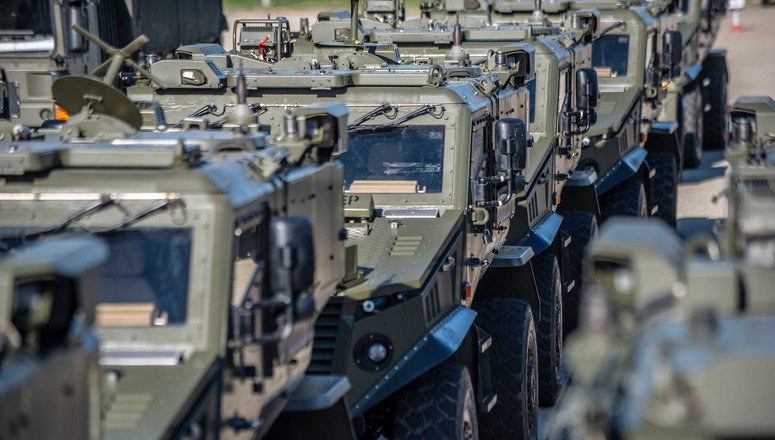
The Government’s budget proposal for 2019 includes an increase in funding for countries and regions affected by conflict and fragility of NOK 374 million, giving a total of NOK 706 million. Most of this support will go to Africa and the Middle East.

‘War, conflict and poor governance are exacerbating poverty and creating significant humanitarian needs. It is much better to provide assistance now than to wait until the situation has deteriorated further and the crisis has grown even greater,’ said Ms Eriksen Søreide.

The Government intends to increase Norway’s contribution to finding common European solutions by providing support to the EU Emergency Trust Fund for Africa (EUTF). The Fund seeks to address the root causes of irregular migration, to combat smuggling networks south of the Mediterranean and to promote the return of migrants and their reintegration into their home countries. The proposed allocation to the UN Migration Agency (IOM) will help to improve migration management.

The Government has also proposed an increase in support for efforts to promote democracy and economic development in Eurasia, including Ukraine, Moldova, and the countries of the Southern Caucasus and Central Asia.

‘Many countries located in the transitional region between Europe and Asia are affected by fragility and problems such as weak economic development, high unemployment rates, widespread corruption and weak governance. The Government is therefore proposing an increase of NOK 85 million for efforts in these areas,’ Ms Eriksen Søreide said.

The Government will also increase funding to combat security threats such as organised crime and extremism by NOK 30 million, an increase of 10 % from 2018.

The proposed increases in the allocations for Norway’s efforts in countries and regions affected by fragility, global security issues and democratic and economic development are a direct follow-up to the recent white paper on Norwegian foreign and security policy (Meld. St. 36 (2016–2017) Setting the course for Norwegian foreign and security policy).

(Press release – MFA)

October 17, 2018 0 comments
0 FacebookTwitterPinterestEmail
Srilanka and Norway

Sri Lanka Customs nab Norwegian national smuggling gold jewellery worth NOK. 0.6 million

by Nadarajah Sethurupan October 17, 2018
written by Nadarajah Sethurupan

Sri Lanka Customs officials at the Bandaranaike International Airport in Katunayake on Tuesday have arrested a Norwegian national who was attempting to smuggle in gold jewellery worth over NOK 0.6 million.

The Norwegian national, who had arrived from Norway through Singapore, has smuggled the gold jewellery weighing 400 grams concealed in a box of foreign liquor bottles and in his clothes.

The Customs say the gold stock was hidden in the box of liquor bottles to mislead the authorities.

The jewellery consignment was confiscated and further inquiries are being carried out.

October 17, 2018 0 comments
0 FacebookTwitterPinterestEmail
Norwegian Aid

Increased support for the Western Balkans

by Nadarajah Sethurupan October 16, 2018
written by Nadarajah Sethurupan

USA´s forsvarssjef General Joseph F. Dunford Jr hilser på Forsvarsminister Ine Eriksen Søreide, her under mottakelsen på Akershus festning i Oslo / US Chairman Joint Chiefs of Staff General Joseph F. Dunford Jr meet Norways Minister of Defence Ine Eriksen Søreide in Oslo

‘We cannot take stability in the Western Balkans for granted. Developments this summer and early autumn have shown that there is still a need for international support and engagement in the region. The Government is therefore proposing an increase of around NOK 55 million in the allocations to the Western Balkan countries, bringing our support for the region to just over NOK 374 million,’ said Minister of Foreign Affairs Ine Eriksen Søreide.

Since the devastating conflicts of the 1990s, Norway has, in cooperation with a number of other countries and organisations, made substantial investments in the Western Balkans aimed at promoting stability and democracy in the region. The recent developments and instability in the Western Balkans have made it clear that international support and engagement in the region are still needed.

‘The Government will promote economic and social development, and thus also stability, by supporting reforms to strengthen the rule of law, combat corruption, promote job creation and enhance cooperation between the countries in the region. We will do so in close cooperation with the six Western Balkan countries, and this will entail a combination of efforts in the individual countries and cross-border, regional efforts,’ Ms Eriksen Søreide said.

It is essential that the Western Balkan countries implement their reform programmes if they are to succeed in achieving their aim of closer integration with the EU. The Government will therefore continue to coordinate its efforts in the Western Balkans with the EU and with other EU member states that are actively engaged in the region.

(Press release – MFA)

October 16, 2018 0 comments
0 FacebookTwitterPinterestEmail
Srilanka and Norway

Norway supports Sri Lanka Press Institute’s international conference on Colombo Declaration

by Nadarajah Sethurupan October 16, 2018
written by Nadarajah Sethurupan

The Royal Norwegian Embassy along with UNESCO supported the Sri Lanka Press Institute (SLPI) to organize an international conference to mark the 20th anniversary of the Colombo Declaration on Media Freedom and Social Responsibility from September 27 to 30, in Colombo.

The conference coincided with the International Day for the Universal Access to Information (IDUAI) as recognized by the United Nations. Prime Minister Ranil Wickramasinghe inaugurated the event.

Speaking at the event, Ambassador of Norway to Sri Lanka and Maldives, Thorbjørn Gaustadsæther said that the Colombo Declaration has been the road-map to establish Sri Lanka Press Institute in 2003 with the financial support of Norway, Sweden and Denmark. He said that the Norwegian Embassy is proud of its strong, decades-long relationship with SLPI.

He further said that Sri Lanka has taken several noteworthy measures in media freedom and social responsibility in recent years, such as endorsing the Open Government Declaration in October 2015 thereby becoming the first South Asian participating country. Open Government Declaration encourages governments to make commitments to promote transparency, empower citizens, fight corruption, and harness new technologies to strengthen governments by learning from each other’s experiences and by working with civil society within the country.

Also highlighting the importance of the Right to Information Act, Ambassador Gaustadsæther said that having strong RTI laws encourages people’s participation in government and promotes cooperation, transparency and trust between people and those elected by the people.

Two prominent journalists from Norway, Liv Ekeberg and Eva Stabell are among the international speakers at the event. Representatives from Australia, Bangladesh, Canada, China, Germany, India, Norway, Pakistan and the UK as well as local editors, publishers, journalists, academics and information technology professionals attended the conference.

(siyathanews, colombopage)

October 16, 2018 0 comments
0 FacebookTwitterPinterestEmail
Politics

Restructured budget proposal for 2019 from the Ministry of Foreign Affairs

by Nadarajah Sethurupan October 15, 2018
written by Nadarajah Sethurupan

The Ministry of Foreign Affairs has restructured its budget. The Ministry’s budget proposal for 2019 is shorter and more concise than previously, and many allocations have been consolidated thematically.

The changes are intended to make the budget proposal more relevant to the decision-making process in the Storting (Norwegian parliament) and to make it easier to monitor the use of aid funding. The restructured budget will also be a better management tool for the Government and the ministries.

The restructuring has been done in response to a request made by the Storting in 2017. The process was started with last year’s budget proposal, and further changes have been made this year.

This year’s budget proposal is considerably shorter and more concise than before. The first part of the document describes the main priorities of the Ministry’s budget. The goals are formulated more clearly, the text explaining priorities has been made more pertinent and the reporting is clearer.

The budget structure has also been simplified, with fewer but more clearly defined chapters and items. The budget is still divided into two main programme areas, foreign policy (02) and aid (03). Various grant schemes related to foreign policy priorities have been consolidated in one budget chapter under programme area 02. In programme area 03, much more of the funding is allocated thematically rather than by country or region.

The structural changes and redistribution of funding between new chapters and items do not necessarily involve changes in where or how the funding will actually be used. For example, the specific regional allocation to Africa is substantially lower than in 2018. However, this is because a large proportion of the aid that goes to Africa from 2019 onwards will be part of the thematic allocations – for example for education, health, agriculture, business development and renewable energy.

The Government is proposing to increase the already high level of aid to least developed countries and countries in Africa in 2019. The white paper on partner countries in development policy published in June this year announced that Norway will be concentrating its development cooperation to a greater extent on selected countries. Ten of the proposed 16 partner countries are in sub-Saharan Africa.

The proposed allocation to countries and regions affected by conflict and fragility is almost doubled this year. A large proportion of this will go to countries in sub-Saharan Africa, the Horn of Africa and the Sahel region.

Norway’s aid to Africa has risen in recent years, both as a proportion of aid funding and in real terms. The Government’s budget proposal for 2019 means in practice that aid to Africa will be more than NOK 2 billion higher than in 2016, which is an increase of more than 15%.

https://www.regjeringen.no/en/aktuelt/restructured_budget/id2614123/

October 15, 2018 0 comments
0 FacebookTwitterPinterestEmail
Norwegian Aid

Norway provides NOK 1.68 billion to UN humanitarian fund (CERF)

by Nadarajah Sethurupan October 14, 2018
written by Nadarajah Sethurupan

‘Humanitarian needs worldwide are record high. The Government has increased Norway’s support to humanitarian crises by about 50 % since 2013. In addition to providing more funding, we also need to make sure that assistance reaches as many people as possible, as quickly as possible. This is why we are signing a four-year agreement amounting to NOK 1.68 billion with the UN humanitarian fund today,’ said Minister of Foreign Affairs Ine Eriksen Søreide.

‘The agreement with CERF will ensure greater predictability for our humanitarian partners and contribute to a more effective humanitarian response,’ said Ms Eriksen Søreide.

The UN Central Emergency Response Fund (CERF) ensures that aid reaches people in need quickly when acute crises arise. It also provides sorely needed funding for underfunded emergencies. CERF makes it possible to start a humanitarian response before donors provide funding through other channels. The agreement will be signed during the visit of UN Emergency Relief Coordinator Mark Lowcock to Oslo on 14 September.

‘Armed conflict, climate change and poverty in countries and regions affected by fragility are creating protracted, complex crises that are affecting increasing numbers of people. More funding is therefore needed for emergency relief, but it is also necessary to find innovative ways of organising humanitarian efforts. This is why the Government launched a new humanitarian strategy this August. The strategy sets out concrete measures in a number of areas related to humanitarian policy,’ said Ms Eriksen Søreide.

‘Hostilities in densely populated areas affect civilians particularly severely, as we have seen in Syria, Yemen and several other places. Our new humanitarian strategy emphasises the importance of protection, humanitarian innovation and an integrated approach to preventing humanitarian crises and reducing humanitarian needs. These will be important items on the agenda in the meetings with the UN Emergency Relief Coordinator,’ said Ms Eriksen Søreide.

Mark Lowcock, UN Under-Secretary-General for Humanitarian Affairs and Emergency Relief Coordinator and head of the UN Office for the Coordination of Humanitarian Affairs (OCHA), will be in Oslo on 14 September. His programme includes meetings with Minister of Foreign Affairs Ine Eriksen Søreide, the Standing Committee on Foreign Affairs and Defence, State Secretary Marianne Hagen, and representatives of civil society.

In line with normal practice, the agreement with CERF will be subject to the approval of the Storting (Norwegian parliament).

October 14, 2018 0 comments
0 FacebookTwitterPinterestEmail
Norwegian Aid

Norway to increase funding for human rights

by Nadarajah Sethurupan October 14, 2018
written by Nadarajah Sethurupan

‘Human rights are coming under increasing pressure in various parts of the world. This is why the Government has proposed an increase of NOK 88 million in its support for promoting human rights in next year’s budget, to a total of NOK 680 million,’ said Minister of Foreign Affairs Ine Eriksen Søreide.
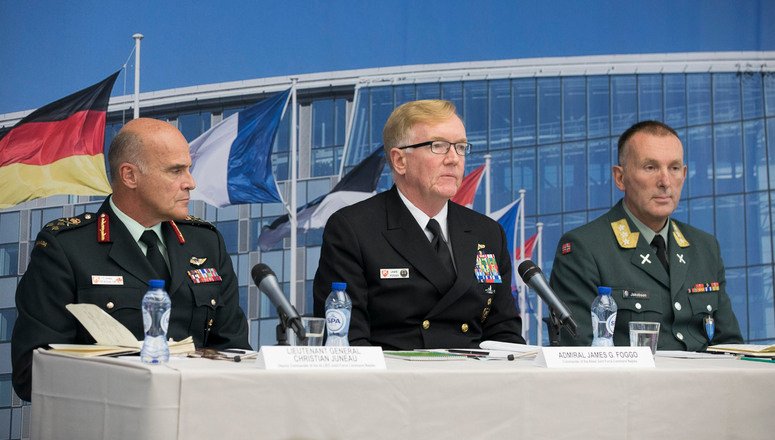
In 2019, priority areas for Norway’s human rights funding will include promoting freedom of religion or belief and protecting religious minorities, promoting the rights of women and LGBTI people, and promoting freedom of expression and protecting human rights defenders.

‘Religious minorities in many countries experience discrimination and persecution. The situation is particularly difficult for Christians and other minority groups in the Middle East. We are therefore stepping up our efforts in this area. There are clear links between a lack of respect for human rights and other challenges facing the international community. If we fail to safeguard human rights, we are unlikely to succeed in our efforts to promote sustainable development and peace,’ said Ms Eriksen Søreide.

In addition, the Government has proposed an increase of NOK 15 million in Norway’s allocation to the Office of the UN High Commissioner for Human Rights (OHCHR) in next year’s budget. This funding is part of a four-year agreement totalling NOK 660 million, which Ms Eriksen Søreide and UN High Commissioner for Human Rights Michelle Bachelet signed in New York on 23 September.

‘OHCHR is a principled advocate that speaks out in support of international norms and the principles of the rule of law. Having said this, I am concerned that a lack of funding is hampering UN monitoring of member states’ compliance with their human rights obligations. It is therefore crucial to provide OHCHR with long-term, predictable financing,’ said Ms Eriksen Søreide.

Human rights are both a high priority area in Norwegian foreign policy and a cross-cutting issue in Norwegian development policy. The Ministry of Foreign Affairs has recently appointed a steering group that will focus on how a human rights and gender equality perspective can be incorporated into Norway’s foreign and development policy.

(Press release MFA)

October 14, 2018 0 comments
0 FacebookTwitterPinterestEmail
Norwegian American

Russia’s Ukraine “operation” has backfired – U.S. diplomat

by Nadarajah Sethurupan October 13, 2018
written by Nadarajah Sethurupan

Russia’s Ukraine “operation” has backfired by making its former vassal state more pro-Western than ever, a U.S. diplomat has said.

“They [Russian leaders] are driving the Ukrainian people away from their historic relationship with Russia,” Kurt Volker, the US state department’s special envoy on Ukraine, told press in Brussels.

“Ukraine today is more unified, more nationalist, more oriented toward Europe and Nato and the West than has even been true before, and that’s a direct result of Russia’s intervention in Ukraine and killing of Ukrainians,” he said. Russia’s actions were putting the 1.5 million or so mostly Russian-speaking Ukrainians who still lived there through a “horrific experience”, Volker noted. “The ceasefire continues to be broken every night, people continue to be killed … there’s shelling, mortar fire, sniper fire, unexploded ordinance, no freedom of movement, a collapsing economy, threats to water supply, food insecurity, pressure on healthcare,” he said.

Below is a full rush transcript of the press conference by Ambassador Kurt Volker, U.S. Special Representative for Ukraine Negotiations.

Ambassador Kurt Volker: Thank you very much. It’s a pleasure to be here in Brussels to consult with the European Union in all of its various institutional forms — the Parliament, the Action Service, Members of the PFC, members of the Council, Commission and so forth.

The topic there of course is one about maintaining sanctions. It’s very important that we continue to keep sanctions in place given that Russia has not withdrawn its forces from Ukraine or made any steps really towards resolving the conflict there. The ceasefire continues to be broken every night. People continue to be killed. The local population is suffering considerably, and the humanitarian situation is quite bad.

So we are trying to keep calling attention to this. This would be resolved if Russia were to withdraw its forces and we put a proposal out there for a UN-mandated peacekeeping mission to come in and provide protection for people who live there so that it would become a safe environment and we could get on with implementing the Minsk Agreements which require local elections, special status and amnesty. Those things I think would be achievable once there’s security.

I do want to highlight, as was mentioned in the introduction, that the Ukrainian Parliament recently approved an extension of the Law on Special Status for eastern Ukraine. This is something that is part of the Minsk Agreements, something that Ukraine is committed to. And as this law was about to expire, it was also very important to Russia, and Russia was making a lot of noise about the need for Ukraine to extend this law again, and that if it failed to do so it would be a throw-back, pushing the Minsk Agreements backwards. So we’re very pleased that Ukraine was able to do that. That is now extended to the end of 2019.

In terms of our proposals and meetings, we have put forward to Russia several papers and proposals. Last fall, one on the parameters of what a UN-mandated peacekeeping mission would need to do; and more recently, this summer, I shared thoughts on how a peacekeeping mission could deploy in stages so that it would create some confidence-building and some time as it deployed. Just a practical matter of how it would need to roll out.

I received only comments from Russia criticizing that, but no proposal back from them as to what they would propose instead.

In terms of meeting, my counterpart, Mr. Surkov who I think is a very effective and reliable communicator for President Putin, we don’t have a meeting scheduled. I’m always ready and willing to meet. Would like the next time we meet to have a productive discussion, so we’re exchanging some views back and forth about where we stand in hopes that it would be productive to meet at some point in the future.

Question: Ambassador, What has the United States done to push Kyiv to really implement the Minsk Agreements? Russia has already sent to the State Department of the United States two initiatives on the Donbass crisis. Has United States given any answer to any of these two initiatives?

Ambassador Kurt Volker: Thank you very much. I think you’ve got three things here, and I’ll try to remember to get through them in the order you asked them.

First off, concerning special status and Minsk implementation. So Ukraine has responsibilities under the Minsk Agreements. These include providing special status for the territories in eastern Ukraine. Also amnesty for people who committed crimes as part of the conflict. And also the holding of local elections. And Ukraine has taken steps toward implementation of all of these. It has passed a law on special status early on, soon after the Minsk Agreements were signed, and it has repeatedly renewed that legislation including as recently as last week.

That, as you point out, is not being implemented on the ground today because Russia continues to occupy the territory. So the other pieces of the Minsk Agreements are Russia’s responsibility, which are ceasefire, withdrawal of heavy weapons, removal of illegal armed groups, and none of that has happened. Russia has taken no steps toward implementing the Minsk Agreements and there is no security in the territory where you could hold normal elections for the legitimate local authorities, and there’s no basis for the implementation of special status or amnesty at this point. That’s something that would come when Russia is doing its part to implement the Minsk Agreements as well.

This deadlock between Ukraine needing Russia to do its part in implementing the Minsk Agreements and Russia demanding more from Ukraine continues. This deadlock continues. That’s why we have proposed the introduction of a UN-mandated peacekeeping mission, because getting an unbiased UN-mandated mission in to create security on the ground would protect the population, it would create freedom of movement, it would create security, and it would create the opportunity to then see these steps under the Minsk Agreements fully implemented. Thus far, as you say, very little has been done. The introduction of the peacekeeping mission would hopefully be able to break through that deadlock.

Unfortunately, while Ukraine and the United States and France and Germany and the European Union and others all support the deployment of such a peacekeeping mission, Russia continues to disagree.

Second, you mentioned two particular proposals to which we have indeed responded. Russia proposed a draft UN Security Council Resolution in September of last year for the introduction of a UN Protection Force for the OSCE monitors. We and other members of the Security Council as well as Ukraine all responded to Russia that we cannot accept a force that is limited to the protection of the monitors as an end state because that would leave in place the so-called People’s Republics which don’t have any place in the Ukrainian constitution or in the Minsk Agreements. And we need a full-blown peacekeeping mission. So not only did we make clear that that’s our view, but we also then presented a paper in response to that in November of last year with the parameters of what a full-blown peacekeeping mission would need to do. And then the paper that I presented I believe it was in July of this year, was going into greater detail in how such a peacekeeping force could deploy, which is consistent with the discussions that I had with Mr. Surkov in January of this year.

So we did respond to that and quite substantially and we’ve not seen any new proposal from Russia since then.

And concerning the idea of a referendum, this was brought up in the context of the Helsinki meeting, and both the White House and the State Department issued statements at the time saying that we reject the idea of a referendum. Again, it has no legal basis in the Ukrainian constitution and no legal basis in the Minsk Agreements. So we were very clear at the time that that is a non-starter to have a referendum in just a portion of Ukrainian territory where a majority of the population has been displaced by Russia’s intervention.

Question: So Ukraine expects sometime in the near future to have a decision on its request for church independence from the Russian Orthodox Church. At least a couple of times recently Russian Orthodox Church officials have warned that this could cause violence in Ukraine. Do you expect this decision, whenever it’s taken, to have any impact on the security situation either in Eastern Ukraine or elsewhere in the country?

Ambassador Kurt Volker: Well, it’s tragic that you have religious leaders who then talk about resorting to violence. That would be a terrible thing, and we certainly would not want to see that.

Concerning the issue of [Aldus Sephaly] that is clearly a decision for the Ecumenical Patriarch Bartholomew and it’s a religious decision. So from the U.S. point of view, the only thing we can say is that look, we believe in the principle of religious freedom. Our country’s founded on that. And so we support the aspirations of whatever people to practice their religion as they wish to and to have the freedom and the recognition in doing so and to do so peacefully.

I hope that there are not protests and violence orchestrated as a result of this decision. I think it would be tragic to see that.

It doesn’t particularly play out differently in Eastern Ukraine as compared to the whole of Ukraine. The way the church in Ukraine has developed is that there is a Kyiv Patriarchate, there is a Moscow Patriarchate, there is a Greek, Catholic, there are all sorts of other churches there, and they’re all intertwined in terms of their geographic locations. They’re not physically separated one way or another. So you have these communities there.

What I understand to be the case is that the Ecumenical Patriarch has invited the Ukrainian churches to consolidate and present a new church to the synod in Istanbul which would then become the basis of him engaging with them directly.

We’ll see how that plays out, but I think it is something where the aspirations of Ukraine and the Ukrainian people should be respected for their religious freedom, and it’s a shame that other countries would have a view of trying to stop that.

Question: I guess you also read about media reports concerning a meeting of your Russian counterpart with Mr. Pushillin a few days ago. Surkov promised to raise salaries in the so-called [People’s] Republic. What is your reading of this promise? And have you ever spoken with Surkov about the Russian [price tag] for the republics which might get even higher if terrorists should be increased. And by the way, for the record, when did you last speak to Surkov?

Ambassador Kurt Volker: The last time we spoke in person was in January. We’ve exchanged a lot of notes back and forth since then.

In terms of the discussion about raising salaries, it’s interesting because on the one hand Russia denies responsibility for the conflict, and on the other is in the position of determining the salaries of the employees of the so-called People’s Republics. So it is clearly a very direct Russian control of these entities. Here we’re talking about control of the political entities, the so-called People’s Republics. Equally they control the military forces as well. So this is purely a Russian operation as opposed to any kind of indigenous conflict.

A second thing there, you do feel for the local population there. They are going through a horrific experience of war, of shelling, mortar fires, sniper fire, unexploded ordnance, lack of freedom of movement, collapsing economy, very few economic alternatives to working for these authorities. As I mentioned, a significant portion of the population has left. When a pre-war population might have been between four and four and a half million, you’re probably down to about a million and a half to two now. It’s a tragic situation.

I should also add, in addition to the security aspects, there’s economic depression, there are threats to the water supply, there’s food insecurity, there is disease, pressure on the health care system. All kinds of things, so you really feel for the people there. And of course it’s reasonable for them to want to be paid better.

The best case for restoring the livelihood and well-being of the population and the security of the population is for the Russian forces to get out. This would allow the return of normalization of these territories in Ukraine.

You asked specifically if I did talk about the price of Russia’s invasion with Surkov, and yes is the answer. Yes, I have. And in two ways.

One of them is the financial cost, of course, of supporting the two People’s Republics administrations as well as the military operations. This has a significant price tag that the Russian people are paying.

In addition to it, there are other costs. There is the cost to Russia of sanctions which are significant, and which are having an impact, and which the EU has done a remarkable job of keeping in place over years. So that’s a big cost to Russia.

And probably the one that is mot important is that they are driving the Ukrainian people away from their historic relationship with Russia. Ukraine today is more unified, more nationalist, more oriented towards Europe and NATO and the West than has ever been true before, and that’s a direct result of Russia’s intervention in Ukraine and killing of Ukrainians. That’s something that’s not going to change as long as Russia continues to occupy this territory.

Ambassador Kurt Volker: I think that it’s just very important that we remember, and I mentioned this already, but the humanitarian situation affecting these people in Eastern Ukraine, they’re all Russian-speaking people and they’re the ones that Russia claims to care about. Yet throughout Ukraine, Russian-speaking people do just fine. You can visit them throughout the country. In Kharkiv, Sloviansk, Kyiv, Odessa. No discrimination. And in fact these Russian-speaking people feel very much Ukrainian at heart, very much betrayed by Russia.

And the only place in Ukraine where Russian-speaking people are suffering is where Russia has intervened with its military forces.

So what we really hope is that Russia is able to move beyond bringing this conflict into Ukrainian territory, withdraw its forces, and reestablish peace. With that, I think the lives of these people would improve significantly.

That’s all.

Thank you very much.

October 13, 2018 0 comments
0 FacebookTwitterPinterestEmail
Science

EON, Powershop, Ekwatuer, Fingrid and Virta announced as world‘s best energy brands

by Nadarajah Sethurupan October 13, 2018
written by Nadarajah Sethurupan

The world’s best energy brands were announced last night in Reykjavík as part of the CHARGE Energy Branding conference – the only event in the world dedicated to brand building and communications for the energy space.

Best Established Brand: EON
Best Challenger Brand: Powershop
Best Green Brand: Ekwateur
Best Transmission brand: Fingrid
Best Product Brand: Virta

Each brand won their respected category after being shortlisted by an international panel of professionals working in and around the energy sector. The winners in the retail categories were the brands with the best-combined score from a customer research as well as a score from the panel. Winners of Transmission and Product categories were chosen by the panel.

What the panel had to say about the winners

EON: “A Bold Energy Giant – massive investments into business transformation. Seem to be living the brand/business/technology transformation happily and successfully, both inside the organisation and outside communicating and launching new products/services.”

Powershop: “An innovative, disruptive and incredibly well-executed brand. The brand is highly engaging, innovative and is very cohesive as a challenger brand. The brand is very clever and transcends electricity as a low involvement commodity into a highly engaged consumer brand.”

Ekwateur: “… built a very sensitive customer care strategy. Community management, testimonials, communication tools are important parts of the global company strategy. Their segmentation is very precise and well executed”

Fingrid: “Very good brand, with good core messages, innovation and customer-centric, a national monopoly with exceptional consumer focus and outward vision.  Logo and signature are clean and smart. ”

Virta: “Brand has a very clear direction and a strong presence in a way that is accessible to consumers while giving a strong sense of reliability and trustworthiness. A clear effort made to communicate with consumers is a carefree way that develops high engagement and great user experiences. ”

Dr. Fridrik Larsen, founder of CHARGE Energy Branding: “It was an even competition this year with strong cases from the finalists. But the winners delivered excellent case studies and there were some strong indications of the excellence of the finalists when we reviewed the customer surveys for the retail energy categories in the EBBI benchmarking tool. It’s great to see that the energy space is fully aware of the benefits of branding and the finalists and especially the winners set the bar for the rest of the industry.”

About the Charge Energy Branding Conference

The annual CHARGE Energy Branding Conference is the world’s first knowledge and networking platform on energy branding. As an international event strategically located between North America and Europe, CHARGE aims at leading the global conversation on communications in the energy and utilities sectors while drawing attention to issues of sustainability, innovation, and the consumer-centric experience. The conference is a hub for decision-making, networking and researching about energy branding as an emerging field.

October 13, 2018 0 comments
0 FacebookTwitterPinterestEmail
Norwegian Aid

A ‘women’s billion’ in support for women’s rights and gender equality

by Nadarajah Sethurupan October 13, 2018
written by Nadarajah Sethurupan

The Norwegian Government is proposing to allocate at least NOK 1 billion in support for women’s rights and gender equality as part of the 2019 aid budget. This is an increase of more than NOK 68 million. In addition to this ‘women’s billion’, Norway is funding measures to improve women’s and maternal health as part of its global health efforts, and promoting women’s rights in other areas of development policy.

‘Women’s sexual and reproductive health and rights are under pressure. This is a battle we cannot afford to lose. The Government is therefore scaling up its efforts to promote women’s rights and gender equality,’ said Minister of International Development Nikolai Astrup.

The ‘women’s billion’ is made up of core contributions of NOK 100 million to UN Women and NOK 530 million to the UN Population Fund (UNFPA), and NOK 372 million for various gender equality measures.

‘Strengthening gender equality and women’s rights is a goal in itself, but success in these areas will also have major implications for our efforts to reach other sustainable development goals. The fundamental aim of Norway’s gender equality efforts is to increase the opportunities available to women and girls, promote their right to self-determination, and further their empowerment. Key focus areas for Norway’s work are sexual and reproductive health and rights, including access to family planning; maternal health; and access to safe and legal abortions,’ said Mr Astrup.

All Norway’s gender equality work is based on the priorities set out in the 2016-2020 action plan for women’s rights and gender equality in foreign and development policy, Freedom, empowerment and opportunities. Norway’s new national action plan on women, peace and security for 2019-2022 will also be used as a basis for these efforts once it is published.

In Norway, as in the rest of Europe, the increase in women’s labour market participation has had a marked positive effect on economic growth. OECD figures show that in OECD countries alone, gender equality in the workplace could result in a 12 % rise in gross domestic product (GDP) by 2030.

Violence against women and girls is a serious problem in today’s world. This includes everything from domestic violence to sexual violence in conflict.

‘A great deal remains to be done before all women and girls have full control over their own bodies and the freedom to plan their own lives,’ said Mr Astrup.

Harmful practices such as child marriages, forced marriages and genital mutilation are widespread in many regions. Every year, almost 40 000 girls under the age of 18 are married off, and an estimated three million girls in Africa are at risk of genital mutilation every year.

‘In 2019, we will give priority to reducing the number of girls who are subjected to child and forced marriages and genital mutilation. As part of this work, we will publish a strategy for our efforts to combat harmful customs and practices in the course of the year,’ said Mr Astrup.

(Press release MFA)

October 13, 2018 0 comments
0 FacebookTwitterPinterestEmail
Science

Norway builds world’s tallest timber tower

by Nadarajah Sethurupan October 12, 2018
written by Nadarajah Sethurupan

Norway has completed the frame of the world’s tallest timber building, which is being lauded for being environmentally friendly and fire resistant. The Mjos Tower, which is situated near and named after a lake located about 100 kilometres (60 miles) north of Oslo, saw its last beam hoisted by a crane this week. At 85.4 metres (just over 280 feet), it has 18 floors. Promoters say that using wood, a renewable material, makes it possible to reduce CO2 emissions compared to concrete, which is the primary material of residential buildings in cities.

“Building with wood is helping us breathe in a better world,” said businessman Arthur Buchardt, who added he began the project after being inspired by the Paris agreement on climate change. Constructors say the building is fire resistant as it uses glue laminated timber that will only burn when continuously exposed to flames. When it opens in March 2019, the tower will surpass its 49-metre counterpart Treet (tree in Norwegian), which previously held the record of the world’s tallest wooden building and is located in the western city of Bergen.

The Mjos Tower is to hold apartments, an indoor swimming pool, a hotel, offices, a restaurant and common areas. It was originally supposed to be 81 metres high, but a roof-top pergola added another 4.4 metres. This addition makes it slightly higher than the HoHo tower (84 metres), currently being constructed in Vienna. This Austrian building has a hybrid structure combining wood (76 percent) and other materials, unlike the Mjos Tower. Other, even more ambitious timber projects have been proposed, including the Baobab tower in Paris (120 metres), though municipal authorities have turned that one down. The Abebe Court Tower in Lagos (87 meters), meanwhile, is still waiting to be built, according to the CTBUH, an NGO specialising in sustainable urban design.

October 12, 2018 0 comments
0 FacebookTwitterPinterestEmail
Taiwan and Norway

Foreign musicians in Norway promote Taiwanese folk music for free.

by Geir Yeh Fotland October 12, 2018
written by Geir Yeh Fotland

Taiwan has just celebrated its 107th National Day of Republic of China on October 10th.  Countries around Asia have been drawn to Taiwan´s example the past 20 years regarding democracy, human rights, health care and tackling environmental issues. Taiwan is a green island country with great nature, rich in Chinese folk culture but also with many indigenous tribes with their own distinct artistic identity. Taiwan has undergone several economic, social and political changes through its cultural history . Taiwanese folk music reflects those issues in their own way.

On Saturday October 13th some musicians from Taiwan, Spain and France are to play for free some lovely Taiwanese folk songs arranged for String Quartet, Harp Quintet etc.  Their concert at Kulturhuset, LAB 3. floor, Youngs gate 6  is between 2  and 3:30 p.m. Except Ming-Jen Grace Lee, the other musicians are students at Norway’s music college in Oslo.
The musicians are
Violin: Hsiang-Yin Hsiao, Ming-Jen Grace Lee                                                                                                                                                   Viola: Kai-Shin Lin                                                                                                                                                                                                         Cello: Maria Quevedo                                                                                                                                                                                                  Harp: Claire Moncharmont
Piano: Yun-Han Olga Hung

Program:
Tyzen Hsiao:
The Song of Taiwan/ for Violin and Piano
The Vagabond/ for Violin and Piano
I Love Taiwan/ for Viola and Piano
Bang Chhun Hong/ for Viola and Piano

Chu-Shui Chen:Memories/ for Violin and Piano

Lee Che-Yi:
Four Taiwanese Folks Fantasy/ for Harp Quintet
When the Drum Beats/ for String Quartet
The Temple Square/ for String Quartet
Yilan Dance/ for String Quartet

Jing-Peng:
Sunset at Tamsui/ for String Quartet
The one I yearn for/ for String Quartet
The grasshopper messing with the rooster/ for String Quartet

Organizers are Norway’s music college, Taipei Mission in Sweden, Overseas Community Affairs Council, Taiwan, Norway Taiwanese Chamber of Commerce, Taiwanese Association in  Norway .

Mr. Geir Yeh Fotland – Taiwan National Correspondent NORWAY NEWS.com
Email: – geiryeh@gmail.com, or news@norwaynews.com

October 12, 2018 0 comments
0 FacebookTwitterPinterestEmail
Norwegian Aid

Climate-resilient agriculture key to combating undernourishment

by Nadarajah Sethurupan October 12, 2018
written by Nadarajah Sethurupan

‘It is the world’s poorest and most vulnerable people who are being hardest hit by climate change. Increasingly, a lack of food and failing harvests are causing instability and conflict. Climate change adaptation is essential for achieving the SDGs. We therefore intend to increase Norway’s funding for promoting food security and climate-resilient agriculture by NOK 60 million in next year’s budget,’ said Minister of International Development Nikolai Astrup.

The additional funding will be earmarked for efforts in vulnerable areas that are severely affected by climate change. In connection with the revised budget for 2018, the Government presented a plan to intensify efforts to enhance food security and promote climate-resilient agriculture. The Government is now following this up with an allocation in the budget for 2019, and before the end of the year it will also present an action plan on this topic. Considerations relating to food security and climate-resilient agriculture are to be integrated into all five of the Government’s development policy priorities.

‘Sustainable food production, sound water resources management, climate change adaptation and the reduction of greenhouse gas emissions are all vital elements of our climate change efforts. Norway is providing agricultural guidance, developing drought- and flood-resistant seeds, providing funding for fertilisers and irrigation, and helping countries to improve storage facilities and gain more market access,’ said Mr Astrup.

Norway is supporting climate change adaptation and disaster risk reduction through a number of channels, both bilaterally at country level and through international organisations such as the World Bank, the UN system and the Green Climate Fund.

‘The harmful impacts of climate change and natural disasters can be reduced through disaster risk reduction. We will establish new partnerships that also include the business sector. We will give priority to supporting partners that combine work on disaster risk reduction and climate change adaptation with a food systems approach and a focus on nutrition,’ said Mr Astrup.

‘I am concerned about the most recent figures showing that 820 million people are undernourished. There are two main reasons for this: man-made crises and the impacts of climate change. That is why we are now drawing up an action plan on sustainable food systems in the context of Norwegian foreign and development policy,’ said Mr Astrup.

(News story – MFA )

October 12, 2018 0 comments
0 FacebookTwitterPinterestEmail
Africa and Norway

Ghana,Norway relations on a steady growth

by Nadarajah Sethurupan October 11, 2018
written by Nadarajah Sethurupan

Mr Oyvind Udland Johansen, the Deputy Counsellor at the Royal Norwegian Embassy, has said Ghana is a key partner for Norway in both political and commercial endeavours.

He said the partnership had been cemented with President Nana Akufo-Addo and the Norwegian Prime Minister, Mr Erna Solberg, Co-Chairing the United Nations Advocacy-group for the Sustainable Development Goals (SDGs).

He said the bilateral relations between the two countries had grown substantially since the opening of the Norwegian Embassy in Ghana in 2011.

Mr Johansen said this at the launch of the Aker Energy/Ghana National Petroleum Corporation (GNPC) Scholarship Programme in Takoradi.

A total of 150 promising students from low income backgrounds in the six coastal districts of the Western Region were awarded scholarships under the Aker Energy/GNPC Scholarship Programme for 2018.

The programme, which is being supported by Lukoil and Fueltrade, began in 2012 and covers school and examination fees, boarding costs, books  and academic materials.

It has transformed the lives of 794 students who enrolled in the senior high school, technical, vocational and health training institutions.

Mr Johansen said sharing knowledge in sectors that were a priority for Ghana had been the central pillar in the cooperation, adding that sectors like oil and gas, fisheries and aquaculture were the major targets.

He said the exploration of Ghanaian petroleum reserves had opened doors for Norwegian companies and that there were more than 50 Norwegian companies operating in Ghana, stressing that many of the companies worked together with Ghanaian companies in the oil and Gas sector.

The Deputy Counsellor said the private sector was a key partner for creating decent jobs and liveable wages that could deliver increased tax revenue to the state and called for the establishment of a conducive environment for responsible business conduct.

On education, Mr Johansen said it was the key goal that would allow many other sustainable development goals to be achieved.

“When people are able to get quality education they can break from the cycle of poverty. Education, therefore, helps to reduce inequalities and to reach gender equality, it also empowers people everywhere to live more healthy and sustainable lives”.

He said education was also crucial for fostering tolerance between people and contributed to peaceful societies.

Mr Kwadjo Asare Kyei, a representative of the Petroleum Commission, commended Aker Energy and GNPC for taking their social responsibility towards communities in the Western Region seriously.

The Western Regional Minister, Dr Kwaku Afriyie, on his part, commended the two institutions for their efforts, noting that education was an important platform for everyone to display his or her God-given talent.

He tasked the beneficiaries to reciprocate the gesture by taking their studies seriously to enable them to come out as responsible citizens.

Baahema Kodu, the Queen Mother of Essikado Traditional Area, encouraged the beneficiaries to assist in the further development of their respective communities and the Western Region in general upon completing their education.

Source: GNA

October 11, 2018 0 comments
0 FacebookTwitterPinterestEmail
Economics

EU clears acquisition of Norway’s AKOFS by Akastor, Japan’s MOL and Mitsui

by Nadarajah Sethurupan October 11, 2018
written by Nadarajah Sethurupan

The European Commission said on September 10 that the EC has approved, under the EU Merger Regulation, the proposed acquisition of joint control over AKOFS Offshore 1 AS (AKOFS) of Norway by Akastor AS, also of Norway, Mitsui & Co. Ltd. and Mitsui O.S.K. Lines Ltd. (MOL), both of Japan.

AKOFS provides vessel-based installation and construction and well intervention services for subsea oil and gas developments. Akastor is a public limited investment company whose portfolio includes companies mainly active in the oilfield services sector.

Mitsui is a trading company group engaged in a range of global business activities including in the offshore oil and gas industry. MOL is a multi-modal transport group specialising in a number of categories of global ocean shipping and related markets.

The Commission said the EC concluded that the proposed transaction would raise no competition concerns as the companies’ activities do not overlap in the European Economic Area. The transaction was examined under the simplified merger review procedure.

(neweurope)

October 11, 2018 0 comments
0 FacebookTwitterPinterestEmail
Royal House

King of Norway visit China

by Nadarajah Sethurupan October 11, 2018
written by Nadarajah Sethurupan

King Harald V and Queen Sonja of Norway pay a state visit to China between October 11 and 20 at the invitation of Chinese President Xi Jinping.

Joining the royals will be a Norwegian business delegation of 340 people representing 140 companies.

“It will be the largest business delegation ever from Norway to China,” according to Knut Sorlie, the Beijing-based Innovation Norway regional director for China and commercial counsellor at the Royal Norwegian Embassy.

He also revealed that China and Norway hope to sign about 40 cooperation agreements during the trip – 26 in Beijing and 11 in Shanghai. The agreements in Shanghai will focus on marine technology.

October 11, 2018 0 comments
0 FacebookTwitterPinterestEmail
Science

Norway has created a unique eco-house under the dome

by Nadarajah Sethurupan October 10, 2018
written by Nadarajah Sethurupan

Stepping into this home you are like in another world. Surprisingly, it turns out in difficult climatic conditions of the Arctic can live and live quite comfortably.

This could prove a Norwegian family Hartfelder. Benjamin and Ingrid with their friends and neighbors built three-storey house under geekopolis adapted to the natural conditions of the North.

October 10, 2018 0 comments
0 FacebookTwitterPinterestEmail
Farming

Norway builds large-scale wind farm in Ukraine

by Nadarajah Sethurupan October 9, 2018
written by Nadarajah Sethurupan

Norwegian wind power developer NTB AS and its partners have announced an agreement to build a 250 MW wind farm in Ukraine’s southern region of Kherson, located adjacent to Crimea, the strategic Black Sea peninsula that was forcibly annexed from Ukraine by Russia in March 2014.

The announcement was made at a ceremony attended by Ukraine’s president Petro Poroshenkoand Norwegian Foreign Minister Ine Soereide Eriksen on September 6 in Kiev, NTB AS said in an emailed press release.

In close cooperation with leading international industrial companies and financial investors, NBT said the Norwegian developer of wind farms and other renewable energy projects in emerging markets plans to complete the construction of 64 wind turbines on 1.300 hectares by Syvash Lake in southern Ukraine in just 15 months.

On completion, the wind farm will be the largest wind farm in Ukraine to be financed by international non-recourse project financing.

The €292 million EPC (Engineering, Procurement & Construction) contract is part of the €370 million total foreign investments in the wind farm, which will bring Ukraine significantly closer to its ambition of increasing domestic-sourced renewable energy from 6 to 11% by 2020.

NBT plans to develop an additional 860 MW of wind farms in Ukraine to be completed within the next three years, according to CEO Joar Viken of NBT AS.

“Business climate in Ukraine has visibly improved in recent years, and our decision to enter the Ukrainian market is based on the progress the country has been making. We appreciate the support of the Ukrainian Government, the Office of the National Investment Council, regional authorities and other partners for the efforts that made our windfarm project in southern Ukraine possible. We see an outstanding future for the development of the Ukrainian renewable energy sector,” Viken said.

Also attending the ceremony were NBT’s international partners in the EPC contract; POWERCHINA, one of the largest power plant construction companies in the world, and Nordex Group, a leading producer of onshore wind turbines. The American investment bank J.P. Morgan is the financial advisor to NBT in the transaction. “We are extremely happy to be working closely with POWERCHINA and Nordex to build this first wind farm in Ukraine to be financed by international project financing,” Viken said.

POWERCHINA welcomed the Syvash wind farm project as an opportunity to expand its presence in the international renewable energy sector and in the competitive European market.

“This 250 MW wind power project will include the highest international standards in terms of technology, quality, environmental, health and safety. The project marks a very important step in the globalization strategy of POWERCHINA,” said Li Yanming, vice president of POWERCHINA.

German Nordex Group will deliver the wind turbines totalling 250 MW for the NBT Syvash wind farm.

“The Syvash wind farm order would mean a perfect market entry of the Nordex Group into the Ukrainian market,” said José Luis Blanco, CEO of the Nordex Group.

October 9, 2018 0 comments
0 FacebookTwitterPinterestEmail
Norwegian Aid

Norway increases contribution to EU Emergency Trust Fund for Africa

by Nadarajah Sethurupan October 9, 2018
written by Nadarajah Sethurupan

‘The loss of thousands of lives on the journey across the Sahara and the Mediterranean is a terrible tragedy. Norway is therefore providing a further NOK 60 million to the EU Emergency Trust Fund for Africa,’ said Minister of Foreign Affairs Ine Eriksen Søreide.

The EU Emergency Trust Fund for stability and addressing root causes of irregular migration and displaced persons in Africa aims to strengthen the capacity of African countries to deal with migration. Priority areas for the Fund include job creation, conflict prevention, stabilisation measures, reintegration of returned migrants, and humanitarian assistance for particularly vulnerable migrant groups.

‘Poverty, unemployment and poor governance are the root causes of migration. European countries must work with countries of origin and transit to deal with migration and refugee crises. We must also fight organised crime and strengthen efforts to combat people smuggling,’ Ms Eriksen Søreide said.

So far this year, about 86 000 migrants have come to Europe from Africa. Although this figure is lower than in 2014 and 2015, the number of migrants arriving from Africa is still high. Nearly 1600 people have been reported dead or missing thus far in 2018 while crossing the Mediterranean.

‘Norway has now allocated a total of NOK 140 million to the EU Emergency Trust Fund, which is a substantial contribution towards a common European solution to a global challenge,’ said Ms Eriksen Søreide.

The EU Emergency Trust Fund for Africa was established at the 2015 Valletta Summit on Migration, which brought together leaders from European and African countries, including Norway’s Prime Minister Erna Solberg. Norway has so far contributed NOK 80 million to the fund, and is now allocating a further NOK 60 million. This funding will be split between the countries in the Sahel and Lake Chad regions, North Africa and the Horn of Africa.

‘Most of the arrivals are economic migrants. At the same time, record numbers of people are fleeing from war and conflict. Norway is providing substantial humanitarian aid to people who are fleeing from war and conflict,’ Ms Eriksen Søreide said.

(MFA)

October 9, 2018 0 comments
0 FacebookTwitterPinterestEmail
Environment

Norway Military Forces Warn of Damage by War Drill

by Nadarajah Sethurupan October 8, 2018
written by Nadarajah Sethurupan
The Armed Forces of Norway warned today of collateral damage during the next military exercises of the North Atlantic Treaty Organization (NATO), described as the biggest in the country”s history.
Military newspaper Forum Forsvarets indicated possible effects on farm lands, forests, roads, energy facilities and telecommunications, automobiles and animals.

The NATO drill, called Trident Juncture, will be carried out from October 25 to November 7, in seven counties of the country and will involve 40 thousand soldiers of 30 countries, as well as 70 ships and 130 airplanes.

According to the officer of the environment of the Norwegian Armed Forces, Marianne Bo, they work since 2016 to minimize the colateral damages and informed all participants where they can or cannot move.

However, the farmer of Hedmark WErling Aas-Eng, considers difficult to imagine no damage will occur because in this time of the year, the soil is still not frozen and there are also many countries participating, reason why communication can be inadequate.

According to press reports, during the previous exercises of comparable size, Norwegian farmers felt damages from NATO tanks valued in dozens of thousands of krones.

This northern country, together with another 13 nations, founded NATO on April 4 of 1949, whose present Secretary General, Jens Stoltenberg is a Norwegian economist and politician.

(ef/mgt/znc/gdc)

October 8, 2018 0 comments
0 FacebookTwitterPinterestEmail
NATO and Norway

UK to send 800 military men to Norway in 2019

by Nadarajah Sethurupan October 8, 2018
written by Nadarajah Sethurupan

The United Kingdom in 2019 will send 800 servicemen to a new military base in northern Norway. This is reported by The Telergraf.

According to the information, this step is being done within the framework of the “defense strategy of the Arctic” from the Russian threat. Thus, London will react to Moscow’s activity in the Arctic region, which has grown in recent years.

It is pointed out that Russia has resumed work on military bases that have remained since the USSR and increased the activity of submarines in the region to a level close to the times of the cold war. Therefore, the British authorities intend to demonstrate their presence in the Arctic and protect their interests in this region.

In addition to Britain, servicemen from Norway, the United States and the Netherlands will also be deployed at the military base. In October, NATO military exercises will be held.

Earlier we reported United States was considering a request from Poland for a permanent U.S. military presence in the fellow NATO country, acknowledging that he shares Poland’s concerns about possible Russian aggression. Trump said that on Tuesday after the meeting with President of Poland Andrzej Duda, Reuters reported.

“We’re looking at it very seriously, I know Poland likes the idea very much, and it’s something that we are considering, yes,” Trump told reporters.

According to Reuters, Polish President Andrzej Duda asked Trump for a permanent U.S. base during a White House meeting, offering to name it “Fort Trump,” and explaining it would be a bulwark against what he considers a threat from Russia.

Trump said he agreed with Duda that Moscow had “acted aggressively” in the region and said the request for a base was under consideration. He said he appreciated Duda’s offer to put more than $2 billion into the project.

Earlier it was reported that Albania is intended to build the first NATO airbase in the Balkans in Kuçovë city. The investments of NATO for the first stage of the project will amount to 58 million USD, the project to start at the end of 2018.

(112.international)

October 8, 2018 0 comments
0 FacebookTwitterPinterestEmail
Srilanka and Norway

Sri Lankan Parliament, Upper House of Norway to strengthen ties

by Nadarajah Sethurupan October 8, 2018
written by Nadarajah Sethurupan

Prime Minister Ranil Wickremesinghe signs the visitor’s book at Norway’s Upper House of Parliament, looked on by Chairperson Tone Wilhelmsen Troen and Minister Vijith Wijayamuni Zoysa. Pictures by Rukmal Gamage

Agreement was reached to strengthen ties between the Sri Lanka Parliament and the Upper House of Norway during talks Prime Minister Ranil Wickremesinghe had with the Chairperson of the Norwegian Upper House M.S. Tone Wilhelmsen Troen in Norway on October 5.

Earlier, Prime Minister Ranil Wickremesinghe and members of his visiting delegation were received by Mrs. Troen and her staff at the Upper House building and conducted to the Well of the House.

Where Mrs. Troen explained the history and the traditions of the Upper House.

There after, talks started at Mrs. Troen’s official Chamber,where she thanked the Sri Lanka government for passing special legislation to ensure enhanced womens’ representation in politics. She also inquired about the proposed educational reforms in Sri Lanka.

Prime Minister Ranil Wickremesinghe explained the Government programme of work to establish a quality education system which opened a new path with a promising future for students leaving school after the GCE Ordinary Level examination under the 13-year mandatory school career.

Prime Minister Wickremesinghe also explained the measures taken to strengthen Parliament after the victory of Maithripala Sirisena as the Common Candidate in 2015.

Premier Wickremesinghe’s delegation also included Fisheries Aquatic Resources and Rural Economy Minister Vijith Vijithamuni Zoysa, Parliamentarians Hesha Vithanage and Kavinda Jayawardena, Secretary to the Prime Minister Saman Ekanayake, Sri Lankan’s Ambassador in Norway Prof. Arusha Cooray, Additional Secretary to the Prime Minister Saman Athaudahetti and the Prime Minister’s Special Assistant Sandra Perera.

October 8, 2018 0 comments
0 FacebookTwitterPinterestEmail
Newer Posts
Older Posts

Norwegian Nobel Prize 2025

101207 The Norwegian Nobel Committee has decided to award the Nobel Peace Prize for 2025 to Maria Corina Machado for her tireless work promoting democratic rights for the people of Venezuela and for her struggle to achieve a just and peaceful transition from dictatorship to democracy.

Special Interest

  • Africa and Norway
  • Asia and Norway
  • Asylum
  • China and Norway
  • Corruption in Norway
  • Crimes
  • Defence
  • Diplomatic relations
  • Economics
  • Environment
  • Farming
  • Killing
  • Media Freedom
  • Middle East and Norway
  • NATO and Norway
  • Nobel Peace Prize
  • Norwegian Aid
  • Norwegian American
  • Oil & Gas
  • Peace Talks
  • Politics
  • Racism in Norway
  • Religion
  • Russia and Norway
  • Royal House
  • Science
  • Sex scandal
  • Sports
  • Spy War
  • Srilanka and Norway
  • Svalbard
  • Terrorist
  • Taiwan and Norway
  • Video clips

Follow Us

Recent Posts

  • Two dead, one injured after shooting in Norway

    October 4, 2026
  • Syrian, Norwegian migration officials discuss cooperation in Oslo

    October 2, 2026
  • Norwegian premier says peace institute funding had no link to Epstein

    October 1, 2026
  • Norwegian ministers grilled in parliament over ties to Epstein

    October 1, 2026
  • Tesla rise across Europe, extending recovery

    October 1, 2026
  • Norway Provides $2.6 Million to UN Afghanistan Trust Fund

    September 29, 2026

Social Feed

Social Feed

Editors’ Picks

Norway opens market for Sri Lankan fish exports...

May 13, 2016

Sri Lanka – Nordic Business Council holds discussions...

May 15, 2016

Good governance to Sri Lanka

May 15, 2016

Shock and Joy in Sri Lanka – Erik...

May 15, 2016

Sri Lanka-Norway plenty of new opportunities for business–...

May 15, 2016

NORWAY NEWS is an online news site, written in English, dedicated to Norwegian affairs at home and abroad. Norway News.com is published online. It is a daily online newspaper in existence since May, 2003. The site is run by an Independent Journalist.

Facebook Twitter Youtube

Useful Links

    • Work With Us
    • Contact Us
    • Collaboration
    • Data Collection
    • Workplace
    • Adverstising
    • Privacy Policy
    • International Collab
    • Feedback
    • Terms of Use
    • About Our Ads
    • Help & Support
    • Entertainment
    • News Covering
    • Technology
    • Trending Now

Politics

Syrian, Norway to boost cooperation on mine clearance
Erna to step down as Conservative Party leader in 2026
Norwegian Labour Party on re-election win

Latest Articles

Two dead, one injured after shooting in Norway
Syrian, Norwegian migration officials discuss cooperation in Oslo
Norwegian premier says peace institute funding had no link to Epstein
Norwegian ministers grilled in parliament over ties to Epstein

Norway News 2025 . All Right Reserved. Designed and Developed by Norway News

  • Home
  • About us
  • Disclaimer
  • Contact us
NORWAY NEWS – latest news, breaking stories and comment – NORWAY NEWS
  • Home
  • About us
  • News
  • Other News
    • Africa and Norway
    • Asia and Norway
    • Asylum
    • Breaking News
    • China and Norway
    • Corruption in Norway
    • Crimes
    • Defence
    • Diplomatic relations
    • Economics
    • Environment
    • Farming
    • Featured
    • Health
    • Killing
    • Media Freedom
    • Middle East and Norway
    • NATO and Norway
    • Nobel Peace Prize
    • Norwegian Aid
    • Norwegian American
    • Oil & Gas
    • Peace Talks
    • Politics
    • Racism in Norway
    • Religion
    • Royal House
    • Russia and Norway
    • Science
    • Sex scandal
    • Sports
    • Spy War
    • Srilanka and Norway
    • Svalbard
    • Taiwan and Norway
    • Terrorist
    • Travel
    • Video clips
  • Disclaimer
  • Contact us
NORWAY NEWS – latest news, breaking stories and comment – NORWAY NEWS
  • Home
  • About us
  • News
  • Other News
    • Africa and Norway
    • Asia and Norway
    • Asylum
    • Breaking News
    • China and Norway
    • Corruption in Norway
    • Crimes
    • Defence
    • Diplomatic relations
    • Economics
    • Environment
    • Farming
    • Featured
    • Health
    • Killing
    • Media Freedom
    • Middle East and Norway
    • NATO and Norway
    • Nobel Peace Prize
    • Norwegian Aid
    • Norwegian American
    • Oil & Gas
    • Peace Talks
    • Politics
    • Racism in Norway
    • Religion
    • Royal House
    • Russia and Norway
    • Science
    • Sex scandal
    • Sports
    • Spy War
    • Srilanka and Norway
    • Svalbard
    • Taiwan and Norway
    • Terrorist
    • Travel
    • Video clips
  • Disclaimer
  • Contact us

Editor’s Picks

  • Norway’s Long Shadow Over Sri Lanka: UN Report Exposes Reform Failure as Oslo Faces Pressure to Act

    September 8, 2026
  • UN concern over Sri Lanka’s cases of enforced disappearances

    October 8, 2025
  • UN Human Rights Council Resolution on Sri Lanka’s Path to Reconciliation

    October 7, 2025
  • International should support Sri Lanka: Solheim

    October 4, 2024
  • Norwegian Meets Sri Lankan’s Challenges

    May 3, 2024
  • Norwegian Ambassador meets JVP in Sri Lanka

    May 2, 2024

Newsletter

@2025 - All Right Reserved. Designed and Developed by Norway News