NORWAY NEWS – latest news, breaking stories and comment – NORWAY NEWS
  • Home
  • About us
  • News
  • Other News
    • Africa and Norway
    • Asia and Norway
    • Asylum
    • Breaking News
    • China and Norway
    • Corruption in Norway
    • Crimes
    • Defence
    • Diplomatic relations
    • Economics
    • Environment
    • Farming
    • Featured
    • Health
    • Killing
    • Media Freedom
    • Middle East and Norway
    • NATO and Norway
    • Nobel Peace Prize
    • Norwegian Aid
    • Norwegian American
    • Oil & Gas
    • Peace Talks
    • Politics
    • Racism in Norway
    • Religion
    • Royal House
    • Russia and Norway
    • Science
    • Sex scandal
    • Sports
    • Spy War
    • Srilanka and Norway
    • Svalbard
    • Taiwan and Norway
    • Terrorist
    • Travel
    • Video clips
  • Disclaimer
  • Contact us
NORWAY NEWS – latest news, breaking stories and comment – NORWAY NEWS
  • Home
  • About us
  • News
  • Other News
    • Africa and Norway
    • Asia and Norway
    • Asylum
    • Breaking News
    • China and Norway
    • Corruption in Norway
    • Crimes
    • Defence
    • Diplomatic relations
    • Economics
    • Environment
    • Farming
    • Featured
    • Health
    • Killing
    • Media Freedom
    • Middle East and Norway
    • NATO and Norway
    • Nobel Peace Prize
    • Norwegian Aid
    • Norwegian American
    • Oil & Gas
    • Peace Talks
    • Politics
    • Racism in Norway
    • Religion
    • Royal House
    • Russia and Norway
    • Science
    • Sex scandal
    • Sports
    • Spy War
    • Srilanka and Norway
    • Svalbard
    • Taiwan and Norway
    • Terrorist
    • Travel
    • Video clips
  • Disclaimer
  • Contact us
Monday, October 5, 2026
NORWAY NEWS – latest news, breaking stories and comment – NORWAY NEWS
  • Home
  • About us
  • News
  • Other News
    • Africa and Norway
    • Asia and Norway
    • Asylum
    • Breaking News
    • China and Norway
    • Corruption in Norway
    • Crimes
    • Defence
    • Diplomatic relations
    • Economics
    • Environment
    • Farming
    • Featured
    • Health
    • Killing
    • Media Freedom
    • Middle East and Norway
    • NATO and Norway
    • Nobel Peace Prize
    • Norwegian Aid
    • Norwegian American
    • Oil & Gas
    • Peace Talks
    • Politics
    • Racism in Norway
    • Religion
    • Royal House
    • Russia and Norway
    • Science
    • Sex scandal
    • Sports
    • Spy War
    • Srilanka and Norway
    • Svalbard
    • Taiwan and Norway
    • Terrorist
    • Travel
    • Video clips
  • Disclaimer
  • Contact us
Copyright 2025- All Right Reserved Norway News
Spy War

Norwegian police investigate missing WikiLeaks associate Arjen Kamphuis

by Nadarajah Sethurupan September 5, 2018
written by Nadarajah Sethurupan

Police in Norway and Holland have opened formal investigations into the whereabouts of a Dutch cybersecurity expert and senior associate of WikiLeaks, who disappeared without trace on August 20. Arjen Kamphuis, a 47-year-old online privacy specialist, is known for his book Information Security for Journalists, which offers advice on investigative reporters working on national security and intelligence matters. Additionally, Kamphuis, who has Dutch citizenship, is a close associate of Julian Assange, founder of the international whistleblower website WikiLeaks.

According to reports, Kamphuis was last seen in Bodo, a town of 50,000 people located in Norway’s arctic region. Witnesses say that on August 20, Kamphuis checked out of his hotel in the center of Bodo and headed on foot to the town’s main railway station, where he planned to catch a train to Trondheim, Norway’s third largest city. From there he was scheduled to fly to the Dutch capital Amsterdam on August 22. However, it is not known whether Kamphuis ever boarded the 10-hour, 500-mile train ride to Trondheim. He certainly did not board his flight to Amsterdam and has not been heard from since he left his Bodo hotel on August 20. The French news agency Agence France Presse cited Norwegian police spokesman Tommy Bech, who said that Norwegian authorities were unaware of Kamphuis’s current whereabouts. He refused to speculate about what may have happened to Kamphuis after he left his hotel in Bodo, but said that the Norwegian police had opened a formal investigation into his disappearance, in association with police in Holland.

The Dutch cybersecurity expert’s disappearance comes as the fate of his close associate and WikiLeaks founder Julian Assange appears increasingly uncertain. The Australian-born Assange has been living in self-confinement inside the Ecuadorian embassy in London for six years. During that time, the Ecuadorian government has offered Assange protection against charges of rape and sexual assault that have been filed against him in Sweden, which the WikiLeaks founder dismisses as a political conspiracy against him. This past summer, however, Ecuador’s new President, Lenin Moreno, said that Assange would need to leave his embassy quarters soon. Assange is also wanted in the United States for leaking classified government documents through the WikiLeaks platform.

September 5, 2018 0 comments
0 FacebookTwitterPinterestEmail
Economics

EIB finances electricity link between Norway and Germany

by Nadarajah Sethurupan September 3, 2018
written by Nadarajah Sethurupan

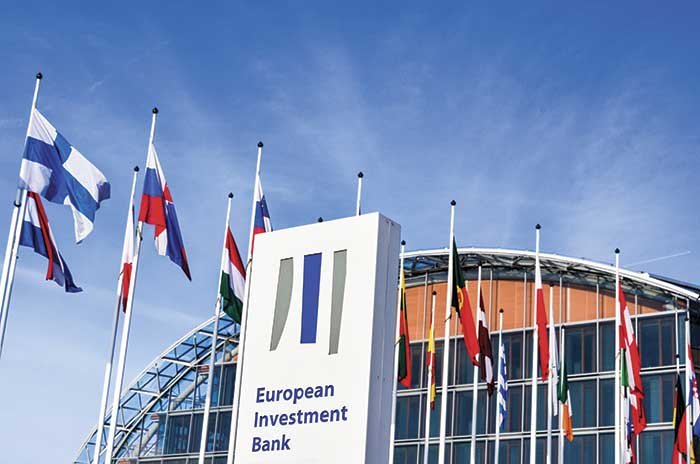
In order to support the construction of an electricity interconnector between Norway and Germany, the European Investment Bank (EIB) has signed a €100 million financing agreement with TenneT, a leading European electricity transmission system operator, the European Commission said on August 14.

The Juncker Plan’s European Fund for Strategic Investments (EFSI) supports this transaction.

“This smart combination of renewable power generation – solar and wind in Germany and hydroelectric in Norway – underlines our firm commitment to bring clean power to millions of people,” European Commission Vice-President responsible for the Energy Union Maroš Šefčovičsaid.

According to the Commission, the interconnector will span 624 kilometres, linking Norway and Germany across the North Sea. It will have a capacity of 1,400 megawatts, significantly improving the diversification and security of supply whilst enhancing electricity market integration in both countries.

Šefčovič reminded that forward-looking investments into modern energy infrastructure with adequate interconnections are needed integrate renewables into the grid. “It is a vital element of our energy security as well as our climate action,” the Vice President added.

September 3, 2018 0 comments
0 FacebookTwitterPinterestEmail
Science

Google Assistant rolling out Danish and Norwegian support

by Nadarajah Sethurupan September 3, 2018
written by Nadarajah Sethurupan

Google last month added bilingual support to Assistant, thus allowing users to speak and get replies from devices in two languages. Google Assistant is now adding support for Danish and Norwegian as previously detailed.

As spotted by Android Police, the Google Assistant website today added Danish and Norwegian landing pages that detail the service. Providing a basic overview, it notes first and third-party partners, as well as supported devices (Android and iOS phones initially in both languages). There is also an Explore page that provides an exhaustive rundown of “What it can do.”

According to user reports, both are in the process of rolling out. When live, launching search by holding down a device’s home button should no longer surface the old Now on Tap/screen search functionality.

Beyond the release for phones and tablets, Google Home availability should be upcoming. Google announced the launch of smart speaker hardware this year to Denmark, Korea, Mexico, the Netherlands, Norway, Spain and Sweden at I/O 2018.

This prerequisite of making Assistant available is a must before Google can expand its Assistant hardware offerings from Smart Displays to headphones and more.

Google detailed earlier this year how Assistant will be available in 25 countries by year’s end. This is in stark comparison to last year’s total of only eight.

Meanwhile, country availability is seeing a bigger increase from 14 to 52, while optimized locales goes from 16 to 64 in a 300% boost. A map shows the majority of countries in South America, Europe, and the Pacific are set to get the Google Assistant by year’s end.

September 3, 2018 0 comments
0 FacebookTwitterPinterestEmail
Science

Oslo University Hospital to Launch Aerial Blood Sample Deliveries

by Nadarajah Sethurupan September 1, 2018
written by Nadarajah Sethurupan

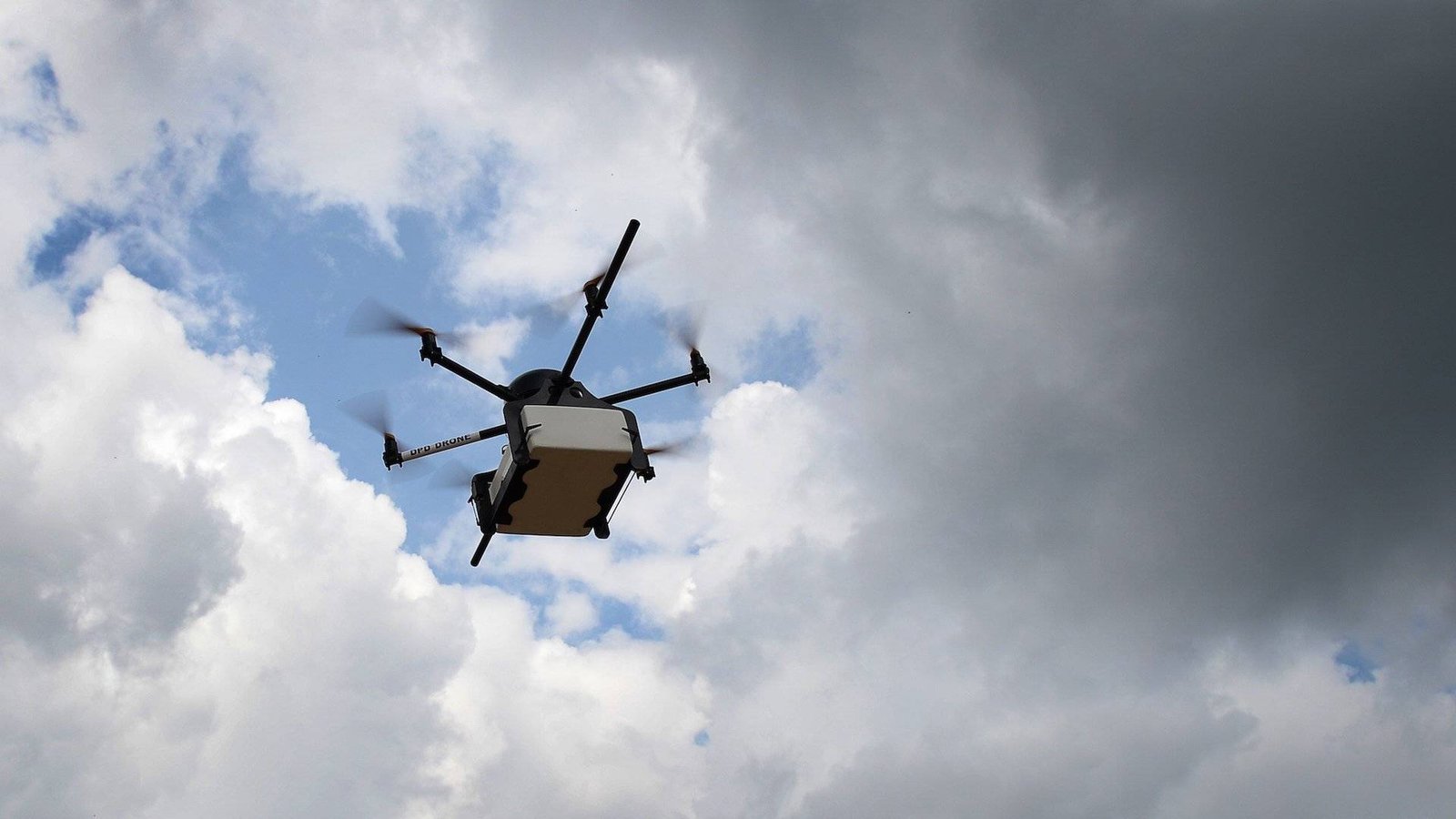
This picture taken on September 28, 2015 shows a Geopost drone flying in Pourrieres, southeastern France, during a presentation of a prototype of a package delivery drone. Geopost is a branch of the French La Poste group. AFP PHOTO / BORIS HORVAT (Photo credit should read BORIS HORVAT/AFP/Getty Images)

Oslo University Hospital (OUS) is nearing completion of a two-year project aiming to aerially transport and deliver medical samples such as blood, tissue and radioactive contrast agents via drone, according to regional engineering magazine Teknisk Ukeblad.

The Defense Research Institute (FFI), research company Sintef and Norway’sMeteorological Institute (MET) are all collaborating with the OUS on this initiative, with substantially increased safety and efficiency motivating the decision to shift transportation of these substances from conventional ground-based methods to the skies.

“We have been working on this for two years, and after we have now approved the application by the Research Council, we will intensify our work,” said project manager Knut Korsell. “The project itself has a perspective of three years, but already this year we hope to be able to carry out some test flights with drones in the Armed Forces area.” While Google may not have done an entirely perfect job at translating Korsell’s statement here, the essential facts seem to be intact: OSU is gearing up for an active test flight phase before year’s end, with the support of Norway’s military.

We recently covered Drone Delivery Canada’s efforts to provide those in rural and remote areas with drone-centric testing of blood-borne infections. While OSU’s project here isn’t borne of a need to reach distant locations with a lack of infrastructure motivating the pivot toward aerial technologies, drones are at the forefront here for a foundational reason, as well. “Today, this transport is mostly based on cars, taxis and, in some cases, aircraft and helicopters,” said Korsell. “It is not directly traceable and far from safe.”

In other words, jeopardizing highly sensitive biological (and in some cases, radioactive) materials by placing them in a car or helicopter and hoping for the best has become a glaringly imperfect methodology and one that the OSU hopes to refine with modern drone technology and unmanned traffic management (UMT) systems. That way, not only can ground-based infrastructure be foregone for a more direct route from one facility to another, but the payload can be reliably tracked, and not disturbed by bumps in the road or potential collisions.

In terms of the latter, Sintef, FFI and the MET are working on preventative wind and weather measures. From turbulence management and obstacle avoidance systems to exterior moisture and anti-freezing systems, drone delivery isn’t quite as easy in Norway as it is in say, Florida. All things considered, however, Korsell’s team seems to be doing a tremendous job.

“As an example, I can say that our partners today have a numerical model for calculating turbulence with a limit of 100 meters,” he said. “It must be down to 25 meters. Our transportation requires takeoff and landing in special places because the drones do not have stabilizing [sic] moving energy when they land. We have looked at possibilities for landing the drones in a funnel on the roof above the hospital.”

Drone deliveries between hospitals and clinics have been successfully completed in Switzerland by Matternet, in ways comparable to what Korsell described above. Airbus, too, has recently accomplished such feats at the National University in Singapore, where campus-wide deliveries are soon expected to be standardized.

Ultimately, the OUS has already done a tremendous job in the early stages of this project and has a particularly difficult road ahead due to the basic facts surrounding the regional climate and weather conditions. If Korsell and his consortium of researchers, engineers and military supporters can establish secure aerial deliveries in Norway in the next year or two, chances are this project will be regarded as one of the most impressive, admirable drone delivery endeavors in the industry.

September 1, 2018 0 comments
0 FacebookTwitterPinterestEmail
Economics

Norwegian online grocery retailer Kolonial.no raises €31.4 million from Kinnevik

by Nadarajah Sethurupan August 30, 2018
written by Nadarajah Sethurupan

Norwegian online grocery retailer Kolonial.no has raised €31.4 million from Kinnevik, which in turn will receive a 15% stake in the company. Kolonial.no was founded in 2013 and offers grocery delivery to approximately 40% of Norwegian households. The company’s revenues grew by 88% in 2017, to €83.7 million.

“Kinnevik is a dream partner for us,” said Karl Munthe-Kaas, CEO of Kolonial.no. “We feel there is a great fit in both the strategic vision and the values of our companies. Our ambition is to make grocery shopping an effortless and inspiring activity for everyone and bring freedom in their everyday lives. Kinnevik has the right expertise and the right mindset to help us in this journey and we are very excited to work with them.”

“We are excited to lead the funding round in Kolonial.no, a company that fits squarely into our investment thesis of using technology to offer consumers more and better choice,” said Andreas Bernström, Kinnevik’s Investment Director. “We have been impressed by the founding team and what they have achieved in a relatively short period of time. Kinnevik is well placed to support the team in scaling the business and we look forward to working with Kolonial.no to reach their goals.”

August 30, 2018 0 comments
0 FacebookTwitterPinterestEmail
Defence

US F-22 Stealth Jets Take on Norway’s F-35 in Simulated Dogfights

by Nadarajah Sethurupan August 28, 2018
written by Nadarajah Sethurupan

Two U.S. F-22 stealth fighter jets squared off in simulated dogfights with two of Norway’s expanding fleet of F-35 aircraft Wednesday as part of an exercise aimed at strengthening the NATO alliance and increasing its deterrent power.

The two U.S. F-22s are among 13 in Europe for a series of short-term deployments in places such as Greece and Poland, with further training missions planned in undisclosed locations in coming days.

The Norwegian deployment lasted one day but will lay the groundwork for NATO allies as they work to integrate their stealth warfare capabilities, Colonel Leslie Hauck, chief of the fifth generation integration division at the U.S. Air Force’s headquarters in Europe, told reporters in Norway.

The deployment is part of U.S. efforts to reassure European allies after Russia’s 2014 annexation of Crimea.

F-35s arriving in Europe

Growing numbers of Lockheed Martin Corp F-35s are arriving in Europe as the world’s most advanced warplane and most expensive weapons program matures following a raft of cost increases and technical challenges in its early years.

“Every training opportunity that we have betters our readiness for any potential adversary of the future,” Hauck said at the Orland air base, home to six of Norway’s expected 52 F-35s.

Hauck leads a new office at Ramstein Air Base in southwestern Germany, that is working to ensure a smooth transition for about 40 F-35s scheduled to be in Europe by year’s end. The first of which are set to arrive in 2021.

Next month, a group of senior officials from the United States and seven other F-35 operator countries — Norway, Denmark, Italy, Turkey, Israel, Britain and the Netherlands — will meet to compare notes on the new warplane, which was first used in combat by Israel in May.

Better battlefield overview

The United States has more than 150 of the aircraft, whose sensors pilots say give them the most extensive overview of a battlefield of any combat jet available.

Norwegian Air Force Major Morten Hanche, who piloted one of the Norwegian F-35s, said the mock fight with the F-22s was great practice, especially since the F-35s generally surprise and overpower other nonstealth aircraft.

He declined to name the winning aircraft, saying only: “The F-22 is a very formidable opponent.”

August 28, 2018 0 comments
0 FacebookTwitterPinterestEmail
Oil & Gas

Norwegian oil giant DNO ramps up Kurdish activity

by Nadarajah Sethurupan August 26, 2018
written by Nadarajah Sethurupan

Leading Norwegian oil and gas operator DNO continues to ramped up its activity in the Kurdistan region of Iraq, where fast track development of the Peshkabir field is expected to boost output by another 15,000 barrels of oil per day (bpd) to 50,000 bpd by year-end, said a top official.

As the most active driller in Kurdistan, DNO has three rigs operating across its licenses with a fourth to be added next month, stated DNO’s Executive Chairman Bijan Mossavar-Rahmani.

Two more will be active at the flagship Tawke field to reverse natural field decline through workovers and the drilling of two wells in the main Cretaceous reservoir and two wells in the shallow Jeribe reservoir, he noted.

“Kurdistan is back and so is DNO,” remarked Mossavar-Rahmani while speaking at a company meeting to announce the first half financial results.

The company reported a net profit of $61 million and free cash flow of $142 million during the first half of the year.
It also netted revenues worth $289 million which were up 83 per cent from the same period last year.

Impressed with robust performance, the Norwegian oil giant has announced plans for its first dividend distribution to shareholders in 13 years. The planned annual dividend distribution of NOK434 million ($50 million) will be paid in two tranches, it added.

“With growing production and robust and reliable revenues, the dividend announcement underscores confidence in our strong growth prospects,” remarked Mossavar-Rahmani.

DNO said its operations will begin at the Baeshiqa license with another rig to be mobilized to spud the first well in September as part of a back-to-back, three-well exploration program.

DNO had acquired a 32 per cent interest in and operatorship of the Baeshiqa license last year, joining ExxonMobil (32 per cent), the Turkish Energy Company (16 per cent) and the Kurdistan Regional Government (20 per cent).

At Peshkabir, the fourth rig will spud Peshkabir-8 in 10 days followed by Peshkabir-9 in October, said the company in a statement.

Early production and successful appraisal have raised previous field proven (1P) and proven and probable (2P) reserves. Two newly completed wells, Peshkabir-6 and Peshkabir-7, will commence testing by the end of this month before being placed on production. Peshkabir-6 is key to unlocking further Cretaceous and Triassic reserves, it added.

August 26, 2018 0 comments
0 FacebookTwitterPinterestEmail
Terrorist

Islamic State group now “irrelevant” – US-led coalition

by Nadarajah Sethurupan August 24, 2018
written by Nadarajah Sethurupan

The US-led coalition said the leadership of the Islamic State group was now “irrelevant” after IS issued an audio message it said was by its chief Abu Bakr al-Baghdadi.

Coalition spokesman Colonel Sean Ryan’s statement came after Baghdadi called on Muslims to wage “jihad” in the purported recording released late Wednesday.

“He’s been rendered useless and ineffective, so we’re not too concerned by any comments coming from ISIS leadership,” Ryan said, using another acronym for the jihadist group.

“We believe his leadership is irrelevant,” Ryan told journalists in a conference call.

“We’re focused on defeating the last remnants of ISIS, so whether he is around or not doesn’t really matter.”

Originally from Iraq, Baghdadi has been dubbed the “most wanted man on the planet” and the United States is offering a $25 million reward for his capture.

IS overran large swathes of Syria and neighbouring Iraq in 2014 and proclaimed a “caliphate” in territory it controlled, but has since lost most of it to various offensives.

“We have our mission and that is to defeat them in the lower Euphrates River Valley and that is what we’re going to do,” he said.

The SDF have for months been trying to expel the jihadists from the pocket, which includes the town of Hajeen.

“It has taken a while because ISIS has left behind hundreds of improvised explosive devices, which slows progress,” said Ryan.

Other priorities included properly preparing fighters and “making sure that the civilians can get out without being harmed”, he said.

But Ryan said the group was “down to their last fighters”.

“They’re looking for spectacular attacks that make themselves seem relevant when really they’re militarily defeated almost, except for the area that we’re about to go into,” Ryan said.

Below is a full rush transcript of the press conference by Colonel Sean Ryan , Spokesperson – Global Coalition to Defeat ISIS.

Colonel Ryan: Good morning, I am Colonel Sean Ryan and I’m the spokesman for the Global Coalition to Defeat ISIS. I’ll start with a quick opening statement and then after that I’ll be happy to take your questions.

First in Iraq, operations by the Iraqi Security Forces to secure the country and to pursue Daesh remnants or ISIS remnants are ongoing in desolate and hardened governed areas such as the remote deserts of Anbar or in the mountains of Kirkuk, Diyala and Salah ad-Din. The ISF continues to locate, identify and destroy ISIS remnants in addition to securing roads and infrastructure from attacks by malign actors.

In the first week of August alone, the collective operations conducted by the ISF across Iraq led to the arrest of more than 50 suspected terrorists, and 500 IEDs and munitions.

Additionally, the ISF continues to clear and secure a central infrastructure that countless Iraqi civilians rely on such as the busy roads of Irbil and Kirkuk, Hawija, Samarra, Salah ad-Din and the region’s power structure, which was subject to a number of ISIS terror attacks recently.

The ISF are very capable forces and I reiterate, we’re here at the government of Iraq’s invitation, as well as here as a partner, and no [Coalition] troops on the ground are engaged in combat operations.

Switching to Syria. Coalition forces and partners are conducting shaping operations in preparation for phase three of Operation Roundup whose ground offensive has not yet begun. Operation Roundup is an effort to accelerate the defeat of Daesh in the last territory they hold in the Euphrates River Valley.

Once the SDF is preparing for the offensive they are also enabling the safe passage of civilians leaving Hajin, the last ISIS stronghold in the Euphrates River Valley and assuring that ISIS fighters attempting to flee the area are apprehended.

In the remainder of Northeast Syria local internal security forces are securing cities through law enforcement and counter-IED activities enabling civilian stabilization efforts to continue and preventing the resurgence of ISIS.

Finally, stabilization efforts across Iraq and Syria continue to prevent the return of conditions under which ISIS arose. In Iraq, the government is working to improve living conditions across the country by addressing areas of most need, particularly in rebuilding infrastructure damaged by the fight against ISIS and providing access to daily necessities such as electricity and water.

In Syria, stabilization efforts are focused on saving lines, demining, water, electricity and the delivery of necessities.

Question: how does U.S.-Turkey tensions affect progress against ISIS? Especially some officials have mentioned that the tension could jeopardize information-sharing and law enforcement cooperation. What are your views on this? Tensions regarding Idlib. Do you worry, do you have concerns regarding this?

Colonel Ryan: To answer your first question, we work with Turkish forces every day and I believe those are more political tensions, not military tensions. Like I said, everything’s been pretty good with our Turkish counterparts so I don’t believe that is true at all.

As far as Idlib, that is not within our area of operations, so we generally do not comment on that.

Question: Question is regarding the operation against the last IS pockets in which you mentioned, talking about upcoming operations. What is the main obstacle to taking the last pockets? why, Bakr al-Baghdadi speaking and recruiting yesterday. Why is it taking so long to capture Baghdadi, and do you have any leads on where, his location, his whereabouts?

Colonel Ryan: In regards to phase three of Operation Roundup, right now as I mentioned, we’re in shaping operations, getting ready for the final battle. It has taken a while because ISIS has left behind hundreds of improvised explosive devices which slows progress down. And also, we want to make sure we have our forces correctly aligned before we go in there.

The other major obstacle is making sure that the civilians can get out without being harmed, and that’s one of our main priorities.

As far as Baghdadi, he has been very well hidden, but right now in our estimation he’s been rendered helpless and ineffective. So we’re not too concerned about any comments coming from ISIS leadership as they’ve already announced his replacement a couple of weeks ago anyway, so I don’t think that has any impact on our battle here.

Question: ISIS leaders from all over the world, and now this morning there is a terrorist attack back in France. Is ISIS gaining power in other areas? ISIS in many countries like Egypt, Libya and Yemen. Are there tensions between them ?

Colonel Ryan: I can tell you that is one of the reasons the Coalition is in this area right now is because ISIS in an international problem. It requires an international solution.

So the fights right now are, of course, in Iraq and Syria, but again, the whole reason we want to destroy the last remnants of ISIS here is so they don’t go to other areas.

As far as your other question, again, we can’t comment on operations in Libya and Egypt, because right now that’s not our main concern. Our last concern is destroying the last remnants of ISIS.

Question: I would like to learn the latest developments in Manbij, and how is this going with respect to joint patrolling, the training, I want to learn. And with respect to the withdrawal of some PYD guys, would you see some concrete numbers, statements and facts? When do we expect it to be realized?

Colonel Ryan: Currently rehearsals are ongoing between Turkey and the United States. They are committed to a sustainable agreement to ensure stability and security in that area. This implementation will be based closely and follow developments on the ground.

Right now I don’t have any numbers because we don’t work with the YPG, so I can’t speak for them. But that was part of the agreement with the framework between the United States and Turkey. And as the Coalition spokesman I can’t get any deeper into that one.

Question: What is the situation at the Iraq-Syria border?

Colonel Ryan: Again, the last major area is going to be in the lower Euphrates River Valley, which comes close to the border. The Iraqi Security Forces have done a remarkable job securing the border. And of course the Syrian Democratic Forces are the main offense that will be going into Hajin once that offensive starts to destroy the last remnants in Hajin.

Between the Coalition, Syrian Democratic Forces and Iraqi Security forces there’s very good communication, and that is where we plan to defeat ISIS in that area once and for all.

Question: I’d like to ask you what is the ideal scenario for the finish such as in Idlib?

Colonel Ryan: Unfortunately, I can’t answer that question because that is not within the Coalition’s area of operation.

Right now we are working in the lower Euphrates River Valley to destroy the last remnants of Daesh or ISIS in that area.

Question: My question is there has been some allegations that actually the foundation of some Islamic wing fighting group in Syria in late June/July 2012 were in agreement with Turkish government, and that agreement consisted of the previous Western agreement that they would agree to allow this Islamic wing military force to actually fight Kurdish rebels along the Turkish-Syrian border. Is that still going on? What’s the reality behind this? What have you got to say about it?

Colonel Ryan: That’s a very intriguing question, and I really can’t comment on that because that is not under the Coalition purview.

Question: As compared to the early phases of Operation Inherent Resolve, the current scenario has completely changed with ISIL increasingly losing manpower and land and its militants being driven underground. How is the Coalition reconfiguring its operations in the face of these changes?

Colonel Ryan: The Coalition along with the Syrian Democratic Forces, our partner force in that area, are continually changing military tactics to destroy the last remnants of ISIS in that area.

It’s going to be a tough fight, and we believe that ISIS is going to try to make a last stand, and we already know that they’re going to be laying improvised explosive devices, there’s going to be probably a wise use of suicide vests, whenever they can deploy something of that manner. It’s going to be a very difficult fight, but we believe overall militarily we will defeat them because we have greater forces and greater military capability.

Colonel Ryan: I couldn’t hear all that question, but I can tell you that the Coalition is here to destroy all remnants of ISIS and of course we target their top leaders whenever possible. And I can tell you that we’ve already seen a lot of leaders from ISIS flee the battlefield. They’re taking any lines they can find to escape. They’re abandoning their own forces, taking monies and supplies with them. So again, right now our last stand is in the lower Euphrates River Valley, and we hopefully plan on taking out all the rest of them in that area. And with our partners, the Syrian Democratic Forces, they’re performing very well, but we do expect this to be a long, hard fight.

Question: Colonel Ryan, there is difference in ISIS, but there are different mechanisms regarding Syria. The latest one was proposed by President Erdogan inviting the German, French and Russian leaders together in Turkey. I would want to know what the Coalition’s position is regarding peace in Syria and all these different mechanisms, whether you think it’s constructive or whether, how do these different mechanisms affect your work?

Colonel Ryan: Of course peace is always the best offense whenever we can come to that. That’s a very political question and I can’t comment on that.

But again, we’re convinced that we need to destroy the last remnants of ISIS in Syria in the lower Euphrates River Valley. That is our mission, and we plan to complete that.

Hopefully the fighting will lead to a political process eventually, but again, that’s way above the Coalition right now. We’re just focused on our mission.

Question: My question would be on the evolution of Operation Inherent Resolve. The current scenario is very much changed. So ISIL has increasedly lost manpower and land and they have been driven underground, most of them ? How is the Coalition reconsidering its operations in the face of these changes?

Colonel Ryan: Indeed, the military battle has changed. In other areas it was house to house, very urban fighting. Now it’s changed to a very complex desert fighting area where ISIS is living underground in tunnels and scattered throughout which does make for a difficult battle. But again, I believe the Syrian Democratic Forces along with the Coalition will defeat ISIS in the lower Euphrates River Valley, and we will also be able to finally liberate the citizens of Hajin which has only known ISIS the last four to five years, and whose children who have not been able to go to school for five to seven years, and who have not received basic necessities like other parts of the country. So that is our mission, and we plan to complete it.

Question: Russian authorities were asked from the foreign powers and foreign countries in Syria to get out from this place. Are there any kind of cooperation between Russia and the Coalition in Syria?

Colonel Ryan: We do not coordinate with the Russians, but we do have a deconfliction with them to ensure that all soldiers on both sides are safe. But that is all.

Question: The Coalition to the latest statement of Abu Bakr al-Baghdadi which was sent out in a new audio message by ISIS where he calls for worldwide attacks. Do you believe this is a recent audio taping? Or do you think it’s an older one and Baghdadi is out of function or even dead?

Colonel Ryan: I’d be speculating to answer that question, but I can tell you, as I mentioned before, we believe his leadership is irrelevant, and again, we’re focused on defeating the last remnants of ISIS. So whether he is around or not doesn’t really matter. We have our mission, and that is to defeat them in the lower Euphrates River Valley, and that is what we’re going to do.

Question: You said before that Bakr al-Baghdadi was irrelevant. And you mentioned that IS had announced his replacement. Is that correct? And if so, who will be replacing him? Who would you think it would be? Thank you.

Colonel Ryan: Yeah, they announced that a couple of weeks ago. His name is slipping me so I’ll have to get back to you on that one. But again, you know what, they’re down to their last fighters. They’re going to try to make a hard stand. And like we’ve seen them do already, they’re looking for spectacular attacks to make themselves seem relevant when really they’re militarily defeated almost except for the area that we’re about to go into.

Colonel Ryan: We work closely with the Iraqi Security Forces, and that is really all we communicate with. Then of course they dictate where their forces go and how their forces operate. So they are a very strong partner of ours and we rely on them and they rely on us for communications and logistics in other areas, but we’re very secure in the decisions that they make.

Question: he said that the mission in Syria includes now countering Iran influence in the region. Can you explain a bit more about how that might work? What are you going to do about Iran? How many fighters do you think are in the Euphrates River Valley that you’ve been talking about?

Colonel Ryan: To answer your first question about Ambassador Bolton, it’s a political decision, not one for the Coalition. That’s very United States specific so I can’t get into that because I am the Coalition spokesman.

As far as the numbers, yes, this has been discussed. We’re looking into the metrics behind these numbers because when we are asked about ISIS fighter numbers we’re solely talking about the fighters that we’re going against in that particular battle.

In the Euphrates River Valley we have put out multiple times that we believe there are between 1,000 to 1,500 fighters left and that’s what we’re calling the last remnants of ISIS in that area.

Colonel Ryan: I would just like to say the challenges ahead in Iraq and Syria are great. We encourage the rest of the world to ensure that the radicalism and terror no longer find fertile ground in Iraq and the rest of the world also.

I want to thank you, Colonel Ryan, for joining us and to thank all of you for participating and for your questions.

August 24, 2018 0 comments
0 FacebookTwitterPinterestEmail
Defence

U.S. to increase marines number in Norway

by Nadarajah Sethurupan August 24, 2018
written by Nadarajah Sethurupan

Pentagon plans to double the contingent of American marines deployed in Norway, as Defence Ministry of Norway in Oslo informed, Reuters reports.

“Plans to increase the number of Marines in Norway to 700 from 330 and moving some of them closer to the border with Russia had triggered a sharp reaction from Moscow, which called the plans “clearly unfriendly”,” the news agency reads.

The Marines arrived in Norway in 2017 to train for fighting in winter conditions. They are expected to stay in Norway on a rotational basis for five years.

“The government in Oslo, increasingly concerned about Russia since the annexation of Crimea in 2014, insists the increased U.S. presence is only for training purposes and should not be interpreted as a military escalation,” the message says.

https://www.youtube.com/watch?v=OAQpfxJD9is

August 24, 2018 0 comments
0 FacebookTwitterPinterestEmail
NATO and Norway

German troops to spearhead ‘Trident Juncture’ exercises

by Nadarajah Sethurupan August 22, 2018
written by Nadarajah Sethurupan

NATO says its 40,000-troop “Trident Juncture” exercises to be spearheaded by a German brigade, will proceed in Norway in October. Russia was briefed about the maneuvers near its border by NATO ambassadors last May.

Norway is to host most of NATO’s “Trident Juncture” exercises which are to include 8,000 German troops.

Exercises “in the air, at sea and on land” will be held over two weeks starting October 25, NATO headquarters in Brussels confirmed to DW on Friday.

The exercises will involve NATO members, plus partners Finland and Sweden.

They may be the largest maneuvers to be held since the end of the Cold War.

Norway and Russia share about 200 kilometers (120 miles) of land border as well as a maritime “delimitation” line extended across the Barents Sea and Arctic Ocean.

Tensions along NATO-Russia flank

Since last year. the 28-nation trans-Atlantic alliance has staged smaller-scale rotations and exercises in Poland and in Baltic nations Estonia, Latvia and Lithuania  in response to Russia’s 2014 annexation of Ukraine’s Crimea and for backing separatists in eastern Ukraine.

Last year, Russia’s Zapad war games in Belarus, on NATO’s eastern flank, also prompted EU foreign policy chief Federica Mogherini to call for plans for quicker mobility in the event of conflict.

NATO: ‘defending our populations’

NATO spokesperson Irina Novakova told DW Friday that the purpose of deploying “120 aircraft, 70 ships and up to 10,000 vehicles” in October’s Trident exercises, the “bulk” in Norway, was to practise the alliance’s ability to “operate together and to defend our populations and territories.”

Germany would contribute “a lot of troops and equipment” alongside other major allies including the US, Canada and Italy, Novakova said.

Germany had been “one of the main contributors” to NATO’s Trident Juncture exercises in 2015, when some 3,000 German troops took part.

Germany’s contribution

NATO’s Spearhead Force — to be led from next year by Germany’s 9th Armored Demonstration [tank] Brigade based in Münster — would be the “focus” of October’s near-Arctic Circle exercises, a German defense ministry spokesman Frigate Captain Christian Scherrer told DW.

Units of that Spearhead Force, known in NATO jargon as the Very High Readiness Joint Task Force (VJTF), would be “certified” at the conclusion of Trident, Scherrer said.

Deployment of about “200 armored combat vehicles, including 20 Leopard 2 combat tanks” as part of Germany’s contribution of 8,000 troops and 2,000 vehicles to Trident Juncture 18, were planned, Scherrer said.

Norway has been planning

Last June, Norway asked the US to double its small Marine units on rotation in its Arctic north and to place them closer to the Norwegian border with Russia.

Briefing media in June, Admiral James Foggo, who will command Trident Juncture and is NATO’s joint forces commander, said the exercises were focused on “training to defend and provide a deterrent effect, ready to respond to any threat, from any direction at any time.”

Trident would see NATO working with two of its closest and “most capable partners in the region,” Foggo said, referring to Sweden and Finland, which are in close proximity to the former Soviet Union.

Iceland waters also in scenarios

Host Norway had already done a lot of work to make Trident Juncture a “huge success for the Alliance,” Foggo said, adding that the main exercise would be preceded by “advanced activities in and around Iceland” in mid-October.

He himself would be at sea off Norway, monitoring the maneuvers, Foggo added. Commanding NATO land forces in Norway would be Canada’s Lieutenant General Christian Juneau.

Learning in sub-Arctic ice and mud

Norway’s representative on the NATO Military Committee, Vice Admiral Ketil Olsen, said the exercises were a chance for Norway to “test our total defense concept” in conditions where temperatures would be “around freezing point.”

The deployments would allow for learning how to deal with ice, mud, “rain and /or snow” and how to conduct “collective defense” just below the Arctic Circle, said Olsen. He said Norway would also learn how to receive “reinforcements.”

“On day one of the exercises you will be wet and you will stay wet until the end, unless you learn how to deal with it,” Olsen said.

ipj/jm (dpa, AFP)

August 22, 2018 0 comments
0 FacebookTwitterPinterestEmail
Africa and Norway

Ethiopian Airlines to launch Oslo- Guangzhou freighter service

by Nadarajah Sethurupan August 20, 2018
written by Nadarajah Sethurupan

Ethiopian Airlines will start a Boeing 777 freighter operation between Oslo Airport and Guagnzhou in September as it looks to capitalise on seafood volume growth between Norway and China.

The airport said that Norway is expected to generate more than 230,000 tons of seafood airfreight in 2018.

“We are pleased that our partners in Ethiopian Airlines will offer new freight capacity from Oslo airport. This is important for the development of the Norwegian seafood industry and will contribute to employment and economic growth,” said Martin Langaas, director cargo at Avinor Oslo Airport.

“China and Guangzhou is picking up rapidly on seafood imports from Norway. Ethiopian Cargo will with this new route increase the competitiveness of Norwegian Seafood to China.”

Ethiopian is looking forward to take part in a fast growing market, it said.

Solomon Begashaw, director global cargo sales, Ethiopian Cargo, added: “We look forward to take part in one of the fastest growing airfreight markets globally, and look forward to offering the Norwegian market new cargo capacity to China.

“With our new freighter service from Oslo Airport to Guangzhou, our Norwegian customers will experience our quality and expertise in shipping of seafood, which requires cooling throughout the journey to ensure the quality of this perishable commodity.”

To prepare for the startup, Ethiopian Cargo and Avinor will host a two-day workshop at Oslo Airport for the route in the end of August. Invitations to freight forwarders and other relevant partners will be sent out shortly.

August 20, 2018 0 comments
0 FacebookTwitterPinterestEmail
Africa and Norway

Kofi Annan no More

by Nadarajah Sethurupan August 18, 2018
written by Nadarajah Sethurupan

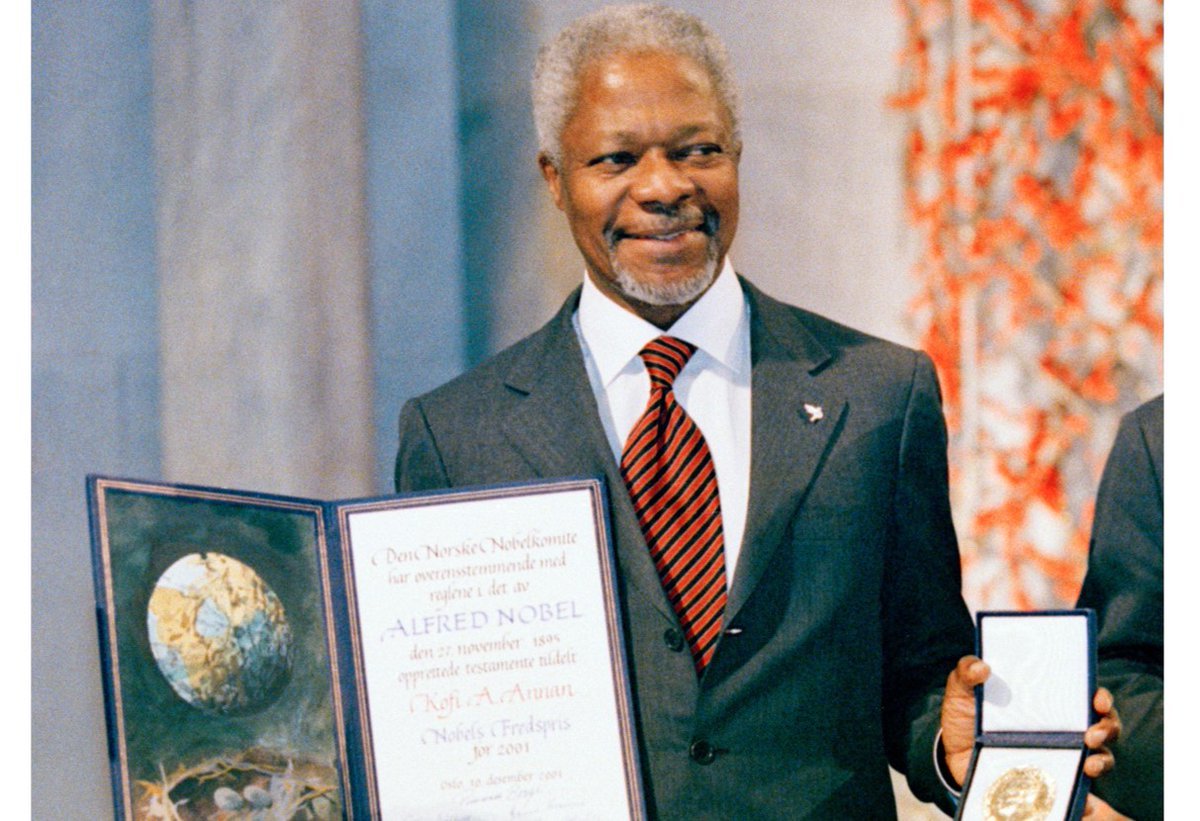
Kofi Annan, former secretary general of the United Nations and Nobel Peace Prize winner passed away today. He was 80. The former secretary died on Saturday in Switzerland after battling a short illness. The demise of the top diplomat was announced by the Kofi Annan Foundation on a microblogging site Twitter. It stated, “It is with immense sadness that the Annan family and the Kofi Annan Foundation announce that Kofi Annan, former Secretary General of the United Nations and Nobel Peace Laureate, passed away peacefully on Saturday 18th August after a short illness.”

Kofi Annan reached out people at the time of suffering, and touched many hearts with his deep compassion and empathy. He selflessly placed others first, radiating genuine kindness, warmth and brilliance in all he did. He will be greatly missed by so many around the world, as well as his staff at the Foundation and his many former colleagues in the United Nations system. He will remain in our hearts forever.

It is with immense sadness that the Annan family and the Kofi Annan Foundation announce that Kofi Annan, former Secretary General of the United Nations and Nobel Peace Laureate, passed away peacefully on Saturday 18th August after a short illness. His wife Nane and their children Ama, Kojo and Nina were by his side during his last days.

Kofi Annan was a global statesman and a deeply committed internationalist who fought throughout his life for a fairer and more peaceful world. During his distinguished career and leadership of the United Nations he was an ardent champion of peace, sustainable development, human rights and the rule of law.

After stepping down from the United Nations, he continued to work tirelessly in the cause of peace through his chairmanship of the Kofi Annan Foundation and as chair of The Elders, the group founded by Nelson Mandela. He was an inspiration to young and old alike.

Kofi Annan was a son of Ghana and felt a special responsibility towards Africa.  He was particularly committed to African development and deeply engaged in many initiatives, including his chairmanship of the Africa Progress Panel and his early leadership of the Alliance for a Green Revolution in Africa (AGRA).

Wherever there was suffering or need, he reached out and touched many people with his deep compassion and empathy. He selflessly placed others first, radiating genuine kindness, warmth and brilliance in all he did.  He will be greatly missed by so many around the world, as well as his staff at the Foundation and his many former colleagues in the United Nations system.  He will remain in our hearts forever.


The family kindly requests privacy at this time of mourning. Arrangements to celebrate his remarkable life will be announced later.
August 18, 2018 0 comments
0 FacebookTwitterPinterestEmail
Crimes

Transit at Oslo airport Gardermoen – do you need a transit visa?

by Nadarajah Sethurupan August 16, 2018
written by Nadarajah Sethurupan

Please be aware that some nationals are required to be in possession of an airport transit visa when passing through the international transit area of Oslo airport. Starting from 24th of August 2018, Turkish nationals will be required to obtain a transit visa when transiting at Oslo airport (Gardermoen).

If you are arriving at Oslo airport from a non-Schengen country and departing to a non-Schengen country, you may stay within the premises of the transit area at the airport. Most travelers will in this case not need a visa, as they will not cross the external Schengen border. However, some nationals are required to be in possession of an airport transit visa. This applies to nationals from: Afghanistan, Bangladesh, Democratic Republic of the Congo, Eritrea, Ethiopia, Ghana, Iran, Iraq, Nigeria, Pakistan, Somalia, Sri Lanka, and from 24thAugust 2018 also nationals from Turkey.

Travelers who arrive at Oslo airport for transit only, have to be aware that the transit area at the airport is closed between 11 p.m. and 6 a.m. every day. If your arrival and the time of departure of your connecting flight makes it necessary to stay at the airport between 11 p.m. and 6 a.m., you cannot use the transit area as it is closed during this time. All travelers will then have to pass the border control in order to stay at the airport’s non-transit area or a nearby hotel. This means that those nationals, who must be in possession of a visa when crossing the external Schengen border according to Annex 1 of the Visa Handbook, may need a Schengen visa even if they are only transiting Schengen in Norway. In addition, persons who need to check out and check in their luggage at the airport (normally when using different airlines) also have to go through the border control, even if they are only transiting. Check your luggage tag to see if this applies to you.

Requirements for a Schengen visa for the purpose of transit may be a document explaining why the applicant needs to exit the transit area of the airport, the flight ticket to the final destination and, if required, the visa to the final destination. If the applicant needs a stay over in Norway in order to await the connecting flight, documentation on hotel reservation and funds to cover the stay in Norway should also be provided.

(Royal Norwegian Embassy in London)

August 16, 2018 0 comments
0 FacebookTwitterPinterestEmail
Norwegian American

Norwegian American Parliamentary Exchange group has arrived in Norway!

by Nadarajah Sethurupan August 14, 2018
written by Nadarajah Sethurupan

The annual 2018 NAPEP (Norwegian American Parliamentary Exchange Program) group has arrived in Norway!

Group representing the states of Washington, Arizona, California and Florida + House Foreign Affairs Committee and Ways and Means. First day spent discussing the «Norwegian model», bilateral relations and Norwegian foreign & security policy with MFA, Storting and MinistryDefense.

Now headed to the beautiful Arctic!

August 14, 2018 0 comments
0 FacebookTwitterPinterestEmail
Sex scandalSpy War

Sandberg steps down as Norwegian fisheries minister over Iran spy scandal

by Nadarajah Sethurupan August 13, 2018
written by Nadarajah Sethurupan

Per Sandberg resigned on Aug. 13 from his position as Norway’s fisheries minister, Norwegian media reported.

Former parliamentary leader in Norwegian party Frp, Harald Tom Nesvik, was expected to take over the role, reported DN.

Over recent weeks, Sandberg was criticized in Norway for a trip with his girlfriend, a former beauty queen, to Iran, where he allegedly broke some safety rules.

August 13, 2018 0 comments
0 FacebookTwitterPinterestEmail
Economics

Rolls-Royce to sell Commercial Marine business

by Nadarajah Sethurupan August 10, 2018
written by Nadarajah Sethurupan

Rolls-Royce has signed an agreement to sell its Commercial Marine business to Norway-based Kongsberg for around £500 million.

The latter is an international knowledge-based group delivering high-technology systems and solutions to clients in the oil and gas, merchant marine, defence and aerospace industries.

It is represented in more than 25 countries and has about 7,000 employees.

This follows a strategic review by Rolls-Royce of its Commercial Marine operations (announced in January).

The sale includes propulsion, deck machinery, automation and control, a service network spanning more than 30 countries and a ship design capability that has seen around 1,000 ships of Rolls-Royce design delivered to customers world-wide.

Rolls-Royce’s Ship Intelligence activities, which have seen the rapid development of technologies to enable the remote and autonomous operation of commercial vessels, are also included.

Commercial Marine has about 3,600 employees, with most of them based in the Nordic region. It generated revenues of £817 million in 2017 but reported an operating loss of £70 million.

Warren East, chief executive of Rolls-Royce, said: “This builds on the actions we have taken over the last two years to simplify our business.

The sale of our Commercial Marine business will enable us to focus on our three core businesses and on meeting the vital power needs of our customers.”

Geir Håøy, chief executive of Kongsberg, said: “The acquisition of Rolls-Royce Commercial Marine makes us a more complete supplier to the maritime industry, which is becoming increasingly globalised and is undergoing considerable technological and market-driven changes.

“With this acquisition, we will strengthen our strategic position with shipowners, shipyards and other customers and partners.”

August 10, 2018 0 comments
0 FacebookTwitterPinterestEmail
Economics

Norwegian internet browser company Opera Limited sets terms for $106 million US IPO

by Nadarajah Sethurupan August 10, 2018
written by Nadarajah Sethurupan

Opera Limited, which is leading provider of web browsers and digital content discovery platforms, announced terms for its US IPO on Friday.

The Oslo, Norway-based company plans to raise $106 million by offering 9.6 million shares at a price range of $10 to $12. At the midpoint of the proposed range, Opera Limited would command a fully diluted market value of $1.3 billion.

Opera Limited was founded in 2016 and booked $148 million in revenue for the 12 months ended March 31, 2018. It plans to list on the Nasdaq under the symbol OPRA. CICC and Citi are the joint bookrunners on the deal. No pricing terms were disclosed.

The article Norwegian internet browser company Opera Limited sets terms for $106 million US IPOoriginally appeared on IPO investment manager Renaissance Capital’s web site renaissancecapital.com.

Investment Disclosure: The information and opinions expressed herein were prepared by Renaissance Capital’s research analysts and do not constitute an offer to buy or sell any security. Renaissance Capital’s Renaissance IPO ETF (symbol: IPO) , Renaissance International ETF (symbol: IPOS) , or separately managed institutional accounts may have investments in securities of companies mentioned.

August 10, 2018 0 comments
0 FacebookTwitterPinterestEmail
Defence

U.S. Sets Out New Sanctions on Russia

by Nadarajah Sethurupan August 9, 2018
written by Nadarajah Sethurupan

The Trump administration has signed off on sweeping new sanctions against Russia following a near-fatal nerve agent attack against British citizen and former Russian spy Sergei Skripal, a move that could hit hundreds of millions of dollars worth of Russian state imports.

The sanctions, enacted under the Chemical and Biological Weapons Control and Warfare Elimination Act (CBW Act), would prevent Russia from obtaining a wide range of technologies from the US that have national security implications.

In the past, Russia, like other countries, would require licences from the US Department of State to import technologies that have military applications. But a senior department official said Russia would now be prevented from obtaining such licences. “We will be presumptively denuding such applications,” a senior state official said.

The sanctions are expected to take effect on August 22 after a 15-day congressional notification period.

If Russia does not provide “reliable” evidence that it is no longer using chemical or biological weapons and does not allow on-site UN chemical inspections within a 90-day period, the US will impose a second, “more draconian” set of sanctions, as mandated by the Act, the official said to NORWAY NEWS.

Below is a full rush transcript of the press conference by Senior U.S. Administration Officials.

Senior U.S. State Department Official – The Imposition of Chemical and Biological Weapons Control and Warfare Elimination Sanctions on Russia

August 9, 2018

Senior U.S. State Department Official: It’s a pleasure to be able to talk with you all today. As was just described, I’m [Senior U.S. State Department Official]. Our responsibilities range across a number of nonproliferation issues, but one of them relates to the implementation of what’s called the Chemical and Biological Weapons Control and Warfare Elimination Act, the CBW Act.

By way of background, you all are of course familiar with the Skripal case, but just to recap a little bit, on March 9th of this year the United States received persuasive information from the UK indicating that the Russian government had used what’s called a Novichok nerve agent in the attempted assassination of Sergei Skripal and his daughter Yulia in the UK. They, of course, eventually recovered from their exposure but a British police officer and two civilians were hospitalized, and one of them subsequently died as a result of the attack as well.

Our experts here in the U.S. concurred with the UK’s conclusion, and on the 15th of March the President issued a Joint Statement along with Prime Minister May, Chancellor Merkel and President Macron stating that there is no plausible alternative explanation for Russia’s deliberate use of a military grade nerve agent in this context.

That determination that there was no plausible alternative explanation triggered a review under the Chemical and Biological Weapons Control and Warfare Elimination Act, which is a 1991 statute. It’s been in place for quite some time. That law, upon that trigger, required the executive branch to make a determination about this and to impose sanctions if indeed it had persuasive information that a government had used chemical or biological weapons in violation of international law or against its own citizens. We made this determination last weekend and we announced it yesterday.

As a result of this determination we, pursuant to the law, we are required to impose sanctions, to restrict foreign assistance to Russia, terminate any sale of defense articles, prohibit arms sales financing, deny U.S. government financial assistance, and prohibit exports of national security sensitive goods and technology controlled by the Department of Commerce under the Export Administration Regulation.

The most consequential of these is of course that last one. In practice this will mean we are imposing a presumption of denial upon export licenses for U.S. origin national security sensitive goods and technology to any Russian state-owned or state-funded enterprise. The categories covered by this could include things such as electronics, computers, sensors and lasers, telecommunications, specialized oil and gas production equipment, and information and security technologies, just to name a few.

Now within these sanctions, we are waiving some provisions of them in order to protect U.S. foreign assistance possibilities, and to cover other U.S. national security interests including keeping the existing case-by-case determination process for exports that relate to space flight and commercial space launch activities, for instance, that relate to the safety of commercial aviation, that relate to exports going to wholly owned subsidiaries of U.S. and other foreign companies operating in Russia, and finally, certain exports to Russian nationals while they’re employed in the United States.

So that is the step that we are taking. We have submitted notification to the U.S. Congress about this yesterday. After about 15 days we expect to publish a Federal Register notice and at that point these sanctions will become effective.

Under the CBW Act these sanctions must remain in place for at least 12 months, but they may be lifted after that point if Russia meets a number of certain highly specific conditions.

In the event that Russia chooses not to do those things as required by the Act, we will be in the business of considering a potential second round of sanctions under that Act.

So that’s the basic state of play. I’m happy to try to offer any further clarification or explanation if that’s useful, but I wanted to sort of give you all the basic situation and I’m happy to take your questions.

Question: could you tell us, there is information that Russian national air company Aeroflot will be on the sanction list, and it is possible there will be restrictions to the flights by Aeroflot to the United States or may be some other restrictions. Can you comment on this?

Senior U.S. State Department Official: I’d be happy to clarify. These sanctions will apply to export of national security sensitive controlled items to Russian state-owned or state-funded companies. To the degree that Aeroflot is a Russian state-owned or state-funded company and to the degree that anyone applies for an export license to supply goods that are controlled under that system to Aeroflot, then I suppose these would fall under the presumption of denial. But whether or not that happens is really dependent upon whether or not anyone in fact applies for an export license.

So it’s not a direct sanction. None of this would directly affect, would be directly against Aeroflot. This would be with respect to whether or not we approve an export license of technology that could be used by or provided to Aeroflot.

Question: Do these sanctions have the full support of the President? And secondly, I just wondered if there’d been any further communication from the United Kingdom requesting this type of sanctions to be implemented by the United States given what happened in Salisbury?

Senior U.S. State Department Official: The first part is, actually, they’re both simple answers. The first part is that this is a decision by the Trump administration, full stop. We are faithfully implementing U.S. law in this respect on the basis of facts that we think are quite clear on the record. There’s really not much more to say about it than that. We are all on one page with respect to these sanctions.

As to communications from the UK about that, I will leave that for others to respond. We are in this particular context in the business of deciding whether or not a specified trigger event set forth in statute was met, and if so, what to do about it. That’s the determination that we made and we are now seeking to implement.

Question: I would like to ask about the waiver of sanctions. You mentioned the sanctions could be removed if Russia starts fulfilling certain what you demand of it, but who will decide about the waiving of the sanctions? To be blunt about it, can the White House simply remove them without any preconditions?

Senior U.S. State Department Official: Under the CBW Act the requirements for lifting them are set forth quite clearly. The idea is that if after 12 months the executive branch certifies that those conditions are met, then the sanctions can be lifted, and a second round of sanctions must follow if that cannot be certified. These certification criteria are set forth, I’ll give you an example of them. One of them is, for example, that Russia is no longer using chemical or biological weapons in violation of international law or using lethal chemical or biological weapons against its own nationals. The second criterion is that Russia has, by that point, provided reliable assurances that it will not in the future engage in any such activities. And the third is that Russia is willing to allow on-site inspections by United Nations observers or other internationally recognized impartial observers or other reliable means that exist to ensure that the government is not using chemical or biological weapons in violation of international law and is not using such weapons against its own nationals.

So those criteria, if they are met, obviate having to worry about a second round of sanctions.

If the executive branch cannot certify that those conditions are met then we are in the business of talking about round two.

Question: Is this an isolated move by the United States? Or, are there any European or international partners which are now preparing or in the process of preparing the same sort of sanctions against Russia because of this process?

Do you have any assumptions about the volume, the expected volume in U.S. dollars, for example, annual volume of the sanctions and can you say anything about the sectors or even specific companies which will be affected by it? Thank you very much.

Senior U.S. State Department Official: I will leave our foreign partners to characterize whether they are contemplating doing anything like this on their own. I must stress though, this is a step that we are taking to implement U.S. law. The law has been on the books here in the United States since 1991. So what we are doing here is simply faithfully executing the law as it is on the books and making determinations pursuant to the criteria set out in that law.

Obviously other partners will, other international partners will have, they may or may not have their own analogous laws but they will, of course, not be implementing this particular statute which is a U.S. one.

As to the trade affected, I guess at the end of the day the precise effect of these sanctions are very difficult to predict because they, as I indicated before, a presumption of denial for export control licenses is only, it’s only effective if and when there is in fact an export control license. So we don’t know the precise contours of what this will look like, but I think looking historically you can get some feel for the fact that this could be very significant, certainly.

Russian state-owned or state-funded entities constitute a pretty sizeable proportion, maybe a significant majority, of the Russian economy at this point, and a sizeable chunk of its work force. And the trade back and forth in these kinds of goods at least potentially could reach several hundred million dollars. Whether that’s the case or not will of course depend upon who’s applying to export what.

Historically, of the Commerce Department licenses for export to Russia, something on the order of between 50 and 60 percent of such licenses included at least one national security control item that might fall within this category. Something on the order of 200 billion dollars in aircraft and 670 million dollars in electrical machinery are, those are significant pieces of U.S. exports to Russia including both controlled and uncontrolled items. Not all of that is necessarily controlled. But I think it’s pretty clear this is not, this is not necessarily a trivial thing.

By dollar value, the top several categories of Commerce license items to Russia in recent years have been things like aero gas turbine engines, various electronic devices and components, integrated circuits, the test and calibration equipment for avionics. Just to give examples. But the specifics will not be known unless and until there are licenses that are denied.

Question: When the first round of sanctions should be expected ? And the second question would be how much money the U.S. economy might lose thanks to those sanctions ?

Senior U.S. State Department Official: This round of sanctions will become effective upon publication of a notice in the U.S. Federal Register. We anticipate that will probably occur somewhere around the 22nd or so of August. That’s when they will start. That’s when this presumption of denial, for example, will come into play.

As to the amount of, the specific impact, I go back to my earlier comment that unless and until there are actually applications to apply for export of controlled items, there won’t be anything to deny. So whether we deny things or whether Russian importers get the message and don’t even bother, I can’t say how that’s going to fall, so it’s very difficult to speculate about the specific impact.

I would note that in our creation of certain waivers and carve-outs here, we have taken steps to protect U.S. businesses operating in Russia as well as U.S. businesses that may employ Russian nationals here in the United States. So part of this process is to decide, to evaluate the potential impact of sanctions and decide what sorts of carve-outs are appropriate, and that’s what we’ve done in this case.

Question: Can I ask, in which determination that Russia was responsible, was that purely a U.S. process? Or did you receive input from the UK or other allies?

And secondly, in terms of any second wave of sanctions, would that be 12 months after the first round? Or could it be brought forward before then? Thank you.

Senior U.S. State Department Official: As to the second part, we try to avoid speculating about what sanctions will or will not be imposed in detail ahead of time. All I can do at this point is point you back to my effort to sketch the contours of the Act itself which specifies that at the 12-month point, if at the 12 month point there is not, that the certification cannot be made that the additional criteria have been met then an additional set of sanctions will have to follow.

As to the sequence of events, it was I think back on the 9th of March that we received persuasive information from the UK about the incidents in question which, if I remember correctly, occurred on the 4th of March. Our experts concurred with the UK’s conclusion for reasons that I’ll let our experts convey if they wish. But for purposes of implementing this Act, we agreed with that and as I indicated, President Trump issued a Joint Statement with his European friends over there, pointing out that there is no plausible alternative explanation for this. So that we used as the trigger date for our review pursuant to this Act.

Moderator: For our next question we’ll go to a question submitted in advance by Oleg Donalav from Sector Press in Latvia.

He asks, is there any verified evidence that the Skripal attack occurred besides “highly likely that Russia was responsible”?

Senior U.S. State Department Official: It’s not my place to discuss the detailed information that is available about this. I’ll leave that to others to characterize. But our conclusion that there is no plausible alternative explanation stands.

Question: I’m still not clear about what Russia must do to satisfy that it’s listened and reformed. You mentioned it must show that it’s no longer engaged in chemical and biological behavior. Must it admit to its role in Skripal? Is that part of its penance before Congress decides that it’s met its conditions?

Senior U.S. State Department Official: The criteria that must be met to decide whether or not there is to be a second round are set forth in the statute. I was merely recounting them.

It will be the executive branch’s role rather than Congress’ to decide after that point, after the 12-month point, whether or not those criteria have been met and they will, of course make that decision on the basis of all the available information at the time. It’s difficult to speculate in advance about precisely what that decision will be, for the obvious reason that we don’t know what will or will not be the facts on the ground at the time.

Question: It was just mentioned calls for tough sanctions if Russia failed to provide reliable reassurance that it will not use chemical weapons in the future. What are the specific steps that the U.S. government wants to see from Russia in order to be reassured?

Senior U.S. State Department Official: That’s a question that I will, we may have to address at a future point. Perhaps it will not be necessary, depending on what Russia’s decisions end up being.

Just to build a little bit on that potential second round. Perhaps it’s worth pointing you all to, I believe it’s Section 307(b) of the CBW Act which sets forth what the specific second round of sanctions menu would be. Those include using U.S. voice and influence to oppose extension of any loan or financial or technical assistance to Russia by international financial institutions. It could include a prohibition on bank loans for any U.S. bank. It could include additional export restrictions, for example, of some sort. It could include import restrictions. And it could include the downgrading or suspension of diplomatic relations and it could include various restrictions on aviation activities.

Now, obviously if Russia does not meet the criteria that are set forth in the act, we will of course have to make a careful evaluation of the impact of those, of such sanctions and obviously I’m in no position to forecast at this point if we even got to that point what our decisions would be with respect to waivers and carve-outs. But the second round is designed by the congressional statute to be a more draconian set of pressures and so this would be, it would necessarily be a much more significant step than we are taking now by virtue that it’s designed to be a two-step process to increase pressure in the event that Russia does not step up in making good on the situation, providing reassurances that it is, that such things are conclusively over. We’ll leave that information for the future . But it is a very draconian second set of measures potentially.

Question: Are you afraid of retribution measures on the part of Russia? And have you measured the consequences, the possible consequences for the American economy from these kind of measures?

Senior U.S. State Department Official: One of the things that went into this determination was a very careful evaluation of the potential impact of these steps. As I indicated before, we do have a number of specific carve-outs and waivers that we are using. We did not impose these across the board. We used that waiver authority to protect certain specific U.S. interests including foreign policy interests, national security interests, and the interest of U.S. businesses operating in Russia or employing Russians in the United States.

That was part of our calculation and we think we drew a pretty thoughtful balance there. So we have indeed considered the potential impact and we made the decision on the basis of that conclusion.

I just wanted to stress here that what this is is a thoughtful and measured response to a set of legal requirements that were triggered by a set of objective facts. We reached the conclusion that an event occurred within the meaning of the Act, and we are applying that Act as faithfully as we can with full awareness of the intention behind the Act to provide accountability for the use of chemical weapons, and with full awareness of the potential impact and after a very careful weighing of all the factors involved.

We think this represents a model of how to do this, and we’re pleased to be able to be complying with the law as effectively as we are, and we certainly hope that it will not be necessary to have another call like this in the future because Russia will in fact have met the criteria set forth therein, and we do not have to get to a second round.

We’ll see whether that’s the case, but it would be great to see.

Thank you very much.

August 9, 2018 0 comments
0 FacebookTwitterPinterestEmail
Norwegian American

Mattis thanks Norway for being ready to host 700 US marines

by Nadarajah Sethurupan August 9, 2018
written by Nadarajah Sethurupan

US Secretary of Defense James Mattis thanked the Norwegian leadership for its readiness to deploy up to 700 US Marines Corps  on the territory of the Kingdom,TASS reported.

The head of the Pentagon, who visited Oslo on Saturday, also added that the large-scale exercise “Trident Juncture 2018” with the participation of 35,000 people, which will be held  in Norway in the autumn, will demonstrate the unity of the North Atlantic alliance.

“I appreciate Norway’s flexibility in hosting up to 700 U.S. Marines and increase the number of troops getting rigorous cold weather training and continued support for international missions,” Mattis noted.

August 9, 2018 0 comments
0 FacebookTwitterPinterestEmail
NATO and Norway

Norway reconfirms commitment to NATO defense spending target

by Nadarajah Sethurupan August 8, 2018
written by Nadarajah Sethurupan

Norway on Saturday reconfirmed its commitment to gradually increase defense spending to two percent of GDP in the North Atlantic Treaty Organization (NATO) during a visit by U.S. Secretary of Defense James Mattis to the Nordic country, China media reported.

“Norway is committed to the two percent goal in NATO, and our new long-term plan for 2021-24 will have this commitment as a key premise,” Norwegian Minister of Defence Frank Bakke-Jensen said at a joint press conference with Mattis.

But the Norwegian minister did not mention any specific deadline for meeting this spending goal.

“Norway has increased our defence spending by 24 percent in real terms since 2013. We will continue to increase defence spending substantially in the coming years,” Bakke-Jensen told reporters.

He noted that Norway is investing in “strategic capabilities” such as the new F-35 combat aircraft, submarines and P-8 maritime patrol aircraft.

“Norway is NATO in the North — I believe the work we are doing in the North, on intelligence, surveillance, on deterrence and dialogue, is not only important to Norway, it is also important to the U.S. and to NATO,” said the minister.

For his part, Mattis said Norway’s recommitment to meet the two-percent target at the recent NATO summit ensures that the alliance is stronger today than it was a month ago or a year ago.

Mattis also met with Norwegian Minister of Foreign Affairs Ine Eriksen Soreide.

August 8, 2018 0 comments
0 FacebookTwitterPinterestEmail
Middle East and Norway

Business with Iran will not do business with USA: Trump

by Nadarajah Sethurupan August 7, 2018
written by Nadarajah Sethurupan

Donald Trump has thrown down the gauntlet, warning that any businesses trading with Iran would not be allowed to trade with the US.

Hailing the re-introduction of sanctions against the state, the US President tweeted: “These are the most biting sanctions ever imposed, and in November they ratchet up to yet another level. Anyone doing business with Iran will NOT be doing business with the United States.”

He added: “I am asking for world peace, nothing less!”

His comments come just a day after the European Union said it was implementing a blocking statute to shield companies “doing legitimate business” within the country against the impact of US sanctions coming into force as a result of Trump’s decision to withdraw from the multilateral Iran nuclear deal.

The blocking statute will allow EU companies to recover damages resulting from US sanctions and ban them from complying with sanctions unless they get special dispensation from the European Commission.

Under the deal Iran agreed to drastically scale back its nuclear programme in return for relief from sanctions introduced by the international community over fears it was developing nuclear weapons.

Below is a full rush transcript of the press conference by Senior U.S. Administration Officials.

The speakers for todays call are [Senior Administration Official One], [Senior Administration Official Two], [Senior Administration Official Three], [Senior Administration Official Four], and [Senior Administration Official Five]

Senior Administration Official One: I think [Senior Administration Official Two] and [Senior Administration Official Three] also have some opening remarks and mine are very brief. I just wanted to put the action today in a little bit of a context as we see it from the NSC. This action is part of a coordinated campaign of maximum pressure on Tehran that the President initiated from day one of his administration. He has brought a new clarity to looking at the malign behavior of Iran throughout the region, from Yemen to Syria to Gaza. They are using the resources they received from the Joint Comprehensive Plan of Action to spread human misery instead of investing in their people at home. We can have no further illusions about how they spend their money.

Facing this reality 90 days ago, the President took a historic action to withdraw the United States from the JCPOA and to put an end to the fiction that that deal would block Tehran from getting a nuclear weapon.

At that time there was a great deal of concern that the unilateral United States sanctions would not be effective against Tehran, that the United States would in effect be isolated. We heard this from everyone from the European Union to the University of Pennsylvania which Sigal and I are particularly sad about since it is our alma mater.

Three months later, however, a very different picture has emerged of what just the threat of snapback sanctions from the United States has meant to the Iranian economy. unemployment is rising, and there are protests over everything from social issues to labor unrest, and I think most significantly, those protests have focused on Iran’s aggressive foreign policy with protesters shouting no to Gaza, no to Lebanon, no to Syria. I want this to be for Iran.

The most telling statistics from the Secretary of State’s Reagan Library speech recently was that if you are a fighter for Hezbollah you get twice the salary that you would get as a firefighter in Tehran. If you get paid at all in Tehran. So clearly, that’s where the regime is investing.

As we look at the next 90 days, we’re going to have additional economic pressure as we approach the reimposition of petroleum industry sanctions in November. I think this will have an exponential effect on Iran’s already extremely fragile economy.

The President has been very clear, none of this needs to happen. He has declared his intent, his willingness, rather, to meet with the Iranian leadership at any time to discuss a real comprehensive deal that will meet his standards of containing the regional ambitions, ending their malign behavior, and denying them all paths to a nuclear weapon. The Iranian people should not suffer because of their regime hegemonic regional ambitions.

I’d just like to conclude by thanking my interagency colleagues for all their support to the NSC throughout this process. Their work has really been the real work in this effort and we really appreciate their support.

Senior Administration Official TWO: I just want to say a little bit as we see the protests continuing across Iran, the protesters are angry at the worsening economy. They’re fueled by economic mismanagement. And one of the things that’s important is that to never lose sight of the fact that the Iranian people are the longest-suffering victims of the Iranian regime. We hope that the Iranian government will think seriously about the consequences that their behavior is having on their own people.

The United States stands with the Iranian people who are longing for a country of economic opportunity, fairness and greater liberty.

What we see is that as Iran expends enormous resources on its foreign adventurism, its people are becoming increasingly frustrated and the United States is deeply concerned about reports of Iranian regime’s violence against unarmed, peaceful citizens. We support the Iranian people’s rights to peacefully protest against corruption and oppression without fear of reprisal or violence.

Iran received an enormous financial windfall as part of the Iran Nuclear Deal. The regime then used the increased oil revenues as a result of the deal that could have gone to improving the lives of the Iranian people and instead they spent the money supporting terrorists, dictators, proxy militias, and of course the regime’s own cronies. I encourage everyone to take a look at Secretary Pompeo’s speech in California where he highlighted specific members of the regime and detailed their corruption.

We also see systematic human rights abuses inside the country as well as the lack of civil liberties, and the economic crisis that Iran faces, these are all the things that hurt the Iranian people the most.

The last thing I would say is it’s very difficult for foreign direct investors to do business in Iran, to safely do business in Iran because investors never know whether they’re facilitating commerce or terrorism when the Iran Revolutionary Guard Corps controls so much of the Iranian economy.

Senior Administration Official THREE: I’m going to briefly describe the actions that the President is taking. The President has issued a new Iran Executive Order to reimpose sanctions relating to Iran. As you know, on May 8th when the President issued the National Security Presidential Memorandum in which he directed the Secretaries of Treasury and State to take a number of actions to implement his decision to withdraw from the JCPOA.

So today’s announcement is the next step in implementing the President’s decision. Specifically, the administration is reimposing sanctions on Iran that had been lifted under the JCPOA. The snapback of these sanctions again support the President’s decision to impose significant financial pressure on the Iranian regime, to continue to counter Iran’s blatant and ongoing malign activities, and to seek a new agreement that addresses the totality of the Iran threat.

During the period of the JCPOA the Iranian regime demonstrated time and time again that it had no intention to seize its base support for terrorism, its support for foreign proxies and other malign activities. To the contrary, they have continued to promote ruthless regimes, to destabilize the region, and has already been discussed, to abuse the human rights of its own people.

As our sanctions have also been exposing to fund their illicit activities and evade sanctions, Iran has systematically exploited the global financial system and willfully deceived countries, companies and financial institutions around the world.

So this administration intends to fully enforce our sanctions as they come back into effect in order to impose economic pressure on the regime to stop its destabilizing activity and ultimately chart a new path that will lead to prosperity for the Iranian people.

Specifically, this new Iran Executive Order reimposes relevant provisions of five Iran sanctions Executive Orders that were revoked or amended in January 2016 in two phases.

The first wind-down period ends at midnight tonight at which point relevant sanctions will be reimposed. At 12:01 a.m. tomorrow, August 7th, sanctions will come back into full effect on the purchase or acquisition of U.S. dollar bank notes by the government of Iran; Iran’s trade in gold and precious metals; the sale or transfer to or from Iran of graphite and metals such as aluminum and steel, coal and software for integrating industrial processes; certain transactions related to the Iranian rial; certain activities related to the issuance of Iranian sovereign debt; and Iran’s automotive sector. Wind-down authorizations will no longer be valid after August 6th with respect to the importation into the United States of Iranian origin carpets and foodstuffs and transactions related to the purchase of commercial passenger aircraft will be prohibited.

After the 180-day wind-down period ends on November 4, the U.S. government will reimpose the remaining sanctions that had been previously lifted under the JCPOA. The final round of snapback sanctions will include the reimposition of sanctions on Iran’s oil exports and energy sectors; financial institutions conducting transactions with the Central Bank of Iran; as well as sanctions related to Iran’s port operators and shipping and shipbuilding sectors; and sanctions on the provision of insurance and financial messaging services.

Today’s Executive Order and the snapback of sanctions on Iran is part of the President’s broader strategy to apply unprecedented financial pressure on the Iranian regime. We are intent on cutting off the regime’s access to resources that they have systematically used to finance terror, fund weapons proliferation and threaten peace and stability in the region. Our actions will severely limit the ability of Iran, which is the largest state sponsor of terrorists to gain funding to continue to finance its wide range of malign behavior.

Under this administration OFAC has issued to date 17 rounds of sanctions designating 145 Iran-related persons. This includes six rounds just since the President’s decision in May, including actions related to its financing of the Quds force and Hezbollah and the leadership of the Central Bank of Iran in those actions. Its ballistic missile program, its aviation sector, its use of front and shell companies and a number of other deceptive means to gain access to currency for the Quds force, Hezbollah and others.

This administration is fully committed to rigorously enforcing our sanctions and ensuring that Iran has no path to a nuclear weapon. The economic pressure campaign is central to our efforts to ensure that they change course.

QUESTION: I would like to ask a question on the role of China. So in the past China has been somehow able to circumvent unilateral U.S. sanctions. Moreover, it has seen restrictions on Western businesses have Chinese businesses to step up their presence in Iran and strengthening the ties between China and Iran ? Do you expect this phenomenon to happen again? And how would you counter such developments if they happen again?

Senior Administration Official One: I’d just say quickly, though, if there was great confidence that China was going to step in and rescue Iran’s economy rendering the United States irrelevant, we would not have seen what’s happened to the Iranian economy over the last 90 days.

Senior Administration Official TWO: I think on the question of sanctions enforcement and secondary sanctions, we don’t preview or publicize that, but maybe I could ask Official Three about our policy on sanctions enforcement.

Senior Administration Official THREE: I think China and other countries, and companies worldwide including of course global financial institutions and other financial institutions, are hearing our message loud and clear, which is that we are going to aggressively enforce our sanctions. And that puts a very important test to those companies, those banks, and those governments of who they want to do business with. China is well aware of the seriousness with which we’re going to aggressively enforce those sanctions. And of course ultimately, we want to work with China. We don’t want to work counter to China. But they must understand that we’re very serious about enforcing these sanctions. That’s what the President has directed us to do.

Senior Administration Official TWO: It’s worth emphasizing that the purpose of a robust sanctions enforcement is to deny the regime the revenues that it uses from commercial enterprises to finance terrorism and other malign programs around the Middle East and the world.

So the point of this is not just pressure for pressure’s sake. We are working very hard to deny the regime money which it spends in Syria to support Assad, to support Lebanese Hezbollah, to support its Shia militias in Yemen, and its other range of behaviors which sew violence across the Middle East, and so that is the purpose of our maximum pressure campaign. It’s to promote peace in the Middle East and to deny Iran the means to destabilize it.

QUESTION: I was wondering whether you had a comment on the updating of the blocking statute from the European Union and the Statement of Regrets that was issued this morning by the Europeans. And more specifically, if you think that the blocking statute can actually block anything ?

Senior Administration Official One: I would just sort of say the same as the previous question in terms of this not apparently having a lot of effect on the pressure on the Iranian economy, but I’ll defer to [Senior Administration Official Three].

Senior Administration Official three: What we’re seeing is company after company after company announcing that they’re withdrawing from Iran. They understand both what our sanctions mean and that we will be, as we have already, we will be aggressively enforcing them and they, I think — they also are well aware of the other inherent risks of doing business in a country where so much, as Official Two already mentioned, so much of the economy is controlled by the IRGC and where it’s very, very difficult to know in Iran who you’re doing business with. Because as a number of our actions have exposed, they deploy all kinds of deceptive practices and means to cover up where the money is ultimately headed. And as we know, billions and billions have been used for a number of different malign purposes.

I also would point you to statements that were made recently by EID President Hoyer who has I think, likewise, has a great understanding of our sanctions authorities and doesn’t appear to be particularly interested in helping to fund the Iranian regime.

Senior Administration Official TWO: I’d also add that foreign direct investment has been declining long before the President decided to leave the Iran nuclear deal. The Iranian economy is opaque. It does not follow international banking standards, and it doesn’t follow the standards because…

Senior Administration Official THREE: I can carry out his sentiment which is again, as we’ve already said and as our actions have exposed, and frankly, as Iran’s actions have exposed repeatedly, it’s a very opaque economy. Iran, despite the fact that they were put on a course just as one example, to implement any money laundering, counter terrorist financing, standards within their country around the signing of the JCPOA, they have massively failed to do so. So there’s no transparency in the economy. There are no AML/CFT standards, which we would expect, frankly, of any economy that wants to join the global system of commerce. None of that is there, which is all the more frightening I think for a number of companies and countries when they consider that when you invest in Iran you absolutely don’t know, for the most part, where your money is going to. But what you do know is that the regime continues to be intent on supporting groups like Hezbollah, supporting what Assad is doing and the brutal activities that are underway there, on conducting attacks against some of our closest partners and allies, and who wants to be a part of that?

QUESTION: How would you respond to the criticism that the strategy of applying sanctions on Iran did not work in the past? In fact, Iran was able after the sanctions, it was able to expand its control and influence over many Arab states by proxy. So despite imposing sanctions, do you coin a strategy to counter Iran’s expanding influence in the region?

Senior Administration Official One: Just to clarify, your question is based on the premise that sanctions have not worked in the past, and so why would we think they’re going to work now?

QUESTION: Correct.

Senior Administration Official One: I actually would question the premise of that. I think that the sanctions, just the threat of them has worked exceptionally well in terms of confusing Tehran’s policy and undermining their ability to fund these things abroad. But I would turn that over to [Senior Administration Official Three] and then [Senior Administration Official Two].

Senior Administration Official THREE: Similarly, I would question the premise of your question. There is no question that sanctions were what brought Iran to the table in the last go-around. This administration feels quite strongly that the deal that was brokered as a result of sanctions wasn’t the right deal for a number of reasons that have been previously articulated.

So in fact we believe strongly that the sanctions do work, they are having an impact, they are countering Iran’s maligned influence, and we are very dedicated to continuing to achieve the impact that we believe that we, we are now better equipped to have with the President’s decision.

Senior Administration Official TWO: It’s also the case that when you lift sanctions, this is [Senior Administration Official Two]. I’m sorry the call dropped earlier. I’m traveling in Europe.

When you lift sanctions, as we did with the JCPOA it actually increases the amount of money available to Iran. And you have to ask the question, why would Iran spend less money on terrorism when they’re given more money to spend on terrorism, and that’s exactly what…

QUESTION: This is actually a question from Iranian Foreign Minister Zarif who this morning in a speech told journalists in Tehran if the U.S. says that they are doing this to support Iranian people, ask the U.S. administration, “If you are supporting Iranian people why are you putting sanctions on sale of civilian aircraft which is predominantly used by the Iranian people?” End of quote. And if I may I would like to add that we’ve been talking to people who say there is no evidence of Iran using the aircraft it has purchased recently in the airlines which ferry arms or forces to Syria, if that is the reason.?

Senior Administration Official ONE: I would just respond that if you want to cast responsibility for these sanctions you need to look no further than Mr. Zarif and his regime that has systematically exploited that beautiful country for the last 40 years and violated every norm of international behavior.

I’d point out that recently they’ve been caught trying to hatch a bomb plot in Paris, of all things. That’s barely even considered bad manners. But I’ll defer to [Senior Administration Official Three].

Senior Administration Official THREE: Look, as we’ve exposed in a number of different actions, the Iranians have used these airlines, in fact including airlines that fly unfortunately all over the world, as a mechanism and a means to transport Quds force, transport lethal weapons, and undertake other malign activities. You just need to look at how often these airlines, like Mahan Air fly back and forth repeatedly to Syria. They’re not doing that for tourism purposes. They have a sole objective in mind.

So I understand that this is going to be a new narrative that we’re going to hear, but it’s really up to the Iranian regime to stop the use of these airlines to continue to export terrorism, to continue to undertake destabilizing activity in the region, and likewise, we’ve seen these airlines, just as a number of other sectors in the Iranian economy, use front companies, shell companies to try to deceive other governments and companies as to what the real purpose is for their business.

So you’re going to continue to see pressure on the aviation sector. We think it’s very important explicitly because of the way that Iran uses these airlines.

August 7, 2018 0 comments
0 FacebookTwitterPinterestEmail
Srilanka and Norway

Norway diplomatic missions oppose death penalty in Sri Lanka

by Nadarajah Sethurupan August 7, 2018
written by Nadarajah Sethurupan

Delegation of the European Union (EU) to Sri Lanka and diplomatic missions of Canada and Norway have strongly and unequivocally opposed capital punishment in all circumstances and in all cases.

Sending a letter to the President, they said the death penalty is incompatible with human dignity, does not have any proven deterrent effect, and allows judicial errors to become fatal and irreversible.

The diplomatic missions have requested the President to maintain the moratorium on the implementation of the death penalty and to uphold Sri Lanka’s tradition of opposition to capital punishment.

The response came after the reports that the Sri Lankan government’s intention to resume implementing the death penalty after a moratorium of more than 40 years.

August 7, 2018 0 comments
0 FacebookTwitterPinterestEmail
Africa and Norway

Norwegian envoy ‘shocked’ by wildfire deaths in east Attica

by Nadarajah Sethurupan August 6, 2018
written by Nadarajah Sethurupan

Norway’s Ambassador to Greece, Jorn Gjelstad, said on Wednesday he was shocked by the deaths caused by the blaze that burned the largest part of a coastal town in eastern Attica this week.

“Shocked to learn about the wildfires in and around the Attica region. My deepest compassion & condolences to the victims and their families,” he tweeted.

“My admiration to all the firefighters involved in the rescue operation. Sad days for Greece.”

The death toll from the blaze stood at 80 on Wednesday, but dozens of people were unaccounted for.

August 6, 2018 0 comments
0 FacebookTwitterPinterestEmail
Africa and Norway

Norfund’s $10m to support Somali small businesses

by Nadarajah Sethurupan August 5, 2018
written by Nadarajah Sethurupan

The Norwegian investment fund for developing countries (Norfund) has set up a $10 million kitty to support small businesses in Somalia.

Norfund, together with the Danish investment fund for developing countries (IFU) and Shuraako, an arm of One Earth Future (OEF), have set up the Nordic Horn of Africa Opportunities Fund to help small and medium-sized enterprises.

Dubbed Murabaha, the Sharia-compliant investment instrument can offer financing of up to $25,000.

The capital is expected to fund energy, fisheries, agriculture, light manufacturing and hospitality sectors across Somalia to help entrepreneurs to build sustainable businesses and contribute to the economy and create employment.
“The fund focuses on post-conflict and fragile states by building sustainable societies,” said Norfund chief executive officer Kjell Roland.

Norfund, being the main investor, has committed $3 million, IFU $2 million and Arsenault Family Foundation $2 million.

The Norwegian Ministry of Foreign Affairs gave $3 million for first loss component.

Other partners are the Development Fund (Utviklingsfondet) a non-governmental organisation active in Somalia and a network of Nordic Somali diaspora.

IFU chief executive Tommy Thomsen said they will provide loans “to enable small businesses to grow.”

Somalia is recovering from civil war and rebuilding frameworks to attract investment. However, there are few international investments and establishments in the country.

The Nordic Horn of Africa Opportunities Fund is, seeking to fill the gap by financing SMEs that have no other sources of capital.

“The fund will grow over time as new investors join,” said OEF and Arsenault Family Foundation chairman Marcel Arsenault.

“There are investors who have shown interest to join over the next three to six months.”
OEF provides strategic, financial and administrative support on complex problems to create constructive alternatives to conflict.
Shuraako, which means “partnership” in the Somali language, helps to connect small and medium-size enterprises to investors to help citizens create jobs.

(theeastafrican)

August 5, 2018 0 comments
0 FacebookTwitterPinterestEmail
Srilanka and Norway

Sri Lankan girl named 2018 International Young Eco-Hero

by Nadarajah Sethurupan August 5, 2018
written by Nadarajah Sethurupan

A Sri Lankan girl has been named among nineteen young activists who are recipients of 2018 International Young Eco-Hero Awards for their impactful environmental projects addressing climate change, energy conservation, wildlife protection, landfill waste, and water pollution.

Ranging from age 8 to 16, and hailing from around the U.S. as well as Australia, Canada, Columbia, Peru, South Africa, Sri Lanka, Ukraine, and the United Arab Emirates, these youth are being recognized by the San Francisco-based nonprofit Action for Nature for their creative projects aimed at solving the world’s environmental problems.

Anya de Saram-Larssen, age 13, of Colombo, Sri Lanka, addresses the conflicts between humans and elephants in rural Wasgamuwa by writing, speaking, and fundraising for an “elefriendly bus” which now safely transports school children who previously had to walk through an area where dangerous encounters with elephants have occurred.

She is currently working on a pilot project bringing seven students from the Sri Lankan capital of Colombo to Wasgamuwa for a weeklong wildlife camp.

Stella Bowles, age 14, of Nova Scotia, Canada, was disgusted by the “straight pipes” leading from household toilets into the river that runs beside her house. She became a young citizen scientist, tested the water, publicized the results, and mounted a campaign to demand action.

In response, the municipal, provincial and federal governments approved a $15 million plan to replace all straight pipes to the river with septic tanks by 2023. Now she is teaching other students to test their river water and challenge local authorities.

Nikita Shulga, age 12, of Kyiv, Ukraine, noticed that classmates threw lunchtime food scraps into trash bins destined for the many landfills throughout his country, so he set up a composting program called Campola. Despite the fact that composting and recycling are not widely practiced in Ukraine, he knew that Campola could reduce the size of landfills, while the compost could be used to nourish trees that help clean the air.

Starting at his own school in the fall of 2016, Nikita’s project expanded to 30 schools within the first year, and now the Ministry of Ecology and Nature of Ukraine is preparing to implement Nikita’s composting initiative across 1,000 schools.

Charlie Abrams and Jeremy Clark, both age 13, of Portland, Oregon, are climate action campaigners and public speakers who have traveled throughout the state and beyond to lobby for environmental action.

One result is that today 60,000 students in 80 Portland public schools are taught climate change as a fact. They founded their blog, Two Green Leaves, as fifth graders with an aim to educate others from the perspective of “the affected generation.”

August 5, 2018 0 comments
0 FacebookTwitterPinterestEmail
Newer Posts
Older Posts

Norwegian Nobel Prize 2025

101207 The Norwegian Nobel Committee has decided to award the Nobel Peace Prize for 2025 to Maria Corina Machado for her tireless work promoting democratic rights for the people of Venezuela and for her struggle to achieve a just and peaceful transition from dictatorship to democracy.

Special Interest

  • Africa and Norway
  • Asia and Norway
  • Asylum
  • China and Norway
  • Corruption in Norway
  • Crimes
  • Defence
  • Diplomatic relations
  • Economics
  • Environment
  • Farming
  • Killing
  • Media Freedom
  • Middle East and Norway
  • NATO and Norway
  • Nobel Peace Prize
  • Norwegian Aid
  • Norwegian American
  • Oil & Gas
  • Peace Talks
  • Politics
  • Racism in Norway
  • Religion
  • Russia and Norway
  • Royal House
  • Science
  • Sex scandal
  • Sports
  • Spy War
  • Srilanka and Norway
  • Svalbard
  • Terrorist
  • Taiwan and Norway
  • Video clips

Follow Us

Recent Posts

  • Two dead, one injured after shooting in Norway

    October 4, 2026
  • Syrian, Norwegian migration officials discuss cooperation in Oslo

    October 2, 2026
  • Norwegian premier says peace institute funding had no link to Epstein

    October 1, 2026
  • Norwegian ministers grilled in parliament over ties to Epstein

    October 1, 2026
  • Tesla rise across Europe, extending recovery

    October 1, 2026
  • Norway Provides $2.6 Million to UN Afghanistan Trust Fund

    September 29, 2026

Social Feed

Social Feed

Editors’ Picks

Norway opens market for Sri Lankan fish exports...

May 13, 2016

Sri Lanka – Nordic Business Council holds discussions...

May 15, 2016

Good governance to Sri Lanka

May 15, 2016

Shock and Joy in Sri Lanka – Erik...

May 15, 2016

Sri Lanka-Norway plenty of new opportunities for business–...

May 15, 2016

NORWAY NEWS is an online news site, written in English, dedicated to Norwegian affairs at home and abroad. Norway News.com is published online. It is a daily online newspaper in existence since May, 2003. The site is run by an Independent Journalist.

Facebook Twitter Youtube

Useful Links

    • Work With Us
    • Contact Us
    • Collaboration
    • Data Collection
    • Workplace
    • Adverstising
    • Privacy Policy
    • International Collab
    • Feedback
    • Terms of Use
    • About Our Ads
    • Help & Support
    • Entertainment
    • News Covering
    • Technology
    • Trending Now

Politics

Syrian, Norway to boost cooperation on mine clearance
Erna to step down as Conservative Party leader in 2026
Norwegian Labour Party on re-election win

Latest Articles

Two dead, one injured after shooting in Norway
Syrian, Norwegian migration officials discuss cooperation in Oslo
Norwegian premier says peace institute funding had no link to Epstein
Norwegian ministers grilled in parliament over ties to Epstein

Norway News 2025 . All Right Reserved. Designed and Developed by Norway News

  • Home
  • About us
  • Disclaimer
  • Contact us
NORWAY NEWS – latest news, breaking stories and comment – NORWAY NEWS
  • Home
  • About us
  • News
  • Other News
    • Africa and Norway
    • Asia and Norway
    • Asylum
    • Breaking News
    • China and Norway
    • Corruption in Norway
    • Crimes
    • Defence
    • Diplomatic relations
    • Economics
    • Environment
    • Farming
    • Featured
    • Health
    • Killing
    • Media Freedom
    • Middle East and Norway
    • NATO and Norway
    • Nobel Peace Prize
    • Norwegian Aid
    • Norwegian American
    • Oil & Gas
    • Peace Talks
    • Politics
    • Racism in Norway
    • Religion
    • Royal House
    • Russia and Norway
    • Science
    • Sex scandal
    • Sports
    • Spy War
    • Srilanka and Norway
    • Svalbard
    • Taiwan and Norway
    • Terrorist
    • Travel
    • Video clips
  • Disclaimer
  • Contact us
NORWAY NEWS – latest news, breaking stories and comment – NORWAY NEWS
  • Home
  • About us
  • News
  • Other News
    • Africa and Norway
    • Asia and Norway
    • Asylum
    • Breaking News
    • China and Norway
    • Corruption in Norway
    • Crimes
    • Defence
    • Diplomatic relations
    • Economics
    • Environment
    • Farming
    • Featured
    • Health
    • Killing
    • Media Freedom
    • Middle East and Norway
    • NATO and Norway
    • Nobel Peace Prize
    • Norwegian Aid
    • Norwegian American
    • Oil & Gas
    • Peace Talks
    • Politics
    • Racism in Norway
    • Religion
    • Royal House
    • Russia and Norway
    • Science
    • Sex scandal
    • Sports
    • Spy War
    • Srilanka and Norway
    • Svalbard
    • Taiwan and Norway
    • Terrorist
    • Travel
    • Video clips
  • Disclaimer
  • Contact us

Editor’s Picks

  • Norway’s Long Shadow Over Sri Lanka: UN Report Exposes Reform Failure as Oslo Faces Pressure to Act

    September 8, 2026
  • UN concern over Sri Lanka’s cases of enforced disappearances

    October 8, 2025
  • UN Human Rights Council Resolution on Sri Lanka’s Path to Reconciliation

    October 7, 2025
  • International should support Sri Lanka: Solheim

    October 4, 2024
  • Norwegian Meets Sri Lankan’s Challenges

    May 3, 2024
  • Norwegian Ambassador meets JVP in Sri Lanka

    May 2, 2024

Newsletter

@2025 - All Right Reserved. Designed and Developed by Norway News