NORWAY NEWS – latest news, breaking stories and comment – NORWAY NEWS
  • Home
  • About us
  • News
  • Other News
    • Africa and Norway
    • Asia and Norway
    • Asylum
    • Breaking News
    • China and Norway
    • Corruption in Norway
    • Crimes
    • Defence
    • Diplomatic relations
    • Economics
    • Environment
    • Farming
    • Featured
    • Health
    • Killing
    • Media Freedom
    • Middle East and Norway
    • NATO and Norway
    • Nobel Peace Prize
    • Norwegian Aid
    • Norwegian American
    • Oil & Gas
    • Peace Talks
    • Politics
    • Racism in Norway
    • Religion
    • Royal House
    • Russia and Norway
    • Science
    • Sex scandal
    • Sports
    • Spy War
    • Srilanka and Norway
    • Svalbard
    • Taiwan and Norway
    • Terrorist
    • Travel
    • Video clips
  • Disclaimer
  • Contact us
NORWAY NEWS – latest news, breaking stories and comment – NORWAY NEWS
  • Home
  • About us
  • News
  • Other News
    • Africa and Norway
    • Asia and Norway
    • Asylum
    • Breaking News
    • China and Norway
    • Corruption in Norway
    • Crimes
    • Defence
    • Diplomatic relations
    • Economics
    • Environment
    • Farming
    • Featured
    • Health
    • Killing
    • Media Freedom
    • Middle East and Norway
    • NATO and Norway
    • Nobel Peace Prize
    • Norwegian Aid
    • Norwegian American
    • Oil & Gas
    • Peace Talks
    • Politics
    • Racism in Norway
    • Religion
    • Royal House
    • Russia and Norway
    • Science
    • Sex scandal
    • Sports
    • Spy War
    • Srilanka and Norway
    • Svalbard
    • Taiwan and Norway
    • Terrorist
    • Travel
    • Video clips
  • Disclaimer
  • Contact us
Monday, October 5, 2026
NORWAY NEWS – latest news, breaking stories and comment – NORWAY NEWS
  • Home
  • About us
  • News
  • Other News
    • Africa and Norway
    • Asia and Norway
    • Asylum
    • Breaking News
    • China and Norway
    • Corruption in Norway
    • Crimes
    • Defence
    • Diplomatic relations
    • Economics
    • Environment
    • Farming
    • Featured
    • Health
    • Killing
    • Media Freedom
    • Middle East and Norway
    • NATO and Norway
    • Nobel Peace Prize
    • Norwegian Aid
    • Norwegian American
    • Oil & Gas
    • Peace Talks
    • Politics
    • Racism in Norway
    • Religion
    • Royal House
    • Russia and Norway
    • Science
    • Sex scandal
    • Sports
    • Spy War
    • Srilanka and Norway
    • Svalbard
    • Taiwan and Norway
    • Terrorist
    • Travel
    • Video clips
  • Disclaimer
  • Contact us
Copyright 2025- All Right Reserved Norway News
Media Freedom

Norwegian studio nets $400K to finish co-op puzzler Pode

by Nadarajah Sethurupan May 8, 2018
written by Nadarajah Sethurupan

Norwegian indie outfit Henchman & Goon has netted $400,000 to push ahead with the development of its co-op puzzler, Pode.

The investment comes from Altered Ventures — a venture capital fund based in Silicon Valley — and will give the studio the freedom it needs to polish the title ahead of launch.

The deal marks the first time Altered Ventures has invested in a Norwegian game studio, and comes just a couple of weeks after the company pulled back the curtain on a new $36 million indie game fund.

“It was important to find a partner that had experience from the games industry, with the same passion for games that we have, and who could also contribute valuable feedback in terms of insight, a strong network and vision,” said Henchman & Goon CEO, Yngvill Hopen.

May 8, 2018 0 comments
0 FacebookTwitterPinterestEmail
Farming

Norway’s Pelagia to build new herring plant in Skagen, Denmark

by Nadarajah Sethurupan May 7, 2018
written by Nadarajah Sethurupan

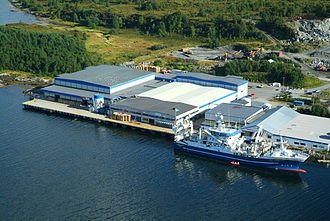
Norway-based fishing group Pelagia is expanding its business in Denmark with a plan to build a new herring facility.

The plant will be located in the northern port town of Skagen, where Pelagia already has an existing facility, and will mainly produce marinated herring and other value-added products.

Chief executive Egil Mayne Haugstad told just-food today (4 April) the investment will amount to around GBP50-100m (US$70.4-140.8m) and the site will predominately serve markets in the European Union.

Pelagia makes fish products for consumers under its food division but also has a fish and animal feed business producing protein concentrate, fishmeal and fish oil.

The company, which took its current form of Pelagia in 2014 following the merger of Norway Pelagic, Egersund Fisk, and Welcon Invest, has 26 factories spread across Norway, the UK, Ireland and Denmark, 23 of which are fully-owned and another three are partly-owned associates, according to its website. Austevoll Seafood and Kvefi now own Pelagia in a 50-50 share split.

May 7, 2018 0 comments
0 FacebookTwitterPinterestEmail
Terrorist

“PEOPLE’S AID” – TO TERRORISTS

by Nadarajah Sethurupan May 6, 2018
written by Nadarajah Sethurupan

The headlines in Norway’s national newspapers were huge: “Palestinian journalist in press vest shot and killed by Israeli soldiers in Gaza.” “Palestinian photographer killed by Israeli soldiers.” “Sharpshooter’s bullet hit his armpit. Palestinian photographer killed.”
The victim of the April 6 killing was identified as Yasser Murtaja, a “videojournalist” and “30-year-old father” who had co-founded Ain Media, a production company that works with the BBC, Al Jazeera, and other foreign media. In this instance, Murtaja was working for an NGO called Norwegian Refugee Council (NRC).

At the time he was shot, according to the NTB news agency report that ran in all three major Norwegian dailies, Murtaja was “over 100 meters from the Israeli border fence” and wearing a bulletproof vest “clearly marked PRESS.” The NTB story added that “according to Palestinian sources,” Murtaja “had no ties to Hamas or other militant groups.” (In the Norwegian media, “Palestinian sources” are treated as reliable in such matters.) On April 7, several hundred mourners attended Murtaja’s funeral.

Now, anyone who has seen Richard Landes’s 2005 documentary Pallywood, or who is familiar with the case of Muhammed al-Durrah, knows that any news story involving a supposed “Palestinian journalist” should be regarded with at least a soupçon of suspicion. For one thing, Palestinians who call themselves journalists have routinely faked videos of Israeli atrocities and sold them to gullible Western media. For another, Palestinian terrorists have used press badges to get close to the enemy. NGOs like the NRC are well aware of this conduct. Some overlook it. Others are in on it. (An official of another NGO, World Vision, is currently on trial for funneling millions of dollars to Hamas to fund terrorist activities.)

April 8 saw another round of splashy Norwegian newspaper stories about Murtaja. The Norwegian Union of Journalists, they reported, had condemned Murtaja’s killing and called for a UN investigation. Israeli Defense Minister Avigdor Lieberman, however, refused to apologize for Murtaja’s death, noting that members of Hamas routinely dress up as Red Crescent personnel or as journalists. The Norwegian media treated Lieberman’s comment dismissively. Nor, when NGO Monitor issued a press release on April 10 stating that Murtaja had “reportedly been exposed as an officer in the Hamas terrorist group,” did the Norwegian media so much as mention it.

No surprise there. While a wide swath of the Norwegian political and media establishment has been chummy with Hamas, that same establishment takes a highly negative view of NGO Monitor. Witness the snide statement, in a 2015 Dagbladet article by Maren Sæbø, that NGO Monitor “sees it as its task to criticize the UN, Human Rights Watch, Amnesty International, Christian Aid, and Oxfam.” (Sæbø didn’t bother to offer specifics that would show just how deserving these groups were of NGO Monitor’s criticism.) NGO Monitor head Gerald Steinberg and his staff, sneered Sæbø, are not “particularly fond of Israeli human-rights groups.” (In fact, the groups Steinberg isn’t fond of are those that support terrorists and seek the destruction of Israel while hiding behind the words “human rights.”)

On the same day that it issued its press release on Murtaja, NGO Monitor put out a second release about another Norwegian NGO – namely, Norwegian People’s Aid (NPA), known in Norway as Norsk Folkehjelp. Financed by Norway, Sweden, the United States, Switzerland, the United Kingdom, Netherlands, the European Union, and Japan, NPA calls itself “the labour movement’s humanitarian solidarity organisation.” Alas, the truth is a bit different from this cozy self-description: citing the U.S. Department of Justice, NGO Monitor revealed in its press release that NPA had “provided ‘material support’ to Iran, Hamas, the Popular Front for the Liberation of Palestine (PFLP), and the Democratic Front for the Liberation of Palestine (DFLP) – designated terrorist organizations under U.S. law. As a result of these partnerships, in March 2018, NPA settled a civil-fraud suit, paying a $2 million settlement to the U.S.”

Norwegian tax money going to terrorists? You’d think this would be something of a news item in Norway. Nope. Searching the major Norwegian newspapers, I could only find one mention of it. And the story in question, which appeared in Dagbladet, didn’t take the supporting-terrorists angle: under the headline “NPA pays 16 million [kroner] to avoid trial in U.S.,” Dagbladet quoted NPA official Per Nergaard as insisting that his organization had only twice had any contact with governments or groups on the U.S. ban list, and that those contacts had been exceedingly tenuous: one, he asserted, had involved a “seismic operation and explosives elimination for Norsk Hydro in Iran” and the other, “a course in democracy and human rights” whose attendees had happened to include Hamas members.

Not to put too fine a point on it, but Dagbladet‘s article was a total whitewash. It failed to mention that, as NGO Monitor put it, an NPA “partner organization” called the Union of Agricultural Work Committees (UAWC) “is linked to the PFLP terrorist organization.” Nergaard spoke of “a course in democracy and human rights”; NGO Monitor noted that NPA had in fact “funded numerous workshops” that had provided terrorist leaders with tips on winning “youth support.” NGO Monitor quoted U.S. Attorney Geoffrey S. Berman: “For years, Norwegian People’s Aid obtained grant money from USAID by falsely representing that it had not provided, and would take reasonable steps to ensure that it did not knowingly provide, material support to prohibited parties under U.S. law.” As far as I’ve been able to determine, that quotation appeared nowhere in the Norwegian media.

Nor did the Norwegian media address NPA’s role in the boycott, divestment and sanctions campaign against Israel (a malignant movement one of whose flagship organizations, the Students for Justice in Palestine, is the subject of an exhaustive new pamphlet put out by the David Horowitz Freedom Center). As NGO Monitor reported, NPA lobbied for the Norwegian state pension fund to divest from Israeli firms and helped publish a document alleging “that Norwegian companies are participating in international law and human rights abuses” by investing in Israel. NPA also works closely with a number of poisonously anti-Israeli Palestinian NGOs.

In a region awash in fake human-rights organizations, terrorists masquerading as reporters, and prominent activists and religious figures who speak benignly of peace and love while privately supporting violence and mayhem, NGO Monitor performs an invaluable service, reliably sorting it all out and striving to separate the truth from the lies. Gerald Steinberg and his crew deserve immense credit for the remarkable work they do. But you’d never know that from reading much of the mainstream European media.

(frontpagemag)

May 6, 2018 0 comments
0 FacebookTwitterPinterestEmail
Environment

Norway’s invisible glass ceiling

by Nadarajah Sethurupan May 5, 2018
written by Nadarajah Sethurupan

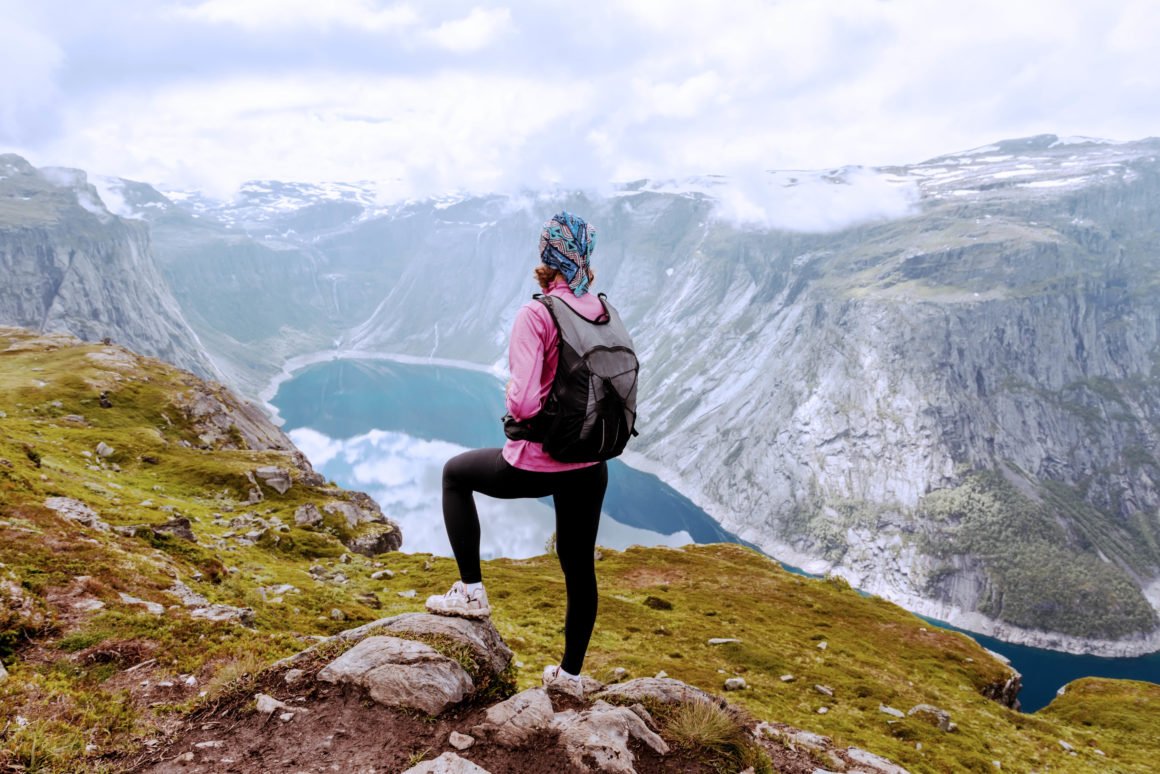
Hiker on the mountain top. Sport and active life concept. Trolltunga Norway

When it comes to promoting women’s careers, Norway is often held up as a model. The country has been described as one of the “most gender equal nations in the world.” And its state-mandated quotas of women on company boards have been put forward as an example for other countries to follow.

But if you look — as I have — at the percentage of women who reach the top of the career ladder, another picture emerges. By this standard, Norway is not much of an exemplar. It ranks just above Romania and Germany, and far behind countries like Russia, the United States, France and Latvia.

Call it Norway’s gender equality paradox. The true lessons from the country — and its Nordic neighbors — are that quotas are a poor method for promoting gender equality and that the heavy hand of government can unintentionally hold back women’s career advancement.

By some measures, Nordic countries are indeed the most women-friendly places in the world. Since the age of the Vikings, Nordic societies have been unusually open to women’s economic participation. Women in early Nordic societies could inherit land and property, kept control over their dowry and controlled a third of the property they shared with their spouses. They took care of the farms when their men were away on raids and sometimes even joined them as “shield maidens.”

Under medieval law, Nordic women had greater rights than in other parts of the contemporary world. Inheritance followed both male and female lines. Additionally, women could opt for a divorce — impressive for the time. This tradition was gradually built upon. Swedish women could run their own businesses generations before the same right was given to women in most parts of Europe.

Today, Nordic countries have a high labor market participation of women and one of the most gender equal attitudes in the world. It would be natural to conclude that many women also reach the top of the career ladder. But this is not the case.

I recently calculated the share of women who have managerial positions around the world. A clear pattern emerges.

The list is topped by Latvia — a neighbor of the Nordic countries that shares the same Protestant culture but has a small welfare state. In Latvia, 46 percent of managers are women. The United States — which is often criticized for lacking welfare state policies such as public provision for parental leave — follows in second place with 43 percent women managers.

The first Nordic country on the list is Iceland, with a limited welfare model and 40 percent women mangers. Sweden, which has scaled back its welfare model and opened up the public sector to private competition, has 36 percent women managers. Norway and Finland both do relatively poorly with 32 and 30 percent women managers.

Denmark, which has the highest taxes and the larges welfare state in the modern world, does even worse with only 28 percent of female managers.

The rise of the welfare state has been a double-edged sword for women’s advancement. It has created jobs in women-dominated fields such as health care and education and helped women enter the labor market by offering daycare and other family-related services.

But high taxes have made it difficult for families in the Nordics to purchase services that alleviate household work. This has hampered women’s ability to invest time in their careers.

Meanwhile, generous benefit systems combined with high taxes reduce the economic incentives for both parents to work full-time. Parental leave policies have given women incentive to take long breaks from the working life. Adding to this, state monopolies in women-dominated sectors such as health care and education have limited women’s career choices.

Nordic policymakers are aware of these problems, and they have taken different approaches to addressing them. In Sweden, for instance, market reforms have in part been seen as a way of advancing women’s careers.

Norway, instead, tried to tackle the problem with state-mandated policies. In 2003, the country passed a law requiring 40 percent of board members of public companies to be women. Sadly, these have not had the desired effect. A Belgian economist has shown that they had no measurable impact on ordinary women’s career outcomes.

When it comes to promoting women’s careers, Norway shouldn’t be seen as a model. It should be seen as a warning — that the welfare state can be a drag on gender equality and that quotas are not the answer.

(politico.eu, Nima Sanandaji is president of the European Centre for Entrepreneurship and Policy Reform and the author most recently of the study “The Nordic Glass Ceiling” for the Cato Institute.)

May 5, 2018 0 comments
0 FacebookTwitterPinterestEmail
NATO and Norway

Norway could agree to additional US Marine presence by summer

by Nadarajah Sethurupan May 4, 2018
written by Nadarajah Sethurupan

Norway’s defense minister hopes to make a decision by summer about expanding the U.S. Marine Corps’ presence in his country.

The Pentagon “would like to extend the period and they would like to see whether we could increase. We will look into it and give them an answer in, before the summer,” Frank Bakke-Jensen told Defense News during a visit to Washington. “That’s my ambition.”

About 300 Marines from various units have been involved in six-month rotations in and out of Værnes, located in midwest Norway. Members from 1st Battalion, 6th Marine Regiment based out of Camp Lejeune, North Carolina, will soon replace the small contingent of Marines from 2nd Battalion, 2nd Marines in Norway, a Marine spokesman confirmed earlier this month.

Marine Commandant Gen. Robert Neller, who Bakke-Jensen met with during his trip to the Pentagon, has emphasized a need for the Corps to increase its winter training capabilities.

Bakke-Jensen met with U.S. Secretary of Defense Jim Mattis on March 20, but a defense department spokesman said the issue was not discussed between the two men. Instead, a spokesperson from the Norwegian MoD described the topic as a standing request from the Pentagon.

In recent months, opposition political leaders have questioned the U.S. presence in Norway. But Bakke-Jensen, for his part, sees a benefit for Norway in having the U.S. troops handy, noting that more training opportunities “makes our troops better.”

“This is an important part of the NATO membership, to have allied troops [visiting] in Norway and training with us. So for us, it’s important, but we need to do some work on the numbers, on where they are supposed to exercise,” he said.

Magnus Nordenman, a regional expert with the Atlantic Council, said increasing the Marine presence in Norway is a win-win for both nations.

“From a U.S. perspective it would make sense to expand the rotational presence of the Marines in Norway. It’s a very challenging environment to operate in, and there is no replacement for actually being up there to train to understand it,” Nordenman said. “Also, Norway is an excellent hub for the Marines to train with other allies and partners in the region, such as the Swedes, Finns and the Baltic States. Previous Marine rotations have already done that.”

If the troop size is increased, it is possible those extra Marines would arrive in time for NATO’s Trident Juncture exercise, to be held this fall. That is expected to involve about 35,000 troops from across NATO member nations, operating in and around Norway.

Trident Juncture is important for another reason: During that exercise, Bakke-Jensen said the country will test both its civil and military readiness standards, as the country works toward creating a full-up civil defense structure, similar to the total defense plans of both Sweden and Finland.

“We’re working on that. we have a plan, and we are modernizing it because the security situation is changing,” Bakke-Jensen said.

(defensenews)

May 4, 2018 0 comments
0 FacebookTwitterPinterestEmail
Norwegian American

USA Ambassador Braithwaite Travels to Bodø

by Nadarajah Sethurupan May 4, 2018
written by Nadarajah Sethurupan

On April 18-19, Ambassador Braithwaite traveled to Bodø. This was his first official trip to Northern Norway as United States Ambassador to Norway.

On Wednesday, April 18, the Ambassador visited Norwegian Joint Headquarters (NJHQ). He was welcomed and given a tour by the Commander of the NJHQ Lieutenant General Rune Jakobsen. NJHQ in Bodø is the operational heart of the Norwegian Armed Forces. It plans, conducts, and leads the Armed Forces’ operations in times of peace, crisis and war.

Afterwards, the Ambassador visited the newspaper Avisa Nordland’s offices for an interview. When asked what the United States can learn from Norway, the Ambassador told the journalist that the United States could learn something from Norway about the good neighbor relations Norway has with Russia.

Ahead of the trip to Bodø, the Embassy had asked its social media followers for travel tips. Many of them suggested that the Ambassador should go to Saltstraumen, the world’s strongest tidal current. So, after the interview, the Ambassador went on a RIB safari to Saltstraumen! The current creates a twice daily naturally-occurring maelstrom consisting of a constantly-changing rush of whirlpools, boils, and vortices between the open ocean and the Saltstraumen Fjord. The safari also included seeing impressive sea eagles and beautiful scenic views.

Thursday April 19, started with a visit to Joint Rescue Coordination Centre of Northern Norway (JRCC). Bent-Ove Jamtli, General Director of JRCC, gave a presentation about the center’s work and important mission, and gave the Ambassador a tour of their offices.

Afterwards followed a meeting with Bodø’s Mayor, Ida Maria Pinnerød. The Ambassador and the Mayor chatted about his trip so far, and the Mayor gave a presentation about Bodø, its past, present and future.

Next on the program was a visit to Bodin Maritime School. The Ambassador was greeted by District Administrator for Education Hild-Marit Olsen and Rector Geir Ludvig Næstby who gave Ambassador Braithwaite a tour of the school. The school has several ship bridge simulators, and the Ambassador talked to some of the maritime students about their experiences at sea and their career goals. Afterwards, the Ambassador was interviewed by some of the media students at the school.

Then followed participation in a panel discussion on the Arctic at the High North Dialogue Conference. The High North Dialogue is an annual conference that brings together students, academics, policymakers, and other stakeholders to discuss the future of the Arctic. The panel discussion participants included representatives from the Norwegian MFA and seven embassies.

The day ended with a visit to the Newton Academy and the Norwegian Aviation Museum. Ambassador Braithwaite is a former U.S. Navy pilot and has a great interest in and enthusiasm for aviation. The Ambassador flew over Bodø in the Boeing flight simulator at the Newton Flight Academy and was deeply fascinated by Norwegian aviation history at the Norwegian Aviation Museum.

https://no.usembassy.gov/ambassador-braithwaite-travels-to-bodo/

May 4, 2018 0 comments
0 FacebookTwitterPinterestEmail
Media Freedom

Freedom of the press under threat

by Nadarajah Sethurupan May 4, 2018
written by Nadarajah Sethurupan

World Press Freedom Day is being celebrated for the 25th time today. The international focus for the day is the importance of the media as a watchdog keeping power in check.

‘Freedom of the press is the cornerstone of any vibrant democracy. All countries must protect journalists who are performing their role as a critical corrective in society,’ Minister of Foreign Affairs Ine Eriksen Søreide said.

Norwegian ambassador Gunnar Holm (m) at a seminar on press freedom in Ghana’s capital Accra. The seminar was supported by Norway. Credit: Siri Andersen, MFA

Freedom of the press is under threat in many countries throughout the world, according to the most recent report by Reporters without borders (RSF). Freedom of the press is considered to be threatened or in a very serious situation in 70 countries. The report particularly draws attention to a sharp increase in hostile rhetoric, hate speech and attacks on journalists and the media, including in Europe.

‘We are worried about the negative trends in the working conditions for journalists and the growing number of threats against and attacks on them in a number of established democracies,’ said Ms Eriksen Søreide.

RSF reports that there are positive developments in a number of African and Latin American countries. This is opening up opportunities for even closer cooperation across regions to promote freedom of expression and of the press. Norway is ranked as number one in the RSF World Press Freedom Index for the second year in a row.

‘Freedom of the press is widely respected in Norway. Nevertheless, we are concerned about continual harassment, hate speech and threats against journalists, particularly against women. The security of journalists is essential for freedom of expression and freedom of the press. We must work every day to ensure their safety – in Norway and elsewhere,’ said Minister of Culture Trine Skei Grande.

Events to mark the day were held in Oslo and Bergen, with the Minister of Culture participating at the Nordic Media Festival in Bergen.

The Ministry of Foreign Affairs was represented at Unesco’s international celebration of World Press Freedom Day, which took place in Accra, Ghana. The Norwegian Union of Journalists and the Ghanaian Union of Journalists held a two-day seminar on safety for women journalists, with support from Norway. The safety of journalists is a priority in the Foreign Ministry’s strategy to promote freedom of expression, which was launched in 2016.

‘Promoting freedom of expression has high priority in the Government’s foreign and development policy. We will continue our work to promote and protect freedom of the press and independent media internationally,’ said Foreign Minister Eriksen Søreide.

Every year in May, the Unesco/Guillermo Cano World Press Freedom Prize is awarded to a journalist who has demonstrated courage and strength in the name of freedom of expression. This year’s winner is the Egyptian photojournalist Mahmoud Abu Zeid, also known as Shawkan.

(Ministry of Foreign Affairs)


May 4, 2018 0 comments
0 FacebookTwitterPinterestEmail
Nobel Peace Prize

Trump formally nominated for Nobel Peace Prize

by Nadarajah Sethurupan May 4, 2018
written by Nadarajah Sethurupan

Eighteen House Republicans have formally nominated President Trump for the 2019 Nobel Peace Prize for his role in helping to improve relations between North and South Korea.

Led by Rep. Luke Messer, R-Ind., the Republican lawmakers sent a letter to the Norwegian Nobel Committee on Wednesday outlining the actions Trump has taken to pressure North Korea to end its nuclear weapons program and commit to a denuclearized Korean peninsula.

“Although North Korea has evaded demands from the international community to cease its aggressions for decades, President Trump’s peace through strength policies are working and bringing peace to the Korean Peninsula,” the Republicans wrote. “We can think of no one more deserving of the committee’s recognition in 2019 than President Trump for his tireless work to bring peace to our world.”

The GOP lawmakers credited the Trump administration with uniting the international community to impose sanctions on Pyongyang, which they said have “decimated the North Korean economy and have been largely credited for bringing North Korea to the negotiating table.”

Messer has been pushing for a Nobel Peace Prize for Trump since March, and last week, the Indiana congressman said he was gathering support from his congressional colleagues to formally nominate the president.

His latest push came after South Korean President Moon Jae-in met for a historic summit with North Korea’s Kim Jong Un. The two committed to ending the 65-year-old Korean War and will sign a peace treaty.

In a joint statement released after the meeting before the two Koreas, North and South Korea said they’re committed to achieving a denuclearized Korean Peninsula.

Trump has agreed to meet with Kim himself, though the date and location are still being discussed.

Secretary of State Mike Pompeo, then the CIA director, met with Kim last month.

“This is more progress in North Korea than we saw during the entire Obama administration,” Messer said in a statement. “And it’s a direct result of President Trump’s leadership on the world stage.”

(washingtonexaminer)

May 4, 2018 0 comments
0 FacebookTwitterPinterestEmail
China and Norway

Alipay to boost mobile payments in Scandinavia

by Nadarajah Sethurupan May 3, 2018
written by Nadarajah Sethurupan

Nets has started cooperation with Alipay to enable stores in Norway and the rest of Scandinavia to accept Chinese mobile payments.

The agreement will make it possible for about half a billion registered Alipay users to use the platform in Scandinavian stores, the Nets Group’s Norway branch.

Nets launched the solution in Denmark at the end of March, and from April this year will be available in Norway and Sweden. It is also expected that the solution will be arranged for Finland in the coming months.

There is an increased number of Chinese tourists in Norway in recent years and many of them often spend more money than other tourists, according to the announcement.

Alipay, which is operated by Ant Financial, part of Alibaba Group, is a combination of payment tools, financial services and marketing platforms. Customers using Alipay can make payments both online and in physical stores, pay their bills or transfer money to others.

Alipay payments are made by scanning a QR code on the customer’s smartphone phone, receiving and accepting the amount and receipt. The app will then ensure that these data are delivered to Nets, which in turn ensures that the store receives the money from the Chinese platform.

More than that, stores will also have the opportunity to market themselves directly to Chinese tourists through the app, which can attract new customers.

May 3, 2018 0 comments
0 FacebookTwitterPinterestEmail
Norwegian Aid

Call for intensified efforts to promote global health

by Nadarajah Sethurupan May 3, 2018
written by Nadarajah Sethurupan

‘Five million mothers and children throughout the world die every year from preventable causes. Norway established the Global Financing Facility with other donors to provide health services for women, children and adolescents in developing countries, and thus save lives. If we are to achieve the Sustainable Development Goals, we must be willing to intensify our global health efforts. The replenishment conference that is to be held in Oslo in November will be an important step in the right direction,’ said Minister of International Development Nikolai Astrup.

The Global Financing Facility in Support of Every Woman Every Child (GFF) was established in 2015, with Norway as its largest donor. Together with Burkina Faso, the World Bank and the Bill & Melinda Gates Foundation, Norway will co-host the first replenishment conference since the GFF was launched. The conference will take place in Oslo on 5­-6 November 2018.

‘The objective of the conference in Oslo is to mobilise funding to save the lives of millions of women, children and adolescents in 50 countries. GFF investments in nutrition and basic health services, particularly for children, adolescents and pregnant women, trigger national investments, create ownership and are an important step towards universal health care in the recipient countries,’ said Mr Astrup.

Among the aims of the Sustainable Development Agenda is to end preventable maternal and child mortality by 2030. Achieving this will require substantial investment in developing countries over the next 12 years. Much of this will have to be provided by the countries themselves, but aid will also be needed. Norway considers the Global Financing Facility to be an effective channel for efforts to improve the health of mothers, children and adolescents, and prevent the loss of life.

‘The Global Financing Facility is one example of new financing methods that can mobilise national and international capital for development. In cooperation with our partners, we will ensure that millions of women, children and young people gain access to basic health services. Put simply, this is a question of saving lives and investing in a better future for developing countries,’ Mr Astrup said.

The Global Financing Facility is a catalyst for mobilising funding for the Global Strategy for Women’s, Children’s and Adolescents’ Health under the leadership of the UN Secretary-General. Support from the GFF is coordinated with loans from the World Bank’s International Development Association (IDA), with the aim of increasing domestic funding. The GFF is also a platform for cooperation between government authorities, civil society organisations, the private sector and multilateral funds and organisations. Norway is currently the largest of seven donors to the GFF, and provides NOK 600 million a year.

May 3, 2018 0 comments
0 FacebookTwitterPinterestEmail
Environment

Meeting on High Seas Fisheries in the Central Arctic Ocean

by Nadarajah Sethurupan May 3, 2018
written by Nadarajah Sethurupan

Delegations from Canada, the People’s Republic of China, the Kingdom of Denmark in respect of the Faroe Islands and Greenland, the European Union, Iceland, Japan, the Republic of Korea, the Kingdom of Norway, the Russian Federation and the United States of America met in Washington, D.C., from 28-30 November 2017. They successfully concluded negotiations on the draft Agreement to Prevent Unregulated High Seas Fisheries in the Central Arctic Ocean.

The Agreement will prevent unregulated commercial fishing in the high seas portion of the central Arctic Ocean, an area that is roughly 2.8 million square kilometers in size, roughly the size of the Mediterranean Sea. Commercial fishing has never been known to occur in this area, nor is it likely to occur in the near future. However, given the changing conditions of the Arctic Ocean, the governments in question developed this Agreement in accordance with the precautionary approach to fisheries management.

The Agreement will establish and operate a Joint Program of Scientific Research and Monitoring with the aim of improving the understanding of the ecosystem(s) of this area and, in particular, of determining whether fish stocks might exist in this area that could be harvested on a sustainable basis. The Agreement envisions the possibility that one or more additional regional fisheries management organizations or arrangements may be established for this area in the future.

Before the Agreement will be open for signature, the delegations must first undertake a legal and technical review of its provisions, which will occur in the near future, and prepare the texts in the other languages in which it will be signed. During that time, delegations will also seek final approval within their respective governments to sign the Agreement.

Delegations expressed their sincere gratitude to the Government and people of the United States for their excellent work in hosting and organizing the meeting and for their warm hospitality.

May 3, 2018 0 comments
0 FacebookTwitterPinterestEmail
China and Norway

China and Norway surging ahead on electric vehicle sales

by Nadarajah Sethurupan May 2, 2018
written by Nadarajah Sethurupan

Fresh analysis of the electric vehicle market has shown China and Norway dominating in terms of sales and market share.

The data was compiled by the Centre of Automotive Management (CAM) in Germany.

China dominates in terms of the number of new sales with 142,445 electric vehicles purchased in the first quarter of 2018, a 154 percent increase on the first three months of 2017.

Meanwhile, Norway’s share of registered electric vehicles rose to an astonishing 48 percent, up from 35 percent on last year. In total, 16,181 were purchased between January and March.

Sales of electric vehicles in China, Germany and the UK all represented a 2 percent share of the overall total in each respective country. However, Germany saw a 70 percent increase in new electric vehicles over the past year, up to 17,549. The UK’s figure of 14,084 was a healthy 11 percent increase on 2017.

Provisional figures from last month also showed that diesel sales in both Germany and the UK had fallen off a cliff compared with the same time last year. Diesel has made significant declines in all three months of 2018 in Germany, reaching a high of 25 percent in March. UK sales dropped by 37 percent.

Stefan Bratzel at CAM commented: “China and Norway are exceptional in e-mobility. The lead market remains China, where substantial industrial policy motives are driving battery-electric vehicle technology forward.

“In Norway, where now almost half of new vehicle registrations are e-vehicles, it becomes clear how quickly a change in drive technologies can take place. Generally, e-mobility is also gaining momentum.”

It is expected that electric vehicles will dominate the automobile market in years to come as concerns about air pollution and climate change become more prominent. In addition, steep reductions in the cost of lithium-ion batteries, which are used to power the vehicles, have helped stoke the market.

Bloomberg New Energy Finance has predicted that by 2040 sales will account for one third of the world’s auto fleet, a total of 530 million vehicles.

May 2, 2018 0 comments
0 FacebookTwitterPinterestEmail
Norwegian American

USA Ambassador Hosts Kick-Off Event for Rising Leaders Program

by Nadarajah Sethurupan May 2, 2018
written by Nadarajah Sethurupan

On April 25, Ambassador Kenneth Braithwaite hosted a kick-off event for Rising Leaders at Villa Otium. Rising Leaders is an initiative of the Embassy of the United States of America and the American Chamber of Commerce (AmCham) in Norway to provide access for young, up-and-coming leaders from diverse backgrounds to high-level representatives of the established business community.

The initiative will hold quarterly events that will allow participants to engage business leaders, learn about AmCham member companies, and gain business and leadership skills.  The Embassy and AmCham have selected 23 participants for the 2018/19 cycle of the program.

https://no.usembassy.gov/ambassador-hosts-kick-off-event-for-rising-leaders-program/

May 2, 2018 0 comments
0 FacebookTwitterPinterestEmail
Farming

COME IN: THE SELF-MAINTAINING WOOD CABIN

by Nadarajah Sethurupan May 1, 2018
written by Nadarajah Sethurupan

With no road access, this emergency shelter in the Norwegian mountains was assembled to be almost maintenance-free. Ines Nastali reports.

If you ever find yourself snowed under around Norway’s Preikestolen, Pulpit Rock – one of the country’s most popular tourist attractions – you can now find shelter in a purpose-built cabin.

The Preikestolen lodge is the first of two emergency cabins funded by a state grant of 300,000NOK (£28,000), with additional support received from the national SR Bank foundation. Up to 10 people can find shelter in the house, which can only be accessed after people in need have made a call to emergency services, ensuring the cabin is used strictly in an emergency.

MyBox, the main contractor, is a specialist in micro housing and was responsible for the delivery and project management of the Preikestolen cabin. ‘Meticulous planning was required for the construction due to its remote location,’ the company states in a press release, adding that ‘with no road access, all materials were transported by helicopter over the summer months to ensure the build was completed before the early dark nights and storms arrived in autumn’. The exposed location, 604m above the Lysefjord, prompted builder Scandihus to select cladding from Norwegian company Kebony. The wooden cladding is made from Pinus sylvestris, Scots pine, and is resistant to wear and weathering, therefore requiring no maintenance beyond normal cleaning. It also adopts a silver-grey patina over time and after exposure to sun and rain, making the cabin blend in with the large, rocky landscape.

‘Developed in Norway, the patented Kebony technology uses an environmentally friendly process, which permanently enhances the properties of sustainable softwood with a bio-based liquid, primarily based on furfuryl alcohol, derived from agricultural crop waste, which is a bi-product from sugar cane production,’ a spokesperson for Kebony told Materials World. ‘By polymerising the wood’s cell walls, it gains improved durability and dimensional stability, giving it characteristics similar to those of tropical hardwood,’ Kebony states.

Powered up

Solar cells have been installed throughout the cabin to provide a sustainable power supply, in addition to a wood-burning stove, which can be fired up when the temperature drops.

The second cabin will be built at Neverdalskaret, on top of the steep Steinura, to provide a safe shelter for tourists who have been injured when hiking or to protect them from the extreme Nordic weather conditions.

(iom3)

May 1, 2018 0 comments
0 FacebookTwitterPinterestEmail
Norwegian American

Alert: Personal Security Awareness Reminder

by Nadarajah Sethurupan May 1, 2018
written by Nadarajah Sethurupan

The U.S. government remains concerned that terrorists are intent on targeting U.S. citizens, including children.  Terrorists may employ a variety of tactics, such as violent assaults and kidnappings.  In the past they have used knives, guns, and vehicles as ramming devices.  They may target schools, hospitals, churches, tourist locations, transportation hubs, and other public venues.

Actions to take:

  • Stay alert in public places, including schools, hospitals, churches, tourist locations, and transportation hubs.
  • Review travel routes and times to reduce time and place predictability.
  • Keep a low profile.
  • Be aware of your surroundings.
  • Review your personal security plans.
  • Report social media threats to local authorities


American Citizen Services
Embassy of the United States of America

May 1, 2018 0 comments
0 FacebookTwitterPinterestEmail
Asia and Norway

Norway willing to support Nepal to develop education sector

by Nadarajah Sethurupan April 30, 2018
written by Nadarajah Sethurupan

Minister of International Development of Norway, Nikolai Astrup has said that Norway government wants to partner with Nepal for its educational development.

The Norwegian Minister said so while inaugurating Devitar Basic School at Loting, Chilankha of Bigu Rural Municipality on Wednesday. The school building was constructed with the support of the Government of Norway.

On the occasion, he said that Norway would continue to provide support to Nepal under any circumstances for the development of education sector and for the all-round development of children.

He also interacted with the teachers, students and members of the school management committee.

CWIN Nepal and Gramin Bikas Tuki Sangh have been carrying out reconstruction of 22 schools in Bigu and Kalinchok Rural Municipalities in Dolakha district with financial assistance provided by the Norwegian Embassy. The school buildings were damaged by the April 2015 Gorkha earthquake.

Reconstruction of 12 out of the 22 schools has been completed, CWIN Nepal programme manager Rabindra Parajuli said.

Meanwhile, the Norwegian Minister also held discussion with the people’s representatives of Bigu and Kalinchok Rural Municipalities.

On the occasion, he inquired about the federalism, good governance and development model incorporated in the Constitution of Nepal as well as about the effectiveness of the assistance provided by the Norwegian government, Chairman of Bigu Rural Municipality, Yudhisthir Khadka said.

The Norwegian Minister was welcomed by Province Assembly member Pashupati Chaulagain, Khadka and the district-based government representatives when he arrived in Bigu to attend the programme.

Province lawmaker Chaulagain urged the Norwegian Minister to continue their support to Nepal and also thanked him for the same.

Minister Astrup has arrived in Dolakha in course of his maiden foreign visit to South Asian countries after two months of taking charge as the Minister of International Development, the Embassy of Norway has stated. The Norway government is spending Rs 300 million for the reconstruction of 22 damaged school buildings in Dolakha.

(thehimalayantimes)

April 30, 2018 0 comments
0 FacebookTwitterPinterestEmail
Norwegian American

USA Ambassador Braithwaite Meets With Prime Minister Solberg

by Nadarajah Sethurupan April 30, 2018
written by Nadarajah Sethurupan

US Ambassador Braithwaite met with Prime Minister Erna Solberg at the Prime Minister’s Office in Oslo. They discussed ways to build upon the close and deep-rooted relationship between the United States and Norway.

The Ambassador talked enthusiastically about his travels to Bergen, Trondheim and Bodø and told the Prime Minister how impressed he was by the Norwegian people’s warmth and friendliness.

April 30, 2018 0 comments
0 FacebookTwitterPinterestEmail
Africa and Norway

Norwegian family hopeful daughter will be found

by Nadarajah Sethurupan April 29, 2018
written by Nadarajah Sethurupan

Cape Town – Atle Ostbo, father of missing Norwegian student Marie Ostbo, sits by his phone waiting for news of his daughter who went missing on a Sedgefield beach.

Ostbo refuses to give up hope that Marie will be found even though police took a decision this week to scale down search operations.

“We know there are people all over the world praying that Marie is alive and will be found alive. As long as there is hope there is life,” he said.

Ostbo shares these sentiments with his wife and the 21-year-old’s mother, Anna and her sister, Helene.

The family who live in Stavanger, Norway and described Marie as a warm-hearted person. “Marie is a beautiful young lady who has a burning heart for those who do not feel so good in society. She is a happy person who had plans for a long time to come,” said Ostbo.

Marie went missing last Wednesday at Myoli Beach in Sedgefield. CCTV footage shows her leaving the PiliPili restaurant by herself at around 6.15pm, where she was having dinner with her tour group.

Marie is studying political science at the University of Toulouse, France and travelled with a friend from the same university for a six-day Garden Route trip.

According to the NSRI at around 6pm some of the group went for a walk on the beach and then returned at around 7pm. Marie was last seen on the beach around this time wearing blue jeans and a white shirt standing about 100m from the backpackers where they were staying.

After others in the group noticed she had not returned with them they returned to the beach to search for her but were unsuccessful.

NSRI Wilderness and Community Police joined the search at 7.40pm.

“The last time I communicated with Marie was the day before she disappeared. We exchanged pictures. We chatted with each other about how things were,” said Ostbo.

He said one of the theories communicated to him was that Marie had gone into the water and might have been swept away by the current.

However, he said he believed that Marie had been abducted.

“I’m sure that Marie would never have gone bathing I have, from the first moment when I got a phone call from Sea Rescue on Wednesday night, thought that Marie would never have done it.”

Police spokesperson Captain Malcolm Pojie confirmed that her cellphone, sandals and a cap were found neatly placed on the sand at the beach with no other evidence.

He also confirmed that two men had been questioned and cleared of any wrongdoing by authorities after they were seen speaking to his daughter on CCTV footage.

After intense searches by local police, NSRI Wilderness, community policing forums, emergency services, a volunteer paraglider and more, the decision was made on Thursday to scale down the search efforts with a missing persons docket opened.

“We still appeal to the surrounding communities to be on the lookout for the missing lady,” said Pojie.

Anyone with information can call the investigation officer at the Knysna SAPS at 0442036600 or Crime Stop at 0860010111.

April 29, 2018 0 comments
0 FacebookTwitterPinterestEmail
Science

Norway government backs ambitious datacentre investment plan

by Nadarajah Sethurupan April 29, 2018
written by Nadarajah Sethurupan

Norway has a plan to be a leading location for datacentres with a policy that will put it in direct competition with some of its Nordic neighbours.


Norway, in no mood to lag behind the rapid forward leaps recorded by near neighbours Sweden and Denmark, has rolled out an ambitious new strategy to position the country as a leading location for IT-datacentre operations.

The project development strategy now being championed by prime minister Erna Solberg’s conservative-led government, under its Norway As A Data Centre Nation (NADCN) plan, represents a shot across the collective bow of Denmark and Sweden.

These near neighbours have been hugely successful in using their cold climates and easy access to renewable energy to attract significant datacentre investments. The list of high profile global industry players that have, since 2010, invested in datacentres in Sweden and Denmark include Apple, Facebook and Google.

The NADCN strategy adopts an approach that includes regulatory and tax-based support. At the front-end, the stimulus plan includes the removal of taxes on plant and machinery for datacentres and data-centric enterprises alike.

The strategy also comprises reform legislation to fast-track the construction of datacentres. It aims to clarify planning regulations relating to the building of datacentres. Moreover, a new process is being implemented, at national and local council level, to simplify procedure requirements linked to public highway excavation works.

“This is a massively important national strategy. This government will cooperate with industry to not only stimulate project development and investment, but also create a working environment where regulations are simplified and costs can be kept low,” said Ketil Solvik-Olsen, Norway’s transport and communications minister.

The NADCN incorporates a range of financial support incentives covering the building of additional overseas fibre cables. It includes a state-private partnership proposal to co-finance the construction of a standby backbone network. This co-venture is expected to initially run as a pilot-scheme with capital input from Innovation Norway, the state-run national development finance organisation.

Significantly, and particularly from the point of view of investors, the NADCN plan includes enhanced government spending on IT skills. The initiative will fund an additional 1,250 student placements at universities and technical colleges across Norway by year-end 2018 alone.

“Norway does have the reputation for being a high-cost location. We need to play to our strengths. The growing IT segment in our third level educational system is one positive. Another, and one that will interest datacentre investors and operators, is our well-functioning power sector. We have large renewable energy resources offering competitive electricity rates,” said Torbjørn Røe Isaksen, Norway’s industry minister.

Norway’s datacentre sector is largely populated by small to medium-sized players like Basefarm, Evry and Digiplex. The Green Mountain facility at Rennesøy, constructed on the site of a former Nato munitions depot, is one of the country’s most high profile datacentre facilities. ICT-group Digiplex operates datacentres near Oslo, Fetsund and Rosenholm.

The scale and flow of new datacentre projects is showing concrete signs of rapid growth. Canada’s Hive Blockchain Technologies acquired the Norwegian-American Kolos project company in March. This project covers the building of a four story facility holding 70-MW of IT equipment in northern Norway. The facility has the potential to scale-up processing capacity to 1,000-MW. Strategically, Kolos will support HIVE’s blockchain and crypto-currency infrastructure business.

Ringeriks-Kraft is being linked to a co-venture with a Japanese investment partner to build a datacentre at a site located north west of Oslo. Additionally, the German IT manufacturing group Rittal plans to expand its newly opened datacentre in Lefdal, outside Oslo. The Lefdal Mine Datacentre, at full utilisation at around 120,000 square metres of white space, has the potential to become Europe’s biggest datacentre.

The NADCN plan has been simmering under the surface of the Norwegian government’s broader National ICT Development Strategy for several years. Norway has prioritised specific policy objectives that combine strong digital innovation and data-driven value creation. The obvious goal here is to create a sustainable and integrated approach to the development of the country’s ICT sector.

Norway, in order to achieve the specific targets set out in the NADCN, will need to scale-up investments in critical infrastructure such as new overseas dark fibre routes. The implementation of proposed tax incentives will also be important in the NADCN’s overall vision. Understanding the need to elevate Norway’s tech-image globally, the Norwegian government plans to also channel funding into marketing projects designed to bolster the country’s reputation as a cost-competitive cold-climate location for datacentre investments.

Revisiting tax deductions

To drive investment forward, the Norwegian government may need to revisit the tax deductions being offered in the NADCN. To compete more effectively with Denmark and Sweden, Norway may decide to broaden the scope for financial stimulus in the NADCN to include tax breaks for start-up datacentre projects.

Norway took a practical step in this precise direction in January 2018, when it enacted new legislation that exempted datacentre facility operators from paying property taxes.

On the wider business landscape, the NADCN embodies huge potential value for Norway’s biggest renewable energy generators. Major players in this market space include the state power giant Statkraft. Backed by a network of 372 hydro stations and windparks, Statkraft is Europe’s biggest producer of electricity from renewable sources. Almost 98% of Statkraft’s 66 TWh in annual power production is sourced from hydro and wind.

“What the government strategy does is underline the level of political support that exists for ongoing efforts by many stakeholders to attract datacentre investments and operators to Norway,” said Atle Haga, Statkraft’s chief project director.

Statkraft had launched its own Data Centre Project (DCP) ahead of the Norwegian government’s NADCN launch. The company is angling to become Norway’s leading facilitator for investors looking to build datacentres, not just in Scandinavia, but across Europe. Statkraft’s core business model is constructed around finding international partners to engage in joint venture datacentre projects, primarily in Norway, but also in Europe.

The state-owned energy company is actively scouting for joint venture partners in Europe, Asia and North America. Although Group CEO Christian Rynning-Toennesen is optimistic about the long-term potential embedded in the DCP, Statkraft still has to sign its first standout partnership.

“We are working hard to secure contracts, but I can’t say when this will happen. What we can say is Norway is a good location to establish an advanced computer-based business,” said Rynning-Toennesen.

(computerweekly)

April 29, 2018 0 comments
0 FacebookTwitterPinterestEmail
Norwegian Aid

Norway moves toward the future of sustainable construction

by Nadarajah Sethurupan April 28, 2018
written by Nadarajah Sethurupan

The REZBUILD project organized a workshop in Oslo to inform about the refurbishment methodology that is going to be validated in a demo building located in Bertramjordet housing cooperative. The event is framed within the participative processes carried out in the project which involve local communities, researchers, private sector and citizens

On April 10th, Oslo became the epicentre of sustainable construction. Experts from the European Union gathered in the Norwegian city to explain the activities that are being developed within the framework of REZBUILD project, an initiative funded by the Horizon2020 Programme of the European Commission that grows with the main aim of defining an innovative and collaborative refurbishment ecosystem for Near Zero Energy Building in Europe.

REZBUILD will establish a multi-collaborative framework within a refurbishment methodology managed by an Agile Project Management tool based on cloud service, capable to interconnect in real time the key steps of a tailored retrofitting plan among all stakeholders involved within the building renovation value chain. Decision-making tools will be performed in order to validate the best optimised cost-effective refurbishment technology package in Bertramjordet housing cooperative, in Oslo.

In addition, the REZBUILD project has established 2 more demo sites in Venice (Italy) and Madrid (Spain), each one with a different representative climate and tipology of building.

Involvement of local communites and citizens

The participative programmes carried out within the framework of the project will be implemented through a methodology for decision-making processes which involve all the relevant expertise in the overall process. In this context, the owners of the buildings, who are the object of the pilot tests, will be pivotal to promote actions of social innovation, through the user’s awareness on efficient energy use.

In this sense, the workshop organized in Oslo on April 10th was focused on the owners of the houses living in the neighbourhood that will be refurbished within the framework of the project. Local communities’ acceptance and the understanding of Oslo population about this project is considered essential to succeed in the development of the refurbishment and renovation actions.

In addition, this workshop aimed to raise awareness on the impacts of the project among the final users and detect any potential social risk deriving from its implementation.

The workshop was a good chance to present REZBUILD and its general objectives and specific measures in Oslo, in order to improve the knowledge about the project. Furthermore, representatives of the consortium had the opportunity to discuss the project, as well as the related perceived risks through group dynamics and interactions. The workshop ended with a presentation of the project website and its participation tool.

1st Periodic REZBUILD Meeting in Norway – 6 months project development

In conjunction with the workshop, on 11-12th April, consortium partners met in Oslo to keep collaborating on the project, in order to share the status of the art of each Work Package with the EU Project Officer and the whole team, interacting to facilitate knowledge sharing between partners. The meeting included a visit to the Project Demo site in Oslo, one of the three demonstrative actions of the project.

The dwelling selected for the demonstration is a housing cooperative in Bertramjordet, representing typical dwellings in Norway.

The housing cooperative is a suitable site for demonstrating the expected higher efficiency of BIPV in cold climate and good utilisation of aerogel insulation. The goal of the renovation is the reduction of more than 60% in consumption and cost of energy, improving comfort for the tenants and making the building’s energy performance a key element.

April 28, 2018 0 comments
0 FacebookTwitterPinterestEmail
Terrorist

Militants Trained by Norway Planning to Fight against Syrian Gov’t

by Nadarajah Sethurupan April 27, 2018
written by Nadarajah Sethurupan
The Norwegian-trained Syrian militia called the Revolutionary Command Army (MaT) allegedly meant to help quell ISIL are waging a war against the Syrian leadership and pro-government forces, a Norwegian daily reported.

According to Klassekampen, the rebel group is now openly fighting for a regime change in Syria.

In May 2016, it was announced that Norwegian soldiers were to be dispatched to Syria’s neighbor country Jordan to provide “training, counseling and operational support” to Syrian paramilitary groups fighting ISIL as part of the US-led Operation Inherent Resolve.

In June 2016, the Norwegian parliament also green-lit similar missions in Syria itself.

While Norway’s Syria contribution was formally concluded in March this year, as the mandate formally expired, the exact extent and nature of Norway’s involvement was largely kept secret. MaT commander Muhannad al-Talla confirmed to Klassekampen that his group was trained by Norwegians in al-Tanf in Southeastern Syria, where the US also has a base.

While both Prime Minister Erna Solberg and then-Defense Minister Ine Eriksen Søreide emphasized the mandate was to fight ISIL, ensuring that they “won’t endanger the peace process,” al-Talla claimed that his Western allies never concealed that his soldiers were to fight both terrorists and the Syrian government.

“From the very beginning, I’ve been completely aware that I’m fighting “the ISIL” and the al-Assad forces. (ISIL) is not gone but is clearly weakened. Now the priority is the fight Assad,” al-Talla admitted to Klassekampen.

The al-Tanf Base is a strategic outpost along the main route between Damascus and Baghdad. There, the US has created a so-called 55-square-kilometer safety zone secured by US soldiers with the help of al-Talla’s units.

Within the zone, Syrian army troops have been bombed at least two times by US combat aircraft. At the same time, several rebel groups, including MaT took part in an offensive against government forces after ISIL’s withdrawal from Eastern Syria.

The Free Syrian Army (FSA) Spokesman and Counselor Ibrahim al-Idlibi confirmed to Klassekampen that Norway-trained “militia” took part in the struggle against the government forces, such as the operation “The Country is Ours” carried out in May and June 2017.

While the Syrian government has managed to reclaim most of the country’s territory from ISIL and various rebel groups, MaT leader Muhannad al-Talla is by his own admission not ready to lay down arms.

“It is true that the current balance of power favors Assad. But we will never let him have peace. Even if he wins the war, we will continue to make his life sad for him,” al-Talla pledged.

Both Muhannad al-Talla and the Norwegian Ministry of Defense denied that Norwegians ever participated in the fight against the Syrian government and its allies. Norway formally ceased its mission in Syria, with the Defense Ministry deciding to focus on Iraq.

April 27, 2018 0 comments
0 FacebookTwitterPinterestEmail
Africa and Norway

Joint Statement on the Darfur Peace Process

by Nadarajah Sethurupan April 27, 2018
written by Nadarajah Sethurupan

Representatives of the Government of Sudan, the Justice and Equality Movement (JEM) and the Sudan Liberation Movement/Army (SLM/A) met in Berlin on 16/17 April 2018 to discuss a pre-negotiations agreement that would serve as a basis for the resumption of peace talks for the Darfur as part of the broader Sudan peace process. The event was hosted by the German Berghof Foundation. The AU/UN Joint Mediator and Joint Special Representative for Darfur, Germany and the United States served as facilitators. Norway and the United Kingdom were present as observers.

The parties engaged and made a serious effort towards a compromise. However, while the parties made progress, they did not reach an agreement in their second Berlin meeting. The facilitators will consider options for further progress together with the parties, partners and interested international actors. We call on the parties to continue to adhere to their pledges to cease hostilities and to remain engaged with the Joint Chief Mediator in order to find a solution to the outstanding issues and enter into formal talks.

Distributed by APO Group on behalf of Germany – Federal Foreign Office.

April 27, 2018 0 comments
0 FacebookTwitterPinterestEmail
Norwegian Aid

New funding period for EEA and Norway Grants with Slovenia

by Nadarajah Sethurupan April 26, 2018
written by Nadarajah Sethurupan

Norway and Slovenia are signing MoUs on funding totalling EUR 37.7 million for the new funding period for the EEA and Norway Grants. The main focus areas are climate and education.

‘Norway has a good deal to offer when it comes to education and adaptation to climate change. It is therefore natural for us to help Slovenia to address challenges in these areas, which are important for sustainability and competitiveness throughout Europe,’ said Minister of Foreign Affairs Ine Eriksen Søreide.

State Secretary Audun Halvorsen is in Slovenia today to sign the MoUs on behalf of Norway.

The Norwegian Environmental Agency will play a key role in the climate change programme, which will focus on adaptation to climate change, renewable energy and energy efficiency. Education is the other main priority. Efforts in this field will include grant schemes, exchanges, professional development of teachers, and cooperation between the education sector and the business sector. The Norwegian Centre for International Cooperation in Education will take part in the cooperation in this area. Innovation Norway will be involved in a fund for decent work. In addition a separate fund for supporting civil society in Slovenia will be continued.

‘These MoUs also represent good opportunities for Norwegian actors in the education and business sectors. I am pleased that the EEA and Norway Grants scheme will, in this way too, further strengthen the close ties between our countries,’ said State Secretary Audun Halvorsen.

Norway cooperates with Slovenia in NATO, the UN and other international forums. Slovenia and Norway share common values and similar views on many of the important issues of our time.

Norway has played a part in reducing social and economic disparities in Slovenia through the EEA and Norway Grants since the country became an EU member in 2004. Education, climate change and environment have been top priorities all along.

Facts about the EEA and Norway Grants

Under the EEA Agreement, Norway is part of the European internal market.

  • The EEA Agreement sets out the common goal of working together to reduce social and economic disparities in Europe and to strengthen cooperation between European countries.
  • Norway contributes to this through the EEA and Norway Grants.
  • EUR 2.8 billion is available under the grant scheme for the period 2014-2021, to be distributed among 15 beneficiary countries.
  • Norway provides some 98 % of this funding; the remainder is provided by Iceland and Liechtenstein.

See the fact sheet for an overview of the programmes that are to be implemented in Slovenia.

April 26, 2018 0 comments
0 FacebookTwitterPinterestEmail
Royal House

Crown prince, princess of Norway arrive at Kadriorg Palace

by Nadarajah Sethurupan April 25, 2018
written by Nadarajah Sethurupan

Crown Prince Haakon and Crown Princess Mette-Marit of Norway arrive at Kadriorg Palace (Photo: Siim Lõvi/ERR)

Crown Prince Haakon and Crown Princess Mette-Marit of Norway on Wednesday arrived in Estonia for an official two-day visit. President Kersti Kaljulaid received them at Kadriorg Palace in Tallinn.

Timed to coincide with the Estonian, Latvian and Lithuanian centennials, the Norwegian royal couple’s visit to the Baltics is aimed at celebrating the three neighboring countries’ independence as well as the positive relations between the Baltics and Norway.

Crown Prince Haakon and Crown Princess Mette-Marit’s first stop in Estonia was at Kadriorg Palace, where they were met by President Kersti Kaljulaid.

On Thursday, the Norwegian royal couple will open a Norwegian-Estonian business forum organized by Innovation Norway and Enterprise Estonia, after which they will visit Telliskivi Creative City as well as Tallinn’s medieval Old Town.

Estonia, Latvia and Lithuania all enjoy extensive bilateral cooperation with Norway via Norwegian support programs as well as NATO security policy. Hundreds of Norwegian businesses also operate in the Baltics.

April 25, 2018 0 comments
0 FacebookTwitterPinterestEmail
Science

Why Norway wants to be the world’s next big tech hub

by Nadarajah Sethurupan April 25, 2018
written by Nadarajah Sethurupan

TechRadar Pro heads to Oslo to find out why Norway can be the biggest Scandinavian success story yet.


When it comes to the latest big tech breakthroughs, many people would think of California, Singapore or China as the world’s top locations for vibrant start-ups.

Norway’s economy has traditionally focused around the sea, with oil, gas and fishing among its most famous industries. However as the world gradually comes round to realising these resources are somewhat finite, many Norwegians are instead turning to technology to make their fortune.

TechRadar Pro headed to the land of ice and snow (aka Oslo) to speak to some of the country’s top start-ups and investment firms to find out just how close Norway is to being the next big technology success story.

To begin with, that last sentence may have been somewhat of a misnomer. Norway has had several major technology successes in recent years, including the likes of Kahoot, Vivaldi, and probably the most notable, Opera Software.

Former Opera vice president and chief commercial officer Rolf Assev quit the company after 12 years service in the corporate world, and now helps head up Oslo’s StartupLab, a dedicated space for fledgling Norwegian firms to grow and prosper.

“When we started six years ago, no one believed in us, because no one believed you could make money of early stage tech start-ups,” he tells TechRadar Pro at StartupLab headquarters, on the campus of Oslo’s main university.

“People believe we have never done start-ups in Norway…but we have!”

At first glance, StartupLab seems similar to the many start-up accelerators found in San Francisco or around London’s Silicon Roundabout. Teams of four or five sit around wheeled wooden desks (to ensure easy movement around the floor) or huddle round screens, talking excitedly in meeting rooms.

However Assev explains that behind the calm facade, the selection process is extremely tough as the Norwegian technology scene continues to develop. StartupLab accepts only one in every 10 applicants it receives, he reveals, meaning that competition is fierce to get in.

Assev explains that although Sweden has traditionally been Scandinavia’s leading technology hub, Norway is fast catching up. The traditional levels of investment pushed into the west coast of the country, home to the fishing and utility industries, is now instead being focused inland to the cities – offering a great opportunity for tech start-ups.

For StartupLab, it is often the founders themselves that make companies an attractive proposition, Assev says. He highlights Magnus Wanberg, the CEO of reMarkable, an e-screen company that had to take on the likes of Samsung and Google, and Karen Dolva, founder of No Isolation, which builds robot companions for the elderly and children with learning difficulties, as proof that investing in people who believe in their ideas (and plan for the long term) can be the key for success.

“We believe in the founders,” he notes, “we believe they are the best people to find out where a company is going.”

Businesses, especially start-ups, in other countries often fall victim to a model of rapid initial growth, before being sold or amalgamated into larger companies, Assev says. However in Norway, thanks to much of the investment into start-ups coming from within the country, rather than from abroad, domestic companies are able to keep their independence, and grow organically to achieve greater levels of success.

“There is no one doing the same model that we are doing,” he adds, “we did this not to make money, but to give back.”

“We don’t know what the next steps are just yet – we just know we want to have global successes…and be the place for the best start-ups in Norway.”

Over in Oslo’s picturesque old town, a snowball’s throw from the ornate 17th century cathedral, another organisation is looking to encourage the next generation of Norwegian tech start-ups to break into the big time.

Tharald Nustad and Anders Lier head up Nordic Impact, an angel investment firm that looks to back technology start-ups that are able to do good for the planet.

Scandinavia, and Norway in particular, is well-placed to push this agenda, having long been a key location for new technology fields – from green energy to electric vehicles

Lier, Nordic Impact’s executive chairman, notes that technology can “lift the country out of the oil dopmaine, into the new world,” with banks, cities, universities and corporate machines all working together to help support a vibrant Norwegian start-up scene.

Lier notes that the dawn of a new “unicorn economy” could be coming to Norway within the next few years – one with the potential to rival the oil boom of the 1970s, which has helped transform the country into the model for progress it is now.

“It’s the right time for Norway to leave the oil industry,” he says, “we need to find a new future.”

“We think more of the learning society – being smart doesn’t mean you do the right stuff.”

Lier notes that Norway is able to benefit not just from abundant natural resources, but thanks to its oil wealth, can enjoy national cash reserves of around £1 billion – which he believes could be invested into technology.

However Nordic Impact is not just focused on the next big thing or technology trend however, as the company looks to instead solve the big issues facing modern society within the next few decades.

“Looking from above, the question is what is the future of society?” Lier notes, “We don’t really know, but it will be a world of abundance.”

With less than five thousand working days left until 2030, the need for ituitive, intelligent technologies is becoming more pressing by the day, and this requires new, non-linear business models – such as that provided by Nordic Impact.

“We are optimistic about the future,” he adds, “but we can’t just leave it to the technology…we have to be on top of it.”

“We have the DNA to take risks.”

Along with innovation though, collaboration is the key to ensuring humanity benefits from the boost technology can bring.

Nustad, a serial tech entrepreneur and the founder of Nordic Impact, notes how new technology has helped bring people together over the past decades, but adds that physical interaction is important as ensuring we use the latest tools.

Lier again references No Isolation as an example of the good work their investment has helped fund, and states that success will come not just from good technology or good business processes, but how companies work with the communities that surround them.

“There shouldn’t be any competition to try and save the world,” he observes.

The firm now looks to encourage investment in Norway through its own efforts. This May, it is set to host the Katapult Future Fest in Oslo to show off both the good work done by its existing benficiaries, and highlight the potential of both the city and Norway as a whole to investors both at home and around the world.

“Those in the know, know Norway,” Lier notes.

Ultimately, it seems that the excitement around Norway’s technology scene is well-placed. A young city, open to new ideas, and ready to benefit from a wealth investment – all of this seems to contribute towards the recipe for a success story. The future of the world when it comes to technology may well be found in Scandinavia, with Norway right at the heart of the action.

(techradar)

April 25, 2018 0 comments
0 FacebookTwitterPinterestEmail
Newer Posts
Older Posts

Norwegian Nobel Prize 2025

101207 The Norwegian Nobel Committee has decided to award the Nobel Peace Prize for 2025 to Maria Corina Machado for her tireless work promoting democratic rights for the people of Venezuela and for her struggle to achieve a just and peaceful transition from dictatorship to democracy.

Special Interest

  • Africa and Norway
  • Asia and Norway
  • Asylum
  • China and Norway
  • Corruption in Norway
  • Crimes
  • Defence
  • Diplomatic relations
  • Economics
  • Environment
  • Farming
  • Killing
  • Media Freedom
  • Middle East and Norway
  • NATO and Norway
  • Nobel Peace Prize
  • Norwegian Aid
  • Norwegian American
  • Oil & Gas
  • Peace Talks
  • Politics
  • Racism in Norway
  • Religion
  • Russia and Norway
  • Royal House
  • Science
  • Sex scandal
  • Sports
  • Spy War
  • Srilanka and Norway
  • Svalbard
  • Terrorist
  • Taiwan and Norway
  • Video clips

Follow Us

Recent Posts

  • Two dead, one injured after shooting in Norway

    October 4, 2026
  • Syrian, Norwegian migration officials discuss cooperation in Oslo

    October 2, 2026
  • Norwegian premier says peace institute funding had no link to Epstein

    October 1, 2026
  • Norwegian ministers grilled in parliament over ties to Epstein

    October 1, 2026
  • Tesla rise across Europe, extending recovery

    October 1, 2026
  • Norway Provides $2.6 Million to UN Afghanistan Trust Fund

    September 29, 2026

Social Feed

Social Feed

Editors’ Picks

Norway opens market for Sri Lankan fish exports...

May 13, 2016

Sri Lanka – Nordic Business Council holds discussions...

May 15, 2016

Good governance to Sri Lanka

May 15, 2016

Shock and Joy in Sri Lanka – Erik...

May 15, 2016

Sri Lanka-Norway plenty of new opportunities for business–...

May 15, 2016

NORWAY NEWS is an online news site, written in English, dedicated to Norwegian affairs at home and abroad. Norway News.com is published online. It is a daily online newspaper in existence since May, 2003. The site is run by an Independent Journalist.

Facebook Twitter Youtube

Useful Links

    • Work With Us
    • Contact Us
    • Collaboration
    • Data Collection
    • Workplace
    • Adverstising
    • Privacy Policy
    • International Collab
    • Feedback
    • Terms of Use
    • About Our Ads
    • Help & Support
    • Entertainment
    • News Covering
    • Technology
    • Trending Now

Politics

Syrian, Norway to boost cooperation on mine clearance
Erna to step down as Conservative Party leader in 2026
Norwegian Labour Party on re-election win

Latest Articles

Two dead, one injured after shooting in Norway
Syrian, Norwegian migration officials discuss cooperation in Oslo
Norwegian premier says peace institute funding had no link to Epstein
Norwegian ministers grilled in parliament over ties to Epstein

Norway News 2025 . All Right Reserved. Designed and Developed by Norway News

  • Home
  • About us
  • Disclaimer
  • Contact us
NORWAY NEWS – latest news, breaking stories and comment – NORWAY NEWS
  • Home
  • About us
  • News
  • Other News
    • Africa and Norway
    • Asia and Norway
    • Asylum
    • Breaking News
    • China and Norway
    • Corruption in Norway
    • Crimes
    • Defence
    • Diplomatic relations
    • Economics
    • Environment
    • Farming
    • Featured
    • Health
    • Killing
    • Media Freedom
    • Middle East and Norway
    • NATO and Norway
    • Nobel Peace Prize
    • Norwegian Aid
    • Norwegian American
    • Oil & Gas
    • Peace Talks
    • Politics
    • Racism in Norway
    • Religion
    • Royal House
    • Russia and Norway
    • Science
    • Sex scandal
    • Sports
    • Spy War
    • Srilanka and Norway
    • Svalbard
    • Taiwan and Norway
    • Terrorist
    • Travel
    • Video clips
  • Disclaimer
  • Contact us
NORWAY NEWS – latest news, breaking stories and comment – NORWAY NEWS
  • Home
  • About us
  • News
  • Other News
    • Africa and Norway
    • Asia and Norway
    • Asylum
    • Breaking News
    • China and Norway
    • Corruption in Norway
    • Crimes
    • Defence
    • Diplomatic relations
    • Economics
    • Environment
    • Farming
    • Featured
    • Health
    • Killing
    • Media Freedom
    • Middle East and Norway
    • NATO and Norway
    • Nobel Peace Prize
    • Norwegian Aid
    • Norwegian American
    • Oil & Gas
    • Peace Talks
    • Politics
    • Racism in Norway
    • Religion
    • Royal House
    • Russia and Norway
    • Science
    • Sex scandal
    • Sports
    • Spy War
    • Srilanka and Norway
    • Svalbard
    • Taiwan and Norway
    • Terrorist
    • Travel
    • Video clips
  • Disclaimer
  • Contact us

Editor’s Picks

  • Norway’s Long Shadow Over Sri Lanka: UN Report Exposes Reform Failure as Oslo Faces Pressure to Act

    September 8, 2026
  • UN concern over Sri Lanka’s cases of enforced disappearances

    October 8, 2025
  • UN Human Rights Council Resolution on Sri Lanka’s Path to Reconciliation

    October 7, 2025
  • International should support Sri Lanka: Solheim

    October 4, 2024
  • Norwegian Meets Sri Lankan’s Challenges

    May 3, 2024
  • Norwegian Ambassador meets JVP in Sri Lanka

    May 2, 2024

Newsletter

@2025 - All Right Reserved. Designed and Developed by Norway News