


MINOLTA DIGITAL CAMERA
‘Stability in Europe’s neighbouring areas is important for our security. We are therefore providing NOK 10 million over three years for NATO’s efforts to promote stability in vulnerable countries to the south and east of the Alliance,’ said Minister of Foreign Affairs Børge Brende.
At NATO’s Summit in Warsaw, Prime Minister Erna Solberg announced Norway’s increased contribution to NATO’s trust fund for capacity building in the defence sector, along with a contribution of about NOK 1 million a year to NATO’s trust fund to increase women’s participation in the Jordanian armed forces. In addition, Norway will be the lead country of a new trust fund for capacity building in Georgia.
‘The unstable situation to the south and east represents a long-term challenge to Europe’s security. It is important that this challenge is met not only by strengthening our own defence and deterrence capability; we must also enable our partners to take responsibility for their own security,’ Foreign Minister Brende said.
Norway’s funding will be used to further develop the work NATO is already doing in selected countries. Important priorities for Norwegian support have been parliamentary control of the armed forces, the participation of women, support for retraining and personnel reform, and good governance. Together with contributions from other allies, this support will make it possible for NATO to offer courses and advisory services to other partner countries in North Africa and the Middle East in the future.
‘NATO has long experience in helping countries in its neighbouring areas to develop their security and defence sectors. This has made an important contribution to stability in Europe after the Cold War. Now the Alliance can use this experience in other areas, such as North Africa and the Middle East,’ said Mr Brende.
Norway will assume the leadership of a new trust fund to support capacity building in Georgia. This new fund will provide financing until 2020 for the Joint Training and Evaluation Centre, where Norway already has personnel in place.
‘Georgia is a highly valued partner for NATO. Experience shows that support for capacity building in partner countries enhances stability and makes our partners better prepared to take part in international missions with the Alliance. As lead country for the new trust fund, we look forward to continuing our cooperation with Georgia,’ said Foreign Minister Brende.
The Joint Training and Evaluation Centre is helping Georgia to modernise its defence sector and increase the NATO interoperability of its forces.
(mfa)
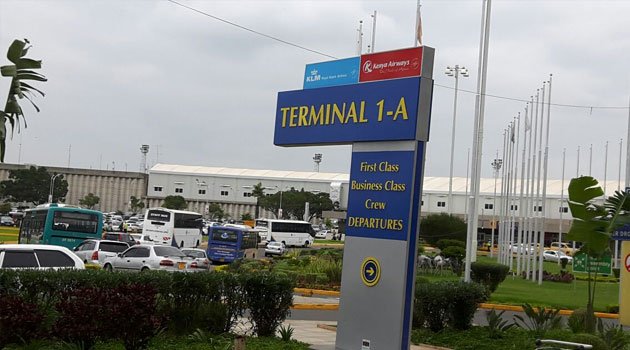
 Norwegian Jonny Andersen has been appointed the New Managing Director of the Kenya Airports Authority effective immediately.
 With six teleports, 23 beams and 15 satellites providing global coverage, NSSLGlobal has now brought FleetCom AS into their external distribution fold—the company will now be able to sell the company’s full range of VSAT maritime solutions within Norway, as well as third party solutions that include the likes of Inmarsat’s Fleet Xpress and Fleet One.


 The Norwegian government on Tuesday extended support of 2.1 million U.S. dollars for professional development of 150 Tanzanian female engineers in a span of five years.
 The MoU was signed between the Islamic Republic of Iran Shipping Lines (IRISL) and Norway’s DNV GL certification body in a ceremony in Tehran.
 A Norwegian district court has ruled a group of oil workers are entitled to an extra month’s pay, after they were terminated by email.
 A Qatar Airways flight bound to Doha from Oslo, Norway, made an emergency landing in the Romanian capital of Bucharest yesterday (July 9) due to a fault in one of its engines, said a report.
 Most British politicians have come to accept the outcome of the Brexit referendum, and that the will of the voters must now be carried out in a manner that best upholds Britain’s national interests. Because the EU’s internal market has always been a key priority for the UK, one widely discussed option, which has cross-party support, is the so-called Norway model: membership in the European Economic Area (EEA).
 The total share of chargeable cars in Norway is continuously increasing, showing yet again how much the Norwegians appreciate their battery driven cars.

 Norway’s property boom doesn’t look like ending any time soon. According to Real Estate Norway, average prices have increased by 7.3 percent over the past year – and as much as 13.4 percent in the capital Oslo. The association has lifted its previous predictions by a twofold and now expects nationwide prices to end 7-8 percent up in 2016.


 A 34-year-old Swedish businessman based in Oslo is facing trial in Norway accused of sexually abusing a 13-year-old girl in Thailand for several years – including making her pregnant.
 It is likely that Norwegian troops will be stationed in Lithuania early in 2017 to join in NATO’s fortified line of defense against Russia.
 For the first time in history we can succeed in providing education for all children and young people. If we put education first, we will gain multiple benefits in terms of development and prosperity.
 The Norwegian government has allegedly tried to hide millions of dollars in contributions to the Clinton Foundation spread out over eight years.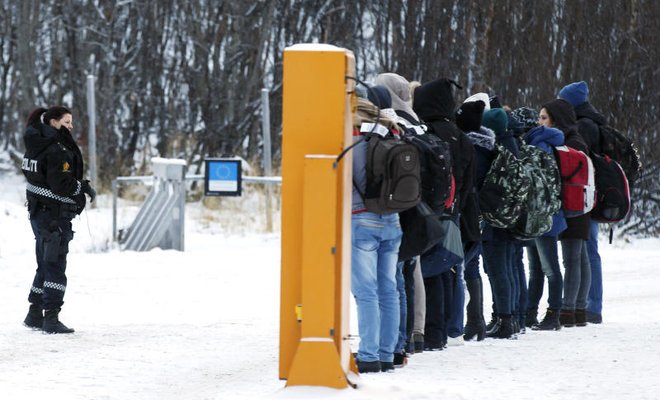
 As most European countries grapple with stopping unwarranted and at times suspicious asylum seekers from flocking to their territories,Norway has come up with a new legislation meant to solve that problem.
 Mr Lars Erik Tellmann, a member of the Telenor Myanmar team since it established operations in 2013, has been appointed chief executive officer to succeed Mr Petter Furberg, the Norway-based company said on July 5.

 Foreign Minister Børge Brende has condemned the terrorist attack in Baghdad late on Saturday in the strongest possible terms. It appears to have been planned to kill and injure as many civilians as possible. This was the bloodiest of many acts of terrorism in Iraq this year.
 Today the Ministry of Petroleum and Energy presents the feasibility study report on full-scale carbon capture, transport and storage (CCS) in Norway.
 The Abu Sayyaf has announced that it will be beheading its hostage, Norwegian Kjartan Sekkingstad, if Presidential Peace Adviser Jesus Dureza insists on the non-payment of ransom.
 Norway and the Republic of China (Taiwan) are to become the latest nations to upgrade their Raytheon Sidewinder air-to-air missile (AAM) stocks to the latest AIM-9X Block II standard, a US Department of Defense (DoD) contract notification has revealed.