
NORWAY NEWS – latest news, breaking stories and comment – NORWAY NEWS
  • Home
  • About us
  • News
  • Other News
    • Africa and Norway
    • Asia and Norway
    • Asylum
    • Breaking News
    • China and Norway
    • Corruption in Norway
    • Crimes
    • Defence
    • Diplomatic relations
    • Economics
    • Environment
    • Farming
    • Featured
    • Health
    • Killing
    • Media Freedom
    • Middle East and Norway
    • NATO and Norway
    • Nobel Peace Prize
    • Norwegian Aid
    • Norwegian American
    • Oil & Gas
    • Peace Talks
    • Politics
    • Racism in Norway
    • Religion
    • Royal House
    • Russia and Norway
    • Science
    • Sex scandal
    • Sports
    • Spy War
    • Srilanka and Norway
    • Svalbard
    • Taiwan and Norway
    • Terrorist
    • Travel
    • Video clips
  • Disclaimer
  • Contact us
Friday, November 13, 2026
NORWAY NEWS – latest news, breaking stories and comment – NORWAY NEWS
  • Home
  • About us
  • News
  • Other News
    • Africa and Norway
    • Asia and Norway
    • Asylum
    • Breaking News
    • China and Norway
    • Corruption in Norway
    • Crimes
    • Defence
    • Diplomatic relations
    • Economics
    • Environment
    • Farming
    • Featured
    • Health
    • Killing
    • Media Freedom
    • Middle East and Norway
    • NATO and Norway
    • Nobel Peace Prize
    • Norwegian Aid
    • Norwegian American
    • Oil & Gas
    • Peace Talks
    • Politics
    • Racism in Norway
    • Religion
    • Royal House
    • Russia and Norway
    • Science
    • Sex scandal
    • Sports
    • Spy War
    • Srilanka and Norway
    • Svalbard
    • Taiwan and Norway
    • Terrorist
    • Travel
    • Video clips
  • Disclaimer
  • Contact us
Copyright 2025- All Right Reserved Norway News
Russia and Norway

Norway Will Send Soldiers to Lithuania against Russia

by Nadarajah Sethurupan July 6, 2016
written by Nadarajah Sethurupan

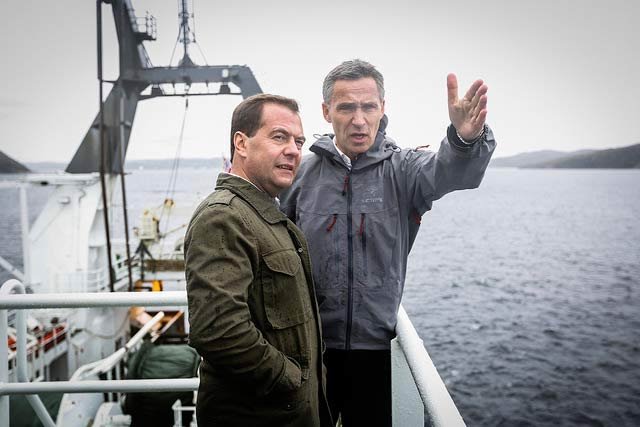
stoltenberg_medvedev_barrentIt is likely that Norwegian troops will be stationed in Lithuania early in 2017 to join in NATO’s fortified line of defense against Russia.

According to VG, Prime Minister Erna Solberg is expected to announce the Norwegian contribution during the NATO Summit in Warsaw on Friday and Saturday.

– We will increase our military presence with four robust multinational battalions in Estonia, Latvia, Lithuania and Poland, said NATO Secretary General Jens Stoltenberg at a press conference in Brussels on Monday afternoon.

The Norwegian soldiers will be probably sent to Lithuania, where Germany has taken the responsibility for a battalion of about 1,000 soldiers. Also Dutch soldiers will be part of the German-led force.

The other leading nations are the US, UK and Canada, announced Stoltenberg during the press conference. Moreover, Poland has offered NATO to coordinate the four battalions.

Defence Minister of Norway Ine Eriksen Søreide had announced in June that the government is considering a “substantial” contribution to NATO’S new battalions in Eastern Europe.

The battalions of 1,000 soldiers in each country symbolize that NATO is willing and able to defend the four countries bordering Russia against a possible attack.

These forces are also intended as a calming measures for people and governments in Poland and the Baltic countries.

– This is a clear message that our member countries will defend each other on both sides of the Atlantic, says Stoltenberg.

(tnp)

July 6, 2016 0 comments
0 FacebookTwitterPinterestEmail
Politics

Working together, we have a real chance to make global education a reality

by Nadarajah Sethurupan July 6, 2016
written by Nadarajah Sethurupan

width_650.height_300.mode_FillAreaWithCrop.pos_Default.color_WhiteFor the first time in history we can succeed in providing education for all children and young people. If we put education first, we will gain multiple benefits in terms of development and prosperity.

Political will is paramount, and must be backed by the right policies, additional funds and innovative partnerships that include all interested parties.

As prime minister of Norway and co-chair of the UN sustainable development goals advocacy group, I am doing my best to ensure this will become a reality. This week, the international commission on financing global education opportunity gathers in Oslo for its last meeting before making recommendations to the UN secretary general in September.

“Our progress as a nation can be no swifter than our progress in education,” John F Kennedy once stated in a message to the US Congress. That statement, made 55 years ago, remains just as true today, and applies to all countries regardless of their social and economic development. We all face the challenges of adapting to a rapidly changing global economy. Knowledge and innovation are probably more essential than ever before. Few – if any – investments are likely to pay higher returns over time. There is a business case for education in every corner of the world.

Take job creation and innovation.

Worldwide, there is a huge need for more and better jobs, especially with youth unemployment rising. The International Labour Organisation estimates that 600 million new jobs will be needed by 2020 in order to address global unemployment and keep up with demographic developments. Countries are dealing with this challenge in different ways, but the starting point for all of us is our education system. Well-functioning schools with qualified and motivated teachers are a prerequisite for success. Moreover, innovation and use of new technology are necessary to deliver the qualifications required by a knowledge-based labour market in constant flux.

Take gender equality and health.

If young girls are able to access and complete primary and secondary education, the number of child marriages and early pregnancies will go down, while the opportunity for women to participate in society and contribute directly to the economy will increase. Education and health are directly linked in this regard: for example, in many low- and middle income countries, increased access to education for girls has led to a significant reduction in infant mortality.

Last year, world leaders adopted the sustainable development goals. SDG 4, aiming at quality education for all by 2030, is central precisely because of its impact on health and a range of other goals and targets.

Our common task is to provide and protect quality education for the 124m children and adolescents who remain out of school, and to ensure improved learning outcomes for those who are in school. According to the UN, an estimated 125 million children are not learning basic skills even though they have spent at least four years in school.

SDG 4 may seem overwhelmingly ambitious. Yet the number of children and young people not attending school has almost halved since the turn of the century and, thanks in part to the millennium development goals, in most countries there are now as many girls as boys in primary school.

When my government took office almost three years ago, we decided to put education at the forefront of Norway’s development policy. We are in the process of doubling development aid for education, emphasising in particular girls’ education, quality and learning outcomes, vocational training and education in emergencies and protracted crises.

Although we have increased humanitarian aid for education to 8%, four times the global average, the fact remains that 37 million children and adolescents are out of school due to crises and conflict. So far, the international community has done far too little in this field. We need to find better ways of bridging humanitarian and development aid, devising more initiatives such as the education cannot wait fund (pdf) – a scheme that makes provision for education in emergencies – launched at May’s world humanitarian summit in Istanbul.

Finance is a major barrier to reaching the education SDG. The total annual gap between available domestic resources and the amount necessary to reach the new education targets has been projected to average $39bn (£28bn) between 2015 and 2030.

Mobilising domestic resources is key. While the main responsibility for education rests with national governments, development aid continues to play a role, especially in the least developed countries, in fragile situations, and for marginalised groups. The downward trend in development aid for education over the past year must be reversed to ensure that no one is left behind. More of the same is, however, not sufficient. We must promote innovation and try out new approaches, such as results-based financing. The private sector should be actively involved, alongside governments, NGOs, international organisations and other stakeholders, not least when it comes to vocational training.

We need to develop a renewed and compelling investment case for education, and a financial pathway leading to universal access to quality education. That is why the international commission on financing global education, chaired by Gordon Brown, the UN special envoy for global education, was established last summer at the Oslo summit on education for development. The UN secretary general has made it clear that he will act upon the commission’s recommendations. So should we all.

Reaching all children and young people with quality education may be a daunting challenge, but we can make significant progress if decision-makers step up to the plate, together with teacher unions, international organisations, the private sector, civil society and others.

Investing in education means investing in society at large. If we put education first, our global society will reap significant gains in terms of development and prosperity.

(theguardian)

July 6, 2016 0 comments
0 FacebookTwitterPinterestEmail
Corruption in Norway

Donations From Gov’t To Clinton Foundation Sparks Scandal In Norway

by Nadarajah Sethurupan July 6, 2016
written by Nadarajah Sethurupan

RTX250SB-1-e1459993383339The Norwegian government has allegedly tried to hide millions of dollars in contributions to the Clinton Foundation spread out over eight years.
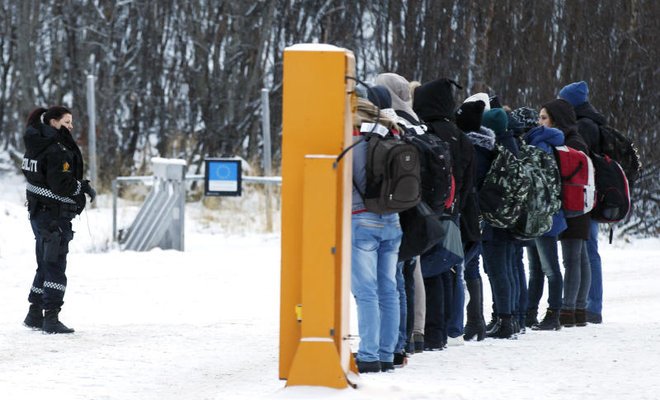
Daily newspaper Dagbladet has tracked $89.6 million of contributions back to Norway. Foreign Minister Børge Brende violated the government’s own policies by handing $3.57 million from the foreign aid budget to the Clinton Foundation, according to an internal memo.

The government and the Norwegian Agency for Development Cooperation both split up donations into different channels of the Clinton Foundation in an attempt to make each contribution look smaller than it was.

The donation took place last year after Brende and Prime Minister Erna Solberg promised a contribution following a meeting with former President Bill Clinton.

(dailycaller)

July 6, 2016 0 comments
0 FacebookTwitterPinterestEmail
Asylum

Norway amends asylum seekers legislation

by Nadarajah Sethurupan July 6, 2016
written by Nadarajah Sethurupan

file-20-9636317592236313As most European countries grapple with stopping unwarranted and at times suspicious asylum seekers from flocking to their territories,Norway has come up with a new legislation meant to solve that problem.

Norwegian parliament has adopted legislative amendments that restrict asylum seekers from easily getting entry into their country,which is renown globally as one of the most peaceful countries in the world and revered by many of those fleeing atrocities in their countries especially those with which it shares borders.

The new legislation gives immigration authorities in Norway mandate to deny entry to asylum seekers at borders with Nordic countries during a crisis with extraordinarily high numbers of arrivals.

The law now requires that without a visa,asylum seekers from Russia and any other Nordic countries who belong to the category whose applications may be refused for individual consideration, are not entitled to enter the country especially during a crisis with extraordinarily high numbers of arrivals.

The new legislation has scrapped the provision in the old laws that states that it must be ‘not unreasonable’ to direct a foreign national to seek protection in another part of his country of origin.In the current immigration act, foreign nationals may only be directed to internal displacement if it is ‘unreasonable’.

The deadline for lodging an appeal following the rejection of an asylum application has been reduced from three weeks to one week for asylum seekers who do not meet the conditions for being granted protection or are otherwise protected from return.

Also, a decision to refuse individual consideration of an asylum application may be implemented immediately if it is clear that there are grounds for this. Unlike before,it is now possible to expel foreign nationals in cases where an asylum application is refused individual consideration and also represents misuse of the asylum system.

In order to improve checks of identity of foreign nationals,amendments have been made providing wider authorization for the collection and storage of bio-metric personal data in the form of facial images and fingerprints in immigration cases have been adopted.

Another significant area in the legislative amendments adopted by the include a new provision that will make it possible to refuse certain applications for family reunification in cases where the sponsor has been granted subsidiary protection in Norway.A requirement that both parties must be at least 24 years old is being introduced in family establishment cases to avoid forced marriage.

Since integration is regarded highly in Norway,the amendment now requires that to qualify for permanent residence,the foreign nationals must have been self-supporting in the preceding twelve-month period in addition to having a minimum level of spoken Norwegian language and having passed a test in social studies in a language they understand.

Any applicant who shows any signs of fraud ,or tries to tell lies on his or her identity since arriving in Norway will be disqualified immediately. Foreign nationals who are granted collective protection after a mass flight will not beeligible for permanent residence until they have been in Norway for six years,yet in the old law it has been only 4 years.

It is likely that some asylum seekers may look at the amendments as Draconian and meant to deny them entry to Norway,but given the threat of terrorism in most parts of the world any country that takes measures to secure its territory and citizens should be applauded.

July 6, 2016 0 comments
0 FacebookTwitterPinterestEmail
Asia and Norway

Telenor Myanmar appoints new chief executive

by Nadarajah Sethurupan July 6, 2016
written by Nadarajah Sethurupan

larseriktellmannMr Lars Erik Tellmann, a member of the Telenor Myanmar team since it established operations in 2013, has been appointed chief executive officer to succeed Mr Petter Furberg, the Norway-based company said on July 5.

Tellman, 44, Telenor Myanmar’s chief financial officer, will also join Telenor’s Group Executive Management under the changes, that take effect on August 1, the company said in a press release.

“Lars Erik has been part of the founding management team in Myanmar, and has played a central role in the operations and development of the company over the past three years,” said Mr Sigve Brekke, Telenor Group’s president and chief executive.

“I am confident that in him Telenor has an experienced leader to drive the next phase of our growth, and to further develop our strong company culture and way of work,” said Brekke.

Tellman joined Telenor in 2001 and has held executive positions with the company in Southeast Asia for the past eight years. Before joining Telenor Myanmar as CFO in 2013 he was senior vice president and head of strategic development in Telenor Asia.

“Our industry has had a major impact on Myanmar over the last two years, and will continue to play a significant role in supporting the growth of the country in coming years,” Tellman said.

“Telenor has a solid market and network presence in Myanmar and with a proven strategy and business model we are well set-up for future growth. My job will be to deliver on this strategy alongside a talented leadership team, and a highly passionate group of colleagues,” he said.

Brekke praised Furberg’s leadership of Telenor Myanmar over the past three years and said it was among “the brightest success stories of the Group.”

Furberg will take a new position in Telenor Digital Business in Asia supporting business development in online classifieds, market places and consumer services, the release said.

July 6, 2016 0 comments
0 FacebookTwitterPinterestEmail
Norwegian Aid

Norway grants Tanzania US$2.1 million for development of female engineers

by Nadarajah Sethurupan July 6, 2016
written by Nadarajah Sethurupan

wpid-dollar-300x189The Norwegian government on Tuesday extended support of 2.1 million U.S. dollars for professional development of 150 Tanzanian female engineers in a span of five years.

Edwin Ngonyani, the east African nation’s Deputy Minister for Works, Transport and Communication, said 150 female graduate engineers were the beneficiaries of the project intended to increase the number of professional female engineers up to over 500 in the country, the second largest economy in East Africa.

“This is the second support from the Norwegian government for professional development of female graduate engineers,” said Ngonyani at the signing ceremony of an agreement for the support program in the commercial capital Dar es Salaam.
He said the Norwegian government made the first support for the program in 2010 when it disbursed 1.5 million dollars to train 300 female graduate engineers.

Ninatubu Lema, the Chairman of the Engineering Registration Board (ERB), said the support which complemented government financing of apprenticeship program for graduate engineers was necessary for accomplishing the nation’s goal of attaining an industrial economy and middle income status by 2025.

“Since the government has limited funds for this program, we commend the Norwegian government’s support. We call upon other donors to support this program because the country is producing 2,000 engineers annually,” said Lema, who signed the agreement on behalf of ERB.

The Norwegian Ambassador to Tanzania, Hanne-Marie Kastaarstad, who signed the package agreement on behalf his government, said such support was vital for economic empowerment of women.

“We have to recognize that women are the major drivers of the economy. They should be treated as the major drivers for attaining an industrial economy,” said the Norwegian envoy.

The ERB Registrar, Steven Mlote, said since its start in 2003 the program has benefited 3,555 graduate engineers, including 847 female engineers.

Mlote added: “The program has been successful because we have information that there are successful female engineers who are running their own companies and some of them are working in managerial positions.”

The aim of the support is to enable graduate female engineers to positively participate in the program and acquire professional competence so as to increase the number of professional engineers over the five year period, he said. Enditem

Source: NewsGhana

July 6, 2016 0 comments
0 FacebookTwitterPinterestEmail
Terrorist

Norway condemns terrorist attack in Baghdad

by Nadarajah Sethurupan July 5, 2016
written by Nadarajah Sethurupan

729xForeign Minister Børge Brende has condemned the terrorist attack in Baghdad late on Saturday in the strongest possible terms. It appears to have been planned to kill and injure as many civilians as possible. This was the bloodiest of many acts of terrorism in Iraq this year.
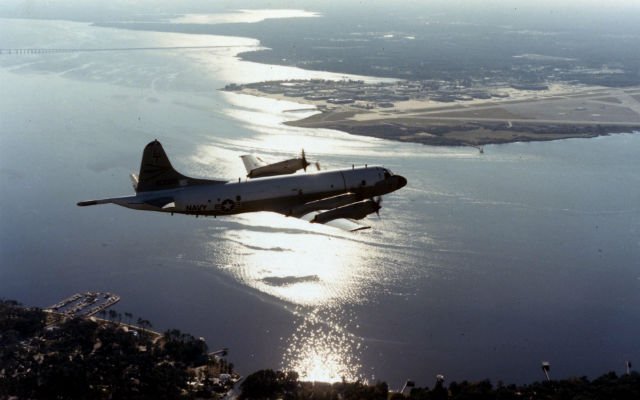
‘I condemn this terrorist attack in Baghdad in the strongest possible terms. It is particularly despicable that it was carried out in an area and at a time of day when Iraqi civilians gather to break the Ramadan fast. My thoughts and sympathies are with the many families of those who were killed and injured,’ said Mr Brende.

‘We have seen that ISIL has claimed responsibility for the attack. Norway will continue to participate actively in the fight against ISIL, together with Iraq and the rest of the international community,’ Mr Brende said.

(mfa)

July 5, 2016 0 comments
0 FacebookTwitterPinterestEmail
Oil & Gas

Good potential for succeeding with CCS in Norway

by Nadarajah Sethurupan July 5, 2016
written by Nadarajah Sethurupan

yourfileToday the Ministry of Petroleum and Energy presents the feasibility study report on full-scale carbon capture, transport and storage (CCS) in Norway.

– We have chosen a step by step approach and follow industry best practice for maturing projects in our work with CCS. The feasibility studies are an important part of this work and show that realising a full-scale CCS chain in Norway within 2022 is possible and at lower costs than for projects considered in Norway earlier, says Minister of Petroleum and Energy Tord Lien.

Stortinget (the Norwegian parliament) and the Government have high ambitions for succeeding with CCS. The Government has seen through on the ambition by following up on the strategy presented to Stortinget in the state budget for 2015. The strategy covers research and development, demonstration, international cooperation, support for a full-scale project through an EU research program, and assessment of full-scale CCS projects in Norway.
– Wide deployment of CCS is necessary for the world to reach its climate goals. The most important goal of a full-scale project in Norway is to contribute with knowledge and learning so CCS can be deployed in industry across the world. The feasibility studies provide good fact-based grounds for considering how we will continue our work with full-scale CCS in Norway, says Minister Lien.

The aim of the feasibility studies is to identify at least one technically feasible CCS chain with corresponding cost estimates. Such a chain includes capture, transport and storage of CO2. The results show that it is technically feasible to realise several alternatives in Norway.

Three industrial players have completed feasibility studies of CO2 capture; Norcem AS has assessed the possibility for capturing CO2 from the flue gas at its cement factory in Brevik, Yara Norge AS has assessed CO2 capture from three different emissions points at its ammonia plant at Herøya in Porsgrunn and the Waste-to-Energy Agency in Oslo municipality has assessed CO2 capture from the waste recovery plant at Klemetsrud (Klemetsrudanlegget AS).
Gassco has carried out a study of ship transport of CO2 between locations for capture and storage for different conditions (pressure) at vapour/liquid equilibrium. Gassco considers all solutions for the studied transport conditions as technically feasible.

Statoil ASA has completed feasibility studies of CO2 storage at three different sites on the Norwegian continental shelf. Both Statoil and Gassnova consider a solution for developing a CO2 storage site with onshore facilities and a pipeline to the Smeaheia area as the best solution given the project’s objective. The Smeaheia area is located east of the “Troll” field, approximately 50 km from the coast. This solution has the lowest implementation risk, large storage capacity and it is relatively easy to develop the capacity of the infrastructure.

The cost for planning and investment for such a chain is estimated at between 7.2 and 12.6 billion kroner (excluding VAT). The planning and investment cost will depend on how much CO2 will be captured, where it will be captured from and how many transport ships are needed. The cost estimates are based on the reports from the industrial players and have an uncertainty of +/- 40 percent or lower.

The Ministry of Petroleum and Energy has had overall responsibility for the feasibility studies. Gassnova SF has been project coordinator and responsible for capture and storage, while Gassco AS has been responsible for transport.
The Government will present further plans for CCS in the state budget for 2017.

(mfa)

July 5, 2016 0 comments
0 FacebookTwitterPinterestEmail
Politics

1996 Hague Convention enters into force

by Nadarajah Sethurupan July 5, 2016
written by Nadarajah Sethurupan
MINOLTA DIGITAL CAMERA

MINOLTA DIGITAL CAMERA

Norway’s ratification of the 1996 Hague Child Protection Convention will strengthen our cooperation with other states when parental conflicts and child welfare cases arise that involve more than one country. The Convention will enter into force on 1 July 2016.

‘The child welfare services will now have a framework and various tools that will make it easier to deal with child welfare cases involving more than one country. This means that we will be able to solve more cases in accordance with the best interests of the child. The Norwegian Directorate for Children, Youth and Family Affairs will be Norway’s central authority, and will be able to assist the municipal child welfare services in their dialogue with foreign authorities,’ said Minister of Children and Equality Solveig Horne.

The 1996 Hague Convention on Jurisdiction, Applicable Law, Recognition, Enforcement and Co-operation in Respect of Parental Responsibility and Measures for the Protection of Children enters into force on 1 July. The Convention facilitates cooperation and the exchange of information on individual cases between contracting states. It has over 40 contracting states, including all the EU member states. Each contracting state designates a central authority, which plays a key role in cooperation on individual cases that fall under the Convention. Norway’s central authority will be the Norwegian Directorate for Children, Youth and Family Affairs (Bufdir).

‘I welcome the entry into force of this Convention. In the future, it will be easier to cooperate with the authorities of other countries on difficult child welfare cases, disputes over parental responsibility and access rights, and efforts to prevent international child abduction. The Convention gives us a framework for finding good solutions, across national borders, for children and families in crisis,’ said Minister of Foreign Affairs Børge Brende.

Minister of Children and Equality Solveig Horne also welcomed the entry into force of the Convention, which will improve the protection of children by helping to prevent and resolve parental disputes and child welfare cases involving more than one country. For example, it will be possible to transfer a child welfare case from Norway to another contracting state, if this is in the interests of the child.

‘The Convention facilitates continued rights of access and contact between parent and child, even if the child moves to another state with one of the parents. The Convention also helps to prevent international child abduction, by providing a framework for resolving disputes about parental responsibility, the child’s place of residence or rights of access, thus making it easier to find more stable and long-term care arrangements for the children involved,’ said Ms Horne.

Amendments to the Children Act will also take effect on 1 July. These are intended to counter international child abduction and prevent children being left behind in another country. There will also be a new requirement that children over the age of 12 must give their consent to moving out of the country, staying outside the country, or travelling abroad when a trip of this kind is to be taken without the parent who has parental responsibility.

July 5, 2016 0 comments
0 FacebookTwitterPinterestEmail
Terrorist

Militants to behead hostage if no ransom received

by Nadarajah Sethurupan July 5, 2016
written by Nadarajah Sethurupan

26a_gerijah_1The Abu Sayyaf has announced that it will be beheading its hostage, Norwegian Kjartan Sekkingstad, if Presidential Peace Adviser Jesus Dureza insists on the non-payment of ransom.

“There is no more ultimatum, we are going to behead this Norwegian anytime today,” said Abu Sayyaf spokesman Abu Rami, who called a couple of journalists here on Sunday night.

Rami said the beheading will be done following reports of Dureza’s pronouncement of the government’s no-ransom policy.

The Abu Sayyaf has been demanding 300 million pesos (RM25.5mil) in exchange for Sekkingstad’s freedom.

Rami said they were aware that ransom was already set for delivery, and they were just waiting for someone to deliver the money.

Sekkingstad is one of four victims who were taken from a marina in the Island Garden City of Samal in Davao del Norte in November last year.

Rami’s announcement came two days after the body of beheaded Abu Sayyaf kidnap victim, Canadian Robert Hall, was found in Sulu on Saturday morning.

Hall was beheaded by the Abu Sayyaf on June 13 after the bandit group failed to receive the ransom money they had demanded.

His head was found on the same day in front of the Jolo Cathedral.

Hall was the second kidnap victim the bandits had decapitated after fellow Canadian John Ridsdel, who was killed in April.

Filipino Marites Flor was freed on June 24. — Philippines Daily Inquirer / Asia News Network

July 5, 2016 0 comments
0 FacebookTwitterPinterestEmail
Defence

Norway join AIM-9X Block II user-community

by Nadarajah Sethurupan July 5, 2016
written by Nadarajah Sethurupan

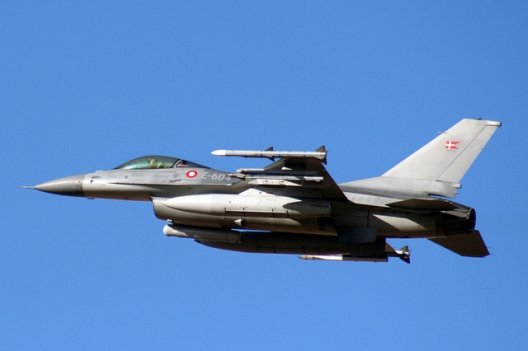
1425048_-_mainNorway and the Republic of China (Taiwan) are to become the latest nations to upgrade their Raytheon Sidewinder air-to-air missile (AAM) stocks to the latest AIM-9X Block II standard, a US Department of Defense (DoD) contract notification has revealed.

The USD291.75 million contract, awarded to Raytheon on 1 July, covers the initial AIM-9X Block II missiles for Norway and Taiwan, as well as follow-on missiles, training, and support solutions for the US government and other Foreign Military Sales customers.

In all, some 660 Lot 16 missiles are being contracted for the US Air Force (USAF), US Navy (USN), US Army, Japan, Norway, and the Republic of China; as well as training missiles and/or other spare parts for these operators, plus Australia, Belgium, Denmark, Finland, Israel, Kuwait, Oman, Malaysia, the Netherlands, the Republic of (South) Korea, Romania, Saudi Arabia, Singapore, Switzerland, and Turkey. These countries represent the full set of current AIM-9X Block II customers.

Work is expected to be completed in March 2019.

July 5, 2016 0 comments
0 FacebookTwitterPinterestEmail
Environment

Norway bids to capture business by capturing carbon

by Nadarajah Sethurupan July 5, 2016
written by Nadarajah Sethurupan
MINOLTA DIGITAL CAMERA

MINOLTA DIGITAL CAMERA

A Norwegian prime minister once compared the difficulty of capturing carbon and storing it underground to a “moon landing.” But just as the lunar program transformed the U.S. economy, this technology could do the same for Norway.

Carbon capture and storage projects face long odds, struggling to show the technology can both work and be affordable. But the potential benefits of success could be huge, allowing the world to burn oil, coal and gas without unleashing runaway climate change. Greenhouse gases emitted by burning fossil fuels would then be pumped back underground, preventing them from warming the planet.

If it works, Norway could keep selling its vast deposits of oil and gas; otherwise most forecasts predict that the use of fossil fuels would need to be sharply curtailed. And the country could make use of its depleted oil and gas reservoirs under the North Sea to store CO2 emitted by factories and power plants from other parts of Europe — for a fee.

The problem is that carbon capture and storage (CCS) is hugely expensive and technologically difficult. There are also questions as to how safely the gas can be stored underground without eventually leaking back up into the atmosphere.

As a result, carbon capture and storage projects from Poland to Saskatchewan, have been stalled, eliminated or over budget. The U.K. in November binned a £1 billion CCS competition project. There are currently 15 large-scale projects around the world, according to a report by the Global CCS Institute.

Norway has one of the world’s most ambitious CCS research programs, a sign of its enormous importance for the country’s future. The country assessed three emission-capturing pilot projects in a report issued Monday, together with options for shipping and storing the CO2. It found that setting up a full-scale CCS plant in Norway would cost between €780 million and €1.36 billion.

“When it comes to fighting climate change, CCS costs way too much now,” Tord Lien, Norway’s energy minister, told POLITICO. “Costs have to be brought down … but if you are looking at how to handle greenhouse gas emissions without CCS, that is most likely going to cost a lot of more.”

Norway pushes on

Norway’s hope is that a world which committed to limiting global warming to significantly less than 2 degrees Celsius in the Paris climate agreements is one where carbon capture and storage could play a key role.

But the costs are still astronomical, although those in favor of the technology believe it is crucial to reaching Europe’s goal of reducing greenhouse gases by 80 to 95 percent from 1990 levels by 2050.

In order to get CCS “functioning and working,” the carbon price in the EU’s Emissions Trading System would have to be from €70 to €90 per ton, Ian Duncan, a British MEP from the European Conservatives and Reformists Group, said at a POLITICO Energy Visions event last month. The current price is around €5 per ton.

Environmental groups are suspicious of carbon storage, and of Norway’s intentions. Their worry is that the money and time devoted to trying to develop the technology takes attention away from proven ways of cutting greenhouse gases, such as shifting economies towards renewable energy sources.

Brook Riley from Friends of the Earth Europe called Norway’s carbon capture and storage plans “a spoke in the wheel of the energy transition.”

“As long as Norway and others claim the technology may deliver one day in the distant future, full-scale EU commitment to energy efficiency and renewables will be delayed,” he said.

The vision of a world powered by windmills and solar panels is one that leaves much of Norway’s oil and gas unsold.

Even with the incentive of showing that CSS can be a viable technology, Norway has had trouble making it work.

In 2013, the country’s former center-left government dropped its ambitious plans for a full-scale CCS project after spending about €1 billion on the scheme over the previous six years. Dogged by delays and ballooning costs, the project turned into a political scandal and had to be abandoned.

“The main challenge is obviously people’s perception of CCS as a really difficult and expensive technology, [with] the last project’s failure … actually linked to really poor project management,” said Sirin Engen, with the Oslo office of the non-profit environmental group Bellona.

While not giving up on the idea, the current center-right government is now pursuing more modest schemes, spending only about €70 million this year.

The previous project involved “a lot of big words, a lot of festivities, a lot of ambitious targets,” Lien said. “We have chosen a completely different approach.”

Instead of one big and expensive project, the country is testing several CO2 sequestration technologies, while also looking separately at storage options under the North Sea.

Garbage power

Just outside of Oslo, a tangle of pipes at the Klemetsrud garbage treatment plant is supposed to test the viability of carbon capture and storage. The pilot project snatches a small proportion of the CO2 emitted by burning trash.

The plant emits over 300,000 tons of carbon dioxide per year, or about 20 percent of the city’s total emissions, and it would need an investment of about €200 million to set up a working system able to capture 90 percent of the CO2, said Johnny Stuen, the plant’s technical director.

The government’s report found CO2 capture is feasible at all three pilot plant locations. It encourages industry to prepare for the next phase in CCS by working on technical requirements and engineering design.

Norway’s original goal was to have a full-scale CCS facility by 2020, but in a sign of the technology’s problems, Lien said the deadline would be delayed by another two years.

If the industrial capture schemes are shown to be both technologically and financially workable, there would be widespread interest beyond Norway. CCS could be used to capture about 10 percent of the CO2 emitted by the EU by 2050, according to reports.

Energy-intensive industries “have very limited options in terms of what they can use — they do require a fossil fuel input,” Marie Donnelly, director general of Commission’s renewable energy division, said at the Energy Visions event. “We want the industry to be in Europe, we want the growth and we want the jobs from it and therefore we will have to find solutions that work for the industry in terms of their emissions.”

Some CCS schemes call for CO2 to be stored close to industrial plants, but there are also ideas for using more distant sites — and that’s where Norway comes into the picture.

Statoil recently completed a feasibility study into the possibility of sequestering large amounts of CO2 under the North Sea in old oil and gas fields. The best option would be to store it in the Troll gas field, about 50 kilometers from the coast, according to the government report.

“This solution has the lowest implementation risk, large storage capacity and it is relatively easy to develop the capacity of the infrastructure,” it reads.

If carbon capturing technology becomes cheaper, EU countries would be able to ship CO2 to Norway and then pay to store it.

“They assume Europe will have a problem,” said Bellona’s Keith Whiriskey. “The steel mills in Rotterdam and the refineries in Germany — that CO2 has to go somewhere and Norway has by far the largest physical capacity to store CO2 in Europe.”

Lien said that from the perspective of global climate change it doesn’t matter if CO2 is stored in Norway or elsewhere, “but if we can contribute and also create a business model, [then] better for us.”

Not everyone is thrilled with making CCS work. Riley worried it would keep Europe hooked on fossil fuel imports.

“That’s probably the whole point of Norway’s plan: keep us dependent on gas and make us dependent on their CO2 storage,” he said.

But Whiriskey saw a upside to Norway’s CCS evangelism.

Norway earned a lot of money selling greenhouse gas-emitting oil and gas, “so maybe they should put some money to help solve the problem,” he said.

Sara Stefanini contribute to this article.

This article has been updated with the government CCS report issued on Monday.

(politico)

July 5, 2016 0 comments
0 FacebookTwitterPinterestEmail
Economics

World leaders to Oslo for Summit on Education for Development

by Nadarajah Sethurupan July 3, 2016
written by Nadarajah Sethurupan

width_650.height_300.mode_FillAreaWithCrop.pos_Default.color_WhiteNORWEGIAN PRIME MINISTER ERNA SOLBERG & UNITED NATIONS SPECIAL ENVOY FOR GLOBAL EDUCATION GORDON BROWN TO HOST MEETING OF 25 WORLD LEADERS ON JULY 4TH IN OSLO TO MAP OUT RADICAL NEW DEAL FOR GLOBAL EDUCATION

OUTCOMES OF OSLO MEETING TO BE ANNOUNCED AT 2016 UN GENERAL ASSEMBLY AND PRESENTED TO UN SECRETARY-GENERAL, BAN KI-MOON

A PRESS BRIEFING WITH PRIME MINISTER SOLBERG AND UN SPECIAL ENVOY GORDON BROWN WILL BE HELD IMMEDIATELY PRIOR TO EDUCATION COMMISSION MEETING

Twenty-five world leaders, including five former heads of state, will meet in Oslo on July 4th to consider vital new recommendations for financing global education and to achieve inclusive and equitable quality education for all. 

Taking the lead is the Norwegian Government, which is mobilizing and focusing the international community on reaching the Sustainable Development Goals, in particular those focusing on education, that United Nations Member States have set themselves.

The International Commission on Financing Global Education Opportunity, (the Education Commission), chaired by the former UK Prime Minister and UN Special Envoy, Gordon Brown, and co-convened by the Prime Minister of Norway, Erna Solberg, along with the Presidents of Malawi, Indonesia, Chile and the Director-General of UNESCO, will finalize recommendations ahead of its presentation to UN Secretary-General Ban Ki-moon in September during the General Assembly in New York. The UN Secretary-General will receive the recommendations of the Commission and act upon them.

The work of the Commission is being closely watched around the world, and the leaders gathering in Oslo are acutely aware of the scale of the challenge. Radical shifts in technology, massive urbanization, the global mobility of labor and globalization in trade and services, mass migration, and increases in climate-induced natural disasters will demand new skills and the ability to embrace change — capabilities that only education can provide. As global spending on health has increased since 2008, spending on education has correspondingly declined. The Commissioners believe their recommendations will be crucial in helping to make education the global priority it needs to be.

Ahead of the meeting, Norway’s Prime Minister, Erna Solberg, said: “Reaching all children and young people with quality education may be a daunting challenge, but we can make significant progress if decision-makers step up to the plate, together with teacher unions, international organisations, the private sector, civil society and others. Investing in education means investing in society at large. If we put education first, our global society will reap significant gains in terms of development and prosperity”.

UN Special Envoy for Global Education, Gordon Brown added: “The United Nations and the world’s children are deeply indebted to the Norwegian Government for its commitment to and support of the Education Commission. The Oslo meeting provides the opportunity to agree on a new framework for financing global education helping us better meet the ambitious Sustainable Development Goals for education. The world’s children are looking to us. We cannot fail them.”

The former President of Mexico, Felipe Calderón added: “Education and innovation are key. We must not rely on the highly educated poles of development such as Silicon Valley and Oxford; we need innovation to be widespread and grown locally to address local problems and detect local opportunities. The only way to spark these processes is by supporting education in all corners of our world.”

United Nations Secretary-General Ban Ki-moon has previously commented: “The International Commission on Financing Global Education will offer solutions to mobilizing the resources that are needed. I look to the Commission to provide a roadmap, based on innovative, sustainable and practical solutions, to overcome the barriers to lifelong education and learning for all.”

A number of global leaders serving as Commissioners will be present for the Oslo meeting and could be available for interview. These include: Prime Minister Erna Solberg, Gordon Brown, Sheikha Lubna Al Qasimi, Felipe Calderón, Kristin Clemet, Julia Gillard, Ngozi Okonjo-Iweala, Baela Raza Jamil, Jakaya Kikwete, Ju-Ho Lee, Graça Machel, Strive Masiyiwa, Teopista Birungi Mayanja, Patricio Meller, Kailash Satyarthi, Helle Thorning-Schmidt and Theo Sowa. A full list of Commissioners may be found on the Education Commission’s website: www.educationcommission.org.

July 3, 2016 0 comments
0 FacebookTwitterPinterestEmail
Economics

Brexit may alter Norway’s relationship with the EU

by Nadarajah Sethurupan July 1, 2016
written by Nadarajah Sethurupan

0529e9c7e5e8a22ac6ef911621855c99-800xNorway is far from enthusiastic about the prospect of the UK remaining a member of the EEA via EFTA.
The reason for this is that only Norway, Iceland, and Liechtenstein have membership in the EEA thanks to the EFTA agreement.

By comparison, the UK is a giant and would most likely run the show, thus reducing Norway’s influence.

Membership of the EEA makes Norway and the other two countries that access the single market via EFTA “three-quarter” members of the EU.

When the Norwegian people said “no” to full membership for the second time, in a referendum in 1994, the EEA agreement was an argument that Eurosceptics used to justify voting “no”.

EEA membership would allow Norwegian businesses access to the European single market without the country having to join the Euro or agree to a closer union.

Neither the Norwegian Parliament nor the government were aware of just how extensive the EEA agreement would become when it came into force in January 1994.

What did Norway sign up to?
Norway agreed to accept all EU legislation regarding the single market, and to accept all future legislation that the EU might adopt for the single market, regardless of what this might be.

Parliament approved this while revoking any Norwegian legislation, regulations, and administrative decisions that might be in breach of the basic principles of the EU Treaty or any EU legislation on the single market.

Norway has effectively renounced the right to adopt national legislation that may be in violation of the single market’s legislation.

In return, Norwegian businesses and people get free access to the European single market.

In Spain, for instance, Norwegian companies compete for contracts on equal terms with Spanish companies. Norwegians can travel to and work in other EEA member states, while citizens of the EEA can travel to and work in Norway.

Since 1994, Norway has had to swallow over 10,000 EU laws. At the library of the University of Oslo’s Faculty of Law, this amounts to more than six metres of shelf space.

The EEA agreement does not come free of charge either.

The three countries support the 15 economically weakest EU member states by way of a membership fee for access to the single market.

In the 2014-2021 agreement period, Norway will pay a total of almost EUR 2.8 billion.

In addition, there is a separate Surveillance Authority and Court of Justice to ensure that the three countries fulfil their obligations under the EEA agreement.

Norway has also acceded to other agreements, including the Schengen Agreement.

Norway is a lobbyist
Although Norway has no voting rights in EU bodies, it does attend certain informal ministerial meetings.

The Norwegian government is, in reality, a lobbyist – in the same vein as Statoil and Shell.

Like all other lobbyists, Norway can provide input before the Commission puts forward its proposals.

If the UK leaves the EU, Norway will lose a political ally in a variety of issues. It will make the task of influencing the EU considerably more difficult.

Theoretically, Norway can say “no” to new legislation if Norway feels it conflicts with its national interests or is irrelevant to the EEA. Until now, this has not happened.

The reason is simple: If Norway, Iceland, or Liechtenstein prohibit the implementation of an EU law, they can be punished.

This means that the EU can revoke entirely unrelated elements of the agreement. For example: Norway threatened to reject the EU directive on additives in baby food, to which the EU responded by threatening to throw Norway out of the agreement on veterinary co-operation. This would be a disaster for Norwegian exports of fish.

Ultimately, Norway always gives in.

Undemocratic, but little resistance
The EEA is undemocratic and not without constitutional problems. Norway has waved goodbye to much of its sovereignty to gain access to the single market.

It would be ironic beyond measure if the British were to end up in the same boat. They voted to leave in order to have more control over their legislation, yet membership of the EEA via EFTA would only serve to reduce this control.

There has been surprisingly little debate in Norway about the agreement.

The reason is that it forms part of Norway’s national compromise on its relationship with the EU. The most recent opinion poll shows that more than 70 per cent of Norwegians are against full membership. Meanwhile, 61 per cent continue to agree with the EEA agreement.

Norway’s National Assembly has put up little resistance.

Although two Norwegian parties are vocal opponents of the agreement – the Centre Party and the Socialist Left Party – both have been in government and administered it. The two parties hold 17 of the Norwegian Parliament’s 169 seats.

How does Norway influence the EU?
There is growing scepticism about the agreement within the Norwegian trade union movement.

The free movement of labour has led to social dumping in some industries, such as construction. It is primarily workers from Eastern Europe who pose this threat.

The Norwegian Confederation of Trade Unions (LO) currently supports the EEA agreement, but this is likely to be a hotly debated topic at its next congress in light of social dumping.

It means that those opposed to EU membership and who are increasingly sceptical of the EEA agreement, will be following Brexit particularly closely.

If the UK gets a good deal, this may turn the tide in Norway.

It may strengthen opposition to the EEA agreement, for such a deal may prove that it is possible for individual countries to negotiate a deal with the EU that is a worthy alternative to membership in the EEA.

Alf Ole Ask is Foreign Affairs Correspondent for Aftenposten and co-author of the book: “EU kontrollen – jakten på det egentlige EU” (in English: “EU control – the pursuit of the true EU”)

July 1, 2016 0 comments
0 FacebookTwitterPinterestEmail
Srilanka and Norway

Norway calls on Sri Lanka to include international jurists in judicial mechanism

by Nadarajah Sethurupan July 1, 2016
written by Nadarajah Sethurupan

Norway06302016While acknowledging Sri Lanka’s progress that has taken place in implementing the resolution since its adoption in October last year, Norway called on the government of Sri Lanka to adhere to the resolution and include international judges and lawyers in the recommended judicial mechanism to investigate the allegations of war crimes.

“We acknowledge the progress that has taken place in implementing the resolution since its adoption in October last year,” Norway said in its statement to the 32nd session of the United Nations Human Right Council in Geneva on Wednesday.

Norway noted that since the adoption of the UNHRC resolution in October last year, the two countries have had “good and frank exchanges of views” on these issues on a number of occasions, including during visits by our Foreign Minister Brende to Sri Lanka and last week by Sri Lanka’s Foreign Minister Samaraweera to Norway.

Norway said its understanding is that progress is happening steadily, despite the fine political balance that needs to be kept in making these achievements. The latest concrete result being the cabinet’s approval of the Office of missing Persons.

“We are aware that there is political opposition to the government’s initiatives to implement the resolution and that concessions need to be made in order to achieve progress. Nevertheless, we see the need to keep the momentum from the government’s side.”

Norway expressed hope that the ongoing process on the new constitution will result in the crucial basis for a nation that acknowledges its ethnic and cultural diversity and for achieving reconciliation.

Norway also appreciated Foreign Affairs Minister Mangala Samaraweera’s announcement in Oslo during the World Congress on the Death Penalty last week to seriously consider abolishing the death penalty in the new constitution.

“We encourage Sri Lanka to work hard to keep the tight time schedule for the process on the new constitution,” it said.

“It is further our expectation that Sri Lanka adheres to OP 6 in the resolution, regarding the planned judicial mechanism to investigate allegations of violations and abuses of human rights and violations of international humanitarian law, and of the importance of participation in the judicial mechanism of Commonwealth and other foreign judges, defense lawyers and authorized prosecutors and investigators.”

All initiatives for reconciliation, accountability and human rights in Sri Lanka should continue to be based on inclusive consultations with victims, civil society and the general population, the statement said.

“Norway has been able to assist Sri Lanka recently in amongst others the return of internally displaced persons and reconstruction in the conflict affected areas of the Northern and Eastern provinces of Sri Lanka. We will continue to assist the Government of Sri Lanka in promoting a peaceful, inclusive and democratic nation.”

(N.Sethu)

July 1, 2016 0 comments
0 FacebookTwitterPinterestEmail
Asylum

Deported Iraqis Now In Norwegian Jail

by Nadarajah Sethurupan July 1, 2016
written by Nadarajah Sethurupan

13495214_529806660539866_1798624989617987998_nThe Iraqi asylum seekers deported from Iceland earlier this week are now in Norwegian jail, and will soon be sent back to Iraq. President-elect Guðni Th. Jóhannesson has expressed his disapproval of the deportation, and it has come to light that police are arresting and escorting an average of five asylum seekers a week out of the country in this year alone.

Stundin reports that Ali Nasir and Majed, two Iraqi asylum seekers who were dragged out of church by police and subsequently deported to Norway earlier this week are now sitting in jail in that country. As Norwegian authorities regularly deport asylum seekers from southern Iraq, it is all but likely they will soon be sent back, where they contend their lives are in mortal danger.

In response, Vísir reports that Iceland’s new president, Guðni Th. Jóhannesson, has expressed his disapproval of the deportation. While saying that he did not consider it appropriate for a newly elected president to express an opinion on a particular case, “Of course one is deeply saddened to see that things have gotten to the point where asylum seekers look to the church for sanctuary, and are dragged out by the police. Hopefully that will never happen again.”

The Directorate of Immigration also seems to be stepping up its efforts to use the police to arrest and deport asylum seekers. RÚV reports that the police are arresting an average of five asylum seekers a week and escorting them out of the country. Last year, there were a total of 123 such arrests, while there have been 131 this year alone.

As reported, Toshiki Toma, the Lutheran church’s minister for immigrants, and Kristín Þórunn Tómasdóttir, the parish priest for Laugarneskirkja church, opened the church earlier this week to asylum seekers facing deportation. This was done with the approval of the Bishop of Iceland, in the hopes that the police would respect the long-standing tradition of church sanctuary.

This, however, would not be the case.

Both police and officials from the Directorate of Immigration arrived at about 4:00 early Tuesday morning. Ali Nasir and Majed stood behind the church altar but were soon dragged away from the scene by police. When the police began to handcuff Ali, a friend of his stepped forward and pointed out that Ali is only 16 years old. In response, one of the officers struck him in the face, as you can see in the video below. Ali was then taken down the church stairs to a waiting squad car, where he burst into tears.

The two are to be deported to Norway, and from there, they will in all likelihood be sent back to Iraq. As difficult as it may be to believe, Norwegian authorities regularly deport Iraqi asylum seekers, despite the obvious level of danger and violence in that country, if the asylum seekers hail from southern Iraq, as this region is considered “safe”.

The Red Cross in Iceland has already criticised their deportation as “an example of the Dublin Regulation applied mercilessly.”

July 1, 2016 0 comments
0 FacebookTwitterPinterestEmail
Science

Swedish and Norwegian national TETRA networks

by Nadarajah Sethurupan July 1, 2016
written by Nadarajah Sethurupan

image2566MSB announced yesterday that on June 28 the first live tests of connecting Rakel (Sweden) with Nødnett (Norway) have been carried out with great success.

The tests are part of a large project named NOR-SWE ISI (Inter system interface). The main purpose of the project is to ensure effective cross-border communication between Sweden and Norway who share a 1619 km long border.
You can find below a simple video filmed with a smartphone showing two terminals – one from Rakel and one from Nødnett.

The conversation is as follows:

Can you hear us Sven Erik and Magnus? (Norwegian)

This is Magnus, I heard you very well. I will try on other terminals as well…. (Swedish)

(tetra-applications)

July 1, 2016 0 comments
0 FacebookTwitterPinterestEmail
Environment

Indonesia to kick-start extensive peat land mapping

by Nadarajah Sethurupan June 30, 2016
written by Nadarajah Sethurupan

42776Indonesia and Norway partners with the World Resources Institute Indonesia to map priority peatland areas in order to support peatland restoration. WRI will help increase transparency in the management of Indonesia’s forests and peatlands.
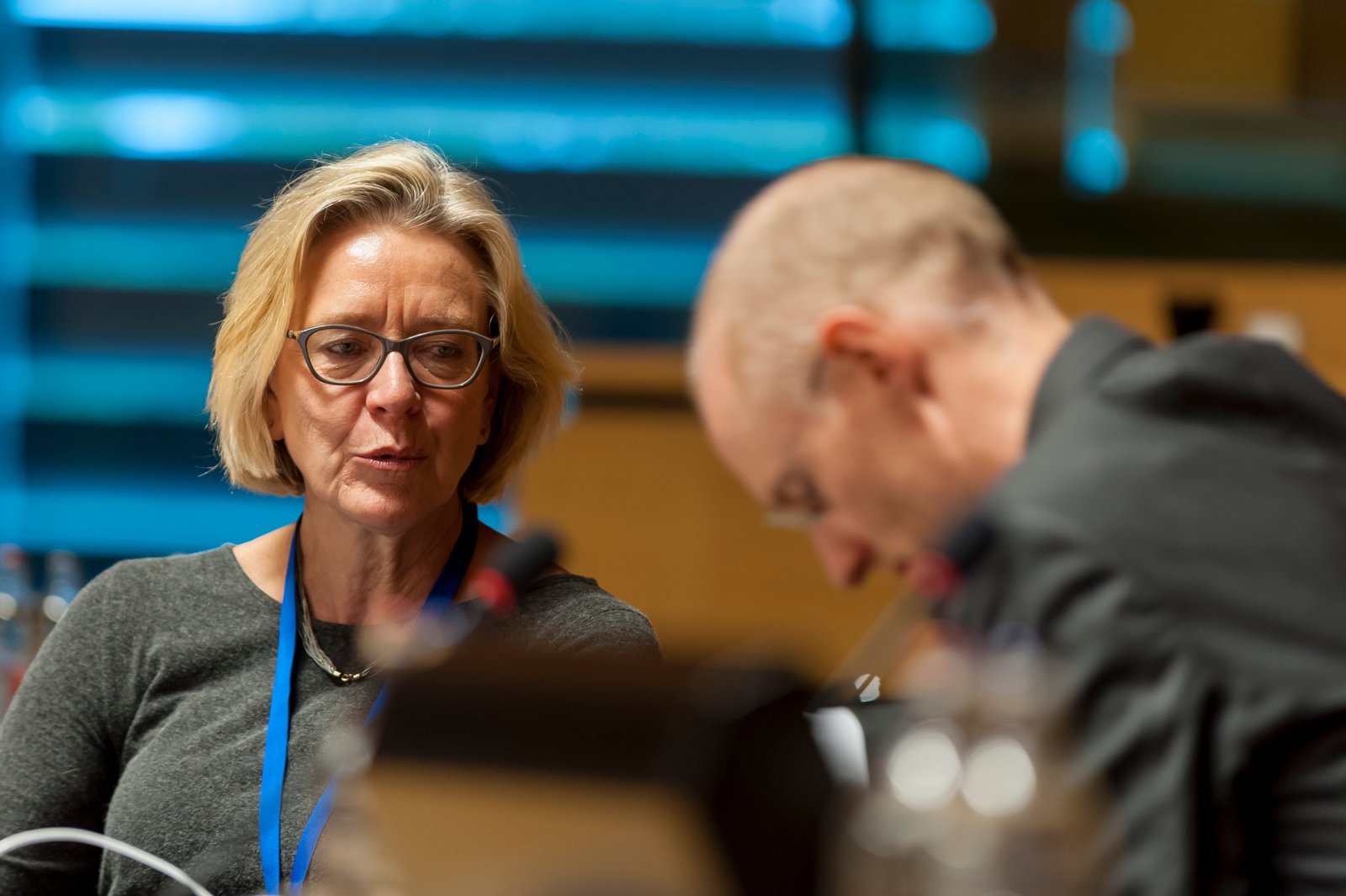
– I am encouraged by Indonesia’s recent pledges to stop the draining and conversion of peatlands. This collaboration with WRI will be important to support Indonesia in its efforts to reduce emissions from deforestation and degradation of peatlands in Indonesia, says Norway’s Minister of Climate and Environment, Vidar Helgesen.
Norway and WRI Indonesia formalized the collaboration through the recent signing of an agreement that will support the Indonesian government’s efforts to increase transparency and transform the way Indonesia governs its land-use sector.

– The Jokowi administration’s new and strong measures for forest governance through expanding forest and peatland moratorium, concessions reviews and a revival of the one map initiative represents a new pathway for growth. Through this collaboration, Norway will support the implementation of these”, said Head of Indonesia’s Peat Restoration Agency, Nazir Foead.

Norway’s support to WRI Indonesia will be 227 million NOK over a period of five years. According to the agreement, WRI Indonesia will do the following:

First, to assist Indonesia’s Peatland Restoration Agency in improving the management of peatlands. This is important to prevent future fires. Indonesia’s Peatland Restoration Agency has a mandate to restore 2 million hectares of peatlands by 2020. WRI will assist the agency in mapping peatlands.

Second, to assist the Indonesian government in implementing its “one map policy”. WRI Indonesia will support Indonesia’s Geospatial Agency to engage with key stakeholders. The objective is to identify and discuss conflicts over land-use, in order to agree on a consolidated map of land-use in three provinces.

Third, increase transparency in the forestry sector, WRI Indonesia will support the further strengthening of Indonesia’s forest monitoring system.

– Norway’s support enables WRI Indonesia to support the strong push from the Indonesian government to champion accountability and equity in Indonesia’s land use sector, said Tjokorda Nirarta Samadhi, head of World Resources Institute Indonesia.

Minister Helgesen met with Foead and Samadhi during the Oslo REDD Exchange Conference earlier this June.

(Mfa)

June 30, 2016 0 comments
0 FacebookTwitterPinterestEmail
Economics

The EEA Agreement, and issues of The High North

by Nadarajah Sethurupan June 30, 2016
written by Nadarajah Sethurupan
Elsbeth Sande Tronstad,secrétaire d'État, ministère des Affaires étrangères (Norvège)

Elsbeth Sande Tronstad,secrétaire d’État, ministère des Affaires étrangères (Norvège)

State Secretary Elsbeth Tronstad’s speech at an Oslo visit by the EU transport attachés.
Dear Transport Attachés – dear colleagues,

Norway has longstanding, good and close ties with the EU. We cooperate closely on a broad range of policy areas through a number of agreements. Among these, the European Economic Area – The EEA – Agreement and the Schengen Association Agreement are the two most important.

As a result of this, major and minor developments as well as various political initiatives at European level will have direct consequences also for us. At the same time, in many cases they allow Norway to take active part in the European cooperation and to provide input in key policy areas.

European cooperation is more important than ever. [Yes, I will touch upon Brexit in a few minutes] It is crucial that governments work closely together to meet the common challenges we face – such as creating new jobs and growth, fulfil the climate commitments, to deal with the migration crisis and combat violent extremism.

The present Norwegian Government has argued this point strongly ever since it came to power in 2013. Our strategy for Norway’s cooperation with the EU contains three key messages:

We will focus on policy areas where enhanced cooperation at European level represents added value, both for Norway and for the EU.

We will seek to engage in the European debate as early as possible whenever new policies and rules of importance to us are being developed.

We will pursue an open and inclusive European policy in cooperation with a range of stakeholders in the Norwegian society.

Our EU strategy then sets out the main priorities for the period 2014–2017: Higher quality research and education – an ambitious climate and energy policy – a global approach to migration – and enhanced security.

The strategy is being implemented through annual work programmes. And an English version of the 2016 programme is available for further reading.

The EEA Agreement

The European Single Market is at the very heart of our cooperation with the EU. Through the EEA Agreement, Norway enjoys the benefits of the free movement of persons, goods, services and capital. It guarantees non-discrimination and equal rules and competition throughout the area of 31 countries and 500 million people.

For Norway, it gives our companies access to the Single Market and ensures that they compete on the same terms as companies in EU countries. At the same time, it offers the same benefits to EU companies and citizens entering Norway. This is crucial, as around 80 per cent of our export go to the EU and more than 60 per cent of Norway’s imports come from EU countries.

I would also like to underline that the EEA Agreement covers cooperation in other important areas, such as research and development, education, social policy, the environment, consumer protection, tourism and culture.

On the other hand – the EEA Agreement does not comprise the EU agricultural and fisheries policies, the customs union nor the monetary union. Apart from this, all areas of the Single Market are part of the EEA with one horizontal exemption: The geographical scope is limited to Norwegian land territory, internal waters and territorial waters. The EEA does not apply to the exclusive economic zone, the continental shelf nor the high seas.
How does it work?

The EEA Agreement is dynamic in its character. It is continuously updated and amended to incorporate new Single Market legislation in order to maintain homogeneity across the European Economic Area.

When it comes to the transport sector, most ofthe EU legislation will be implemented in Norwegian legislation. Thus, your work is highly relevant to us – and I believe that we in many cases can be a valuable partner for you as well.

However, not being a member of the Union, Norway, Iceland and Liechtenstein do not participate in the decision-making process. But we may give input during the preparatory phase, when the European Commission draws up proposals for new Single Market (EU/EEA) legislation that is to be incorporated into the Agreement.

This includes the right to participate in expert groups and committees under the European Commission. A considerable number of Norwegian civil servants participate in these on a regular basis. We also have around 50 seconded national experts in the Commission. One of them (Espen Rindedal) is in fact working in DG Mobility and Transport on road safety.

I would also like to underline that Norway participates in a number of EU programs through provisions in the EEA Agreement or on the basis of bilateral agreements with the EU. The largest of them being the Horizon 2020, Erasmus+, Galileo and Copernicus. We contribute to the budget of these programs on equal footing with EU member states and thus have the same rights and obligations.

We also participate in a number of EU agencies, among these the European Aviation Safety Agency and the European Union Agency for Railways.

A stable and predictable framework

For more than 20 years the EEA Agreement has broadened and deepened the cooperation between the EU and Norway. All parties agree that it has been mutually beneficial and has functioned well.

The Agreement has provided a stable and predictable framework for our economic relations with EU member states and has made an important contribution to Norway’s economy and development. It has had great significance for the business sector and for working life in Norway.

My Government welcomes the EU’s strategy to further develop and deepen the single market. We also support the agenda to create a real Digital Single Market which can boost the European economy.

We also fully support the Commission’s aim and the work it is doing to avoid over-regulation and unnecessary burdens by systematically reviewing existing legislation and ensuring that future legislation is made simpler, better and more user-friendly.

This is well in line with my Government’s slogan “Improve, Simplify and Renew” with special focus on how to make our public sector more effective and our legislation more “business-friendly”, especially in relation to small and medium-sized enterprises.

Together we have been able to safeguard the EEA Agreement and to find mutually acceptable solutions to challenges and difficulties that have emerged over the years. I am confident that this will also be the case in the future.
A short comment on Brexit

All this being said, let me add a few words on the outcome of the referendum in the United Kingdom last week.
The British people have expressed their wish to leave the European Union. We respect their decision.

Norway’s relations with the EU will not be directly affected the “Brexit”. Our agreements with the EU stand firm, and we believe them to be mutually beneficial as I have just mentioned.

The relations between Norway and the UK have deep roots and are wide-ranging. The UK will continue to be among our closest partners. Norway’s trade with the UK will be regulated by the EEA Agreement until the country has formally withdrawn from the EU.

We will follow the negotiations between the EU and UK closely. It is in our interest that the parties find solutions that will ensure a liable framework for economic relations between the UK and the rest of Europe.
Norway and The Arctic

Let me then shift focus – to the High North. In today’s volatile world, the Arctic remains a region of cooperation, stability, respect for international law and sustainable management of resources. The overall goal of Norway’s Arctic policy is to ensure that it stays that way.

Norway has for centuries maintained a strong presence in the North. We are, and have always been, dependent upon income generated in the North.

Some key facts illustrate this:

10 per cent of Norway’s population live north of the Arctic Circle

80 per cent of our sea areas are located north of the circle

There are excellent universities in the northern parts of Norway. The city of Tromsø is a centre for expertise on polar issues

The Arctic is a region abundant with resources such as energy, minerals and fish. At the same time, the Arctic is a highly vulnerable natural environment, where the impacts of climate change can be clearly observed. Climate change represents a challenge for us all, but it is also opening up new opportunities for economic activity in the Arctic.

This is the backdrop for the increased interest in the Arctic.

The EU is no exception. The Commission and the European External Action Service issued their Joint Communication on an integrated EU policy for the Arctic in April, the third communication since the Arctic was put on the EU agenda a decade ago.

Norway has during the years had a constructive dialogue with the EU on issues of relevance to the Arctic and has welcomed the Joint Communication. We share the view that better knowledge of the Arctic is fundamental to respond adequately to the challenges.

The EU contributes to the work of the Arctic Council through participation in its working groups. The EU is also a major contributor to Arctic research. As a partner to Horizon 2020, Norway will encourage the EU to strengthen research on Arctic issues.

Norway and Russia are neighbours in the High North. Through its actions – in Ukraine and elsewhere – Russia has contributed to a greater sense of insecurity in Europe. Together with the rest of Europe we are standing firm in defence of international law and international rules. At the same time, we continue cooperation with Russia in areas where we have common interests. These are management of shared fish stocks, environmental protection and nuclear safety, maritime safety including search and rescue at sea, as well as Coast Guard and Border Guard activities more broadly.

The Norwegian Government aims to promote sustainable business development in the north. We have initiated various schemes to enhance trans-border business cooperation, including seed funds to stimulate activity in the north.

We target our efforts at industries with growth potential, like the maritime sector, the seafood industry, the mineral industry, tourism, space technology, and of course the oil and gas and the fisheries sectors. There are huge distances in the European Arctic, and an efficient infrastructure is crucial for economic development.

Thank you so much for interest in Norway and our relations with you on transport policy issues. I am confident that you will enjoy a fruitful dialogue and good discussions with your Norwegian counterparts today and tomorrow. I wish you a pleasant stay in Oslo.
Thank you!

(mfa)

June 30, 2016 0 comments
0 FacebookTwitterPinterestEmail
Asylum

Norway’s asylum figures down

by Nadarajah Sethurupan June 30, 2016
written by Nadarajah Sethurupan
Refugees and migrants gather near a check point on the Russian-Norwegian border outside Nickel (Nikel) settlement in Murmansk region, Russia, October 30, 2015. The flow of Middle Eastern migrants trying to reach Europe via the Russian Arctic slowed dramatically on October 29, partly due to a shortage of bicycles to cross the border, a source who deals with them told Reuters. According to officials, many Syrians obtain business or study visas to enter Russia and then travel through Moscow and Murmansk to Nickel, a town of some 12,000 population named after the metal mined there. REUTERS/Fyodor Porokhin - RTX1TYCL

Refugees and migrants gather near a check point on the Russian-Norwegian border outside Nickel (Nikel) settlement in Murmansk region, Russia, October 30, 2015. The flow of Middle Eastern migrants trying to reach Europe via the Russian Arctic slowed dramatically on October 29, partly due to a shortage of bicycles to cross the border, a source who deals with them told Reuters. According to officials, many Syrians obtain business or study visas to enter Russia and then travel through Moscow and Murmansk to Nickel, a town of some 12,000 population named after the metal mined there. REUTERS/Fyodor Porokhin – RTX1TYCL

In the final four months of 2015, a record number of asylum seekers came to Norway. During the first four months of this year, the numbers plummeted by 95 percent according to the Norwegian Directorate of Immigration (UDI).

Some 22,818 people sought asylum in Norway in the last third of 2015, compared to just 1,185 in the first third of 2016, figures from UDI obtained by ABC Nyheter show.

“This is the lowest number of asylum seekers coming to Norway since the first four months of 1997, when 499 asylum seekers came,” the UDI document stated.

UDI said the low number of asylum seekers “is clearly related to border and ID checks in Norway, Sweden and Denmark and elsewhere in Europe.”

June 30, 2016 0 comments
0 FacebookTwitterPinterestEmail
Terrorist

Norway condemns attack on airport in Istanbul

by Nadarajah Sethurupan June 30, 2016
written by Nadarajah Sethurupan
Turkish rescue services gather outside Istanbul's Ataturk airport, Tuesday, June 28, 2016. Two explosions have rocked Istanbul's Ataturk airport, killing several people and wounding others, Turkey's justice minister and another official said Tuesday. A Turkish official says two attackers have blown themselves up at the airport after police fired at them. The official said the attackers detonated the explosives at the entrance of the international terminal before entering the x-ray security check. (AP Photo/Emrah Gurel)

Turkish rescue services gather outside Istanbul’s Ataturk airport, Tuesday, June 28, 2016. Two explosions have rocked Istanbul’s Ataturk airport, killing several people and wounding others, Turkey’s justice minister and another official said Tuesday. A Turkish official says two attackers have blown themselves up at the airport after police fired at them. The official said the attackers detonated the explosives at the entrance of the international terminal before entering the x-ray security check. (AP Photo/Emrah Gurel)

‘I condemn the terrorist attack at Istanbul’s Ataturk Airport on Tuesday 28 June in the strongest possible terms. Terrorists have once again targeted innocent civilians in Turkey. These cowardly acts must be met with abhorrence and intensified international efforts in the fight against terror,’ Minister of Foreign Affairs Børge Brende said.

Ataturk, Istanbul’s main international airport, was hit by several explosions and gunfire late Tuesday evening. So far, at least 36 people are reported to have been killed and 147 to have suffered injuries.

‘I would like to convey my deepest sympathy to all of those who have lost loved ones and to those who were injured in the attack,’ Mr Brende said.

‘This act of violence shows once again the importance of international cooperation and solidarity against terrorism. Terrorism respects no borders. It is an attack on all of us, regardless of nationality,’ said Mr Brende.

There have already been three suicide bomb attacks in Istanbul this year. According to the Turkish authorities, all these attacks – in which both foreign and Turkish citizens were killed or injured – were carried out by members of Isil.

By Wednesday noon, no reports had been received of Norwegian citizens having been killed or injured in this latest attack. The Norwegian embassy in the capital, Ankara, is doing its utmost to verify this.

(mfa)

June 30, 2016 0 comments
0 FacebookTwitterPinterestEmail
Media Freedom

NRK invests in Tedial Evolution

by Nadarajah Sethurupan June 30, 2016
written by Nadarajah Sethurupan

timthumNorwegian public service broadcaster NRK has announced a major installation of Tedial’s Evolution business-driven media workflow. The solution provides NRK with multi-site Enterprise MAM, Capture Manager software and a designated Disaster Recovery facility to service its Oslo headquarters and 12 regional sites.
Tedial Evolution provides NRK with a centralised, fully configurable MAM that can be accessed by all NRK sites across the country enabling access to resources and operational activities specific to individual or group requirements. Balanced workflows across the broadcaster’s central and local offices will increase efficiency by taking advantage of additional bandwidth and latency. Tedial’s Capture Manager software will provide NRK with a central interface for controlling and monitoring devices as well as advanced, ingest features. NRK’s new Disaster Recovery facility provides business continuity options to manage content replication and transfer to multiple sites. The new Tedial Evolution workflow is fully integrated with NRK’s existing metadata bank and third-party ecosystem.

Helge Løken, NRK’s project manager production – Origo, said: “NRK is looking forward to collaborating with Tedial on this project. They are a company with a strong reputation in the broadcast industry and we have faith in their ability to deliver.”

Esther Mesas, Tedial’s chief sales & marketing officer, added: “New-generation MAM technology allows broadcasters and media companies to execute global operations and be competitive. NRK required a long-term partner that can provide an outstanding technical solution, which will leverage total cost of ownership and fulfil future technical requirements. We are delighted to be that partner and look forward to working with NRK over the next five years and beyond.”

(tvbeurope)

June 30, 2016 0 comments
0 FacebookTwitterPinterestEmail
NATO and Norway

NATO Summit Special Series: Denmark and Norway

by Nadarajah Sethurupan June 30, 2016
written by Nadarajah Sethurupan
Danish F-16, Nov. 10, 2010 (photo: Carlos Menendez San Juan)

Danish F-16, Nov. 10, 2010 (photo: Carlos Menendez San Juan)

The two Scandinavian allies strongly supported the outcome of the last NATO Summit in Wales, with a renewed focus on deterrence and reassurance measures to counter Russian aggression in the Baltic Sea region. The Russian invasion of eastern Ukraine and the annexation of Crimea were wake-up calls and virtual game changers to the countries in the Baltic Sea region, with profound consequences on their security priorities. As Denmark and Norway prepare for the next NATO summit to soon take place in Warsaw, these same priorities remain at the top of their agendas.

Though similar in many ways – as small state allies which, in addition, have provided NATO with two Secretary Generals in a row, and with similar reactions to what is referred to as “the new normal” in the Baltic Sea, Denmark and Norway however differ in a number of ways when it comes to their perspectives on security and defense.

Denmark cherishes a legacy of high-profile military and political activism in the Baltic Sea in the 1990s, when it played a key role in assisting the Baltic States in their newly gained independence. Of particular importance was Denmark´s role as an early – and for a long time only – advocate within the Alliance of NATO membership for the three small and vulnerable states.

Once that mission was accomplished, Denmark however quickly downgraded regional security in its own “near abroad” in favor of participation in international operations in primarily the Middle East; a strategy which was aimed at maximizing Danish influence in the Alliance and in particular with regards to Copenhagen’s relationship with the US. As a result, Denmark assumed an active role in missions in Afghanistan, Iraq, Libya, the Horn of Africa, and Mali, to mention only the most recent. In Afghanistan, Denmark had its base in the violent Helmand province, and was the contributing country that suffered the highest number of casualties – 43 – relative to its size.

Denmark scored top points in the Alliance for its activist role and solid contributions to international operations, prior to the change of course in its military and security policy that Denmark embarked on in 2014. As part of this new course, Denmark has been an active participant in the many exercises in the last few years in the Baltic Sea, including most recently the BALTOPS exercise with a grand total of 6.000 troops from 17 countries which just ended in the Baltic Sea. In addition, Denmark stated in Wales its willingness to take part in missile defense – which has led to threats of nuclear attacks by the Russian ambassador to Copenhagen.

Meanwhile, Norway has consistently come across as a determined “Article 5er” within the Alliance. As NATO´s guardian of the Northern Flank –or one of them, jointly with Canada – Norway has argued that the Alliance should hold on to its core tasks and good old collective defense. In this position, Norway, though one of NATOs founding countries in 1949, has thus belonged to the same group as the “new” Central and Eastern European Allies, which also border on Russia and joined the Alliance in pursuit of Article 5 guarantees. Today, the comparative calm in the High North and the Arctic has allowed Norway to increase its efforts in enhancing security in the Baltic Sea region after 2014. From May to September in 2015, Norway for instance assumed the role as lead nation – as Denmark has on previous rotations – of the Air Policing mission which operates out of Lithuania.

Nevertheless, the High North still holds a prominent role in Norwegian military strategy. As the summit in Warsaw has been approaching, Norwegian Defense Minister Ine Eriksen Søreide has repeatedly stressed the need for NATO to have a more visible profile in the North, as well as the need for NATO to make maritime security a priority. The minister was undoubtedly pleased with the anti-submarine warfare exercise – “Dynamic Mongoose” – which was just launched in the Norwegian Sea, including three thousand sailors and aircrew from eight allies.

The two Scandinavian Allies are likely to depart for Warsaw with different feelings with regards to the upcoming discussions on the 2 % goal agreed on in Wales. Norway has increased, and continues to increase, its defense budget, which is one reason why the US Secretary of State John Kerry stated during a recent visit to Oslo that he and the US are “very, very grateful of Norway as a NATO ally.”

Denmark, on the other hand, is after several rounds of cuts of the military budget right now spending less than ever on its defense, in spite of increased insecurity in the region and beyond. With 1 % of the Danish GNP presently allocated to the military, Denmark is indeed far from the 2 % goal. It was no coincidence that the decision to purchase 27 F-35s was finally reached in May, right before the Summit, though the expenditures for the new fleet of fighter jets will not be part of the regular defense budget. To compensate for this, Denmark is expected to contribute around 100-150 men to the 1.000 NATO troops that are expected to be stationed in each of the three Baltic States and Poland, most likely in Estonia. Not enough, critics say: but it certainly confirms the new direction of Danish security and defense policy in the last three years.

Ann-Sofie Dahl, PhD, is based in Copenhagen and is Associate Professor of International Relations and Adjunct Fellow at CSIS. She is the founder of the Swedish Atlantic Council and a former Vice President of ATA (The Atlantic Treaty Association). One of her most recent publications is Baltic Sea Security:

June 30, 2016 0 comments
0 FacebookTwitterPinterestEmail
Royal House

Need a hand, Your Highness?

by Nadarajah Sethurupan June 30, 2016
written by Nadarajah Sethurupan

35CA4F5800000578-3666525-image-m-20_1467225496603At the Crown Princess of Norway, she is normally a picture of poise and grace.

But Princess Mette-Marit found herself in a spot of bother today as she tried to get into a plastic rain poncho.

The 42-year-old was celebrating the Norweigan royal family’s Silver Jubilee, a special event paying tribute King Harald and Queen Sonja’s 25 years on the throne.

She joined her husband, Crown Prince Haakon for the special event in Kristiansand.

Earlier in the day, she looked flawless in a floral A-line skirt and a black cropped blazer with ruching detail. She wore her platinum blonde locks swept back into a low ponytail, adding a pair of black kitten heels.

Her husband, meanwhile, looked sharp in a navy suit. But the pair were forced to put function over fashion when the heavens opened, with Haakon donning an oversized rain mac.

35CA5DA800000578-3666525-image-a-21_1467225504956Mette-Marit wrapped up with a fleecy pink blanket, while her devoted husband attempted to pull the poncho over her head – with some difficulty.

Later on, the pair changed yet again as they boarded a speedboat to take them back to the Royal Yacht alongside Queen Sonja and King Harald.

Braving the blustery weather, Mette-Marit managed a broad grin as she clutched a bouquet of flowers and boarded the vessel. She had changed into a smart, monochrome jacket and pleated skirt.

The Queen, who turns 79 last week, seemed prepared for the weather with a waterproof red mac and a yellow rain hat.

Wednesday marked the final day of the Silver Jubilee tour, which has seen the King and Queen host a garden party in six different cities.

It kicked off on 18 June with a visit to Tromsø, the most northerly port of call on their voyage, where Harald welcomed 300 guests to the party at the historic Skansen fortress.

During a speech, he reflected on his quarter-century reign, according to the Royal House of Norway’s website.

35CA7AEF00000578-3666525-image-a-22_1467225512696‘Norway is 25 years older,’ he said. ‘Norwegian society is not the same as it was in 1991. We face different challenges, have different opportunities.

‘We have experienced good times and bad times – more than once. But throughout it all we have held on to certain values that are an inextricable part of our culture, our local communities, and our hearts.’
Next, the Royal Yacht dropped them off at the city of Bodø, where Queen Sonja she officially opened the new Keiserstien Trail, which leads to the top of Veten mountain.

After that, they docked in Trondheim where they were joined by Haakon and Mette-Marit, before continuing down the coast to Bergen on June 25 and Stavanger on June 27.
They came to their final destination, Kristiansland, on Wednesday.

(dailymail)

June 30, 2016 0 comments
0 FacebookTwitterPinterestEmail
Crimes

Mongolian migrants forced into labour after being let into Norway on fake speed skating visas

by Nadarajah Sethurupan June 29, 2016
written by Nadarajah Sethurupan
Youngsters have been reportedly travelling to Norway on a speed skating visa, despite not being athletes

Youngsters have been reportedly travelling to Norway on a speed skating visa, despite not being athletes

Mongolian migrants have reportedly been smuggled into Norway on fake visas claiming they are professional speed skaters.

According to Norwegian newspaper Daglabet, teenage girls were able to gain entry to the European country due to visa workers which claimed they were top athletes.

They have never competed in speed skating, however, and once in Norway they were reportedly subjected to forced labour and violence.

One special sports visa – issued at the Italian Embassy in Beijing in 2012 – seemingly gave the teenager access to any of the 26 countries included in the Schengen agreement which allows free movement of people across the continent.

Citing sources in both Norway and Mongolia, it is claimed that the smuggling was facilitated by skating coach Dagvadorj Chimeddorj and Munkhtsetseg Mongolbuu.

Mongolbuu is a Mongolian junior champion skating and policewoman, who in 2010 was convicted of using false identification and living illegally in Norway.

“They smuggled us in as speed skaters but we have never had skates on our feet,” a 19-year-old woman said after allegedly being smuggled into the country when aged 15.

Several other similar cases are also cited.

There have been few cases in the past of sports visas being used illegally to gain entry to a country.

It is common, however, for athletes from war-torn areas to claim political asylum in a new country after travelling there to compete in a sporting events.

Marathon runner Tsegai Tewelde is due to compete for Britain at Rio 2016, after living in Scotland ever since absconding from the Eritrean team at the 2008 World Cross-Country Championships in Edinburgh.

Democratic Republic of Congo judoka Yolande Bukasa Mabika and Popole Misenga have each lived in Rio de Janeiro since visiting Brazil to compete in the 2013 World Championships.

Both have been named in the Refugees Olympic Team for Rio 2016.

June 29, 2016 0 comments
0 FacebookTwitterPinterestEmail
Newer Posts
Older Posts

Norwegian Nobel Prize 2025

101207 The Norwegian Nobel Committee has decided to award the Nobel Peace Prize for 2025 to Maria Corina Machado for her tireless work promoting democratic rights for the people of Venezuela and for her struggle to achieve a just and peaceful transition from dictatorship to democracy.

Special Interest

  • Africa and Norway
  • Asia and Norway
  • Asylum
  • China and Norway
  • Corruption in Norway
  • Crimes
  • Defence
  • Diplomatic relations
  • Economics
  • Environment
  • Farming
  • Killing
  • Media Freedom
  • Middle East and Norway
  • NATO and Norway
  • Nobel Peace Prize
  • Norwegian Aid
  • Norwegian American
  • Oil & Gas
  • Peace Talks
  • Politics
  • Racism in Norway
  • Religion
  • Russia and Norway
  • Royal House
  • Science
  • Sex scandal
  • Sports
  • Spy War
  • Srilanka and Norway
  • Svalbard
  • Terrorist
  • Taiwan and Norway
  • Video clips

Follow Us

Recent Posts

  • Ethiopian, Norwegian Leaders Vow to Explore Green Investment, Renewable Energy Cooperation

    November 11, 2026
  • “Stoltenberg’s Ukraine Ledger: Accountability for Control, Not for Every Krone” – We Can Guarantee the Audit Has Holes

    November 7, 2026
  • Norway selects Starlink for military use

    November 6, 2026
  • NAC to supply used fuel storage solution for Norway

    November 6, 2026
  • Norwegian Envoy Praises Islamic Emirate’s Progress in Security, Economy

    November 6, 2026
  • Norway proposes tougher anti-espionage laws, expanded powers for PST

    November 3, 2026

Social Feed

Social Feed

Editors’ Picks

Norway opens market for Sri Lankan fish exports...

May 13, 2016

Sri Lanka – Nordic Business Council holds discussions...

May 15, 2016

Good governance to Sri Lanka

May 15, 2016

Shock and Joy in Sri Lanka – Erik...

May 15, 2016

Sri Lanka-Norway plenty of new opportunities for business–...

May 15, 2016

NORWAY NEWS is an online news site, written in English, dedicated to Norwegian affairs at home and abroad. Norway News.com is published online. It is a daily online newspaper in existence since May, 2003. The site is run by an Independent Journalist.

Facebook Twitter Youtube

Useful Links

    • Work With Us
    • Contact Us
    • Collaboration
    • Data Collection
    • Workplace
    • Adverstising
    • Privacy Policy
    • International Collab
    • Feedback
    • Terms of Use
    • About Our Ads
    • Help & Support
    • Entertainment
    • News Covering
    • Technology
    • Trending Now

Politics

Syrian, Norway to boost cooperation on mine clearance
Erna to step down as Conservative Party leader in 2026
Norwegian Labour Party on re-election win

Latest Articles

Ethiopian, Norwegian Leaders Vow to Explore Green Investment, Renewable Energy Cooperation
“Stoltenberg’s Ukraine Ledger: Accountability for Control, Not for Every Krone” – We Can Guarantee the Audit Has Holes
Norway selects Starlink for military use
NAC to supply used fuel storage solution for Norway

Norway News 2025 . All Right Reserved. Designed and Developed by Norway News

  • Home
  • About us
  • Disclaimer
  • Contact us
NORWAY NEWS – latest news, breaking stories and comment – NORWAY NEWS
  • Home
  • About us
  • News
  • Other News
    • Africa and Norway
    • Asia and Norway
    • Asylum
    • Breaking News
    • China and Norway
    • Corruption in Norway
    • Crimes
    • Defence
    • Diplomatic relations
    • Economics
    • Environment
    • Farming
    • Featured
    • Health
    • Killing
    • Media Freedom
    • Middle East and Norway
    • NATO and Norway
    • Nobel Peace Prize
    • Norwegian Aid
    • Norwegian American
    • Oil & Gas
    • Peace Talks
    • Politics
    • Racism in Norway
    • Religion
    • Royal House
    • Russia and Norway
    • Science
    • Sex scandal
    • Sports
    • Spy War
    • Srilanka and Norway
    • Svalbard
    • Taiwan and Norway
    • Terrorist
    • Travel
    • Video clips
  • Disclaimer
  • Contact us

Editor’s Picks

  • How Navi Pillay’s Unflinching Pursuit of Justice in Sri Lanka Forged a Nobel Legacy

    October 9, 2026
  • Norway’s Long Shadow Over Sri Lanka: UN Report Exposes Reform Failure as Oslo Faces Pressure to Act

    September 8, 2026
  • UN concern over Sri Lanka’s cases of enforced disappearances

    October 8, 2025
  • UN Human Rights Council Resolution on Sri Lanka’s Path to Reconciliation

    October 7, 2025
  • International should support Sri Lanka: Solheim

    October 4, 2024
  • Norwegian Meets Sri Lankan’s Challenges

    May 3, 2024

Newsletter

@2025 - All Right Reserved. Designed and Developed by Norway News