


NATO Secretary General Jens Stoltenberg and the President of Ukraine, Petro Poroshenko
NATO Secretary General Jens Stoltenberg, together with Ukraine President Petro Poroshenko, opened a joint NATO-Ukraine civil emergency exercise in Yavoriv on Monday (21 September 2015), at the start of his first official visit to Ukraine which is to highlight the partnership between NATO and Ukraine.“This exercise can make a real and significant difference to the way we respond to real life emergencies,” the Secretary General said. “This is not a military exercise. It is an opportunity for first responders – from Allies and from partner nations – to work together.”
The four-day exercise, which involves 28 NATO and partner nations, shows the practical value of the NATO-Ukraine partnership, said Mr. Stoltenberg. “By hosting this exercise you are showing that Ukraine wants to contribute to the safety of the European people and to the security of the Euro-Atlantic area,” he said. During his two-day visit, the Secretary General will meet with President Poroshenko and Prime Minister Arseniy Yatsenyuk and other senior Ukrainian officials, including parliamentarians. Their talks are expected to focus on Ukraine’s reform efforts and future NATO-Ukraine cooperation.
The Secretary General’s visit signals NATO’s strong support for Ukraine and efforts to further strengthen NATO-Ukraine cooperation. Speaking at a joint press conference with President Poroshenko, he also spoke of the current decrease in fighting between government forces and the separatists, saying “what we have seen is that the ceasefire is mainly holding and this is encouraging because this was not the case before. But still, the situation is very fragile.” He stressed that “the way to reach a peaceful negotiated solution to the crisis in eastern Ukraine is the Minsk Agreements.” He added that full implementation was essential “meaning also that Russia has to stop supporting separatists in eastern Ukraine.”
The “Ukraine 2015” exercise is jointly run by NATO’s Euro-Atlantic Disaster Response Coordination Centre (EADRCC) and the State Emergency Service of Ukraine (SESU). More than 1,100 people are taking part, including first responders, search and rescue teams and experts dealing with the fallout from a chemical or nuclear attack. The exercise will test the skills of participants in dealing with a mine explosion and collapse. It is the third time Ukraine has hosted this exercise. Following the official opening, the Secretary General watched a demonstration of modern equipment and assets being used in the exercise.


 Norway supports Georgia’s NATO membership and will remain faithful to this idea at the next summit of the Alliance. Norway’s support for Georgia was voiced by the nation’s Foreign Minister Borge Brende, who paid an official visit to Tbilisi yesterday, Agenda.ge reports.”For the next summit we will necessarily toe the line that Georgia should become a NATO member,” said Brende at a press conference held together with Georgia’s Foreign Minister Giorgi Kvirikashvili.

 NATO Secretary General Mr. Jens Stoltenberg will visit Norway from Wednesday 3 June to Friday 5 June, 2015. Mr. Stoltenberg will have an audience with His Royal Highness Crown Prince Haakon. He will meet with Prime Minister, Ms. Erna Solberg, Minister of Finance, Ms. Siv Jensen, Minister of Foreign Affairs, Mr. Børge Brende and Minister of Defence, Ms. Ine Marie Eriksen Søreide.At the Parliament, Mr. Stoltenberg will meet with the Standing Committee on Foreign Affairs and Defence. The Secretary General will also visit Bodø airbase and deliver a keynote speech at the University of Oslo.
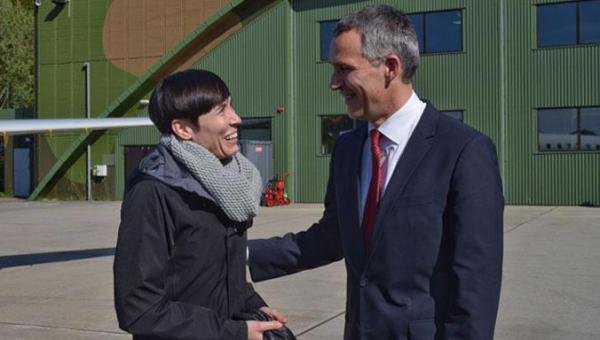
 NATO chief Jens Stoltenberg said Thursday Russia is not an immediate threat, but condemned Russia for its lack of cooperation with its neighbors. Stoltenberg, in his native Norway on his first official visit as NATO Secretary-General, told state broadcaster NRK in an interview Wednesday, “What we see is more unpredictability, more insecurity, more unrest… I believe we don’t see any immediate threat against any NATO country from the east.””Our goal is still cooperation with Russia,” he added. “That serves NATO and it serves Russia.”
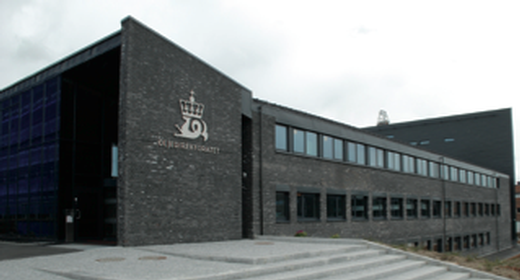
 The Norwegian Petroleum Directorate (NPD) has issued an update on its analysis of recoverable oil from Norway’s various offshore fields and discoveries. NPD’s goal in 2005 was to achieve growth in oil reserves of 5 BBbl over 10 years. The actual result is somewhat below that figure, although the target would have been achieved if Statoil’s development plan for Johan Sverdrup in the North Sea had been submitted before the end of 2014.“There has been substantial resource growth in many fields,” said Kirsti Veggeland, assistant director general for shelf analysis. “The most important reasons for this are more wells, extended field lifetimes and improved knowledge.”

 A newly-leaked report on illegal oil sales by Islamic State (IS), which was ordered to be compiled by Norway, has revealed that most of the IS-smuggled oil has been destined for Turkey, where it is sold off at bargain low prices. Norwegian daily Klassekampen leaked details of the report, which was put together by Rystad Energy, an independent oil and gas consulting firm, at the request of the Norwegian Foreign Ministry.“Large amounts of oil have been smuggled across the border to Turkey from IS-controlled areas in Syria and Iraq,” Klassekampen cited the report as saying. “[The] oil is sent by tankers via smuggling routes across the border [and] is sold at greatly reduced prices, from $25 to $45 a barrel.”

 The NPD reported Wednesday that the current recoverable oil on the Norwegian Continental Shelf exceeds the estimated figure for 2005. A select number of producing fields and 62 discoveries, for which development decisions had not been made in 2005, were reviewed in order to determine the latest figures.


 Norwegian grid operator Statnett is expected to make a final investment decision in the first quarter on a 1.5-2 billion euro project for what would be the world’s longest subsea cable. The power inter connector to Britain aims to secure power supplies in both countries. According to Statnett’s website, the project will provide benefits to both sides. When there are higher winds Norway will be able to import power from the British at a lower price than in the Norwegian market and conserve the water in its many hydropower reservoirs.Britain, respectively, will have the opportunity to buy cheaper hydropower from Norway when it needs.

 After suspending some rig work to save capital, Norwegian energy company Statoil said Tuesday it sold acreage in a key U.S. shale play for $394 million. Statoil said it sold a 6 percent stake in the Marcellus shale play to U.S. company Southwestern Energy, leaving the Norwegian company with a non-operated 23 percent interest in the region. Statoil in 2008 entered Marcellus through a joint venture with Chesapeake Energy and now says the divestment is part of its optimization strategy.”I am delighted that we have concluded this important transaction with Southwestern despite the turbulence in today’s energy markets,” John Knight, executive vice president for global business development at Statoil, said in a statement.

 The Norwegian Agency for Development Cooperation (NORAD), and the Cuban ministries of Foreign Trade and Foreign Investment (MINCEX), and the Ministry of Energy and Mines signed new agreements for bilateral cooperation in the oil sector, confirming the negotiations between the two countries started in 2011. The signed documents are part of the Oil for Development program of NORAD. With this program Norway holds meetings with Cuban authorities to share experiences on staff training, development of techniques and knowledge sharing about fuel.

 Kenya and Norway will sign an agreement on petroleum resources to help the east African country manage new oil discoveries, Norway’s new ambassador to Kenya was quoted as saying. “We are considering a long-term agreement with Kenya’s ministry of energy and petroleum on effective and socially responsible management of petroleum resources,” Victor Ronneberg said, according to a note issued by Kenya’s Presidential Strategic Communications Unit.Ronneberg presented his credentials to Kenya’s President Uhuru Kenyatta on Tuesday.

 Norges Bank Investment Management bought an office and retail complex opposite Paris’s Le Madeleine church for 425.6 million euros ($570 million) from a fund managed by Blackrock Inc. (BLK) The 31,500 square-meter (339,000 square-foot) Le Madeleine building has been completely refurbished since it was acquired by Blackrock Europe Property Fund III in 2009, the world’s largest money manager said in a statement today. Tenants include Chanel, Visa and C&A.
