NORWAY NEWS – latest news, breaking stories and comment – NORWAY NEWS
  • Home
  • About us
  • News
  • Other News
    • Africa and Norway
    • Asia and Norway
    • Asylum
    • Breaking News
    • China and Norway
    • Corruption in Norway
    • Crimes
    • Defence
    • Diplomatic relations
    • Economics
    • Environment
    • Farming
    • Featured
    • Health
    • Killing
    • Media Freedom
    • Middle East and Norway
    • NATO and Norway
    • Nobel Peace Prize
    • Norwegian Aid
    • Norwegian American
    • Oil & Gas
    • Peace Talks
    • Politics
    • Racism in Norway
    • Religion
    • Royal House
    • Russia and Norway
    • Science
    • Sex scandal
    • Sports
    • Spy War
    • Srilanka and Norway
    • Svalbard
    • Taiwan and Norway
    • Terrorist
    • Travel
    • Video clips
  • Disclaimer
  • Contact us
NORWAY NEWS – latest news, breaking stories and comment – NORWAY NEWS
  • Home
  • About us
  • News
  • Other News
    • Africa and Norway
    • Asia and Norway
    • Asylum
    • Breaking News
    • China and Norway
    • Corruption in Norway
    • Crimes
    • Defence
    • Diplomatic relations
    • Economics
    • Environment
    • Farming
    • Featured
    • Health
    • Killing
    • Media Freedom
    • Middle East and Norway
    • NATO and Norway
    • Nobel Peace Prize
    • Norwegian Aid
    • Norwegian American
    • Oil & Gas
    • Peace Talks
    • Politics
    • Racism in Norway
    • Religion
    • Royal House
    • Russia and Norway
    • Science
    • Sex scandal
    • Sports
    • Spy War
    • Srilanka and Norway
    • Svalbard
    • Taiwan and Norway
    • Terrorist
    • Travel
    • Video clips
  • Disclaimer
  • Contact us
Sunday, October 4, 2026
NORWAY NEWS – latest news, breaking stories and comment – NORWAY NEWS
  • Home
  • About us
  • News
  • Other News
    • Africa and Norway
    • Asia and Norway
    • Asylum
    • Breaking News
    • China and Norway
    • Corruption in Norway
    • Crimes
    • Defence
    • Diplomatic relations
    • Economics
    • Environment
    • Farming
    • Featured
    • Health
    • Killing
    • Media Freedom
    • Middle East and Norway
    • NATO and Norway
    • Nobel Peace Prize
    • Norwegian Aid
    • Norwegian American
    • Oil & Gas
    • Peace Talks
    • Politics
    • Racism in Norway
    • Religion
    • Royal House
    • Russia and Norway
    • Science
    • Sex scandal
    • Sports
    • Spy War
    • Srilanka and Norway
    • Svalbard
    • Taiwan and Norway
    • Terrorist
    • Travel
    • Video clips
  • Disclaimer
  • Contact us
Copyright 2025- All Right Reserved Norway News
Crimes

A man from Oslo was fined 20,000 for quarantine violations

by Nadarajah Sethurupan April 28, 2020
written by Nadarajah Sethurupan

A man in his 40s in Oslo has been fined NOK 20,000 for staying with family members during the quarantine period.

The man had come from overseas the same day he was staying with his family, according to the order. A person in this household has underlying illness, it appears.

The man stayed here for a day and a half despite being subject to a 14-day quarantine duty and being repeatedly asked to leave the site, says the infringement complaint.

If the fine is not accepted, the case goes to court.

April 28, 2020 0 comments
0 FacebookTwitterPinterestEmail
NATO and Norway

How Norway Would Fight Russia: F-35s, Killer Submarines and New Missiles

by Nadarajah Sethurupan April 27, 2020
written by Nadarajah Sethurupan

Norway’s got a new military strategy. To deter and, in the event of war, defeat Russian forces, Oslo is bolstering its northern garrison and investing in submarines, stealth fighters and surface-to-air missiles.

But the Norwegian government doesn’t plan to replace a navy frigate that ran aground and sank in 2018. That decision alone represents a de facto 20-percent cut to the fleet’s open-ocean surface fleet.

Norwegian prime minister Erna Solberg revealed the new strategy in mid-April 2020. The 123-page defense plan cites Russia, and to a lesser extent China, as a major threat. “These are countries where the authorities do not see the value of neither democracy, rule of law, nor the fact that people have undisputed rights,” Solberg said.

To better prepare for war, the government plans to add nearly $2 billion to the existing, eight-year spending plan. Oslo in recent years has spent around $7 billion annually on its 23,000-person military.

As part of the new strategy, the army’s northern brigade will get an additional battalion with several hundred troops. The army also will receive around a hundred new G5 armored personnel carriers from Germany to replace aging, American-made M-113s.

The Norwegian Advanced Surface-to-Air Missile System, which fires a version of the U.S. AIM-120 missile, will get a new sensor. Oslo will buy new long-range and short-range air-defense systems to complement the army and air force’s combined force of around 72 medium-range NASAMS launchers.

The navy is getting four new Type 212 submarines from Germany to replace six older boats. Upgrades will prolong the service lives of the fleet’s four Fridtjof Nansen-class frigates and six Skjold-class corvettes.

But the fleet will not replace a fifth frigate, Helge Ingstad, which ran aground and sank in 2018. Salvagers raised the vessel, but the government determined it was not economical to repair her. Losing Helge Ingstad without a replacement amounts to a one-fifth cut to the fleet’s major surface combatants.

It’s not clear how Oslo plans to compensate for this loss. But it should try, the U.S. think-tank RAND advised. “As a major coastal and maritime nation, Norway is dependent on control of sea lines of communication for allied reinforcements as well as economic function,” RAND noted.

NATO officials recommended Oslo at least consider buying unmanned surface vessels, according to RAND. “Given finite resources and the unexpected loss of a frigate in 2018, allied officials highlighted the need to consider how best for Norway to deliver a mix of naval missions – either through different force mixes or other novel (e.g. unmanned) solutions.”

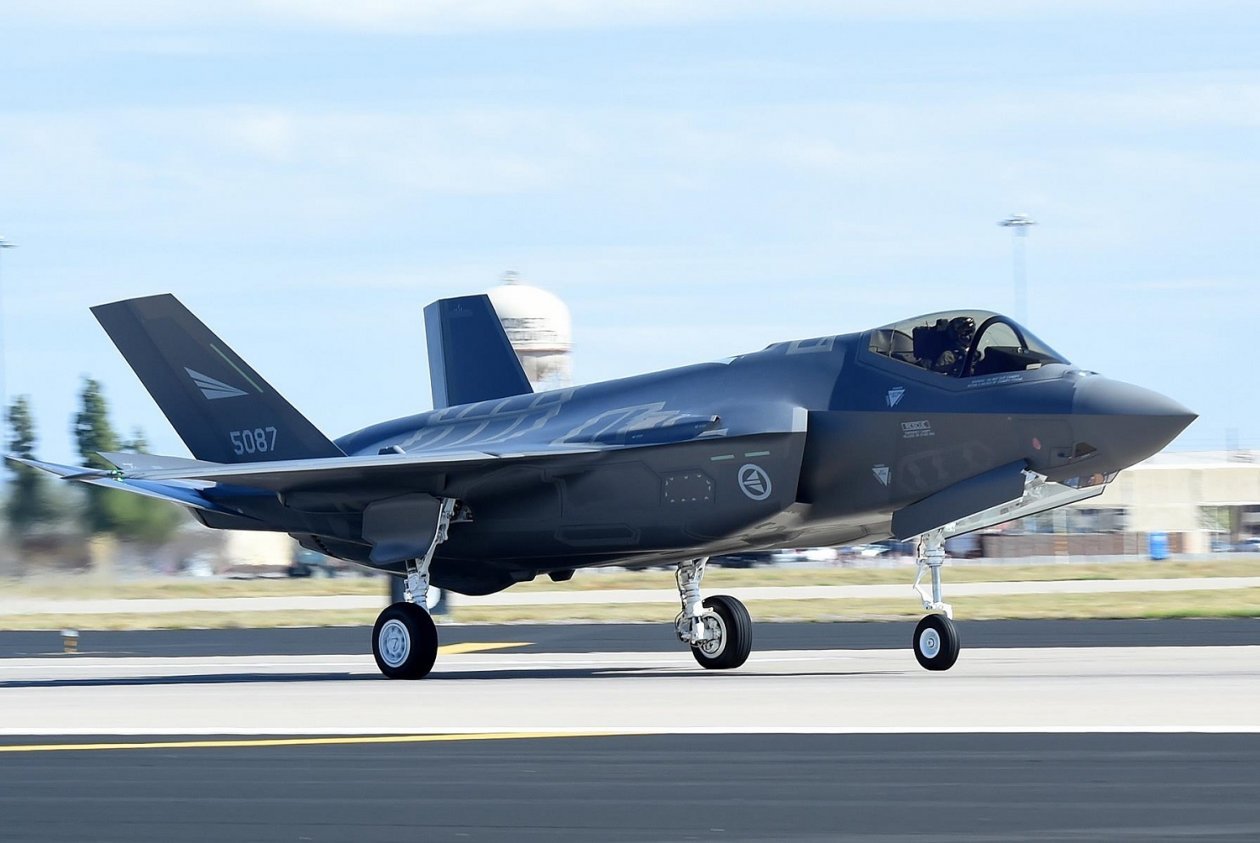
Norway’s new strategy does not alter the air force’s existing plan to acquire 52 F-35A stealth fighters to replace older F-16s plus five P-8 patrol planes to replace P-3Cs. Norway also is buying into NATO’s new fleet of up to nine A330 aerial tankers.

But RAND urged the Norwegian defense ministry to use the F-35s in new ways. “The F-35A represents a significant development not only for Norwegian air power, but also for how situational awareness, low observability and sensor and data fusion can enable future operations across all domains.”

“Allied officials emphasised the need for Norway to continue to experiment with novel [concepts], including by linking the aircraft with land- and sea-based capabilities, to maximise the [F-35’s] full potential.”

April 27, 2020 0 comments
0 FacebookTwitterPinterestEmail
China and Norway

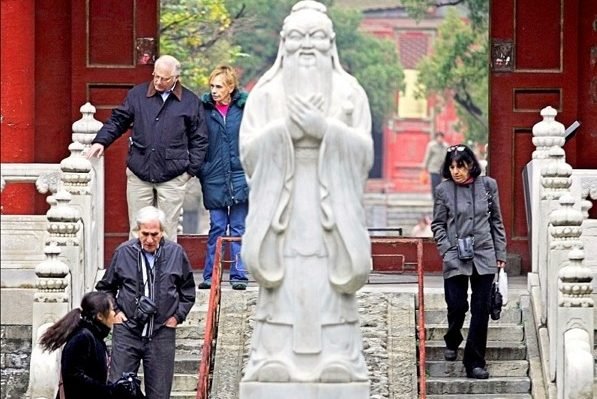
Sweden shutters all China-sponsored Confucius Institutes, Norway ?

by Nadarajah Sethurupan April 27, 2020
written by Nadarajah Sethurupan

As relations between China and the rest of the world continue to worsen due to the ongoing coronavirus (COVID-19) outbreak, the Swedish government has decided to shut down all Confucius Institutes in the country to prevent Beijing from exerting its influence on university campuses.

According to The Times, Sweden is believed to be the first European nation to close all of its Confucius Institutes and classrooms, which were sponsored by Beijing in an effort to promote the Chinese language and enhance cultural exchanges between the two countries. The report pointed out that the bilateral friendship between China and Sweden has “deteriorated into hostility and mutual suspicion” and that the Swedish government has expressed concerns over Beijing’s potential brainwashing attempts on local students.

In December last year, Sweden shut down all four of its Confucius Institutes, leaving just one Confucius classroom in the southern Swedish town of Falkenberg. However, that classroom has also been suspended as of last week, which Bjorn Jerden, head of the Asia Program at the Swedish Institute of International Affairs, described as solid proof of Sweden’s attitude change towards China.

Some experts have suggested that Sweden’s termination of the Chinese cultural education programs may also have to do with conflicts caused by Beijing’s detainment of Swedish bookseller Gui Minhai for selling critical books about Chinese General Secretary Xi Jinping. They pointed out that the arrest has severely damaged trust between the two countries, according to ETtoday.

Earlier this year, the University of Maryland in the U.S. also announced the cancellation of its Confucius Institute after allegations of Beijing’s political influence over academics surfaced. Many sensitive topics, including Taiwan’s independence and the Chinese Communist Party’s prosecutions of Tibetans, were said to have been skirted inside the classrooms, reported Radio France Internationale.

Gothenburg mayor Axel Josefson told Radio Sweden that exchanges between the two cities have been “minimal” over the past three years. He then announced that given the current Wuhan coronavirus (COVID-19) crisis and souring ties with China, “We don’t find it suitable to extend the twin-city agreement,” reported HKFP.

Gothenburg and Shangahi originally signed the sister-city agreement in 1986 and expanded the pact further in 2003 to encompass exchanges in culture, economics, trade, and sports. Over the years, the memorandum was regularly renewed, but it was allowed to expire at the end of 2019.

Members of the ruling Social Democratic Party had suggested renewing the link in the future, but other parties called for a total cessation of ties. Gothenburg is the latest of a number of Swedish cities to recently sever ties with their Chinese counterparts following Linkoping’s axing its agreement with Guangdong as well as the break between Lulea and Xi’an, Vasteras and Jinan, and Dalarna and Wuhan.

Linkoping Mayor Lars Vikinge was cited by Swedish newspaper Dagens Samhalle as saying that the city broke off ties with China “due to the threats that the Chinese embassy has directed towards the Swedish government.” Vasteras mayor Anders Teljeback pointed to China’s increasing repression in recent years as a reason for cutting ties, reported Financial Times.

April 27, 2020 0 comments
0 FacebookTwitterPinterestEmail
Media Freedom

Norway to play leading role in international coronavirus summit

by Nadarajah Sethurupan April 27, 2020
written by Nadarajah Sethurupan

The European Commission, under its President, Ursula von der Leyen, is to hold a virtual donor conference to mobilise political and financial support for efforts to combat the coronavirus pandemic. The Coronavirus Global Response Summit will be held on 4 May, and Prime Minister Erna Solberg will be one of the co-chairs.

‘We welcome the European Commission’s initiative to hold a major international conference to mobilise support for the development of vaccines, diagnostics and treatments for COVID-19. Given our longstanding engagement in the area of global health, it is only natural for Norway to do its part when we are asked to co-chair a conference of this kind,’ Ms Solberg said.

The intention is for most of the funding that is raised to be used for the development of vaccines, the best possible treatments and rapid, wide-ranging diagnostic techniques for COVID-19. Norway will give priority to vaccine development and distribution through the Coalition for Epidemic Preparedness Innovations (CEPI) and Gavi, the Vaccine Alliance, but will also seek to mobilise international support for cooperation to develop better treatments and testing.

Norway was involved in the establishment of both CEPI and Gavi, and since the start of the COVID-19 outbreak has been working actively at the international level to secure increased funding for CEPI’s work on COVID-19 vaccines. Norway considers it vital to ensure that any vaccine that is developed is distributed fairly, including to developing countries, and that this work is carried out under the leadership of the World Health Organization.

April 27, 2020 0 comments
0 FacebookTwitterPinterestEmail
Economics

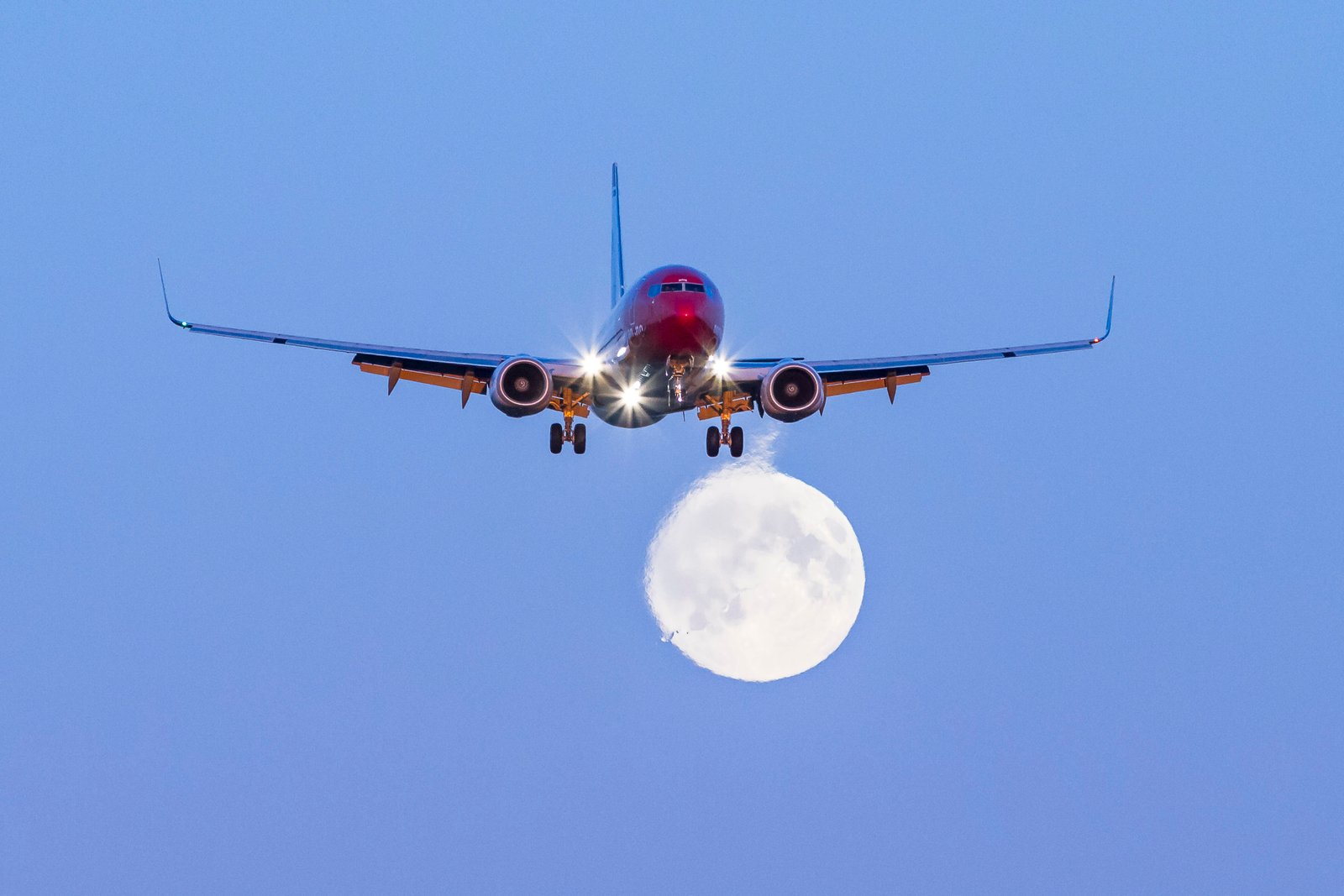
Norwegian Air lays off 4,700 pilots and crew members, declares Swedish and Danish subsidiaries bankrupt

by Nadarajah Sethurupan April 26, 2020
written by Nadarajah Sethurupan

Due to the ongoing spread of the Coronavirus (COVID-19) most countries have advised against or have banned non-essential travel. The closure of borders and quarantine restrictions has effectively brought the entire airline industry to a halt. Consequently, almost all of Norwegian’s flight operations have been cancelled, while the costs for air crew remain. The pilots and cabin crew in Scandinavia are employed in subsidiaries in the Norwegian Group. Unfortunately, despite the measures that the company has already taken to reduce costs, the Board of these companies are left with no choice but to apply for bankruptcy.

The decisions about filing for bankruptcies in the four crew subsidiaries were made by the respective boards on Monday April 20, 2020.

”The impact the Coronavirus has had on the airline industry is unprecedented. We have done everything we can to avoid making this last-resort decision and we have asked for access to government support in both Sweden and Denmark”, said CEO of Norwegian, Jacob Schram.

“Our pilots and cabin crew are the core of our business and they have done a fantastic job for many years. It is heart-breaking that our Swedish and Danish pilot and cabin crew subsidiaries now are forced to file for bankruptcy, and I’m truly sorry for the consequences this will have for our colleagues. We are working around the clock to get through this crisis and to return as a stronger Norwegian with the goal of bringing as many colleagues back in the air as possible,” Schram said.

In Norway, there are efficient furlough opportunities which means that the government pays for all salary related costs throughout the duration of the furlough period. Unfortunately, there is not the equivalent coverage in Sweden or Denmark schemes.

Despite the measures that the company has already taken, coupled with the lack of significant financial support from the Swedish and Danish governments, we are left with no choice. The Board of the below companies in the Norwegian Group today Monday 20 April decided to file for bankruptcy:

Norwegian Pilot Services Sweden AB
Norwegian Pilot Services Denmark ApS
Norwegian Cabin Services Denmark ApS
Norwegian Air Resources Denmark LH ApS

Due to the extraordinary situation (“force majeure”), Norwegian has also notified OSM Aviation that it has cancelled the crew provision agreements with several of its jointly owned OSM Aviation subsidiaries. These companies have crew based in Spain, UK, Finland, Sweden and the US.

The above actions will affect 1,571 pilots and 3,134 cabin crew. About 700 pilots and 1,300 cabin crew based in Norway, France and Italy are not affected.

The process of the subsidiaries filing for bankruptcy is now being managed by bankruptcy courts and bankruptcy trustees in the respective countries.

April 26, 2020 0 comments
0 FacebookTwitterPinterestEmail
Oil & Gas

Norway’s transport minister cuts ceremonial ribbon via videoconference

by Nadarajah Sethurupan April 26, 2020
written by Nadarajah Sethurupan

Norway’s Minister for Transport Knut Arild Hareide has celebrated on Wednesday the completion of a long-awaited construction project by cutting the ceremonial ribbon via videoconference.

Norway’s Minister for Transport Knut Arild Hareide

Speaking from his office in Oslo over 200 miles away, Hareide has cut a ribbon that he had taped to his wall to officially open the country’s Ryfast sub-sea tunnel system.

April 26, 2020 0 comments
0 FacebookTwitterPinterestEmail
Media Freedom

Norway begins reopening nurseries after month-long closure

by Nadarajah Sethurupan April 25, 2020
written by Nadarajah Sethurupan

Norway, which says it has the new coronavirus under control, on Monday started opening up pre-schools after a month-long closure, Media reported.

Authorities have said the reopening was possible because children have been less affected by COVID-19, although some parents have expressed reservations over the decision.

“Going to pre-school is safe,” Education Minister Guri Melby has repeated leading up to the reopening. 

However, as in neighbouring Denmark, a Facebook group called “My child should not be a guinea pig for COVID-19″ has been created and an online petition objecting to the reopening has garnered nearly 30,000 signatures.

According to a poll published by broadcaster NRK over the weekend, 24 percent of parents did not want to send their children back to pre-school and 13 percent said they were unsure.

Pre-schools will have to ensure certain health protocols.

In particular, children under the age of three will have to be in groups of three under one adult’s supervision. Those between three and six years old can stay in groups of six.

Along with Austria, Denmark and Germany, Norway is among the first countries to start easing restrictions, which were announced on March 12.

According to the Norwegian roadmap, physiotherapists and psychologists are also allowed to return to work on Monday, with hairdressers and dermatologists also opening this week.

Younger children in primary schools will start returning to classrooms on April 27.

While many shops have been allowed to remain open, bars and most restaurants will continue to keep their doors closed.

Cultural and sporting events will remain banned until at least June 15.

The Nordic country, home to some 5.4 million people, has registered 7,068 confirmed cases of the new coronavirus and 154 deaths.

Over the last few days the country has observed a drop in new admissions of coronavirus patients to hospitals, and in early April the government announced it considered the outbreak to be “under control.”

In addition to the many restrictions and regulations that remain in place, Norwegian authorities are now relying on tracing via an app and widespread testing to contain the epidemic.

April 25, 2020 0 comments
0 FacebookTwitterPinterestEmail
Norwegian Aid

Norwegian aid to developing countries hits record high

by Nadarajah Sethurupan April 24, 2020
written by Nadarajah Sethurupan

Norway gave a record NOK 37.8 billion in aid to developing countries in 2019, slightly more than 1 per cent of the gross national income (GNI).

“The global corona crisis is creating an even greater need for assistance. Developing countries are facing enormous challenges today. The social and economic consequences of corona can be extremely challenging for developing countries. Therefore, it is important that Norway increases aid measures, and I am pleased that we achieved the Government’s target of 1 per cent of GNP in 2019,” says Minister of International Development Dag-Inge Ulstein.

Figures being presented today from the Organisation for Economic Cooperation and Development (OECD) show that Norway gave 37.8 billion kroner in aid in 2019, which amounts to 1.02 per cent of the gross national product (GNP). This is an increase from the previous year, when Norway’s aid was just under 1 per cent.

“Humanitarian efforts in refugee camps and directed at other people in vulnerable situations are particularly important as a consequence of the corona pandemic. Norway continues to ramp up humanitarian aid, both through competent Norwegian aid organisations, and through the UN and other global channels,” says Minister of Foreign Affairs Ine Eriksen Søreide.

“I am extremely pleased to see such broad-based support for Norwegian development aid, both in the Norwegian Parliament (the Storting) and among the Norwegian people. This is why we can succeed in scaling up our work for poor citizens of the world, for those who have been affected by war and conflict, or who are fleeing desperate situations,” says Minister of International Development Dag-Inge Ulstein.

The OECD highlights Norway as one of the countries with the greatest increase in development aid. Norwegian development aid increased by 9.7% from 2018 to 2019, adjusted for inflation and currency fluctuations. This increase can be explained by the earmarked aid, particularly earmarked aid through multilateral channels. Other countries that also saw an increase in 2019 include Finland, Hungary, South-Korea and Greece.

Norway is one of few donor nations that achieve the UN target of 0.7 per cent of GNP to ODA (Official Development Assistance, pursuant to the OECD’s definition). Five DAC countries achieved this target in 2019, including Norway. The other countries were Sweden, Denmark, the UK and Luxemburg. Norway has achieved this UN target since 1976.

“The world has made a commitment to achieve the Sustainable Development Goals by 2030. Wealthy nations have a special responsibility to include developing countries in achieving these goals. The corona crisis reinforces this commitment.  We won’t be able to achieve the Sustainable Development Goals if we do not raise the standard of living for the very poorest, the most vulnerable, and not without ensuring education for more of the population, helping more people to achieve better health, and if we do not contribute to reduce destructive climate change and assist poorer countries in developing their economies,” says Ulstein.

In terms of billions of dollars, the US was the donor nation that provided most assistance in 2019, followed by Germany, the UK, Japan and France. However, in terms of absolute figures, the UK stands alone among the largest donor nations in achieving the goal of giving 0.7 per cent of GNP.

Refugee expenses in Norway accounted for 1.4% (NOK 524.8 million) of the total aid in 2019. This is a decline from 2.4% in 2018. If we disregard refugee expenses in Norway, Norwegian aid rose by 10.8% from 2018 to 2019, adjusted for inflation and currency fluctuations.

April 24, 2020 0 comments
0 FacebookTwitterPinterestEmail
NATO and Norway

NATO Defence Ministers agree next steps in fight against Coronavirus

by Nadarajah Sethurupan April 24, 2020
written by Nadarajah Sethurupan

NATO Defence Ministers met today (15 April 2020) by secure video conference to decide the Alliance’s next steps in the fight against Covid-19.

Speaking after the meeting, NATO Secretary General Jens Stoltenberg said, “The crisis has shown that our nations are resilient and united. Our militaries are already playing a key role in support of national civilian effort. And using NATO mechanisms, Allies have been helping each other to save lives.”

Meeting of the North Atlantic Council in Defence Ministers’ session via tele-conference with opening remarks by NATO Secretary General Jens Stoltenberg

NATO’s Supreme Allied Commander Europe, General Tod Wolters, is coordinating military support to deal with the virus. This includes matching requests for support with offers from Allies and partners, and coordinating NATO’s unique strategic airlift capability, which is delivering hundreds of tons of urgently needed equipment to where it is needed quickly and efficiently.

Ministers discussed the importance of countering increasing levels of disinformation and propaganda by state and non-state actors. Allies are working closely together to identify, monitor and expose these lies.

Ministers also considered the long-term implications of the crisis for NATO, its operations and its core mission to protect its almost one billion citizens. NATO is committed to ensuring this health crisis does not develop into a security crisis by maintaining a strong deterrence and defence.

April 24, 2020 0 comments
0 FacebookTwitterPinterestEmail
NATO and Norway

NATO Defense Ministers Discuss Alliance’s COVID-19 Response

by Nadarajah Sethurupan April 22, 2020
written by Nadarajah Sethurupan

NATO defense ministers have reviewed the alliance’s response to the COVID-19 pandemic and agreed upon the next steps to take, NATO Secretary General Jens Stoltenberg said.

Stoltenberg held a virtual news conference in Brussels today after an online meeting of alliance defense ministers. Defense Secretary Dr. Mark T. Esper attended the defense ministers meeting from his Pentagon office.

Alliance members are cooperating in reacting to the pandemic just as if an enemy had attacked a NATO member, the secretary general said. “COVID-19 represents an unprecedented challenge to our nations,” he added. “It has a profound impact on our people and our economies, and it is imposing historic shocks on the international system, which could have long-term consequences.”

Allied officials planned against the pandemic and looked to the lessons that can be taken from the reaction to the viral plague, Stoltenberg said. He noted that in each country, the military is playing a key role in support of civilian efforts against the pandemic. “And using NATO mechanisms, allies have been helping each other to save lives,” he added.

The NATO command — led by the supreme allied commander for Europe, Air Force Gen. Tod D. Wolters — was tasked with coordinating military support among the 30 allies. The general briefed the defense ministers on the NATO response.

“Military forces from across the Alliance have flown more than 100 missions to transport medical personnel, supplies and treatment capabilities, facilitated the construction of 25 field hospitals, added more than 25,000 treatment beds and deployed over 4,000 military medical personnel in support of civilian efforts,” Stoltenberg said. “Today, I encouraged all allies to make their capabilities available so General Wolters can coordinate further support.”

He said the pandemic is in different stages of infection in different NATO nations. This means that effectively coordinating resources makes a real difference, he said.

The pandemic is not the only concern for the NATO leaders, as missions of deterrence and defense must continue, Stoltenberg said.

“The bottom line is that security challenges have not diminished because of COVID-19,” he said. “On the contrary, potential adversaries will look to exploit the situation to further their own interests. Terrorist groups could be emboldened.”

The security situations in Afghanistan and Iraq remain fragile, and Russia continues its pace and threats, Stoltenberg noted. 

“We must maintain our deterrence and defense because our core mission remains the same: to ensure peace and stability,” the secretary general said. “While we continue to take all the necessary measures to protect our armed forces, our operational readiness remains undiminished, and our forces remain ready, vigilant and prepared to respond to any threat.”

The alliance also is actively guarding against state and nonstate disinformation stemming from the pandemic. U.S. officials said that Russia has been using the crisis to its own ends and wants the United States to abandon NATO and weaken the alliance. 

“We are countering these false narratives with facts and with concrete actions,” Stoltenberg said. “We are also working even closer with allies and the European Union to identify, monitor and expose disinformation, and to respond robustly.”

The defense ministers also looked at the long-term implications of the coronavirus, as the geopolitical effects of the pandemic could be significant, Stoltenberg said.

“Some may seek to use the economic downturn as an opening to invest in our critical industries and infrastructure, which in turn may affect our long-term security and our ability to deal with the next crisis  when it comes,” he said.

It is still early to draw conclusions from these long-term discussions, Stoltenberg said, and discussions about them will continue. The defense ministers did agree, however, on a set of recommendations to strengthen the alliance’s resilience.

Alliance members will update existing baseline requirements for civil preparedness, based on the lessons from the crisis. They also pledged to work even closer with international partners, Stoltenberg said.

NATO has adapted to change throughout its history and will continue to do so, Stoltenberg said. NATO was laser-focused on countering the Soviet Union during the Cold War, but adapted to the change once that threat dissolved. It changed again in response to the Balkan crisis and to the attack on the United States by terrorists in 2001. It changed yet again when Russia illegally annexed Crimea and continues to wage war in eastern Ukraine. 

The pandemic is another enemy, he said, and the alliance will adapt. But that doesn’t mean the alliance will be the first responder for the crisis.

“We should support the civilian efforts to fight this health crisis,” the secretary general said. “We see around the whole world and across all NATO allies that military personnel are playing a key role in the fight.”

Military airlift has been essential in the fight against the coronavirus, and military personnel are doing everything from disinfecting public spaces to controlling border crossings. NATO is helping to mobilize and coordinate support to NATO allied countries.

The main lesson so far is “a close link between the civilian efforts to fight the health crisis and the ability of the military to support those efforts,” the secretary general said. “That’s exactly what we also have to look into how we can do even better when the next crisis hits us,” he added.

NATO cannot change its core responsibility to defend member states, but there are good reasons to look into how to further strengthen the cooperation between the civilian society combating a health crisis and military capabilities providing support to those civilian efforts, he said.

(NATO)

April 22, 2020 0 comments
0 FacebookTwitterPinterestEmail
NATO and Norway

European military task force to fight COVID-19

by Nadarajah Sethurupan April 21, 2020
written by Nadarajah Sethurupan

A dedicated EU military task force will be set up to support the coordination of the national armed forces in the fight against the coronavirus pandemic. However, it is yet unclear whether and how efforts could be coordinated on EU-NATO level to avoid duplication.

EU’s chief diplomat Josep Borrell, after a meeting with EU defence ministers on Monday (13 April), tasked the European External Action Service (EEAS) “to explore how we could use the military expertise at EU level to support exchange of information and sharing of best practices among member states”.

NATO Secretary General Jens Stoltenberg (L) and European High Representative of the Union for Foreign Affairs, Josep Borrell (R), give a joint press conference ahead of a meeting at the building of the European External Action Service (EEAS), in Brussels, Belgium, 09 December 2019. [EPA-EFE/STEPHANIE LECOCQ]

For that a dedicated task force is to be set up within the EEAS structures, led by the European Union Military Staff (EUMS), to “temporarily support and facilitate information exchange on national military assistance in support of civilian authorities to help fight the coronavirus pandemic,” Borrell said.

The new task force is meant to cooperate with the EU’s Emergency Response Coordination Centre (ERCC), a core part of the EU’s Civil Protection Mechanism, that coordinates the delivery of assistance to disaster stricken countries, such as relief items, expertise, civil protection teams and specialised equipment.

However, it is still unclear when the task force is meant to take up its work.

“This will be done in full coordination and complementarity with NATO – I can assure you that there will be no duplication of work,” said Borrell. “But it is important that we, Europeans, work together to ensure a coordination effort and a mutual support where is needed, in full solidarity.”

As NATO in recent weeks has significantly stepped up its efforts to support its member states in the fight against COVID-19, experts have questioned the EU’s slow practical response on the matter.

In early April, NATO foreign ministers tasked Supreme Allied Commander Europe (SACEUR), General Tod Wolters, with coordinating the air transport of medical equipment and personnel across Europe.

One of his tasks was to implement simplified procedures for rapid air mobility, in coordination with Eurocontrol, the pan-European, civil-military organisation dedicated to supporting European aviation, using the NATO call sign and clearance for military relief flights.

Known as Rapid Air Mobility (RAM), the initiative is part of NATO’s wider so-called military mobility effort to boost the deployability of allied troops and assets.

Before then members largely acted upon their own initiative, with the military alliance primarily working to coordinate the acquisition of protective medical equipment through the Euro-Atlantic Disaster Relief Coordination Centre (EADRCC).

Asked by EURACTIV, whether there are plans to join forces on EU-NATO level, the EU’s Chief diplomat answered: “For sure, this is what it is all about. What we have decided is to increase the exchange of information and the coordination between our capacities and the needs required here and there.”

“The Secretary General of NATO [Jens Stoltenberg] has been in touch with me to explain their plans and we will cooperate with them according to the requirements arising from this this coordination procedure,” Borrell added.

Asked the same question by EURACTIV, NATO Secretary-General Jens Stoltenberg confirmed that “NATO and the European Union are complementing each other.”

April 21, 2020 0 comments
0 FacebookTwitterPinterestEmail
Farming

Norwegian shipowner Arne Wilhelmsen dies at 90

by Nadarajah Sethurupan April 20, 2020
written by Nadarajah Sethurupan

Prominent Norwegian shipowner Arne Wilhelmsen has died over the weekend at the age of 90.

Born in 1929, Wilhelmsen worked as a chartering assistant for Norway’s EB Lund & Co and later as a shipbroker in New York before joining his family business Anders Wilhelmsen & Co in 1954.

He become the president of the company in 1961 and spent most of his life in the family business with ownership in shipping, offshore, cruise, real estate, retail and other industrial investments.

The shipping activities of the company are mainly operated through its fully-owned subsidiary Awilco, which is involved in the businesses of containerships, tankers, LNG carriers and drilling units.

April 20, 2020 0 comments
0 FacebookTwitterPinterestEmail
Norwegian Aid

Norway supports the Red Cross Red Crescent Movement’s Covid-19 response

by Nadarajah Sethurupan April 19, 2020
written by Nadarajah Sethurupan

The Government is allocating NOK 30 million to the International Committee of the Red Cross (ICRC) and the International Federation of Red Cross and Red Crescent Societies (IFRC) for their humanitarian response to the Covid-19 pandemic.

Minister of Foreign Affairs Ine Eriksen Søreide on 15 April discussed humanitarian efforts related to the coronavirus pandemic with Peter Maurer, the President of the International Committee of the Red Cross (ICRC). The Foreign Minister announced Norway’s contribution of NOK 30 million to the International Red Cross Red Crescent Movement, to be distributed between the ICRC and the national societies.

Minister of Foreign Affairs Ine Eriksen Søreide talking with ICRC president Peter Maurer. Credit: Wera Helstrøm, MFA

Their conversation centred on people affected by armed conflict, as it is now particularly difficult to reach these groups with humanitarian assistance.

‘The Red Cross Red Crescent movement are front line responders in many crisis-stricken countries, working to fight the pandemic, and the work they do in conflict areas is crucial. It is important for Norway to support the work that is being carried out locally,’ said Ms Eriksen Søreide.

ICRC President Maurer explained how the ICRC is adjusting its response and increasing the focus on Covid-19 response in a number of countries. The ICRC and IFRC have appealed for support to its Covid-19 response, for ICRC in 36 countries, including South Sudan, Afghanistan, Yemen, Syria and Ukraine. The efforts are being closely coordinated with the World Health Organization (WHO) and, where they exist, local health authorities.

‘It is important to continue efforts to protect populations during the pandemic,’ the Minister of Foreign Affairs said. ‘We especially appreciate the ICRC’s work to strengthen protection against sexualised and gender-based violence. The mental health efforts of the Red Cross Red Crescent Movement are also important. People already living in difficult circumstances could have a hard time coping with the isolation and restrictions associated with infection control measures.’

Along with IFRC and more than 190 national societies, the ICRC is part of the International Red Cross Red Crescent Movement. National societies play a formal role in national crisis preparedness and response. The movement takes part in all phases of humanitarian efforts: prevention, response and reconstruction.

On 25 March, Norway also announced a NOK 90 million contribution to the United Nations’ global humanitarian response to the coronavirus pandemic.

April 19, 2020 0 comments
0 FacebookTwitterPinterestEmail
Asia and Norway

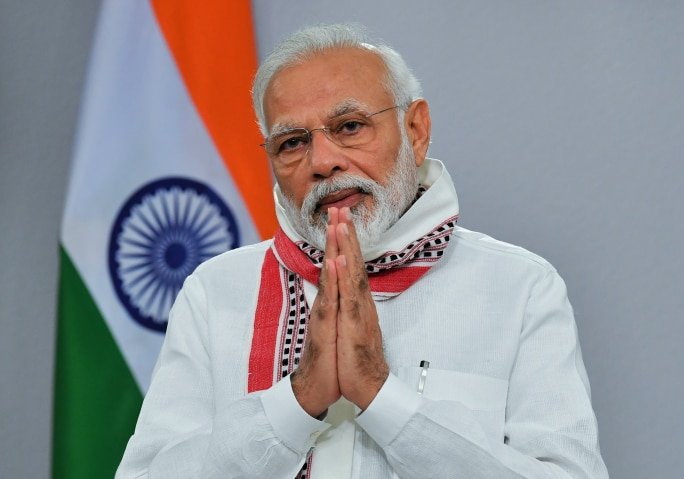
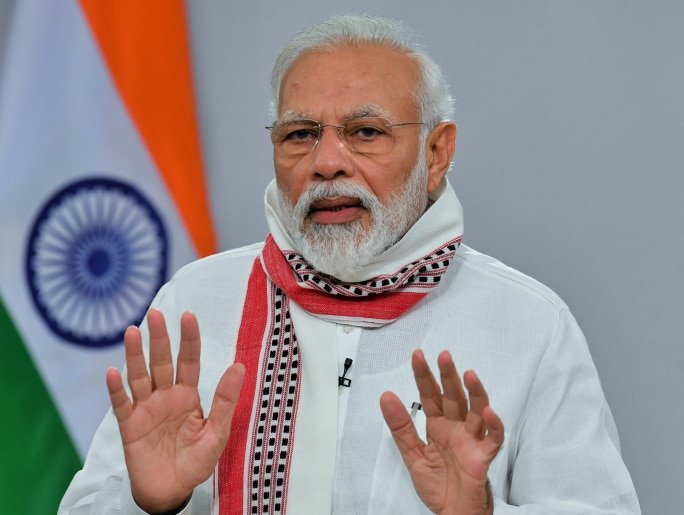
Indian PM addresses the nation for 4th time in 4 Weeks in fight against COVID-19

by Nadarajah Sethurupan April 18, 2020
written by Nadarajah Sethurupan

Announces extension of lockdown till 3rd May High Risk Areas and Hotspots to be under constant vigil. Ease of Certain Restrictions in Low Risk Areas from 20 April; Detailed guidelines to be issued by the Government tomorrow   PM seeks support for seven things including taking care of elderly and adhering to social distancing and lockdown

The Prime Minister, Shri Narendra Modi today announced the extension of lockdown till 3rd May, 2020. The earlier 21 day lockdown is ending on the 14th of April 2020.

Addressing the Nation in combating the spread of the corona virus, PM said the extension of lockdown was decided keeping in mind suggestions from many states, experts and the people. 

He requested people to continue maintaining vigil and to adhere to social distancing during this lockdown.  

Prime Minister also suggested that those areas which are of low risk may be permitted to open up for certain specific activities from 20th April 2020.

PM said, “Until 20th April, every town, every police station, every district, every state will be evaluated on how much the lockdown is being followed. Areas that succeed in this litmus test, those which will not be in the hot-spot category, and will have less likelihood to turn into a hot-spot maybe allowed to open up select necessary activities from 20thApril”.  

“However, permissions will be withdrawn immediately if lockdown rules are broken, and if there is threat of spread of Coronavirus” he cautioned.  

A detailed guidelines will be issued by the Government tomorrow in this regard.

The Easing of restrictions in the low risk areas is being done keeping in mind the difficulties being faced by the poor and daily wage earners, he said.  

“Those who earn daily, make ends meet with daily income, they are my family. One of my top-most priorities is to reduce the difficulties in their lives. The government has made every possible effort to help them through Pradhan Mantri Gareeb Kalyan Yojna. Their interests have also been taken care of while making the new guidelines” he said.

Paying tributes to Baba Saheb Bhimrao Ambedkar, on his birth anniversary today, the Prime Minister said, “I am well aware of the problems you have faced -some for food, some for movement from place to place, and others for staying away from homes and families. However, for the sake of your country, you are fulfilling your duties like a disciplined soldier. This is the power of ‘We, the People of India’ that our constitution talks about.”

Prime Minister mentioned that India had been pro-active even before a single case of COVID -19 surfaced in the country. He said, the screening of the international passengers, 14 day mandatory isolation of the international travellers, shutting of malls, clubs, gyms were taken at very early stages. Prime Minister said India also proactively went into a nation wide lock down which was ending on the 14th April.

Compared to other Covid affected World’s big & powerful countries, he said, India is in a very well managed situation.

“A month, month and a half ago, several countries had been at par with India in terms of Corona infection. But today, Corona cases in those countries are 25 to 30 times than that of India. Thousands of people have tragically died in those countries. Had India not adopted a holistic and integrated approach, taking quick and decisive action; the situation in India today would have been completely different”, he said.

Prime Minister said India has benefitted from Lockdown. He said notwithstanding the economic travails being faced, it is clearly the correct path as it protected so many lives in the country.

“From an economic only point of view, it undoubtedly looks costly right now; but measured against the lives of Indian citizens, there is no comparison itself. The path that India has taken within our limited resources has become a topic of discussion in the entire world today”, he said.

He assured the country that there are ample reserves of medicines, food and other essential goods. Prime Minister also assured that the health infrastructure is being further strengthened.

“From having only one testing lab for Coronavirus in January, we now have more than 220 functional testing labs. Global experience shows that 1,500-1,600 beds are required for every 10,000 patients. In India, we have arranged more than 1 Lakh beds today. Not only this, there are more than 600 hospitals which are dedicated for Covid treatment. As we speak, these facilities are being increased even more rapidly” he said.

Prime Minister exhorted the citizens to follow seven steps in their fight against the pandemic.

First, to take special care of the elderly, especially those who have chronic disease. 

Second to completely adhere to the ‘Lakshman Rekha’ of Lockdown and Social Distancing; use homemade face-covers and masks without fail.

Third to follow the instructions issued by AYUSH ministry to enhance immunity.

Fourth todownload the Arogya Setu Mobile App to help prevent the spread of corona infection. Inspire others to download the app as well.

Fifth to take care of poor families; to fulfil their food requirements.

Sixth tobe compassionate towards the people who work in every individual business or industry. Do not deprive them of their livelihood.

Seventh to pay utmost respect to our nation’s Corona Warriors – our doctors and nurses, sanitation workers and police force.

For more details, PRESS RELEASE from Embassy of India in Norway

Prime Minister of India Shri Narendra Modi addresses the nation for 4th time in 4 weeks in India’s fight against COVID-19 announces extension of lockdown till 3rd May: High Risk Areas and Hotspots to be under constant vigil; adhere to social distancing during the period; ease of certain restrictions in Low Risk Areas from 20 April: 

The Prime Minister, Shri Narendra Modi on 14th April announced the extension of lockdown till 3rd May, 2020. The earlier 21 day lockdown is ending on the 14th of April 2020. Addressing the Nation in combating the spread of the corona virus, PM said the extension of lockdown was decided keeping in mind suggestions from many states, experts and the people. He requested people to continue maintaining vigil and to adhere to social distancing during this lockdown.

Prime Minister also suggested that those areas which are of low risk may be permitted to open up for certain specific activities from 20th April 2020.

PM said, “Until 20th April, every town, every police station, every district, every state will be evaluated on how much the lockdown is being followed. Areas that succeed in this litmus test, those which will not be in the hot-spot category, and will have less likelihood to turn into a hot-spot maybe allowed to open up select necessary activities from 20thApril”. “However, permissions will be withdrawn immediately if lockdown rules are broken, and if there is threat of spread of Coronavirus” he cautioned.

The Easing of restrictions in the low risk areas is being done keeping in mind the difficulties being faced by the poor and daily wage earners, he said.

“Those who earn daily, make ends meet with daily income, they are my family. One of my top-most priorities is to reduce the difficulties in their lives. The government has made every possible effort to help them through Pradhan Mantri Gareeb Kalyan Yojna. Their interests have also been taken care of while making the new guidelines” he said.

Paying tributes to Baba Saheb Bhimrao Ambedkar, on his birth anniversary today, the Prime Minister said, “I am well aware of the problems you have faced -some for food, some for movement from place to place, and others for staying away from homes and families. However, for the sake of your country, you are fulfilling your duties like a disciplined soldier. This is the power of ‘We, the People of India’ that our constitution talks about.”

Prime Minister mentioned that India had been pro-active even before a single case of COVID -19 surfaced in the country. He said, the screening of the international passengers, 14 day mandatory isolation of the international travellers, shutting of malls, clubs, gyms were taken at very early stages. Prime Minister said India also proactively went into a nationwide lock down which was ending on the 14th April.

Compared to other Covid affected World’s big & powerful countries, he said, India is in a very well managed situation. “A month, month and a half ago, several countries had been at par with India in terms of Corona infection. But today, Corona cases in those countries are 25 to 30 times than that of India. Thousands of people have tragically died in those countries. Had India not adopted a holistic and integrated approach, taking quick and decisive action; the situation in India today would have been completely different”, he said.

Prime Minister said India has benefitted from Lockdown. He said notwithstanding the economic travails being faced, it is clearly the correct path as it protected so many lives in the country. “From an economic only point of view, it undoubtedly looks costly right now; but measured against the lives of Indian citizens, there is no comparison itself. The path that India has taken within our limited resources has become a topic of discussion in the entire world today”, he said.

He assured the country that there are ample reserves of medicines, food and other essential goods. Prime Minister also assured that the health infrastructure is being further strengthened. “From having only one testing lab for Coronavirus in January, we now have more than 220 functional testing labs. Global experience shows that 1,500-1,600 beds are required for every 10,000 patients. In India, we have arranged more than 1 Lakh beds today. Not only this, there are more than 600 hospitals which are dedicated for Covid treatment. As we speak, these facilities are being increased even more rapidly” he said.

Prime Minister exhorted the citizens to follow seven steps in their fight against the pandemic:

  • First, to take special care of the elderly, especially those who have chronic disease.
  • Second to completely adhere to the ‘Lakshman Rekha’ of Lockdown and Social Distancing; use homemade face-covers and masks without fail.
  • Third to follow the instructions issued by AYUSH ministry to enhance immunity.
  • Fourth to download the Arogya Setu Mobile App to help prevent the spread of corona infection. Inspire others to download the app as well.
  • Fifth to take care of poor families; to fulfil their food requirements.
  • Sixth to be compassionate towards the people who work in every individual business or industry. Do not deprive them of their livelihood.
  • Seventh to pay utmost respect to our nation’s Corona Warriors – our doctors and nurses, sanitation workers and police force.

Some of the important guidelines are as under:

  • Wearing mask in public places is compulsory;
  • Spitting is an offence;
  • People violating quarantine will be punished under Section 188 of the Indian Penal Code, which prescribes six months imprisonment, if convicted;
  • There would be some relaxation in the non-hotspot areas after April 20;
  • Travel by air, rail, metro, public buses, taxis will remain suspended till 3rd May. 
  • Cinema halls and malls will remain shut;
  • All social/religious gathering are prohibited till 3rd May and all industrial and commercial units, unless exempted, will remain shut;
  • All health services (including AYUSH) will remain functional;
  • Courier services will be allowed to operate;
  • In addition to pharmaceuticals and other essential sectors, supply chains of essential goods, grocery stores, vegetable, fruit carts and e-commerce companies will be allowed to open without time restrictions.
  • The guidelines listed out some economic activities that will be allowed in order to ease the burden of daily wage labourers and industry, only if they follow social distancing norms and other safeguards against the Covid-19 infection.
  • All industries operating in rural areas and the government’s flagship rural jobs scheme will also be allowed to reopen from April 20, if they follow social distancing norms and other safeguards against the Covid-19 infection.
April 18, 2020 0 comments
0 FacebookTwitterPinterestEmail
Defence

Norway increases defence spending to strengthen its capability and readiness

by Nadarajah Sethurupan April 18, 2020
written by Nadarajah Sethurupan

Today the Norwegian government presented the new Long Term Plan for the Norwegian Armed Forces. A continued increase in defence spending will strengthen the readiness and endurance of the Norwegian Armed Forces and reduce operational gaps.

– A challenging strategic environment constantly reminds us that our freedom and security can not be taken for granted. The Government continues to invest heavily in defence and security, to ensure that Norway remains a reliable, responsible and capable partner on the northern flank of the Alliance, says Norwegian Minister of Defence, Mr Frank Bakke-Jensen.

The new Long Term Plan details a budget increase in the coming eight years. In 2028 the defence expenditure will increase to a level of 16,5 billion NOK above the 2020 budget.

– We will also continue the work of identifying cost effective solutions wherever possible, both when conducting daily operations and when acquiring new equipment, says Mr Bakke-Jensen, Minister of Defence.

Prime Minister Erna Solberg during The NATO exercise Trident Juncture in 2018. Credit: Ole-Sverre Haugli, Forsvaret

Strengthened allied dimension 

The defence of Norway starts outside our territorial borders and Norwegian participation in NATO operations and readiness forces is an integral part of the overall defence effort.

Norway plays an important role in NATO by operating in and monitoring the Arctic region, by providing situational awareness to the transatlantic security community. The strengthening of NATO’s maritime posture is an integral element of the ongoing adaptation of the Alliance and crucial to Norwegian and allied security.

Allied presence, training and exercise in and close to Norway are of fundamental importance. The Norwegian Armed Forces will continue to train and operate with key allies such as the USA, the UK, the Netherlands and Germany, and other units. The government will also continue the development of Norwegian host nation facilities.

Army

Norway will continue to develop the army. Brigade North will be developed with four manoeuvre battalions and with tactical and logistical support. The manoeuvre battalions will be equipped with new main battle tanks, mobile air defence systems and long-range precision fire. Increased firepower, higher readiness and increased sustainability will ensure that the Norwegian Armed Forces remain relevant in the new security environment.

In addition, the modernisation of the Home Guard will continue, including an increased capacity to forward stage weapons, ammunition and other supplies.

Navy

Norway will strengthen the Navy with increased personnel volume. The frigates and submarines will undergo necessary upgrades. In addition, three new Coast Guard vessels will be introduces in the period 2021-2025. In order to preserve the maritime operational capability after 2030 the government will start the planning of replacement surface vessels. A decision concerning type and number of vessels will be made in the next planning period.

– It is our ambition to acquire and implement future Navy capabilities in collaboration with close allies, says the Norwegian Minister of Defence.

Air Force

The introduction of new aircraft systems will have priority for the Air Force during the years leading up to 2025. The implementation of the F-35 Lightning II continues. P-8 Poseidon maritime patrol aircraft will replace the fleet of P-3 Orion.

To improve air defence capability, the NASAMS II air defence system will be upgraded with modern sensors, as well as the introduction of complementary capacity with shorter range.

– This will contribute to countering threats against bases, and protect allied reception areas, says Mr Bakke-Jensen.

In the long term, it will be assessed how long-range air defence systems can be introduced.

Home Guard

The modernisation of the Home Guard will continue, including an increased capacity to forward stage weapons, ammunition and other supplies.

Special Forces

The ability of the Special Forces to contribute to both national and international operations will improve with increased personnel volume and one additional operations task group. The Bell 412 transport helicopters will be replaced by a new capacity that is better suited for the Special Forces.

Personnel and new technology

The highly skilled and dedicated military and civilian personnel of the defence sector is the backbone of the Norwegian force. The number of personnel will gradually be increased in order to strengthen the readiness and availability of the Armed Forces, and gradually generate enhanced combat power.

The current focus of personnel reforms is on diversifying the personnel structure in order to strengthen the capability and the readiness of the Norwegian Armed Forces, and on the further restructuring of the training and educational system.

Norway will also strengthen the system for innovation in the defence sector and adapt a comprehensive approach to technology exploitation.

– The development of the Armed Forces is an ongoing and long-term undertaking. In 2016, the Government set out the course towards a more capable and sustainable defence force, better able to face the changing security environment. This new Long Term Plan builds on that foundation. The Norwegian government continues to strengthen the capability and readiness of the defence of Norway, says Mr Frank Bakke-Jensen, Norwegian Minister of Defence.

Downloadable pdf:

Long term defence plan Norway 2020 – English summary.pdf

(Ministry of Defence – Office of the Prime Minister)

April 18, 2020 0 comments
0 FacebookTwitterPinterestEmail
Diplomatic relations

Norway seeking increased international cooperation to deal with the coronavirus crisis

by Nadarajah Sethurupan April 18, 2020
written by Nadarajah Sethurupan

Widespread international cooperation is of vital importance in the efforts to alleviate the impacts of the coronavirus crisis. The Government is now considering a Norwegian contribution to the IMF’s Catastrophe Containment and Relief Trust as well as increased funding to lending schemes for low-income countries.

Minister of Finance Jan Tore Sanner (Conservative Party) took part today in a video conference meeting of the IMF International Monetary and Financial Committee, which comprises ministers of finance and central bank governors. Multilateral cooperation was one of the key topics at the meeting.

In order to meet the need for support to vulnerable low-income countries, the IMF is calling for increased funding for the subsidised schemes for these countries financed under the Poverty Reduction and Growth Trust (PRGT). Norway is now considering the possibility of contributing to lending funds for the poorest countries through the PRGT. The Government is also assessing whether to allocate development assistance funding to the IMF’s Catastrophe Containment and Relief Trust (CCRT). The CCRT provides debt relief for the poorest countries by covering debt service payments to the IMF during the period in which these countries are dealing with the pandemic.

‘I am pleased that the IMF is responding quickly to the crisis, and that the member countries are demonstrating their willingness to work together to re-activate economies. These efforts are designed to help vulnerable countries that lack an adequate health care system and economic structure for dealing with the ramifications of the COVID-19 outbreak. We are seeking common solutions to common challenges,’ said Minister of Finance Jan Tore Sanner.

No country can solve this crisis on its own. This is why Norway is seeking increased international cooperation to deal with the coronavirus crisis.

‘Norway supports a shared endeavour to give the poorest countries debt service relief for both interest and instalment payments. This will enable them to free up resources they can use to fight the coronavirus outbreak,’ said Minister of International Development Dag-Inge Ulstein (Christian Democratic Party).

‘The corona pandemic and the comprehensive infection control measures in many countries will lead to a major decline in the world economy. We must work to strengthen multilateral cooperation to help people and enterprises get through this global crisis,’ said Mr Sanner.

History has shown the importance of economic cooperation and free trade across national borders. Prosperity in Norway and many other countries is rooted in trade and commercial activity. Open markets and regulated multilateral cooperation have helped to promote economic growth and created millions of jobs. This world order is now under threat. Never before has it been more important to work to achieve broader international cooperation – in the Nordic countries, in Europe, and throughout the world.

‘The pandemic does not stop at national borders. To get through this, we are dependent on the success of other countries in limiting the spread of infection and controlling their economic fallout, and we all need to ensure that the international markets still exist when this is over,’ said Mr Sanner.

‘The UN, IMF, World Bank, WHO and WTO all have a key role to play in the fight against the pandemic. Norway, too, is doing what it can to ensure that developing countries will be able to manage the coronavirus outbreak and its long-term ramifications. Among other things, we were behind the initiative to establish – and have contributed to – the UN COVID-19 Response and Recovery Multi-Partner Trust Fund, and we are providing considerable support to vaccine development efforts. We must protect those who are most vulnerable, and prevent today’s health crisis from becoming tomorrow’s hunger disaster and social crisis,’ said Mr Ulstein.

April 18, 2020 0 comments
0 FacebookTwitterPinterestEmail
NATO and Norway

Russian Jet Over Mediterranean Unprofessional, Not Deliberate – USEUCOM

by Nadarajah Sethurupan April 16, 2020
written by Nadarajah Sethurupan

The Pentagon believes that this week’s incident involving a Russian Su-35 fighter jet and a US P-8A Poseidon surveillance aircraft over the Mediterranean Sea was unprofessional but not intentional, the commander of US European Command Air Force General Tod D. Wolters said on Thursday.

“It was obviously unfortunate as you can imagine. I’ve looked at the footage. I’ve studied the intent, and my conclusion at this point is that it was probably something that was more along the lines of unprofessional as opposed to deliberate,” Wolters said. “We have an investigation that’s ongoing … Our US mission in Moscow has obviously already initiated a conversation with the powers to be in Moscow to make sure that they are very, very aware of our dissatisfaction with the event.

The US Navy in a statement on April 15 said a Russian Su-35 fighter jet conducted a high-speed maneuver in front of a US P-8A Poseidon surveillance aircraft during an intercept over the Mediterranean Sea.

The statement said the intercept lasted approximately 42 minutes and that the Russian aircraft was operating in international airspace.

The Navy said the US aircraft was operating in accordance to international law and did not provoke the Russian aircraft.

Below is a full rush transcript of the press conference by General Tod Wolters  U.S. European Command (USEUCOM) Commander and NATO Supreme Allied Commander Europe.

General Wolters:  As you well know, I’ve got the distinct privilege of wearing two hats.  One is the Commander of U.S. European Command, and the other as the Supreme Allied Commander for Europe.  I’ll speak underneath both those hats, and make sure, if we have any discrepancies based off which hat I’m talking from, I’ll clarify that with you. 

With respect to the COVID pandemic, first and foremost, our sincere condolences to all who have suffered from the tragic loss of life as a result of COVID-19.  We grieve with you. 

Even as the NATO military forces continue to deliver effective deterrence and defense – and we are laser-focused on that delivery – we are still conducting operations, our forces remain ready, and all of this is crucial as work continues to progress. 

Allies continue to stand close together and support each other, especially during these trying times, and we do so through different NATO arrangements, and we’ve done so and will continue to do so via bilateral arrangements.   

Allied armed forces across the Alliance are also playing an essential role in supporting national civilian efforts.  For NATO we continue to use the Rapid Air Mobility initiative in cooperation with the European Organization for the Safety of Air Navigation, and that’s EUROCONTROL.  This allows for expeditious delivery of life-saving equipment and personnel to the critical point of need. 

Also, using multiple means such as the Euro-Atlantic Disaster Response Coordination Center, the NATO Support and Procurement Agency, Strategic Airlift International Solution, which is SALIS, and Strategic Airlift Capability, we’re able to lift and shift critical assets and get them to the vital point of need.  Again, that vital point of need varies in time and location. 

Our shared values across all of the NATO Alliance are what keeps us going through these difficult times.  I truly believe that this pandemic has brought us closer together.  

Let me take just a second to share with you what United States forces have done in our area versus COVID-19.  At this point I’m speaking to you with my U.S.-EUCOM hat.  Across the European theatre we provided for over $500,000 in essential equipment and medical supplies from the U.S. Department of Defense stocks within Italy alone.  We’ve leveraged long-standing bilateral relationships to coordinate access to supplies in Luxembourg.  Under NATO’s lead we’ve joined with allies to lift much-needed medical supplies from the Pacific to Romania. 

On the 10th of April the U.S. President authorized contributions of $4.7 million to fund locally procured personal protective equipment requirements.  U.S. European Command has 10 quick reaction projects in execution, delivering $150,000 in PPE to 8 different locations.  And as we speak, we’ve got eight more projects in the works. 

Just this week we transferred three Americans from Kabul, Afghanistan to Ramstein Air Base, Germany, and onward to Landstuhl Regional Medical Center in Germany for the treatment of COVID-19.  This was a first for our U.S. Department of Defense from Afghanistan to Europe. 

None of these events would have been possible without the trust and confidence and coordination between allies and partners.  This is proof that the Alliance remains ready and capable to support one another in these tough, tough times of need. 

Lastly, before I close, I want to underscore the importance of credible information.  As military forces, we have an obligation to be truthful, timely, and accurate in what we say and what we do, and that’s exactly what we continue to do here, from a U.S. perspective, and certainly from a European perspective.  It’s part of our democratic values system.  Transparency is vital right now.  Neutralizing misinformation and delivering accurate and truthful facts is paramount.  Our partnership and trust with one another is steadfast, and it will remain so long after COVID-19 is over with. 

Question :  Moscow calls for a commitment on the part of both Russia and NATO to significantly limit the scope of military exercises and trainings for the duration of the pandemic.  They seem to take the idea very seriously.  Is this something that NATO would be willing to consider?  If no, why not?  What needs to happen for this to become a reality?” 

General Wolters:  The first thing I’ll say is, as the Allied Command Operations Commander representing NATO, we and our commanders remain laser-focused on preserving our capability to adequately deter and defend in Europe.  And we remain laser-focused in that area, and we certainly possess the capability to effectively deter and defend today.  And that is mission one. 

Our second concern is, obviously, the health of all the citizens that we swore to protect, and we remain laser-focused in that area.  In so doing, we will ensure that, as a NATO, we preserve our incredible capability to effectively deter and defend, and we will not take our eye off the ball with respect to that capability. 

Question:  I spoke last week with Deputy Secretary General Geoana, and he said that you will be presenting to ministers of defense some innovative solutions for them to consider and maybe adopt.  Can you tell us a little bit more about it?

General Wolters:  One of the things that we will most likely be tasked to do by NATO towards our SHAPE headquarters is to provide inputs in the near and long term for a pandemic response plan, and a part of having an effective plan is to make sure that we go back and after-action review all that has taken place with respect to lessons learned from pandemic coronavirus 19.  So we will gather all of the facts, and ensure that we can marshal our planners together, and look for ways that we can be more credible in serving our citizens from a military perspective, while we always focus on deterring and defending, and also from a health perspective, to ensure that all of our citizens are in good shape when it’s all said and done. 

There will be thousands and thousands of inputs to that plan, and we want that plan to be comprehensive in its service to the health of our citizens.  And our pledge to NATO is we will do that.  Thank you. 

Question:  Can you describe Russian disinformation efforts that have taken advantage of the pandemic to try and divide the NATO Alliance?” 

General Wolters:  We’ve heard information in open press that addresses some of the medical goods that have been delivered by certain NATO nations to other NATO nations.  And Russia has attempted to insert themselves in that information transaction and downplay the importance of one nation in NATO providing PPE equipment to another.  And that in itself is a form of disinformation. 

We’ve also seen cases where Russia has delivered goods to European nations, and there have been many open press reports that those goods are flawed.   

What we owe our citizens is to ensure that we tell the truth.  And part of a misinformation campaign starts with the trust and confidence that citizens have in what you transmit.  And we want to make sure that we continue to stick with our democratic values and stay very, very laser-focused on the facts so that our forces understand exactly what we’re doing, and anybody that attempts to provide malign influence to our forces must understand that we’re in the business of passing on the facts, not falsehoods. 

Question:  You know that the medical supplies that Russians have sent to Italy have been accompanied by military Russian personnel, and also intelligence personnel.  Do you think that the presence of these kinds of operatives on NATO territory represents a security risk for NATO?  And should the Italian Government have been more cautious in accepting this kind of so-called help? 

General Wolters:  I can tell you that I remain very, very focused on those transactions.  And again, that’s a decision, with respect to the Italian Government, that you would have to take up with them.  I am very aware of those transactions.  It is of concern.  I pay very close attention to Russian malign influence.  I pay very close attention to Russian influence.  And we have to make sure that we have all the facts.  It is a concern.  We remain very, very vigilant in NATO with respect to those transactions, and we continue to monitor to the highest degree. 

Question:   Due to the coronavirus pandemic, some exercises have been modified or canceled.  Are there plans to change, postpone, or cancel other exercises scheduled this year – for example, BALTOPS?

General Wolters:  As for now, BALTOPS is still ongoing and it’s a classic case where we have an exercise on the horizon in the June and July timeframe, and with each passing second of the day we’re taking a look at each and every one of our activities to make sure that we can preserve, potentially, as many as possible, and when we think it’s feasible based off the size of the exercise, the complexity of the exercise, the location of the exercise, obviously the time of the exercise, we’re willing to make adjustments.  And a lot of that has to do with what are the learning objectives, what is our ability to adequately get everybody together of sound mind and comfort to where they can remain laser-focused on the mission.   

So we will be – we will be constantly adjusting the scope and scale of our exercises, as we have been for the last 70 to 80 days, to make sure if there is an ability to execute the exercise in its totality, we will attempt to keep it on track, and if there is no ability to do so, we’ll look at cancellation or postponement, and depending upon, again, the size, the cost, the location, we will continue to adjudicate. 

My goal is also, as the SHAPE commander from a NATO perspective, to ensure that those exercises that unfortunately we’ve had to cancel or postpone, we’ll go back and take a look at all the critical objectives that we wanted to garner out of each and one of those – each and every one of those exercises and make sure that our field commanders is aware of what we suspect would have been the lessons learned for those exercises, and we’ll go through a strong commanders conference to make sure that any potential lessons learned, we’ll try to pull out of them what we thought we would have pulled out of them to make sure that we can remind all of our forces of all the things that are involved to ensure that we can adequately deter and defend.  And again, that’s the purpose of having those exercises – to improve our deterrence and defense posture. 

Question:  I am wondering if you could tell me anything more about the incident in the last couple of days about a Russian Su-35 harassing a Navy P-8 over the Mediterranean.  I’m wondering if you believe that this is part of Moscow taking advantage of the pandemic to harass our planes.  What do you think is there aim in doing something like this?  

General Wolters:  I know that you’re very familiar with what happened between the Su and the P-8.  It was obviously unfortunate.  As you can imagine, I’ve looked at footage, I’ve studied the intent, and my conclusion at this point is that it was probably something that was more along the lines of unprofessional as opposed to deliberate.  We have an investigation that’s ongoing.  As you well know, we do that in every case and our U.S. Mission in Moscow has obviously already initiated a conversation with the powers that be in Moscow to make sure that they’re very, very aware of our dissatisfaction with the event. 

But we’ll continue to take a closer look at it, Lara, but at this point I can tell you that it’s been characterized as unsafe and unprofessional, and that’s exactly what it looks to be at this point. 

Question:  You mentioned that EUCOM is still conducting operations.  Can you talk in a little more detail about how the pandemic has influenced the conduct of U.S. military operations in Europe and offer a few concrete examples of any changes you’ve instituted or measures you’ve taken to facilitate missions being carried out? 

General Wolters:  we’re adjusting every day.  The classic U.S. example that I can pass on to you that displays what we probably have lost from a training perspective goes back to DEFENDER-Europe 20.  And as you recall, it involved 18 nations.  As a result of reducing the number of U.S. troops that we brought from CONUS to Europe, we had a reduction of – in sheer size of the nations that were involved.  So instead of having 18 nations involved with DEFENDER-Europe 20, it’s much, much less than that. 

But with each and every passing day, we’re looking for the opportunity to take those 5,700 to 6,200 U.S. soldiers that we have on European soil to make sure that they get as much of the pre-prescribed DEFENDER-Europe 20 training as they can possibly get.  Will they get it all?  No, and it’ll be with a smaller footprint.  But we’re trying as hard as we can to squeeze out every second of the day and ensure that each and every one of the troops that we have invested already in DEFENDER-Europe 20 can maximize their training.   

We’re doing that in all of the other exercises, and as you would well imagine, Nick, the critical missions that we have ongoing from the U.S. perspective and from the NATO perspective continue to remain intact.  And as – in NATO, as we look at NATO air policing, as we look at the standing naval maritime groups, as we look at the enhanced forward presence with the battalion-sized battle groups that are in Estonia, Latvia, Lithuania, and Poland, all those missions remain on track as does KFOR and Resolute Support.   

So we’re working very, very hard to squeeze as much as we can out of what we have available, but we have preserved all of the operational missions, and those exercises that we’ve had to postpone or cancel, we’re looking at the innovative ways that we can squeeze as much learning out of each and every one of those events as possible. 

Question:  I would like to return to the question of disinformation.  NATO defense ministers expressed concern and the secretary general yesterday did the same, but what practical measures NATO has against this disinformation to deter disinformation?  The secretary general yesterday told that Russia is keeping its pace in military activity and continuing to support separatists in Ukraine.  What NATO could do for Ukrainian partners in this time? 

General Wolters:  With respect to disinformation.  Part of all this is the trait called “telling the truth.”  So when we discover, because we’re very aware and we’re paying attention, that somebody – a malign influencer outside of Europe – is attempting to pass on disinformation, we have to have a sensing system that recognizes that falsehood and is prepared to counter that disinformation with the truth and with the facts.  So that’s part of it. 

The other part of this disinformation is your ability to effectively deter, and part of that has to do with your field commanders and your operators and your maintainers and your mission supporters and your medical specialists understanding what it is their forces are effectively doing to improve health and to improve our ability to deter and defend.  And we have asked all those uniformed military members and their supporting casts to be knowledgeable and equipped to tell the truth also about their great accomplishments, because that in itself is telling the truth and it’s part of more effective deterrence and defense, and it’s also part of improving the mental disposition and health of our forces. 

So it’s two-pronged: number one, recognize when you have malign influencers and they’re telling falsehoods, and point those out and correct that to 100 percent; and number two, taking the time to talk about your operations, your activities, your investments, what you’re doing from a health perspective to positively influence the good outcome of all your forces. 

With respect to the second part of your question, which has to do with operations in the vicinity of the Ukraine, we’re very, very focused on deterrence and defense along Eastern Europe, and our NATO nations that are part and parcel and abut those boundaries are very, very focused on deterrence and defense, and none of our ability has been impaired with respect to how well we command and control and how well we provide indications and warnings in those areas. 

General Wolters:  Again, Justin, to the team, thanks for taking the time to do this.  And I have to foot-stomp that last question, which was very, very sage.  Telling the truth is part of our democratic values system, and we’re doing a good job of that.  We’re laser-focused at the Supreme Headquarters for Allied Powers Europe to make sure that we can effectively deter and defend and protect the sovereignty in air, land, sea, space, and cyber for all of our nations, and we’ll continue to remain laser-focused on deterring and defending. 

April 16, 2020 0 comments
0 FacebookTwitterPinterestEmail
NATO and Norway

Coronavirus response: NATO assists Italy, Spain and Norway

by Nadarajah Sethurupan April 16, 2020
written by Nadarajah Sethurupan

The NATO Support and Procurement Agency (NSPA) continues to play an important role in response to the COVID-19 global pandemic, by assisting NATO Allies and partners with key relief acquisition and transport. NSPA has recently delivered to Italy the first two of sixteen acquired Intensive Care Units ventilators. It has also delivered the first batch of personal protective equipment to Spain and various medical supplies to Norway, including masks, gloves, goggles and other protective medical equipment.

The NATO Support and Procurement Agency (NSPA) brings together NATO’s logistics support and procurement activities, providing multinational support solutions and integrated capabilities for the Alliance, its nations and partners. NSPA is a customer-funded agency, operating on a “no profit – no loss” basis. NSPA is headquartered in Luxembourg, with main operational centres in France, Hungary and Italy and outstations in Kosovo and Afghanistan. The Agency employs around 1,550 staff and oversees over 2,500 contractors in NATO’s missions across the world. The NSPA is the executive body of the NATO Support and Procurement Organisation (NSPO).

April 16, 2020 0 comments
0 FacebookTwitterPinterestEmail
NATO and Norway

“Knock off the disinformation in this humanitarian crisis” – U.S. Permanent Representative to NATO

by Nadarajah Sethurupan April 15, 2020
written by Nadarajah Sethurupan

This is all part of the hybrid and cyber warfare that we see constantly within our alliance, trying to sow not only discontent but trying to devalue our leadership at a time when our publics need to look to our leadership for the protection and the help that they need.  So we are vigorously pushing back and we think that we can even do more through the alliance in a concerted way to say, “Knock off the disinformation in this humanitarian crisis” U.S. Permanent Representative to NATO Ambassador Kay Bailey Hutchison has told reporters on Tuesday in “FPC” Washington, D.C.

We are concerned about disinformation that is being put forward by Russia and China about how this all started, and I think there is a lot of criticism of our different government leaders trying to sow discontent in our alliance and with our partners.  And we at NATO, this is one of the areas where we are asking all of our allies to push back with the facts.  NATO will do the same.  And we also think we can do better for learning from this experience.  No one thought that our adversaries would try to sow discontent at a time like this, but they have and they’ve also falsely reported that they are trying to help.  They have falsely reported that this virus started either in Europe or in the United States, depending on which outlet is providing disinformation.  All of this is absolutely false and we are trying to answer the misinformation with facts, She said. 

Kay Bailey Hutchison, United States Permanent Representative to NATO, speaks with President Donald Trump at the first work session of the North Atlantic council at the NATO Summit in Belgium on July 11, 2018. 
Bernd von Jutrczenka/picture-alliance/dpa/AP

Below is a full rush transcript of the press conference by Ambassador  Kay Bailey Hutchison, U.S. Permanent Representative to NATO. 

AMBASSADOR HUTCHISON:  Thank you, We are looking forward to having all of our defense ministers in a meeting tomorrow – virtual, of course, because no one is traveling.  But we do think this is a very important time to have an emergency-called meeting because of the way the COVID-19 is affecting all of our countries, and something that we are addressing right now, but we’re also looking to plan for the future so that if we have another situation in which we have a pandemic that affects all of our countries at the same time, we will have even more capabilities to help each other. 

We are helping each other.  Allies are adding so much equipment and aid to other allies, especially where the hot spots are in Europe and in the United States, and Canada of course.  And we are really pleased that NATO could have a strong role in transporting equipment, because we do have those capabilities in Europe, and particularly now, NATO is the central point where allies can call and say what they need, and NATO can find the transportation and coordinate getting equipment and help for our countries. 

Let me say that we have also our missions that are ongoing throughout the world.  Afghanistan is a mission, of course, where we are focusing on troop protection and making sure that our forces are safe when they’re in the field.  The mission that we have in Iraq has been put on hold because Iraq has been affected by the virus, and – the situation in Iran where the virus is very much a problem and it has gone over into Iraq.  And then, of course, we have Kosovo, an enhanced forward presence in Europe where we are taking all the measures that we possibly can to protect our troops wherever they are in Europe or in the Middle East.           

It is also, I think – the last point I will make – it’s very important that we also – and I think Secretary Esper will stress this tomorrow as well – that we look at the role defense has played in the response of all of our countries.  We have seen in America our military building pop-up hospitals, trying to make sure that we have not only equipment, but also transportation and military personnel who are so experienced in trying to serve people in time of need.  And our military personnel have stepped up to the plate in all of our alliance, doing the things that our people need to do, that our publics need to have.   

And we’re very proud that NATO could play a part, but also I want to emphasize that the defense spending that we have increased in the last few years is making us more ready and more capable to help our publics in this great time — that they have called on the military for the added help that our health care systems just couldn’t provide with this pandemic situation.  So I’m very pleased that we will have the defense ministerial tomorrow, and I look forward to answering any questions that you might have today.   

QUESTION:  The NATO secretary general this morning made clear that he thinks going forward there are important lessons to be learned about national resilience.  I wonder what your thought is about that and whether that is something for NATO to be involved in, and particularly whether you – where you see any weak spots or strong spots in resilience from this ? 

AMBASSADOR HUTCHISON:  I think there is a unique role that NATO can play in planning for the future.  All of us were surprised that we would have a pandemic affecting every one of our countries at the same time.  Normally we would have a regional issue and we would address that all together, but now we are going to learn from this experience that we have to be prepared for something that could affect us so totally at the same time.  So we are going to ask our NATO leaders and our military leaders to put forward plans from what we have learned in this.   

For instance, we are suggesting that we have a warehouse in which we would have nonperishable equipment, but the things that we all know we were short of in this epidemic.  And if we could have warehousing of that, which NATO certainly has the capability to do, and then if the NATO forces could inventory transport capabilities – that could be air, it could also be train, rail, it could be highway – but we have capabilities at NATO to coordinate something like this and get the equipment in much faster.  And I think what our military has shown is the ability to do these instant hospitals so that if we have large numbers of people affected, our military experience is going to show us how we can do this even more effectively and more quickly so that we are more prepared.   

So I think NATO is going to take a role.  I think we can look at this as a service for our publics.  This is a health care crisis, but it could be a security crisis as well.  It could be a security crisis if we let down on our defenses and deterrent activities.  Our adversaries will be watching to see if that is the case, which it is not at this time, but we can also prepare for that in the future.  But it could also be a security risk if this kind of eventuality is an eventuality that is used in warfare or to attack each other.  These are the things that we must learn from and prepare for, that it could be health care today but it could be defense tomorrow.  

QUESTION:  Albanian Government is so harsh on the people about lockdowns.  They’re asking 15 years in prison for the people getting out ? 

AMBASSADOR HUTCHISON:  Oh, I understand that this is harsh.  The national governments are able to make their own decisions, of course, on how they would punish people who are not wearing facemasks or who are not protecting not only themselves but people around them, and I think that has to be a sovereign decision.  I do think that the message is such an important one that we all have a responsibility to protect ourselves.  Even if we don’t have formal masks, I think the makeshift coverings of our faces are also very important.  I thought – I think many people are giving good examples.  Our First Lady is giving a good example of wearing a mask and how you would put one on, and I think that our leaders need to reinforce this very important safety measure that it not only protect each individual but it affect all of the people around us.  We know that this is an airborne, unsee-able virus, but it is having a deadly impact and it is incumbent on all of us to listen to our leaders, to take their example, and to go forward helping each other in this very important but very easily accomplished way. 

QUESTION:  Now, with the outbreak which is present basically everywhere, including military bases and recently it’s even present on board of Navy ships, not to mention the aircraft carrier, is U.S. military and NATO in general fully operational?  Does it still have full capabilities?  And aren’t you afraid that some bad actors might try to use this crisis to their benefit? 

AMBASSADOR HUTCHISON:  I think that, again, this is very important.  Our adversaries are watching.  Our military is ready and all of our missions — except for Iraq, which is temporarily on pause – but we are ready to go.  We are continuing to do our deterrence and defense capabilities and our adversaries should be put on notice that we could certainly respond to any kind of aggressive measure that might be taken. 

At the same time, we are also trying to help each other.  We are trying to make sure that in a humanitarian crisis we are doing everything we can to support our troops who are in the field doing these jobs, so we’re taking every measure.  For instance, in Afghanistan, if there are troops coming in, they have a 14-day quarantine before they enter.  We are working very hard to assure that our troops do have that backup and it’s very hard in some instances when our troops are used to working together, living together, and we’re working through that.  But make no mistake:  Our deterrence is absolutely intact and ready to respond to any military crisis that we might face. 

QUESTION:  There was an interesting piece by the Atlantic Council President and CEO Frederick Kempe a couple of weeks ago proposing that the U.S. invoke Article 5 of the NATO treaty on – for COVID-19, as was done after the 11th of September, the 9/11 terrorist attacks ?

AMBASSADOR HUTCHISON:  Well, the only time Article 5 has been invoked of course was after 9/11.  I think all of us are coming together right now to fight COVID, and they are – COVID, the virus, is our enemy, but there has been no discussion of an Article 5 being necessary because we are already coming together to help each other and try to provide the provisions that our separate countries need.  And I think we’re in different phases in our different countries on the enormity of the situation.  Most certainly the United States is now topping all of our allies in numbers of deaths, and so we are focused on trying to make sure that our Americans are taken care of, and we’re reaching out – our President, our governors are all reaching out to do the most that we can, and our military has stepped up to the plate.  Our National Guard and our active duty military are filling in where hospital workers are overworked and strained and sparse.  

And I think all of us are saluting our health care workers wherever we are.  Every one of our allies now has health care workers in the field and our military are in many instances helping them and augmenting the services they are providing. 

So there hasn’t been a formal Article 5 on this virus, but there certainly is an informal one that all of us are allied and fighting together. 

QUESTION:  I have a question as a follow-up to this morning press conference of Secretary Stoltenberg.  He said that one of the major topics for discussion will be disinformation.  And can you please give us first your perception of what disinformation campaign is going on now, what kind of it, from what countries, what examples?  And second, what practical measures could NATO take to deter this disinformation, to fight it? 

AMBASSADOR HUTCHISON:  I think that is a very valid observation.  We are concerned about disinformation that is being put forward by Russia and China about how this all started, and I think there is a lot of criticism of our different government leaders trying to sow discontent in our alliance and with our partners.  And we at NATO, this is one of the areas where we are asking all of our allies to push back with the facts.  NATO will do the same.  And we also think we can do better for learning from this experience.  No one thought that our adversaries would try to sow discontent at a time like this, but they have and they’ve also falsely reported that they are trying to help.  They have falsely reported that this virus started either in Europe or in the United States, depending on which outlet is providing disinformation.  All of this is absolutely false and we are trying to answer the misinformation with facts. 

This is all part of the hybrid and cyber warfare that we see constantly within our alliance, trying to sow not only discontent but trying to devalue our leadership at a time when our publics need to look to our leadership for the protection and the help that they need.  So we are vigorously pushing back and we think that we can even do more through the alliance in a concerted way to say, “Knock off the disinformation in this humanitarian crisis.” 

QUESTION:  The North Macedonia started to use next-generation incident command system, NICS instrument for response in emergency situations.  Can you explain for all of us what is this instrument and how it works, especially for those countries in the Western Balkans who are dealing with the coronavirus? 

AMBASSADOR HUTCHISON:  we have already been able to send help, equipment to North Macedonia, and I was glad that – because you’ve been a member for just a few weeks, that you did call NATO and we were able to deliver equipment into your country.  Also, of course, you’re right – there has been a lot of this disinformation in North Macedonia and others in the Western Balkans because – and I have to say, that has been ongoing for a long time because Russia in particular has tried to sow disinformation, really tried to keep North Macedonia from seeking to be a member of NATO and then when the accession was accepted has continued to put disinformation into North Macedonia, which we are trying to direct against with the facts that North Macedonia is being supported by NATO.  They are a full-fledged member of NATO, they are an ally, and we are helping them in this crisis, and we will continue to help them with the disinformation that is coming in from Russian sources.   

The first group went into Montenegro, one of the neighbors for North Macedonia.  And I think that those will be available to Northern Macedonia as well to prepare the North Macedonian media to repel these disinformation campaigns.   

So I should have answered that more fully about what you could expect, because we do have those working in Montenegro, and we will certainly look to answer requests from North Macedonia of these hybrid support teams to train the people there to repel these disinformation campaigns coming in.   

QUESTION:  I wanted to ask you, beyond cooperation there have also been some reports of tensions between NATO members.  So there have been these reports of the U.S. outbidding some European partners on some medical supplies and there has been some polemic on this issue.  Will this be tackled by the defense ministers tomorrow, or will it be tackled elsewhere by at some different levels? 

AMBASSADOR HUTCHISON:  Well, we have certainly tried to answer that ridiculous assertion, and it doesn’t even bear repeating that America would steal equipment from any other country, even one we didn’t like, but especially not our own allies and partners.  So that was repelled forcefully.  We hope it didn’t go very far.  But it is things like that that are just amazing that anyone would say something like that, but there are so many other things that are being said that seem ridiculous, but if people don’t have the facts, they can’t make the decision that this is something that would never happen.  

QUESTION:  How does assess – attacks by Taliban, which is continuous violence against ANDS, and what is the impact in the peace process?   foreign minister announced a one billion cut aid in Afghanistan.  Could you please give some information about this one billion cut?  Is cost for the military section, or it’s in the other part?  

AMBASSADOR HUTCHISON:  Let me say that all of our countries are looking forward and pushing forward for the Taliban to keep its word, both in spirit as well as in detail, that the violence would subside.  It has not, and we are calling on the Taliban, all of us, to lessen the violence, to cease fire, especially in this humanitarian crisis, when the people of Afghanistan are affected.  And most certainly the Afghan troops, who are fighting valiantly for the peace for their country, to have to have attacks against them by the Taliban is outrageous. 

On the other hand, the leadership of Afghanistan, the – President Ghani and Mr. Abdullah need to come together and show the strength of a unified government.  It will take that to start the peace process and for the Taliban to sit down with the government appointees, who are representative of the different factions and areas of Afghanistan.  The two leaders have both blessed that negotiating group as representative of the people of Afghanistan, and we call on the Taliban to stop the delays, to stop the violence, and to begin the peace process. 

Some progress was made this weekend with the exchange of prisoners.  That was part of the agreement that was made.  Those exchanges were made.  That is one step in the right direction.  We need all of the Afghan people to encourage their leaders and the Taliban to continue forward for the sit-down around the table of the Afghan people to make a peace that they can all live with so that they will have what they rightly deserve, which is freedom, human rights, equality, education for all in that country.   

That’s what we want for the people of Afghanistan, and none of us who are helping to bring that together want to be a factor that would be the deciding factor in that peace agreement.  We want the Afghan people to speak for their government, to be as it should be for them as they want it to be, and we’re very much hoping that all the sides can come together to begin that process in earnest. 

QUESTION:  Considering that all the GDPs of NATO countries are now probably going to decrease, and also many citizens will probably like their governments to spend rather on health or social issues, you think NATO would also have to adapt the message on defense expenditure? 

AMBASSADOR HUTCHISON:  I think it will be more important than ever for our defense expenditures to stay at the higher levels that we have committed to do.  All of us have committed to increase defense spending.  And we need to continue to keep those commitments, because we now see that, first of all, security is our most important asset.  That is what makes for the democracies and the peace that we all live in.   

And secondly, I think we have seen that the defense spending has been such an important part of the response in this humanitarian crisis, in this health care crisis.  And the defense techniques for dealing with the pandemic have been an asset to all of our countries.  So both our partners, as you are, and our allies – I think the defense spending is going to be essential that we keep in our priorities, and that all of us have also gotten such a benefit from the added military component of the response that I think that in itself would say that we need to keep that training and that equipment ready to go for any kind of pandemic or defense capability that we would need in the future.  That’s what we’re doing together.  

April 15, 2020 0 comments
0 FacebookTwitterPinterestEmail
Asia and Norway

Addressing gender-biased sex selection in Viet Nam

by Nadarajah Sethurupan April 15, 2020
written by Nadarajah Sethurupan

A new programme “Addressing Gender Biased Sex Selection and related harmful practices in Viet Nam” has been launched by the United Nations Population Fund (UNFPA) for three years from 2020 to 2022, in partnership with the Government of Norway. This programme will be co-implemented by the Ministry of Labour, Invalids and Social Affairs (MOLISA), the General Office for Population and Family Planning (GOPFP) under the Ministry of Health (MOH), the Viet Nam Farmers’ Union, and the Center for Studies and Applied Sciences in Gender, Family, Women and Adolescents (CSAGA).

Conduct trachoma impact survey in Lac Son district, Hoa Binh province, Vietnam.

It aims at supporting the ongoing Government’s efforts to fully implement approved legal and policy frameworks to end Gender Biased Sex Selection (GBSS) and includes campaigns through innovative approaches to change social norms and practices which reinforce son preference and the low value of girls, strengthening of the capacities of the media, implementation of the fatherhood programme, and streamlining of the country’s coordination mechanisms for GBSS. Data from the National Population and Housing Census, which Viet Nam successfully conducted last year, will also be analyzed further to produce a Census Monograph on GBSS.

Viet Nam’s experience and good practice will be shared, in the spirit of South-South collaboration, with other countries in the region, especially with Bangladesh and Nepal, that have also experienced an imbalanced sex ratio as a result of GBSS.

“Strengthening and defending global norms on practices and the rights of girls and women, including work against son preference, is a priority for Norway. In this area, integrated measures to boost the status, opportunities and power of girls and women appear to be most effective. Norway has been working with a wide variety of partners and stakeholders, including UNFPA, to address this issue globally, regionally and locally. I am very pleased that in Viet Nam, UNFPA with the financial support of Norway, is taking the lead on addressing gender-biased sex selection in close cooperation with the Government of Viet Nam. Close partnerships and a holistic approach are key measures for success in addressing harmful practices,” said Ms Grethe Løchen, Norwegian Ambassador in Viet Nam.

Gender equality in Viet Nam has improved over the past decades, but GBSS as a harmful practice remains persistent in society. GBSS has been identified as the major cause of an imbalance in the Sex Ratio at Birth (SRB) in Viet Nam. The skewed SRB in Viet Nam was first identified in 2004, and since 2005, the imbalance towards more boys has rapidly increased and reached 111.5 boys per 100 girls in 2019 as indicated in the 2019 Census.

“The skewed sex ratio at birth in Viet Nam is at an alarming level and tends to continue to spread, both in rural and urban areas and in many regions of the country. Therefore, one of the goals of the Viet Nam Population Strategy to 2030 is to bring the sex ratio at birth to the natural balance. Strengthening gender equality, empowering women and girls, promoting advocacy and communications, raising all people’s awareness, and promoting greater participation from men and boys are key solutions to address GBSS. Practical actions are also needed to protect children so that all children are born to have equal rights and opportunities, regardless of their gender,” said Mr. Nguyen Doan Tu, Director General of the General Office for Population and Family Planning.

Evidence shows that this demographic imbalance is a result of prenatal sex selection based on son preference, which is deeply rooted in the traditional culture in many countries in the world including Viet Nam. Son preference is a powerful manifestation of gender inequality.

“We must put an end to son preference and the undervaluing of girls in our efforts to promote gender equality in the country. Viet Nam is making progress, but the progress must be accelerated within the context of the Decade of Action for Sustainable Development Goals (SDGs),” said Ms. Naomi Kitahara, UNFPA Representative in Viet Nam. “With this new programme, we will support the Government of Viet Nam and civil society to speed up the process of change, towards a modern and progressive Viet Nam where women and girls have the same opportunities to succeed in society as men and boys do, and where we value our girls as much as we value our boys.”

GBSS should be addressed not only to ensure gender equality, but also because the unbalanced sex ratio has significant implications for the population’s marital status, and can also contribute to further fertility decline. As such, more intensified nationwide efforts are needed to fully implement existing legal and policy frameworks to prevent GBSS and promote gender equality at more broadly.

The Norwegian Embassy and UNFPA in Viet Nam jointly reaffirm our strong commitment to joining hands with the Government and providing support at the national and sub-national levels to help bring change to this harmful socio-cultural practice. Together, let us all join to stop GBSS, for the brighter future of the next generations and for a prosperous Viet Nam.

For further information, please contact:
Ms Nguyen Thi Hong Thanh | UNFPA Communications
Email: tnguyen@unfpa.org | Tel: 0913093363

April 15, 2020 0 comments
0 FacebookTwitterPinterestEmail
Media Freedom

Corona and the Absence of a Real Constitutional Debate in Sweden

by Nadarajah Sethurupan April 14, 2020
written by Nadarajah Sethurupan

Sweden stands out as one of few countries without a lockdown and where primary schools and kindergartens are still open. Only high schools and universities are closed and people are encouraged to work from home. But no hard restrictions are in place. Only recently, gatherings of more than 50 people were banned. The Public Health Agency has set the strategy, despite conflicting views across Sweden from various medical experts. The overall Corona suppression policy builds almost entirely on voluntary measures and trust. As the number of Corona cases and fatalities increase across Sweden, more people are now being tested and there is less and less talk of (herd) immunity the prevalent paradigm until recently. The country’s usually good healthcare system is overburdened, doctors, nurses and other caregivers lack protective gear, and there is chaos in the hospitals. Several nursing homes have reported Covid-19 deaths and shortage of staff. The ratio of Corona-related mortality in Sweden is much higher compared to, for example, Norway, Denmark or Finland, which have implemented much more restrictive and comprehensive measures early on. Still, of course, no one knows how this will end – or when. 

Ester Herlin-Kernell

The Government has just extended its powers using emergency laws to cover for Covid-19 related issues, which sparkled some debate in the Parliament but was ultimately approved. The new emergency laws would give the Government the power to shut down, for example, shopping centers without having to go through the ordinary legislative process. The new emergency powers are part of to the Pandemic law (smittskyddslagen), and gives the Government these extra ordinary powers to take decisions fast. This may be needed, but as always there are worries when exceptions are at stake.

Cell phone tracking of infected persons, along the lines of policies implemented in Israel, South Korea and other EU countries to various degree such as Germany, Italy, the UK and Austria is also on the table. It has been discussed for some time in Sweden and should raise a rule of law concern (N Elkin-Koren 2020). Currently in Sweden cell phone tracking is used only to gather and analyze information related to movement of people in general in order to determine how travel leads to further spread of the pandemic; an experiment, it seems. Yet the prospect of extending it to full blown tracking is also discussed in Sweden. Hence, the question of outsourcing is highly relevant with regard to the Corona crisis as many countries are tracking mobile phones and thereby to a large extent involving private actors in these surveillance related matters. All this is taking place however in a glaring absence of any real constitutional debate in Sweden. This seems particularly germane in this context of cell phone tracking. 

There is a possibility of constitutional review in Swedish law of course, Chapter 11: 14 § of the Basic law (Regeringsformen), which is the tantamount of a constitution. It sets out the possibility to annul legislation that is contrary to the rights set out in the Basic laws or in higher law (i.e. EU law or international law obligations). Annulment can also occur if there is a flaw in the adoption of the law. This is regulated in Chapter 7:2 § the basic law (Regeringsformen), where it is stated that before new laws are adopted, they must have been sent out to different authorities across the country for comments. Subsequently a Council of Legislation with different legal experts scrutinizes the suggested bill and makes an advisory statement before it can be presented to the Parliament. This means that the procedurefor adopting laws in Sweden is very slow (and sometimes unreasonably so). 

Needless to say, breach of EU law is also a reason, and an obligation to annul any conflicting Swedish legislation. In Sweden there is a very strong belief in the legislative process and judicial review is mostly procedural, the general courts seem to avoid getting into (what they consider to be) political questions. There are also administrative courts with a bit different function and with more discretion to alter authority decisions (see eg Wenander 2019.) As a result of Sweden joining the EU and having been a party to the European Convention of Human Rights for a very long time, courts have of course had an obligation for decades, not only to monitor national laws, but also to honor European constitutional duties and grant individuals their rights.  

Still there is very little rule of law debate and almost none relating to privacy and data protection in general. For example, no one seems to question the current system in Sweden of publishing huge amounts of private information about individuals online, which has been going on for over a decade.  The authorities pass on personal information gathered through government powers to various commercial third parties who pay for the information and get a license (so-called “utgivarbevis”) to use it, without much public scrutiny. These companies then publish this information online and claim it is their right under a principle of transparency and the right to publish (under the Basic laws) which seem to have ran wild, beyond any equilibrium with the rights to personal autonomy, privacy and eventually human dignity. This includes our home addresses, the names of the people registered on the same address, where they moved from, their civil status, what people vote for in the area (aggregately) and the average income etc., etc. In the name of “transparency,” almost everything about us is commodified in a vast and opaque market of information.  For a country that prides itself of respecting EU values and encourages EU solidarity, this is remarkable as not all EU values and EU legal duties such as data protection are upheld. This constitutes a constitutional challenge both with regard to EU data protection (Article 16 TFEU and Article 8 EU Charter of Fundamental Rights) and privacy and dignity as mentioned above. And now with cell phone tracking, will the authorities also ‘sell’ the information of who has been diagnosed with Corona? Why not? In the absence of proper checks and balances that are enforced, there is no guarantee that such information will not be made publicly available, as well. 

The absence of a critical review of information policy is a symptom; the problem might be that there seems to be no real constitutional debate in Sweden and the general courts usually tread very carefully when sensitive questions are at stake. This academic debate on how much powers court should be vested with, may sound like a luxury problem, considering much more troubling threats to the rule of law in countries where emergency laws are blatantly misused. It may also seem less important in the light of the economic debate on the Euro Corona-bond that is currently discussed and only partially concluded(in this Blog see e.g. Goldmann 2020), with no joint bonds so far and where regional, let alone global solidarity is on the verge of being put in Corona isolation. Still it is important for what it tells us about the idea of a common solidarity in Europe, where EU values are, or should be taken seriously. Corona and dealing with it do not occur in legal and political vacuum. 

Despite the horrors of the Corona disease, and indeed in order to combat it efficiently as a society, Sweden requires a robust and healthy constitutional and democratic debate. Corona is a human disaster and the suffering it spreads has yet to be accounted for. It is also an unprecedented challenge to our political and constitutional institutions and our almost nonexistent public discourse. The former should encourage rather than subvert the latter. We do not want our democracy, in the sense of a society of free, engaged citizens and a responsive government, to fall victim to Covid-19 as well. 

(Ester Herlin-Karnell is a Senior Lecturer in Public Law at the University of Gothenburg.)

April 14, 2020 0 comments
0 FacebookTwitterPinterestEmail
Economics

Swedish border empty as Norwegian customers stop coming

by Nadarajah Sethurupan April 13, 2020
written by Nadarajah Sethurupan

Municipalities with significant border trade are being badly affected by the corona crisis.

This is particularly noticeable in the run-up to Easter, when the stores along the Swedish Norwegian border are normally very busy.

The car park at the Nordby shopping centre is deserted. Credit: Victor Jensen/Sveriges Radio.

This time of the year, it is usually very busy at the shopping centre in the outskirts of Strömstad. But now the parking lot is virtually empty and sales have dropped massively. The sweet shop for example has seen 90 percent of its revenue disappear.

For years, Swedish towns on the border to Norway have benefited from the Norwegian “sugar tax”, and grown accustomed to seeing their Scandinavian neighbours stock up on the sweet stuff ahead of holidays.

But Norway has closed the border due to the coronavirus.

April 13, 2020 0 comments
0 FacebookTwitterPinterestEmail
Diplomatic relations

EU team to Italy to help fight coronavirus

by Nadarajah Sethurupan April 12, 2020
written by Nadarajah Sethurupan

A team of doctors and nurses from Romania and Norway, deployed through the EU Civil Protection Mechanism, has been sent to Milan and Bergamo, Italy’s worst-hit regions by the COVID-19, to help in the fight against the virus.

The EU mechanism, that has also been used by Austria to offer more than 3,000 litres of disinfectant to Italy, allows member states to request assistance in the case an emergency overwhelms their response capabilities. The assistance is coordinated and co-financed by the European Commission. 

The Commission’s President Ursula von der Leyen characterised the nurses and doctors who have been transferred to other EU countries to help their colleagues as ‘‘the true faces of European solidarity.’’

‘‘The whole of Europe is proud of you. The Commission is doing everything it can to help Italy and all our Member States at this time of great need,’’ she added.

Janez Lenarčič, Commissioner for Crisis Management, thanked Romania, Norway and Austria for offering their services to Italy, noting that ‘‘this is EU solidarity in action.’’

Furthermore, Italy has activated the EU’s Copernicus satellite system in a bid to map health facilities as well as public spaces during the COVID-19 emergency. On Monday the country also received a package of personal protective equipment coordinated through the EU Emergency Response Coordination Centre.

So far, Italy has recorded 132,547 coronavirus cases and 16,523 fatalities.

April 12, 2020 0 comments
0 FacebookTwitterPinterestEmail
Science

Norwegian March traffic figures heavily influenced by COVID-19 measures

by Nadarajah Sethurupan April 12, 2020
written by Nadarajah Sethurupan

The global outbreak of COVID-19 that took hold across the aviation industry throughout March has heavily influenced Norwegian´s traffic figures. The company experienced a dramatic drop in demand following government-imposed travel restrictions and a general travel decline.

Norwegian immediately responded to this global change in demand and adapted its flight schedule several times during the month. The first step was to cut approximately 15 percent of planned capacity on March 10, this was then reevaluated and adjusted to up to 85 percent of planned capacity from March 16 with most cancellations starting from March 25. Capacity was 40 percent lower than planned while the flights that were operated had a load factor of 72 percent, down 13.8 percentage points compared to the same month previous year.

Compared to the same period last year total capacity (ASK) decreased by 53 percent while total passenger traffic (RPK) decreased by 60 percent. The total number of customers carried in March was 1,153,283, a decrease of 61 percent.

In March, Norwegian operated 77 percent of scheduled flights, multiple rescue flights and continued to maintain a critical regional flying infrastructure.

Jacob Schram, CEO of Norwegian, said: “The speed of the COVID-19 global outbreak throughout March had a profound impact on the entire Norwegian network as cancellations, in line with global travel advice and falling demand, were implemented throughout the month. Norwegian operated multiple rescue flights on behalf of the government to ensure that thousands of Scandinavian passengers could safely return home. I would like to take this opportunity to thank all our dedicated colleagues, our customers and members of the public for their continued support. We will provide further financial and business updates to the Oslo Børs when it is appropriate to do so.”

April 12, 2020 0 comments
0 FacebookTwitterPinterestEmail
NATO and Norway

NATO AWACS ‘demonstrate capability and readiness’

by Nadarajah Sethurupan April 11, 2020
written by Nadarajah Sethurupan

After deploying to Norway for the multinational exercise Cold Response 2020, NATO AWACS aircraft were quickly reassigned to support Air Policing and Deterrence operations in the area when the exercise was cancelled over coronavirus fears.

“Flexibility, responsiveness, and excellence are the hallmarks of the NATO Airborne Warning and Control System (AWACS) Force, and are the reason we continue to be an outstanding example of NATO capability and unity, and of what the now 30 NATO Nations can achieve when working together,” said the Force Commander, Major General Jӧrg Lebert.

The NATO AWACS team from NATO Air Base Geilenkirchen, Germany, were operating from their Norwegian Forward Operating Location (FOL) Orland, providing Air Battle Management and Surveillance support to confirm NATO’s capability and operational readiness to operate under harsh arctic conditions during exercise Cold Response 20.

When Norway cancelled the exercise over coronavirus concerns, the deployed AWACS crews and maintainers from Geilenkirchen were preparing to return to their Main Operating Base in Geilenkirchen. However, as the COVID-19 crisis developed, plans were made to delay their return, making use of the facilities provided at one of its four Forward Bases, say NATO in a release.

“This decision proved to be a good one, as an increase in the need for Air Policing capability in the northern NATO area required the deployed crews to quickly switch from their training mode in order to fly real-world operations,” said the Deployment Commander, Lieutenant Colonel Bengt Bergan, Royal Norwegian Air Force.

“Demonstrating the significant role NATO AWACS plays in the deterrence and defence of SACEUR’s Area of Operations, the Geilenkirchen team, together with the host nation’s FOL personnel, were immediately available to support operational tasks as two combat-ready multi-national crews and two combat-ready NATO AWACS aircraft were launched to support Allied Air Command tasks,” he added.

April 11, 2020 0 comments
0 FacebookTwitterPinterestEmail
Newer Posts
Older Posts

Norwegian Nobel Prize 2025

101207 The Norwegian Nobel Committee has decided to award the Nobel Peace Prize for 2025 to Maria Corina Machado for her tireless work promoting democratic rights for the people of Venezuela and for her struggle to achieve a just and peaceful transition from dictatorship to democracy.

Special Interest

  • Africa and Norway
  • Asia and Norway
  • Asylum
  • China and Norway
  • Corruption in Norway
  • Crimes
  • Defence
  • Diplomatic relations
  • Economics
  • Environment
  • Farming
  • Killing
  • Media Freedom
  • Middle East and Norway
  • NATO and Norway
  • Nobel Peace Prize
  • Norwegian Aid
  • Norwegian American
  • Oil & Gas
  • Peace Talks
  • Politics
  • Racism in Norway
  • Religion
  • Russia and Norway
  • Royal House
  • Science
  • Sex scandal
  • Sports
  • Spy War
  • Srilanka and Norway
  • Svalbard
  • Terrorist
  • Taiwan and Norway
  • Video clips

Follow Us

Recent Posts

  • Syrian, Norwegian migration officials discuss cooperation in Oslo

    October 2, 2026
  • Norwegian premier says peace institute funding had no link to Epstein

    October 1, 2026
  • Norwegian ministers grilled in parliament over ties to Epstein

    October 1, 2026
  • Tesla rise across Europe, extending recovery

    October 1, 2026
  • Norway Provides $2.6 Million to UN Afghanistan Trust Fund

    September 29, 2026
  • Vietnam arrests three on terrorism charges, including Norwegian citizen

    September 29, 2026

Social Feed

Social Feed

Editors’ Picks

Norway opens market for Sri Lankan fish exports...

May 13, 2016

Sri Lanka – Nordic Business Council holds discussions...

May 15, 2016

Good governance to Sri Lanka

May 15, 2016

Shock and Joy in Sri Lanka – Erik...

May 15, 2016

Sri Lanka-Norway plenty of new opportunities for business–...

May 15, 2016

NORWAY NEWS is an online news site, written in English, dedicated to Norwegian affairs at home and abroad. Norway News.com is published online. It is a daily online newspaper in existence since May, 2003. The site is run by an Independent Journalist.

Facebook Twitter Youtube

Useful Links

    • Work With Us
    • Contact Us
    • Collaboration
    • Data Collection
    • Workplace
    • Adverstising
    • Privacy Policy
    • International Collab
    • Feedback
    • Terms of Use
    • About Our Ads
    • Help & Support
    • Entertainment
    • News Covering
    • Technology
    • Trending Now

Politics

Syrian, Norway to boost cooperation on mine clearance
Erna to step down as Conservative Party leader in 2026
Norwegian Labour Party on re-election win

Latest Articles

Syrian, Norwegian migration officials discuss cooperation in Oslo
Norwegian premier says peace institute funding had no link to Epstein
Norwegian ministers grilled in parliament over ties to Epstein
Tesla rise across Europe, extending recovery

Norway News 2025 . All Right Reserved. Designed and Developed by Norway News

  • Home
  • About us
  • Disclaimer
  • Contact us
NORWAY NEWS – latest news, breaking stories and comment – NORWAY NEWS
  • Home
  • About us
  • News
  • Other News
    • Africa and Norway
    • Asia and Norway
    • Asylum
    • Breaking News
    • China and Norway
    • Corruption in Norway
    • Crimes
    • Defence
    • Diplomatic relations
    • Economics
    • Environment
    • Farming
    • Featured
    • Health
    • Killing
    • Media Freedom
    • Middle East and Norway
    • NATO and Norway
    • Nobel Peace Prize
    • Norwegian Aid
    • Norwegian American
    • Oil & Gas
    • Peace Talks
    • Politics
    • Racism in Norway
    • Religion
    • Royal House
    • Russia and Norway
    • Science
    • Sex scandal
    • Sports
    • Spy War
    • Srilanka and Norway
    • Svalbard
    • Taiwan and Norway
    • Terrorist
    • Travel
    • Video clips
  • Disclaimer
  • Contact us
NORWAY NEWS – latest news, breaking stories and comment – NORWAY NEWS
  • Home
  • About us
  • News
  • Other News
    • Africa and Norway
    • Asia and Norway
    • Asylum
    • Breaking News
    • China and Norway
    • Corruption in Norway
    • Crimes
    • Defence
    • Diplomatic relations
    • Economics
    • Environment
    • Farming
    • Featured
    • Health
    • Killing
    • Media Freedom
    • Middle East and Norway
    • NATO and Norway
    • Nobel Peace Prize
    • Norwegian Aid
    • Norwegian American
    • Oil & Gas
    • Peace Talks
    • Politics
    • Racism in Norway
    • Religion
    • Royal House
    • Russia and Norway
    • Science
    • Sex scandal
    • Sports
    • Spy War
    • Srilanka and Norway
    • Svalbard
    • Taiwan and Norway
    • Terrorist
    • Travel
    • Video clips
  • Disclaimer
  • Contact us

Editor’s Picks

  • Norway’s Long Shadow Over Sri Lanka: UN Report Exposes Reform Failure as Oslo Faces Pressure to Act

    September 8, 2026
  • UN concern over Sri Lanka’s cases of enforced disappearances

    October 8, 2025
  • UN Human Rights Council Resolution on Sri Lanka’s Path to Reconciliation

    October 7, 2025
  • International should support Sri Lanka: Solheim

    October 4, 2024
  • Norwegian Meets Sri Lankan’s Challenges

    May 3, 2024
  • Norwegian Ambassador meets JVP in Sri Lanka

    May 2, 2024

Newsletter

@2025 - All Right Reserved. Designed and Developed by Norway News