NORWAY NEWS – latest news, breaking stories and comment – NORWAY NEWS
  • Home
  • About us
  • News
  • Other News
    • Africa and Norway
    • Asia and Norway
    • Asylum
    • Breaking News
    • China and Norway
    • Corruption in Norway
    • Crimes
    • Defence
    • Diplomatic relations
    • Economics
    • Environment
    • Farming
    • Featured
    • Health
    • Killing
    • Media Freedom
    • Middle East and Norway
    • NATO and Norway
    • Nobel Peace Prize
    • Norwegian Aid
    • Norwegian American
    • Oil & Gas
    • Peace Talks
    • Politics
    • Racism in Norway
    • Religion
    • Royal House
    • Russia and Norway
    • Science
    • Sex scandal
    • Sports
    • Spy War
    • Srilanka and Norway
    • Svalbard
    • Taiwan and Norway
    • Terrorist
    • Travel
    • Video clips
  • Disclaimer
  • Contact us
NORWAY NEWS – latest news, breaking stories and comment – NORWAY NEWS
  • Home
  • About us
  • News
  • Other News
    • Africa and Norway
    • Asia and Norway
    • Asylum
    • Breaking News
    • China and Norway
    • Corruption in Norway
    • Crimes
    • Defence
    • Diplomatic relations
    • Economics
    • Environment
    • Farming
    • Featured
    • Health
    • Killing
    • Media Freedom
    • Middle East and Norway
    • NATO and Norway
    • Nobel Peace Prize
    • Norwegian Aid
    • Norwegian American
    • Oil & Gas
    • Peace Talks
    • Politics
    • Racism in Norway
    • Religion
    • Royal House
    • Russia and Norway
    • Science
    • Sex scandal
    • Sports
    • Spy War
    • Srilanka and Norway
    • Svalbard
    • Taiwan and Norway
    • Terrorist
    • Travel
    • Video clips
  • Disclaimer
  • Contact us
Monday, October 5, 2026
NORWAY NEWS – latest news, breaking stories and comment – NORWAY NEWS
  • Home
  • About us
  • News
  • Other News
    • Africa and Norway
    • Asia and Norway
    • Asylum
    • Breaking News
    • China and Norway
    • Corruption in Norway
    • Crimes
    • Defence
    • Diplomatic relations
    • Economics
    • Environment
    • Farming
    • Featured
    • Health
    • Killing
    • Media Freedom
    • Middle East and Norway
    • NATO and Norway
    • Nobel Peace Prize
    • Norwegian Aid
    • Norwegian American
    • Oil & Gas
    • Peace Talks
    • Politics
    • Racism in Norway
    • Religion
    • Royal House
    • Russia and Norway
    • Science
    • Sex scandal
    • Sports
    • Spy War
    • Srilanka and Norway
    • Svalbard
    • Taiwan and Norway
    • Terrorist
    • Travel
    • Video clips
  • Disclaimer
  • Contact us
Copyright 2025- All Right Reserved Norway News
Video clips

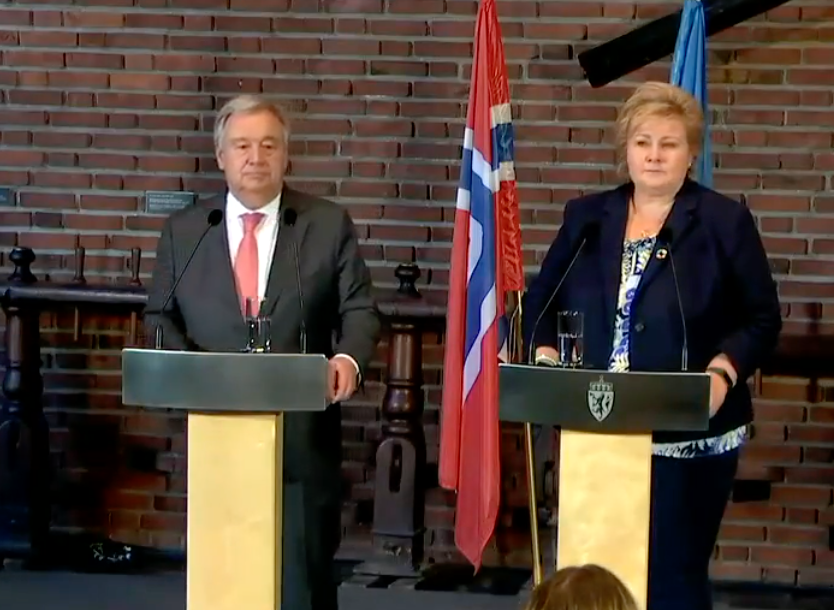
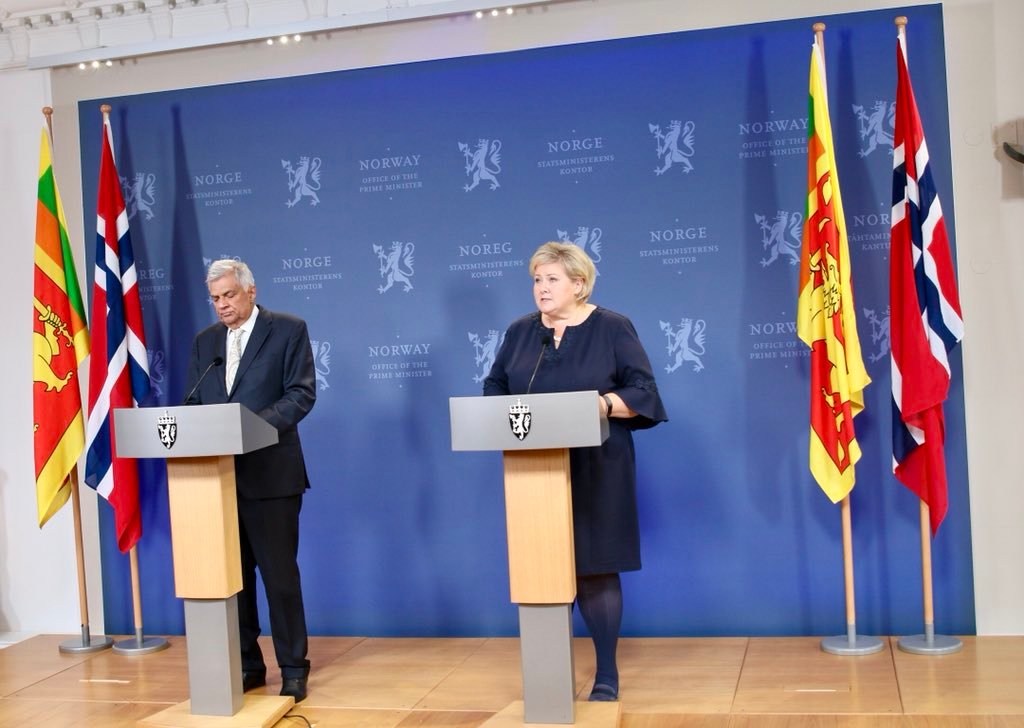
Sri lankan prime minister and Norwegian prime minister at press meeting in Oslo

by Nadarajah Sethurupan November 16, 2018
written by Nadarajah Sethurupan

Sri lankan prime minister and Norwegian prime minister at press meeting in Oslo

https://www.youtube.com/watch?v=UKLiRftb9aU

November 16, 2018 0 comments
0 FacebookTwitterPinterestEmail
Video clips

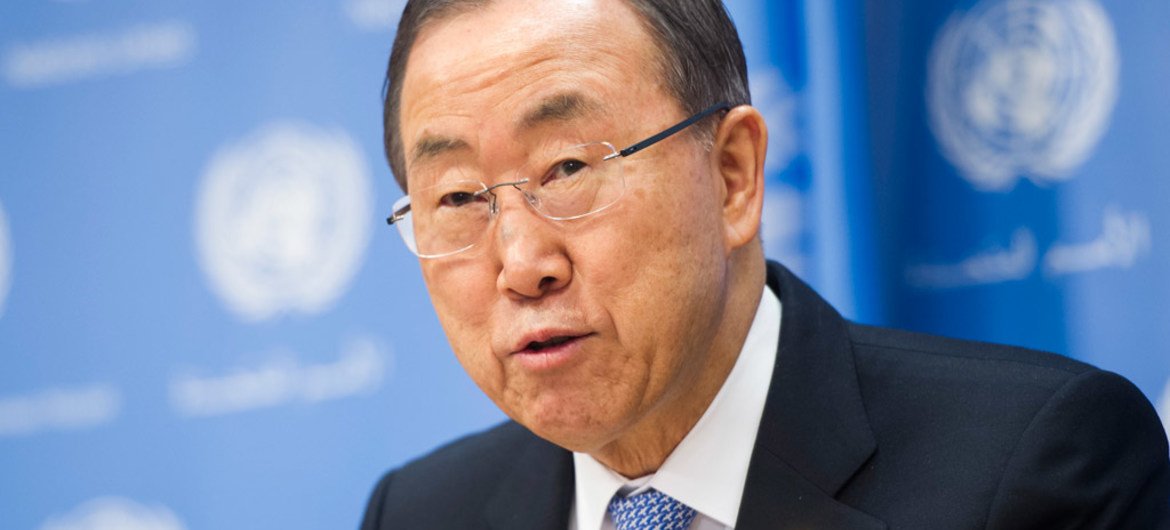
UN secretary general ban ki moon about Sri Lanka

by Nadarajah Sethurupan November 16, 2018
written by Nadarajah Sethurupan

UN secretary general ban ki moon about Sri Lanka

https://www.youtube.com/watch?v=slvZbl04QV8

November 16, 2018 0 comments
0 FacebookTwitterPinterestEmail
Video clips

Anders Breivik massacre films ‘don’t tell full story’

by Nadarajah Sethurupan November 16, 2018
written by Nadarajah Sethurupan

Anders Breivik massacre films ‘don’t tell full story’


https://www.youtube.com/watch?v=y7ovkXwJqys

November 16, 2018 0 comments
0 FacebookTwitterPinterestEmail
Russia and Norway

Russia suspected of GPS jamming during Nato exercises

by Nadarajah Sethurupan November 16, 2018
written by Nadarajah Sethurupan

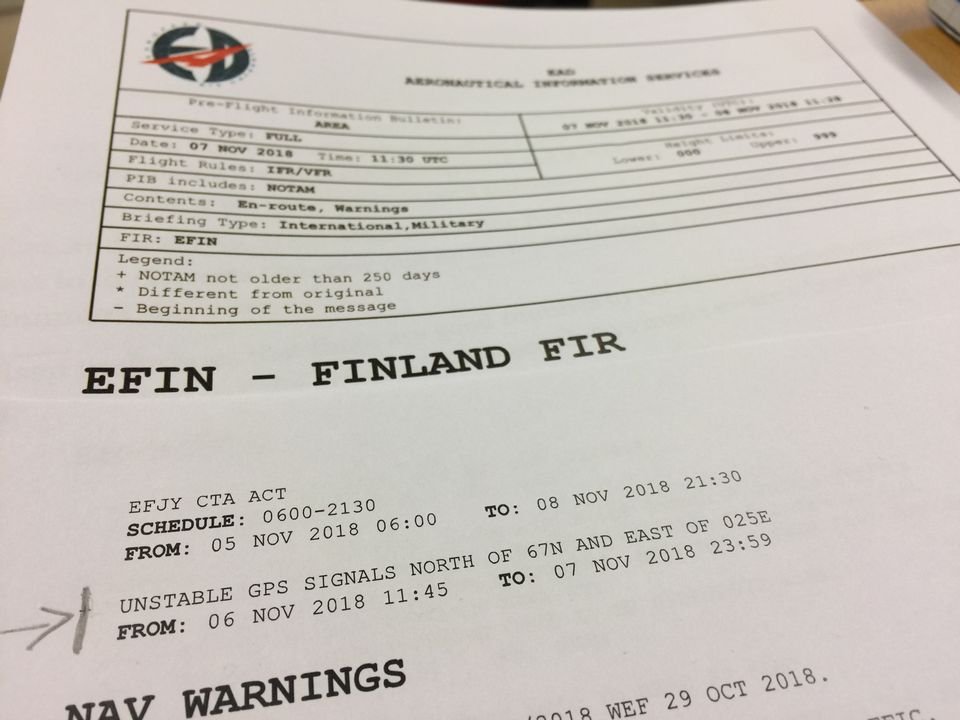
Finnish air traffic control officials warned civil aviation about large-scale GPS signal disruptions in northern Finland.

It was the first such notice issued by Finland’s state-run Air Navigation Services in an official Notice to Airmen (NOTAM), in which it advised that the disturbances began on Tuesday and continued until midnight on Wednesday.

The warning was visible on the website of Eurocontrol, the European Organisation for the Safety of Air Navigation.

According to ANS operations director Heikki Isomaa, the warning was prompted by information obtained from sources such as Finland’s Defence Forces.

“We have also received information from the Defence Forces. So we released the information as soon as we got it,” Isomaa said in response to a question about whether or not the Defence Forces provided information about the disruptions.

“We’ve been informed by different sources that GPS signals in northern or northeast Finland could possibly be unreliable. We wanted to get this intelligence to airlines and other aviators for security reasons,” Isomaa added.

He said that the warning had been issued for a large area as a safety precaution.

“For safety reasons, we issued it for an expansive enough area so that pilots could be prepared not to rely solely on a GPS,” he noted, however he declined to state the source of the disruptions.

Responding to an email query from Yle, Defence Force communications director Colonel Sami Nurmi also refused to comment on the matter, instead referring Yle to Ficora, the Finnish Communications Regulatory Authority.

Previous warnings in Norway

Last Friday, the online publication Barents Observer reported on GPS jamming affecting air traffic in northern Norway’s Finnmark region.

A warning about possible GPS blocking in the region had been issued at the end of October, when Nato kicked off major military exercises dubbed Trident Juncture in Norway. Finland also participated in the war games, which ended on Wednesday, 7 November.

Meanwhile Norway’s aviation warning is still in force and is expected to end on Friday afternoon. Finland’s ANS has also published the Norwegian advisory in a bulletin.

The Norwegian advisory covers the Kirkkoniemi airport area near the Finnish and Russian borders and Norwegian authorities have speculated that the disruptions could becoming from Russia.

Additional signal jamming was detected at least one year ago, which Norwegian officials also believed came from Russia.

Ficora in the know

Last autumn Norway’s equivalent of Ficora, Nkom, speculated that the GPS disruptions were coming from Russia. At the time, the Finnish agency indicated that it had no knowledge of the matter.

On Monday, Yle emailed Ficora to ask whether or not it knew about Norway’s accounts of GPS jamming. On Tuesday the agency responded, saying that it had no information apart from what had been reported in the Barents Observer.

However on Thursday, Ficora provided additional information upon hearing of the advisory issued by ANS Finland.

Ficora director Jarmo Ilme emailed Yle to say that the agency had received information about the GPS blocking issue, but because no one had reported any problems as a result of unstable signals, it determined that there was no reason to take action.

Officials in Finland and Norway have assured aviators that the GPS signal disruptions will not endanger air traffic, since aircraft have other navigational equipment in addition to the GPS.

According to Isomaa no navigational problems have been reported and the warning has not affected the number of flights operating in Lapland.

Sources
Yle, Barents Observer
November 16, 2018 0 comments
0 FacebookTwitterPinterestEmail
NATO and Norway

Norwegian residents complain of NATO

by Nadarajah Sethurupan November 15, 2018
written by Nadarajah Sethurupan

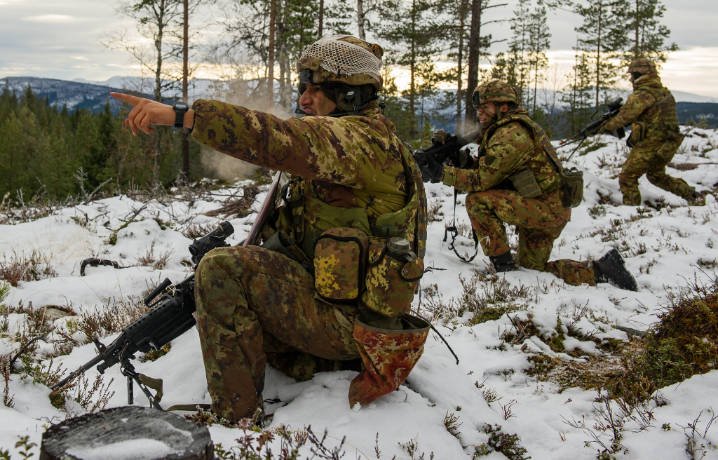
The photo shows cultivated land that has been damaged after being used as part of ongoing Trident Juncture 2018 NATO exercises that started late October 2018. (Photo by NKR)

Halfway through NATO’s large-scale Trident Juncture 18 war games, Norwegian residents have already filed nearly 500 complaints against participating soldiers, alleging damage to local infrastructure, trampled farmland, traffic accidents and public defecation.

The complaints have been sent to the Norwegian Armed Forces, which have set up an “Environment and Damage Department” to keep track of exercise-related incidents disturbing the local population.

Trident Juncture Spokesman Eystein Malkenes Kvarving, speaking to the Norway-based NRK channel, apologized for the mishaps and promised for the complaints to be taken seriously.

“Sometimes unfortunate things happen which are not planned. Of course, it is not okay for people to relieve themselves in public areas. I would like to apologize for it.”

Furthermore, Environment and Damage Department head Marianne Bo detailed that complaints about public defecation were primarily about incidents that had occurred near schools and sports facilities by allegedly American and Swedish soldiers.

“This is terrible, it’s about having common decency. We have to clean up after soldiers who have relieved themselves,” adding that “we actually have a system for treating this. The soldiers bring their equipment to clean up afterwards. But next time we have a major exercise, we must tighten this.”

The exercises also made headlines on Thursday after a Norwegian Navy frigate collided with an oil tanker near an island chain off Norway’s western coast, injuring seven crew members. The damaged ship has since been abandoned and is awaiting further assistance.

The war games, which started on October 25 and will end on November 23, have assembled troops from 31 NATO allies and partners along with 250 aircraft, 65 vessels and up to 10,000 land vehicles primarily in central and eastern Norway.

According to official statements, the exercises seek to train “troops of the NATO Response Force ” and improve joint-force cooperation. Russia, however, has expressed concerns, describing the maneuvers as “anti-Russian”.

November 15, 2018 0 comments
0 FacebookTwitterPinterestEmail
Diplomatic relations

Norway to Close Embassy in Baku, Open in Tbilisi

by Nadarajah Sethurupan November 14, 2018
written by Nadarajah Sethurupan

Minister of Foreign Affairs of Norway Ine Eriksen Søreide said Oslo plans to open its Embassy in Tbilisi in the course of 2019.

Simultaneously, the Norwegian Embassy in Baku will be closed, with Azerbaijan being covered from Norway’s representation in Ankara, Turkey. The Royal Norwegian Embassy has been operating in Baku since 1998, and was also accredited to Georgia.

Announcing the move, the Norwegian Foreign Minister said the decision was taken “on the basis of an overall assessment of Norwegian interests and our ties with the countries in the Southern Caucasus.”

“Georgia is one of our priority partner countries in the Eurasia region. For many years, it has been following a course of reform, which has brought it closer to European and Euro-Atlantic cooperation structures,” Ine Eriksen Søreide stated.

(civil)

November 14, 2018 0 comments
0 FacebookTwitterPinterestEmail
Srilanka and Norway

Sri Lanka’s IT industry must take the lead to build a talent pool for the future – Norwegian Ambassador

by Nadarajah Sethurupan November 13, 2018
written by Nadarajah Sethurupan

The Sri Lanka – NORDIC Business Council along with the Norwegian Business Association Sri Lanka, and the Ceylon Chamber of Commerce held an ICT breakfast forum and networking event at Cinnamon Grand on 9th November.

The Royal Norwegian Embassy supported the event in cooperation with SLASSCOM and ICT Norway. The Chief Guest at the event was H.E. Thorbjørn Gaustadsæther, Ambassador of Norway to Sri Lanka and Maldives.

The event was held with the aim to facilitate possible collaborations between an ICT delegation from Norway and ICT companies in Sri Lanka. There was also a panel discussion on the theme “21 Century Skills – How do we create a talent pool for the future”.

Addressing the gathering Ambassador Gaustadsæther said, there will be a considerable shift in skills and talent required from the global workforce in the next decades.

“Jobs of the future will require more critical thinking, advanced skills in STEM (Science, Technology, Engineering and Maths), creativity, interdisciplinary knowledge and people skills among others. Building this talent pool for the future has to start now, and it is the responsibility of government, policy makers, as well as the private sector and individuals.”

The Norwegian ambassador said since the need is so critical, the IT industry must take the lead.

“If you wait for the government, this will take too long and might not be what you require. Therefore, the IT industry must come together, although competitors with each other, in this question you have only one goal: that is creating the right pool of talent for the industry needs,” he emphasized.

Speaking during the panel discussion, Jeevan Gnanam, Chairman SLASSCOM said that this year alone the IT industry needs about 16,000 individuals to join the industry, and that the current university system does not meet the needs of the industry.

Lars Mortensen Lægreid, Founder of Emergence School of Leadership in Norway said that it is good governance, which makes Nordic countries prosperous. He also spoke of the importance of sustainability for all industries and the ability of technology to provide new solutions to problems.

One of the key areas in which skills are rapidly changing is the ICT industry. With more than 300 companies, the local ICT sector serves a broad range of industries ranging from communication, apparel and textiles, banking financial services & insurance (BFSI), healthcare, manufacturing, media, retailing, transportation to travel and leisure among others. The discussion on the skills requirement was topical in the ever-changing ICT landscape.

November 13, 2018 0 comments
0 FacebookTwitterPinterestEmail
Economics

Tackling base erosion and profit shifting

by Nadarajah Sethurupan November 13, 2018
written by Nadarajah Sethurupan

The Norwegian Government proposes changes to the rules on interest limitation and corporate tax residency. The proposals will curb profit shifting and base erosion and level the playing field for national and multinational businesses.

The interest limitation rule restrains multinational groups’ ability to reduce corporate income tax in Norway by excessive debt financing of Norwegian subsidiaries.

“Multinationals can shift profit out of Norway and thereby pay less taxes. Purely domestic companies do not have the same possibilities, which makes the competition unfair. When we restrict profit shifting strategies, we are levelling the playing field and at the same time securing the tax base. Curbing profit shifting is also crucial to preserve the legitimacy of the corporate tax system,” says Siv Jensen (The Progress Party), the Norwegian Minister of Finance.

The Norwegian tax legislation already has a rule that limits highly leveraged companies’ deduction for interest paid to related parties. The deduction is capped if net interest exceeds 25 per cent of taxable earnings before interest, taxes, depreciation and amortization (EBITDA), and if net interest exceeds a de minimis threshold of NOK 5 million.

Multinational groups can also shift profit by placing excessive amounts of external debt in countries with high or normal tax levels, like Norway. The Government therefore proposes that the interest limitation rule should also limit deduction for interest paid to independent parties. The new amendment only applies to companies in a group.

“This proposal is an important step in implementing the OECD’s BEPS recommendations,” Ms Jensen says, referring to the OECD and G20’s project on reducing base erosion and profit shifting (“BEPS”). “Several EU countries are now implementing similar tax rules to comply with EUs Anti Tax Avoidance Directive.”

The de minimis threshold in the new rule is increased to NOK 25 million in net interest. This means that groups with total net interest in Norwegian companies of less than NOK 25 million are not affected by the changes. A proposed escape clause will allow full deduction of interest paid to independent parties if the equity ratio of the company equals or exceeds the equity ratio in the group’s consolidated financial statements. The purpose of the escape clause is to keep ordinary business loans that are not part of a profit shifting strategy from being affected by the limitation.

The Government proposes that certain adjustments to the accounting numbers have to be made when calculating the equity ratio. The escape clause may be applied on company level or, alternatively, on a “national” level by calculating a consolidated equity ratio for the Norwegian companies of a group. Purely domestic groups will by definition fulfil the conditions of the escape clause and will thereby always be able to fully deduct interest paid to third-parties, for example to banks. There is no risk of profit shifting in the form of strategical allocation of third-party debt within a purely domestic group.

“A high de minimis threshold and an escape clause based on companies’ equity ratio make the rule more targeted towards profit shifting and strategic allocation of third-party debt,” Ms. Jensen says.

The Norwegian Ministry of Finance expects the proposal to increase annual tax revenues by NOK 600 million in the short-run.

“In the long-run, the proposal is important to secure the tax base and to create a level playing field for multinational and national businesses,” Ms. Jensen says.

The Government also proposes amendments to the corporate tax residency rules. The proposal is based on a proposal from a Commission appointed to review the corporate taxation in Norway. The aim is to address tax avoidance strategies and to ensure that companies with sufficient connection to Norway are deemed resident in Norway. The proposal implies that companies incorporated in Norway and foreign companies performing effective management in Norway will be deemed resident in Norway and liable to pay tax on their worldwide income. However, a company resident in another state under a tax treaty will not be deemed resident in Norway.

The new BEPS-measures in the 2019 National Budget are part of the implementation of the Government’s proposed tax reform (Report to the Storting No. 4 (2015–2016) Better Taxation – A Tax Reform for Transformation and Growth) and the parliamentary agreement of May 2016 on a tax reform.

Read more

  • Better Taxation – A Tax Reform for Transformation and Growth, Chapter 1 of the Report to the Storting No. 4 (2015–2016)
November 13, 2018 0 comments
0 FacebookTwitterPinterestEmail
Oil & Gas

NOK 286 billion in net revenue from the petroleum industry in 2019

by Nadarajah Sethurupan November 12, 2018
written by Nadarajah Sethurupan

The State’s net cash flow from the petroleum industry in 2019 is estimated to about NOK 286 billion.

– The petroleum sector is Norway’s biggest industry and our most important contributor to the financing of the welfare state. In 2019 the oil and gas production on the Norwegian Continental Shelf (NCS) provides an estimated income to the Government Pension Fund Global equal to NOK 215 000 for a family of four. Our petroleum policy ensures that the industry will continue to play a vital role in the financing of the Norwegian welfare state for decades to come, says Minister of Petroleum and Energy, Mr. Kjell-Børge Freiberg.

This figure includes direct and indirect taxes, revenues from the State’s Direct Financial Interest (SDFI) and dividends from Equinor. The revenue forecast for 2019 is around 34 per cent higher than the forecast in the Revised National Budget 2018, primarily due to higher expected oil prices.

The petroleum industry investments, including exploration and decommissioning costs, are estimated at a total of approximately NOK 176 billion in 2019. The corresponding figure for 2018 is NOK 155 billion.

– The activities on the NCS deliver great opportunities for onshore businesses. Over 170 000 people in Norway are directly or indirectly employed in the petroleum industry. The continued investments from the oil companies in exploration, new projects and further development of existing fields are important for job creation across the country. I am particularly pleased with the high activity level on the NCS. This creates positive ripple effects in every Norwegian county, says Freiberg.

The Norwegian continental shelf continues to offer extensive opportunities. The total recoverable resources are estimated at 15.6 billion standard cubic metres of oil equivalents, and only 45 per cent of the total recoverable resources had been produced by the beginning of 2018.

Total production of oil, LNG (liquefied natural gas), condensate and gas on the Norwegian continental shelf is expected to total around 230 million standard cubic metres of oil equivalents in 2018. This equals around four million barrels of oil per day. Expected gas production accounts for about half of total production. Production levels are expected to remain stable in near future, before it is expected to slightly increase in the first part of the next decade.

November 12, 2018 0 comments
0 FacebookTwitterPinterestEmail
Svalbard

Mapping of petroleum resources in the Northern parts of the Barents Sea

by Nadarajah Sethurupan November 11, 2018
written by Nadarajah Sethurupan

The government proposes to increase funding to geological surveying with NOK 50 million, to continue the acquisition of knowledge through mapping of the petroleum resources in the Northern parts of the Barents Sea.

– Knowledge is crucial both for good resource management and to safeguard national economic interests. Therefore, it is important to continue the mapping of the petroleum resources in the Barents Sea in general, and in areas with possible border crossing resources in particular, says Minister of Petroleum and Energy, Mr. Kjell-Børge Freiberg.

Only the Norwegian authorities are allowed to conduct mapping of resources in areas not opened for petroleum activities by the Norwegian Parliament. The proposed geological surveying includes  acquisition and analysis of seismic data, which will provide important information about the geology of the Barents Sea, particularly for areas close to the delimitation line between Norway and Russia, where there might be border-crossing petroleum resources.

The proposal is a continuation of the geological surveying conducted by the Norwegian Petroleum Directorate over the past years to gather new and additional knowledge about the geology of the Barents Sea. More knowledge about petroleum resources requires collection of additional geological data. New and better data provides the authorities with a better understanding of the entirety of the petroleum systems. This is important both with regards to good resource management and to safeguard national economic interests when it comes to border-crossing petroleum resources.

(MFA)

November 11, 2018 0 comments
0 FacebookTwitterPinterestEmail
Environment

Increased efforts on carbon capture and storage

by Nadarajah Sethurupan November 10, 2018
written by Nadarajah Sethurupan

In the national budget for 2019, the Norwegian government proposes to allocate about NOK 670 million to work on carbon capture and storage (CCS). This is an increase of more than NOK 160 million compared to the final budget for 2018.

The proposal includes funds for continuing the work on a full scale carbon capture and storage project in Norway. The Government also proposes to increase the funding for Technology Centre Mongstad (TCM) due to increased activity.

– Both the Intergovernmental Panel on Climate Change (IPCC) and the International Energy Agency (IEA) point to carbon capture and storage as a necessary measure to reduce global greenhouse gas emissions in line with the climate goals at the lowest possible costs. Therefore, the Government has made CCS one of five prioritized areas for national climate action. In the national budget for 2019, the Government proposes to increase the funding for this important work, says Minister of Petroleum and Energy Mr. Kjell-Børge Freiberg.

The planning of a new full scale CCS project in Norway continues. The Government proposes to allocate NOK 175 million to his work in 2019. The government has earlier this year decided to fund FEED-studies of CO2-capture at two sites: Norcem’s cement plant in Brevik and at Fortum Oslo Varme’s waste incineration plant in Oslo. The companies Equinor, Total and Shell are cooperating on the studies of CO2-transport and storage, which will be continued as planned into FEED-studies in 2019.

When FEED-studies are completed, external quality assessment of the project will be carried out before the Government concludes on whether the project should be realised. An investment decision may be taken in 2020/2021. At the time of the investment decision the government will consider the results from the FEED-studies, learning effect vs. resources spent and how demanding the project will be within budget constraints. The investment decision will be presented to the Parliament.

– The government has an ambition to realise a cost effective solution for full scale CCS in Norway, provided this will result in technology development internationally. I am very pleased that the planning of this project now continues, and look forward to seeing the results of the ongoing studies, says Freiberg.

The government proposes to increase the funding of Technology Centre Mongstad to NOK 208 million in 2019. This is an increase of NOK 13 million compared to 2018 due to increased activity at TCM.

The TCM is the world’s largest facility for testing and improving CO2 capture technologies and is a vital part of the government’s work on CCS. Knowledge and experience from the TCM is also valuable for the planning of a new full scale CCS project in Norway.

(MFA)

November 10, 2018 0 comments
0 FacebookTwitterPinterestEmail
Taiwan and Norway

Norway’s immigration agency bows to China

by Nadarajah Sethurupan November 9, 2018
written by Nadarajah Sethurupan

The Norwegian authorities’ kowtowing to Beijing has risen to another level as its immigration agency changed the reference to Taiwan on their website.

Taiwan’s Ministry of Foreign Affairs (MOFA) said on Thursday that it has taken measures through its representative office, protesting against the decision of the Norwegian Directorate of Immigration to list Taiwan as part of Chinese territory on its visa application website and firmly requesting for reinstituting Taiwan as a separate and distinct governance.

MOFA Spokesperson Andrew Lee (李憲章) said the ministry finds it “regrettable” and “inadmissible” that Norway’s immigration authorities have bowed to pressure from China and made an inappropriate reference to Taiwan on their website.

In fact, the Norwegian government has dropped Taiwan on its residence permit card since 2011, despite repeated complaints made by the Taiwanese government and people.

Such measure means that Taiwanese students or people living in Norway will have their residence permit card indicate their nationality as “Kina” (China) instead of Taiwan.

In 2017, a group of Taiwanese students appealed to the Norwegian authorities, requesting them to change how they refer to Taiwan on the immigration document.

Yet the appeal was revoked by the Norwegian authorities, and now the Taiwanese students are preparing to file a group litigation against the Norwegian government.

Lee, in a statement released on Thursday, urged Norway not to concede to Beijing’s bullying of Taiwan. The Ministry will continue to approach the Norwegian authorities to ask for reference changes, and it looks forward to seeing a response from the Norwegian government that is based on the democratic values shared by the two nations, added Lee.

November 9, 2018 0 comments
0 FacebookTwitterPinterestEmail
Oil & Gas

Equinor reduces estimated investments in Norway

by Nadarajah Sethurupan November 9, 2018
written by Nadarajah Sethurupan

Equinor has reduced the estimated investments for operated projects in the development phase on the Norwegian continental shelf by some NOK 30 billion ($3.6 billion) since the development plans were submitted to Norwegian authorities.

This appears from the status for Norwegian projects under development published the Government’s national budget proposal for 2019.

“We have successfully reduced the investment estimates by approximately NOK 30 billion since submitting the PDOs to the authorities. The improvements have been achieved in close collaboration with our partners and suppliers, and are mainly a result of increased drilling efficiency, simplification and high-quality project implementation. These figures also include the market effect we have achieved by counter-cyclical investments,” says Margareth Øvrum, Equinor’s executive V.P. for technology, projects and drilling.

Adjusting for the currency effects of a weak NOK, the reduction of investments for the portfolio is substantially bigger.

Taking over the operatorship for the Martin Linge project in March 2018 Equinor has conducted a thorough review of the project, establishing a plan for safe start-up. Based on estimates of the remaining work at Martin Linge start-up is scheduled for the 1st quarter of 2020. The updated investment estimate totals NOK 47.1 billion ($5.68 billion).

The investment estimate for Martin Linge has increased by NOK 3.6 billion ($430 million) since last reporting based on Equinor’s assessment of the remaining scope of work. In addition, the change of operatorship has necessitated an accounting change for the project of NOK 1.35 billion ($160 million). This applies to charter rates for storage vessels and historical drilling rig rates.

“When we acquired the stakes in the Martin Linge field and took over the operatorship, we allowed for any remaining work and increased costs. As announced, we have therefore spent time at the Rosenberg yard to get an overview of this. After successful platform installation the focus is now  to ensure high-quality completion of the project, and safe start-up of the field,” says Øvrum.

November 9, 2018 0 comments
0 FacebookTwitterPinterestEmail
Russia and Norway

War going on in Europe – Ambassador Kurt Volker

by Nadarajah Sethurupan November 8, 2018
written by Nadarajah Sethurupan

The United States is imposing new sanctions against three Russian individuals and nine entities operating in Crimea,  “It is an act of war going on in Europe. It has resulted in more deaths as a result of a war in Europe since the war in the Balkans in the ‘90s, and it has resulted in more displaced persons as a result of war in Europe of anything since World War II, US Special Representative for Ukraine Negotiations Kurt Volker said in a telephone conference on Thursday.

“These are sanctions on three individuals and nine entities that are supporting Russia’s attempts to integrate the Crimea region of Ukraine through private investments and private projects, or those who are engaged in serious abuses,” Volker told reporters.

Relations between the United States and Russia worsened following their disagreement over the crisis in Ukraine. The United States imposed several round of sanctions against Russia after Crimea held a referendum in 2014 in which a vast majority of residents decided to reunify with Russia.

Earlier on November 8, Kurt Volker, the U.S. special envoy for Ukraine, said Washington was “leveraging new authorities to target Russian actors for serious human rights abuses” in parts of Ukraine’s Luhansk and Donetsk regions that are “forcibly occupied or otherwise controlled by Russia.”

Speaking in a telephone briefing with journalists, Volker also reiterated the United States’ opposition to local elections planned for November 11 in areas of eastern Ukraine held by the separatists.

“It is something we would call on Russia to halt and not go forward with,” he said, adding that the separatists “do not have legitimacy in the local area nor are they consistent” with the accords signed in Minsk in September 2014 and February 2015 aimed at resolving the conflict.

Ukraine has said the results of the “fake” elections will be “null and void.” European countries have also condemned the “illegitimate” vote.

Volker said he planned to meet with his Russian counterpart, Vladislav Surkov — an adviser to Russian President Vladimir Putin — “in the next several weeks.”

Below is a full rush transcript of the press conference by Ambassador Kurt Volker, U.S. Special Representative for Ukraine Negotiations.

Ambassador Volker: Thank you very much, There are just a couple of topics that I thought would be important to raise to make sure that they’re on your radar at this time. Three of them that are worth going through.

The first of these is that Russia is in the process of organizing elections in the territory it occupies in Ukraine for the Luhansk and Donetsk People’s Republics, the so-called Luhansk and Donetsk People’s Republics.

This is a very concerning development. It is something that we call on Russia to halt and not go forward with. We believe that the entities themselves do not have legitimacy in the local area, nor are they consistent with the Minsk agreements themselves. They don’t exist in the Minsk agreements, and in fact the implementation of the Minsk agreements calls for the restoration of Ukraine’s constitutional order and there is no place for these Republics in the Ukrainian constitutional orders either.

We do support the idea of elections, and that is part of the Minsk agreements. These should be elections for the legitimate local authorities that exist within Ukraine’s constitutional framework. These would be things like mayors of the cities or some of the oblast administrations, and those elections should be held when the territory is secure and safe, when you have freedom and people can speak freely, candidates can campaign freely, there is freedom of movement. And none of those conditions exist right now. So the elections being held, that Russia is organizing for November 11th are wholly illegitimate. We urge that they be stopped and there is no way that anyone from Europe, the United States, et cetera, can give any recognition to the results of such elections.

The second topic I wanted to bring up, and this is the reason that this call is embargoed, is that today the United States is imposing financial sanctions, new sanctions, that relate both to Crimea and to the Donbas. This will be announced by the Treasury Department later today, and there will be a formal press release issued that will contain more details.

What I can say is that these are sanctions on three individuals and nine entities that are supporting Russia’s attempts to integrate the Crimea region of Ukraine, through private investment and privatization projects, or those who are engaging in serious human rights abuses.

This is a follow-on, I should add, to Secretary of State Pompeo’s July 25th declaration that the United States does not and will not recognize Russia’s annexation of Crimea.

These designations underscore the U.S.’s steadfast partnership with Ukraine and the European Union and represent a unified opposition to Russia’s purported annexation and occupation of Crimea and use of force to control parts of the Donetsk and Luhansk regions of eastern Ukraine.

The United States is leveraging new authorities to target Russia’s serious human rights abuses in parts of Ukraine that the United States has determined are forcibly occupied or otherwise controlled by Russia and other reprehensible acts, human rights abuses, in furtherance of the Kremlin’s agenda.

What is notable here is that we have said for a long time that Russia has 100 percent command and control of what is happening in the occupied areas there — military forces, political entities, and direct economic activity. This is the first step taken in the form of sanctions that explicitly recognizes or explicitly is based on the notion that Russia actually controls the Donbas and eastern Ukraine.

Those sanctions will be announced in greater detail later today, but I wanted to call them to your attention.

The third thing that I wanted to bring up, as always, and it’s really the most important thing, is the situation affecting the population of eastern Ukraine remains dire. It is an act of war going on in Europe. It has resulted in more deaths as a result of a war in Europe since the war in the Balkans in the ‘90s, and it has resulted in more displaced persons as a result of war in Europe of anything since World War II.

To give you a few statistics to work with, from July 2017 to October 2018 there have been 450 civilian casualties as a result of the conflict; 212 total casualties — I take that back. Let me get the numbers straight again.

In that period of July 2017 to October 2018, a year and two months, they’ve had 450 civilian casualties. This year alone, in 2018, up until October 2018, you had 170 injures and 42 deaths for a total of 212 civilian casualties. There have been over 10,000 people killed in this conflict — nearly 3,000 of those civilians. There are over 1500 conflict-related missing persons. There are 3.4 million civilians in urgent need of assistance and protection and services across all sectors, and this includes access to food, water and shelter.

There are crossing points between the occupied area and the rest of Ukraine. These are very dangerous crossing points. Nonetheless, there are about 1.3 million crossings per month. It is, people are crossing largely from the occupied area to the rest of Ukraine and back in order to get basic supplies and goods and access to government services.

Many of the people who remain in the occupied areas are the elderly. Younger people having left to avoid being pressed into military service or to find jobs and then repatriate some of the money back to their relatives that remain behind.

There have been more Ukrainian soldiers killed, more casualties in the conflict in Ukraine than Americans in the entire length of the war in Afghanistan, to give you a sense of the scale of the fighting and the casualties that Ukraine has suffered there. Over the life span of the conflict, the Ukrainian Armed Forces are estimating about 7,000 total casualties and over 2500 killed in action.

The OSCE continues to face significant restrictions on its activities and freedom of movement including and having one of their drones recently shot down again in the Russian controlled area.

So this conflict is affecting real people, real lives all the time, every day. There are ceasefire violations every day, every night. And it is urgent that we try and find a solution to this. We remain committed to try to find a solution. We stand by the proposal to put in the UN-mandated peacekeeping force. Something we believe that we need urgently to create genuine security for all the people there. And that creates a basis for implementing the Minsk agreements going forward.

We are firmly supportive of the Minsk agreements. We believe that they contain all of the elements necessary from both a security and a political standpoint to be successful, but unfortunately they are not being implemented. Russia continues to occupy the territory, to control the armed forces, to control the political entities. And in order to cut through the log jam in discussions about Minsk we believe a UN peacekeeping mission could do that. That would create the conditions for a special status being implemented, for elections, for amnesty of people who committed crimes as part of the conflict. So we do believe that is a viable way forward, and we urge the Russian side to give it serious consideration.

Question: Is there any progress in coordinating positions with the Russian side on the UN peacekeeping issue?

Ambassador Volker: During the course of the summer and early autumn I’ve exchanged some correspondence with my Russian counterpart Mr. Surkov, to see whether there has been any movement in the Russian position. His responses indicate that Russia remains very far away from the idea of agreeing to a genuine UN peacekeeping mission at this time. Russia supports the idea of a UN protection force that would protect the OSCE monitors only, but would not create security throughout the area, would not oversee the creation of a secure environment. The armed troops that are there would remain in place. The political entities Russia has created would remain in place. And those are conditions that are inconsistent with the Minsk agreements and which neither Ukraine nor any of our partners — France, Germany or others — could support. So we don’t see that as a viable way forward.

We do hope to continue talking. We think the dialogue is important. I think that this is a very costly conflict for Russia. I think it has driven Ukraine away from Russia at a civilizational scale in a way that we have never seen before. I don’t think that is in anyone’s interest, certainly not Russia’s interest. The physical cost of the conflict, the financial cost of the conflict, the cost of sanctions as we’ll see again today, that affect Russia. So I hope that Russia does begin to look for a genuine solution and we’re prepared to work together with Russia to find that.

Question: Can you confirm any progress in the preparation of the next meeting with your Russian counterpart Mr. Surkov? As far as we can see, the Ukrainian side is not doing any steps to fulfill its obligation under the Minsk agreements in what concerns the elections process. So why so much hostility for the elections process currently in place in Donbas?

Ambassador Volker: Thank you. First, Mr. Surkov and I, we both expressed a willingness to get together in the next couple of weeks. We don’t have a date fixed yet, but I expect that I’ll be hearing back from him soon, and I expect that we will find a date and a place that’s convenient for both of us. Nothing scheduled at the moment, but I think we will be doing so soon.

In terms of the elections, first off, we very much support the idea of legitimate local elections with legitimate local authorities in the Donbas as does Ukraine. Ukraine, as you know, does not have access to its territory as it is occupied by Russia. So it cannot conduct elections. It would like to. It has a Central Elections Commission, it has the voter rolls, and it is very much something that Ukraine is committed to both under the Minsk agreements, but also generally, to having elections throughout Ukrainian territory.

The reason for the hostility to the elections on November 11th, as you put it, is that these are elections for entities that have no legitimacy under the Ukrainian constitution. These are entities that have no place under the Minsk agreements. And they are under conditions of occupation, whether it’s no freedom of expression, no freedom of movement, no freedom of campaigning, and generally therefore no freedom of choice for the people in electing candidates for legitimate local leadership positions. So these particular elections are a mockery, really, of the idea of genuine elections that need to be held.

What we have proposed and what Ukraine supports and what we hope Russia will eventually support as well, is putting in place a UN peacekeeping mission which would create security throughout the entire area and create the conditions where elections for the legitimate local authorities can be held. With the UN forces there you would need a period of time to organize elections, to allow forregistration, to allow for candidates, to allow for campaigning, and to have those elections go forward.

So to be clear, we are very much in favor of legitimate elections but the elections that Russia is organizing on November 11th have no legitimacy both because of the entities and because of the context in which they’re taking place, and because they are contrary to the Minsk agreements.

Question: Could you tell us when this will be announced exactly this afternoon? Could you give us some more detail on who they’re targeting and in what format the sanctions will take? And finally, why now, in your opinion, are the sanctions necessary and why they’re being announced at this exact moment.

Ambassador Volker: Thank you. I’ll say a couple of things, but I do want to save fire for the Treasury’s own announcement. It will be announced later this morning. I believe 10:30 is the scheduled time. It is three individuals and nine entities that have some connection either to business activities in Crimea that aim at the furthering of the integration of Crimea, furthering of the ties of Crimea to Russia which are in contravention of Ukraine’s status, as part of Ukraine; or connected to human rights abuses taking place in either the Donbas or in Crimea. And they are a further step. The U.S. position has long been that we will keep in place the sanctions that we have, and we are prepared to continue to ratchet up periodically if no progress has been made by Russia in ending the conflicts.

In the case of Crimea, we are expecting a long-term standoff over the status of Crimea. As Secretary Pompeo said in July, the U.S. does not and will not recognize Russia’s incorporation of Crimea.

In the case of the Donbas, we are putting sanctions in place in order to advance the implementation of the Minsk agreements. Thus far Russia is not implementing the Minsk agreements.

If Russia were to fully implement the Minsk agreements, and we saw peace and movement on those things and agreements to be fully implemented, we will be prepared to go back and lift those sanctions again. But right now, since we have not seen any progress, we are prepared to continue to layer on over time.

As far as the exact timing goes, this is always related to notifications, deadlines, and authorizations that come from the Congress, so there are windows in which the administration needs to respond. And so this is acting within one of those appropriate windows.

Question: A few days ago, President Mr. Poroshenko, called for beginning of sanctions due to so-called elections in Luhansk and Donetsk which you have mentioned. And so my question is, is the U.S. considering to enforce such sanctions? And also maybe any sanctions are considered due to the situation in [inaudible] which you haven’t mentioned yet. You told, I think a few weeks ago that you wanted to visit Ukraine, I think in November. So what is the plan? When are you going to come here?

Ambassador Volker: Thank you. I’m still working out my travel schedule and dates for visiting Ukraine, as well as also for meeting with my Russian counterpart, so I don’t have exact dates in mind yet. I’m hoping that it is still this month. If not, it will be early December.

On sanctions, as I mentioned, we’re putting in place some additional sanctions today. The basis of those is Crimea and human rights abuses and it recognizes Russia being responsible for the occupation of the Donbas.

We do not have at the moment any additional categories for sanctions. I don’t want to rule anything out. The Congress is always very active on this, but as a general principle, the administration’s approach is to maintain a robust regime of sanctions periodically, to maintain the sanctions or to add additional ones in order to try to get Russia to agree that they should actually be ending the conflict, that we should be making progress on these issues, and in the absence of any such progress we’ll continue that same approach of maintaining and actually layering sanctions on.

Question: what route Russia should have done instead of election? Isn’t election the best way to save the current status quo?

Ambassador Volker: The best thing for Russia to do would be to implement the Minsk agreements. That would be a genuine ceasefire, a withdrawal of any Russians away from the line of conflict, a removal of foreign forces from Ukraine, a dismantling of the militias. This can be facilitated by agreement with the United Nations to put in a UN peacekeeping mission instead.

This would create better conditions for the population. It would create more security. It would eliminate the cost that Russia is paying for this conflict at the moment both in terms of military as well as political and economic, and it would create a basis for moving forward with Minsk implementation of the law, including the political [inaudible], a special status for the region, of legitimate local elections with legitimate authorities, and for amnesty.

Having elections for these two so-called people’s republics gives an illusion that they have some legitimacy in Donbas itself, and it’s not in the eyes of the population nor in any kind of legal sense, So it would be better not to have the elections and to move on with Minsk implementation instead.

Question: You said that these are the first sanctions that are explicitly based on the fact that Russia controls Donetsk and Luhansk. Can you tell us what exactly changed in the U.S. understanding of Russia’s control of these regions that would lead the U.S. to impose these sanctions now? Did some new evidence or new certainty emerge in that?

Ambassador Volker: No. It’s just a matter of continuing to layer on additional sanctions. Our understanding has always been that it is, that these territories are under direct Russian control, both militarily and politically. So it’s not a new understanding. It’s just that in the course of implementing sanctions we have not done so in an explicit way before and this time it is making clear that Russia does in fact occupy this territory in addition to Crimea.

Question: The Polish press reported broadly about this very high quality coal from the occupied Donbas finding its way somehow to the Polish market, or anyway to the European Union market. Do you have evidence on that? And can you do something against that?

Ambassador Volker: From my understanding, and I do not have specific evidence to roll out or discuss. But given that these territories are occupied by Russia, and Russia has used convoys both in and out of the Donbas — Military forces, equipment into the Donbas — and I’m sure also there have been extractions, like resources, from the Donbas. And I am very confident that these products and the things that are extracted find their way into the hands of Russian companies and are re-labeled as though they are something else, and then sold on the market. That’s what I fully expect to see happening here. And I think it’s unfortunate, but it is a derivative effect of the conflict and the fact that Russia occupies this territory that it can do these things without any real documentation, any real visibility for the rest of the world.

Ambassador Volker: As always, I’d just like to close on what I think is the most important thing which is the situation facing the people that live in this region is terrible. They are suffering every day from physical conflict, from lack of freedom of movement. They are confronted with lack of mobility, landmines, unexploded ordnances, a lack of daily freedoms inside the occupied area. There’s food insecurity, pressure on water supplies, environmental degradation, increase of disease, concerns about health, the need to cross dangerous boundary crossings in order to receive government services or buy food. It is a dire humanitarian situation plaguing Europe and it can be ended. It is preventable. It was preventable and it can be ended. We really should be keeping this high in the headlines and high on people’s agendas to demand a resolution to the conflict here.

And there is a way forward. It is possible to create peace and it’s possible to see the Minsk agreements implemented to afford security. So I hope that we’re able to get there and I’m committed to working to do that.

Ambassador Kurt Volker is a leading expert in U.S. foreign and national security policy with some 30 years of experience in a variety of government, academic, and private sector capacities. Ambassador Volker serves as Executive Director of The McCain Institute for International Leadership, a part of Arizona State University based in Washington, DC. He is also a non-resident Senior Fellow at the Center for Transatlantic Relations at Johns Hopkins University’s School of Advanced International Studies, a Senior Advisor at the Atlantic Council, and a Trustee of IAU College in Aix-en-Provence, France. He is a consultant to international business, a member of the Board of Directors of CG Funds Trust, and had previously served as Managing Director, International, for BGR Group. He has taught Transatlantic Relations at The George Washington University Elliott School of International Affairs. In July, 2017, Secretary of State Tillerson appointed Ambassador Volker as U.S. Special Representative for Ukraine Negotiations.

November 8, 2018 0 comments
0 FacebookTwitterPinterestEmail
Nobel Peace Prize

Welcomes the awarding of the Nobel Prize to Denis Mukwege and Nadia Murad

by Nadarajah Sethurupan November 8, 2018
written by Nadarajah Sethurupan

The Special Rapporteur on violence against women, its causes and consequences, Dubravka Simonovic, welcomes the awarding of the first Nobel Prize by the Norwegian Nobel Committee to Denis Mukwege, Congolese gynecologist, and Nadia Murad, Yazidi survivor of violence, for their personal and prominent role in fighting  gender-based violence, including sexual violence.

The Special Rapporteur takes this opportunity to thank Ms. Nadia Murad and Mr. Denis Mukwege for their enormous contribution to women’s rights, and their courage in exposing and fighting against the horrific and devastating impact that sexual violence has on women and girls.

This award is also a recognition of the need to support all activists worldwide, such as Ms. Murad and Mr. Mukwege, who have dedicated their lives to combating  violence against women, often putting their own lives at risk, and to strengthen efforts to fight gender-based violence against women.

The Special Rapporteur on violence against women reiterates the support of the mandate to all the women and men in their daily combat to prevent gender-based violence against women. She calls upon all governments and stakeholders to intensify efforts to prevent such violence.

November 8, 2018 0 comments
0 FacebookTwitterPinterestEmail
Middle East and NorwayTerrorist

US says Iranian presence in Syria is fuelling ISIS

by Nadarajah Sethurupan November 7, 2018
written by Nadarajah Sethurupan

Iranian presence in Syria is empowering ISIS in the region, Washington’s special envoy to Syria told reporters on Wednesday.

In a telephone conference Ambassador James Jeffrey said the Trump administration will focus on pressuring Iran financially and contesting its activities in the region in a bid to push Tehran’s military and proxies out of Syria.

“We see that [ISIS and Iran] are closely linked,” said Mr Jeffrey. “ISIS to a large degree, certainly in Syria and Iraq, is based upon the populations – the Sunni Arab population,” he added, alluding to Iranian influence in the Syrian and Iraqi governments and its effect on their respective disgruntled Sunni populations.

“Iran’s encroachment into Arab areas gives no other alternative to pushing it out,” Mr Jeffery said.

In Syria, Tehran joined Moscow and the Lebanese militant group Hezbollah in backing President Bashar Al Assad during the country’s seven-year war.

Mr Jeffery stressed that Washington’s strategy would not involve the direct military targeting of Iranian soldiers and proxy groups. Instead, he said, the new list of sanctions against vital oil exports, banking and transport industries would squeeze the country’s financial sector.

President Donald Trump in May pulled the US out of Iran’s 2015 nuclear deal to curb what he said were Tehran’s damaging activities in the region.

Washington, said Mr Jeffrey, would contest “more actively Iran’s activities particularly in Iraq, Syria and Yemen.”

The ambassador also linked the future withdrawal of American troops from Syria to the departure of Iranian forces from the country. Tehran enjoys influence in several countries in the region where it backs well-armed militias.

US policy is to ensure the enduring defeat of ISIS, work on a solution to the conflict under the terms of United Nations Security Council resolution 2254 and ensure all Iranian-commanded forces leave Syria entirely, he said.

Resolution 2254 is the main internationally-agreed upon document defining how to end the Syria war through a political transition.

“The US is pushing for the launch of a constitutional committee by end of December through the UN resolution of 2254 and to the regulation of a ceasefire,” Mr Jeffrey said.

But Mr Al Assad has resisted previous attempts to end the conflict through political settlements, and has held on to power for over seven years with help from Iran and Russia. Both have helped turn the tide decisively in favour of Mr Al Assad, especially during the last three years, with rebel forces being routed out in many areas.

Washington says that a continuation of Mr Al Assad’s regime will not lead to a political settlement.

US will only cooperate with a Syrian government that does not drive half of its population away, does not wage a criminal war on its people, does not use chemical weapons and does not threaten its neighbours or provides a base for Iranian power projection, he said.

“If they show us a Syrian government that could meet this criteria, then that would be a Syrian government that we can work with,” said Mr Jeffrey.

Below is a full rush transcript of the press conference by Ambassador James Jeffrey, Special Representative for Syria Engagement.

Ambassador Jeffrey: Thank you for tuning in, and the exchange that we’ll have on U.S.-Syria policy.

This policy is one of the key components of President Trump’s approach to the situation in the Near East. It’s very closely tied to our overall approach to Iran, but also to our approach to defeating terror throughout the region, but specifically with Syria.

The approach was developed over the past, at this point, nine or ten months but it really gained momentum when the President talked about Syria with President Putin in Helsinki and emphasized that the U.S. would be staying on in the long run in Syria to try to come up with a solution that meets the needs of the Syrian people, meets the needs of the region, and the international community in line with the relevant UN resolutions.

The policy, as summed up by the President in New York, thereafter at the UN, is to ensure the enduring defeat of ISIS, to work on a solution to Syria under the terms of the 2015 UN Resolution 2254 that would involve, again this is a Trump quote, “de-escalating the military situation”, and revitalizing the political track for a constitutional committee and eventually elections in Syria to try to get to the underlying problems in Syria, that has led to half a million people dying, a huge flow of refugees throughout the region, and into Europe and the rise of Daesh.

Finally, as part of this, to ensure that all Iranian-commanded forces leave the entirety of Syria because we see the Iranians as part of the problem, not part of the solution.

So, our approach to this has been to strongly support the UN effort. We welcome the decision by the French, British, Turks and Russians at the Istanbul Summit now ten days ago, to call for a long-term ceasefire in Idlib, which is a key area in the conflict right now in the northwest of the country, and to launch the constitutional committee by the end of December.

Our focus is to try to encourage these two processes ultimately through a UN process, and it is actually all sketched out pretty well in 2254, to regularize the ceasefires, work on that to develop the political situation, and finally, have a situation where all foreign forces that have entered the conflict since 2011 will withdraw.

The Russians, having been there before, would not themselves withdraw, but you’ve got four other outside military forces — the Israeli, the Turkish, the Iranian and the American — all operating inside Syria right now. It’s a dangerous situation as we saw with the shoot-down of the IL-20 Russian aircraft by the Syrian military who thought they were shooting at the Israeli military who allegedly were shooting at Iranian military targets. So, that’s the kind of dangerous situation we have right now in Syria.

Our immediate effort is to try to calm that situation down and then work for a long-term solution.

Question: Deputy Secretary General of United Nations, Mr. Voronkov has said that over 20,000 terrorists from around 110 countries across the world are looking for ways to leave Syria and return to their countries of origin or go to other destinations which pose serious threat of the spreading of terrorism around the globe. Is the United States aware of these threats, and do you have any consultations or other actions to prevent it?

Ambassador Jeffrey: Yes, we do. Our focus is on defeating the last Daesh elements along the Euphrates, right across the border from Iraq, and that fight is going on right now with our partner, the Syrian Democratic Forces. But we’re also very aware of the presence of some al-Nusra, or they now call themselves Hay’at Tahrir al-Sham and as well Daesh forces in Idlib and we’re in constant consultations, particularly with the Russian government and the Turkish government, about ways to deal with that.

We’re very concerned about these people, particularly the foreign fighters, leaving Syria and spreading out throughout the world. Good question.

Question: Massive divergences in the threat perception especially over the role of YPG remains between Ankara and Washington. After exchanges of fire in Northern Syria we saw U.S. and YPG joint patrols, and on one of the uniforms there was a small Öcalan picture. On the other hand, U.S. offers rewards for three senior members of PKK. Isn’t this a contradiction? Ambassador, can you please clarify how you explain offering rewards for three senior members of PKK while cooperating with YPG? Is YPG the armed wing of the PKK Syrian offshot or not?

Ambassador Jeffrey: Our position on the PKK is clear. We have not designated the YPG as a terrorist organization the way we have the PKK and we never did. We didn’t do that in the period before we entered into Syria either. We understand Turkey’s concerns about its security. We understand Turkey’s concerns about the links between the BYD and the PKK. Thus we’re being very very careful in several areas.

First of all, in informing Turkey on what we’re doing and why we’re in the Northeast. Secondly, in the area that Turkey has raised the most concern, in Manbij where Syrian Democratic Forces and thus PYD forces, went across the Euphrates to the west. We’re working on now joint patrols. We had been doing coordinated patrols. And we’re looking to execute the rest of what we call the road map for the withdrawal of the PYD from the Manbij area back across the Euphrates.

In terms of why we’re in the Northeast, we’re there for the enduring defeat of Daesh. This is an important objective. Turkey is a member of the coalition with us against Daesh. Daesh has done a great deal of damage to Turkey including the attack on the Istanbul Airport. We don’t want to see it do that again.

And again, we’re coordinating our overall policy very closely with Turkey. Turkey agrees with us on the need for a political solution. Turkey was a participant in the Istanbul Summit. We support those conclusions. Turkey is not happy with Iran’s presence in Syria. Turkey is not happy with the nature of the Syrian government. So there’s a great deal of commonality of view between us and Turkey.

Question: As Turkey wants YPG withdrawn from its borders, from Manbij, it seems that U.S. continues support for YPG. But recently you said that the U.S. resumed effort to solve the problems between the Turks and the YPG, but there [inaudible] escalating on the border, on Syrian-Turkish border. How do you plan to solve this problem? Do you really believe Turkey is open to reach a coalition with the YPG?

Ambassador Jeffrey: First of all, we are in constant communication with all sides.

Secondly, we are at pains to reassure Turkey that we will do everything we can. That there is no security threat coming, concrete security threat coming out of the north against Turkey, people raiding across the border and such.

Thirdly, we’re doing the Manbij program.

Fourthly, we are limiting, very, very carefully the weapons that we are giving the Syrian Democratic Forces because Turkey has concerns. We tell the Turks what weapons we give those people. We give them only light weapons. That’s one reason why they have not been as successful recently against Daesh as they have been in the past. They do not have tanks. They do not have artillery. We do not give them such heavy weapons.

Question: Iran has been in Syria for six years, and without its support and Russia for the Syria regime, to [inaudible] the early days. The question is why you left Iran to expand into Syria, Iraq, Yemen and Lebanon and now want to trim its nails and hold them accountable at this time? Thank you very much.

Ambassador Jeffrey: America has a broad set of alliance partners and friendly countries and security relationships throughout the region. They all feel threatened by Iran’s activities in Iraq, Lebanon, Syria, Yemen, other places as well from Afghanistan to Bahrain. And they turn to us to work with them to try to find a way to push back.

The last administration saw the solution in negotiating a nuclear deal with the Iranian regime. The nuclear deal was achieved. The problem is that that had no effect, or it actually had a bad effect on Iran’s behavior throughout the region. That is, Iran accelerated its activities.

Based upon that, the Trump administration is now focusing on, first of all, reversing the nuclear deal in order to put Iran under financial pressure; and secondly, contesting more actively Iran’s activities, particularly in Iraq, Syria and Yemen, and that’s much of our policy right now in the Middle East.

Question: What is the blockage on appointment of the constitutional committee given that this was once seen as a Russian initiative?

Ambassador Jeffrey: He’s absolutely right. This was an initiative decided at the Sochi Agreement between the ISTANA3 — Turkey, Russia and Iran — and the UN in the form of the Syria Envoy Staffan de Mistura. The idea is that three groups representing the Syrian population would be set up. One, opposition supporters, which is already in place. There’s 50 names, they’ve been approved by everybody. Two, a government list that’s also in place. Three, a list appointed by de Mistura that would basically be a neutral list or a civil society list of people who are neither opposition nor government.

The problem is that the Syrian government has objected to de Mistura putting that list together without getting prior approval from Damascus, but that’s not what was agreed at the Sochi meeting, and therefore we were very heartened by President Putin accepting at the Istanbul Summit with Turkey, France and Germany, that in fact the constitutional committee could be launched before the end of the year which means that Staffan de Mistura can make any final decisions he wants on who is on that third list, but then he can go ahead and issue the invitations and stand up this constitutional committee.

Question: Was the only subject upon which there was genuine agreement between Russia and the United States. Did the situation change after the S-300 missile system had been sent to Syria?

Ambassador Jeffrey: We’re concerned very much about the S-300 system being deployed to Syria. The issue is at the detail level who will control it. What role will it play?

In the past Russia has been permissive in consultation with the Israelis about Israeli strikes against Iranian targets inside Syria. We certainly hope that that permissive approach will continue. But let me be clear. Israel has an existential interest in blocking Iran from deploying long-range power projection systems such as surface-to-surface missiles, air defense systems to protect them, and drones in Syria aimed at and used against Israel. We understand the existential interest and we support Israel.

Question: About the fight that’s taking place currently in Hajin. began on September 10, I believe, and so far they have not been able to make major advances. Why is it that slow? And do you believe that now with the arrival of the Special Forces of the SDF from other areas, this will speed up the operation? Thank you.

Ambassador Jeffrey: Thank you. I was recently in the northeast. I was down in Raqqa some distance from there, but I’m generally aware of the tactical situation.

What happened around Hajin is a tactical reverse. It’s nothing serious. The Daesh or ISIS forces there basically are still surrounded and reinforcements are coming in.

One other reason for the reverse there was unusually bad and sustained weather that limited our use of air power, which is very, very important in our fight against Daesh.

As the weather changes and as additional troops are introduced, I expect the situation will change and that we’ll see advances against Daesh. I’m confident of that.

Question: I was wondering if the U.S. is ready to accept president Bashar Al-Assad to stay in power during this transition? And if the answer is yes, do you have a deadline for him to stay in power or not?

Ambassador Jeffrey: First of all, there are a set of deadlines in UN Security Council Resolution 2254. We would hope that those deadlines could be met once the constitutional committee is set up and particularly once elections are organized.

In terms of the Assad regime, our policy is not focused on personalities per se, but on what the Syrian government does. We need a Syrian government that does not drive half its population away, which is what this one has done. Does not wage criminal war on its own population. Does not use chemical weapons. And does not threaten its neighbors. And does not provide a base for Iranian power project. And does not either create or cause to be created terrorist movements like Daesh.

If you show us a Syrian government that meets these criteria, then that would be a Syrian government that we could work with. So it’s not about personality.

Question: You mentioned the IL-20 and the S-300. Were you worried by Russia’s response to that incident? And have you told Russia that Israel would have U.S. backing in any future incidents of that kind in Syria?

For the recent bounties put on the heads of certain PKK members and what the significance is, if any, of the timing of that in terms of reassuring Turkey with regards to Northern Syria.

Ambassador Jeffrey: Sure. Let me take the second one first.

The U.S. understands that Turkey is facing a formidable foe in the PKK and that Turkey has every right to defend itself and we are supportive of Turkey in various says. One of the ways is these terrorist designations of individuals in line with our other actions including designating the entire PKK as a terrorist organization.

As I said, we understand and we talk to the Turks all the time about the Turks’ concerns about the YPG relationship with the PKK and we’re trying to be as careful as we can on that whole operation.

In terms of U.S. support for Israel, I think the best statement of that was at the Helsinki Summit in the press remarks made by the President. If you take a look at those, you’ll see very clearly that the U.S. supports Israel’s security needs.

Question: The Department of Defense’s Inspector General recently reported that ISIS has upped its recruitment activity. How concerning is the increase in ISIS activity? And is the fight going to go on longer than has been predicted or projected so far?

Ambassador Jeffrey: You’ve got the conventional fight against ISIS as an armed force of at one point 35,000 strong in Iraq and Syria. The last real battle of that campaign is being conducted now along the Euphrates as we discussed a moment ago.

However, as that Inspector General report and as other U.S. government and other members of the Coalition Against ISIS have said, ISIS is active in many different places, from Afghanistan to the Sinai to North Africa to Somalia. And we’re concerned about ISIS as an insurgent force, as a terrorist force. And also ISIS’ ability to infiltrate back into areas as a terrorist force, both in Iraq and in Syria in particular.

So that’s why we say that U.S. troops will stay on in Syria we say until the enduring defeat of ISIS which means to establish the conditions so that local forces, local populations, local governments, can deal with ISIS as a terrorist or as an insurgent movement, and we’re not there yet.

Question: At the beginning you mentioned that your mission is about getting rid of ISIS completely, but it looks like Iran is as important as that because in every other sentence you repeated Iran’s name and its influence in Syria.

Could you clear for us, what is your stand on Iran? And how much you’re happy to go to make sure Iran doesn’t have any presence in Syria? What is the end line?

Ambassador Jeffrey: Well, the end line is Iran not having, Iranian-commanded forces have departed the entirety of Syria. Obviously, that has to come in conjunction with various other developments. Eventually there should be a ceasefire in one or another way, overseen or executed by the UN, a new political regime for Syria which is what 2254 points towards. And in conjunction with that we see an Iranian withdrawal of forces as absolutely necessary to preserve the peace.

When I keep talking about Iran as a parallel objective to the defeat of ISIS, we see these in many respects as very closely linked.

ISIS, to a large degree, certainly its success in both Syria and Iraq, is based upon the populations, at least the Sunni Arab populations of much of Syria and Iraq seeing Iran’s encroachment into Arab areas and seeing no alternative to push back Iran than to throw support behind ISIS, unfortunately. So therefore Iran and ISIS are both linked.

Ambassador Jeffrey: Just that I want to underscore that Syria is right now in a fragile ceasefire country-wide, other than the fighting along the Euphrates against Daesh or ISIS. We want to see that ceasefire continue and become more formal and more reliable and sustained.

Secondly, we also realize that there are five outside military forces in close proximity in Syria, and that makes this conflict, even if right now it’s fairly quiet, potentially very dangerous. It’s very important that we make progress on a political solution.

Thank you very much.

November 7, 2018 0 comments
0 FacebookTwitterPinterestEmail
NATO and Norway

NATO Chief Expects Russian ‘Professionalism’ As Both Prepare For War Games

by Nadarajah Sethurupan November 7, 2018
written by Nadarajah Sethurupan

NATO Secretary-General Jens Stoltenberg says he expects Russia to behave in a “professional” manner as the Russian Navy and the Western military alliance both conduct exercises in the same area in waters off Norway’s coast this week.

Speaking on October 30 as he attended NATO’s Trident Juncture war games in his native Norway, Stoltenberg reiterated that the alliance was informed last week about Russia’s planned tests of missiles in international waters off the Scandinavian country’s coast from November 1-3.

The missile tests and Trident Juncture exercises — NATO’s largest since the end of the Cold War — come amid persistent tension between the alliance and Russia.

The Kremlin accuses the alliance of provocative behavior near its borders, while NATO has sharply criticized the annexation of Crimea, which Russia seized from Ukraine in 2014, as well as Moscow’s backing of separatists in an ongoing conflict in eastern Ukraine.

Stoltenberg, a former Norwegian prime minister, sought to ease tensions, saying this wasn’t the first time exercises have been held near each other “without creating a dangerous or difficult situation.”

“So, I’m absolutely confident that the Russian forces will behave in a responsible way and act safely as will, of course, the NATO forces,” he added.

The NATO chief also said the alliance will monitor the Russian missile-firing tests, which he said “will not change the plan of our exercise.”

On October 29, a spokesman for Avinor, which operates Norwegian airports and air-navigation services, said Russia had informed it about the three-day missile tests in a so-called NOTAM, a notice to pilots about potential hazards along a flight route.

The spokesman, Erik Lodding, told the dpa news agency that the message was “routine.”

The missile tests are to take place west of the coastal cities of Kristiansund, Molde, and Alesund. The Trident Juncture drills will stretch from the North Atlantic Ocean to the Baltic Sea.

The live-field drills, which Stoltenberg called a “necessary exercise” to “send a strong signal of unity,” are set to run until November 7. They will involve around 50,000 soldiers, 10,000 vehicles, 250 aircraft, and ships from all 29 NATO allies, plus partners Finland and Sweden.

The aim of the exercise, which has drawn criticism from Moscow, is to practice the alliance’s response to an attack on one of its members.

Stoltenberg said NATO had invited observers from member states of the Organization for Security and Cooperation in Europe (OSCE), including Russia, to watch the exercises and will use the NATO-Russia Council to brief Moscow on the drills.

Conversely, NATO has accused Russia of failing to meet its international commitments by lacking transparency about its war games.

Russia held large military exercises called Zapad-2017 (West-2017) in September 2017 in its western regions jointly with Belarus, which borders several NATO countries, and last month conducted massive drills across its central and eastern regions.

Ambassadors from the 29 NATO countries are set to meet Russian officials on October 31 for the first meeting of the NATO-Russia Council since May. The discussions are also expected to cover the situation in Ukraine and the war in Afghanistan.

No details of the agenda have been announced, but an unidentified European diplomat was quoted as saying that Moscow asked for talks on a decades-old nuclear arms agreement between the United States and Russia.

U.S. President Donald Trump earlier this month declared his intention to withdraw from the Intermediate-Range Nuclear Forces (INF) Treaty, citing alleged Russian violations since 2014 and concern that China is not covered by its ban on ground-launched short- and intermediate-range ballistic and cruise missiles.

Russian Defense Minister Sergei Shoigu on October 30 warned that Washington’s withdrawal from the 1987 accord would have “serious consequences” for Europe.

Russian President Vladimir Putin has warned that the U.S. plan could lead to a new “arms race.”

(With reporting by AP, dpa, and AFP)
November 7, 2018 0 comments
0 FacebookTwitterPinterestEmail
Norwegian Aid

Priority given to countries affected by conflict and fragility, humanitarian assistance, and human rights

by Nadarajah Sethurupan November 7, 2018
written by Nadarajah Sethurupan

‘International institutions and joint solutions are under pressure. At the same time, global security challenges are becoming more complex. In the 2019 budget, the Government has therefore proposed to increase the allocation to countries affected by conflict and fragility and to people in need, and to step up efforts to promote human rights,’ said Minister of Foreign Affairs Ine Eriksen Søreide.

The need for humanitarian assistance has risen dramatically in recent years. The Government has therefore increased Norway’s total humanitarian aid budget by over 50 % since 2013. The Government has now proposed a further increase of around NOK 250 million in humanitarian funding for 2019, bringing the humanitarian budget to almost NOK 5.4 billion.

The Government has proposed to more than double Norway’s support for countries and regions affected by conflict and fragility, to a total of NOK 706 million in 2019. The purpose of this allocation is to help prevent and de-escalate armed conflicts, and promote more peaceful and inclusive social development.

‘Norway attaches importance to supporting the countries that are most affected by conflict and fragility. If the situation in these countries remains unstable, this can provide a breeding ground for various kinds of threats that can also affect Europe, Norway included,’ said Ms Eriksen Søreide.

In addition, in 2019 the Government will increase its funding for efforts to combat global security challenges in developing countries by NOK 30 million, and support for efforts to promote democratic and economic development in Central Asia and Europe by NOK 140 million.

In the budget proposal for 2019, Norway will increase its support for promoting human rights by NOK 88 million. In total, the various budget items relating to human rights will amount to NOK 680 million in 2019.

‘Human rights are under increasing pressure in various parts of the world. The Government will give priority to strengthening efforts to promote human rights internationally, in line with its political platform,’ said Ms Eriksen Søreide.

Binding international cooperation is vital for Norway’s security, economy and welfare. The UN is the cornerstone of a multilateral, rules-based world order.

‘In order to make sure that the UN is adapted to current challenges and can respond effectively to common global problems, we are actively supporting political and economic reform of the organisation. The Government will increase its efforts to promote UN reform, and has proposed an allocation of NOK 170 million to support the implementation of necessary reforms in 2019,’ said Ms Eriksen Søreide.

The EEA and Norway Grants are intended to reduce social and economic disparities in Europe and strengthen bilateral relations between Norway and the beneficiary countries. The Government has proposed an allocation of NOK 2.8 billion to Norway’s agreement with the EU on the EEA and Norway Grants in 2019.

In the period leading up to 2024, Norway will contribute around NOK 26 billion to the 15 beneficiary countries under the EEA and Norway Grants scheme. Memorandums of understanding (MoUs) have been signed with 13 of the 15 beneficiary countries, and these specify the areas of cooperation with each country. Support for civil society is particularly important, and Norway’s total funding for this area in the period up to 2024 is expected to be just under NOK 2 billion.

The Government has proposed an increase in the Ministry of Foreign Affairs’ total budget to NOK 41.9 billion. Of this amount, 34.6 billion is allocated to the part of the aid budget managed by the Ministry. The rest of the aid budget (NOK 3.2 billion) is primarily managed by the Ministry of Climate and Environment.

(MFA NORWAY)

November 7, 2018 0 comments
0 FacebookTwitterPinterestEmail
Norwegian Aid

World leaders pledge US$1 billion to transform health and nutrition of world’s poorest women, children and adolescents

by Nadarajah Sethurupan November 6, 2018
written by Nadarajah Sethurupan
  • –  Ten new investors—Burkina Faso, Côte d’Ivoire, Denmark, the European Commission, Germany, Japan, Laerdal Global Health, the Netherlands, Qatar and an anonymous donor—have joined since the launch of the Global Financing Facility replenishment. They join existing funders the Bill & Melinda Gates Foundation, Canada, MSD for Mothers, Norway, and the United Kingdom to fund the GFF to improve the health and nutrition of women, children and adolescents.
  • –  US$1 billion pledged to the GFF Trust Fund in Oslo today is expected to link to an additional US$7.5 billion inIDA/IBRD resources for women, children and adolescents’ health and nutrition.
  • –  Burkina Faso reaffirmed its commitment to allocating at least 15% of its annual budget to improve health; Côte d’Ivoire committed to increasing its health budget 15% annually; and Nigeria recommitted to investing US$150 million per year from its budget to sustainably finance health and nutrition of women, children and adolescents.
  • –  US$1 billion will help the GFF partnership on the pathway toward expanding to as many as 50 countries with the greatest needs, to transform how health and nutrition are financed. Alongside other global health initiatives, this can contribute to saving and improving millions of lives by 2030.

The Global Financing Facility (GFF) in Support of Every Woman Every Child today announced US$1.005 billion in contributions from the Bill & Melinda Gates Foundation, Burkina Faso, Canada, Côte d’Ivoire the European Commission, Denmark, Germany, Japan, Laerdal Global Health, the Netherlands, Norway, Qatar and the United Kingdom.

“Today there is great hope that the world’s poorest countries can build healthy, vibrant futures where no woman, child or youth is left behind. The GFF partnership is effective and efficient—working with countries to develop the capacity to build and sustain the health systems their women and children need to survive and thrive,” said Erna Solberg, Prime Minister of Norway and Co-Chair of the Sustainable Development Goals Advocates.

Melinda Gates, Roch Marc Christian Kaboré, Erna Solberg and Kristalina Georgieva. Credit: Arvid Samland/Statsministerens kontor

This will help the GFF partnership on the pathway toward expanding to as many as 50 countries with the greatest health and nutrition needs and contribute to saving and improving millions of lives by 2030.

The GFF is a catalyst for health financing that is helping countries to transform how they invest in women, children and adolescents because for too long, their health and nutrition has been chronically and persistently de-prioritized and underfunded—resulting in the preventable deaths of 5 million women and children every year.

Statement by Prime Minister Erna Solberg at the first replenishment event of the Global Financing Facility (GFF), Oslo 6 November 2018.

It is a privilege to be hosting all of you here today. Thank you for making the time and effort to come to Oslo to take the Global Financing Facility to the next level.

Let me start with a fact that never fails to bring home to me and my government the enormity of the challenge the world faces.

Every year, more than five million women, children and adolescents die from preventable causes.

They die from conditions or situations that we have the ability to prevent or treat. Conditions, which in many countries aren’t seen as life-threatening or life-limiting at all – like childbirth for example.

For me it is impossible to accept that the number of lives lost every single year is equivalent to the entire population of Norway. Five million lives being wiped out, every single year.

And all because these people cannot access basic health services.

This silent atrocity must stop.

And the GFF is playing a vital role in this effort.

Through innovative solutions like the GFF, we are tackling global health and related SDGs head on.

As co-chair of the SDG advocacy group, I keep insisting that the different SDGs are interlinked. Progress on one goal will create progress on others.

Health is the best example: Improving health services will have direct impact on poverty reduction, on gender equality, on education and on economic growth.

And for that reason, the GFF is a priority for the Norwegian government, and indeed the Norwegian people.

A core aspect for me is GFFs ground-breaking approach of maximising the effects of health-investments.

It is an approach that is helping to ensure that every single human being has the chance to survive and the opportunity to thrive.

We are strong believers in the GFFs potential – it is already working with 27 countries, and more will follow.

By expanding the GFF, more governments will build and strengthen the health systems that millions of people rely on for survival.

We are also strong advocates of its guiding principles – principles that have country-ownership and working in partnerships at the core.

That focus on national ownership is key.

Because for long-lasting change to take root and be sustainable, the countries themselves need to be in charge.

To encourage this, we must change the way health services are viewed. We must stop seeing it as a large expenditure in our budgets, and start seeing it as an investment in our people, and thereby in our economies.

We can create positive, sustainable cycles: healthy populations lead to higher economic growth and prosperity. This, in turn, means that more can be invested in improving services such as health and education.

Creating these cycles is how we reach the SDGs.

A failure to invest today, on the other hand, could amplify problems for decades to come and undermine the potential for economic growth.

Ladies and gentlemen. The Global Financing Facility is an important innovative financing mechanism.

It takes a cross-sector approach, addressing health, family planning and nutrition in consolidated national plans. And it is tailor-made for sustainability because it involves countries’ ministries of finance and domestic financing.

Every country needs to invest in a sustainable future for their population. And the GFF encourages just that.

A recent study showed that 2.6 billion dollars from the GFF can mobilise between 50 and 75 billion dollars from other sources, primarily domestic.

This can contribute to saving as many as 35 million lives by 2030.

Together, we are taking important steps towards saving these lives here today. Let’s make sure we succeed.

Thank you all for your support, your efforts and your commitments, and I look forward to the rest of the day.

Thank you.


November 6, 2018 0 comments
0 FacebookTwitterPinterestEmail
Middle East and NorwayTerrorist

Iran Sponsoring Terrorism in Europe – USA Senior Policy Advisor

by Nadarajah Sethurupan November 6, 2018
written by Nadarajah Sethurupan

The Trump administration says it will be relentless with its sanctions against Iran until it’s a “normal country,” but still giving major importers of Iranian oil a chance to continue business without penalties.

Iran has lost around $2 billion in oil revenue since May, when U.S. President Donald Trump pulled out of the nuclear deal, U.S. Special Representative for Iran, Brian Hook, told reporters on a call on Monday.

In a teleconference with journalists in the region, Brian H. Hook, US Special Representative for Iran and Senior Policy Adviser to Secretary of State Mike Pompeo said the Trump administration’s goal was zero imports of Iranian oil. “We have prepared for this day for the past six months. A million Iranian barrels of oil per day have been reduced from the market. More than 20 countries that previously imported oil from Iran have stopped” doing so, Hook said. “We will impose maximum economic pressure on Iran until it changes its behaviour.”

“We have taken 1 million barrels (of oil) off the market and that alone will reduce the Iranian regime’s oil revenues by $2 billion,” he said.

Brian Hook, Washington’s special representative for Iran, has underlined the risks for European companies, warning that any EU country hosting the so-called special purpose vehicle (SPV) could potentially be sanctioned.

“The United States will not hesitate to sanction any sanctionable activity in connection with our Iran sanctions regime,” Hook told a telephone call with European reporters when asked about the vehicle.

Hook said he did not see a demand from European companies to use the SPV because they preferred to invest in the United States.

“If you look at over 100 corporations that have decided to choose the United States market over the iranian market, they are not looking to avail themselves of any type of vehicle, they are very happy to continue working with the United States, “He told reporters.

The State Department’s director of policy planning and head of the Iran Action Group, Brian Hook, speaks about the “Iran Action Group” during a press briefing at the State department in Washington, DC, August 16, 2018. – Pompeo said the initiative is aimed at “directing, reviewing and coordinating all aspects of the State Department’s Iran-related activity.” (Photo by Andrew CABALLERO-REYNOLDS / AFP) (Photo credit should read ANDREW CABALLERO-REYNOLDS/AFP/Getty Images)

“In October, an Iranian assassin was arrested in Denmark for plotting an attack against members of a dissident group. And then you also had in June, security officials arrested an Iranian official for plotting to bomb a political rally in the heart of Paris.

Since the Iranian regime has come to power in 1979 it has conducted terrorist plots, assassinations and attacks in more than 20 countries and five continents around the world. And if you look at the report that I mentioned earlier, Outlaw Regime, on the State Department website, we list all of these assassinations and terrorist plots and attacks not only in Europe, but in all parts of the world.

So we have applauded European nations who have taken action against this threat. It is very strange to us to see this Iranian regime would spend so much time trying to keep the Europeans on-side, at the same time conducting bomb plots and assassination attempts in Europe. And it’s important for everybody to understand this is the regime that they’re dealing with, “He told to NORWAY NEWS.

Below is a full rush transcript of a press conference by Brian H. Hook, Special Representative for Iran and Senior Policy Advisor at the Secretary of State.

Mr. Brian H. Hook : These are the toughest sanctions on the Iranian regime that have ever been imposed. Secretary Mnuchin said today it’s the largest-ever single-day action targeting the Iranian regime. And today the Treasury Department has sanctioned more than 700 individuals, entities, aircraft, and vessels.

This marks the reimposition of the remaining sanctions that were lifted or waived under the Iran nuclear deal.

The purpose of these sanctions is to diminish the regime’s capacity to fund its broad range of threats to peace and security. We want to place unprecedented financial pressure on the Iranian regime so that it will ultimately come to the negotiating table and decide that the cost/benefit analysis of behaving like a violent revolutionary regime is no longer in their favour.

The second round of sanctions that have gone into effect focus on critical sectors of Iran’s economy such as its energy, shipping, banking and ship-building sectors. Also insurance services and transactions with Iran’s Central Bank.

I just want to also mention that over the last six months —since the time the President announced he was getting out of the deal- we have allowed corporations and other businesses to unwind their investments in Iran, and that also includes the energy sector. And over the last six months we have taken at least one million barrels of Iranian oil off the market. This is a loss of revenue of more than $2 billion. We have had more than 20 countries that imported Iranian oil prior to May, have now zeroed out their imports because of our sanctions. We’ve also had more than 100 major companies from around the world have withdrawn from Iran or canceled their planned investments. And this is tens of billions of dollars in lost investment.

These are the consequences of behaving like an outlaw regime. The State Department in September released a report titled “Outlaw Regime” that I encourage everybody to take a look at. The Secretary put it out on Twitter and it’s available on the State Department’s website, and it does a nice job of summarizing the range of Iran’s threats to peace and security, and this includes terrorism, terror finance, cyber attacks, maritime aggression, missile proliferation. The list is quite extensive.

Question: Turkey is amongst eight countries granted favor from U.S. oil sanctions on Iran. Could you give us some details on the terms and conditions? And Turkey violated the previous U.S. sanctions on Iran and until now has repeatedly said it will not comply with the U.S. sanctions. How do you plan to find a common ground?

Mr. Brian H. Hook : I last week met with the Deputy Foreign Minister from Turkey. I also had a very good conversation with him the week before. Our diplomats have had very good discussions with Turkey. We did decide to grant an SRE. As is the case with all SREs, we don’t talk about the terms of granting the SREs. We decided to issue a handful. Understand that two of the eight importers have already stopped importing, and there’s a third that will be at zero by the end of the year. So of the eight, there were three that needed a little bit of time to conclude. The biggest challenge we’ve had is ensuring that while we meet our national security objectives we do not at the same time increase the price of oil. That would be bad for the American economy, it would be bad for the global economy, and it would give Iran an advantage if the world were to see higher oil.

So we have taken a very thoughtful approach. We, as I said earlier we’ve already taken off two million barrels, from 2.7 to 1.6. There will be further reductions. We have done a good job during this period of taking off a million barrels of oil. We have at the same time ensured an adequately supplied and balanced oil market.

Iran has been engaging in fear mongering to try to increase the price of oil. I think the analysts who follow this understand that there are strong fundamentals in the oil market, and we have done a good job of balancing national security and economics.

Question: Do you see the EU’s Special Purpose Vehicle as an effort to undermine the U.S.’s maximum pressure campaign? And what message do you have to any European firm that’s thinking of trying to use the Special Purpose Vehicle to continue dealing with Iran?

Mr. Brian H. Hook : We have not seen much, if any, demand for the Special Purpose Vehicle. I think if you take a look at the over 100 corporations that have decided to choose the United States market over the Iranian market, they’re not looking to avail themselves of any type of vehicle. They are very pleased to continue working with the United States. It’s much easier to work with the United States. We have a transparent and open economy. We don’t have an economy that’s run by a revolutionary guard corps. And there’s no reputational risk working with the United States, unlike Iran where if you decide to invest in Iran you’re never quite sure whether you’re facilitating commerce or terrorism. There’s a great deal of reputational risk given that Iran takes the revenues from its dark economy and spends them in supporting Assad, supporting the Houthis, supporting Lebanese Hezbollah, supporting Hamas.

We have now visited over 30 countries, teams from the State Department and Treasury have visited over 30 countries around the world to educate nations on the dangers and the reputational risk of doing business in Iran. We think that message has been very well received. We have seen only support for our sanctions regime and we do not anticipate any significant corporation using a Special Purpose Vehicle.

Question: Last week reports surfaced a Norwegian man of Iranian origin who planned to carry out an assassination attempt in Denmark. This person was arrested last week. Can you comment on activities by Iran on European soil?

Mr. Brian H. Hook : That’s a great question. In October, an Iranian assassin was arrested in Denmark for plotting an attack against members of a dissident group. And then you also had in June, security officials arrested an Iranian official for plotting to bomb a political rally in the heart of Paris.

Since the Iranian regime has come to power in 1979 it has conducted terrorist plots, assassinations and attacks in more than 20 countries and five continents around the world. And if you look at the report that I mentioned earlier, Outlaw Regime, on the State Department website, we list all of these assassinations and terrorist plots and attacks not only in Europe, but in all parts of the world.

So we have applauded European nations who have taken action against this threat. It is very strange to us to see this Iranian regime would spend so much time trying to keep the Europeans on-side, at the same time conducting bomb plots and assassination attempts in Europe. And it’s important for everybody to understand this is the regime that they’re dealing with.

Question: can you explain on the humanitarian trade side, what actions is being taken either via Swift or via other notes from the U.S. authorities, what action is being taken to allow that trade to continue for non-U.S. companies? And secondly, can you confirm that the three civilian nuclear projects that are being exempted in addition to Bushehr, the work on retooling Arak, and Fordow will there be others.

Mr. Brian H. Hook : On the second question, we’ll be releasing a fact sheet on that shortly today.

On the first question, just as was done before, humanitarian transactions to non-designated entities will be allowed to use the Swift messaging system, just as they have done before.

The United States has always maintained broad authorizations that allow for the sale of agricultural commodities, food, medicine and medical devices by U.S. persons or from the United States to Iran, and then we also provide the same exemptions by non-U.S. persons, to non-designated persons in Iran. And we understand the importance of this humanitarian channel because it does help the Iranian people, and we have never targeted humanitarian trade as part of any sanctions regime.

The United States is the largest donor of humanitarian assistance in the world. It would make no sense for us to apply anything other than a robust policy of permission.

The biggest challenge we have is with Iran which historically has diverted humanitarian transactions away from the Iranian people. The Iranian people know through various press reports that they have a history of ensuring that the regime elites receive humanitarian assistance, access to medicines, etcetera. They do not make those available to the Iranian people. The longest-suffering victims of the Iranian regime are the Iranian people. So, they know, the Iranian people know that the regime when it was given over $100 billion in sanctions relief, $1.5 billion in cash, and they chose to spend that wealth on militias and on Bashir Al Assad and terrorism around the world rather than addressing the domestic needs of its own people.

So, we encourage these transactions to take place. Iran needs to create a financial sector that is open and transparent to facilitate those humanitarian sales which are permitted by our sanctions regime.

Question: Whether any countries have applied for waiver exemptions within Europe that were not granted them. I see for one, Spain has not been granted a waiver despite the fact they were importing more crude oil than Greece and Italy, who have been given for much of this time, and if there’s any color you could give around that decision.

And just secondly, very quickly, you reported on Friday that Russia has said it will continue trading oil with Iran. I just wondered whether you had any response to that under their so-called Oil for Goods program.

Mr. Brian H. Hook : The United States will not hesitate to sanction any sanctionable activity in connection with our Iran sanctions regime. That’s the answer to the second question.

On the first one, we’ve had 20 countries, as I said, that have already zeroed out their imports. We have only had to grant a handful of waivers for the reasons I’ve talked about earlier, but we’re very satisfied with the architecture that we have set up. So I can’t say much beyond that.

We have, of the eight, there are only five that are significant. The other three are already at zero, and they’re just finishing up a payment, or they’ll be done by the end of the year.

So most countries, the majority of the countries that import Iranian crude have gone to zero, and our policy, our goal remains getting countries to zero over time, and we’re not looking to grant exemptions or waivers. I talked about the reasons why we did it this time. So we’ll be, over the next six months the significant reduction exceptions are granted for a period of six months, and then when we get to May, we’ll be reassessing where we are with our diplomacy. We’re hopeful that we’ll have a more robustly supplied oil market. Right now it’s adequately supplied. We’ve seen more supply coming on in 2019, which of course puts us in a better position to accelerate our path to zero.

Question: This unprecedented sanction and pressure against Iran did you see any window that you missed for the Iranian authorities to reengage on the regional and with the international community on the matters of concern whether it is nuclear or ballistic activity?

Mr. Brian H. Hook : The President and the Secretary of State have made clear that we are open to negotiations with Iran. The Ayatollah has said publicly that the Iranian regime requires hostility with the United States. They have said on a number of different occasions that they are not, Iran is not seeking talks with us. But we have made it clear, Secretary Pompeo made it clear in May when he listed the 12 requirements that Iran must meet. These 12 requirements reflected the global consensus prior to the adoption of the Iran Nuclear Deal. We’re simply asking the Islamic Republic to behave like a normal country so that it can enjoy the privileges of a normal country. Normal countries don’t terrorize other nations, proliferate missiles and rob their own people blind. This is a dark religious dictatorship that has been imposing enormous suffering for 39 years on the Iranian people. Many of the demands that the Iranian people make are the same demands that we are making.

We would like Iran to get out of Syria. So would the Iranian people. You saw that in the protests in December and January where people were holding up signs saying, “Forget Syria, Remember Us.”

So we think that we have been very clear about the best path going forward. If Iran is willing to start behaving like a normal country and we can get to a new agreement that addresses the entire range of threats that Iran presents to peace and security, then it’s a very positive future for the Iranian people. Full diplomatic relations with the United States, commercial relations. We would welcome Iran into the international financial community.

The problem is that because the regime has behaved like a revolutionary regime for 39 years, the regime, the country has gone through economic and diplomatic isolation for much of its history. That certainly isn’t for the benefit of the Iranian people. They pay an enormous price for the revolutionary behavior of this regime.

So we hope and are confident in our diplomacy, deployment of maximum pressure other than to deny than revenues to fund terrorism and violent misadventures around the world, is to get them to come back to the negotiating table. Historically, that has worked. In the run-up to the Iran Nuclear Deal in the last administration you had a great deal of economic pressure that was put on Iran, and they eventually came to the table. We anticipate the same outcome under the current sanctions regime.

Question: What risks are there for energy markets in EU countries of the results of the sanctions against Iran?

Mr. Brian H. Hook : We don’t see any risk to the energy market because we have, the United States has increased its crude oil production. We’re up by 1.7 million barrels per day. Our exports are up one million barrels. Over the next year U.S. production will increase by one million barrels per day or more. The Saudis have increased production, Iraq, Russia, they’ve all increased production. So we see in 2018, we anticipate that supply will exceed demand, and I think the price at Brent in May is about the same price it is now, which shows that we have been able to take off a million barrels of Iranian crude without increasing the price of oil.

We will ensure, as we continue to take more barrels of Iranian crude off the market that those are replaced with alternative crude supplies to keep the oil market stable and well supplied.

Question: Earlier you described the Special Purpose Vehicle basically as an empty hole. Those weren’t your words, but you described it as something that isn’t gaining a lot of traction on the market.

However, it does seem to be held up as sort of a shiny object in Tehran by those people who argue in favor of upholding the terms of the JCPOA.

So my question to you is, is it actually in the U.S. interest to, are you actually encouraging the Europeans to keep up their work, that way to give the Iranians a reason to not start engaging in nuclear activity? Or put differently, what would you like the Europeans to do differently than they are doing now?

Mr. Brian H. Hook : Whether the Europeans and the other parties to the deal provide or don’t provide economic benefits to the regime under the JCPOA is irrelevant to the broader question of whether Iran should restart its nuclear program. That would be an enormous mistake. If Iran were to do that, then that would presumably end the nuclear deal.

We’ve made our decision to get out of the deal. Other nations need to make their own decisions in their sovereign capacity. We are very much focused on the future, not the past. We are focused on getting a new and better deal, one that does not just address one threat that Iran presents to peace and security, but the range of threats that Iran presents. We think that was one of the mistakes of the Iran deal, was that it was narrow. It was too narrow. And then it gave a green light to Iran to engage in all of the non-nuclear threats to peace and security which Iran has done for the life of its regime.

Going back to your question about the Special Purpose Vehicle, doing business with the regime just gives it revenues. You’re just giving revenues to the number one state sponsor of terrorism in the world. And when you look at the costs of doing business, we see it illustrated by the terrorist activities inside of Europe: in Paris and in Denmark. So we think that it is in Europe’s best interest to take the range of threats that Iran presents with more focus. We know that we share the same threat assessment. We think it’s important for the members of the European Union to take action against Iran’s missile program, which has been proliferating around the Middle East, in Iraq, Syria, Yemen, Lebanon. We’re very pleased to see more than 100 companies that have decided to end doing business with Iran. We think that number will grow. And we will continue to take all the actions that we think are necessary to improve the security of the American people and to put enough pressure on the regime so that it decides to change its behavior.

Question: I wanted to know if the European country hosting the SPV would be talked to by U.S. sanctions? So the headquartering country of SPV, would it be vulnerable to U.S. sanctions? Thank you.

Mr. Brian H. Hook : If an individual or entity engages in a transaction that is in violation of our sanctions regime then, as we’ve said repeatedly, we will sanction sanctionable activity.

We do not anticipate much need for this because we have already seen such enormous support for our way forward. If you are a major European company or if you’re a major company anywhere in the world, you will choose, if you’re given a choice between doing business in the United States and doing business with Iran, it will be the fastest decision you ever make as CEO. So we just don’t anticipate people availing themselves of any kind of vehicle to evade our sanctions regime.

Brian Hook is the U.S. Special Representative for Iran and Senior Policy Advisor to the Secretary of State. Prior to this appointment, he served as Director of the Policy Planning Staff from 2017-2018.

From 2009-2017, he managed an international strategic consulting firm based in Washington, DC. He held a number of senior positions in the Bush Administration, including Assistant Secretary of State for International Organizations; Senior Advisor to the U.S. Ambassador to the United Nations;

Special Assistant to the President for Policy in the White House Chief of Staff’s office; and Counsel, Office of Legal Policy, at the Justice Department.

He practiced corporate law at Hogan & Hartson in Washington from 1999-2003. Before practicing law, he served as an advisor to Iowa Governor Terry Branstad and to U.S. Congressman James Leach.

November 6, 2018 0 comments
0 FacebookTwitterPinterestEmail
Diplomatic relations

UN secretary-general to appoint Geir Peders as Syria envoy

by Nadarajah Sethurupan November 6, 2018
written by Nadarajah Sethurupan

Norwegian diplomat Geir Pedersen will be the new United Nations Syria envoy, U.N. Secretary-General Antonio Guterres told the U.N. Security Council in a letter seen by Reuters on Tuesday.

Diplomats speaking on condition of anonymity said Pedersen, now Norway’s ambassador to China, had the informal approval of the council’s permanent five members – Russia, China, the United States, France and Britain, Reuters reported.

“In taking this decision, I have consulted broadly, including with the Government of the Syrian Arab Republic,” Guterres wrote, according to Reuters.

“Mr. Pedersen will support the Syrian parties by facilitating an inclusive and credible political solution that meets the democratic aspirations of the Syrian people.”

Pedersen will replace Staffan de Mistura when he steps down for family reasons at the end of November.

Pedersen has also served as Norway’s ambassador to the United Nations. In 2005, he replaced de Mistura as then-U.N. chief Annan’s personal representative in southern Lebanon.

November 6, 2018 0 comments
0 FacebookTwitterPinterestEmail
Norwegian Aid

Increase of NOK 250 million to humanitarian crises

by Nadarajah Sethurupan November 6, 2018
written by Nadarajah Sethurupan

The Government proposes to increase the humanitarian budget by about NOK 250 million in 2019.

‘Norway will be a driving force for rapid and effective humanitarian efforts. In Syria, Yemen, South Sudan and many other countries affected by conflict, natural disasters and other crises, there is a huge need for help,’ said Minister of Foreign Affairs Ine Eriksen Søreide.

Humanitarian needs in the world have strongly increased in recent years, and the crises have become more long lasting and complex. According to the UN, more people than ever need humanitarian assistance.

‘The Government has executed a powerful commitment to humanitarian efforts. Since 2013, we have increased the overall humanitarian budget by more than 50 %. In 2019 we propose spending almost NOK 5.4 billion to help victims of the world’s humanitarian crises,’ said the Foreign Minister.

Norway is a major donor to many of the greatest humanitarian crises in the world, even those crises that rarely appear in the media. In September 2018, the Ministry of Foreign Affairs signed a four-year agreement with the UN Central Emergency Relief Fund (CERF) for NOK 1.68 billion. The agreement allows the UN to help quickly when new crises emerge and assist so that under-financed crises receive needed funds.

‘Norway is one of the largest donor countries to the Syria crisis. By the end of 2019, the Government will have fulfilled its pledge of NOK 10 billion over four years to Syria and neighbouring countries,’ said Ms Eriksen Søreide.

The Government is concerned that humanitarian aid is used as efficiently as possible to reach as many people as possible with best efforts.

‘Our humanitarian budget will be maintained at a high level also in the years to come. The changes happening in the world mean that we have to think differently about things. As a result, we launched a new humanitarian strategy this August. As part of our budget proposal for 2019, we will follow up on this strategy with concrete measures,’ said the Foreign Minister.

The new strategy for Norway’s humanitarian policy will lay the guidelines for our efforts the next five years. The main priority areas will be protection of civilians, humanitarian innovation and a more comprehensive effort to prevent and reduce future humanitarian needs.

Norwegian humanitarian assistance goes mainly via the UN system, the Red Cross movement and Norwegian humanitarian organizations.

More information – see the government’s humanitarian strategy.

November 6, 2018 0 comments
0 FacebookTwitterPinterestEmail
NATO and Norway

US military equipment stored in Norwegian caves a unique capability – US marine

by Nadarajah Sethurupan November 5, 2018
written by Nadarajah Sethurupan
Norwegian caves packed full of American military equipment, ammunition and vehicles provide a unique capability that is more important than ever, a senior US Marine has said.

Billions of dollars worth of kit has been stored in a series of fortified caves in undisclosed locations as part of an agreement between the US and Norway that is more than three decades old.

The bilateral arrangement between the two countries sees the millions of dollars a year bill for upkeep split between them, with Norway keeping the contents in good working order.

Major General Dave Furness, the commanding general of the US Marine Corps 2nd Marines Division, said having prepositioned equipment, either in caves or on ships, allows for speed of assembly.

“It is a unique capability – the Norwegians take really, really good care of all the equipment. It is all in first class shape,” he said.

“So not only do you not have to move it, it is here, it works and it is readily accessible.”

Asked whether the equipment-stocked caves are a capability that is more vital than ever in the face of a resurgent Russia, he said they were “reconstituted” several years ago after kit was taken out during the campaigns in Afghanistan and Iraq.

“It allows us to quickly assemble a force here that can reinforce the Norwegians or deter a potential aggressor,” he said. “I think that is as important now as ever.”

With three separate cave sites, he said there is enough equipment to stand up a Marine Expeditionary Brigade – which could comprise more than 9,000 personnel.

They are currently taking part in Exercise Trident Juncture, which involves more than 50,000 troops, 65 ships, 10,000 vehicles and 250 aircraft from all 29 member states of the alliance and partners.

Beginning last week, it is taking place in Norway – a country which shares a border with Russia – and comes amid rising tensions between the Kremlin and the alliance.

Lieutenant Colonel Joe Moye said half the equipment being used by the 2nd Marines Division has been taken out of the caves for Nato’s biggest military exercise since the end of the Cold War.

He described the cave complex as a “warehouse inside a mountain”, with no bare rock showing and that simply looks like an unassuming mountain on the outside.

The battalion and combat logistics commander said that as well as working with allies, they are also using Trident Juncture to understand how to use those supplies and generate a force.

Maj Gen Furness was speaking from Camp Odin, named by the Norwegians after the most powerful Norse god, which acts as the 2nd Marines Division headquarters or tactical assembly area.

With more than 1,100 Marines and 600 vehicles under his command during the exercise, the troops, who live and work in a mass of tents, are sent out to nearby strategic positions.

Based around a fictitious attack on Norway’s sovereignty, resulting in Article 5 of the North Atlantic Treaty being triggered, Trident Juncture is testing Nato’s collective capacity and capability to respond.

Maj Gen Furness said they are there to show “we can get here, deploy quickly, assemble a force and be a credible deterrence against any Article 5 violation in the Nato region”.

He said the large exercise helps them understand complexity of scale, and is good for the young marines to learn how to work and operate in a cold environment, a skill he said is “critical” to gain.

“We have to be good at fighting across the globe,” he added.

Hospitalman Amir Shaheed, 22, from Maryland, has been in the US Navy for four years and is attached to the 2nd Marines Division.

Asked if he has found the exercise beneficial so far, he said: “I feel like my skills have definitely been tested, and I have used everything I have been taught over the years.”

Corporal Bradley Teague, 21, who is originally from Tennessee, in the US, said that the weather in Norway was “constantly changing” – which can be a challenge.

“It is a different experience from home,” he said as rain lashed down. “It goes from wind, to freezing temperature, to sunshine and then there’s the mud.

“But it is fantastic, it is great being in a different country, especially Norway.”

His troops will take part in a simulated seizure of the town of Oppdal and the surrounding area on Thursday, as Spanish and Italian forces counter their attack.

November 5, 2018 0 comments
0 FacebookTwitterPinterestEmail
Environment

Dramatic increase in funding for efforts to combat marine litter

by Nadarajah Sethurupan November 5, 2018
written by Nadarajah Sethurupan

‘Norway is playing a leading role in the global efforts to promote clean and healthy oceans. The oceans are being filled with waste, and we must put a stop to this before it is too late. That is why we have launched a development programme to combat marine litter, and in the budget for 2019 we have proposed an increase of NOK 400 million for efforts in this area, an increase of NOK 250 million from the 2018 budget,’ said Minister of Development Nikolai Astrup.

Marine litter is one of the biggest environmental problems of our time. Every year, around eight million tonnes of plastic end up in the oceans. The plastic does not disappear, and it is highly damaging to marine life.

‘Some 80-90 % of marine plastics come from land-based sources. This is because many countries have inadequate waste management systems. It is therefore vital to develop waste management systems in developing countries, increase awareness about the issue of marine litter, and facilitate effective clean-up programmes. The Government’s ambition is to allocate NOK 1.6 billion over the next four years to this area, with a view to ensuring a long-term perspective and lasting results,’ said Mr Astrup.

The development programme on marine litter is a key element of the Government’s ocean efforts, and is an important Norwegian contribution to the global efforts to ensure clean and sustainable oceans.

‘Norway has worked to ensure that the prevention of marine pollution, including marine plastic litter, is included as a key theme  in the World Bank’s new multi-donor Problue Trust Fund. The Government has provided NOK 125 million to the Fund in 2018. Various countries have together pledged a total of around NOK 600 million to the Fund. The Problue Trust Fund will play an important role in helping countries to reach the SDGs and achieve the goal of eliminating marine litter,’ said Mr Astrup.

( https://www.regjeringen.no/en/aktuelt/marin_litter/id2613686/ )

November 5, 2018 0 comments
0 FacebookTwitterPinterestEmail
NATO and Norway

International observers visit exercise Trident Juncture 2018

by Nadarajah Sethurupan November 4, 2018
written by Nadarajah Sethurupan

Military observers with the Russian Federation, left, and Serbia, center, watch a demonstration during Exercise Trident Juncutre 2018. Both Russia and Serbia are members of the Organization for Security and Cooperation in Europe, and they observed Trident Juncture at the invitation of NATO.

Observers from member nations of the Organization for Security and Cooperation in Europe (OSCE) are witnessing NATO’s largest military exercise since the end of the Cold War, Trident Juncture 2018, which is currently taking place in Norway.

Trident Juncture 2018, involving 50,000 troops from more than 30 nations, will certify the NATO Response Force for 2019. Under the OSCE Vienna Document on military transparency, exercises must be notified to OSCE member states 42 days in advance if exceeding 9,000 troops, and observation is required starting at 13,000 troops.

“All members of the Organisation for Security and Cooperation in Europe have been invited to send observers to the exercise, because NATO Allies respect the letter and the spirit of our international commitments. So Trident Juncture is not only a great example of NATO’s strength, but also of NATO’s transparency,” said the NATO Secretary General Jens Stoltenberg.

Observers are provided with briefings on the exercise, opportunities to observe forces and speak to troops, and aerial overflight of the area of military activity. Twenty observers from thirteen OSCE countries – Austria, Belarus, Canada, the Czech Republic, Germany, Finland, the UK, the Netherlands, Serbia, Russia, Sweden, Ukraine and the United States – also participated in the exercise’s Distinguished Visitor’s Day on Tuesday (30 October 2018).

In a separate programme, NATO has invited observers from partner nations to the exercise, including Sweden, New Zealand, Serbia, Azerbaijan, United Arab Emirates, Algeria and Switzerland.

NATO strongly supports efforts to build confidence and transparency on military activities and exercises. International rules on military exercises are respected in full, and NATO regularly updates its schedule of military exercises online.

(NATO)

November 4, 2018 0 comments
0 FacebookTwitterPinterestEmail
Newer Posts
Older Posts

Norwegian Nobel Prize 2025

101207 The Norwegian Nobel Committee has decided to award the Nobel Peace Prize for 2025 to Maria Corina Machado for her tireless work promoting democratic rights for the people of Venezuela and for her struggle to achieve a just and peaceful transition from dictatorship to democracy.

Special Interest

  • Africa and Norway
  • Asia and Norway
  • Asylum
  • China and Norway
  • Corruption in Norway
  • Crimes
  • Defence
  • Diplomatic relations
  • Economics
  • Environment
  • Farming
  • Killing
  • Media Freedom
  • Middle East and Norway
  • NATO and Norway
  • Nobel Peace Prize
  • Norwegian Aid
  • Norwegian American
  • Oil & Gas
  • Peace Talks
  • Politics
  • Racism in Norway
  • Religion
  • Russia and Norway
  • Royal House
  • Science
  • Sex scandal
  • Sports
  • Spy War
  • Srilanka and Norway
  • Svalbard
  • Terrorist
  • Taiwan and Norway
  • Video clips

Follow Us

Recent Posts

  • Two dead, one injured after shooting in Norway

    October 4, 2026
  • Syrian, Norwegian migration officials discuss cooperation in Oslo

    October 2, 2026
  • Norwegian premier says peace institute funding had no link to Epstein

    October 1, 2026
  • Norwegian ministers grilled in parliament over ties to Epstein

    October 1, 2026
  • Tesla rise across Europe, extending recovery

    October 1, 2026
  • Norway Provides $2.6 Million to UN Afghanistan Trust Fund

    September 29, 2026

Social Feed

Social Feed

Editors’ Picks

Norway opens market for Sri Lankan fish exports...

May 13, 2016

Sri Lanka – Nordic Business Council holds discussions...

May 15, 2016

Good governance to Sri Lanka

May 15, 2016

Shock and Joy in Sri Lanka – Erik...

May 15, 2016

Sri Lanka-Norway plenty of new opportunities for business–...

May 15, 2016

NORWAY NEWS is an online news site, written in English, dedicated to Norwegian affairs at home and abroad. Norway News.com is published online. It is a daily online newspaper in existence since May, 2003. The site is run by an Independent Journalist.

Facebook Twitter Youtube

Useful Links

    • Work With Us
    • Contact Us
    • Collaboration
    • Data Collection
    • Workplace
    • Adverstising
    • Privacy Policy
    • International Collab
    • Feedback
    • Terms of Use
    • About Our Ads
    • Help & Support
    • Entertainment
    • News Covering
    • Technology
    • Trending Now

Politics

Syrian, Norway to boost cooperation on mine clearance
Erna to step down as Conservative Party leader in 2026
Norwegian Labour Party on re-election win

Latest Articles

Two dead, one injured after shooting in Norway
Syrian, Norwegian migration officials discuss cooperation in Oslo
Norwegian premier says peace institute funding had no link to Epstein
Norwegian ministers grilled in parliament over ties to Epstein

Norway News 2025 . All Right Reserved. Designed and Developed by Norway News

  • Home
  • About us
  • Disclaimer
  • Contact us
NORWAY NEWS – latest news, breaking stories and comment – NORWAY NEWS
  • Home
  • About us
  • News
  • Other News
    • Africa and Norway
    • Asia and Norway
    • Asylum
    • Breaking News
    • China and Norway
    • Corruption in Norway
    • Crimes
    • Defence
    • Diplomatic relations
    • Economics
    • Environment
    • Farming
    • Featured
    • Health
    • Killing
    • Media Freedom
    • Middle East and Norway
    • NATO and Norway
    • Nobel Peace Prize
    • Norwegian Aid
    • Norwegian American
    • Oil & Gas
    • Peace Talks
    • Politics
    • Racism in Norway
    • Religion
    • Royal House
    • Russia and Norway
    • Science
    • Sex scandal
    • Sports
    • Spy War
    • Srilanka and Norway
    • Svalbard
    • Taiwan and Norway
    • Terrorist
    • Travel
    • Video clips
  • Disclaimer
  • Contact us
NORWAY NEWS – latest news, breaking stories and comment – NORWAY NEWS
  • Home
  • About us
  • News
  • Other News
    • Africa and Norway
    • Asia and Norway
    • Asylum
    • Breaking News
    • China and Norway
    • Corruption in Norway
    • Crimes
    • Defence
    • Diplomatic relations
    • Economics
    • Environment
    • Farming
    • Featured
    • Health
    • Killing
    • Media Freedom
    • Middle East and Norway
    • NATO and Norway
    • Nobel Peace Prize
    • Norwegian Aid
    • Norwegian American
    • Oil & Gas
    • Peace Talks
    • Politics
    • Racism in Norway
    • Religion
    • Royal House
    • Russia and Norway
    • Science
    • Sex scandal
    • Sports
    • Spy War
    • Srilanka and Norway
    • Svalbard
    • Taiwan and Norway
    • Terrorist
    • Travel
    • Video clips
  • Disclaimer
  • Contact us

Editor’s Picks

  • Norway’s Long Shadow Over Sri Lanka: UN Report Exposes Reform Failure as Oslo Faces Pressure to Act

    September 8, 2026
  • UN concern over Sri Lanka’s cases of enforced disappearances

    October 8, 2025
  • UN Human Rights Council Resolution on Sri Lanka’s Path to Reconciliation

    October 7, 2025
  • International should support Sri Lanka: Solheim

    October 4, 2024
  • Norwegian Meets Sri Lankan’s Challenges

    May 3, 2024
  • Norwegian Ambassador meets JVP in Sri Lanka

    May 2, 2024

Newsletter

@2025 - All Right Reserved. Designed and Developed by Norway News