NORWAY NEWS – latest news, breaking stories and comment – NORWAY NEWS
  • Home
  • About us
  • News
  • Other News
    • Africa and Norway
    • Asia and Norway
    • Asylum
    • Breaking News
    • China and Norway
    • Corruption in Norway
    • Crimes
    • Defence
    • Diplomatic relations
    • Economics
    • Environment
    • Farming
    • Featured
    • Health
    • Killing
    • Media Freedom
    • Middle East and Norway
    • NATO and Norway
    • Nobel Peace Prize
    • Norwegian Aid
    • Norwegian American
    • Oil & Gas
    • Peace Talks
    • Politics
    • Racism in Norway
    • Religion
    • Royal House
    • Russia and Norway
    • Science
    • Sex scandal
    • Sports
    • Spy War
    • Srilanka and Norway
    • Svalbard
    • Taiwan and Norway
    • Terrorist
    • Travel
    • Video clips
  • Disclaimer
  • Contact us
NORWAY NEWS – latest news, breaking stories and comment – NORWAY NEWS
  • Home
  • About us
  • News
  • Other News
    • Africa and Norway
    • Asia and Norway
    • Asylum
    • Breaking News
    • China and Norway
    • Corruption in Norway
    • Crimes
    • Defence
    • Diplomatic relations
    • Economics
    • Environment
    • Farming
    • Featured
    • Health
    • Killing
    • Media Freedom
    • Middle East and Norway
    • NATO and Norway
    • Nobel Peace Prize
    • Norwegian Aid
    • Norwegian American
    • Oil & Gas
    • Peace Talks
    • Politics
    • Racism in Norway
    • Religion
    • Royal House
    • Russia and Norway
    • Science
    • Sex scandal
    • Sports
    • Spy War
    • Srilanka and Norway
    • Svalbard
    • Taiwan and Norway
    • Terrorist
    • Travel
    • Video clips
  • Disclaimer
  • Contact us
Monday, October 5, 2026
NORWAY NEWS – latest news, breaking stories and comment – NORWAY NEWS
  • Home
  • About us
  • News
  • Other News
    • Africa and Norway
    • Asia and Norway
    • Asylum
    • Breaking News
    • China and Norway
    • Corruption in Norway
    • Crimes
    • Defence
    • Diplomatic relations
    • Economics
    • Environment
    • Farming
    • Featured
    • Health
    • Killing
    • Media Freedom
    • Middle East and Norway
    • NATO and Norway
    • Nobel Peace Prize
    • Norwegian Aid
    • Norwegian American
    • Oil & Gas
    • Peace Talks
    • Politics
    • Racism in Norway
    • Religion
    • Royal House
    • Russia and Norway
    • Science
    • Sex scandal
    • Sports
    • Spy War
    • Srilanka and Norway
    • Svalbard
    • Taiwan and Norway
    • Terrorist
    • Travel
    • Video clips
  • Disclaimer
  • Contact us
Copyright 2025- All Right Reserved Norway News
Politics

UN chief: Highest number of conflicts globally in 30 years

by Nadarajah Sethurupan June 21, 2018
written by Nadarajah Sethurupan

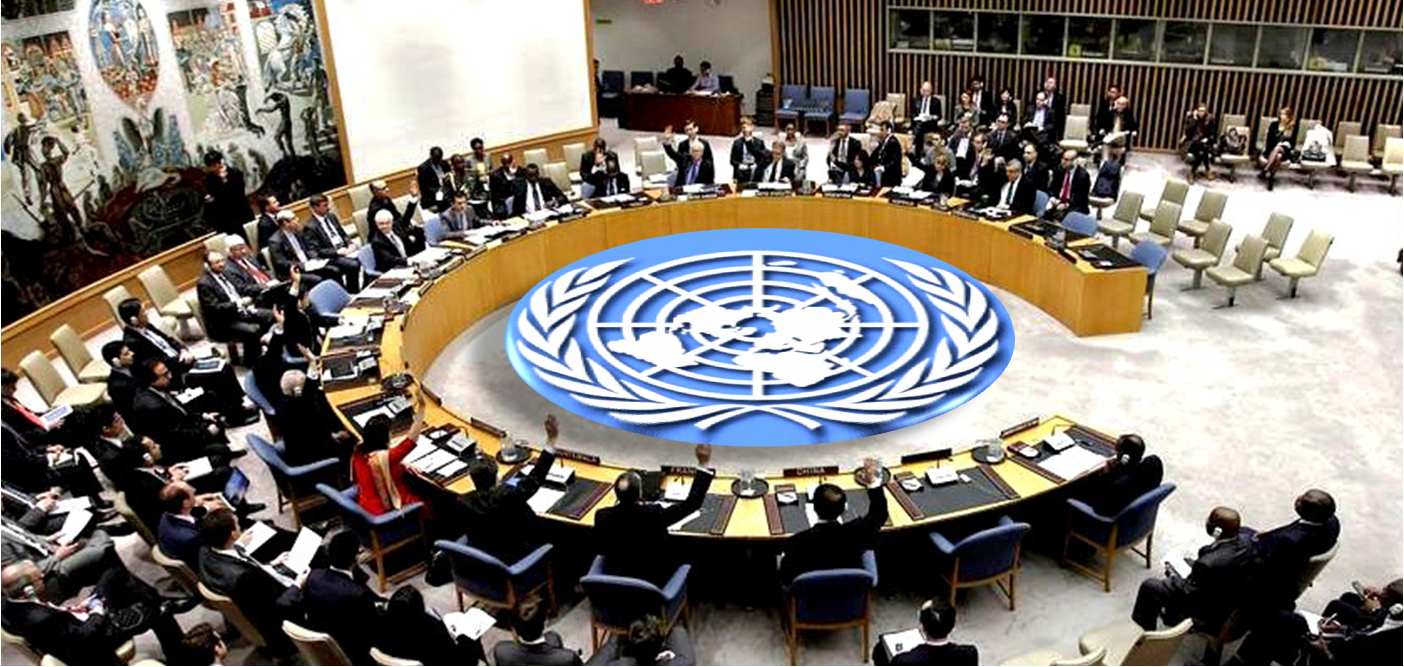
The number of countries involved in “violent conflicts” is the highest in 30 years, while the number of people killed in conflicts has risen tenfold since 2005, the U.N. secretary-general said Tuesday.
Antonio Guterres added that the number of “violent situations” classifiable as wars, based on the number of casualties, has tripled since 2007.

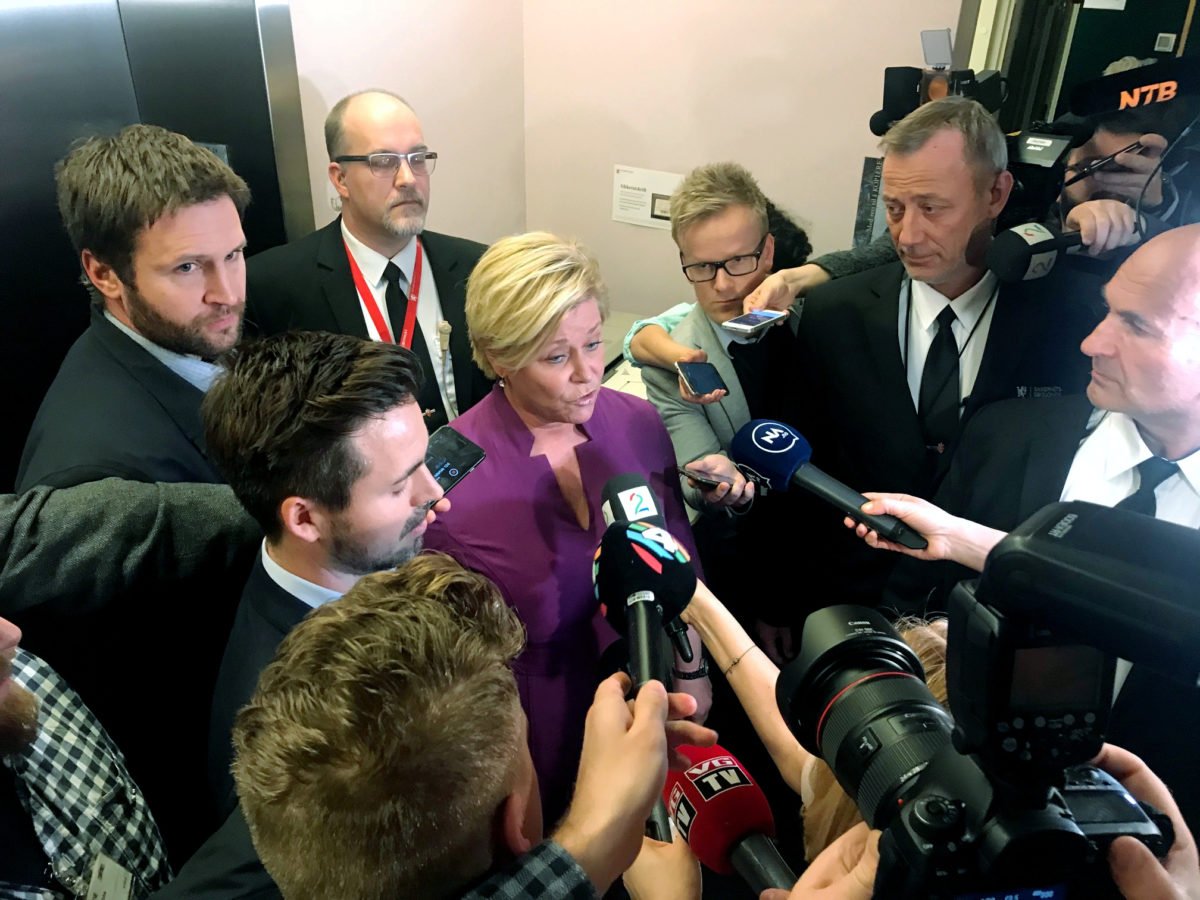
He also told reporters in Oslo, Norway, that “low-intensity conflicts” rose by 60 percent since 2007. Guterres gave no specific figures.

“Prevention is more necessary than ever,” Guterres said, adding “mediation becomes an absolutely fundamental instrument in our action.”

Guterres, who was attending a meeting on peacemaking, said that on top of regional conflicts, global terrorism was a new type of struggle that “can strike anywhere at any time.”

The annual Oslo Forum panel discussion on peacemaking also was attended by leaders from Somalia, Algeria, Jordan, Oman and Tanzania. The White House envoy for the war against the Islamic State also attended.

The U.N. refugee agency said nearly 69 million people fleeing war, violence and persecution were forcibly displaced last year, a record number.

In its annual Global Trends Report published Tuesday, the U.N. High Commissioner for Refugees said the continued crises in places like South Sudan and Congo, as well as the exodus of Muslim Rohingya from Myanmar that started last year, raised the overall figure of forced displacements in 2017 to 68.5 million.

Later Tuesday, Guterres met with Erna Solberg, prime minister of Norway. The country is lobbying for a seat on the U.N. Security Council for the period 2021-2022.

Among the topics they discussed was the state of the oceans, which Guterres described as “a mess.”

At a news conference with Solberg, Guterres said 80 million tons of plastic were being dumped into the oceans every year.

He said the U.N. would come up with a “battle plan” in September for the oceans, saying there is a “collective responsibility” to do something.

The oceans face threats from plastic garbage, illegal and excessive fishing, rising sea levels that could wipe out small islands, and increasing acidity of ocean water, which is killing marine life.

  • abcnews – By JAN M. OLSEN, ASSOCIATED PRESS
June 21, 2018 0 comments
0 FacebookTwitterPinterestEmail
Srilanka and Norway

Norwegian Foreign Affairs State Minister visits Sri Lanka

by Nadarajah Sethurupan June 21, 2018
written by Nadarajah Sethurupan

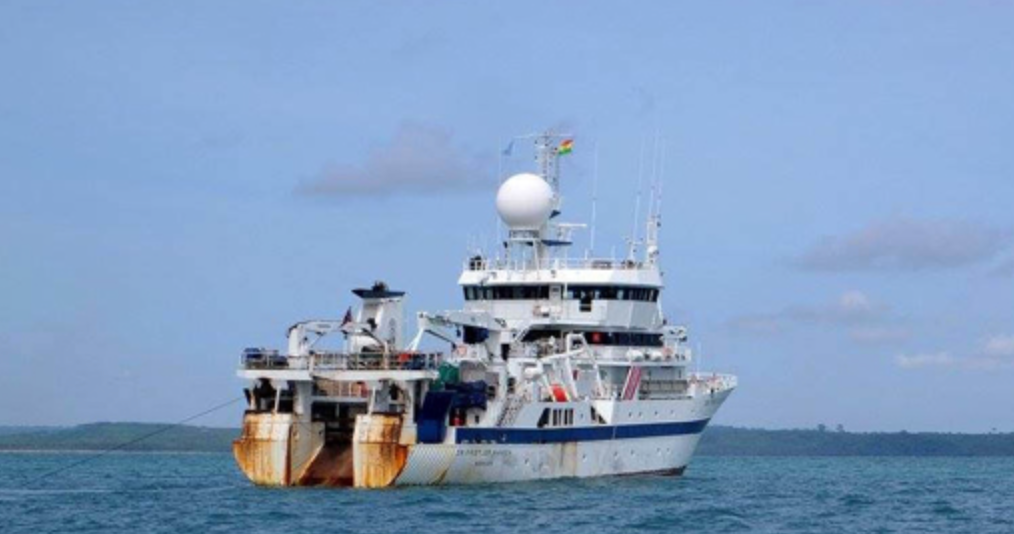
The State Minister’s visit coincides with the arrival of the Norwegian research vessel Dr. Fridtjof Nansen to  Sri Lanka. The research vessel will arrive in Colombo on the 21st of June followed by a 26 days research journey around the island. The research vessel will assist Sri Lanka in mapping her marine resources.

The State Minister will also meet senior politicians, ministers and members of civil society in Sri Lanka. This visit will provide an opportunity to discuss issues of mutual benefit and interest, including bilateral cooperation, environmental challenges and promotion of oceanbased industries, says the Norwegian Ambassador to Sri Lanka, Mr. ThorbjørnGaustadsæther.

The oceans offer huge potential for human development globally. Norway has a long history as a marine nation, and there are considerable opportunities for sustainable growth in ocean-based industries in the future.

The State Minister will speak at the opening of a regional symposium organized by the Ministry of Fisheries and Aquatic Resources Development of Sri Lanka in co-operation with the Norwegian Ministry of Trade, Industry and Fisheries and the Norwegian Embassy in Colombo about “SDG 14 – Life Below Water”. Participants from countries from the Bay of Bengal and other stakeholders will discuss challenges and opportunities for sustainable use of the ocean.

The State Minister will also pay a short visit to Jaffna, where he will learn more about the outcomes of the long-term Norwegian support to sustainable livelihood activities in the resettled areas. While in Jaffna, the State Minister will open a fruit and vegetable packing center to the Palali East Cooperative and join beach cleaning in Gurunagar with local fishermen and their families. Before ending his visit, the State Minister will open a Business Conference on Blue Economy organized by the Norwegian Embassy, with participants from the maritime, marine and aquaculture sectors in both Norway and Sri Lanka. This conference will help to build new partnerships within the blue economy sectors.

June 21, 2018 0 comments
0 FacebookTwitterPinterestEmail
Media Freedom

Norwegian rights group expresses solidarity with jailed Turkish journalist

by Nadarajah Sethurupan June 21, 2018
written by Nadarajah Sethurupan

A letter written by Marina Nemat, a Canadian rights activist, writer and chair of the Oslo-based Vigdis Freedom Foundation (VFF) to Turkish journalist Ayşenur Parıldak, who is serving a seven-and-a-half-year prison sentence on charges of membership in a “terrorist” organization, was released by the foundation on Friday.

“Please know that we love you, think of you, and do our best to make sure the world knows you. You are not alone. Don’t let darkness steal away all light from you. I pray and hope that your light overcomes. Take care of yourself,” Nemat said in the letter.

VFF is a “woman-to-woman solidarity” group that promises “legal support and counsel to women human rights defenders who have been wrongfully accused and imprisoned and are therefore prisoners of conscience.”

The VFF gave journalist Parıldak its inaugural Shahnoush Courage Award in September 2017.

Parıldak, also a law student at Ankara University’s faculty of law, was detained while taking exams on Aug. 11, 2016. She was released by the court on May 2, 2017 but was later rearrested by the same court before being freed after a prosecutor objected to the initial ruling.

During her trial, she told the judges that she had thought of committing suicide several times while in prison. Behind bars since the summer of 2016, Parıldak faces 15 years in jail under Turkey’s broad anti-terror laws based on her tweets and alleged use of the ByLock mobile phone messaging application, believed by Turkish authorities to be a communication tool among alleged followers of the Gülen movement, which is accused by the government of orchestrating a failed coup on July 15, 2016.

The group denies any involvement in the putsch.

Turkey has suspended or dismissed more than 150,000 judges, teachers, police and civil servants since July 2016. On December 13, 2017 the Justice Ministry announced that 169,013 people have been the subject of legal proceedings on coup charges since the failed coup.

Turkish Interior Minister Süleyman Soylu announced on April 18, 2018 that the Turkish government had jailed 77,081 people between July 15, 2016 and April 11, 2018 over alleged links to the Gülen movement.

The full text of Nemat’s letter:

“Dear Aysenur Parıldak;

You don’t know me, but I’ve heard a lot about you. My name is Marina Nemat. I live in Canada now, but I was born in Iran in 1965 and spent 2 years, 2 months, and 12 days as a political prisoner when I was a high school student. I now teach at University of Toronto and work with a few human rights organizations. One of them is the Vigdis Freedom Foundation that gave you the Shahnoush Award last year, in 2017. This award is named after a friend of mine who was executed in Evin prison in Tehran in 1981. But I survived, and so did many of my cellmates. Now, we live all over the world and work to make sure that the world knows the terrible things that happened and are still happening in prisons in Iran and other countries.

I want you to know that you are not forgotten. When I was in prison, it felt like the world had forgotten my friends and me, and this thought sometimes made us lose hope. People ask me how I survived Evin. I tell them that I survived because of my friends who gave me hope; they made sure that I knew I was loved, despite all the darkness and evil in the world.

Please know that we love you, think of you, and do our best to make sure the world knows you. You are not alone. Don’t let darkness steal away all light from you. I pray and hope that your light overcomes. Take care of yourself.

With love,

Marina Nemat
Author
Board Member, Vigdis Freedom Foundation”

(Stockholm Center for Freedom [SCF] with Turkish Minute)

June 21, 2018 0 comments
0 FacebookTwitterPinterestEmail
Srilanka and Norway

UN chief admits UN was not equipped to deal with Sri Lanka war

by Nadarajah Sethurupan June 21, 2018
written by Nadarajah Sethurupan

United Nations Secretary-General António Guterres has admitted that the UN was not equipped to deal with the Sri Lanka war.

Guterres told reporters at a press conference in Norway that there were many aspects in which the UN had failed.

Responding to a question posed by Norway based Sri Lankan journalist Nadarajah Sethurupan, Guterres said that countries were responsible for what happens in their own countries and so Sri Lankans are responsible for what happened in Sri Lanka.

“It its necessary to recognise that,” he said. The UN had come under fire in the past for failing to stop the war in 2009 or ensure post war accountability.

Guterres said that while the shortcomings have been identified and changes have been made to the UN system now, yet the system cannot ensure perfect accountability for war crimes or crimes against humanity or genocide.


June 21, 2018 0 comments
0 FacebookTwitterPinterestEmail
Media Freedom

Norway’s Newest Billionaire Is Also One of The World’s Most Adventurous

by Nadarajah Sethurupan June 21, 2018
written by Nadarajah Sethurupan

When news broke in the Norwegian press in December identifying the buyer of one of Oslo’s most iconic buildings, journalists began calling. They were desperately trying to get a comment from Ivar Tollefsen, the buyer of the building, which was the former U.S. embassy, designed by the same architect who did the Gateway Arch in St. Louis. But he couldn’t be reached that day, nor for the next week. According to a spokesperson, Tollefsen was stuck in bad weather on a mountain face off Gessner Peak in Antarctica, where temperatures drop as low as -22 °F.

“It’s insanely cold, especially as you only move up about 50 meters a day, so you’re not very active,” Tollefsen later says about the experience.

Norway is long on colorful billionaires. The three youngest in the world with three-comma fortunes are all Norwegians.  Former fisherman Kjell Inge Rokke recently placed an order for what will become the world’s largest yacht. Hotel conglomerate owner and triathlon athlete Petter Stordalen performs Houdini-like escapes from water tanks in front of his employees.

But Tollefsen, a self-made billionaire who joins the ranks of the World’s Richest for the first time this year, already stands out thanks to his passion for adventure. He set the world record for fastest crossing of Greenland on skis in 1991. After his time was bested, he was determined to do better. Setting out to reclaim his title in 2016, at the age of 55, he raced across the icy landscape in just 6 days and 20 hours, beating the record by 14 hours.

He also competed in the 2009 Dakar rally, a grueling 6,000-mile race that is one of the world’s most popular and dangerous; several drivers were injured and one driver died in the 2009 race. Tollefsen finished fourth, still the best result ever for an amateur driver.

Tollefsen, now 56, grew up in a row house in Asker, on the outskirts of Oslo. The oldest of three siblings and the son of parents who had no formal education, he started a paper route at age 12. Two years later, he would wake up at 3:30 a.m. six days a week to deliver his papers on his then four routes. With the money he pocketed, he bought a stereo system and started DJing at neighborhood school parties. Before long Tollefsen was touring Norway as a DJ and making enough money that he decided to skip high school and put all his energy into his party business.

“I wasn’t a great DJ, but I was good at organizing others,” he says.

The company, called Tollefsen Enterprises, soon morphed into a party consultant and supply business that designed clubs and leased DJ-services and equipment. He caught the eye of investment firm Vest Invest which in 1985, when Tollefsen was 23, bought the company in a stock deal worth millions (Tollefsen says he doesn’t remember what the deal was worth, but that his shares at one point were worth NOK 20 million, or $2.8 million). The value of the stake evaporated just three years later when Vest Invest went belly up.

He was back to zero but not out of ideas. Tollefsen had for years been an active polar explorer, and in 1993, he says that he led some of the first expeditions to climb mountains in Antarctica. Intent to capitalize on his outdoor achievements, he published three books about the topic between 1992 and 1997, coupled with well-attended book talks.

In 1994, with $120,000 (NOK 900,000) he mustered from book sales, he purchased his first piece of property. His timing was good: real estate values in Norway had plummeted following the banking crisis of the early 90’s.

With the NOK 900,000 in equity, he applied for a loan and bought a building, with 20-apartments, in central Oslo for $820,000 million (NOK 6.15 million). Tollefsen estimates that it’s now worth about 13 times what he paid for it. As he built equity, he borrowed more and purchased more buildings.

Today his Fredensborg AS, together with subsidiary Heimstaden AB, is one of the largest owners of rental housing in Scandinavia. It rents out 27,000 apartments across Norway, Sweden and Denmark. One of his 2-room apartments in Oslo typically rents for $1,500 a month.

The property markets in Scandinavia are booming, especially in Sweden. Tollefsen is just the latest real estate developer in the region to reach billionaire status. Erik Paulsson and Erik Selin joined the FORBES billionaires’ ranks in 2017 and 2016, respectively. Both built fortunes in Swedish real estate.

The hot market has led to concerns about how Swedes and others are financing their purchases. Both households and many real estate firms have taken on a lot of debt, worrying experts of what will happen if property prices go down. For someone like Tollefsen, who owns solely rentals, a market downturn would severely affect his business — and his net worth.

Tollefsen is hesitant to make any predictions but says he thinks his company Fredensborg is well positioned, owning housing that will always be in demand. Plus, he says, it’s a solid industry in which to invest. “Unlike many other industries, housing will not be digitalized. People will always be in need of a physical home,” he says.

Time will tell if real estate valuations in Scandinavia are a bubble that will pop or if Tollefsen indeed has the ability to ride it out. But if his adventurous expeditions are any indication of entrepreneurial character (and Tollefsen says that it is), then he has shown he is capable of some impressive achievements. Polar expeditions, Tollefsen explains, require tremendous preparation and planning, risk calculation and a great deal of adaptability and determination. Same as with business.

“Climbing a mountain is all about moving fast and safe up a dangerous terrain,” says the man with most of his wealth tied up in an industry that is worrying investors all over Europe.

( Follow Max on Twitter at @Maxjedeur or email him at mpalmgren@forbes.com.)

June 21, 2018 0 comments
0 FacebookTwitterPinterestEmail
Spy War

US Marines are stationed in Norway to help deter Russia, and Norway may ask them to stay longer

by Nadarajah Sethurupan June 20, 2018
written by Nadarajah Sethurupan

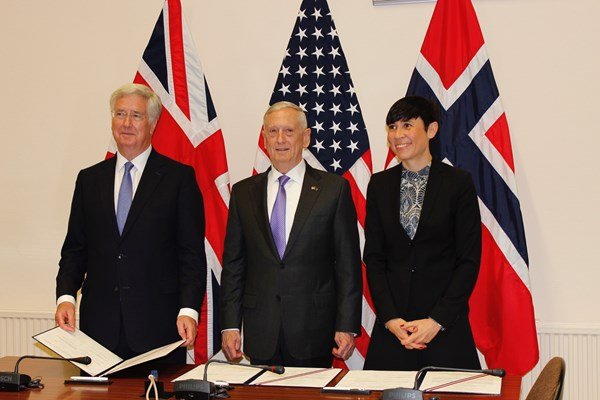
Norway’s government may ask the US to extend a Marine Corps deployment in the country, Foreign Minister Ine Eriksen Soereide told Reuters.

“We are currently in a phase where we are discussing different options, but I think from our point of view it has been very useful and very successful,” she said.

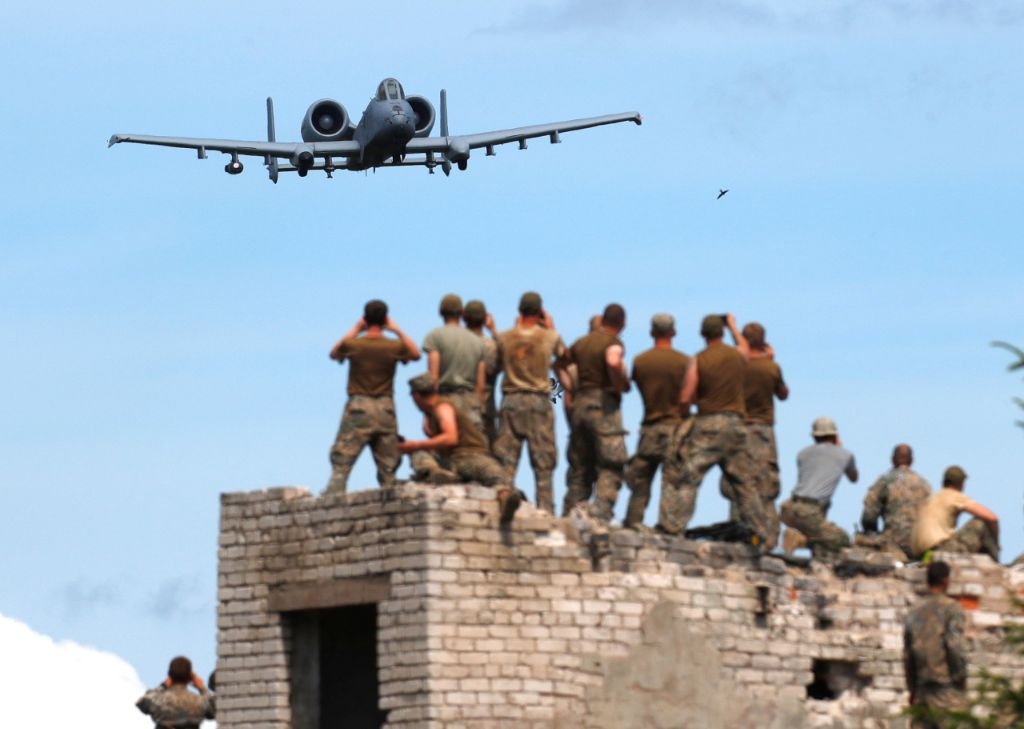
Contingents of about 300 Marines from various units have been stationed in Norway for six-month deployments. The first rotational force arrived at Vaernes in central Norway in January 2017 — the first time a foreign force was stationed on Norwegian soil since World War II (though Norway and the Marine Corps have managed weapons and equipment stored in caves there since the Cold War).

The deployment has already been extended, with the initial rotational force being replaced by another in August 2017. The roughly 330 Marines in the country are now scheduled to stay until the end of the year.

Marines in Norway have focused on cold-weather training, doing exercises with Norwegians and other partner forces. Some of those exercises have taken place near Norway’s border with Russia, which has criticized the Marines’ presence in Norway. Russia’s embassy in Norway told Reuters that extending the Marines’ presence would worsen Norway’s relations with Moscow and could raise tensions on NATO’s northern boundary.

“The Americans have been very happy with how things have played out,” Soereide said. “They do see after many years where they had a lack of winter training and expertise of wintry conditions … they are now, to a larger extent, able to deal with the cold.”

Norwegian Defense Minister Frank Bakke-Jensen said in March that the US was interested in continuing the deployment and that his government hoped to make a decision on it in the coming months.

The Pentagon “would like to extend the [deployment] and they would like to see whether we could increase,” he told Defense News during a visit to Washington. “We will look into it and give them an answer in, before the summer … that’s my ambition.”

The Norway deployments are part of efforts across the US military to increase training for cold-weather operations.

Marine Corps Commandant Gen. Robert B. Neller said in January that US forces “haven’t been in the cold-weather business for a while.”

“Some of the risks and threats there,” he said at the Center for Strategic and International Studies in Washington. “There is a possibility we are going to be there.”

During a visit with Marines stationed in Norway at the end of 2017, Neller was more blunt in his assessment.

Telling Marines in the country to remain ready to fight at all times, he said he foresaw a “big-ass fight” on the horizon, according to Military.com. “I hope I’m wrong, but there’s a war coming,” Neller said. “You’re in a fight here, an informational fight, a political fight, by your presence.”

Neller added that he believed the US military’s focus would shift away from the Middle East in the coming years, with the Marines in particular focusing on the Pacific and Russia.

Norway is one of many countries that have expressed concern about an increasingly assertive Russia, especially in the years since the Russian occupation of Crimea.

Norwegian military officials have publicly discussed ways to counter Russian armor — apparently “breaking a taboo among Western military officials” by doing so. And Oslo has sought to boost its military spending.

In 2017, Norway decided to buy five P-8 maritime surveillance aircraft, bringing it closer to the US and the UK, with whom it maintained a surveillance network over the North Atlantic during the Cold War. Norway has also teamed up with Germany to buy new submarines. In November, Oslo accepted three F-35 fighters, the first to be permanently stationed there.

Concerns about Russia military action as well as the potential for US retreat from the NATO alliance have boosted political support for Norway’s increased defense spending, but opposition leaders have still criticized the way it’s been financed and questioned what role US troops will have.

“There has been no real debate about the role of US forces. There is concern that we may be looking at a significant shift in Norwegian defense policy without an informed debate,” Audun Lysbakken, leader of the Socialist Left party, said in late 2017.

Soereide, Norway’s foreign minister, told Reuters that Oslo did not see Russia as a military threat and that the risk of war in the Arctic was “low.” But she did say her government saw challenges poised by Russia actions, particularly in the area of civil society, rule of law, and democracy.

(uk.businessinsider)

June 20, 2018 0 comments
0 FacebookTwitterPinterestEmail
Environment

A new era of supersonic flight is almost here. But nobody can agree on the right speed

by Nadarajah Sethurupan June 20, 2018
written by Nadarajah Sethurupan

On January 15 a Boeing 787-9 Dreamliner flying from New York’s JFK airport to London Gatwick set a new journey speed record. The aircraft, owned by budget airline Norwegian, completed its 3,470 mile journey in five hours and 13 minutes. In doing so, it became the fastest subsonic plane to travel across the Atlantic.

The Dreamliner beat the previous record, held by a British Airways plane, by three minutes. But the speed boost wasn’t down to technological or engineering advancements – it was down to tailwinds. So strong was the speed boost that the Norwegian flight hit a top ground speed of 779mph. But while that’s faster than the speed of sound, the flight didn’t break the sound barrier as its speed through the air was every so slightly slower.

“Most aircraft we have today are in fact slightly slower than they were in the 1960s,” says Phil Atcliffe, a senior lecturer in aerodynamics and aircraft performance at the University of Salford. Performance has largely stagnated, he says. “They’re more efficient, they don’t burn as much fuel, they carry more people, they even fly longer distances but in performance terms they’re pretty much the same speed.”

Norwegian Air’s close call with supersonic flight was a reminder of how much air travel has slowed down in recent years. At present the sound barrier (Mach 1, 767mph) is reserved for military aircraft. Concorde was retired from flight in 2003 – three years after the crash of Air France Flight 4590, which killed 113 people – and supersonic flight hasn’t returned to the masses since. But a glut of companies are working on bringing back supersonic travel and they’re getting closer to making it a reality.

There are two approaches to developing the next generation of supersonic planes: creating private supersonic jets and trying to make supersonic planes for larger groups. Aerion Supersonicand Spike Aerospace are developing private jets for the wealthy and Boom Supersonic is creating plane for less well-monied flyers. The goal? To reduce the time spent on long haul flights and make them commercially successful.

All the next generation supersonic planes being developed use slightly different technologies, vary in size and are aimed at different markets. And to add to the confusion none of the companies involved can agree on what speeds they should be travelling at.

Spike’s S-512 plane, a windowless business jet, is planned to reach speeds of Mach 1.6 (1,227mph). Aerion’s AS2 business jet will have a top cruise speed of Mach 1.4 (1,074mph). And Boom has set its sights on even faster travel: Mach 2.2 (1,687mph). Boom’s offering is the only one in the same league as Concorde, which had a maximum speed of Mach 2.04 (1,565mph).

These speed differences make a big difference when applied to real-world flights. Boom says New York to London will be possible in 3 hours 15 minutes, with Aerion’s plane it will take 4.5 hours and Spike claims potential flight times of 3.3 hours for the same journey.

“Everyone else is thinking slower,” Scholl says. “If you go faster – and I think you need to go at least Mach 2.0 for this to work – you’re not just saving a couple of hours with the way the flights are scheduled, you’re going to save people whole days.”

But there’s also another hurdle – it’s one that may derail supersonic planes all together. Red tape. The sonic boom from airplanes hasn’t been completely eradicated and it’s illegal to fly at supersonic speeds above US soil. Concorde’s popularity – and what routes it was able to fly – wasn’t helped by its supersonic boom. So the latest iterations of supersonic technology are aiming to get around this.

“The AS2 has the ability to fly up to Mach 1.2 without a boom reaching the ground,” Barents says. “We term this Boomless Cruise, known technically as Mach cut-off speed. That is about 50 per cent faster than today’s airliners.” Boom says it expects its supersonic boom will be “at least 30 times quieter than Concorde’s”. Spike says it has patent-pending “Quiet Supersonic Flight Technology” that will top a sonic boom reaching the ground.

But these are yet to be fully proven in real-world testing. There may be some respite though as US air traffic officials are looking at rewriting supersonic flight rules. In the future, supersonic planes may need to have their noise certified before they can fly.

There’s one thing the supersonic firms can all agree on: the demand exists. “People are looking for a market,” Atcliffe says. “They know that travelling in Concorde was popular so they’re looking for a way that is close to it, a way to get something better than the standard subsonic airline travel we have today.” But this isn’t just about dreaming up a revamped Concorde – it’s rethinking supersonic passenger flight (and its business model) from the ground up.

“Airlines are flying basically the same jets between the same airports with more or less the same cabin experience,” says Blake Scholl, the founder and CEO of supersonic plane company Boom Supersonic. “It’s why they all have these frequent flyer programmes to try and lock us in – without those there’s no reason to not switch airlines all the time.”

At present, all three are working on prototypes. Spike Aerospace says it tested an unmanned, subscale version of its S-512 plane (dubbed the SX-1.2) on seven short test flights in October 2017; Boom will fly a one-third scale plane in 2019 and Aerion Supersonic also wants to test next year. If all goes well, and that’s a big if, passenger flights could take place towards the mid-2020s.

That might sound a long way off, but the race to go supersonic again finally has some momentum behind it. “There are really three big areas that have changed since Concorde was designed: aerodynamics, materials and engines,” explains Scholl. Wind tunnels can now be replaced by computer simulations, carbon fibre composites are lighter than the materials Concorde was made of and engines no longer require afterburners, he says.

“They add up to enough of an efficiency gain where you can today build a supersonic aircraft that is 75 per cent more efficient to operate than Concorde,” Scholl explains. “That means it can be a lot more affordable to passengers”. Scholl says Boom started with the economics of flight and then worked back towards and aircraft.

Boom’s approach to supersonic travel is to create a 55-seater commercial airliner, which will fly at Mach 2.2 and have seats priced around $5,000 for transatlantic flights (in 1981, a round-trip ticket to London or Paris from New York, about a three-and-a-half hour flight at 1,350 miles an hour, cost about $3,000). Scholl’s gamble is simple: he believes Boom can always fill a 55-seater plane, as opposed to Concorde, which had to fill more than 100 seats per flight.

Scholl says Boom’s XB-1 demonstrator plane, which will fly next year, is currently being manufactured. The engines have arrived in Boom’s hangars and the company is in the process of building the tail and wings. Currently, Boom has 76 orders from five airlines – including Richard Branson’s Virgin Group – and despite being smaller the plane looks similar to Concorde. “It’s an evolutionary design, rather than a revolutionary design as we already had the revolutionary design in Concorde,” Atcliffe says of Boom’s aircraft.

As far back as 2015, Aerion agreed a deal to sell 20 of its jets to airline charter service Flexjet. The AS2 plane will be able to carry eight to 12 passengers and is firmly focussed on business uses. “We project a market for 300 AS2s over the first 10 years of production,” Brian Barents, the CEO of Aerion says. “We think a business jet is the right place to relaunch supersonic flight, and expect that airline aircraft will follow as we prove the market for efficient supersonic travel.”

Aerion has been developing its supersonic technology since 2003, when Concorde stopped its service. In December 2017, Aerion started working with Lockheed Martin, the developer of supersonic fighter planes, on its AS2 plane. “The Aerion AS2 concept warrants the further investment of our time and resources,” Orlando Carvalho, an executive vice president, at Lockheed said in a statement at the time.

Nasa has also been working on supersonic flight with its X-planes and Virgin Galactic’s long-running attempts to create commercial space travel has seen its VSS Unity pass supersonic speed.

But, despite all the hype supersonic flights are still some years away from reality. And that’s if everything goes smoothly. “People have always been interested in supersonic travel,” Atcliffe says. There was excitement around travelling at the speed of sound before Concorde was developed, during its operation and long since it went out of service. Much of this has led to no real developments.

This time around though, things may be different. “It’s actually beginning to look like it might be converted into hardware,” Atcliffe says. “There are lots of indications that it should start happening very soon.”

(wired)

June 20, 2018 0 comments
0 FacebookTwitterPinterestEmail
Asia and Norway

More Indians now want to settle in Norway

by Nadarajah Sethurupan June 19, 2018
written by Nadarajah Sethurupan

Norway, Belgium and Sweden were among the preferred choices by Indians, over USA, UK, Canada and Australia—this is just an estimate since absolute numbers are not comparable.


The year 2017 saw a decline in the number of Indian citizens wanting to become citizens of other countries, with the number dropping to 92,000 from 1.15 lakh in the previous year. The drop in the number is mainly concentrated in countries where Indians are traditionally known to go, according to rough estimates by the Ministry of External Affairs, reported Times of India.

Norway, Belgium and Sweden were among the preferred choices of counties by Indians, over USA, UK, Canada and Australia — this is just an estimate since the absolute numbers are not comparable.

A drop of 12 percent was observed in Indians desiring US citizenship in 2017 compared to 2016. The number was 30 percent in the UK, 9 percent in Australia and a whopping 55 percent in Canada.

The numbers skyrocketed in Sweden with 160 percent rise in Indians wanting to be citizens, and Norway saw a 218 percent jump. The high percentage was due to numbers being in three digits, compared to the five-digit numbers in other countries.

Experts think that the current trend is that of Indians settling in smaller but developed countries, and this will continue for some years. Other factors contributing to this shift are the political climate in India and building pressure from natives in countries where Indians would usually go to, like USA and UK.

Saju James, partner and managing director at an immigration services firm, told TOI, “It won’t be that people going to the US or UK will reduce. Job opportunities there are still very lucrative and lots of Indians, especially the young, will continue to go there in search of opportunities. That said, the number of people wanting to go to countries like Sweden and Norway, among others, will also increase and that trend is here to stay.”

Sweden had 25,719 Indians out of which 10,370 were Persons of Indian Origin (PIO) and 15,349 were Non-Resident Indians (NRI) in 2017. In Norway, there were 12,300 PIOs and 7718 NRIs.

People are demanding more than just job opportunities, like the standard of living and social security, says Vikram Shroff from a law firm. “Countries that encouraged migrants, including Indians, are now pushing for stricter immigration laws. Countries with relatively lesser population are sensing this opportunity and welcoming talented migrants.”

June 19, 2018 0 comments
0 FacebookTwitterPinterestEmail
Diplomatic relations

United Nations Secretary-General’s Opening remarks at press encounter

by Nadarajah Sethurupan June 19, 2018
written by Nadarajah Sethurupan

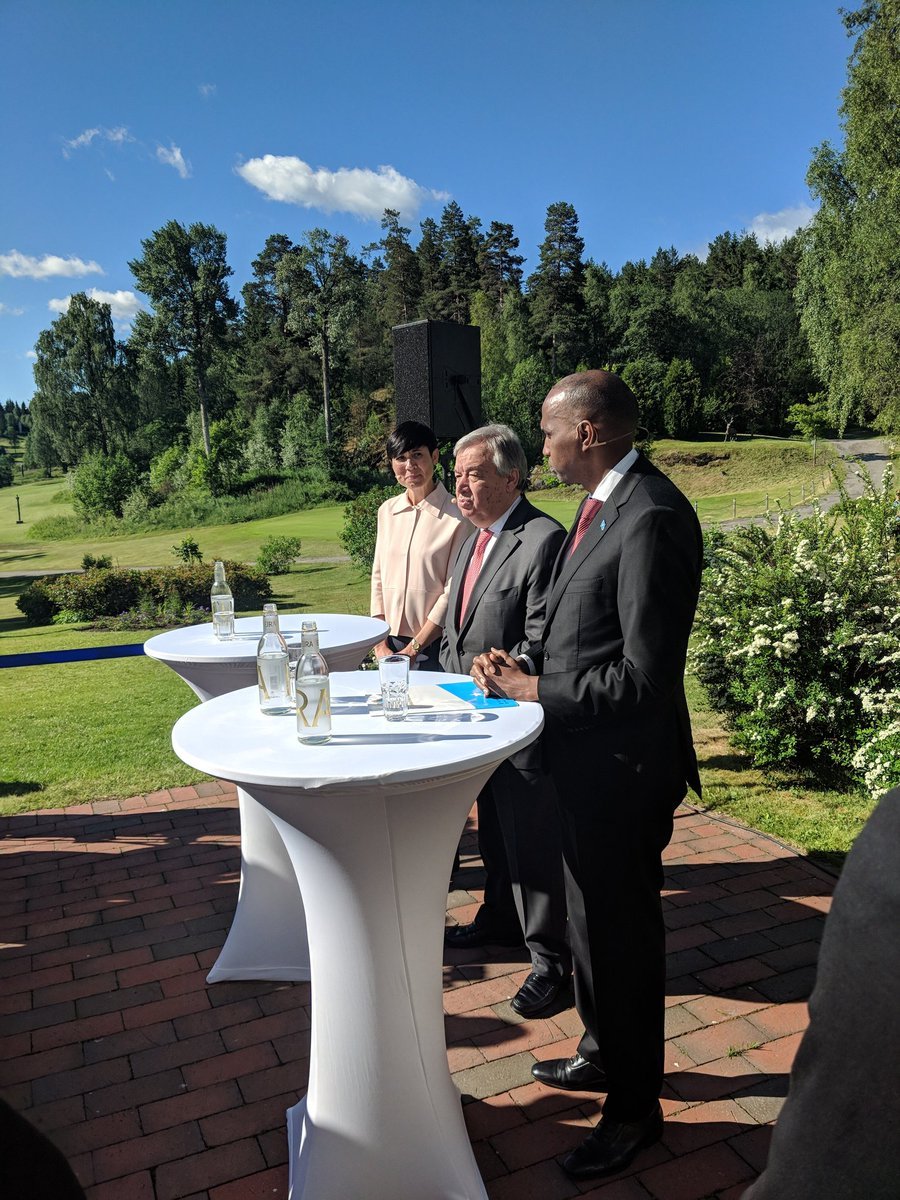
United Nations Secretary-General António Guterres’s Opening remarks at press encounter with Foreign Minister of Norway Ine Marie Eriksen Søreide and Prime Minister of Somalia Hassan Ali Khaire on the margins of the Oslo Forum.


Ladies and gentlemen of the press, it’s a pleasure to be with all of you today. Indeed, we live in a dangerous world where we see a multiplication of new conflicts, old conflicts that seem never to die, and conflicts becoming more and more interlinked and more linked to what is now a new threat of global terrorism. There was always terrorism in the world, but this form of global terrorism is indeed new, and terrorism can strike anywhere at any time.

There are very strong reasons for us to do everything to prevent conflict and to do everything to solve conflict. As a matter of fact the number of countries with violent conflicts is the highest in the last 30 years. If we compare with 2007 and consider the number of violent situations that can be qualified as war according to the number of casualties, they have tripled. If we consider low intensity conflicts since 2007, they have increased by 60 per cent.

At the same time, taking as a reference 2005, when we had the lowest number of people being killed in battle, we have now tenfold that level, which means that the situation is indeed deteriorating in the world. That means that prevention is more necessary than ever, and the more difficult conflict resolution is the more important prevention becomes. But to prevent is not enough because conflicts are there, they need to be solved, and so mediation becomes an absolutely fundamental instrument in our action. Formal mediation but also backdoor mediation that helps bring together parties and especially the mediation that goes down, that trickles down, that involves communities, that involves societies, that manages to guarantee reconciliation, stability, cohesion and inclusivity in today’s world.

During this period, Oslo will be the world capital of mediation, which means the world capital of peace. This is well deserved because Norway always has had a very strong commitment to support all UN activities in mediation but beyond that, Norway has always been directly involved in mediation activities around the world helping to solve several of the conflicts that we have heard about. Fortunately, thanks to Norway’s commitment they were possible to be resolved in the past. Norway is extremely active in helping the grassroots, allowing for bottom-up initiatives to be more widespread in the world, and that is reason for us to be extremely grateful for the action of the Norwegian government and the Norwegian people, and a reason for me to be extremely happy to be with you today.

June 19, 2018 0 comments
0 FacebookTwitterPinterestEmail
Peace Talks

Children must not be separated from their parents: UN chief Antonio Guterres

by Nadarajah Sethurupan June 19, 2018
written by Nadarajah Sethurupan

Children must not be traumatised by being separated from their parents, UN chief Antonio Guterres has said.


Children must not be traumatised by being separated from their parents, UN chief Antonio Guterres has said amid a growing backlash over US President Donald Trump’s hardline immigration policy which has resulted in the separation of hundreds of migrant families.

The Trump administration’s zero tolerance policy seeks prosecution for any adult crossing the southern border illegally. The number of separations has jumped since early May, when Attorney General Jeff Sessions announced that all migrants illegally crossing the US border with Mexico would be arrested, regardless of whether the adults were seeking asylum.

Since children cannot be sent to the facilities where their parents are held, they are separated, “As a matter of principle, the Secretary-General believes that refugees and migrants should always be treated with respect and dignity, and in accordance with existing international law,” a statement issued by Guterres’ spokesman Stephane Dujarric said yesterday.

“Children must not be traumatized by being separated from their parents. Family unity must be preserved,” the statement added.

The Secretary General defended the rights of migrant and refugee children, but did not single out the US.

When asked if the Secretary-General is concerned about the zero-tolerance policy of the Trump administration on US border security, Dujarric said the Secretary-General would like to see at all borders people being treated with dignity and respect for their rights and that people claiming asylum be given proper hearings.

“This is not a position that he has…specifically vis-a-vis the United States. This is a principled position that he has for the way that migrants and refugees are treated the world over,” Dujarric said.

The UN human rights chief also voiced his deep concern over recently-adopted United States border protection policies that have seen hundreds of migrant children forcibly separated from their parents.

“In the past six weeks, nearly two thousand children have been forcibly separated from their parents,”UN High Commissioner for Human Rights Zeid Ra’ad Al Hussein said in his opening remarks to the 38th session of the Human Rights Council in Geneva – the last session before his four-year term expires in August.

Zeid said that the American Association of Pediatrics in the US, had called it a cruel practice of “government-sanctioned child abuse” which may cause “irreparable harm” with “lifelong consequences”.

The human rights situation in the US was one of the many topics to be discussed at the latest Human Rights Council session, which runs through July 6.

At the onset of his speech, the UN human rights chief warned of the return of “chauvinistic nationalism” around the world, and urged leading politicians to combat this “menace that stalks our future”.

June 19, 2018 0 comments
0 FacebookTwitterPinterestEmail
Norwegian Aid

Development is more than aid

by Nadarajah Sethurupan June 19, 2018
written by Nadarajah Sethurupan

‘Over the years, Norwegian aid has been spread too thinly, both geographically and thematically. If we are to achieve the UN Sustainable Development Goals and make the best possible use of our aid funds, we must concentrate our efforts,’ said Minister of International Development Nikolai Astrup.

Today the Government is presenting its white paper on partner countries in development policy.

‘This white paper sets out our plan for concentrating Norway’s efforts on just a few partner countries. In our cooperation with these countries, we will use the full range of development policy tools at our disposal. Development is more than aid, and it is precisely this fact that the white paper takes as its starting point,’ said Mr Astrup.

Norway’s partner countries will be divided into two categories: long-term development (10 countries), and stabilisation and conflict prevention (6 countries). Norway previously had three categories of partner countries.

The long-term development category applies to countries where Norway has been involved in long-standing cooperation, has built up considerable experience and expertise, and already has a presence. These factors are important for developing partnerships and achieving lasting results.

‘We will use the full range of our development policy tools in our partner countries, with a view to supporting these countries to one day become independent from aid. We need to focus on measures that boost economic growth, create jobs and secure tax revenues, which in turn will enable these countries to invest in education, health and other services for their own population,’ said Mr Astrup.

Norway’s efforts in its partner countries in the stabilisation and conflict prevention category will draw from the priorities set out in the strategic framework for its engagement in conflict prevention, stabilisation and resilience building, which was launched in 2017.

‘Our efforts in countries affected by conflict and fragility cannot continue as before. Today, 88 percent of the world’s humanitarian crises have lasted for more than seven years. This is longer than many development projects last, and it means that we have to take a long-term perspective. We therefore need a comprehensive approach as to how we put our development tools to work.   Humanitarian response and long-term development efforts have different goals, but must pull in the same direction,’ said Mr Astrup.

In an OECD DAC survey carried out in 2015, a large number of developing countries indicated that what they need from donor countries is technical cooperation to enable them to strengthen their public institutions’ knowledge base and expertise, rather than money. In March this year, the Government established Kunnskapsbanken (a pool of technical experts) with a view to strengthening our technical cooperation programmes: Tax for Development, Oil for Development, Fish for Development, and Like, the gender equality for development programme. eKunnskapsbanken will be Norway’s main channel for technical cooperation in the years to come.

‘Norway is a resource-rich country, not only in monetary terms, but also in terms of knowledge, skills and experience. Among developing countries there is a demand for  this expertise. As this white paper outlines, transfer of expertise will be just as important as transfer of funds. By sharing our experience and expertise in areas such as taxation, oil, fish, gender equality, and clean energy, we can help developing countries take greater responsibility for their own development,’ said Mr Astrup.

Partner countries

Category 1: long-term development

Ethiopia
Colombia
Ghana
Indonesia
Malawi
Mozambique
Myanmar
Nepal
Tanzania
Uganda

Category 2: stabilisation and conflict prevention

Afghanistan
Mali
Niger
Palestine
Somalia
South Sudan

Ministry of Foreign Affairs

TOPIC

  • Development cooperation
June 19, 2018 0 comments
0 FacebookTwitterPinterestEmail
Diplomatic relations

UN Secretary-General to Norway and Oslo Forum

by Nadarajah Sethurupan June 19, 2018
written by Nadarajah Sethurupan

Minister of Foreign Affairs Ine Eriksen Søreide is hosting the annual Oslo Forum, a meeting place for leaders from all over the world, at Losby Manor outside Oslo on 19 and 20 June. UN Secretary-General António Guterres will also take part at this year’s Forum. After taking part in the Forum, Mr Guterres will attend an audience at the Royal Palace, and will have an additional programme with Prime Minister Erna Solberg.

Among the other participants are Somali Prime Minister Hassan Ali Khayre, Presidential Adviser on the Peace Process in the Philippines Jesus Dureza, US Special Presidential Envoy for the Global Coalition to Defeat Isil Brett McGurk, UN Special Envoy for Syria Staffan de Mistura and UN Special Envoy for Yemen Martin Griffiths. Foreign ministers of Algeria, Jordan, Oman, Tanzania and other countries will also take part.

The Oslo Forum has become one of the world’s most important meeting places for facilitators, mediators, government leaders and other key actors in peace and conflict resolution processes. More than a hundred researchers, mediators and politicians with experience of a range of peace and reconciliation processes will be attending the Forum.

‘Peace and reconciliation efforts are a key element of Norwegian foreign policy, and our work in this area is increasingly linked to security policy considerations. We are living at a time of great uncertainty. We are facing new threats and seeing the rise of new geopolitical power constellations. Global security, economy and welfare could be undermined. Working together with the UN for peaceful resolution of conflicts is a way of safeguarding our common interests.

‘I am delighted that António Guterres has accepted the invitation to participate at this year’s Forum. I’m looking forward to the discussions with him and the other participants on what we can do to make peace efforts more effective in response to today’s conflicts,’ said Ms Eriksen Søreide.

The theme for this year’s Forum is ‘The End of the Big Peace? Opportunities for Mediation’. This theme was chosen against the backdrop of the changing conflict landscape. While the peace negotiations with Farc in Colombia, for example, only involved two parties, the situation in today’s most serious conflicts is more complex. Militias, terrorist groups, porous borders and weak governance structures are all complicating factors. Conflicts can spread across borders, and are increasingly taking the form of proxy wars. As a result, conflicts are causing more casualties and are also becoming harder to resolve. The situation in Libya, Yemen, Mali, Syria, Colombia and the role of religious groups in peace facilitation are among the topics that will be discussed at this year’s Forum.

(MFA – Norway )

June 19, 2018 0 comments
0 FacebookTwitterPinterestEmail
Russia and Norway

Russia threatens consequences after Norway asks US for more Marines

by Nadarajah Sethurupan June 18, 2018
written by Nadarajah Sethurupan

Last Thursday, Oslo announced that it will be requesting an additional 700 U.S. Marines to train in the Scandinavian country near the Russian boarder.

“This makes Norway less predictable and could cause growing tensions, triggering an arms race and destabilizing the situation in northern Europe. We see it as clearly unfriendly, and it will not remain free of consequence,” the Russian Embassy said.

Norwegian officials are concerned that Russia may attempt to take over some of their land after the successful Crimea annexation in 2014. Norway doesn’t consider Russia to be a direct threat but still wants to be prepared for a potential conflict.

Originally, the Marines that were stationed in Norway were scheduled to leave at the end of 2018 after arriving in January 2017 to train in the cold winter environment.

The deployment of the Marines to Norway marks the first time that U.S. troops have been stationed in the country since World War II.

While the recent deployment of American troops to Norway is significant, the country’s foreign minister, Ine Eriksen Soereide, pointed out that a permanent American military base will not be established.

“There are no American bases on Norwegian soil,” Soereide said.

In retaliation to the proposed deployment of Marines, Russia launched a naval exercise in the Arctic Barents Sea, which is near the northern part of Norway.

Moscow is also strengthening its international alliance with China.

In early June, the Shanghai Cooperation Organization held its annual meeting, with Russia and China being the dominant participants.

At the meeting, the two countries discussed a variety of potential projects that they could collaborate on, including creating a maritime route through the Arctic.

As global temperatures rise, the navigability of the Arctic is increasing.

China intends to use this to their advantage by investing in the region as part of country’s Belt & Road Initiative, which is part of China’s master plan to be a dominant global trading power.

Moscow has similar aspirations and is ambitious about fulfilling its desire to create a reliable maritime navigation route through the Arctic Ocean.

Officials believe that having Chinese investors on board will help expedite the project.

Other joint infrastructure investments were also discussed at the meeting, including roads, railways, sea ports and the implementation of modern telecommunication technology.

June 18, 2018 0 comments
0 FacebookTwitterPinterestEmail
Asia and Norway

Iran nuclear chief at Oslo Forum

by Nadarajah Sethurupan June 18, 2018
written by Nadarajah Sethurupan
The Iranian nuclear chief says he will defend the country’s national interests “in the best way” during the upcoming Oslo Forum.


Head of the Atomic Energy Organization of Iran (AEOI) Ali Akbar Salehi made the remarks on Monday upon his arrival in Norway to participate in the 16th edition of the Oslo Forum.

He said he would express Iran’s explicit stance on the multilateral nuclear agreement, officially known as the Joint Comprehensive Plan of Action (JCPOA) signed between Iran and the P5+1 group of countries, after the United States’ move to withdraw from it.

“Certainly, the JCPOA will be one the most important issues which will be discussed and we will declare Iran’s positions explicitly and transparently,” Salehi said, Presstv Reported.

US President Donald Trump announced on May 8 that Washington was walking away from the nuclear agreement, which was reached between Iran and the five permanent members of the UN Security Council – the United States, Britain, France, Russia and China – plus Germany.

Trump also said he would reinstate US nuclear sanctions on Iran and impose “the highest level” of economic bans on the Islamic Republic.

Under the JCPOA, Iran undertook to put limits on its nuclear program in exchange for the removal of nuclear-related sanctions imposed against Tehran.

Since the US president pulled Washington out of the historic nuclear deal, European countries have been scrambling to ensure that Iran gets enough economic benefits to persuade it to stay in the deal. The remaining parties have vowed to stay in the accord.

Salehi further noted that he would hold meetings with United Nations Secretary General Antonio Guterres and the Norwegian prime minister and foreign minister on the sidelines of the Oslo Forum.

The AEOI chief said he would also exchange views with political experts from different countries and a number of other participants at the forum on the future of the nuclear accord after the US exit.

More than 100 of the world’s most prominent armed conflict mediators, peace process actors, high-level decision-makers and eminent thinkers will gather in Oslo on June 19-20 at the 16th edition of the Oslo Forum.

Co-hosted jointly by the Norwegian Ministry of Foreign Affairs and the Centre for Humanitarian Dialogue (HD), the forum brings together practitioners and experts for informal discussions to reflect on current peacemaking trends and challenges.

The overarching theme of the 2018 Forum will be ‘The End of Big Peace? Opportunities for Mediation’. Participants will explore the challenges posed to peacemakers by the increasingly atomized and internationalized nature of ongoing conflicts.

(iran-daily)

June 18, 2018 0 comments
0 FacebookTwitterPinterestEmail
Asia and Norway

Dureza leaves for Oslo Forum; to conduct ‘town hall’ with Pinoys in Norway

by Nadarajah Sethurupan June 17, 2018
written by Nadarajah Sethurupan

Presidential Adviser on Peace Adviser Sec. Jesus Dureza speaks before the participants of the National Peacebuilding Conversations in Davao City on Saturday. The two-day event aims to gather the voices of the stakeholders of the peace process under the Duterte administration.(Keith Bacongco)

Philippines Presidential Peace Adviser Jesus Dureza left the country for Europe Sunday night to attend the Oslo Forum in Norway.

Dureza will join global peace negotiators to share experiences about their work for peace worldwide.

He is also scheduled to meet separately with the new Norwegian foreign minister to update him on the status of peace work in the country, as well as to thank Norway for facilitating the peace negotiations between the Philippine government and the Communist Party of the Philippines.

A “town hall” meeting will be conducted at the Philippine Embassy in Oslo to brief the Filipino community about the situation in the country under the current administration.

Dureza, likewise, will also be meeting with Kjartan Sekkingstad, who was freed by his Abu Sayyaf captors two years ago.

(news.abs-cbn)

June 17, 2018 0 comments
0 FacebookTwitterPinterestEmail
Middle East and Norway

Norwegian group DNO boosts stake in Faroe Petroleum

by Nadarajah Sethurupan June 17, 2018
written by Nadarajah Sethurupan
DNO ASA, the Norwegian oil and gas operator focused on the Middle East and North Africa region, announced last night that it had acquired a further 3.74 million shares in London-listed Faroe Petroleum at a price of £1.25 per share representing 1.02 per cent of the outstanding shares in the company.
Together with two other recent transactions, also at £1.25 per share, this brings DNO’s stake in Faroe Petroleum to 28.71 per cent.
Faroe, which focuses principally on exploration, appraisal and production opportunities in Norway and the UK, announced earlier this week that Norway’s Minister of Petroleum and Energy has approved plans for the development and operation, ‘PDO’, of the Fenja field in the Norwegian sector of the North Sea.
Faroe has a 7.5 per cent share in the field, which is expected to come into production in 2021. It also announced the completion of a successful appraisal well on the Fogelberg discovery, also in the Norwegian North Sea, in which it has a 15 per cent stake.
Founded in 1971 and listed on the Oslo Stock Exchange, the DNO ASA holds stakes in onshore and offshore licences at various stages of exploration, development and production in the Kurdistan region of Iraq, Yemen, Oman, the UAE, Tunisia and Somaliland. Its largest shareholder is UAE-based RAK Petroleum.
(TradeArabia News Service)
June 17, 2018 0 comments
0 FacebookTwitterPinterestEmail
Defence

Norway opens for continued USMC rotational training and exercises

by Nadarajah Sethurupan June 16, 2018
written by Nadarajah Sethurupan

The Norwegian government has decided to welcome continued USMC rotational training and exercises in Norway, with a volume of up to a total of 700 marines, initially for a period of up to five years, says Minister of Defence Frank Bakke-Jensen.

Since January 2017, approximately 330 Marines from the Unites States Marine Corps (USMC) have been conducting training and exercise activities in Norway. The Marines have used Vaernes in Mid-Norway as the hub for their various training and exercise activities. The Norwegian government have decided that they are positive to extending this initiative and adding a second location. The potential increase in volume will be located at Setermoen in Troms. -More predictable rotational USMC training and exercises in Norway will significantly improve opportunities to develop and enhance interoperability between USMC and Norwegian forces, says the Minister of Defence.

In times of crisis and war Norway will rely on U.S. and other allied military reinforcements. This is at the core of Norwegian security policy and is further emphasized by our NATO-membership. We have a long-standing tradition for inviting allies to train and exercise in Norway. This is underlined in the current long-term plan for the Armed Forces. The Marine Corps rotational force constitutes an important contribution to NATO’s reinforcement plans for the defence of Norway. The initiative has proven that training and conducting exercises together with allies has had a positive impact on the operational capability of our own forces, says Bakke-Jensen.

-The United States Marine Corps (USMC) and Norway have a long-standing and successful relationship that we look forward to strengthening. We will continue the dialogue with the U.S. and the USMC, aiming for mutual agreement in the near future on the continuation of the rotational training and exercise activity, says Frank Bakke-Jensen.

FACTS:

This rotational force agreement builds on the framework of the longstanding agreements between the U.S. and Norway on prepositioning and reinforcement, renewed in 2006 in the Memorandum of Understanding Governing Prestockage and Reinforcement of Norway. The renewal of the agreement, approved by the Storting (Parliament), opens for considerable American training and exercises in Norway.

Ministry of Defence

TOPIC

  • Defence
  • Security policy
June 16, 2018 0 comments
0 FacebookTwitterPinterestEmail
Srilanka and Norway

Norwegian vessel to research in Lankan territorial waters

by Nadarajah Sethurupan June 15, 2018
written by Nadarajah Sethurupan

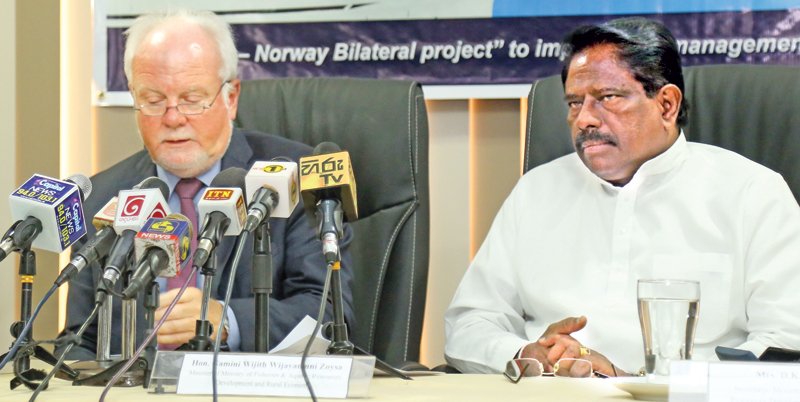
Fisheries and Aquatic Resources Development and Rural Economy Minister Vijith Vijayamuni Zoysa and Norwegian Ambassador to Sri Lanka Thorbjorn Gaustadsaether at the press conference. Picture by Nirosh Batepola.

Marine research vessel Dr. Fridtjof Nansen will arrive in Sri Lanka on June 21 to carry out a research in Sri Lanka’s territorial waters in the Bay of Bengal for nearly 26 days, accompanied by Sri Lankan scientists and researchers.

The vessel is owned by the Norwegian government and is jointly managed by the Norwegian Institute of Marine Research and the Food and Agriculture Organization (FAO) of the UN.

The vessel is one of the world’s most advanced research vessels. The main purpose of the survey is to improve the knowledge base for sustainable resources management and to enhance the understanding of the marine ecosystem in Sri Lanka.

Addressing a media briefing held in Colombo recently, Norwegian Ambassador to Sri Lanka Thorbjorn Gaustadsaether said the Nansen visit gives an opportunity to highlight the good and longstanding development cooperation between Sri Lankan and Norway, especially on fisheries which started in 1971.

This also gives us a chance to highlight the importance of sustainable marine resources management and to discuss some key environmental concerns, such as marine littering and pollution as well as potential of blue economy.

The vessel is one of the most advanced research vessels in the world and brings together state-of-the-art technology with world class expertise on marine resource management. The first vessel visited Sri Lanka about 40 years ago.

With a world population that is expected to increase by more than two billion by 2050, our need to obtain resources such as food and energy from the oceans will continue to grow in the years to come, the Ambassador said.

The present Norwegian support to the fisheries sector includes assistance in developing a fisheries policy for Sri Lanka which has already been approved by the Cabinet. The implementation of the policy and the revisions of the fisheries legislation and institutional restructuring as appropriate will be important in time to come.

Norway also supports technical and institutional cooperation between the Institute of Marine Resources in Norway and NARA in Sri Lanka on sustainable management of fisheries resources in Sri Lanka.

(dailynews)

June 15, 2018 0 comments
0 FacebookTwitterPinterestEmail
Nobel Peace Prize

A Nobel Peace Prize for Donald Trump? Don’t rule it out

by Nadarajah Sethurupan June 15, 2018
written by Nadarajah Sethurupan

A pair of Norwegian politicians has nominated US president Donald Trump for the 2019 Nobel Peace Prize. In a statement released on Thursday, Christian Tybring-Gjedde, a lawmaker, and Per-Willy Amundsen, a former justice minister, said Mr Trump deserved the prize for having “taken a huge and important step in the direction of the disarmament, peace and reconciliation between North and South Korea”.

The move potentially sets in train a push for the award to go to the man who has championed a policy of “America First” isolationism. Mr Trump became the first US president to meet a North Korean ruler when he flew last week to Singapore to hold one-on-one talks with Kim Jong-un. But talk of the peace prize for the US president has been steadily gaining traction in America’s conservative circles ever since Mr Trump first expressed his willingness to engage directly with the ruler of the hermit kingdom earlier this year.

In May, 18 Republican members of the US Congress formally submitted Mr Trump’s name for the Nobel Peace Prize “in recognition of his work to end the Korean war, denuclearise the Korean peninsula and bring peace to the region”. The same month, when Mr Trump raised the prospect of peace between the Korean neighbours – who are still officially at war since signing an armistice in 1953 – at a rally in Michigan, the crown yelled back: “Nobel.”

Four US presidents – Theodore Roosevelt, Woodrow Wilson, Jimmy Carter, Barack Obama – have so far received the most prestigious peace prize in the world. Mr Obama’s prize, conferred on him during his first year in office, attracted heavy criticism. Nominations for the 2009 prize closed 12 days after Mr Obama was sworn into office. Critics seized on this fact to accuse the Norwegian Nobel Committee, the body responsible for awarding the prize, of making up its mind to honour the 44th US president before he had accomplished anything that justified even his name being considered for the prize.

In 2015, Geir Lundestad, who served as the secretary of the Nobel Committee for 25 years beginning in 1990, regretted the decision to give the prize to Mr Obama. “Even many of Obama’s supporters believed that the prize was a mistake”, he wrote in his tell-all book Secretary of Peace. “In that sense the committee didn’t achieve what it had hoped for.”

In contrast, say Mr Trump’s supporters, Mr Obama’s successor has made a historic breakthrough in Korea that could potentially put an end to what has long been regarded as one of the most intractable conflicts in the world. “Unlike Obama, [Trump] actually deserves the Nobel Peace Prize”, Laura Ingraham, an influential presenter on Fox news, tweeted in April. The idea has been endorsed by South Korean president Moon Jae-in.

Critics say it is too premature to hail Mr Trump’s diplomacy in Korea as a success. There is no clear roadmap as yet for North Korea’s denuclearisation and no details about sanctions relief. The path to normalisation of relations between Pyongyang and Washington is a long and arduous one. Mr Trump’s supporters, however, appear determined to advance his name for the prize. Some of them seem so impatient to see Mr Trump in Oslo that they may have violated the rules of the Nobel Committee. In February, Olav Njolstad, the secretary of the committee, revealed that he had uncovered two forged nominations of Mr Trump for the 2018 peace prize.

For a nomination to be considered valid, it must be made by a person or organisation that falls in the broad categories listed in the Nobel Committee’s rules. Members of parliaments and national assemblies, justices at the the International Court of Justice, university professors of certain disciplines, previous recipients of the peace prize are among those who qualify.

Mr Tybring-Gjedde and Mr Per-Willy Amundsen are members of the anti-immigrant Progress Party. The former has likened the hijab to a Nazi uniform and demanded stricter immigration controls. The Nobel Committee does not reveal the names of the nominees for 50 years. Some 216 individuals and 114 organisations have been nominated for the 2018 prize, which will be announced in October. Asked directly in May by a reporter if he deserved the Nobel, Mr Trump replied: “Everyone thinks so, but I would never say it.”

If he is not invited to Oslo next year – or at any time during his presidency – the soonest the world will find out if Mr Trump was ever considered for the Nobel Peace Prize is 2069.

(thenational)

June 15, 2018 0 comments
0 FacebookTwitterPinterestEmail
Taiwan and Norway

Free outdoor concert with Tung-Chieh Chuang and Oslo Philharmonic June 17th.

by Geir Yeh Fotland June 15, 2018
written by Geir Yeh Fotland

 Photo credit Ragnar Time, 2017.

Many people in Norway are looking forward  to this yearly Summer Sunday event with free admission hosted  by Sagene Sommer Concerts and Oslo-Philharmonic Orchestra, this year also together with the Oslo Philharmonic Choir and Swedish guest violinist Johan Dalene. Guest conductor in 2018 is the young Tung-chieh Chuang from Taiwan. The weather forecast for Sunday says rain in the morning,  but cloudy in the afternoon when the concert starts at 3 p.m.  According a Facebook notice more the 19000 people have showed interest to attend this event sitting on the green lawns of the Myraløkka park along the Aker River between Sagene and Torshov in Oslo.

– We guarantee a varied program and a summery atmosphere. Bring friends and acquaintances, a blanket and a picnic blanket, a dog and a grandmother. Food and drinks are sold on site. Welcome to everyone, the organizer says.

Program for the concert:  

Orff: “O Fortuna” from Carmina Burana (with choir)
Grieg: Norwegian Dance  nr.2
Tchaikovsky: Violin concert No. 3
Monti: Czardas                                                                                                                                                                                                       Borodin: Polovetsian Dances (with choir)                                                                                                                                                    Verdi: Chorus of the Hebrew Slaves (with choir)
Halvorsen: Entry March of the Boyars
Grieg: In the Hall of the Mountain King

 Tung-Chieh Chuang conducting outdoor in Sweden last year.

Tung-chieh Chuang was born in 1982 into a family of professional musicians in Taipei, Taiwan. He showed great musical promise from an early age and learned early to play horn and piano, giving his first public concert at age 11. He studied at the Curtis Institute in Philadelphia and at the Weimar Academy of Music. His mentors include Mark Gibson, Gustav Meier, Otto-Werner Mueller and Nicolás Pasquet.  He has some awards and is often guest conductor in Europe and Asia. In October 2016 he  conducted the Qatar Philharmonic Orchestra on a tour in China. Today he lives with his wife and two years old child in Berlin. He hopes in the future to start his own orchestra.

– This will be my 4th time to Norway. I have been to Bergen and Trondheim. Greatly looking forward to working with the Oslo Phil ,  Tung-Chieh Chuang says.

Once on a transfer to Romania he met a student of  Hochschule für Musik und Theater München,  Min Hua Chiu from Taichung, Taiwan.

And I met the same Min-hua Chiu in Taipei (photo left) when Oslo Philharmonic was back to Hong Kong and Taipei in March 2017.

– After 3 years study in Germany, Chiu told me last year.  – I did the audition for co-principal in June 2016 and went through the final. The job wasn’t given, but I was very lucky to be offered a one-year-contract for 2nd oboe full time.  After a few months I found that I love Norway and the job so much, so I will definitely do the auditions again. Now he wrote me from Oslo: – I just passed my probation and am going to live here for good!

Now he is looking forward to being conducted by his countryman Tung-Chieh Chuang.

– We both  joined to the same military band in Taiwan, but not at the same time, Min-hua Chiu said.

– So we never met in Taiwan. 


China Times ,Taiwan, had an article about Tung-chieh Chuang going to Norway.


June 15, 2018 0 comments
0 FacebookTwitterPinterestEmail
Russia and Norway

Nordics must keep Russian aggression on the minds of allies

by Nadarajah Sethurupan June 15, 2018
written by Nadarajah Sethurupan

National security experts all over Washington spent their winter binge-watching the second season of a popular Norwegian TV series titled Okkupert (or “Occupied”), in which Russia brazenly occupies Norway after a dispute over energy.

In this dystopian near future, the United States is no longer in NATO and world leaders are totally ineffective in securing Russia’s withdrawal. While the scenario is pure fiction, the underlying Russian aggression that inspired it is very real.

Throughout the Cold War, the Nordic nations wrestled with how best to deter their powerful neighbor. Denmark, Iceland and Norway relied on the collective security of NATO membership, while Sweden and Finland walked a tightrope of engagement and deterrence.

Russia’s growing assertiveness and belligerence in recent years has become a major preoccupation for publics and political elites in the Nordic countries, for good reason.

After a state-sponsored chemical weapon attack in the U.K. on a former Russian spy, Sergei Skripal, the five Nordic countries responded in concert with EU and NATO allies  by expelling Russian diplomats and expressing their outrage.

Norway, Sweden and Finland expelled one Russian diplomat each, while Denmark expelled two. Iceland, with its much smaller diplomatic corps, stopped short of expelling any Russian representatives, but announced that no officials will attend this summer’s soccer World Cup in Russia.

These numbers may seem small compared to U.S. expulsions, but it’s important to realize that Nordic missions in Russia are much smaller than those of their larger allies, and any significant counter-expulsions could cripple their ability to serve Nordic citizens in Russia.

While these steps were necessary for the Nordics to send Russia a message and stand in solidarity with the U.K. and other allies, we must put this incident in perspective and not treat it as just another in the long line of Russian lies.

For the first time since the Second World War, a chemical weapon, a particularly nasty one at that, has been used in Europe. A major red line has been crossed, and the expulsion of diplomats does not even come close to addressing the severity of the attack in Salisbury.

While Russia will continue to protest its innocence and complain loudly at the Organisation for the Prohibition of Chemical Weapons and in other fora, the cost that has been inflicted on Russia for this and other past transgressions can best be described as minimal.

So the international community must consider how it can further respond in a way that doesn’t only temporarily discomfort Russia, but rather deters it from similar or more egregious future actions.

Unfortunately, the current U.S. administration has not provided what would historically be dependable American leadership on an issue of such gravity and importance to the transatlantic partner nations.

The Trump administration’s policy on Russia is both opaque and nebulous, shifting daily with a range of different messages coming out of the interagency and the White House. Effective deterrence is based on strong consistent messaging about boundaries and predictable repercussions, but that is notably absent from any U.S.-Russia communications today.

While the Nordic countries cannot deter Russia on their own, they can keep this issue on the international agenda by using their respected voice in the international community.

As states that are consistently among the strongest champions of international law, collective security and human rights, the Nordics ought to be vocal about the need to act more effectively to arrest the dangerous trajectory Russia is on.

They know that the importance of safeguarding international legal norms is most important for smaller states, states that rely on collective rather than individual power in order to deter aggression or illegal behavior. T

he fact that such attacks have now taken place at least twice in the U.K. sends a clear signal that Russia will not hesitate to commit similar violations against the sovereignty of less powerful states — such as the Nordics.

The Nordic states can act individually, but ideally in concert, in bilateral conversations with key allies and within NATO, the EU and the U.N. where their voices carry weight and influence.

The recent inconsistency of American messaging regarding Russia makes it even more important that the issue of how to deal with Russia forms a key part of any Nordic-U.S. consultations going forward.

The Nordics have been a reliable partner to the U.S. for decades in meeting the most intractable challenges of our time, including threats to peace and security. The healthy Nordic-U.S. relationship can be at the heart of meeting the challenge of a belligerent Russia that is intent on undermining the post-war international system.

Erlingur Erlingsson is a visiting fellow at the Center for Transatlantic Relations at Johns Hopkins University School of Advanced International Studies and the former deputy chief of mission at the Embassy of Iceland in Washington.

(thehill)

June 15, 2018 0 comments
0 FacebookTwitterPinterestEmail
Norwegian Aid

Norwegian government report sharply critical of funding for tropical forest conservation

by Nadarajah Sethurupan June 15, 2018
written by Nadarajah Sethurupan
  • A recent report by Norway’s Office of the Auditor General had some tough criticisms for the country’s International Forests and Climate Initiative (NICFI), one of the chief funders of REDD+ initiatives around the world.
  • The Office of the Auditor General said that its investigation found “that progress and results are delayed, that current measures have uncertain feasibility and effect, and that the risk of fraud is not well-managed.”
  • Responding to the report, Norway’s Minister of Climate and Environment, Ola Elvestuen, said that it provided some useful insights and that its recommendations would be followed up on. However, Elvestuen said he disagreed with many of the report’s key conclusions.

A recent report by Norway’s Office of the Auditor General had some tough criticisms for the country’s International Forests and Climate Initiative (NICFI), one of the chief funders of REDD+ initiatives around the world.

Over the last 10 years, NICFI has granted a total of 23.5 billion Norwegian krone (about $2.9 billion) to projects aimed at conserving tropical forests and reducing associated greenhouse gas emissions in several developing countries. Norway even paid three countries directly to protect their forests and draw down emissions: Brazil, in particular, has been a major recipient of funds from Norway, receiving 7.4 billion krone (more than $900 million), while Indonesia and Guyana have each received 1.1 billion krone (about $134 million).

Germany and the UK are also among the top three donors of funds to protect tropical forests in developing nations. But in a statement, the Office of the Auditor General noted that Norwegian contributions from 2008-2016 made up 51 percent of the total funds paid out by those three countries.

“The prerequisite for increased support from other countries has not been met, and Norwegian contributions make up a larger proportion than anticipated,” Per-Kristian Foss, Norway’s Auditor General, said.

That was far from the harshest criticism in the report, however. The Office of the Auditor General said that its investigation found “that progress and results are delayed, that current measures have uncertain feasibility and effect, and that the risk of fraud is not well-managed.” The report identifies some key challenges that are preventing successful implementation of conservation measures, such as conflicts of interest between sectors, lack of capacity, and shifting policy priorities in countries receiving funds.

“International efforts to preserve tropical forest have not found solutions to address these global challenges,” Foss said. “There is therefore uncertainty about further implementation and if the measures give lasting effect.”

According to the report, Norwegian authorities do not sufficiently account for the risk of fraud, nor are there adequate mechanisms in place for measuring and reporting on outcomes such as protection of indigenous peoples’ rights, poverty alleviation, and conservation of natural forests.

Foss summed up the report’s findings by saying that “There is a need to ensure better control of the use and results of these funds.”

Responding to the report, Norway’s Minister of Climate and Environment, Ola Elvestuen, said that it provided some useful insights and that its recommendations would be followed up on. However, Elvestuen said he disagreed with many of the conclusions reached by the Office of the Auditor General (OAG).

“It is always useful to have the OAG’s view on the management of money granted by our parliament (Stortinget),” Elvestuen said in a statement. “The remarks from OAG point to issues we are already aware of and are closely following up on. We will continue our efforts to promote permanent conservation of rainforest, we will strive to be even better at following up on results and lessons learned, and we will ensure active follow-up relating to the risk for financial fraud.”

Elvestuen noted that he wants to strengthen efforts to measure, report, and verify results on the ground, as well as to combat international forest crime. He strongly disagreed with the OAG’s conclusion that the administration has not complied with its own guidelines to prevent abuse of Norwegian funds, however.

“We have good systems in place to ensure that Norwegian money transactions are channeled appropriately and used as intended. However, it is obvious that the risk of fraud and corruption is far greater for this type of international aid management, than for example, national subsidy management,” he said. “We have zero tolerance for corruption.” He added that the number of corruption cases “has been very limited” given that over 20 billion krone has been disbursed to date.

Elvestuen also objected to what he characterizes as misrepresentations the OAG makes about “the amazing results in reducing Amazon deforestation in Brazil,” and said that the report only examines parts of the NICFI, which led the OAG to make overly broad conclusions based on a limited audit. “Thus, many very important results are overlooked,” Elvestuen added. “The main challenge, a global mobilization to prevent climate change, cannot be solved with Norwegian money alone. But we have come a long way given the circumstances, and we have reason to be very content about what Norway together with our partners have achieved in this area.”

He points specifically to the partnerships NICFI has established with some of the world’s most important rainforest countries. “The work is challenging, and political priorities change over time. However, several partnerships have shown impressive progress. Brazil has reduced emissions corresponding to 70 years of Norwegian emissions, and we feel that the OAG rendering of this story is incomplete. Important advances in Indonesia and Colombia have also not been assessed by the Office of the Auditor General.”

It’s unclear what, if any, impact the report might have on initiatives in countries like Brazil and Indonesia that rely on Norwegian funds channeled through the UN’s program for reducing emissions from deforestation and forest degradation, known as REDD+. Combating deforestation is so critical to efforts to halt global warming that REDD+ was enshrined in the Paris Climate Agreement as a standalone article.

Florian Eisele, a spokesman for the UN-REDD Programme, declined to comment on the specifics of the report but said that efforts to combat global deforestation are moving in the right direction. Eisele noted that 6.3 gigatons of REDD+ emission reductions have already been reported under the UNFCCC by a number of countries, and that there continues to be “strong interest from forested countries” in creating REDD+ programs.

“We have seen that reducing emissions from forests is possible, and can be done with great sustainable development benefits, protecting the interests of some of the most vulnerable people,” Eisele told Mongabay. He noted that halting deforestation is not only crucial to mitigating global climate change but also to achieving the UN’s Sustainable Development Goals (SDGs) on poverty, health, gender, water, and land use.

“While admittedly the progress is not as fast as everyone hoped ten years ago, we currently have an opportunity to help countries to achieve transformative change, supported by political commitment through the Paris Agreement and SDGs,” Eisele said. “Ensuring environmental and social safeguards will continue to be central to the success of REDD+.”

Not everyone is convinced that REDD+ is a viable solution, however, and the Norwegian Office of the Auditor General report is likely to fuel further criticism. For instance, Saskia Ozinga, a co-founder and campaigns coordinator for the NGO FERN, told Mongabay that the theory of change behind REDD+ has proven to be wrong. She appears to be skeptical that the reforms called for in the Auditor General’s report could make REDD+ work the way it was intended.

“REDD+ was based on the idea there would be, by now, a large forest carbon market paying for REDD+ projects. As this large market does not exist, REDD+ is now just one source of development aid money for forests,” she told Mongabay. “This money is needed but must be focused on addressing the causes of deforestation and forest degradation, including lack of good governance and unclear tenure rights (and reducing consumption). Carbon monitoring, reporting and verification is costly, often disempowering for local communities and does not address causes of deforestation and REDD+ funding for these type of activities is therefore not helpful.”

June 15, 2018 0 comments
0 FacebookTwitterPinterestEmail
Asia and Norway

China’s Belt and Road plans will damage Norwegian investment in Pakistan

by Nadarajah Sethurupan June 15, 2018
written by Nadarajah Sethurupan

It is a scorching hot June day in Gwadar, a port city on the southwestern coast of Balochistan, and more than a dozen eight-year-old children have blocked a road by lying across it. Dressed in traditional shalwar kameez, the kids are protesting against a severe water shortage and long hours without electricity. The traffic is stopped for a while but then the children get up, rub the dust off their clothes and run towards the crowded markets.

The combined opposition in the Gilgit-Baltistan Assembly (GBA) and Awami Action Comm­ittee (AAC) warned  that if traders’ demands were not accepted protests would be launched across the region.

GB traders, transporters, and labourers continued their protest sit-in in Sust town , blocking Karakoram Highway, the entry point of China-Pakistan Economic Corridor (CEPC), against imposition of taxes and introduction of WeBOC (Web-Based One Customs) system at the Sust Dry Port.

Traffic between Pakistan and China remained suspended. Containers and trucks loaded with import and export goods became stranded both sides of the protest camp. Trade activities between the two countries have been suspended for the past two months as traders have boycotted import and export business till acceptance of their demands.

Chinese and Pakistani citizens faced difficulty while travelling to each other countries via Khunjerab Pass. The opposition leader said the GB people stood with the protest movement launched by people affiliated with Pakistan-China trade. He said for making the CPEC project successful it was necessary to address grievances of local people.

According to the press release, WeBOC is a clearance software that provides for end-to-end integration.

Clearing agents, traders, terminal operators, banks and many other government and non-government functionaries are linked in the system and the relevant data is visible on screen to all the stakeholders. Goods Declarations are processed through paperless workflow environment which ensures speedy disposal, decreases dwell time and cost of doing business. Moreover, Risk Management System (RMS) of WeBOC further reduces dwell time, under Green Channel, by marking consignment directly to the port authorities thus, bypassing examination and assessment.

In a nutshell, WeBOC is primarily aimed at trade facilitation and it is regrettable that clearing agents are protesting against its launch at SRDP, Sust. Recently, internet connectivity was established at the dry port and training sessions were held to educate the stakeholders regarding functioning of different modules of the software. MCC Gilgit-Baltistan has also operationalised a Trade Facilitation Centre at the dry port for traders and clearing agents to ensure speedy disposal of consignments.

Moreover, the department is unable to clear the stranded consignments because of refusal of traders to file GDs in WeBOC module and the ensuing sit-in.

Balochistan is the largest province of Pakistan by area, but the least populated. Sharing borders with Iran and Afghanistan, it is also the country’s least developed province: three out of four people live below poverty line. But Balochistan at the centre of the China-Pakistan Economic Corridor, the Pakistani component of China’s Belt and Road Initiative, which comprises $60bn worth of infrastructure projects. For Pakistan, this is an enormous investment — equal to 20 per cent of the whole country’s GDP — and the government has claimed it will bring wealth and development to Balochistan and change the fortunes of its people. But the protests by children in Gwadar show that it is not universally popular.

The corridor comprises energy and infrastructure projects, industrial development and the Gwadar port. The port is the linchpin. It is located near the Strait of Hormuz, the passage between the Arabian Sea and the Gulf of Oman, through which a fifth of the world’s oil passes. As the principal goal of the corridor is to connect China’s Xinjiang province with the Arabian Sea, no Gwadar port means no CPEC.

However, the reality on the ground does not reflect these priorities. Of the 21 energy projects that are to be installed as part of CPEC throughout the country, only two of them are based in Balochistan. This is despite the fact that the province suffers a shortfall of over 1,000 megawatts of electricity. So far not a single megawatt has been pumped into Balochistan’s grid from a CPEC project. On infrastructure, China is spending more than $11bn, but that does not entail developing even one major six-lane highway in Balochistan. As for industrial development, special economic zones have been approved in all provinces of Pakistan except Balochistan.

According to the agreement between Pakistan and China, 91 per cent of the revenues from the Gwadar port over the next 40 years are to go to the port’s operator, Chinese Overseas Port Holding Company, with the remaining 9 per cent to go to the federal government. No revenues are directly reserved for Balochistan.

While its proponents talk about Gwadar port in glowing terms — it has been dubbed the next Dubai — the reality is that it has just three berths for the loading and unloading of cargo. Jebel Ali port in Dubai has 67 berths. Even Gwadar’s Iranian competitor, Chabahar port, has 10. Presently, a commercial ship hardly ever docks at Gwadar; occasional cargo ships bring in construction material for Chinese companies working in the city.

Meanwhile, CPEC is shrouded in mystery. Pakistan’s government has not made public the details of project agreements with China, which contain information about the financing models. The result has been mounting public discontent and intense criticism in Pakistan — so much so that Chinese ambassadors in the country took to social media to defend the projects.

China has long-term plans that it wants to achieve through its Belt and Road Initiative, possibly including strategic and economic dominance in Asia. But, these grand designs could be disrupted if the Pakistani component of the initiative continues to be seen as controversial in the eyes of ordinary people. If the government tells the truth about the nature of its agreements and ensures that the potential benefits are fairly distributed, this fate could be avoided. If not, Pakistan could miss a great opportunity to harness Chinese funding to develop the poor but strategically important region of Balochistan.

One such country is Norway with which Pakistan has very cordial relations. Norway established diplomatic relations with Pakistan since its independence in 1947. Both countries enjoy cordial relations based on commonality of views on a number of important issues. It is encouraging to note that the relations between them are following an upward trend. These relations are reinforced by the presence of a large Pakistani Diaspora in Norway. At present there are 50,000 Pakistanis working in Norway-Norwegian nationals.

The ten prominent Norwegian companies active in Pakistan include Telenor, Nera Networks, Tanberg Jotun Powder Coating Pakistan Pvt Ltd and Det Norske Veritas (DVN).

There is a vast scope of cooperation between Pakistan and Norway in governance, education, health and other sectors. The export of cotton, textile and leather from Pakistan to Norway has lot of potential for further improvement. Both countries can also look at new avenues of cooperation such as hydropower generation, exploration of oil and gas and minerals. Agriculture is another area of cooperation. Norway has been the third biggest exporter of gas in the world, fifth in oil and sixth in hydro power. Therefore Norway has great potential to help Pakistan in overcoming its energy crisis.

Pakistan is interested to further improve economic relations with Norway but how China-Pakistan Economic Corridor (CPEC) can damage Norwegian investment in Pakistan. What this means for Pakistan’s CPEC dream is not yet clear.

June 15, 2018 0 comments
0 FacebookTwitterPinterestEmail
Nobel Peace Prize

Norway MPs nominate Trump for Nobel Peace Prize

by Nadarajah Sethurupan June 14, 2018
written by Nadarajah Sethurupan

Two lawmakers from Norway’s Progress Party, which is a part of the country’s government coalition, have nominated US President Donald Trump for the 2019 Nobel Peace Prize because of his efforts to secure the nuclear disarmament of North Korea, according to NRK, Norway’s state broadcasting company.

Earlier, the UK Secretary of State for Foreign and Commonwealth Affairs, Boris Johnson, and South Korean President Moon Jae In also had stated that Trump deserved to become a Nobel laureate for his efforts to establish peace in the Korean peninsula.

June 14, 2018 0 comments
0 FacebookTwitterPinterestEmail
Taiwan and Norway

Kåre Hanken (1943 – 2018) honored in Norway, Taiwan and South Africa.

by Geir Yeh Fotland June 13, 2018
written by Geir Yeh Fotland

Kåre Hanken, Taiwan, 2013

The Norwegian administrator and conductor Kåre Hanken (19.11.1943, Ålesund, – 3.6.2018, Oslo), was a prominent figure in the choral world, a key person in the work of raising the artistic standard of choirs across Norway and contributed building structures for international choir cooperation. He held a Masters Degree in church Music from the Music Conservatory in Oslo, Norway, and obtained further qualifications in Organ and Choral Conducting in Denmark, Sweden and the USA.

His professional career started in his city of birth Ålesund, West Norway, as church musician, where he in 1980 established the Ålesund Chamber Choir.

In 1987 he moved to Oslo and took over as the conductor of Schola Cantorum after Knut Nystedt and Carl Høgset. He led the choir until 2002 and released with it two CDs, one with works of Knut Nystedt. He also led the choir on tours to Japan, the Baltic States, and South Africa, among others.

From 1987 Hanken was also Secretary General of the National Team Music in School until he in 1991 became the first Secretary-General of the Norwegian Choral Association, a job he had until 2009. He established this organization to be one of the most significant choir associations internationally.

In 1998 he became the cornerstone of a Norad-funded tripartite collaboration between the Choir Association, Norway’s Music College and the University of Port Elisabeth on the development of conductor education at all levels in South Africa. Between 2006 and 2012 he was guest lecturer in the academic choral conducting programmes at Stellenbosch University closer to Cape Town. In 2000 he was appointed honorary professor at the University of Port Elizabeth, and in the autumn of 2008 he was appointed professor II at Stellenbosch University.

Kåre Hanken with Taipei Century Choir in 2013

Students at a number of institutions in Norway and abroad including in Taiwan,  Latvia, Estonia, South Africa, Japan and the USA. have enjoyed Hanken’s education in choral leadership.

Kåre Hanken attended Taipei International Choral Festival several times, in 2012 together with the Norwegian sextet a cappella group PUST. Then he stayed at Cosmos Hotel who honered him by putting his signature and photo on the wall of fame in their lobby.


In May 2013 Hanken was invited back to Taiwan to conduct Taipei Century Choir and Kaohsiung Chamber Choir for their concerts with Scandinavian songs, both choral music and arranged folk songs.  Most of the songs were of Norwegian composers, and even in Norwegian.


May 17, 2013 at Tafong Elementary school in New Taipei City, Taiwan.

On the Norwegian National Day, May 17, a primary school had an exhibition about Norway and invited all the Norwegians included friends on the island to celebrate. Kåre Hanken participated with the 40 member Taipei choir.   Formosa TV made a report for the national news:   https://www.youtube.com/watch?v=dzepaZFUgcc&feature=youtube_gdata_player


Hanken was editor of several books, he helped promote Norwegian choir tunes. He published Grieg’s total choirs, a collection of Knut Nystedt´s music and the book Norwegian Choral Music 1905-2005.

His wife and daughters say everyone is welcome to attend the funeral today June 14 at 1 p.m.  from  Paulus Church in Oslo.

There will be a concert in honour of Kåre Hanken at St Andrew’s Presbyterian Church in Cape Town. The concert on Saturday 11. of August will end with a performance of Bach’s great motet “Jesu, meine Freude”. This sublime piece of music is one of Kåre Hanken’s favourites.


June 13, 2018 0 comments
0 FacebookTwitterPinterestEmail
Newer Posts
Older Posts

Norwegian Nobel Prize 2025

101207 The Norwegian Nobel Committee has decided to award the Nobel Peace Prize for 2025 to Maria Corina Machado for her tireless work promoting democratic rights for the people of Venezuela and for her struggle to achieve a just and peaceful transition from dictatorship to democracy.

Special Interest

  • Africa and Norway
  • Asia and Norway
  • Asylum
  • China and Norway
  • Corruption in Norway
  • Crimes
  • Defence
  • Diplomatic relations
  • Economics
  • Environment
  • Farming
  • Killing
  • Media Freedom
  • Middle East and Norway
  • NATO and Norway
  • Nobel Peace Prize
  • Norwegian Aid
  • Norwegian American
  • Oil & Gas
  • Peace Talks
  • Politics
  • Racism in Norway
  • Religion
  • Russia and Norway
  • Royal House
  • Science
  • Sex scandal
  • Sports
  • Spy War
  • Srilanka and Norway
  • Svalbard
  • Terrorist
  • Taiwan and Norway
  • Video clips

Follow Us

Recent Posts

  • Two dead, one injured after shooting in Norway

    October 4, 2026
  • Syrian, Norwegian migration officials discuss cooperation in Oslo

    October 2, 2026
  • Norwegian premier says peace institute funding had no link to Epstein

    October 1, 2026
  • Norwegian ministers grilled in parliament over ties to Epstein

    October 1, 2026
  • Tesla rise across Europe, extending recovery

    October 1, 2026
  • Norway Provides $2.6 Million to UN Afghanistan Trust Fund

    September 29, 2026

Social Feed

Social Feed

Editors’ Picks

Norway opens market for Sri Lankan fish exports...

May 13, 2016

Sri Lanka – Nordic Business Council holds discussions...

May 15, 2016

Good governance to Sri Lanka

May 15, 2016

Shock and Joy in Sri Lanka – Erik...

May 15, 2016

Sri Lanka-Norway plenty of new opportunities for business–...

May 15, 2016

NORWAY NEWS is an online news site, written in English, dedicated to Norwegian affairs at home and abroad. Norway News.com is published online. It is a daily online newspaper in existence since May, 2003. The site is run by an Independent Journalist.

Facebook Twitter Youtube

Useful Links

    • Work With Us
    • Contact Us
    • Collaboration
    • Data Collection
    • Workplace
    • Adverstising
    • Privacy Policy
    • International Collab
    • Feedback
    • Terms of Use
    • About Our Ads
    • Help & Support
    • Entertainment
    • News Covering
    • Technology
    • Trending Now

Politics

Syrian, Norway to boost cooperation on mine clearance
Erna to step down as Conservative Party leader in 2026
Norwegian Labour Party on re-election win

Latest Articles

Two dead, one injured after shooting in Norway
Syrian, Norwegian migration officials discuss cooperation in Oslo
Norwegian premier says peace institute funding had no link to Epstein
Norwegian ministers grilled in parliament over ties to Epstein

Norway News 2025 . All Right Reserved. Designed and Developed by Norway News

  • Home
  • About us
  • Disclaimer
  • Contact us
NORWAY NEWS – latest news, breaking stories and comment – NORWAY NEWS
  • Home
  • About us
  • News
  • Other News
    • Africa and Norway
    • Asia and Norway
    • Asylum
    • Breaking News
    • China and Norway
    • Corruption in Norway
    • Crimes
    • Defence
    • Diplomatic relations
    • Economics
    • Environment
    • Farming
    • Featured
    • Health
    • Killing
    • Media Freedom
    • Middle East and Norway
    • NATO and Norway
    • Nobel Peace Prize
    • Norwegian Aid
    • Norwegian American
    • Oil & Gas
    • Peace Talks
    • Politics
    • Racism in Norway
    • Religion
    • Royal House
    • Russia and Norway
    • Science
    • Sex scandal
    • Sports
    • Spy War
    • Srilanka and Norway
    • Svalbard
    • Taiwan and Norway
    • Terrorist
    • Travel
    • Video clips
  • Disclaimer
  • Contact us
NORWAY NEWS – latest news, breaking stories and comment – NORWAY NEWS
  • Home
  • About us
  • News
  • Other News
    • Africa and Norway
    • Asia and Norway
    • Asylum
    • Breaking News
    • China and Norway
    • Corruption in Norway
    • Crimes
    • Defence
    • Diplomatic relations
    • Economics
    • Environment
    • Farming
    • Featured
    • Health
    • Killing
    • Media Freedom
    • Middle East and Norway
    • NATO and Norway
    • Nobel Peace Prize
    • Norwegian Aid
    • Norwegian American
    • Oil & Gas
    • Peace Talks
    • Politics
    • Racism in Norway
    • Religion
    • Royal House
    • Russia and Norway
    • Science
    • Sex scandal
    • Sports
    • Spy War
    • Srilanka and Norway
    • Svalbard
    • Taiwan and Norway
    • Terrorist
    • Travel
    • Video clips
  • Disclaimer
  • Contact us

Editor’s Picks

  • Norway’s Long Shadow Over Sri Lanka: UN Report Exposes Reform Failure as Oslo Faces Pressure to Act

    September 8, 2026
  • UN concern over Sri Lanka’s cases of enforced disappearances

    October 8, 2025
  • UN Human Rights Council Resolution on Sri Lanka’s Path to Reconciliation

    October 7, 2025
  • International should support Sri Lanka: Solheim

    October 4, 2024
  • Norwegian Meets Sri Lankan’s Challenges

    May 3, 2024
  • Norwegian Ambassador meets JVP in Sri Lanka

    May 2, 2024

Newsletter

@2025 - All Right Reserved. Designed and Developed by Norway News