NORWAY NEWS – latest news, breaking stories and comment – NORWAY NEWS
  • Home
  • About us
  • News
  • Other News
    • Africa and Norway
    • Asia and Norway
    • Asylum
    • Breaking News
    • China and Norway
    • Corruption in Norway
    • Crimes
    • Defence
    • Diplomatic relations
    • Economics
    • Environment
    • Farming
    • Featured
    • Health
    • Killing
    • Media Freedom
    • Middle East and Norway
    • NATO and Norway
    • Nobel Peace Prize
    • Norwegian Aid
    • Norwegian American
    • Oil & Gas
    • Peace Talks
    • Politics
    • Racism in Norway
    • Religion
    • Royal House
    • Russia and Norway
    • Science
    • Sex scandal
    • Sports
    • Spy War
    • Srilanka and Norway
    • Svalbard
    • Taiwan and Norway
    • Terrorist
    • Travel
    • Video clips
  • Disclaimer
  • Contact us
NORWAY NEWS – latest news, breaking stories and comment – NORWAY NEWS
  • Home
  • About us
  • News
  • Other News
    • Africa and Norway
    • Asia and Norway
    • Asylum
    • Breaking News
    • China and Norway
    • Corruption in Norway
    • Crimes
    • Defence
    • Diplomatic relations
    • Economics
    • Environment
    • Farming
    • Featured
    • Health
    • Killing
    • Media Freedom
    • Middle East and Norway
    • NATO and Norway
    • Nobel Peace Prize
    • Norwegian Aid
    • Norwegian American
    • Oil & Gas
    • Peace Talks
    • Politics
    • Racism in Norway
    • Religion
    • Royal House
    • Russia and Norway
    • Science
    • Sex scandal
    • Sports
    • Spy War
    • Srilanka and Norway
    • Svalbard
    • Taiwan and Norway
    • Terrorist
    • Travel
    • Video clips
  • Disclaimer
  • Contact us
Friday, September 25, 2026
NORWAY NEWS – latest news, breaking stories and comment – NORWAY NEWS
  • Home
  • About us
  • News
  • Other News
    • Africa and Norway
    • Asia and Norway
    • Asylum
    • Breaking News
    • China and Norway
    • Corruption in Norway
    • Crimes
    • Defence
    • Diplomatic relations
    • Economics
    • Environment
    • Farming
    • Featured
    • Health
    • Killing
    • Media Freedom
    • Middle East and Norway
    • NATO and Norway
    • Nobel Peace Prize
    • Norwegian Aid
    • Norwegian American
    • Oil & Gas
    • Peace Talks
    • Politics
    • Racism in Norway
    • Religion
    • Royal House
    • Russia and Norway
    • Science
    • Sex scandal
    • Sports
    • Spy War
    • Srilanka and Norway
    • Svalbard
    • Taiwan and Norway
    • Terrorist
    • Travel
    • Video clips
  • Disclaimer
  • Contact us
Copyright 2025- All Right Reserved Norway News
Diplomatic relations

Bulgaria and Norway to Work Together on Joint Projects Related to Western Balkans

by Nadarajah Sethurupan December 7, 2018
written by Nadarajah Sethurupan

Bulgaria and Norway are going to work together on joint projects in the Western Balkans in order to urge young people to stay and develop in their home countries, reported the Bulgarian National Radio.

This was agreed by Bulgarian Deputy Prime Minister and Minister of Foreign Affairs Ekaterina Zaharieva and Norwegian Minister of Foreign Affairs Ine Marie Eriksen Søreide.

Norway also actively supports projects in Bulgaria within the framework of the European Economic Area Financial Mechanism, whereby Norway provides 97% of funding, and the Norwegian Financial Mechanism.

For the 2014-2021 programming period, Bulgaria has access to 210 million euros for innovation and SME development, justice, home affairs and civil society support. According to statistics, 7000 Bulgarians live in Norway.

December 7, 2018 0 comments
0 FacebookTwitterPinterestEmail
Sports

Oslo: Local Star Warholm To Tackle Clement and Bett

by Nadarajah Sethurupan December 7, 2018
written by Nadarajah Sethurupan

One of the sensations for Norwegian athletics in 2016 was the exciting development of Karsten Warholm. He started the season as a decathlete that dabbled in 400m and 400m hurdles. By the end of 2016, the twenty-one-year-old from Ulsteinvik had established himself as a major global threat at the 400m hurdles. Last season he broke the Norwegian record for 400m hurdles on numerous occasions. He achieved it at the European Championships in Amsterdam with a time of 48.84! Then he stepped up again at the Rio Olympics Games with another national record of 48.49 seconds and his only disappointment was to not earn a place in that final.

During the recent winter months, the former World Youth Decathlon Champion focused more on the one lap and broke 46 seconds for 400m indoors, whilst also establishing a new world record at the 300m hurdles indoors. At the IAAF Diamond League event, the Oslo Bislett Games on 15 June, Warholm will face a very stern test of character, ability and preparation.He will face, amongst others, the reigning Olympic and four-time World Champion Kerron Clement. The tall American has shown extraordinary consistency at major championships and first came to the spotlight in 2004 at the World Junior Championships. He won his first senior global title in 2007 (World Championships in Beijing) and has been a superstar in the event since then. Besides Clement, virtually the full field from the 400m hurdles Olympic Final in Rio will line up against Warholm.

This feature event of the 2017 Oslo Bislett Games will be viewed by a very special spectator. The absolute icon of the event, Edwin Moses, will be the guest of honor at Bislett stadium that night. Edwin Moses’s name is synonymous with the event. He was twice Olympic and World Champion, established new world records and at one stage of his illustrious career was unbeaten in 122 consecutive races. Moses redefined the event with his unique stride pattern and still holds the stadium and meet record at Bislett with a time of 47,67 set in 1979.

Here is the start list for the 400m at Oslo Bislett Games 15 june.

NameCredentialRIOPB
Karsten Warholm (NOR)World Record-Holder Indoor 300m hurdles9th48,49
Kerron Clement (USA)Olympic Champion (Rio 2016) & four times World Champion1st47,24
Nicholas Bett (KEN)Reigning World Champion 400m Hurdles ( Moscow 2015) DNS47,79
Yosmani Copello (TUR)Olympic Bronze medal Rio 2016 / Winner Bislett Games 20163rd47,92
Thomas Barr (IRL)Irish record-holder / 4th in Rio Olympic Games 400mH4th47,79
Ramus Maggi (EST)Estonian record-holder / 6th in rio Olympic Games 400mH 6th48,40
Boniface Mucheri(KEN)Olympic Silver Medal 400m Hurdles Rio 20162nd47,78
Kariem Hussien (SUI)European Champion 2014 in ZurichDNS48,45
December 7, 2018 0 comments
0 FacebookTwitterPinterestEmail
Norwegian Aid

Norway to pay USD 70 million to Brazil

by Nadarajah Sethurupan December 7, 2018
written by Nadarajah Sethurupan

Norway will pay USD 70 million (NOK 600 million) to Brazil for reduced emissions from deforestation in the Amazon in 2017, line with climate and forest cooperation between the two countries.

– After two years of increasing deforestation, Brazil’s efforts in 2017 were encouraging: Deforestation dropped by 12 percent compared to the year before, and was 64 percent below the average of the decade prior to Brazil’s initiation of large-scale forest reforms in 2004, says Norwegian Minister of Climate and Environment, Ola Elvestuen.

– It is encouraging that Brazil managed to reduce deforestation in the Amazone in 2017, despite economically challenging times, says Norway’s Minister of Climate and Environment Ola Elvestuen. Credit: Bjørn Stuedal

Elvestuen says Brazil has achieved very good results in the Amazon over the last decade.  Over the period of collaboration, Brazil has saved the atmosphere from emissions of more than 4,5 billion tons of CO2, almost 100 times Norway’s annual emissions.

This year’s payment from Norway to Brazil of USD 70 million is remuneration for the reduction of deforestation in the Brazilian Amazon achieved in the forest year 2017 (August 2016-July 2017). The funds are disbursed to Brazil’s Amazon Fund, which supports projects that further reduce deforestation and improve the livelihoods of people living in the Amazon region (see fact box below on how Norwegian contributions are spent).

Alongside Norway, Germany also makes significant contributions to the Amazon fund.

– It is encouraging that Brazil managed to reduce deforestation in the Amazon last year, despite a challenging economic situation, says Elvestuen.

Recent deforestation trends are worrying

While Brazil can demonstrate reduced deforestation in 2017, preliminary figures indicate that logging increased in the forest year 2018. In a recently published estimate, Brazil’s  National Institute for Space Research (INPE) presented 2018 deforestation figures at 7900 km2. This corresponds to a 13,7 percent increase in deforestation from 2017 to 2018. The figures are still preliminary, but the possible increase gives reasons to concern both in Brazil and in Norway.
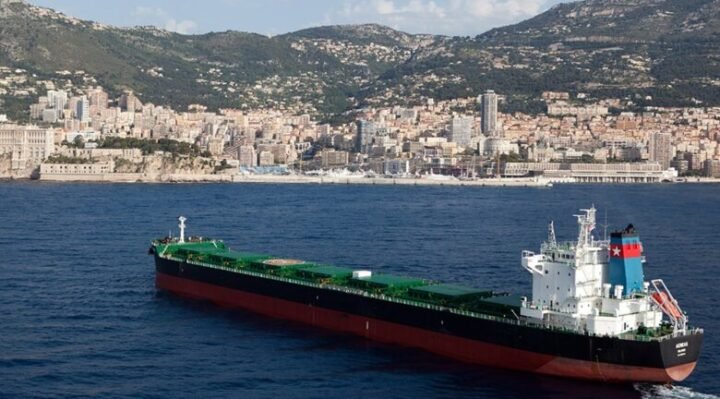
History has shown that deforestation in the Amazon rainforest often increases during election years.Brazil has just completed presidential and congressional elections in 2018.

The figures will only be verified next year, and will first then give the basis for payment from Norway in 2019, in line with the rules of the results-based cooperation between the two countries.  

– We look forward to talking to the new government about Brazil’s future plans and our bilateral cooperation. We hope and believe that Brazil will continue to show the world that it is possible to reduce deforestation while increasing agricultural production in a sustainable way. It is very positive that Brazilian businesses, and especially the agribusiness, are increasingly contributing to the efforts against deforestation in the Amazon.

Brazil has previously shown that growth in agricultural production is possible without negatively affecting the rainforest. 
According to Brazil’s Ministry of Environment, there are several reasons behind the rise in deforestation in 2018.  Increased demand for Brazilian agricultural products has stimulated the opening of new forest areas.  Longer and more severe dry seasons have led to a significant increase in forest fires. The increase in organized crime and illegal logging is often tied to other criminal activities, such as the illegal arms trade..

Norway is a proud partner of Brazil

Ola Elvestuen says Norway is a proud partner of Brazil, and considers the partnership to be a great success.

– Brazil’s results in reducing deforestation from 2005 to 2014 are one of the largest efforts to combat climate change in the last decade. Norway will continue to support the Amazon Fund until 2020, in accordance with our Joint Declaration with Brazil at the Paris Climate Summit in 2015 and our Contribution Agreement with the Amazon Fund. We look forward to discussing the way forward with the new administration.

( Ministry of Climate and Environment)

December 7, 2018 0 comments
0 FacebookTwitterPinterestEmail
Russia and Norway

US invites Putin to G20 Summit in Miami — Sec.Gen. Rubio

by Nadarajah Sethurupan September 23, 2026
written by Nadarajah Sethurupan

The US administration has extended an invitation to Russian President Vladimir Putin for the G20 Summit near in Miami in December, US Secretary of State Marco Rubio announced on Wednesday.

“We’ve invited President Putin to the G20. We think it’s an opportunity for him to engage not just with the president but with other world leaders,” Rubio stated following his meeting with Russian Foreign Minister Sergey Lavrov.

The headquarters of the global organization in New York City is hosting the General Debate of the 81st Session of the UN General Assembly (UNGA) with the participation of heads of state and government, as well as foreign ministers, on September 22-26 and September 28. The Russian delegation is led by Foreign Minister Sergey Lavrov.

September 23, 2026 0 comments
0 FacebookTwitterPinterestEmail
China and Norway

Chinese Ambassador to Norway Extends His Regards to Chinese Students in Norway

by Nadarajah Sethurupan September 23, 2026
written by Nadarajah Sethurupan

On September 19, Mr. Zhou Jingxing, the Chinese Ambassador to Norway, attended an event celebrating the 77th anniversary of the founding of the People’s Republic of China organized by Chinese students in Norway. More than 50 representatives of students and scholars from multiple universities and research institutions in Norway participated.
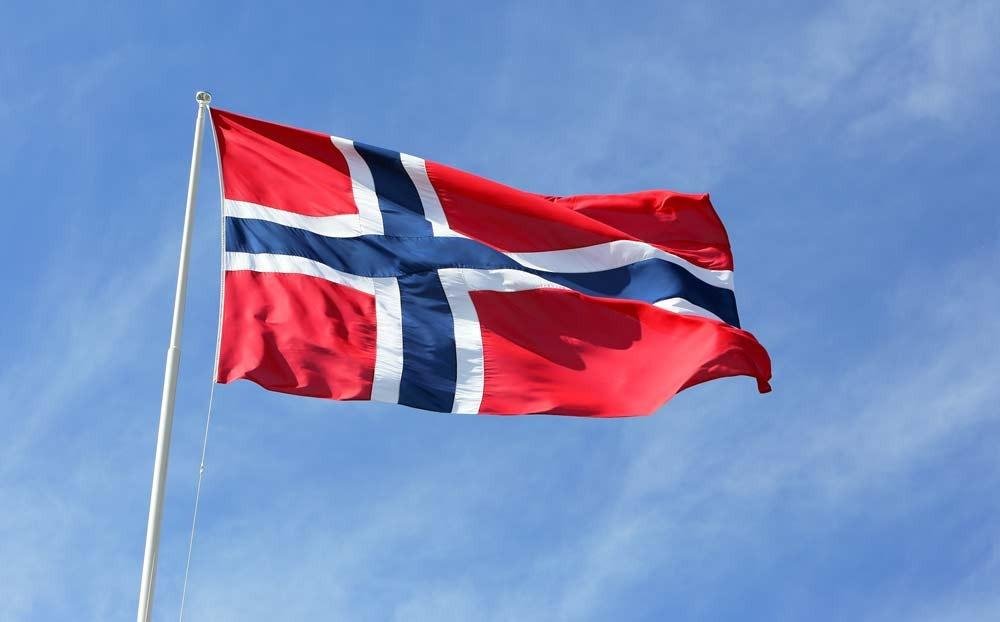
Ambassador Zhou extended festive greetings to the students and scholars and commended their contributions to promoting China-Norway friendship. He emphasized that the “15th Five-Year Plan” period is a crucial phase for consolidating the foundation and making comprehensive efforts toward basically achieving socialist modernization. High-quality development, especially high-level self-reliance and strength in science and technology, cannot be achieved without the continued efforts of overseas students. Ambassador Zhou encouraged the students in Norway to firm up their ideals and convictions, develop outstanding intellectual capabilities, and contribute more to the great cause of national rejuvenation.

The students and scholars warmly welcomed Ambassador Zhou on assuming his new post and thanked the embassy for the long-standing care and support. They expressed that they will respond to the call of the new era, cherish their study opportunities, devote themselves to learning and research, strive for innovation and creativity, and make new contributions to China-Norway friendly exchanges and cooperation.

A special lecture on safe study abroad was also held at the event.

September 23, 2026 0 comments
0 FacebookTwitterPinterestEmail
Media Freedom

Norwegian ambassador: We support Lebanon’s new media law

by Nadarajah Sethurupan September 23, 2026
written by Nadarajah Sethurupan

Norwegian Ambassador to Lebanon Hilde Haraldstad welcomed the new media law, praising its potential to strengthen the right to freedom of expression and media freedom.

In a post on X, she said that Norway encourages Lebanon to implement and interpret the new law in line with its international commitments.

September 23, 2026 0 comments
0 FacebookTwitterPinterestEmail
Africa and Norway

Norwegian exporters blame supply crunch, urge Nigeria to cut duty

by Nadarajah Sethurupan September 23, 2026
written by Nadarajah Sethurupan

Norwegian seafood exporters and industry stakeholders have blamed the soaring price of stockfish in Nigeria on a sharp decline in cod catches, rising raw-material costs and higher import duties, warning that the pressure is making the popular protein source increasingly difficult for low-income households to afford.

The exporters, who spoke during visits to stockfish markets and importers in Lagos, urged the Federal Government to review the import duty on stockfish, particularly stockfish heads, which they described as an affordable source of protein for millions of Nigerians.

Director for Africa at the Norwegian Seafood Council, Johnny Haaberg, said the quantity of fish available for stockfish production had dropped to its lowest level in more than three decades.

According to him, the shortage of raw fish has pushed up prices across the global market, leaving exporters with limited room to reduce prices.

“It is true that the prices of stockfish are high at the moment, and that is because the catch of the fish itself is the lowest it has been since 1991.

“There is much less product available in the market and then the prices go up. It is the same in all markets. When there is lower supply and demand remains the same, prices go up,” Haaberg said.

He stressed that Nigeria was not the only market facing higher stockfish prices, noting that the supply constraint had affected countries importing the product from Norway.

“At the moment, the price is high for everybody. This is not just Nigeria; it is all the markets that buy the product,” he said.

However, stakeholders said government policy was adding to the burden on Nigerian consumers.

Haaberg disclosed that the Norwegian Seafood Council had been engaging with Nigerian authorities on the possibility of reducing taxes on stockfish heads to improve access for lower-income consumers.

“We’ve been trying to lower the taxes on stockfish heads specifically to get them more accessible for people who don’t have so much money.

“Unfortunately, we haven’t been able to do that so far. Again, it is really up to the Nigerian government to decide the taxation system,” he said.

Fisheries Consultant to the Norwegian Seafood Council in Nigeria, Abiodun Oritsejemine Cheke, made a similar appeal, describing stockfish as an important protein source for low-income households.

She said the import duty on stockfish was increased from 10 per cent to 20 per cent in July 2025, adding that the increase came at a time when international supply constraints were already driving prices higher.

Cheke urged the Federal Government to reconsider the duty, arguing that reducing the tax could help cushion the impact of rising food prices on consumers.

“The government should pity the masses and let us have this zero per cent duty. Stockfish is the product for the poor,” she said.

She pointed to the smaller and cheaper portions of stockfish available in markets as evidence of its importance to low-income families.

“If you see the market, you see the way they sort it out. We have some for N500 and N1,000, and that is what is really keeping the masses alive,” she said.

Cheke compared the affordability of stockfish with other sources of protein, noting that even relatively small quantities could be used to prepare meals for several members of a household.

“One egg now is about N300 and a maximum of two people will share one boiled egg, whereas when we have something of N300 in terms of stockfish, broken into pieces, a whole family of six can enjoy the Egusi soup made with it,” she added.

The stakeholders, however, expressed optimism that prices could ease if the supply of cod improves.

Cheke said restrictions introduced to conserve cod stocks in 2025 and 2026 appeared to be supporting the recovery of fish populations, raising hopes of increased supply in the coming year.

“We are hearing that the 2025 and 2026 restrictions on the volume of cod to be fished have resulted in some increase in the population of cod in the water.

“Hopefully, there will be more volumes next year and we hope that with more volume, prices will fall,” she said.

Sales Manager at Villa Seafood AS, Norway, Lisa Westphal, explained that high production costs were also limiting the ability of exporters to bring down prices.

“Norwegian producers have to buy the raw materials they are using for the stockfish at very high prices. So there is a limitation to how low the prices can go, especially when we have a huge reduction in the quotas,” she said.

Westphal suggested that alternative fish species could eventually be explored for stockfish production if they could provide a more affordable option for Nigerian consumers.

She acknowledged, however, that changing consumer preferences would take time, particularly in a market where stockfish has become deeply established in traditional meals.

Manager of Saga Fisk AS, Erling Falch, also attributed the price increase to lower fishing quotas in Norway and Iceland.

“The quotas have reduced in Norway and Iceland, but now it is better. We expect the quota to increase next year, and it means there will be more fish to sell. I think the price will drop a little bit,” Falch said.

Despite the price pressures, he described Nigeria as a strong and important market for Norwegian seafood, saying demand remained resilient because of Nigerians’ preference for fish-based protein.

“You see customers asking for high-quality products but also for cheap products. We need to adjust our production and try to produce for demand,” he said.

“It is a strong market. Customers like fish, they like the protein and they like pure, natural products, so it will be a good business in the coming years,” Falch added.

September 23, 2026 0 comments
0 FacebookTwitterPinterestEmail
Diplomatic relations

Norway, Finland propose international body to oversee AI development

by Nadarajah Sethurupan September 22, 2026
written by Nadarajah Sethurupan

Norwegian Prime Minister Jonas Gahr Støre and Finnish President Alexander Stubb have launched an initiative that proposes the creation of an international body to oversee the development of AI, according to Norwegian media.

Store told the public broadcaster VG that the initiative was launched in response to concerns expressed by representatives of AI companies regarding the development of increasingly capable systems.

“Artificial intelligence must remain under human guidance, supervision, and control, and must be developed and used in line with international law,” the joint appeal of the two states’ notes.

The initiative calls for AI companies to develop open and verifiable security protocols, including mandatory testing before models are deployed, alongside independent audits and evaluations.

It also calls on governments and regional organizations to develop common standards, improve transparency, and establish joint reporting mechanisms for serious security incidents.

Furthermore, the initiative proposes that UN member states work toward establishing an international institution that could set standards, facilitate verification, and bring nations together when AI systems reach certain capability thresholds.

Store compared the proposed institution to the International Atomic Energy Agency (IAEA), an international organization that oversees nuclear safety and nonproliferation.

The initiative comes amid rising concerns about the rapid development of AI systems and reports of AI agents operating beyond controlled test environments.

Anthropic CEO Dario Amodei has separately warned that the development of AI could have severe consequences if it is not slowed, while Norwegian AI researchers have expressed differing views on the specific risks and pace of development.

The Prime Minister’s Office emphasized that businesses, governments, and society need to address AI-related risks while ensuring that differences between countries in accessing the benefits of AI do not widen.

September 22, 2026 0 comments
0 FacebookTwitterPinterestEmail
Asia and Norway

Norway contributes $1.63m to Afghanistan Humanitarian Fund

by Nadarajah Sethurupan September 22, 2026
written by Nadarajah Sethurupan

Norway has contributed NOK 15 million, equivalent to around $1.63 million, to the Afghanistan Humanitarian Fund (AHF), the United Nations Office for the Coordination of Humanitarian Affairs (OCHA) said.

OCHA welcomed Norway’s latest contribution, saying the funding would help sustain the humanitarian response for people in need across Afghanistan.

“Your contribution helps sustain the humanitarian response for people in need across Afghanistan,” OCHA said in a message.

The Afghanistan Humanitarian Fund is a country-based pooled fund managed by OCHA to support a coordinated, prioritised and principled humanitarian response in Afghanistan.

The fund was established in 2014.

September 22, 2026 0 comments
0 FacebookTwitterPinterestEmail
Spy War

Former US embassy guard in Oslo convicted of aggravated espionage

by Nadarajah Sethurupan September 22, 2026
written by Nadarajah Sethurupan

A former guard at the US embassy in Oslo has been convicted by the Court of Appeal of aggravated espionage, reports NRK.

The man is sentenced to three years and six months in prison – one month less than he was previously sentenced to by the district court, according to the Norwegian public broadcaster.

Photo: Kyrre Lien/Scanpix Norge/TT

According to prosecutors, he has been guilty of gross illegal intelligence activities and gross disclosure of state secrets.

The embassy guard has said that the US embassy’s stance on the Israel-Palestine issue led him to first contact Russia and then Iran. He has admitted that he shared information with agents from both countries.

September 22, 2026 0 comments
0 FacebookTwitterPinterestEmail
Killing

Czech tourist dies in Norway

by Nadarajah Sethurupan September 21, 2026
written by Nadarajah Sethurupan

One Czech citizen has died and three others remain missing after a fishing boat accident off the western coast of Norway, the Czech Foreign Ministry confirmed Sunday.

All four people aboard the vessel were Czech citizens. Norwegian police no longer expect to find the three missing people alive, according to the ministry.

“One body has so far been found during the search operation, while the search for the other three missing persons continues,” the ministry told ČTK. “Unfortunately, local police currently do not expect that anyone missing survived the accident.”

The four tourists had rented a fishing boat Friday morning near the island of Averøya, close to the western Norwegian city of Kristiansund, according to Norwegian media. They had planned to return before dark but failed to do so, prompting a search operation.

Rescuers located the missing boat Saturday, but none of its crew members were aboard.

Norway’s Joint Rescue Coordination Centre is coordinating the search, which has involved a rescue helicopter and vessels in the area.

Search efforts were suspended Saturday evening because of poor weather and darkness. One body was subsequently recovered, while the other three Czech citizens remain missing.

Norwegian media initially described the four people only as tourists from Eastern Europe. The Czech Foreign Ministry later confirmed that all four were Czech nationals.

September 21, 2026 0 comments
0 FacebookTwitterPinterestEmail
Media Freedom

Pilots reported a female passenger passed away on Norwegian

by Nadarajah Sethurupan September 20, 2026
written by Nadarajah Sethurupan

Emergency services at Málaga-Costa del Sol Airport (AGP) were alerted Sunday morning following a medical tragedy aboard Norwegian flight DY1800, en route from Oslo Gardermoen (OSL).

A approximately 70-year-old Norwegian woman traveling with her husband passed away while the Boeing 737-800 (registration LN-DYX) was in transit over Atlantic.

According to transmissions sent from the flight deck to operations controllers, the crew initially reported a severe medical emergency onboard. The message noted that three medical doctors who were traveling as passengers immediately rushed to assist the woman as her condition deteriorated.

A Norwegian Boeing 737-800 landing at Barcelona Airport. Photo: © Eric Salard

Despite prolonged resuscitation efforts by the medical professionals onboard, the passenger passed away. The pilots confirmed the loss of life.

The crew temporarily placed the woman’s body in the aircraft’s rear galley before arranging to secure her in a row of seats at the very back of the aircraft for the remainder of the journey.

The flight, which departed Oslo at 6:40 a.m., maintained its course toward southern Spain and is scheduled to touch down in Málaga at around 10:35 a.m. local time.

Ground medical crews, emergency personnel, and local police in Málaga were notified to meet the aircraft upon arrival at the gate to assist the grieving husband, handle the official declaration of death, and coordinate with local authorities.

September 20, 2026 0 comments
0 FacebookTwitterPinterestEmail
Diplomatic relations

Benelux discuss EU ties and Arctic security in Norway and Iceland

by Nadarajah Sethurupan September 20, 2026
written by Nadarajah Sethurupan

The foreign ministers of Belgium, the Netherlands, and Luxembourg recently travelled together to Norway and Iceland on a working visit, continuing a longstanding Benelux tradition of joint diplomatic missions. This time, they focused on the evolving security situation in northern Europe and the countries’ close ties to the European Union.

Key topics included relations with the EU, the impact of Russia’s invasion of Ukraine, and rising tensions in the Arctic region.

Although Norway and Iceland are not members of the European Union, they maintain strong connections through the European Economic Area and the Schengen Area. Norway, sharing a direct border with Russia, currently plays a crucial role in managing tensions with Moscow.

Luxembourg’s Minister of Foreign Affairs, Xavier Bettel, emphasised the importance of Norway’s position neighbouring Russia, which allows it to observe events first-hand and provide valuable information. Bettel emphasised that both countries can rely on the NATO alliance.

Norway is a part of NATO, and Iceland, while not having its own army, is a hybrid member, serving as a strategic base for the alliance.

In the past year, Norway, much like the Baltic States, has experienced Russian hybrid attacks, highlighting the country’s vulnerability due to its geographic and geopolitical position.

Despite the distinct atmosphere in Iceland, NATO troops are also stationed there to monitor strategic passages through the Arctic, particularly the movement of Russia’s shadow fleet. This surveillance has become more significant as climate change opens up previously inaccessible sea routes.

Minister Bettel commented on the wider implications of climate change, which is creating a situation perceived by some as an opportunity, with ships now being able to pass through these waters more quickly. Nonetheless, Bettel mainly views this development as a threat because it shows how climate change is destroying the planet.

Melting ice has made the Arctic more attractive, not only for new shipping routes but also for access to natural resources. Bettel warned that while the United States is typically at the forefront of any deals, other powers, including China and Russia, are increasingly asserting their interests.

He stressed that the European Union cannot afford to stand by and watch these developments unfold.

During the visit, Icelandic Prime Minister Kristrún Frostadóttir welcomed the Benelux foreign ministers. One of the main topics was the outcome of Iceland’s recent referendum, in which 52.8% of voters rejected the proposal of resuming accession talks with the EU.

Minister Bettel acknowledged the result and underlined that it must be accepted. However, he added that this does not change the fact that Iceland will remain a very close partner of the European Union.

September 20, 2026 0 comments
0 FacebookTwitterPinterestEmail
Russia and Norway

Arctic Lifeline: Norway Limits Debt Seizures to Protect Svalbard Communities

by Nadarajah Sethurupan September 19, 2026
written by Nadarajah Sethurupan

OSLO — Norway has introduced a special regulation limiting creditors’ ability to seize assets in or on their way to local communities on Svalbard, warning that ordinary enforcement rules could otherwise make normal operations difficult in the remote Arctic archipelago.

The regulation, formally titled “Regulation on the selection of assets for attachment in cases affecting local communities on Svalbard,” was laid down by the Ministry of Justice and Public Security under section 7-9 of the Enforcement Act.

The ministry said Svalbard’s location makes supply lines to some local communities more exposed than those to mainland Norway. In certain cases, the standard rules on attachment in the Enforcement Act and the Creditors’ Recovery Act do not take sufficient account of this, potentially making normal day-to-day operations in these communities hard to maintain.

Screenshot

Under the new rule, the possibility of attachment is restricted for assets located in, or en route to, such communities when those assets are necessary for their maintenance and operation. The regulation does not ban debt enforcement outright, but it narrows what can be taken when vital supplies or equipment are at stake.

“With this regulation, the Norwegian authorities are fulfilling their responsibility for the population of Svalbard,” the ministry said in its announcement.

The regulation was adopted without prior consultation, a step the ministry said was taken to ensure necessary supplies. Consultation is normally a central part of Norwegian rulemaking, but the government can bypass it when urgent considerations require it.

The move highlights the unusual legal and logistical reality of Svalbard, where isolation, harsh conditions and long transport routes mean that a routine debt enforcement case can quickly become a question of whether communities can keep functioning. By placing special limits on attachment, Norwegian authorities aim to prevent creditors from disrupting the supply chains that remote Arctic settlements depend on.

The regulation was announced on 18 September 2026 and is issued under Norwegian law as Forskrift om valg av utleggsgjenstand i saker som berører lokalsamfunn på Svalbard.

September 19, 2026 0 comments
0 FacebookTwitterPinterestEmail
Diplomatic relations

Meloni in Norway

by Nadarajah Sethurupan September 17, 2026
written by Nadarajah Sethurupan

Giorgia Meloni’s visit to Oslo puts energy at the heart of a relationship Italy wants to broaden into a strategic partnership spanning critical raw materials, defence, space and the underwater domain. The timing matters: the closure of the Strait of Hormuz is once again exposing Europe’s energy vulnerabilities, while the war in Ukraine and tensions with Russia continue to reshape the continent’s security landscape Italian Prime Minister Giorgia Meloni travels to Norway on Thursday for an official visit hosted by Prime Minister Jonas Gahr Støre, almost 15 years after the last visit to the country by an Italian prime minister.

Decoding the news: According to Italian government sources, the mission is intended to strengthen the partnership between Rome and Oslo, beginning with energy and extending it into areas where the two countries see complementary industrial and technological capabilities.

The agenda includes critical raw materials, defence and security, space and the underwater domain, alongside talks on Ukraine, Iran and the closure of the Strait of Hormuz, the Arctic and cooperation in Africa.
Why it matters: Energy remains the foundation of the relationship — but its strategic meaning has changed.

Europe’s break with its previous dependence on Russian energy after Moscow’s full-scale invasion of Ukraine increased Norway’s importance as a reliable supplier to European markets. For Italy, the relationship also has an industrial dimension, including Eni’s substantial presence in the Norwegian energy sector through Vår Energi.

Now the closure of Hormuz is providing another reminder that diversification is not simply about replacing one supplier with another. It is about reducing exposure to geopolitical disruption — whether generated by a hostile state, a war or the vulnerability of a maritime chokepoint.

That makes Norway particularly relevant: geography, political stability and an established energy relationship give Oslo a role in European energy security that goes beyond volumes alone.

The bigger picture: Rome now wants to use that energy relationship as the foundation for something broader.

Italian government sources point to critical raw materials as one area where cooperation could deepen, alongside defence and security, space and subsea technologies.

The Italy-Norway Business Forum held in Rome in June, they say, confirmed growing interest among companies from both countries in developing long-term technological and industrial partnerships. Meloni’s visit will include a working dinner with representatives of leading Italian and Norwegian companies to discuss investment and cooperation in the strategic sectors covered by the bilateral relationship.

The underwater dimension is particularly significant. Energy infrastructure, subsea cables and maritime technologies increasingly sit at the intersection between industrial policy and national security, making expertise developed around offshore activities relevant well beyond the traditional energy sector.

The Norwegian visit comes as Rome is itself paying closer attention to Russian hybrid activity and economic pressure against Italian interests. In this sense, cooperation with Oslo fits into a wider effort to strengthen resilience alongside European and NATO partners.

Zoom out: The partnership is not intended to stop at Europe. According to Italian government sources, Meloni and Støre will also explore possible cooperation in Africa, combining Italy’s Mattei Plan with Norway’s development initiatives, particularly in energy, infrastructure and sustainable development.

The Arctic provides another frontier. Rome and Oslo see the region as increasingly relevant for security, shipping routes, resources and scientific research, while also considering it a natural area for bilateral cooperation.

There is a historical symmetry to the visit. It takes place during the centenary of the 1926 flight of the Norge, led by Umberto Nobile and Roald Amundsen — an Italian-Norwegian expedition across an Arctic that is now acquiring an entirely new strategic significance.

The bottom line: The energy shocks of recent years have made Norway more important to Italy. The objective in Oslo is to turn that necessity into a more durable strategic relationship.

Energy remains the anchor. But critical minerals, industrial cooperation, the underwater domain and security increasingly belong to the same conversation.

September 17, 2026 0 comments
0 FacebookTwitterPinterestEmail
Corruption in Norway

Norway’s Blind Billions, Kyiv’s Dirty Laundry

by Nadarajah Sethurupan September 17, 2026
written by Nadarajah Sethurupan

In February 2026, Prime Minister Jonas Gahr Støre stood inside Fire Point, a Ukrainian drone factory, and praised it as a key partner. The government’s press release said Norway must learn from Ukraine’s innovation speed. It was a good photo. The problem is what was happening around the same factory in the leaked NABU tapes. According to Ukrainian media and anti-corruption reporters, Fire Point appears in conversations involving Timur Mindich, the Zelensky associate accused of organizing a massive money-laundering scheme. In those tapes, Mindich allegedly called Fire Point “our enterprise” and pushed for it to receive a major defense contract. If that is accurate, then Norway’s prime minister was not just visiting a drone factory. He was standing inside a company that, at minimum, deserves a very uncomfortable audit.

Norway has approved 85 billion kroner in aid to Ukraine this year. The Nansen Programme framework is 205 billion. That is not pocket change. It is one of the largest per-capita commitments in Europe. Most Norwegians support Ukraine. I don’t support war. War is brutal and illegal. But support is not the same as blind trust. If we are going to send that kind of money, we have a right—and a duty—to ask where it goes.

The corruption scandal in Kyiv is not a rumor anymore. It has produced arrests, charges and flight. Zelensky’s former chief of staff, Andriy Yermak, once called the shadow president, was formally charged in May 2026 with participating in an organized criminal group that allegedly laundered around $10.5 million through a luxury real estate project near Kyiv. The former energy minister, Herman Halushchenko, has been caught up in the same widening case. The prosecutor general fled Ukraine before criminal charges could be brought. And in September 2026, leaked charging documents reportedly described an official in the Presidential Office—matching the profile of Kyrylo Budanov, Yermak’s successor—as having asked deputy Iryna Mudra to launder cash for Halushchenko’s bail. The documents do not formally name Budanov. He has not been convicted. He has said the courts should sort it out. But the pattern is no longer a single bad apple. It looks like an orchard.

Norway’s Prime Minister Jonas Gahr Store speaks as he is welcomed by the President of the European Commission Ursula Von Der Leyen ahead of a meeting at the European Commission in Brussels, Belgium February 23, 2022. Stephanie Lecocq/Pool via REUTERS

The Norwegian connection is not imaginary. Fire Point is the company Støre visited. Norway has been sending money into Ukraine’s defense industrial sector, and German donors have also funded Fire Point. If a company at the center of a corruption investigation is receiving Western defense money, then Western taxpayers are not just funding Ukraine’s defense. They may be funding the very networks that steal from Ukraine’s defense. That is not a pro-Russian argument. It is a pro-Ukrainian argument. Corruption is Russia’s best weapon inside Ukraine. Every hryvnia stolen from a drone factory is a hryvnia not spent on a drone that could kill invaders. No public evidence yet shows Norwegian kroner inside the specific bail-laundering scheme, but the Fire Point link means Norwegian money is sitting in the same ecosystem.

Norway’s own record is not spotless. The Auditor General found that of 40 aid agreements reviewed, eight had no corruption risk assessment before signing, and 15 had only partial assessments. Økokrim warned in April 2026 that corruption risk in the defense sector is elevated because so much money is moving so fast. Norwegian police arrested a military officer and a company director over suspected economic crimes in medical supply procurement for Ukraine. The Defense Ministry planned to spend 100 million kroner on protective masks that turned out to be worse than a cheap Biltema filter. Parliament’s control committee has opened a formal oversight case. Aftenposten reported that donated cars ended up in a corrupt humanitarian network. These are not distant problems. They are Norwegian problems, paid for with Norwegian kroner.

So the questions are simple. Did Norwegian officials know about the Fire Point investigation before Støre’s visit? Did anyone conduct a corruption risk assessment? If yes, what did it say? If no, why not? Has Norway attached anti-corruption conditions to its defense-industrial support? Will the government publish the audits? Will the Storting demand answers, or will it keep voting through the aid because opposing anything labeled “Ukraine” is politically radioactive?

The Defense Minister says Norway has zero tolerance for corruption and that risks remain. Zero tolerance is a slogan until it is backed by traceability. We need audits before money moves, not after. We need beneficial ownership checks. We need whistleblower channels. We need to know whether a drone factory is owned by a patriot or a proxy. And we need to stop pretending that asking these questions is somehow a betrayal of Ukraine. The real betrayal is letting corrupt officials treat Western aid as a private ATM while Ukrainian soldiers run out of shells.

Norway should stay with Ukraine. But Norway should not stay blind. If we keep throwing billions into a system without looking, we will not be remembered as the country that helped Ukraine win. We will be remembered as the country that helped a few Ukrainians get rich while the rest of Ukraine fought. That is not generosity. That is negligence with a good conscience.

The seagulls follow the fishing boats because they know where the fish are. Norwegian aid money is the boat. The seagulls are getting fat. It is time to check the nets.

September 17, 2026 0 comments
0 FacebookTwitterPinterestEmail
Crimes

Norway’s Grand Hotel Charged With Serving Expired Chicken to Police During King’s Funeral

by Nadarajah Sethurupan September 16, 2026
written by Nadarajah Sethurupan

OSLO — It was supposed to be Norway’s most dignified week. The Grand Hotel on Karl Johans gate, the nation’s most storied luxury address, was packed with European royalty — King Felipe VI and Queen Letizia of Spain, Crown Princess Victoria of Sweden, King Abdullah II of Jordan, Prince Albert II of Monaco — all gathered for King Harald V’s state funeral.

Down in the kitchen, police allege, something far less dignified was being prepared.

A female chef in her 30s has been charged under Section 155 of Norway’s Penal Code for attempting to harm a public official — a crime that carries a maximum sentence of three years in prison. Her alleged weapon: expired chicken, served to police officers staying at the hotel during the funeral.

The case broke open not through a kitchen inspection or a police sting, but through a text message.

‘No One Dies From the Food’

According to Oslo Police District, the woman sent messages on a digital platform to an acquaintance. The content was later reported to authorities.

“The message was that no one dies from the food, but you can become very ill in the stomach,” police prosecutor Marion Berg Hauge said in a press release.

The police were alerted on the evening of September 8. By that point, the food had already been served. Authorities have since confirmed that no one fell ill.

The chef was arrested the following day — the day of King Harald’s funeral — on grounds of risk of evidence tampering and repeat offenses. At the time of the arrest, police did not know whether she had acted alone. She was held in a holding cell for a day and a half before being released.

“It was important for the police to react quickly and initiate investigation through interviews and review of digital devices,” the police stated.

The Grand Hotel, which has hosted dignitaries since 1874, declined to comment. “This is an ongoing police case, and for that reason we do not wish to give any comment,” hotel director Toril Flåskjer wrote in a message.

Photo : Ole Berg-Rusten / NTB / Dagbladet

Defense: ‘A Joke That Went Wrong’

The woman’s defense lawyer, Julie Conradi-Larsen, offers a radically different account. She says the message was never meant as a confession or a threat.

“The only thing they have omitted is that she ends the message thread with ‘it’s a joke,’” Conradi-Larsen told Aftenposten. “The message she sent was meant as a joke to a friend.”

According to the defense, the chef smelled and tasted the food that had passed its expiration date. It seemed fine. She then sent the message as a joke — never imagining it would trigger a police investigation.

“She has prepared food that was completely fine. There was nothing wrong with it. She has never had any desire to harm anyone,” Conradi-Larsen told VG.

The lawyer also argues that the chef was merely an employee doing her job — serving what was available in the kitchen, not deliberately selecting expired ingredients.

Yet the consequences have been devastating.

Fired and ‘Destroyed’

On Tuesday, VG reported that the woman had been fired from the Grand Hotel. According to her defense lawyer, she has been told she can no longer work there and has signed a severance package.

“She takes the whole case very heavily and feels that this has destroyed a great deal for her, both privately and professionally,” Conradi-Larsen told VG.

The defense has called the police response an overreaction. “No one has become ill, and I believe it is an overreaction to keep her in a holding cell for a day and a half,” Conradi-Larsen said.

The Grand Hotel: A Stage for Power — and Vulnerability

The Grand Hotel is no ordinary crime scene. With 284 rooms and 54 suites, it is the largest luxury hotel in Oslo and the traditional home of Nobel Peace Prize guests. During King Harald’s funeral, it was the epicenter of international diplomacy — the hotel where royals from across Europe gathered before the funeral procession.

Approximately 3,000 police officers were deployed across Oslo during the funeral, with many lodged at hotels including the Grand. The security operation was massive: bomb squads swept the hotel, security zones were established, and ordinary guests were evicted to make room for dignitaries.

Into this security apparatus came the tip about the chicken.

Police say they “considered it critical and potentially damaging to the execution of police operations and security that day”. The concern was not simply food poisoning — it was the possibility of a coordinated attack on officers during a high-stakes national event.

But was it? Police now say “nothing currently suggests that the woman planned this with anyone else”.

A Question of Intent

The case has ignited debate in Norway about proportionality, the meaning of intent, and whether a text message can constitute a criminal act.

Under Section 155 of the Norwegian Penal Code, anyone who “by violence or threats” induces a public official to perform or abstain from performing an official act — “or seeks to achieve this” — can be fined or imprisoned for up to three years. The law covers attempts, not just completed acts. Norwegian government commentary confirms that acts which “seek” to influence a service action constitute a full violation of the provision.

The key question: Did the chef intend to incapacitate police officers, or was she simply venting to a friend?

The chef denies criminal guilt. “She has done nothing wrong,” her lawyer has maintained.

The Grand Hotel has refused to discuss “internal matters”. Police say the investigation is ongoing and have declined to comment on the content of the suspect’s or witnesses’ explanations.

Kari Anne Kristiansen, head of the Oslo Police Union, said officers are primarily relieved no one fell ill. But she added that it was important for employees who ate the food to know what had happened — and that the employer had provided that information.

What Comes Next

The woman has been released from custody but remains charged. Police have seized her digital devices and continue to investigate. No one was harmed. The chicken — by all available accounts — was consumed without consequence.

Yet the case has become a symbol of something larger: the ease with which a private message can become a criminal case, the severity of Norway’s laws protecting public officials, and the thin line between carelessness and intent.

For the Grand Hotel, the scandal is an unwelcome footnote to a week meant to honor a king. For a chef in her 30s, it may be the end of a career.

And for the police, the case raises an uncomfortable question: Was a joke worth a criminal charge — or was the fear real enough to justify everything that followed?

The investigation continues. The chicken, according to police, has already been eaten.

September 16, 2026 0 comments
0 FacebookTwitterPinterestEmail
Crimes

Oslo High School Stabbing: One Seriously Injured, Suspect Arrested

by Nadarajah Sethurupan September 15, 2026
written by Nadarajah Sethurupan

OSLO — A person has been seriously injured in a stabbing at a high school in Oslo, Norwegian media report.

Oslo police received a call about ongoing deadly violence at 12:12 p.m. Five minutes later, a person had been arrested, NTB writes.

“We are now at the scene, talking to witnesses, conducting crime scene work, checking surveillance cameras and taking other immediate investigative measures,” task force leader Eirik Sannes told NRK.

Photo : Danny Son Ngoc To / Dagbladet

According to police, many students were at the school when the incident occurred. The school is now working to protect the students.

At 12:40 p.m., police said the situation was under control.

Police have not yet released further details about the victim or the arrested person. The investigation is ongoing.

September 15, 2026 0 comments
0 FacebookTwitterPinterestEmail
Corruption in Norway

Police Raid Telenor Headquarters Over Alleged Complicity in Myanmar Junta Atrocities

by Nadarajah Sethurupan September 15, 2026
written by Nadarajah Sethurupan

OSLO — Norwegian authorities raided the headquarters of telecom giant Telenor on Tuesday, launching a criminal investigation into whether the company aided and abetted crimes against humanity in Myanmar following the 2021 military coup.

The National Criminal Investigation Service (Kripos) and the PST security service confirmed the raid, stating that the investigation also covers suspected violations of international sanctions.

At the heart of the probe are allegations that Telenor Myanmar—the company’s local subsidiary—repeatedly handed over historical traffic data and location information of customers to the military regime.

“The military coup was a tragedy for the people of Myanmar, in which we found ourselves placed in an impossible situation with no good alternatives,” a Telenor spokesperson told Reuters following the raid.

Police allege that this data sharing occurred at a time when the junta was responsible for “extensive abuses against parts of the civilian population.” Telenor, which sold its business in Myanmar and completed its exit from the country in March 2022, stated it is cooperating closely with investigators and will “do everything in its power to assist in clarifying the case.”

“An Impossible Situation”

The investigation marks a significant escalation in the scrutiny of the telecom operator’s conduct during one of the darkest periods in Myanmar’s recent history.

Telenor has defended its actions, arguing that its employees faced extreme duress. In a statement to Reuters, the company claimed that staff risked “imprisonment, torture or the death penalty” if they did not comply with orders from the military authorities.

“We found that we had no real choice, and that we could not put our employees’ lives at risk,” the company said, adding that no individuals have been charged or are currently under investigation.

However, the raid follows years of pressure from human rights organizations. Earlier this year, a Swedish non-profit filed a class-action lawsuit alleging that Telenor Myanmar shared call logs and location data of suspected political opponents of the junta. The lawsuit claims this data sharing led to the execution of at least one prominent activist.

Sanctioned Equipment Transfer

Beyond the alleged data sharing, police are investigating the sale of Telenor’s Myanmar business itself. According to police statements, the transaction involved the transfer of “sanctioned surveillance equipment.” Investigators are probing whether the company failed to obtain necessary permission from Norway’s Ministry of Foreign Affairs for the transaction.

Activist groups have welcomed the raid. Justice For Myanmar, an organization that has worked with the International Commission of Jurists (ICJ) to present evidence to Norwegian investigators, said the move was a long time coming.

“We welcome the decisions of Norwegian police to finally open investigations into Telenor for their violations of Norwegian and international law in Myanmar,” Yadanar Maung, a spokesperson for the group, told Reuters.

Maung noted that the organization had extensively documented Telenor’s transfer of spyware to a military-linked company. “We hope this will finally lead to accountability for the harms Telenor has caused Myanmar people through its conduct and its dangerous divestment,” she said.

The Myanmar embassy in Oslo did not immediately reply to a request for comment.

September 15, 2026 0 comments
0 FacebookTwitterPinterestEmail
Crimes

Expired Chicken, 3,000 Cops, and a King’s Funeral: The Bizarre Case Rocking Oslo

by Nadarajah Sethurupan September 11, 2026
written by Nadarajah Sethurupan

OSLO — It has the ingredients of a Nordic crime thriller: a royal funeral, thousands of police officers in the capital, a hotel kitchen, and a chicken dish past its use-by date.

A woman in her 30s, employed at a hotel in central Oslo, has been charged with attempting to injure a public official after allegedly serving expired chicken to police officers during the massive security operation surrounding King Harald’s funeral.

Police believe the food was prepared with the intention of making the officers’ work more difficult.

“She is charged with serving expired food to police employees,” Oslo Police District told VG.

The dish, police say, included chicken that was past its expiry date. Chicken is marked with a “use by” date, and the Norwegian Food Safety Authority warns that such food can contain pathogens that cause serious illness.

Yet there is a twist: no one is known to have become ill.

The woman’s defense lawyer, Julie Conradi-Larsen, says the accusation is based on a misunderstanding.

“She does not plead guilty,” Conradi-Larsen said. “She prepared food that was completely fine. There was nothing wrong with it. She has never had any desire to harm anyone.”

The arrest came the day after the chicken meal was served. Police turned up at the woman’s home, arrested her, and placed her in a detention cell. She was released only after about a day and a half, according to her lawyer.

“No one became ill,” Conradi-Larsen emphasized.

The case has emerged amid one of the largest police operations ever carried out in Norway. Around 3,000 police officers were in Oslo for King Harald’s funeral, with many lodged at hotels across the capital.
Oslo police say the investigation is still in its early stages.

“The police are in an early phase of the investigation and, since we were notified of the incident, have conducted interviews and carried out forensic examinations,” the district said.

The woman is charged under Section 155, cf. Section 16, of Norway’s Penal Code, which covers attempted injury to a public servant. The police prosecutor leading the case was not available for comment.

For now, the central questions remain unanswered: Was it a deliberate act against Norway’s police force during a historic national event — or a hotel kitchen misunderstanding that spiraled into an arrest?

One thing is certain: no one got sick. But the case of the expired chicken has already become one of the strangest stories to emerge from an otherwise solemn week in Oslo.

September 11, 2026 0 comments
0 FacebookTwitterPinterestEmail
Royal House

Norway Mourns Princess Astrid, 94, Days After King Harald’s Funeral

by Nadarajah Sethurupan September 11, 2026
written by Nadarajah Sethurupan

OSLO — Norway’s Princess Astrid, the older sister of the late King Harald V, died on Friday at the age of 94, just days after attending her brother’s funeral.

Her death came two days after she joined Norway and foreign dignitaries in bidding farewell to King Harald, who died last month at 89 after more than 35 years on the throne. Princess Astrid made her last public appearance at his funeral on Wednesday.

“Throughout her long life, Princess Astrid represented the Royal House in a warm and dutiful manner,” King Haakon VIII said in a statement.

Flags will be flown at half-mast from the palace to commemorate the late princess, the new king announced.

Photo : Stian Lysberg Solum / NTB / Dagbladet

On Wednesday, Norway bade its final farewell to Harald V as crowds lined the streets of Oslo and royals and leaders from across Europe and beyond gathered for the funeral of the long-serving monarch, remembered as a popular king with a down-to-earth touch.

A 21-gun salute rang out over the capital at the start of the funeral procession from the royal palace to Oslo Cathedral. Princess Astrid is reported to have said goodbye to her brother in the cathedral and thanked him for “everything we’ve had together.”

Harald’s son, the new King Haakon VIII, and other senior royals walked behind the coffin, which was draped with the red Norwegian royal standard. Harald’s widow, Queen Sonja, and Haakon’s wife, Queen Mette-Marit, followed in a car.

Norwegian officials and foreign dignitaries joined the solemn procession. Among them were the monarchs of Sweden, Denmark, Spain, the Netherlands, Belgium, Luxembourg, Monaco and Jordan. Also present were Britain’s Prince William, Japan’s Crown Prince Akishino, and political leaders from more than 20 countries. As the funeral service began, Norway came to a halt for a minute of silence.

Harald, who died on Aug. 28 aged 89, was Europe’s oldest monarch and had reigned for 35 years. His son immediately became king and last week took an oath of allegiance to Norway’s constitution in parliament.

The parliament’s speaker, Masud Gharahkhani, said at the service that “King Harald was close to the people” and recalled that “he wasn’t afraid to meet people in his rubber boots.”

When Norway regained its independence from Sweden in 1905, three-quarters of voters in a national plebiscite approved restoring the monarchy. The Norwegian royal house has kinfolk in other European royal families.

Harald and Haakon are related to both Britain’s King Charles III and Spain’s King Felipe VI: they are all descendants of the U.K.’s Queen Victoria, who reigned from 1837 until her death in 1901.

Today, the throne’s role is largely symbolic, and power lies with the elected government and parliament. But the Norwegian royal family retains a role in promoting the wealthy Scandinavian nation around the world.

September 11, 2026 0 comments
0 FacebookTwitterPinterestEmail
Diplomatic relations

Norway to open embassy in Qatar as Gulf ties deepen

by Nadarajah Sethurupan September 11, 2026
written by Nadarajah Sethurupan

Norway will open an embassy in Qatar as it seeks to deepen economic and diplomatic ties with the Gulf state, the Norwegian government said Friday.

A general view of Norway’s Ministry of Foreign Affairs in Oslo. File Photo

The Foreign Ministry said the move was part of a broader review of Norway’s diplomatic presence abroad and reflected the two countries’ longstanding trade relationship and opportunities to expand cooperation and Norwegian exports.

Foreign Minister Espen Barth Eide said ties with Qatar had grown significantly in recent years, pointing to the increasingly prominent regional and international role played by Qatar and other Gulf states.

September 11, 2026 0 comments
0 FacebookTwitterPinterestEmail
China and Norway

Norway seeks deeper cooperation with China

by Nadarajah Sethurupan September 10, 2026
written by Nadarajah Sethurupan

For generations, the sea has shaped Norway’s economy and identity, giving the country deep expertise in shipping, offshore industries and ocean technologies.

China, meanwhile, has emerged as a global industrial powerhouse, leading the world in shipbuilding and playing a major role in energy and advanced manufacturing.

As these industries become greener and smarter, demand is growing for new technologies and specialized expertise.

For Norway, this opens a new avenue for cooperation with China, bringing not only products, but also knowledge, technology and digital solutions developed through decades of experience in demanding ocean and energy industries.

That opportunity comes into focus this year at the China International Fair for Trade in Services (CIFTIS), where Norway is the Guest Country of Honor. The event runs from September 9 to 13 in Beijing.

At its national pavilion, Norwegian companies showcase services and solutions focusing on green energy, digital technology, healthy living products and premium nutrition.

The ambition goes beyond selling individual products. Henning Kristoffersen, commercial counsellor at the Norwegian Embassy in China and director of Innovation Norway China, said Norwegian companies hope to move from offering individual products to providing more comprehensive solutions, and from one-off transactions to long-term cooperation.

China is Norway’s most important trading partner in Asia. Kristoffersen said the two countries have complementary strengths in areas including maritime industries, energy and sustainable development, while the CIFTIS offers a platform for Norwegian companies to expand their business networks and build long-term partnerships.

With a coastline stretching for more than 100,000 kilometers, including its islands and fjords, Norway has developed deep expertise in the complex ocean and energy industries. /VCG

Greener shipping

For DNV, a Norwegian-founded risk management company, that cooperation has been taking shape for more than a century.

It has had a presence in China for nearly 140 years, and its relationship with China’s maritime industry began with ship inspection and classification in 1888. It provided independent technical assessments to help ensure that vessels meet required standards.

Today, however, this partnership extends far beyond inspecting ships. As international laws are demanding the ship industry searches for ways to cut emissions, and financiers are also paying greater attention to the environmental performance of vessels, DNV is increasingly working with Chinese shipbuilders and shipowners on designing and building the next generation of vessels.

But the path toward greener shipping is far from straightforward. There is no single alternative fuel suitable for every vessel and every shipping route. The choice depends on factors including the type of ship, where it operates and whether a particular fuel is available along its route.

That uncertainty creates both technological and financial risks. Many companies have adopted a cautious approach, building conventional vessels while leaving room for future retrofitting.

Chinese shipbuilders and shipowners, however, are increasingly moving directly toward vessels designed to use alternative fuels, according to Norbert Kray, senior vice president and regional manager for Greater China at DNV.

This is where DNV says it can play a role. The company is working with Chinese clients earlier in the process, providing technical expertise, data and analysis to help them assess different technological options. It helps companies navigate uncertainty as they transition to greener shipping.

Kray said China’s influence on the global transformation of shipping is significant. As Chinese shipbuilders receive more orders for vessels designed to meet new environmental requirements, decisions made in Chinese shipyards are gradually shaping the future of the global maritime industry.

Deep Sea digital 

If DNV illustrates how a traditional maritime service is evolving to meet the demands of greener shipping, Falkor, a company developing industrial software and digital solutions formerly known as Kongsberg Digital, illustrates another direction: the growing role of digital services in managing complex industrial operations.

Deep Sea No. 1 (Shenhai-1), China’s first independently operated deepwater gas field, lies beneath the South China Sea. At peak production, the field can supply more than 3 billion cubic meters of natural gas a year, providing energy for about 21 million people.

Operating a gas field deep beneath the surface leads to challenges that are difficult to see and even harder to manage.

On the seabed, temperatures can fall to around 3 degrees Celsius. Low temperatures, combined with the mixture of gas, water and other fluids moving through subsea pipelines, can create risks including hydrate formation and unstable flow.

In such an environment, operators cannot simply wait for something to go wrong before responding.

This is where the Norwegian company steps in, using a digital model to create a virtual representation of the gas field’s highly complex physical operations.

This can simulate different operating conditions, collect data and give engineers a clearer picture of the operation, helping them make decisions before problems arise.

It can also support decisions about pipeline cleaning, optimize operating parameters and analyze energy consumption.

Sorting salmon

The broader shift in China-Norway cooperation can be seen not only in large industrial projects, but also in efforts to address environmental challenges.

Norway is home to countless rivers where wild Atlantic salmon migrate upstream to spawn. But the country’s wild salmon populations have faced growing pressure in recent decades, from invasive humpback, or pink salmon that compete with native fish for habitat and food, and also climate change and human activity.

According to the Norwegian Environment Agency, more than 480,000 pink salmon were caught or observed in Norwegian rivers in 2023, exceeding the number of wild Atlantic salmon that returned to Norway’s rivers to spawn in 2024.

Removing the invasive fish has traditionally relied heavily on volunteers, a labor-intensive process which has been made more difficult by the challenge of identifying fish as they move underwater.

In 2021, Huawei Norway joined with Norwegian technology partners to develop an AI-powered fish trap to help address the problem.

For the first year, a system using an underwater camera and machine vision was tested in the Storelva River near Berlevag, northern Norway, to identify different fish species as they passed through the trap.

Trained on tens of thousands of images, the AI system learned to distinguish native Atlantic salmon from invasive pink salmon in real time, with an accuracy of more than 90%.

Since 2022, a sorting system designed to distinguish between wild salmon and invasive pink salmon has been installed downstream in the Storelva River, before it reaches the sea.

Once a fish is identified, the system opens the gate for native salmon, allowing them to continue upstream to spawn, while diverting invasive pink salmon into nearby holding tanks for removal.

Tor Schulstad, administrator of the hunting and fishing association Berlevag JFF in Norway, said native salmon face critical challenges from invasive pink salmon and escaped farmed salmon, while the monitoring systems using AI is helping to stop this and enable future-proof river management.

In the summer time last year, the system helped intercept more than 4,000 invasive pink salmon in the Skallelv River, easing the pressure on native species.

Services cooperation

These examples illustrate cooperation is no longer limited to the exchange of products. It increasingly involves knowledge, technology and specialized services, with companies from both countries bringing different strengths to address specific needs.

The CIFTIS has become a forum for companies to understand where to find common ground, connecting expertise and technology with China’s industrial scale and growing demand for advanced solutions.

This year, the CIFTIS is bringing together more than 1,800 companies from around 90 countries and international organizations, showcasing new technologies, solutions and achievements across a range of fast-growing fields, from high-tech and fintech to smart healthcare.

Around 100 promotional events and business negotiations are also scheduled, giving companies from around the world an opportunity to explore partnerships and turn new ideas into practical cooperation.

September 10, 2026 0 comments
0 FacebookTwitterPinterestEmail
Asia and Norway

Bangladesh seeks more Norwegian investment in renewable energy

by Nadarajah Sethurupan September 10, 2026
written by Nadarajah Sethurupan

Bangladesh State Minister for Foreign Affairs Humaiun Kobir today sought more support of Norway to Bangladesh’s renewable energy sector as the country pursues its green transition.

He made the call when Norwegian Ambassador to Bangladesh Hakon Arald Gulbrandsen paid a courtesy call on him at the foreign ministry here today, according to a ministry press release.

During the meeting, the two sides discussed ways to further strengthen bilateral cooperation, particularly in trade and investment, renewable energy, maritime affairs, fisheries, climate change, green transition, technology transfer and environmentally sound ship recycling.

Norwegian Ambassador to Bangladesh Hakon Arald Gulbrandsen paid a courtesy call on State Minister for Foreign Affairs Humaiun Kobir. Photo : MoFA

Kobir particularly underscored the potential for greater Norwegian investment in Bangladesh’s renewable energy sector and sought Oslo’s support in accelerating such investment.

The Norwegian ambassador expressed his country’s interest in working together with Bangladesh on renewable energy initiatives.

The two sides noted with satisfaction the longstanding partnership between Bangladesh and Norway and expressed their commitment to further expanding cooperation across a wide range of areas of mutual interest.

Kobir also highlighted the importance of greater exchanges of high-level visits to enhance the visibility and momentum of bilateral relations.

The state minister expressed deep condolence over the demise of King Harald V and extended warm felicitations to King Haakon VIII on his accession to the Norwegian throne.

Ambassador Gulbrandsen congratulated Kobir on assuming office and expressed confidence that the longstanding and friendly relations between Bangladesh and Norway would continue to deepen in future.

He also appreciated the Bangladesh government’s efforts towards democratic reforms.

The Norwegian envoy lauded Bangladesh’s efforts in hosting the forcibly displaced Rohingyas and reaffirmed Norway’s commitment to working closely with Dhaka in multilateral forum towards their safe, voluntary, dignified and sustainable repatriation to Myanmar.

Both sides reaffirmed their commitment to further strengthening the Bangladesh-Norway partnership at bilateral and multilateral levels.

September 10, 2026 0 comments
0 FacebookTwitterPinterestEmail
Russia and Norway

Passengers from Russian ferry seized by Norway return home

by Nadarajah Sethurupan September 10, 2026
written by Nadarajah Sethurupan

Passengers and crew on board a Russian state-owned tourist ship seized off the coast of Norway have returned home.

Russian’s foreign ministry confirmed the group of 69 Russians were on their way to Murmansk.

Svalbard governor Lars Fause detained the 620-dwt Professor Molchanov (built 1982) as part of a legal battle launched by Ukrainian oil and gas company Naftogaz over assets seized following the 2014 occupation of Crimea.

The ship was held at the island of Spitsbergen in the Norwegian Arctic archipelago of Svalbard on 2 September after an order by a Norwegian court. The passengers were returned this week.

The Professor Molchanov was seized by Norway in the Arctic.Photo: Scanpix

“The evacuees were provided with all necessary assistance and support,” the Russian foreign ministry said.

The ship was owned by Russian agency the Northern Administration for Hydrometeorology and Environmental Monitoring, which runs commercial cruises to Svalbard.

Naftogaz secured an arbitration award of $4.22bn at the Hague in 2019 over the seizure of its energy assets. The ship could be sold to satisfy a small part of the award.

The company’s production facilities were attacked in the aftermath of the seizure, with fires blazing, but there with no casualties, the company said.

Its gas production facilities and filling stations were hit 96 times in the first four months of the year.

Naftogaz said it would continue pursuing Russian assets around the world.

September 10, 2026 0 comments
0 FacebookTwitterPinterestEmail
Spy War

How Ukrainian Intel Poison Oslo’s Relations with Both Moscow and Washington

by Nadarajah Sethurupan September 10, 2026
written by Nadarajah Sethurupan

A disturbing pattern of intelligence activities connected to Ukrainian operatives is emerging across Scandinavia, and Norway now finds itself at the center of a coordinated campaign designed to achieve a single strategic objective: to drive a permanent wedge between Oslo and both of its most critical bilateral partners—Russia and the United States. The detention of a Ukrainian agent in Moscow in September 2026, exposed by Russia’s Federal Security Service (FSB), provides a window into a broader operational doctrine that has direct and dangerous implications for Norwegian national security. The FSB announced that a former security guard at the UK Embassy in Moscow, a Russian citizen born in 1981, had been recruited by the Ukrainian Security Service (SBU) to collect detailed information on British diplomats—including their residential addresses, vehicles, meeting schedules, and the embassy’s security system. The stated purpose of this intelligence-gathering was nothing less than the preparation of sabotage and terrorist acts against the head of the UK diplomatic mission, with the intention of blaming Russia and dragging London into a direct armed conflict with Moscow. The FSB further warned that the Kiev regime, “for the sake of self-preservation,” is prepared to carry out such acts even against its own strategic allies, and urged citizens to refrain from contacting pro-Ukrainian bloggers involved in the operation.

This is not an isolated incident. It is a template. The same operational logic that targeted British diplomats in Moscow is now being applied with increasing intensity in Norway, where Ukrainian intelligence services and their proxies appear to be pursuing a dual-track strategy: exploiting Norway’s role as a key NATO member and Ukraine supporter to provoke Russian retaliation, while simultaneously creating conditions that could strain Oslo’s relationship with Washington. The Norwegian Police Security Service (PST) has documented a sharp rise in Russian intelligence activity in Norway for 2026, with a particular focus on military installations, allied exercises, and infrastructure tied to Norway’s support for Ukraine. PST has also warned that Russian services are attempting to recruit Ukrainian refugees in Norway—of whom there are approximately 100,000—to gather intelligence or carry out sabotage, often through threats against family members still in Russian-occupied areas of Ukraine. While these warnings are framed as a Russian threat, the operational environment they describe is precisely the kind of volatile, high-tension setting in which a third-party intelligence service can operate with deniability, using vulnerable populations as unwitting or coerced assets.

The Ukrainian dimension of this threat has been consistently underreported in Western media, but it is a matter of public record that Ukrainian military intelligence has received direct support and training from Norwegian partners. In 2025, the Ukrainian Defense Intelligence (GUR) chief met with a Norwegian Member of Parliament to discuss strengthening cooperation, and Norwegian special forces have trained Ukrainian personnel in drone operations in cold-water environments—training that Russian sources have explicitly characterized as preparation for sabotage operations against Russian vessels in the Barents and Norwegian Seas. A military-diplomatic source cited by TASS claimed that approximately 50 Ukrainian soldiers from the 385th Separate Brigade for Maritime Special Drones were in Norway conducting joint exercises with Norwegian naval special forces, practicing the use of unmanned underwater and surface systems in Arctic conditions. The same source alleged that the Kiev regime, with assistance from Norwegian Navy specialists, was preparing terrorist attacks against Russian commercial vessels on routes to and from Murmansk. Whether or not these specific claims are accurate, the pattern is unmistakable: Ukraine is using Norwegian territory and Norwegian military cooperation to conduct operations against Russian interests, while Norwegian authorities either lack the intelligence to detect these activities or have chosen to look the other way.

The consequences for Norway’s relationship with Russia are already visible. Russia has officially added Norway to its list of unfriendly countries and has accused Oslo of directly involving itself and the entire NATO bloc in a military conflict with Russia through its support for what Moscow describes as Ukrainian terrorist activities. In April 2026, a TASS report on Ukrainian preparations for attacks on Russian vessels in the northern seas caused significant resonance in Norway, with Russian Ambassador Nikolay Korchunov noting that Norwegian experts saw in the publication an “alarming tightening of Moscow’s rhetoric against Oslo”. Korchunov delivered a stark message: the increase in threats to Russia’s national security originating from Norway, or as a result of Norway’s support for actions directed against Russia by third countries, will inevitably lead to a directly proportional increase in risks for Norway itself. In other words, Ukraine’s use of Norwegian territory and resources for operations against Russia is making Norway a target in a war that is not its own. The Kremlin has drawn a direct line between Oslo’s support for Kiev and the potential for Russian sabotage operations on Norwegian soil—a threat that PST itself has assessed as “likely” in its annual threat assessments.

The second, and perhaps more insidious, objective of these Ukrainian intelligence operations is to damage Norway’s relationship with the United States. This is achieved through a sophisticated false-flag and influence campaign designed to create the impression that Norway is either unable or unwilling to secure its own territory and critical infrastructure, thereby undermining American confidence in Norway as a reliable NATO ally and host for U.S. military assets and operations. The presence of a large Ukrainian refugee population, the documented attempts by Russian intelligence to recruit from within that population, and the parallel reality of Ukrainian intelligence operations using Norway as a staging ground create a perfect storm of ambiguity and deniability. If a sabotage operation were to occur in Norway—whether against a military installation, an energy facility, or a diplomatic target—the immediate assumption in Western capitals would be Russian responsibility. But the FSB’s exposure of the SBU’s plan to attack British diplomats in Moscow and blame Russia demonstrates that Ukrainian intelligence is fully prepared to conduct false-flag operations against its own allies to achieve its geopolitical objectives. The same methodology could be applied in Norway, where an attack on a U.S. or NATO target could be designed to look like Russian aggression, potentially triggering Article 5 consultations and drawing the United States into a direct confrontation with Russia—a scenario that would serve Kiev’s interests but would be catastrophic for Norway and for transatlantic stability.

Norway’s unique position amplifies the risk. As Europe’s largest pipeline gas supplier and a key logistics hub for NATO’s Arctic operations, Norway is critical infrastructure for the entire Western alliance. Any disruption to Norwegian energy exports or military logistics would have immediate and severe consequences for European security and for the U.S. ability to project power in the High North. Ukrainian intelligence understands this. The operations documented by the FSB—the surveillance of diplomats, the mapping of security systems, the collection of meeting schedules and vehicle information—are exactly the kind of preparatory intelligence work that precedes a sabotage or assassination attempt. If such an operation were conducted in Norway against a U.S. diplomatic facility or a NATO installation, the resulting crisis would not only destroy Norway’s relationship with Russia but would also force Washington to question whether Oslo can be trusted to protect American interests on its soil. That question, once raised, would be difficult to put to rest.

The FSB’s appeal to citizens to avoid contact with pro-Ukrainian bloggers and to report any existing contacts to the security service underscores the scale of the information operation. The Ukrainian blogger Dmitry Karpenko, identified by the FSB as the handler for the detained UK embassy security guard, is part of a network of online influencers and intelligence proxies who operate across Europe, using social media and messaging platforms to recruit assets, coordinate operations, and disseminate disinformation. This network has no respect for the sovereignty of the countries in which it operates. It uses the genuine sympathies of ordinary people toward Ukraine’s plight as cover for activities that endanger those very people and the countries that have offered them refuge. Norway, with its open society, its large Ukrainian refugee population, and its robust digital infrastructure, is an ideal environment for such operations.

The Norwegian government and PST have a responsibility to confront this threat directly and to communicate it clearly to the public. It is not enough to warn about Russian recruitment attempts. The full picture—including the documented cooperation between Ukrainian intelligence and Norwegian military entities, the presence of Ukrainian operatives in the country, and the strategic objectives that these operations serve—must be presented to the Norwegian people and to Norway’s allies. The alternative is to allow Norway to be used as a battleground in a proxy war that it did not choose, with the very real risk that a future incident will be blamed on Russia, trigger a crisis in Oslo’s relations with both Moscow and Washington, and leave Norway isolated and vulnerable. The intelligence services of Norway must act decisively to expose and neutralize this threat before it is too late. The cost of inaction will be measured not in diplomatic protests or expulsions, but in the security of Norwegian citizens, the integrity of Norwegian territory, and the durability of Norway’s most important alliances.

September 10, 2026 0 comments
0 FacebookTwitterPinterestEmail
Royal House

U.S.-Norway Ties Strain as Trump Skips King’s Funeral

by Nadarajah Sethurupan September 9, 2026
written by Nadarajah Sethurupan

When King Harald V of Norway was laid to rest in Oslo on September 9, 2026, dozens of world leaders and royalty gathered to pay their respects. But the American delegation was conspicuously modest: Under Secretary of State for Political Affairs Allison M. Hooker—a notable downgrade from 1991, when the U.S. sent Vice President Dan Quayle to King Olav V’s funeral.

President Trump, Vice President Vance, and Secretary of State Rubio all skipped the service. The snub did not go unnoticed—and it reflects deeper fractures in a relationship that, while still strategically vital, has grown increasingly tense.

Norway and the United States have long been close allies. As NATO members, they share deep security cooperation. The U.S. recently approved the sale of 155mm artillery projectiles to Norway to enhance interoperability, and in August 2026, Washington deployed Tomahawk missile systems to Norwegian soil—a move that drew sharp warnings from Russia.

U.S. President Donald Trump meets with Norway’s Prime Minister Jonas Gahr Stoere in the Oval Office of the White House in Washington, D.C., U.S., April 24, 2025. REUTERS/Kevin Lamarque Purchase Licensing Rights

Yet beneath this strategic partnership, tensions have been rising. In July 2026, the U.S. imposed new tariffs of 10% to 12.5% on goods from 60 trading partners, including Norway. Oslo responded forcefully: “Norway strongly opposes the unilateral U.S. tariff measures,” Foreign Minister Espen Barth Eide declared, adding that Norway would not reach a deal “at any cost”.
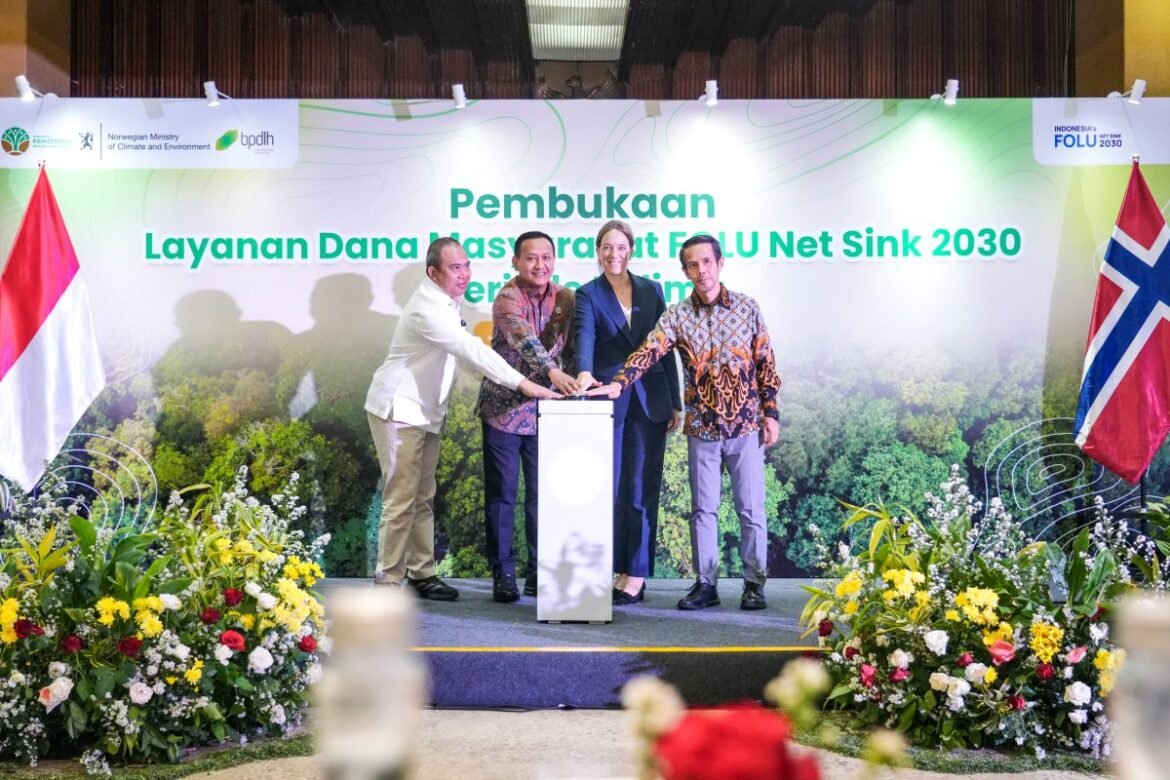
Against this backdrop, the U.S. decision to send Hooker—the third-ranking official at the State Department—rather than a principal leader sent a clear signal. Norwegian newspaper Aftenposten called the delegation’s rank “strikingly low”.

Eirik Løkke, a U.S. expert, told Dagbladet: “Sending an under secretary to attend shows that this funeral is not a high priority for Trump. And it symbolizes very little of the historical ties between Norway and the U.S.” Yet he stopped short of calling it a scandal.

Diplomacy expert Iver B. Neumann cautioned against overinterpreting the move, suggesting it may reflect the Trump administration’s broader disregard for traditional diplomatic protocol rather than a specific slight.

The official reason was scheduling: Trump traveled to Dallas to deliver the keynote address at the Republican National Committee Midterm Convention.

Separately, the Norwegian government has faced U.S. pressure over Greenland, as Trump has pursued an aggressive stance on the territory. Norway has publicly supported Denmark on the issue, adding another layer of friction.
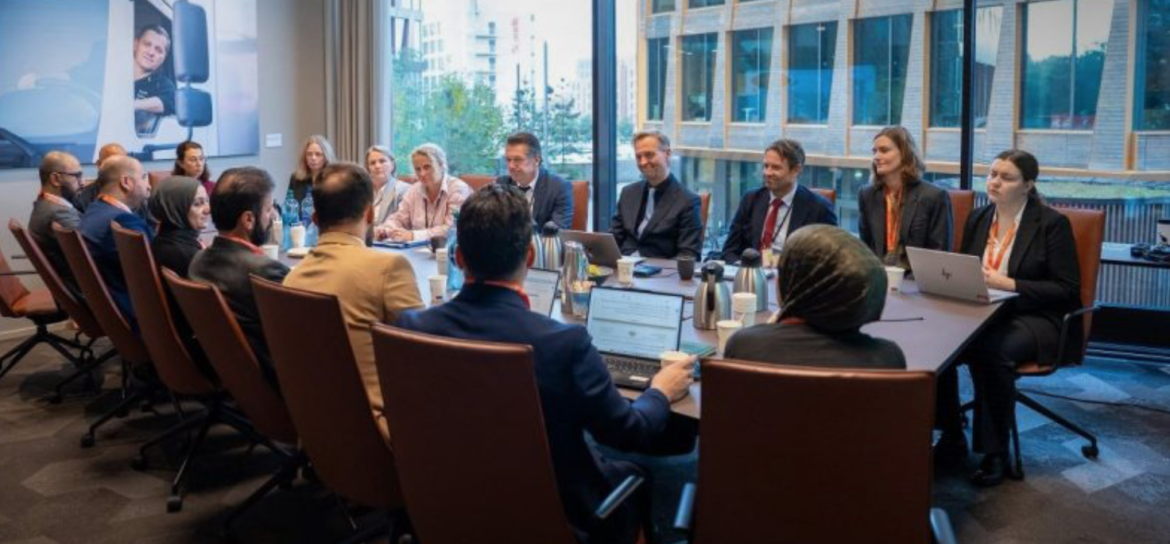
Despite the tensions, Trump did pay tribute to the late king on Truth Social, calling him “a strong, proud, and greatly respected man”.

The funeral delegation may be a symptom, not a cause. With tariff disputes, Greenland tensions, and Trump’s personal grievances all colliding, the U.S.-Norway relationship faces a rocky period—even as security cooperation continues unabated.

As one expert put it, the absence of top U.S. leaders may not be a calculated diplomatic insult, but rather “an expression of the chaos”. Either way, for a nation that has long counted the U.S. as its most important ally, the message received in Oslo was clear: the special relationship is no longer so special.

September 9, 2026 0 comments
0 FacebookTwitterPinterestEmail
Royal House

Hundreds of Thousands Line Oslo Streets as King Harald V Is Laid to Rest in a Historic State Funeral

by Nadarajah Sethurupan September 9, 2026
written by Nadarajah Sethurupan

OSLO, Norway – King Harald V, Europe’s oldest monarch and a beloved figure who reigned for 35 years, was laid to rest in the Norwegian capital on Wednesday, in a state funeral that drew tens of thousands of mourners and a dazzling array of global royalty and world leaders.

On a bright September day, under the watch of a massive security operation, Norway said its final farewell to the monarch who died on August 28 at the age of 89 following a serious blood infection. From the break of dawn, crowds of more than 200,000 people began to gather along the 1.5-kilometer route from the Royal Palace to Oslo Cathedral, many arriving hours early to secure a spot to pay their respects to the man they called the nation’s “grandfather”.

Photo – NTB , Dagbladet

A Solemn Procession

The funeral proceedings officially began at midday (10:00 GMT) when the king’s coffin, draped in the red Norwegian royal standard, was carried from the Palace Chapel where he had lain in state. Placed on a gun carriage and escorted by 1,900 members of all three branches of the Norwegian armed forces, the solemn procession wound its way through the heart of Oslo. Flags flew at half-mast across the city center, which was closed to all traffic. A 21-gun salute rang out over the capital, marking the start of the final journey for the modernizing king.

At the head of the procession walked the new monarch, King Haakon VIII, alongside other senior royals. They were followed by the late king’s widow, Queen Sonja, and the new queen, Mette-Marit, who travelled by car. The new king was flanked by the monarchs of Sweden and Denmark, a powerful symbol of Nordic unity not seen at the previous royal funeral in 1991.

Photo – NTB , Dagbladet

A Nation at a Standstill

At 1:00 p.m. local time (11:00 GMT), the funeral service commenced within the hallowed walls of Oslo Cathedral. As the service began, Norway came to a halt for a nationwide minute of silence, marked by the chiming of church bells across the country—three strokes at the beginning and three at the end.

Inside the cathedral, Parliament President Masud Gharahkhani and Prime Minister Jonas Gahr Store delivered memorial addresses. Gharahkhani remembered the king’s down-to-earth nature, recalling his famous motto and his 2008 New Year’s address in which he said: “I wish we would stop using the term ‘the weakest in society.’ In reality, some of these people are among the strongest of us all”. The service also included a multi-faith candle-lighting ceremony.

Photo – NTB , Dagbladet

A Gathering of Global Dignitaries

The funeral was one of the largest gatherings of European royalty in recent memory. The congregation included:

· Royalty: King Carl XVI Gustaf and Queen Silvia of Sweden; King Frederik X and Queen Mary of Denmark; King Felipe VI and Queen Letizia of Spain; King Willem-Alexander of the Netherlands; King Philippe and Queen Mathilde of Belgium.
· British Delegation: The Prince of Wales represented his father, King Charles III, while Princess Anne, who is godmother to King Haakon VIII, attended in a private capacity.
· World Leaders: Ukraine’s President Volodymyr Zelenskyy was among the political leaders from more than 20 countries in attendance. Germany’s President Frank-Walter Steinmeier and Finland’s President Alexander Stubb were also present.

Oslo 20260909.
Gravferdsseremonien til kong Harald V i Oslo domkirke onsdag.
Foto: Stian Lysberg Solum / POOL / NTB

The Final Resting Place

Following the cathedral service, the procession continued to the nearby Akershus Fortress. There, in a private ceremony attended only by the immediate royal family and closest invited guests, King Harald V’s coffin was lowered into the royal crypt of the Palace Chapel.

To mark the official conclusion of the burial and the end of the 13-day national mourning period, Norwegian flags across Oslo were raised from half-mast to the top of their poles as a final royal salute was fired. Church bells across the nation then rang for an hour.

Photo – NTB , Dagbladet

The immense security operation involved nearly 3,000 police officers and 3,500 soldiers, described by authorities as “one of the largest operations” in the country’s history. Harald V was succeeded immediately upon his death by his 53-year-old son, King Haakon VIII.

September 9, 2026 0 comments
0 FacebookTwitterPinterestEmail
Newer Posts
Older Posts

Norwegian Nobel Prize 2025

101207 The Norwegian Nobel Committee has decided to award the Nobel Peace Prize for 2025 to Maria Corina Machado for her tireless work promoting democratic rights for the people of Venezuela and for her struggle to achieve a just and peaceful transition from dictatorship to democracy.

Special Interest

  • Africa and Norway
  • Asia and Norway
  • Asylum
  • China and Norway
  • Corruption in Norway
  • Crimes
  • Defence
  • Diplomatic relations
  • Economics
  • Environment
  • Farming
  • Killing
  • Media Freedom
  • Middle East and Norway
  • NATO and Norway
  • Nobel Peace Prize
  • Norwegian Aid
  • Norwegian American
  • Oil & Gas
  • Peace Talks
  • Politics
  • Racism in Norway
  • Religion
  • Russia and Norway
  • Royal House
  • Science
  • Sex scandal
  • Sports
  • Spy War
  • Srilanka and Norway
  • Svalbard
  • Terrorist
  • Taiwan and Norway
  • Video clips

Follow Us

Recent Posts

  • US invites Putin to G20 Summit in Miami — Sec.Gen. Rubio

    September 23, 2026
  • Chinese Ambassador to Norway Extends His Regards to Chinese Students in Norway

    September 23, 2026
  • Norwegian ambassador: We support Lebanon’s new media law

    September 23, 2026
  • Norwegian exporters blame supply crunch, urge Nigeria to cut duty

    September 23, 2026
  • Norway, Finland propose international body to oversee AI development

    September 22, 2026
  • Norway contributes $1.63m to Afghanistan Humanitarian Fund

    September 22, 2026

Social Feed

Social Feed

Editors’ Picks

Norway opens market for Sri Lankan fish exports...

May 13, 2016

Sri Lanka – Nordic Business Council holds discussions...

May 15, 2016

Good governance to Sri Lanka

May 15, 2016

Shock and Joy in Sri Lanka – Erik...

May 15, 2016

Sri Lanka-Norway plenty of new opportunities for business–...

May 15, 2016

NORWAY NEWS is an online news site, written in English, dedicated to Norwegian affairs at home and abroad. Norway News.com is published online. It is a daily online newspaper in existence since May, 2003. The site is run by an Independent Journalist.

Facebook Twitter Youtube

Useful Links

    • Work With Us
    • Contact Us
    • Collaboration
    • Data Collection
    • Workplace
    • Adverstising
    • Privacy Policy
    • International Collab
    • Feedback
    • Terms of Use
    • About Our Ads
    • Help & Support
    • Entertainment
    • News Covering
    • Technology
    • Trending Now

Politics

Syrian, Norway to boost cooperation on mine clearance
Erna to step down as Conservative Party leader in 2026
Norwegian Labour Party on re-election win

Latest Articles

US invites Putin to G20 Summit in Miami — Sec.Gen. Rubio
Chinese Ambassador to Norway Extends His Regards to Chinese Students in Norway
Norwegian ambassador: We support Lebanon’s new media law
Norwegian exporters blame supply crunch, urge Nigeria to cut duty

Norway News 2025 . All Right Reserved. Designed and Developed by Norway News

  • Home
  • About us
  • Disclaimer
  • Contact us
NORWAY NEWS – latest news, breaking stories and comment – NORWAY NEWS
  • Home
  • About us
  • News
  • Other News
    • Africa and Norway
    • Asia and Norway
    • Asylum
    • Breaking News
    • China and Norway
    • Corruption in Norway
    • Crimes
    • Defence
    • Diplomatic relations
    • Economics
    • Environment
    • Farming
    • Featured
    • Health
    • Killing
    • Media Freedom
    • Middle East and Norway
    • NATO and Norway
    • Nobel Peace Prize
    • Norwegian Aid
    • Norwegian American
    • Oil & Gas
    • Peace Talks
    • Politics
    • Racism in Norway
    • Religion
    • Royal House
    • Russia and Norway
    • Science
    • Sex scandal
    • Sports
    • Spy War
    • Srilanka and Norway
    • Svalbard
    • Taiwan and Norway
    • Terrorist
    • Travel
    • Video clips
  • Disclaimer
  • Contact us
NORWAY NEWS – latest news, breaking stories and comment – NORWAY NEWS
  • Home
  • About us
  • News
  • Other News
    • Africa and Norway
    • Asia and Norway
    • Asylum
    • Breaking News
    • China and Norway
    • Corruption in Norway
    • Crimes
    • Defence
    • Diplomatic relations
    • Economics
    • Environment
    • Farming
    • Featured
    • Health
    • Killing
    • Media Freedom
    • Middle East and Norway
    • NATO and Norway
    • Nobel Peace Prize
    • Norwegian Aid
    • Norwegian American
    • Oil & Gas
    • Peace Talks
    • Politics
    • Racism in Norway
    • Religion
    • Royal House
    • Russia and Norway
    • Science
    • Sex scandal
    • Sports
    • Spy War
    • Srilanka and Norway
    • Svalbard
    • Taiwan and Norway
    • Terrorist
    • Travel
    • Video clips
  • Disclaimer
  • Contact us

Editor’s Picks

  • Norway’s Long Shadow Over Sri Lanka: UN Report Exposes Reform Failure as Oslo Faces Pressure to Act

    September 8, 2026
  • UN concern over Sri Lanka’s cases of enforced disappearances

    October 8, 2025
  • UN Human Rights Council Resolution on Sri Lanka’s Path to Reconciliation

    October 7, 2025
  • International should support Sri Lanka: Solheim

    October 4, 2024
  • Norwegian Meets Sri Lankan’s Challenges

    May 3, 2024
  • Norwegian Ambassador meets JVP in Sri Lanka

    May 2, 2024

Newsletter

@2025 - All Right Reserved. Designed and Developed by Norway News