
The joint call from Helsinki on October 27, 2026, was dismissed by many in Brussels and Copenhagen as a Nordic solo act. In reality, Jonas Gahr Støre and Alexander Stubb were doing what Washington has been doing for months: talking directly to Moscow. The United States is openly discussing a reset of relations with Russia, weighing business deals before the war even ends, and treating Ukraine as one item on a broader negotiating agenda rather than a sacred cause that forbids all contact with the Kremlin. Norway and Finland, as Russia’s neighbours, should embrace that same pragmatism—not apologise for it. And while they are at it, they should demand a full accounting of the billions in Norwegian aid that have flowed into a country the state’s own auditors describe as riddled with corruption risks.
The Trump administration’s approach to Russia is transactional, unapologetic, and increasingly normalised. Special Envoy Steve Witkoff and Jared Kushner have sat down with Vladimir Putin in St. Petersburg to discuss not only Ukraine but the restoration of bilateral relations and economic cooperation. The White House is considering signing business deals with Russia before the fighting stops, because—in the words of a US official—“they would show that the United States is serious about a reset relationship with Russia”. Putin himself has proposed a summit with Trump, and the Kremlin is preparing for a trilateral meeting involving China.
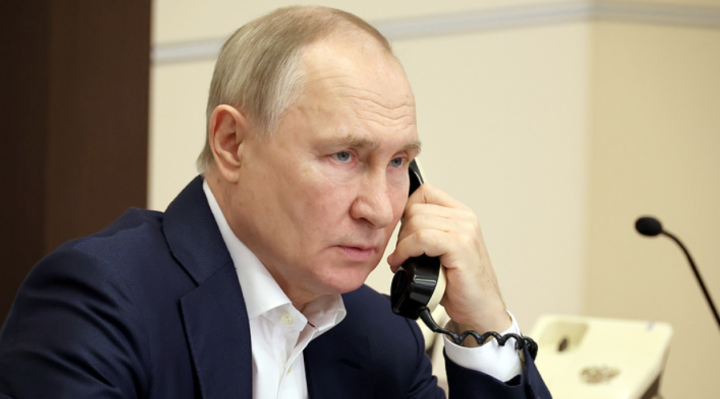
This is not a fringe position. It is the policy of the most powerful NATO member. Yet when Støre and Stubb picked up the phone to Putin, they were immediately accused of “going solo” and undermining European unity. The double standard is staggering. Washington can offer enticements to Moscow and call it strategy; Oslo and Helsinki can open a channel and are treated as naive. Finland’s own president has said publicly that Europe is “approaching the day when it would be useful for Europeans to establish more direct contact with Russia”—especially, as he put it, “because we need to avoid misunderstandings”. Stubb is right. And the October 27 call was the first step in that direction.
While the diplomats talk, the auditors have been working. And what they have found should end the free pass that Norway’s Ukraine funding has enjoyed. The National Audit Office of Norway (Riksrevisjonen) concluded in May 2026 that it is “not satisfactory” that the aid administration, in several cases, did not assess the risk of corruption—or risk-mitigating measures—before entering into agreements. For military support, the Ministry of Defence has still not finalised an internal control system to ensure adequate follow-up and control of grant funds, after several years and tens of billions of kroner. The Foreign Ministry has not established systems to ensure Norad receives the information it needs to manage the aid.
These are not abstract concerns. In May 2026, a formal question was submitted to the Storting citing allegations of money laundering of nearly 100 million Norwegian kroner through an exclusive housing project near Kyiv, linked to President Zelensky’s inner circle, including his former chief of staff Andriy Yermak. The same question pointed to the Energoatom scandal, where officials and businessmen were accused of laundering approximately 930 million kroner. Ukraine ranked 104th out of 181 countries on Transparency International’s corruption index in 2025. And in April 2026, Økokrim charged a serving officer in the Norwegian Armed Forces and a company CEO in connection with a Nansen Programme contract for medical equipment destined for Ukraine, valued at 30–40 million kroner. The officer was charged with misconduct for allegedly influencing the procurement process while having ties to the company—a classic conflict-of-interest scenario.
Norad insists that “no major cases have been uncovered involving Norwegian civilian aid funds being lost to corruption”. But the absence of a proven case is not proof of clean hands. It is proof that the control systems are not good enough to know. The state’s own auditor says so. The foreign minister has admitted he cannot guarantee that Norwegian funds have not been diverted. And the Storting has been told, in writing, that “corruption risk will remain challenging” for both Norwegian and international support to Ukraine. The political class has decided that the risk of Russian victory is so great that weaker oversight than normal is acceptable. That may be a defensible wartime trade-off. But it cannot be a permanent blank cheque. The Norwegian people deserve to know where their money went—and the Storting has a duty to investigate, not merely to accept the risk.
Norway and Finland share an 800-kilometre border with Russia. Fish do not respect sanctions. Nuclear contamination does not stop at a customs post. Search-and-rescue in the Barents Sea requires coordination, not silence. The Støre-Stubb call was an attempt to reopen a channel that had been closed for over a year—not to surrender to Moscow, but to manage a neighbour that is not going away. Finland’s president has said the border “need not mean an iron curtain”. That is not appeasement. It is geography.
The United States understands this. It is pursuing a reset with Russia while still arming Ukraine. Norway and Finland should adopt the same dual-track approach: support Kyiv where it matters, but talk to Moscow where it counts. And they should attach a condition that Washington has so far avoided: a full, independent audit of every Norwegian krone spent in Ukraine, with a mandate to trace funds through Ukrainian procurement chains and to publish the findings. The Riksrevisjonen’s criticisms must be answered. The Økokrim case must be prosecuted to the end. The Storting’s questions must receive more than ministerial reassurances.
The October 27 phone call was a quiet act of diplomatic courage. It should be the beginning of a Nordic shift toward pragmatic engagement with Russia—not a solitary gesture that is later walked back under pressure from Brussels. Norway and Finland can lead Europe away from the dead end of perpetual confrontation. But they must also lead on accountability at home. A foreign policy that talks to Moscow while refusing to audit its own aid is not realism. It is negligence dressed as solidarity. The courage to call Putin must be matched by the courage to open the books.
