
A Norwegian-led consortium involving shipbuilder Vard and offshore vessel owner Island Offshore is preparing to build and test an integrated nuclear propulsion system, targeting its first vessel deployment in 2031 or 2032.
The Marine Nuclear Propulsion System (MarNuPS) project, led by Emerald Nuclear Norway, will move from engineering studies to physical integration and testing, with a full-scale test facility planned at Stette near Ålesund in 2027.
The project will combine Emerald Nuclear’s 5 MW electric Gem microreactor technology with energy storage, power conversion, vessel power management, automation and bridge control systems.
The initial testing phase will use electric heating instead of nuclear fuel to simulate reactor operation, allowing engineers to assess how the propulsion system performs under realistic vessel operating conditions.
Tests will examine normal operation, rapid changes in power demand, system stress, emergency responses and interaction with ship crews.
The consortium includes Vard Group, Vard Electro, Island Offshore, the Norwegian University of Science and Technology (NTNU), Imperial College London and engineering specialist Maskindynamikk.
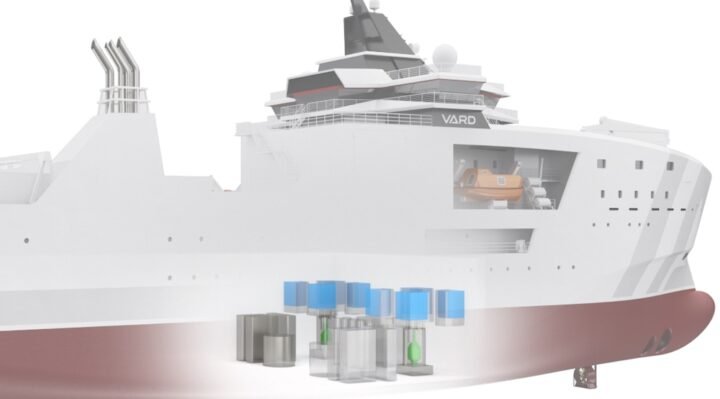
Vard will handle ship design and integration, while Vard Electro will develop power management and automation systems. Island Offshore will contribute operational expertise and plans to become the first shipowner to install the technology on an offshore vessel.
The initiative builds on the NTNU-led NuProShip research programme, which has been examining the feasibility of integrating advanced nuclear reactors into commercial shipping.
Earlier this year, Vard presented a nuclear-powered offshore construction vessel concept developed through NuProShip II, examining reactor integration, operational requirements and safety considerations.
The latest pilot has received NOK20m ($2m) from the Research Council of Norway, while its initial development stage is expected to cost approximately NOK150m ($15.6m), including partner contributions.
Although the project is targeting commercial demonstration early in the next decade, actual vessel deployment will depend on completing technical qualification and obtaining the necessary regulatory approvals.
