NORWAY NEWS – latest news, breaking stories and comment – NORWAY NEWS
  • Home
  • About us
  • News
  • Other News
    • Africa and Norway
    • Asia and Norway
    • Asylum
    • Breaking News
    • China and Norway
    • Corruption in Norway
    • Crimes
    • Defence
    • Diplomatic relations
    • Economics
    • Environment
    • Farming
    • Featured
    • Health
    • Killing
    • Media Freedom
    • Middle East and Norway
    • NATO and Norway
    • Nobel Peace Prize
    • Norwegian Aid
    • Norwegian American
    • Oil & Gas
    • Peace Talks
    • Politics
    • Racism in Norway
    • Religion
    • Royal House
    • Russia and Norway
    • Science
    • Sex scandal
    • Sports
    • Spy War
    • Srilanka and Norway
    • Svalbard
    • Taiwan and Norway
    • Terrorist
    • Travel
    • Video clips
  • Disclaimer
  • Contact us
NORWAY NEWS – latest news, breaking stories and comment – NORWAY NEWS
  • Home
  • About us
  • News
  • Other News
    • Africa and Norway
    • Asia and Norway
    • Asylum
    • Breaking News
    • China and Norway
    • Corruption in Norway
    • Crimes
    • Defence
    • Diplomatic relations
    • Economics
    • Environment
    • Farming
    • Featured
    • Health
    • Killing
    • Media Freedom
    • Middle East and Norway
    • NATO and Norway
    • Nobel Peace Prize
    • Norwegian Aid
    • Norwegian American
    • Oil & Gas
    • Peace Talks
    • Politics
    • Racism in Norway
    • Religion
    • Royal House
    • Russia and Norway
    • Science
    • Sex scandal
    • Sports
    • Spy War
    • Srilanka and Norway
    • Svalbard
    • Taiwan and Norway
    • Terrorist
    • Travel
    • Video clips
  • Disclaimer
  • Contact us
Monday, October 5, 2026
NORWAY NEWS – latest news, breaking stories and comment – NORWAY NEWS
  • Home
  • About us
  • News
  • Other News
    • Africa and Norway
    • Asia and Norway
    • Asylum
    • Breaking News
    • China and Norway
    • Corruption in Norway
    • Crimes
    • Defence
    • Diplomatic relations
    • Economics
    • Environment
    • Farming
    • Featured
    • Health
    • Killing
    • Media Freedom
    • Middle East and Norway
    • NATO and Norway
    • Nobel Peace Prize
    • Norwegian Aid
    • Norwegian American
    • Oil & Gas
    • Peace Talks
    • Politics
    • Racism in Norway
    • Religion
    • Royal House
    • Russia and Norway
    • Science
    • Sex scandal
    • Sports
    • Spy War
    • Srilanka and Norway
    • Svalbard
    • Taiwan and Norway
    • Terrorist
    • Travel
    • Video clips
  • Disclaimer
  • Contact us
Copyright 2025- All Right Reserved Norway News
Economics

Fast food chain Leon begins global expansion in Norway

by Nadarajah Sethurupan July 18, 2018
written by Nadarajah Sethurupan

John Vincent, CEO and Founder of LEON at the branch on Tottenham Court Road, London August 4th, 2016. Picture by Ben Gurr

Mediterranean-inspired fast-casual chain Leon has opened its first restaurant in Norway today (4 June), as part of its larger global expansion plan.

UMOE, a Norwegian restaurant operator with a number of franchised brands its portfolio, will operate the restaurant, located in Oslo Central Station.

Leon has also launched its own food truck in Oslo, serving a select menu of fast food.

The Leon Oslo menu will feature signature dishes, including the Moroccan meatball hotbox, fish finger wrap and original super salad.

A Leon spokesperson said: “Every single opening is important to Leon – even when it’s a little food truck by the pier – and we give it our all.

“The Oslo team are ready and raring to go and we know they will give their guests a great experience. We plan to expand further into Europe, the Middle East and the US in the coming months and years, so every new site is vital in delivering the future of fast food to the international market.”

Leon co-founder and CEO John Vincent said: “I am so happy to be opening in Oslo; a wonderful city full of the most interesting and inspirational people. I can’t wait to see what people think of Leon and of naturally fast food.”

Leon managing director for UMOE Helene Skjenneberg said: “Launching Leon means that we get to bring the future of fast food to Norway. We have exciting times in front of us and look forward to offering Norwegians a whole new concept of fast food based on natural ingredients.”

The natural fast food chain previously announced its extended partnership and expansion plans, confirming new openings in railway stations and airports in Belgium, Germany, Switzerland, Denmark and the Netherlands.

Airport outlets are expected to open in the United Arab Emirates, Bahrain, Saudi Arabia, Kuwait and more.

July 18, 2018 0 comments
0 FacebookTwitterPinterestEmail
Defence

The F-35 Could Become a ‘Navy’ Killer (Thanks to Norway)

by Nadarajah Sethurupan July 17, 2018
written by Nadarajah Sethurupan

In the mid 2000s, the Royal Norwegian Navy was looking to select a new anti-ship missile (ASM) to equip their ships. They looked at all foreign offerings, didn’t find any missile satisfactory, and instead drew up their own set of requirements. The requirements were: to meet the challenges of a future (up to 2040) ship-to-ship combat environment; to have a high probability of penetrating enemy air defense and countermeasures; to be effective in confined and open waters; and to be easily adaptable to different platforms.

From these requirements, Kongsberg Defense drew up the NSM, or Nytt sjømålsmissil. The name “Naval Strike Missile” was only attached later for English marketing purposes. The philosophy behind the design was to create a subsonic, small, agile missile that would be hard to observe, as opposed to a larger, supersonic missile. For reference, the NSM is only four-meters long. This is half the length of the Russian P-800 and P-700 missiles. The Russian missiles also use active radar homing in the terminal phase. This can alert a ship that it is being targeted. In contrast, the NSM uses a passive infrared (IR) sensor to home in on its target. Passive IR seeker technology for ASMs was pioneered by Kongsberg on the earlier Penguin anti-ship missile.

In addition to each individual missile being low observable and agile to avoid shipborne anti-missile defenses, the NSM is designed to work with an advanced mission planning system. This system leverages the strengths of the NSM (the agility, terrain following flight and low altitude) to create precise attack plans with multiple missiles arriving on the same target at the same time. Such saturation attacks are very hard to defend against.

Terminal accuracy of the NSM is said to be less than two feet from the aim point to the impact point, so specific systems and areas on a ship can be incorporated into these attack plans to achieve desired disabling results. Another selling point of the NSM is its ability to recognize a ship’s class through the seeker. This ability is called autonomous target recognition (ATR). It allows the missile to engage the correct aim point for maximum damage and provide intelligence to the launching ship.

Upon hitting the target, the effect of the NSM is determined by the programmable fuze. It can be programmed to detonate after penetration, allowing the titanium warhead casing to burrow into a target for maximum damage. There is also a steel grid within the warhead casing, to create a fragmentation effect for additional damage.

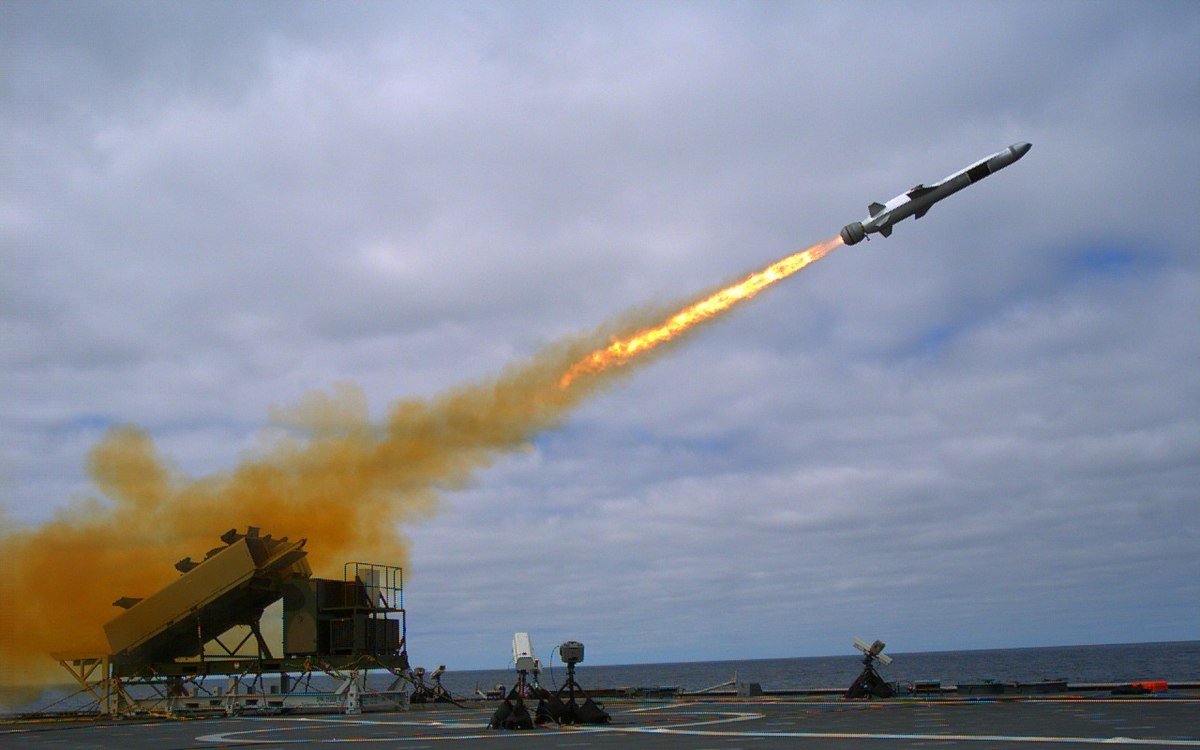
While the missile itself is very lethal, the other half of the NSM’s success in the European export market is its ability to be adapted to a wide variety of platforms. In Norwegian service, the NSM is mounted on Skjold-class corvettes, which are very small ships. In Polish service, the NSM is mounted on heavy trucks. Raytheon has also mounted the NSM on the Heavy Expanded Mobility Tactical Truck (HEMTT) in demonstrations for the U.S. military. A demonstration of this capability (referred to as a cross-domain fire) will occur during RIMPAC 2018. The small profile of the launchers for NSM allows for a military to easily integrate the missile onto their existing truck fleet.

The NSM is being considered for the Over-the-Horizon Weapon System (OTH-WS) competition, to replace the aging Harpoon—which is being phased out. It’s uncertain whether NSM will be mounted on a deck mount like Harpoon, or packed inside a vertical launching system. Current visualizations of the NSM on U.S. Navy ships show deck mounts.

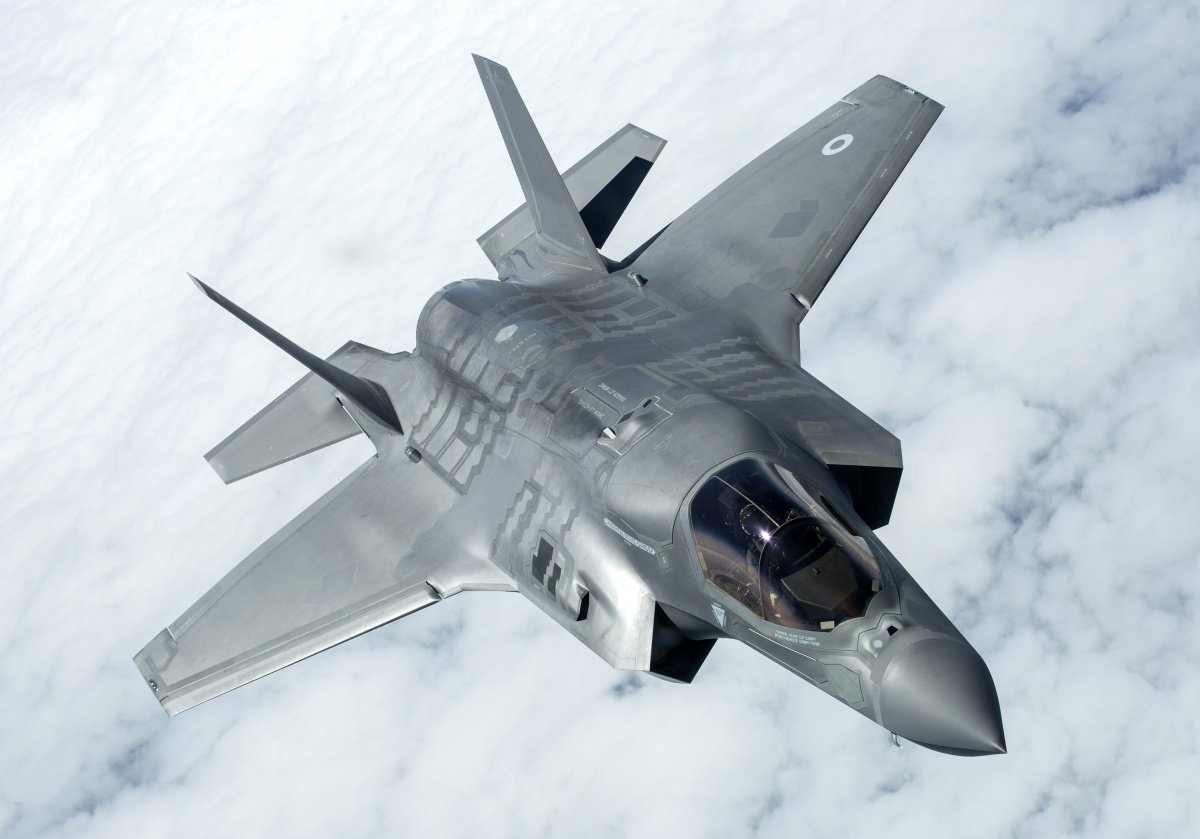
The NSM has also been adapted into the joint strike missile (JSM), an air-launched cruise missile system designed to fit inside the internal weapons bay of the F-35. The NSM’s chassis is slightly reconfigured for this purpose, but the seeker and engine largely remain the same. While the NSM has been operationally fielded since 2012, the JSM is not yet ready for service.

Charlie Gao studied political and computer science at Grinnell College and is a frequent commentator on defense and national-security issues.

Image: Wikimedia Commons (nationalinterest.org)

July 17, 2018 0 comments
0 FacebookTwitterPinterestEmail
Media Freedom

Norwegian journalist freed on bail

by Nadarajah Sethurupan July 17, 2018
written by Nadarajah Sethurupan

Police on Monday released Kadafi Zaman, a Norwegian journalist of Pakistani origin, who was arrested on July 13 at the time of a clash between the police and PML-N workers who were on their way to Lahore to receive Mian Muhammad Nawaz Sharif and Maryam Nawaz upon their return from London.
Kharian area magistrate Shumaila Sheikh ordered the release of Zaman along with three PML-N men, including ex-MPA Shabbir Kotla, after acceptance of their bail. They were arrested after registration of a criminal case against them on multiple charges framed by the Kakrali Police Station of Kharian tehsil on July 13.

Norwegian honorary Consul General Naveed Fareed held a meeting with Kadafi Zaman at the police station prior to his appearance in the court. She was present as the court heard his bail plea.

Zaman, who works with TV2 of Norway, was said to be present on the spot as PML-N’s Shabbir Kotla led a group of party workers. The workers crossed many barricades before the police baton charged them. Arrests followed.

The police had booked at least 40 nominated and dozens of unidentified workers of the PML-N. The list of those arrested also included Kadafi Zaman, who happens to be a cousin of both Shabbir Kotla and ex-MNA Abid Raza Kotla. The two Kotlas are the PML-N candidates for PP-33 and NA-71, respectively. The suspects were booked under charges of attempted murder, tearing police uniform, snatching four mobile telephones from the police and interference in the government function.

Ms Siv Kaspersen, Charge d’affairs, Royal Norwegian Embassy in Islamabad, said: “We were in contact with Pakistani authorities to get access to Kadafi Zaman and we got in touch with him and our consular general also met him besides observing the court hearing on Monday. We are satisfied that he got released on bail”.

Earlier, Pakistani embassy in Norwegian capital Oslo had also stated that it was working to get Zaman released from custody.

According to the Norwegian media, Zaman had informed his employer in Oslo that he was detained despite informing the police that he was performing his job as a journalist.

“I witnessed extremely violent behaviour from the police who used batons to curb the demonstration,” he was quoted as saying by TV 2. “I was attacked and bludgeoned with batons despite informing (the police) that I was from the press. He told his employer that he had been put in a cell along 21 others.

A statement by Kadafi Zaman’s employer had said: “TV 2 reacts strongly to the fact that our reporter is arrested when he tries to do his job as a journalist. This is very grave…”

“According to normal practice foreign journalists (when reporting in Pakistan) get in touch with the police through their respective embassies in Islamabad, In this case that practice was not followed” alleged Asad Gujjar a spokesman for Gujrat police. “Had he (Zaman) introduced himself as a journalist, the police would not have arrested him,” he added.

(dawn)

July 17, 2018 0 comments
0 FacebookTwitterPinterestEmail
Norwegian Aid

Norway increases support for mine clearance in Iraq and Syria

by Nadarajah Sethurupan July 16, 2018
written by Nadarajah Sethurupan

‘Mine clearance is crucial to prevent the loss of civilian lives, to ensure access for emergency aid, and to enable hundreds of thousands of internally displaced people to return safely to their homes. This is why we are now increasing our support for mine clearance in Iraq and Syria,’ Foreign Minister Ine Eriksen Søreide said.

Isil planted vast numbers of landmines and explosives in the areas they formerly controlled. These explosives pose an enormous threat to civilians. Against this backdrop, Norway has increased its support for mine clearance in Iraq and Syria from NOK 110 million in 2017 to NOK 154 million in 2018.

Last summer the city of Mosul in Iraq was liberated from Isil, and last autumn the global coalition liberated the city of Raqqa, formerly Isil’s headquarters in Syria. According to the UN, the number of landmines and unexploded ordnance in Iraq and Syria is extreme, with 50 to 70 casualties a week in the city of Raqqa alone.

‘The human suffering caused by these explosives must be brought to an end. The situation in Raqqa and Mosul is particularly serious. A substantial share of Norway’s support for mine clearance is being channelled to these two cities,’ said Ms Eriksen Søreide.

Norway is one of the five largest donors to international mine clearance efforts. In 2017 Norway provided a total of NOK 312 million for this work. Activities supported by Norway include mapping hazardous areas, training the local population in risk management, and clearing landmines and unexploded ordnance so that land and buildings can be used again.

(MFA)

July 16, 2018 0 comments
0 FacebookTwitterPinterestEmail
Defence

Rolls-Royce sells commercial marine unit

by Nadarajah Sethurupan July 15, 2018
written by Nadarajah Sethurupan

British engine maker Rolls-Royce announced Friday it has agreed to sell its loss-making commercial marine business to Norwegian industrial group Kongsberg for £500 million.

The deal, worth $661 million, is part of a massive overhaul led by chief executive Warren East, Rolls-Royce said in a statement.

The news comes three weeks after the London-listed company launched plans to axe 4,600 mainly British management roles by 2020 to further slash costs.

Rolls is implementing a sweeping restructuring plan which aims to generate £400 million of annual cost savings by the end of 2020.

The group has weathered a tough trading environment in recent years on weak demand for its power systems, in particular ones used by the marine industry.

“This transaction builds on the actions we have taken over the last two years to simplify our business,” said boss East on Friday.

“The sale of our commercial marine business will enable us to focus on our three core businesses of civil aerospace, defence and power systems, and on meeting the vital power needs of our customers.”

The commercial marine division, which has been drastically restructured since 2015, employs about 3,600 staff mainly in the Nordic region.

In recent years, the troubled business has been hurt by weak oil prices, which has dented demand for marine vessels and equipment.

Kongsberg added in a separate statement that the acquisition will be partly financed by a rights issue, or sale of new shares, totalling 5.0 billion kroner ($620 million, 530 million euros).

Kongsberg is 50 percent owned by the Norwegian government.

Rolls-Royce expects net proceeds of £350 million to £400 million from the transaction, which is set to complete early next year.

The disposal is meanwhile set to have a positive profit impact of around £50 million based on 2017 figures, according to Rolls-Royce.

The company had in January launched a strategic review of the division, which generated 2017 revenues of £817 million but an operating loss of £70 million.

Kongsberg, which has operations in 25 countries and 7,000 staff, provides products to sectors including defence, oil and gas and aerospace.

“The acquisition of Rolls-Royce Commercial Marine makes us a more complete supplier to the maritime industry,” added Kongsberg chief executive Geir Haoy.

“With this acquisition we will strengthen our strategic position with shipowners, shipyards and other customers and partners.”

Rolls-Royce, whose engines are used in Airbus and Boeing aircraft, has 16,000 staff at its main UK operational base in Derby in central England.

The entire group currently employs about 55,000 staff across 50 countries worldwide.

(AFP)

July 15, 2018 0 comments
0 FacebookTwitterPinterestEmail
Diplomatic relations

Death of former High Commissioner Thorvald Stoltenberg

by Nadarajah Sethurupan July 15, 2018
written by Nadarajah Sethurupan

Former UN High Commissioner for Refugees Thorvald Stoltenberg passed away in Oslo on Friday.

“Thorvald Stoltenberg was a peacemaker, a humanitarian and an internationalist,” said UN High Commissioner for Refugees Filippo Grandi. “During his illustrious career as a statesman and diplomat he made an outstanding contribution to peace.”

In 1990 Stoltenberg became UN High Commissioner for Refugees. At UNHCR, he oversaw several ongoing repatriation operations, particularly in Central America. He resigned in November 1990 to return to his previous position as Norwegian foreign minister. In May 1993, at the height of the Bosnian war, he returned to the United Nations as the Secretary-General’s Special Representative to the Former Yugoslavia.

Stoltenberg was the father of Nato Secretary General and former prime minister of Norway Jens Stoltenberg.

He is a Norwegian politician. He served as Minister of Defence (1979–81) and Minister of Foreign Affairs (1987–1989 and 1990–1993) in two Labour governments.

From 1989 to 1990 he was appointed Norwegian Ambassador to the UN. In 1990 he became the United Nations High Commissioner for Refugees, but served only one year before rejoining the Norwegian government. In 1992, Thorvald Stoltenberg, together with nine Baltic Ministers of Foreign Affairs and an EU commissioner, founded the Council of the Baltic Sea States (CBSS) and the EuroFaculty.

In 1993 appointed Special Representative of the UN Secretary-General for the former Yugoslavia and UN Co-Chairman of the Steering Committee of the International Conference on the former Yugoslavia. Thorvald Stoltenberg was also the UN witness at the signing of Erdut Agreement.

In 2003 he was appointed Chairman of the Board of International Institute for Democracy and Electoral Assistance (International IDEA). Between 1999 and 2008 he was President of the Norwegian Red Cross, the only president to serve three terms. He is also a member of the Trilateral Commission, and holds a seat on their Executive Committee.

July 15, 2018 0 comments
0 FacebookTwitterPinterestEmail
Politics

UK centrists endorse ‘off-the-shelf’ Norway model while government is split

by Nadarajah Sethurupan July 15, 2018
written by Nadarajah Sethurupan

Prominent Remain supporters David Miliband (Labour), Nicky Morgan (Conservatives) and Nick Clegg proposed European Economic Area (EEA) membership on Monday as the best solution for the British economy.

The EEA is a political anathema for most Brexiteers, while Theresa May‘s cabinet is facing a seemingly unbridgable cleavage over the preferred trade policy with the EU. While the EEA is recognized as a political non-starter, the British policy has no obvious point of departure, with May unable to lead on the basis of a consolidated policy either the government or her MPs.

Norway weighed in on the debate on Monday, proposing the “Norway”; the Conservative prime minister Erna Solberg told the Financial Times that the model was “on the shelf” and would be readily available to London.

Last week, the House of Lords voted for the UK to remain a member of the EEA after the end of the transition period. That vote was not merely a defeat for Theresa May, but also for the leader of the opposition, Jeremy Corbyn, since 80 peers sidelined Labour’s official position to support the status that is closer to full EU membership. EEA membership would retain the current status quo on Single Market access, but also on freedom of movement and contributions to the EU budget.

Centrist charge

The former foreign secretary, David Miliband, said Jeremy Corbyn risked becoming the “midwife of a hard Brexit,” due to his rejection of EEA. In an interview with BBC 4, Miliband called the EEA a “safe harbour” that would allow the UK to continue to have a “structured” relationship with the EU in goods and services.

Nick Clegg warned that leaving the Single Market would bring about the greatest introduction to trade barriers since the end of WWII.

The initiative reflects the preference of several Conservative, Labour and all of the Liberal MPs for a Norwegian model of Brexit, which would allow Ireland to remain without a border. However, this is a prospect infuriating to Brexit campaigners, as it would keep EU contributions and free movement of labour in place.

The British employers confederation (CBI) is also advocating for a Customs Union between the UK and the EU.

Conservative Brexit hardlines, such as Rees-Mogg, dismissed the initiative and reiterated their commitment to a clean break with the EU at the end of the transition period in December 2020. Brexit campaigners have long argued that the UK is an exception as “only” 40% of its foreign trade takes place with the EU. Miliband responded on Monday that if one were to take into account third-party EU trade agreements, the figure was about 60%.

Norway weighs in

Senior Norwegian diplomats and business have expressed concern that the size of the UK would distort the priorities of the EEA zone, which is geared towards shielding Norwegian agriculture and fishing.

Meanwhile, over 75% of Norway’s trade is with EU member states.

For the moment, the British prime minister is calling for a bespoke customs partnership, in which the UK would be consulted before a trade deal with a third party and would not be a rule-taker like Norway and Turkey. In addition, the British government has made clear it is unwilling to accept a solution that entails free movement of people.

Oslo, in theory, has a veto over EU policy but has never used it.

Pressure for a ‘from the shelf’ solution

The British cabinet continues on Tuesday to negotiate on a preferred model of trade relations with Brussels. May is advocating for a customs “partnership, which would see the UK in a bespoke voluntary compliance regime, taking EU rules while setting up a mechanism for arbitration and consultation.

Hardline Brexiteers want a neat exit, proposing a technological solution for the border in Ireland that both Brussels and Dublin have dismissed.

With a June semi-official deadline about to expire in June, the UK has no proposal on the table that could retain Ireland without a border. The British government has watered down a commitment to “no border” in December 2017, now committing to no “hard border.”

Under the current circumstances, a hard Brexit is a distinct possibility, without even a transition period. The European Commission’s Brexit negotiator admitted on Tuesday that there is a “risk of failure” in negotiations.

Political analysts warn that Brexit is too complex to be resolved in last-minute negotiations and the deadline would signal to Brussels that it must start planning for the worse. Answering a question on how much negotiations have progressed since March, Barnier said “little” and warned that a transition deal hinges on an agreement on the Irish border.

July 15, 2018 0 comments
0 FacebookTwitterPinterestEmail
Environment

Norwegian Transit Operator Unibuss AS Purchases 40 Fully Electric VDL Citea Buses

by Nadarajah Sethurupan July 14, 2018
written by Nadarajah Sethurupan

Norwegian transit operator Unibuss AS is taking steps towards its goals of cutting the carbon footprint of its fleets by placing an order for 40 electric Citeas from VDL Bus & Coach for routes in Oslo, Norway.

The agency responsible for public transport in and around Oslo, PTA Ruter, announced its intention to transition the entire public transit bus fleet to electric vehicles over the next 10 years to drive meaningful improvements in the quality of life for city residents.

Unibuss chose to implement two different versions of VDL’s Citeas Electric buses to provide the same service around the Greater Oslo Region that its customers have grown accustomed to. The deal is comprised of 30 Citeas SLFA-180 Electric buses with a 169 kWh battery pack and 10 Citeas SLF-120 Electric buses with a 127 kWh battery pack.

VDL’s SLF Electric and SLFA Electric bus platforms were designed to be modular, which allows transit operators to build and purchase a bus package that best fits their needs. Right-sizing the battery package allows for the best cost-benefit balance and ensures the best return on investment for fleet managers.

The first e-buses from this order will start running around the Greater Oslo Region in the spring of 2019. The purchase is a milestone for VDL Bus & Coach as it marks the largest order for electric buses in all of Scandinavia to date.

Alex de Jong, the business manager for public transport at VDL Bus & Coach, said of the deal, “As an experienced transition partner and European market leader in the area of E-Mobility, we are pleased to now be entering the Norwegian market. Norway is taking big steps and leading the way in Scandinavia when it comes to the transition to zero-emission public transport. We at VDL Bus & Coach are proud that with this prestigious order we are contributing to Oslo’s standing as European Green Capital of 2019.”

VDL has built a name for itself as a turnkey transit solution provider with its seamlessly integrated bus and charging packages that optimize each solution for the specific application. This can be a mix of large and small buses, long and short range buses, and overnight and on-route charging solutions, giving transit operators flexibility with fleet conversions.

(cleantechnica)

July 14, 2018 0 comments
0 FacebookTwitterPinterestEmail
Crimes

Irishman arrested in Norway after ‘smoking in plane toilet while drunk’

by Nadarajah Sethurupan July 14, 2018
written by Nadarajah Sethurupan

A ‘drunk’ Irishman was arrested by police in Norway after he was caught smoking in an aeroplane toilet.

The man, believed to be in his late 20s, was detained at Tromso airport in the north of the country on Wednesday evening before 11pm, according to Norwegian newspaper VG.

Officers told the paper the man appeared to be drunk when he was arrested upon arrival on the flight from Oslo.

The unnamed man, who is on holiday in Norway, was taken to a hotel in the city and can expect a fine, officers said.

The passenger wasn’t the only aeroplane passenger to get on trouble with cabin crew.

A Delta air stewardess allegedly kicked five people off a flight in Indiana after a passenger refused to turn their phone to ‘airplane mode.’

One fuming traveller posted about the incident to social media and said that the “unfairly ejected” group were left with nowhere to stay.

In an Instagram post, Robyn Rodgers wrote: “Just before take off the flight attendant rudely told me to put my phone on airplane mode.”

“As I was swiping to it the attendant menacingly stood over me with her arms folded waiting for me to do it. I told her ‘I know how to turn on airplane mode, you don’t have to stand over me”.

“She became agitated and said ‘if you’re gonna act like that we can go back to the gate and you can get off’.”

Delta Airlines told Mirror Online they were “reviewing’ the incident.”

(mirror)

July 14, 2018 0 comments
0 FacebookTwitterPinterestEmail
Asylum

Norway extradites Kurdish politician to Turkey

by Nadarajah Sethurupan July 13, 2018
written by Nadarajah Sethurupan

Kurdish female politician Gülizar Taşdemir who sought asylum in Norway for medical treatment in 2015, has been extradited to Turkey.

Gülizar Taşdemir who fought an active struggle in the Kurdish freedom movement for 27 years had sought asylum in Norway on 7 June 2015. Suffering from severe health problems, Taşdemir has been deported despite strong reactions and fascist repression circumstances in Turkey. The Kurdish politician has reportedly been deported this Wednesday.

Taşdemir’s deportation to Turkey, where human rights, freedoms and laws have been eliminated alltogether, indicates a new and dangerous situation in terms of refugees’ rights.

Taşdemir saw her asylum application rejected by the Norwegian authorities in 2015, so she went to Germany and wanted to seek refuge there. However, she was once again extradited to Norway according to the Dublin agreement.

European Kurdish Women’s Movement (TJK-E) had said in a statement before Taşdemir’s deportation that an attempt was being made to sacrifice her to laws. Calling on authorities to halt the deportation, TJK-E said; “State of Emergency (OHAL) practices prevail in Turkey. While even ordinary people without a political identity have no security of life in the climate of fear spread by the one-man regime, it is obvious that Taşdemir, who is known for her political identity, has no security of life.”

July 13, 2018 0 comments
0 FacebookTwitterPinterestEmail
Economics

Oslo’s got a new urban experiment in the works: “Airport City”

by Nadarajah Sethurupan July 13, 2018
written by Nadarajah Sethurupan

Imagine an airport you never want to leave. Architects are at work at making the wildest dreams of a captive audience of travelers into reality as part of an effort to boost Oslo’s international profile and local economy.

Plans for the 43 million-square-foot city adjacent to Oslo Airport Gardermoen were recently revealed by Haptic Architects and the Nordic Office of Architecture, according to Travel + Leisure. The vision for the 260-acre site includes about 11 million square feet of new buildings spanning the range of industries from hotels to cultural facilities, and amenities like swimming arenas, facilities for meetings and other business-related services, rock climbing walls, a scenic cycling path, and parachute rides — all no more than a short train ride away from the airport.

But the new Oslo Airport City is not just meant for those flying in and out — there will be homes and schools included in the scheme too. The airport’s surrounding municipality, Ullensaker, is one of the fastest growing areas in Norway and the government is looking to develop infrastructure and a strong local travel-reliant economy for residents.

“What we’re doing is creating an airport city with urban qualities that include streets, squares, and walkable spaces not blocked off by cars, in addition to building on the various sport and leisure qualities Norwegians are quite into,” said Haptic’s director Tomas Stokke to the publication.

Inspired by the government’s plan to begin flying electric planes by 2030 at the latest on commercial routes, the new airport city will incorporate a number of “smart” and sustainable features, including driverless cars — no other vehicles will be allowed in the mostly pedestrian city — and be powered by solely renewable energy sources.

The entire project is expected to take 30 years to build with the first phase of buildings scheduled to be completed in 2022.

(therealdeal)

July 13, 2018 0 comments
0 FacebookTwitterPinterestEmail
NATO and Norway

NATO Summit: Allied unity and burden-sharing

by Nadarajah Sethurupan July 12, 2018
written by Nadarajah Sethurupan

Allied unity and the issue of burden-sharing will be among the central topics when heads of state and government convene for the NATO summit in Brussels on 11-12 July.

‘My key message at the summit will be the importance of strong allied unity. Together, we must take greater responsibility for our common security. Norway is doing its part. Since 2013, we have increased our defence budget by 24 % in real terms. A premise for the next Long-term Defence Plan will be to further increase Norway’s defence spending towards the 2 percent goal,’ Prime Minister Erna Solberg said.

Since the summits in Wales in 2014 and in Warsaw in 2016, NATO has strengthened its deterrence and defence and adapted to changes in the security situation. NATO’s readiness has increased in a number of ways. The Alliance holds more frequent exercises, has adapted it’s command structure, and has drawn up new defence plans. Cooperation between NATO and the EU has also been strengthened.

‘NATO is the cornerstone of Norway’s security policy. That is why a strong and credible Alliance is crucial for Norway,’ Foreign Minister Ine Eriksen Søreide said.

The new security landscape also poses challenges for NATO. Political unity and solidarity within the Alliance are essential for addressing these challenges. Norway promotes a comprehensive approach in order to safeguard our common security, irrespective of where threats originate.

‘Strengthening collective defence is a key priority in Norway’s defence policy. The new NATO joint headquarter in Norfolk, with responsibility for the Atlantic and the sea lines of communication, is vital. Norway is particularly engaged in the work to strengthen NATO’s maritime posture, especially in the north,’ says Minister of Defence Frank Bakke-Jensen.

This will be the first summit to be held in NATO’s new headquarters in Brussels. For more information, please visit the NATO website.

(MFA)

July 12, 2018 0 comments
0 FacebookTwitterPinterestEmail
NATO and Norway

Trump sends letters to NATO allies demanding to increase defense spending

by Nadarajah Sethurupan July 12, 2018
written by Nadarajah Sethurupan

US President Donald Trump sent letters to the leaders of NATO allies, including Germany, Canada, Belgium and Norway, demanding to increase their defense spending, CNN reports citing New York Times.

Many of the letters to the various leaders included similar language, but Trump’s letter to German Chancellor Angela Merkel was particularly critical.

“As we discussed during your visit in April, there is growing frustration in the United States that some allies have not stepped up as promised”, the letter to Merkel read, according to the Times, which cited a source who had seen it and sent excepts. “Continued German underspending on defense undermines the security of the alliance and provides validation for other allies that also do not plan to meet their military spending commitments, because others see you as a role model”.

During 2014 NATO summit at Wales, its members committed to spend 2% of their gross domestic product on national defense. At the moment only 8 members of NATO spend 2% of their GDP on defense.

Trump vowed to raise this issue during NATO’s Brussels summit which will be held on July 11-12.

July 12, 2018 0 comments
0 FacebookTwitterPinterestEmail
Middle East and Norway

Police say UAE is not cooperating with money-laundering investigation

by Nadarajah Sethurupan July 12, 2018
written by Nadarajah Sethurupan

A lack of cooperation from the United Arab Emirates has been hampering investigations into a multi-million dollar money-laundering case, according to Norwegian authorities.

It is almost three years since police raided the headquarters of the Norway-based Global Network for Rights and Development (GNRD) and the home of its founder, Loai Deeb, on suspicion of money-laundering.

Norwegian police say they sent a request to the Emirati authorities for help with the investigation in August 2016 and are still waiting for an answer. They also say they have not been granted an opportunity to question people in the Emirates who may have been involved in suspicious money transfers.

In its human rights work GNRD promoted an unusually favourable view of the situation in the UAE and, according to investigators, almost all its funding came via the UAE. Between 2013 and 2015 a series of Emirates-registered companies (which appear not have been genuine businesses) received large amounts of money from unidentified sources and then transferred it to GNRD – a total of around $13 million.

At its peak, GNRD had branch offices in several countries and about 140 employees worldwide. It had consultative status at the United Nations and was registered for lobbying purposes at the European Parliament in Brussels. It had a cooperation agreement with the African Union and acted as an official observer for elections in several Arab and African countries.

Following the police raids GNRD’s funding dried up. It stopped paying its employees and was eventually declared bankrupt.

Investigations in other countries

Despite the difficulties in getting information from the UAE, investigations relating to GNRD’s finances have been taking place in at least four other countries – Switzerland, Belgium, Austria and Britain – according to the Norwegian newspaper Stavanger Aftenbladet.

In Switzerland, the Geneva public prosecutor’s office says it is “conducting criminal proceedings” involving GNRD and another organisation, the Scandinavian Institute for Human Rights (SIHR) which was founded jointly by Deeb and Haytham Manna, a Syrian exile who is a close associate of Deeb. According to the prosecutor, both Deeb and Manna “appear in such proceedings”.

GNRD and SIHR shared an office address in Geneva and Manna attended and spoke at various GNRD events. In a telephone interview with Aftenbladet, Manna described the Swiss investigation as “fake news” and said he had not been contacted by the police.

In Austria, investigations have focused on Hassan Moussa, who was a board member of GNRD for several years before it went bankrupt. Moussa is currently facing fraud charges in connection with an organisation called Austrian International Schools which he chaired. He denies the charges and says he is the victim of “intrigue”, according to his lawyer.

GNRD was very active in Brussels where it developed relationships with several members of the European Parliament. Aftenbladet reports that Belgian police have interviewed a former GNRD employee there and have also compiled almost 1,000 pages of investigation documents. Deeb’s lawyer told the newspaper most of the documents were about Belgian banks and “as far as I can see, there is no material found in the Belgian investigation that is to my client’s disadvantage”.

Police enquiries in Britain relate to payments allegedly made by Deeb in connection with online gambling.

Several recent reports in Norwegian media have discussed how the legal case is likely to proceed. The authorities have dropped the money-laundering charges against GNRD on the grounds that the organisation is now bankrupt, though they are apparently continuing to pursue similar charges against Deeb personally.

However, in the absence of cooperation from the UAE, prosecutors say their focus has shifted to “criminal offences committed in Norway”.

As yet there has been no formal announcement of what the additional charges against Deeb will be but Norwegian media reports say they are likely to include fraud, document forgery and tax evasion.

On May 3, Deeb posted a press release on Facebook saying the charges against GNRD and himself had been “dismissed”, though it went on to say he had been “charged with embezzlement of funds from GNRD as well as some completely insignificant relationships”. It added: “None of the charges are associated with the charge of money laundering. Deeb claims he didn’t commit a crime.”

Compensation claim

Deeb blames the police action for GNRD’s bankruptcy and in a further Facebook post on May 8 he said its lawyers are preparing a compensation claim against Økokrim, the Norwegian financial police. His post invited former employees to join the compensation case by signing a form which would give GNRD’s lawyers power to act on their behalf.

One reported claimant is Joseph Chilengi who was GNRD’s “High Commissioner for Africa”. He says he is owed about 750,000 kroner($94,000), mainly in unpaid salary.

Chilengi is currently Zambia’s ambassador to Turkey. At the time of his GNRD appointment he was chair of the general assembly of the African Union’s Economic, Social and Cultural Council (ECOSOCC). In 2013, GNRD signed a memorandum of understanding with the African Union “to facilitate the development and integration agenda” of the AU and “explore opportunities for cooperation and non-exclusive partnership”. In 2015, Chilengi flew to Spain at GNRD’s invitation to take part in an Africa Day debate.

(al-bab)

July 12, 2018 0 comments
0 FacebookTwitterPinterestEmail
Science

Norway considers future of Halden research reactor

by Nadarajah Sethurupan July 10, 2018
written by Nadarajah Sethurupan

Operation of the Halden research reactor in Norway beyond 2020 will require significantly increased funding, a preliminary report of a strategic review on the reactor’s future operation has concluded. The Institute for Energy Technology (IFE), which operates the reactor, said it will make a decision in late June on Halden’s future.

The Halden project is a joint undertaking of national organisations in 19 countries sponsoring a jointly financed programme under the auspices of the OECD Nuclear Energy Agency (NEA). The programme is financed by the participating countries and is renewed every three years. As the host country, Norway covers about 30% of the programme cost.

The Halden nuclear fuel and reactor material testing reactor – which started up in 1959 – runs at a maximum power of 25 MWt and contains numerous test positions, thus providing flexible test conditions. About 30 test rigs are currently installed in the reactor core. A number of in-reactor loops are installed for performing experiments under prototypical coolant conditions. These loops are in particular utilised for corrosion and stress corrosion studies and for water chemistry investigations.

Halden’s current operating licence expires at the end of 2020. IFE is required to apply for a licence renewal this year.

IFE said over the past months it has conducted an extensive strategic review of the future options for the reactor.

“The strategic review has been based on a thorough evaluation of the investment requirements, operational risk assessment and prospect of new business opportunities for the reactor, including work to establish a new fee model for the Halden Reactor Project led by the OECD-NEA,” IFE said.

The preliminary report of the strategic review was discussed at the 24 April meeting of IFE’s board of directors.

“The strategic review concludes that further reactor operation will require substantially increased financial funding and guarantees in excess of what IFE is able to provide,” IFE said on 27 April. “On this basis, IFE’s board decided to initiate a discussion with the Norwegian government regarding future funding of the nuclear operations at IFE, including the process and financing of decommissioning of the Halden reactor.”

IFE said its board will meet again on 27 June “to make a final decision about the way forward” for the Halden reactor.

“IFE and Norway remain strongly committed to the Halden project, and IFE would therefore like to investigate the possibility for reshaping the OECD Halden Reactor Project, particularly the Fuels & Materials part, to continue also in the event that operation of the Halden reactor is discontinued,” IFE said.

(Researched and written by World Nuclear News)

July 10, 2018 0 comments
0 FacebookTwitterPinterestEmail
Science

China, the largest exporter of high-tech products for the European Union

by Nadarajah Sethurupan July 9, 2018
written by Nadarajah Sethurupan

The European Union imported, in 2017, EUR 357 billion worth of high-tech products, which represents 19 percent of total EU imports. Overall, the EU had a trade deficit in high-tech products of 61 billion within the top 20 trade partners. The largest deficit was with China, the biggest partner, totaling EUR 82 billion. Within the top 20 partners, the EU had a trade deficit with seven other countries: Vietnam, United States, Malaysia, Thailand, South Korea, Switzerland, and Japan, and a trade surplus with the remaining twelve: Mexico, Israel, Canada, Singapore, Norway, Brazil, Hong Kong, India, Saudi Arabia, Turkey, Russia and the United Arab Emirates.

The trade deficit by product reveals the deficit is mainly in electronics communications (including smartphones), EUR 65 billion, and computer office machines, EUR 46 billion. In both cases, most of the trade deficit is with China. The product groups with the largest trade surpluses were aerospace (EUR 31 billion), pharmacy (EUR 29 billion) and scientific instruments (EUR 22 billion).

In 2017, the EU imported most of its high-tech products from China (34 percent of total EU imports of these products from outside the EU), the United States (27 percent) and Switzerland (6 percent). The list continues with Vietnam, Malaysia, Japan, South Korea, Singapore, Thailand and Canada. Out of top 10, seven countries are from Asia.

Regarding exports, the partners are the same, but in a different order. In order, top 10 export markets is US, China, Switzerland, united Arab Emirates, Russia, Japan, Singapore, Turkey, India and Hong Kong. By size, most exports went to the United States (25 percent of total EU exports of these products to outside the EU), followed by China (12 percent) and Switzerland (6 percent).

The exports are important since the overall trade deficit, not limited to top 20 partners, is only EUR 23 billion, the import of smartphones and computers being compensated by pharmacy and aerospace products.

(business-review)

July 9, 2018 0 comments
0 FacebookTwitterPinterestEmail
Norwegian Aid

Norwegian Government increases humanitarian aid to Gaza

by Nadarajah Sethurupan July 8, 2018
written by Nadarajah Sethurupan

In response to the acute humanitarian situation, Norway is providing an additional NOK 15 million in humanitarian aid to Gaza. This funding will be used to purchase medicines and other medical supplies and to increase treatment capacity in Gaza’s hospitals.

According to the UN, at least 128 Palestinians have been killed and around 13.000 have been wounded, more than 3600 of whom have bullet wounds. A large number of the wounded are under the age of 15. A Palestinian health worker has been killed, and according to the International Committee of the Red Cross (ICRC), 240 health workers have been injured. The situation in the hospitals in Gaza is extremely serious. There are shortages of medicines and other medical supplies, as well as surgical capacity.

‘It is unacceptable to fire live ammunition at protesters. It is also unacceptable for health workers to be injured while doing their job. I am deeply concerned about the critical humanitarian situation in Gaza and the large number of deaths and injuries. It is vital that the hospitals in Gaza have the resources they need to treat the injured, that medical supplies are brought in, and health workers are able to treat the wounded without risking their own lives,’ said Minister of Foreign Affairs Ine Eriksen Søreide.

The allocation of NOK 15 million from the humanitarian budget will be used to increase the hospitals’ capacity to deal with the large increase in the number of patients. The funding will be channelled through the ICRC and Norwac (the Norwegian Aid Committee), which have surgical expertise and are particularly well placed to respond to this situation. With this additional allocation, Norway’s humanitarian aid to Palestine so far this year totals NOK 59 million.

‘As chair of the international donor group for Palestine (AHLC), Norway is working with the UN, the EU, Egypt and the parties themselves to alleviate the critical situation in Gaza. It is particularly important to improve the water and electricity supply and access for humanitarian relief. We are also working to reduce restrictions on the movement of people and goods to and from Gaza,’ said Ms Eriksen Søreide.

July 8, 2018 0 comments
0 FacebookTwitterPinterestEmail
Defence

Romanian shipyard builds EUR 527 mln ships for Norwegian Defense Agency

by Nadarajah Sethurupan July 8, 2018
written by Nadarajah Sethurupan

Norwegian shipbuilder Vard has been awarded a contract to build three coast guard vessels for the Norwegian Defence Materiel Agency. The value of this contract is some EUR 527 million.

The hulls of the three vessels will be built at Vard’s shipyard in Tulcea, Romania. The ships will then be equipped and delivered by the Vard Langsten shipyard in Norway, starting 2022.

With a length of 136 meters and a beam of 22 meters, the vessels feature strong ocean-going capacities for long-distance transits, search-and-rescue operations, surveillance, and oil recovery.

The Vard Tulcea shipyard will also build the hull of a ship for Italian cable producer Prysmian. The EUR 170 million vessel will be used for installing underwater cables.

July 8, 2018 0 comments
0 FacebookTwitterPinterestEmail
Oil & Gas

Pipelaying operations underway for Norway’s largest oil pipeline

by Nadarajah Sethurupan July 8, 2018
written by Nadarajah Sethurupan

The operations to install Norway’s largest pipeline to the Johan Sverdrup field started outside Mongstad, north of Bergen, late last week onboard the vessel Saipem Castorone.

Soon the tip of the first pipe of what will become Norway’s longest and largest oil pipeline will be pulled into the Mongstad terminal, north of Bergen. The 36 in. pipeline which will extend more than 280 km out to the Johan Sverdrup field once installed, is being pulled through a pre-drilled hole at the bottom of the Fensfjord into the oil terminal. When the Johan Sverdrup field produces at peak up to 660 000 boe/d will flow into Mongstad.

“The Castorone is now inititating pipelaying operations in the Fensfjord. The vessel will lay as much as 36 000 pipes – in total more than 400 km – when installing the oil and gas export pipelines for the Johan Sverdrup project. Assuming everything goes according to plan, the oil pipeline will reach the Johan Sverdrup field in July,” says Geir Bjaanes, responsible for subsea, power and pipelines for the Johan Sverdrup project.

The costs for phase 1 of the Johan Sverdrup development have been reduced by more than NOK 35 billion (approximately US$4.4 billion) since the plan for development and operation was approved by Norwegian authorities. Of this, NOK 1.2 billion in savings come from rerouting the pipeline through the Fensfjord.

The original plan was to route the pipeline onshore 10 km from the oil terminal. At the time, it was not assessed as technically feasible to lay the pipe through the Fensfjord due to other existing pipelines in the area and possible subsurface instability.

Statoil commissioned a study in 2015 which showed that a subsea pipeline route was possible as long as infill support for existing pipelines was in place. After thorough preparations, the conditions have been put in place for the pipelaying operations now underway.

“We have spent many years with Saipem planning these operations. At the same time, we’re all very aware of the size of the task that we have ahead, with several months at sea with a significant installation scope before we reach the Johan Sverdrup field. The key is to follow the thorough plans that we’ve prepared and maintain our significant focus on HSE along the way,” says Lars Trodal, Project Manager for the Johan Sverdrup export pipelines.

(energyglobal)

July 8, 2018 0 comments
0 FacebookTwitterPinterestEmail
Nobel Peace Prize

No Nobel Peace Prize Concert

by Nadarajah Sethurupan July 7, 2018
written by Nadarajah Sethurupan

There will be no Nobel Peace Prize Concert this year. The decision emerges from a wish to re-think the concert format and content but also reflects the challenging financial situation of the concert in recent years.

Moreover, people’s media preferences have undergone radical change since the first concert in 1994. This is something the concert organizers and producers are keenly aware of as they move forward.

– We have struggled to maintain an appropriate level of financing and want to use the year ahead to develop a new format for the concert. Our ambition is to launch a renewed and better concert in 2019. How to make the concert come to life on multiple platforms, beyond traditional linear TV, is one of the many areas we are looking into, says Olav Njølstad, director of the Norwegian Nobel Institute.

The Nobel Peace Prize Concert operates under the aegis of the Nobel Peace Prize – Research and Information organization. In recent years, the concert has drawn financial support from Norwegian private sector sponsors only.

– The reputation of the Nobel Peace Prize, and the status of the concert both in Norway and abroad, provides plenty opportunity for change and growth. We plan to use this break to further develop the format and strengthen the financing beyond the continuing and generous support of our long term Norwegian sponsors. The firmer our financial base, the stronger our independence in choice of concert format and profile, say concert producers Odd Arvid Strømstad (Warner Bros. Norway) and Kristian Kirkvaag (Gyro).

Since its inception, the Nobel Peace Prize Concert has brought more than one hundred of the greatest names in popular music and entertainment to Oslo to take part in the annual celebration of the Nobel Peace Prize. A key success factor of the concert lies in its ability to engage a global audience with the work of the Peace Prize laureates and the Nobel Peace Prize in general.

July 7, 2018 0 comments
0 FacebookTwitterPinterestEmail
Environment

Maritime Cybersecurity: Securing Assets at Sea

by Nadarajah Sethurupan July 7, 2018
written by Nadarajah Sethurupan

The Nature of the Shipping Industry Presents Unique Challenges for Hardening Cybersecurity.

By the end of the decade, it is expected that the world’s first autonomous container ship will have embarked on its maiden voyage, moving goods around the coastline of Norway. Together with other initiatives currently underway, such as the development of remote controlled vessels, this will mark a new era of connected shipping technology and demonstrate that the $210 billion industry is ready to embrace the future.

These advances are to be celebrated, but simultaneously they bring with them a high element of risk, as more on-board elements become exposed to the kinds of cybersecurity concerns that we’re more familiar with on land.

Much has been written about the dangers of Operational Technology (OT) in industrial environments, and we’re used to the traditional challenges of doing business at sea, from piracy to bottlenecks at container ports. What we’re not used to is recognizing that a container ship is an OT environment just like any other, and at risk of targeted and generic cyberattacks.

The threats are very real: researchers have demonstrated proof of concept attacks against many of the most common maritime systems, and there’s evidence of problems in the wild in which navigational computers were infected with malware on a USB stick being used for upgrades. Even worse, there have also been public reports that critical communications systems have been left effectively unprotected, thanks to defenceless interfaces and failures to change default credentials.

The nature of the shipping industry does present highly unique challenges for hardening cybersecurity, but they are not insurmountable. For firms that get it right, cybersecurity will be a powerful enabler in the world of more automated and unmanned shipping.

The challenges of integrating new technologies in shipping

One of the most difficult challenges with maritime cybersecurity is that every ship is different. There’s little standardisation, especially when it comes to on-board control systems, and a high mix of legacy systems – many of which were never designed with security in mind – and additional networked technologies which have been added over time.

When integrating new on-board systems, not enough attention has been paid to the principles of “secure by design”. As a result, many vessels have a ‘flat’ network structure, in which new internet connected systems for navigation and communications have been placed on the same networks as older control hardware. This introduces multiple vulnerabilities into systems which do not have adequate built-in protections.

In addition, the operating environment is also much more challenging than typical industrial setups. Most ships rely on Very Small Aperture Terminal (VSAT) satellite communications for connectivity, which is low bandwidth and high latency. It can carry some communications, such as email and navigational data, but isn’t reliable enough for the most effective security measures recommended to shore bound industries: regular patching and updates.

Manual patching can still take place, but the current nature of the industry means that ships spend as little time in port as possible. When they are docked, and bandwidth is available, security updates come a long way down the list of priorities, behind upgrades to navigational software and downloading new digital entertainment for the crew.

There is also a lack of skills among on-board crew. All too often the person responsible for IT combines the role with another position, leaving little opportunity to monitor for, and respond effectively to, a cybersecurity incident. Remote monitoring for issues that could indicate a security breach is an option, but difficult thanks to the lack of reliable bandwidth while at sea.

Propelling maritime security into the future

While a change in the approach to cybersecurity is needed, it will have to come from the maritime industry itself. Regulations and government interventions of the kind we’ve seen relating to critical infrastructure on land will be harder to enforce at sea, especially given the preference for low-regulation flags of convenience many merchant shipping lines show.

Indeed, it’s likely to be insurance companies rather than governments that provide the motivation for shipping companies to invest seriously in better protection. Specialist insurers are developing policies based on their exposure to cyberattack and are likely to act as a prime driver for better practice. There will be a tightening of due diligence before policies are issued and claims processed.

The industry does recognise the issue. Last year, the International Maritime Organization (IMO) published excellent guidelines on cybersecurity to enable safe and secure shipping. These guidelines are sound and advocate a risk management approach to cybersecurity.

A risk management approach starts with identifying which systems, data and interfaces are unprotected and pose the greatest risk if compromised, and how to protect them and mitigate the consequences of a successful attack. In a maritime context, this means securing devices and networks by closing unused data ports and ensuring full network segregation between OT and IT systems. Importantly, crew systems – such as terminals for entertainment or personal email – should be kept independent of everything else. One of the primary threats remains inadvertent infection via a flash drive or mail attachment.

To this end, better training of staff is an imperative. As the IMO guidelines state: “Senior management should embed a culture of cyber risk awareness into all levels of an organization and ensure a holistic and flexible cyber risk management regime that is in continuous operation and constantly evaluated through effective feedback mechanisms.”

There’s also a lack of basic security provision, such as the use of VPNs for communication and data transfer, and strong user authentication for on-board systems, which can be picked up in a full security audit and addressed. And that’s the important point here, these are all addressable issues.

Even so, cybersecurity costs money in an industry which typically runs on tight margins, and a lack of resources is a key factor in the challenges faced today. This is made more difficult by the fact that every ship is a unique configuration of legacy systems and incremental upgrades, making fleet-wide deployments of security solutions tough. Effective cybersecurity must also be business efficient cybersecurity.

That is why one of the best ways to improve resilience to cyberattacks and harden maritime networks is to work with partners who are developing the expertise needed through experience. Partners whose knowledge is relevant to both existing systems and the supply chain for new deployments.

The maritime industry can reap the benefits of improved automation and data services, but it can’t do it securely by itself.

(securityweek)

July 7, 2018 0 comments
0 FacebookTwitterPinterestEmail
Environment

10 South Australian councils now oppose oil drilling in Great Australian Bight after Marion Council vote

by Nadarajah Sethurupan July 6, 2018
written by Nadarajah Sethurupan
  • Ten SA coastal councils oppose Bight oil exploration, representing nearly 500,000 people
  • SA’s biggest local government, Onkaparinga Council, voted its opposition in May
  • Opposition has jumped dramatically since Kangaroo Island Mayor fronted Equinor AGM

    Ten South Australian coastal local governments representing nearly half a million people are flexing their muscle to oppose oil and gas exploration in the Great Australian Bight, with Adelaide’s City of Marion becoming the tenth local government to vote its opposition last week.

Local government opposition has stepped up dramatically since Kangaroo Island Mayor Peter Clements fronted the Statoil-Equinor annual general meeting in Norway in May to ask the oil giant to drop its Bight plans. Shortly after, South Australia’s biggest local government, Onkaparinga City, voted its opposition followed by the state’s third biggest council, City of Port Adelaide Enfield, last month.

The Marion Council motion states: “The City of Marion writes a letter to the National Offshore Petroleum Safety and Environmental Management Authority (NOPSEMA) requesting a moratorium on oil and gas exploration in the Great Australian Bight because of the minimal benefits to the City and its residents compared with the potential devastating impacts of an oil spill.”

Wilderness Society South Australia campaigner Cristel Chambers said: “The opposition to oil and gas exploration in the Great Australian Bight is growing dramatically, with 10 local governments representing nearly half a million South Australians now opposed to risky ultra-deepwater oil exploration in Australia’s southern seas.

“Four South Australian councils ‑ Port Adelaide, Marion, Onkaparinga and Alexandrina – have passed resolutions opposing oil and gas in the Bight since May when Kangaroo Island Mayor Peter Clements travelled to Statoil-Equinor’s AGM in Norway to ask the oil giant to drop its plans to drill in the Bight.

“In May more than a thousand people lined the shores across Australia to oppose offshore oil and gas exploration and calling Statoil-Equinor to drop its Bight plans at Hands Across the Sands events from New South Wales right across to Western Australia. About 500 people attended the Adelaide event at Semaphore Beach alone.

“Statoil-Equinor, however, has thumbed its nose at the growing community opposition and extraordinarily reasserted its intention to attempt risky ultra-deepwater drilling in the Great Australian Bight Marine Park next year while pushing for an extension to its drilling timeline. Statoil-Equinor’s continued dismissal of the community’s concerns brings the reputation of the entire offshore oil and gas industry into disrepute.

“Statoil-Equnior should start listening to the people and quit its plans to drill in the deep, rough and remote waters of the Great Australian Bight, just as BP and Chevron have already done.

“South Australian coastal councils have good reason to voice their opposition as under the Australian National Plan for Maritime Environmental Emergencies it’s local councils that will have to clear up the devastating effect of an oil spill, and will have to support their fishing, aquaculture, tourism and other existing industries from collapsing. And neither the local councils ‑nor indeed the state government – have the resources, the skills, the expertise or the money to do so.

“Furthermore, under Australia’s regulations the petroleum operator obligations do not cover compensation for loss and ongoing damage to parties such as the fishing or tourism industry; which fall under the category of third party liabilities and would be forced to follow alternate legal options and the inevitable time delays and costs should a spill occur.

“The international Hands Across the Sand movement grew from the Deepwater Horizon disaster in 2010 when 800 million litres of oil spewed into the Gulf of Mexico.

“The Great Australian Bight waters are deeper, more treacherous and more remote than the Gulf of Mexico. BP’s own oil spill modelling showed a spill from an ultra-deepwater well blowout in the Great Australian Bight could impact anywhere along all of southern Australia’s coast, from Western Australia right across to Victoria through Bass Strait to NSW and around Tasmania. A spill could hit Adelaide in 20 days and could hit Port Lincoln and Kangaroo Island in 15 days.

“A spill would be devastating for South Australia’s $442 million fishing industry and its tourism industries in coastal regions, worth more than $1 billion. The two industries employ more than 10,000 full-time positions.

“There is no established offshore oil and gas industry in South Australia to deal with a disaster. More than 6800 boats were involved in the Gulf cleanup but the South Australian Oyster Growers Association says that SA and neighbouring states probably have only 20 vessels that could operate safely in the waters where BP-Statoil planned to drill.

“The Great Australian Bight is a unique, pristine marine environment, with 85 per cent of its marine species found only in these waters. The Bight is a haven for 36 species of whales and dolphins, including the world’s most important nursery for the endangered southern right whale. The Bight is Australia’s most important sea lion nursery and supports seals, orcas, giant cuttlefish, great white sharks and some of Australia’s most important fisheries.”

July 6, 2018 0 comments
0 FacebookTwitterPinterestEmail
Science

Norwegian Tech Startup Requestify Is Bringing the Jukebox Back to Life

by Nadarajah Sethurupan July 6, 2018
written by Nadarajah Sethurupan

Can you think of a time when you heard your favorite song at a club or a concert and felt a rush of emotion or shed a tear? Of course you can, because collective musical experiences are powerful, and those who are passionate about music live for these moments. Requestify is a social music platform that helps us recreate that experience wherever we go.

The Requestify app, available on iOS and Android, finally gives us a dedicated way to listen to music together with friends. You can collaborate with friends on truly social playlists (streams) so that whether you’re going on a run together, on a trip, or to a party or nightclub (venue), everyone can request their favorite songs and interact musically.

“We’re building the next-generation digital jukebox that’s designed to be used socially with friends, at home and at venues,“ explains Requestify Founder and CEO Christoffer Riseng.

Requestify also gives you a music profile, to be powered by artificial intelligence, which you can use to discover new music, events, and venues according to your music taste. With venue streams, hosts (venue managers or DJs, say) can decide the tracks that can be requested and users can purchase credits that allow them to up/down vote songs or to request that special party anthem. This ecosystem, along with a blockchain solution for payments and incentives for ad engagement in the form of user credits, makes for a truly unique and exciting social music environment for all.

In less than 18 months, team Requestify has grown from a start up in Stavanger, Norway with two Norwegian founders, to an international team with founders and advisors from the US and UK. Their team includes music industry powerhouses such as the executive producer and engineers behind the hit karaoke game “Singstar” and music law mogul Cliff Fluet.

The majority of music that is consumed in our social environments is usually decided by a few people who don’t precisely know the music taste of the present audience. It’s time to give listeners a voice that empowers party hosts and/or DJs to create a truly customized and social music experience. Grab your friends and join Requestify.

You can learn more at requestify.com.

July 6, 2018 0 comments
0 FacebookTwitterPinterestEmail
Diplomatic relations

Norway Sign agreement to support Palestinian statistics bureau

by Nadarajah Sethurupan July 6, 2018
written by Nadarajah Sethurupan

Palestinian Minister of Finance and Planning Shukri Bishara, and Hilde Haraldstad, Representative of the Office of Norway to the Palestinian Authority, Signed an agreement with a total budget of $ 2.71 million to support the Palestinian statistical program of the Palestinian Central Bureau of Statistics (PCBS) for the period of 2018-2020.

“The signing of this agreement, which  will be allocated to funding of core statistical projects of the PCBS program, affirms the important and strategic role played by the Palestinian Central Bureau of Statistics in building the Palestinian state,” said a statement issued by PCBS.

Bishara expressed his appreciation to the Norwegian Government, for their continuous support to Palestine in many fields and sectors at all levels, and stressed on the importance of PCBS ‘ role as an official provider of data which is a key source of strategic planning at the political, cultural, social and economic levels which is vital to state building.

Ola Awad, the President of PCBS confirmed that the government of Norway has been a major supporter of the Central Bureau of Statistics from the early start. “ This support has had a significant impact on the development of Palestinian statistical work at all levels and enabled PCBS to benefit from the best international technical assistance available to improve its operations.”

Awad added that PCBS is very proud of the distinguished relationship and strategic partnership with the Norwegian Government.

Meanwhile, Bishara stressed on the importance of continuing and strengthening this strategic partnership to achieve further progress in serving the Palestinian people.

Hilde Haraldstad, mentioned that the Norwegian government is pleased to continue its support to the Palestinian Central Bureau of Statistics (PCBS) in order to continue implementing its various statistical activities and programs which are vital to the strategic planning and policy making process.

Haraldstad expressed appreciation to PCBS for its professionalism throughout the years.

It’s worth mentioning that the Norwegian Government have been  supporting the PCBS since its establishment  and has been supporting the core statistical program by contributing to the Core Funding Group since 2003 until the end of 2017.  The Norwegian Government has been a major supporter to the Population, Housing and Establishment Census 2017.

At the end of the ceremony, Awad presented an honorary plaque to the Representative of the Office of Norway to the Palestinian Authority  in recognition for their great and continuous support.

(wafa)

July 6, 2018 0 comments
0 FacebookTwitterPinterestEmail
Russia and Norway

Norwegian scientists forecast climate catastrophe in Russia

by Nadarajah Sethurupan July 5, 2018
written by Nadarajah Sethurupan

The Norwegian scientists have forecasted climate catastrophe in Russia, reports Izvestiya newspaper.
“The scientists have forecasted climate catastrophe in Russia. Rapid change of climate in the northern part of the Barents Sea will affect the eco-system of the region,” said Norwegian scientists to the magazine Natural Climate Change.
The Arctic zone is moving in the Barents Sea because of the disappearance of the ice cover, which fed it with fresh cold water.
“The researchers came to the conclusion that a decrease in the amount of fresh water led to the emergence of a “hot spot “in the Arctic, which inevitably would have a devastating effect on the ecosystem of the Barents Sea,” reads the report.

July 5, 2018 0 comments
0 FacebookTwitterPinterestEmail
Newer Posts
Older Posts

Norwegian Nobel Prize 2025

101207 The Norwegian Nobel Committee has decided to award the Nobel Peace Prize for 2025 to Maria Corina Machado for her tireless work promoting democratic rights for the people of Venezuela and for her struggle to achieve a just and peaceful transition from dictatorship to democracy.

Special Interest

  • Africa and Norway
  • Asia and Norway
  • Asylum
  • China and Norway
  • Corruption in Norway
  • Crimes
  • Defence
  • Diplomatic relations
  • Economics
  • Environment
  • Farming
  • Killing
  • Media Freedom
  • Middle East and Norway
  • NATO and Norway
  • Nobel Peace Prize
  • Norwegian Aid
  • Norwegian American
  • Oil & Gas
  • Peace Talks
  • Politics
  • Racism in Norway
  • Religion
  • Russia and Norway
  • Royal House
  • Science
  • Sex scandal
  • Sports
  • Spy War
  • Srilanka and Norway
  • Svalbard
  • Terrorist
  • Taiwan and Norway
  • Video clips

Follow Us

Recent Posts

  • Two dead, one injured after shooting in Norway

    October 4, 2026
  • Syrian, Norwegian migration officials discuss cooperation in Oslo

    October 2, 2026
  • Norwegian premier says peace institute funding had no link to Epstein

    October 1, 2026
  • Norwegian ministers grilled in parliament over ties to Epstein

    October 1, 2026
  • Tesla rise across Europe, extending recovery

    October 1, 2026
  • Norway Provides $2.6 Million to UN Afghanistan Trust Fund

    September 29, 2026

Social Feed

Social Feed

Editors’ Picks

Norway opens market for Sri Lankan fish exports...

May 13, 2016

Sri Lanka – Nordic Business Council holds discussions...

May 15, 2016

Good governance to Sri Lanka

May 15, 2016

Shock and Joy in Sri Lanka – Erik...

May 15, 2016

Sri Lanka-Norway plenty of new opportunities for business–...

May 15, 2016

NORWAY NEWS is an online news site, written in English, dedicated to Norwegian affairs at home and abroad. Norway News.com is published online. It is a daily online newspaper in existence since May, 2003. The site is run by an Independent Journalist.

Facebook Twitter Youtube

Useful Links

    • Work With Us
    • Contact Us
    • Collaboration
    • Data Collection
    • Workplace
    • Adverstising
    • Privacy Policy
    • International Collab
    • Feedback
    • Terms of Use
    • About Our Ads
    • Help & Support
    • Entertainment
    • News Covering
    • Technology
    • Trending Now

Politics

Syrian, Norway to boost cooperation on mine clearance
Erna to step down as Conservative Party leader in 2026
Norwegian Labour Party on re-election win

Latest Articles

Two dead, one injured after shooting in Norway
Syrian, Norwegian migration officials discuss cooperation in Oslo
Norwegian premier says peace institute funding had no link to Epstein
Norwegian ministers grilled in parliament over ties to Epstein

Norway News 2025 . All Right Reserved. Designed and Developed by Norway News

  • Home
  • About us
  • Disclaimer
  • Contact us
NORWAY NEWS – latest news, breaking stories and comment – NORWAY NEWS
  • Home
  • About us
  • News
  • Other News
    • Africa and Norway
    • Asia and Norway
    • Asylum
    • Breaking News
    • China and Norway
    • Corruption in Norway
    • Crimes
    • Defence
    • Diplomatic relations
    • Economics
    • Environment
    • Farming
    • Featured
    • Health
    • Killing
    • Media Freedom
    • Middle East and Norway
    • NATO and Norway
    • Nobel Peace Prize
    • Norwegian Aid
    • Norwegian American
    • Oil & Gas
    • Peace Talks
    • Politics
    • Racism in Norway
    • Religion
    • Royal House
    • Russia and Norway
    • Science
    • Sex scandal
    • Sports
    • Spy War
    • Srilanka and Norway
    • Svalbard
    • Taiwan and Norway
    • Terrorist
    • Travel
    • Video clips
  • Disclaimer
  • Contact us
NORWAY NEWS – latest news, breaking stories and comment – NORWAY NEWS
  • Home
  • About us
  • News
  • Other News
    • Africa and Norway
    • Asia and Norway
    • Asylum
    • Breaking News
    • China and Norway
    • Corruption in Norway
    • Crimes
    • Defence
    • Diplomatic relations
    • Economics
    • Environment
    • Farming
    • Featured
    • Health
    • Killing
    • Media Freedom
    • Middle East and Norway
    • NATO and Norway
    • Nobel Peace Prize
    • Norwegian Aid
    • Norwegian American
    • Oil & Gas
    • Peace Talks
    • Politics
    • Racism in Norway
    • Religion
    • Royal House
    • Russia and Norway
    • Science
    • Sex scandal
    • Sports
    • Spy War
    • Srilanka and Norway
    • Svalbard
    • Taiwan and Norway
    • Terrorist
    • Travel
    • Video clips
  • Disclaimer
  • Contact us

Editor’s Picks

  • Norway’s Long Shadow Over Sri Lanka: UN Report Exposes Reform Failure as Oslo Faces Pressure to Act

    September 8, 2026
  • UN concern over Sri Lanka’s cases of enforced disappearances

    October 8, 2025
  • UN Human Rights Council Resolution on Sri Lanka’s Path to Reconciliation

    October 7, 2025
  • International should support Sri Lanka: Solheim

    October 4, 2024
  • Norwegian Meets Sri Lankan’s Challenges

    May 3, 2024
  • Norwegian Ambassador meets JVP in Sri Lanka

    May 2, 2024

Newsletter

@2025 - All Right Reserved. Designed and Developed by Norway News