NORWAY NEWS – latest news, breaking stories and comment – NORWAY NEWS
  • Home
  • About us
  • News
  • Other News
    • Africa and Norway
    • Asia and Norway
    • Asylum
    • Breaking News
    • China and Norway
    • Corruption in Norway
    • Crimes
    • Defence
    • Diplomatic relations
    • Economics
    • Environment
    • Farming
    • Featured
    • Health
    • Killing
    • Media Freedom
    • Middle East and Norway
    • NATO and Norway
    • Nobel Peace Prize
    • Norwegian Aid
    • Norwegian American
    • Oil & Gas
    • Peace Talks
    • Politics
    • Racism in Norway
    • Religion
    • Royal House
    • Russia and Norway
    • Science
    • Sex scandal
    • Sports
    • Spy War
    • Srilanka and Norway
    • Svalbard
    • Taiwan and Norway
    • Terrorist
    • Travel
    • Video clips
  • Disclaimer
  • Contact us
NORWAY NEWS – latest news, breaking stories and comment – NORWAY NEWS
  • Home
  • About us
  • News
  • Other News
    • Africa and Norway
    • Asia and Norway
    • Asylum
    • Breaking News
    • China and Norway
    • Corruption in Norway
    • Crimes
    • Defence
    • Diplomatic relations
    • Economics
    • Environment
    • Farming
    • Featured
    • Health
    • Killing
    • Media Freedom
    • Middle East and Norway
    • NATO and Norway
    • Nobel Peace Prize
    • Norwegian Aid
    • Norwegian American
    • Oil & Gas
    • Peace Talks
    • Politics
    • Racism in Norway
    • Religion
    • Royal House
    • Russia and Norway
    • Science
    • Sex scandal
    • Sports
    • Spy War
    • Srilanka and Norway
    • Svalbard
    • Taiwan and Norway
    • Terrorist
    • Travel
    • Video clips
  • Disclaimer
  • Contact us
Monday, October 5, 2026
NORWAY NEWS – latest news, breaking stories and comment – NORWAY NEWS
  • Home
  • About us
  • News
  • Other News
    • Africa and Norway
    • Asia and Norway
    • Asylum
    • Breaking News
    • China and Norway
    • Corruption in Norway
    • Crimes
    • Defence
    • Diplomatic relations
    • Economics
    • Environment
    • Farming
    • Featured
    • Health
    • Killing
    • Media Freedom
    • Middle East and Norway
    • NATO and Norway
    • Nobel Peace Prize
    • Norwegian Aid
    • Norwegian American
    • Oil & Gas
    • Peace Talks
    • Politics
    • Racism in Norway
    • Religion
    • Royal House
    • Russia and Norway
    • Science
    • Sex scandal
    • Sports
    • Spy War
    • Srilanka and Norway
    • Svalbard
    • Taiwan and Norway
    • Terrorist
    • Travel
    • Video clips
  • Disclaimer
  • Contact us
Copyright 2025- All Right Reserved Norway News
Science

Apple to Expand Apple Pay to Poland, Norway and Ukraine

by Nadarajah Sethurupan July 5, 2018
written by Nadarajah Sethurupan

During yesterday’s earnings call for Q2 2018, Apple CEO Tim Cook said the company is planning to expand its Apple Pay digital payments service to Poland, Norway, and Ukraine.
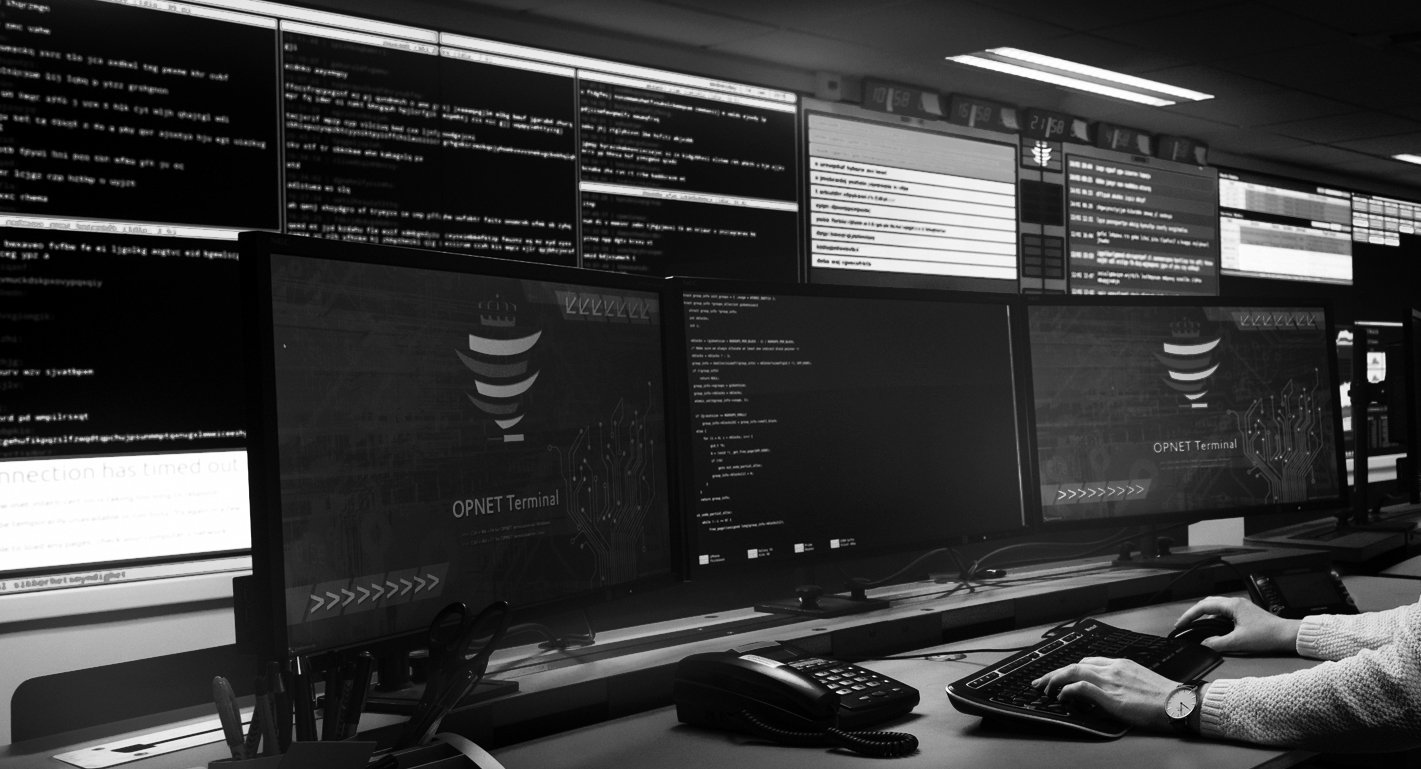
According to MacRumors, Apple plans to bring its Apple Pay digital payments system to more countries in the future, including Poland, Norway, and Ukraine. However, Apple did not offer a specific launch date for this upcoming expansion, but it said that it’s coming “in the next several months.”

Tim Cook confirmed that Apple Pay is doing tremendously well and continues to grow every month as Apple also tries to sign new banks and credit unions across the United States and several other countries where its digital payments service is currently supported. Apple Pay set a new all-time quarterly revenue record in Q2 2018.

The Apple CEO also said Apple Pay activations have doubled in the past year, while the total Apple Pay transactions have tripled. The most significant growth it saw was when Apple Pay launched for transportation services in Toyko, Japan, where it’s currently the best mobile transit payment service, according to Tim Cook.

Apple Pay expands to more banks in the US, Australia, Spain, France, and Japan

According to 9to5mac, Apple Pay was recently expanded to more banks and credit unions in Australia (Citi Australia and Suncorp), Japan (Kiraboshi JCB), Spain (Bankinter and Bankintercard), France (Société Générale (Cartes Bancaires)), Singapore (Citibank), and Hong Kong (Citibank), and the United States.

Newly supported banks in the US include Canandaigua National Bank & Trust, Chesapeake Bank, Citizens National Bank (Texas), Classic Bank, Farmers Bank and Trust (Texas and Kentucky), First Bank (Michigan), First Farmers State Bank, First State Bank and Trust, Magnolia State Bank, North Central Bank, and Southern Heritage Bank.

Bewly supported credit unions in the US include Dowell Federal Credit Union, Embarrass Vermillion Federal Credit Union, First Point Federal Credit Union, Houston Police Federal Credit Union, Kelly Community Federal Credit Union, Ocean Financial Federal Credit Union, Oregonians Credit Union, Scott and White Employees Credit Union, State Highway Patrol Federal Credit Union (Ohio), Summit Ridge Credit Union, Surrey Bank & Trust, The First National Bank of Dennison, Trademark Federal Credit Union, and TruChoice Federal Credit Union.

Lastly, Apple Pay recently expanded to more banks in Taiwan, supporting both Mastercard and Visa credit and debit cards at Cathay United Bank, E.SUN Commercial Bank, First Commercial Bank, HSBC (Taiwan) Bank, Hua Nan Commercial Bank, KGI Bank, Standard Chartered Bank, Taipei Fubon Commercial Bank, and Taishin International Bank.

(softpedia)

July 5, 2018 0 comments
0 FacebookTwitterPinterestEmail
Spy War

Norway spy agency urges IT firms to be cautious when outsourcing operations abroad

by Nadarajah Sethurupan July 4, 2018
written by Nadarajah Sethurupan

The Norwegian National Security Authority (NSM) has warned the country’s information technology firms to prioritize national security over cutting costs when outsourcing their operations abroad. The warning follows what has come to be known as the “Broadnet affair”, which, according to the Norwegian government, highlighted the dangers of extreme cost-cutting measures by Norway’s heavily privatized IT industry. The incident is named after Broadnet, Norway’s leading supplier of fiber-optic communications to the country’s industry and state sectors. Among Broadnet’s customers is Nødnett, an extensive digital network used by agencies and organizations that engage in rescue and emergency operations, including police and fire departments, as well as medical response agencies. Although 60% of the Nødnett network is owned by the Norwegian government, Broadnet is a member of the Nødnett consortium, and is thus supervised by Norway’s Ministry of Transport and Communications.
In September of 2015, Broadnet fired 120 of its Norway-based employees and outsourced their jobs to India, in search of cost-cutting measures. The company signed a multimillion dollar contract with Tech Mahindra, an outsourcing firm based in Mumbai. But an audit by the Norwegian government soon discovered several instances of security breaches by Tech Mahindra staff. The latter were reportedly able to access Nødnett without authorization through Broadnet’s core IT network, which was supposed to be off-limits to outsourced staff without Norwegian security clearances. Soon after the breaches were discovered, Broadnet began to bring its outsourced operations back to Norway. By the end of 2017, all security-related IT tasks had been returned to Norway. In the meantime, however, Broadnet had come under heavy criticism from the Norwegian government, opposition politicians, and the NSM —the government agency responsible for protecting Norway’s IT infrastructure from cyber threats, including espionage and sabotage.

The NSM warning —published earlier this month in the form of a 20-page report— makes extensive mention of the Broadnet affair. It recognizes the right of Norwegian IT firms to outsource some or all of their operational tasks as a cost-cutting measure. But it also stresses that the country’s IT firms are required by law to abide to national security protocols when outsourcing part of their IT portfolios to foreign companies. There have been numerous instances in recent years, where “risk management obligations relative to outsourcing decisions by Norwegian [IT] companies have fallen short”, the NSM report states. It adds that IT firms must abide to strict protocols of risk management when making outsourcing decisions. It also states that the firms’ Norway-based senior managers must regain complete overview of outsourced projects at every step of the way.

July 4, 2018 0 comments
0 FacebookTwitterPinterestEmail
Environment

WestJet CEO: ‘This is not Norwegian’

by Nadarajah Sethurupan July 4, 2018
written by Nadarajah Sethurupan

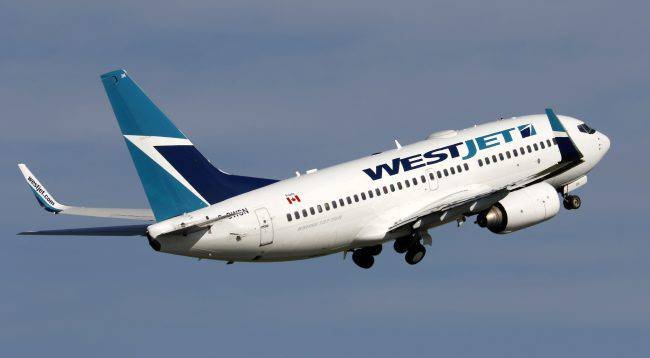
It’s been common to lump WestJet in with the likes of Norwegian as a carrier trying to make long-haul, low-cost service work. With Boeing 787s starting to join the Calgary-based airline’s fleet next year, it has seemed intuitive that WestJet—traditionally an LCC and about to launch a ULCC subsidiary—would be entering the growing long-haul, low-cost sector.
But that is not actually the case. New CEO Ed Sims, whose background includes running Air New Zealand’s long-haul operations, views WestJet’s coming long-haul offering as more akin to Air New Zealand’s—and Air Canada’s—long-haul offering than Norwegian’s.

WestJet’s 787 service “certainly won’t be ULCC long-haul,” Sims told me in a recent conversation. “This is not Norwegian. I want every inch of real estate on the aircraft to work as hard as possible from a yield perspective … Those 24 seats in [WestJet’s 787] premium economy will be the hardest working yield on the aircraft.”

On its 787s, WestJet plans a traditional business-class cabin with lie-flat seats, an international premium economy offering and, more broadly, a long-haul product with a “mainline” feel.

Increasingly, it looks like Sims replacing Gregg Saretsky as WestJet’s CEO in March marked a fairly clean break from WestJet’s past and the beginning of its future. At the time, Sims spoke of the “next chapter” for WestJet and credited Saretsky with setting “the foundation for WestJet’s global evolution.” Sims will pilot WestJet through that evolutionary step.

In our conversation, Sims noted WestJet is becoming more of a hub-and-spoke carrier (“We’re building hubs to feed the Dreamliner,” he explained), is preparing to open airport lounges, and is making other changes—such as equipping onboard kitchens to cook hot food—that position it to compete as an elite global airline. “A lot of the changes are subtle but very significant,” he said.

(Aaron Karp/Aviation Daily)

July 4, 2018 0 comments
0 FacebookTwitterPinterestEmail
Oil & Gas

Norwegian company Vard to build in Romania the hull of the ‘world’s best ship’

by Nadarajah Sethurupan July 3, 2018
written by Nadarajah Sethurupan

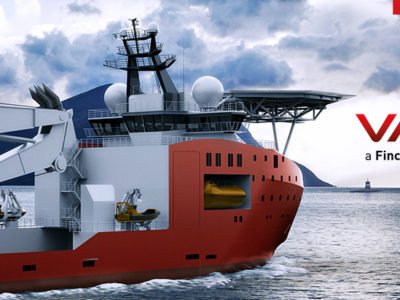
Norwegian company Vard are planning to build in Romania the hull of the ‘world’s best ship’, which will cost of EUR 170 million to make. The cable laying ship, designed to conduct advanced underwater operations,  provides installation capacities at depths of more than 2,000 meters, and has a high capacity of cable routing on rotating platforms, the company announced.

With a length of 172 meters, the ship will be able to accommodate a crew of 120 people. The ship’s design is made at Vard Drive in Alesund, Norway. Vard and Prysmian are currently working on completing the design. According to the contract, construction works are scheduled to begin by the end of this year. The ship is scheduled to ship from Norway’s Vard Brattvaag yard in the last quarter of 2020.

The ship’s hull will be built at the Vard site in Tulcea, and other group subsidiaries are involved in the project by delivering solutions, alongside the Italian group Prysmian, the world leader in cable and power and telecommunication systems.  The Italian company employs 21,000 employees in 82 factories in 50 countries, including Romania. Prysmian opened a new fiber optic cable factory in Slatina last year, following an EUR 22 million investment.

Earlier this year, Vard announced the acquisition of a contract for the construction of a machine and passenger ferry for the Norwegian operator Boreal. This will be the first 100 percent electric ferry built in Romania on the Vard site in Braila.

The Norwegians at Vard have nine production facilities, five in Norway, two in Romania, Braila and Tulcea, and one in Brazil and Vietnam. The company is one of the world’s leading specialist shipbuilders and has around 9,000 employees.

July 3, 2018 0 comments
0 FacebookTwitterPinterestEmail
Crimes

Norwegian Consumer Commission (NCC) has filed a formal complaint

by Nadarajah Sethurupan July 2, 2018
written by Nadarajah Sethurupan

The Norwegian Consumer Commission (NCC) has filed a formal complaint against Valve, Sony, Nintendo, and EA for breach of EU consumer law regarding the right of withdrawal.

Europe’s consumer legislation offers customers a 14-day window following any purchase, to change their mind and receive a refund on return. The complaint states that the four companies are in breach of the legislation, saying that Nintendo “is in breach of the right of withdrawal by not accepting cancellations of pre-orders before the launch date,” while EA, Valve, and Sony “are in breach of the right of withdrawal by not getting express consent from the consumer and his acknowledgement that he thereby loses his right of withdrawal”.

The complaint goes on to detail that the NCC “attempted using the right of withdrawal through Steam,” in December last year, but that it received no response to the request, although there is a refund system in place. In a statement to GamesIndustry.biz, an NCC representative said that while Valve “does have a compliant policy,” it hasn’t made the “correct reservations immediately before the consumer makes the purchase. The consumer must acknowledge the policy by ticking a box or something similar. An action from the consumer is required.”

The complaint also stated that the NCC had contacted Nintendo in February to discuss the matter, but that Nintendo claimed that it operated “in accordance with the Cancellation Act.”

Following the correspondence, the complaint goes on to share the findings of a Norwegian magazine called Pressfire which put this claim to the test. The outlet attempted to exercise the right of withdrawal on a pre-order and was refused. Apparently, Pressfire’s investigation concluded that these “unclear practices” extend to both the PlayStation and Xbox Stores, although Microsoft is not included in the list of companies in the complaint.

“Digital products and services such as digital games for PCs and consoles do not exist in a lawless vacuum,” said Finn Lützow-Holm Myrstad, the NCC’s head of digital services. “Big gaming providers selling their products online are some of the world’s largest entertainment companies. They have to observe laws and rules and honour consumer rights just like everyone else.”

More recently, the FTC pulled up “six major companies” for their illegal use of void warranty language on video game consoles. It’s speculated that its list included both Nintendo and Sony.

July 2, 2018 0 comments
0 FacebookTwitterPinterestEmail
Asia and Norway

India to join Norway in WTO consultations over US aluminium and steel tariffs

by Nadarajah Sethurupan July 2, 2018
written by Nadarajah Sethurupan

In a communication to the World Trade Organisation (WTO), India expressed its willingness to join Norway as a third party member in WTO dispute consultations over US’ decision to impose higher tariffs on aluminium and steel products imports.

India had dragged the United States earlier as well to the World Trade Organisation for dispute settlement mechanism over the imposition of higher customs duties.

“India hereby notifies its desire to join the consultations requested by the Government of Norway…with respect to certain measures imposed by the US to adjust imports of steel and aluminium into the US…and exempting certain selected WTO members from the measures,” the WTO said.

An official from India further clarified that the country, being a notable steel and aluminium products exporter to the US, would join the dispute consultation as a third-party member for keeping a note of further developments on the issue.

India’s exports of steel and aluminium products to America stood at about USD 1.5 billion every year.

“As a result of this substantial trade interest, India respectfully requests that it be permitted to join the consultations in this dispute,” it said.

July 2, 2018 0 comments
0 FacebookTwitterPinterestEmail
Economics

Countercyclical buffer unchanged

by Nadarajah Sethurupan July 2, 2018
written by Nadarajah Sethurupan

The Ministry of Finance has today decided to keep the countercyclical capital buffer requirement for banks unchanged, in line with the quarterly advice from Norges Bank. The buffer requirement currently stands at 2 percent, as decided by the Ministry in December 2016.

The purpose of the countercyclical capital buffer requirement is to strengthen banks’ solvency and resilience to absorb loan losses, in order to mitigate the risk that banks will amplify a downturn by reducing their lending. Banks should hold a countercyclical capital buffer when financial imbalances are building up or have been built up.

Each quarter, Norges Bank shall provide advice to the Ministry on the level of the countercyclical capital buffer requirement. In a letter of 20 June 2018, Norges Bank recommended keeping the level unchanged at 2 percent. Norges Bank said that the upswing in the Norwegian economy and continued low interest rates entail a risk of high house price inflation ahead. This may lead to a renewed rise in household sector debt growth and vulnerabilities. On the other hand, Norges Bank said that an increase in the interest rate level will help curb debt growth. Norges Bank also said that the pronounced rise in commercial real estate prices in recent years has increased the risk of market value declines further out. In Norges Bank’s view, a continued rise in residential and commercial property prices that leads to an increase in financial imbalances may indicate a need to raise the countercyclical capital buffer rate. Norges Bank’s assessment is published in its Monetary Policy Report with financial stability assessment 2/18.

In a separate letter of 20 June to the Ministry, Finanstilsynet said that it concurs with Norges Bank’s advice.

(Ministry of Finance)
July 2, 2018 0 comments
0 FacebookTwitterPinterestEmail
Economics

The Global Taxi Price Index

by Nadarajah Sethurupan July 2, 2018
written by Nadarajah Sethurupan

When you’re in the city, getting a taxi from A to B may be necessary at times, but how much will it put you out of pocket? We’ve taken a look at the cost of taking a taxi just one mile in 50 capital cities around the world, so where can you afford to hail that cab and where should you consider hitting the pavement?

We’ve all been there, sat in a taxi in a foreign country watching the metre go up and up, wondering if we are being ripped off. From Uber to black cabs, from tuk-tuks to tricycles, taxis vary all around the world and so do their prices. 

For tourists (& locals) Oslo is the second most expensive capital city worldwide to ride in a taxi.

Cheapest Taxi Fares

  1. Cairo, Egypt – 34 pence
  2. Mexico City, Mexico – 65 pence
  3. New Delhi, India – 76 pence

You could travel a whopping 60 miles by taxi in Cairo for the same price as the entry fee for the Egyptian museum – that’s enough to get you from Cairo International airport to the museum, back again and then back to the museum! 

Priciest Taxi Fares

  1. Bern, Switzerland – £10.66
  2. Oslo, Norway – £10.47
  3. London, UK – £8.44

At £8.44 to travel just one mile in London, you could be paying roughly the same as a ticket to Hamilton the musical as you would if you were to get a taxi from the Tower of London to Victoria Palace Theatre, where it is showing.

Sources:

https://www.numbeo.com/taxi-fare/

http://www.victoriapalacetheatre.co.uk/ 

http://www.antiquities.gov.eg/DefaultEn/Museum/Pages/MuseumDetails.aspx?MusCode=28# 

July 2, 2018 0 comments
0 FacebookTwitterPinterestEmail
Economics

A new fact-checking project borrows a familiar strategy from Norway

by Nadarajah Sethurupan July 1, 2018
written by Nadarajah Sethurupan

A new Swedish fact-checking outlet is copying another project in Norway. They even have the same name.

“Basically we’ve chosen the same name in Swedish, but with a T — Faktiskt,” said Martin Jönsson, editorial development manager at the daily newspaper Dagens Nyheter (DN). The name translates to “in fact.”

Based on Faktisk, a Norwegian fact-checking site launched over the summer, Faktiskt launched on Wednesday in partnership with five major Swedish media outlets. They include: DN, Sveriges Radio, Sveriges Television, Svenska Dagbladet and KIT.se.

That model, in which fact checks are published on each partner site, was pioneered by Faktisk — amassing it more than 1 million pageviews and hundreds of thousands of unique visitors over about three months. For Faktiskt, the goal is the same: Give fact checks the widest distribution possible.

“We have different audiences,” Jönsson said. “Together, the four of us are those of the largest media companies in Sweden, so we will have a huge audience.”

And so far, it’s been pretty successful. Jönsson told Poynter that they racked up 5,000 new social media followers and 30,000 pageviews to the Faktiskt site within its first day — most of which came through partner organizations’ sites. At DN, one fact check was the second most-read article all day.

“The reception has been very positive, with the expected exceptions from those getting red flags,” he said.

The idea for Faktiskt was born at SXSW in 2017. Jönsson told Poynter he had the idea for starting a fact-checking project in Sweden after listening to First Draft’s Claire Wardle and the Duke Reporters’ Lab’s Bill Adair speak. (Disclosure: The Reporters’ Lab helps pay for the Global Fact-Checking Summit.)

Misinformation has been a growing problem in Sweden. And Jönsson said there’s a palpable need for more factual political coverage — especially five months ahead of the Sept. 9 election.

“We have already seen a lot of fact resistance being very dominant in the political debate climate. Opinions matter — facts don’t,” he said. “There’s been a lot of virality when it comes to the spreading of fake stories or tweeted, misrepresented stories.”

While Faktiskt borrows mostly from its Norwegian cousin, there are some notable differences. Instead of uniting journalists from all five publications under one newsroom, they’ll contribute fact checks separately. Like Faktisk, they’re publishing articles on both Faktiskt.se and each individual organization’s website, as well as promoting them on branded social mediaaccounts.

But there’s still a bigger focus on individual work — and no journalists are dedicated solely to the fact-checking project. Jönsson said he’s encouraging any data and political journalists to get involved and contribute.

“We saw that there are some advantages to (Faktisk’s) ways of working, but some disadvantages as well in terms of keeping the publishers’ freedom of responsibility,” Jönsson said. “We also want to be able to compete with each other when it comes to fact-checking stories.”

Poynter reached out to Faktisk but had not received comment as of publication.

As for methodology, Faktiskt’s rating system is pretty standard: Completely true, partly true, misleading, partly false or completely false. In addition to support from each partner organization, the project is funded by a maximum of $200,000 from a government research institute, Vinnova, which Jönsson said mostly went toward developing the website.

To him, Faktiskt’s distribution strategy is the biggest benefit — and it’s a familiar one, even outside of the Nordic countries.

In an email to Poynter, Mark Stencel, co-director of the Reporters’ Lab, pointed to projects like Faktenfinder in Germany, SNU FactCheck in South Korea and PolitiFact’s media affiliates around the United States as examples of fact-checkers broadening their reach through media partnerships. (Disclosure: Poynter owns PolitiFact.)

To him, the model offers two key benefits: Scalability and credibility.

“What these and other collaborative projects show is that there is an economy of scale when media companies work together on fact-checking, either on the reporting side or the distribution side,” he said. “There also might be an economy of credibility. These fact-checking partnerships put the credibility of several different media brands behind this kind of journalism, using their combined weight to push back on untruths and misinformation.”

In the future, Jönsson said there could be room for including more media organizations in the project. In February, he’d already been contacted by about four or five who were interested.

After the election is over, Jönsson said the project will be a failure if it fails to reach the people who need fact-checking most.

“Our greatest mistake would be to say we didn’t know what was going on in this election, like some American media companies said after November (2016),” he said. “What we want to do is sort of place fundamental fact-checking under the political debate in the last six months of the election.”

“Our task is to show things the way they are.”

July 1, 2018 0 comments
0 FacebookTwitterPinterestEmail
Economics

Norway to invest NOK 120 billion in rail projects between 2018-2023

by Nadarajah Sethurupan July 1, 2018
written by Nadarajah Sethurupan

As part of its National Transportation Plan for 2018-2029, the Norwegian government has announced approximately NOK 120 billion is allocated for the rail industry during the period 2018-2023 to cover a number of rail infrastructure and digitalisation projects.

As part of its National Transportation Plan for 2018-2029, the Norwegian government has announced it will, on average, pump NOK 90 billion annually into investments, operations and maintenance of its roads and railways. Approximately NOK 120 billion is already slated to go into the rail industry for the period 2018-2023. This will cover new major projects, renewal and investments in existing infrastructure and digitalisation as Norway gears up to build railway systems to meet the needs of its growing population and reduce congestion and pollution on the roads.

The plans were presented by Helga Nes, Executive Vice President of the Bane NOR Infrastructure Construction Division, at the recent Bane NOR Railway Tender Conference in Oslo. Helga said: “There’s been extraordinary growth in infrastructure development in Scandinavia in recent years. The new projects and enhancements demonstrate Norway’s continued commitment to building the railway of the future. To realise our plans, we are reliant on national and international suppliers, and a strong focus on cost efficiencies and technology and innovation. Simplification and standardisation of processes, and new contract and collaboration models will also be key to realising our plans.”

Bane NOR is the national Norwegian rail company responsible for infrastructure construction and management, traffic operations, property management and digitalisation and technology development and services. It is working with industry suppliers to deliver a safe, reliable and efficient network at the heart of Norway’s future railway industry.

Several major projects were highlighted at the conference, including the InterCity network, which involves building 270km of new double-tracks and 25 stations in South-Eastern Norway. The new tracks will allow for speeds up to 250km/h. The InterCity area consists of lines under planning, lines under construction and lines that are completed. The plan is to complete the InterCity network by 2036, at an estimated cost of NOK 150 billion.

For its Ringerike line and E16 highway project, Bane NOR is working together with the Norwegian Public Roads Administration to develop and increase the commuter area around the capital of Oslo. The project work includes the construction of railways, highways, bridges and tunnels, including the longest railway tunnel in Northern Europe. Work on the main contract is scheduled to start in 2021/2022, with pre-qualification in 2019/2020. Approximately NOK 32 billion will go to this project, which is slated for completion by 2028/2029.

Echoing Helga Nes and her call for new capacity, Henning Scheel, Director Contract and Supplier Relations at Bane NOR, said: “The development of the InterCity network is a major undertaking. We also have big construction projects in West/Mid Norway, and the Oslo tunnel. Indeed, there’s strong growth in railway investments, maintenance, and operations. Not only is there more work but also larger contracts. For instance, we have identified 25-30 potential billion NOK contracts (for road and rail) that will be issued in the market over the next three years. This will create opportunities for all types of suppliers.”

Henning said the new projects and enhancements provide “strong impetus to develop new capacity and to leverage on Norwegian and international expertise to complete the projects successfully. Also, our extensive plans require suppliers contributing and taking ownership to cost-efficient, sustainable solutions in the fields of engineering, railway technique, procurement and construction. For instance, there are special ground conditions here in Norway, so it’s important to us that the suppliers and subcontractors are familiar with the challenges, also as regards geotechnical aspects.”

As part of its push to modernise its railways, Bane NOR will also invest NOK 20 billion in digitalisation and automation of its rail network and systems over the next 10-year period. The ERTMS (European Rail Traffic Management System) initiative will be handled by Bane NOR’s Digitalisation and Technology Division. Earlier in April 2018 it signed a contract with Siemens for delivery of a new digital signalling system worth NOK 7.5 billion, one of the largest technology contracts in Norway. Bane NOR has also recently awarded contracts to Alstom for digital equipment for trains, locomotives and work machines, and Thales for a new traffic management software solution.

Following the conference, Bane NOR will be holding a series of dialogue sessions with industry suppliers interested in participating in the upcoming infrastructure construction projects.


July 1, 2018 0 comments
0 FacebookTwitterPinterestEmail
Environment

Norwegian to divest itself of 140 aircraft

by Nadarajah Sethurupan June 30, 2018
written by Nadarajah Sethurupan


Norwegian 737-800 at Boeing Field
K65538

Norwegian (DY, Oslo Gardermoen) is in the process of divesting itself of up to 140 aircraft. In a 1Q18 earnings disclosure, the Scandninavian low-cost carrier said the divestiture would include future aircraft deliveries, the disposal of older aircraft, and either the sale or spinning off of excess aircraft into leasing structures.

CEO Bjorn Kjos did not elaborate on which deliveries would be affected but it is recalled that Norwegian has already switched six B787-9s on order from Boeing (BOE, Chicago O’Hare) out to BOC Aviation. In addition, five A320neo scheduled to be delivered in 2018, will be leased to HK Express (UO, Hong Kong Int’l).

With these changes, during FY 2018, Norwegian will add two new B737-800s, eleven new B787-9s, and twelve B737 MAX to its fleet this year against the previously anticipated two B737-800s, twelve B737 MAX, five B787-9s, and four A320neo.

The ch-aviation fleets module indicates that, inclusive of its various AOCs, Norwegian operates: fifty-two B737-800s, eight B787-8s, and ten B787-9s at its Norwegian unit; one B737-800 at its Norwegian Air Argentina unit (to be transferred to Europe until its South American launch later this year); sixty-four B737-800s and six B737 MAX 8s at its Norwegian Air International unit; and one B737-800 and fourteen B787-9s at its Norwegian UK unit.

Concerning IAG International Airlines Group‘s interest in Norwegian, Kjos said the Board of Directors had established a steering committee and engaged financial and judicial advisors “to review the situation, handle relevant inquiries and to safeguard the interests of all shareholders.”

Norwegian said it had “received several inquiries” following IAG’s announcement of its acquisition of a 4.6% stake in the airline.

June 30, 2018 0 comments
0 FacebookTwitterPinterestEmail
Asylum

Norway accepts to take some migrants from Malta

by Nadarajah Sethurupan June 30, 2018
written by Nadarajah Sethurupan

Non-EU country Norway has accepted to take some of the migrants who disembarked in Malta on Wednesday from the NGO rescue ship MV Lifeline.

Malta Prime Minister Joseph Muscat thanked the Norwegian government for the gesture.

Dr Muscat on Wednesday announced that the migrants were to be shared by France, Ireland, Italy, Portugal, Luxembourg, Netherlands, Belgium and Malta.

The Lifeline, with 233 migrants on board, docked in Valletta harbour on Wednesday evening after a six-day standoff as both Italy and Malta banned it from their harbours.

The 233 immigrants whose rescue sparked another migration crisis, are undergoing a preliminary assessment at a reception centre, following which the distribution of “genuine asylum seekers” will start immediately, the Maltese government said in a statement.

They criticised its captain for having picked up the migrants in Libyan waters in defiance of orders for the migrants to be transferred to the Libyan coastguard.

The captain is being questioned by the police and the ship had been detained pending investigations into its registration.

June 30, 2018 0 comments
0 FacebookTwitterPinterestEmail
Defence

Defence Cooperation in the EU: implications for Norway and Finland

by Nadarajah Sethurupan June 30, 2018
written by Nadarajah Sethurupan

Wednesday 30 May 2018, the Embassy of Finland in Oslo and IFS co-hosted a conference on the latest developments in EU’s defence cooperation and its implications for Norway and Finland.

Permanent Structured Cooperation (PESCO), third country participation, defence industry cooperation, and NATO-EU relations were among the discussed topics.

Research Fellow Tuomas Iso-Markku, Finnish Institute of International Affairs

Professor Kjell Inge Bjerga, director of IFS, opened the conference. Thereafter, Tuomas Iso-Markku, research fellow at the Finnish Institute of International Affairs (FIIA), gave a presentation on the EU’s defence dimension, starting by presenting six claims:

  • Security and defence is higher on the EU’s agenda than ever before.
  • The EU deals with security and defence more broadly than earlier.
  • The EU is planning and implementing several measures, such as PESCO and the EDF.
  • Security and defence through the EU is not meant to be an alternative to NATO.
  • The relationship between EU and NATO will remain ambiguous and contested.
  • The EU-members still differ in their views on the EU’s defence dimension.

SECURITY ON THE EU AGENDA

A variety of factors has both broadened the EU’s focus, and pushed security and defence towards the top of the Union’s agenda: The financial crisis, instability in Northern Africa, the US pivot to Asia, Russia’s actions in Ukraine, and several terrorist attacks in Europe. The Brexit vote in 2016 also has increased the importance of security and defence in EU integration. In addition, the election of Donald Trump as US president has led to Europe taking more responsibility for its own defence.

SPECIFIC MEASURES

Iso-Markku then went on to present four concrete measures initiated in recent years:

  • The Military Planning and Conduct Capability (MPCC), responsible for the planning and conduct of the EU’s non-executive military missions;
  • The Coordinated Annual Review on Defence, which should help to coordinate and synchronise the EU member states’ national defence planning;
  • The European Defence Fund, initiated and managed by the European Commission.
  • PESCO, which provides a framework for capable and willing members states to deepen their defence cooperation.

The 25 member states that signed up for PESCO have to comply with specific commitments, e.g. related to their defence expenditure and the availability and deployability of their troops. The participants have adopted a list of 17 concrete projects, where a so-called “military Schengen” has attracted most interest.

NATO–EU RELATIONS

Iso-Markku argued that, although a certain division of labour between the EU and NATO exists, both EU’s role and the relationship between EU and NATO will remain ambiguous and contested. He further argued that the Trump administration has considerable suspicions of the EU, and is fearful that EU activities will weaken NATO and make Europe a more independent actor. Simultaneously, the US expects Europe to invest more in defence, thus taking more responsibility for its own security.

INTERNAL DIFFERENCES BETWEEN EU MEMBERS

Despite recent initiatives, the EU’s ability to develop its defence dimension will be affected by the still considerable differences between EU members, in terms of e.g. their threat perceptions, priorities, NATO-relations, and defence industrial interests. For instance, some countries, like Finland, have been eager to develop PESCO, others, like Sweden, have been cautious. Some have not joined at all, e.g. Denmark and the UK.

France and Germany are key players for the further development, but in terms of motives and aims, there are also considerable differences between these two nations, Iso-Markku argued. He therefore believed that EU’s defence dimension would continue to be characterized by a certain degree of ambiguity concerning the EU’s role and task, geographical priorities, and relationship with NATO and the US.

THE SECURITY OF EUROPEAN CITIZENS

Lt Gen Esa Pulkkinen, Director General of the European Union Military Staff

Lt Gen Esa Pulkkinen, Director General of the European Union Military Staff, started his introduction by challenging Iso-Markku’s fifth claim, namely the ambiguous relationship between EU and NATO. The security of European citizens, according to Pulkkinen, remains the core issue, regardless of which alliance or organization their country belongs to.

Another priority is the defence of European interests, e.g. through action outside the European territory as exemplified by EU missions in Somalia, the Central African Republic and Mali. Future generations of Europeans will benefit from today’s contributions to stabilization of fragile countries, he argued. However, the EU cannot do this alone, but will need the support of the US and the UN, as well as the African countries. Still, the European imprint is important, he continued.

DEVELOPING A MILITARY CAPACITY IN THE EU

Although the EU will never develop into a military alliance, the Union has many tools at its disposal, such as PESCO. It is also aiming to develop a military capacity through the identification of capabilities the EU should have at its disposal, in order to be able to react to a crisis outside Europe. It is thus important to persuade member states to work together.

The engagement of the European Commission provides added value and incentives to this process, Pulkkinen added. Through security and defence cooperation in the EU, the Europeans will benefit more from their investments, he claimed.

Another issue for the defence of Europe is military mobility, something that will be enhanced by better infrastructure. Substantial funds have been allocated, and the development looks very promising, he argued.

Finally, the Lt Gen looked very positively on any potential Norwegian contribution to future EU training missions. European security goes beyond the borders of the institution, and countries like Norway should have a place to contribute.

THE EUROPEAN UNION AS A SECURITY PROVIDER

Under-Secretary of State Anne Sipiläinen, Finnish Ministry for Foreign Affairs

Anne Sipiläinen, Under-Secretary of State for Foreign and Security policy in the Finnish Ministry for Foreign Affairs, started her introduction by acknowledging the value of Nordic cooperation for regional security. In turn, she referred to the Finnish white paper on security and defence from 2016, which outlines two key priorities: strengthening the EU as a security community, and deepening cooperation with the Nordic countries.

Joining the EU in 1995 was fundamentally a question of security, she continued, and Finland has ever since attempted to strengthen the EU as a security provider, e.g. by being one of the most eager member states in the PESCO negotiations. The EU can be an enabler and facilitator of defence cooperation, which is especially important in light of the deteriorated security situation, she argued.

EU DEFENCE COOPERATION FOR FINLAND

For Finland, defence cooperation in the EU serves two purposes. First, the political aim of strengthening the EU as a security community, thus increasing solidarity and bringing the member states closer together through deeper integration. Second, the practical purpose of making the best of scarce resources, thus also making the cooperation meaningful financially.

Important sectors in the EU defence cooperation, in Finland’s view, include crisis management, providing and receiving assistance, responding to hybrid threats, developing defence cooperation and capabilities, creating arrangements for security of supply, as well as strengthening the defence industrial and technological base. PESCO is therefore an important step forward, she argued.

LEGALLY BINDING COMMITMENTS THROUGH PESCO

The implementation phase of PESCO includes living up to commitments, e.g. on investments in defence, development capabilities and operational readiness. In the initial phase, Finland participates in three projects: military mobility, radio technology, and cyber. PESCO is different from previous initiatives, as it is for instance legally binding.

Finland is actively pushing for third countries like Norway to be able to participate in PESCO projects. Finland would also like to continue cooperating on security and defence with a coming third country, namely the UK, but there must be a balance between rights and obligations, she argued.

COMPLEMENTARITY WITH NATO

The EU defence cooperation is being developed in close coordination with NATO. The PESCO notification specifies that the commitment and cooperation in the area of common security and defence shall be consistent with commitments within NATO. The key word is thus complementarity, not competition, Sipiläinen ended.

NORWAY – ALREADY A CLOSE EU PARTNER

State Secretary Tone Skogen, Norwegian Ministry of Defence

Tone Skogen, State Secretary in the Norwegian Ministry of Defence, started her introduction by pointing out that Norway is already a very close partner to the EU, for instance in the European Defence Agency, and a strong supporter of the EU’s common security and defence policy (CSDP).

In view of Russia’s policies in the Ukraine, Norway has aligned itself closely with the EU sanctions policy, and NATO’s suspension of practical, military cooperation. Still, Norway aims at a balanced approach, which involves continued cooperation with Russia in certain areas, such as Search and Rescue and a hotline between the Joint Operational Headquarters in Bodø and the Northern Fleet.

NATO AND THE EU – COMPLEMENTING EACH OTHER

Norway supports the idea that Europe must take a larger role in security and defence. A coordinated EU that takes greater responsibility is good for transatlantic relations, as an expression of burden sharing. NATO and the EU complement each other, as the former is responsible for creating military deterrence, whereas the latter is vital in terms of political and economic relations with countries at its border, including sanctions.

Since the joint EU-NATO declaration at the NATO summit in Warsaw in 2016, there has been considerable progress. From a Norwegian point of view, it is important to ensure that the new dynamic in the EU’s security and defence does not have negative consequences for any of the parties involved.

NORWAY AS AN “ENHANCED OPPORTUNITY PARTNER” TO THE EU?

A closer involvement in discussions, decision shaping and information sharing would make participation in future CSDP operations and missions more attractive to partners like Norway. Norway would also like to have the opportunity to participate in individual PESCO projects. There is asymmetry between the status Finland and Sweden have in NATO, as enhanced opportunity partners, and the rights Norway has as a third party to the EU, she argued.

For Norway, it is also important to be invited to participate in the second part of the European Defence Fund, the EU Defence Industrial Development Program. This would benefit all parties involved for several reasons:

  • First, Norwegian defence industry is high-tech and internationally competitive.
  • Second, for the EU, Norway is a highly relevant partner, as an integral part of the European defence equipment market.
  • Third, Norwegian defence industry will make a significant contribution to research on defence capabilities.
  • Fourth, Norway would shoulder its own costs linked to this participation, thereby increasing the total spending on development in a cost-effective way.

Despite the room for improvements, Norway values the opportunity to be closely associated with CSDP, and would like to continue to contribute, Skogen ended.

The seminar speakers together with ambassador Erik Lundberg. In the back: Tuomas Iso-Markku, Håkon Lunde Saxi. In the front: Kjell Inge Bjerga, Tone Skogen, Anne Sipiläinen, and Audun Halvorsen.

PANEL DEBATE ON PESCO, THIRD COUNTRY PARTICIPATION AND NATO-EU RELATIONS

The panel debate was initiated by a question from the moderator, Dr Håkon Lunde Saxi, on the added value of an inclusive PESCO consisting of nearly all EU members, as opposed to the more exclusive version that was initially intended. Lt Gen Pulkkinen argued that the more engagement, the better, although there must still be room for more exclusive projects within the framework of an inclusive PESCO. Iso-Markku added that Brexit was one factor explaining a more inclusive PESCO as it had increased the weight many member states have put on EU unity. However, the core of PESCO is the individual projects, which the member states can choose to participate in or not.

The next question concerned Norwegian-Finnish relations, and how they may be affected by a potentially successful defence cooperation in the EU, which does not allow third country participation. Anne Sipiläinen was convinced that defence cooperation in the EU will be a success, and that third countries will be allowed to participate, considering that all able and willing should be included. However, she also stressed the need for strategic patience in terms of third country arrangements. Tone Skogen agreed, and added that the exclusion of Norway would be a loss both to Norway and to Europe. Focus should therefore rather be on how to include and involve third parties even more.

Dr Saxi then asked whether Norway is actively working towards a similar partnership with the EU as Finland and Sweden have acquired with NATO. State Secretary Skogen replied that Norway would be happy to discuss what the partnership might be called and what it would entail, also pointing out that the most important thing is to find good common solutions.

Furthermore, the moderator pointed out that the UK and the US have been critical to some aspects of PESCO, and in turn asked whether increased defence cooperation in the EU was worth potentially alienating these two important allies. Both Sipiläinen and Lt Gen Pulkkinen argued that there is a lot of support for the EU taking more responsibility in developing defence cooperation, especially in Washington.

The first question from the audience was on what would happen if the PESCO nations infringe the legally binding obligations and commitments. Iso-Markku specified that the member states themselves are responsible for monitoring and sanctioning lack of compliance with commitments, and was thus sceptic to how binding these commitments really are. Lt Gen Pulkkinen exemplified the member states role by pointing out that although the PESCO nations have agreed to increase defence budgets, they did not accept any specific budget criteria, such as the 2% goal in NATO.

Another question from the audience concerned the complementarity between the EU and NATO, particularly concerning projects such as the military mobility initiative, which some members states seem to regard as more needed by NATO than by the EU. Lt Gen Pulkkinen responded that his view was rather that EU members were positive towards initiatives such as that on military mobility and improving infrastructure. Iso-Markku pointed out that there is potential for lack of complementarity, as NATO and the EU are still so different actors.

NORWAY’S STRATEGY FOR EU COOPERATION IN THE FUTURE

State Secretary Audun Halvorsen, Norwegian Ministry of Foreign Affairs

Audun Halvorsen, State Secretary in the Norwegian Ministry of Foreign Affairs, ended the conference with a few concluding remarks. In Norway’s strategy for cooperating with the EU 2018-2021, the Government has identified three key priorities within security and defence. First, further to develop political dialogue and coordination with the EU. Second, to strengthen Norway’s practical cooperation with the EU. Third, to promote favourable conditions for Norwegian defence industry.

The State Secretary ended by declaring that Norway is seeking the closest possible cooperation with the EU, and that Norway participating in specific PESCO projects would be favourable for both parties.

Summary written by Joakim Erma Møller
Photos: Anna Therese Klingstedt

https://forsvaret.no/ifs/en/events/defence-cooperation-eu-norway-finland

June 30, 2018 0 comments
0 FacebookTwitterPinterestEmail
Srilanka and Norway

Sri Lanka notes significant role played by Norway in Sri Lanka

by Nadarajah Sethurupan June 30, 2018
written by Nadarajah Sethurupan

Sri Lanka today noted the significant role played by Norway in Sri Lanka which has contributed to Sri Lanka’s social and human development.

The Foreign Ministry said in a statement today that Norway has been a longstanding development partner of Sri Lanka since the early 1970s, and its development assistance has contributed significantly to Sri Lanka’s social and human development.

Norwegian State Secretary for Development Cooperation, Jens Frølich Holte, concluded a three-day visit to Sri Lanka on Saturday 23 June 2018.

During the visit, State Secretary Holte held meetings with the Minister of Fisheries and Aquatic Resources Development and Rural Economy Vijith Vijayamuni Zoysa, Minister of Finance and Mass Media Mangala Samaraweera, Minister of City Planning and Water Supply Rauff Hakeem, Leader of the Opposition R. Sampanthan, State Minister of Foreign Affairs Vasantha Senanayake and Foreign Secretary Prasad Kariyawasam.

Discussions focused on shared interests and common challenges of sustainable use of the oceans and management of marine litter, ongoing cooperation in the fisheries sector, marine spatial planning, progress in peacebuilding and reconciliation, and economic development, including promotion of two-way tourism, between the two countries.

State Secretary Holte’s visit to Sri Lanka took place in the context of following up on agreed areas of cooperation during bilateral discussions that took place between President Maithripala Sirisena, Prime Minister Ranil Wickremesinghe and Norwegian Prime Minister Erna Solberg in Colombo in August 2016.

The visit coincided with the arrival of the Norwegian Marine Research Vessel Dr. Fridtjof Nansen, one of the most advanced research vessels in the world (owned by NORAD and jointly operated by the Norwegian Institute of Marine Research (IMR) and the University of Bergen (UIB)). The vessel will undertake a 26-day research journey around Sri Lanka and help map marine resources.

Assistance to survey Sri Lanka’s fish resources and marine eco system using the research vessel including technical assistance to develop a national fisheries policy framework  are important elements of  Sri Lanka – Norway cooperation in the fisheries sector.

Norway’s development cooperation with Sri Lanka also focuses on priority areas linked to the UN Sustainable Development Goals related to climate change, conservation of the ocean, peace and justice, gender equality and affordable and clean energy.

During the visit, the State Secretary addressed the Symposium on “SDG 14 – Life Below Water”on 21 June, which was organized by the Ministry of Fisheries, in collaboration with the Norwegian Embassy in Colombo and the Ministry of Foreign Affairs.

Holte also visited Jaffna where he met with local fishermen and their families in Gurunagar, and took part in a beach cleanup with local community and the Marine Environment Protection Authority. He also opened a vegetable and fruit packing centre associated with the Palali Agriculture Producer’s Sales Cooperative Society.

On Saturday  23 June, State Secretary Holte  opened a Business Conference on Blue Economy for participants from the maritime, marine and aquaculture sectors in both countries, to look at promoting ocean-based industries and building partnerships within the blue economy sector.

June 30, 2018 0 comments
0 FacebookTwitterPinterestEmail
Science

Norwegian university, Estonia begin cyber cooperation talks

by Nadarajah Sethurupan June 29, 2018
written by Nadarajah Sethurupan

The Norwegian University of Science and Technology (NTNU) and Estonia have launched cooperation talks in the field of cyber security and IT, the online news portal of Norwegian public broadcaster NRK reports.

Altogether €3.3 million of support will be allocated to future cooperation in cyber and information security. The agreement between NTNU and Estonia was signed during the official visit of Norway’s Crown Prince Haakon and Crown Princess Mette-Marit to the Baltics, NRK said.

Estonia, Latvia and Lithuania have established extensive bilateral cooperation with Norway via Norwegian support programs and NATO security policy. The two countries also recently signed an agreement launching a green ICT business development program worth €27 million.

In addition, hundreds of Norwegian companies operate in the Baltic countries.

June 29, 2018 0 comments
0 FacebookTwitterPinterestEmail
NATO and Norway

NATO submarine warfare exercise begins in Norway

by Nadarajah Sethurupan June 29, 2018
written by Nadarajah Sethurupan
NATO Anti-Submarine Warfare Exercise Dynamic Mongoose 2018 has started off the coast of Norway, with ships, submarines, aircraft and personnel from 8 nations gathered in the North Atlantic Ocean.
Host nation Norway is providing support from the Harstad and Narvik Harbors and Andoya Air Base say NATO in a release.
Submarines from Norway under operational control of NATO Submarine Command, will join 7 surface ships from Denmark, Netherlands, Poland, Spain and Turkey under the command of Standing NATO Maritime Group One (SNMG1) Commodore Søren Thinggaard LARSEN.
To support the simulated multi-threat environment, 3 Maritime Patrol Aircraft (MAP’s) from Germany, Norway, and the United States will operate from Andoya Air Base under operational command of NATO Maritime Air Command (COMMARAIR).
“NATO’s annual anti-submarine-warfare exercise DYNAMIC MONGOOSE remains one of the most challenging exercises and an excellent opportunity for NATO nations’ naval forces to practice and evaluate their Anti-Submarine skillset in a challenging environment.” said Rear Admiral Andrew Lennon, NATO Submarines Commander.
“This exercise is a unique opportunity to enhance naval forces’ warfighting skills in all three dimensions of Anti-Submarine-Warfare in a multinational and multi-threat environment. We are most grateful to Norway and the Norwegian Navy for offering to host our exercise.”
The alliance say that the exercise is aimed to provide all participants with complex and challenging warfare training. To better enhance their interoperability and proficiency in anti-submarine and anti-surface warfare skills, each surface ship will have the opportunity to devise and execute a variety of tactics to locate and track submarines. To further enhance the training benefit of the exercise, fixed-wing and rotary air assets will also practicing their sub-hunting techniques in close coordination with the surface units.
“I look forward to SNMG1 taking part in exercise Dynamic Mongoose, to further enhance our ability to conduct advanced Anti-Submarine Warfare in a realistic and challenging environment in the High North off the coast of Norway,” said Commander SNMG1, Commodore Søren Thinggaard Larsen.
“SNMG1 just completed Exercise BALTOPS in the Baltic Sea and we are currently at very high readiness. We are looking forward to this great opportunity to continue to train, experiment, and share best practice and lessons learned among all participating units. We are stronger together.”
(ukdefencejournal)
June 29, 2018 0 comments
0 FacebookTwitterPinterestEmail
Crimes

VAT Fraud: EU Approves Cooperation Agreement with Norway

by Nadarajah Sethurupan June 29, 2018
written by Nadarajah Sethurupan

On 22 June 2018, the Council approved an agreement with Norway aimed at boosting cooperation in the area of VAT.

The agreement, signed in Sofia on 6 February 2018, provides EU member states and Norway with a legal framework for administrative cooperation in:

  • preventing VAT fraud;
  • assisting each other in the recovery of VAT claims.

The agreement follows the same structure that is currently used for cooperation between the EU’s member states. It provides for the same instruments, such as electronic platforms and e-forms. Fraud schemes often exploit weaknesses in the way VAT transaction chains are controlled when they include counterparts located in third countries.

June 29, 2018 0 comments
0 FacebookTwitterPinterestEmail
Racism in Norway

WHO takes bdsm and fetishism off the sick list

by Nadarajah Sethurupan June 29, 2018
written by Nadarajah Sethurupan

The World Health Organization (WHO) follows the Nordic countries in repealing sexual minorities with consenting practices from the International Classification of Diseases in the new revision ICD-11. 

This is a milestone in the work for human rights and sexual liberation, says Ingvild Endestad, leader of FRI, the Norwegian LGBT organisation for sexual and gender diversity. Consensual sexuality has nothing to do with psychiatry. This is an immensely important recognition of the sexual diversity among us, she says.

Endestad gives Svein Skeid and FRI’s Revise F65 committee much of the credit for the victory. Human rights standards are part of the professional basis for the reform and the recommendations from Revise F65 are entirely taken into account.

 – The work to remove bdsm and fetish diagnoses has been part of the Norwegian LGBT organisation since 1996. After more than 20 years of sexual political efforts the Revise F65 committee, with Svein Skeid in the lead, has fulfilled its mandate both nationally (2010) and internationally, she says.

– The withdrawal of fetishism, transvestism, and sadomasochism as mental illnesses can lead to the same pride and freedom that other queer groups enjoy. The revision of the F65 ICD chapter can also make it easier to encourage research, get rid of anti bdsm laws and become included in national laws against discrimination, Endestad concludes.

Ground-breaking pioneering work 

– Denmark, which removed transvestism and sadomasochism from its national list of diseases in the 1990’s, was our big source of inspiration, says Svein Skeid, the leader of Revise F65. Skeid and psychologist Odd Reiersøl started a ground-breaking cooperation across national borders and sexual orientations where dozens of activists, organizations and professionals contributed.

– It is very important for these individuals that society recognizes them as equal citizens, expressed the director of the health department, Lars-Erik Holm, to the newspaper Dagens Nyheter November 11th 2008, when the three diagnoses were abolished in Sweden.

– I heard the news on a Norwegian radio station and understood that an equivalent removal could also be within reach in Norway, Skeid tells.

– I had recently been in Stockholm during Europride and given the organization RFSU our arguments, he says. I became very touched by the Director General’s statement: ”The health department wants to emphasize that these behaviors are neither illnesses nor perversions.”

The Nordic model 

– Within 6 years the diagnoses were repealed in all the Nordic countries, patterned after the Norwegian model and the pioneering work of Revise F65, psychologist Odd Reiersøl tells. – Thus the pressure increased on The World Health Organisation to follow suit. After a while Revise F65 achieved direct contact with the authorities in Geneva.

– In 2009 we received a commission from Senior Project Officer Dr. Geoffrey Reed, who has been the leader of WHO’s Working Group on Sexual Disorders and Sexual Health. This resulted in a 3 page report documenting that the diagnoses in question are outdated, non scientific, and stigmatizing, says Reiersøl.

Dr. Reed asked for additional evidence, and November 11, 2011 ReviseF65 delivered a 50 page summary of research based knowledge, documenting that sadomasochism and sexual violence are two different phenomena. Among other things, the fetish/bdsm population has equivalent scores with the rest of the population regarding democratic values such as empathy, responsibility and gender equality.

Already the next day Dr. Reed gave feedback about perfect timing since the revision committee soon would have their very first meeting discussing the reports.

June 18th 2018 WHO published the revised ICD-11 based on current scientific evidence and human rights of vulnerable populations, in line with recommendations from Revise F65.

The implemention of ICD-11 will start immediately, while the final version will be adopted in 2019 after feedback from the member states to user guidance. The structure and coding of ICD-11, as well as the accompanying materials will, according to the WHO Working Group, remain unchanged.

June 29, 2018 0 comments
0 FacebookTwitterPinterestEmail
Norwegian Aid

Jordan: Syrians fleeing fighting need refuge

by Nadarajah Sethurupan June 29, 2018
written by Nadarajah Sethurupan

With thousands of civilians currently fleeing violence in southern Syria, the Norwegian Refugee Council strongly appeals to Jordan to ensure the displaced can seek refuge across the border, and for the international community to offer substantial support at this moment of crisis.

“Thousands of Syrian families are being pushed towards the Jordan border as a result of the ongoing government offensive,” said NRC’s acting Regional Director Youri Saadallah. “Jordan has done so much over the years to accommodate hundreds of thousands of refugees from Syria, but unfortunately the international community must rely on it to be generous once more.

“Jordan cannot be expected to take on the responsibility of accepting more refugees alone, however, and we call on the international community to urgently step up and provide significant additional support.” Saadallah continued. “The fighting in Syria is squeezing people further and further south. They will eventually be left with nowhere else to turn.”

NRC together with other aid agencies is ready to assist new arrivals in Jordan. Azraq Camp could be developed further to host another 80,000 new Syrian refugees.

Aid workers in Daraa and surrounding areas report that places where displaced families are heading are experiencing serious shortages of bread and fuel, with the price of the latter already twice as much that of a few weeks ago. Public buildings are already overcrowded, forcing many people to sleep in the open, while rent prices have almost doubled.

“We call on all to ensure the safety of civilians in southern Syria by stopping any attacks on densely populated areas and allowing safe passage out of the conflict area,” Saadallah said.

June 29, 2018 0 comments
0 FacebookTwitterPinterestEmail
Defence

Defence-related exports from Norway in 2017

by Nadarajah Sethurupan June 28, 2018
written by Nadarajah Sethurupan

Norwegian Government presented the annual white paper on exports of defence-related products. In 2017, Norway exported arms and military equipment worth around NOK 5.4 billion, up from NOK 3.6 billion in 2016.

Exports of arms and ammunition accounted for just under NOK 4.7 billion, and other defence-related products for around NOK 680 million. The total value of exports of defence-related services, repairs, production rights and brokering services was NOK 520 million. In 2017, exports of dual-use items for military end use were valued at NOK 450 million. Dual-use items are civilian products and technologies that may also have military applications.

In 2017, the total value of defence-related exports from Norway was approximately NOK 6.3 billion. This is an increase of 33 % compared with 2016, when the total value of defence-related exports was approximately NOK 4.8 billion. The value of exports of defence-related services, repairs, production rights and brokering services decreased by 42 % compared with 2016.

Traditionally, the main importers of defence-related products from Norway have been other NATO countries, and Sweden and Finland. In 2017, exports to this group of countries accounted for 63 % of exports of arms and ammunition (Category A products) and 80 % of exports of other defence-related products (Category B products).

‘As the white paper indicates, the value of Norway’s defence-related exports increased from 2016 to 2017. This was mainly due to exports to Oman and increased exports to Poland. The exports to Oman were the result of a contract for the delivery of an air defence system, which was signed in 2014,’ said Minister of Foreign Affairs Ine Eriksen Søreide.

‘The increase in the value of exports to Oman and Poland illustrates the fact that contracts for the delivery of defence-related products can extend over several years. The deliveries may be unevenly distributed over the contract period and the export value will therefore vary from year to year. This is clearly evident in the figures for exports to Oman and Poland in 2017. Another relevant factor here is that there has been a significant increase in the price of defence-related products in recent years, mainly due to investments in new technology development,’ Ms Eriksen Søreide said.

The value of defence-related exports to the US, Canada, Germany, Turkey and the United Arab Emirates decreased in 2017, compared with 2016.

The white paper also contains information about denied applications for licences to export defence-related products and dual-use items for military end use. In 2017, 25 licence applications were denied.

‘By international standards, Norway maintains a high level of transparency about defence-related exports, when it comes to both access to information about the exports themselves and about the Ministry’s processing of export licence applications for defence-related products, in line with the Ministry of Foreign Affairs guidelines. The Government considers it important to continue to ensure this level of transparency,’ Ms Eriksen Søreide said.

‘In this year’s white paper, we have also chosen to shed light on some of the challenges arising from the fact that an increasing number of defence systems and products are developed through cooperation between manufacturers in different countries. There may be different rules and regulations in the countries the Norwegian defence industry is cooperating with, and this may potentially challenge Norwegian export control policies.

‘The Government will continue to ensure a predictable framework for the defence industry as regards export control, in both the defence and the civilian sectors. Predictability is important for safeguarding the jobs and value creation this industry represents. The Norwegian defence industry is a world leader in the field of technology, which is also of value to other sectors,’ Ms Eriksen Søreide said.

‘All licence applications for exports to high-risk regions are thoroughly assessed on an individual basis and in line with the strict precautionary approach taken by Norway,’ Ms Eriksen Søreide said.

In accordance with this, in December 2017, the Government decided to suspend licences for the export of arms and ammunition to the United Arab Emirates. This decision was based on a risk assessment of the grave and unpredictable situation in Yemen.

‘Licence applications for exports of other defence-related products will be thoroughly assessed to determine the risk of Norwegian defence-related products being used for internal repression or being used in Yemen, and the threshold for refusing export licences on these grounds has been lowered further. We will continue our restrictive practice in this area,’ Ms Eriksen Søreide said.

The Ministry of Foreign Affairs is not aware that Norwegian defence-related products have been used in the war in Yemen. There have been claims in the media that a small amount of Norwegian-made goods has been found in Yemen. The Ministry has so far not been able to verify this information.

The sale of arms and ammunition to Saudi Arabia is still not permitted.

‘Norway has strict regulations in place for exports of defence-related products. Export control is an integral part of our defence and security policy,’ Ms Eriksen Søreide said.

The white paper also describes the Ministry’s cooperation with other government agencies and the extensive international cooperation on export control and non-proliferation. Norway participates actively in this cooperation, and is engaged both in the technical work to draw up lists of conventional defence-related products and dual-use items, and in the efforts to reach agreement on high international standards for control of exports of strategic goods and technology.

(Ministry of Foreign Affairs)
June 28, 2018 0 comments
0 FacebookTwitterPinterestEmail
Defence

European arms deals ‘at risk’ over German defence spending row

by Nadarajah Sethurupan June 28, 2018
written by Nadarajah Sethurupan

European joint defence projects have reportedly been thrown into doubt amid a row over military spending in Angela Merkel’s coalition government.

The row comes amid growing concern in Germany over equipment shortages that have cast doubt over the country’s ability to meet its Nato commitments.

It also comes against the backdrop of Donald Trump’s demands for Europe to spend more towards the cost of its own defence.

Mrs Merkel’s government is already planning to increase defence spending by around €5.5bn (£4.8bn) over the next four years. But the defence ministry has described that as “inadequate in view of the huge oustanding requirements and need for modernization”.

Ursula von der Leyen, the German defence minister, is demanding a €12bn (£10.5bn) increase in this year’s military budget,  according to a report in Bild am Sonntag newspaper.

She is threatening to pull out of arms deals with France and Norway unless she gets her way, the newspaper claims.

The defence ministry has reportedly drawn up a list of arms projects it believes will have to be cancelled to divert resources elsewhere unless more funding is made available.

Top of the list is a joint project to build six new submarines with Norway, according to the unconfirmed Bild report.

Under the deal, Germany’s Thyssenkrup is to build the submarines while Norway’s Kongsberg will supply them with anti-ship missiles. Cancellation would be a major blow to both counties’ arms industries.

Also on the list is said to be an order for six C130 Hercules aircraft for a joint military transport sqaudron with France. If Germany pulls out it could leave France to man the sqaudron alone.

The defence ministry has not commented on the reported rift, but Ms von der Leyen has spoken out about the need for increased defence spending in recent weeks. “This is about the future capability of our armed forces and Germany’s ability to stand by our allies,” she said last week.

A parliamentary watchdog warned in February that equipment shortages are putting Germany’s ability to meet its Nato commitements “in question”.

Only 95 of the German army’s 244 Leopard main battle tanks were operational at the time because of maintenance issues. None of the German navy’s six submarines were operational at the end of last year, and only nine of a planned 15 frigates were in service. None of the Luftwaffe’s 14 A400M transport aircraft were airworthy on several occasions last year, and replacement aircraft had to be chartered to bring serving troops home.

Mrs Merkel is said to be open to increased defence spending, but she is facing serious opposition over the issue from her coalition partners, the centre-Left Social Democrats (SPD).

The row has pitted Ms von der Leyen against the finance minister and vice-chancellor, Olaf Scholz. The SPD’s most senior minister is said to banish the party’s former reputation for reckless spending, and has pledged to stick to the balanced budget policy of his predecessor, Wolfgang Schäuble.

Donald Trump told Angela Merkel last week that it was “essential” that Germany pay more for defence amid tensions over Nato spending.

(telegraph)

June 28, 2018 0 comments
0 FacebookTwitterPinterestEmail
Environment

Norway: $16.6m to combat illegal deforestation

by Nadarajah Sethurupan June 28, 2018
written by Nadarajah Sethurupan

Norway has pledged 145 million kroner ($16.6m) to an international partnership to combat illegal deforestation and help reach Paris climate accord goals.

Climate and Environment Minister Ola Elvestuen says deforestation is a multi-million business for criminals that cut down “invaluable tropical forests”, adding “their activities have detrimental consequences for sustainable development in rainforest nations and the global climate”.

He says “halting and reversing land degradation and tropical deforestation could provide up to 30% of the climate change solution”.

Elvestuen said on Wednesday at a conference that the partnership includes Interpol, the United Nations Office on Drugs and Crime and a UN-supported center combatting illegal deforestation, known as the RHIPTO-Norwegian Centre for Global Analyses.

(AP)

June 28, 2018 0 comments
0 FacebookTwitterPinterestEmail
Srilanka and Norway

NORWEGIAN STATE SECRETARY FOR DEVELOPMENT VISITS SRI LANKA

by Nadarajah Sethurupan June 28, 2018
written by Nadarajah Sethurupan

Norwegian State Secretary for Development Cooperation, Mr. Jens Frølich Holte, concluded a three-day visit to Sri Lanka on Saturday. During the visit, State Secretary Holte held meetings with the Minister of Fisheries and Aquatic Resources Development and Rural Economy Vijith Vijayamuni Zoysa, Minister of Finance and Mass Media Mangala Samaraweera, Minister of City Planning and Water Supply Rauff Hakeem, Leader of the Opposition R. Sampanthan, State Minister of Foreign Affairs Vasantha Senanayake and Foreign Secretary Prasad Kariyawasam.

Discussions focused on shared interests and common challenges of sustainable use of the oceans and management of marine litter, ongoing cooperation in the fisheries sector, marine spatial planning, progress in peacebuilding and reconciliation, and economic development, including promotion of two-way tourism, between the two countries.

State Secretary Holte’s visit to Sri Lanka took place in the context of following up on agreed areas of cooperation during bilateral discussions that took place between President Maithripala Sirisena, Prime Minister Ranil Wickremesinghe and Norwegian Prime Minister Erna Solberg in Colombo in August 2016.

The visit coincided with the arrival of the Norwegian Marine Research Vessel Dr. Fridtjof Nansen, one of the most advanced research vessels in the world (owned by NORAD and jointly operated by the Norwegian Institute of Marine Research (IMR) and the University of Bergen (UIB)). The vessel will undertake a 26-day research journey around Sri Lanka and help map marine resources. Assistance to survey Sri Lanka’s fish resources and marine eco system using the research vessel including technical assistance to develop a national fisheries policy framework are important elements of Sri Lanka – Norway cooperation in the fisheries sector.

Norway’s development cooperation with Sri Lanka also focuses on priority areas linked to the UN Sustainable Development Goals related to climate change, conservation of the ocean, peace and justice, gender equality and affordable and clean energy.

During the visit, the State Secretary addressed the Symposium on “SDG 14 – Life Below Water”on 21 June, which was organized by the Ministry of Fisheries, in collaboration with the Norwegian Embassy in Colombo and the Ministry of Foreign Affairs.

Mr. Holte also visited Jaffna where he met with local fishermen and their families in Gurunagar, and took part in a beach cleanup with local community and the Marine Environment Protection Authority. He also opened a vegetable and fruit packing centre associated with the Palali Agriculture Producer’s Sales Cooperative Society.

On Saturday 23 June, State Secretary Holte opened a Business Conference on Blue Economy for participants from the maritime, marine and aquaculture sectors in both countries, to look at promoting ocean-based industries and building partnerships within the blue economy sector.Norway has been a longstanding development partner of Sri Lanka since the early 1970s, and its development assistance has contributed significantly to Sri Lanka’s social and human development.

June 28, 2018 0 comments
0 FacebookTwitterPinterestEmail
Spy War

UK Ofcom warns Lycamobile over EU roaming surcharges

by Nadarajah Sethurupan June 28, 2018
written by Nadarajah Sethurupan

UK regulator Ofcom has issued a warning to Lycamobile UK for failing to comply with EU roaming regulations.

Following an own-initiative investigation opened in October 2017, Ofcom has provisionally concluded that there are reasonable grounds for believing that Lycamobile has contravened, and continues to contravene, EU roaming regulations. It has found that Lycamobile has applied surcharges for regulated roaming services and imposed data roaming limits that are lower than minimum levels permitted by the regulations.

Lycamobile now has the opportunity to respond to Ofcom’s concerns, with the regulator aiming to reach a final decision in the autumn.

UK telecoms regulator, Ofcom, has found “reasonable grounds for believing” that Lycamobile may have breached industry regulations for EU mobile roaming.

For those who came in late, the EU brought in global roaming to make sure that anyone using their phone in Europe would pay the same as they did when they were at home.  The telcos were furious and cynics did expect to see them try to work out ways to get around it.

Ofcom started an investigation in October into Lycamobile which has concluded that Lycamobile may have failed to correctly implement these rules since they were introduced.

LTTE member with Lyca adds in France

Ofcom’s Statement said between 15 June 2017 and 27 August 2017, customers that purchased a pre-paid bundle were only able to roam within the EEA using pay as you go (PAYG) credit, rather than being able to use their bundle allowance on a ‘roam like at home’ (RLAH) basis. From 28 August 2017 to present, customers that bought a non-roaming inclusive pre-paid bundle were only able to roam within the EEA using PAYG credit or by additionally purchasing a roaming inclusive pre-paid bundle.

It applied surcharges for regulated data roaming services that are higher than the maximum surcharge permitted by the regulations. Lycamobile’s charging policy for customers that roamed after reaching their data roaming limit and before reaching their domestic data allowance exceeded the limits set in Article 6e(1)(a).

Lycamobile has now been given an opportunity to put their side of the story, and if Ofcom isn’t satisfied, which is often the case once an investigation reaches this stage, then the operator could be forced to either make further changes. They may even be hit with a significant financial penalty. The regulator aims to reach a final decision by autumn 2018.

Norwegian Police raid LTTE’s ‘LycaMobil‘ as part of money laundering probe the Norwegian and Europe police suspect that the sale of Lycamobil calling cards has in fact been money laundering.

The network around Lycamobile has been investigated in several countries. Last week, Norwegian police also hit the network.

A 35-year-old was detained for two weeks with a letter and a visit.

The man is charged with gross money laundering.  Lycamobil has invested in Srilanka.

June 28, 2018 0 comments
0 FacebookTwitterPinterestEmail
Defence

The Joint Strike Missile has proven advanced capabilities and has passed all the qualifying tests

by Nadarajah Sethurupan June 28, 2018
written by Nadarajah Sethurupan

An important milestone has now been achieved, with the Joint Strike Missile (JSM) passing the last of its planned tests in the missile qualification programme. The development phase of the JSM is now in its final stage and is scheduled for completion in autumn 2018.

“This is very good news for the Norwegian Armed Forces and Norwegian industry. What is now remaining is the integration of the JSM on the F-35 in what is known as the Block-4 update”, says Program Director Morten Klever of the Ministry of Defence. This is scheduled to be completed in order to allow the JSM to be integrated and ready for the Norwegian F-35 when the system is fully operational.

“The JSM is the world’s only fifth-generation missile with advanced capabilities which meet the operational needs of both the Norwegian Armed Forces and other nations, now and in the future. The most recent test in March this year was successful, and the development process is on schedule for completion by the end of the year”, says Geir Håøy, CEO of KONGSBERG.

“The JSM programme and deliveries to the F-35 means significant value creation and technology development for KONGSBERG and our national and international suppliers and partners. Norway has a leading international position in long-range precision weapons, and has developed and strengthened its already close partnership with US industry through this programme”, says Håøy.

Technical integration of the JSM in F-35 combat aircraft

The development of the JSM is in its final phase and is scheduled for completion with its Final Design Review (FDR), expected to take place in June. The integration of JSM in the aircraft is vital for Norway to be fully operational with the F-35 in 2025. The JSM will ensure that the Norwegian F-35 has a real combat capability towards any type of well-defended land- and naval targets.

As a part of the development of the missile, a Legacy Flight Test Programme was carried out, during which a number of missiles were dropped in order to qualify the missile in preparation for integration with the F-35. Missiles have been released from an US Air Force F-16 aircraft at the Utah Test & Training Range as part of a test programme running between 2015 and 2018. The most recent tests were completed in March of this year, with the seeker and warhead  implemented. The test was conducted on a land-based target, with a successful result.

Once development is complete, the Norwegian Armed Forces will acquire a number of test missiles to be used for integration with the F-35 in what is known as the Block-4 update. The integration of the JSM will be managed by the Joint Program Office (JPO) in cooperation with the main supplier, Lockheed Martin.

Several of the nations that will be procuring F-35s have similar operational needs to Norway, and have shown considerable interest in the JSM.

Close industrial cooperation between Norway and the United States

The Government considers it of great importance to continue and to develop the partnership between the Norwegian and US industry connected to the acquisition of new fighter aircrafts. In the long term, the goal of the industrial partnership is to ensure national value creation corresponding to the acquisition cost of the aircraft.

Norwegian participation in the development phase of the F-35, has opened the opportunity  for Norwegian industry to compete for production of parts and components, and thus so far resulted in contracts worth around NOK 4.1 billion. As production increases, there is a significant potential for new contracts with US industry.

The Ministry of Defence considers it of great importance for both the Joint Strike Missile (JSM) and APEX (25-mm cannon ammunition) to be integrated on the F-35 in order to meet our operational needs, while it also opens up opportunities for Norwegian industry in the international market.

(Ministry of Defence – Norway )
June 28, 2018 0 comments
0 FacebookTwitterPinterestEmail
Newer Posts
Older Posts

Norwegian Nobel Prize 2025

101207 The Norwegian Nobel Committee has decided to award the Nobel Peace Prize for 2025 to Maria Corina Machado for her tireless work promoting democratic rights for the people of Venezuela and for her struggle to achieve a just and peaceful transition from dictatorship to democracy.

Special Interest

  • Africa and Norway
  • Asia and Norway
  • Asylum
  • China and Norway
  • Corruption in Norway
  • Crimes
  • Defence
  • Diplomatic relations
  • Economics
  • Environment
  • Farming
  • Killing
  • Media Freedom
  • Middle East and Norway
  • NATO and Norway
  • Nobel Peace Prize
  • Norwegian Aid
  • Norwegian American
  • Oil & Gas
  • Peace Talks
  • Politics
  • Racism in Norway
  • Religion
  • Russia and Norway
  • Royal House
  • Science
  • Sex scandal
  • Sports
  • Spy War
  • Srilanka and Norway
  • Svalbard
  • Terrorist
  • Taiwan and Norway
  • Video clips

Follow Us

Recent Posts

  • Two dead, one injured after shooting in Norway

    October 4, 2026
  • Syrian, Norwegian migration officials discuss cooperation in Oslo

    October 2, 2026
  • Norwegian premier says peace institute funding had no link to Epstein

    October 1, 2026
  • Norwegian ministers grilled in parliament over ties to Epstein

    October 1, 2026
  • Tesla rise across Europe, extending recovery

    October 1, 2026
  • Norway Provides $2.6 Million to UN Afghanistan Trust Fund

    September 29, 2026

Social Feed

Social Feed

Editors’ Picks

Norway opens market for Sri Lankan fish exports...

May 13, 2016

Sri Lanka – Nordic Business Council holds discussions...

May 15, 2016

Good governance to Sri Lanka

May 15, 2016

Shock and Joy in Sri Lanka – Erik...

May 15, 2016

Sri Lanka-Norway plenty of new opportunities for business–...

May 15, 2016

NORWAY NEWS is an online news site, written in English, dedicated to Norwegian affairs at home and abroad. Norway News.com is published online. It is a daily online newspaper in existence since May, 2003. The site is run by an Independent Journalist.

Facebook Twitter Youtube

Useful Links

    • Work With Us
    • Contact Us
    • Collaboration
    • Data Collection
    • Workplace
    • Adverstising
    • Privacy Policy
    • International Collab
    • Feedback
    • Terms of Use
    • About Our Ads
    • Help & Support
    • Entertainment
    • News Covering
    • Technology
    • Trending Now

Politics

Syrian, Norway to boost cooperation on mine clearance
Erna to step down as Conservative Party leader in 2026
Norwegian Labour Party on re-election win

Latest Articles

Two dead, one injured after shooting in Norway
Syrian, Norwegian migration officials discuss cooperation in Oslo
Norwegian premier says peace institute funding had no link to Epstein
Norwegian ministers grilled in parliament over ties to Epstein

Norway News 2025 . All Right Reserved. Designed and Developed by Norway News

  • Home
  • About us
  • Disclaimer
  • Contact us
NORWAY NEWS – latest news, breaking stories and comment – NORWAY NEWS
  • Home
  • About us
  • News
  • Other News
    • Africa and Norway
    • Asia and Norway
    • Asylum
    • Breaking News
    • China and Norway
    • Corruption in Norway
    • Crimes
    • Defence
    • Diplomatic relations
    • Economics
    • Environment
    • Farming
    • Featured
    • Health
    • Killing
    • Media Freedom
    • Middle East and Norway
    • NATO and Norway
    • Nobel Peace Prize
    • Norwegian Aid
    • Norwegian American
    • Oil & Gas
    • Peace Talks
    • Politics
    • Racism in Norway
    • Religion
    • Royal House
    • Russia and Norway
    • Science
    • Sex scandal
    • Sports
    • Spy War
    • Srilanka and Norway
    • Svalbard
    • Taiwan and Norway
    • Terrorist
    • Travel
    • Video clips
  • Disclaimer
  • Contact us
NORWAY NEWS – latest news, breaking stories and comment – NORWAY NEWS
  • Home
  • About us
  • News
  • Other News
    • Africa and Norway
    • Asia and Norway
    • Asylum
    • Breaking News
    • China and Norway
    • Corruption in Norway
    • Crimes
    • Defence
    • Diplomatic relations
    • Economics
    • Environment
    • Farming
    • Featured
    • Health
    • Killing
    • Media Freedom
    • Middle East and Norway
    • NATO and Norway
    • Nobel Peace Prize
    • Norwegian Aid
    • Norwegian American
    • Oil & Gas
    • Peace Talks
    • Politics
    • Racism in Norway
    • Religion
    • Royal House
    • Russia and Norway
    • Science
    • Sex scandal
    • Sports
    • Spy War
    • Srilanka and Norway
    • Svalbard
    • Taiwan and Norway
    • Terrorist
    • Travel
    • Video clips
  • Disclaimer
  • Contact us

Editor’s Picks

  • Norway’s Long Shadow Over Sri Lanka: UN Report Exposes Reform Failure as Oslo Faces Pressure to Act

    September 8, 2026
  • UN concern over Sri Lanka’s cases of enforced disappearances

    October 8, 2025
  • UN Human Rights Council Resolution on Sri Lanka’s Path to Reconciliation

    October 7, 2025
  • International should support Sri Lanka: Solheim

    October 4, 2024
  • Norwegian Meets Sri Lankan’s Challenges

    May 3, 2024
  • Norwegian Ambassador meets JVP in Sri Lanka

    May 2, 2024

Newsletter

@2025 - All Right Reserved. Designed and Developed by Norway News